The Spring Outside the Fence (竹籬笆外的春天, Li Youning, 1985)

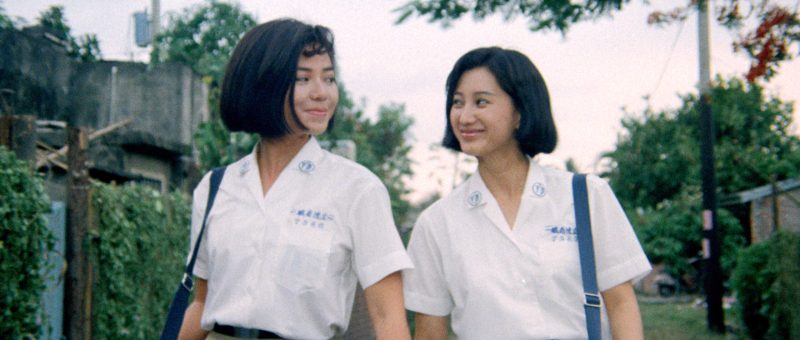
Two young women attempt to ride the waves of a changing Cold War Taiwan in Li Youning’s bittersweet melodrama, Spring Outside the Fence (竹籬笆外的春天, zhúlíbā wài dechūntiān). The titular fence is that of the military dependents’ village where the two women grew up that comes to represent an increasingly distant past and a vision of Taiwan that has all but become obsolete by the film’s conclusion in 1972 in which the nation seems to have abandoned both the US and the idea of reclaiming Mainland China to forge a more independent future.

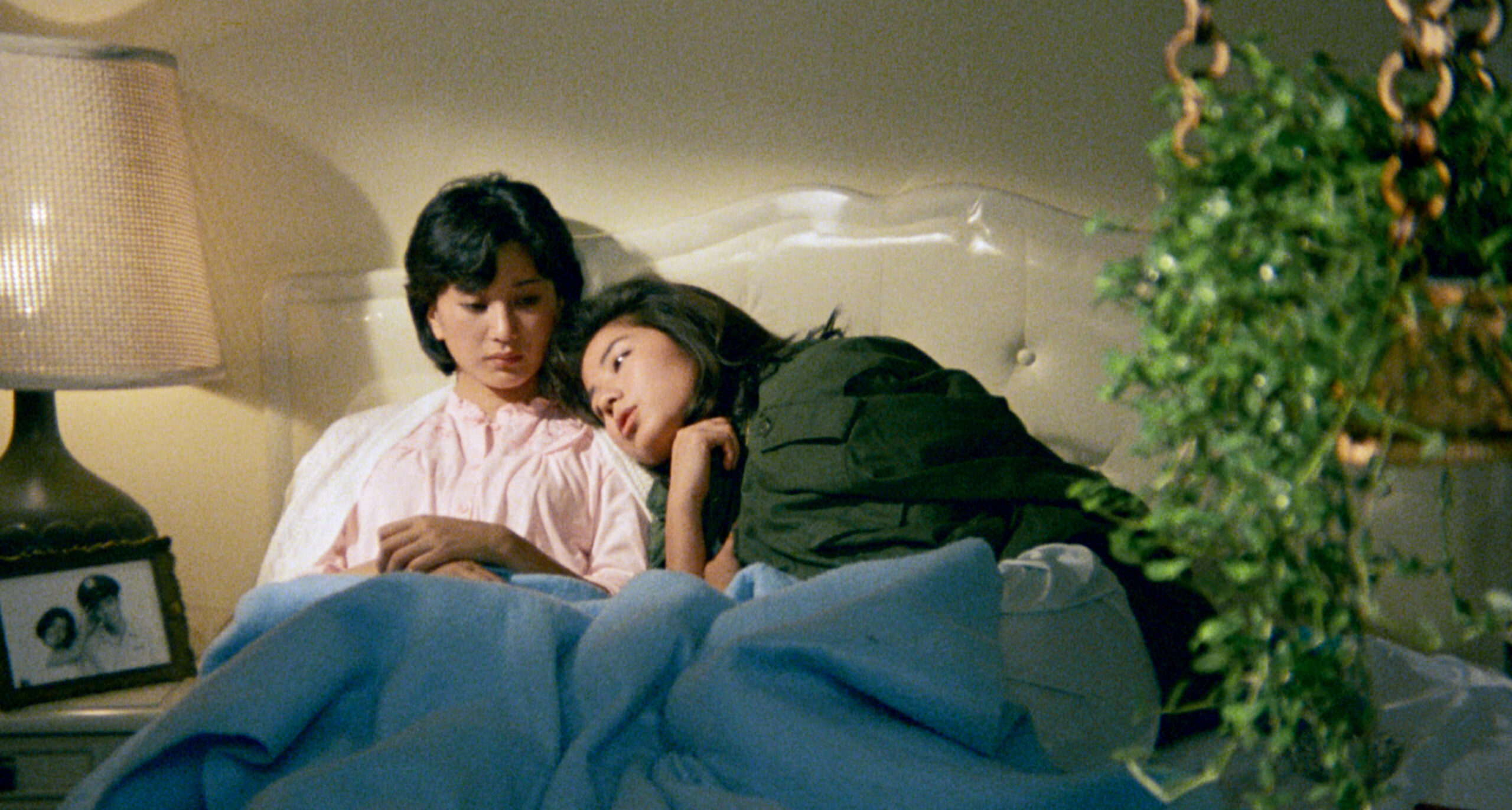
The film opens in 1949, not long after the Chinese Civil War and nationalist defeat in which Chiang Kai-shek’s forces fled to Taiwan. The military dependents’ village is a settlement for the family members of former KMT soldiers and a rather ramshackle, rundown place. Nevertheless, Ai Hua (Su Ming-ming) says she likes it because the people are kinder there than elsewhere. They’re like one big family with everyone supporting each other. To that extent, one could describe her relationship with best friend Li Lin as “sisterly”, though there are hints in her longing gazes that suggest her affection for her may lean towards the romantic. When Li Lin begins dating their childhood friend He Kang, Ai Hua abruptly agrees to go out with another boy she’s previously turned down only to later admit there is “no chemistry” between them.

That’s partly because he’s a slightly patronising hypocrite who tries to encourage Ai Hua to work on her English so she can study abroad in the US. He gives Ai Hua books on “existentialism”, while He Kang had given her poetry after reading some of her own in the newspaper. When Taiwan is kicked out of the UN, the other boy first broaches the subject with Ai Hua but then drops it saying he thinks it’s probably too difficult for her to understand. Despite his sense of betrayal that America sided with China, he is still studying English and planning to study in the US in order to get ahead. Ironically, capitalism has now become the enemy of right-wing patriotism even among the formerly privileged waishangren whose status has begun to decline. With the Vietnam War coming to a close, the bar in Taipei where Li Lin works as a hostess, and Ai Hua as an accountant, begins to refocus its attentions on chasing Japanese businessmen rather than US forces.

He Kang’s early death can also seen as symbolic of the death of the KMT’s vision of Taiwan. As a child, he’d given a firebrand speech about becoming a fighter pilot like his father to liberate the Mainland with a large picture of Chiang Kai-shek dominating the classroom. The children used to enjoy standing on the air raid shelter watching the planes go by safe in the knowledge that they were protected. For Li Lin, the planes also seemed to symbolise freedom and a world outside of the village. Her room is full of pictures of classic Hollywood stars like James Dean and Clark Gable, while she listens to the Beach Boys and dances to the The Twist aligning her with the anti-communist sensibilities of the KMT. Her love for He Kang is also bound up with this ideology in which the village is only ever really a transient space designed to exist only until the Mainland is retaken and the families return. 

Speaking of her own emotional repression, Ai Hua remarks that she was always envious of Li Lin who was confident in expressing her feelings and having a good time outside the fence while she remained trapped within it. Though Li Lin remains wedded to the past, wearing He Kang’s jacket and the aeroplane necklace he gave her in lieu of a ring, the two women watch the plane carrying Chinese-speaking American airman Michael, whom Li Lin has rejected, fly away with a sense of sadness tempered with optimism. They have now only each other, but have perhaps achieved a kind of self-sufficient independence free of both Mainland China and America in the new nation of Taiwan. 


The Spring Outside the Fence screened as part of this year’s Queer East.
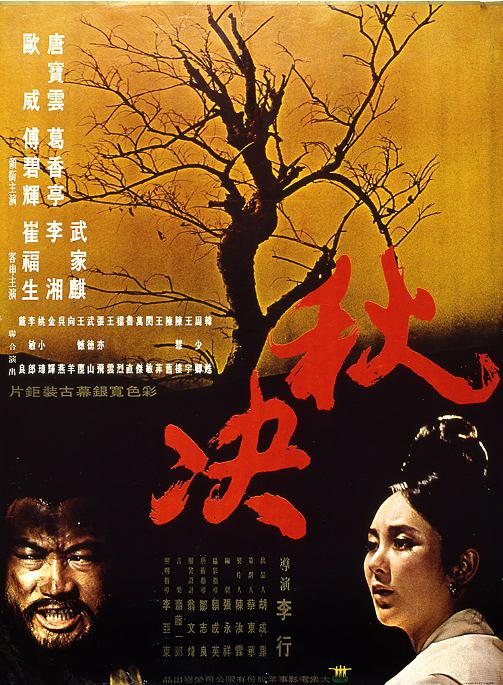
Execution in Autumn (秋決, Li Hsing, 1972)

“We all have to die, but we must die in peace and honour” the hero of Li Hsing’s tale of spiritual redemption Execution in Autumn (秋決, Qiū Jué) finally realises, resigning himself to the cruelty of his fate. Partly an advocation for “responsible” childrearing, Li’s philosophical tale is also one of growing enlightenment as the boorish, entitled hero is cajoled towards a sense of social responsibility through the ministrations firstly of his cellmates and then of a good woman who finally learns to see the good in him if through a gentle process of emotional excavation. 

As the opening voiceover explains, at this time it was thought somehow offensive to conduct an execution during the seasons of life and rebirth and so they were relegated to the autumn amid its ominous mists. As we first meet Pei Gang (Ou Wei), however, he’s on the run, trying to make a break for it in refusing to accept the judgement which has been passed on him. The sole heir of a wealthy family, he has been convicted and sentenced to death for the murder of two men and a woman who claimed he was the father of her child (as for what became of the baby, no further mention is made). His grandmother (Fuh Bih-Huei) vows to get him out of jail, pulling every trick in the book and bribing a local official to engineer a good outcome at the upcoming retrial. But in an ironic indication of his buried goodness, Pei Gang refuses to lie to the court and freely admits his crime claiming he was “overcome with rage” believing the woman and her cousins intended to blackmail him but was otherwise in sound mind when he murdered her because he was “sick of being duped” and wanted to vindicate his family honour by taking vengeance on those who’d wronged him. 

Unable to save her grandson, Gang’s grandmother blames herself realising that her failure to discipline him in childhood has led to his immense sense of entitlement and conviction that the rules do not apply to him. Grandma promised that whatever sort of trouble he got into, she would get him out which is obviously a promise she wouldn’t be able to keep but also somewhat irresponsible. For these reasons, Gang regards his treatment as extremely unfair, unable to understand why any of this is happening to him or to accept that this is one fix grandma won’t be able to smooth over even with her money and the power of her name.  

The lesson would seem to be that you have to be cruel to be kind, a message later confirmed by Gang’s conflicted jailor (Ko Hsiang-Ting) who we learn had a son of his own he wrongly indulged which led to him becoming a wayward lad like Gang drowning in a river in the middle of a fist fight. Learning that his grandmother has passed away, Gang once again rails against his fate offering proclamations of hate which are really of love while blaming his grandmother for never having beaten him when he was a child recognising her problematic love for him, mixed as it was with his importance to her as the heir, but also his own abuse of her indulgence. Bad parenting may be the cause of Gang’s amorality, but he is not and never was blameless. He had a free choice to become a better person but did not take it, engaging in persistent boundary pushing even as an adult culminating in the murder of three people mostly out of spite. 

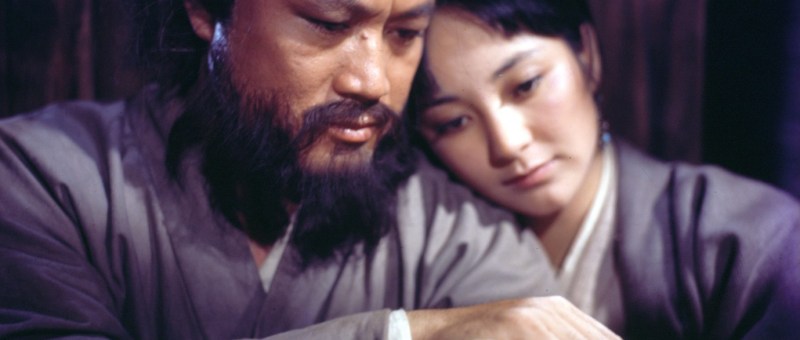
At first Gang can’t bear the mention of the word death, caught between the earthy philosophies of the street thief in the cell to him and the Confucianist scholar opposite serving a one year term as a proxy for his elderly, debt-laden father. Slowly he begins to come around the scholar’s way of thinking, coming to accept death as an inevitability of life as certain as the seasons. His second lessons begin on realising he cannot escape his sentence, his grandmother has given up on him and enacted her back up plan to ensure the family line continues by marrying him to his adopted “sister” Lian (Tang Pao-Yun). Other signs of his buried goodness manifest themselves in his initial reluctance to go along with the plan, not only resenting being used as a stud but unwilling to make Lian an instant widow. “I don’t want you to hate me the rest of your life” he adds in a moment of vulnerability, trying to convince his new bride to find someone more able to give her a happy life stretching further than the next autumn. 

Gang’s tragedy is, in a sense, that as he approaches his execution he experiences true happiness and is genuinely reformed but only by accepting the necessity of his death can he fully redeem himself. Though he tried to escape, he refuses to leave even when the jailor offers to let him go fearing both for the jailor’s fate and for that of his wife and child if he were to become a fugitive. Nevertheless he cannot prevent their victimhood, knowing that just as grandma and Lian had done he must sacrifice himself in order to protect his family accepting not just his moral and social responsibility but the filial. Taking place mostly within the claustrophobic confines of the prison, Li’s melancholy existential drama uses the rhythm of the seasons as a metaphor for life but also as a kind of ticking clock accelerating Gang’s remaining time as he lives out his glory days and twilight years in the span of months awaiting his execution as the first leaves fall. It might be tempting to draw the conclusion that they are each victims of a cruel and oppressive social system taken to authoritarian extremes though Li may have intended the opposite in reminding parents, literal and figural, that the moral education of their children through physical discipline is their primary duty. Nevertheless, Gang’s spiritual awakening and subsequent redemption prove profoundly moving even in their concurrent tragedy. 


Execution in Autumn screened as part of this year’s San Diego Asian Film Festival

Trailer (English subtitles)