 Written by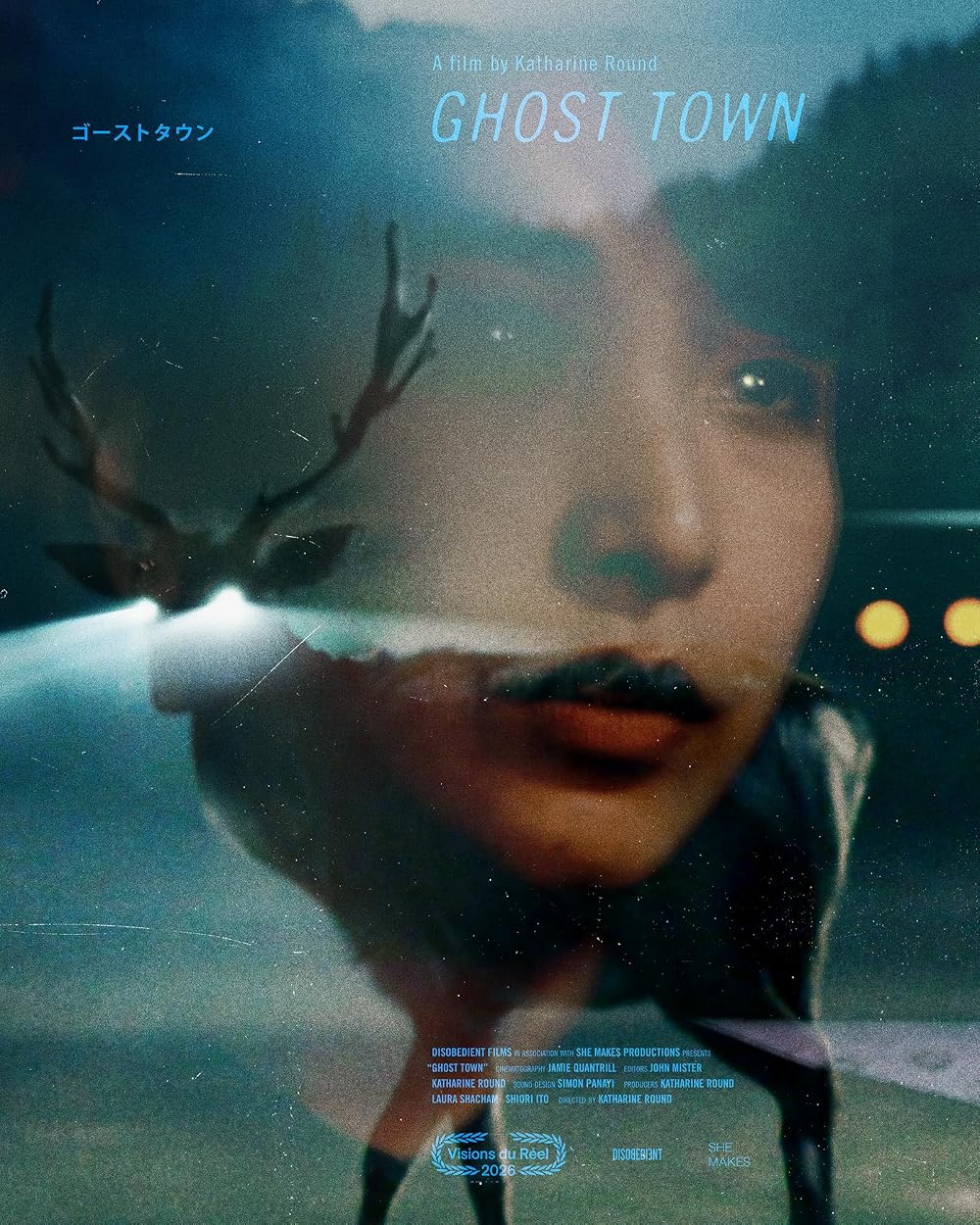
What really is a ghost? An echo of frozen time or a manifestation of our own unresolved emotions? Most of the taxi drivers in Katharine Round’s documentary Ghost Town claim they don’t believe in ghosts, though some claim to have seen them. In any case, we can never be sure who it is that is unable to let go, those of us who are haunted clinging on to the spectres of those we’ve lost, or the ghosts themselves who for whatever reason aren’t ready to leave this world.
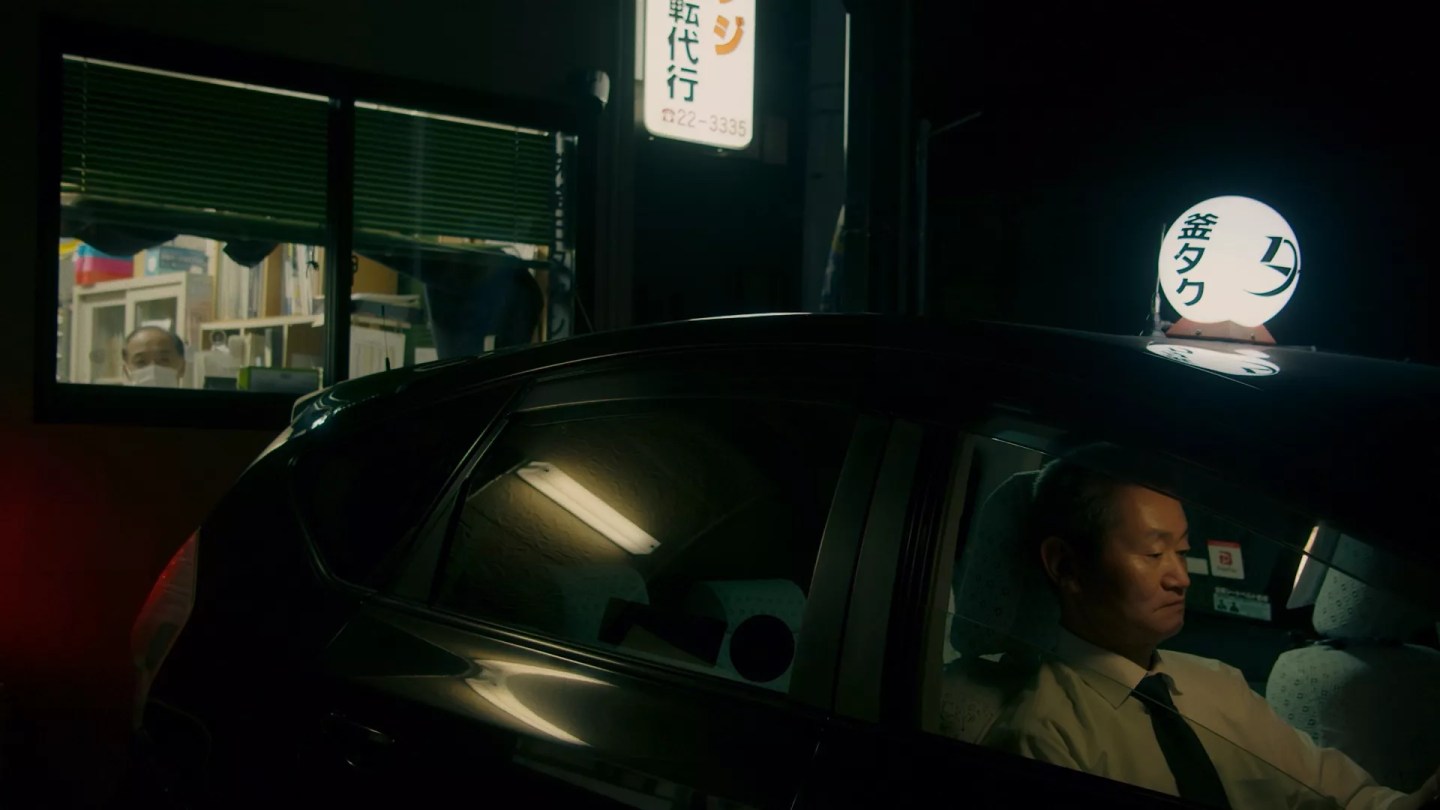
After the earthquake and tsunami of 2011, there were mass reports of ghost sightings with taxi drivers reporting picking up fares who mysteriously disappeared before reaching their destination. There is an eerie quality to the photography of Round’s documentary mainly shot inside a taxi cab and capturing the loneliness of midnight streets illuminated only by car headlights. One of the fares remarks on the darkness, wishing the city would invest in better street lighting to make streets a little brighter. Just like the wary drivers, we’re never quite sure what those headlights are going find in the darkness. One of the drivers describes seeing figures crossing the road and slowing down, only for the car in front to plough straight through.
Inside, meanwhile, line between the living and the dead seems to have become blurred. Any one of them may be a ghost, including the drivers themselves. One recounts having moved away to another town as a young man only to return on the very day of the tsunami. The fares mostly speak of their experiences that day and their own near brushes with death. One recalls the “foreshocks” before the main earthquake as reflected in her dreams in which she saw herself taken by the waves travelling a particular road. She decided not to go that way on the day, and reflects that none of those who did survived. Another recalls seeing the missing in her dreams only to hear that their bodies had been found the next day. That means they’re here, the taxi driver replies, explaining that he sees them too. The dead seem to exist in a kind of dream world that overhangs our own, or perhaps like another of the passengers, we too live in a waking dream.
The taxi driver says he saw the spirits gathering at a phone box, speculating that perhaps they wanted to call someone and go home. The unanswered ringing from the telephone box echoes an unfulfilled desire for communication along with the driver’s own regret and loneliness as he reflects on his misspent youth and longing for “a warm family”. Another passenger was invited to a home that had a zashiki-warashi, a kind of house spirit taking the form of a child. Though she could not see it herself, the forgotten thoughts and feelings of her childhood suddenly came back to her. Around the town we can still see the “temporary” housing that went up to shelter those displaced by the tsunami and where many are still living.
In this way, the living too are a little like ghosts. The drivers become tour guides, pointing out the places where something once was but isn’t any more. Describing the place as “lonely” and like a “ghost town” a passenger suggests that the population has dropped by two thirds since the tsunami, explaining its emptiness in a more literal way. Deer have begun to take the town over, roaming freely around manmade structures, though they too are said to emissaries of the gods. Like the spirits, perhaps they have something to communicate or simply wish to watch over us. Another of the drivers wonders if the spirits aren’t trying to guide us in some way. He’s given up the vices of his youth, gambling, drinking, women, and now mainly does sudoku puzzles on his tablet during his downtime. Among the passengers, documentarian and journalist Shiori Ito, also one of the film’s producers, reflects on the weight of her own loss with a close relative having passed away just as she was on her way to Kamaishi. We all return to nothingness in the end, the driver reflects, just as his passenger seems to disappear. Still, he keeps driving as the deer look on in bemusement, carrying the invisible spirits with him whether in body or in mind.

