 Written by
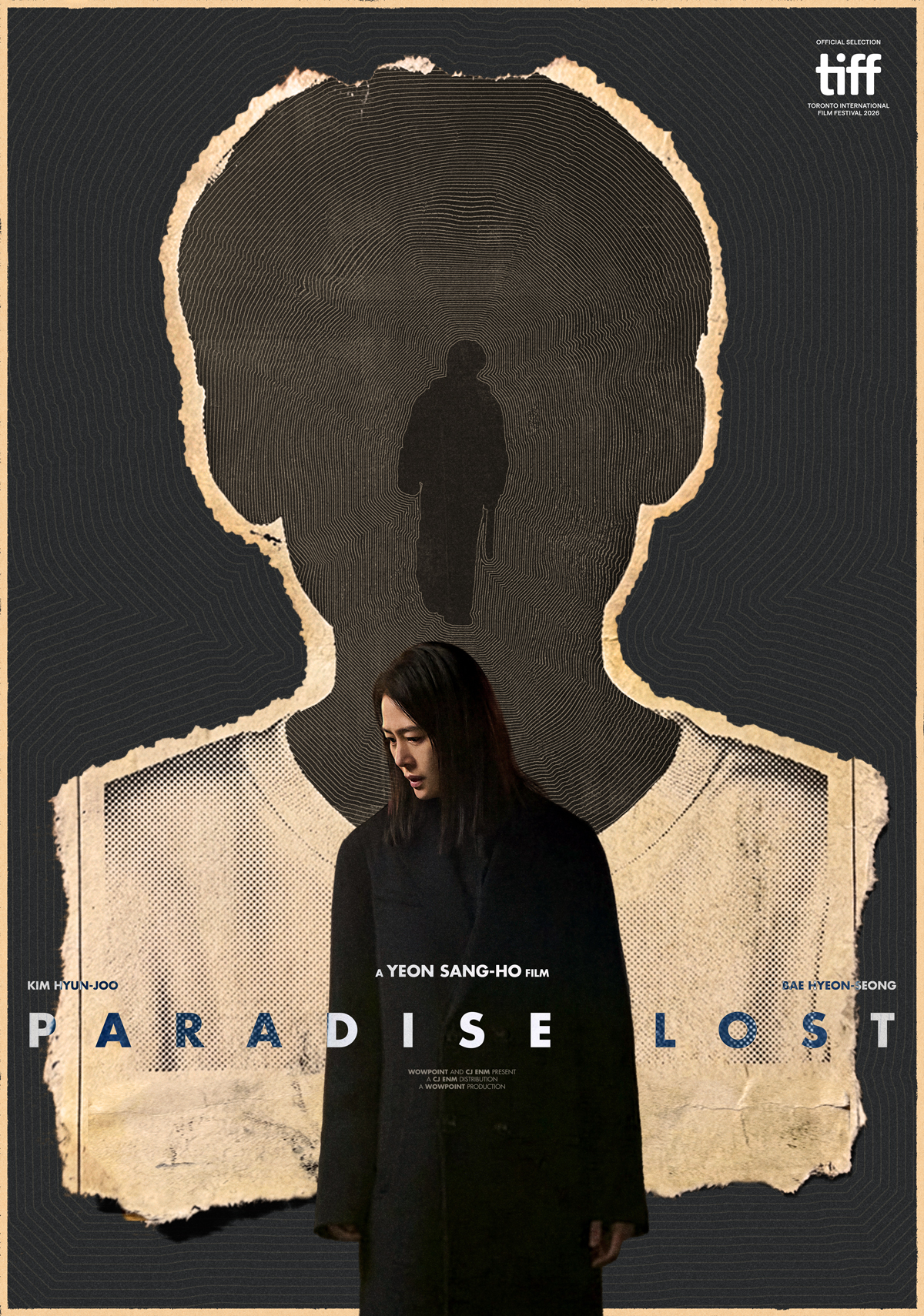
“I hope you can accept reality,” So-young’s (Kim Hyun-joo) well-meaning boss advises her on handing over a literal key to unlocking the source of her trauma, but for many reasons, reality does not seem to be something that So-young will ever be ready to accept. Less about AI than the pull of grief and the complicated relationship between a parent and a child, Yeon Sang-ho’s dark maternal drama Paradise Lost (실낙원, Sillagwon) asks if we can actually accept our children when they grow into something that we no longer recognise or cannot approve of.
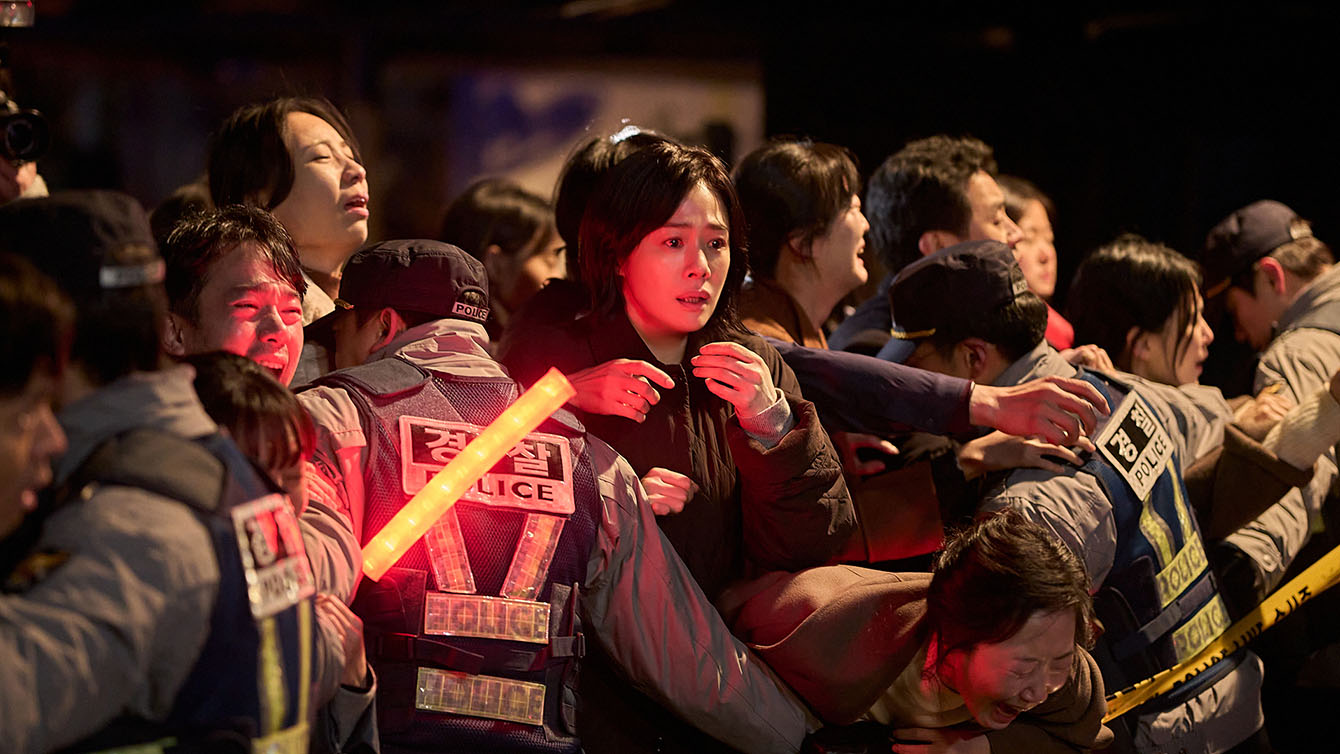
Thirteen years previously, So-young’s young son Sun-woo was one of 13 children aboard a bus that was hijacked by its driver and abandoned in a former mining area. The body of their teacher was found close to the bus, with the bodies of five children recovered nearby along with evidence that the others, including Sun-woo, may have suffered a similar fate though their remains were not recovered as the abandoned mine in which the police suspected the killer had disposed of them was judged too unstable for rescuers to enter safely. As expected, the crime provoked national mourning leading to an AI company stepping in to help ease the parents’ grief by creating avatars of their children they could interact with in a virtual reality world.
This appears quite exploitative on behalf of the AI company which is clearly making use of the parents’ grief to promote their products. It’s later said that they deleted the avatar of one child when one of their parents was arrested for drink driving fearing bad publicity. But when So-young visits them later, they remind her that the programme was only supposed to be a temporary diversion to help her adjust to the loss of her child. Even they think it’s time she stopped using it so often, while other parents have apparently made the decision to give up the service or consented to their child’s avatar being deleted. But on the other hand, the virtual Sun-woo becomes sullen when So-young does not turn up at the usual time and tearfully begs her not to abandon him like the other parents, or at least not to do it without warning.
The film is pretty clear that it at least does not accept that virtual Sun-woo is a “real” entity that is capable of emotions such as sadness, and that So-young is delusional in believing that it is. She only does so because she cannot accept the reality of her son’s death, and the avatar is then more like a reflection of her grief, no different from a ghost and the AI company akin to spiritualists of dubious intentions. But on the other hand, the programme offers her a more convenient kind of parenthood or a maternal paradise in which Sun-woo will always be her perfect little boy, never growing older or changing in ways the displease or challenge her. When the flesh and blood Sun-woo (Bae Hyun-sung) reappears years later as a young man, he’s basically a stranger and she is incapable of accepting him, not least because she discovers that he himself has become a violent and sadistic killer who may be responsible for the disappearance of the adorable little boy next door who reminds her so much of the younger Sun-woo.
In some ways, what this might really be about is the kind grief a mother might feel for a child that’s grown up or a mourning for a family life she longs to return to that only exists in the past. This is a fairly extreme example, but the film attempts to paint the flesh and blood adult Sun-woo as an avatar of the demonic, and the perfect child Sun-woo in the app as that of the angelic. So-young must choose between the “reality” of what her flesh and blood son has become and the “fantasy” of a perpetual childhood in which he will forever be her lovely little boy who just wants to eat his mother’s omelettes and play hide-and-seek. In the end it seems as if she cannot quite find it within herself to move on and prefers to stay in this purgatorial existence with each of her sons, ending up in both heaven and hell simultaneously. Intensely bleak, Yeon’s drama likens the abyss of grief to the shaft of a disused mine, descending forever into the darkness with no end in sight, while its heroine, in the end, has no desire to climb out.
Paradise Lost opens in US cinemas Nov. 6 courtesy of Well Go USA.
Trailer (English subtitles)

