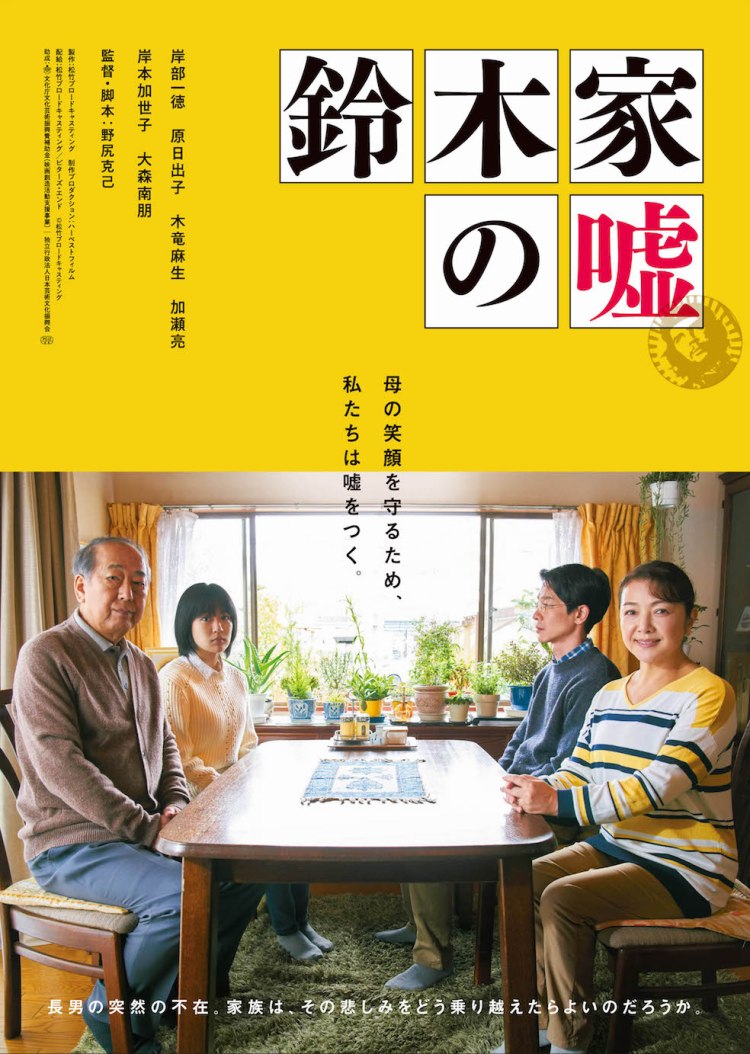
Lying to Mom (鈴木家の嘘, Katsumi Nojiri, 2018)

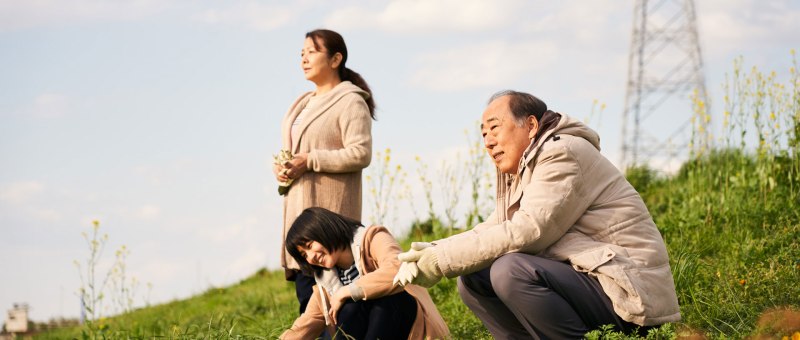
Lying to Mom posterLearning to live with loss is difficult for any family, but when the loss was caused by suicide the pain is even more acute as those left behind try to understand why it is their loved one had to die and if there was anything else they could have done to prevent it. The family at the centre of Lying to Mom (鈴木家の嘘, Suzukike no Uso) choose, initially at least, to avoid dealing with it at all. Each taking their individual paths through grief, they keep the past painfully alive by pretending that oldest son Koichi (Ryo Kase) is only temporarily absent and will eventually return.

Koichi, who has been a hikikomori for many years, takes one last look at the peaceful suburban scene outside his window and hangs himself from a storage closet in his room. His mother Yuko (Hideko Hara), out at the time, only discovers the body when trying to get him to come down to lunch. Panicked, she injures herself and ends up in a coma in hospital while nothing could be done for Koichi. When she wakes up some time later, she’s lost all her memories of the incident and the family don’t have the heart to tell her that her son is gone so they pretend he went to work for his uncle in Argentina.

This is of course very comforting to Yuko who now believes that as a result of her illness Koichi has finally been able to leave his room for a more productive life, but it places a strain on the other family members – father Yukio (Ittoku Kishibe) and daughter Fumi (Mai Kiryu), who remain conflicted about keeping up the pretence while dealing with their own grief in secret. Fumi, whose idea it was to lie in the first place, types out beautiful letters supposedly from Koichi to be handwritten in his handwriting by an associate in Argentina which detail his new life full of freedom and promise overseas.

Meanwhile, Yukio ponders on his relationship with his son with whom he admits he never quite bonded. He sets about trying to find a mysterious woman named on Koichi’s life insurance policy less for practical reasons than to ascertain some sort of evidence that his son lived, even if he lived the last years of his life alone in a room. The reasons for Koichi’s isolation are never exactly explained with Yuko blaming high school bullying and the stagnant economy, but it is clear that he never managed to find himself in Japan and perhaps if he really had gone to Argentina things might have been different.

Wracked with guilt, Fumi finds herself trying out a support group for relatives of those who died by suicide but struggles to put her own thoughts in order. Though people try their best, insensitivity reigns when they try to offer words of condolence. Only love can save people, Fumi’s colleague smugly tells her with a random story about coaxing a shy high school student out their room, little realising he’s tacitly accusing her of not trying hard enough to save her brother. People can’t be saved, Fumi retorts, and she might well have a point. Even the leader of the support group shows himself up when he considers banning a grief-stricken woman with a loud personality because her problems are “smaller” seeing as she’s wealthy. As another attendee tells him, people grieve in different ways and having money or not is unlikely to affect the degree of your emotional pain even if it might in some sense reduce the burden. Besides, his assumptions about her are mostly wrong because he’s not been paying attention to the things that really matter only to his own surface level prejudices.

Despite the prevalence of suicide, the Suzukis still find themselves embarrassed by Koichi’s passing. They tell people it was an illness or avoid mentioning it all. Meanwhile they keep the secret from Yuko and avoid talking about it amongst themselves until finally forced to deal with all of their anger, guilt, pain and confusion. A comforting lie may serve its purpose, but only an emotional reckoning can clear the air. There may be no real answer to why Koichi did what he did, but the Suzukis will have to make their peace with it, finding fresh hope in the process as they begin to repair their emotional wounds together as a family.


Lying to Mom was screened as part of the 2019 Udine Far East Film Festival. It will also be screened at the 2019 Nippon Connection Film Festival on 30th May at 7.30pm.

International trailer (English subtitles)
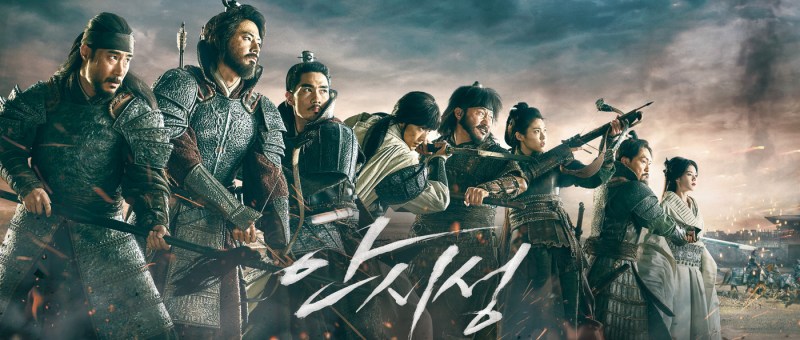
The Great Battle (안시성, Kim Kwang-sik, 2018)

Great Battle posterThe moral of every Korean war film, period and modern, is that Koreans are resilient and resourceful. They can accomplish great things when they work together in a spirit of collective good. Kim Kwang-sik’s The Great Battle (안시성, Ansi-seong), is no different in this regard for being set in 645AD when Goguryeo is threatened by the warlike Tang Dynasty which has its eyes firmly set on conquest.

Meanwhile, there is drama in the court. The king has been usurped and most of the lords have fallen behind General Yeon (Yu Oh-seong) who promises to vanquish the Tang, but to do so he intends to cede territory and abandon his fellow citizens (mostly peasants) to the mercy of Emperor Li (Park Sung-woong). However, the governor of Ansi understandably objects and has alone chosen to stand against Yeon in support of his people, vowing to fend off the Tang all alone by defending his garrison to the last man if necessary. To facilitate his plan, Yeon orders Ansi native and earnest cadet Samul (Nam Joo-hyuk), still grieving for the loss of his brother in a previous battle, to infiltrate the recalcitrant fortress and assassinate Yang (Jo In-sung) so that the territory can be razed.

Having been inducted into the city and despite his fierce loyalty to Yeon, Samul begins to question his mission the longer he is exposed to Yang’s unfettered nobility. A lord but also a man of the people, Yang thinks of himself as a leader among equals. He is not the type to observe from the safety of the rear lines, but proudly wades into battle alongside his men, unafraid to risk his life in their service. In fact, Yang is also perfectly aware of Samul’s true intentions, but is prepared to let him bide his time as a son of Ansi in the hope that he can be turned. Orders, as it turns out, are less important than doing the right thing, and Yang, out of sense of loyalty to the old king refuses to throw his lot in with Yeon, especially if it means he is supposed to throw away the lives of his subjects without a fight.

This necessarily means that the people of Ansi are left with the prospect of fending off the entire might of the Chinese Empire with only a garrison army and limited resources. Of course, they succeed – largely through ingenious stratagems and a sense of solidarity. The Tang, not to be outdone, decide to build an entire artificial mountain in order to fight on Yang’s level, bedding in for months of siege as they do so, but there is no crisis Yang cannot overcome and Emperor Li is about to discover he has seriously underestimated the capabilities of Goguryeo warriors when their backs are to the wall.

Not for nothing does Li eventually mutter that it’s bad idea to go about invading Korea and instruct his successors never to bother trying. Sacrifices, however, must be made – many of them romantic. Yang’s dynamic sister (Kim Seol-hyun), a talented bow woman, has long been in love with the head of his cavalry (Uhm Tae-goo) but Yang tells them to delay their happiness until after the war while he himself nurses a broken heart over a young woman who ended up becoming a shamaness (Jung Eun-chae) and later falls into the hands of the Tang. Not everyone is as convinced by Yang’s boldness as he is, and even some of his own people decide perhaps it would be better to simply acquiesce in the face of such overwhelming odds, but Yang remains firm. He will protect his fortress and the people inside it from anything which threatens their peaceful way of life.

In contrast to Yeon’s authoritarian austerity, Yang’s leadership is one built on nobility and fellow feeling. He hopes to create a freer, more equal society in which the king exists to serve the people rather than the other way around. The battle for Ansi is then an oddly revolutionary affair as they fend off imperialists on either side, bowing neither to Li nor to Yeon in steadfastly defending their principles against overwhelming odds. Kwang achieves truly epic scale through the modern wonder of CGI and ensures his battles are suitably gruelling while keeping the patriotism in check as Yang makes himself stand for something bigger than nationhood or ancient nobility in solidarity as he leads from the front but gives the power back to his people.


The Great Battle was screened as part of the 2019 Udine Far East Film Festival.

International trailer (English subtitles)

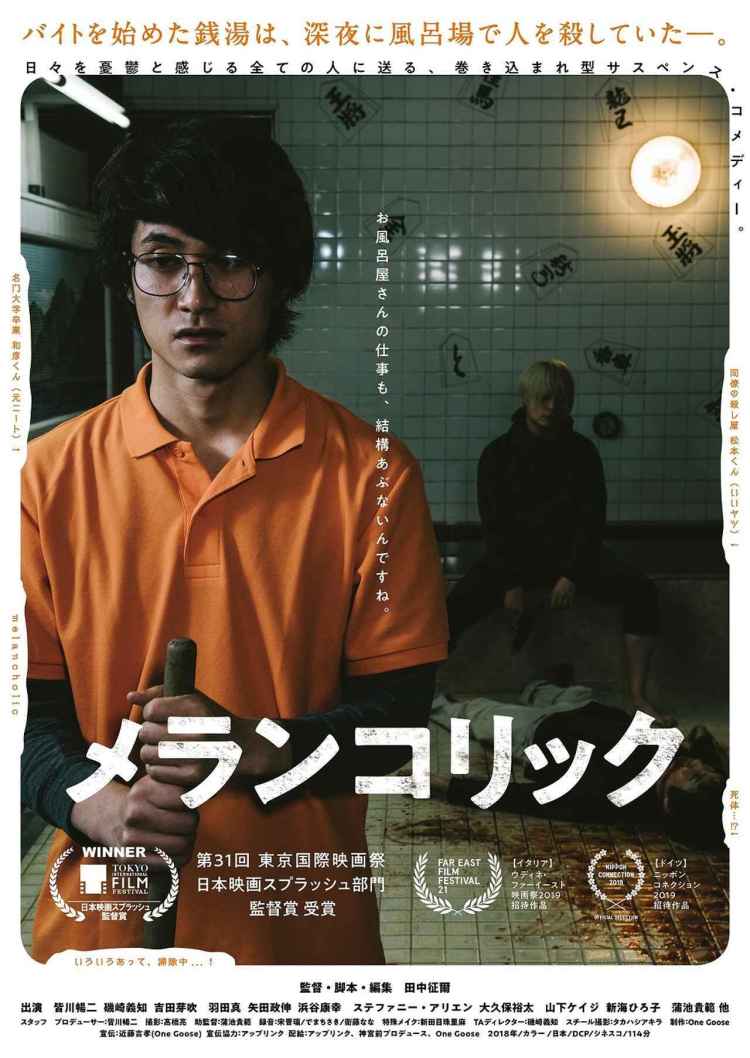
Melancholic (メランコリック, Seiji Tanaka, 2018)

Melancholic posterJust because you’re smart and graduated from a top university, does that necessarily mean you have to put on the salaryman straitjacket in order to become “a success”? The dejected hero of Seiji Tanaka’s Melancholic (メランコリック) isn’t quite so sure, but then he’s always been the type to amble through life going wherever the wind blows him. The time is about to come, however, when decisions must be made and priorities decided lest someone else decide them for you.

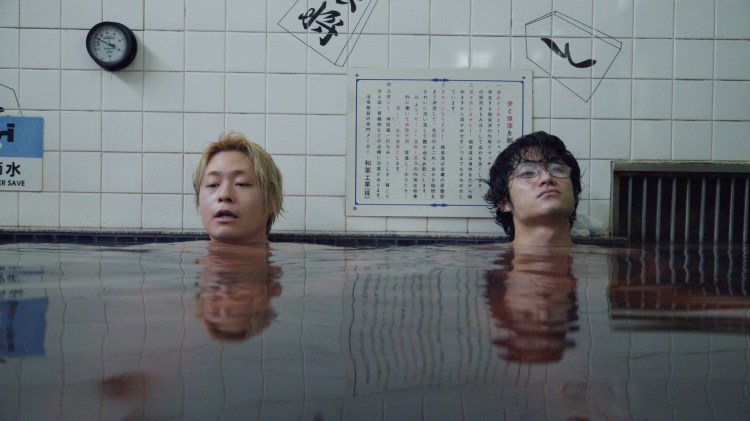
Kazuhiko (Yoji Minagawa) graduated from Tokyo University but he’s never been in full time employment and has no definite career plans. Still living at home with his parents, he floats between part-time jobs with little sense of forward motion while his mum and dad are content to let him find his way, if a little exasperated. On a rare visit to a public bathhouse he ends up running into an old high school classmate, Yuri (Mebuki Yoshida), who half-jokingly advises he apply for the open job at the baths seeing as it’s bound to be less stressful than your average salaryman gig. Smitten but too awkward to do much about it, Kazuhiko applies for the job and consents to go to a school reunion as a means of seeing Yuri again. Much to his surprise, however, the bathhouse has a second life as a yakuza kill room with on site body disposal facilities.

Asking questions about what goes on at the bathhouse after dark, Kazuhiko’s boss Azuma (Makoto Hada) tells him that it’s dangerous to know things you aren’t supposed to know, but Kazuhiko is not good with hints and his natural curiosity won’t it let it rest. After he finds out about the secret yakuza backroom deal, Kazuhiko has a “difficult” choice to make – elect to help out with the “night shift”, or die. Kazuhiko chooses to help out (he likes being helpful) and discovers that he actually doesn’t mind it all that much, especially considering the “bonus” package Azuma gave him for being a good boy.

The extra money made Kazuhiko feel as if he could grasp that swanky salaryman life without having to submit himself to the rat race. He uses the money to take Yuri to a fancy French restaurant where he’s flummoxed by the wine list and she’s uncomfortable, but still it goes well even if they both resolve to go somewhere more casual next time. Kazuhiko’s inferiority complex is only enflamed by the lingering presence of Tamura (Yuta Okubo), another old classmate made good, who is also interested in Yuri and is everything Kazuhiko feels himself not to be – handsome, successful, filthy rich, cultured, and confident.

Being allowed in on the after hours business made Kazuhiko feel as if he’d been promoted, that Azuma obviously trusted him and that there might be more overtime coming if he played his cards right. His confidence receives a further knock, however, when he realises that a punkish colleague who joined at the same time as him, Matsumoto (Yoshitomo Isozaki), is technically in a more senior position despite being a barely literate drop out with bleach blond hair. In way over his head, Kazuhiko still desperately wants to regain some of that status and approval he felt was his when the cleanup business was their little secret.

An awkward, naive, but sincere man, Kazuhiko marvels on realising how many yakuza seem to be “around” before Azuma and Matsumoto remind him that not everyone involved with crime is a bona fide yakuza. The bathhouse outfit is, more or less, run by freelancers but still at the mercy of mob boss Tanaka (Masanobu Yada) who has an iron hold over Azuma because of outstanding debts. Azuma would like to put a stop to the night shift, but can’t – or so he claims. As is later pointed out, for those getting on in years an unsatisfying status quo is often preferable to a turbulent new. Though Kazuhiko has no real objection to working the night shift as far as the clean up goes, he is not completely comfortable with its wider implications, often asking why it was someone had to die only for Matsumoto and Azuma to shrug and say it doesn’t matter. They had orders and carried them out, anything else is an irrelevance they don’t need to worry about.

Kazuhiko, however, does worry if in a fairly minor way until his gradual descent into the world of crime drags him into a vicious quagmire in which he must accept the seriousness of his situation along with its potential costs. Despite the original animosity and natural sense of distrust, what wins out is a sense of fellow feeling between unlikely allies Matsumoto and Kazuhiko who begin to see a way out of their mutual malaise through seizing their own futures and daring to pin their hopes on things they assumed unattainable, like love and friendship. Rather than chasing the salaryman dream, or climbing to the top of the yakuza tree, they pick an ordinary kind of “good enough” success in which moments of warmth and togetherness become the only things which give life meaning. A surreal ode to just muddling through and learning to be happy in the moment, Melancholic more than lives up to its name but despite all the darkness eventually finds real joy in the easy pleasures of mediocrity and mutual acceptance.


Melancholic was screened as part of the 2019 Udine Far East Film Festival. It will also be screened at the 2019 Nippon Connection Film Festival where director Seiji Tanaka and actor Yoshitomo Isozaki will be present for a Q&A.

Original trailer (English subtitles)

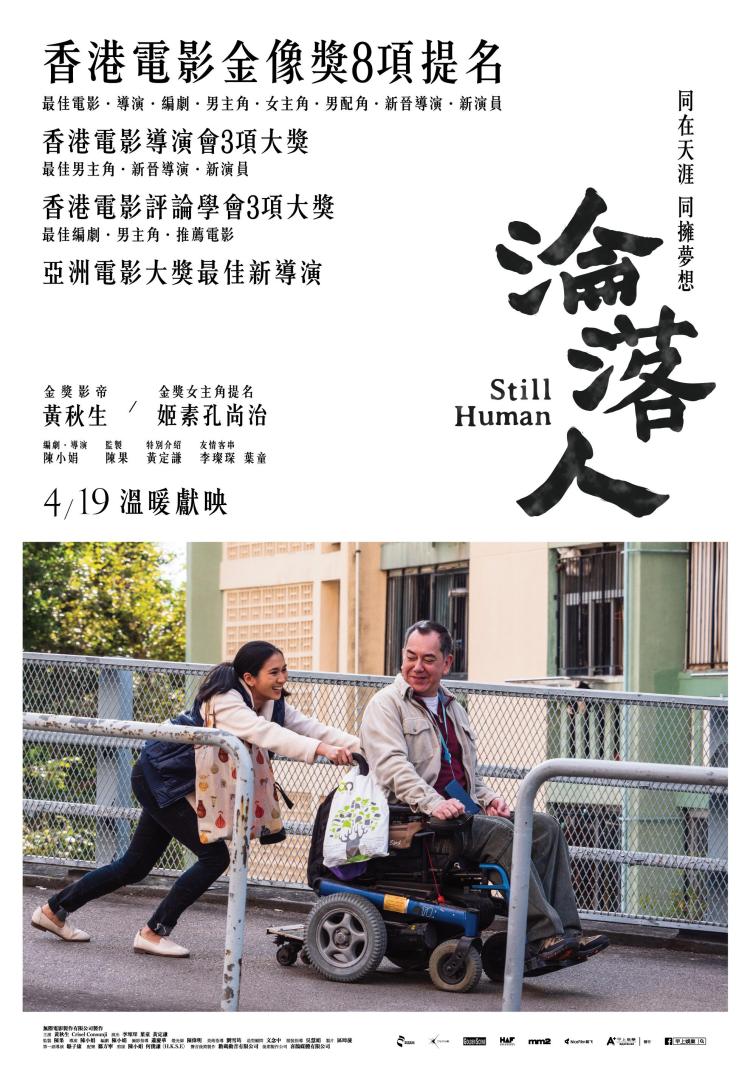
Still Human (淪落人, Oliver Chan Siu-kuen, 2018)

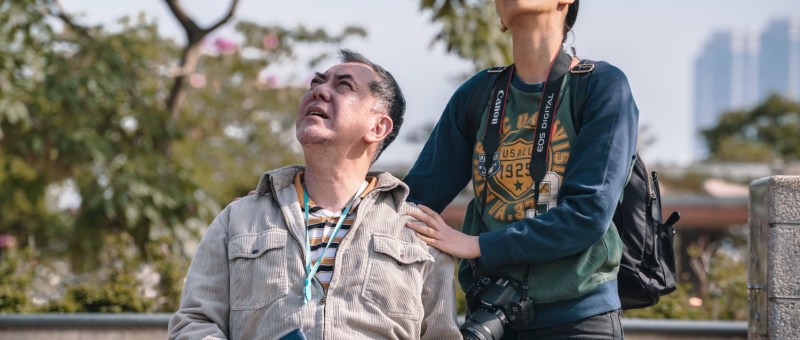
Still human posterA peculiarly Hong Kong phenomenon – crowds of Filipina domestic helpers filling the city streets on a Sunday, for many of them their one and only day off in an often 24/7 job. The presence of the Filipina workers has often been a taboo subject, as has the frequently inhumane treatment they receive from exploitative employers, but Hong Kong cinema has been in a self-reflective mood of late as Oliver Chan’s Still Human (淪落人) proves. A quiet ode to the power of breaking down barriers and embracing difference, Chan’s bold debut centres itself on the unlikely friendship between a disabled man and his Filpina carer.

Cheong-wing (Anthony Wong) has been paralysed from the chest down for the past few years following a construction site accident. Though he has enough movement in his hands to be able to get himself about with an electric wheelchair, he needs day to day help with essential tasks such as cleaning and washing not to mention getting himself from the chair to the bed. His last few carers have all abruptly left him in the lurch so he doesn’t have high hopes for the latest – Evelyn (Crisel Consunji), a former nurse from the Philippines recruited by Cheong-wing’s friend Fai (Sam Lee). Cheong-wing is irritated to discover that Evelyn speaks no Cantonese while he has almost no grasp of English but is encouraged to make it work because he needs help and, according to Fai, none of the Cantonese-speaking carers is prepared to help him.

From Cheong-wing’s earliest behaviour, it might seem obvious why he has such a high turn over of helpers and one wouldn’t blame Evelyn for walking out right away but then again, perhaps he is only grumpy because he’s lonely and sick of everyone suddenly abandoning him. A solitary pensioner, Cheong-wing lives alone in a high rise council flat. His wife left him years ago and remarried while his medical student son is away in the US. On the ground he only has Fai – a slightly younger man who acts as a surrogate child in gratitude for the various ways Cheong-wing once looked after him when he arrived as teenager from the Mainland with no Cantonese and no family to help him.

Meanwhile, Evelyn tries to adjust to her new life, having made peace with her decision but making the best of a suboptimal situation. Scrimping and saving, she tries to get the funds together to definitively escape a bad marriage against the wishes of her family who constantly beg her for money and guilt her into doing their bidding. Making friends with some other helpers via a Facebook group, she joins the regular Sunday gatherings but feels herself somewhat out of place even as she begins to bond with the already jaded veteran overseas workers. Play dumb, they tell her. Don’t learn Cantonese, or do but don’t let your employer know. All that matters is not getting fired and sent back to the Philippines so keep your head down and say yes sir while always looking for a better gig or, best of all, a wealthy husband. Evelyn ignores most of their advice. She isn’t interested in another loveless marriage, what she wants is her freedom.

Nevertheless she continues to endure xenophobic micro-aggressions and constant mistrust despite her warm and winning personality. Cheong-wing, teaching her Cantonese, eventually begins to bond with Evelyn, convinced that she is a “good person” though maybe, like him, going through some tough times. Interacting with Evelyn allows his sweet side come through, making plain that he is at heart a kind and sincere man but one who had long since given up on life and kept others at a distance believing himself to be a burden. Where the traditional family has failed, found family plugs the gap as Cheong-wing and Evelyn pick up an easy paternal rapport, supporting each other with genuine warmth and affection as Cheong-wing discovers Evelyn’s long buried dream of becoming a photographer and commits to helping her achieve it all while knowing it will eventually take her away from him.

Realising that where there’s life there’s hope, the pair come to the conclusion that it’s never too late to dream and each find themselves edging towards what it is they really want from life with the confidence of knowing someone has their back and their best interests at heart. A warm and empathetic yet uncompromising look at life on the margins of modern Hong Kong, Still Human is a beautifully humane tribute to the healing power of human connection and the joy of finding kindred spirit in unexpected places.


Still Human was screened as part of the 2019 Udine Far East Film Festival. The film will also receive a special one off screening in Chicago courtesy of Asian Pop-Up Cinema on Monday 13th May at the Gene Siskel Film Center, 8pm where director Oliver Chan and actress Crisel Consunji will be present for a Q&A.

Original trailer (English subtitles)

Nippon Connection Confirms Full Lineup for 2019!

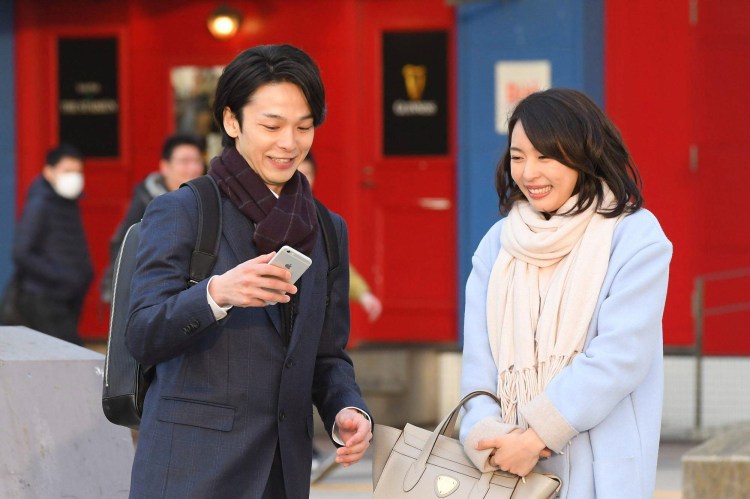
marriage hunting beauty still 1Nippon Connection, the largest showcase for Japanese cinema anywhere in the world, returns with another fantastic selection of new and classic films screening in Frankfurt from 28th May to 2nd June. Opening with the latest quirky rom-com from Tremble All You Want’s Akiko Ohku Marriage Hunting Beauty, the festival will also welcome Guest of Honour Shinya Tsukamoto with a screening of his latest film Killing plus classics Tetsuo: The Iron Man and Tokyo Fist. Meanwhile, this year’s classics strand is dedicated to Golden Era actress Ayako Wakao. The programme in full:

Nippon Cinema

Fly Me to the Saitama still 1

  • And Your Bird Can Sing – Adapted from the novel by Yasushi Sato, And Your Bird Can Sing follows a trio of lost youngsters as they drift into an almost certainly destructive ménage à trois.
  • Another World – a middle-aged man keeps his family at a distance but the reappearance of a childhood friend begins to shake his world in the latest from Junji Sakamoto.
  • Asako I & II – A young woman finds herself torn between old love and new in Ryusuke Hamaguchi’s whimsical drama. Review.
  • The Chrysanthemum and the Guillotine – Taisho era tale of sumo and revolution in which a band of anarchists find themselves fascinated by an itinerant troupe of female sumo wrestlers shortly after the Great Kanto Earthquake of 1923 in the latest from Takahisa Zeze.
  • Dare to Stop Us – Kazuya Shiraishi’s nostalgic look back at the heyday of Wakamatsu Production through the eyes a young female AD. Review.
  • Dawn Wind in my Poncho – a trio of college kids takes a last roadtrip before graduation.
  • Fly Me to the Saitama – zany comedy from Hideki Takeuchi in which the residents of Saitama have become an oppressed minority. Review.
  • Hard-Core – a purehearted guy with a violent streak laments the cruelty of the modern world but finds friendship with a lonely homeless man and a robot they find in an abandoned factory.
  • Inuyashiki – an angry young man and mild-mannered dad get superpowers on the same day in Shinsuke Sato’s blockbuster manga adaptation. Review.
  • It’s Boring Here, Pick Me Up – ensemble drama from Ryuichi Hiroki following 10 years in the lives of a collection of lost souls from small town Japan.
  • Jam – Returning to the realms of Dangan Runner, Sabu brings three dreaming guys together through the power of cosmic coincidence. Review.
  • Killing – a samurai prefers not to pick up his sword in Shinya Tsukamoto’s first foray into the jidaigeki.
  • Love at Least – a young woman with bipolar tries to get her life together but is frustrated by the reappearance of her supportive boyfriend’s manipulative ex. Review.
  • Lying to Mom – When her son tries to hang himself, the mother of the Suzuki family knocks herself out in an effort to save him and winds up in a coma. When she wakes up, she can’t remember anything of the incident. Lacking the heart to tell her the truth, the family pretend he is alive and well and living in Argentina.
  • Marriage Hunting Beauty – manga adaptation from Akiko Ohku in which a beautiful woman with terrible taste in men decides to get married.
  • The Miracle of Crybaby Shottan – shogi drama from Toshiaki Toyoda.
  • Ramen Shop – a bereaved ramen chef travels to Singapore after finding the diary of his late mother.
  • Room Laundering – a young woman puts her ability to see ghosts to a productive use. Review.
  • Special Screening: Tetsuo: The Iron Man – classic 1989 cyberpunk from Shinya Tsukamoto.
  • Special Screening: The Legend of the Stardust Brothers – rediscovered ’80s cult classic from Macoto Tezka.
  • Special Screening: Tokyo Fist – classic boxing drama from Shinya Tsukamoto.
  • Thicker Than Water – ironic warring siblings comedy. Review.
  • We are Little Zombies – anarchic pop comedy in which four orphaned kids decide to start a band!

NIPPON VISIONS

Melancholic still 1

  • Ahum – atmospheric black and white horror film in which a nuclear plant employee begins to lose his grasp on reality.
  • Blue Hour – a young woman takes her best friend on a roadtrip to her home town but finds old wounds reopening on reuniting with her family.
  • The Call of Zon – experimental science fiction film in which a small town has been walled off by a mysterious force known as Zon for the past 20 years.
  • The Chaplin – Ren Osugi stars as a prison chaplain ministering to death row prisoners.
  • Complicity – an undocumented man from China starts working at a soba restaurant but lives in constant fear of discovery.
  • Jesus – a 10-year-old boy moves to his grandmother’s out in the country and has to attend a Christian school.
  • Life Finds a Way – the latest from Hirobumi Watanabe is a meta take on the filmmaking process.
  • Melancholic – a graduate of a top university takes a job in a bathhouse and is shocked to discover it doubles as a yakuza killing ground in Seiji Tanaka’s ironic debut.
  • Sea – a man who witnessed a rape as a teenager but did nothing to help muses on his failings when he meets the perpetrators again years later.
  • Tourism – two women take a trip to Singapore but things take a turn for the strange when one gets lost.

Nippon Docs

Kagura still 1

  • Boy Soldiers: The Secret War in Okinawa – documentary exploring the child soldiers who fought under the Japanese during the battle of Okinawa.
  • From All Corners – a young man gives up his job to become a cardboard picker.
  • I Go Gaga, My Dear – director Naoko Nobutomo follows her elderly parents and charts the development of her mother’s Alzheimer’s.
  • Japanese Documentaries Presented by NHK World-Japan – two NHK docs including the first episode of 10 Years with Hayao Miyazaki, and another about a Syrian musician’s discovery of a piano which survived the 1945 nuclear attack.
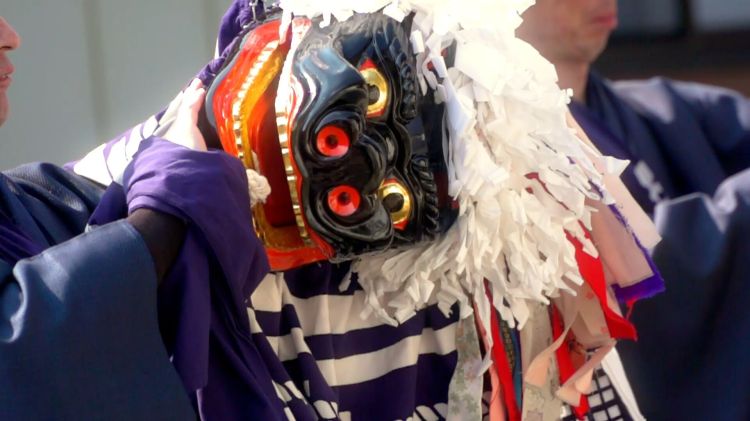
  • Kagura Troupe on the Beat – traditional shinto music and dance.
  • Portraits of the Rainbow – Ayumi Nakagawa follows photographer Leslie Kee as he photographs members of the LGBT community in order to combat their invisibility within Japanese society.
  • Sending Off – Nippon Connection regular Ian Thomas Ash returns with a documentary following a doctor and her team of nurses as they offer hospice care to patients in their homes.
  • Shinjuku Tiger – Yoshinori Sato follows the man in the tiger mask often seen around Shinjuku.
  • Tower of the Sun Love at Least director Kosai Sekine uses Taro Okamoto’s Tower of the Sun as a jumping off point to explore the evolution of Japanese culture

Nippon Animation

Penguin highway banner

Nippon Retro: Ayako Wakao – Magnificent Icon of Japanese Cinema

blue sky maiden still

  • An Actor’s Revenge – Kon Ichikawa classic in which an onnagata attempts to avenge the death of his parents.
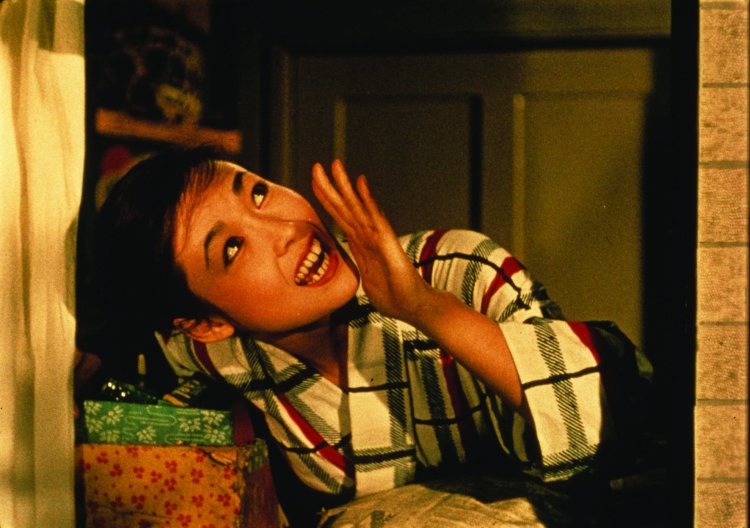
  • The Blue Sky Maiden – cheerful melodrama in which a young woman travels to live with her birth father’s family but is fiercely resented by her step-mother and half siblings. Marks the first collaboration between Yasuzo Masumura and his later muse. Review.
  • Elegant Beast – satirical comedy from Yuzo Kawashima in which a criminal family meets their match in a wily entertainment accountant.
  • Floating Weeds – Ozu classic in which the leader of an itinerant theatre troupe reunites with his former lover in a seaside town.
  • The Goddess of Mercy – Yasuzo Masumura’s adaptation of the Junichiro Tanizaki novel in which a bored housewife enters a relationship with a woman she meets at art class who reminds her of the goddess of mercy. Review.
  • The Red Angel – Ayako Wakao stars as a frontline nurse in Masumura’s powerful anti-war drama. Review.
  • Seisaku’s Wife – a young woman marries an old man and continues to live alone after he dies suddenly becoming a social pariah until she falls in love with a model soldier.
  • Women are Born Twice – Wakao stars as a melancholy geisha in another comic drama from Yuzo Kawashima.

Nippon Connection takes place in Frankfurt, Germany from 28th May to 2nd June. Tickets are available from 11th May via the official website where you can also find full details on all the films as well as timetabling information. Unless otherwise stated, films screen in Japanese with English subtitles. In addition to the films the festival will also host a series of events including director talks and workshops in a rich cultural programme. You can keep up with all the latest information by following the festival on FacebookTwitterYouTubeFlickr, and Instagram.

In Character (入戏, Dong Xueying, 2018)

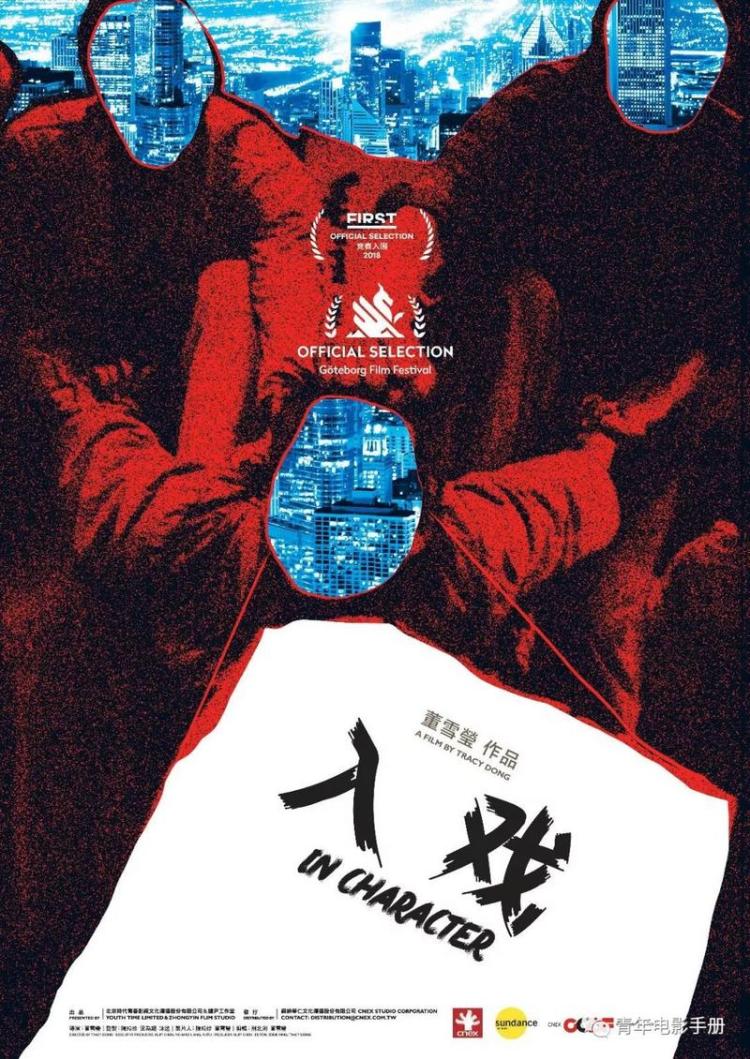
In Character posterThere has of late been an unfortunate trend of historical revisionism in recent Chinese cinema which has sought to look back at the Cultural Revolution with a kind of fond remembrance for a more “innocent” time. Mostly coming from directors in their 50s and 60s who were themselves young during the last years of Maoism, films such as Feng Xiaogang’s Youth have attempted to draw a sharp contrast with the collectivist past and consumerist present as if to lament the passing of a kinder era, but have also largely located themselves within the cosseted group of youngsters working for the regime and therefore shielded from the intense cruelty of the age.

Songs of the Youth 1969, the debut (and to this date only) narrative feature film from director Ye Jing, is much the same in this regard in that it deliberately recreates his own longed for adolescence as young man fighting, he thought at the time, for a better China. Lamenting that the young people of today have no idealism, he describes the Cultural Revolution as a “rock ‘n’ roll movement” in which intellectual youth chased love and freedom through venerating Mao. Looking at footage of himself on screen, he urges the youngsters not to pity the kids in the square even though they were being “brainwashed” but to admire them because they were fighting passionately for something they believed in.

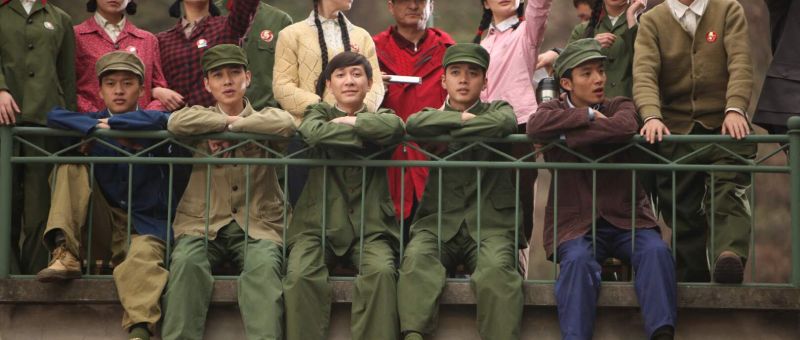
Dong Xueying, the director of In Character (入戏, Rù), came on board with the intention of exploring the living conditions of Chinese actors but quickly found herself sucked into an alternate reality in documenting the behind the scenes production of Songs of the Youth 1969 as Ye sends his cadre of youngsters off to an abandoned munitions factory in Sichuan for “the Cultural Revolution Experience”. During this time, they must prepare by living under contemporary conditions – wearing Red Army uniforms, surrendering their phones and other modern communication devices, and learning the various revolutionary songs which operated as a key part of the movement.

Although the young men and women are merely actors born long after the Cultural Revolution had ended, the “experience” quickly turns into a kind of social experiment along the lines of Stanford Prison as the intense mob mentality of the era begins to take hold. An early visit from Ye finds them furiously role playing, greeting him as if they were ghosts of his past waiting more than 40 years for his return. Playfully singing bawdy and suggestive songs, they embrace the sense of fun loving youth the director seems to be looking for but a fatal mistake by one young actor abruptly turns the tables, recalling the fear and danger that many must surely have felt in an era of intense suspicion puritanical scrutiny.

Many had openly laughed during rehearsals as they spouted the outdated Maoist quotations and learned the choreography for revolutionary ballet, but the fervour eventually takes hold and it’s not long before they begin turning on each other. First it’s a minor complaint blown out of all proportion about inattention and fiddling with fingernails instead of concentrating on collective concerns, and then an outright attack on one of their number who has made an obvious if understandable mistake – he asked for a few days off on hearing a relative was dangerously ill, and not only that, he misspelled Chairman Mao’s name in his apology letter. Jiang Siyuan’s request seriously upset Ye who is now convinced that the modern youth is selfish and irresponsible and that the youngsters still haven’t absorbed the spirit of the Cultural Revolution. Upset that Jiang may have ruined all their hard work, the actors subject him to a Struggle Session in which he must self criticise while they each berate him for damaging the integrity of their common project.

Ironically enough, the “film” has taken the place of the revolutionary ideal, while Ye has become a kind of Mao figure as a faraway authority whom they must worship and placate to make their dream come true. Despite their modern upbringings, the actors quickly succumb to the worst tendencies of the age as they consent to oppress each other, going along with the austerity of the ideology which instructs them to rid themselves of their “selfish” instincts in order to serve the collective while simultaneously emphasising their individual will to ensure their place in the film which necessarily means that Jiang must surrender his human feeling and accept he may never see his grandfather again.

Ye promises them the time of their lives in an experience he hopes will be life changing in the same way, presumably, he feels his own youthful brush with the revolution to have been, but their memories of the munitions factory are likely to be less positive as they ruminate on the immediacy with which they were able to betray each other in service of an empty ideal. Dong’s camera captures not only the misguided romanticisation of the Cultural Revolution by those like Ye disillusioned with the path of modern China, but its frightening legacy in the ease with which such inhumanity takes hold.


In Character was screened as part of the 2019 Chinese Visual Festival.

Original trailer (English subtitles)

The Rib (肋骨, Zhang Wei, 2018)

“You choose to live together because you love each other, and to enter holy matrimony with our blessing” a rigid priest ominously intones at the outset of Zhang Wei’s The Rib (肋骨, Lèi). This conflict between personal choice and a need for approval from authority figures to legitimise it is at the heart of Zhang’s empathetic exploration of transgender lives in contemporary China. Given the censors’ constant preoccupation with LGBT issues (40 minutes of footage were apparently removed to gain approval though at the request of the Catholic Church rather than the state authorities), his decision to focus on a transwoman’s struggle to get through to her religious father may be a surprising one but follows a wider trend in Chinese language cinema which is beginning to embrace such formerly untouchable subjects with increasing positivity.

The Rib is, however, as much a critique of oppressive Confucianist social codes and rigid religiosity as it is a plea for greater empathy and understanding in accepting others for who they are rather than forcing them to abide by outdated ideas of conservative conformity. Huanyu (Yuan Weijie) was assigned male at birth but identifies as female and wants to undergo gender reassignment surgery. Unfortunately, however, despite the fact that Huanyu is 32 years old she still needs her father’s signature on a consent form to get the operation and not only that, her father has to be filmed signing it in person in case there are any repercussions further down the line.

The major problem is, Huanyu’s father Jianguo (Huang Jingyi) is a devout Christian who even serves as a sign language interpreter during church services. Huanyu’s mother passed away when she was small and so Jianguo raised her alone. Given his strict religiosity he is unlikely ever to agree to the surgery and Huanyu has never felt able to discuss her gender dysphoria or sexuality with her father for fear that he wouldn’t understand. Those fears are borne out when Huanyu is forced to talk to him in order to move towards surgery. Jianguo thinks it’s a joke, and then some kind of mental illness which could be cured with the right treatment. He hosts an intervention with the priest and other attendees of the church in order to talk Huanyu out of her conviction that she is a woman and even goes so far as to set her up with a selection of pretty sex workers in the belief that Huanyu will change her mind after feeling “like a man” through experiencing “proper” sex with a woman.

Of course, all this really does is drive a further wedge between father and son. Jianguo lashes out. He goes to visit a friend of Huanyu’s, Liu Mann (Gao Deng), who has recently returned from undergoing reassignment surgery in Thailand (where it’s cheaper and there aren’t so many barriers), but rather asking pertinent questions he viciously berates her. Liu Mann, Huanyu’s closest confidante, is not herself certain that Huanyu should have surgery. Returning to work after her operation she found herself fired for not being the same person who left and though she’s suing them for unfair dismissal has discovered that one kind of unhappiness has merely replaced another. Jeered at in the street, enduring the sniggers from insensitive shop staff, and labeled a pervert for just trying to use the bathroom in a public place, Liu Mann has begun to fall into despair no longer believing that a happier future where she could live as herself in freedom is a real possibility.

Jianguo insists he knows his son best and blames Huanyu’s friends for corrupting her. Huanyu is 32, but Jianguo still exercises his paternal authority in loudly declaiming that he will not “allow” this situation to continue any further. Believing that the problem may be that Huanyu had no maternal input, he even starts romancing a woman from church who has no idea she is merely a tool in Jianguo’s mission to “save” his son, while furiously praying that Huanyu will soon marry and have children. The Church itself becomes, perhaps ironically, another vessel for rigid Confucianism as Jianguo ponders the end of his family line along with his dwindling authority and the effects of his son’s “sin” on his own good standing in the eyes of the community.

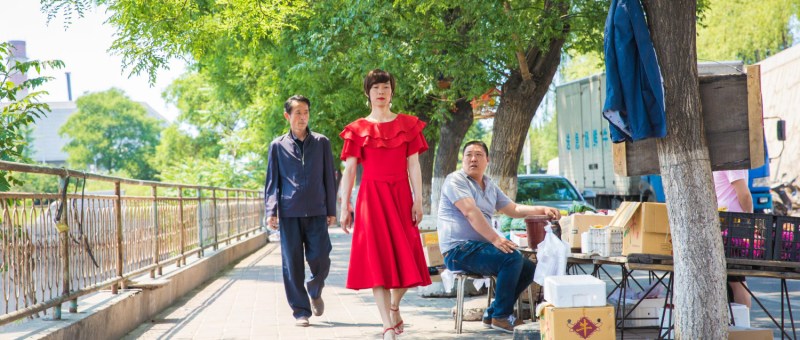
Yet through witnessing the increasingly destructive results of his actions Jianguo begins to reconsider. He listens to medical advice, attends seminars, and asks himself the true meaning of his faith. After all, if God is in heaven listening to prayers from his children below, then shouldn’t a father on Earth listen to his son’s wishes? Jianguo stops worrying about sin and asks more practical questions – is it safe, is it painful, will it end Huanyu’s life sooner, and weighs the degree of his child’s suffering against his ideology. Shooting in crisp black and white with only the startling red of Huanyu’s favourite dress, Zhang captures the dullness of Huanyu’s existence as she feels herself only half alive before ending on a note of vivid colour as the faces of transgender people fill the frame. A tender, empathetic exploration of a sensitive issue, The Rib is an important step forward for trans representation in Mainland China and a powerful plea for human decency and universal understanding.


The Rib was screened at the 2019 Udine Far East Film Festival and the 2019 Chinese Visual Festival.

Original trailer (English subtitles)

Meili (美麗, Zhou Zhou, 2018)

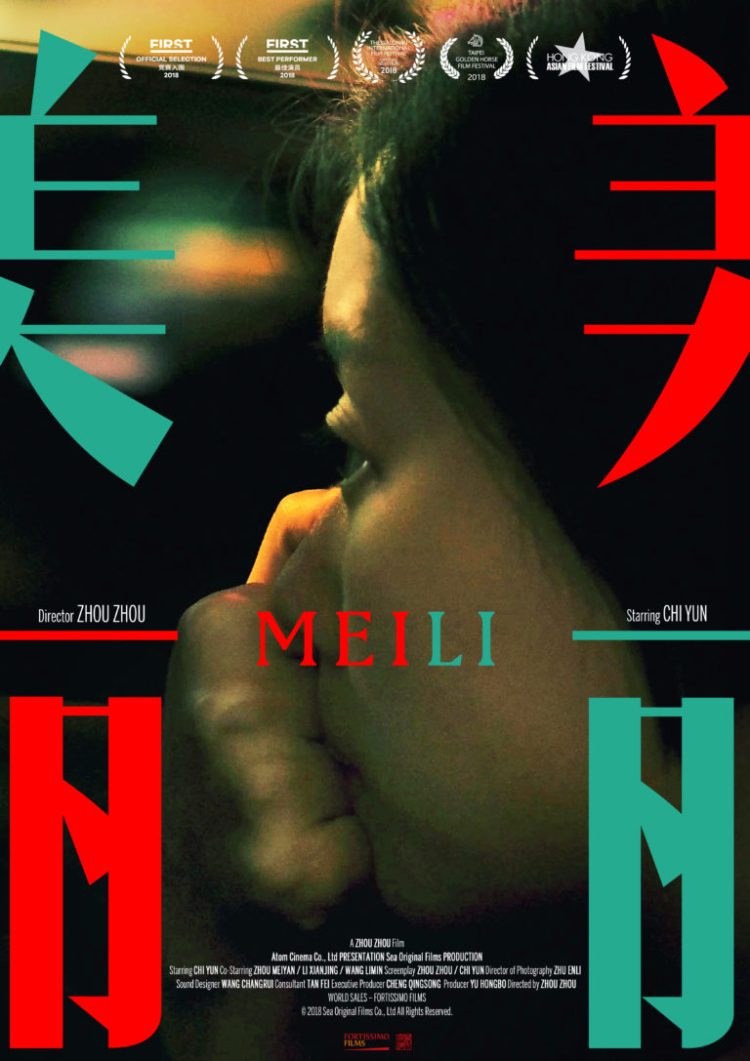
Meili poser 2Though Mainland cinema has a famous aversion to the representation of LGBT lives on-screen, there does seem to have been a notable shift towards the positive in recent years with even big budget blockbuster comedies and family films offering subversive, if subtle, messages of tacit support. Nevertheless, lesbian life continues to be underserved with Fish and Elephant, often regarded as the “first” explicitly lesbian film from Mainland China, released only in 2001. Zhou Zhou’s Meili (美麗) is not an issue film nor does it make much of its protagonist’s sexuality but it does attempt to address the many difficulties she experiences in her life as a gay woman from a humble background.

Meili (Chi Yun) has a casual job in a laundry and lives with her high flying career woman girlfriend Li Wen (Zhou Meiyan) who is often forced to stay out late drinking to excess with colleagues in an attempt to climb the ladder. Li Wen receives the opportunity of an extended business trip to Shanghai and asks Meili to go with her only to change her mind abruptly at the last minute, fearing her colleagues will find out that she’s in a relationship with another woman and it will damage her prospects or perhaps even cost her her job. Though Meili was ambivalent about going anyway, the sudden reversal proves a huge shock, especially as she’s also been let go from her laundry job for having the temerity to ask about the annual leave policy.

Meanwhile, Meili is constantly pestered for money by her hard-pressed older sister (Li Shuangyu) who is married to a man (Wang Limin) so vile Meili can hardly bear to look at him. The reasons for her disdain will become apparent, but adding to the confusing family situation is a little girl being brought up by the couple which is apparently Meili’s. Meili is a lesbian with no interest in men which may hint at the reasons she intensely hates the child and resents the entire situation. Despite all that, however, Meili does not seem to be able to cut her sister off and finds herself going out of her way to help her even though she is herself in extreme difficulty.

Toughness and tenderness do seem to go together as we witness Meili set up an IV for her hung-over girlfriend, berating her for drinking too much yet again but caring for her anyway. Meili blows up at her brother-in-law’s, overturning their dinner table when he insults her in front of his friends, but shuts down when wounded by Li Wen, seemingly unwilling to engage in a probably destructive argument but dragged into one anyway. The relationship between the two women appears settled and positive despite the disparity of their socioeconomic statuses, but there are cracks and when Meili begins to suspect that Li Wen may be seeing a male colleague behind her back, perhaps as a cover or to improve her career prospects, she begins to wonder what they really are to each other.

For Meili who could not rely on her family, and had no future plans or real place to belong, Li Wen had become everything. “Shanghai” is a dream to the youngsters of Changchun who assume the gleaming city must be full of opportunity and excitement but it may well be one beyond their reach even if they manage to escape industrial town casual labour hell. Meili bears her difficult circumstances with fortitude. Obliged to live quietly and under the radar, she works hard and saves her money but is betrayed at every turn – by unscrupulous employers, by her toxic family, by her ambitious girlfriend, and even by her supportive and well meaning friends who reluctantly decide that they will have to leave her behind alone in order to chase their own dreams in the city. Having lost everything and all hope for the future, violent revenge seems an unavoidable consequence of her almost total oppression.

A popular name for baby girls, “Meili” means beautiful but there’s precious little beauty in Meili’s increasingly grey and hopeless world. Human selfishness, capitalistic avarice, and conservative patriarchal values conspire to rob her of all possibility for life or forward motion. There is no path out of poverty and little possibility of happiness in being able to live openly and equally with a woman by whom she is fully loved. Painting a bleak picture of life in post-reform provincial China, Zhou’s debut presents a refreshingly normalised depiction of a same sex relationship while making plain each of the various ways its heroine is backed into a corner by the oppressive and increasingly unequal society in which she lives.


Meili was screened as part of the 2019 Chinese Visual Festival.

International trailer (English subtitles)

Blue Spring (青い春, Toshiaki Toyoda, 2001)

Blue Spring posterJapan is a hierarchical society, but that doesn’t mean there is only one hierarchy. Every sector of life seemingly has its own way of ordering itself, including high school. Back in the ‘80s, high schools became known as violent places in which angry young men took out their adolescent frustrations on each other, each hoping to be accounted the toughest guy in town. Toshiaki Toyoda, chronicler of millennial malaise, made his one and only “youth movie” in adapting Taiyo Matsumoto’s delinquent manga Blue Spring (青い春, Aoi haru), bringing to it all the nihilistic hopelessness of his earlier work tempered with sympathetic melancholy.

The action begins with a photograph of group of boys entering their final year of high school before embarking on a dare to decide who will be the new king of the school which involves hanging off a high balcony and seeing how many times you can clap before needing to catch hold of the railing or fall to your death. Cool and apathetic Kujo (Ryuhei Matsuda) wins easily with a new record, but seems indifferent to his increased status while his best friend and underling, Aoki (Hirofumi Arai), basks in the vicarious glow of suddenly being top dog. Meanwhile, Yukio (Sousuke Takaoka) – a silent and troubled young man, keeps his minion on the hook with promises of making him a fully fledged member of the gang while squaring off against Ota (Yuta Yamazaki) who is keen to talk up his growing friendship with a local mobster.

Despite a reputation for order and discipline, Asa High School is a lawless place where ineffective authority figures run scared of the hotblooded teens. Set in entirely within the school, there is little hint of the boys’ home lives but none of them truly believe there’s very much for them out in the world and know that the last year of high school is a final opportunity to be uncivilised with relatively few repercussions. The teachers, sadly, mainly agree with them, tiredly reading out the same dull text books while letting the kids do as they please because they lack the inclination to help them. Even those who do take an interest fail to get through, trotting out tired platitudes which do little to convince the kids in their care that their time at school matters or that they should want to work on their interpersonal skills and anger issues.

“People who know what they want scare me”, Kujo explains to a strangely sympathetic teacher (Mame Yamada) whose job it is to make the flowers bloom. He’s top dog now, but being made king has only made him feel powerless and uncertain. Suddenly, being the strongest seems like an irrelevance and this pointless violence an absurd waste of time. The problem is, none of these kids have any direction or hope for the future. They don’t believe education can be a way out, and being trapped in a stagnant economy makes them inherently distrustful of the salaryman dream that might have distracted their fathers. All they have are their fists and angry, adolescent hearts.

One by one their dreams are crushed – the baseball star doesn’t make it to Koshien, the sickly kid doesn’t show up for school, the yakuza goon is betrayed by a friend, the bullied underling moves up to bullying others, and a cross word between Aoki and Kujo threatens to ruin a childhood friendship. Asked for his hopes and dreams for the future, all Yukio can offer is a dedication to world peace and the Ultraman pose. Kujo, staring confused at the flowers, wonders if some are destined to wither without ever blooming only for his teacher to console him, melancholically, that he chooses to believe that flowers are born to bloom and so bloom they will.

Meanwhile, yakuza circle the fences like baseball scouts at a championship game, knowing organised crime is the traditional next step for handy boys who won’t graduate high school. Yet the tragedies here aren’t so much ruined futures and the futility of life as the failure of friendship. The boys fight and they hurt each other in ways other than the physical but lack the maturity to deal with their pain. Violence, self inflicted and not, is their only outlet and their only means of attracting attention from the authority figures so intent on ignoring their existence. Toyoda builds on the relentless sense of hopelessness seen in Pornostar but leaves with the weary resignation of one no longer young who knows that youth is dream destined to disappoint.


Blue Spring is released on blu-ray courtesy of Third Window Films on 13th May. The set also includes a very frank and often humorous commentary from Toyoda (in Japanese with English subtitles) as well as a “making of” from the time of the film’s release.

Original trailer (English subtitles)
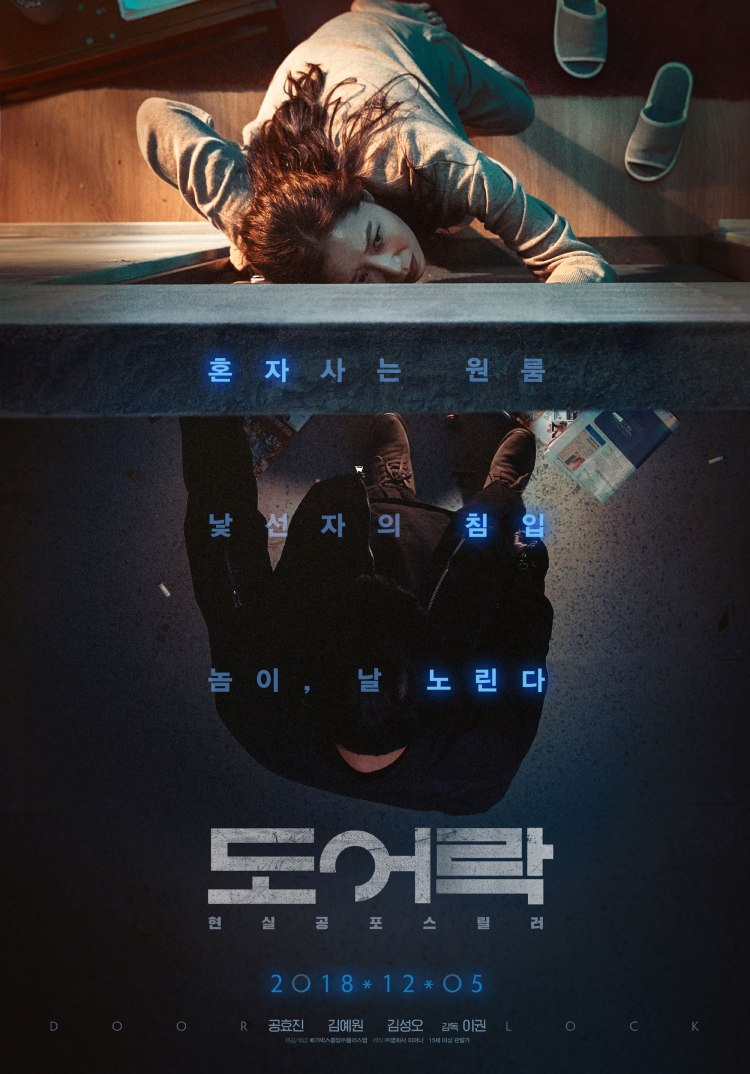
Door Lock (도어락, Lee Kwon, 2018)

Door lock poster 1Behind your own front door, you’re supposed to feel safe but the modern city conspires to ensure no space, not even the most private, can feel completely free from danger. A Korean spin on the Spanish film Sleep Tight, Lee Kwon’s Door Lock (도어락) shifts the focus from perpetrator to victim as it explores each of the many and various ways women are made to feel vulnerable in the still male dominated Korean society.

Kyung-min (Gong Hyo-jin) has more than one reason to feel anxious. A bank clerk on a temporary contract, she’s forever worrying that she’ll soon be out of a job though there is a rumour of permanent employment on the horizon if only she can keep up her efficiency at work. That might be difficult, however, because Kyung-min has not been feeling well. She wakes up groggy and goes through much of the day feeling a little out of things, though perhaps that’s just the city air. Another cause for concern is that she keeps having the eerie feeling that someone’s been in her apartment when she wasn’t there. Fully aware of all the dangers (and perhaps having had problems before), Kyung-min is concerned enough by signs of someone fiddling with her door lock to change the code every few days, and is panicked by someone furiously rattling the door late at night trying to get in.

Like any sensible person, Kyung-min calls the police but they remain unsympathetic to her fears. Knowing she’s called several times before, they write her off as nervous and hysterical or perhaps an attention seeking lonely single woman. Kyung-min, unfortunately for her, has a habit of attracting the attentions of unpleasant men like a customer at the bank, Ki-jung (Jo Bok-rae), who refuses to take no for an answer after inappropriately asking her out during a consultation about his bank account. In an angry rant, Ki-jung accuses her of leading him on, that she flirted with him on purpose to encourage him to take out additional accounting services. Kyung-min feels herself shrinking in wondering if there’s some truth in what he said, instantly blaming herself, as she recalls that the appraisals are in the offing and she wasn’t making enough sales. Her colleague told her to smile more, so maybe she did and this is what comes of it. The situation is only diffused when Kyung-min’s smartly dressed boss steps forward to place a hand on her shoulder and call security on her behalf.

The boss, nice and well mannered as he is, is perhaps another sort of problem as he too has additional interest in Kyung-min that could end up becoming an awkward workplace issue. As it turns out he becomes another sort of crisis entirely which gets Kyung-min mixed up with the police who now assume she herself is the creepy stalker with only the evidence of her previous calls to back up her claim of persistent harassment. The police remain unsympathetic, intent on pinning something on Kyung-min to close the case quickly while dismissing her fears as either lies, psychosis, or hysterical paranoia. Eventually Kyung-min and her best friend Hyo-joo (Kim Ye-won) decide they’re on their own and they’ll have to proactively protect themselves because, it seems, no one else is going to.

The men who routinely approach Kyung-min do so with frustrated entitlement. They disregard her right to refuse for no particular reason and assume it to be a slight, insisting that Kyung-min is a snob who has only rejected them for their working class occupations and relative lack of financial status. Wounded male pride is once again the most dangerous force of them all. In a precarious economic situation of her own, Kyung-min is left feeling as if nowhere is safe in an intensely chauvinistic, rabidly capitalist, and conservative society which encourages her to find fault with herself rather than the world in which she lives that forces her to feel that way. Inequalities, both economic and sexual, are driving violent crime but when it comes down to it the powers that be are relatively uninterested in the fears of single women or in doing more to create a fairer, safer society. They would rather hang fake security cameras that make you feel safe than deal with illicit spy-cams or listen seriously to women’s concerns when they say they feel afraid. A tense and harrowing thriller, Door Lock is also a frighteningly relatable exploration of the fears of modern urban living.


Door Lock was screened as part of the 2019 Udine Far East Film Festival.

International trailer (English subtitles)