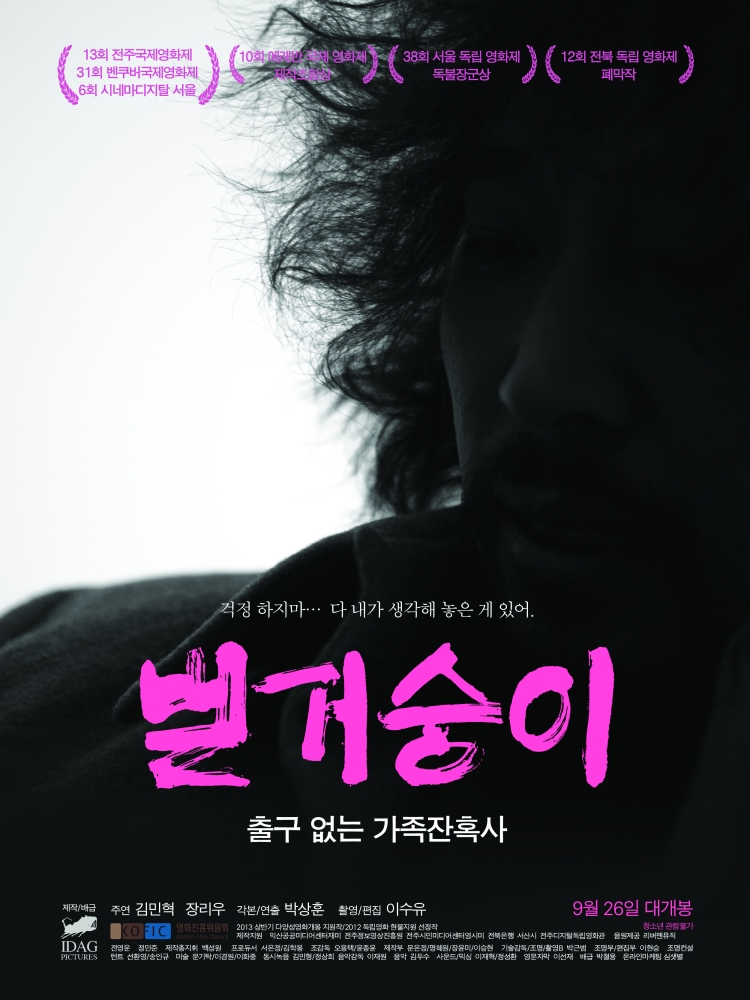
 Anyone who follows Korean cinema will have noticed that Korean films often have a much bleaker point of view than those of other countries. Nevertheless it would be difficult to find one quite as unrelentingly dismal as A Mere Life (벌거숭이, Beolgeosungi). Encompassing all of human misery from the false support of family, marital discord, money worries, and the heartlessness of con men, A Mere Life throws just about everything it can at its everyman protagonist who finds himself trapped in a well of despair that not even death can save him from.
Park Il-rae (Kin Min-hyuk) and his wife Yurim (Jang Liu) own a small supermarket which isn’t doing so well. After approaching both of their parents for help and getting a flat no from both directions, the couple decide to throw all of their savings into buying a delivery van to increase their business potential. Il-rae excitedly travels into the city to sign the paperwork but gradually realises something is wrong when the salesman suddenly disappears. Having lost all of the family’s money, Il-rae travels home dejected and hits on a drastic solution – a family suicide. Poisoning his wife and son, Il-rae means to die too but survives even more burdened by guilt and regret than before. More failed suicide attempts follow as Il-rae attempts to come to terms with his actions, somehow surviving yet all but dead inside.
There really is no hope for Park Il-rae. At the very beginning of the film, the family visit a park in which his wife urges their son to make a wish by adding a stone to the top of a cairn, only to see the whole thing suddenly collapse in front of them like a grim harbinger of the way their lives are about to implode. Il-rae tries to repair the pile, but all to no avail. This quite awkward family trip in which Il-rae moodily strides on ahead will actually be the happiest they ever are, away from the destructive domestic environment where money troubles and male pride cast a shadow over an otherwise ordinary family life.
Both Il-rae and his wife seem to have strained relationships with their parents. Il-rae tries his own father first in the quest for help only for him to angrily tell his son to man up. When his wife visits her parents (alone with the couple’s little boy) it’s the first time she’s seen them in a decade and they are fairly nonplussed that it’s money she’s come for. After Yurim delicately states her predicament, her father tells her that he can’t help because he now has lots of hobbies which all require money. Offering perhaps the worst piece of fatherly advice ever uttered, he suggests she take up something fun herself and not worry about money so much.
The worse things get the more the family fragments. Il-rae drinks while the couple’s son seems to be addicted to video games. Faced with an obnoxious man who thoughtlessly parks his expensive car directly in the doorway of their store yet refuses to move because “he’ll only be a few minutes”, Il-rae is only saved from doing something stupid by his wife physically pushing him out of the way, but her physical dominance only worsens his sense of impotence. After making his drastic and irreversible decision, Il-rae is left alone and reeling from the worst kind of failure and regret. From this point on he’s marooned in his very own limboland, hovering on the brink of life and death.
Beginning with POV shots of a car dutifully following the only path laid out for it, A Mere Life states its bleak indie intentions right away as the gloomy lyrics of a folk tune run in the background constantly making reference to a despair which not even death could comfort. Recalling the great misery epics of the ‘70s, Park Sang-hun films with an anxious, unblinking camera save for the ominous shaky cam shots of a man facing the sea which begin and end the film. Il-rae may have made a decision as regards a future, but it remains unclear if there is any hope of salvation waiting for him. A Mere Life is never is never an easy watch thanks to its unshaking bleakness, but its strength of purpose and uneasy mix of morality play and character drama make for an unusual, interesting independent feature debut.
Reviewed at the 2016 London Korean Film Festival.
Original trailer (English subtitles)
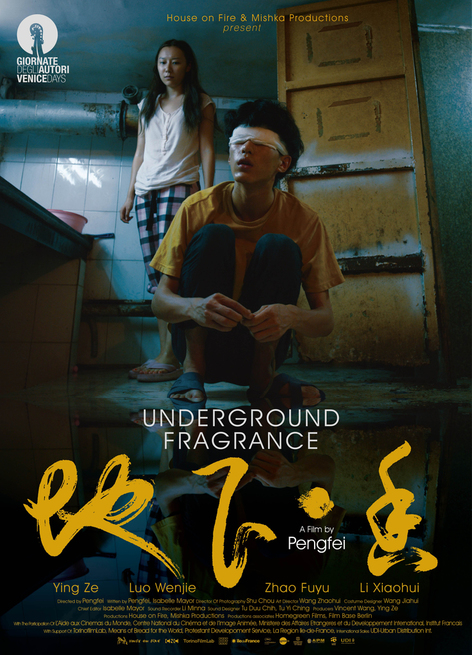 The original Chinese title of recent Tsai Ming-liang collaborator (Song) Pengfei’s debut feature 地下・香 (dìxìa・xiāng) has an intriguing full stop in the middle which the English version loses, but nevertheless these two concepts “underground” and “fragance” become inextricably linked as the four similarly trapped protagonists desperately try to fight their way to better kind of life. Recalling Tsai’s dreamy symbolism, Hou Hsiao-Hsien’s romantic melancholy, and Jia Zhangke’s lament for the working man lost in China’s rapidly changing landscape, Pengfei’s film is nevertheless resolutely his own as it chases the ever elusive Chinese dream all the way from dank basements and ruined villages to the shiny high rise cities which promise a tomorrow they may never be able to deliver.
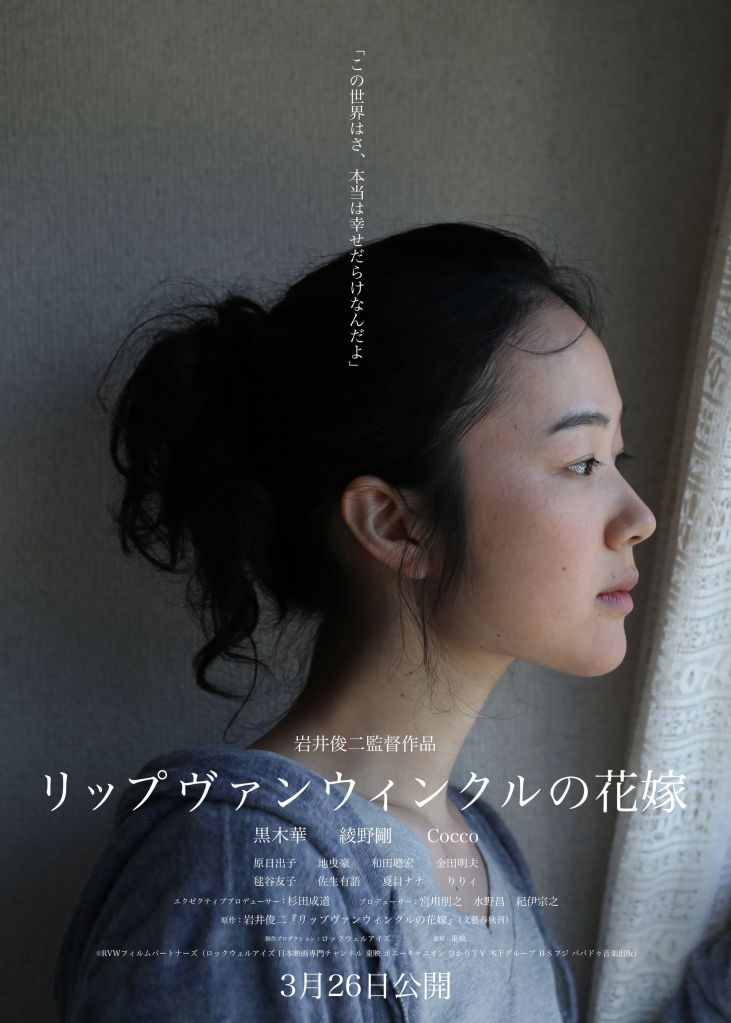 “Being naked in front of people is embarrassing” says the drunken mother of a recently deceased major character in a bizarre yet pivotal scene towards the end of Shunji Iwai’s aptly titled A Bride for Rip Van Winkle (リップヴァンウィンクルの花嫁, Rip Van Winkle no Hanayome) in which the director himself wakes up from an extended cinematic slumber to discover that much is changed. This sequence, in a sense, makes plain one of the film’s essential themes – truth, and the appearance of truth, as mediated by human connection. The film’s timid heroine, Nanami (Haru Kuroki), bares all of herself online, recording each ugly thought and despairing notion before an audience of anonymous strangers, yet can barely look even those she knows well in the eye. Though Namami’s fear and insecurity are painfully obvious to all, not least to herself, she’s not alone in her fear of emotional nakedness as she discovers throughout her strange odyssey in which nothing is quite as it seems.
 The ‘70s. It was a bleak time when everyone was frightened of everything and desperately needed to be reminded why everything was so terrifying by sitting in a dark room and watching a disaster unfold on-screen. Thank goodness everything is so different now! Being the extraordinarily savvy guy he was, Hiroki Kadokawa decided he could harness this wave of cold war paranoia to make his move into international cinema with the still fledgling film arm he’d added to the publishing company inherited from his father.

 Review of Byun Young-joo’s Helpless (화차, Hwacha) first published by
 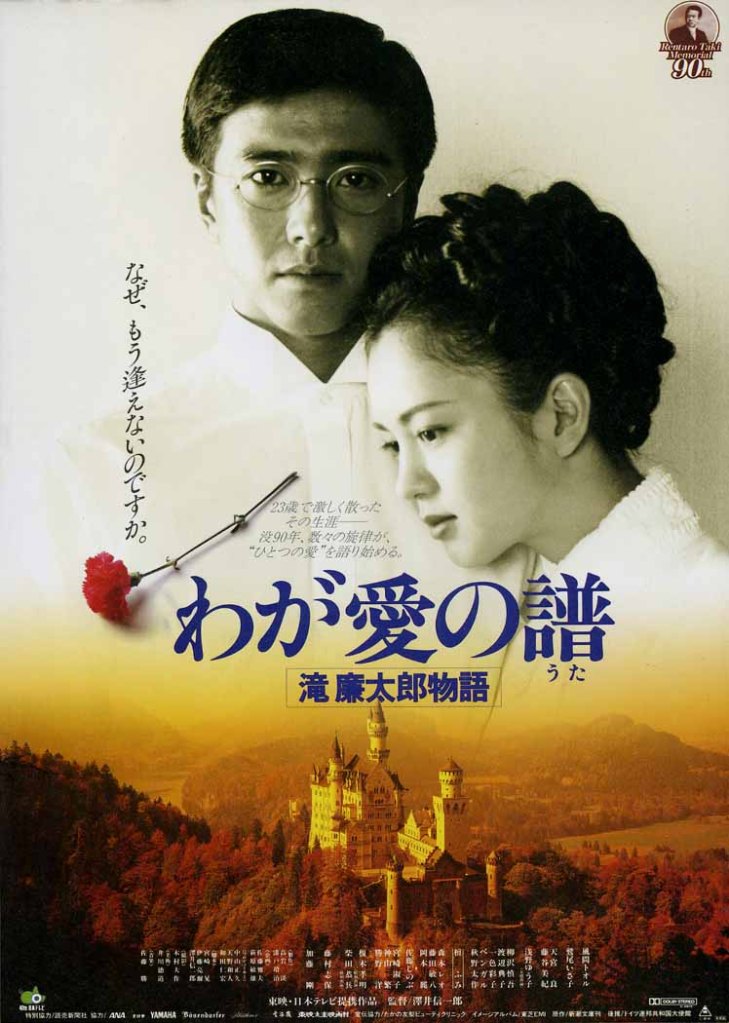 All those songs and rhymes you learnt as a child, somehow it’s strange to think that someone must have written them once, they seem to just exist independently. In Japan, the name behind many of these familiar tunes is Rentaro Taki – the first composer to set Japanese lyrics to European style “classical” music. It’s important to remember that even classical music was once contemporary, and along with the opening up of the nation during the Meiji era came a desire to engage with the “high culture” of other developed nations. The Tokyo Music School was founded in 1887 and Taki graduated from it just four years later in 1901. However, his career was to be a short one as his health gradually declined until he passed away of tuberculosis at just 23 years old. Bloom in the Moonlight (わが愛の譜 滝廉太郎物語, Waga Ai no Uta: Taki Rentaro Monogatari), also the title of one of his most well known and poignant songs, is the story of his musical career but also of the history of early classic music in Japan as the country found itself in a moment of extreme cultural shift.
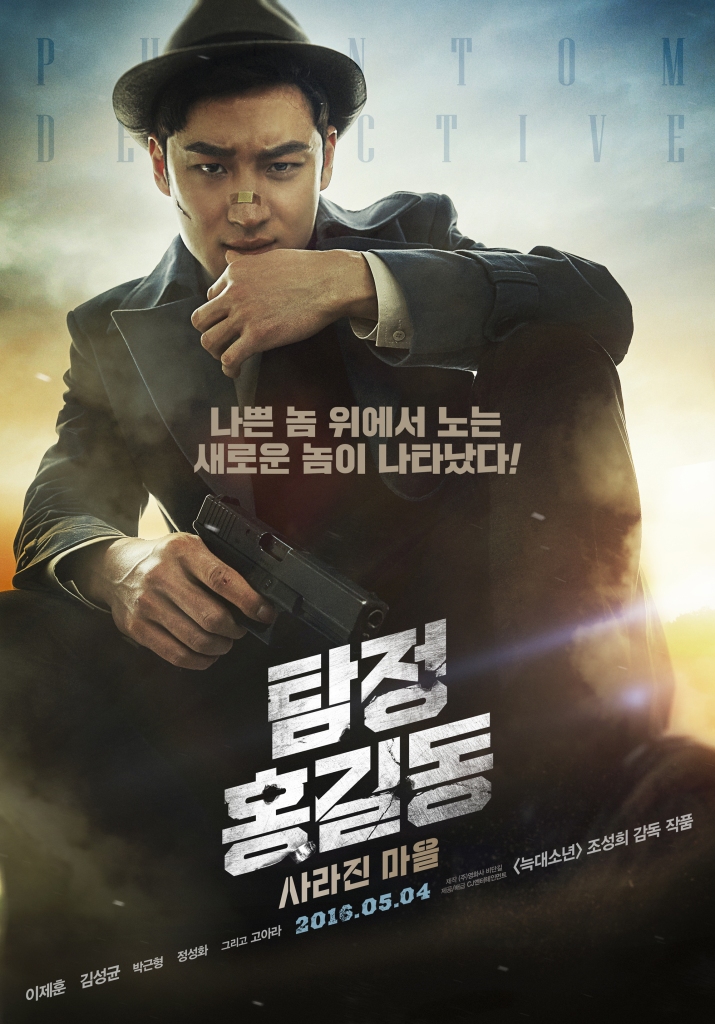 Review of Jo Sung-hee’s The Phantom Detective (탐정 홍길동: 사라진 마을, Tamjung Honggildong: Sarajin Maeul) first published by
 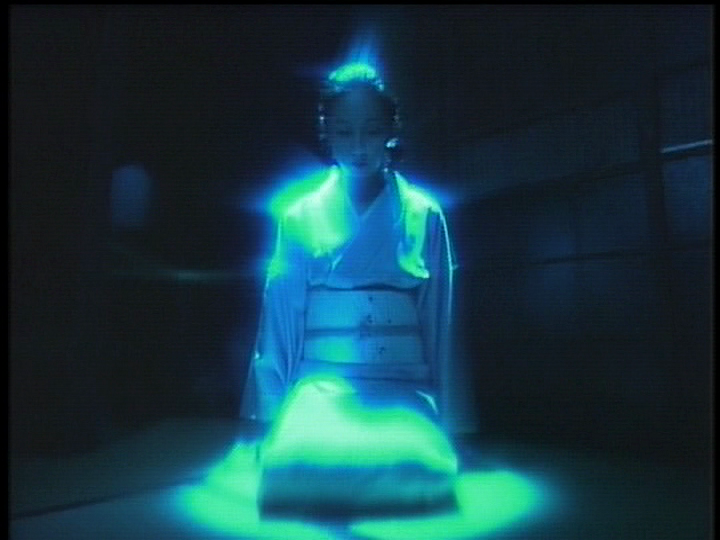 Akio Jissoji had a wide ranging career which encompassed everything from the Buddhist trilogy of avant-garde films he made for ATG to the Ultraman TV show. Post-ATG, he found himself increasingly working in television but aside from the children’s special effects heavy TV series, Jissoji also made time for a number of small screen movies including Blue Lake Woman (青い沼の女, Aoi Numa no Onna), an adaptation of a classic story from Japan’s master of the ghost story, Kyoka Izumi. Unsettling and filled with surrealist imagery, Blue Lake Woman makes few concessions to the small screen other than in its slightly lower production values.

