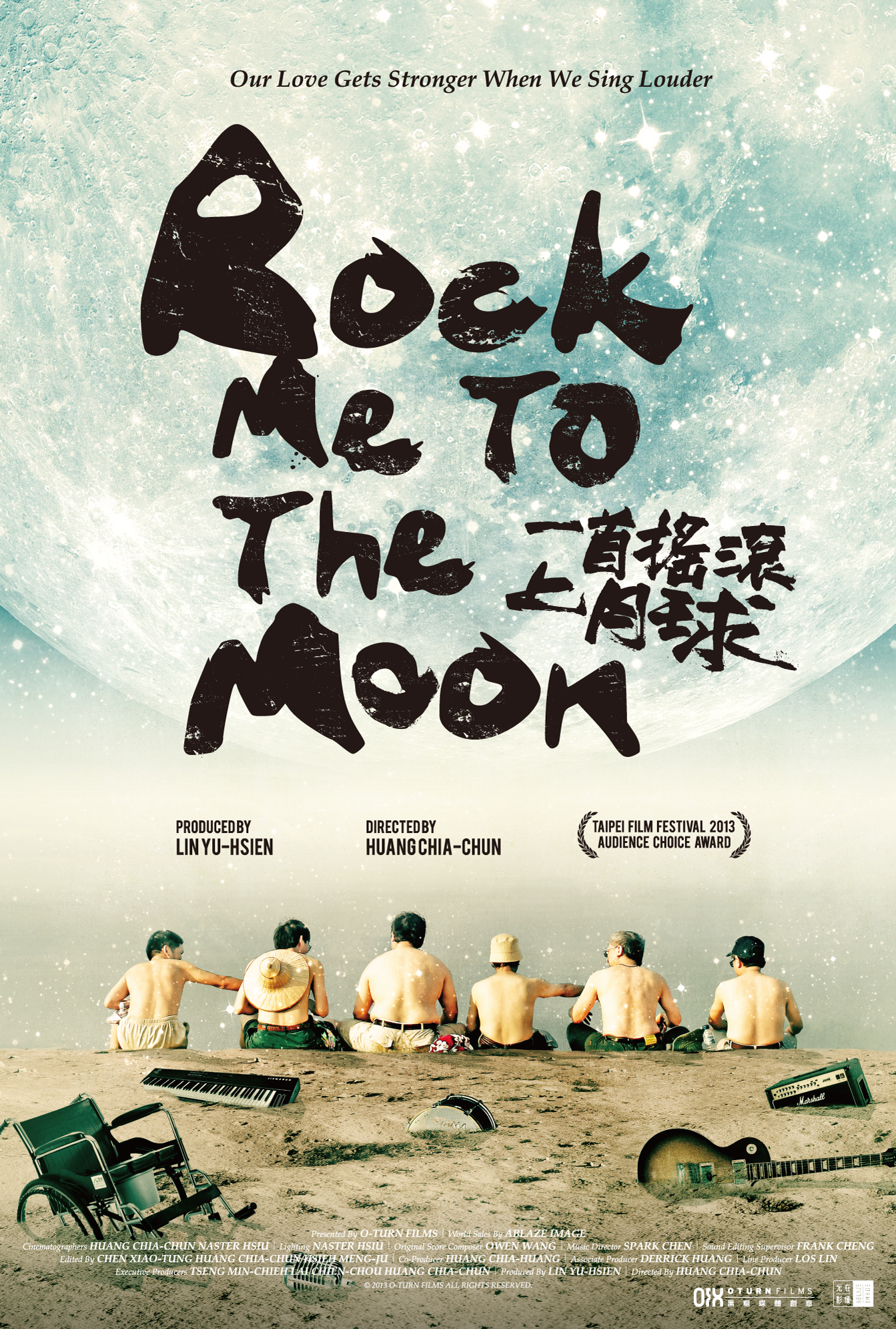
Rock Me to the Moon (一首搖滾上月球, Huang Chia-chun, 2013)

“Finally, I understand to be strong is to be gentle” sings the lead vocalist of Sleepy Dads, a rock band comprised entirely of middle-aged men who are each fathers of children with rare medical conditions. Documentarian Huang Chia-Chun first encountered the men while working as a volunteer with Taiwan Foundation for Rare Disorders where he was struck by their intense love for their children continuing to give all for their families while also obviously facing their own difficulties as they try to balance economic support with the emotional. Charting the Sleepy Dads’ quest to play at a high profile rock festival, Rock Me to the Moon (一首搖滾上月球, Yī Shǒu Yáogǔn Shàng Yuèqiú) is not only an exploration of living with disability but also a quiet re-evaluation of notions of masculinity as the fathers find themselves members of a minority when it comes to their children’s care. 

That was in fact one of the motivations which led to the founding of the band, one of the dads remarking that as they looked around at various support groups it was almost all mothers with very few men, lamenting that unfortunately many fathers either reject their children or abandon their families entirely. A news report later in the film, meanwhile, relates the tragic story of a single-father who was pushed towards suicide because of the difficulties of caring for his daughter alone which left him unable to earn the money to support them both and eventually overburdened with debt. Though one of the Sleepy Dads is a school teacher with a steady job, many of the others are in precarious freelance employment struggling to balance the need to earn money with the physical need to be there for their children each of whom has differing needs especially as some of them have more than one child suffering with longterm illness. 

The band provides a place where the men can come together to relax with others in a similar position, finding mutual support and solidarity while investing themselves in mastering a new skill. Guided by Spark, the lead singer of top rock band Quarterback, who offers them the opportunity to open at one of their concerts, the Sleepy Dads do their best to perfect their skills with the hope of eventually playing at a top festival despite their comparatively advanced age and lack of experience. Training hard to achieve their goal, it’s less the end point that matters than the process as they work through their difficulties together with good humour and determination. 

As another of the fathers puts it, however, Taiwanese men are raised to be brave and strong but he’s also under an intense amount of pressure. Poignantly his wife, preparing to undergo medical treatment herself, expresses that she’d just like her husband to give her a hug but he says he doesn’t know how because he wasn’t brought up to show emotion in that way. She also worries that he sometimes doesn’t see that she’s under a lot of pressure too and prefers to think of her as a kind of superwoman with an innate ability to cope with anything life throws at her. Nevertheless, the Sleepy Dads have fierce love for their children and are never afraid to show it, doing everything they can to care for them while knowing in some cases that their kids may not survive them and so their time together is even more precious. As the song says, they’ve learned that true strength lies in being gentle. 

While one of the mothers laments that she feels isolated even within her own family because her in-laws will not accept the children, asking her not to bring them to a family gathering, the Sleepy Dads have formed an extended family of their own coming together to celebrate one of the dad’s moves into a new home he’s had designed to better meet his family’s needs with all the kids playing together happily. They don’t pretend that their lives are easy, but they share their joys and sorrows equally and work out their frustrations through the medium of song. A warm and empathetic tribute to these selfless men and their infinite love for their children, Rock Me to the Moon is also a celebration of friendship and solidarity not to mention the power of music to overcome all hardships. 


Rock Me to the Moon streams in the US Dec. 11 – 13 as part of Asian Pop-Up Cinema & TACCGC’s @Home with Taiwan Cinema: Love & Hope.

Original trailer (English subtitles)

The Reason Why I’m Home (回家的理由, Chang Ming Yu, 2019)

How do you learn to forgive after family tragedy? That’s a question Chen-yun the heroine of Chang Ming Yu’s documentary The Reason Why I’m Home (回家的理由, Huíjiā de Lǐyóu) begins to ask herself as she tries to come to terms with an extremely traumatic history while preparing to become a mother. As a close friend of his subject, Chang is both companion and chronicler, a quietly supportive presence as Chen-yun navigates these extremely difficult emotional waters, but also prompting her to think more deeply about the concept of family at the exact moment in which she begins to found her own. 

The reason Chen-yun returns home after a five year absence is that she is told her younger brother has been taken seriously ill. In fact, as it turns out he has passed away, apparently beaten to death by members of the cult her mother Fen-chueh belonged to though she also claims he had become a drug user. Fen-chueh accepts responsibility for her son’s death, but is said to have been under control of the cult’s crazed leader Chen-miao who according to Chen-yun brainwashed her brother to make him believe he was a bad person. Chen-yun suspects that like her he eventually wanted to leave but was unable to and was subsequently killed. She harbours a degree of guilt that she chose to leave him behind, telling him only that she was leaving to look for their father who had already escaped the cult. 

Expecting a baby with her policeman husband, Chen-yun is forced to deal with the fallout from the scandal of her mother’s crime, hounded by press determined to interview her about the case. Chen-yun’s father, technically the plaintiff in the case against Fen-chueh, signals his intention to sever ties with his former wife and advises Chen-yun to do the same while also telling her not to seem too happy which seems like an unfair request when she’s about to give birth to new life. After all as she puts it, life goes on. She hasn’t forgotten about her brother but you can’t go on mourning forever. Nevertheless, despite her earlier animosity in which she hinted that her mother had been abusive in her childhood and refused to say when questioned whether or not she still loved her, Chen-yun finds herself ringing Fen-chueh when she needs someone who can sign papers on her behalf at the hospital while her husband is unavailable. As healing an act as that might seem to be, it also has its share of awkwardness, a nurse accidentally asking a series of tactless questions necessary for the admission forms such as how many siblings Chen-yun has along with other details her mother is assumed to know but does not. 

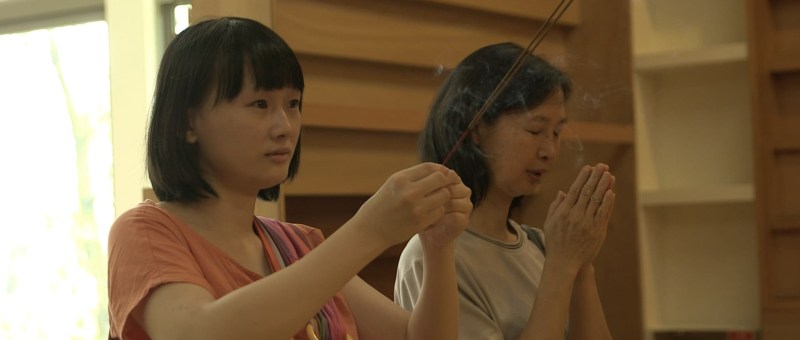
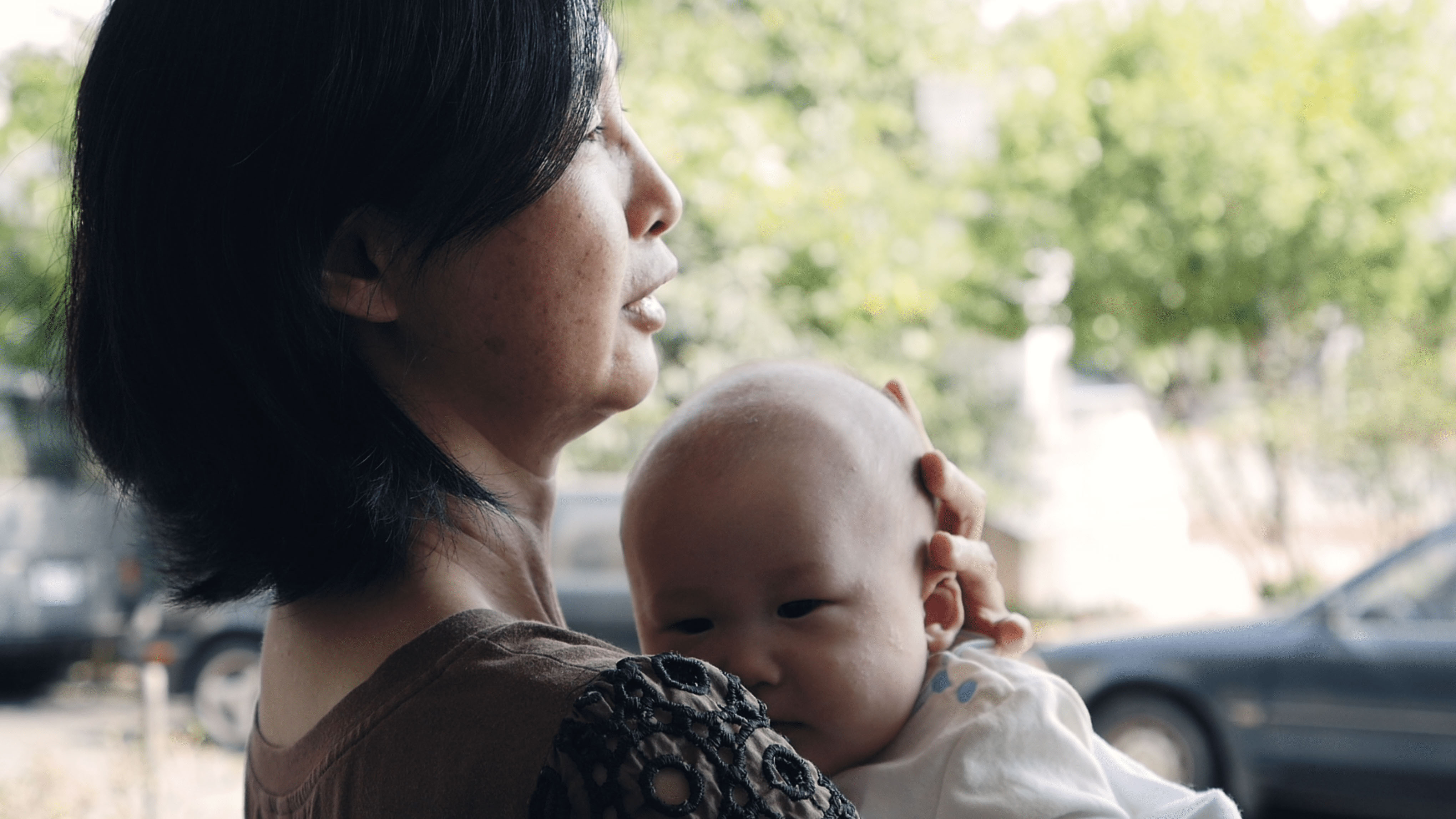
Given what we know of her family background, it is perhaps surprising that Chen-yun continues to allow Fen-cheuh back into her life, even asking her to look after her baby son. Nevertheless in the brief time before Fen-chueh must report to serve her four-year prison sentence, Chen-yun begins to repair their fragile maternal bond, coming to understand her mother a little more now that she has become a mother herself and perhaps learning to forgive her for her role in her brother’s death. “No one taught us how to be parents” Fen-chueh later confesses to Chang in a private interview, having realised that though she thought she was doing the best for her daughter she may only have been causing her harm. 

As a new mother Chen-yun cannot help but think of similar questions as she begins to bring up her young son in the midst of her family legacy, taking him with her as she visits her brother’s grave and to visit her mother in the prison so he’ll get to know grandma even while she’s away. Mixing observational footage with brief conversational sessions between a behind the camera Chang and an often emotional Chen-yun, The Reason Why I’m Home focusses not on the tabloid fodder of the crime with its cruel cultists and legacy of abuse but on the slow process of healing as Chen-yun learns to forgive herself and her mother while repairing their fragile family bonds as she does her best to raise her son in love and safety.


The Reason Why I’m Home streamed as part of this year’s San Diego Asian Film Festival.

Original trailer (English subtitles)

76 Days (Wu Hao, Chen Weixi & Anonymous, 2020)

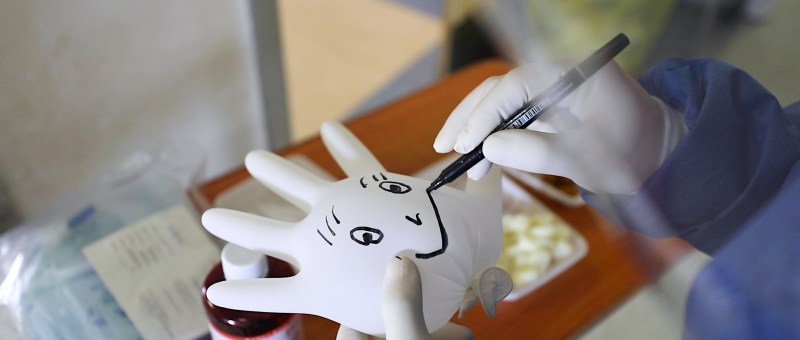
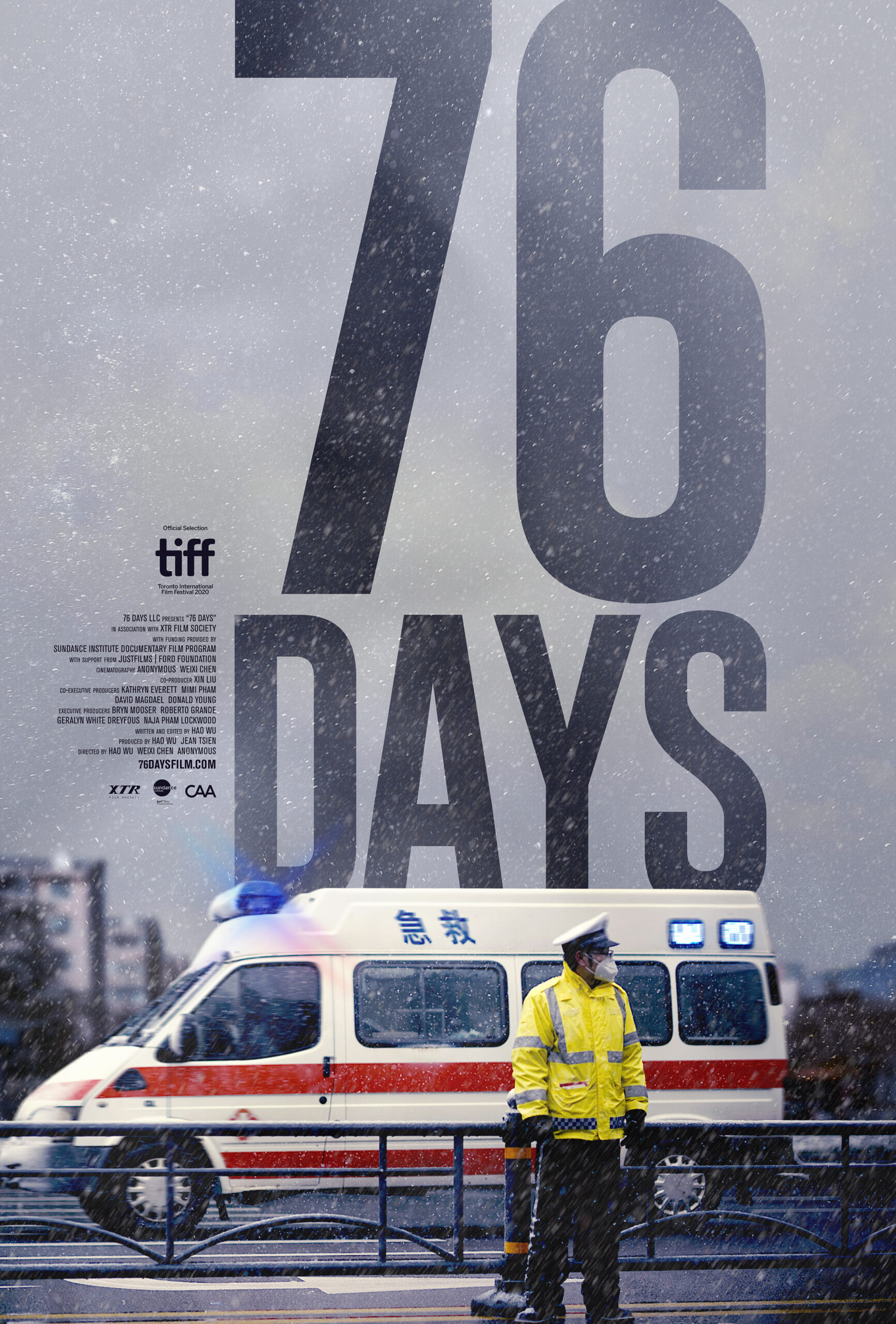
“Don’t worry, so many of us are here for you” a nurse tries to reassure a pregnant woman understandably anxious in being told that her husband cannot be in the room with her while she undergoes an emergency C-section in 76 Days, an observational documentary shot almost entirely within a series of hospitals during the Wuhan lockdown. Co-directed by New York-based director Wu Hao and two on the ground reporters, Chen Weixi and another who has elected to be credited anonymously, 76 Days is testimony to the heroism of the frontline medical personnel who found themselves dealing with a new and mysterious illness, but also a record of a moment as it happened through the eyes of those who were there. 

As such, it opens in chaos with a hospital overrun by those who desperately need help and have nowhere else to turn. “Let’s not panic, OK?” the head nurse adds to the end of her briefing as the team prepare for still more patients, many of them waiting in a small room complaining of the cold. Meanwhile, another healthcare worker in a full hazmat suit breaks down in tears not allowed to attend her own dying father while her colleagues try to offer comfort at the same time as encouraging her to pull herself together because they need her on the ward. She can only watch as he’s taken out of the room in an orange bodybag, two of her colleagues continue to take hold of her at the armpits, less for solidarity it seems than to keep her safe while while she follows the gurney down towards the van which will take his body away. 

Meanwhile, the doctors attempt to help those who’ve come in looking for treatment including one confused older gentleman who keeps insisting he’s not really ill and wants to go home. Making repeated attempts to escape which might be comical if it were not for the gravity of the situation, the old man is obviously frightened and alone alternating between crying on his bed and wandering around in search of company. Later his son rings him to give him a telling off for causing the doctors so much trouble, reminding him that he’s been a Party Member for decades and ought to be acting with a little more dignity while the doctors do their best to be patient with both men, especially when the son later expresses reluctance to have him back in case he’s not really “cured” (the old man will be one of last to leave the hospital). The old man’s anxiety raises another issue in that he’s used to speaking in dialect and so there is an obvious difficulty in communication between some of the patients, particularly those among the older generation, and the hospital staff some of whom are secondments from Shanghai rather than from the local area. Other patients, meanwhile have been looking up their symptoms on the internet which is causing them additional anxiety and headaches for their doctors who then have to re-explain all their treatment decisions. 

We also realise that certain procedures cannot be delayed just because there is so much to do leaving personnel tied up with bureaucracy, often needing to ring grieving relatives to ask them for a copy of their loved ones’ documentation so they can issue a death certificate. Some of the nurses also make a point of rescuing the personal affects of those who’ve died such as bracelets and other items of jewellery so they can be disinfected and returned to family members along with more practical items such as mobile phones and ID cards. At the height of the crisis, there is a large box filled with phones belonging to those who have already passed away some of which are still ringing. 

Keeping in touch becomes a secondary problem as couples come in and are shuffled into separate wards, an old woman making regular requests for updates on her husband and a compassionate nurse going so far as to show her his dinner so she can see that he’s eating. Meanwhile the woman who underwent the C-section is isolating away from her baby, she and her husband later enduring another anxious wait towards the end of the lockdown until they’re told that it’s safe for their little girl come home with them. There are no title cards or explanatory text, like everyone else we have no idea where we are or when this will end save for a few brief glances of the daily roster as we notice that admissions seem to be decreasing, people are beginning to go home, and on the momentary glimpses of the outside traffic seems to be increasing on the streets.  

Yet even when it’s over it’s not really over. A nurse has to sit and go through that box of phones ringing relatives again, some of whom evidently had not been made aware their loved one had died, to ask them what to do with the affects. The bracelet of one old woman is dutifully returned to her daughter who cannot help crying as she receives it, but like everyone else goes out of her way to thank the doctors for doing all they could while the nurse profusely apologies that they weren’t able to save her. A valuable historical document, 76 Days is also strangely imbued with a kind of hope in the selfless dedication of the doctors and medical staff who daily risked their own lives to save those they could, while proving that this will someday if not exactly end then at least stabilise. 


76 Days streamed as part of this year’s San Diego Asian Film Festival.

Clip (English subtitles)

The Age of Awakening (前進, Ke Chin-Yuan, 2018)

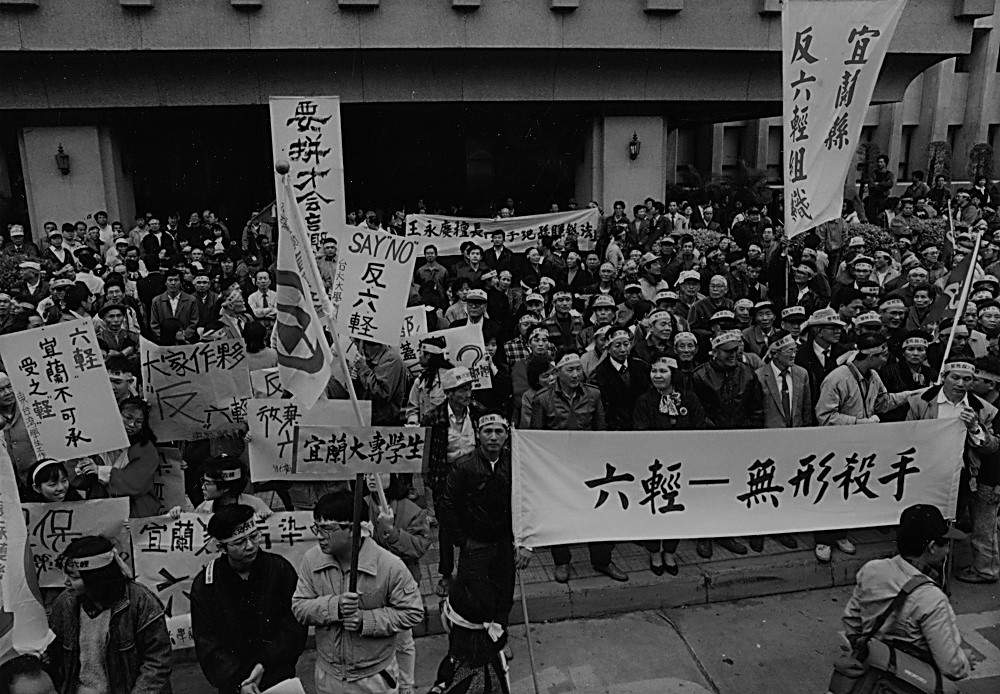
Taiwan is now a prosperous society regarded as most the progressive in Asia, yet for some that prosperity has come at too high a cost. Ke Chin-yuan’s documentary The Age of Awakening (前進, Qiánjìn) looks back over the last thirty years and wonders how it can be that in a little under half a century humanity has managed to “devastate this beautiful, mountainous island”. Tracing the links between the authoritarian past and the origins of eco-activism, Ke is nevertheless keen to remind us that the environmental costs of unchecked capitalism are not a local issue. 

Ke cites the titular “awakening” at the tail end of the martial law era, explaining that the picturesque coastline where he first picked up a camera was forever ruined when the area was re-designated as an industrial park. His own eyes were awakened to the environmental costs of development when local residents rose in opposition to the building of a petrochemical plant, apparently a key part of the nation’s economic strategy. Charting the resistance towards the DuPont plant in Lugang and the LCY Chemical Corp in Hsinchu, he uncovers the hidden link of environmental harm and authoritarianism as centralised government and a prohibition on protest largely prevent the local community having a say over their own land. Though some may have been glad to see the plants arrive, misled by false promises of good jobs and the benefits of development, they were soon disillusioned by the reality in which industrial pollution poisoned the sea life on which the local economy was otherwise dependent while also destroying farmland and leaving an acrid, near unbearable smell in the air. 

As one of the protestors puts it, all they want is breathable air and drinkable water. If your government cannot guarantee you such basic rights, then what really is it for? Yet the government, Ke seems to suggest, is minded to make a tradeoff and thinks this is an acceptable price for the prize of economic growth. Seeing the imposition of the plants and misinformation surrounding their foundation as yet more evidence of the various ways in which those with the least power suffer most under authoritarianism, Ke centres the awakening to environmentalism as a cornerstone of the movement against martial law in which communities sought the power and freedom to be able to advocate for their rights on a local level.

Yet as he points out the environment is never just a local issue. The protestors may be successful in keeping the plant out their town, but maybe the plant gets built the next town over where they perhaps aren’t so lucky possibly because they have less sympathetic political leaders keener to toe the government line. Taiwan is a small island, and at least according to some you can’t ever really be far enough away to escape the effects of industrial pollution. Yet even when prevented from building in Taiwan, local companies simply shift overseas to other, even less empowered, areas of Asia where the same thing happens again. The poor are misled by offers of good jobs only to find dead fish washing up on their shores, eventually mounting protests against the unfair imposition of having a chemical plant built on their land. In Taiwan, meanwhile, the issue is even thornier with large developments built on territory which belongs to the indigenous community. 

Nevertheless, the drive for economic development continued after the martial law era. According to another protestor, it’s a matter of conscience rather than technology with the choice to favour the economy over the environment seemingly irreversible even when major parties win on an economic platform and govern with the knowledge that such policies have widespread public support. So, Ke asks, why is the government so unwilling to listen when the idea that the environment itself is also a basic human right is almost a given? What has actually changed in the last three decades with Taiwan’s transition to democracy? Not enough, according to his veteran activists, but it’s not all doom and gloom. Awareness has improved, people care more than they used to. They’ve been ‘awakened” to the issues in all of their complexity and Taiwan has a lively, diverse and intersectional activist scene in which environmental concerns are very much part of a social justice movement full in the knowledge that the environment is never just a local issue. The age of awakening may have come to an end, but the age of action is only just beginning. 


The Age of Awakening screens on 6th December at London’s Rio Cinema as part of Taiwan Film Festival UK 2020.

Original trailer (no subtitles)

The Price of Democracy (狂飆一夢, Liao Jian-Hua, 2019)

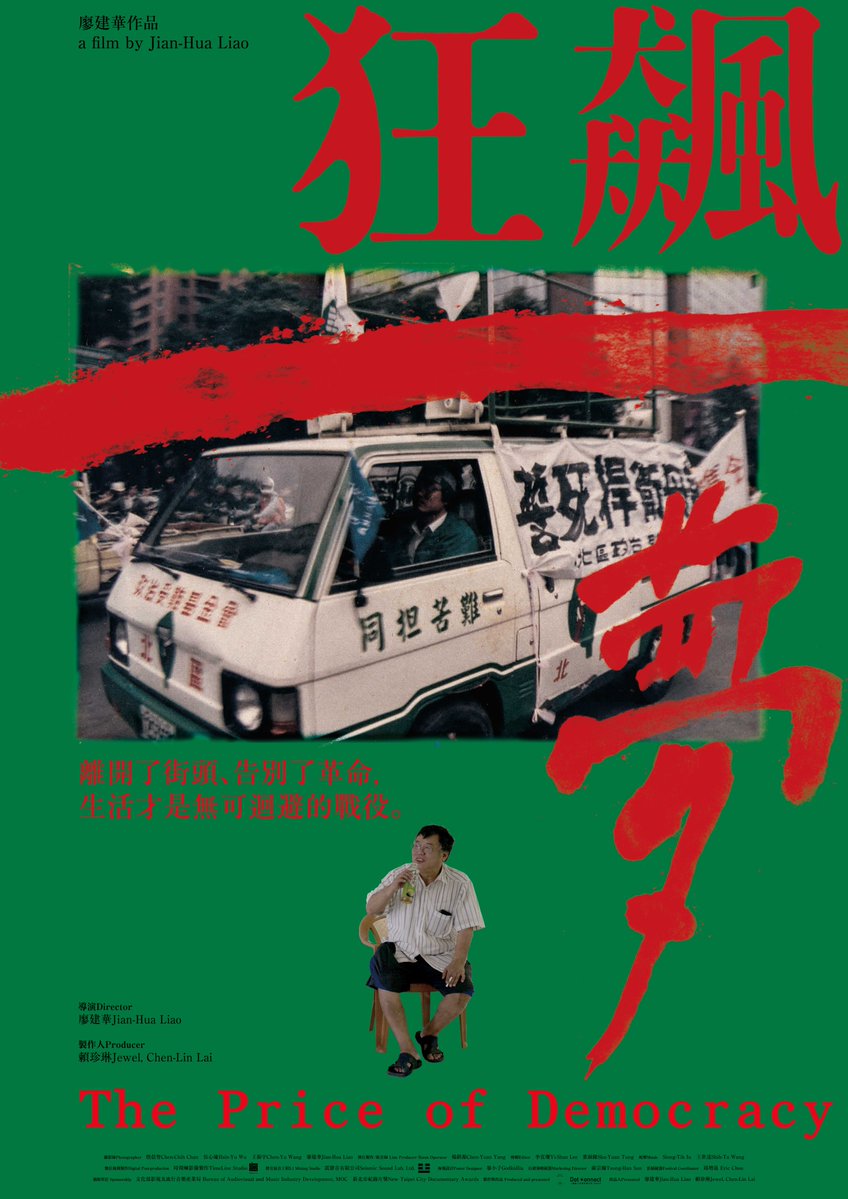
What does a revolutionary do after the revolution? Lacking direction in his own life, director Liao Jian-Hua finds himself asking the question of those who fought for an end to martial law in Taiwan, wondering if the price they paid for their idealism was really worth it. Following two now elderly protestors both of whom continued with activism after the advent of democracy, he discovers that the battle was never really won and that each has their share of loss if not quite regret for the sacrifices they made to try and bring about the better world. 

The first of Liao’s subjects, Hsin-i, is a popular novelist though perhaps unexpectedly known for romance featuring working class women rather than anything more overtly political. Daughter of a Mainland soldier, she was married with two children when she first began to become disillusioned with Taiwan’s political situation after realising the extent to which the authorities would go to rig elections. Unfortunately, the family she married into was staunchly nationalist, actually members of the KMT, and after her husband read a satirical story she wrote for a magazine the marriage broke down. Fearing reprisals, Hsin-i’s husband and in-laws emigrated to America and took her children with them while she remained in Taiwan and deepened her involvement in the movement for democracy. 

Kang, meanwhile, is a Minnanese man from the South who came to Taipei for work. Staunchly leftist, he lives up to his ideals even in his 60s earning no more than the minimum wage and living in a kind of commune with other gentlemen of a similar age, often allowing those in need to stay giving up his bed to make space for them. Like Hsin-i, his activism eventually cost him his family though he admits that his marriage was perhaps a mistake to begin with with. Showing Liao pictures of his youth he reveals himself to be quite the dandy and caught up in the consumerist revolution of an increasingly prosperous society (another wealthy girlfriend even bought him a Renault when they first came to Taiwan), only to be converted to socialism after leaving the army. He admits that he married his wife largely because she was pregnant but was uncomfortable with her upper-middle class lifestyle, her father attempting to railroad him into running a convenience store. Given their ideological differences, the marriage failed and Kang lost contact with his son who would now be in his early 30s. 

Other members of the activist group swap similar stories, that their wives and families complained that they “changed” after getting into activism or accused them of neglecting their familial duties for the political. Kang describes this as a choice between “small” love and “big”, familial love versus the societal. He and his friends chose big love at the expense of the small, devoting themselves to bettering their society. Hsin-i meanwhile doesn’t see it quite the same way and harbours a degree of guilt and regret for not having been as present as she might have liked in the lives of her family, often torn between activism and caring for her elderly mother while obviously missing her children even now forlornly looking up the Facebook profile of the daughter who declined to have contact with her. 

Though each of them continued with activism after the end of the martial law period, both Hsin-i and Kang also have traumatic memories of what was obviously a very intense time, recalling the tragic death of one young man who self immolated in protest against oppressive KMT regime. While Kang seems to accept his act with sadness, it led Hsin-i to question the movement and her place within it that others knew this young man planned to take his life in such painful way and did nothing to discourage him. From the vantage point of a very different Taiwan following the victory of Tsai Ing-Wen’s Democratic Progressive Party in 2016, now regarded as the most liberal of Asian nations, Liao wants to ask them if they feel all their suffering was worth it but discovers perhaps that he’s asking the wrong question when the costs of betraying one’s ideals may not be worth contemplating. There is always work to do, and whatever it may have cost them, both Hsin-i and Kang have remained true to themselves as they continue to do what they can to bring about the better world filled with a big love for the whole of their society. 


The Price of Democracy (狂飆一夢, Kuángbiāo Yī Mèng) streams in the UK 28th November to 5th December as part of Taiwan Film Festival UK

Original trailer (English subtitles)

Path of Destiny (不得不上路, Yang Chun-Kai, 2017)

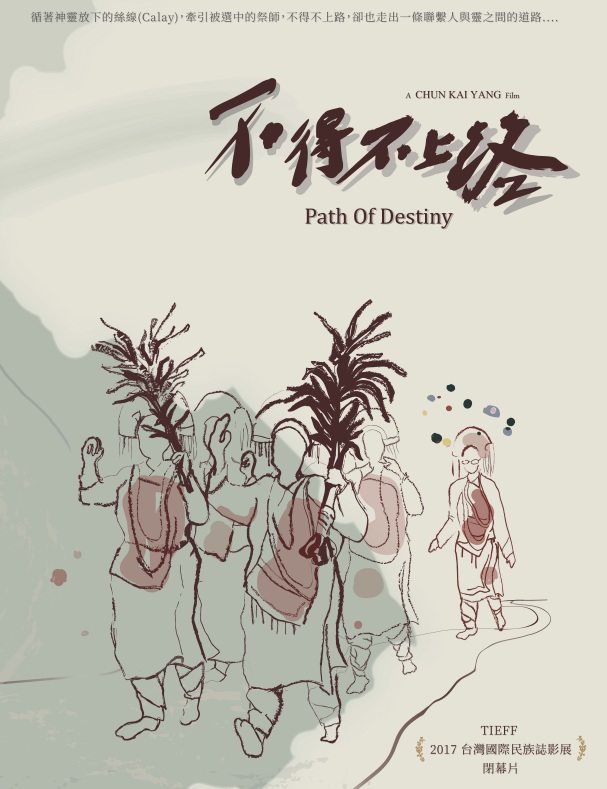
Taiwan’s indigenous culture is an all too often neglected facet of the island’s history, but as Yang Chun-Kai’s documentary Path of Destiny (不得不上路, Bùdébù Shànglù) makes plain, it is sometimes unknown even within its own community. Following researcher Panay Mulu who has been studying the Sikawasay shamans of the Lidaw Amis people in Hualien for over 20 years and has since become a shaman herself, Yang explores this disappearing way of life along with the (im)possibilities of preserving it for later generations in the fiercely modern Taiwanese society. 

A member of the indigenous community though from a Christian family, Panay Malu recalls witnessing Sikawasay rituals in her childhood though only at the harvest festival. Her family’s religion made the existence of the Sikawasay a taboo, viewed as a kind of devilry to be avoided at all costs. Yet running into an entirely different kind of ritual, Panay found herself captivated not least by the beautiful ritualised music and thereafter began trying to gain access to the community who were perhaps understandably frosty in the beginning. Eventually she gave up her teaching position to devote herself to research full time and was finally inducted as a shaman becoming a fully fledged member. 

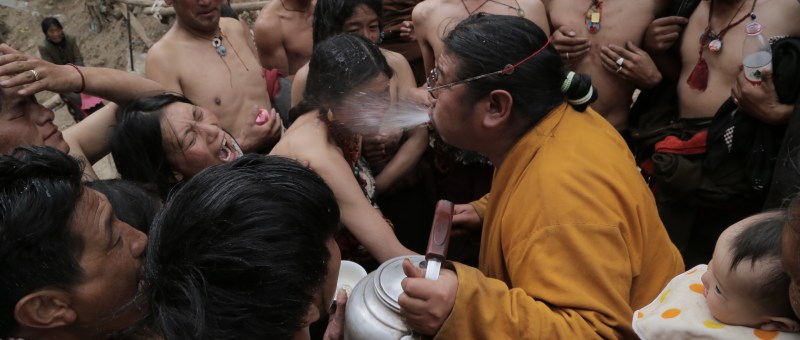
Listening to the stories of the old ladies, they explain that those who become Sikawasay often do so after sufffering from illness, one of the main rituals involving a shaman using their mouth to suck out bad energy and cure illness. Yet they are also subject to arcane rules and prohibitions that they fear put younger people off joining such as refraining from eating garlic, onions, and chicken, and being required to avoid touch prior to certain rituals. Under traditional custom, widows are also expected to self isolate at home often for a period of years to avoid transmitting the “bad energy” of their grief to others. 

Perhaps for these reasons, Panay is the youngest of the small group of Sikawasay who now number only half a dozen. A poignant moment sees her looking over an old photograph from a 1992 ritual featuring rows of shamans dressed in a vibrant red smiling broadly for the camera. The first row and much of the second are already gone, Panay laments, and as we can see there are only old women remaining with no new recruits following Panay in the 20 years since she’s been with them. Even one of the older women confesses that she would actually like to give up being a Sikawasay, it is after all quite a physically taxing activity with the emphasis on ritual singing and dance, but she fears being punished with illness and so continues. This lack of legacy seems to weigh heavily on Sera, the most prominent among the shamans, who breaks down in tears complaining that she often can’t sleep at night worrying that there is no one behind them to keep their culture alive save Panay who is then herself somewhat overburdened in being the sole recipient of this traditional history as she does her best to both preserve and better record it through academic study. 

It’s a minor irony then much of her recordings exist on the obsolete medium of VHS, but one of the other old ladies is at least hopeful while taking part in the documentary that people might be able to see their rituals on their televisions in their entirety and the culture of the Sikawasay will not be completely forgotten. Panay expresses frustration that, ironically, their own culture is often explained back to them by external scholars from outside of the community, while another Amis woman praises her implying that their own traditional culture is something they have to relearn rather than simply inheriting. An old lady who says her husband was once a shaman though her son neglected his shamanic nature and left to study describes the Sikawasay as the “real Amis people”, vowing never to give up on shamanism though acknowledging there’s nothing much she could do about it if it disappears. In any case, through Yang’s documentary at least and Panay’s dedicated research, the rituals of the Sikawasay have been preserved for posterity even if their actuality risks extinction in the face of destructive modernity. 


Path of Destiny streams in the UK 28th November to 5th December as part of Taiwan Film Festival UK

Original trailer (English subtitles)

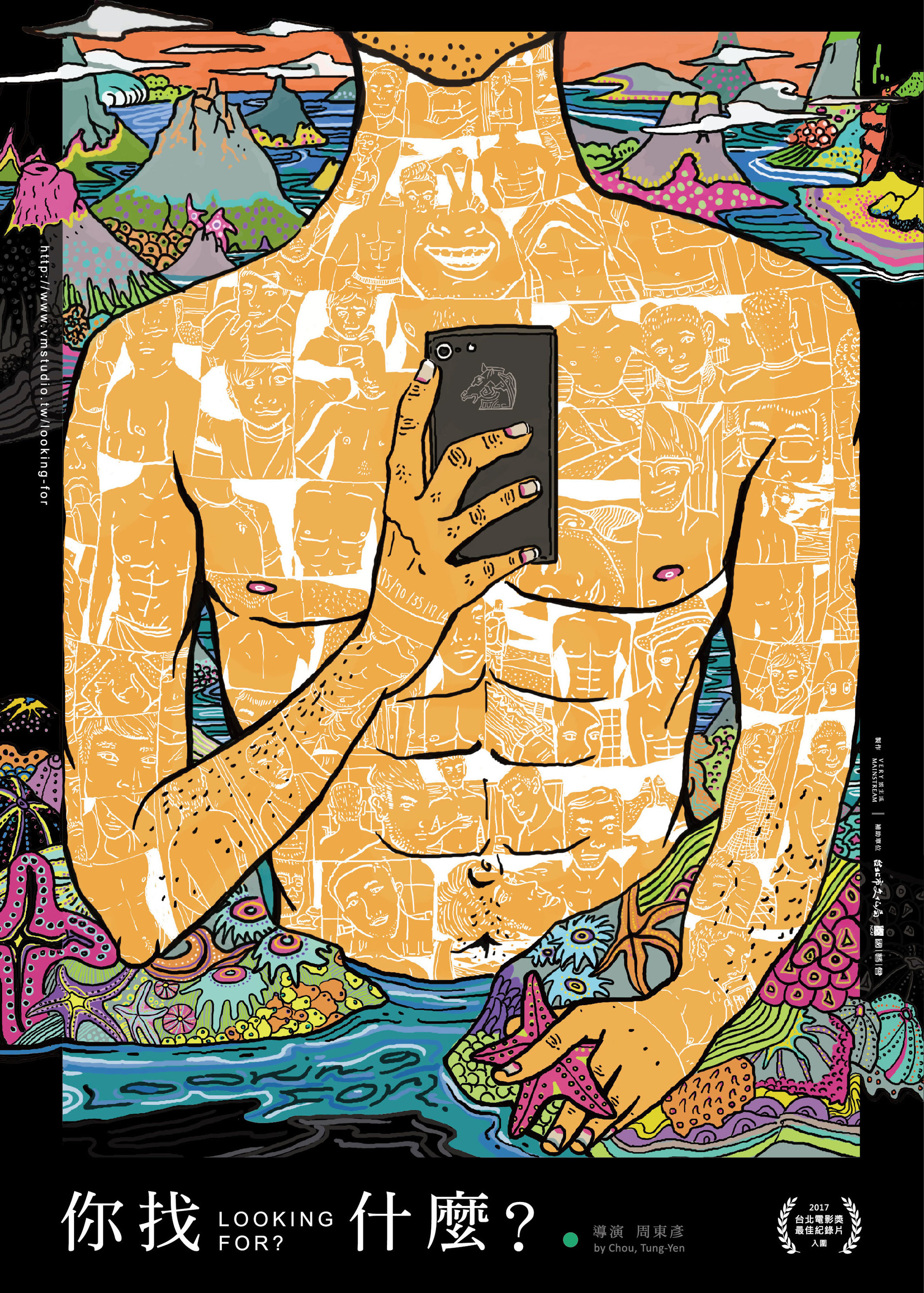
Looking For? (你找什麼?, Chou Tung-yen, 2017)

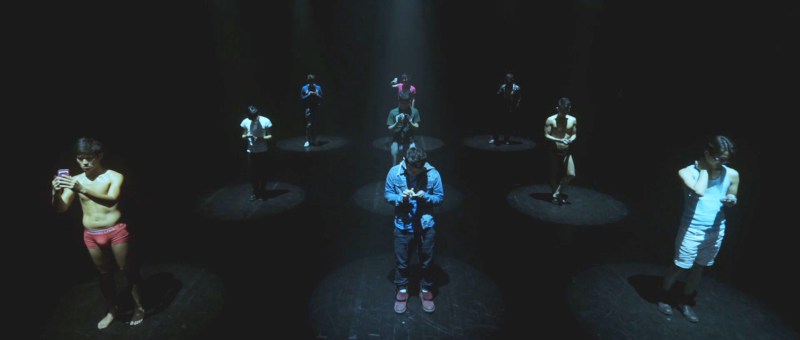
“Looking for?” (你找什麼?, Nǐ Zhǎo Shénme?) is a common enough ice breaker on gay dating apps but when you get right down to it it’s a difficult one to answer. Struggling with the question himself as someone who came to the app scene fairly late, director Chou Tung-yen interviewed 60 men from all around the world to ask them what it is they’ve been looking for, why they use dating apps, and how they really feel about them. 

As might be assumed, many of the men are using the apps for casual hook-ups citing the convenience as a major motivating factor. In the old days you wrote letters and hoped to get a reply to your PO box, or you went to a bathhouse, or invested time in someone at a bar, but now you just exchange messages and get what you need when you need it. One older user even likens the experience to that of a supermarket or even ordering fast food, an entirely disposable satisfaction of needs. He’s not necessarily making a criticism, but others ask if the commodification of the community is really a good thing. Most assume that in a more open society and most especially within your own community there ought to be more freedom to be your authentic self, but the apps are so interested in finding a perfect match that they try to force those who use them inside their narrow lines, tagged as a particular brand with some feeling as if they have to change themselves to be “marketable” or no one is ever going to be interested in them. 

Social media of all kinds can foster feelings of inadequacy, but paradoxically others report that they use dating apps precisely in order to boost their self esteem. They like it when people like their photos and enjoy the feeling of being desirable, counting the messages roll in from various suitors to whom they may or may not choose to reply. Those who’d previously felt themselves unattractive have learned to find their niche and become more comfortable in their bodies able to own their sensuality in all areas of their lives. But then some have run the other way, obsessively working out becoming perhaps dangerously addicted to online praise as they continue to alter their physicality to better conform to an external idea of conventional attractiveness. 

And then there are the other dark sides, the inherent danger and the potential toxicity of a party culture that encourages excessive drug use. One young man who appears only in silhouette, his voice disguised, reveals that he thoughtlessly had unprotected sex while high, while another man explains that he eventually decided to leave rave culture behind after a friend took his own life while under the influence and another died of a short illness caused by longterm drug use during which his friends continued to take him out partying despite knowing that he was seriously ill. 

The man whose face appears in silhouette laments that he no longer thinks it’s possible to find true love online, though there are those for whom that is exactly what they were looking for and some of them seem to have found it. Several couples report that they met through a dating app and then stayed together, even later got married. Others however find that while using the app their desire to find a monogamous partner decreased, they enjoyed the ability to have various experiences instead. Still more are looking for friendship or companionship more than romance, someone just to have dinner or share a deep conservation with. 

Towards the end, one interviewee reveals he no longer uses dating apps because he couldn’t figure out what it was he was looking for. Others drift away from them either because they found a stable relationship, began to age out or lost interest in the scene, whether having figured out what they want(ed) or not. Chou asks each of the respondents what love is, many of them talking wistfully about first love but seemingly jaded about grown-up romance or at least resigned to a cooler kind if perhaps still chasing that first flush of passion. Concentrating mainly on the interview sessions, Chou intersperses brief theatrical dance sequences and shots of himself captured alone at various points of transit in different cities, discovering at least a kind of commonality in the community of dating app users the world over who can understand each other even in the absence of shared language. Chou may not have discovered what it is he’s looking for, but has perhaps learned something else in his voyage through the trials of 21st century dating in that in the end you get out what you put in, which is to say what you’re looking for finds you whether you recognise it or not. 


Looking For? streams in the UK via Rio Player 20th – 26th November as part of this year’s Queer East.

Original trailer (English subtitles)

A Thousand Cuts (Ramona S. Diaz, 2020)

“Your concern is human rights. Mine is human lives” President Rodrigo Duterte disingenuously intones as part of his State of the Nation address, as if in the end they weren’t the same thing. Ramona S. Diaz’ clearheaded yet incendiary documentary A Thousand Cuts follows unfazable journalist Maria Ressa, head of online news site Rappler as she finds herself firmly within the president’s sights for her determination to challenge his “fake news” only to be accused of the same herself. Yet Ressa refuses to back down, holding the line even in the face of extreme threat to her person ranging from spurious prosecution to attempts to intimidate serious enough to have her wearing a flack jacket while travelling only by official car. 

As Ressa points out, the danger is not unique to the Philippines though through her investigations we see her map out the networks of bots and bad actors that allowed populism to prosper through social media, the most online nation apparently a guineapig for geopolitical manipulation. Remarkably even-handed in her presentation, Diaz introduces us to Ressa’s opposite number in Mocha Uson, a former pop idol turned rightwing blogger ensconced in the Duterte camp but scoffing at the idea her job is to spread pro-Duterte propaganda. Like fellow candidate Bato, a former police chief turned head of corrections, she likes to put on a show, a series of K-pop-style dance routines praising the president gracing her social media feeds. Cheerful scenes of dancing and celebration are directly contrasted with the disgruntled face of a female opposition candidate appearing directly below them as if in disapproval of their frivolous merrymaking.

Then again, the problem is the president is often overly “honest”, casually implying that he has personally killed and has no qualms doing so again as Ressa attempts to question him as if he were an ordinary politician. He is crass and sexist, constantly boasting of his sexual prowess at the podium while emphasising his virility,  literally playing the macho strongman, yet even as he says directly that he will kill people keep supporting him presumably believing that he means he’s going to kill other people but not them. One older woman even gets up to a mic at an event where Ressa is speaking to point out that the extra judicial killings may be awful but her pension’s gone up and she personally feels quite safe as someone unconnected to drugs so she struggles to see what the problem is. Meanwhile, the reporters recount the personal toll covering the killings can take on them as they witness the bodies lining the streets, discovered by wailing relatives protesting that their sons, husbands, and brothers were good people who didn’t deserve to die this way, not that anybody does. Not so much a war on drugs as a war on the poor, but populist politicians don’t hang on to their power by making things better, only by making them worse and then blaming someone else.  

Simply by reporting on the injustice of the killings, Ressa becomes a figurehead for the hate directed against Rappler and other news organisations prepared to challenge the president’s narrative. We see him humiliate a young reporter, answering her questions with an accusation of a lack of patriotism, before having her excluded from government briefings. The reporter later breaks down, revealing the strain placed on her by constant paranoia not just of becoming a direct target for government action but that she may someday make a mistake that would be used heavily against her. Yet she too is buoyed by the relentlessly positive presence of Ressa who refuses to be cowed, insisting that it’s not too late and that hope will win in the end. Don’t be afraid, she insists in the face of Duterte’s mantra that there must be fear, violence is his strength. Yet as the film’s title implies, the death of democracy comes in a thousand tiny cuts rather than a single blow, the cornerstones of accountability quietly chipped away while our attention is pulled in a thousand different directions. The parallels are obvious, populism on the march all over the globe, but there are at least those like Ressa willing to speak truth to power no matter what power might do to stop us listening. 


A Thousand Cuts streamed as part of this year’s San Diego Asian Film Festival.

Original trailer (English subtitles)

Turning 18 (未來無恙, Ho Chao-ti, 2018)

How much do you really owe a family that has failed you? A difficult question at the best of times, it’s one that continues to play on the mind of teenager Chen, one of two young women from indigenous communities at the centre of Ho Chao-ti’s documentary Turning 18 (未來無恙, Wèilái Wúyàng). Following the two girls who each come from challenging family backgrounds from the ages of 15 to 18, Ho perhaps draws a slightly uncomfortable contrast in the differing paths their lives eventually take after they briefly meet during an internship at funeral home but nevertheless presents an all too often ignored perspective on a hidden side of the island nation.  

Forced to grow up far too soon, both young women are children of single parent families in which there has been a history of domestic violence and, as we later discover, in Chen’s case sexual abuse. In response to her difficult family circumstances in which her mother has become an alcoholic and she has become the primary carer for her eight siblings, Chen has grown serious and mature. She intensely resents her mother’s drinking, not least because it plays into a racist stereotype about indigenous people while also trapping them in desperate poverty. Chen has had to take time out of education to look after her siblings and is grateful for the internship opportunity after which she will return to high school. 

Pei, meanwhile, has moved in with her possessive boyfriend, Wei, and his despairing mother. She is slightly less enthused about the internship, but dutifully completes it. Unlike Chen she never returns to school but remains with Wei who later becomes a delinquent and encounters trouble with the law. Pregnant before her 18th birthday, Pei finds herself navigating teenage motherhood and economic instability while the increasingly irresponsible Wei gravitates towards a life on the margins of crime. 

As such, it seems almost as if we’re being pushed towards judgement of the unlucky Pei for, perhaps, making the same mistake as her mother in unwisely depending on an unreliable man though they are both only teenagers, while it is undoubtedly much easier to get behind the earnest Chen who is determined to make something of her life while fiercely defending her family. Nevertheless, their marginalised status as members of an indigenous community is quickly brought home to us. Ho throws in a few snippets from post-war propaganda programs regarding the development of Hualien which describe the local Tayan population alternately as savage and uncivilised and then simple and innocent, apparently grateful for their “civilisation” at the hands of the KMT government which recommends Hualien to industry leaders as a source of cheap labour. 

Both the young women suffer at the hands of a patriarchal social code and fractured economy. Forced to compromise her education, Chen resents her mother for being unable to hold down a job of her own while it seems clear that she has little education herself and that her drinking is in part a response to her despair. Having escaped abusive spouses, the mothers of both girls have been left without effective means to support themselves in the absence of men, Chen’s mother depending on the support of her extended family who, we later learn, were also abusive. When the abuse is brought to light, Chen’s mother encourages her to lie to the court in order to protect her family members afraid perhaps of the shame but equally of the impossibility of surviving without them. 

Yet Chen continues to try to love her mother no matter how much she disappoints her, sorry only that her mother could not learn to love herself enough to save herself and determined never to make the same mistake. Finding an outlet in Taekwondo which she sees as another way to protect her family, Chen discovers another side of herself in dating another girl, at this young stage of her life incongruously insisting on referring to her as a “boyfriend” though the relationship appears to be accepted by her classmates as entirely normal. We never see how Chen’s family feels about her sexual identity save that she later affirms her desire to march in the Pride parade in Taipei precisely because she wants them to understand she loves women and that’s not something that will change, no one has the right to tell her who to love or who to marry. 

In this at least, Chen appears to have broken the cycle in definitively embracing her identities as a queer indigenous woman while also continuing to love and support her problematic family. Pei meanwhile is in a much less advantageous position, having perhaps repeated the same behaviour patterns in being letdown by an unreliable man and left to bring up a baby on her own though little more than a baby herself. Nevertheless, Ho’s camera is never judgemental in capturing this largely hidden side of Taiwanese society in which systemic male failure and entrenched patriarchy contribute to the marginalisation of the indigenous community even in the contemporary era. 


Turning 18 screens at London’s Riverside Studios on 3rd November as part of this year’s Queer East Film Festival.

Original trailer (English subtitles)

Me and the Cult Leader (AGANAI -悪の陳腐さについての新たな報告, Atsushi Sakahara, 2020)

How can you continue to serve an ideology which you know is responsible for a heinous act that offends your sense of moral righteousness? That’s a question that Atsushi Sakahara, a survivor of the sarin gas attacks on the Tokyo subway, finds himself asking in his documentary Me and the Cult Leader (AGANAI -悪の陳腐さについての新たな報告, Aku no Chinpusa Nitsuite Aratana Hokoku), as he meets with Hiroshi Araki, a current member of Aleph, the successor to Aum, the cult which planned and executed the 1995 act of terrorism which led to the deaths of 13 people and left 6200 injured, many like Sakahara with life changing consequences. 

Yet Sakahara’s purpose is the opposite of polemical, he merely reaches out to Araki in an effort to understand the mindset not only of someone who joined Aum in the early ‘90s and was a member at the time of the attack though not directly involved, but of someone who stayed and continues to believe in the teachings of cult leader Asahara who was executed in 2018 after years on death row along with other members responsible for Japan’s only exposure to domestic terrorism. Throughout it all, however what he seems to want is some kind of apology, or at least an act of contrition, something which proves elusive as the distant, thoughtful Araki largely refuses to engage as if afraid to accept that the ideology to which he has devoted all his adult life may in fact be corrupt and empty. 

Araki’s justifications run mainly to technicalities. He does not exactly deny that members of Aum were responsible for the attack, but explains that their guilt is the most logical explanation given the available evidence which includes their own confessions and so concludes it is likely the truth. The two men travel together on a kind of pilgrimage back to their respective hometowns which happen to be in the same area of the country, while in another coincidence they also attended the same university at the same time. A jovial presence, Sakahara attempts to hurry the near silent Araki along, pushing him to open up which he eventually does but failing to elicit from him anything which might begin to free him from the icy grip of his ideology. 

Sakahara subtitles his film “A modern report on the banality of evil”, and there’s certainly something of that as the film opens in a subway station, Sakahara and Araki merely two ordinary middle-aged men in anoraks waiting for a train. Yet Araki is clearly not an “evil” man. He appears to be thoughtful and sensitive, often breaking down in tears as the journey forces him to remember his life before he renounced the world, the vision of his grandmother waving him off at the station after a summer holiday leading back to that of his mother as he severed connection with her to join with Aum. He doesn’t quite explain what led him to join the cult save being overwhelmed by Asahara’s charisma when he gave a speech at Kyoto university in the early ‘90s, Sakahara having witnessed him arrive the year before but jokingly shouting out for the famously outlandish cult leader to show off his talent for levitation, save that he became disillusioned with consumerism after a pencil case he lusted over as a child lost its lustre when he got it home. The training, he goes on, caused him to lose the capacity for joy or pleasure, leaving him he explains with no other choice than to join the cult because there was no longer anything left for him in the outside world which had become unbearably painful as a result.

Yet knowing what he knows, how can he go on practicing Asahara’s teachings? Sakahara tries not to push him, only once or twice pressing for an answer as to whether or not he sees and understands his suffering and feels remorse, later introducing him to both his parents in an effort to prove that actions have wider consequences, that he is not the only victim but that others suffer because of his suffering. Meeting Sakahara’s equally compassionate mother and father does appear to move something with him, evoking a loose apology even if he immediately walks back on it with some manichean justifications that Sakahara is also responsible for everything that’s happened to him because it is all a result of his choices, good and bad. 

The unavoidable conclusion is perhaps that Araki is simply afraid to confront the implications of everything he’s seeing lest his entire worldview collapse and he realises he’s wasted all of his adult life serving a corrupt and empty ideology. Sakahara acts with total warmth and compassion for his dilemma, even at one point quite literally buying him a coat because he’s only brought his anorak despite it being freezing (Araki also constantly carries a sleeping bag because his asceticism seems to extend to beds and futons), patiently listening to his often sad stories of youth but every revelation is followed by extended silence, Araki shifting back inside himself unwilling risk bursting the bubble. Sakahara, however, remains patient hoping for the day that the cultist will finally see the light. 


 Me and the Cult Leader streams in the US until Oct. 31 as part of this year’s San Diego Asian Film Festival.

Original trailer (English subtitles)