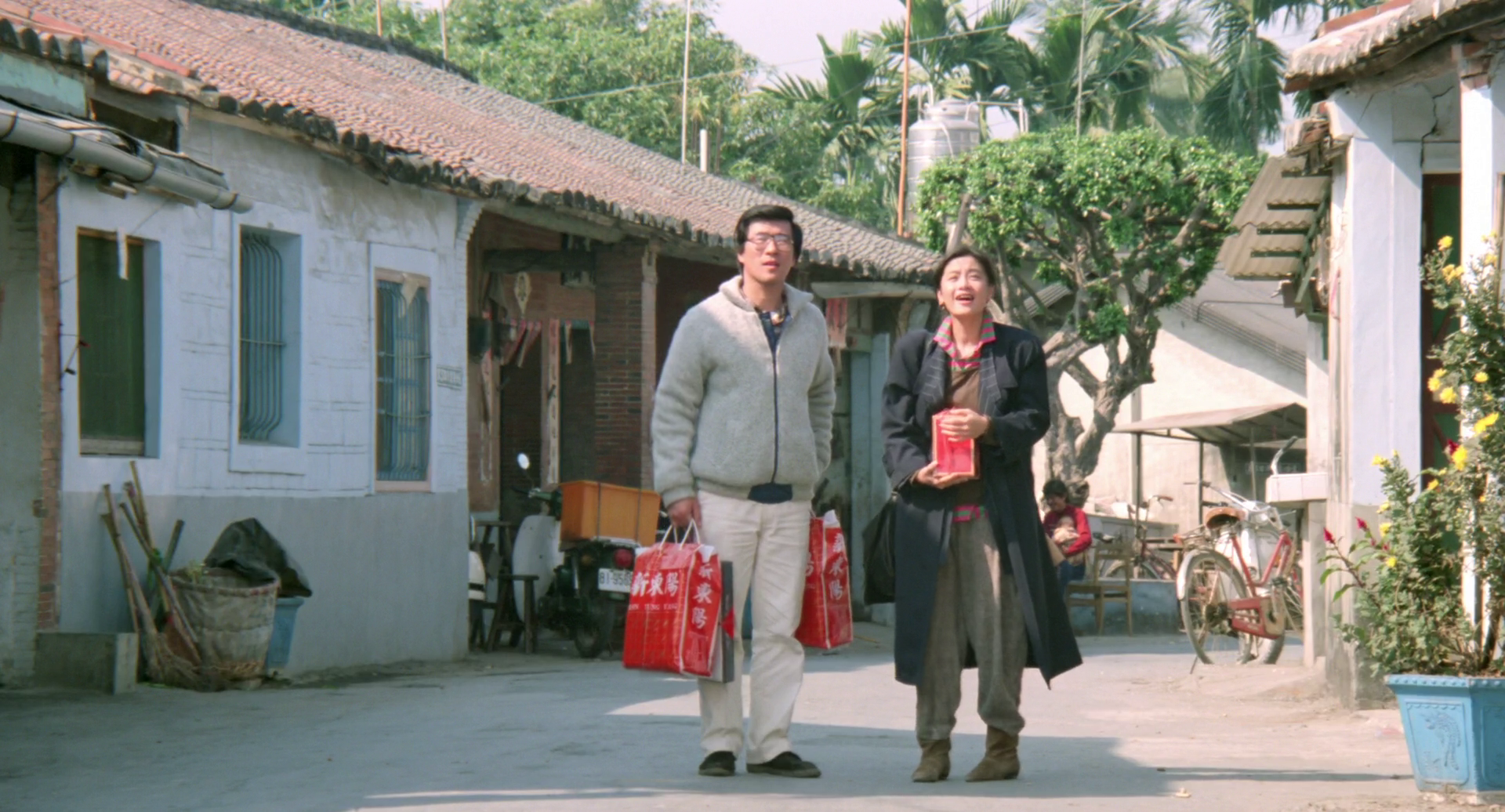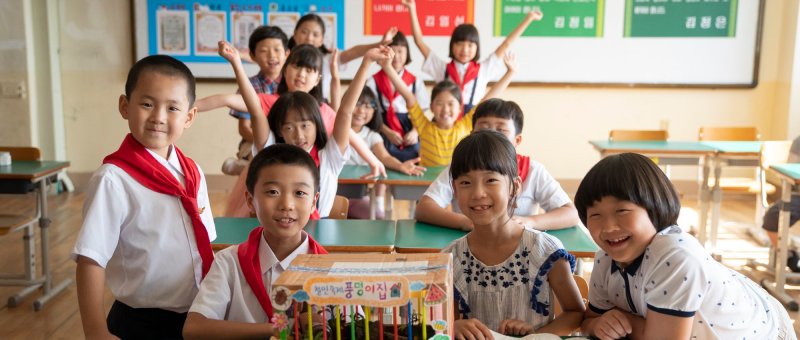
Yukiko a.k.a (雪子 a.k.a., Naoya Kusaba, 2024)

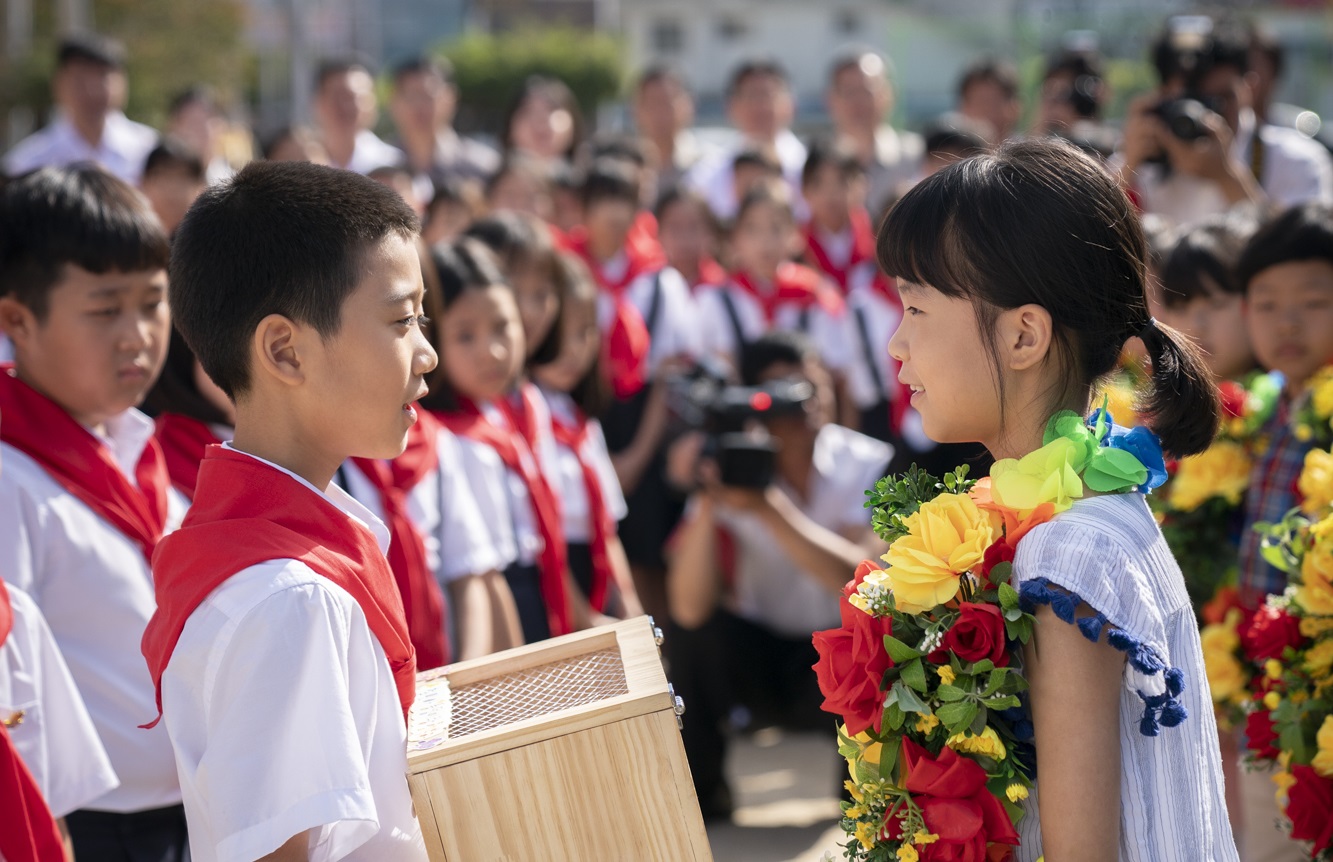
“Leave no one behind,” is the theory underpinning the SDGs that primary school teacher Yukiko (Rio Yamashita) is teaching to her students, but it’s also a practice that she unconsciously puts into practice only largely tends to forget to include herself. Timid and insecure, she makes little mark on the world around her and is afraid to express herself which she fears also interferes with her ability to interact with the children worrying that her reticence to speak up because she’s too worried they’ll say it’s all her fault prevents her from asking them if they’re alright or they need any help or guidance. 

It’s only through the possibly surprising hobby of rap music that she finds an outlet where she can be herself and say everything that’s on her mind, only most of her raps are all about her anxiousness and inability to communicate. She has however found a supportive community in a local park where there are a group of rappers who seem to have her back and encourage her to get more into the hobby by participating in rap battles so she can express herself more. It seems though that part of her anxiety stems from a sense that she’s approaching a crossroads in life and is in many ways dissatisfied. She’s been in a long-term relationship with another teacher, Kodai (Daichi Watanabe), she met when they were both students but as he’s been assigned to another school a long way away, they only meet up at weekends.

All around her, her friends are getting married and it seems Kodai may also be ready to pop what seems to most an inevitable question, but there’s something that seems to be holding her back. Kodai later tells her that he doesn’t like the her that does rap, which suggests in a way that he doesn’t really want the version of her that can express herself or is confident in saying what she does and doesn’t want. He’s much more interested in the timid Yukiko who meekly goes along with what he wants and is too afraid to rock the boat. A fellow teacher, Riho (Hina Higuchi), has an ambition to be married with a child before 30, which is surprising to Yukiko and often criticised for being old fashioned. Yet what the film seems to insist is that neither perspective is wrong, merely different, and largely a matter of what suits each individual. Riho is cool in her own way for living her life the way she chooses even if it conflicts with the prevailing attitude of the contemporary society and it’s this sense of empowerment that Yukiko is really seeking as an older teacher, Ohsako (Fusako Urabe), explains. With her short hair and serious demeanour it might be assumed that the kids wouldn’t like Ohsako, but she’s actually their favourite and perhaps precisely because of her self-assuredness. In contrast to the ultramodern Riho she likes to hand write and draw her teaching materials as a means of transmitting sincerity and integrity to the children while acting as a voice of authority between the teachers. 

Indeed, it’s Ohsako who largely teaches the film’s lessons and Yukiko how to embrace herself so that she can communicate better with the students explaining that her ability to pick up on the same anxieties in them is much more valuable than anything else. Locking eyes with a distressed young girl during a PE lesson, she quickly figures out that she’s experiencing menstrual cramps and is able to take her to the nurse’s office for some positive help and support. Meanwhile, she struggles with two boys in her class one of whom has become a school refuser and hikikomori. She visits Rui at his home every week with handouts but fails to make a breakthrough until she too is brave enough to expose her own fears and doubts. His deskmate Kotaro is now forced to join in with the girls either in front or behind when they’re asked to do pair work because of the painfully empty seat next to him.

But then unbeknownst to Yukiko, times have changed. Rui is not completely isolated but has been communicating with his friends, including Kotaro, through video games which as Kotaro’s father says is just as real to the children as talking in person. He’s also got really into educational apps and might have actually learned more by himself at home, which isn’t great for Yukiko’s self-esteem but at least he’s doing alright even if she might be becoming obsolete. Meanwhile the school still insists on making the kids read out loud to their parents who are then supposed to fill in a comment sheet but Kotaro writes those himself because his mum’s too busy. Nervously challenged by Yukiko, Kotaro’s mother asks what the educational point of the exercise is. She says she has her own way of communicating with her son and doesn’t have time for this meaningless bit of form filling. Yukiko’s insistence that it’s only 10 minutes belies a lack of understanding that Kotaro’s mother, who seems to be a working lone parent, simply doesn’t have another 10 minutes in her day. Still, the point is that Yukiko doesn’t really know the educational point of the exercise but has only been doing it because it’s what you do without giving it any real thought. 

But as Ohsako had said, maybe neither way is wrong, it’s just a matter of personal taste. Through her rap music hobby,  Yukiko begins to accept another side of herself while gaining the courage to be more confident and express herself more freely. She realises that it doesn’t really matter if she wins a rap battle or not because even putting herself out there was a minor victory that convinces her she has the power to do things with her life and live it in a way that best suits her while teaching similar lessons to the children and finally listening to her own advice.


Yukiko a.k.a screens in Chicago 22nd March as part of the 19th edition of Asian Pop-Up Cinema.

Trailer (English subtitles)

Sunset Sunrise (サンセット・サンライズ, Yoshiyuki Kishi, 2024)

In a way, the 2020 coronavirus pandemic presented a kind of turning point in which it became possible to envision a different kind of future brokered by technological advance in which society was no longer ruled by the dominance of the cities. If people could work remotely from anywhere, then they could easily improve their standard of living by moving to more rural areas for cheaper rents and healthier environments. Assuming the infrastructure was in place to allow them to do so, they could also support and reinvigorate communities struggling with depopulation in which the young have all left for the cities leaving the elderly behind to fend for themselves.

It’s an elegant solution that solves many of the problems of the contemporary society, but change isn’t always as straightforward as it seems as the hero of Yoshiyuki Kishi’s Sunset Sunrise (サンセット・サンライズ) finds out after he jumps at the chance to move into an abandoned house in Tohoku for a fraction of the rent he’d have to pay for a flat in Tokyo if he didn’t still live with his parents. The catch is, however, that houses have souls too and are more than just places to live for those that own or inherit them. Momoka (Mao Inoue), who decides to put her own empty house on the market, has her reasons for not wanting to live there herself nor for selling it completely but renting it out is also emotionally difficult. In the end, she only really does it after being put in charge of the town’s empty house problem at her job working for the council and thinking she should probably start with her own. Not knowing what to charge, it hadn’t really occurred to her someone would be as interested as Shinsaku (Masaki Suda), a fishing enthusiast longing to escape his salaryman life in the city for something a little more traditional in a peaceful rural area. 

Then again, that’s not to say that Shinsaku is a traditionalist and his decision quickly sparks controversy but also attracts the attention of his boss who senses a promising business opportunity. Momoka’s is a slightly special case, but Japan is filled with these so-called “akiya” which might, amid the work from home revolution of the pandemic, now be attractive to young professionals looking for a better environment to start a family. Houses generally start to deteriorate quite quickly when no one lives in them, and it’s true a lot of them need some work doing but it’s an idea that could work out well for everyone. Younger people who can’t find decent living space in the cities would be able to afford larger homes in the country where they would also then be contributing and integrating into the local community to provide support for its elderly residents.

Shinsaku becomes a part of the local community quite quickly and strikes up a friendship with an elderly woman whose children have all moved to Tokyo and rarely visit now that their own children are getting older. They’ve asked her to move to Tokyo with them, but as she points out, it would be the same as them moving back. There’s nothing for her to do there, and she’d have no friends. She’d only feel in the way and that she was getting under her daughter-in-law’s feet. Nevertheless, they fear for her especially as the area is still dealing with the scars of the 2011 earthquake which have left many clinging to a now bygone past. Once Momoka and Shinsaku start working with his boss on the akiya project, they find it hard to convince the inheritors of the houses to agree. Though they won’t live there, they might want to pop back a few times a year just for the memories and somehow can’t bear to part with their childhood or relative’s homes. But Shinsaku points out, it doesn’t necessarily have to be a case of either or and the renovation projects they undertake modernise the houses in a sympathetic way that brings them up to date with modern living yet honours the past even sometimes incorporating some of the previous resident’s furniture and belongings while issuing a caveat that the owners are welcome to visit should they wish to.

Essentially, the idea is a kind of co-existence with the past but also with unresolved trauma such as that presented by the earthquake and the ongoing pandemic. Momoka too is struggling to move on and while a gradual romance seems to arise between herself and Shinsaku, she isn’t sure she can ever let the past go though he makes it clear it’s okay to bring it with her. For his part, despite the initial fears of the early pandemic period and the suspicion of him as an outsider, Shinsaku’s quickly taken in by the community and adapts to a more rural way of life with relative ease though his boss’ big plan is rather undermined by his later insistence that he come back to Tokyo to run the project from the office like a many a contemporary CEO rolling back promises of flexible working environments that make this kind of utopian ideal much harder to materialise. In any case, there’s something quite refreshening in the eventual resolution just to do their own thing, not particularly paying attention to labels or what other people might think, but just doing what makes them happy right now. As an old fisherman’s song says, the sun sets but then it rises again. Scripted by Kankuro Kudo and adapted from a novel by Shuhei Nire, the film has kind of wholesome optimism that is rooted in a sense of continuity but also the potential to start again and make a new life inside the old that is less bound by outdated social norms than brokered by the gentle solidarity between people and a generosity of spirit that allows all to seek happiness in whatever way they choose.


Sunset Sunrise screens in Chicago 22nd March as part of the 19th edition of Asian Pop-Up Cinema.

Trailer (English subtitles)

Yoyogi Johnny (代々木ジョニーの憂鬱な放課後, Satoshi Kimura, 2025)

Not much makes a lot of sense in the world of the titular Yoyogi Johnny. Nothing’s quite as it first seems and life is full of contradictions, but that’s alright, for the most part. Johnny just floats on through life going with the flow, but then he meets a series of girls who each for some reason want to practice things with him though for very different reasons while he tries to make sense of it all and gain the courage to push for what he really wants.

Then again, he breaks up with Asako (Mio Matsuda) because he realises he likes her in the same way he likes “history” which is to say, when someone asks him what his favourite subject is he just says that but doesn’t actually know if he even likes history or not. Having never been in love, he doesn’t know what it’s like and therefore wants to end the relationship. Mostly he just spends his time hanging out in the “squash club” where they don’t actually play any squash but just use the clubroom to hideout from the less satisfying aspects of their lives or otherwise avoid other people. In fact, they’re only in the squash club to make up the numbers and were all looking to start clubs of their own but for various reasons were prevented from doing so. But when a mysterious young woman they christen Deko (Shieru Yoshii) for her prominent forehead arrives at the club looking for the founder, Ondera, whom they call “Button”, it wrecks their peaceful lives because of her insistence that they actually play some squash.

Deko wants to practice squash with him, but his childhood friend Kagura (Runa Ichinose) wants him to role play real world interactions while she has otherwise become a virtual recluse who no longer attends school. Meanwhile, he’s also drawn to a colleague at his part-time job at a bookshop/bar, Izumo (Maya Imamori), who is also the boss’ daughter. Somewhat salaciously, she wants him to practice “physical contact,” as that’s one of the areas she has difficulty in having herself also been a recluse who dropped out of school and has come to Tokyo for a fresh start. Johnny immediately picks up on this irony of Izumo salmoning her way to the capital while, in general, most people are travelling away from the city to a less populated area for a quieter life rather than the other way around though like many of these conversations it’s lost on Izumo to whom it is of course just normal. Johnny has several of these conversations in which he attempts to point out that something doesn’t make sense but just finds himself trapped in an infinite loop of back and fore as the other person struggles to understand his logic or he theirs. He is however a kind person who tries to help everyone who asks him though perhaps without really thinking about it. 

Yet most of the young women eventually oscillate out of his life depriving him of these very important friendships and ironically rebounding to the squash club even though they now actually have to play squash. Nevertheless, through his various relationships Johnny begins to gain a new perspective on himself and even finds out what it’s like to fall in love. A strange young woman who seems to be part of what very much looks like a cult, reminds him that “self-sufficiency” is a lie even though it’s supposedly what their cult is founded on. It is after all an organisation that promotes “independent living” while sending its members who all live in the dorm to farm the fields, though this yet another thing that doesn’t really make sense but Johnny just has to accept. Nevertheless, it seems she’s right when she says people can’t live by themselves alone and by and large need each other to survive. She tells Johnny that he should stop visiting Kagura because it’s “meaningless” and wouldn’t help her, but at the same time seems to appreciate his good-naturedness and the gentle positivity he puts out into the world in his ability to just be nice and be there for that want or need him while never expecting anything in return. As he’s fond of saying, if you regard a person as a friend then it doesn’t really matter whether they agree or not they’re still your friend and Johnny has more than many might awesome he would. Warm-hearted and filled zany humour, the retro aesthetic of its opening titles only adds to film’s charm as a little gem of indie comedy.


Yoyogi Johnny screened as part of this year’s Osaka Asian Film Festival.

Trailer (no subtitles)

The Tales of Kurashiki (蔵のある街, Emiko Hiramatsu, 2025)

Beniko’s high school art project involves recreating a picture her mother left behind that immortalised a memory of a happy family moment during the rare sight of fireworks. But Beniko can’t seem to make progress with her artwork and she’s thinking of giving up art altogether along with her ambition of attending an art school because for her painting is intrinsically linked with her familial trauma and fears for the future. It is also, however, the force that keeps her family together though not perhaps in the way she intended.

The attempt to recreate her mother’s drawing is that to reclaim her family as it was though as she later realises attempting to recreate the past exactly is a futile effort. Resentful towards her mother for leaving and perhaps also towards her father for his emotional abandonment and the absurd jealousy that left her mother with no choice but to leave, she reinvents herself as a caretaker as a way of rooting herself in the domestic space by taking care of her autistic older brother Kyosuke, affectionately known around the neighbourhood as Kyon-kun. Looking after Kyon-kun is one reason she gives for not going to art school, but as her friend points out much to Beniko’s shame, perhaps that’s not really fair to him either if she’s exploiting his need as an excuse for her cowardice while denying him the right to his own life too. He is after all a little more capable than she might give him credit for, travelling to the correct station on his own and waiting for her patiently at the other end when she misses her regular train. 

Beniko’s childhood friend Aoi later realises that he did something similar. When Kyon-kun wandered off while Beniko was distracted and climbed a tree at the shrine to watch imaginary fireworks, Aoi and his friend Kiichi, who is the son of the shrine owner, promised to set off some real fireworks for him without really thinking it through or having much intention to actually do it. But as Beniko points out, Kyon-kun never forgets a promise so now he’s asking every day when the fireworks are and is continually disappointed. Chastened by Beniko, Aoi’s half-hearted attempt to keep his promise backfires and he realises that he too thought that it didn’t really matter because it was Kyon-kun and he wouldn’t know the difference. 

Aoi’s desire to make good on his word is partly a sense of guilt and shame in his realisation of the way he’d thought of Kyon-kun, partly due to his feelings for Beniko, and partly adolescent insecurity in the acceptance that his unnecessarily harsh father has a point when he says he never follows anything through. Kiichi too is experiencing similar anxieties as his father threatens to leave the shrine to his more studious younger brother and is exasperated by his goodhearted goofiness. The trio are all really looking for new paths towards adulthood by trying to make peace with their younger selves and gain the confidence to follow their dreams even if it takes them away from the picturesque settings of provincial Kurashiki.

Beniko’s mother was fond of saying that there was a deity of waiting in the town, and there is a white-clad figure perhaps visible only to Kyon-kun who follows the youngsters around and looks on cheerfully as if embodying the sense of fun and warmth that lingers in the city. Kurashiki does indeed look like a nice place to live with its continual sunniness and traditional architecture though as someone points out that’s largely because the bombers flew past here and hit somewhere else instead. Fireworks are as apparent disruptor but eventual healer Kojo says a way of bringing people together, a source of joy happiness even amid difficult times just as they were during the pandemic. There’s something quite wholesome and comforting about the way the whole community comes together to make Kyon-kun’s dream come true, overcoming the obvious objections of the powers that be that it’s not a good idea to have a fireworks festival in a town that’s almost entirely constructed in wood to create a small marvel of human kindness and solidarity. It’s this that finally allows Beniko to remake her family, giving it her own light and colour while keeping a place for her mother having come to an acceptance of why she couldn’t stay and a conviction that she will one day return when she too has begun to heal her heart.


The Tales of Kurashiki screened as part of this year’s Osaka Asian Film Festival.

Trailer (no subtitles)

Museum of the Moving Image Announces Complete Lineup for First Look 2025

New York’s Museum of the Moving Image has announced the complete programme for this year’s First Look which takes place March 12 – 16. As usual there are a number of East Asian films on offer including an experimental documentary from mixed media artist Zhou Tao, docufiction in which two Indonesian men spend an evening in a park in Taiwan, and a quietly enraged character study from Yoko Yamanaka.

Park (Taman-taman)

Enchanting improvised docufiction in which two Indonesian men meet in a park in Taiwan to talk about their lives along with poetry and the awkward transactionality that exists between the two nations.

Desert of Namibia

An aimless young woman struggles to understand herself or the world around her while finding release only in watching videos of the Namibian desert in Yoko Yamanaka’s quietly enraged drama. Review.

The Periphery of the Base

Experimental documentary from mixed media artist Zhou Tao exploring the area around a large construction site in the Gobi Desert.

First Look runs March 12 – 16 at New York’s Museum of the Moving Image. Full details for all the films as well as the complete programme can be found on the official website where tickets are already on sale. You can also keep up with all the latest news by following the Museum on X (Formerly Twitter)Instagram, and Facebook.

Asian Pop-Up Cinema Returns for 19th Edition

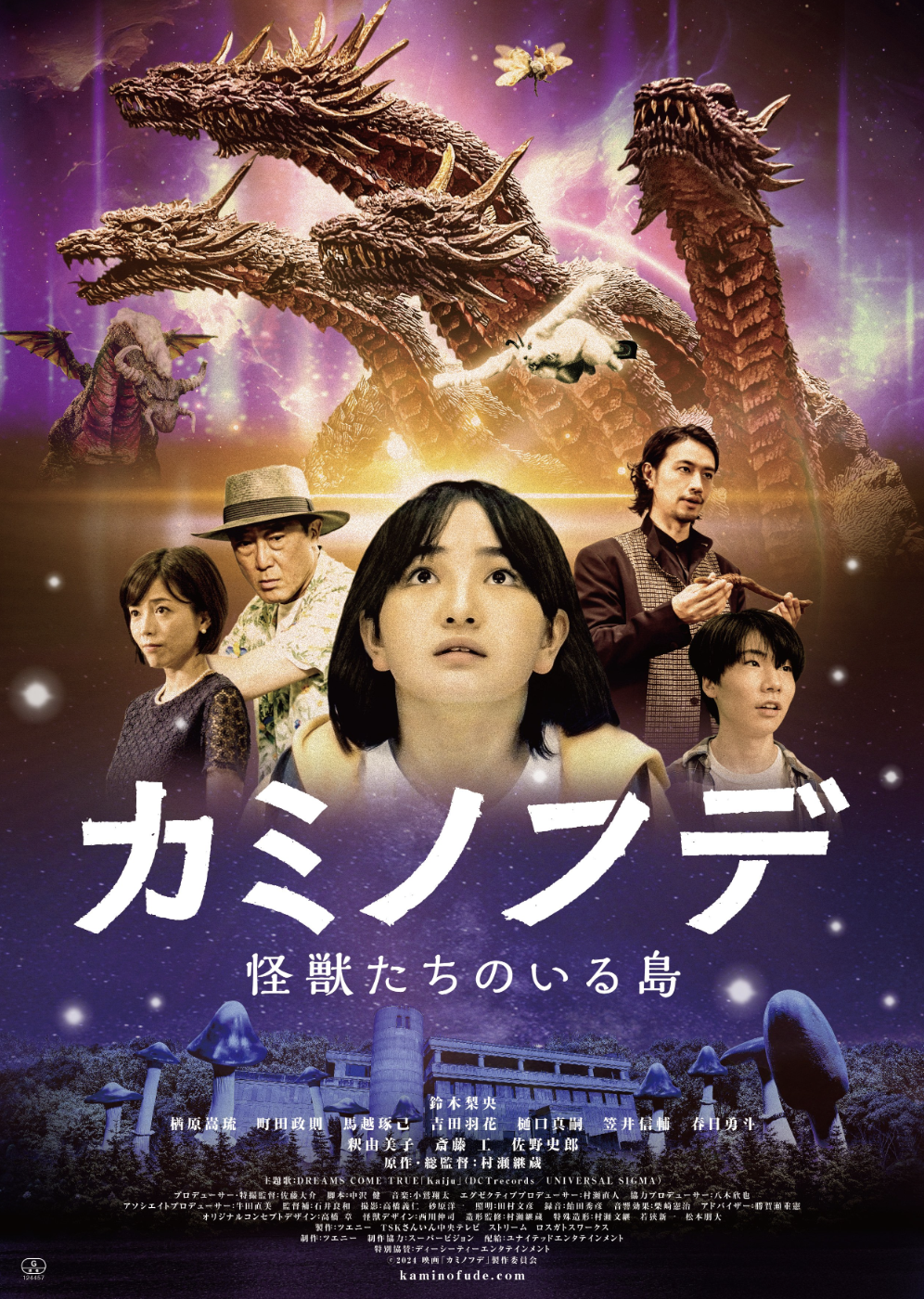
Chicago’s Asian Pop-Up Cinema returns for its 19th edition March 20 to April 13 in a new format featuring a juried competition with 16 films vying for the coveted inaugural prize. Taiwanese horror comedy Dead Talents Society will open the festival with director John Hsu and star Chen Bo-lin, also the recipient of the Bright Star Award, attending to present the film. Producer Daisuke Sato will also be attending the closing film Brush of God to collect the posthumous lifetime achievement award for late director Keizo Murase, while actress Michelle Wai and director Anselm Chan will be in attendance for the Centrepiece Film, the director’s cut of The Last Dance.

Here are the East Asian films included in this year’s programme:

China

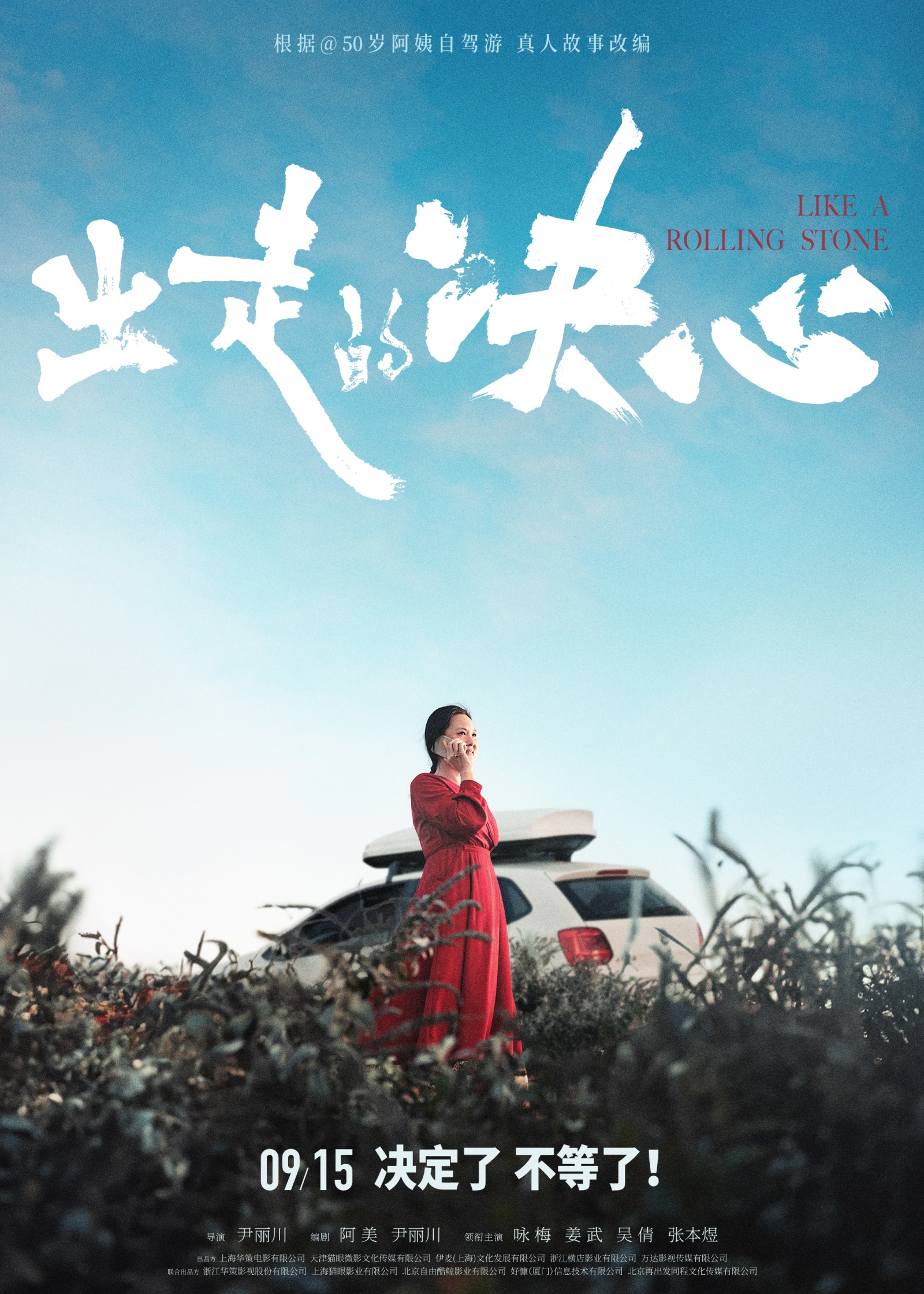
  • Like a Rolling Stone (出走的决心) – powerful drama inspired by the real life story of a middle-aged woman who decided to go travelling in order to escape her oppressive marriage.
  • A Long Shot (老枪) – a former sharpshooter finds himself unbalanced amid the corruptions of China’s 90s economic reforms in Gao Peng’s intense social drama. Review.

Hong Kong

Indonesia

  • Crocodile Tears (Air Mata Buaya) – the intensely claustrophobic relationship between a mother and son is disrupted when the boy meets a girl in Tumpal Tampubolon’s eerie maternal drama. Review.

Japan

Malaysia

  • Indera – horror film in which a father takes his daughter to the countryside to cure her illness after a stand off between villagers and government forces in 1985.

Mongolia

Singapore

  • Stranger Eyes (默視錄) – a fracturing family is confronted with the cracks in its foundations when they begin receiving strange DVDs after the disappearance of their daughter in Yeo Siew Hua’s elliptical drama. Review.

South Korea

Taiwan

  • Dead Talents Society (鬼才之道) – faced with disintegration a teenage ghost must learn how to seize the stage in John Hsu’s zany horror comedy. Review.
  • Doubles Match (乒乓男孩) – two little boys dream of making the national table tennis team but their friendship is disrupted when one is sent to school in the city.
  • Hunter Brothers (獵人兄弟) – Yuci’s peaceful life is disrupted when his brother is released from prison after serving time for the hunting accident that killed their father.
  • Old Fox (老狐狸) – a young boy begins to absorb all the wrong lessons while drawn to his enigmatic landlord in Hsiao Ya-chuan’s 80-set coming-of-age drama. Review.
  • Yen & Ai-Lee – gritty drama in which a young woman is released from prison after killing her abusive father only to learn her mother (played by the iconic Yang Kuei-mei) is dating another abusive man.
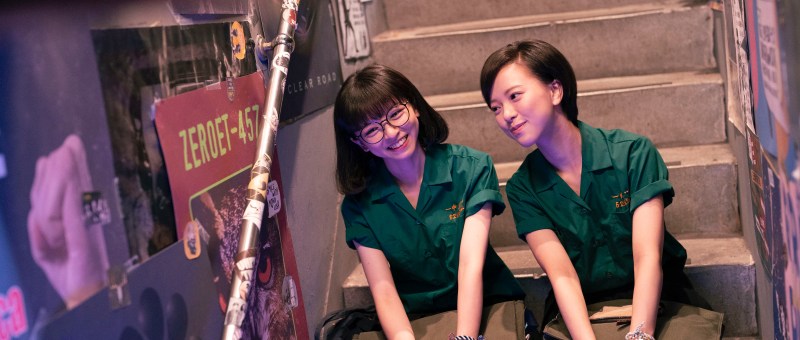
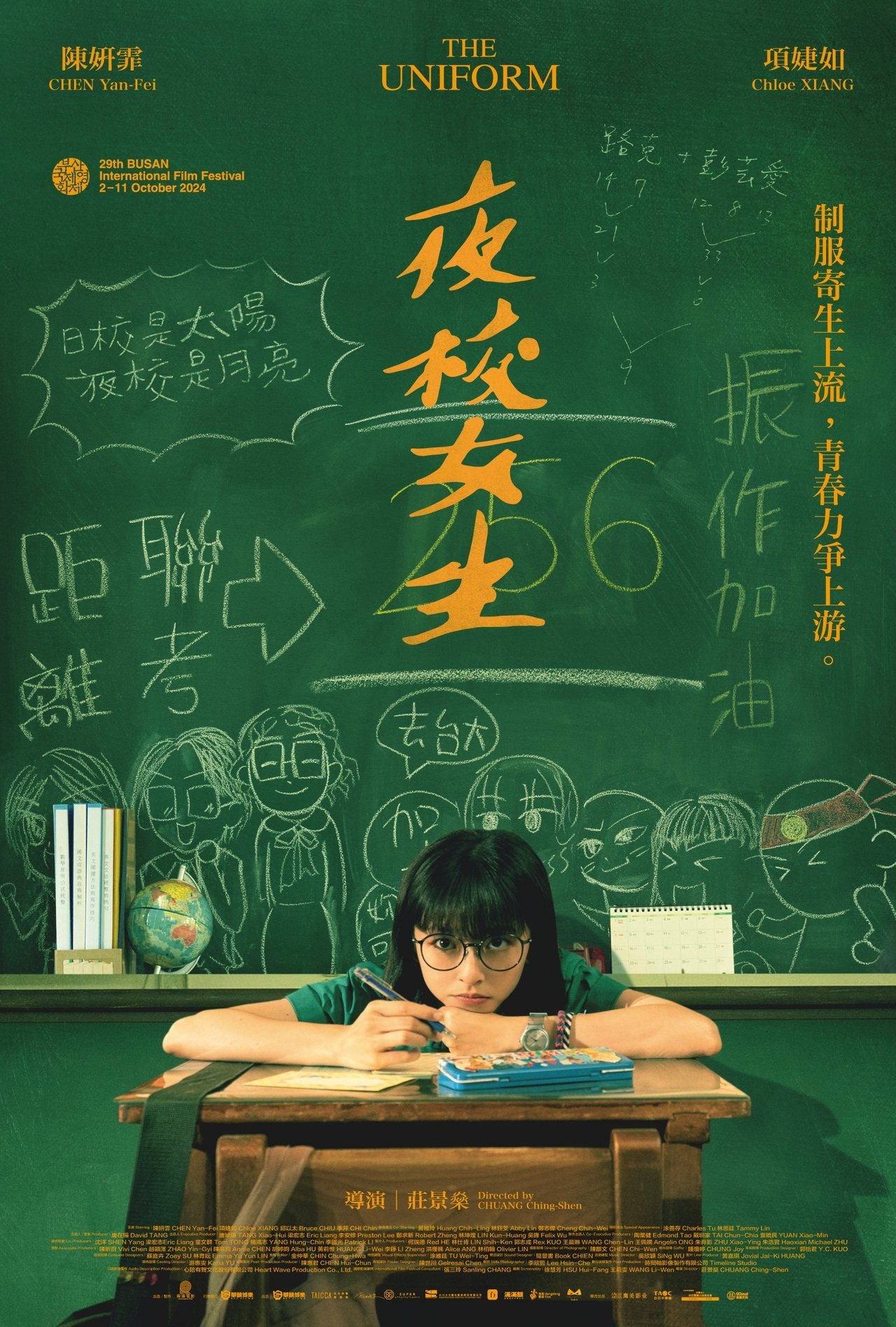
  • The Uniform (夜校女生) – drama set in 1997 in which a girl is forced to attend an elite high school as a night student but becomes friends with one of the day pupils.

Thailand

Asian Pop-Up Cinema Season 19 runs in Chicago March 20 to April 13. Further details are available via the official website and you can also keep up with all the latest news by following Asian Pop-up Cinema on FacebookX (formerly known as Twitter),  Instagram, and Vimeo.

99% Cloudy… Always (99%、いつも曇り, Midori Sangoumi, 2023)

Why do some people feel themselves entitled to ask insensitive questions at emotionally delicate moments? Kazuha (Midori Sangoumi) may have a point when she calls her oblivious uncle a bully when a lays into her about having no children at the first memorial of her mother’s passing, but still his words seem to wound her and provoke a moment of crisis in what otherwise seems to be a happy and supportive marriage.

Kazuha is a very upfront person and fond of directly telling people that she thinks she has stopped menstruating so she doesn’t think she could have a child now even if she wanted one. One of the other relatives, however, suggests that her husband, Daichi (Satoshi Nikaido), may feel differently which somewhat alarms her. The questioning had made her angry and offended, not least by the implication that a woman’s life is deemed a success only through motherhood and that those who produce no children are somehow “unproductive”, but it was all the more insensitive of her uncle to bring it up given that Kazuha had suffered a miscarriage some years previously.

The miscarriage itself appears to have resulted in some lingering trauma that’s left Kazuha with ambiguous feelings towards motherhood. Having been bullied and excluded as a child because she is autistic, Kazuha is reluctant to bring a child of her own into the world in case they too are autistic and encounter the same kind of difficulties that she has faced all her life. As the film opens, she’s trying to get in touch with someone about the results of a recent job interview but getting flustered on the phone and asking what may be perceived as too many questions all in one go. She does something similar while trying to enquire at a foster agency about a clarification of their guidelines as to whether she would be eligible to adopt as an autistic woman which she fears she will not be. It just happens that no one is available to talk to her that day as they’re all at an outing leaving only a member of the admin team behind to man the desk while Kazuha repeatedly asks the same question in the hope of a response. 

The truth is, Kazuha might have liked to raise a child but not her own while for Daichi it’s the opposite. He may still want to have a biological child but is not particularly interested in raising someone else’s. This question which has reared its head again at a critical moment immediately before it may be too late places a strain on their marriage as they contemplate a potential mismatch in their hopes and desires for the future. Daichi is reminded he has no other remaining family as his younger sister passed away of an illness some years previously and his parents are no longer around either. As he tells a younger woman at work, Kazuha is his only family while others needle them that there’ll be no one there for them in their old age should they remain childless. 

Part of the issue is a lack of direct communication as Daichi talks through his relationship issues with a colleague in trying to process Kazuha’s revelation that she felt relieved after the miscarriage given her guilt and anxiety that the baby would also be autistic which is not something that had previously occurred to him nor that he particularly worried about. The film seems to hint that Daichi has the option of moving on, perhaps entering a relationship with his younger colleague, if his desire to have a biological child outweighed that to stay with Kazuha while that is not an option for Kazuha herself who is left only wondering if she should divorce him so he can do exactly that. In flashbacks, we see her reflect on some of her past behaviour and realise that she may have inadvertently hurt someone’s feelings in speaking the truth and been shunned herself because of it. Even so, she has a warm community around her who love her as she is and are in effect an extended family. The accommodation that she finds lies in fulfilling herself through art and building a relationship with her nephew while also helping and supporting those around her. It may be cloudy 99% of the time, but there’s still a glimmer of light and a radiance that surrounds Kazuha as she embraces life as she wants to live it rather than allow herself to be bullied by belligerent uncles and the spectres of social expectation.


99% Cloudy… Always screens as part of this year’s Japan Foundation Touring Film Programme.

Trailer (English subtitles)

Hope (望み, Yukihiko Tsutsumi, 2020)

What would you prefer, that your son is alive but a murderer, or that he’s dead but blameless? That’s the dilemma faced by the family at the centre of Yukihiro Tsutsumi’s Hope (望み, Nozomi) who find themselves wondering if they really knew their son at all or had been deluded by an image of familial harmony that was only ever superficial. Meanwhile, they’re also at the centre of a media storm, on the receiving harassment from the press and neighbours, along with the potential financial strain of lost business and fracturing relationships in the local community.

Teenage daughter Miyabi (Kaya Kiyohara) tells her father that she’s read online some families have to move after a relative becomes involved with a crime, that they lose their jobs and place in the community. She’s been studying hard to get into a top high school and is worried that they may not now accept her even if she passed the exam because of something her brother may or may not have done. Some might say that a being a part of the family means that you live or die together, but there is a persistent sense of unfairness felt by all they are being made to suffer because of something over which they had and have no control.

Tadashi (Koshi Mizukami) never explained of this to them and it’s true that he had been behaving differently, was sullen, stayed out all night coming home with bruises, and had in fact recently purchased a knife but it’s difficult for them to believe that he could really have gone on the run after murdering a classmate. At the beginning of the film, architect Kazuto (Shinichi Tsutsumi) had shown off their warm family home to some prospective clients remarking that they wanted to ensure close relationships with the their children and that the design is a good opportunity to plan ahead for the next 10 or 20 years but perhaps there’s something a little hubristic in that statement. Kazuto is trying to sell an image of familial bliss that his house design can bring, but when he knocks on Tadashi’s door the boy is rude and resents the intrusion. Typical teen behaviour, the clients might think, but still it’s a minor crack in the edifice of the image of a perfect family.

But for all that it’s Kazuto who most strongly resists the idea that Tadashi may really have killed his friend and clings fast to the hope that he may be a victim too even though, as mother Kiyomi (Yuriko Ishida) points out, that might mean that he’s already dead and was killed alongside him. For Kiyomi, she just wants Tadashi, whose name means “correctness”, to be alive even if that means he really did do it. If that were the case, the family would also face constant harassment for the rest of their lives, Tadashi would be in prison for the next 15 years, and they would likely have to compensate the other family financially for the boy’s lost future and 50+ years’ worth of lost earning potential. None of that matters to her so long as Tadashi is alive, but to Kazuto it seems more important that Tadashi not be guilty and he reclaim the image he had of his son as a good and honest young man rather than a delinquent killer and bully.

Investigations among the teens turn up contradictory reports, some saying that Tadashi was aloof and arrogant while a group of girls insist on his innocence and even contemplate going to the police to help clear his name. What’s clear is that everyone seems to have taken football far too seriously and a situation among hotheaded young men went way out of control. As a policeman later says, problems often occur at this age because children who are mature enough to think for themselves start wanting to solve their own problems without worrying the adults around them but don’t always know the best way to do it and end up making everything worse. The irony may be that in the end Tadashi may indeed restore a sense of hope for his family that they can turn things around and regain a more genuine sense of familial harmony no matter what the outcome may be.


Hope screens as part of this year’s Japan Foundation Touring Film Programme.

Trailer (English subtitles)

The Scoop! (新米記者トロッ子 私がやらねば誰がやる!, Keiichi Kobayashi, 2024)

The print media industry in Japan has often come in for criticism because of its perceived toothlessness in which it is often afraid of speaking truth to power lest it lose its access. Of course, as we’ve seen all too well just recently, that’s not a problem limited to Japan, but it’s something that’s preoccupied the students at the centre of Keiichi Kobayashi’s teen drama The Scoop! (新米記者トロッ子 私がやらねば誰がやる!, Shinmai Kisha Torokko: Watashi ga Yaraneba Dareka ga Yaru) whose unofficial newspaper club is threatened by the school because of its tendency to expose scandal and oppose the elitism which has otherwise taken over the institution.

Yui (Karin Fujiyoshi) only enrolled here because of the famous literature club and the possibility of meeting her idol, Konoha Midorimachi, the winner of a prestigious student writing competition. But as she quickly finds out, the Literature Club is pretty high up in the school hierarchy and only really open to those in the “advanced” class. All of its members wear red scarves to distinguish them from the other students who wear blue. You have to take a test to get in, but Yui’s dreams end before they’ve even started when she’s hit by a rogue drone and knocked out. They won’t let her retake the test because they say it would be unfair to the other students, but the club president, Mari (Rinka Kumada), has another proposition for her. It turns out that Konoha Midorimachi isn’t a member after all but a mysterious person using a pen name. Mari wants to know who it is too so she suggests they team up to find out. Following a lead to the unofficial Newspaper Club, Mari advises Yui to sign up there and win their trust to find out Konoha’s true identity on the promise of being admitted to the Literature Club once she’s solved the mystery.

Yui isn’t really happy with this plan in part because the Newspaper Club has a bad reputation for being a bunch of cranks and nerds. The Newspaper Club isn’t really all that keen on talking about Konoha either but is glad to have Yui on board while she also begins to embrace the opportunity to hone a different side to her writing skills. While there, she’s confused by the tactics employed the editor, Kasane (Akari Takaishi), whom she describes as more like a con-artist than a journalist as she employs some unorthodox methods to get to the truth, but also wakes up to the myriad problems at the school and comes to understand that the newspaper is necessary for exposing them. 

This does not, however, endear them to the headmaster, Numahara (Masahiro Takashima), who is a fascistic elitist intent on ruling the school with an iron fist. Backed into a corner, he agrees to make the Newspaper Club “official” with funding from the school but only as a gambit to control it. If Kasane accepts his offer, they will have to abide by his rules which means puff pieces and propaganda only. “Submit to me,” he snarls, inappropriately pinning the teenage Kasane to a wall while making her an ultimatum to join his side or get the hell out. “Women should be compliant,” he advises shortly before Kasane socks him on the jaw. What happens after that is a neutering of the paper while Numahara strengthens the elitism of the school by deepening the privileges held by the so-called “advanced” class represented by the Literature Club. 

The Japanese title of the film is the more evocative “Rookie Reporter “Trolley”: If I don’t do it, who will?” As Kasane had said to Numahara, silence changes nothing. Kasane later claims that she started the Newspaper Club because she lost faith in the power of fiction, but also wanted to bring about real change and expose Numahara’s corruption. Though their paper is suppressed, they do eventually manage to bring about something like a more egalitarian revolution and expose Numahara for what he really is by using the same tactics he used against them. In some ways, it’s an allegory for the wider society and an advocation for the power of journalism to bring about real change by refusing to shrink from the truth or be cowed by those in power, as much it is a coming-of-age tale in which the heroine learns that things aren’t always what they seem and a club that’s founded on the principle of excluding others isn’t one you want to join.


The Scoop! screens as part of this year’s Japan Foundation Touring Film Programme.

Trailer (English subtitles)

What Happened to Our Nest Egg!? (老後の資金がありません!, Tetsu Maeda, 2021)

A minor controversy erupted in Japan in 2019 when then finance minister Taso Aso issued a statement recommending that couples should have 20 million yen (£104,620 total at the time of writing) saved for their retirement on top of the state pension in order to live a comfortable life in old age. All things considered, 20 million yen actually sounds like quite a low sum for two people who might live another 30 years post-employment. Nevertheless, Atsuko (Yuki Amami) and her husband Akira (Yutaka Matsushige) are now in their mid-50s and don’t have anywhere near that amount in savings. They’re still paying off their mortgage and though their children are grown-up, neither of them seem to be completely independent financially and both still live at home. 

Tetsu Maeda’s familial comedy What Happened to Our Nest Egg!? (老後の資金がありません!, Rogo no shikin ga arimasen!) explores the plight of the sandwich generation which finds itself having to support elderly relatives while themselves approaching retirement and still needing to support their children who otherwise can’t move forward with their lives. Seeing an accusatory ad which seems to remind her personally that even 20 million yen isn’t really enough when you take into consideration the potential costs of medical treatment or a place in a retirement home, Atsuko has a sudden moment of panic over their precarious financial situation. The apparently sudden death of Akira’s 90-year-old father acts as a sharp wake up call especially as Akira’s apparently very wealthy but also selfish and materialistic sister Shizuko (Mayumi Wakamura) bamboozles him into paying for the entirety of the funeral while pointing out that they’ve been footing most of the bill for the parents’ upkeep over the last few years.

There was probably a better time to discuss the financial arrangements than with their father on his deathbed in the next room, but in any case Shizuko doesn’t pay attention to Atsuko’s attempt to point out they’ve been chipping in too. Akira’s mother Yoshino (Mitsuko Kusabue) also reminds them that their family was once of some standing and a lot of people will be attending the funeral so they need to make sure everything is done properly. The funeral arranger is very good at her job and quickly guilts Atsuko into spending large sums of money on pointless funeral pomp to avoid causing offence only to go to waste when hardly anyone comes because, as she later realises, all of the couple’s friends have already passed away, are bedridden, or too ill to travel. 

Yoshino is however in good health. When Shizuko suddenly demands even more money for her upkeep, Atsuko suggests Yoshino come live with them but it appears that she has very expensive tastes that don’t quite gel with their ordinary, lower-middle class lifestyle. Having lived a fairly privileged life and never needing to manage her finances, Yoshino has no idea of the relative value of money and is given to pointless extravagance that threatens to reduce Atsuko’s dwindling savings even more while in a moment of cosmic irony both she and Akira are let go from their jobs. Now they’re in middle age, finding new ones is almost impossible while their daughter suddenly drops the bombshell that she’s pregnant and is marrying her incredibly polite punk rocker boyfriend whose parents run a successful potsticker restaurant and are set on an elaborate wedding.

The film seems to suggest that Atsuko and Akira can’t really win. They aren’t extravagant people and it just wasn’t possible for them to have saved more than they did nor is it possible for them to save more in the future. Instead it seems to imply that what they should do is change their focus and the image they had of themselves in their old age. One of the new colleagues that Akira meets in a construction job has moved into a commune that’s part of the radical new housing solution invented by his old friend Tenma (Sho Aiwaka). Rather than building up a savings pot, the couple decide to reduce their expenses by moving into a share house and living as part of a community in which people can support each other by providing child care and growing their own veg. Yoshino too comes to an appreciation of the value of community and the new exciting life that she’s experienced since moving in with Atsuko. It may all seem a little too utopian, but there is something refreshing in the suggestion that what’s needed isn’t more money but simply a greater willingness to share, not only one’s physical resources but the emotional ones too in a society in which everyone is ready to help each other rather than competing to fill their own pots as quickly as possible. 


What Happened to Our Nest Egg!? screens as part of this year’s Japan Foundation Touring Film Programme.

Trailer (English subtitles)