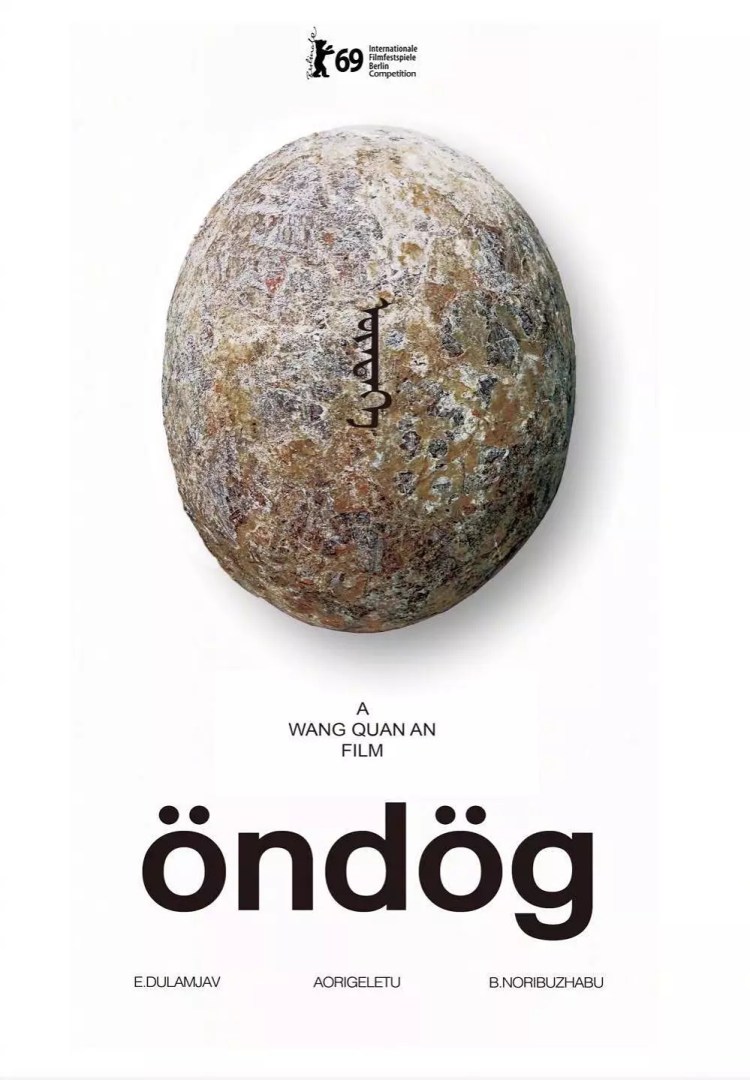
Öndög (恐龙蛋, Wang Quan’an, 2019)

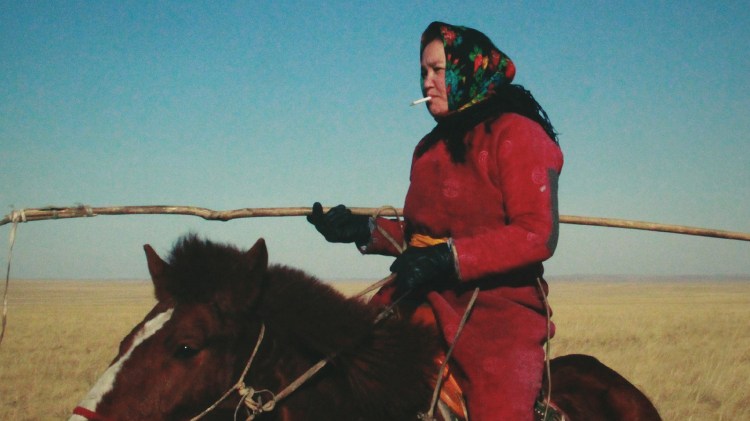
Öndög posterLife and death lie side by side in Wang Quan’an’s existential drama Öndög (恐龙蛋). Taking its name from that of a fossilised dinosaur egg, Wang’s Mongolian odyssey locates itself in a kind of perpetual, unchanging dreamspace where nothing is quite as it first seems. We think we’re here to solve a mystery, a unexpected death evidenced by an abandoned body, but what we witness is a rebirth, a woman returning to life after wilful isolation not weakened by love but perhaps fulfilled by it.

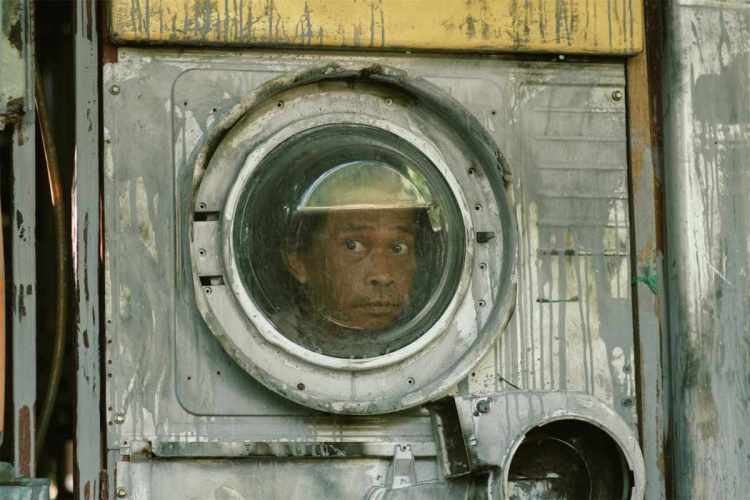
Wang opens with a lengthy sequence of two men driving through the desert and telling tales of huntsmen, who they say must hunt by instinct because the human eye is not as good a guide as good old fashioned intuition. You might think you see a wolf in the distance, but draw closer and it’s just a big grey dog. When the car’s lights illuminate a fallen body, one might initially think it to be one of the horses just seen rushing past but is in fact that of a young woman, naked and abandoned to the desert. As someone later puts it, if no one had found her she would have been returned to the earth, grass would grow over her, sheep would eat the grass, and men would eat the sheep. Now that the body has been discovered, however, it’s a problem for the local police, not exactly used to murder in the middle of the desert. Because they don’t have the proper resources and have to call for backup, they leave a young rookie (the only member of the team with no wife and family) to guard the body overnight, recruiting a local herdswoman to guard him.

The police, apparently, would rather have had a male herdsman but there aren’t any, so this middle-aged, camel riding, rifle toting, and almost totally self sufficient woman will have to do because she’s all there is. Known as the Dinosaur, the woman is perhaps the last of her kind, but acts with an almost maternal warmth towards the inexperienced policeman, reminding him to pull the flaps down on his hat to keep his ears warm, but also making fun of his obvious distress at being left alone (well, except for the wolves) in the desert with a dead body.

Later she returns and teaches him something else with that dead body still in the background. She asks him if he’s ever been in love. He says he hasn’t, too nervous. She tells him what he needs to do is forget that he’s a human, pretend to be a wolf, stare at her as if you want to gobble her up. Truth be told, it’s slightly dangerous advice, even if she later adds that he needs to stare in a loving way after he complains that he doesn’t want his potential love interest to be afraid of him, but soon enough a belly full of liquor to ward off the cold and an animal pelt seem to have done the trick and solved two problems to mutual satisfaction (in one sense at least).

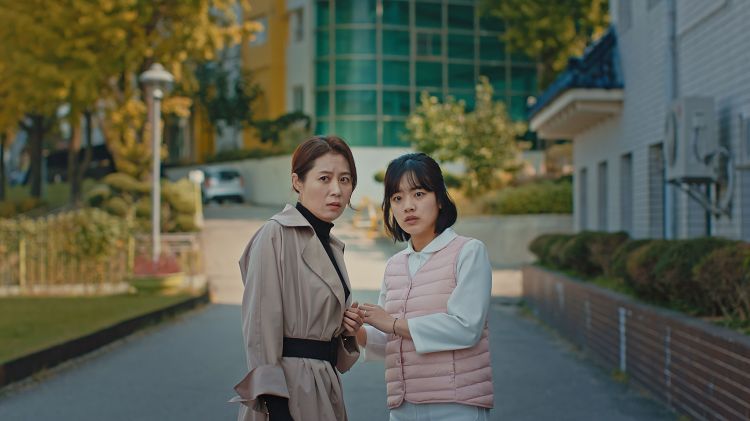
The kid tries out his new found animal magnetism on the pretty intern from the city but remains somewhat nervous and permanently between the corpse and the killer while his boss serenades his crush outside. The woman died because she rejected a man who wanted her on the grounds she loved someone else. To counter that, the older policeman tells his own sad story, that he discovered his wife in fact married him on the rebound. The herdswoman, meanwhile, muses on her strange relationship with a motorbike-riding male friend, apparently a former lover from whom she separated after losing two children they conceived together. He would like to try again, she remains unconvinced despite his urgings that she needs to get herself a man and settle down. Though largely self-sufficient, she calls on him twice – first for death (butchering a sheep to feed the rookie policeman), and then for life (birthing a reluctant calf). He gives to her the Öndög of the title, reminding her that the Americans found the first dinosaur skeletons here in Mongolia, and so in a sense they are all descendants of dinosaurs, and will be succeeded by something else.

The extinct egg nevertheless carries life, in a spiritual sense at least, a perfect embodiment of beginning and end or, perhaps, frozen potential. Maybe the dinosaurs won’t die out after all, or at least, not just yet. From death comes life, and from life death. Set against the dreamlike eternity of the desert night sky, Öndög is the story of a woman hunting by instinct, finding fresh hope in new possibility and old love in an otherwise desolate landscape.


Öndög was screened as part of the 2019 BFI London Film Festival.

Festival trailer (dialogue free)
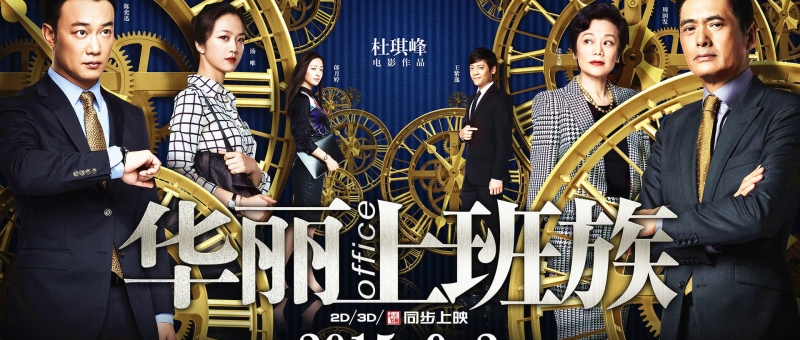
Office (華麗上班族, Johnnie To, 2015)

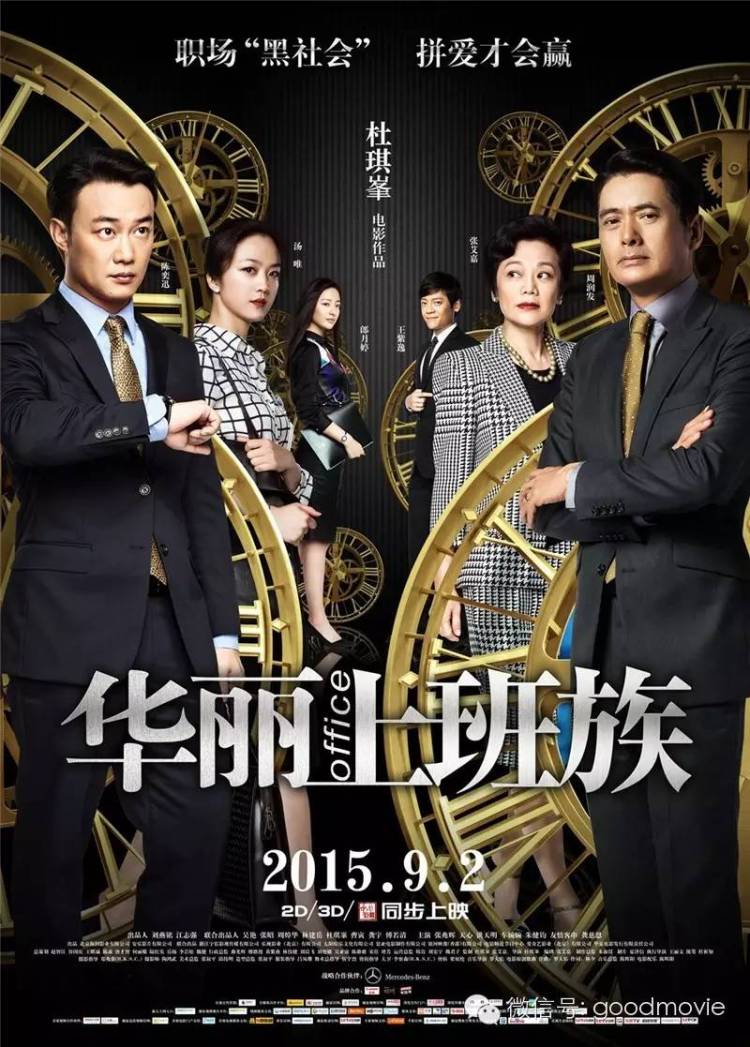
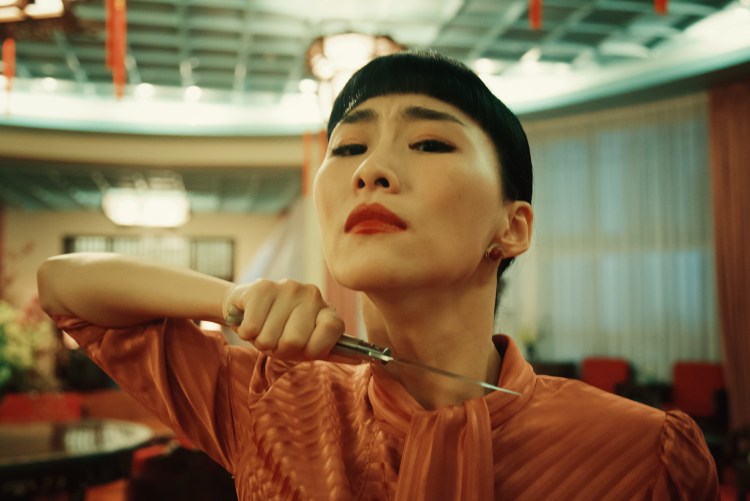
Johnnie To office poster 1Can love and capitalism walk hand in hand? Perhaps not, at least in Johnnie To’s beautifully choreographed musical exploration of high stakes finance and moral bankruptcy, Office (華麗上班族). Adapted from Sylvia Chang’s stage play, Office situates itself on the edge of an abyss as the 2008 financial crisis edges its way towards Hong Kong while enterprising businessmen try to figure out how to ride the waves even if that means standing on someone else’s shoulders as they sink deeper into the moral morass that is the modern economy.

Top Hong Kong trading company Jones & Sunn is about to go public. CEO Winnie Chang (Sylvia Chang) has long been running the show for her boss and lover, Chairman Ho (Chow Yun-fat), who has promised her a sizeable dividend once the floatation is complete. Meanwhile, two new interns have just joined the company, eager to make their marks in the corporate world and ensure they survive their three month probation. Bright-eyed and bushy-tailed Li Xiang (Wang Ziyi), “Lee like Ang Lee, Xiang like dream”, just wants to work hard and get rich so he can live a nice life, while his colleague Kat Ho (Lang Yueting) has just returned from studying economics at Harvard and appears to be slumming it in a lowly internship while (unconvincingly) pretending to be from a humble background. The funny thing is no one seems to pick up on the fact Kat has the same surname as the company’s owner, or they might have figured out she’s the boss’ daughter either forced to learn the trade from the ground up or working as a spy among the regular employees. In any case, Li Xiang is smitten.

Love, it seems, is the destabilising force at the centre of this great machine. CEO Chang, an all powerful woman in a male dominated industry, rules the office with a will of iron but allows herself to be manipulated by Ho with whom she has been having a longstanding affair. Ho has a wife in a coma, but neither of the pair object to the office gossip which brands Chang as “Mrs. Ho”, seeing it only as cutely romantic rather than a slight on Chang’s very real authority. Meanwhile, lonely in Ho’s lack of serious commitment, Chang has also been sleeping with her favourite underling, the feted David (Eason Chan), who in turn is getting fed up with feeling like a spare part who’s hit the peak of his career. Unbeknownst to Chang who may have taken her all-seeing eye off the ball, David has started playing with fire in gambling with company money and losing badly. As a counter measure, he’s begun romancing lovelorn accountant Sophie (Tang Wei), who unlike Chang, is still facing the work/home dilemma in that her fiancé back on the Mainland is pressuring her to give up work and settle down.

Li Xiang is very keen on following his “dreams” which in the beginning are charmingly naive – he wants a nice life for himself and the ability to pay off his friends’ debts (seemingly for entirely altruistic reasons, not as an excuse to show off). Slowly, however, his new world begins to corrupt him. He’s irritated that he’s not allowed to ride the executive elevator and badly wants in, but is still green enough to chivalrously cover up for Kat’s mistakes, while Kat is so clueless that she forgets turning up to work in designer outfits and in a chauffeur driven car is going to blow her cover. Li Xiang sees through her, but only to the nice part – it never really occurs to him she’s a mole or planning to betray Mrs. Chang who is kind of her step-mother. Chang isn’t blind to office politics. She sees Li Xiang take the blame for Kat and even likes him for it. She also likes his “originality” and plans to take him under her wing for her new expansionist plans but finds herself once again blindsided by all the difficult romantic drama bubbling under the surface of coldhearted capitalism.

David and Sophie decide they want to start a “love revolution”, but David has already gone to a dark place and his romantic confession is immediately followed by a manipulative request to get Sophie to help him with his nefarious plans. Meanwhile, Li Xiang’s gradual descent into corporatism begins to sour Kat who’d taken a liking to him because he wasn’t like everyone else. They didn’t mean to do it, but they’ve betrayed themselves and others in their relentless pursuit of conventional success. Drunken salarymen at a local bar ask themselves what all of this is for when their kids don’t recognise them and they barely recognise themselves, yet no one quite has the guts to get off the corporate train and go do something else.

In To’s elaborate set design, no one is ever truly able to leave the office. An elegant construction of neon and steel, the abstract theatricality of To’s artificial universe only underlines its essential meaninglessness – something the Office’s denizens eventually come to understand whether they choose to stay or not. As Chang quips, smart guys control money and stupid ones are controlled by it, but she herself is wise enough to know when the game is up and it’s time to move on. Did love destroy the system or did the system destroy love? Beautiful melodies telling us terrible things, To’s anti-capitalist musical crushes its earnest heroes under the wheel of progress while they dance blithely all the way over the edge.


Office screens in Chicago on Oct. 5 as part of Asian Pop-Up Cinema.

Original trailer (English subtitles)

Signal Rock (Chito S. Roño, 2018)

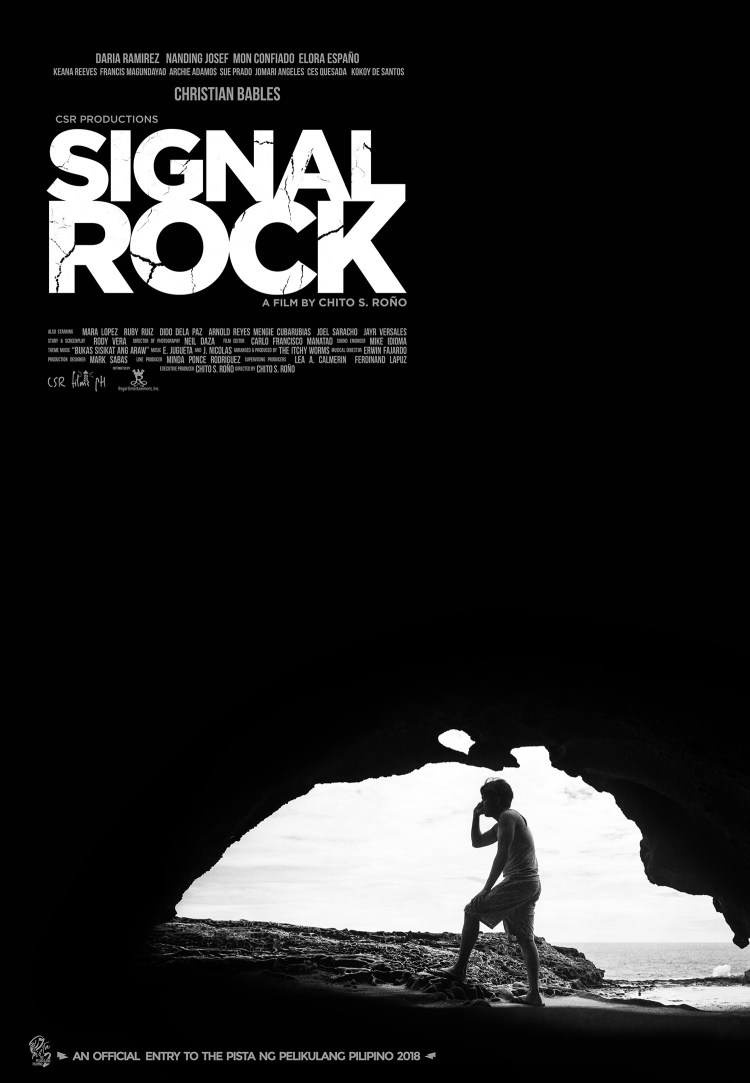
kinopoisk.ru“Family is family, I can’t just say no” a young woman tells her boyfriend in response to his angry outburst on discovering that, like all the young women round these parts, she’s being dispatched to another part of the country to work in a bar. Inspired by true events in the ‘90s, Chito S. Roño’s Signal Rock situates itself in an idyllic fishing community left behind by the modern world like a lonely rock pool after the tide has pulled out. A microcosm of the nation itself, the island has become used to its transitory status as a conduit between two worlds, dependent on those who leave for its survival while the young men rendered incongruously obsolete have little more to do than battle their feelings of resentment and powerlessness.

Our hero, Intoy (Christian Bables), is the youngest son of the Abakan family, charged like so many young men with responsibility over technical things – in this case, maintaining the mobile phone which is the only point of contact that they have with oldest daughter Vicky who is supporting them all while working overseas in Finland. Remote as it is, the only place you can get a signal on the island is by climbing to the top of a rocky outcrop so communication has to be carefully planned in advance. This becomes a particular problem when Intoy discovers that the reason the money from Vicky hasn’t been coming through is that her relationship with a Finnish man with whom she has a small daughter is falling apart because he is both abusive and adulterous. As her daughter Sofia was born in Finland, Vicky fears that her boyfriend will try to seize custody and prevent her returning home to her family. Intoy, a fiercely protective brother, is not about to let that happen and sets about mobilising the community to hatch a plan to ensure Vicky and Sofia come home safely.

Despite Intoy’s protective instincts, the rest of the family’s relationship with Vicky is ambivalent. Oldest son Joaquin (Arnold Reyes), one of many resentful middle-aged men left on the island with not much to do, endlessly complains about the lack of ready money from his sister which he claims he needs to buy a motorbike in order to work. Joaquin also resents the shame of Vicky’s out of wedlock pregnancy, while the parents are still a little put out about the financial sacrifices they had to make in order for Vicky to achieve her “dream” of going abroad.

In order to sell the fantasy that Vicky comes from a wealthy family in the Philippines which is perfectly well equipped to support herself and her daughter, the Abakans are forced to confront their longstanding family issues. Intoy’s parents have been estranged for some time with his father technically living in a shed outside the main house, apparently loathed by his wife who claims the youngest two children are a result of marital rape. Another product of the patriarchal society, Intoy’s parents apparently eloped at a young age so that his mother could escape a marriage arranged by her father, only for the relationship to sour when Intoy’s dad lost his job at an American-run factory causing his wife to become disillusioned with his ordinariness.

Little seems to have changed in the last 30 years in that the lives of women are still largely dictated by the whims of their fathers. Vicky may have made a free choice to go abroad, but seeing as work is easier to come by for women, it is the norm for girls of the island to be sent away while the boys remain home alone. While dealing with his sister’s plight, Intoy is also facing the inevitable heartbreak of losing his girlfriend Rachel whose father has arranged for her to work in a bar in the city. As Intoy points out, from the parents’ point of view bar work is a pathway to finding a rich foreign husband – like Gina, another young woman from the village, who is returning home to celebrate her marriage to an elderly German (official now that his divorce has come through). Hardly pausing at the dockside, Gina introduces her former lover as a “cousin” before whispering in his ear that her feelings haven’t changed and she hopes to bring him to Germany for a better life after the old man snuffs it.

Intoy makes a kind of living on the island running errands for older people and acting as an MC during village celebrations, but as there is no real work round here and all the girls are gone, the young men largely spend their time playing basketball and getting into fights. They resent being forced to live off their sisters and seeing the women they love promised to other men, but have no other option than to make uneasy peace with their lack of possibilities. Intoy battles against his baser emotions, remaining kind and cheerful as he convinces his friends and neighbours to help him forge documents that imply his sister owns property while cosying up to the local mayor who hopes to hang on to power at the next election by convincing his wife to stand as a candidate.

Intoy alone is desperate to preserve the integrity of his family, even when spread across continents, standing out on Signal Rock as a kind of beacon left behind solely to convey information from one point to another. Having helped his sister, however, he discovers the depths of her resentment in her embarrassment at the idea of returning home after receiving the help of so many people. He loses his temper, unable to understand his sister’s rejection of everything he has worked so to protect at great cost to himself. Even so, Intoy manages to maintain his cheerfulness and desire to help others, sinking back into island life with his customary stoicism even if mildly troubled by a bargain he may have committed to without fully comprehending its implications. An ambivalent depiction of idyllic island life built on the back of female exploitation and entrenched patriarchy, Signal Rock nevertheless finds finds hope in community spirit and in its hero’s essential goodness.


Signal Rock screens in Chicago on Oct. 3 as part of the ninth season of Asian Pop-Up Cinema where actor Christian Bables will be present for an introduction and Q&A.

Original trailer (English subtitles)

Bento Harassment (今日も嫌がらせ弁当, Renpei Tsukamoto, 2019)

Bento harrassment posterChildhood’s a funny thing. Obviously lacking life experience and used to being the centre of someone’s universe, children can be curiously self-centred, little knowing the hard work their parents put in to try and make them happy until they suddenly realise years later that their mothers must have toiled through the night just to finish that costume for fancy dress that they didn’t really want to wear. Fed up with her teenage daughter’s sullen indifference, the heroine of Bento Harassment (今日も嫌がらせ弁当, Kyo mo Iyagarase Bento) comes up with an ingenious solution – increasingly elaborate lunchboxes designed to vent her frustration in a way that’s impossible for her daughter to ignore.

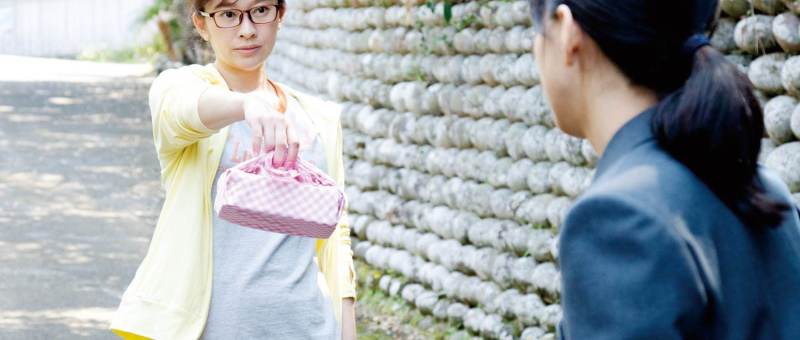
12 years previously Kaori (Ryoko Shinohara) was blissfully happy with her two little daughters, Wakaba (Rena Matsui) and Futaba (Kyoko Yoshine), but then her husband was killed in an accident and her life was turned upside down. Now she lives alone with her youngest daughter Futaba who has entered something of a rebellious phase, never directly talking to her mother but communicating through pithy, passive aggressive texts. In a bid to get her attention, Kaori decides to play her at her own game – by becoming so annoying that she’s impossible to ignore. From the day that Futaba enters high school she commits herself to making one “annoying” bento every day, eventually adding a message or two into the mix. Much to Futaba’s chagrin, her mother’s bento becomes a cause of daily excitement among her school friends who can’t wait to see how her mother has chosen to troll her on this particular day.

Perhaps tellingly, Kaori and her daughters live on a small island, Hachijojima, which is technically classed as “Tokyo” though in another sense almost as far from the bustling metropolis as it’s possible to get. There are no trains, or shopping malls, or convenience stores, just cows and wholesome wisdom. Caught between one thing and another, Futaba quits her after school athletics club to sit in a field and write angsty poetry about how she’s all alone in the universe. She doesn’t understand why her mum’s so extra and is confused by her attraction to a childhood friend (Kanta Sato) who has now become buff after developing an obsession with taiko drumming. Beginning to figure out why her daughter’s so moody lately, Kaori doubles down on the annoying bento plan but tries to put a little guidance in there too to push the indecisive Futaba towards making concrete decisions about her future.

Unlike the typically self-sacrificing mothers of “hahamono”, Kaori has her spiky side and never particularly looks for thanks or recognition from her daughters only basic civility. She works two jobs (one in a bento shop and another in a pub) and still makes time to devote herself to the petty art of annoying bento which she also posts online on a blog which becomes an instant hit with similarly stressed out parents looking for a little innocent revenge. Through the blog she finds herself bonding with Shunsuke (Ryuta Sato), a widowed father of a five-year-old boy who is struggling to perfect the art of bento though his aim is less revenge than trying to bond with his son who obviously misses his mum. Yet even “annoying” bento comes from a fundamental place of love – after all, you don’t spend all night cooking to send a passive aggressive message to someone you don’t like. Rising to the challenge, Futaba refuses to admit defeat and makes a point of eating all of the annoying bento without a word of complaint, allowing a kind of communication to arise between herself and her extremely patient mother.

Seeing all her dreams crushed on one extremely bad day, however, makes Futaba lose faith in her mother’s gentle wisdom. Kaori tries to convince her that nothing’s ever really “wasted” because even when things don’t work out the way you hoped they still teach you something else but that’s a hard lesson to learn when you’re young and unused to disappointment. Nevertheless, thanks to her mother’s relentless trolling and some careful words from her sister, she comes to realise just how much her mother has sacrificed on her behalf and understand her mother’s love. A warmhearted tale of mother daughter bonding and an ode to persevering through life’s various difficulties, Bento Harassment is a wholesome treat and inspirational tribute to living life without regrets.


Bento Harassment screens in Chicago on Sept. 27 as part of the ninth season of Asian Pop-Up Cinema.

Original trailer (English subtitles)

London East Asia Film Festival Announces Full Programme for 2019

Exit still 1The London East Asia Film Festival returns for its fourth edition on 24th October with a screening of Korean action drama Exit. This year the festival will host a special actor focus dedicated to Hong Kong star Aaron Kwok, as well as showcasing two films from North Korea, and paying tribute to the classic samurai movie.

Opening 

Exit banner

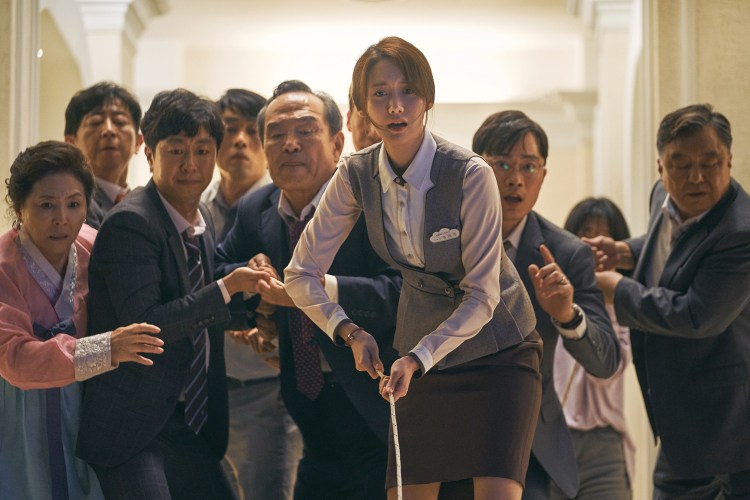
  • Exit – an unemployed rock climbing enthusiast finds himself in his element when his family is trapped by a mysterious white mist in a high rise restaurant he booked for his mother’s 70th birthday only because an old flame works there. Director Lee Sang-geun will be present for a Q&A.

China

The Crossing Banner

  • The Wild Goose Lake – Black Coal, Thin Ice’s Diao Yinan returns with another neo noir in which a smalltime mob boss tries to survive after he kills a policeman by mistake.
  • Balloon – Tibetan-language drama from Pema Tseden (Jinpa) following a sheep farming family.
  • Send me to the Clouds – a young woman diagnosed with ovarian cancer ends up writing a biography of an entrepreneur’s father and embarking on an existential journey.
  • Summer of Changsha – directorial debut from actor Zu Feng in which he also stars as a policeman investigating a possible murder after a severed arm is found in a river.
  • The Crossing – a teenage girl faces differing kinds of crossings as she finds herself embroiled in a world of crime smuggling phones across the Hong Kong/Shenzhen border. Review.

Hong Kong

Still human 1

  • Europe Raiders – third in the “Raiders” series in which two bounty hunters go on a search for the “Hand of God”.
  • G Affairs – gritty social drama in which a severed head exposes the unexpected connections between a disparate group of people. Q&A with Director Lee Cheuk Pan
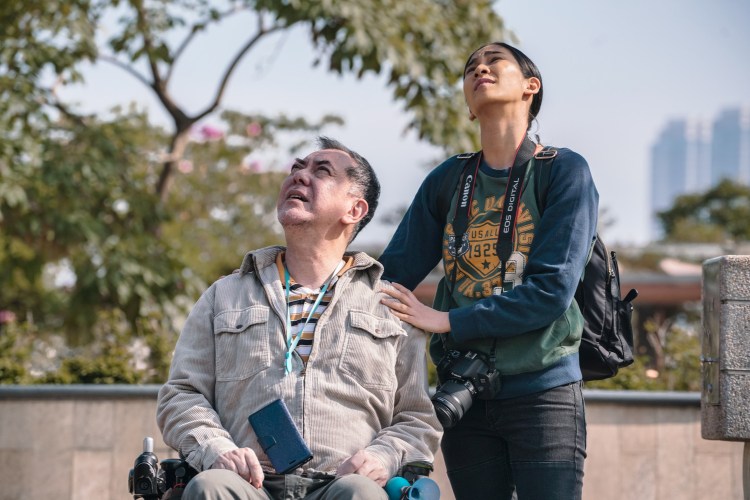
  • Still Human – touching drama in which a grumpy old man eventually bonds with his Filipina carer. Review
  • Three Husbands – latest from Fruit Chan in which a young woman lives a life at sea with her three husbands.
  • After This Our Exile – Aaron Kwok stars in Patrick Tam’s drama as a dejected husband and father who finds himself alone with his young son after his wife finally manages to leave.
  • Cold War – Aaron Kwok stars as an earnest ICAC agent trying to secure the release of kidnapped policemen. Plus talk with Aaron Kwok
  • Port of Call – Aaron Kwok stars as an eccentric detective investigating the death of a young girl in Philip Yung’s melancholy thriller. Review.
  • I’m Livin’ It – Aaron Kwok stars as a former finance worker rendered homeless. Closing gala with Kwok in attendance. 
  • Butterfly – a closeted lesbian married with a child falls for a younger woman in Mak Yan Yan’s sensitive drama.
  • Green Snake – Tsui Hark’s take on the classic Lady White Snake legend starring Maggie Cheung and Joey Wong.

Indonesia 

The Science of Fictions still 1

Japan

A girl missing still 1

  • A Girl MissingKoji Fukada reunites with Harmonium’s Mariko Tsutsui who stars as a carer implicated in a crime.
  • To the Ends of the Earth – Kiyoshi Kurosawa reunites with recent muse Atsuko Maeda as a lost TV presenter goes searching for herself while filming in Uzbekistan. Review.
  • Erica 38 – a middle-aged woman seeks chases illusionary success after getting involved with large scale fraud. Review.
  • The Woman Who Keeps a Murderer – Horror from Ring’s Hideo Nakata in which a traumatised woman’s world gradually collapses.
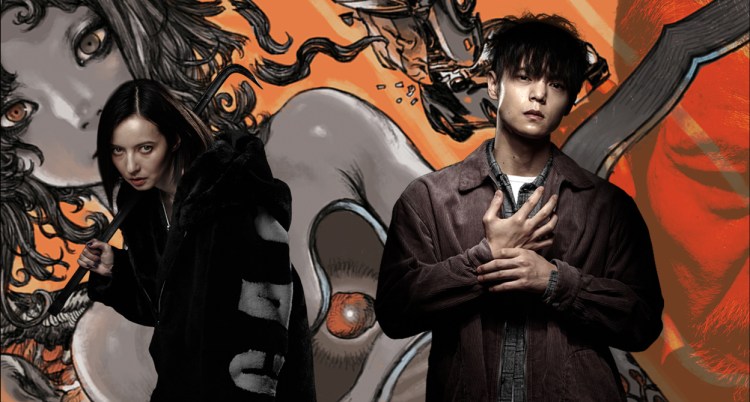
  • Under Your Bed – stalker drama from Mari Asato starring Kengo Kora as a lonely man obsessed with a former uni classmate now married with a child.

Korea

Gangster Devil Sop still 1

  • Long Live the King – comedy in which a mob boss aims to become president to win the heart of a woman who constantly rejects him and also save his friend who has been sentenced to death!
  • Another Child – teenage girls bond in unexpected friendship when they find out their parents are having an affair. Review.
  • Divine Fury – An MMA fighter battles his demons while teaming up with an exorcist priest! Review.
  • Money – a cynical stockbroker gets in over his head with an unscrupulous fixer. Review. Q&A with Director Park Noo-ri & Actor Ryu Jun Yeol.
  • Ms Purple – Drama set in LA’s Koreatown in which Korean-American siblings attempt to reconnect in their father’s final days.
  • The House of Us – Yoon Ga-eun’s The World of Us followup in which a young girl trying to get her parents to patch things up becomes a big sister figure to two other kids. Review.
  • The Battle: Roar to Victory – drama starring Yoo Hai-jin and Ryu Jun-yeol in which Resistance fighters in 1920 attempt to get funds to the Independence Movement in exile in Shanghai.
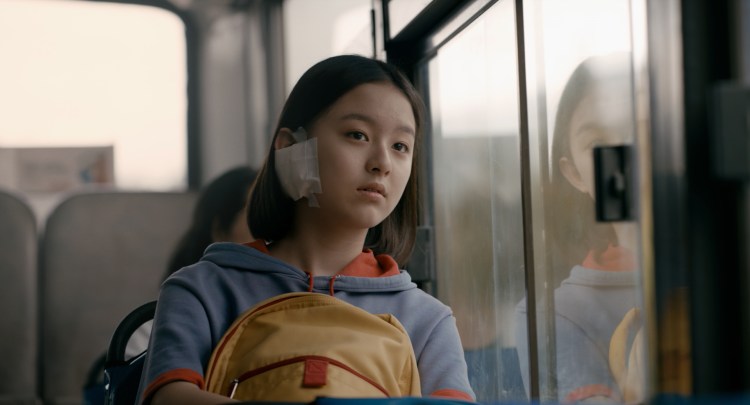
  • The House of Hummingbird – a young girl’s perspective widens when she connects with her enigmatic Chinese teacher. Review.
  • Tune in for Love – Romantic drama from Jung Ji-woo set in the ’90s following a baker who likes to call in to a radio requests show. Q&A with Actor Jung Hae-in
  • Inseparable Bros – two best friends, one who has a physical disability and the other learning difficulties, meet a woman who encourages them out into the world.
  • Juror 8 – comedy drama inspired by Korea’s first jury trial in which a strange young man refuses to abide by the majority opinion. Review.
  • The Gangster, The Cop, The Devil – Ma Dong-seok stars as a gangster attacked by serial stabber who teams up with a rogue cop to trap a serial killer. Review.
  • My Name is Kim Bok-dong – documentary exploring the life of “comfort woman” Kim Bok-dong who passed away last year after decades of trying to gain acknowledgement for women like herself forced into sexual slavery by the Japanese during the Second World War.
  • Rivercide: The Secret Six – documentary focussing on the outcome of President Lee’s Grand Canal project.
  • The Culprit – a man’s wife is murdered and circumstantial evidence suggests his best friend did it. He teams up with his friend’s wife to search for the truth!

North Korea

The Story of Our Home

  • The Story of Our Home – propaganda drama about a teenage girl who adopts a series of orphans.
  • A Broad Bellflower – propaganda romance in which a man dreams of moving to the city while his wife wants to improve their town.

Philippines

Rainbow Sunset

  • Rainbow’s Sunset – drama in which an 84-year-old man tells his family he is gay because he wants to care for his longterm lover in his final days.

Singapore

Wet season still 1

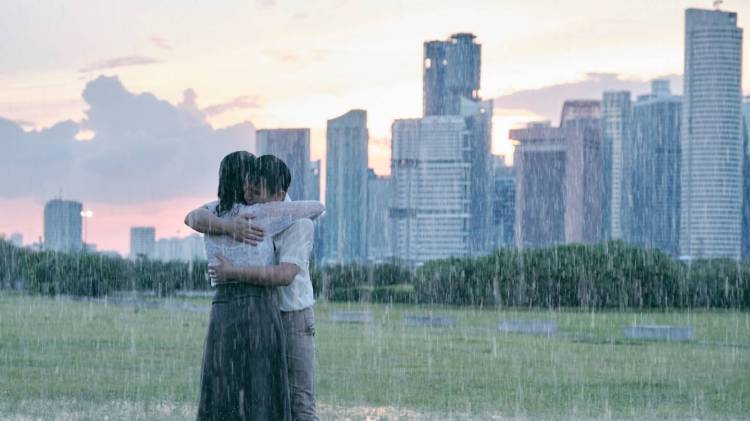
  • Wet Season – Ilo Ilo’s Anthony Chen returns with a monsoon tale in which a Mandarin language teacher is drawn to one of her students. Review.

Taiwan

Nina Wu still 1

  • Cities of Last Things – tripartite story which begins with the protagonist’s suicide and then moves back to examine the events which led to it.
  • Nina Wu – psychological drama from Midi Z in which an actress gets her big break but is forced into uncomfortable situations by a difficult director.
  • Deep Evil – a top plastic surgeon is a prime suspect when a headless corpse is discovered.
  • Heavy Craving – a lunch lady hoping to lose weight strikes up unexpected friendships with a deliveryman and cross-dressing student.
  • Millennium Mambo – Hou Hsiao-Hsien drama starring Shu Qi as a young woman living in turn of the century Taipei.
  • The Tag-Along: The Devil Fish – spin-off to the Tag-Along series inspired by another urban legend in which fishermen notice a human face in their fish as they’re grilling it.

Thailand

The Pool still 1

  • The Pool – A man ends up having to clean a disused pool after a film shoot but falls asleep on an inflatable raft. When he wakes up, he finds that the water level has fallen so low he can no longer climb out. He screams for help, but the only creature to hear him is a crocodile…

Samurai Season

Sword of doom still 1

  • 13 Assassins – Takashi Miike’s remake of the 1963 Eiichi Kudo classic in which 13 assassins go up against a corrupt lord.
  • Harakiri – Kobayashi classic from 1962 starring Tatsuya Nakadai as a ronin taking a principled stand against samurai corruption.
  • Lone Wolf and Cub: Sword of Vengeance – first in the Lone Wolf and Cub series which sees a noble samurai fall from grace and take to the road with his small son in tow. Review.
  • Lone Wolf and Cub: Baby Cart at the River Styx – The second film in the Lone Wolf and Cub cycle in which Ogami is hired to take down a corrupt manager. Review.
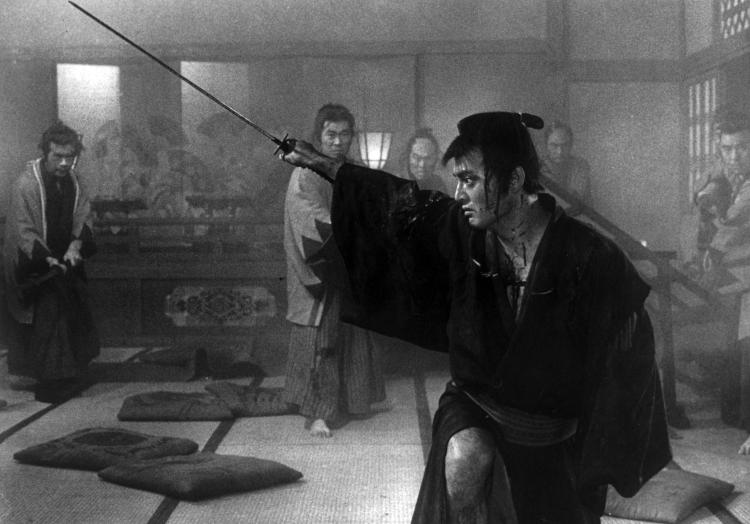
  • Sword of Doom – blistering drama from Kichachi Okamoto in which Tatsuya Nakadai stars as an amoral samurai.

The London East Asia Film Festival 2019 runs at various venues in Central London from 24th October to 3rd November. Full details for all the films as well as ticketing links will shortly be available via the official website, and you can keep up with all the latest news by following the festival on Facebook, Twitter, Instagram, and Flickr.

London Korean Film Festival Announces Full Programme for 2019

The Seashore Village - Opening Gala (1st Nov)The London Korean Film Festival kicks off its 14th edition in London on 1st November and runs until the 14th at venues across the city before touring to Edinburgh Film House, Watershed Cinema Bristol, Belfast Queen’s Film Theatre, Glasgow Film Theatre, Manchester HOME, and Nottingham Broadway Cinema from 18th to 24th. This year’s special focus is dedicated to Korean cinema history in celebration of its centenary and will feature a series of classics many of them making their UK cinema premieres. 

Opening

The Seashore Village poster 2

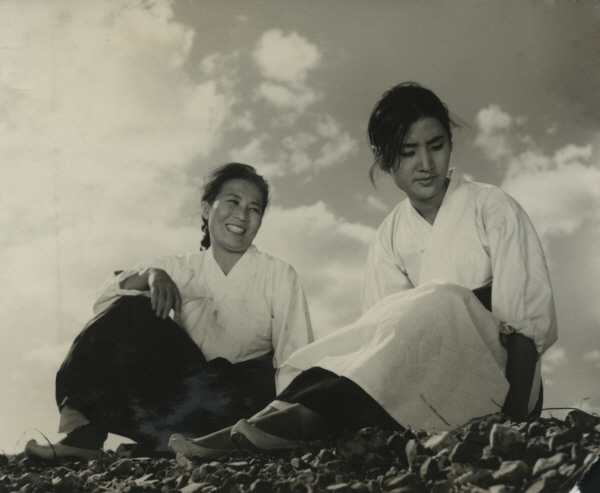
  • The Seashore Village – Opening for the first time with a retrospective title, the festival will pay tribute to veteran director Kim Soo-yong with his 1965 literary adaptation The Seashore Village in which a community of women left largely alone after losing husbands at sea have learned to support each other in the absence of men. Review. Director Kim will be present in person to discuss the film as well as his long career in the Korean cinema industry.

Closing

Scattered Night - Closing Gala (14th Nov)

  • Scattered Night – the festival will close on Nov. 14 with Kim Sol’s 2019 drama chronicling the dissolution of a family seen through the eyes of the children.

Special Focus: 100 Years of Korean Cinema

Devil's Staircase poster 2

  • A Hometown in Heart – touching drama from 1949 in which an orphaned child monk bonds with a widow.
  • Piagol – Lee Kang-cheon’s 1955 drama was originally banned for its sympathetic depiction of Communist soldiers as they wage war under a severe commander.
  • The Flower in Hell – Shin Sang-ok classic from 1958 in which a sex worker tries to find escape by seducing the younger brother of her boyfriend who makes a living stealing from the US military.
  • Aimless Bullet – bleak portrait of post-war life from Yu Hyun-mok. Review.
  • A Coachman – a single father struggles to provide for his family in Kang Dae-jin’s 1961 drama.
  • A Woman Judge – Moon Jeong-suk stars as a young woman determined to become a judge in the face of fierce social opposition. Review.
  • Bloodline – Another literary adaptation from Kim Soo-yong, Bloodline revolves around three families in a small courtyard in which the young long for freedom and a brighter future only for their parents to lament their declining authority. Review.
  • Goryeojang – 1963 drama from Kim Ki-young revolving around the ancient practice of abandoning the old in times of famine.
  • Ieoh Island – Kim Ki-young drama from 1977 in which a murder is committed on an island inhabited only by women.
  • The Devil’s Stairway – Hitchcockian drama with shades of Les Diaboliques from Lee Man-hee in which a doctor (Kim Jin-kyu) offs his inconvenient mistress (Moon Jeong-suk) to marry the boss’ daughter only to be haunted (or not?) by the memory of his transgression. Review.
  • Homebound – Moon Jeong-suk, the director’s then muse, stars again for Lee Man-hee as a middle-aged woman finds herself trapped between personal desire and social convention when she falls for a young reporter (Kim Jeong-cheol) and considers leaving her embittered, bedridden war veteran husband (Kim Jin-gyu). Review.
  • A Day Off – legendary, long believed lost drama from Lee Man-hui originally banned for its bleakness in which a young couple find themselves in an impossible situation. Review.
  • Ticket – ’80s drama from Im Kwon-taek exploring the lives of three young women working in a “ticket” bar “coffee delivery” shop. Review.
  • The Man with Three Coffins – 1987 drama from Lee Jang-ho in which a man wanders the country looking for a place to scatter his wife’s ashes.
  • A Pillar of Mist – a young couple grow apart over time in Park Chul-soo’s 1986 drama.
  • The Age of Success – Ahn Sung-ki stars as a salesman at a sweetner company who falls ill after battling a competitor and comes up with a genius idea to get back at them while in the hospital.
  • Why Has Bodhi-Darma Left for the East? – drama exploring the lives of three monks shot over seven years.
  • North Korean Partisan in South Korea (Nambugun) – 1990 drama inspired by the life of war correspondent Lee Tae.
  • A Single Spark – biographical drama about a Jeon Tae-il, a worker who self-immolated to protest unfair working conditions.
  • The Day a Pig Fell into a Well – debut from Hong Sang-soo in which a married man on a business trip gets stranded and ends up having a weird encounter with a sex worker.
  • Three Friends – debut from Lim Soon-rye in which three misfits report for military service.
  • The Contact – romance in which love blossoms over the airways.
  • Peppermint Candy – modern masterpiece from Lee Chang-dong in which a disappointed man looks back over his life.

Hidden Figures: Ha Gil-jong

Pollen of Flowers banner

  • The Pollen of Flowers – Ha Gil-jong’s debut makes a subtle jab at the repressive Park Chung-hee regime as a businessman introduces his male secretary into the home he shares with his mistress.
  • The March of Fools – 1975 drama which begins as campus comedy and then gets progressively melancholic and reflective. Review.
  • The Ascension of Han-ne – in the 19th century a woman is saved from suicide but ostracised by her community after a shaman pronounces her bad luck.

Cinema Now

birthday still 1

  • Grass – Hong Sang-soo drama starring Kim Min-hee as a writer eavesdropping in a coffee shop.
  • Birthday – powerful drama following a family bereaved by the Sewol ferry tragedy. Review.
  • A Resistance – historical drama inspired by the life of a teenage independence activist. Review.
  • Idol – neo-noir in which a bereaved father tries to expose the true facts surrounding the death of his son while a politician attempts to maintain his squeaky clean image. Review.
  • Extreme Job – broad comedy in which bumbling policemen open a fried chicken joint as part of a stakeout only for the place to take off. Review.
  • The Odd Family: Zombie on Sale – a weird family adopts a zombie after discovering his bite has healing qualities in Lee Min-jae’s hilariously surreal comedy. Review.
  • Height of the Wave – latest from Park Jung-bum following a policewoman transferred to a remote island.

Women’s Voices

A Bedsore (Women's Voices)

  • Youngju – a young woman looking after her brother becomes involved with the man who killed their parents.
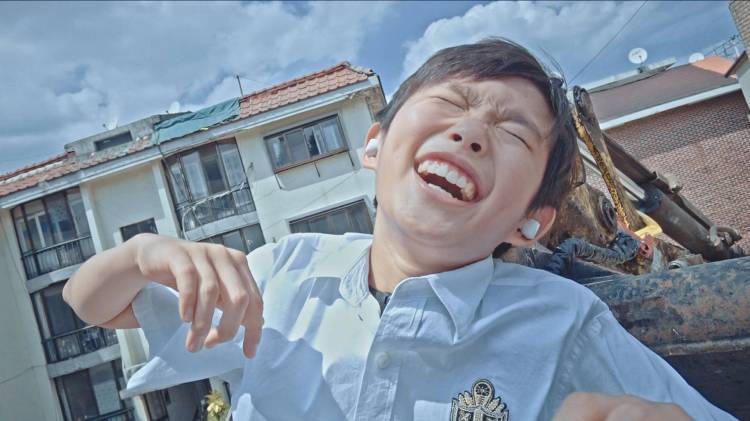
  • A Boy and Sungreen – a schoolboy and his friend attempt to track down his absent dad.
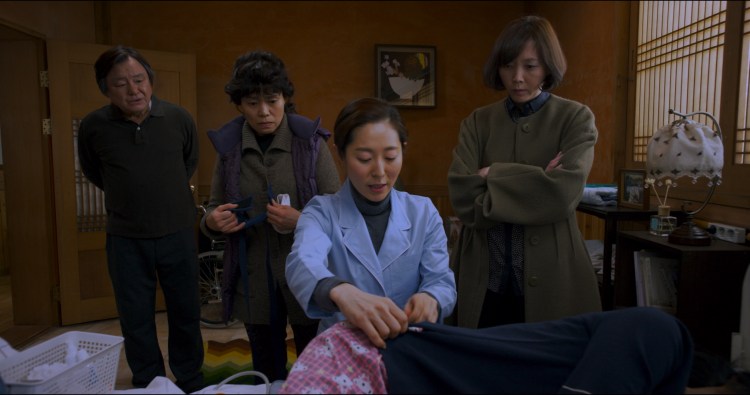
  • A Bedsore – grandma’s bedsore exposes the cracks in an ordinary family.
  • Yukiko – chronicle of a family scarred by war.

Documentary

night before the strike

  • Water Utilization Tax – documentary from 1984 following the four month struggle of farmers in Gurye.
  • Blue Bird – 1986 doc interviewing farmers about their working conditions.
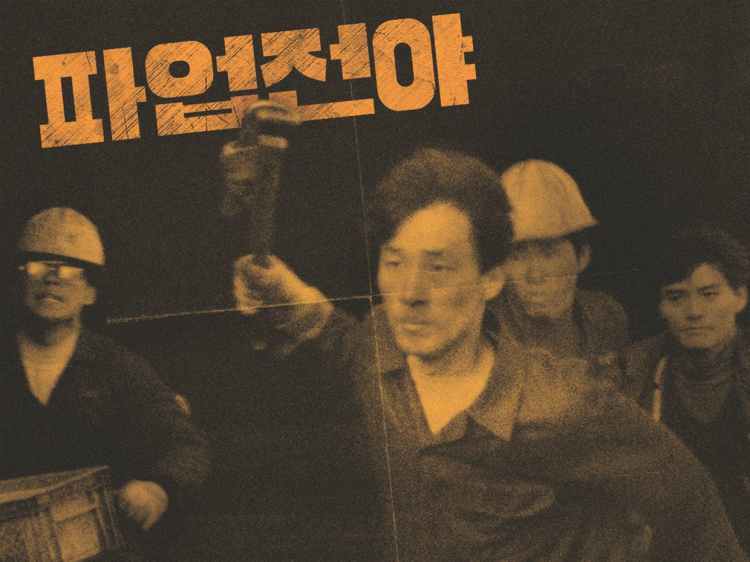
  • The Night Before the Strike – 1990 doc following factory workers’ attempts to unionise.

Animation

astro garnder

  • A Story of Hong Gil-dong – 1967 classic adapting the traditional folktale.
  • Astro Gardener – fantasy adventure with an ecological message.

Mise-en-scène Shorts

Yuwol

  • Freckles – bittersweet tale of first love.
  • To Each Your Sarah – a woman rebuilds her life after leaving her husband.
  • Goodbye Bushman – brothers discover a “bushman” in the woods.
  • Milk – a hotel maid commits a crime to pay for baby food.
  • Yuwol: The Boy Who Made the World Dance – musical following a young boy with an urge to dance.
  • Camping – a woman is kidnapped from a campsite.
  • The Stars Whisperer – a young girl with hearing difficulties makes a new friend.
  • The Lambs – a pastor and a member of his congregation share an obsession with a dead woman.

Artist Video

Songs from the North (Artist Video)

  • Songs from the North – Yoo Soon-mi’s documentary portrait of the North.
  • Dangerous Supplement – early work from Yoo Soon-mi showcasing the theme of memory.
  • Sets – Park Chan-kyong’s examination of the North’s vision of the South.
  • Flying – Park Chan-kyong explores the North/South divide.
  • Believe it or Not – Park Chan-kyong narrative piece inspired by those who have crossed the border.

The London Korean Film Festival runs 1st – 14th November in London before touring the country until 24th. Full details for all the films as well as screening times and ticketing information will be available shortly via the official website and you can keep up with all the latest news by following the festival on FacebookTwitter, and Instagram.

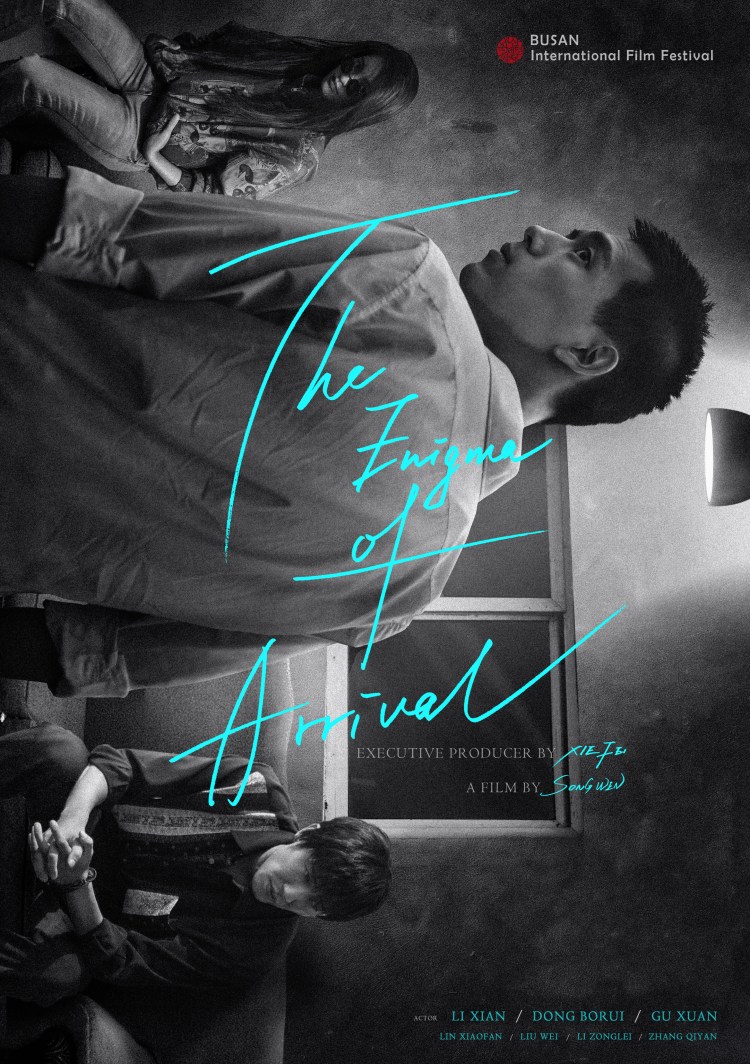
The Enigma of Arrival (抵达之谜, Song Wen, 2018)

The Enigma of the Arrival posterChinese cinema has always had a fondness for melancholy nostalgia. Perhaps its natural enough to romanticise one’s youth and long for a simpler time of possibility, though that same desire for “innocence” has often been read as a rebuke on the “soulless” modern economy and critique of Westernising individualism of a China some feel has lost its way since the economic reforms of the ‘80s and beyond. Song Wen’s The Enigma of Arrival (抵达之谜, Dǐ Zhī Mí), seemingly borrowing a title from the novel by VS Naipaul, seems more straightforwardly personal in its universality as it locates a single fracturing point in the lives of a collection of young people forced apart yet eternally connected by tragedy and disappointment.

Song begins in the present day with his 40-ish narrator, San Pi (Liu Wei), who tells us that he is looking forward to reuniting with his old friends with whom he has largely lost touch. Falling into a reverie, he takes us back to their harbourside hometown some 15 years or so previously when he used to hang out with three friends from school – Feng Yuan (Dong Borui), Xiaolong (Li Xian), and Da Si (Lin Xiaofan). Young men, they spent their time watching “cool” Hong Kong movies like Days of Being Wild and A Better Tomorrow, which were always followed by a blue movie watched incongruously in public. The trouble starts when the guys meet local beauty Dongdong (Gu Xuan) and are all instantly smitten. Hoping to get themselves a more impressive motorbike, they make a fateful decision to steal some diesel and sell it on, only the fuel they steal belongs to gangsters which lands them in a world of trouble they are ill-equipped to deal with despite their adolescent male posturing. Dongdong disappears without trace leaving the guys wounded and confused.

As San Pi tells us in his opening monologue, things are not always as they seem, “Life is floating between fiction and reality”. It’s a particularly apt comment from him because, as we later find out, he was present only for the single climactic events not for the ones which preceded and followed them. He didn’t go with the guys when they, mistakenly, tagged along with Dongdong to an athletics tournament to which she only intended to invite Xiaolong, and as he left soon after Dongdong disappeared his memories of those times are not first hand. He invites us to assume that each of the men has their own narrative which necessarily places themselves at the centre and offers a flattering portrait of their actions which attempts to absolve them of guilt for whatever they did or did not do to lose Dongdong.

A case in point, though it seems that Dongdong favoured Xiaolong who has spent the remainder of his life pining for her, Fang Yuan always thought she fancied him while Da Si was technically dating her friend Xiaomei (Zhang Qiyuan) but seems to have developed some kind of protective sympathy towards her which may have an edge of puritanical resentment. San Pi is the only one who does not seem to have engaged in sad romance, a perpetual outsider looking on from the edges. That might be why he seems to be the one eulogising their friendship, less hung up on what happened to Dongdong than on the effect it had on the later course of his life and that of his friends. Reuniting in a Japanese-style onsen, an ironic reminder of their youthful dreams to see Japan, he wonders if they might return to their teenage intimacy but discovers that youthful innocence cannot be reclaimed once lost, some secrets must stay secret, and some betrayals are too much to bear. They will never go to Japan together, or even catch a movie in a rundown theatre. It would be embarrassing; the moment has passed.

Song frames his tale in a mix of hazy images and black and white, neatly symbolising the patchwork quality of narrative assembled from memory and wishful thinking, coloured by a single perspective that lacks the composite whole of accepting the reality of others’ perceptions. In contrast to the longing for the old China that marks many a youth drama, Song’s young guys yearn for the world – they worship Hong Kong tough guys, listen to Western music, and dream of seeing Japan, but their present life is one of settled middle-aged disappointment marked by the unresolved tragedy of their pasts which both binds them together and forces them apart. “No one is flawless” Xiaolong is reminded, but somehow that only makes it worse. A melancholy ode to ruined friendship and the nostalgia of bygone adolescent possibility, Enigma of Arrival is a suitably abstract effort from the founder of the XINING FIRST International Film Festival and signals a bold new voice on the Chinese indie scene.


The Enigma of Arrival screens in Chicago on Sept. 19 as part of the ninth season of Asian Pop-Up Cinema where director Song Wen will be present for an intro and Q&A.

Original trailer (English subtitles)

Swing Kids (스윙키즈, Kang Hyeong-cheol, 2018)

Swing Kids poster 2“Fuck Ideology” the embittered hero of Kang Hyeong-cheol’s Swing Kids (스윙키즈) exclaims, pushing back against his casually cruel commanding officer from the comparative safety of the stage on which he decides to cast off his frustration through a natural love of dance. It may be too much of a truism to suggest you can dance your way to freedom while a very literal prisoner of war, but in any case Kang eventually shows us that sooner or later someone will be along to crush even the smallest of dreams and it may not be the people you’d most expect.

The film opens with a propaganda newsreel that eventually skews pro-North in lamenting the poor conditions at the Koje POW camp where a small civil war recently broke out between those who remain fiercely loyal and those who have been seduced by American freedoms and no longer wish to return. Unfavourably comparing Koje with a camp in the North which is run under strict adherence to the Geneva convention so you’d hardly even think there was a war on at all, the film ends by casting shade on the American forces’ casual cruelty and inability to keep their house in order. The old commander having been sacked, newbie General Roberts (Ross Kettle) is keen to reform the camp’s image and so he hatches on the idea of getting Sergeant Jackson (Jared Grimes), who used to be a Broadway tap dancer, to teach the “commies” the American dance of freedom which seems tailor-made for front page photo sensation.

Jackson is reluctant to take the job but is persuaded when Roberts attempts to threaten him over his complicated personal life which has seen him breaking regulations to earn extra bucks in the hope of getting transferred back to Okinawa where he apparently had a woman he wanted to marry and a child he needed to make legitimate. Time and again we’re told that getting sent to the Korean War is something that happens to soldiers who’ve made mistakes, which might explain why the camp appears to be staffed by a collection of thoroughly unpleasant, incompetent foot soldiers while Roberts himself is mostly interested in raising its profile to save his own reputation.

“Communism, Capitalism. If nobody knew what they were, no one will kill or be killed” a young woman points out, quite reasonably before awkwardly wading into an ill-advised debate over who is more oppressed – ethnic minorities or women in a time of war. Sgt. Jackson who hails from the land of the free had to abandon his dream of the stage because of racism and continues to experience persistent micro aggressions from junior soldiers who refuse to follow his orders. The Korean internees are often no better, throwing up their own racial slurs and parading their cultural ignorance by reserving a special layer of scorn just for him in addition to that they feel for the Americans who have, after all, wandered onto their land and decided to have a war on it while making them join in. Communism and Capitalism, another soldier intones, are concepts made by and for the Russians and Americans, they have precious little to do with him so why are he and his loved ones supposed to die over an ideological disagreement?

Hero of the North Ki-soo (Do Kyung-soo) remains conflicted. He was loyal and truly believed in his cause, but secretly has the heart of a dancer and longs for the freedom of physical movement. He can’t talk to Jackson, or to another of the Swing Kids who is a lonely Chinese soldier who can only speak Mandarin (Kim Min-Ho), but discovers that they do have a shared language in dance and are able to communicate on an elemental level that makes culture an irrelevance. Feisty young woman Yang Pallae (Park Hye-su), who, out of necessity, has learned to speak three additional languages (English, Mandarin, and Japanese), discovers something much the same as she reluctantly begins dancing even though there’s no money it, while lovelorn Kang Byung-sam (Oh Jung-se) wants to dance to become famous because he’s become separated from his wife and thinks that then she’d be able to find him again. 

As Pallae puts it, when she puts the tap shoes on all the awful things go away. Pointedly introducing the big dance number, Jackson describes the Swing Kids as longing for freedom and liberalism while fighting for their rights, speaking as much for himself thoroughly fed up with the manipulative Roberts who seems set to hang the bunch of them out to dry as he is for the disparate collection of dancers whose young lives have been ruined by the chaos of war. “Fuck ideology” indeed, all they want to do is dance but repressive regimes aren’t good with people having fun expressing themselves and so even this small dream seems to grow ever more distant. What started off as a cheerful musical comedy undergoes a decidedly Brechtian tonal shift in its final moments, neatly underlining the terror and unpredictability of life in war but nevertheless extremely hard to reconcile with the inspirational cheerfulness of all that’s gone before. Still for the vast majority of its running time, Swing Kids is a joyful celebration of the universal language of movement and an ode to the power of escapist fantasy in a cruel and confusing world.


Swing Kids screens for free in Chicago on Sept. 14 as part of the ninth season of Asian Pop-Up Cinema where actor Jared Grimes is expected to appear for a Q&A. It is also available on US blu-ray courtesy of Well Go USA.

International trailer (English subtitles)

Juror 8 (배심원들, Hong Seung-wan, 2019)

Juror 8 poster 1What is the role of the law in a free and democratic society? In an effort to democratise justice, Korea held its first jury trial in 2008 giving “the people” a voice in the courts. As might be expected the judiciary had its doubts. Where judges and lawyers are best placed to assess the evidence and draw their conclusions, might not ordinary citizens be swayed by emotion or argument? Then again, compassion might be a force sorely lacking in a legal process some might feel to have become too efficient in its keenness to see justice is done speedily, losing all important scrutiny and allowing corruption and complacency to sneak their way in.

Juror 8 (배심원들, Baesimwondeul), a courtroom comedy drama, subtly puts the nation on trial as it asks what the point of the law is if it’s wielded like a blunt object. The case in hand concerns a middle-aged man, Kang Du-sik (Seo Hyun-woo), accused of hitting his elderly mother (Lee Yong-yi) on the head with a hammer and then throwing her off the balcony to disguise the crime. Though the defendant made a confession to police shortly after the incident, he did so vaguely from a hospital bed after being knocked out and now claims he can’t remember the events in question. This presents a problem for the judiciary who had chosen this case for the first jury trial precisely because it seemed so open and shut, all the jury was supposed to do was consider sentencing. Now they’re being asked to consider guilt or innocence and asking lots of awkward questions in what was supposed to be a token effort on behalf of law enforcement to demonstrate that it is listening.

Everything might have gone to plan if it hadn’t been for problematic “Juror 8” Nam-woo (Park Hyung-sik ) who, despite giving some worryingly conservative answers in his interview, instantly sympathises with the suspect and worries that there are too many unanswered questions in the evidence presented. His conviction only strengthens when he wanders off trying to get to the patent office to file sample of a self-defence device he was trying to launch as a business and accidentally meets Kang who seems despondent and frightened, worried he really might be guilty but fundamentally unable to remember.

More cynical minds might ask if Kang’s memory lapse is merely convenient and he hopes to exploit the jury trial to win acquittal through sympathy. Having noticed that Kang has no fingers, Nam-woo insists on a test to see if he is able to swing a hammer only for others to point out that there is no real way to know if he is not physically able to do it or chooses not to to aid his case. Meanwhile, Kang sits sullenly like a defeated ball of pent-up rage, eventually exploding when the jury is handed a letter he claims he was forced to write expressing frustration with his mother’s refusal to sign a legal separation form so that he would be eligible to receive welfare payments.

As his lawyer later puts it, the real villain here is poverty. Kang was raised by a single-mother, something still frowned upon, who had to leave him alone to go out to work. She locked the door from the outside to keep him safe, but that also meant he was unable to escape a house fire and was badly burned at only five years old sustaining prominent facial scarring and the loss of the fingers on both hands which means he is unable to work and cannot easily write. According to the testimony, Kang and his mother argued constantly over money, especially since her job washing dishes at a restaurant came to an end. As her son and dependent, he was unable to claim benefits and wanted, the prosecution claims, to legally sever ties. When his mother refused, they allege that he lost his temper, killed her, and tried to make it look like an accident.

Nam-woo is unconvinced as is another juror whose 30 years as an embalmer tell him that the head wound was unlikely to have been caused by a hammer. Juror 6 is dismissed for speaking out in court, his exuberance held up as an example of teething problems in the jury system, but his words strike a chord with some of the other jurors who wonder if the smug expression on the forensic scientist is there to mask the fact that he didn’t really bother to investigate because there had already been a confession and all he needed to do was “confirm” the police’s findings. Time and again, the jurors accidentally uncover the failings of justice in a system geared towards efficiency. Kang was pushed to confess by police keen to meet their targets, the confession then became basis for deprioritising his case. Or as some of the legal minds put it, they got “sloppy” because there was no sense in devoting time and energy to a matter already closed.

The same thing happens in the jury room. The jurors are ordinary people. They have lives waiting for them. Nam-woo wants to file his paperwork for the business loan, another juror has a child to get back to, one is a salaryman with an angry boss on the phone. Everyone has a vested interest in getting this over with as quickly as possible so they can all go home, but they also take their responsibilities seriously – much more seriously than they were intended to. Korea is a conservative society in which it is natural to follow the guidance of the authorities and the collective will, and so it seems natural to everyone that you simply rubber-stamp whatever the judge says. Nam-woo is a bit different, he notices details and he asks awkward questions. “Just go with the flow” the other jurors urge him, “when in doubt follow their lead”, but he wants to do what feels right. The exasperated businessman orders him to fall in with the boss, in this case the judge, but crumbles when another juror asks for his own opinion. He doesn’t have one, because he’s corporate drone and he’s been conditioned to do whatever the boss says without really thinking about it.

In any case, the jury system itself is a bit of a sham. The jury’s opinion is not legally binding, the judge only has to take it under advisement and can overrule. Sympathetic judge Kim (Moon So-ri), defended in her appointment as “strong and resolute like a man”, is fighting her own battles in a male-dominated arena, hoping for a long overdue promotion following the successful handling of this high profile case she only got through lottery. She begins to notice things she might not have when it was just a formality of sentencing a man who had confessed, but she is under pressure to maintain control and authority while demonstrating the magnanimity of the state. The jurors’ deliberations expose their pettiness and snobbery, some taking against Kang just because he lives in the poor part of town, but also their keenness to ensure the law is fair and exists to protect and not to oppress. Genial and humorous, Juror 8 addresses a serious subject with a lightness of touch and a subtlety that gently exposes the shortcomings of its society while placing its faith in “the people” to make a compassionate choice in the face of a fierce pressure to conform.


Juror 8 screens in Chicago on Sept. 12 as part of Asian Pop-Up Cinema season 9 where director Hong Seung-wan will be in attendance for an introduction and Q&A moderated by Korean cinema expert Darcy Paquet.

Original trailer (English subtitles)

BFI London Film Festival Confirms Complete Programme for 2019

House of Hummingbird 6The BFI London Film Festival returns for 2019 with a packed programme of the best in recent international cinema. As usual the lineup includes an impressive selection of East Asian hits including Takashi Miike’s Cannes crowd pleaser First Love and sensitive Busan breakout House of Hummingbird.

Bhutan

LUNANA- A YAK IN THE CLASSROOM

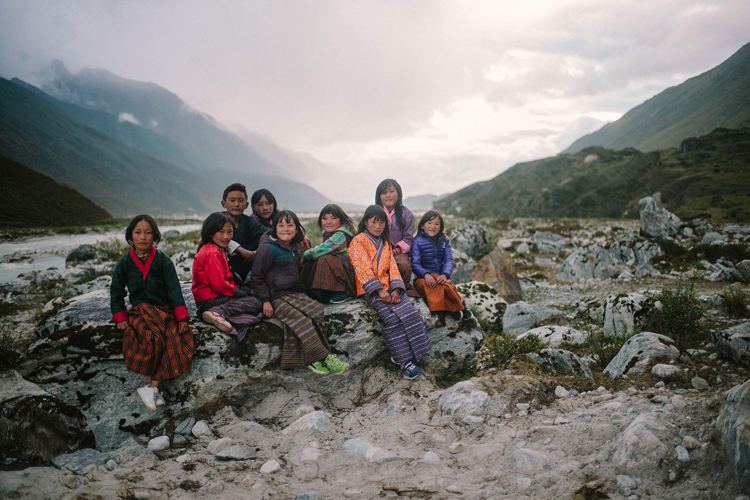
  • Lunana: A Yak in the Classroom – a frustrated teacher is dismayed to learn he’s being sent to a remote mountain outpost but is eventually won over by the kids.

China

White Snake Banner

  • So Long, My Son – Beijing Bicycle‘s Wang Xiaoshuai returns with a chronicle of the Chinese family from the ’80s reforms to the present day.
  • To Live To Sing – the leader of a struggling Sichuan Opera troupe tries to stave off eviction through impressing a local bureaucrat.
  • White Snake – beautifully animated “prequel” to the classic Lady White Snake folktale. Review.
  • Lucky Grandma – A Chinese-American grandma gambles away her life savings and ends up in the middle of a gang war after unwittingly stealing from Chinese gangsters!

Japan

Miike first love

  • 37 Seconds – a manga artist with cerebral palsy sets out to claim her independence through embracing her sexuality.
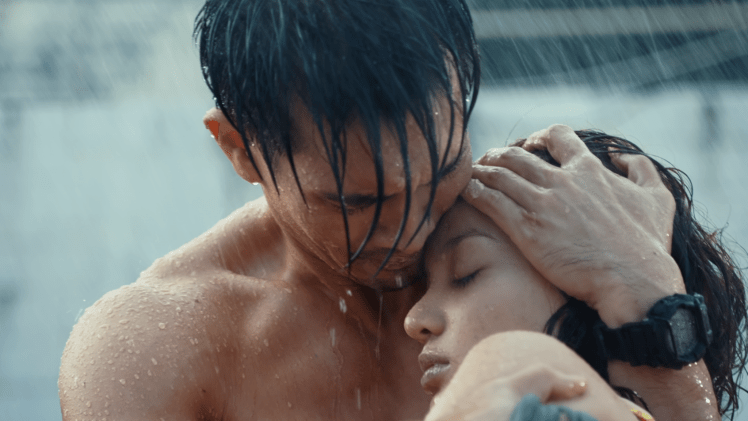
  • First Love – a boxer with a brain tumour falls for a trapped sex worker in the latest anarchic crime thriller from Takashi Miike.
  • To the Ends of the Earth – Kiyoshi Kurosawa reunites with recent muse Atsuko Maeda as a lost TV presenter goes searching for herself while filming in Uzbekistan.
  • Family Romance, LLC – Tokyo-set drama from Werner Herzog revolving around a rent-a-relative business.
  • Earthquake Bird – Alicia Vikander stars as a Tokyo-based translator in bubble-era Tokyo who finds herself at the centre of a series of murders.

Mongolia

Öndög 

  • Öndög – a local herdswoman is brought in to take care of a wolf when the police discover a dead body.

Philippines

Overseas]

  • Overseas – Yoon Sung-a’s documentary exploring the lives of Filipina women working overseas.

Singapore

Wet season still 1

  • Wet Season – Ilo Ilo’s Anthony Chen returns with a monsoon tale in which a Mandarin language teacher is drawn to one of her students.

South Korea

Maggie still 1

  • The Dude in Me – body swap comedy in which a jaded gangster gets a second chance to set things right when he swaps bodies with a mild-mannered teen. Review.
  • Heart – the latest from Bitch on the Beach‘s Jeong Ga-young in which she stars as a filmmaker who tracks down a married former lover for some additional advice about extra-marital affairs.
  • House of Hummingbird – a teenage girl from a problematic home finds inspiration in her enigmatic Chinese teacher in Kim Bora’s beautifully observed debut. Review.
  • The House of Us – Yoon Ga-eun’s The World of Us followup in which a young girl trying to get her parents to patch things up becomes a big sister figure to two other kids.
  • Maggie – surreal drama narrated by a catfish in which a conflicted nurse explores the interplay of truth and trust. Review.

Thailand

KRABI, 2562

  • The Cave (Thailand) – dramatisation of the international rescue operation of a team of young football players trapped in a Thai cave.
  • Hope Frozen – documentary following the parents of a little girl who died of a brain tumour as they try to reconcile their decision to opt for cryogenic preservation with their Buddhist beliefs.
  • Krabi, 2562 – Anocha Suwichakornpong and Ben Rivers team up for an unusual portrait of the Thai tourist town.

The BFI London Film Festival takes place at various venues across the city from 2nd – 13th October 2019. Full details for all the films as well as screening times and ticketing information are available via the official website. Priority booking opens for Patrons on 3rd September, for Champions on 4th September, and Members 5th September, with general ticket sales available from 12th September. You can also keep up to date with all the latest news via the festival’s Facebook page, Twitter account, Instagram, and YouTube channels.