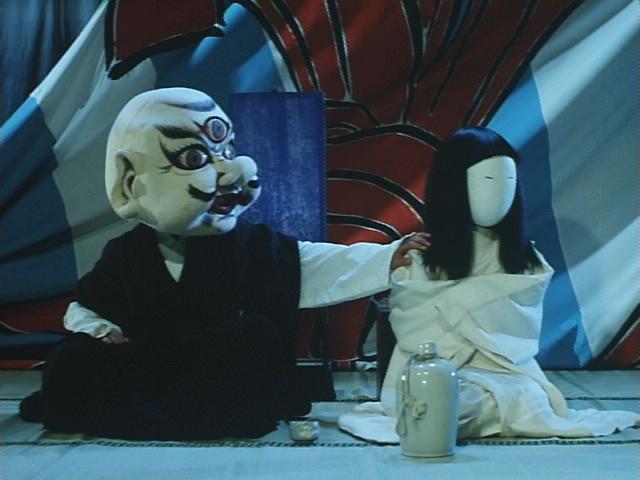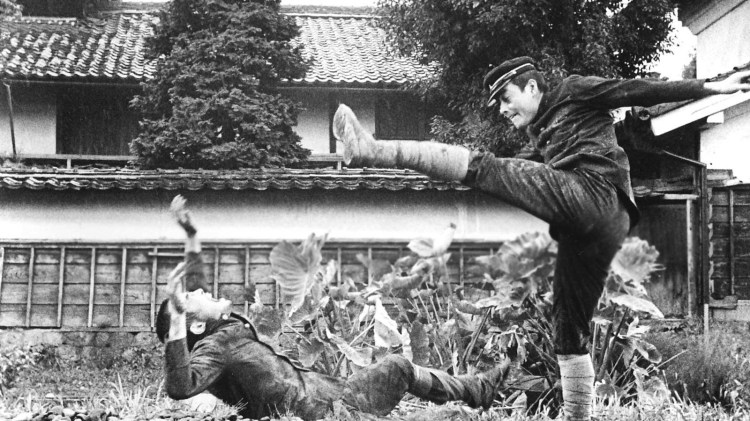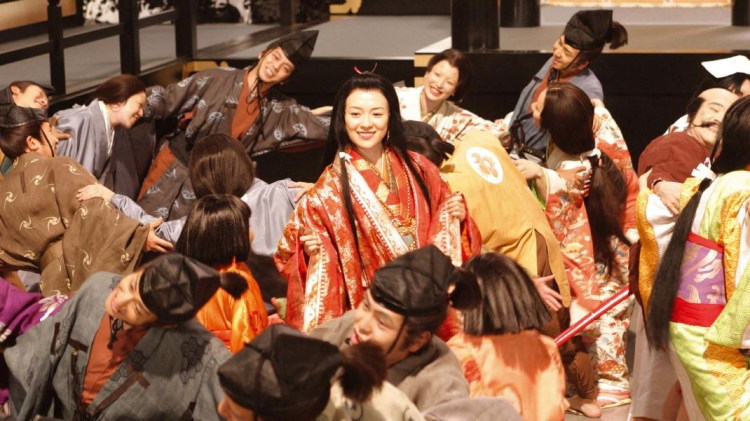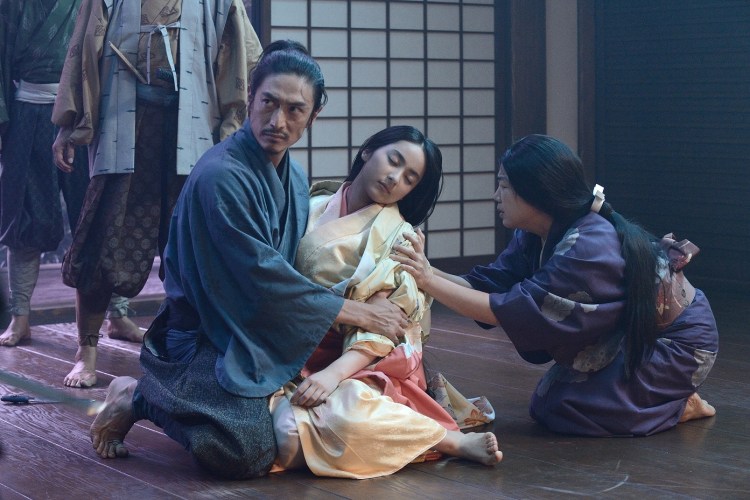
A Bride for Rip Van Winkle (リップヴァンウィンクルの花嫁, Shunji Iwai, 2016)

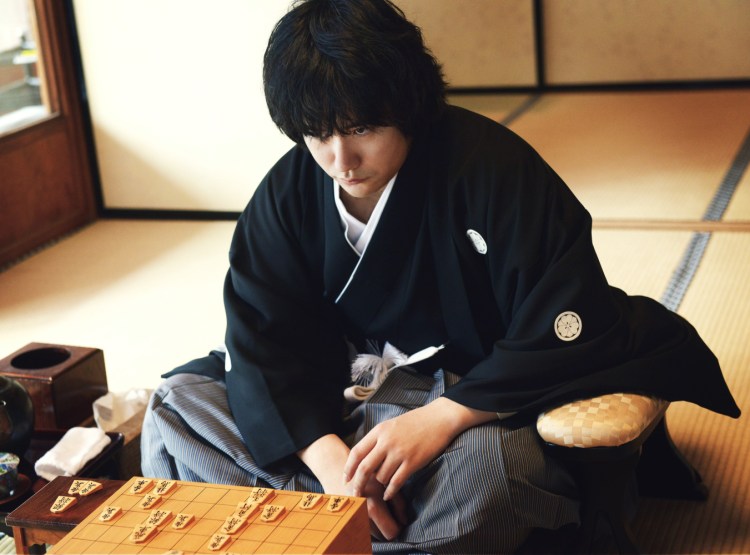
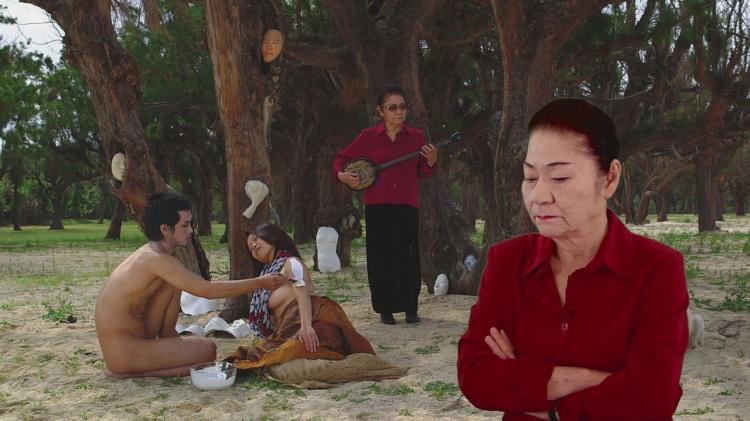
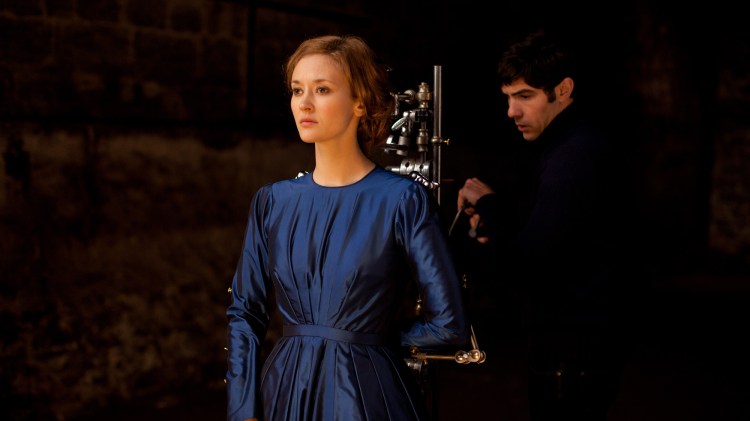
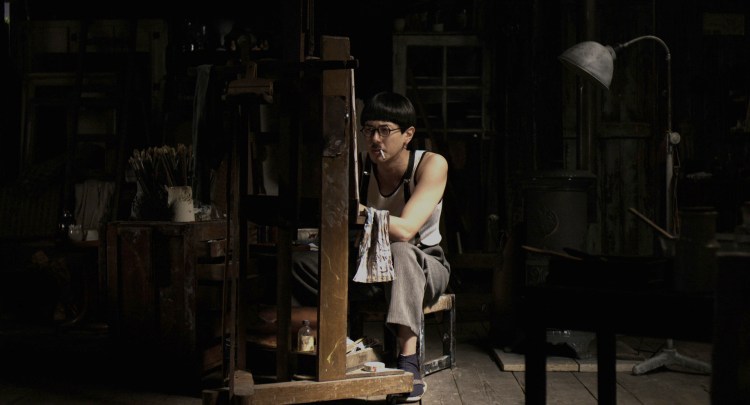
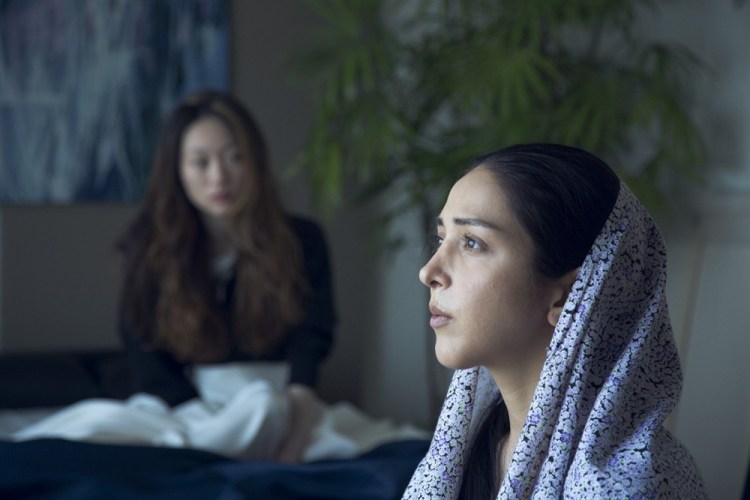
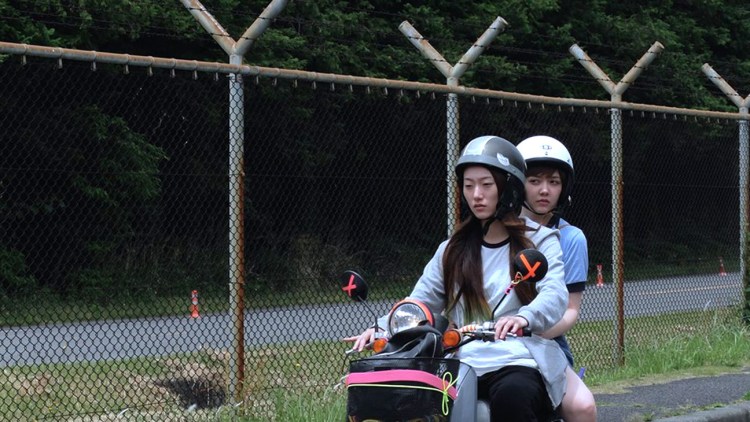
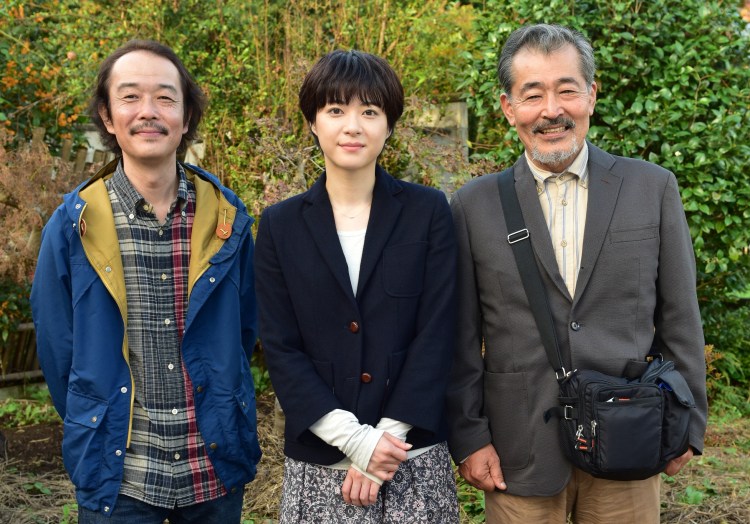
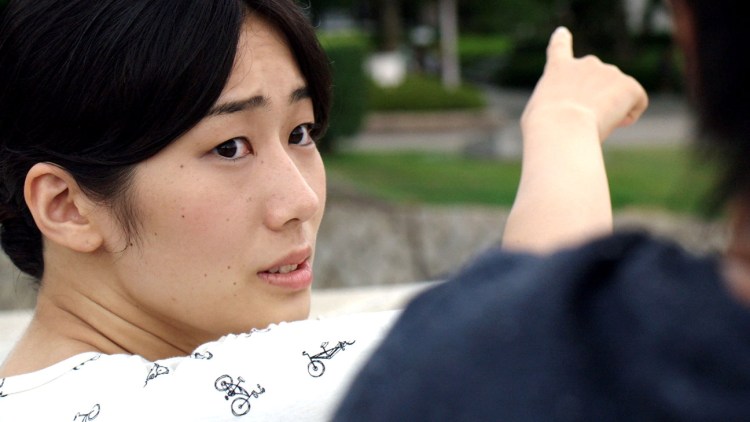
the_bride_of_rip_van_winkle“Being naked in front of people is embarrassing” says the drunken mother of a recently deceased major character in a bizarre yet pivotal scene towards the end of Shunji Iwai’s aptly titled A Bride for Rip Van Winkle (リップヴァンウィンクルの花嫁, Rip Van Winkle no Hanayome) in which the director himself wakes up from an extended cinematic slumber to discover that much is changed. This sequence, in a sense, makes plain one of the film’s essential themes – truth, and the appearance of truth, as mediated by human connection. The film’s timid heroine, Nanami (Haru Kuroki), bares all of herself online, recording each ugly thought and despairing notion before an audience of anonymous strangers, yet can barely look even those she knows well in the eye. Though Namami’s fear and insecurity are painfully obvious to all, not least to herself, she’s not alone in her fear of emotional nakedness as she discovers throughout her strange odyssey in which nothing is quite as it seems.

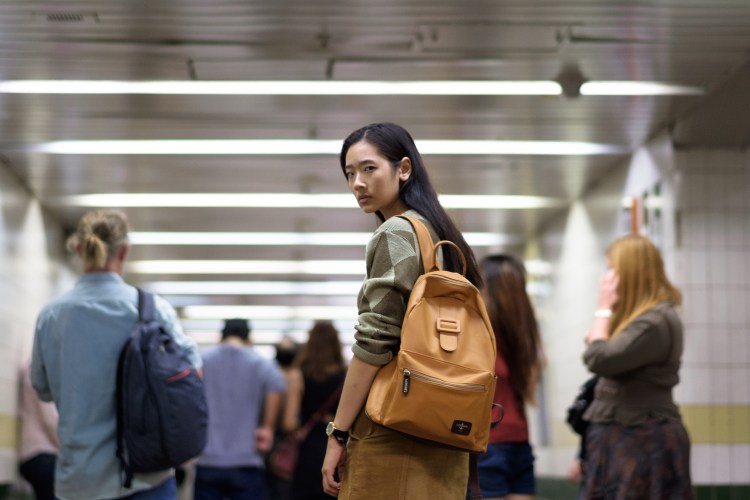
We first meet Nanami on an internet blind date with the man who will later become her husband. Looking lost and alone, she passively waits for her online suitor to find her in the busy city streets. Tetsuya (Go Jibiki) does indeed turn up and assume control of the situation, to which Nanami submits just as she has to everything else. Bonding over little more than their shared vocation of teaching the pair drift into a relationship and then later into a marriage, as is the natural order of things.

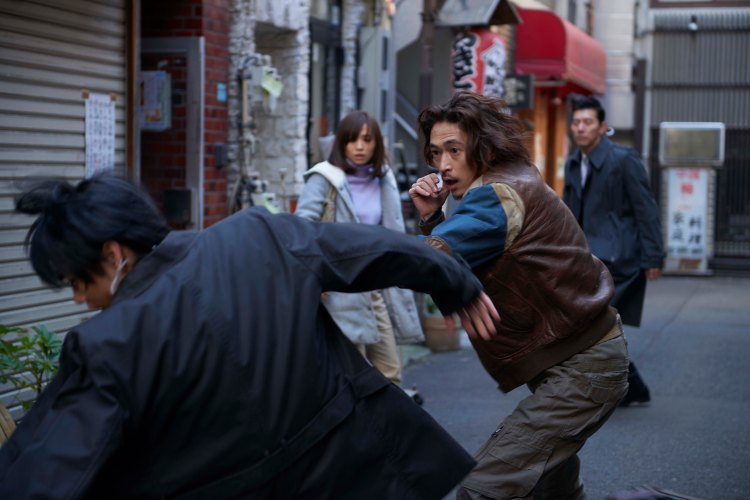
Though she seems happy enough, Nanami vents her frustrations in her caustic online blog. Isn’t this all just too easy? She asks herself. It’s almost like online shopping, she simply added a boyfriend to her basket and now she’s about to check out. A failure to win over Tetsuya’s mother adds to her sense of unease as does the fact she has no close friends or relatives (aside from her soon to be divorced parents) to invite to the wedding. Her decision to take the advice of an online friend and employ the shady fixer Amuro (Go Ayano) to hire a selection of professional party goers to bulk out her side of the hall will prove to be a disastrous one (though perhaps more in the short term), turning her entire life inside out.

Nanami’s essential personality trait is her passivity. Like Rip Van Winkle, she is largely asleep while things happen all around her. Though she dreamed of being a teacher, Nanami has only been able to find temporary supply roles with an agency but even this seems unlikely to last thanks to her softly spoken nature which makes classroom teaching a poor fit for her shy, attention avoidant personality. Discovered at her part time combini job by an old university friend, Nanami is embarrassed and has even been wearing a (useless but endearing) disguise in case any of her students come by despite the fact she chose a store far away from the school. Her friend now works at a hostess bar which Nanami finds a little bit shocking. That kind of unconventional way of living is not something she would contemplate, and so when offered the extremely dull but comfortable life alongside the dull but comforting Tetsuya, Nanami settles.

After Amuro spectacularly derails her non-happiness, Nanami is cast adrift which eventually leads her straight back into Amuro’s web of morally dubious activities. Taking a job as a maid at the cheap hotel she ends up in after leaving Tetsuya, Nanami also works part time as another of Amuro’s professional guests which is where she meets motivator no. 2 – Mashiro (Cocco), “actress” and all round live wire. Bonding over sad karaoke, Nanami and Mashiro later wind up working together as live in maids in a creepy, isolated mansion filled with poisonous animals. Enforced proximity leads to genuine friendship and then to more than that, but, ironically enough, Mashiro has not been entirely honest about her intentions and Nanami is soon adrift once again.

Undergoing a “fake” wedding that’s sort of real (in contrast with the “real” wedding which was sort of “fake”), at least in sentiment, Nanami looks much happier than in the extremely bizarre ceremony which bound her to Tetsuya. Nanami and Mashiro’s union was “engineered” yet mutually beneficial and ultimately genuine despite its artificial genesis. Making a last, heartbreaking speech, Mashiro attempts to explain herself and her life philosophy in a final act of nakedness. She prefers to pay for connection because, she says, the world is too full of kindness. There is so much happiness out there that it’s completely overwhelming. Sometimes there’s more truth in the lie than there is in the reality.

The resurfaced Iwai is both more cynical and more romantic than he has ever been before. He has serious things to say about constructed identities and disconnectedness, that the increasingly open nature of the anonymous online world only makes the real one seem less reliable and harder to navigate. We’ve all been wearing masks but we turned them round when we went online, and now perhaps we’re forgetting that we made them in the first place. Nanami may be adrift again at the film’s conclusion but she finds herself in a world of infinite possibilities. Emerging with more certainty and firmer sense of self, Nanami has retaken control and even if she doesn’t know where she’s going, the choice is entirely her own. Another beautifully nuanced, endlessly affecting character study from Iwai, A Bride for Rip van Winkle is a gloriously rich experience, filled with both hope and despair, but told with all the ethereal warmth and strangeness of the best of dreams.


This review refers to the 180 minute director’s cut, rather than the shorter international or four hour TV version.

Original trailer (English subtitles)

Bangkok Nites (バンコクナイツ, Katsuya Tomita, 2016)

bangkok-nites“Asia is a paradise for men” though not for anyone else, if Bangkok Nites (バンコクナイツ) is anything to go by. In Tomita’s previous film, Saudade, he explored the intercultural exchange between Thailand and Japan with one character having tried to escape there and failed, and another idly dreaming of running away with his Thai mistress. Five years later he revisits the same idea but from the other side as he weaves a meandering trail through the Japan-centric element of Bangkok’s red light district which eventually leads him on to other neighbouring nations whose landscapes still bear the scars of war and colonialism decades into a supposedly enlightened age.

We begin with Luck (Subenja Pongkorn), caught in reflection against a swanky hotel window overlooking her city. Her client is a Japanese man, clingy in the extreme though it’s unclear if his desire to avoid paying is out of consideration to his wallet or a genuine case of affection. Nevertheless, his whining is too much for Luck who eventually manages to escape the room and get back to work. Employed by a bar on Thaniya Road, an area of Bangkok’s red light district popular with Japanese tourists, Luck’s job involves sitting on a shelf in a large stable area where she and her colleagues wear colour coded badges so the customer can see their rates and services offered at a single glance.

Good friends with a Japanese man who works as a kind of procurer for the club, Luck ends up at a party where she runs into Ozawa (Katsuya Tomita) – a quasi-customer with whom she’d developed a deeper relationship around five years previously but subsequently lost contact. A former Self Defence Force soldier, Ozawa first came to Asia on a peacekeeping mission to Cambodia and has been back and fore ever since. During this most recent stay he’s begun to strike up a friendship with fellow Japanese guys working around the edges of the sex industry and related businesses including the drugs trade. After getting to know each other again, Luck takes Ozawa to her peaceful, rural, hometown beginning a journey which is to have a profound impact on his view of the continent.

There’s something a little sad about the small, sleazy world of the red light district and its collection of melancholy ex-pats eking out a living by exploiting desperate local women. Ozawa hovers on the fringes of this group, obviously a visitor to the brothels of Thaniya Road, but not quite a devotee. The other guys repeatedly refer to Thailand and other surrounding countries as “paradise” or a “utopia” where the women are “easy” and can be had at will and with few strings. One visitor remarks that he can have twenty nights of debauchery in Bangkok for the cost of one fancy night out in Roppongi. Yet for every one like him just trying to blow in and blow out with no fuss, there are a handful who can’t separate a transaction from a romance, becoming overly attached to women merely providing a service who, naturally, are not particularly seeking a long-term relationship with the sort of man who thinks a woman can be bought wholesale.

Luck is the number one on Thaniya Road, though she’s aware her time is limited. The work pays well and she’s been able to acquire an elegant Bangkok apartment as well as a house for her mother and siblings back in the country, but her heart is set on saving enough money to open an upscale European restaurant when she finally leaves the sex trade behind. Taking Ozawa back to her hometown, she explains to him that her life in Bangkok is just what happens to girls from the country. Children are raised by aunts while mothers live in the city, sending money back home, until they swap places and the children head to the city while the women return to raise the children of relatives. Most of her friends are also involved in the local sex trade, catering to foreign travellers with less than romantic ideas about the country and its “exotic” women.

Tomita paints this as another ongoing echo of the colonial past as foreign men come to Thailand for purposes of discreet pleasure, giving little thought to the interior lives of the real breathing women in front of them. Taking Ozawa around her home town, Luck shows him the beautiful European style mansion she grew up in with her mother’s second husband (her step-father and the only positive male input she ever mentions) who was an American working at a local air base. The bases are a relic of the Vietnam war, the legacy of which also rears its head once Ozawa makes his way into Laos where giant bomb craters still scar the landscape like pock marks on the face of the Earth more than forty years later. Ultimately these colonial wars trace themselves back to the first waves of colonisation but when Luck tries to look forwards she only sees the past – her desires are for the European, fancy restaurants and urban sophistication.

Ozawa looks at Luck’s hometown and (thinks he) sees a “paradise”, a calm and peaceful place where people drink and smoke their lives away with no worries. He thinks this ought to be enough, and perhaps he’s right, but women like Luck and her friends are still left with no other choice than to enter the sex industry in order to feed their families while the men bum around smoking, drinking, and whoring with other women. It could be a paradise for Ozawa, but it would only be supported by the private hell of the women all around him.

Tomita shoots in a straightforward style but also adds epic sweeping pastoral shots thanks to drone  camerawork and occasional touches of the surreal such as groups of shadowy figures in the forests who may be real or imagined, perhaps the ghostly spirits of past rebellions. Another figure encountered by Ozawa may also be a manifestation of these long-standing ghosts as he recites patriotic speeches and asks for money to help look after the refugees flooding into the forests thanks to the Vietnam war. Ozawa later meets the descendant groups of the guerrillas in Laos which includes disaffected Filipinos, Japanese, and Thais all looking for alternative ways of living.

Harnessing the power of popular song from classic ‘60s Thai pop to indie folk tunes about sold daughters and karaoke covers of The Carpenters, Tomita demonstrates how even music receives external influence but repurposes and exports it as a form of popular protest. Everyone is looking for an elusive form of paradise which does not exist, but their own actions and desires are often the very thing which prevents them from finding it. Tomita’s four years of research have been put to good use in creating a nuanced, thoughtful dissection of the ongoing effects of colonialism in a land still scarred by war and the painful wounds of the unexamined past.


Reviewed at the 2016 London East Asia Film Festival.

International trailer (dialogue free)

Harmonium (淵に立つ, Koji Fukada, 2016)

harmoniumKoji Fukada first ventured into the family drama arena with the darkly comic satire Hospitalité in 2010 in which frequent collaborator Kanji Furutachi played the decidedly odd “family friend” who quickly took over the household and exposed all of its weaknesses before departing as mysteriously as he arrived. This time Furutachi plays the man of the house, though like his counterpart in Hospitalité, has not been telling the whole truth. Unlike much of Fukada’s previous work, Harmonium (淵に立つ, Fuchi ni Tatsu) abandons the comedy overtones for a truly bleak and tragic atmosphere which seems to speak of the death of the family unit itself.

On a morning just like any other, Toshio (Kanji Furutachi), Akie (Mariko Tsutsui), and their small daughter Hotaru (Momone Shinokawa), take breakfast together around the kitchen table. Akie leads grace while Toshio reads his paper before Hotaru moves on to a story about the baby spiders in the garden and how they collectively eat their mother. After his wife and daughter have left for the day, Toshio lifts the shutter on his workshop only to see a familiar, if long forgotten, face standing behind it.

The two men talk and it’s clear they’re old friends but have not seen each other in a long time. Fresh out of prison, Yasaka (Tadanobu Asano) is dressed in an odd looking suit without a jacket, the top button of his pristine white shirt neatly buttoned up. Toshio offers Yasaka a job in his workshop and a room in his house – all without a word to Akie, but somehow there’s something other than an altruistic desire to help an old friend who’s fallen on hard times at play.

Yasaka moves in and is permanently on his best behaviour but it isn’t until it’s discovered that he has a talent for the harmonium and begins to help Hotaru improve her playing that Akie starts to warm to him. It also helps that he’s interested in her spiritual life at the local protestant church, unlike her husband, and is generally around and available to her. Learning how Yasaka ended up in prison and how he now feels about his crime, Akie comes to feel this melancholy man must be especially worthy to God, and sure enough a mutual attraction begins to arise between the pair.

There’s a kind of debt implied in the relationship between Yasaka and Toshio which has Toshio running scared, trying to keep his old friend sweet lest he call it in. Yasaka’s intentions remain unclear, has he come for revenge or for comfort, to restart his life or to rehash the past? There’s something inescapably odd about his presence with his identical black suit trousered, white shirted figure which simultaneously makes him look like someone who just came out of prison and has been given one outfit to help them get a job, and like a dodgy TV evangelist or cult leader – ever so slightly too buttoned down and contained. At one point he tells Toshio he’s starting to wonder why Toshio has all of this ordinary success and he doesn’t, he could take it if he wanted to. Toshio, it has to be said, is not trying very hard to protect his place at the head of the table.

Like Yoshimitsu Morita in that other landmark of the family drama turned inside out by an unscheduled visitor, The Family Game, Fukada also makes the dinner table the centre of the conversation. We can see right away that this is not a “harmonious” household through the unbalanced seating arrangements – Toshio on one side, barely speaking and reading his paper, while Akie and Hotaru sit together opposite him reciting grace before they eat. There’s an ugly, empty space at the expected fourth position which is soon to be filled by Yasaka, but his presence does little to alleviate the anxiety of three people sitting at a table meant for four. Notably, after an unexpected tragedy occurs in the second part of the film the table itself has been rotated ninety degrees and only half of it is ever used as the lower part is cut off with a small TV showing live footage from another room. The family no longer take meals together, the kitchen is no longer a warm and organised place but a cold and chaotic one.

The sins of the father are visited upon the child. Everyone thinks they’re guilty of something, and that someone else is paying for their wrongdoing (and by implication forcing them to suffer by proxy). The presence of the harmonium – a staple in small churches and parlours of the 19th century, has a strangely religious resonance that perfectly tallies with Akie’s adherence to her Protestant faith which infuses the house even in the absence of crosses or other forms of iconography. Yasaka carries with him a sense of malevolence, like a visiting demon tempting and provoking as he goes, though it ultimately remains unclear if he is even to blame for the tragedy which befalls the family or is simply another victim of it.

Retaining his elegantly composed, static camera, Fukada makes use of unusual and high impact cuts as well as a daring, unannounced jump forward in time. Red becomes a recurrent theme as it alarmingly cuts through the otherwise subdued colour scheme whether as a T-shirt hidden behind a calm white boiler suit, or the reflections of a car window as a particularly dark thought passes through a passenger’s mind. Filled with mismatched pairs and asymmetrical setups, the family find themselves locked into a wheel of repetitions until the final scene which sees them recreate a “happy” family photo in a kind of grim tableau as neglectful father Toshio desperately fights to revive his family. Darker in tone and filled with an almost supernatural malevolence, Harmonium is a tense and unpredictable drama probing at the status of the traditional family in an increasingly uncertain world.


Reviewed at the 2016 London East Asia Film Festival.

UK release trailer (English subtitles)

Your Name (君の名は, Makoto Shinkai, 2016)

your-nameIndie animation talent Makoto Shinkai has been making an impact with his beautifully drawn tales of heartbreaking, unresolvable romance for well over a decade and now with Your Name (君の名は, Kimi no Na wa) he’s finally hit the mainstream with an increased budget and distribution from major Japanese studio Toho. Noticeably more upbeat than his previous work, Your Name takes on the star-crossed lovers motif as two teenagers from different worlds come to know each other intimately without ever meeting only to find their youthful romance frustrated by the vagaries of time and fate.

Mitsuha (Mone Kamishiraishi) is a typical country girl and daughter of a Shinto temple family who dreams of the urban sophistication of the big city. Taki (Ryunosuke Kamiki), by contrast, is a typical city boy living in Tokyo and taking full advantage of its cafes and mass transportation systems. One fateful day, each wakes up in the body of the other and must quickly adjust to living in someone else’s skin. Though each originally believes the events to have been merely a dream, friends and family members are quick to point out the strange behaviour of the two teenagers. Neither Mitsuha nor Taki maintains a clear memory of their time in the other’s world though they are able to keep in a kind of contact through their respective diaries (his on a smartphone, hers in a more traditional notebook). Beginning to develop a degree of mutual affection through their strangely acquired intimacy, Mitsuha and Taki each have a profound effect on the other’s life but fate seems content to keep them apart.

Body swap comedy is not an unusual genre in Japan (Obayashi’s similarly themed I Are You, You Am Me being a notable example which was even remade by the director himself thirty years later as Switching, Goodbye Me), nevertheless Shinkai mines the situation for all of its awkward comedy as Mitsuha and Taki get used to living as the opposite gender. Beginning with the obvious repeated joke of Taki waking up and squeezing “his” breasts, there are other issues to contend with from which pronoun to use to remembering to avoid slipping into a rural dialect. Taki, obviously at sea with how to get on as a girl, causes consternation by turning up late for school with messy hair and subsequently behaving in an unacceptably masculine way. Conversely when Mitsuha is playing Taki, she helps him sort out various things in his life through her feminine influence including getting him a date with his workplace crush.

The pair are indeed “star-crossed” as their romance is heralded by the arrival of a rare comet, watched by both at the same time, as it splits in two. The comet strike turns out to have a much more pressing importance than simply as a symbol of romantic destiny but neatly represents the central dynamic of Mitsuha and Taki as two halves of the same soul. The two are connected by the “red string of fate” visualised through Mitsuha’s long red hair ribbon which later makes a reappearance in Taki’s sake based dream sequence and serves to bind the two together. Mitsuha’s family also make traditional braided bracelets which, as her grandmother tells us, represent the flow of time itself, weaving narrative into dramatic knots.

The knot, in this case, is the comet strike which later threatens to keep the tragic lovers apart rather than bring them together. Recalling the devastating earthquake of 2011, the destruction wrought by such a catastrophic event does not stop at loss of life but becomes a great ongoing loss – things left unsaid, opportunities missed, lives unlived. If it were only possible to turn back time and somehow save all those people from harm. Mitsuha and Taki have been given just such an opportunity thanks to their usual connection.

Like many Shinkai heroes, Taki and Mitsuha later find themselves burdened with a sense of incompleteness, as if they’re continually searching, trying to regain something they’ve lost but are unable to put a name to. The memories of their shared past fade, dissipating like a dream upon waking leaving a only faint trace behind them, just enough to know that something is missing. Yet, journeys end in lovers meeting, and even in a metropolis as vast as Tokyo recognition is powerful force.

Shinkai takes his trademark aesthetic beauty to all new heights with his idyllic country landscapes, realistic cities, and the visually striking (if potentially deadly) fracturing of a comet. Much less deliberately downbeat than Shinkai’s previous work which often emphasised the impossibility of true love satisfied, Your Name is no less emotionally affecting even if its melancholy sense of longing persists until the very last frame.


Reveiwed at the BFI London Film Festival 2016

Original trailer (English subtitles)

Innocent15 (イノセント15, Hirokazu Kai, 2016)

innocent-15Innocence is a fairly nebulous concept and one often misused but if you were expecting an “innocent” tale of youthful romance, Hirokazu Kai’s Innocent15 (イノセント15) is out to wrong foot you from the get go. Kai does not shy away from the darker sides of human nature in examining abusive parenting and forced prostitution as well as the damage done when a secret is broken after long years of being unable to be honest about who you really are. This is a bleak tale, but one with with hope shining round the edges, even if uncertainly.

Narumi (Sara Ogawa) and Gin (Riku Hagiwara) are ordinary middle school students living in small town not far from the capital. When Narumi plucks up the courage to confess her love to her friend, she receives the kindest of brush offs but Gin is left confused. His two drop out friends who spend their days skateboarding around the neighbourhood can’t understand his decision to turn down such a pretty girl though they remember that he’s done the same thing before. Gin himself doesn’t quite know why, but even if he feels sorry for not returning Narumi’s feelings, he is unable to accept them.

Though Narumi may seem like the perfect high school girl – quiet, studious, and refined, if a little sad, her home life is anything but ordinary. Saddled with an aggressive woman child for a mother who demands Narumi abandon her homework to cook her dinner while she plays on her gameboy, Narumi keeps her head down and makes the best of things. After putting up with her mother’s regular beatings, she finally decides to leave when she learns that her mother has sold her virginity to her boyfriend for 100,000 yen.

Meanwhile, Gin’s life is turned upside-down when he learns his father is in love with another man. Already in a state of confusion about his own adolescent feelings, Gin is unable to comprehend this sudden bombshell and lashes out at all around him. Therefore when Narumi arrives and tells him she’s leaving for Tokyo to look for her father he immediately says he’ll come with her. However, their youthful ideas of going it alone in the big city are quickly dashed.

Gin’s problems are of a more immediate kind but Narumi has endured long term suffering at the hands of her abusive mother. When she belittles Narumi’s studying and remarks that she’s no need to go to high school because the world always needs more hookers, it seems like an instance of cruel sarcasm but it turns out she really is intent on prostituting her own daughter to her no good boyfriend.

When her mother’s boyfriend viciously attacks Gin, Narumi is left with nowhere else to go. The tragedy is that intense social pressures and her already existing isolation make it impossible for Narumi to confide in someone about the abuse she’s suffering at home. Being only 15, even if she were to simply walk out of her mother’s house she would have no way to support herself, leaving her with little choice between possible starvation on the streets and allowing her mother to sell her to her cruel and violent boyfriend.

Narumi’s “innocent” love for Gin becomes her last lifeline and his rejection a crushing end to her dreams of being saved. By contrast, Gin’s problems are much easier to solve. His resentment towards his father is more likely driven by the shock of the revelation rather than directly because he has fallen in love with another man. Gin may have temporarily rejected his father, but his father has not rejected him. Guilt and embarrassment over his actions aside, Gin is always welcome to return home where his father would welcome him with open arms. All of Gin’s problems are internal as he struggles with his adolescent confusion. All of Narumi’s problems are external – when Gin spots the scars and bruises on her shoulder, she tells him that she was able to put up with her mother’s cruelty because it only hurt her body and never touched her soul. Narumi’s interior is solid, but she’s trapped in a desperate situation from which there is no obvious way to escape.

Mirroring each other, Gin and Narumi try to run away from their problems but are each unable to escape. Kai opts for a series of reverses towards the film’s conclusion which offer hope only to dash it again and the final scene with only the sound of a motorbike’s flooded engine and eventual kickstart adds a note of anxious ambivalence in which there is a chance for the pair to ride away together but no further evidence that this attempt will be any more successful than the last. The general tone is one of gritty realism though Kai also admits the existence of life’s strange coincidence’s such as in the repeated appearance of a “weird lady” on a pink mobility scooter whose eccentric driving style has disastrous consequences. A necessarily bleak tale highlighting the plight of children in danger in their own homes and left with nowhere else to go coupled with a tentative, innocent teenage love story, Innocent15 is a tense, often horrifying experience filled with outrage but is careful to leave at least the possibility of a better way out, however far off it may be.


Reviewed at Raindance 2016.

Original trailer (English subtitles)

Seto and Utsumi (セトウツミ, Tatsushi Omori, 2016)

seto-and-utsumiThere are two very distinct sides to the career of Tatsushi Omori. Brother of the well known actor, Nao, Omori may be best known to certain audiences for his hard hitting, often gloomy and pessimistic dramas of human misery such as festival favourite Ravine of Goodbye or the little seen The Whispering of the Gods which proved so controversial that his only option of screening the film involved erecting a tent where he could show it himself. However, a closer look at his filmography discovers a steady strain of laid-back comedy such as the Tada’s Do It All House series in which two brothers played by Eita and Ryuhei Matsuda act as bumbling handymen-cum-detectives-cum-whatever-you-need-them-to-be. It might be less surprising therefore that his latest effort is an adaptation of Kazuya Konomoto’s comedy manga Seto and Utsumi (セトウツミ, Setoutsumi) which revels in the everyday absurdity of teenage life in Southern Japan.

Seto (Masaki Suda) and Utsumi (Sosuke Ikematsu) are ordinary high school boys heading into their final year with the exam season and the end of their youthful, carefree days looming. Utsumi is a quiet, serious sort who generally doesn’t like a lot of company. Seto, by contrast, is a real live wire and not exactly a top student. Nevertheless, they found each other by a river one day and have been more or less inseparable ever since. Every day after school they meet and hang out in the same spot over looking the water where they shoot the breeze about various ordinary things from a non-argument over a girl to venus fly traps, Buddhist terminology, and ghosts.

Like many teenagers, Seto and Utsumi kill time doing nothing in particular and their conversations are generally inconsequential. Yet for all of their inherent randomness and absurdity, there’s a layer of poignancy underpinning each of them as the boys let slip various aspects of their private, interior lives. Seto’s big life drama involves the possible separation of his parents following the illness of the family cat which everyone in the family decided to indulge seeing as the poor thing didn’t have long left, but against expectation it’s two years later, the cat is still alive and Seto’s father is growing ever more resentful at spending so much money on luxury cat food. Seto’s family are a rowdy bunch, just as prone to drama as he is yet for all their complaining they seem fairly close – close enough for Seto to complain about the constant random text updates from his mother (a trait which Seto seems to have inherited himself).

Utsumi, by contrast, is much more aloof and keeps himself to himself. When Seto complains after his mother spots the boys at the river with bags full of shopping in her hands he remarks sadly that he rarely eats at home, implying it must be nice to have someone cook you a meal everyday. His approach to life is cerebral, calculating odds and planning angles, as he reveals to Seto in a piece of possibly not very helpful dating advice. Utsumi’s unseen parents are, presumably, just as aloof as he is, austere and religious. Nevertheless, in Seto he’s found a true sparring partner and someone he can waste time with amiably.

Utsumi’s parents are useful for one thing, they belong to the temple in which Seto’s crush, Kashimura (Ayami Nakajo), lives. Seto has been secretly trying to brush up on Buddhist terminology to impress her, but predictably she prefers the cool indifference of Utsumi to his friend’s energetic banter. Utsumi isn’t interested in Kashimura in any case, but not even this possible subject of conflict is big enough to seriously risk damaging the two boys’ friendship. As one character remarks towards the end of the film, it really is a once in a lifetime connection.

Omori keeps things simple, mostly sticking to static shots of the boys sitting on the steps near the river but he makes the stillness add to the sense of the absurd running through the quiet backwater town. After beginning with accordion music and ride through the canals, Seto and Utsumi’s first conversation takes place in front of an unintentional audience of a perfectly motionless older man, staring vacantly out at the river. The man turns out to have a valid (if sad) reason for being where he is, but the presence of the balloon animal vending clown from Eastern Europe (called Mr. Balloon) is a little harder to explain given that other than Seto, Utsumi, the aforementioned man, a high school bully, Seto’s mum, and a senile grandpa, no one else comes anywhere near this tranquil spot for the entire film. Using occasional dissolves and superimpositions to create a fleeting, dreamlike atmosphere with a handful of cutaways and flashbacks for comedic context, Seto and Utsumi is a truly charming ode to teenage friendship in all its pleasantly ridiculous absurdity.


Reviewed at Raindance 2016.

Original trailer (English subtitles)

There are also a few bonus web episodes of Seto and Utsumi enjoying even more pointless conversations:

No. 1 – Kendama (a kind of Japanese cup and ball game) (English subtitles)

No. 2: Timing (English subtitles)

3. Standing Ovation (no subtitles but you don’t really need them)

Belladonna of Sadness (哀しみのベラドンナ, Eiichi Yamamoto, 1973)

belladonnaLoosely based on Jules Michelet’s La Sorcière (Satanism and Witchcraft) which reframed the idea of the witch as a revolutionary opposition to the oppression of the feudalistic system and the intense religiosity of the Catholic church, Belladonna of Sadness (哀しみのベラドンナ, Kanashimi no Belladonna) was, shall we say, under appreciated at the time of its original release even being credited with the eventual bankruptcy of its production studio. Begun as the third in the Animerama trilogy of adult orientated animations produced by legendary manga artist Osamu Tezuka’s Mushi Productions, Belladonna of Sadness is the only one of the three with which Tezuka was not directly involved owing to having left the company to return to manga. Consequently the animation sheds his characteristic character designs for something more akin to Art Nouveau elegance mixed with countercultural psychedelia and pink film compositions. Feminist rape revenge fairytale or an exploitative exploration of the “demonic” nature of female sexuality and empowerment, Belladonna of Sadness is not an easily forgettable experience.

Beginning in true fairytale fashion with a gentle voiceover, the tale introduces us to Jean (Katsutaka Ito) and Jeanne (Aiko Nagayama), two ordinary medieval French peasants blissfully in love. Being the good, honest, Christian kids they are, they want to get married but as we’re told, this is the beginning of the story, not its end. Following tradition to the letter the pair turn up at the castle with their families to inform the Baron of their union and pay the marriage tax but the Baron takes a fancy to Jeanne and whacks up the price to a level Jean could never pay even if the entire village sold everything they had to help him, so that the Baron may exercise his droit du seigneur by claiming Jeanne’s maidenhead. After kicking everyone else out the Baron brutally rapes Jeanne before letting all of his cronies have a go too.

Finally crawling home bruised, broken, and violated Jeanne seeks comfort from her gentle husband Jean but despite his fine words, he is unable to accept what has happened and eventually retreats from her. At this point the weirdness begins as Jeanne’s intense inner rage and sadness summons forth a tiny demon friend who looks just like an overly friendly penis and also grows in size a little bit when you stroke him in just the right way. This starts Jeanne on her ultimate path towards becoming a master sorceress and eventual mistress of the devil himself. Jeanne’s fortunes rise in line with her sexual empowerment but an empowered female is not always popular with the ruling elite.

Jeanne’s empowerment and the subsequent threat it poses to the accepted political fabric is the main thrust of the narrative but it’s also important to remember that the process began with a brutal act of rape. Jeanne continues to be raped by her ever growing demon friend until achieving a kind of oneness with the Devil himself but the unwanted acts of Jeanne’s “demon”, who describes himself simply as a part of Jeanne, are mitigated because she is depicted as enjoying them (only guilt makes her say otherwise) and, after all, they form part of her sexual education. Jeanne’s power stems from the intense resentment she feels at her continued lack of agency, eventually buying her power and status enough to threaten the Baron and all he stands for.

Even if Jeanne’s power comes from the darkest of places, everything she uses it for is morally good (at least from a “modern” standpoint). When the Baron returns from a war to find Jeanne ruling the roost, he attempts to canvass some of his subjects hoping to hear tales of her cruelty or ineptitude but finds only praise. Jeanne heals the sick, helps a couple with too many children find a solution to maintain their married harmony without the risk of bearing any more, and even helps an elderly woman make contact with the depths of hell (wasn’t exactly what she had in mind, but she was thrilled to bits anyway).

The worst thing Jeanne’s power provokes is the large scale and extremely strange orgy which takes place in her hair, sees her copulating with the entire village, and even transforms genitals into bizarre creatures. This purely pleasurable exercise, even if against the prevailing moral code, has no real world consequences such as a failed harvest or ruined city brought about by the villager’s abandonment of duty for physical pleasure.

However filled with “goodness” her actions are, Jeanne herself is branded a witch and the only reason she is not burned at the stake immediately is that the Baron and his advisors fear that if Jeanne is burned whilst still bound to the devil, the demonic elements inside her will be set free and could “pollute” the other women in the village with a nasty desire to be taken seriously as people. This fear is later borne out as each of the village women emerges with Jeanne’s impassive face before time jumps on a few hundred years to the French Revolution and its vanguard of valiant women seeking social justice as evidenced by Eugène Delacroix’s 1830 painting Victory Leading the People which forms the final image of the film.

Belladonna of Sadness seems conflicted over whether this kind of empowerment is a good thing or not. Jeanne’s journey begins with violence which gives birth to rage and an eventual “succumbing” to the dark arts which facilitates her revenge. Everything about Jeanne becomes satanic and her sexuality is the weapon which she wields against male subjugation. The empowered Jeanne is independently monstrous, rather than just monstrous to the Baron and the true forces of evil, thanks to her involvement with illicit supernatural entities. Her independent spirit does indeed pollinate as the Baron feared it might, but whether these women are to be read as having been “freed” or as vengeful harpies robbing men of their rightful place whilst intent on upending the social order, might be a matter for debate.

Yamamoto opts for a mix of styles making great use of still paintings and more primitive animation to enhance the effect. Combined with the very contemporary sounding folk music, the later ventures into the realm of psychedelia lend the film a new age fable quality to present a broadly feminist rape revenge fairytale. However, this particular story offers no happy ending for its heroine even if it does retroactively add one in the form of the ongoing social change her various transgressions engender. Wildly experimental, often extremely beautiful, and necessarily explicit, Belladonna of Sadness is, as its name suggests, a melancholy tale but one just as passionately free as its tragic heroine.


Cinelicious Pics restoration trailer (English subtitles, NSFW)

The Emperor in August (日本のいちばん長い日, Masato Harada, 2015)

bbc56b4fff657dfc4fcc0499f8be9741How exactly do you lose a war? It’s not as if you can simply telephone your opponents and say “so sorry, I’m a little busy today so perhaps we could agree not to kill each other for bit? Talk later, tata.” The Emperor in August examines the last few days in the summer of 1945 as Japan attempts to convince itself to end the conflict. Previously recounted by Kihachi Okamoto in 1967 under the title Japan’s Longest Day, The Emperor in August (日本のいちばん長い日, Nihon no Ichiban Nagai Hi) proves that stately events are not always as gracefully carried off as they may appear on the surface.

By the summer of 1945, it’s clear that the situation as deteriorated significantly and Japan can no longer cling to any kind of hope of victory in the wider scale. Tokyo has been firebombed almost out of existence leaving only the Imperial Palace untouched – even the Emperor and his wife have been reduced to eating gruel. Everyone knows it’s time for a solution, but no one is quite ready to say it. In the wake of the atomic bomb, the situation becomes ever more desperate and even if the Emperor himself advocates a surrender, he needs the approval of his advisors. The Prime Minister, Navy and other officials are in favour but the Army, represented by General Anami, is committed to fighting on to the last man. Eventually, Anami comes around to the Emperor’s point of view but some of his men prove much harder to convince…

It might seem like a strange time to make a film about grace in the face of defeat given the recent political troubles stemming back to Japan’s wartime activities, but director Masato Harada is not lamenting the course of the war or trying to advocate for any rightwing agenda so much as trying to make plain the final absurdity of recognising when the battle is over. The civilians and even the Navy might be in favour of accepting the terms of the Potsdam Declaration and ending the war as quickly as possible but a soldier is a soldier and the Army wants to go down fighting. They aren’t alone, of course, there are ordinary people who feel this way too but the writing is well and truly on the wall here.

The bulk of the film takes place within the palace, debating halls or army buildings all of which have escaped major damaged but every time we venture outside we’re shown a scene of utter desolation. A great, gaping hole where once there was a city. Anami’s wife undertakes a four hour walk to try and get in contact with a man who knew their son and can tell them how it was that he fell somewhere in Manchuria. She sees people fleeing, some thinking the enemy are about to descend any minute or that Tokyo will be the next target for an atomic bomb, and walks on through a barren, eerie landscape emerging soot covered and, finally, too late.

Closer to home, the situation among the soldiers is reaching boiling point. Originally committed to rejecting the terms of the treaty, Anami is now in favour of a surrender (with a few caveats) and is desperately working against the threat of an internal coup. Though the top brass have seen enough of warfare to know when it’s time to put down your weapons, the young hotheads have not yet learned the value of pragmatism. Seeing themselves as a second incarnation of the February 26th rebels, a cadre of young officers breaks ranks to try and stop the Emperor’s message of surrender from hitting the airwaves, hoping instead to spread the false message that the Russians have invaded and it’s all hands on deck. Needless to say, they don’t fare any better than the young officers of 1936 and if anything their bullheaded refusal to see sense becomes a microcosmic allegory for the years of militarism as a whole.

In the midst of all this chaos, the real heart of the film is Koji Yakusho’s conflicted general who feels his era passing right in front of him. Grieving for his fallen son yet also clinging to his military duty which dictates no surrender, no retreat he finally sees each of his ideals crumbling and comes to the realisation that the only way to save Japan is to abandon the military. Making a sacrifice of himself, he ensures the safe passage of his nation along a road on which he cannot travel.

The Emperor is a sympathetic figure here, gentle, soft, wanting the suffering to end for everyone but being more or less powerless to effect it despite his title. All he can do is advocate and try to convince his council that surrender is the right course of action as his country burns all around him.

Harada manages to keep the tension high even though a lot of the film comes down to a group of men discussing the proper wording for a treaty. A timely and beautifully photographed exploration of the last days of a war, The Emperor in August is another much needed reminder that decisions which will affect millions of lives are made by handfuls of men in tiny, closed up rooms that most people will never get to see.


The Japanese blu-ray/DVD release of The Emperor in August includes English subtitles.

Unsubtitled trailer:

Kakekomi (駆込み女と駆出し男, Masato Harada, 2015)

166028_02The world of the classical “jidaigeki” or period film often paints an idealised portrait of Japan’s historical Edo era with its brave samurai who live for nothing outside of their lord and their code. Even when examining something as traumatic as forbidden love and double suicide, the jidaigeki generally presents them in terms of theatrical tragedy rather than naturalistic drama. Whatever the cinematic case may be, life in Edo era Japan could be harsh – especially if you’re a woman. Enjoying relatively few individual rights, a woman was legally the property of her husband or his clan and could not petition for divorce on her own behalf (though a man could simply divorce his wife with little more than words). The Tokeiji Temple exists for just this reason, as a refuge for women who need to escape a dangerous situation and have nowhere else to go.

Kakekomi (駆込み女と駆出し男, Kakekomi Onna to Kakedashi Otoko) places this important institution at its centre as it focuses on the stories of a number of women who’ve each ended up at the temple after a series of difficult circumstances. Jogo (Erika Toda) is married to a womanising drunkard who forces her to run his iron smelting business from the front lines (hence the painful looking blisters on her face) while he enjoys his life of debauchery. When the staff complains about his attitude and their subsequent fears for their jobs and Jogo raises their concerns with him he simply beats her before returning to his mistress. She then faces a decision – Tokeiji, death, or endurance. During her flight, she runs into O-Gin (Hikari Mitsushima), a mysterious wealthy woman who’s sprained her ankle after fighting off bandits in the woods. The pair bond on their quest to reach Tokeiji where they hope to find refuge from their turbulent home lives.

Before you can enter Tokeiji you’re held at one of the receiving inns where they hear your story, assess the possibility of being able to reconcile with a husband and, if deemed necessary, allowed to travel to the temple where you’ll live as a Buddhist nun for two years at which time your husband must legally sign the divorce papers. The inn adheres to strict Buddhist principles – no men are allowed near the temple (even the outside helpers wear bells so the ladies can hear them coming), you eat only temple cuisine (no meat or stimulants like garlic and onions), and have to abide by the word of the head nun. There are also three different classes of resident starting with the most expensive court lady lifestyle, then one of sewing and making repairs, and finally the lowest class which does all the day to day cooking, cleaning and other menial tasks.

The other pivot around which the film turns is the one time medical student Shinjiro (Yo Oizumi) who has literary dreams but has had to beat a quick retreat from Edo after defiantly breaking its ridiculous “no singing in the streets” law (amongst other things). At this period Edo and the surrounding area is undergoing its own mini cultural revolution as the current authorities advocate a period of austerity which sees things like literature, music and even sushi outlawed. Perceiving threats everywhere, the powers at be are also looking for a way to close down Tokeiji by any underhanded means necessary.

Shinjiro is a fast talking wise guy who can generally talk his way out of anything though he is also a keen student and a promising young doctor. As a relative of the Tokeiji inn owners, he’s seeking refuge too but also hoping to make use of their extensive archives for his writing career. As a doctor he’s immediately fascinated by the burns on Jogo’s face which he believes he can treat though in her frightened state she’s alarmed by his direct manner and refuses. After hearing his more reasoned arguments she finally submits and in turn becomes interested in his medical knowledge assisting him to gather herbs in the forest before starting her own herb garden in the temple.

Of course, the two develop a growing romantic attachment though frustrated by Jogo’s position as a married woman and the temple’s prohibition against male contact. Their romance is never played for melodrama, more as a simple and natural course of events though it’s well played by both Toda and Oizumi. At heart, Kakekomi is an ensemble drama which encompasses the often sad stories of its female cast who are each at the mercy of the cruel and rigid Edo era social system. O-Gin’s reasons for fleeing to Tokeiji turn out to be a little different from everyone else’s though she too is still suffering for love.

A humorous look at this untold story, Kakekomi proves an engaging ensemble drama anchored by the committed performances of its cast. Toda takes Jogo from a frightened and abused woman to a confident and learned scholar who is perfectly capable of taking charge of things on her own and her transformation is the true heart of the film. Apparently, director Masato Harada shot nearly four hours of footage before cutting the film down to the more manageable two and a half which may explain why it sometimes feels a little abrupt but nevertheless Kakekomi proves one of the most enjoyable mainstream Japanese movies of recent times.


The Japanese blu-ray/DVD of Kakekomi includes English subtitles.

Ramblers (リアリズムの宿, Nobuhiro Yamashita, 2004)

ramblers-riarizumu-no-yado.39798

Nobuhiro Yamashita is well known for his low-key, naturalistic style often focusing on the everyday musings of youthful slackers. Ramblers (リアリズムの宿, Realism no Yado), his third feature film takes this idea and pushes it to the max as it follows two filmmakers wasting time in the mountains after their ultimate slacker actor friend lets them down at the last minute.

The two guys are Tsuboi, a screenwriter and the younger of the two, and Kinoshita – a director and a little bit older in his late twenties. The trip has been organised by a mutual acquaintance, Funaki, who’s an actor and the other two have met once or twice before but don’t exactly know each other. Funaki has overslept and will be late, or he might just come tomorrow or something. He tells the other two to go ahead without him. With nothing else to do the two guys wander off into the mountains to kill time while they wait for their Godot-like friend where they have various encounters with the strange mountain-folk all while a gentle friendship builds up in the background.

By far the most important episode occurs whilst the pair are sitting on the beach “rambling” on about nothing in particular when a scantily clad young woman, Atsuko, comes running towards them out of the sea. Hilariously, the pair try to run away as if she were some kind of terrifying sea monster but eventually decide to help her after she tells them that all of her belongings, including her wallet with her ID and money, have been washed away to sea. They end up adopting her for two or three days, paying for her new clothes, meals and board each a little taken with her but nothing untoward in mind. Suddenly this episode ends, leaving a curious hole in the young guys’ relationship.

Other than getting to know Atsuko, the guys waste time fishing, chatting with the interesting staff at the various inns they end up staying at and just generally hanging around wondering where the hell Funaki has got to. Having failed to arrange accommodation (slackers!) the pair decide to inn hop a little whilst roaming around the area though it’s definitely the off season. After their adventure with Atsuko the boys’ funds start to run down and they’re reduced to sharing meals which gets them noticed by a shady guy in cafe who insists they stay over with his friend – though it turns out to be not really his friend’s place at all and, feeling awkward, the pair attempt to find somewhere else last minute ending up at every traveller’s worst nightmare. The final “inn” is not even really a B&B, just a freezing room in someone’s house which is filled with children, a father who’s dying in the corner and a bathroom which would definitely not pass any kind of health and safety regulation. Getting a little fed up, the boys spend their final night laughing off the strange and sometimes rotten adventure they’ve been having – wondering first about Atsuko and then feeling annoyed about their “friend” who doesn’t seem to have been very invested in this particular enterprise.

As usual for a Yamashita movie, nothing really happens while quite a lot is happening. We get invested in Tsuboi and Kinoshita’s vacation as their friend pulls a Godot style stunt on them by repeatedly failing to appear but always promising to be there soon. Whilst travelling and killing time the two guys talk about various things and get to know one another better. Their time with Atsuko actually seems to bring them closer together rather forcing them into the roles of rivals, though a late stage revelation about Atsuko’s sudden disappearing act may also give them a collective sense of befuddlement mixed with mild guilt. The Ramblers ramble on for 83 minutes, though it never feels like an over extended stay. Once again Yamashita crafts a low-key, nuanced character piece that allows his naturalistic, humorous eye to shine through.


Suprisingly, you can actually buy this on UK iTunes with English subtitles!