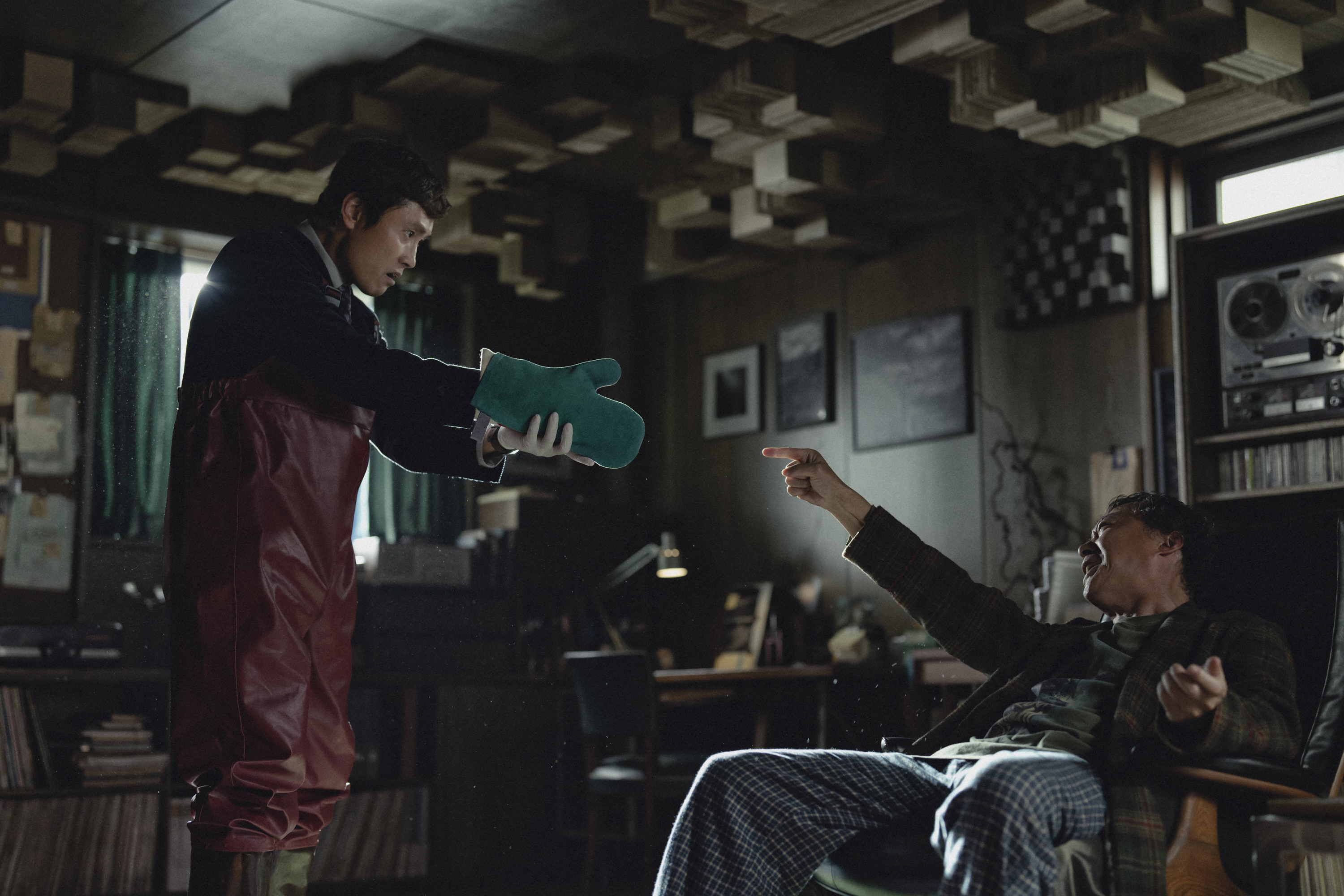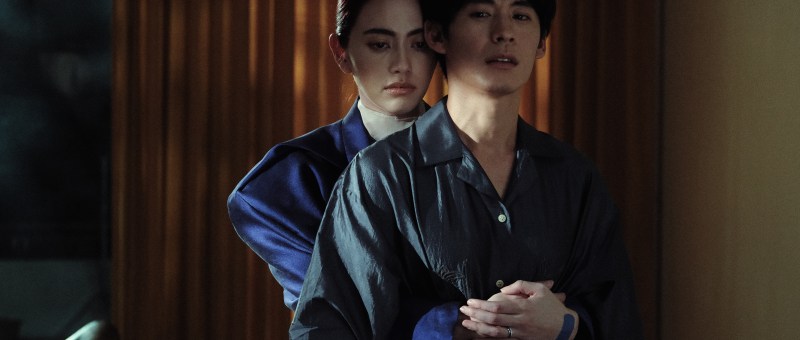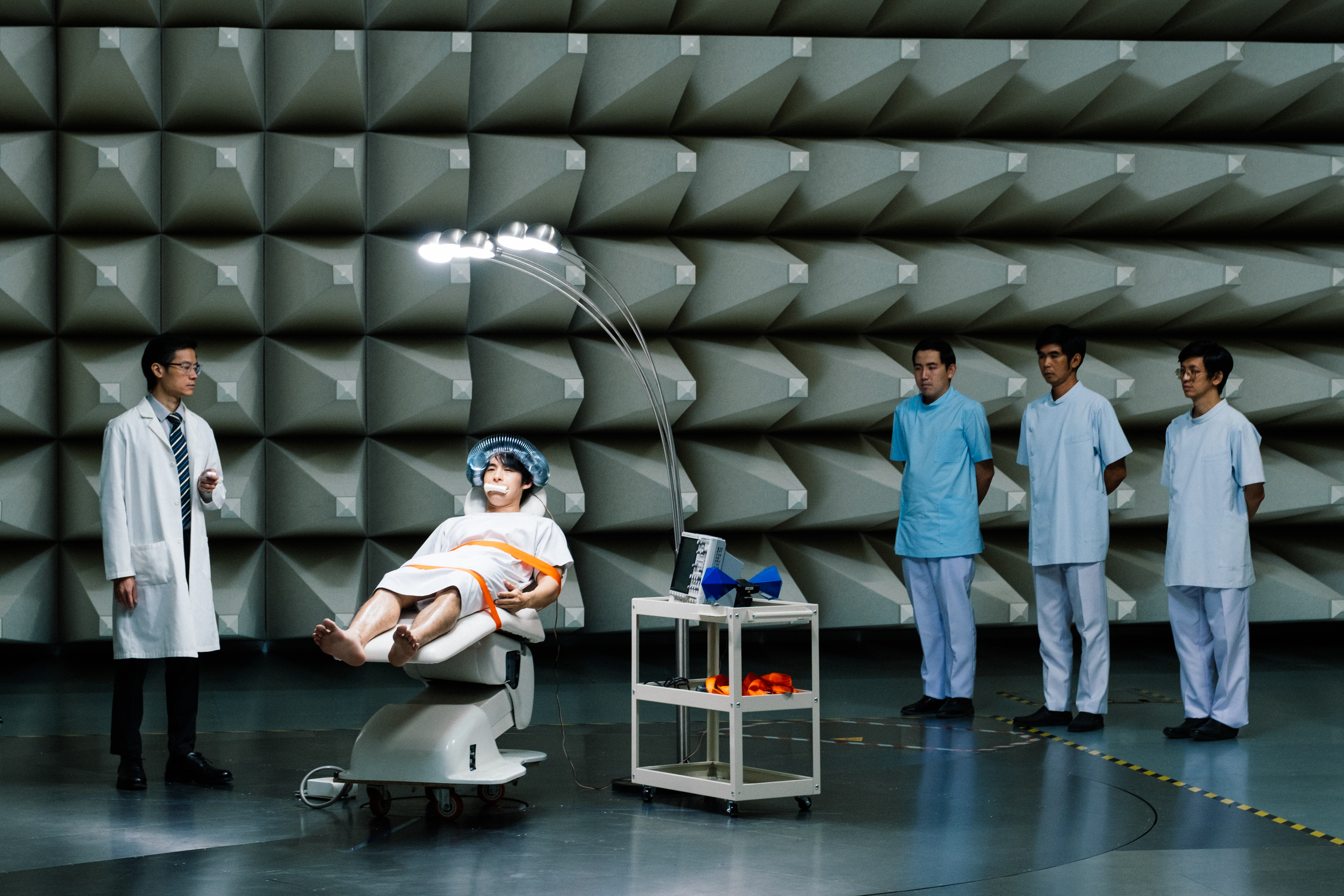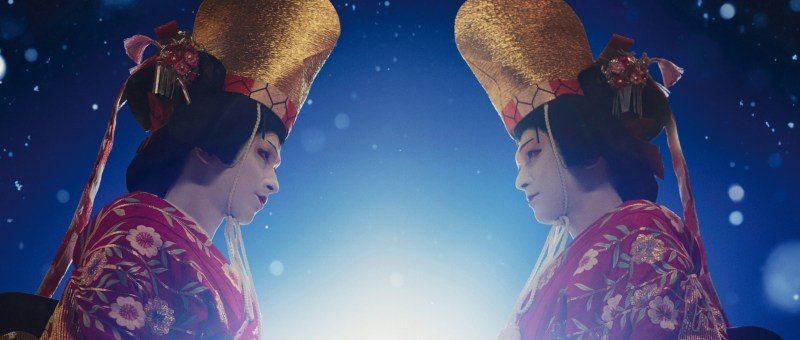
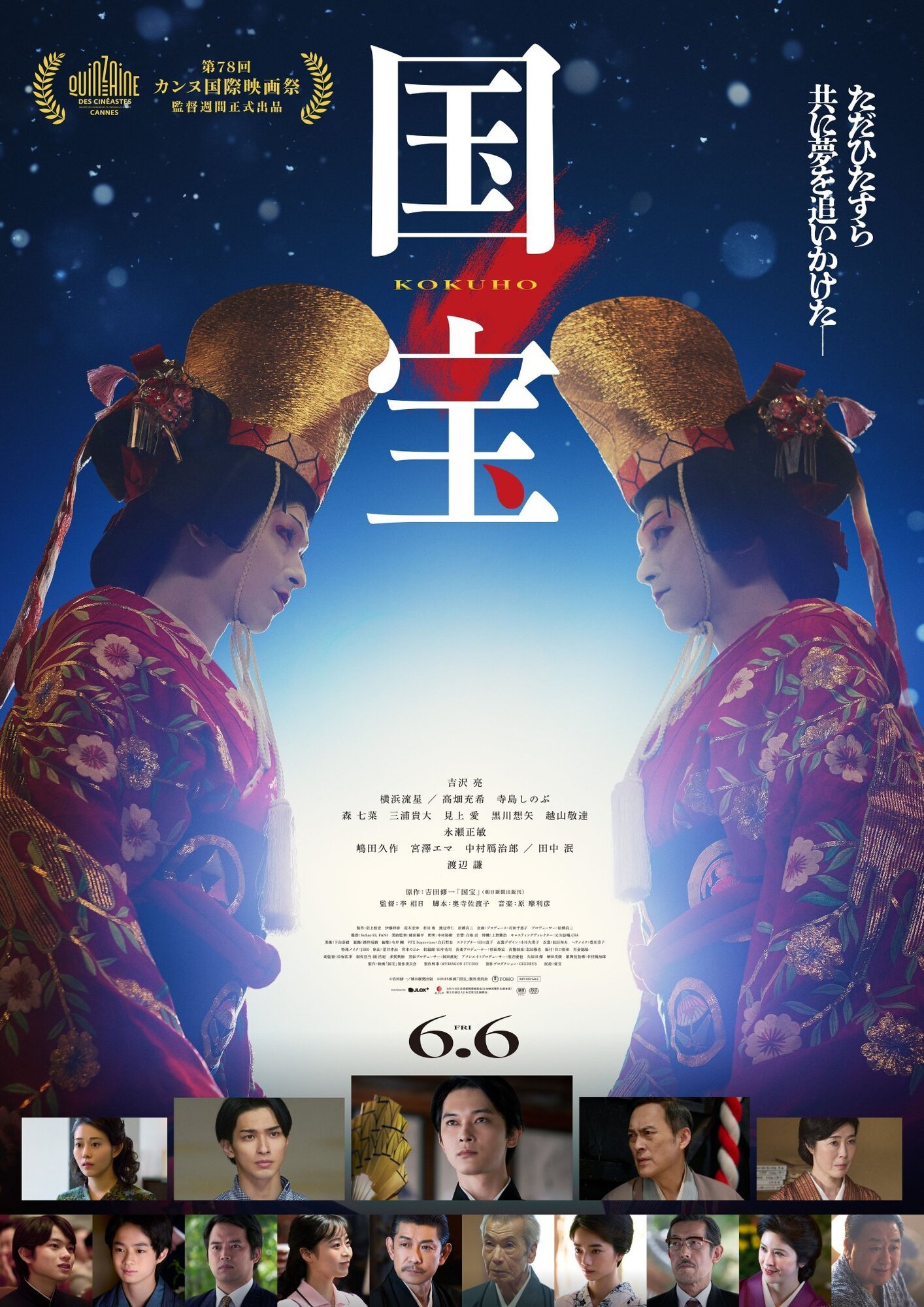
Sato and Sato (佐藤さんと佐藤さん, Chihiro Amano, 2025)

Aged 37 and recently divorced herself, lawyer Sachi (Yukino Kishii) listens to a man whose wife has evidently left him complain that what really soured him on her was that there was a dead bug in their living room that remained in the same spot for months on end, which indicated to him that his wife only ever swept the room as if it were round, literally cutting corners in their married life. He also complains that she only ever fed the children ready meals for dinner and they only ever had toast for breakfast. “I mean, would anyone call that a woman?” he rolls his eyes and sighs, expecting instant support from his legal team. It doesn’t seem to have occurred to him that he could simply have swept up himself or sorted breakfast and dinner, though he now brands his wife an unfit mother and seeks full custody, perhaps only as a means of hurting her or vindicating himself.

It’s this patriarchal take on the division labour that comes under the microscope in Chihiro Amano’s profoundly moving marital drama, Sato and Sato (佐藤さんと佐藤さん, Sato-san to Santo-san). Following the gradual disintegration of a relationship under the pressures of contemporary married life along with changing notions of gender roles, toxic masculinity, and the ways in which men and women navigate the domestic environment, the film seems to ask why it is that there isn’t more equality across the board, with practical and emotional responsibilities for the home still disproportionately falling on one partner.

This is all is more obvious when Tamotsu (Hio Miyazawa) ends up becoming an accidental househusband after repeated failures to pass the bar exam. He and Sachi, who share a surname which is also the most common in Japan making them a pair of everypersons, met as members of the university coffee club and, in truth, seemed somewhat mismatched from the start. She just bought the deal of the day and had the beans ground there. He’s carefully researched the best on offer and had the beans roasted to perfection with the intention of grading them on the day for the best flavour. Depending on how you see it, perhaps they complement each other and round out the corners to become one whole, but, on the other hand, maybe they aspire to different things. Nevertheless, they become a happy young couple full of hope and expectation for the future. But their relationship is soured by Tamotsu’s failures, and only more so when Sachi says she’ll study for the bar with him only to end up passing herself when he again yet fails.

Of course, it’s embarrassing for Tamotsu on a personal level that he can’t pass the exam, especially when he’s so told so many people that he’s going to be a lawyer. He’s been putting everything else on hold, including his relationship with Sachi having put off meeting her parents until he’s passed out of fear he’ll disappoint them. The sense of inadequacy begins to eat away at him, especially after Sachi begins working as a lawyer and is taking care of most of their bills. The other men we meet in the film, especially Sugai who is being divorced by his wife of 50 years, stress their position as a provider, as if that were all they needed to do in order to fulfil their role and buy their wife’s devotion. But Mrs Sugai, who now refuses to see him, states only in a letter that living with him is unbearable and he all he ever did was shout at her so there’s no prospect of communication. Tamotsu too is further driven into despair by the thought that others see him as “unmanly” because he’s being supported by his partner, though in reality masculinity is a performance for other men and not really something most women care about. What begins to bother Sachi is not his failure, but that she feels as if he’s given up and is not really contributing to their relationship or seriously studying to pass the exam. 

On a visit back to his hometown due his grandmother’s health crisis, starts to bond with a local woman and almost forgotten childhood friend who has herself escaped an abusive marriage but lost her children to her in-laws. He sees in her a more idealised kind of traditional wife, but after conplimenting him that his wife must be very lucky as he helps clear up at the bar where she works while all his friends doze off drunkenly, she gives him a rude awakening. He’s just like the others after all. He wants comfort, which is to say emotional labour from her, a woman he doesn’t really know, and the absolution sought by every man who says his wife doesn’t understand him. He wants to be told that he’s right and good, even while he blames Sachi and his domestic responsibilities for his inability to pass the bar. While talking with his old friends and hearing that his ageing father is planning to close their family farm, he starts to think about moving back and starting some sort of non-profit but as Sachi says when he puts it to her rather abruptly, he’s not really serious. Even if this sort of life might really suit him better, it’s not a decision he’s made after coming to the realisation that the bar exam is beyond him, but an attempt to run away not only from his failure but his domestic responsibilities. 

But by the same token, even while the roles are reversed Sachi falls into many of the same traps as an insensitive husband. So busy with her own working life, she doesn’t really see things from Tamotsu’s perspective and is only irritated by what she sees as his failure to commit to one thing or another. He is annoyed when she does things like point out there’s no toilet paper or contemplates buying a washing machine to make his life easier, because really he doesn’t think these things should be his responsibility and suggesting they are makes him feel like less of a man. They can’t orient themselves around the idea of a marriage as a domestic partnership in which they split both domestic and external labour equally and are each responsible for the whole. 

But then again, perhaps society isn’t ready for that either. Though Tamotsu does actually take care of the home environment and is the main caregiver for their son, Fuku, others still look to Sachi where a child is concerned. When they’re called into school because Fuku has apparently seriously injured another child in a squabble over building blocks, Tamotsu wants to ask more questions about how this happened, but Sachi immediately takes over and reassures the teachers she’ll make the necessary apologies to the other family, whispering in private that they’re all too busy to string this out which may not, of course, be very helpful in terms of Fuku’s further development. Conversely, when the pair are picked up by police after a violent argument in the street, the officer insists he has to write down “unemployed” even if Tamotsu says he’s a househusband, while when Sachi replies “lawyer” he assumes she’s trying to assert her right to legal representation and chuckles that she’s not under arrest so it isn’t necessary. She has to show him her lawyer’s pin to explain, and even then he just stares at them dumbfounded by their usual family setup. 

Sachi’s friend Shino who consults her for divorce advice when her husband cheats on her, reflects that Sachi might have had it easy in one sense because she never needed to change her name and accommodate herself with the loss of identity that comes with being called “Mrs Hasegawa” or “Miki’s mum” rather than by her birth name which admittedly was passed down from a father rather than a husband. For Shino taking back her maiden name was more important than a divorce in allowing her to reclaim herself as an individual who has choices and agency and isn’t someone who exists only in relation to a man in her social role as wife and mother. The film suggests the reason the marriage is unsustainable is precisely because society doesn’t accept it as a partnership of equals, so even when Tamotsu finally passes the bar, they end up with what’s perceived as two husbands and no one taking care of the domestic space to which the only solution is two households. With profound empathy for each, the film takes care not to apportion any blame, except perhaps on the parade of useless husbands being sued for divorce while unable to understand why their wives have left them or accept any responsibility for the failure of the marriage, but sees only the sadness of romantic failure and the impossibility of an uncompromised happiness in an otherwise oppressive society.


Sato and Sato screened as part of this year’s Camera Japan.

Trailer (no subtitles)

The Young Strangers (若き見知らぬ者たち, Takuya Uchiyama, 2024)

You have to protect your space from the violence of this world, a compromised father advises his sons, yet it’s something that neither he nor they are fully capable of doing. Billed as the “commercial debut” from the director of the equally emotionally devastating Sasaki in my Mind, Takuya Uchiyama, The Young Strangers (若き見知らぬ者たち, Wakaki Mishiranu Monotachi) paints a somewhat bleak portrait of contemporary Japan as place of desolation and abandonment, but at the same time is melancholy more than miserable in the earnestness with which they all dream of a better life somewhere beyond all of unfairness and injustice.

But Ayato (Hayato Isomura) seems to know that he’s burdened with some kind of karmic fate. His life oddly echoes that of his former policeman father and takes on an ironic symmetry even as he was unfairly left to pick up the pieces as a teenager adrift in the wake of parental betrayal. Now his late 20s, Ayato is a worn out and dejected figure who barely speaks after years of doing multiple jobs, in addition to running the snack bar his parents opened as a new start, to pay off the debts his father left behind. Now his mother has early onset dementia and her care is also something else he must manage as best he can with support from his girlfriend Hinata (Yukino Kishii), a nurse, and less so from his conflicted brother, Sohei (Shodai Fukuyama), who has a path out of here as an MMA champion if only he can stick to the plan and keep up with his training. 

As his best friend Yamato (Shota Sometani) points out, he’s hung onto everything his father left him but is equally in danger of losing his future. He seems wary of his relationship with Hinata, afraid to drag her into his life of poverty and hardship, while he watches friends get married and start families. He once had a promising future too, as the star of the school football team, but like everything else that came to an abrupt end in the wake of family tragedy. There are hints of trouble with law in his younger years that may have made it even more difficult for him to earn a living wage, along with giving him an unfavourable view of authority figures. Seeing another young man hassled by the police, he steps in to inverse but ends up in trouble himself. The policemen, take against him and when he’s beaten up by thugs who drag him out of the bar, they arrest him instead and let the others go. Time and again, bad actors seem to prosper and get away with their crimes, while good people like Ayato continue to suffer. When Yamato tries to come to his defence and questions the police, they lie and tell him Ayato’s just a waster as if the world were better off without him.

The boys have this game they play where put two fingers up against the back of a friend’s head and shout “bang”. It’s like there’s a bullet that always coming for them, and Ayato too fantasises about shooting himself in the head to escape this misery. Sohei, meanwhile, makes violence his weapon in taking the martial arts his father left him to forge a new path for himself while vowing not to be intimidated by violence. But violence is all around them from the literal kinds to that of an uncaring and oppressive society, and as much as Ayato fights in his own way to protect his family he can’t keep them all together nor the darkness at bay. He badly needs Sohei’s help, but also knows he can’t ask him to give up his way out or take away his future while Sohei is already pulling away. He thinks it’s time to look into a more permanent solution for their mother, and that they should let the past go, but Ayato wants to hold on to all of it as a means of giving his life meaning. “It’s not your fault, but it will be if it carries on,” a sympathetic neighbour tells Ayato after finding his mother in his cabbage patch again and leaving him to one again clear up the mess. Haunted by images of the past that in Uchiyama’s masterful staging segue into and out of the present, Ayato desperately searches for a way out of his suffocating existence, but encounters only betrayal and injustice amid the constant violence of an indifferent society.


The Young Strangers screened as part of this year’s Camera Japan.

Trailer (no subtitles)

Welcome Back (Naoto Kawashima, 2024)

“Once you play the heel, you can’t go back,” according to up-and-coming boxer Teru’s (Kaito Yoshimura) coach, but it turns out to be truer than for most for the aspiring champion for whom getting up off the mat proves an act of impossibility. While he plays the hero for younger brother figure Ben (Yugo Mikawa) and talks a big game before stepping into the ring, in reality Teru is riddled with insecurity and using bluster to overcome the fear that he can’t live up to the image Ben has of him.

The terrible thing is, he might be right and Ben, a young man with learning difficulties who later gives his age as 10 though clearly in his 20s, may be beginning to see through him. “I lost because I looked at you,” he later says of a failed attempt to fight off their chief rival, but it might as well go for his life which he’s spent in Teru’s footsteps ever since his mother abandoned him with Teru’s family when they were just children on the same housing estate.

As such, Teru does genuinely care for Ben, but has also been hiding behind him in allowing him to become something like a mascot or cheerleader, someone over whom he feels superior but also looks up to him as the sort of person he wants to be but perhaps isn’t. In any case, his boxing career has been going well and he’s on track to become the Japanese champion, but at the same time he’s proud and arrogant. He thinks he knows better than his coach, and likes to make a big entrance trash talking his opponents in a larger-than-life manner that might be more suited to pro-wrestling than the comparatively more earnest world of boxing and earns him a degree of suspicion as a result. His opponent Kitazawa (Yoshinori Miyata) is his opposite number in that, as Teru points out, he’s deathly serious and certain in his abilities which is why he’s able to KO Teru mere seconds into their title match. No longer “undefeated”, Teru simply gives up and retires from boxing only to spiral downward while working as a supermarket mascot, eg. Ben’s old job from which he also gets him fired by messing it up for both of them because of his pride and temper.

But for Ben, the certain truth of his life has been that “Teru never loses”. Now that Teru lost, something’s very wrong with the universe and he has to put it right, which is why he decides to fight Kitazawa himself even if he has to walk to Osaka from Tokyo to do it because they’ve got no money for transport. What neither Teru nor Aoyama (Yuya Endo), a boxer Teru once defeated in another title fight but ends up helping him and Ben on their quest, is that after obsessively watching Teru all this time, Ben is actually quite a talented, if untrained, fighter. They were hoping they could get him to give up on his plan by finding someone weaker than Kitazawa to defeat him so he’d know he had no chance, but he basically fights his way all across Japan to prove that Teru really is the hero he always thought him to be. 

This turns out to be inconvenient for Teru because inside he feels himself to be a loser and since his single defeat has been running away from the fight. As he later begrudgingly realises, none of this would be happening if he’d knuckled down done the training so he’d be able to beat Kitazawa in the first place rather than being consumed by his pride and arrogance. He should be the one fighting Kitazawa, not Ben who is putting himself in danger because the world doesn’t make sense to him any more. Kitazawa, meanwhile, has his number and seems to look down on him for his lack of fighting spirit, correctly surmising he will walk away from the chance to fight him for real when he opts for a last resort of trying to bribe him to fake a sparring match so that Ben will see him win and be able to go on with his life. 

But nothing quite goes to plan, and it seems like Ben might be starting to see that Teru might actually be using him to bolster his own sense of low self-esteem which obviously means that he does and always has looked down on Ben. Having come to a realisation that he needed to play the role of the hero that Ben needed him to be, perhaps what he sees is that Ben has outgrown him and that despite his constant insistence that “Ben is a child” is capable of doing what he couldn’t in fighting back even when the odds seem impossible. Teru is defeated by life, but fighting back in his case might look like something a little less glamorous that starts with eating some humble pie and calling in a favour to get a shot at a regular job he’ll have to take a little more seriously. In one way or another, their accidental road trip clarifies the dynamics of their “brotherly” relationship, but at the same time leads them to a point of division in which moving forward might necessarily mean they’re going in different directions.


Welcome Back screened as part of this year’s Camera Japan.

Trailer (no subtitles)

Army on the Tree (木の上の軍隊, Kazuhiro Taira, 2025)

Based on an unfinished play by Hisashi Inoue, Kazuhiro Taira’s Army on the Tree (木の上の軍隊, Ki no Ue no Guntai) confronts the absurdity of war by marooning its heroes in a banyan tree far above the conflict but also increasing unwilling to come down and face an uncertain reality. Instead, they remain in a kind of limbo, trapped somewhere between life and death in continuing to fight their war in their own way while unbeknownst to them, the wider world moves on.

In any case, this “army of two” is comprised of very different men with a complicated and ever-shifting dynamic. Lieutenant Yamashita (Shinichi Tsutsumi) is a loyal militarist from Miyazaki on the mainland, while private Agena (Yuki Yamada) is a local who has never left the Okinawan island where his family were once farmers, until the Japanese army requisitioned their land. The truth is that Japan is a coloniser here, too, and there’s an awkwardness involved in the way they see the islanders as both Japanese and not. While discussing the building of a new air base Yamashita describes as the envy of the Orient, one of the other officers suggests they will simply use “the locals” in suicide attacks as if their lives are completely disposable and not of equal value to those of the mainland soldiers, while simultaneously suggesting they belong entirely to the empire for the commanding officers to use as they see fit. They’ve been training the civilian villagers in local defence using spears to attack straw models labelled “Churchill” and “Eisenhower”, but when one older man jokes about smearing his with excrement so the enemy might have a better chance of dying of infection, Yamashita beats him about the head for what seems like an eternity.

It’s Yamashita who seems to cling fiercely to militarist ideology and his loyalty to the emperor, even if there’s an obvious conflict in the fact that he’s “run away” to hide in this tree with Agena while the rest of his men are dead. This also gives him an additional psychological reason to want to stay up there so that he won’t have to face his guilt and shame in the defeat and having survived it along with having allowed all of his men but one to die. Trapped there together, the two men have no reason to believe that anything has changed and think the battle is still ongoing with American soldiers patrolling the forest. They attempt to survive foraging for food and water, drinking from a trough into which a dead body has fallen while Yamashita at first firmly rejects the idea of eating tinned food left behind by the Americans, describing it as “enemy food” and the eating of it as an act of treachery. Agena is not so foolish and finally gets Yamashita to eat some and avoid starvation by tipping some of it into an old Japanese army ration tin.

But as much as Yamashita is in charge by virtue of military hierarchy, he’s also a stranger here while Agena is intimately familiar with the terrain. He has a much better idea of knowing how to survive in the forest and which plants and insects are okay to eat. The truth is that the army had confiscated all this land to turn it into an “unsinkable aircraft carrier” which the local recruits had to build with their own hands. Once the situation deteriorates, they’re ordered to blow the whole thing up to prevent the Americans taking it over rendering their labour entirely pointless especially as their only goal is to slow the Americans down. They have no real prospect of stopping them or of surviving the assault. Meanwhile, as Agena points out, neither he nor the island will ever be the same again. His mother had lost her mind after their land was taken and his father failed to return from the war, while most of his friends are dead and the places he played as a child have taken on new meanings or perhaps no longer exist. The world before the war is lost to him, and he can’t ever go home again, unlike Yamashita who still has somewhere, and presumably also someone, to go back to.

Yamashita is not altogether appreciative of this fact as much as he comes to see Agena as a stand in for the son from whom he’d become estranged because of his hardline authoritarianism. Nevertheless, the bond that’s arisen between them does begin to reawaken his humanity and dissolve the rigidity of his ideology so that he is gradually able to accept the reality that Japan has lost the war, their battle is over, and it’s time to come down from the tree. Taira largely avoids judgement or falling into the trap of glorifying these men’s actions as soldiers who refused to give in, focussing instead on the absurdity of their position along with the literal and psychological dimensions of their purgatorial existence as they attempt to process how to move forward into an unknown world while still tormented by the old.


Army on the Tree screened as part of this year’s Camera Japan.

Trailer (no subtitles)

MA – Cry of Silence (မ – Cry of Silence, The Maw Naing, 2024)

After their factory withholds wages for two months, seamstresses decide they have no other option but to strike in The Maw Naing’s hard-hitting drama, Ma – Cry of Silence (မ – Cry of Silence). As the opening title cards explain, Myanmar has seen a series of military coups over the last few decades and is now in a state of civil war. The military’s burning of villages has forced young people into the cities in search of work and shelter, but also left them in a precarious position and vulnerable to exploitative conditions. 

Mi-Thet, at least,ƒ is haunted by memories of her village burning and lives in a kind of hell where smoke is always on the horizon. She has a job as a seamstress and lives in a dorm with other young women in similar positions, but the factory hasn’t paid wages in two weeks and the landlady is beginning to get fed up. She snaps at the girls and ironically asks if they want her to starve to death, laying bare both the domino effects of this world in collapse and the pervasive heartlessness of capitalism. At the factory, the Forman watches over them, ruler in hand and often strikes them if he thinks they aren’t working hard enough while they’re terrified of taking breaks or visiting the bathroom because he also peeps on them or tries to extract sexual favours which some of the girls grant because they need the money.

The foreman’s face is kept offscreen and even when the women confront him, he appears as a ghostly silhouette behind the plastic sheeting. The factory boss, even when he supposedly arrives by car, is never seen at all. It may be that the political situation makes it impossible to run this kind of business, but at the same time it seems more like the factory just don’t want to pay the women because they think they don’t have to. After all, they have money to hire thugs to break up the protests when the women decide to strike rather than just giving them what they’re owed. The foreman alternately threatens them and makes false promises of payment that the women can’t believe because they’re still owed so much money even though as Mi-Thet says, she spends her days between the factory and the dorm. It wouldn’t surprise her if she died at her machine, while one of the others quips they’d still keep them working after they died.

Mi-Thet remains on the fence about even joining the strike, as do many of the other women afraid of the repercussions and of losing the money they’re owed entirely though it doesn’t seem as if it would be paid anyway. Her neighbour U-Tun who is disabled and is covered in scars from the 1988 protests for democracy remains world-weary and not so much encouraging as fatalistic but offers Mi-Thet a series of books that help her commit to the cause though it’s seeing her friend who works as a maid be badly beaten by her employer that convinces her they have to act now. 

As U-Tun says, the country should have changed but it stayed the same, while Mi-Thet can’t figure out if they’re emerging from the darkness or walking deeper into it. News reports speak of torched villages and refugees but also of the food shortages the destruction has caused. Even the cook at the dorm complains prices have gone up so much she can’t get good food and says she’ll cook better when they pay her more. “Better” doesn’t really matter at the factory as long as the girls hit their quotas, but workers can’t work on empty stomachs and no sleep even as the foreman seems intent in working them to their deaths. Mi-Thet and the others attempt to stand up against this cyclical destruction, but discover that they have almost no power and the factory owners don’t care at all if they live or die because they think there’s an endless stream of displaced girls looking for work. Gunshots and the rumble of fire echo in Mi-Thet’s ears, but ultimately she discovers herself trapped within this historical loop but issuing a rallying cry to the youth of Myanmar to rise up against this continuing oppression.


MA – Cry of Silence screened as part of this year’s New York Asian Film Festival.

Trailer (English subtitles)
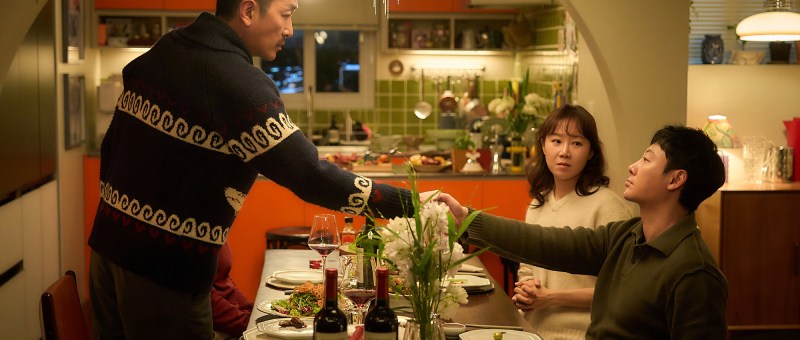
To Kill a Mongolian Horse (一匹白馬的熱夢, Jiang  Xiaoxuan, 2024)

The Mongolian Steppe is known for its vastness and ever-extending horizon, but for Saina it’s shrinking to the extent that seems to be homing in on him and threatening to destroy the only environment in which he feels he belongs. Saina is himself often likened to a runaway horse, though he’s forever catching them and bringing them back, longing for a world in which he could exist within this natural environment just as his ancestors did but finding only futility everywhere.

Once a racer, Saina injured his shoulder and is now relegated to the sidelines while trying to find other ways to work. His father, a broken man who drinks and gambles, has already sold off most of his sheep and is on at Saina to sell the horses too. His friend Hasa has also sold up, first rejoining the circus but then declaring himself sick of being a herdsman. After getting injured he decides to try his luck in the city and ironically ends up getting a job working for the mining company that is quite literally disrupting the foundations of Saina’s life.

The main enemy is modernity, but it’s delivered by the Chinese. Saina finds himself surrounded by Mandarin speakers, while it’s a Chinese mining company that is gradually buying up the Steppe to open a mine and eventually tries to force Saina and his father off their land. Saina’s father keeps telling him a Chinese horse broker could get them a good deal, but he’s also told that his beautiful white horse isn’t worth very much because it’s Mongolian. It’s meat wouldn’t even be worth as much as a cow’s, though that’s the only reason the broker is interested in it.

Nevertheless, it’s largely for Chinese tourists that Saina is obliged to parade his culture. He takes part in Medieval Times-style dinner shows where the audience is repeatedly reminded they can buy drinks for their favourite riders and carrots for the horses, though the riders and horses almost certainly don’t see them. Saina rides dressed as a heroic Mongol warrior, but has dreams of himself dying on the battlefield alone with his white horse. His ex-wife Tana encounters something similar, as her Chinese boss makes her serve drinks at dinner parties with Chinese businessmen while insisting she sing a Mongolian song for the local colour. Later Saina gets a job at a ranch where city slickers come to experience life on the Steppe, but complains that the tourists ride the horses too hard and end up injuring them. They don’t have a connection to the land or know how to treat animals, while the ranch owners exploit the horses in the same way they exploit Saina, taking little interest in their physical wellbeing only their ability to work. At the show, Saina discovers his horse is injured and asks to switch to another one to let it rest, but encounters resistance in being told to get higher approval from the boss.

Meanwhile, he applies for a job at a fancy equestrian facility but is basically told he’s too he’s common for this elite, aristocratic Western sport that’s no longer about racing but fine technique. The snooty woman who interviews him says that Mongolian riders don’t ride properly and their skills aren’t needed somewhere like this. Saina could possibly start from the ground up as a stable boy but most of those are teenagers. Meanwhile Saina reflects that his father never actually taught him how to ride, he just placed him in the saddle and left the rest up to him with the natural consequence that it feels like something that is innate and essential. Yet he wonders if his son will ride at all or if these grasslands will still exist when he comes of age. Tana lives in the city and wants to send the boy to a school she thinks is better where they speak Mandarin and English while Saina is worried he’ll lose his Mongolian. When he puts him on a horse, the boy is terrified and asks to get off. All Saina really seems to want is to ride horses and raise sheep, but this way of life is dying out and the grasslands are shrinking all around him. There is something quite sad and defiant in his riding of his horse along a motorway in the juxtaposition between the traditional way of life and the modernity which all but destroyed it even as Saina is seemingly left with nowhere to go and no place to roam.


To Kill a Mongolian Horse screened as part of this year’s New York Asian Film Festival.

Trailer (English subtitles)

Gowok: Javanese Kamasutra (Gowok: Kamasutra Jawa, Hanung Bramantyo, 2025)

There’s an essential contradiction at the centre of Hanung Bramantyo’s spicy romantic melodrama Gowok: Javanese Kamasutra (Gowok: Kamasutra Jawa) in that, on the one hand, the gowok is said to exist so that men learn how satisfy their wives’ sexual desires. Which is to say, the sexual desires of women are recognised and approved rather than denied or taboo while men are expected to live up to satisfying them as part of what it means to be a proper man. But at the same time, women are constrained by the patriarchal institution of marriage, have few rights of their own, and are largely unable to live independently while lacking status as anything other than a man’s wife. 

Indeed, the inserting of increasingly outdated notions of sex and class that stand in the way of romance and set the tragic events in motion rather than the black magic to which many attribute the looming crisis. Years before, Jaya’s mother had been in love with the soon-to-be king, but he couldn’t marry her because she wasn’t of sufficiently noble birth. She agreed to step aside and marry a mutual friend on the condition he would be given high office and her son would marry into royalty so that she would be a queen in all but name and their family would enter the royal bloodline.

Now a university student, Jaya (Devano Danendra / Reza Rahadian) is sent to a gowok to make a real man out of him, though as he explains to his father, that’s not what a real man is. Jaya is a young man of the new Indonesia who believes in things like equality of the sexes and the breaking down of the old class system even if he maintains his privilege in other ways, including submitting himself to the gowok. Nevertheless, while he’s there, he falls in love with the adopted daughter of his gowok Santi (Lola Amaria), Ratri (Alika Jantinia / Raihaanun), and makes her a lot of promises about the future while introducing her to the women’s movement in 50s Indonesia that offers her the vision of a different future in which she might become an independent woman rather than being forced to become a gowok herself. To become a gowok necessarily means that she would not be able to marry. Most gowok adopt children to succeed them. Accidentally seeing a secret ritual, Santi fears that Ratri has fallen victim to a pure love spell that threatens spiritual disaster should the man break his promise which, as an older woman, she knows he almost certainly will. 

Then again, that turns out not quite to be the case and the lovers are in fact betrayed by those still clinging on to to the old class system. The destructive quality of their romance is played out against the background of the screws tightening across Indonesia as anti-communist fervour takes hold and suspicion falls on the women’s groups when military generals are abducted and murdered. Despite his progressive views, Jaya ends up married to a princess at his mother’s behest, exemplifying the ways in which women try to hold on to power by exerting matriarchal control over their sons. As for the princess, she is already pregnant by her communist boyfriend but prevented from marrying him and forced to marry Jaya instead though apparently coming fall in love with him after their marriage. Meanwhile, it turns out that there is an awkward connection between Jaya and Ratri that lends their fateful meeting a tragic quality even as his mother refuses to entertain the idea of Ratri marrying her son because her mother was a sex worker and she is not of their class.

In any case, though the gowok system may not actually be that different from other folk practices, there is something uncomfortable about it in that some of the “men” are very young and do not want to be there. Though Jaya, who is also sent there against his will, is in university and falls for Ratri who is around the same age, when his own son, Bargas, is sent to the gowok he is only around 14 and looks very childlike while ushered into “manhood” by a then 33-year-old Ratri. The system is at least potentially abusive and unethical while demonstrating how men are also ensnared by the patriarchal trap in that they too are being groomed for marriage whether they like it or not. It was in fact a man’s inability to remain faithful to the wife chosen for him that led to Ratri’s mother’s death and the activation of a black magic curse.

In any case, it turns out that human motivations can be far more damaging than any curse in the long years of anger, resentment, and misery born of misunderstandings and deliberately misdirected love. Ratri desperately tries to overcome her past and become an independent woman as a gowok but finds herself frustrated by the changing nature of society which promises so much freedom and opportunity in her youth only to immediately roll back on it while her own attempt at revenge backfires with tragic results. Poignant in its themes of tragic romance, the film quietly hints that this kind of oppression may not have really gone away even as Ratri seeks to reclaim her legacy in the 1980s-set coda by turning the gowok house into a school that educates women in a final attempt to finally free them from patriarchal control.


Gowok: Javanese Kamasutra screened as part of this year’s New York Asian Film Festival.

Trailer (English subtitles)
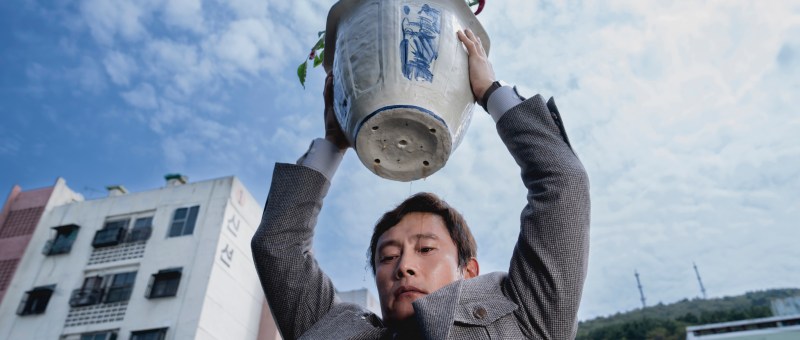
Travesty (Гажуудал, Baatar Batsukh, 2024)

“One man’s screams will not fix this social travesty,” according to an exasperated police officer sent in to quell a hostage crisis in a quiet rural town in Baatar Batsukh’s Mongolian crime drama. Led by chapter headings reading The Town, The City, the Nation, The State, the film pushes deeper towards the centre of corruption in an indifferent society in which the lives of citizens are barely valued and the authorities will do little to protect them. Indeed, the hostage taker’s claims that he will kill one person an hour seems to stand in for the slowly ticking time bomb of governmental indifference.

Or at least, that’s how it seems to Davaa whose teenage son keeps ringing him but he can’t help because he’s so far away on a case. His absent paternity seems to echo the ways in which the old have abandoned the young. The hostage taker turns out to be a young man who feels left out and hopeless. Rendered mute during his military service, he tried to sue the government but couldn’t while his mother, who worked for the government her whole life, ruined her health doing so and then was unfairly denied a loan to pay for medical treatment. The boy’s father appears to have been in the military, but is otherwise not around leaving him alone after his mother’s death having lost pretty much everything, which is why he takes revenge by holing up in the hospital with 20 hostages and asking 1 billion Mongolian tugrik a person. He’s clearly putting a price on a human life, but then so is the government when it declares I won’t pay.

The fact that it’s the hospital he takes over obviously has knock on consequences preventing local people from accessing health care, but the government does that too. As the doctor points out, rural hospitals are understaffed and under resourced. They can only offer basic services and send more seriously ill patients to the cities, but there aren’t enough beds there either so those like the hostage taker’s mother are sent back anyway. Meanwhile, a local crook’s ageing wife goes into labour with her fourth child which will earn them a medal from the government. The pregnancy is high risk and the doctor is worried about her because all of her previous births have involved complications which endangered the life of mother and child. But the woman insists she doesn’t care about the risks and is willing to die to get the medal from the government even though it appears they won’t care very much about her child after it’s born and fulfils their aim of expanding the population. 

Her husband is well known to the local police who’ve rounded up two other petty crooks who are listening intently to the unfolding crisis from their place in the cells. These middle-aged men, one of whom is a former nurse, don’t seem to have much to do except get into trouble. The police are doing their best, but like the hospital, they’re also under staffed and under resourced. A hostage crisis in their tiny town is an absurd development they have no idea how to deal with which is why Darvaa is dispatched to deal with it. The town can’t hope to raise the money the hostage taker is asking for, while the government could but it won’t pay despite Davaa’s please that they just give the hostage taker what he wants so he’ll stop executing people. When the authorities eventually turn up, it turns out they’ve lied. They didn’t bring the money and are planning to storm the building to end the crisis quickly without giving much thought to the hostages’ lives. Taken hostage himself, their representative grovels and pleads but refuses to offer the apology Davaa suggests as a last resort to appease the hostage taker with whom he has come to sympathise. 

A late twist makes the situation all the more tragic with the boy another victim of governmental indifference which would rather kill first and then refuse to answer any questions later. They try to fob Davaa off with a promotion in return for his silence, but he refuses while implying that he doesn’t really want to talk about this whole sorry affair either and would rather to get on with his job and looking after his family. In any case, the government representative seems more concerned that Davaa will embarrass him by exposing how he grovelled and begged for his life rather the fact they acted with callous disregard for the lives of the hostages and failed to take into account the fragile mental state of the hostage taker. The travesty is then not the hostage crisis but the state of the nation in which the citizens are themselves taken hostage by an indifferent and oppressive authority which extracts its ransom but offers little in return.


Travesty screened as part of this year’s New York Asian Film Festival.

Trailer (no subtitles)

Madadayo (まあだだよ, Akira Kurosawa, 1993)

It’s tempting to read Akira Kurosawa’s final film Madadayo (まあだだよ) as a kind of valediction, though he may not have thought of it as a “final” film and if he had, it would have been ironically for film’s title means “not yet” and thematically hints at a desire on hold to a life that is admittedly fleeting. Much of the film is indeed bound up with transience and the difficulties of accepting it, but it’s also a humorous tale of a man who was “pure gold” and managed to maintain his childish heart even into his 77th year. 

Inspired by the life of the writer Hyakka Uchida (Tatsuo Matsumura), the film rather curiously opens with his retirement as he abandons his teaching position to pursue writing full-time much to the disappointment of his doting students. The relationship between Uchida and the boys he taught is at the heart of the film, for much like Mr Chips he had no children of his own and is cared for in his old age by a collection of old boys who almost venerate him as if he were something precious which cannot be allowed to slip from the world. Soon after his retirement, Uchida achieves his Kanreki, that is his 60th birthday or the completion of one cycle of the Chinese zodiac which is also the beginning of a second never to be completed round, which some consider as a second childhood or the beginning of old age.

Uchida is indeed childishly innocent and generally lighthearted forever making incredibly silly puns and approaching even potentially serious situations with good humour. When his wife remarks that the rent may be reasonable on their new home because it is unlucky and prone to being burgled, Uchida simply puts up a series of signs directing thieves to the “burglars entrance” through the “burglars corridor” to the “burglars lounge” and “burglars exit” reasoning any potential robber would find the situation so odd as to want to leave as soon as possible. The house does turn out to be unlucky in a sense as it is burned down during the fire bombing of Tokyo leaving the Uchida and his wife to move into a tiny shack on the grounds of a ruined mansion. 

Signs of a sense of irony and an underlying darkness are, however, present in his improvised version of a march he would have taught the students during the years of militarism on which he comments on the disillusioning realities of new era of “democracy” under the Occupation ruled by bribery and corruption. The students decide to hold a birthday party for the professor they christen the “Not Yet Fest”, taking the lines from a child’s game of hide and seek to ironically ask if he’s ready to throw in the towel first, actually featuring a performance of his funeral which might seem insensitive but Uchida can be relied upon to see the funny side. During the party the former students give various speeches, one announcing he will recite the names of all the stations from one end of the country to the other, but no one really pays very much attention to them. The students even track on a large white dinner plate during a children’s song about the moon to hold behind Uchida’s head as if he were a buddha achieving enlightenment. 

Yet the crisis comes when, shortly after the students buy Uchida and his wife a new house to live in, their beloved cat Alley disappears, plunging the professor into a well of existential despair that leaves him unable to sleep or eat. The depths of his sorrow perhaps hint at his childish sincerity, though there is an undeniable poignancy in the attachment of the childless couple to this cat that chose them as its family. Despite the best efforts of the students along with the local community, Alley never returns though the professor and his wife learn to love a new cat who like Alley wandered into their garden and found a home. As in the poem that inspires Uchida in his “ascetic” life in the hut, life is an ever-flowing river. The waves of students that flowed through his classroom, the homes that were destroyed and rebuilt, the cats who stayed as long as they could and then made way for the new visitor all of them small circles of life that will continue long after he is gone. 

But as Uchida says, “Not Yet”. Like Kurosawa himself who feels the light dimming he asks for more time as if playing hide and seek with death whose presence he must eventually acknowledge even if he’s not quite ready to welcome him in. At the last Not Yet Fest that we see times have clearly changed. Uchida’s wife is now present along with the daughters and granddaughters of the students, one of whom points out they’ll soon be genuine old geezers themselves. For a moment we think we see the boy from 1943. Uchida tells the children to find their passion and give their lives to it, imparting one final not quite lesson while gifting them the cake they’ve just brought him in order of his 77th birthday. A 77th birthday is supposed to be lucky, though seven sevens are also 49 which is the length of a Buddhist mourning period and the time it takes to be reborn. The cycle begins again, as Uchida may know as he dreams of childhood hide and seek only to be distracted by a surrealist sky in its pinks and blues, a vista apparently painted by Kurosawa himself who lets the clouds roll into the credits an endless stream of dream and memory on which our lives are mere bubbles that disappear and form anew. But perhaps, not yet. 


Unexpected Courage (我們意外的勇氣, Shawn Yu, 2025)

Faced with a surprise pregnancy at 45, a workaholic music executive finds herself re-evaluating her life choices in Shawn Yu’s autobiographically inspired maternity drama, Unexpected Courage (我們意外的勇氣, wǒmen yìwài de yǒngqì). A kind of pun, the unexpected baby is later given the name “courage”, the film’s title hints at the resolve needed by the couple to face their new situation from the prospect of parenthood to the cracks already undermining the foundations of their relationship.

Those would partly be economic, but also their contradictory desires for professional fulfilment. The fact is that even before the baby they are already exhausted. Advertising filmmaker Po-en (Simon Hsueh) has been out all night on a shoot and walks in zombie-like just as Le-fu (René Liu), an executive at a record label, is walking out the door to travel to Shanghai with one of her stars so he can participate in a reality TV programme. They already live somewhat parallel lives and are barely connected to the extent that it seems their relationship may have run its course.

They aren’t really alone in that as Po-en discovers on running into another man at the hospital who is undergoing IVF treatment with his wife. The process is hampered by the fact that he works in Mainland China and only returns every three months which obviously makes trying for a baby logistically difficult. His wife accuses him of not really wanting children, while he later seems less than impressed on being told they’re having twins presumably because of the increased expense while his wife coldly tells him not to ask her to reduce the number because she won’t. A later phone call conversation reveals that the couple can’t afford a three-bedroom home in their preferred neighbourhood, while the husband would prefer they all move to Shenzhen which has a lower cost of living but this would necessarily mean the wife uprooting herself, losing her home and community while there would be no one left to look after her parents as they age. 

Le-fu is also considering taking a big promotion to head up the office in Beijing which is what she’s been aiming for throughout her career. It’s not clear if she intended to take Po-en with her, but in any case the discovery of the pregnancy, brought on by the scandal of one of her biggest stars being involved in a sex tape scandal, forces her to reassess her possibilities. Originally, she resolves to sign the contract and is resentful of the entire situation for throwing a spanner in the works, but is also touched by Po-en’s devotion and reluctant to give up what might be her only chance to become a mother even if it comes at the cost of her career. 

For his part, Po-en wants to keep the baby and is excited, if also anxious, about becomgina father. Having undergone a previous operation to remove part of her womb, Le-fu was led to believe she couldn’t have children and this too seems to have presented a fault-line in their relationship that prevented them from fully committing to each other. At 32, Po-en is 12 years younger, and Le-fu assumes he will eventually leave her for a younger woman while he at times seems resentful that she keeps him at arms’ length. 

The windowless hospital room in which Le-fu is confined then becomes a kind of womb from which she herself is reborn as a mother. Po-en’s tying a red ribbon to each of their wrists is both a romantic gesture that echoes the red string of fate connecting fated lovers, but also a kind of umbilical cord that finally helps them cement their relationship. Nevertheless, they also live in a patriarchal and conservative society that forces the question on them more directly as friends and family suddenly start asking if they’re getting married while others seem to disapprove of the fact that they’ve conceived a baby outside of wedlock. Likewise, the implication is that Le-fu must choose between motherhood and her career and the motherhood is the “proper” choice, negating the choice and agency she is otherwise given in the option to terminate the pregnancy. Po-en, meanwhile, wrestles with himself unsure he is up to the responsibility of fatherhood given that he did not have a father himself and therefore has no role model to follow. A grumpy sugar juice seller explains that his child will teach him, which is what children are put here to do as Le-fu has already realised. Expressing an anxiety surrounding the declining birthrate, the film does not shy away from its causes and the knock-on effects of life in a fast-paced, capitalist society but does in the end find a kind of serenity in the courage of both parents and child to embrace this new life with hope and excitement.


Unexpected Courage screened as part of this year’s New York Asian Film Festival.

Trailer (English subtitles)