The Girl Who Stole Time (时间之子, Yu Ao & Zhou Tienan, 2025)

All Qian Xiao (voiced by Liu Xiaoyu) wants to escape her boring island life where time runs slowing to experience the fast-paced life of the city, though her guardian, an older man she describes as an artist who can develop film, is not keen for her to go. Washing up on the island three years previously having lost her memory, Qian Xiao is fascinated by the films they watch in the town square which seem to her modern and exciting while also a means of capturing time and assuring that nothing is ever really forgotten.

But when she’s shipwrecked after accidentally stowing away on a steamship that collides with an ocean liner, she unexpectedly gains the ability to pause time with a small device known to assassin Seventeen (Wang Junkai) as the “time dial”, though she calls it the “shiny gold spinny thing”. Seventeen has been charged with recovering it on behalf of his mysterious boss Mr Zou who has set his minions a challenge declaring the person who brings it to him will be the only one to survive. The ability to pause time is indeed useful in a practical sense in that it allows Qian Xiao to escape her enemies temporarily, flicking a bullet out of the way that otherwise have entered the back of Seventeen’s head.

In other ways, however, it may not always be a good thing and time can never really be turned back but is ever marching forward. It’s not meant to be paused forever. Qian Xiao tries to extend her time in the city by putting it on pause, but then quickly becomes bored. There’s not a lot to do here if everyone’s stood still like a statue and she’s stuck on her own again. The irony is that she’d complained about island life being too slow, but as she grows closer to Seventeen all she wants is string time out for as long as possible. This is also, in someways, a reflection of ageing that young people are often in a hurry to grow up and experience the world, but as you get older time passes more quickly and you begin to feel it running out. Despite having said that you only have one life and there are things you can’t fix no matter how hard you try, she begins trying to find ways to get a second chance and stop time from moving forward.

Mr Zou wanted the dial for the same reason, unable to deal with his own deep-seated grief and hoping to use it to bring back those who he’s lost even if it means a lot of other innocent people might die. Seventeen might not have cared about that before, but has become more human through this adventures with Qian Xiao and can no longer allow him to misuse time in that way. As he says, all things must eventually come to an end and it’s enough to be remembered by those you leave behind. Qian Xiao may have become an immortal being and the master of time, but that also means existing in a perpetual state of loss. Eventually, she will need to learn to let go and treasure what she once had rather than being mired in her grief. 

Films are also, though, a means of stopping time and allowing Qian Xiao to revisit her past. While the film looks back to golden days of Chinese cinema in the glamorous Shanghai of the 1930s though its use of silent film techniques, it also seems to draw inspiration from Western animation such as Disney with its unexpected musical number and Qian Xiao eventually donning a very Cinderella-like ballgown for a romantic waltz for the ages. In its final stretches, however, it is more philosophical in contemplating the nature of time and how it’s spent, the ways in which it is sort of rewound and relived, along with the conviction that there’s no need to be sad when the movie’s over because it was it always about who you watched it with. Less anarchic than some recent Chinese animation, if energetic, the film revels in the elegance of its 1930s setting and derives genuine poignancy from its central love story as the fated lovers find their way back to each other only to part once again.


The Girl Who Stole Time screens in Chicago March 28th as part of the 20th edition of Asian Pop-Up Cinema.

Trailer (English subtitles)
The Last Woman on Earth (지구 최후의 여자, Yeum Moon-kyoung & Lee Jong-min, 2024)

Wronged by an internationally famous film director, a pair of aspiring filmmakers set their sights on cinematic revenge in Yeum Moon-kyoung and Lee Jong-min’s meta comedy, Last Woman on Earth (지구 최후의 여자, Jigu Choehuui Yeoja). Even so, they find themselves mired in a world of sexism and artistic jealousy ruled over by powerful elites content to feed on their aspiration, chew them up and spit them out only to, on the one hand, insist that exploiting them made them sad, and then on the other barely remember them at all and claim they did nothing wrong.

Hana and Cheol each have painful histories with a Hong Sang-soo like festival darling that have frustrated both their lives and artistic careers. They meet in a film class where they workshop their movies that are also attempts to overcome their trauma. Hana’s is a high-concept sci-fi drama shot like a silent film and peppered with intertitles in which the only woman left on earth after a virus wiped out all the others is imprisoned by men who harvest her eggs and attempt to clone her. Cheol’s is Hollywood gangster noir set in Chicago in 1989 in which he kills an annoying old man who was holding him back. Cheol annoys Hana by pointing out the theme of her film was “misandry”, as if there were something wrong with that, while she points out his film is obviously about his resentment towards a father figure. Even so, Cheol thinks the reason no one likes his script its that it’s too manly, and he could use some female input to help him score points on the grant application, which is how they end up working together.

Their various traumas highlight the problems in the mainstream film industry, even if Cheol’s problem is, in another meta touch, with indie filmmakers who make indie films to show to indie people at indie festivals. After being talked into a nude scene a more famous actress had refused to do, Hana became the talk of the town while her scenes from the movie ended up porn sites. She became a sex symbol, but was shamed out of show business. The only jobs she got offered were erotic movies and all she could do in the end was abandon her old identity. As she reveals in a lengthy musical number, she still wants to make films even though it’s painful and no one wants to seem to letter.

Like her, Cheol sought the approval of a master but feels betrayed by him. Tak stole his screenplay and used it to win awards in Europe without crediting him. Even since then, he’s been determined to become the Ant-Tak by doing what he couldn’t, making a hit popcorn movie that’s nothing more that an good time at the movies. But even Cheol can’t completely abandon the patriarchal mindset, first gender-flipping his revenge drama, then changing gears to make Hana the hero only to suddenly appear as a male character to swoop in and save her from the evil professor, Tak. 

Throughout the runtime, there’s the sense that the world is coming to an end, and of course it is because the world of this film lasts only until the closing credits. Still, they want to make the film anyway, even if there’s no tomorrow and no one will see it, because it’s what they have to do. They start out by making a documentary about Tak, hoping to destroy the Korean film industry by exposing what he’s really like. But Tak doesn’t really take them seriously. He points out he’s not Park Chan-wook or Bong Joon Ho, so no one’s going to watch their film anyway. Though he claims to feel bad about what happened to Hana after he used her for his film, he also says that it’s not his fault because that’s just how things were and everybody did it. Like Cheol, he’s now trying to make a “feminist” film to atone, laying bare the cynicism of these kinds of gestures intended only to whitewash the image of a tainted artist. But films after all “next world” and the way out. You can make one on your own, and it doesn’t really matter if no one sees it. Killing her past trauma, Hana transfers fully into the world of cinema, staying with Cheol to watch the world end as the camera continues rolling on waiting for the next world to enter the frame.


The Last Woman on Earth screens in Chicago March 27th as part of the 20th edition of Asian Pop-Up Cinema.

Trailer (English subtitles)
Seaside Serendipity (海辺へ行く道, Satoko Yokohama, 2025)

As we follow the road that leads down to the beach in the presence of a black cat, there’s a sign at the beginning of Satoko Yokohama’s Seaside Serendipity (海辺へ行く道, Umibe e Iku Michi) that lets us know that this town welcomes artists. Adapted from the manga by Gin Miyoshi, the film is another in the idyllic summer adventure genre with its tranquil, almost magical setting that even one of its temporary residents describes as somehow different from other places, but also contemplates the nature of art and its ability to influence the environment. 

This is certainly a very creative place where strange things happen and people mostly seem to do their own thing. Then again, Risako (Ayame Goriki) rents out apartments to artists looking for quiet retreats to practise their art in a peaceful environment but mainly ends up with those arriving for other reasons whose “art” is more like subterfuge. A young couple arrive running a bizarre scam selling fake knives that won’t even cut tofu after a couple of days. A stone sculptor she ends up dating is on the run from a loan shark, who just happens to be an old friend who said her job was in “sales” rather than admit she works as a debt collector chasing failed artists who always have an excuse as to why they can’t pay or haven’t yet produced anything.

A mysterious man gives Megu (Koharu Sugawara) a canary-shaped whistle that’s supposed to chirp in the presence of a true artist and make an unpleasant noise in the case of a false one. But as the kids eventually put it, all artists are self-proclaimed. The only requirement for calling oneself and artist is that you make something you consider to be “art” even if others disagree. Art can take many forms, as in the weird structure Ryoichi (Toma Nakasu) constructs made out of all the spoons he’s bent in his life. Sosuke (Kōnosuke Harada), meanwhile, attracts the attention of another mysterious man calling himself “A” who commissions him to make a model of a mermaid from a painted scroll. Sosuke dutifully makes it with a few additions such as the ability to remove the mermaid’s left breast and extract her heart. A interprets this as an expression that one cannot hide anything in art, whether things about themselves the artist wanted to conceal or things that they simply did not know. 

But Sosuke’s friend Teruo (Shun Aoi) also lets him in on the idea of mimesis, that they aren’t trying to reproduce something exactly as it appears but understand its true essence and recreate that. Teruo uses the art of mimesis to create a realistic mask modelled after the late husband of an elderly woman who says that it was foretold to her in a dream that he would come to her on her birthday. Though it might be a questionable gesture, he did it out of a desire for her dream to be true and to bring comfort to a lonely person whose family were unable to communicate with her, perhaps because they did not have the ability to lipread as Teruo apparently does. Nevertheless, they accuse him of stealing her money, insulting the purpose of his art. 

The art club’s art is also misused in a way when Ritsuko bizarrely asks them to create a hole she can say her boyfriend used to escape, like in a cartoon. This appears to be the sort of place where one can get away with such a ridiculous conceit. Trying to tell the truth, meanwhile, backfires for an aspiring journalist who uncovers suspect goings-on at the local nursing home where a nurse forces elderly people to sing songs out in the summer heat and prevents them from eating lunch as a means of staving off dementia. When her teacher leaks the video she recorded to social media, she’s annoyed to have missed the scoop and also that the teacher didn’t investigate properly opting for mob justice instead. The young woman worries the nurse may kill herself because of what she uncovered which is perhaps only a version of the truth. Meanwhile, everyone else is hot on the trail of mysterious animals appearing in the town that are somehow repelled by Teruo’s mystery art project. Even so, everything continues as normal in this strange little town as Sosuke pursues his artistic dreams painting tranquil visions of peaceful destruction from the deserted jetty, seemingly paying it no mind.


Seaside Serendipity screens in Chicago March 22nd as part of the 20th edition of Asian Pop-Up Cinema.

Trailer (English subtitles)
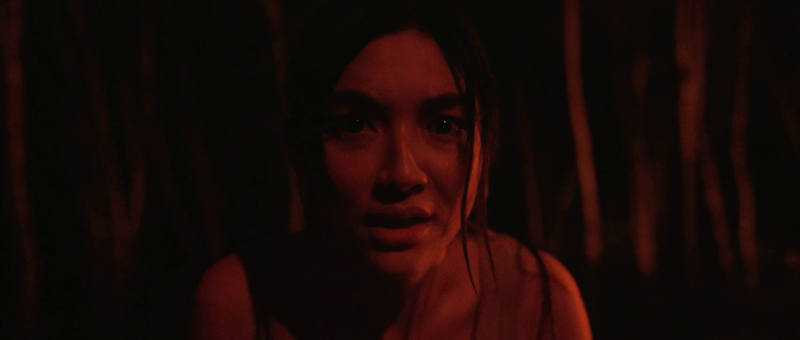
Mudborn (泥娃娃, Shieh Meng-ju, 2025)

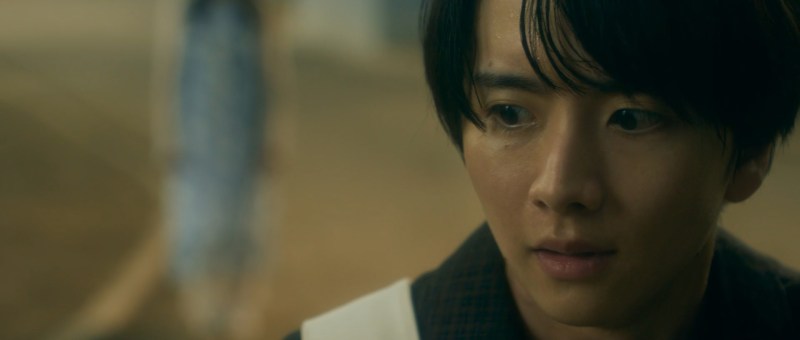
Poor old Hsu-Chuan is stuck making a scary VR horror game based on a grisly real-life crime, while his own wholesome proposal to create one about spending time with your family gets shuts down for having no clear path to monetisation. There is, however, something a little bit ironic in Hsu-Chuan’s abstraction in creating a separate space to share with those close to him rather just going home and spending time with them instead.

In fact, Hsu-Chuan (Tony Yang) is often physically separated from his heavily pregnant wife whom he somewhat creepily watches through a surveillance camera so he can “keep her company”. He does seem to want to play the role of a good father, constantly fussing over a doll as a way of training himself to look after their baby, but at the same time his wife Mu-Hua (Cecilia Choi Sze-wan) is irritated when he says he’s taking parental leave to “keep them company,” rather than spend time with them together as a family and contribute equally to raising this child. It’s as if Hsu-Chuan sees himself as separate from the main family unit, more like a helpful guest than a devoted father. Then again, his boss tells him he was much the same. When his wife was pregnant, he’d “relax” by doing overtime at the office. When he got home, his wife cried and pointed out she had someone living inside her and it would be nice if they could face this together, as a family.

After all, pregnancy itself is a kind of possession. At the end of the day, the men can go off and escape their responsibilities if they want to, but the woman can’t separate herself from the child inside her. When Hsu-Chuan unwittingly brings the haunted doll from the murder scene home, he implants it in the womb of their domestic space where Mu-hua cares for it by restoring it like one of her statues. But what neither of them know is that the doll was made with grave soil and baked with maternal grief, so it contains the vengeful souls of those buried nearby. Another sculptor, Liu Hsin (Tracy Chou Tsai-shih), used grave soil precisely because she believed that all return to the earth in the end and so it contains the remnants of those now gone.

But perhaps there’s something not quite right about using the echoes of the dead without their consent. Liu Hsin may have known that, which is why she put esoteric talismans on her creations to seal in whatever might be in there. The same could be said of the game Hsu-chuan’s company is making. Is it really alright to exploit a horrific real life crime for entertainment? An employee takes an acquaintance to scan the still abandoned crime scene, capturing the eerie atmosphere along with everything the murdered family left behind. It wouldn’t be surprising if they picked up a ghost or two, and probably they should have listened when a mysterious voice told them to put that doll back where it came from.

To that extent, Hsu-chuan becomes a kind of mirror for Liu Hsin carrying around an actual doll meant for children that’s supposed to represent his unborn child. Its possessive qualities might also echo his paternal anxiety and the fear that this baby will take his wife away from him. For her part, Mu-hua has apparently decided to give up on a cherished opportunity to work on a restoration project in Rome because she doesn’t want to miss her baby growing up, but Hsu-Chuan still only wants to keep them company while making his VR family space instead as if they lived in a fantasy land he could enter and leave at will. Perhaps ironically, the doll will turn him into an inverse mother, carrying the spirit inside himself though unable to birth it. He demonstrates his commitment to his family by sacrificing himself to protect it, removing himself from the family unit and exiling himself to his own other space as an AI avatar in his VR world. Teaming up with an esoteric Taoist priest who seems like he has an ulterior motive in wanting to unlock the secret of these unusual talismans, Hsu-Chuan is, in effect, another ghost, haunting his family home rather than inhabiting it “together as a family” and only ever hanging out to keep them company.


Mudborn screens in Chicago March 21st as part of the 20th edition of Asian Pop-Up Cinema.

Trailer (English subtitles)
The Final Piece (盤上の向日葵, Naoto Kumazawa, 2025)

When a body is discovered buried with a priceless set of shogi tiles, it unearths old truths in life of an aspiring player in Naoto Kumazawa’s sprawling mystery, The Final Piece (盤上の向日葵, Banjo no Himawari). In Japanese films about shogi, the game is often a maddening obsession that is forever out of reach. Hopefuls begin learning as children, sometimes to the exclusion of everything else, but there’s age cut off to turn pro and if you don’t make the grade by 26, you’re permanently relegated to the ranks of the amateur. 

Junior policeman Sano (Mahiro Takasugi) was one such child and in some ways solving the crime is his final match. The thing is, he loves the game and admires Kamijo’s (Kentaro Sakaguchi) playing style along with the aspirational quality of his rise from nowhere not having trained at the shogi school and turning pro at the last minute to win a prestigious newcomer tournament. He’s hoping Kamijo will win his game against prodigious player Mibu (Ukon Onoe) with whom Kamijo’s fortunes are forever compared. Which is all to say, Sano really doesn’t want Kamijo to be the killer and is wary of accusing him prematurely knowing that to do so means he’ll be kicked out of professional shogi circles whether he turns out to be guilty or not.

Nevertheless, the more they dig into Kamijo’s past, a sad story begins to emerge that strongly contrasts with his present persona, a slightly cocky young man with a silly beard and smarmy manner. While Mibu seems to have been indulged and given every opportunity to hone his skills, Kamijo was a poor boy whose father had drink and gambling problems and was physically abusive towards him. His mother took her own life, leaving Kamijo to fend for himself with a paper round while his father occasionally threw coins at him and railed against anyone who questioned his parenting style. Good intentions can have negative consequences, the landlady at his father’s favourite bar remarks recalling how he went out and beat Kamijo for embarrassing him after another man told him he should be nicer to his son.

Toxic parental influence is the wall Kamijo’s trying to break in shogi. Aside from the man raising him, Kamijo finds another, more positive, paternal figure in a retired school teacher (Fumiyo Kohinata) who notices his interest in shogi and trains him in the game while he and his wife also give him clean clothes and a place to find refuge. But Kamijo can’t quite break free of his father’s hold much as he tries to force himself to be more like the school teacher. As an impoverished student he meets another man, the cool as ice yakuza-adjacent shogi gambler Tomyo (Ken Watanabe), who insists he’s going to show him the “real” shogi, but in reality is little different from his father if more supportive of his talent.

Kamijo finds himself torn between these three men in looking for his true self. Though he may tell himself he wants to be like the schoolteacher being good and helping people in need, he’s pulled towards the dark side by Tomyo and a desperate need for shogi which tries to suppress by living a nice, quiet life on a sunflower farm that reminds him of the happier parts of his childhood. There’s a cruel irony in the fact that the police case threatens to ruin to his shogi success at the moment of its fruition, even if it accompanies Kamijo’s own acceptance of his internal darkness and the way it interacts with his addiction to the game. 

Tomyo’s own obsession may have ruined his life as he looks back over the town where he spent his happiest months with a woman he presumably lost because of his gambling and need for shogi glory even though he never turned professional and remained a forever marginalised presence as a gambler in shogi society. Unlocking the secrets of his past seems to give Kamijo permission to accept Tomyo’s paternal influence and along with it the darker side of shogi, but there’s something a little uncomfortable in the implication that he was always doomed on account of his “bad blood” aside from the toxic influences of his some of his father figures from the man who raised him and exploits him for money well into adulthood, and the ice cool gangster who taught him all the best moves the devil has to play along with a newfound desire for life that may soon be snuffed out.


The Final Piece screens as part of this year’s Japan Foundation Touring Film Programme.

Ura Aka: L’Aventure (裏アカ, Takuya Kato, 2021)

Frustrated by career setbacks and loneliness in her personal life, 34-year-old boutique store manager Machiko (Kumi Takiuchi) decides to open a secret Twitter account to rival a younger colleague’s Instagram success. To boost her follower count, she starts posting photos of her breasts which become increasingly explicit as if she were stripping herself bare as pathway towards liberation. When a random man contacts her, she eventually agrees to meet and has a torrid night of steamy sex she had not intended as a one night stand though her much younger date, Yuto (Fuju Kamio), had other ideas.

In her voiceover, Machiko recounts that there was a kind of excitement she felt on her first night in Tokyo that she evidently no longer feels. We see her pick out clothing from a dumpster we later infer to be from stock she bought as a buyer for the store that didn’t sell and intuit that it stands in for Machiko herself who also feels as if she’s been thrown away and abandoned by her workplace. After making a loss on the clothes, they demoted her to manager and now ignore her warnings that the new designs they’re going for are too safe. Her colleague agrees with her and calls them boring but soon changes her tune when the new buyer shows up, telling him she thinks they’re great and wants to buy some herself.

Walking through the store in a daze, Machiko becomes increasingly obsessed with her secret account and is dependent on the sense of validation she gets from skeevy men liking her posts and expressing a desire to sleep with her. She later confesses that she started the account out of a sense of loneliness and a desire to be wanted, but also because she realised that her life was empty and she had nothing at all to show for her work. Though she’d devoted herself to her career, she’s not been rewarded and her bosses are sidelining her because of her age and gender while she’s forgone personal relationships and is perhaps romantically naive and lonely.

Sex with random men which they video and she posts on her channel provokes a kind of liberation but also deepens her sense of loneliness. Yuto, the man she met who originally reignited a spark she thought had gone out, makes a habit of approaching women on social media and having sex with them which he videos as a kind of trophy. When he crassly shows her the tapes believing her to be a kind of ally after an unexpected reunion, she remarks that all the women are her as if seeing herself for the first time. Yuto, meanwhile, suggests that he did out of a sense of nihilism that his life had been too easy and its lack of imperfection was too difficult to bear.

The new clothing line Machiko suggests to save the failing store is ironically to be called “The Real You,” though that’s something she’s perhaps lost sight of after splitting her persona in two with the secret account making it impossible to see who the “real” Machiko might be. Nevertheless, newfound confidence does seem to improve her working life even as she’s sucked into the potential danger of Yuto’s nihilistic existence. He takes her to a working-class eatery, spinning a tale of small town upbringings and factory closures that may or may not be true but in any case expresses his own loneliness in his potentially self-destructive tale of big city success. 

Yuto’s motto, which turns out to be not entirely his own, is to have fun in world which isn’t bearing out his dissatisfaction with the contemporary society even if it turns out his issue is ennui rather than a genuine reaction to the kind of issues that colour Machiko’s existence like ageism, sexism, and the vagaries of the fashion industry. Seemingly informed by Roman Porno, Kato shoots the city with moody melancholy but finally allows Machiko to begin reintegrating herself though throwing away her phone and everything that comes with it. Detaching from the urban environment, she begins to run as if reclaiming her physicality and desire for forward motion before finally arriving at the dawn suggesting that her long night of the soul is finally over and a new life awaits.


Ura Aka: L’Aventure screens as part of this year’s Japan Foundation Touring Film Programme.

Trailer (no subtitles)

Images: © 2020 Ura-Aka L’Aventure Production Committee

Nemurubaka: Hypnic Jerks (ネムルバカ, Yugo Sakamoto, 2025)

Is it better to have a goal and know what you want, or is it easier to be just kind of muddling along? The heroines of Yugo Sakamoto’s oddly titled slacker comedy Nemurabaka: Hypnic Jerks (ネムルバカ) are coming at this from opposite sides. Ruka (Yuna Taira) is a rock band and her dream is to make it as a musician, though she isn’t really sure she has what it takes, while Yumi (Shiori Kubo), though in some ways the more sensible of the pair, has no idea what she’s doing with her life.

The fact that Yumi addresses Ruka only as “sempai” bears out the ways in which she feels slightly inferior to her, and, in fact, to everyone. As she says to Ruka, it’s like everyone else has a foot on the ladder, but she can’t even see where the ladder is let alone climb it. Ruka offers to split her pay for polishing up some ornaments for a friend who works as a maid at a posh person’s house as long as she does half of it, adding that now at least Yumi’s on the bottom rung while simultaneously trying to make her an equal. While Yumi idolises Ruka, Ruka seems to be jealous of Yumi’s carefree nature and relative lack of impetus. 

Then again, the way she seems to quickly shut down anyone making romantic overtures towards Yumi along with her habit of gazing at her while she’s asleep may suggest another kind of desire. The gazing turns out to have a practical dimension, at least, that somewhat dissolves the disparity as it’s Yumi who has facilitated Ruka’s art and, to an extent, all her songs appear to be about her. This may be what she means when she tells Yumi that she’s very important to her to try and quell her feelings of low self-worth and inferiority. Nevertheless, this notion of being somehow lesser is only reinforced by the intrusion of a guy, Taguchi (Keito Tsuna), who pretends to have romantic interest in Yumi but is in reality after Ruka who exploits him for free food and the use of his car. 

Exposed, Taguchi calls Yumi “low-tier” and “a simpleton”, but inexplicably still expects Ruka to date him despite having just confessed to using her friend and then insulting her as part of a botched apology. Part of the problem is that Taguchi is a spoiled rich kid who doesn’t understand how the world works. He has a useless GPS device installed in his car featuring a maid-style character who deliberately gives rubbish directions because men like him generally prefer women to be stupid and cute even though he’s set his sights on Ruka who is moody and rebellious. While the girls are humming and hawing over a new rice cooker and going hungry at the end of the day, he’s obsessing over getting a new outfit for his GPS mascot. His comparatively more sensible friend who sort of mirrors Yumi indulges in superhero fantasy and is jealous of Ruka because of her certainty about her path in life even if Ruka is anything but certain in her ability to follow it.

It’s that sense of uncertainty that, in a way, convinces her to accept an offer of a record contract despite the fact they only want her and not her bandmates while she’ll also have to move out of the flat she shares with Yumi to go to Tokyo. She admits that she’d like to live this aimless life with her for longer, but is frightened of becoming stuck and never able to progress to anything else. But the price of that is she ends up making soulless idol pop for the commercialised music industry despite having been signed for a punk anthem about youthful despair. Yumi may be the “sleeping idiot” of the title in a more literal sense, but perhaps Ruka isn’t really fully awake either but allowing others to lead her towards what she should want but perhaps really doesn’t. In any case, unlike similarly themed films, this one doesn’t really lean into the idea that an aimless life is fine itself but encourages Yumi and the others to try and find a sense of purpose as she becomes a “sempai” herself, if also maintaining the courage to walk away from a compromised vision of success that isn’t at all what they wanted.


Nemurubaka: Hypnic Jerks screens as part of this year’s Japan Foundation Touring Film Programme.

Images: © Masakazu Ishiguro, Tokuma Shoten_Nemurubaka Film Production Committee

Adabana (徒花 –ADABANA–, Sayaka Kai, 2024)

What constitutes a good life? Is it what you leave behind, or the experience of comfort and contentment? The Adabana of Sayaka Kai’s existential drama refers to a barren flower that will never bear fruit and is intended to survive for only one generation, yet its life is not without meaning and for the time that is alive, it is beautiful. Accepting the burden of death can be liberating, while the burden of life provokes only suffering born or constraint.

Or at least, the conflicted Shinji (Arata Iura) has begun to contemplate after becoming terminally ill pressured to undergo surgery that will save his life at the cost of his “unit”, a kind of clone intended for the provision of spare parts should their individual encounter some kind of medical issue. In this world, a virus has inhibited human reproduction and led to a desire to prolong life in order to provide a workforce. This is done largely through the use of clones, though it’s clear to us right away that this is a technology only accessible to the wealthy elite.

In the Japanese, the units are referred to euphemistically as “sore” or “that”, as if their presence was slightly taboo and Shinji is encouraged to view his not as a person but as a thing to be used when needed, like a replacement battery or parts for an engine. Nevertheless, it nags at him that another being will die for him to live. The hospital director instructs him that he cannot die because he is important as the heir to this company which suggests both that his existence is more valuable than others and that he is actually worth nothing at all outside of his role as the incarnation of a corporation. Kai often presents Shinji and his clone on opposite sides of the glass as if they were mere reflections of each other or two parts of one whole. Their existences could easily have been switched and either one of them could have been designated the “unit” or “original”. 

On Shinji’s side of the glass, the world is cold and clinical. He feels constrained by his upper class upbringing and feels as if he is ill-suited to this kind of life. He has flashbacks to a failed romance with a free-spirited bar owner (Toko Miura) whom he evidently abandoned to fulfil parental expectations through an arranged marriage deemed beneficial to the family’s corporate interests. He has one daughter, but has no feelings for his wife and resents his circumstances. Beyond the glass, meanwhile, is a kind of pastoral paradise where his unit fulfils himself with art, though Shinji never had any artistic aptitude of his own. The unit says that there was a female unit he can’t forget who was taken seven years ago hinting at his own sad romance, yet he’s completely at peace with the idea that his purpose in life was only to give it up so that Shinji might live. In the surgery, he will achieve his life’s purpose, though Shinji is beginning to see it only as a prolongation of his suffering. 

The unit’s speech is soft and slightly effeminate in contrast with the suppressed rage and nervousness that characterise Shinji’s way of speaking, and what becomes clear to Shinji is the ways in which they’re different rather than the same. He wonders if his unit would be kinder to his family and more able to adapt to this way of life from which he desires to be liberated. His psychiatrist, Mahoro (Kiko Mizuhara), too finds herself conflicted by his interactions with his unit beginning to wonder what her own nature and purpose might be. The units are shown videos featuring the memories of their originals, though apparently only the good parts, which suggests that in some cases the original actually dies and is replaced as if they and the unit were otherwise interchangeable with the unit learning to perform a new role despite having had completely different life experiences that are only partially overwritten by a memory transfer. What is it then that makes us “us”, if not for our memories both good and bad? On watching her own tape, Mahoro feels as if it’s somehow changed her, resulting in a nagging uncertainty about things unremembered coupled with the pressures of being under constant surveillance. For Shinji at least, it may be that he too sees liberation in death and envies a life of fruitless simplicity over his own of suffering and constraint.


Adabana screens as part of this year’s Japan Foundation Touring Film Programme.

Trailer (no subtitles)

Images: © 2024 ADABANA FILM PARTNERS _ DISSIDENZ

Petals and Memories (花まんま, Tetsu Maeda, 2025)

In many Japanese family dramas, there is an inherent sense of impending tragedy born of the notion that one family must necessarily be broken for another to be formed. Cultural sensibilities might insist that someone can only be part of one family at any time and any attempt to play a part in another is an act of betrayal. But reality is not so clean-cut and just because a woman gets married, it doesn’t really mean that she becomes a stranger to the people who raised her nor that they must completely sever ties with her even as they wish her well as she transitions to a new stage of life.

This is though what older brother Toshiki (Ryohei Suzuki) fears in Tetsu Maeda’s supernaturally tinged familial drama Petals and Memories (花まんま, Hanamanma). Adapted from a short story by Minato Shukawa, the story has an old-fashioned quality in which it could easily have been set back in the Showa era were it not for the fact that Kiyomi, the spirit that his sister Fumiko (Kasumi Arimura) claims to carry, was killed in the climatic year of 1995 which saw both the Kobe earthquake and sarin gas attack on the Tokyo subway. In any case, Toshiki has a distinctly Showa-era vision of masculinity and remains incredibly protective of his sister even if Fumiko has moved up in the world with her job in a university and engagement to a young professor who has the ability to converse with crows.

After their truck driver father was killed in an accident and their mother passed away in Toshiki’s teens, he’s essentially been forced into a parental position. Toshiki left school early and got a job in the factory where he still works in order to fulfil his father’s dreams of sending Fumiko to university. As such, he occasionally paints himself as a martyr and is keen to remind people how difficult it was for his mother to raise them on her own and that he’s sacrificed his future to provide for Fumiko. Her upcoming marriage is then to him a minor betrayal even if it’s also, culturally speaking, the fulfilment of his parents’ hopes for their daughter and thereby the end of his obligation.

The problem with that is Toshiki himself doesn’t have much of an identity outside of “big brother,” and is unable to see Fumiko as anything other than his little sister. When she tells him that she has memories of a previous life, he rejects them and says that he can’t bear to see his sister as “someone else”, repeatedly reasserting that she’s the daughter of his parents rather than those of Kiyomi. But Fumiko is also fiancée to Taro (Oji Suzuka) and friend to Komako (First Summer Uika). As she tries to counter him, more than anything she is simply herself which is something else Toshiki rejects in his categorisation of her only as his sister. Nevertheless, when she tells him that interacting with Kiyomi’s grieving father Mr Shigeto taught her what it was like to have a father seeing that she has no memory of her own is insensitive given that Toshiki has essentially been a father to her for most of her life. 

In clinging to his identity as a big brother, Toshiki may really be attempting to stave off his own fear of orphanhood as a man with no other family, but what he’s forced to reckon with is that his sister is “someone else” after all and not merely an extension of himself. In coming to terms with Kiyomi’s presence and extending compassion to her bereaved family rather than reacting in fear that they were trying to take his sister away from him, Toshiki begins to realise both that he didn’t actually raise Fumiko all alone but benefitted from the extended family of a community and that in her marriage his world is actually expanding rather than contracting. As the old adage goes, he’s not losing a sister so much as gaining a brother. In the “hanamanma” flower bento of the Japanese title, it becomes clear that Kiyomi’s love for her family transcended death and that she is not really lost to them even this most final parting but remains with them in spirit and memory. 


Petals and Memories screens as part of this year’s Japan Foundation Touring Film Programme.

Trailer (English subtitles)

Blue Boy Trial (ブルーボーイ事件, Kashou Iizuka, 2025)

The police of mid-1960s Japan have a problem. They’re desperately trying to clean up the streets. But they keep running into transgender sex workers whom they can’t arrest because the working of the anti-prostitution laws explicitly targets women only, and in legal terms the people they’re picking up are regarded as male, so they have to release them. Knowing they can’t touch the women, a resentful police officer decides to go after the doctor who treated them instead.

Inspired by a real-life incident, Blue Boy Trial (ブルーボーイ事件, Blue Boy Trial) examines the social and legal repercussions of the actions taken against Dr Akagi (Takashi Yamanaka) after he was charged with supplying drugs illegally and breaking the anti-eugenics legislation by performing sterilisations while treating transgender people. Though Akagi agrees to plead guilty to the drugs charge, he refuses to move on eugenics, insisting that the surgery he performs is a legitimate medical practice that has nothing to do with any eugenicist ideology. The lawyer appointed for him, Kano (Ryo Nishikido), has an uphill battle ahead but hopes he can convince the judges by putting some of the women Akagi helped on the witness stand, to show that the treatment he gave them was medically necessary.

But part of the problem is necessarily that many of these women work in the sex industry. They aren’t respected, and their testimony won’t be either. That’s why Kano is keen to get Sachi on board seeing as she lives what the court will consider a conventional, “respectable” life like any other woman’s. Nevertheless, his request is insensitive and he appears not realise what exactly what he’s asking. If Sachi (Miyu Nakagawa) takes the stand she will be outing herself and putting the life she’s managed to build on the line. One of the other women Kano asks to testify takes her own life after being described as “mentally ill” in court and accosted by a drunk man outside it. When a picture of Sachi and her partner Akihiko (Ko Maehara) is featured in a newspaper report, she’s fired from her job in a cafe with her manager (Kiyohiko Shibukawa) accusing her of “fraud” for having responded to a job ad that clearly stated it was for “women only”.

Even Kano, to begin with, repeatedly refers to the women as “he” and uses slur words to describe them. Focussed more on winning the case, he pursues avenues that are offensive such as characterising the surgery as treatment for a mental health condition, asking why they “decided” to become women, and probing them on intimate details such as their sexual experiences as “men”.  Aside from prejudice towards the LGBTQ+ community, these attitudes also hint at the latent misogyny in the wider society which is still defined by traditional gender roles. Tokita (Junpei Yasui), the conservative prosecutor, makes a fairly nonsensical point about all the men who died in the war, accusing the women of being “selfish” and unpatriotic in giving up their manhood while panicked that transgender people threaten the very fabric of society as if he were worried that every man secretly wants to be a woman. In her emotional testimony, Sachi rejects his insistence on a socially defined gender binary and states that conforming to what he defines as a woman would also be inauthentic. What Akagi’s surgery helped her become was only her true self.

To that extent, Sachi’s partner Akihiko (Ko Maehara) is also unmanned by virtue of his disability. He too experienced prejudice and could not beat “small-town life”, much like Sachi in having been excluded by his otherness. He knows all about Sachi and has accepted her, presenting her with a ring though they cannot be legally married, but even in the big city they cannot find the freedom to live happy quiet lives. Sachi’s friend Ahko (Sexy Izumi) agreed to testify to claim the right to live well for the younger generation, so they could be free to live their lives without having to hide. The fact that Akagi is found guilty may not be surprising given the nature of the law as it was, though it did in a round about way legitimise the idea of confirmatory surgery as a legitimate medical procedure by suggesting guildelines to be followed in order for it to take place legally. Nevertheless, the first fully legal surgery did not take place until 30 years later, while those like Sachi continued to face prejudice and were forced to live their lives without the ability to be fully themselves. Even so, Sachi at least seems to have found her own happiness and fulfilment despite the social hostility that haunts her existence.


Blue Boy Trial screens as part of this year’s Japan Foundation Touring Film Programme.

Trailer (English subtitles)

Images: © 2025 “Blue Boy Trial” Film Partners