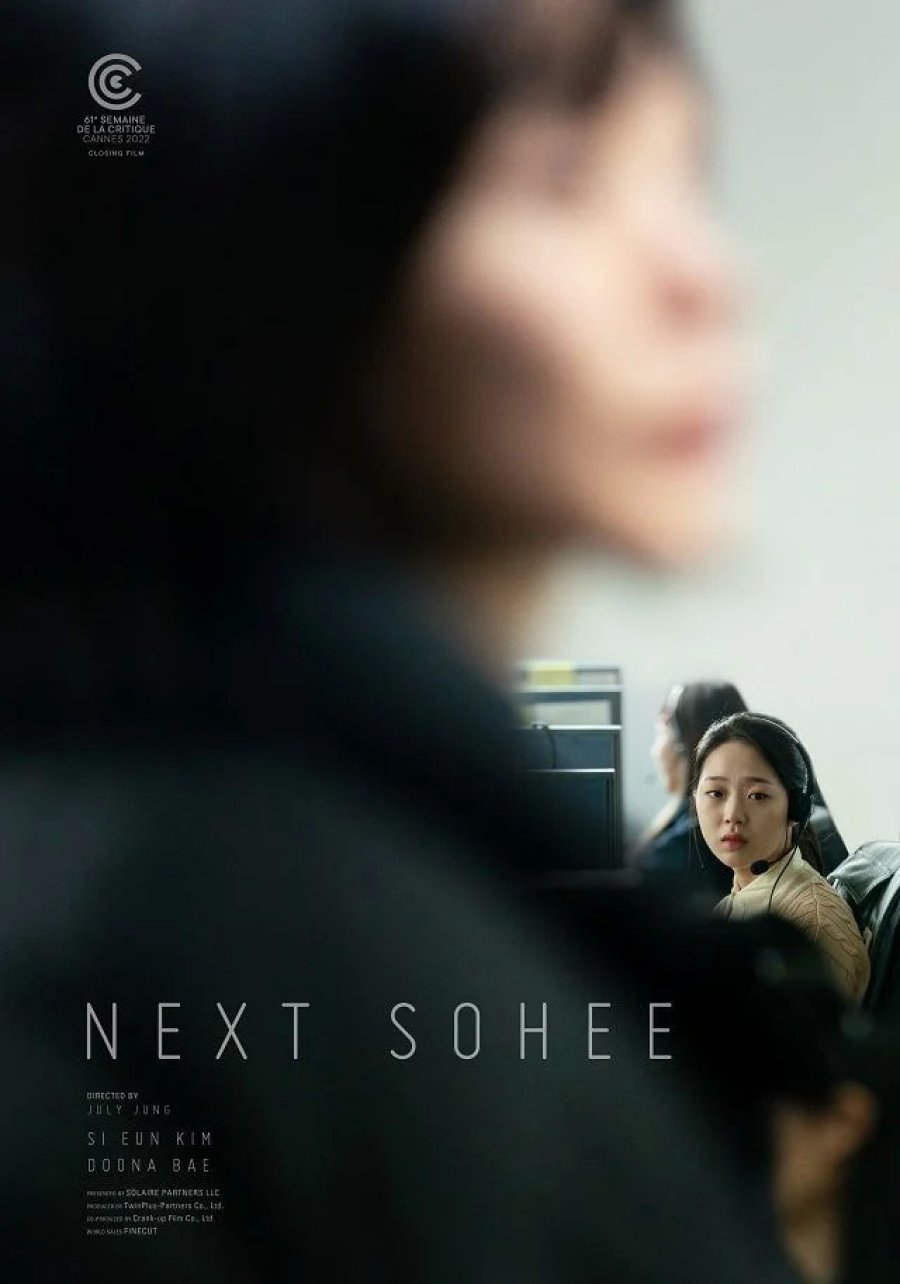
My Broken Mariko (マイ・ブロークン・マリコ, Yuki Tanada, 2022) [Fantasia 2022]

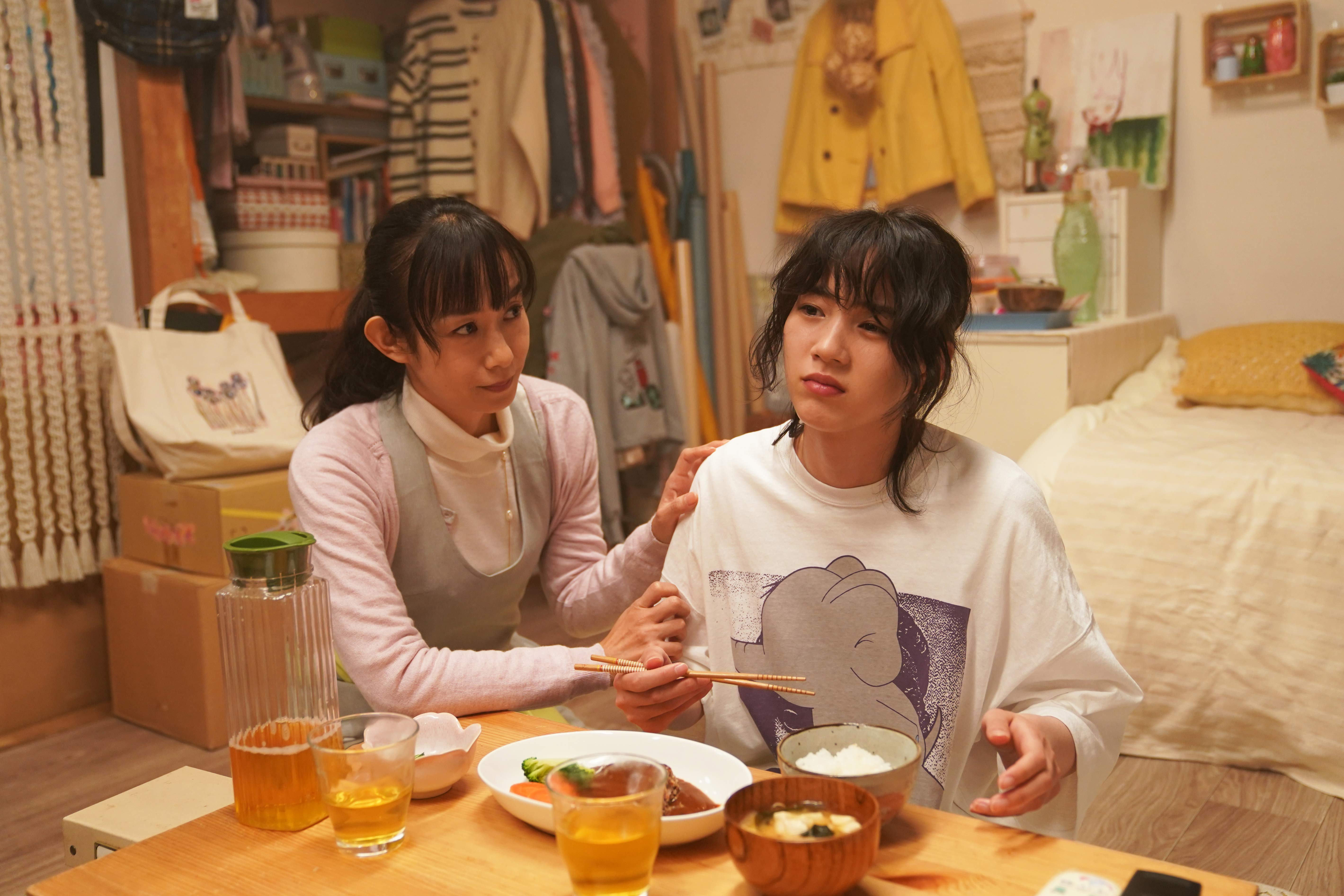
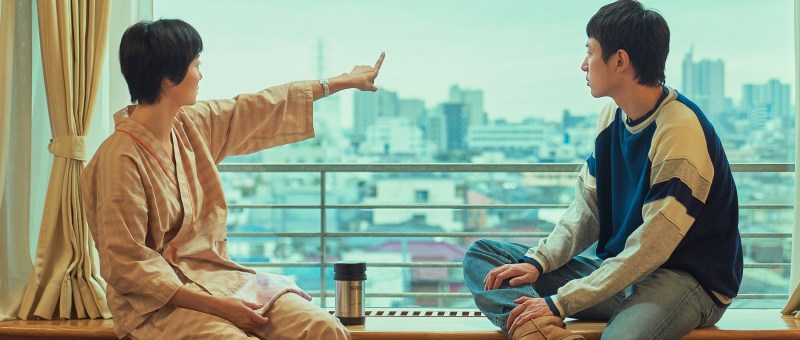
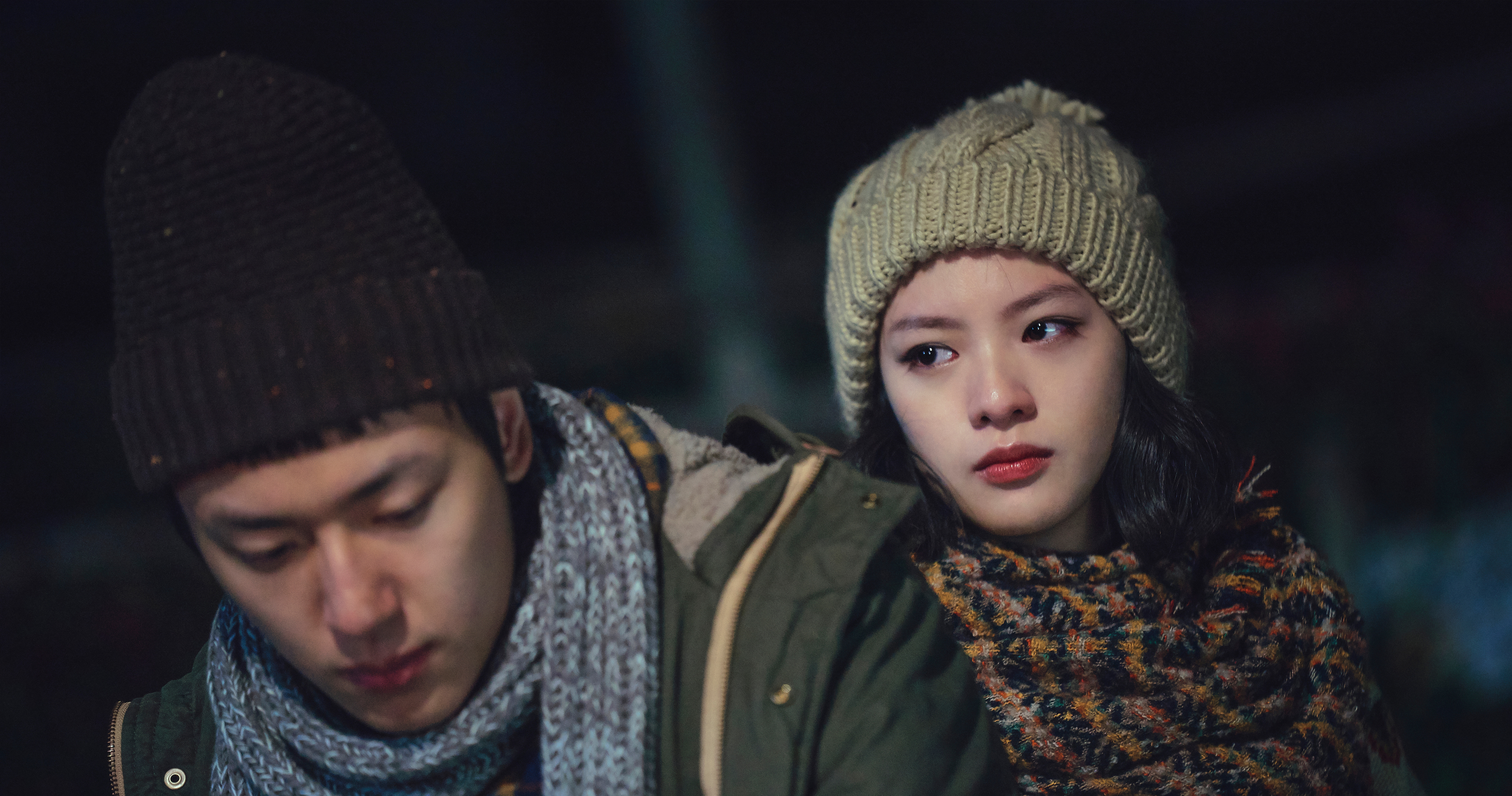
“The only thing you can do for a person who’s gone, is to live” according to a kindly soul at a train station attempting to comfort the heroine of Yuki Tanada’s adaptation of the manga by Hiroko Waka, My Broken Mariko (マイ・ブロークン・マリコ). It is in many ways, however, Shiino (Mei Nagano) who is trying to put herself back together after earth-shattering loss, attempting to reclaim her friend’s memory while struggling to reorient her life in the wake of her absence. Yet what she comes to realise is that all she can do for Mariko (Nao) now is to try to live.

At a cafe one ordinary day, Shiino hears the news announce the death of a woman presumed to have taken her own life who has the same name as her childhood friend. Overcome with anxiety, she tries to call Mariko on the phone but gets no answer nor reply to her messages. Dropping by her apartment, she realises the worst is true. Mariko is gone and she didn’t even say goodbye. Her apartment has already been cleared and her parents apparently opted for a “direct” cremation not even bothering to hold a funeral. It’s almost as if Mariko never existed at all. 

Consumed by grief and guilt that she didn’t see her friend’s death coming or in some way failed to save her, Shiino makes up her mind to rescue her unable to bear it that the father who beat and abused her all her life is allowed to keep her in death. After making a dramatic raid on their apartment, she kidnaps Mariko’s funerary urn and hits the road searching for new directions while on one last road trip looking for a safe place to let her friend rest. 

This was certainly an intense friendship or on Shiino’s side at least something more, she is clearly coded as queer in her masculine speech and attire, yet Mariko seems to have looked to her as a sisterly or maternal figure at one point exclaiming that she would have liked it if Shiino had given birth to her. As high school girls they’d idly looked at flats for rent, vowing to stay together until they were old and most importantly with a pet cat but even though Mariko had threatened suicide if Shiino were to get a boyfriend she eventually drifted away into a series of abusive relationships for which she continued to blame herself. Shiino can’t forgive herself that as much as she tried to show her she cared, she was never able to reach her or to restore Mariko’s sense of self worth. Now that she’s gone she finds herself still searching for her, struggling to remember not only the bad things or the good things but everything she was.

Through her random road trip, Shiino is forced to let Mariko go little by little firstly with the loss of her childhood letters to the unlikely appearance of a bag snatching biker in small-town rural Japan and secondly in ironically using the funerary urn to save another woman from abuse. The ghost of Mariko seems to hover around her, a street lamp flickering in comfort as she breaks down in tears in the street reading a letter in which the young Mariko told her she was no longer afraid to walk in the dark after hearing that Shiino used to go walking at night and she might bump into her at any time, while she is at one point almost possessed by her spirit when reclaiming her memory from the abusive father Shiino blames for causing her death in slow motion. In setting Mariko free she liberates herself not least from her all consuming friendship in which she admits that she had nothing and nobody else. 

“So this is how we get back to our ordinary lives” she reflects, lamenting that to the rest of the world Mariko’s death is an irrelevance and her absence barely felt, a realisation that can’t help but leave her feeling small and insignificant as do the offhand remarks from Mariko’s landlord that it’s a good thing she didn’t die in the apartment and her exploitative boss’ insistence that the death of a close friend isn’t a good enough excuse to take time off work. Replete with a quirky sense of humour despite the deep melancholy of Shiino’s overwhelming grief, Tanada’s empathetic drama finally allows its heroine to put herself back together again living quite literally in memory of her friend. 


My Broken Mariko screened as part of this year’s Fantasia International Film Festival.

Original trailer (English subtitles)

Confession (자백, Yoon Jong-seok, 2022)

An accused man and the woman sent to defend him battle over the elusive nature of objective truth in Yoon Jong-seok’s steely psychological thriller, Confession (자백, Jabaek). A remake of the Spanish film Contratiempo, Confession is nevertheless the latest in a longline of Korean films critical of expanding chaebol culture and the utter entitlement of the elite who assume they have the right to do whatever they want because their money, status, and connections protect them from any potential consequences of their actions. Then again as the lawyer tells her client, salvation is never painless. 

Min-ho (So Ji-sub) had something of a golden life. Married to the daughter of the chairman of a large corporation, he was a rising star of cybersecurity who had even been named IT businessman of the year but was about to throw it all away through a lengthy affair with a woman, Se-hee (Nana), whom he has now been accused of killing. You’d have to admit, he had a motive and the circumstantial evidence against him is convincing yet Min-ho claims that he didn’t do it and there was a third party involved in this otherwise locked room mystery. 

Much of the film takes place in a claustrophobic wooden cabin in the woods all but cut off by heavy snow in which Min-ho has chosen retreat after his chairman father-in-law managed to get his arrest warrant canceled. What emerges is a psychological battle between Ms. Yang (Kim Yunjin), the fancy lawyer hired by the chairman, and Min-ho who have somewhat opposing goals. Min-ho wants her to sign the documents confirming her as his legal counsel and therefore making anything he might have said subject to privilege while she presses him for the location of vital evidence while trying to expose the objective truth behind Min-ho’s selective testimony. 

Neither of them are reliable narrators, Ms. Yang coming up with potential scenarios and at times implying she has evidence that she does not in order to push Min-ho towards revealing the facts of the case. As she says, a lawyer can only help you if you’ve been rigorously honest because she in turn needs to construct a narrative that can undercut the prosecution’s case. The truth might in one sense be irrelevant, as she implies when advising that they frame Se-hee as the villain suggesting that she orchestrated a plot to blackmail Min-ho over their affair in a mix of vengeance and greed when he decided to end their relationship because he could no longer bear the guilt of cheating on his wife. 

Yet there are further transgressions in Min-ho’s past aside from his affair and it’s the attempt to cover them up more than the affair itself which has landed him in so much trouble. As he tells the lawyer, he doesn’t just want to avoid prison but is set on total exoneration unwilling to accept any kind of responsibility for what is currently happening to him. Because of his wealth and status he believes he is not subject to the same laws as everyone else and that even if he had killed Se-hee as his lawyer is beginning to suspect, he would still not be guilty of any crime. “What’s important is to survive” he tells the lawyer revealing his inner ruthlessness along with the complacent reckless streak which might hinder her attempts to defend him. 

There’s no denying that the film’s earliest twists are obvious and heavily foreshadowed but like a seasoned lawyer it is also laying a trap that leaves its final revelations extremely satisfying in implying a kind of justice at least is possible in this inherently corrupt society where dodgy lawyers and elite privilege go hand in hand to destroy the lives of ordinary people. Dark in its implications, the cat and mouse game between lawyer and client who each lie in an attempt to expose the truth hints at the malleability of what is considered to be “true” in the way in which we all construct the narrative of our lives to suit ourselves while denying the realities of others. There may be no such thing as objective truth, but guilt and complacency will still come for you in the end. Visually referencing Alfred Hitchcock’s Psycho, Yoon’s tense psychological drama is in its own way hopeful in its reeling conclusion even if as the lawyer says salvation is never painless. 


Confession screened as part of this year’s New York Asian Film Festival.

International trailer (English subtitles)

Space Monster Wangmagwi (우주괴인 왕마귀, Gwon Hyeok-jin, 1967) [Fantasia 2022]

In Japan’s classic kaiju movies, the fault usually lies not with the monster but with humanity. The kaiju itself is neither good nor bad but simply what it is and its rampage is often a response to humanity’s mistreatment of the natural world or irresponsible scientific endeavour. In Korean monster movie Space Monster Wangmagwi (우주괴인 왕마귀, Ujugoein Wangmagwi), however, the threat is more concretely extra-terrestrial though the monster may be equally blameless apparently tortured and manipulated by an evil imperialist power hellbent on the colonisation of the Earth.

Shiny-suited aliens in impractical helmets are already on their way where they plan to disguise their invasion with the help of a passing typhoon. Their grand plan is to drop their space monster, Wangmagwi, onto the planet’s surface and let him run rampage until humanity has been subdued and they can claim the Earth. What they didn’t count on, however, is humanity’s spirited resistance led by brave Korean armed forces members and for some reason a plucky little boy with a pocket knife who manages to climb inside Wangmagwi and weaken him by taking out his vital organs. 

Wangmagwi’s extraterrestrial origins may hint at a fear of invasion most obviously from the North along with Cold War paranoia rather than an attempt to reckon with past transgressions or fear of new technology. The alien invaders are eventually forced to abandon their mission and turn back having experienced unanticipated human resistance vindicating the nation’s ability to defend itself even as the armed forces consider quite radical action such as the possibility of using nuclear weapons which the aliens from the planet Gamma admit would be disadvantageous seeing as they then wouldn’t be able to live on the planet either. 

Even so, the tone of the film is at least close to parody with the local population flailing about in panic trying to figure out what the best course of action might be. There is a particular irony in the captain of the spaceship’s explanation that the invasion has been 10 years in the planning so they can’t let it go wrong, while bride-to-be Ahn Hee feels something similar because she’s been planning her wedding all her life so this whole alien invasion thing is very inconvenient for her. Despite the warnings, Hee and her mother head to the wedding hall anyway with her in her full wedding dress waiting for airman fiancée Oh (Namkoong Won) to arrive though all military personnel have already been ordered back to base. Obviously, having her wedding cancelled at such short notice is distressing, but given there’s a rampaging kaiju on the loose Hee’s hysterics seem both childish and irresponsible though she later pays for them in being kidnapped by Wangmagwi and carried around just like Fay Wray in King Kong.

Meanwhile, the film throws in a lengthy comic relief sequence revolving around two middle-aged men who set up a bet to see who is the most cowardly leveraging their life savings, homes, and even a wife who later throws herself on the other man’s mercy hoping he’ll help her escape the kaiju because her own husband is too useless to be relied upon. Conversely, the military aren’t finding this funny at all instantly springing into action risking their lives to stop Wagmagwi’s rampage through the capital city which after all has only recently been rebuilt. The little boy meanwhile, seemingly an orphaned street kid, complains that grownups are all cowards incapable of facing Wangmagwi and so he’ll have to do it himself. 

The film ends on a note of familial reconciliation in which Hee and Oh pledge to adopt the boy suggesting that the threat has been overcome and normality has now returned while the Gamma simply sacrifice Wangmagwi in deciding to cut their losses and return home. Despite the comic overtones, the praise of the armed forces is sincere leaning into an authoritarian message that the military is necessary for protection of the nation while subtly undercutting it by suggesting that it’s a fearless boy who is responsible for Wangmagwi’s downfall though in reality it’s the Gamma who eventually turn on him, ordering his “termination” through a “self-destruct” mechanism. Featuring some impressive model work, Space Monster Wangmagwi never takes itself too seriously, packing in portentous storm noises alongside its tokusatsu-inspired effects, but does perhaps have something to say about the anxieties of the Korean society in the late 1960s. 


Space Monster Wangmagwi screened as part of this year’s Fantasia International Film Festival.

Broken Commandment (破戒, Kazuo Maeda, 2022)

Toson Shimazaki’s 1906 novel The Broken Commandment (破戒, Hakai) has been adapted for the screen several times, each version taking a slightly different approach to the source material. A new constitution film, Keisuke Kinoshita’s Apostasy (1948) focuses more keenly in the necessity of abandoning latent feudalism to create a truly free society of social equality, while Kon Ichikawa’s The Outcast (1962) essentially tells a coming out story in which the hero finds a kind of liberation in the embrace of his identity and resolves to fight for the rights of others forced to live in shame by an oppressive social order. 

One could say that each adaptation in its way reflects the time in which it was made. Kazuo Maeda’s The Broken Commandment focuses more on the threat of rising militarism and an increasingly authoritarian social order than the hero’s internalised conflict between the necessity of keeping the promise he made to his father never to reveal his roots as a member of the burakumin class and the knowledge that not to do so is to remain complicit in the oppression of others like him. 

Set during the Russo-Japanese War of the early 1900s, the film opens with a scene in which the hero, Ushimatsu (Shotaro Mamiya), is woken by a commotion in the inn at which he is staying. Another of the guests in town to receive medical treatment has been outed as a burakumin, a member of a near untouchable class. The woman running the inn apologises profusely and explains that all the tatami mats throughout the building now need to be replaced while following the elderly gentleman ejected from the building out onto the street throwing salt on the ground to purify it from his presence. Ushimatsu’s problem is that he is himself a burakumin who has kept his heritage secret and is living an ordinary life as a teacher in a small rural town. The school which he works for is extremely conservative and aligned with the proto-militarist conservative right which is currently in ascendency with the war in full swing. Ushimatsu is already treated with a degree of suspicion not of his class background but his socialist views which advocate for peace, freedom, and equality. 

Yet it’s clear that not even he has been fully able to relinquish feudalistic thinking. Though he urges some of his pupils that it is alright to play together despite the class difference which exists between them explaining that the class system ended with the Meiji Restoration, he feels beginning a relationship with the adopted daughter of a temple where he is currently living, Shiho (Anna Ishii), would be inappropriate not just because he is a burakumin and it would be unfair to marry without telling her which he cannot do because of the commandment from his father, but because she is descended from a former samurai family. As we can see social class is largely distinct from wealth, a corrupt local politician marrying the daughter of a burakumin who has become wealthy but keeping her origins secret while the old man ejected from the inn was also someone of means dressing in elegant Western suits in contrast to most in the impoverished village who still wear kimono. Wealth did not free the burakumin from prejudice, while even in poverty Shiho and her father Kazama (Kazuya Takahashi), who is about to fired by the school so they won’t have to pay his pension, are still thought of as members of the nobility. The old ideas don’t disappear so easily even among those who know them to be mistaken. 

Yet as Ushimatsu’s mentor Inoko (Hidekazu Mashima) says, even if the burakumin were to be accepted by society prejudice itself would not die merely migrate to another minority. In Inoko, a socialist writer who proudly comes out and says he is a burakumin, or “eta” meaning pariah in the language of the time, Ushimatsu discovers a second father who grants him the courage to free himself from his feudal vision of filiality and break his father’s commandment to better help those like him and resist the mounting authoritarianism of the education system in which boys in particular are being brainwashed that they are little more than tools for imperialist expansion. In his impassioned speech to the students, Ushimatsu tells them that he wants them to grow up to be people who can think for themselves rather than blindly accept their programming, the kids seemingly getting the message in defying slimy militarist plant Katsuno to see Ushimatsu on his way when he decides he must leave the village to foster freedom elsewhere. 

Unlike previous adaptations, the film does not much go into how he plans to do that save his intention to find a position as a school teacher in the city and educate the young away from prejudice. Breaking his father’s commandment is in its own way a way of breaking with the past, refusing to be complicit with an oppressive social order still bound up with feudalistic notions of class hierarchy which all point towards the emperor and reinforce the increasing authoritarianism of the militarists. Speaking to the rising nationalism of the contemporary society, Maeda’s adaptation positions education as the best weapon against an oppressive social order but also insists that its hero must first free himself from his own internalised shame and outdated ways of thinking. 


Broken Commandment screens at Asia Society 28th July as part of this year’s New York Asian Film Festival.

Original trailer (no subtitles)

© 2022 BROKEN COMMANDMENT Film Partners

My Small Land (マイスモールランド, Emma Kawawada, 2022) [Fantasia 2022]

Despite the nation’s relative wealth, Japan’s refugee policy is incredibly strict. In 2021, it approved the claims of just 74 asylum seekers which may seem like a small amount but is actually the highest number of people granted asylum since Japan first began recognising refugees in 1982. In fact, only 915 people (as of May 2022) have been granted refugee status in the 40 years since the policy was put in place. For a nation that prides itself on omotenashi, it’s a curiously hostile stance and one which has increasingly come under the spotlight in contemporary cinema with films such as Thomas Ash’s hard-hitting documentary Ushiku exploring the lives of asylum seekers trapped in indefinite detention, Akio Fujimoto’s Passage of Life, and briefly in Nobuhiro Suwa’s Voices in the Wind in which the heroine encounters a welcoming community of Kurdish refugees. 

Director Emma Kawawada is not from a refugee background herself but the daughter of a British father and Japanese mother and in her first feature My Small Land (マイスモールランド) explores the themes of cultural dislocation through the eyes of a young Kurdish woman who came to Japan at five years old after her father was persecuted and tortured for his political beliefs in Turkey. In the film’s opening sequence, Sarya (Lina Arashi) is visibility distressed at a community wedding when a well-meaning older woman tells her it’ll be her turn next, her father (played by Arashi’s real father) chipping in that they still have her late mother’s dress for her to wear. She looks down at the red paint on her hand which, as she later explains to convenience store workmate Sota (Daiken Okudaira), is worn by relatives at a wedding but also closely resembles the red sun of the Japanese flag. She tries to scrub to it off, but it won’t come clean and she’s eventually warned about it at work making an excuse rather than attempting to explain. 

In fact, Sarya has most been telling people that she’s German following an incident in primary school in which she wanted to say she was supporting Japan in the World Cup like everyone else but felt awkward about it and said Germany instead leading her classmates to assume that’s where she was from. When she tries to explain to Sota that she’s actually Kurdish, he hasn’t even heard of Kurds before and is confused later given a small lecture by Sarya’s father Mazlum explaining that the Kurds are an ethnic group divided by irrational borders and have no country of their own. His explanation echoes Sarya’s sense of rootlessness as a young woman with no clear homeland torn between two competing cultures. Though she has become an unofficial translator for the Kurdish community and her father keeps them immersed in Kurdish traditions she does not feel completely comfortable stating that she is a Kurd while on another level bothered by the community’s constant joking that she will one day wed construction worker Welat.

Sarya is bright and on track for a scholarship to university in Tokyo hoping to become a primary school teacher in tribute to the teacher who helped her when she first arrived in Japan with no language skills, but all that goes out of the window when Mazlum’s asylum claim is refused and the family lose their visas. Given a provisional release, they are not permitted to work and cannot leave Saitama, the prefecture where they are registered, without permission from the authorities. Saitama is directly adjacent to Tokyo, its borders as arbitrary as any other as demonstrated by the sign halfway along a bridge demarcating its boundaries. This is quite inconvenient for Sarya as her secret part-time job is technically in Tokyo, while it also means she has to explain to Sota why she can’t accompany him to Osaka where he hopes to look at art schools and is now technically working illegally. When Mazlum is caught working his construction job, he is put into indefinite detention and advised by the family’s sympathetic lawyer to reapply for asylum. If he is sent back to Turkey, he will be immediately arrested and his life will be in danger. 

The family’s situation lays bare how vulnerable asylum seekers are in the contemporary society. They are told they can’t work and can’t leave yet are provided no financial support leaving them with little option other than to break the rules or appeal to friends and family, if they have them, for immediate help. Left in charge of her two younger siblings who barely remember any Kurdish and know only Japan, Sarya finds herself resorting to compensated dating, pushed into potentially dangerous ways to earn money now that her route to legal employment has been taken away. Meanwhile, as her father is detained in a kind of “prison” and she has lost her visa, she is viewed as an “illegal” immigrant leading even those who had otherwise been sympathetic towards her such as Sota’s warmhearted mother (Chizuru Ikewaki) distancing themselves from the stigma of illegality. Sota wants to help, but he’s just a teenage boy and is unable to offer much beyond his savings which Sarya is understandably reluctant to accept. Even so, despite the bureaucratic cruelty at its centre, My Small Land has an otherwise hopeful outlook as Sarya begins to find the strength to define her own borders and boundaries while taking care of her family in a sometimes hostile society. 


My Small Land screened as part of this year’s Fantasia International Film Festival.

Original trailer (English subtitles)

Shin Ultraman (シン・ウルトラマン, Shinji Higuchi, 2022)

The classic tokusatsu hero rises again to rescue kaiju-plagued Japan from geopolitical tensions and internal bureaucracy in Shinji Higuchi’s Shin Ultraman (シン・ウルトラマン). Scripted by Hideaki Anno, Shin Ultraman shares much in common with Shin Godzilla which the pair co-directed but is also a much more obvious homage to the world of classic tokusatsu or “special effects” franchises which became cult TV hits from the 1960s onwards and have remained popular with children and adults alike throughout Asia. 

This new iteration takes place in a world in which kaiju attacks have become commonplace, so much so that there is a specialised government department, the SSSP, dedicated to dealing with them. Led by determined veteran Tamura (Hidetoshi Nishijima), the team do not engage with the giant monsters directly but are responsible for research and strategy quickly trying to work out what kind of kaiju they’re dealing with, what the dangers associated with it may be, and where it’s weaknesses lie so they can figure out a way to stop it. Just when it looks like an electricity-guzzling lizard monster is about to do some serious damage, a robot-like giant humanoid arrives and saves the day. The team are very grateful to the heroic defender they name Ultraman, but are puzzled that he seems to be aware of all their research while otherwise missing the connection that their near silent colleague Kaminaga (Takumi Saitoh) always seems to be mysteriously absent every time Ultraman arrives.  

At heart, Shin Godzilla had been a satire on government bureaucracy and a mediation on the response to the 2011 earthquake and tsunami. Shin Ultraman might not be so pointed but still has a few bones to pick with the political machine as the team’s boss at HQ moans about the need to keep buying fancy weapons from the Americans (and making sure it’s the Defence Ministry that foots the bill) while cynically suggesting that the government is keen to use the kaiju crisis as leverage to further its policy goal of nuclear re-armament. Meanwhile, it’s also clear that for some reason kaiju attacks only happen in Japan and the International community largely sees them as a Japanese issue which they have to deal with alone, but as soon as Ultraman turns up and is thought to be extraterrestrial everyone is suddenly interested. 

As it transpires these geopolitical divisions are incredibly useful to another extraterrestrial visitor, Zarab (Kenjiro Tsuda), who plans to sow discord among nations so that humanity will destroy itself thereby, ironically, preventing an intergalactic war between planets who may be tempted to fight amongst themselves over the potential enslavement of humanity as valuable bioweapons. Aware of Zarab’s power, the government is manipulated into signing an uneven treaty with him in order to be first out of the gate and gain an advantage over other nations who, for reasons of self preservation, are also keen to ensure no one has sole access to new alien technologies and emissaries. Asked why he picked Japan, all Zarab can come up with it that he happened to land there which is quite a coincidence though he also has a vested interest in taking out Ultraman, the only force capable of resisting him. 

Even so, according to Zarab, the kaiju plague is humanity’s doing in having awakened sleeping monsters through environmental destruction. Hailing from the Planet of Light which has strict rules about what he’s supposed to be doing, Ultraman longs to understand humanity having merged with a human he accidentally killed who had dedicated his life to saving others. What he gains is a sense of communal responsibility along with a desire to care for what he sees as, essentially, babies someway behind his own planet in terms of evolution and in need of guidance. What he doesn’t want to do is endanger their “autonomous progression” by solving all their problems for them, so in grand tokusatsu fashion its up to the team to engineer their own solution in addition to deciding what they will do with this new technology using it for good or ill. Being buddies is all about trust, after all. Higuchi’s composition borders on the avant-garde recalling both that of the legendary Akio Jissoji and those more often associated with anime and manga rather than live action while the effects, even those utilising CGI, are pleasantly nostalgic with retro mono explosions and the iconic ringing of laser beams. Heading in a melancholy philosophical direction in its final moments, Shin Ultraman does at least suggest that the best weapons against a kaiju attack are teamwork and mutual trust especially if one of your friends is an all powerful being from another galaxy. 


Shin Ultraman screened as part of this year’s New York Asian Film Festival.

Original trailer (English subtitles)

Images: © 2022 TSUBURAYA PRODUCTIONS CO., LTD. / TOHO CO., LTD. / khara, Inc. © TSUBURAYA PRODUCTIONS

Offbeat Cops (異動辞令は音楽隊!, Eiji Uchida, 2022)

A maverick lone wolf comes to understand that it’s all about harmony after getting demoted to the police band in Eiji Uchida’s procedural dramedy, Offbeat Cops (異動辞令は音楽隊!,  Ido Jirei wa Ongakutai!). Offbeat is definitely one way to describe Naruse (Hiroshi Abe) who has not only been taken off the streets but is constantly out of step not just with the times, but with his colleagues and family members too. Yet like so many in his position, he thinks it’s the world that’s wrong only later realising that creating a harmonious society is another means of effective policing. 

That realisation is however hard won. An unreconstructed ‘70s cop, Naruse thinks being a detective’s all about intimidation. He reads the paper during morning briefings and ignores advice from his superiors, insisting that it’s legwork that counts in modern day policing while privately convinced that a repeat offender he failed to catch five years previously is linked to a current spate of burglaries targeting the older generation in which scammers ring up claiming to be from the crime prevention squad and convince elderly people to tell them where the valuables are before breaking in, tying them up, and robbing the place. Barging into a suspect’s home without a warrant and threatening violence, he tries to prove his theory but is soon hauled before his bosses and told there’s been a complaint about him so he’s being demoted to the police band. 

One criticism he’d repeatedly received was that he had no ability to work as a team, always heading off to do his own thing rather than following the investigative line of the offer in charge. His demotion to the band is then ironic, especially as he’s being asked to play the drums, given that in order to succeed he’ll have to learn to march to the common beat. But being demoted eats away at his sense of self. If he’s not a cop then what is he and why are they making him waste his time on music when there are real bad guys out there cheating vulnerable people out of their life savings. Having divorced two years previously his relationship with teenage daughter Noriko (Ai Mikami) is already strained while he is also sole carer to his elderly mother (Mitsuko Baisho) who is suffering from dementia and keeps asking for his ex-wife and late father. He often snaps at her, cruelly reminding her of the reality rather than trying to be mindful of her constant confusion. 

What he realises while playing in the band is that wading in all fists blazing is not the only way to fight crime. After encountering a cheerful old lady who enjoyed his drum playing and tells him that she looks forward to hearing the police band play, he comes to understand that people want different things from their police force and community support is just as much a part of that as chasing crooks in the street. Though he has been relegated to the band, many of his colleagues are expected to do their regular jobs too and have familial responsibilities and petty resentments of their own. Meanwhile, his former partner begins to reflect on Naruse’s dogged love of justice in his absence taking on more than a few of his characteristics in his determination to catch the criminal, realising that perhaps it’s alright to bend the rules a little if the occasion calls as long as you don’t take it too far. 

Jamming with his new colleagues Naruse finally begins to realise the importance of group harmony, acknowledging his faults and apologising for them while rebuilding his relationships with friends and family. He may be wearing a different uniform, but he’s still a policeman and as long as the bad guys get caught it doesn’t matter by who. The big wigs may think the police band’s not really important, but as the banner says it helps build a bridge between the police force and the community which in turn helps prevent crime and leads to a happier, more harmonious society. Then again if you turn that around it might sound a little authoritarian in insisting that Naruse must learn to ignore the beat of his own drum to march to that of the collective while presenting an idealised view of the police’s place in the community, but it does indeed seem that he has managed to find a better accommodation with himself no longer so angry or intimidating but understanding of others and their troubles while rededicating himself to a more compassionate policing. 


Offbeat Cops screened as part of this year’s New York Asian Film Festival.

International trailer (English subtitles)

Images: ©2022 “Offbeat Cops” Film Partners

Just Remembering (ちょっと思い出しただけ, Daigo Matsui, 2021) [Fantasia 2022]

A communication breakdown gradually erodes the love of a young couple in Daigo Matsui’s melancholy romantic drama, Just Remembering (ちょっと思い出しただけ, Chotto Omoidashita Dake). Inspired by Jim Jarmusch’s Night on Earth, Matsui’s city vistas are drenched in loneliness and regret made all the deeper by the enforced isolation of the coronavirus pandemic while echoing the sense of rueful nostalgia that draws the fated lovers back together but unites them only in their shared sadness. 

Told in a non-linear fashion, the film follows taxi driver Yo (Sairi Ito) and lighting technician Teruo (Sosuke Ikematsu) through the course of five year relationship picking up on each of Teruo’s July 26th birthdays as time ticks by with a weary fatalism expressed by an ever present wall clock. As the film opens, a lonely Teruo celebrates a birthday alone watching Night on Earth which we later learn to be his favourite film, a poster adorning the wall above his bed, and something of a touchstone in his relationship with Yo who is like Winona Ryder in the movie a woman who drives a taxi. Echoing the film’s title, each of them repeatedly encounters reminders of their time together from forgotten hair clips to outdated profile pictures that hint at the unresolved nature of their failed romance. In a park that leads to Teruo’s apartment, a man (Masatoshi Nagase) is often seen sitting by a tree waiting for his wife to arrive he says from the future. The man and his wife may perhaps represent an older version of Teruo and Yo though in contrast to his absolute faith and willingness to wait it’s uncertainty and an inability to reckon with intangible feeling that eventually disrupt their connection. 

Awkward and anxious, Yo struggles to express herself in words yet is unable to understand the world without them whereas Teruo communicates through dance and feels words to be largely unimportant unable to fully convey thoughts and emotions. The pair are indeed the most connected when they’re dancing, the otherwise shy and subdued Yo captivated by Teruo’s movement and dropping her guard to dance spontaneously in a quiet back alley while the street guitarist who forever connects them plays quietly behind. When Teruo injures himself and is left unable to dance, it destroys his ability to communicate and places an unbearable strain on the relationship as he retreats to lick his wounds unwilling to bother Yo with his mental and physical pain while she resents the distance he places between them and reads his reluctance to burden her as a fault line in their romance. She tells him that however he may change her feelings won’t, which only sounds to him as if she only loves an abstract idea rather than the reality while he too fears that she won’t like the him that that isn’t a dancer because not even he really knows who that Teruo may turn out to be. 

It’s telling in a way that the central love confession occurs in a taxi that’s being driven by someone else, a bemused older man who encourages the pair that it’s best to say what you want to say while you can and literally stops time for them by pausing the meter as twinkle twinkle little star echoes ironically in the background. Yo says she likes her taxi job because she has a desire to travel but not the ability to choose a destination and driving the taxi allows her to feel as if she’s on the way to something though she’s only following her passengers’ instructions. Her essential trait is passivity, feeling lost and aimless in her life and often allowing others to make her choices for her save when she follows the advice of a lovelorn barman (Jun Kunimura) who tells her that sometimes you have to chase after what you want only to later be disappointed when the wounded Teruo fails to chase after her. The barman tells her that she doesn’t understand love, and perhaps she doesn’t unwilling to trust her romantic destiny while perhaps neither does Teruo, always somehow waiting while gazing at visions of love on ordinary street, high school girls gossiping about boys, an elderly couple helping each other down the stairs, and a mother carrying her infant son. 

It’s tempting to view their romance as doomed because they speak different languages while their continual role reversal suits neither of them very well, Yo quite literally in the driving seat but by her own admission having no idea where they’re going while Teruo struggles to communicate with her in terms she can understand. Yet they also share moments of true connection and vulnerability in which they are each understood by the other in a way they may never be again that leaves each of them with a lingering loneliness and regret for their failed romance. Love is an escape route, according to the wise old barman, but it’s one that continually eludes the two lovers who like the like man at the park are trapped in a state of perpetual waiting for a far off resolution. 


Just Remembering screened as part of this year’s Fantasia International Film Festival.

Trailer (English subtitles)

Preman: Silent Fury (Randolph Zaini, 2021)

“Sooner or later, you gotta do the right thing” the girlfriend of a complicit policeman tries to explain while he rationalises that in reality there’s little difference between a policeman and a gangster and even he’s too afraid to stand up to a dictatorial local thug deeply tied to an ambitious politician. Like many recent films from Indonesia, Randolph Zaini’s Preman: Silent Fury is a tale of toxic masculinity, societal prejudice, and a bullying culture but also one of fear and complicity in which a marginalised man must face his childhood trauma in order to save his son from suffering the same fate. 

Sandi (Khiva Iskak), who lost his hearing in childhood, is a member of a vigilante preman gang, Perkasa. The preman view themselves as defenders of justice, but in reality are feared and despised by the world around them for their intimidating and violent behaviour. Sandi’s gang was once ruled by the wise Haji (Egi Fedly) who had lofty ideals of defending his local community from an oppressive authority but he’s recently been ousted by the authoritarian Guru (Kiki Narendra) who is no better than a thug willing to do the dirty work of a city politician in return for power and influence. His first job is clearing a local slum by force, insisting its residents leave but offering them no safe place to go. When Haji tries to resist, Sandi’s young son Pandan (Muzakki Ramdhan) witnesses his murder and thereby places a target on his back and that of his father as they try to figure out how to survive Guru’s increasing ruthlessness. 

Dressed in a military outfit, Guru is an allegory for lingering authoritarianism visually recalling historical dictators and is introduced while giving a bombastic speech which Sandi is obviously unable to hear yet goes along with anyway. Sandi’s deafness is in one sense aligned with his complicity in that he is literally unable to hear the reality of world around him but is also linked back to the childhood trauma which robbed him of his voice. An early failure to do the right thing, siding with the bullies out of fear rather than standing up for his friend who was being taunted with homophobic slurs, set him on a life long path of complicity too afraid of the gang and of preman culture to ever be able to leave it. 

Yet his disability also leaves him marginalised with few other directions in which to turn considering that disabled people struggle to find work in a society that has little accommodation for difference. Hairdresser/assassin Ramon (Revaldo) who refers to himself exclusively in the third person and peppers his speech with French, points out that everyone viewed Medusa as the villain but the real villains were Poseidon who raped her, Athena who cursed her, and Perseus who killed her rather than Medusa herself. Ramon is also on the end of a series of homophobic slurs from one of the Perkasa thugs who’d been trying to talk to one of his colleagues, who wants to be a musical theatre star, about erectile disfunction but struggled to get his point across while using a series of broad euphemisms out of embarrassment hinting at the hidden costs of societal repression. “Ramon is a mirror reflecting the ugliness of the world” the assassin explains, wielding his scissors of vengeance on behalf of a corrupt authority. 

As the policeman’s girlfriend points out, the reason the policeman has ended up in trouble is that he didn’t help Sandi when he asked him, just like Sandi didn’t help his friend, because he was too afraid to stand up to a thuggish bully. At some point you have to do the right thing, she reminds him, and only by refusing to be intimidated by Guru can they hope to escape his violence along with the threat he presents which allows him to dominate their society. Impressively shot given its low budget origins, Zaini’s playful drama features a series of well choreographed action sequences culminating in a striking avant-garde conclusion in which Sandi faces off against fox-suited villains, spraying psychedelic neon paint and exorcising the pain of his childhood trauma while freeing his son not just literally but mentally from an oppressive and bullying society. 


Preman: Silent Fury screens at Asia Society 23rd July as part of this year’s New York Asian Film Festival. It will also be released in the US later in the year courtesy of Well Go USA.

Original trailer (English subtitles)

Images: Courtesy of Well Go USA Entertainment

Chorokbam (초록밤, Yoon Seo-jin, 2021) [Fantasia 2022]

A small family contends with the persistent unfairness of contemporary Korean society in Yoon Seo-jin’s slow burn indie drama, Chorokbam (초록밤). Translated literally, the title means “green night”, the family often bathed in a neon green that seems to reflect their sense of despair and anguish unable to envisage much of a future for themselves in a world ruled by greed and envy which leaves them little option other than to become insensitive to the joy and pain of others. 

As the film opens, the nightwatchman patriarch is busy giving out parking tickets when he suddenly spots a cat hanging from from a children’s climbing frame. Shocked and feeling pity for the small creature, he cuts it down and buries it by the green light of the moon but finds little sympathy when relating his traumatic discovery to his wife. The nightwatchman’s wife is preoccupied with more practical affairs, irritated by her husband’s annoying habits such as leaving the bathroom door open and not washing his hands after finishing his business, while their grown-up son Won-hyung wants to get married but can’t afford a place to live on his salary as a care worker. When it comes to that, they’re soon to be turfed out themselves because their landlord wants to tear the building down. 

Matters come to a head when the grandfather passes away, the nightwatchman’s sisters getting into an actual physical altercation at the wake while loudly complaining about who did or didn’t pay for the funeral. Totting up the condolence money they accuse supposedly cheapskate guests of freeloading, implying they only turned up for a free meal that they have in a sense stolen. Meanwhile, the sisters also want to ensure that their father’s house is sold quickly so they can divvy up the inheritance. What they realise, however, is that there were things about their father’s life they may not have known which raise questions about moral responsibility when it comes to dealing with the affairs of someone who has died. 

The nightwatchman comes to identify with the strangled cat, though the spectre of hanging seems to loom over the rest of the picture with even the nightwatchman’s wife eventually discovering the body of someone whose death she may unwittingly have contributed to. She complains about her husband’s fecklessness, that he, who barely talks at all, makes her deal with anything unpleasant including his hotheaded sisters. She tells him that she regrets marrying into his “horrible” family and is thoroughly sick of dealing with them only to be pursued by a wounded dog with whom she perhaps also identifies. The nightwatchman’s wife is often excluded from the frame, a disembodied voice from behind a wall as she is as she feeds her husband breakfast and again when he asks her to deal with an emotionally difficult situation in a cafe. The nightwatchman simply smokes by a widow as if physically removing himself from the scene. 

Won-hyung meanwhile becomes increasingly resentful with his friends’ wedding coming up, unable to escape the feeling of belittlement in being unable to marry or move forward with his life with little prospect that anything will change. Yoon frames the family’s dilemmas with a deadpan realism, bathing the everyday grimness of their lives in an putrescent green that suggests there may be no escape from this maddening society where all relationships are built on transaction. The family are doing their best but are also estranged from each other, the nightwatchman barely speaking while his wife is left to deal with the uncertainty of their lives alone. She even laments they’ll likely not see the sisters again until the next person dies because their familial connection is essentially hollow and valueless in a society ruled by money. 

The nightwatchman comes to think of himself as a strangled cat, finding himself facing a noose during a poetic dream sequence that encourages him to think of suicide as the only possible escape from his impossible situation. Bleak in the extreme, Kim’s slow burn drama paints an unflattering portrait of the contemporary society as one in which all hope has long been lost leaving only dread and despair in its wake. 


Chorokbam screened as part of this year’s Fantasia International Film Festival.

Original trailer (English subtitles)