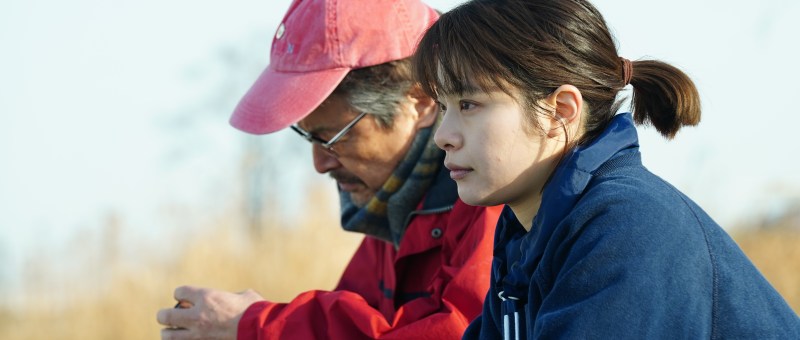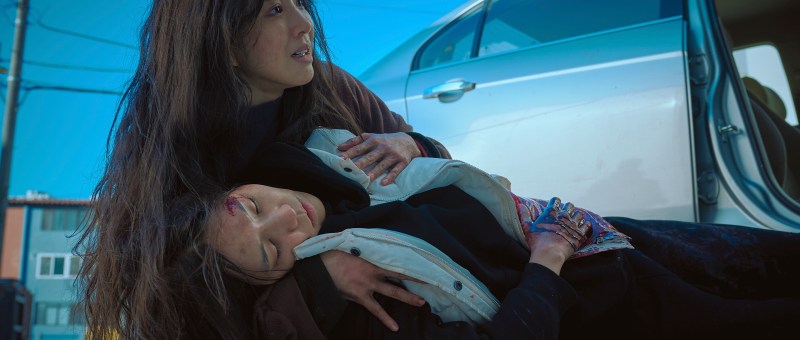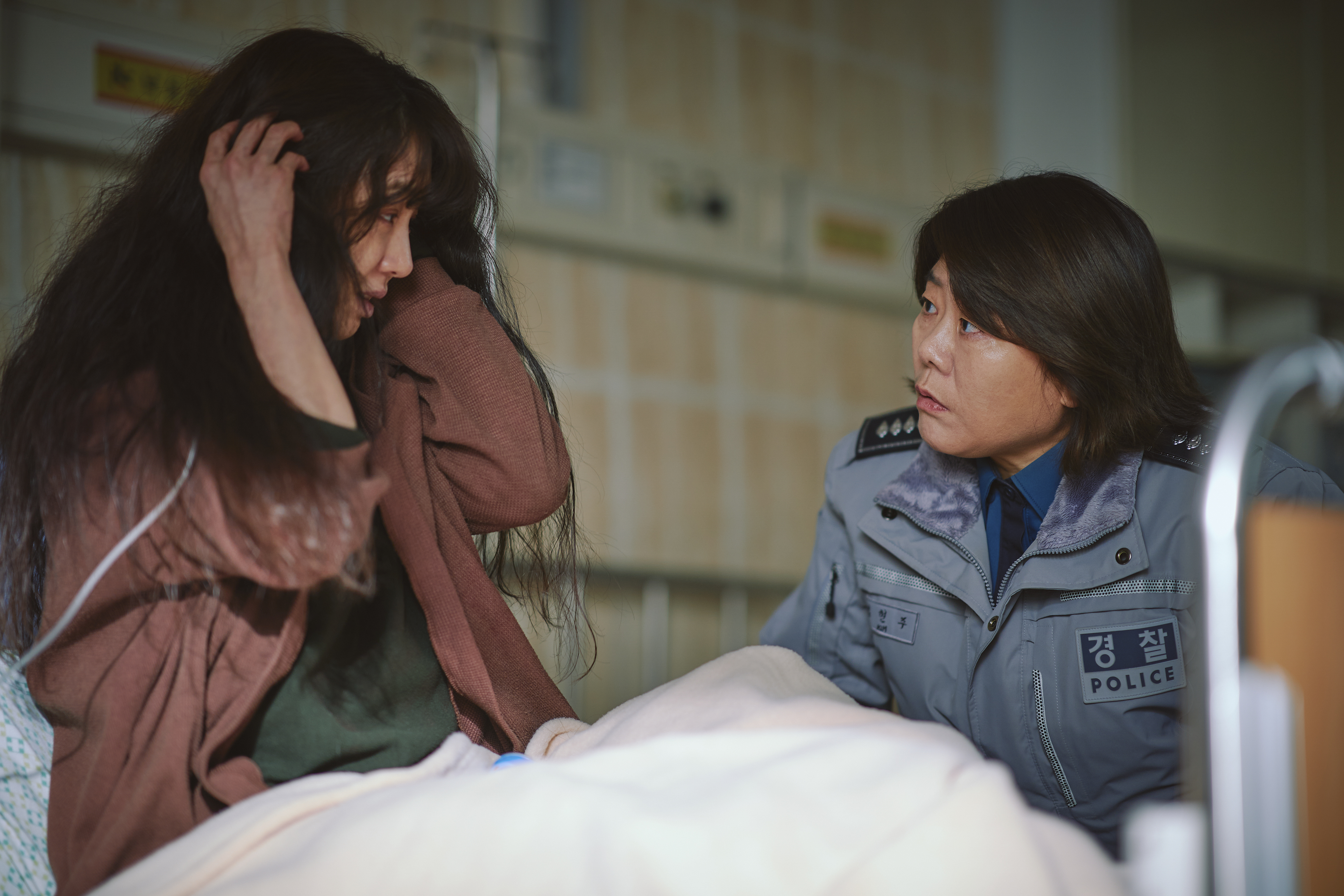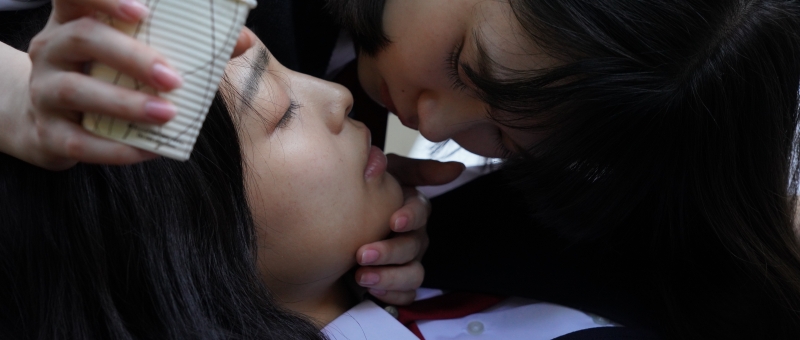
Tales from the Occult (失衡凶間, Fruit Chan, Fung Chih-Chiang, Wesley Hoi Ip-Sang, 2022)

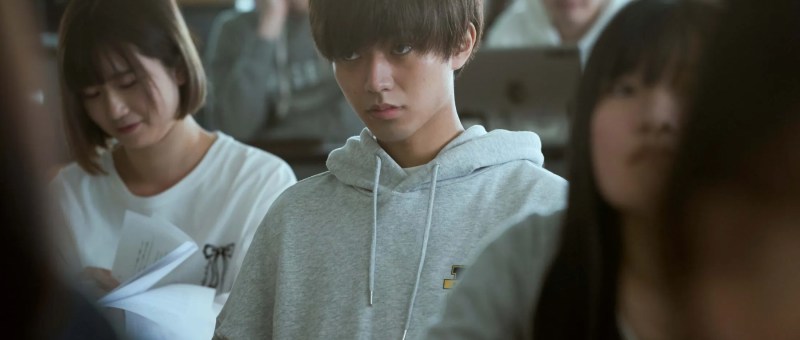
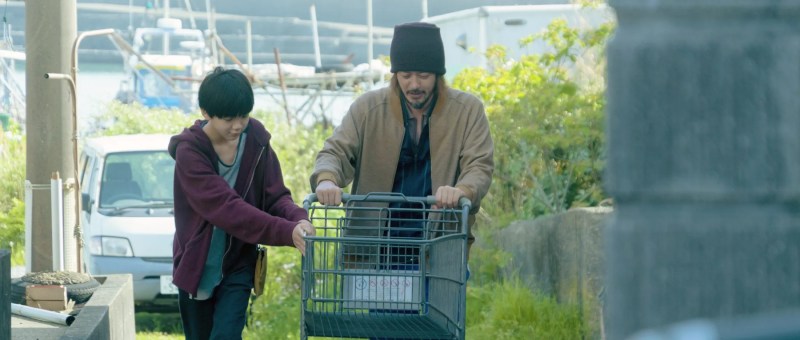
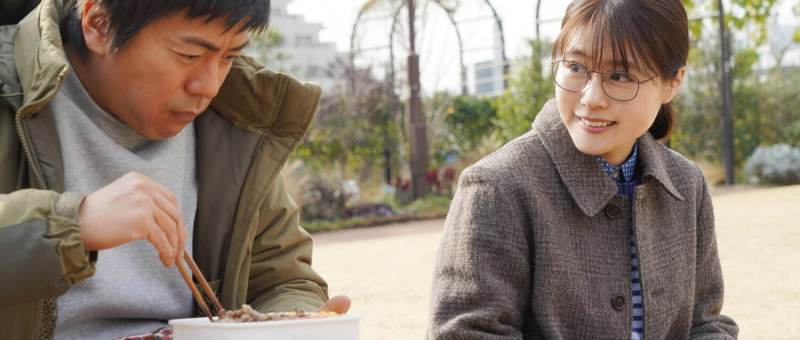
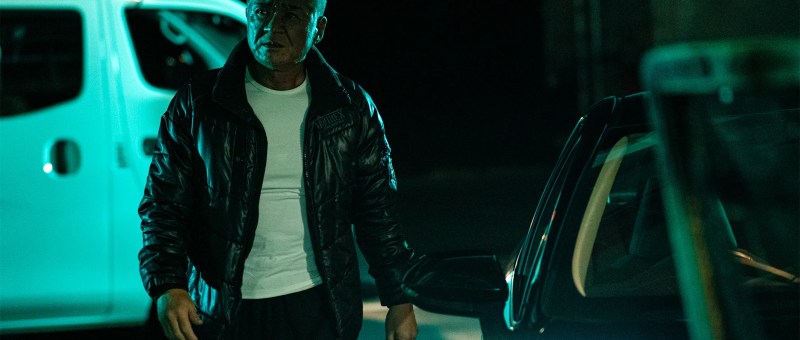
A collection of Hong Kongers contend with the hidden horrors of the contemporary society in the first instalment in a series of anthology horror films, Tales from the Occult (失衡凶間,). Veterans Fruit Chan and Fung Chih-Chiang are accompanied by Wesley Hoi Ip-Sang making his directorial debut as the three directors each tackle lingering terrors as the protagonists of the three chapters are quite literally haunted by past transgressions from a pop singer on the edge consumed with guilt over a teenage trauma, to a sleazy financial influencer who might inadvertently have killed a hundred people, and the denizens of a rundown tenement who are too afraid to report a possibly dangerous presence to the police lest it damage the property value of their flats. 

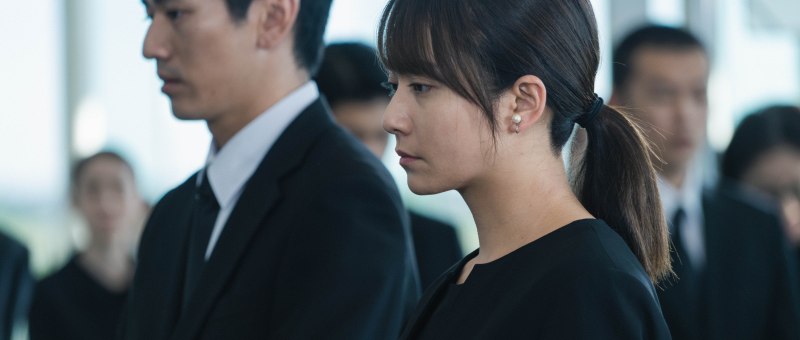
In Wesley Hoi Ip-Sang’s opening instalment The Chink, a carefree high school girl chasing a stray cat stumbles on the body of a burglar who apparently fell from the rooftops and was trapped in a tiny cavity between two buildings. Some years later Yoyi (Cherry Ngan) has become a successful pop star but is still haunted by her failure to report the body to the police all those years ago worried that perhaps if she had he might have been saved though he had obviously been dead for some time when she found him. Her kindly psychiatrist uncle Ronald (Lawrence Cheng Tan-shui) tries to assuage her anxiety but fails to consider that there might actually be a dark presence in her new flat. Meanwhile, she’s also under considerable stress given that she’s in an ill-defined relationship with Alan, her married manager, who eventually brands her “mentally unstable”, and she’s somehow oblivious to the fact her high school best friend is clearly in love with her. Even so, as it turns out, perhaps you can also be haunted by the living while there are some threats that even the most well-meaning of psychiatrists is ill-equipped to cure. 

It’s ironic in a sense that Yoyi was provided with her new apartment as a path towards an illusionary freedom which is really only a means for Alan to exert greater control over her life while the heroine of Fung Chih-Chiang’s final sequence The Tenement has in a sense chosen seclusion in installing herself in a moribund tenement block in order to concentrate on her writing. The contrast between the two buildings couldn’t be more stark but even the tenement dwellers are paranoid about house prices while assuming the creepy, water-drenched presence encountered by author of pulpy internet novels Ginny (Sofiee Ng Hoi Yan) is an attempt by developers to scare them out of their homes amid Hong Kong’s horrifyingly competitive housing market. Still, like Yoyi they are each haunted by past transgressions but pinning the blame on former gangster Frankie Ho (Richie Jen) who was once accused of drowning a man. What began as a haunting soon descends into farce as they realise the “water ghost” seems to be a young woman who has passed away in their stairwell and decide to “dispose” of her with Frankie’s help to avoid a scandal destroying the value of their homes. But then, all is not quite as it seems as the sudden appearance of a journalist investigating a scandalous “love crime” makes clear. 

Fruit Chan’s middle chapter Dead Mall also takes aim at internet investigators and dodgy “influencers” as sleazy financial snake oil vlogger Wilson (Jerry Lamb) fetches up at a shopping centre surrounded by shoppers in masks to advertise that the mall is actually doing fine despite the economic downturn produced by the pandemic which he describes as worse than that of SARS. In reality the mall is “dead” with barely any customers and rows of shuttered stores, Wilson is simply doing a paid post in an attempt to raise its fortunes not least because the original mall was destroyed in a fire 14 years previously started by a carelessly discarded cigarette. Wilson is pursued not only by those who claim they lost money because of his terrible financial advice, but by a paranormal live streamer who has a separate grudge against him while he continues to refuse any responsibility for his actions answering only that investment carries risk and there’s no opportunity without crisis. What he discovers is perhaps that you reap what you sow, Chan frequently cutting to hugely entertained netizens baying for his blood while he attempts to outrun his fiery karma. 

In each of the increasingly humorous storylines, Chan’s being a particular highlight of wit and irony, there is a lingering dissatisfaction with the contemporary society from the pressures of the fiercely competitive housing market to the kind of financial desperation and longing for connection that fuels the consumerist emptiness of influencer culture. The jury might be out on whether there’s really any such thing as “ghosts” but the haunting is real enough even if it’s only in your mind. 


Tales from the Occult screens at the Garden Cinema, London on 9th July as part of Focus Hong Kong’s Making Waves – Navigators of Hong Kong Cinema.

Original trailer (English subtitles)

Anita (梅艷芳, Longman Leung Lok-man, 2021)

“I have the spirit of Hong Kong in me, I won’t resign to fate so easily” insists Anita Mui in a television interview following a year-long career break after a slap in a karaoke bar earned by standing up to a drunken gangster sparked a turf war and sent her into a temporary exile in Thailand. Running away wasn’t something Anita Mui was used to, though she had been it seems humbled by the experience and in Longman Leung Lok-man’s perhaps at times overly reverential biopic of the star who passed away of cancer at 40 in 2003, primed to rise stronger than before with greater focus and determination to serve the people of her home nation. 

Leung does indeed paint Anita (Louise Wong) as a daughter of Hong Kong, opening with her childhood as a vaudeville double act with self-sacrificing sister Ann (Fish Lew) in 1969. Jumping forward to 1982, the pair enter a TV talent competition but only Anita makes through to the final and then eventually wins launching herself into superstardom and path to success that later seems to her to have been too easy. Indeed, Leung frequently cuts to montage sequences featuring stock footage of the real Anita Mui receiving a series of awards and eventually moving into a successful film career with her appearance in Stanley Kwan’s Rouge bringing her best friend Leslie Cheung (Terrance Lau Chun-him) with her as she goes. 

If there’s a defining quality beyond her defiance that Leung is keen to capture, it’s Anita’s generosity and kindheartness. In the opening sequence, the 6-year-old Anita goes to great pains to rescue a balloon trapped in a tree for a little boy who then runs off happily forgetting to say thank you. Ann tells her off for going to trouble for someone who couldn’t even be bothered to say thanks but as she said it makes no difference she’d just just have told him it was no bother and the whole thing would be a waste of time. Her path to fame is not one of ruthless, she is keen to pay it forward and to help others where she can. She is obviously pained when her sister is cut from the competition and mindful of her feelings while bonding with life-long friend Leslie Cheung after his performance at a nightclub bombs while hers is a hit thanks in part to her ability to charm her audience in three different languages switching from Cantonese to Mandarin for a contingent of Taiwanese guests and Japanese for a gaggle of businessmen sitting at the back during a rendition of classic unifier Teresa Teng’s Tsugunai. 

Then again, though we see much of Anita Mui’s post-comeback charity work including that to raise money for flood victims in Taiwan, we obviously do not see any of her pro-democracy political activism or role in assisting those fleeing the Mainland after Tiananmen Square. Such controversial aspects of her life may be taboo for the contemporary Hong Kong or indeed Mainland censor, as perhaps are any overt references to Leslie Cheung’s sexuality even if Anita’s other key relationship, her stylist Eddie, is played with a degree of camp by a fatherly Louis Koo. For similar reasons, despite the emphasis on supporting other artists her major protege Denise Ho, who was recently arrested for her support of Hong Kong independence, is also absent. 

Meanwhile, the film is otherwise preoccupied with a more literal kind of maternity in directly contrasting the course of Anita’s life with that of her sister Ann who married and had children but later passed away of the same disease that would claim Anita just a few years later. The film presents her life as one of romantic sacrifice, that she was forced to choose between love and career and never found true romantic fulfilment. The love of her life, according to the film, was Japanese idol Yuki Godo (Ayumu Nakajima) who was more or less ordered to break up with her because the Japanese idol industry is much more controlling of its stars than that of Hong Kong, only his real life counterpart Masahiko Kondo was actually involved in a fair amount of scandal a short time later having become engaged to a Japanese idol who broke into his apartment and attempted to take her own life after he broke up with her and began dating another pop star. Anita is often described as the Hong Kong Momoe Yamaguchi with whom she shares her low and husky voice as well as rebellious energy, though Momoe Yamaguchi in fact retired quite abruptly after marrying her on-screen co-star and devoted herself to becoming the perfect housewife and mother in an echo of the romantic destiny the film implies continually eluded Anita culminating in her decision to marry the stage during her final concert. 

At the end, however, the film returns to her as a daughter of Hong Kong embodying a spirit of rebellion it subversively hints is now in danger of being lost. Yet Anita refused to resign herself to fate, ignoring her doctor’s advice to stop singing after developing polyps in her vocal chords and again when told to stop working during her treatment for cancer. Her defiance and resilience along with the conviction that anything is possible if you want it enough echo the spirit of Hong Kong in 2003 though later wounded by her loss and that of Leslie Cheung who tragically took his own life a few months before Anita too passed away. Featuring a star-making turn from model Louise Wong in her first acting role, Leung’s brassy drama capturing the fervent energy of Hong Kong in its pre-Handover heyday is a fitting tribute to the enduring spirit of its defiant heroine. 


Anita screens at the Soho Hotel, London on 8th July as part of Focus Hong Kong’s Making Waves – Navigators of Hong Kong Cinema.

International trailer (English subtitles)

Teresa Teng’s Tsugunai

Momoe Yamaguchi – 曼珠沙華 (Manjushaka)

Anita Mui – 曼珠沙華

Fantasia International Film Festival Confirms Complete 2022 Programme

The Fantasia International Film Festival returns to cinemas for its 26th edition taking place once again in Montreal from July 14 to Aug. 3. With the full lineup now confirmed here’s a rundown of the East Asian features included in this year’s programme:

China

  • One and Four – Tibetan drama in which a forest ranger is surprised by a bloodied man entering his cabin.

Hong Kong

  • Chilli Laugh Story – comedy starring Sandra Ng and Gigi Leung in which a son tries to convince his mum to turn her hot sauce into a home business.
  • Detective vs Sleuths – latest from Wai Ka-Fai starring Sean Lau Ching-wan in which a former top policeman who left the force after suffering a nervous breakdown chases a serial killer known as the sleuth who bumps off suspects in cold cases.
  • Dr. Lamb – notorious Category III true crime drama starring Simon Yam as a bloodthirsty taxi driver.
  • The Heroic Trio – Anita Mui, Maggie Cheung, and Michelle Yo star in Johnnie To’s 1993 classic.
  • Kid with the Golden Arm – 1979 Chang Cheh classic.
  • Legendary in Action! – retro martial arts drama in which a formerly successful director gets a second shot at the big time by directing his childhood hero in a remake of a classic serial.
  • Mercenaries from Hong Kong – 1982 Wong Jing classic starring Lo Lieh, Johnny Wang Lung Wei, Wong Yue, Chan Wei Man and Nat Chan as a team of mercenaries hot on the trail of a fugitive murderer.

Japan

  • Anime Supremacy – adaptation of the novel by Mizuki Tsujimura following three women in the anime industry.
  • Baby Assassins – a pair of mismatched high school girls raised as elite assassins get swept into gangland conflict while forced to live together to learn how integrate into society in Yugo Sakamoto’s deadpan slacker comedy. Review.
  • Convenience Story – comedy from Satoshi Miki in which a failed comedian encounters a mysterious woman at a convenience store.
  • Girl from the Other Side – dark anime adaptation of the manga by Nagabe in which a little girl lost in the forest bonds with a mysterious beast.
  • Goodbye, Donglees! – animation in which two boys head off into the woods after being falsely accused of starting a fire.
  • Just Remembering – bittersweet love story from Daigo Matsui inspired by Jim Jarmusch’s Night on Earth.
  • Inu-Oh – a blind Biwa player and a cursed young man exorcise the spirits of the Heike through musical expression in Masaaki Yuasa’s stunning prog rock anime. Review.
  • Kappei – quirky comedy in which a collection of adults raised for an apocalypse that never happened must try to live normal lives.
  • Missing – darkly comic thriller in which a young girl searches for her father who went missing after saying he was going to claim the bounty on a serial killer he spotted in town.
  • My Broken Mariko – Yuki Tanada’s adaptation of the web manga by Hirako Waka in which a woman goes on a journey following the death of a childhood friend.
  • My Small Land – a young woman who came to Japan as refugee when she was a child finds her life upended when her family’s refugee status is revoked.
  • The Mole Song: Final – undercover cop Reiji finds himself increasingly conflicted in his mission to take down Todoroki in the final instalment of the comedic trilogy. Review.
  • The Pass: Last Days of the Samurai – holding fast to samurai ideals a progressive retainer realises his era is at an end in Takashi Koizumi’s homage to classic samurai cinema. Review.
  • Popran – a self-involved CEO gets a course correction when his genitals suddenly decide to leave him in Shinichiro Ueda’s surreal morality tale. Review.
  • Sadako DX – Sadako gets an update in a contemporary digital horror from Hisashi Kimura.
  • Shari – experimental film in which a red monster invades the ordinary life of a snowy town.
  • Shin Ultraman – big budget adaptation of the classic tokusatsu series directed by Shinji Higuchi with a screenplay by Hideaki Anno.
  • Special Delivery – a jaded delivery driver’s finely tuned existence is upended when she’s forced on the run with the young son of a wanted man in Park Dae-min’s high octane thriller. Review.
  • The Fish Tale – latest from Shuichi Okita starring Non in a tale inspired by the life of “fish ambassador” Sakana-kun.
  • Tang and Me – futuristic adventure from Takahiro Miki starring Kazunari Ninomiya as a dejected young man who sets off on a journey with an adorable robot when his wife throws him out of the house.
  • What to Do with Dead Kaiju – satire from Satoshi Miki in which bureaucrats must try to decide how to dispose of the corpse of a defeated kaiju.
  • What’s Up Connection – 1990 drama from Masashi Yamamoto in which a Hong Kong teenager wins a trip to Japan.

Korea

  • Alienoid – highly anticipated sci-fi drama from Choi Dong-hoon starring Kim Tae-ri in which aliens open a portal between feudal Korea and the present day.
  • Chun Tae-il: The Flame That Lives On – animated biopic of labour activist Chun Tae-il who self-immolated in protest of Korea’s exploitative employment environment.
  • Confession – mystery drama in which a man is accused of a locked room murder
  • Heaven: To the Land of Happiness – a chronically ill thief and a “poetic fugitive” find themselves on the run from a “philosophical gangster” in Im Sang-soo’s playful existential drama. Review.
  • The Killer – a former hitman is charged with babysitting a friend’s daughter only for her to be kidnapped by thugs.
  • The King of Pigs – live action adaptation of Yeon Sang-ho’s animated drama in which a policeman must stop his childhood friend from taking revenge on those who bullied them.
  • Next Door – drama inspired by the life of Kim Dae-jung in which the leader of the opposition tries to battle a government which has installed a surveillance team in the house next door.
  • Next Sohee – latest from July Jung starring Bae Doona as a policewoman taking aim at those who exploit vulnerable teenage girls.
  • On the Line – a former policeman gets back on the case when his wife is targeted by telephone scammers in Kim Gok & Kim Sun’s steely action thriller. Review.
  • Rising Dragon – sequel to The Admiral: Roaring Currents following Admiral Yi Sun-sin (Park Hae-il).
  • The Roundup – sequel to The Outlaws starring Ma Dong-seok as a detective who pursues a vicious killer all the way to Vietnam.
  • Seire – folk horror in which a man pays a heavy price for attending the funeral of an old flame shortly after his child is born.
  • Space Monster Wangmagwi – kaiju classic from 1967.
  • The Fifth Thoracic Vertebra – eerie drama told from the point of view of some mold growing on a mattress.
  • Stellar – dramedy in which a man comes to understand his father while on the run in his beat up Hyundae Stellar.
  • The Witch: Part 2. The Other One – long awaited continuation of Park Hoon-jung’s The Witch.

Philippines

  • Whether the Weather is Fine – Philippine drama in which a mother and son search for missing loved ones in the aftermath of disaster.

Taiwan

  • Demigod: The Legend Begins – Taiwanese puppet drama from Pili International Multimedia.

Thailand

  • Fast and Feel Love – drama in which a world champion sport stacker has to learn to look after himself after his girlfriend dumps him.
  • One for the Road – a New York club owner returns to Thailand on learning that his friend has been diagnosed with terminal cancer.

The Fantasia International Film Festival runs in Montreal, Canada, July 14 to Aug 3. Full details for all the films are available via the the official website, and you can also keep up with all the latest news via the festival’s official Facebook pageTwitter account, Instagram, and Vimeo channels.

Paper City (Adrian Francis, 2021)

In March 1945, the firebombing of Tokyo killed 100,000 civilians and devastated 16 square miles of the city yet 70 years later those who survived have yet to be acknowledged by their government which has made no investigation or attempt to assist those who lost everything to the fires. Adrian Francis’ documentary Paper City follows a series of now elderly men and women who experienced the tragedy first hand and worry that the lessons of the past are being lost especially with the increasingly nationalistic mindset of the current government which seems hellbent on remilitarisation and the end of the pacifist constitution. 

One of the chief concerns of the survivors is that there is no dedicated memorial to those died in the bombing. The remains of some victims are housed behind the memorial to the victims of the 1923 Great Kanto Earthquake, hidden away and out of sight. Survivors cite the example of other nations such as Germany in which the government has acknowledged its role in the harm caused to civilians through warfare and has acted to protect those who lost their homes, livelihoods, and families because of it. In Japan they feel ignored and forgotten, particularly aggrieved because government policy at the time exacerbated the problem in that they were instructed to stay and fight the fires rather than to evacuate the city. Many had been lulled into a false sense of security believing that as the areas they lived in were residential and had no military facilities they would not be targeted little knowing that the bombing would be indiscriminate with no intention to spare civilian life. 

As one elderly man puts it, they lost everything. Only a child himself as many of these now elderly people were, he lost not only his closest family members but his home and community along with any means they may have had to support themselves economically leaving them little more than destitute beggars in the ashes of a ruined city yet the government did nothing to help them. The Morishita district is one of few that made an attempt to record the names of the victims, those who were confirmed dead and those who were assumed so whose bodies were never found, holding a memorial service for them every year. Meanwhile another man only 14 at the time recalls being drafted to help clear up bodies using firemen’s hooks to pull them from the local river and now all these years later still unable to forget the face of a young mother with a child on her back whose hands still held tight to her hair. Another recalls seeing bodies piled up in a local park and disposed of en masse without dignity or identity as if they had never existed at all. 

What they fear most is being forgotten, that with the city entirely rebuilt no one even remembers anymore that it was once burnt to the ground. They petition the government for official recognition while protesting the injustice of war and the Abe administration’s determination to abandon the pacifist constitution. Protesting outside the Diet, they are ironically heckled by a nationalist counter protest who insist that the Japanese state is not at fault and the protestors should be taking their concerns to the American embassy instead. A kind of hopelessness sometimes falls over them, believing that the prospect of change is slim while the current iteration of the LDP remains in government while knowing that a change of government is also itself all but impossible. 

In any case, they know that their time is running short and they will need new voices to carry their message to the next generation to ensure that the firebombing of Tokyo is never forgotten. They share their harrowing stories of rivers on fire and blood red skies as a warning to the living while honouring the souls of the dead pausing for a moment to admire the figure of a wounded tree still standing tall reaching for the sky, in its way also a monument to endurance. Mainly observational in style with some direct interviews, Francis’ documentary captures the sense of desperation in the older generation that their suffering must not be in vain hoping that their message will get through and that one day there will be no more cities of ash or lonely children left behind to mourn them. 


Paper City streamed as part of this year’s Nippon Connection.

Original trailer (English subtitles)

Salaryman (サラリーマン, Allegra Pacheco, 2021)

The concept of the salaryman is deeply associated with Japan and with a particular way of working but is also in its own way troubling in its implications about the relationships between the employed and the employer in the contemporary society. Allegra Pacheco’s documentary Salaryman (サラリーマン) explores this culturally specific phenomenon along with its radiating effects on the wider society and the attitudes of younger workers who are beginning to turn their backs on the duplicities of the salaryman dream.

Originally from Latin America, Pacheco was first struck by the ubiquitous sight of drunk men in suits asleep on the streets of the nighttime city. The phenomenon has become so commonplace that few would remark on it or even really notice, yet to an outsider such as Pacheco it appeared strange. After all in few other cities would it be possible to fall asleep in a public place and wake up unharmed in full possession of one’s belongings. What she discovers through talking to several salarymen is a story of continual erasure in which the “corporate cattle” as one brands himself are left with no other acceptable outlets to relieve workplace stress born of an oppressive and bullying culture than excessive drinking often as part of the semi-compulsory nomikai afterwork drinking sessions. Having missed the last train, these men often have no other option than to simply wait until the morning when rather than returning home they replace their shirt at a convenience store and head straight back into the office.

These excessive working practices of course take a toll on the family when men rarely arrive home before 10pm if at all and leave early for the morning commute with little opportunity to interact with their wives and children. Pacheco then follows one working mother who is more or less left to handle the entirety of childrearing alone in her husband’s continual absence having to work taking her son to daycare and picking him up into her own working day along with the housework and cooking her own dinner. Meanwhile Pacheco also turns her attention to the phenomenon of the Office Lady or “OL” which is not exactly a salarywoman but separate category of worker treated almost like corporate domestic staff. Such women are often looked down on by the society around them which views the job solely as a stopgap for those looking to leave the workforce on marriage to become a traditional housewife. 

The presence of the OL may reinforce the idea of the corporate entity as a patriarchal authority in which the female executive or salarywoman is not regarded as an equal in what is often regarded as a homosocial society. One commentator describes the self-image of the salaryman as a contemporary samurai who owes ultimate loyalty to his company prioritising his corporate family over the social. Another reason salarymen can be found scattered over the city another expert argues is that they simply fear going home to a less certain environment in which familial bonds may have begun to fray under the strain of their workplace stress. Though Japan actually has well placed labour law designed to protect employees from exploitation it is not well enforced partly because of the nature of the relationship between workers and employers that prevents employees from speaking up about workplace bullying or injustice. 

These bonds between the employed and the employer are largely founded on the post-war promises of the era of rising prosperity in which companies offered jobs for life along with a tacit agreement to look after employees and their families which encouraged the already collectivist mindset that allowed workers to believe they were working towards a common goal of rebuilding the nation and ensuring economic prosperity for all. Such bargains however largely fell apart after the collapse of the Bubble Economy leaving the present generation with all of the stress and few of the rewards their parents may have enjoyed. Pacheco interviews the mother of Matsuri Takahashi who sadly took her own life in exhaustion born of the exploitative working environment at a top advertising firm with a reputation as a “black company” regularly ignoring standard employment law in the knowledge that they are unlikely to be challenged for breaking it. Other young people similarly cite burnout and the fear of karoshi or death from overwork as reasons they decided to leave the corporate world but even they do not necessarily find fault with the system only point out that it suits some better than others and was no good for them.

Then again according to a man who organises the extreme commute as an ironic sporting contest, the pandemic may have issued a wakeup call to the ranks of salarymen realising how nice it is not to have to cram themselves into a rush hour train or miss their kids’ bedtimes because they can’t get out of a nomikai. According to him the salarymen and women of tomorrow will demand the right to work when and where they want less likely to conform to outdated ways of doing business or wilfully participate in a system of widespread exploitation when offered no guarantees of future employment by a company who may try to silence them if they speak up and is just as likely to casually discard them at the first sign of trouble. His belief that this working revolution may usher in a new age of mutual compassion may seem naive or idealistic but it seems there’s hope for the salaryman yet that he may finally discover the means to free himself from an oppressive and exploitative working culture. 


Salaryman streamed as part of this year’s Nippon Connection.

Original trailer (English subtitles)

I Go Gaga, Welcome Home Mom (ぼけますから、よろしくお願いします。~おかえりお母さん~, Naoko Nobutomo, 2022)

Naoko Nobutomo’s documentary feature debut I Go Gaga, My Dear proved an unexpected hit on its 2018 release striking a chord with many middle-aged and younger people facing similar issues to the director while preoccupied about how best to care for their ageing relatives. Her 2022 followup I Go Gaga, Welcome Home Mom (ぼけますから、よろしくお願いします。~おかえりお母さん~, Bokemasukara Yoroshiku Onegaishimasu -Okaeri Okasan-) once again follows her parents though this time witnessing her mother’s gradual decline and eventual hospitalisation along with her equally ageing father left alone at home. 

Nobutomo does retread some of the same ground reusing footage from the previous documentary to fill in gaps in her mother’s story giving a brief overview of life and marriage before the first signs of the Alzheimer’s with which she would later be diagnosed would appear. It is however also rawer, including several scenes of Fumiko in extreme distress calling out for a knife in order to end her life in a moment of frightening lucidity or walking around the house asking “what’s wrong with me?” 

The couple had hoped to stay in their home taking care of each other but as Fumiko’s condition declines that becomes increasingly impossible until she finally suffers a stroke and is hospitalised. Naoko frequently talks to her father Yoshinori about returning home to help him care for her but her offer is always refused. They tell her not to worry about them and to do the things she wants to do while she can but Naoko continues to worry. Explaining that her parents had married at a late age by the standards of the time and never expected to have any children, she recounts that she was raised in an extremely loving home and that sense of love and devotion is still very much evident between the elderly couple who continue to love and care for each other deeply. 

But then Yoshinori is also ageing, approaching his 100th birthday, and taking care of his wife takes an obvious physical toll. After Fumiko is hospitalised, he walks for an hour everyday to visit her while even carrying the shopping home from the local store is far from easy. Meanwhile he too undergoes physical therapy hoping to build up his strength for when Fumiko eventually returns home. Though in generally good health, at times he too struggles suffering a nasty fall during heavy rain on his way home from the dentist and later hospitalised with a hernia. His daily visits to Fumiko seem to keep him going, but even these come to an end during the COVID-19 pandemic during which hospital visits are restricted leaving Fumiko, bedridden having suffered a second stroke, all alone with nothing to do. 

The presence of COVD-19 is also reflected in the funeral, an incredibly small affair populated by people wearing masks. Fumiko’s condition caused her to worry about her quality of life while a poignant visit to her home reduces her to tears before she’s transferred to hospital for longterm care. In her voice over Naoko explains that she’s been spending more time in Kure with her father, but evidently does not wish to intrude on his independence as far as she can help it while he becomes an accidental local celebrity given the documentary’s success. Fumiko too had been looking forward to seeing it, a treasured pamphlet lying next to her bed, but was ultimately unable to because of her ill health. 

Like its predecessor, I Go Gaga: Welcome Home, Mom tells a heartwarming study of an elderly couple doing their best to care for each other though later turns in a poignant direction as Naoko and her father begin to process the possibility that Fumiko will not return home something very painful for Yoshinori who is evidently suffering himself extremely worried about the thought of losing his wife. Yet life in a sense goes on, Yoshinori edging his way to his 100th birthday and pledging to live until 120 before heading to a diner for the hamburger steak he’d been craving. He even gets an award from the local mayor in celebration of his centenary. Ending on a poignant note, Nobutomo switches back to older footage of happier days in which her parents go about their ordinary lives filled with precious memories never to return. 


I Go Gaga, Welcome Home Mom streamed as part of this year’s Nippon Connection.

Original trailer (no subtitles)

Mr. Suzuki: A Man In God’s Country (鈴木さん, Omoi Sasaki, 2020)

God is dead, or maybe not in Omoi Sasaki’s deadpan satire of the ills of contemporary Japan, Mr. Suzuki : A Man in God’s Country (鈴木さん, Suzuki-san). Set in a seemingly isolated fascist state, the film lays bear the intergenerational conflict of the ageing society along with the lonely resentment of those in middle-age caught between two stools in a society which seems only to cater for the young and the old while the powers that be, determined to build a “wholly beautiful city”, go to great lengths to cure the falling birthrate. 

It’s this that 44-year-old unmarried care home attendant Yoshiko (Asako Ito) fears especially when randomly informed one day that if she remains without a husband her citizenship will be cancelled and she’ll have to leave the city unless she elects to become a member of the military which is currently exempt. Her friend Ayako chooses to do just this, no longer able to bear the pressure of being unattached, but Yoshiko is unwilling to surrender her way of life on the whim of some government official. She is constantly bombarded with invitations to the “Beautiful Matchmaking” event but is later rejected because it is only for the “young” only to be reprieved by the mayor who tells her to come back in more suitable attire while declaring that God will not abandon those who make the effort. 

This almost forced insistence on national service as mediated through childbirth and the creation of “beautiful families” as an expression of one’s loyalty to “God”, the nation’s mysterious leader who has not been seen in 20 years, is of course disturbing even as other voices echo the words of real life politicians suggesting that those who have not born children are “defective adults” who must serve their country in other ways such as in the military. With God apparently in poor health the government reads out all his statements on his behalf, issuing commands in his name while distributing his image throughout the land as the locals continue to believe blindly in his existence. 

A crunch point comes for Yoshiko when she discovers a dishevelled middle-aged man taking shelter in the “Utopia” care home where she works. Rather than turn him in she decides to let him stay and later abruptly proposes a paper marriage so that she’ll avoid losing her citizenship. Though “Suzuki-sensei” (Norihiko Tsukuda) proves a hit with the ladies once they discover his musical talents, his outsider status later becomes a problem when the government use the pretext of a soldier’s death to claim they’ve started a war and are on the look out for “enemy spies” though they are also as it turns out looking for the absent God whose identity we can guess. Sights of the old ladies running defence drills with broom handles uncomfortably recall those of peasants training with bamboo spears during the war as does one old lady’s reluctance to take part having been led to blame herself for her brother’s wartime death while gossip that spies loot and poison wells is reminiscent of the pogrom against Koreans in the aftermath of the Great Kanto Earthquake of 1923. A gang of thuggish youths with a penchant for happy slapping the homeless insisting that they “do not deserve to live in God’s beautiful country” instantly become spy hunting vigilantes, while rewards are offered for informants reporting anyone whose face they do not recognise. 

The offer presents Yoshiko with a dilemma. Rather than marry him, she could decide to turn Suzuki in and get guaranteed citizenship along with a pension but would it really be worth the price of living with his betrayal? Mr. Suzuki’s true identity will come as no surprise, though his sojourn among the believers exposes the shakiness of the regime when he is mobbed by a militia of angry townspeople out for blood hellbent on rooting out a “spy”, ironically arranged in the form of a cross as they occupy a T-section surrounded by fields. Shuffling between the disturbing and the merely strange, Omoi Sasaki’s deadpan, absurdist drama has its share of poignancy in the frustrated connection between outcasts Yoshiko and Suzuki while satirising the surreal authoritarianism of the world all around them with its mandated hair cuts and bizarre portrait of its absent leader which must be bowed to on all occasions but perhaps does not stray so far from the contemporary realities in all of its discomforting talk of beautifying the nation through the sacred act of childbirth. 


Mr. Suzuki: A Man In God’s Country streamed as part of this year’s Nippon Connection.

Original trailer (English subtitles)

Backlight (逆光, Ren Sudo, 2021)

©2021 『逆光』 FILM
©2021 『逆光』 FILM

An aloof young man brings a friend back from college but struggles to convey to him his true feelings in the Onomichi of the 1970s in actor Ren Sudo’s directorial debut, Backlight (逆光, Gyakko). This may partly be because he himself is uncomfortable in his childhood home while the object of his affection seemingly takes to it though as someone else later hints perhaps in the end he is only toying with him as a pleasant summer diversion that will eventually draw to a close. 

Sudo opens the film with a series of black and white slides of Onomichi in the 70s accompanied by a cheerful voiceover in opposition to the film’s subsequent gloominess describing the area for tourists and in particular its cable car. Finally the slides give way to clumsy shots of Yoshioka (Haya Nakazaki), university friend of Akira (Ren Sudo), and a copy of Yukio Mishima’s College of Unchasteness. Akira has invited Yoshioka to stay with him at his family home in Onomichi for a week over the summer, but it’s fairly odd behaviour to invite someone somewhere and then spend the whole time telling them how awful it is and that you can’t wait to leave. 

Evidently the son of wealthy parents who for whatever reason are not around, Akira is a fairly unsympathetic figure who seems to have been harbouring resentment towards Onomichi ever since his family moved to the area from Tokyo when he as a child. He views it as dull and backward and seems to have only contempt for those who live there such as childhood friend Fumie (Eriko Tomiyama) whom he blanks in the street as like the cable cars of the opening he passes her in the company of Yoshioka. Realising he is back, she arrives at his home to return some books he’d lent her but even on encountering her there Akira treats Fumie disdainfully and is quite embarrassingly rude in front of his new friend explaining that he lent the books so that a simple country girl like her wouldn’t fall behind the times while contemptuously assuming that she won’t actually have read them. 

These misogynistic attitudes seem prevalent in the local community which is in any case unusually obsessed with Mishima. Another local intellectual describes College of Unchasteness, which Akira has not actually read, as “silly prose for women” a phrase Akira later echoes, while making a cynical comment as to its content suggesting that a woman’s ultimate pleasure lies in being murdered by a man she may have been manipulating. Unable to voice their desires directly there may be a degree of manipulation going on, Akira silently courting Yoshioka who may indeed be toying with him in the way that he may have been toying with Fumie who has since come to know of his sexuality. In any case he seems to be uncertain of Yoshioka’s receptiveness, crassly suggesting Fumie invite another girl, Miko (Akira Kikoshi), who seems strange and otherworldly, with the rationale that it would be a problem if she were too pretty and by implication insulting Fumie too in the process. Miko meanwhile is evidently upset by the lewd conversation while later prompted to leave the party after a political debate breaks out about nuclear arms. Perhaps it’s not surprising for a party that seems to be populated by Mishima devotees but even if their support for re-armament is a facet of their anti-Americanism it is curiously at odds with the times again upsetting Miko whose mother is a survivor of the atomic bomb having lost all her family. 

Even so the closing scenes turn back to Mishima and doomed romance in a description of love as a political act in which love that does not transgress, is not considered shameful or taboo, is not really love at all. Akira may have found the courage to overcome his fear of rejection, but it seems has not been altogether successful in love. Playing with the light, the brightness of the beaches, murkiness of the room occupied by Yoshioka, and that of the fire ominously reflected on Akira’s face, Sudo adds a note of wistful nostalgia expressed in the song sung by Miko that perhaps presents this “heartbreaking” summer with a sentimentality it does not quite appear to have even as Akira seems to come to an accommodation with himself, Fumie, and Onomichi amid the confusing summer heat. 


Backlight streamed as part of this year’s Nippon Connection.

Original trailer (no subtitles)

Images: ©2021 『逆光』 FILM

Target (標的, Shinji Nishijima, 2021)

In the early 1980s, the well respected left-leaning national newspaper the Asahi Shimbun ran a series of articles based on accounts by author Seiji Yoshida of his involvement in wartime atrocities which brought the “comfort woman” issue into the mainstream consciousness for the first time. Unfortunately, however, Yoshida’s reputation was tarnished when it was revealed that much of his “autobiographical” writing had been heavily embellished or simply made up. The discrediting of Yoshida’s testimony handed an easy win to the resurgent right that allowed them to cast doubt on Japan’s history of wartime sex slavery.

In 1991, the truth became much harder to deny when former comfort woman Kim Hak-sun came forward to tell her story publicly. Asahi Shimbun journalist Takashi Uemura wrote an article based on a taped recording of her testimony shortly before her own press conference but soon found himself the prime target for nationalist trolls who harassed not only the Asahi Shimbun but Uemura himself along with members of his family. In 2014 more than 20 years since the article was published, they once again swarmed when it was revealed that Uemura had accepted a part-time teaching position at woman’s university which was later rescinded because of the continued “bashing” both he and the institution received which included several death threats. 

Shinji Nishijima’s sometimes unfocussed documentary Target (標的, Hyoteki) is concerned less with the comfort woman issue itself than the scandal’s place in an ongoing culture war which has been quietly intensifying since the late 90s with the foundation of ultra-nationalist lobby group Nippon Kaigi in 1997 which is coincidentally the year that Kim Hak-sun passed away without seeing justice. Many other papers had run similar articles based on Kim’s taped testimony using the same terminology which reflects that used by Kim, yet only the Asahi Shimbun and Uemura himself were singled out as “traitors” to Japan and in the view of some more extreme commenters deserving of the death penalty. The article was branded a “fabrication” which is a serious accusation to make of a journalist at a major newspaper though in actuality the charges that are levelled at him concern only potential “inaccuracies” in his writing regarding use of terminology and the omission that Kim had trained as a kisaeng (the Korean equivalent of the geisha) which was revealed during her press conference but not included in the taped testimony while the journalist who later attacks Uemura relies on the same tired arguments insisting that there was no forced recruitment and the women at the comfort stations were established sex workers employed locally or trafficked by family members and middlemen. 

The argument put forward by the documentary suggests that Uemura was a convenient target because his wife was Korean and his mother-in-law was the head of the Association for the Pacific War Victims though the true target was the Asahi Shimbun which had long been a bugbear for nationalists because of its liberal democratic outlook. Part way through the documentary, Uemura visits the grave of a journalist who was murdered after penning an expose of police mistreatment of the Korean community in Osaka who had begun resisting fingerprinting on the grounds that it was discriminatory. The implication is that this is a campaign to silence the press and one which has proved increasingly effective with outlets largely choosing to self censor unwilling to upset the government and lose their access by addressing topics that might be thought taboo such as Japan’s wartime past. Meanwhile under the Abe administration there was a concerted campaign to revise school history textbooks to erase the concept of comfort women altogether along with other mentions of wartime atrocity. 

Suing the journalist who branded him a “fabricator” for defamation Uemura explains that his aim is not so much to vindicate himself and the story but challenge encroachments on free speech in an increasingly authoritarian society. Though the courts agree he has been “defamed” they find no “illegality” while upholding the conservative view that denies the existence of comfort women. As it later transpires the journalist who had attacked him in the press had previously written a similar article herself and had largely based her current views on those of a prominent conservative university professor without bothering to interview either Uemura or any of the surviving Korean comfort women in person ironically including several “inaccuracies” in her own writing owing to some fairly shoddy journalism and lack of familiarity with the source material. In any case, as someone puts it the most important thing is to record an accurate version of the truth so that nothing like this happens again while halting the erosion of democratic freedoms through creeping authoritarianism.


Target streamed as part of this year’s Nippon Connection.

International trailer (English subtitles)

A Madder Red (茜色に焼かれる, Yuya Ishii, 2021)

©︎2021 "A Madder Red" Film Partners

A single mother and her son face the myriad injustices of the modern society with dignity and grace in Yuya Ishii’s quietly seething pandemic-era social drama, A Madder Red (茜色に焼かれる, Akaneiro ni Yakareru). The heroine is constantly asked why she isn’t angrier, those around her confused by her stoical attitude and tendency to simply sigh and say “let’s get through this” rather than railing against the persistent unfairness that defines her life but then she doesn’t have a lot of time for being angry nor would it particularly help her situation or bring about change. All she can do is persevere in the hope that it won’t always be this way, her run of bad luck will end, and she will eventually be permitted to rest. 

Ishii opens the film with a 3D model simulation of a traffic accident in which a cyclist is killed by an out of control car on a zebra crossing in an otherwise tranquil residential area. Ryoko’s (Machiko Ono) husband Yoichi (Joe Odagiri) is sent flying and ends up squished like a bug on the windscreen of a vehicle travelling in the other direction. The driver, an elderly man later revealed to have been living with Alzheimer’s, mistook the accelerator for the brake but as he had been a prominent local official the matter was swept under the carpet and he faced no consequences. What people can’t seem to understand is why Ryoko chose to attend the old man’s funeral when he eventually died. It seems attend was all she did, but the man’s son had security throw her out and his lawyer accuse her of “harassment” while expressing anger and resentment that her presence tarnished his father’s lavish ceremony when he had been such a good a man. Her presence perhaps annoys him because he knows on some level he’s in the wrong, while her strength and dignity shame him knowing that they should have just apologised. The lawyer implies she’s being unfair targeting the family who were not themselves responsible for the accident, except that in a sense they were because they failed to protect the old man by continuing to allow him to drive by himself. 

Ryoko refused the compensation money for this reason, that they tried to settle it with cash as if her husband’s life had no meaning. She lives in subsidised government housing, but doesn’t claim any benefits supporting herself after she was forced to close her cafe through a part-time job in a supermarket floristry department and after hours sex work. “Break a rule, break your life” she teaches her 13-year-old son Junpei (Iori Wada) yet constantly falls foul of rules written or otherwise while doing nothing wrong in the eyes of those who rant about benefit scroungers and routinely belittle those without means. She’s taken to task by her manager for taking home flowers that were due to be thrown out and for taking a phone call outside the store after clocking off, but when they fire her on a pretext to hire the daughter of a prominent client who can’t find a part-time job because of the pandemic, they refuse to honour the two month notice clause in her contract. Similarly when bullies from Junpei’s school set fire to some books left outside their apartment, they are the ones who have to move for violating the rule about causing a disturbance to the other residents. 

Given all of this no one can understand why Ryoko isn’t seething mad. She still pays for her father-in-law’s nursing home and even child support for a girl she’s never met fathered by Yoichi with another woman. Struggling herself, the child’s mother later turns to a sleazy friend of Yoichi’s, Ryu (Tateto Serizawa), to petition Ryoko to increase the child support but like her also worries that it “doesn’t seem right” to further burden a woman who is also struggling to raise a child alone just like herself while Ryu, as he had unsuccessfully with Ryoko, attempts to extort sexual favours in return for his assistance. Ryoko does these things when she doesn’t strictly have to and many people wouldn’t less out of pride or stubbornness than because it’s the right thing to do and if she can satisfy herself that she’s done right by others even if they’ve not done right by her then she maintains her dignity and their scorn can’t harm her. 

Even so, sick of being treated like a bug Ryoko’s rage eventually begins to boil over her subdued outfits giving way to a fiery red as her hopes of escape are once again dashed on realising a potential romantic suitor only ever viewed as a plaything. Everyone is always telling Ryoko’s that she’s “strange”, “weird”, “crazy”, in her passive resistance living by her own rules while constantly betrayed by those of others which they only enforce when it suits them. Ishii flags up all of her various expenses on the screen making it clear just how much it costs for Ryoko to be this poor while she seemingly grins and bears it. Then again as the film’s only title card tells us Ryoko is a good actress, and perhaps she has to be to get by in this indifferent society filled hidden suffering and an almost sadistic lust for self-preservation. “Mom, it’s all too much” Junpei sighs as he comes to an appreciation of his mother’s fortitude and her desire to simply “get through this” as they ride a mamachari towards a glowing technicolour sunset which ironically enough refuses to end trapping in them in this space of grief and unfairness but carrying with it a far off hope perhaps cruel in its elusiveness.


A Madder Red streamed as part of this year’s Nippon Connection.

International trailer (English subtitles)

Images: ©︎2021 “A Madder Red” Film Partners