Tonight, at the Movies (今夜、ロマンス劇場で, Hideki Takeuchi, 2018)

Tonight, at the Movies posterThe romance of the silver screen is one that never fades. Cinema has long been in love with itself, wilfully trapped inside the nostalgia of its own origins and youthful glory days. Nevertheless, we love it too and it’s a rare film fan who can resist the allure of the golden age backlot. With Tonight, at the Movies (今夜、ロマンス劇場で, Konya, Romansu Gekijo de, AKA Color Me True) Hideki Takeuchi becomes the latest in a long line of directors including Koki Mitani and Yoji Yamada to pay homage to world of classic Japanese cinema only this time he opts for a double rainbow as his eternal dreamer hero laments the loss of ‘30s glamour in the declining movie world of 1960 while his older self looks back on the bygone pleasures of his youth.

In 1960, Kenji (Kentaro Sakaguchi) is an assistant director at Kyoei film studios. Well, AD is what it says on his payslip, but Kenji is a mild mannered sort who mostly ends up doing odd jobs like ferrying props around and painting backdrops, mostly because he’s too much of a soft touch to push for anything else. The shy and beautiful daughter of the studio chief, Toko Naruse (Tsubasa Honda) – note the name, has fallen for him, but Kenji only has eyes for the silver screen. He spends his evenings at the local rep cinema “Romance Theatre” where he watches the daily programme and then bribes the owner (Akira Emoto) to make use of the projection booth after hours to watch his favourite forgotten classic, “The Tomboy Princess and the Jolly Beasts”. After a freak lightning strike and power outage, Kenji is shocked to discover that Miyuki (Haruka Ayase), the Tomboy Princess herself, has escaped from the silver screen and ventured into the Technicolor world.

After opening within the world of the film within the film, Takeuchi hops us forward to the contemporary era of cellphones and an ageing society as a kindly nurse laments that no one ever seems to come and see her favourite patient, Mr. Makino (Go Kato), except his granddaughter who everyone agrees is unnecessarily cold towards him. Makino is something of a key name in Japanese movie history having belonged to Shozo Makino who is often regarded as the father of Japanese cinema, and to his son Masahiro who was best known for his jidaigeki but also for his love of song and dance as seen in such cheerful hits as Singing Lovebirds which seems to have in part inspired the brief musical number in The Tomboy Princess sung by her Jolly Beasts in true ‘30s style. As we assume, Mr. Makino is Kenji 50 years later though we quickly realise that he was not able to live up to the promise of his name and never became the top film director of his dreams.

This is (partly) because we meet Kenji at what is really the beginning of an end. By 1960, the golden age was drawing to a close and studios were beginning to feel the heat from the growing popularity of television. In 10 years time, Kenji’s studio will no longer exist and the industry will have undergone a series of seismic shifts that will forever change the cinematic landscape. Yet even now Kenji is looking back rather than forwards – he worships the world of twenty years previously with its cheerful if nonsensical musical adventures and most particularly that of the Tomboy Princess who dares to rebel against her destiny by leaving her life of comfort behind to seek adventure in a foreign land, ours.

As the voice over from the melancholy rep cinema manager reminds us, film is fleeting but even forgotten films have the magical power to bring colour to someone’s heart. Both Kenji and the cinema manager have a deep seated reverence for movie making and feel almost sorry for the myriad films lying dormant in rusty cans waiting for someone to find them. The heroine of just such a film, Miyuki in turn is a lonely cinema ghost whose era has long since passed.

In Kenji she has finally found an adoring audience though the pair remain separated by an invisible screen even as their fated romance proceeds along the expected lines. Taken as metaphor, Kenji’s all encompassing obsession with a character from an old movie is not especially healthy and later leads him to reject the possibility of a full and conventional romance with a woman who loves him as well as give up on his dreams of movie making. He has, in a sense, decided to marry “cinema” with all the questionable aspects of that decision. In this case, however, “cinema” has taken real physical form even if that form is not available to him physically. Kenji and Miyuki remain on two sides of an invisible screen, but it is clear that the love flows both ways and, perhaps crucially, causes them both pain in their inability to exist fully within the same physical space. 

Filled with a wealth of references to cinema classics from Japan and beyond, Tonight, at the Movies is a beautiful fairytale romance well worthy of its cinematic pedigree. Cinema is a theoretical paradox where permanence and impermanence meet thanks to the magic of the movies. Nostalgia may be a trap, but it’s a beautiful one to fall into.


Tonight, at the Movies was screened as part of the 2019 Japan Foundation Touring Film Programme.

Original trailer (no subtitles)

Thicker than Water (犬猿, Keisuke Yoshida, 2018)

Thicker than Water posterIn the long history of the Japanese family drama, the tensions are generally vertical rather than horizontal. Siblings are often engaged in trying to broker the peace or snatch a little bit of independent living away from an all consuming family environment. Then again, we meet most families when the kids are gown up and struggling with their approaching transition into other families or other lives. Kids fight, but grown up brothers and sisters are supposed to find a degree of civility at least even if the petty resentments of childhood never quite go away. For the parallel pairs of mismatched siblings at the centre of Thicker than Water (犬猿, Kenen), however, the reverse is true.

Older sister Yuria (Keiko Enoue) has taken over the family print shop now that her father is bedridden while her younger, prettier sister Mako (Miwako Kakei) is struggling to make it as an actress. Often resentful of her sister’s domineering, business-like attitude, Mako wilfully targets her weaknesses by making barbed comments about her weight and appearance of which she knows Yuria is insecure. Yuria, meanwhile, treats her sister as a foolish child, immediately taking over rather than let Mako do something “wrong” and thereby chipping into her insecurities about a lack of intelligence.

The spiky dynamic between the two sisters intensifies when Yuria develops a crush on a handsome young salaryman who makes regular visits to the shop to get his posters printed. Kazunari (Masataka Kubota), however, predictably falls for Mako (who is only interested in him as a way of annoying her sister). Meanwhile, he has sibling drama of his own in that his no good, thuggish older brother Takuji (Hirofumi Arai) has just been released from prison and made an unwelcome reappearance in his life.

What exists between the siblings isn’t quite “rivalry”, mostly they aren’t fighting over parental affection or esteem so much reacting against their obviously complimentary characteristics. Yuria envies Mako’s beauty, while Mako secretly envies her sister’s intellectual confidence even if she also resents her bossiness and affectation of superiority in order to mask her insecurity. Kazunari makes a show of his earnestness, that he’s doing everything “properly” – working hard, living within his means, paying off his parents’ debts and saving for his retirement, while underneath it all he envies his brother’s non-conformity even if its risks terrify him. Thus they snipe at each other. The thing about family is they know where all the buttons are and find pressing them extremely hard to resist.

That said, the familial bond is a strong one and perhaps they can snipe cruelly at each other precisely because it is unlikely to break. Nevertheless, when pettiness and cruelty intensify there can hardly be a positive outcome save perhaps to hit the reset button and send our warring siblings back to their idyllic childhoods in which they played together happily free from their adult resentments. Like children fighting over toys, each wants what the other has and seethes over the injustice of not being the one to have it. An extreme situation might seem to clear the air, repair the relationships and restore them to their original condition with each reaching an understanding of themselves and their opposite number, but old habits are hard to break and any thaw in relations is likely to be extremely temporary.

No stranger to extremes, Yoshida opens with a humorous sequence spoofing a trailer for a cheesy Japanese teen romance which is enthusiastically recommended by a series of vox pop champions, not least among them Mako who who somewhat unethically plays the part of a lovestruck young woman who over identifies with the movie’s themes. The trailer promises a “parallel love story” which, in truly Yoshida-esque irony, is more or less what we get as we witness the symmetrical tales of our two sets of warring siblings whose animosity almost tips over into co-dependency. Mirrors of each other, they love and loathe but remain unable to reconcile themselves to the various faults they see reflected in their opposing number and therefore unable to break free from the petty jealousies and resentments which define family life. There may be no escape from the intense self loathing unfairly projected onto an equally burdened sibling, but perhaps there is faint hope in the enduring continuity of their quietly simmering warfare even as it binds them in mutual misery.


Thicker than Water was screened as part of the 2019 Japan Foundation Touring Film Programme.

Original trailer (English subtitles)

My Friend “A” (友罪, Takahisa Zeze, 2018)

My Friend A posterThe Japanese justice system is founded on the idea of confession and atonement, that if you admit your crime and show remorse you will be forgiven. The truth, however, is much more complex and those whose lives have been tainted by transgression are often rejected by a still unforgiving society. Director Takahisa Zeze describes his adaptation of Gaku Yakumaru’s novel My Friend “A” (友罪, Yuzai) as a picture of the world he longs to see at the end of the Heisei era, one which is less judgemental and more compassionate where the bonds between people can perhaps overcome the traumatic past.

In the present day, two very different men – failed journalist Masuda (Toma Ikuta) and the sullen and mysterious Suzuki (Eita), are inducted as probationary workers at a small factory. Suzuki’s determination to keep himself to himself does not endear him to the other workers who become convinced that he is hiding something from them. Suzuki is indeed hiding something, though his reasons for avoiding human contact are various and complex. When a young child is found murdered nearby in a method which echoes a notorious killing from 17 years previously, Masuda is contacted by an old colleague (Mizuki Yamamoto) investigating the case and begins to wonder if the secret Suzuki seems to be burdened by might have something to do with one crime or both.

In actuality, Masuda does not seem to believe that Suzuki is involved with the recent killing even if he comes to the conclusion that he is almost certainly the teenager convicted of the earlier crime. Nevertheless, he develops an awkward “friendship” with him which is partly exploitative as he ponders writing an exposé on the injustice that allows someone who committed such heinous acts, even in childhood, to start again with a new identity. “Injustice” becomes a persistent theme as seen in the melancholy tale of taxi driver Yamauchi (Koichi Sato) who is carrying the heavy burden of being the father of a son (Hoshi Ishida) who killed three children as a joy riding delinquent. Hounded by one parent, and accidentally harassing the others through his relentless attempts to apologise for his son’s transgression, Yamauchi has ruined his family through his own need for personal atonement. Having divorced his wife and lost touch with his son, he is enraged to learn that he plans to marry and will soon be a father. Even if his wife-to-be knows of his past and accepts it, Yamauchi believes his son has lost the right to live as other people live and finds it extraordinarily offensive that a man who took the lives of children would have a child of his own.

Yamauchi seems to want to put his family back together but only succeeds in tearing it apart. Corrupted families loom large from the mysterious photograph of the smiling boy surrounded by the scratched out faces of his parents and sibling found among Suzuki’s belongings, to the reform school boy taunted with the accusation that he might not have turned to drugs if only his parents had loved him more. Suzuki fixates on his reform school teacher Shiraishi (Yasuko Tomita), but she in turn has neglected her own daughter in her fierce desire to save the souls of these violent young men many of whom have become the way they are because they believe that they are worthless and no one cares about them. Meanwhile, Miyoko (Kaho) – a young woman drawn to Suzuki’s silent solidarity, struggles to escape her own traumatic past partly because she was shamed in front of her family who then were also shamed by her inescapable transgression.

Unlike Suzuki, Miyoko has committed no crime but is haunted just the same. As is Masuda though his guilt is real enough if of a more spiritual kind as he struggles to accept his role in the death of a friend who committed suicide when they were just children. Then again, Masuda’s struggle, like Yamauchi’s, is perhaps a solipsistic one in which what he is really mourning is not his friend but the vision of his idealised self. On visiting his late friend’s mother, Masuda bristles when she talks about his journalistic career and her hope that he is still “strong and just” like the teenage boy she believes stood alongside her lonely son when the truth is that he abandoned his friend when he needed him most because he was too cowardly to risk becoming a target himself. Despite his high ideals, Masuda had been working at a scandal rag and his only real piece of ethical journalism was a confessional about the destructive effects of high school bullying. He remains conflicted in his friendship with Suzuki not quite because he fears his dark past but because he fears his own moral cowardice – something he is reminded of when a housemate points out that no-one likes Suzuki and that if Masuda sides with him, no one will like him either. 

The question that is asked is whether discovering someone’s dark secret necessarily changes who they are now and if it is ever really possible for those who have in some way transgressed to return to society. As Suzuki puts it to Masuda in reflecting on their unavoidable commonality, they’re each men who rarely unpack their suitcases, always on the run from an unforgiving present. Yet there is perhaps hope despite Masuda’s ongoing diffidence in his eventual (self) confession and belated solidarity with a man he later recognises as a “friend” in acknowledgement of the unconditional bonds of genuine friendship.


My Friend “A” was screened as part of the 2019 Japan Foundation Touring Film Programme.

International trailer (English subtitles)
Blindly in Love (箱入り息子の恋, Masahide Ichii, 2013)

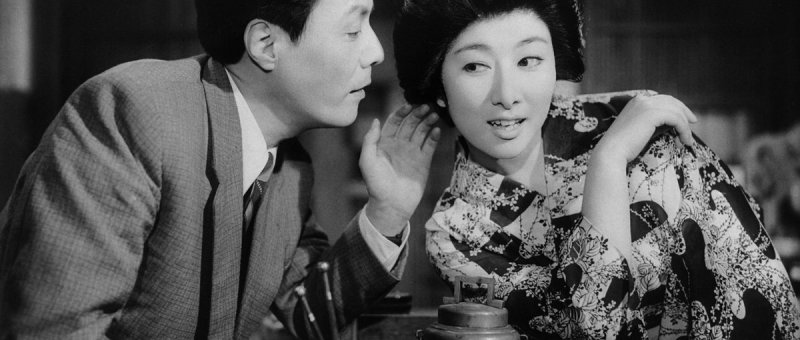
Blindly in love posterPost-war Japanese cinema was intent on investigating whether father really did know best while his children strived to find their place in a changing society. Contemporary Japanese cinema may feel as if the question has been more than well enough answered already but then again Japanese society remains conformist in the extreme and arranged marriage still an option for those who find it difficult to find a match on their own (remaining single, it seems, is still an option requiring intense justification). The protagonists of Blindly in Love (箱入り息子の恋, Hakoiri Musuko no Koi) find themselves in just this position as their well meaning (to a point) parents attempt to railroad them into the futures they feel are most appropriate while perhaps failing to deal with the various ways their own behaviour has adversely affected their children’s ability to function independently.

Kentaro (Gen Hoshino) is 35. He has a steady job as a civil servant and still lives at home with his parents which is hardly an unusual situation in contemporary Japan save for the fact he is not married and seems to have no interest in dating. Rather than eat with his colleagues, Kentaro comes home for lunch every day and returns straight after work, retreating into his bedroom to spend quality time with his pet frog and play video games. His parents, worrying that he may be lonely when they are gone, decide to find him a wife by effectively going speed dating on his behalf with a host of other parents in a similar position.

There they meet the Imais who are keen to marry off their 23-year-old daughter Naoko (Kaho). The elephant in the room is that everyone at this meeting is there because they believe there is something “wrong” with their children that makes them difficult prospects for marriage. Consequently, the Imais have decided not to disclose the fact that Naoko is blind until later in the negotiations.

The Imais’ ambivalent feelings towards their daughter’s disability speak to a persistent social prejudice which views those who have different needs as somehow less. Mr. Imai is a high flying company CEO who puts on a show of only wanting the best for his little girl, but he’s also a snob and a bully. He keeps trying to set Naoko up with “elites” like him, but those elites will also share his own prejudices in feeling that his daughter is “imperfect” and therefore not a prime match in the arranged marriage stakes. Kentaro, who unbeknownst to everyone except Mrs. Imai has already enjoyed a love at first sight meet cute with Naoko, is the only one brave enough to call Mr. Imai out on his hypocrisy when he accuses him of neglecting his daughter’s feelings in favour of asserting his own paternal authority. As you can imagine, Mr. Imai is not happy to have his faults read back to him.

Making the accusation at all is extremely hard for Kentaro who has just spent the last ten minutes getting a dressing down from Mr. Imai who has read out a list of his perceived imperfections from his unbreakable introversion to his lack of career success. Mr. Imai wants to know if a man like Kentaro who has basically been the office coffee boy for the last 13 years can keep his daughter in the manner to which she’s been accustomed. Kentaro has to admit that he probably can’t and that Imai has a point, but unlike Imai he is thinking of Naoko’s happiness. He sees her disability but only as a part of her personality and respects her right to a fully independent life which is something her father seems to want to deny her, not out of a paternalistic (or patronising) worry for her safety but simply as a means of control.

Conversely, Kentaro is attracted to Naoko precisely because he feels as if she might be able to see him in greater clarity in being unable to judge him solely on appearance. In a rare moment of opening up as part of his defence against Mr. Imai, Kentaro reveals the pain and suffering that have led him to withdraw from the world, admitting that after years of being taunted or ignored, branded an oddball and mocked for his rather robotic physicality he simply decided it was easier to be alone. It might be safe to say that Kentaro’s parents are being overly intrusive, that they are trying to impose their idea of a “normal” life on their son who may be perfectly happy playing video games alone for the rest of his days. Kentaro, however, is not quite happy and as is later pointed out to him had merely given up on the idea of any other kind of existence as an unattainable dream.

Giving up has been Kentaro’s problem and one that recurs throughout his awkward courtship. Like his pet frog, Kentaro has been perfectly contained within his own tank and somewhat fearful to crawl outside but is slowly finding the strength thanks to his bond with Naoko who struggles to overcome her conservative patriarchal upbringing and escape her father’s control. Yet it isn’t only the youngsters who have to learn to leave the nest but the parents who have to learn to let them go. Kentaro’s mum and dad have perhaps enabled his sense of disconnectedness by keeping him at home with them as a treasured only son, while the Imais’ problems run deeper and hint at a deeply dysfunctional household with a father who is controlling and eventually violent while Mrs. Imai tries to effect her daughter’s escape from the same patriarchal conservatism which has succeeded in trapping her. Blindly in Love refuses either of the conventional endings to its unconventional romance but edges towards something positive in affirming its protagonists’ continued determination to fight for their own happiness even if opposed at every turn.


Blindly in Love was screened as part of the 2019 Japan Foundation Touring Film Programme.

Original trailer (English subtitles)
Yurigokoro (ユリゴコロ, Naoto Kumazawa, 2017)

Yurigokoro posterThose who cannot remember the past are doomed to repeat it, as they say, but is it better to acknowledge the dark parts of yourself as part of an inherited legacy or ignore a nagging sense of incompleteness in favour of a harmonious existence? The hero at the centre of Naoto Kumazawa’s Yurigokoro (ユリゴコロ), adapted from the mystery novel by Mahokaru Numata, is about to discover a side of himself he might not like just as storm clouds seem to gather over his previously idyllic childhood home.

For Ryosuke (Tori Matsuzaka), everything had been looking up. He’d set up his own business – a charming cafe and summer lodge, with the woman he intended to marry, Chie (Nana Seino). However, no sooner has he introduced his fiancée to his father than she disappears, gone without trace. Meanwhile, his father informs him that he has stage four pancreatic cancer. Suddenly everything is falling apart and the braver the face he tries to put on it, the worse he seems to feel. Perhaps that’s why he can’t resist opening up a mysterious old box hidden in a cupboard in his father’s study that almost calls out to him to be opened. Inside the box is an old exercise book with the title “Yurigokoro” pencilled on the front. Ryosuke only reads the first few pages but they’re enough to disturb and fascinate him. The book, written in the first person, recounts the dark history of a murderess (Yuriko Yoshitaka) from silent, disconnected child to vengeful spirit.

“Yurigokoro” as the diary’s protagonist later explains is a made-up word, one she childishly misheard from the mouth of a well meaning doctor (who probably meant “yoridokoro” which means something like grounding). It could, however, almost translate as a shaking heart – something the doctor seems to imply the child does not quite have which is why she feels disconnected from the world around her and unable, or unwilling, to speak. The girl in the book travels through life looking for something that makes her heart beat and originally finds it only in the strange pleasure of watching something die, at first by accident and later by design. She drifts into an intense relationship with a damaged young woman (Aimi Satsukawa) who, like her in a fashion at least, resorts to self harm in order to feel alive. She thinks she finds her home, but it slips away from her or perhaps changes in form as it succumbs to inevitable disappointment.

Yet, in the grownup crimes at least, there is a kind of love in amongst grudging resentment. Ryosuke reads the diary and declares he does not relate to it at all but something about it gets under his skin and he can’t let it rest. He hears from an older woman (Tae Kimura) that Chie may have a past he knew nothing about, largely because he failed to ask, and that she may be in danger. He begins to feel rage surfacing within him like the dark violence of the diary’s protagonist and it both frightens and enthrals him.

The owner of the diary likens her experience of existing in the world to being prickled by hundreds of tiny thorns. She seeks relief through bloodletting and violence, as if she could shake herself free of the tiny stings that remind her of nothing other than her sense of emptiness. Later she discovers that love too can shake the heart, but the old darkness remains and even the most positive of emotions may require an act of violence in order to sustain it. The diarist remains ambivalent, knowing that there is no salvation for her except death and that any attempt to stave off the darkness with light will eventually fail, but determined to cling on to her brief moment of wholeness however inauthentic for as long as it lasts.

Ryosuke, meanwhile, who’d apparently never sensed in himself the kind of gaping emptiness that the diary’s owner describes, is forced to wonder if the diary is legacy and destiny, if he too is destined to commit random acts of inescapable violence as someone unfit for living as a human being among other human beings. Love might not have “cured” the darkness inside the diarist, but it did change it in quite a fundamental way, a way that eventually provided him with the means of his “salvation” perhaps at the cost of her own if only he is willing to accept it. Ryosuke might wish he’d never opened that particular box, but in doing so he discovers not only the path towards a fully integrated self but that his own darkness can be tempered precisely because of the sacrifice that was made on his behalf.


Yurigokoro was screened as part of the 2019 Japan Foundation Touring Film Programme.

Original trailer (no subtitles)

Dad’s Lunch Box (パパのお弁当は世界一, Masakazu Fukatsu, 2017)

Dad's Lunchbox posterLunch is serious business in Japan, but perhaps those adorable character bento have a dark side, forcing already frazzled mothers to get up before dawn in order to ensure their child’s lunch box will be sufficiently “cute” or risk being made to feel like a cold and unloving parent. It goes without saying that it’s usually mums who are expected to take care of food preparation, salaryman dads are a rare sight in a kitchen, but then a recent phenomenon known as “papaben” has been taking the internet by storm and somewhat normalising the idea that fathers too can channel their love for their kids into visually appealing, nutritionally balanced meals.

Dad’s Lunch Box (パパのお弁当は世界一, Papa no Obento wa Sekai Ichi), the debut feature from Masakazu Fukatsu, is inspired by a viral Tweet posted by a high school girl on her graduation which thanked her father for taking the trouble of making a handmade bento for her every day of her high school life. The Tweet also included a photo of his risible first effort and his final high school lunch box crafted after three years of trial and error. Fukatsu’s film version follows a recently single salaryman known only as “Father” (Toshimi Watanabe) who decides to make the creation of bento his primary method of demonstrating that he is perfectly fine bringing up his teenage daughter Midori (Rena Takeda) all alone.

The film does not dwell on the circumstances which led to Father’s wife leaving and there does not appear to be any animosity between himself and his daughter on account of it, nor does Midori suffer any particular stigma at school because of having a single dad save for the unfortunate quality of her daily bento. Father, having lived a regular salaryman life, is not exactly a great cook and has an uphill journey ahead of him when it comes to mastering the basics let alone creating the Instagrammable lunches of his daughter’s dreams. Taking a few tips from a friendly lady at work, Father eventually realises that for a teenage girl bento are an important social signifier and must, in all cases, be cute. Nevertheless, he struggles with fundamental hygiene concerns that leave him unaware of why you shouldn’t put sashimi in a lunch box which is going to be sitting around at room temperature all day.

The most important component in a bento is, however, love which is why Father started making them in the first place. It’s not so much that he eventually masters the art of cooking, nor that of learning how to make his dishes aesthetically pleasing, but that he is able to connect with his increasingly distant teenage daughter as he does so. Midori, having grown to like her dad’s previously embarrassing lunchtime fare, tricks him into making two bento lunches passing one off as her own work in order to give to a boy she likes and sort of (though incorrectly) assumes is her boyfriend. The boyfriend is, it has to be said, quite cheeky and extremely ungrateful when one considers he’s getting a 100% free lunch every day, but in any case his decision to rudely criticise Father’s by now beautiful bento is the one which finally sets alarm bells ringing in the mind of the romantically naive Midori and her supportive friends. Father remains oblivious until the lady at work helps him out again by keying him in to Midori’s likely source of teenage angst. When giving her a gentle opportunity to open up doesn’t yield results, Father realises he needs to give his daughter space to figure things out, leaving tiny notes of encouragement along with the food to make sure she knows he’s there if she needs him.

In a strange turn of events, actor Toshimi Watanabe who plays the father (previously known as a ‘90s hip hop star) himself made quite a splash in the papaben world when he released a book of his own bento recipes in 2014 crafted for his teenage son through his high school years. Dad’s Lunchbox may be low on plot detail, but it’s high on heart in its earnest tale of a doting dad just so happy to be making headway in conquering the most of domestic of tasks while finding the way to his daughter’s heart through her stomach.


Dad’s Lunchbox was screened as part of the 2019 Japan Foundation Touring Film Programme.

Original trailer (no subtitles)

The Village (同胞, Yoji Yamada, 1975)

The Village posterBest known for the long running Tora-san series, Yoji Yamada has often been disregarded by international critics for a perceived over indulgence in sentimentality. Nevertheless, his films are often at pains to capture a Japan which is changing with a noted ambivalence towards the results of those changes. Home From the Sea had rooted itself in the difficult decision of a young couple in realising that their way of life was no longer sustainable in a rapidly modernising economy. The Village (同胞, Harakara) returns to a similar theme, once again harping on “furusato” while the conflicted younger residents of a farming village struggle with the decision to accept the life passed down to them by their parents or abandon it in favour of the bright lights of an urban future.

Narrated by Takashi (Akira Terao), a young farmer and president of the local youth club, The Village revolves around one heady spring in which the arrival of a sophisticated woman from Tokyo injects additional stimulation into the sometimes stagnant community. Takashi, in many ways a very typical resident of Matsuo and many other rapidly depopulating rural villages like it, has taken over his family dairy farm following the death of his father when he was relatively young. His brother, Hiroshi (Hisashi Igawa), took a factory job to help make ends meet and put Takashi through school but has now become embittered and resentful as the widowed father of two young girls. Trapped by circumstance he berates Takashi for his diffidence in remaining uncommitted to farm life while perhaps dreaming of something better that he is too afraid to pursue.

The arrival of Hideko Konno (Chieko Baisho) seems to give Takashi a new sense of purpose. Hideko works for an itinerant theatre company based out of Tokyo which makes a point of taking shows to remote areas which might not ordinarily get much access to the arts. The snag is that the locality will have to take the responsibility of producing the show and absorbing the shortfall should they fail to sell enough tickets to cover costs. Takashi is tempted but he’s also well aware of the risks – the investment is sizeable given the relative poverty of the rural area and the risks involved with failure extreme.

Yamada places the dilemma surrounding whether or not to produce the show at the forefront, but the questions are bigger than they might at first seem. It has to be said that farming, whatever its rewards, is an extremely hard life. As a character puts it in the emotively titled play “Furusato”, it’s disheartening when you get a bad harvest and all your work goes for nothing but it’s almost worse when the harvest is good and the value of your work drops exponentially. For Takashi and the others, the youth association is a much needed social outlet even if many of them regard it as something of a joke and rarely get around to doing very much with it. The idea of the play is attractive to them for several reasons, having something more interesting to do not the least among them, not to mention offering a valuable break in routine in what can often be an overly ordered and somewhat stagnant existence.

However, the very same reasons the play appeals to the youngsters are the ones their elders find suspicious. Having made their peace with rural life and learned to adapt to its rhythms, the older generation worry that the young ones are being swayed by outside influences and neglecting their work in favour of idle pursuits. Meanwhile, many of the youngsters have already left to try their luck in the cities, some of them returning and bringing new experiences back with them while others resolve to remain where the lights are brighter.

Setting the scene, Yamada reminds us the factories have long been encroaching on farmland and that this “ancient” way of life is becoming ever harder in a rapidly modernising economy, but through their involvement with the play and its extremely close to home themes, the members of the youth association are finally able to look at their village through new eyes, seeing not only its immense visual beauty for the first time but learning to reappreciate the value of community and friendship. Life in the city might be more glamorous but perhaps it’s no less hard and only lonely in a different way. At once a celebration of and lament for a changing rural landscape, The Village asks an accidentally profound series of questions about life and happiness but once again puts its faith in goodhearted people creating meaning from togetherness in a world that might otherwise set them apart.


Original trailer (no subtitles)

Fireworks Over the Sea (海の花火, Keisuke Kinoshita, 1951)

In the films of Keisuke Kinoshita, it can (generally) be assumed that the good will triumph, that those who remain true to themselves and refuse to give in to cynicism and selfishness will eventually be rewarded. This is more or less true of the convoluted Fireworks Over the Sea (海の花火, Umi no Hanabi) which takes a once successful family who have made an ill-advised entry into the fishing industry and puts them through the post-war ringer with everything from duplicitous business associates and overbearing relatives to difficult romances and unwanted arranged marriages to contend with.

The action begins in 1949 in the small harbour town of Yobuko in Southern Japan. Tarobei (Chishu Ryu) and his brother Aikawa (Takeshi Sakamoto) run a small fishing concern with two boats under the aegis of the local fishing association. The business is in big trouble and they’re convinced the captain of one of the boats has been secretly stealing part of the catch and selling it on the black market. Attempts to confront him have stalled and the brothers are at a loss, unsure how to proceed given that it will be difficult to find another captain at short notice even if they are already getting serious heat from their investors and the association.

Luckily things begin to look up when a familiar face from the past arrives in the form of Shogo (Takashi Miki) – a soldier who was briefly stationed in the town at the very end of the war during which time he fell in love with Tarobei’s eldest daughter, Mie (Michiyo Kogure). Shogo has a friend who would be perfect for taking over the boat and everything seems to be going well but the Kamiyas just can’t seem to catch a break and their attempt to construct a different economic future for themselves in the post-war world seems doomed to failure.

The Kamiyas are indeed somewhat persecuted. They have lost out precisely because of their essential goodness in which they prefer to conduct business honestly and fairly rather than give in to the selfish ways of the new society. Thus they vacillate over how to deal with the treacherous captain who has already figured out that he holds all the cards and can most likely walk all over them. They encounter the same level of oppressive intimidation when they eventually decide to fight unfair treatment from the association all the way to Tokyo only to be left sitting on a bench outside the clerk’s office for three whole days at the end of which Tarobei is taken seriously ill.

However, unlike Kinoshita’s usual heroes, Tarobei’s faith begins to waver. He is told he can get a loan from another family on the condition that their son marry his youngest daughter Miwa (Yoko Katsuragi). To begin with he laughs it off but as the situation declines he finds himself tempted even if he hates himself for the thought. He never wanted to be one of those fathers who treats his daughters like capital, but here he is. Both Miwa, who has fallen in love with the younger brother of the new captain, and her sister are in a sense at the mercy of their families, torn between personal desire familial duty. Mie, having discovered that her husband died in the war, is still trapped in post-war confusion and unsure if she returns Shogo’s feelings but in any case is afraid to pursue them when she knows the depths of despair her father finds himself in because of their precarious economic situation. Shogo is keen to help, but he is also fighting a war on two fronts seeing as his extremely strange (and somewhat overfamiliar) sister-in-law (Isuzu Yamada) is desperate to marry him off to her niece (Keiko Tsushima) in order to keep him around but also palm off her mother-in-law.

Meanwhile, a lonely geisha (Toshiko Kobayashi) who has fallen into the clutches of the corrupt captain is determined to find out what happened to someone she used to know who might be connected to Shogo and the Kamiyas and falling in desperate unrequited love with replacement captain Yabuki (Rentaro Mikuni) who is inconveniently in love with Mie. Kinoshita apparently cut production on Fireworks short in order to jet off to France which might be why his characteristically large number of interconnected subplots never coalesce. Running the gamut from melancholy existential drama to rowdy fights on boats and shootouts in the street, Kinoshita knows how to mix things up but leaves his final messages unclear as the Kamiyas willingly wave their traumatic pasts out to sea with a few extra passengers in tow still looking for new directions.


Titles and opening (no subtitles)

Domains (王国(あるいはその家について), Natsuka Kusano, 2019)

domains posterMost of us like to feel as if we’re connected to something. Not merely floating islands, but anchored to the world by strong connections to others – only when we feel as if the world is not holding on as tightly as we’d like do we begin to feel as if perhaps there are as many worlds as people and many of them barred to those who have no right to enter. Natsuka Kusano’s second feature, Domains (王国(あるいはその家について), Okoku (Arui wa Sono Ie ni Tsuite)), tackles this conflict head on in a tragic tale of rage, madness, and jealousy driven by a series of mutual resentments as a collection of middle-aged men and women struggle to accept the “intrusion” of an unwanted third party into the kingdom of their intimate relationships.

Kusano opens boldly with the film’s most straightforward, though infinitely shocking, scene as a woman in her late 20s, Aki (Asami Shibuya), sits impassively while a police officer (Ryu Kenta) politely tries to explain to her that she is being held on suspicion of murder. Not quite present, Aki accepts all the charges against her and admits her crime though is puzzled by the policeman’s assertion that she has been “brought to justice”, explaining that she already feels herself to have been “brought to justice” by “something like time”. In any case, she has already said everything she wishes to say in a letter to the mother of her victim. In a brief moment of madness, Aki pushed the three year old daughter of her childhood best friend into a swelling river in the midst of a typhoon.

Leaving us with this disturbing moment, Kusano then shifts back to what looks like a rehearsal room where the woman we have just seen is now dressed in more casual clothing and seated at a table next to another woman who will read in the lines of Aki’s childhood best friend and later mother of the murdered little girl, Honoka, Nodoka (Tomo Kasajima). Travelling back a few months before the incident, the two women read over the undramatic events which led up to it as if engaged in an act of emotional excavation.

The strange fact that had fascinated the policeman in Aki’s written testimony was her seemingly random allusion to a castle made out sheets and chairs the mention of which sends her into a refrain of the gloomy Japanese folksong Moon over Ruined Castle. As we later ascertain, the the make-believe castle, constructed in her childhood home with soon-to-be best friend Nodoka, became something like a safe place, the eye of typhoon raging in her mind. Aki saw the castle as her rightful “kingdom”, a sacred space into which only she and Nodoka were permitted to enter and which was permanently available to each wherever they happened to be.

Nodoka, however, has moved on – formed a new kingdom with a husband and a child into which Aki has no right to step. After having something like a breakdown and returning to her hometown, Aki reconnected with Nodoka whom she had not seen since her wedding to her husband Naota (Tomomitsu Adachi) – a mutual friend from university, four years previously. Naota, now a school teacher, like Aki is intensely jealous of his own kingdom which he has given physical form in the solid existence of his house. Aki noticed this fact immediately in the pitch perfect attention to temperature and humidity of Nodoka’s new home, but she couldn’t help seeing that her friend now looked tired, harried, and that the marriage was perhaps only a superficial act of performance rather than a real emotional connection.

Ironically enough, it’s Naota himself who accidentally brings this up when explaining that a family can collapse without warning and revert to being merely a collection of individuals living under the same roof. Nodoka accuses him of using a schoolteacher’s logic to rule his home, and there is certainly some of that in there as his rigid authoritarianism seems primed to hold on so tight that it squeezes the life out of the very thing he’s trying to protect, but there’s an ugly kind of conservatism in it too as he angrily tries to expel the unwelcome intrusion of Aki into their lives, blaming her for the cracks in his marriage which her presence has perhaps exposed.

Naota wants Aki gone because he thinks she’s a bad influence, a shirker or a mad woman who will eventually infect his house with whatever it is she has like some kind of ill will virus. In an odd and terrifying way he may be “right”, but his resentment runs deeper in that he, like Aki, cannot accept that Nodoka once belonged in someone else’s kingdom to which he has no access. He resents that the two women are so close as to have largely abandoned language and share a much longer history than he and his wife, while Aki perhaps resents the presence of Honoka who represents a bond between Naota and Nodoka that she could never match even if her concern over the coldness of her friend’s new life and her seemingly hidden misery is nothing but altruistic.

Aki surveyed the kingdom of her friend and discovered it was flawed and vulnerable, that the kingdom she and her husband were building would eventually destroy them. Yet the overwhelming force which compelled her towards her unforgivable transgression was not so much resentment, or loneliness, or jealousy, or even a desire for freedom, as embarrassment. She felt as if she had betrayed her kingdom’s existence to someone who was not supposed to see it and acted without thinking in order to cover up an emotional crime, little realising the pain and destruction her act would cause.

Words encircle Aki like a typhoon, leaving her permanently in its eye trying to make sense of what has happened. Kusano stages a rehearsal after the fact, reading over the same lines with added nuance, occasionally digging deeper to expose a new clue either so trivial as not to be worth remembering or so delicate as not to be remembered out loud. To Aki, the spoken has no weight – her kingdom is made is feelings, but for Naota the reverse is true. Nodoka remains caught in the middle, perhaps secretly and uncomfortably yearning for freedom and a kingdom of her own while the storm clouds gather all around her and all that remains is the inescapable impossibility of an unselfish yet whole connection.


Domains made its world premiere at the 2019 International Film Festival Rotterdam and is available to stream online via Festival Scope until 24th February.

Rotterdam trailer (English subtitles)

Murder of the Inugami Clan (犬神家の一族, Kon Ichikawa, 2006)

the inugami family 2006 posterBeginning his career in the late 1940s, Kon Ichikawa was a contemporary of the leading lights of Japanese cinema during the golden age though has never quite achieved the level of international acclaim awarded to studio mate Akira Kurosawa. Unlike Kurosawa however, whose career floundered the wake of the studio system’s collapse, Ichikawa was able to go on making films through the difficult years of the 70s and 80s precisely because he was willing to take on projects that were purely commercial in nature. His biggest box office hit was an adaptation of the Seishi Yokomizo novel The Inugami Family which led to a further four films starring the author’s eccentric detective Kosuke Kindaichi. 30 years later, in what would turn out to be his final film, Ichikawa took the unusual step of remaking his biggest commercial success and even more unusually decided to recast several of the same actors in their original roles.

The script remains almost identical to the 1976 version though slightly slimmer. In 1947, pharmaceuticals magnate Sahei Inugami (Tatsuya Nakadai) dies leaving a confusing will which upsets absolutely everyone – not least his three daughters whom he fathered with three different women none of whom he was legally married to. Sahei has elected to leave the bulk of his estate to a young lady, Tamayo (Nanako Matsushima), who is not part of the family, on the condition that she marry one of his grandsons though he stresses that she is free to choose. If she chooses to marry someone else, the estate will be split between the three grandsons and another illegitimate son fathered with a maid whose whereabouts are apparently unknown. With such a vast fortune at stake, it is not long before the first murder occurs.

The most major difference between the 1976 and 2006 versions is, perhaps counterintuitively, the budget. Whereas the 1976 version had been one of the “taisaku” prestige pictures which dominated the mainstream cinema of the era and had the marketing genius of a young Haruki Kadokawa behind it, the 2006 version is a much more modest affair with minimal production values and a noticeably unfussy approach. The 1976 version, like the other instalments in the ‘70s series, also boasted a starry cast including golden age star Mieko Takamine, even employing Kyoko Kishida in a tiny two scene role as a blind koto teacher. Perhaps the strangest and most experimental choice made by Ichikawa in terms of his “remake”, is the one to cast original star Koji Ishizaka as the eccentric detective, reprising his role from the earlier film 30 years later. In fact, many of the other characters whose ages are not important are also played by the original actors including the bumbling policeman (Takeshi Kato) and his sidekick who appear throughout the series (comedy director Koki Mitani makes a noted cameo in the spot occupied by Seishi Yokomizo in the original adaptation).

The recasting adds to the level of uncanniness created by the dissonance between the opulence of the 76 version, and the austerity of that from 2006. This time around, Ichikawa shoots in 16:9 rather than (the then) TV friendly 4:3, but in the scaled back hyperrealist style common to lower budget dramas from the 2000s. The flat digital cinematography only serves to add to the general lifelessness of the drama which features only the main players, the sole crowd scene occurring during a flashback to the repatriation shot to match the accompanying stock footage just as in the 1976 version. Whereas Ishizaka and the other veterans are mainly acting within the broader yet largely naturalistic style of 70s cinema, the younger members have adopted the decidedly theatrical tones common in contemporary indie drama which somewhat undercuts the strange mix of camp fun and serious drama which had defined the Kindaichi series.

In contrast to the ‘70s movies, Ichikawa plays it uncharacteristically safe – opting for many of the same techniques but reining them in, using plain black and white instead of negative, easing back on the gore, and lowering the level of violence. The results are decidedly mixed and though the central mystery has not changed, the 2006 edition proves a much less satisfactory experience that does not so much attempt to recapture the strange magic of the original as throw it into contrast through its absence. The story of the Inugami murders is, like many a Kindaichi mystery, one less of greed and selfishness than the lasting effects of repression, frustrated desires, and difficult loves and as such it is timeless, yet lightning doesn’t strike twice and Ichikawa’s second attempt at bottling it only goes to show that there’s little to gain in slavishly aping the past.


Original trailer (English subtitles)