River Returns (光る川, Masakazu Kaneko, 2024)

At the beginning of Masakazu Kaneko’s River Returns (光る川, Hikaru Kawa), a little boy asks his father where water comes from. It’s one of those questions that children ask but adults find difficult to answer. In any case, his father tells him that it comes from the sky, travels down leaves and branches, and then makes its way to the river. But what if all the trees are felled, the boy asks. His father tells him not to worry, they only cut down “useless” trees in order to plant “money-making” ones in their place.

This is the conflict at the centre of the film and to some extent that at the centre of all of Kaneko’s films so far in the changing relationships between man and landscape. The boy, Yucha (Sanetoshi Ariyama), is too young to fully understand what’s going on but has an inkling that might not be good for his beloved mountain which is somehow linked with the fate of his sickly mother, Ayumi (Kinuo Yamada). His father, Haruo (Tomomitsu Adachi), is one of the younger men in the village in favour of a plan to sell off the mountain for industrial construction with the building of a modern roadway and a dam project which he says will make everyone in the village rich. It’s 1958, and the nation is fast recovering from post-war privation. The population is increasing. New homes will need to be built so there’s money in timber. He wants to use some of it to treat Ayumi’s illness, but his mother has her doubts even if her son dismisses them as backward superstition. 

Haruo worries that their old-fashioned, rundown home may not survive a severe typhoon nor the flooding that often accompanies them. If you fear floods, then cutting down trees is obviously not a good idea and there is something quite unsettling about the imposition of the dam that would interfere in this ancient and natural process that keeps the rivers flowing. Yet this particular river also has a quasi-mystical quality that Yucha learns of from his grandmother and a kamishibai storyteller who recounts a local folktale about a girl who drowned herself in the pool at the river’s source after falling in love with a nomadic mountain woodcutter. It is said the girl’s despair sometimes brings about terrible floods and that the one who receives a wooden bowl from the river must return it full or a loved one will be taken by the waters.

Yucha had been worried about this before, frightened that his mother would not be able to escape the rising waters because of her illness. What he learns is that time flows differently at the source and in temporal terms, this river also flows backwards. He becomes a kind of conduit and saviour of the mountain in going back to right a wrong, ensuring that man and landscape are joined once again and can live in a more natural harmony. By saving the mountain, he can also save his mother whose condition it is implied is partly caused by a corrupted modernity. Haruo could not save her with money gained by nature’s destruction, only by restoring nature itself and making a commitment to keep the pool as clear and blue as the cormorant’s eye. 

The nomadic woodcutters after all know that too much felling ruins the mountain which would take generations to recover. They kneel and pray after felling their trees and respectfully move on at the full moon. Kaneko structures his tale elliptically, like a river that constantly returns in which all is a harmonious cycle that man threatens to interrupt, arrogantly thinking that it can improve upon nature. The middle part of the film is a lengthy flashback transitioning out of the kamishibai folktale set sometime in the feudal past in which even then there was division between the “civilisation” represented by the village and the natural world of the mountains which would be healed in the union of Oyo and the woodcutter Saku and is opposed both by the mountain nomads and Oyo’s widowed father Tsunekichi (Ken Yasuda). Only the mute boy can in the end resolve this romantic tragedy and ensure the river continues to flow. Elegantly lensed to capture the majestic quality of the mountain landscape, River Returns is a timely reminder of the importance of protecting the natural environment which in return will also protect us. 


River Returns screens as part of this year’s Cinema at Sea.

Trailer (English subtitles)
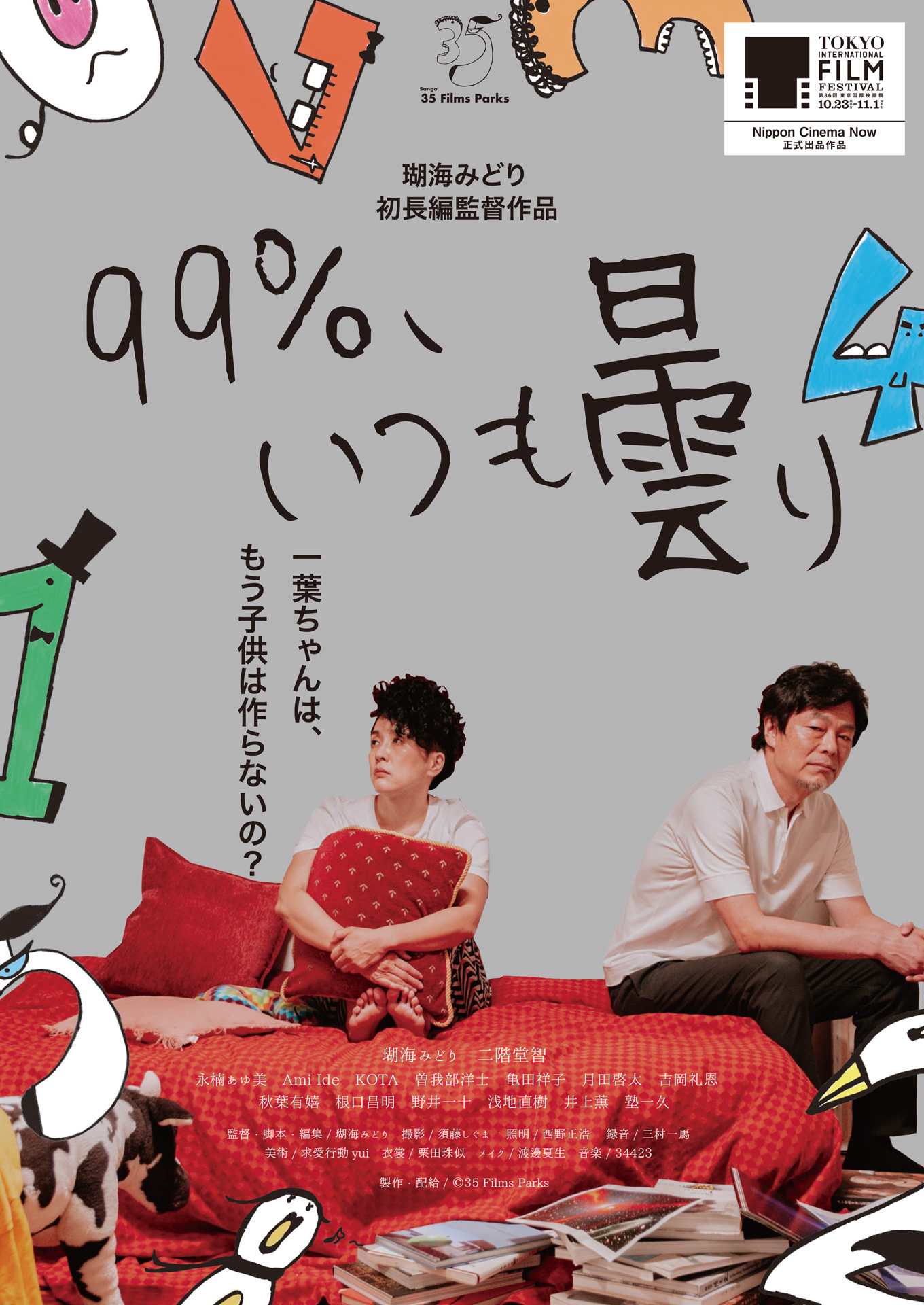
99% Cloudy… Always (99%、いつも曇り, Midori Sangoumi, 2023)

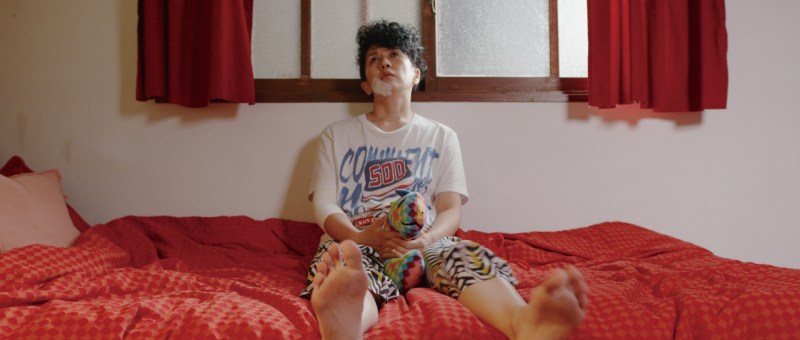
Why do some people feel themselves entitled to ask insensitive questions at emotionally delicate moments? Kazuha (Midori Sangoumi) may have a point when she calls her oblivious uncle a bully when a lays into her about having no children at the first memorial of her mother’s passing, but still his words seem to wound her and provoke a moment of crisis in what otherwise seems to be a happy and supportive marriage.

Kazuha is a very upfront person and fond of directly telling people that she thinks she has stopped menstruating so she doesn’t think she could have a child now even if she wanted one. One of the other relatives, however, suggests that her husband, Daichi (Satoshi Nikaido), may feel differently which somewhat alarms her. The questioning had made her angry and offended, not least by the implication that a woman’s life is deemed a success only through motherhood and that those who produce no children are somehow “unproductive”, but it was all the more insensitive of her uncle to bring it up given that Kazuha had suffered a miscarriage some years previously.

The miscarriage itself appears to have resulted in some lingering trauma that’s left Kazuha with ambiguous feelings towards motherhood. Having been bullied and excluded as a child because she is autistic, Kazuha is reluctant to bring a child of her own into the world in case they too are autistic and encounter the same kind of difficulties that she has faced all her life. As the film opens, she’s trying to get in touch with someone about the results of a recent job interview but getting flustered on the phone and asking what may be perceived as too many questions all in one go. She does something similar while trying to enquire at a foster agency about a clarification of their guidelines as to whether she would be eligible to adopt as an autistic woman which she fears she will not be. It just happens that no one is available to talk to her that day as they’re all at an outing leaving only a member of the admin team behind to man the desk while Kazuha repeatedly asks the same question in the hope of a response. 

The truth is, Kazuha might have liked to raise a child but not her own while for Daichi it’s the opposite. He may still want to have a biological child but is not particularly interested in raising someone else’s. This question which has reared its head again at a critical moment immediately before it may be too late places a strain on their marriage as they contemplate a potential mismatch in their hopes and desires for the future. Daichi is reminded he has no other remaining family as his younger sister passed away of an illness some years previously and his parents are no longer around either. As he tells a younger woman at work, Kazuha is his only family while others needle them that there’ll be no one there for them in their old age should they remain childless. 

Part of the issue is a lack of direct communication as Daichi talks through his relationship issues with a colleague in trying to process Kazuha’s revelation that she felt relieved after the miscarriage given her guilt and anxiety that the baby would also be autistic which is not something that had previously occurred to him nor that he particularly worried about. The film seems to hint that Daichi has the option of moving on, perhaps entering a relationship with his younger colleague, if his desire to have a biological child outweighed that to stay with Kazuha while that is not an option for Kazuha herself who is left only wondering if she should divorce him so he can do exactly that. In flashbacks, we see her reflect on some of her past behaviour and realise that she may have inadvertently hurt someone’s feelings in speaking the truth and been shunned herself because of it. Even so, she has a warm community around her who love her as she is and are in effect an extended family. The accommodation that she finds lies in fulfilling herself through art and building a relationship with her nephew while also helping and supporting those around her. It may be cloudy 99% of the time, but there’s still a glimmer of light and a radiance that surrounds Kazuha as she embraces life as she wants to live it rather than allow herself to be bullied by belligerent uncles and the spectres of social expectation.


99% Cloudy… Always screens as part of this year’s Japan Foundation Touring Film Programme.

Trailer (English subtitles)
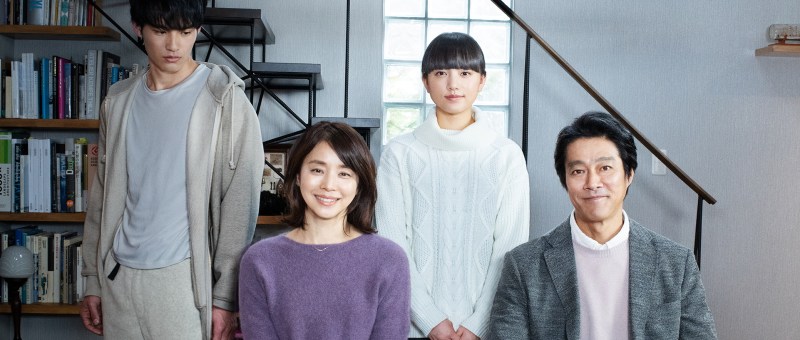
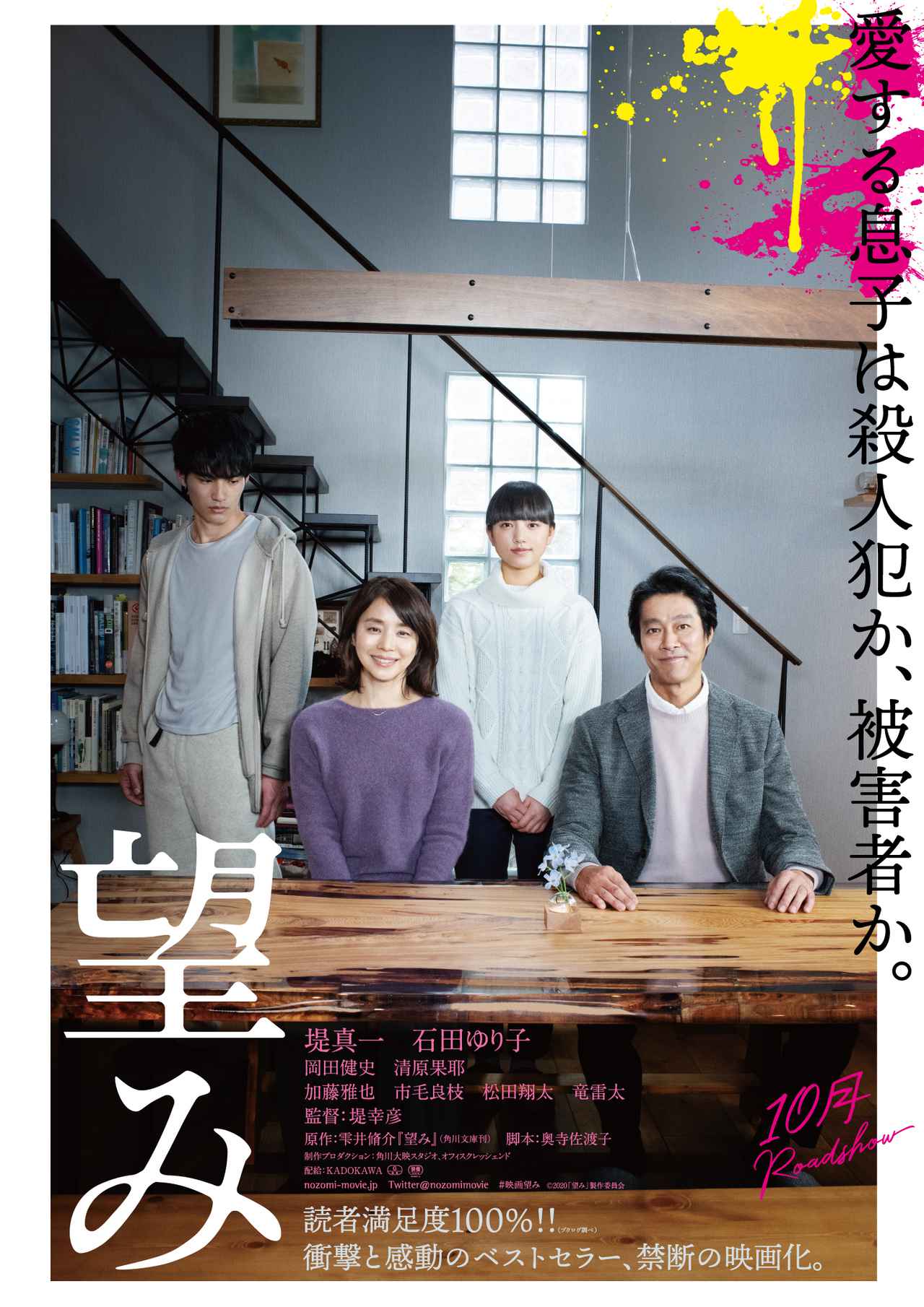
Hope (望み, Yukihiko Tsutsumi, 2020)

What would you prefer, that your son is alive but a murderer, or that he’s dead but blameless? That’s the dilemma faced by the family at the centre of Yukihiro Tsutsumi’s Hope (望み, Nozomi) who find themselves wondering if they really knew their son at all or had been deluded by an image of familial harmony that was only ever superficial. Meanwhile, they’re also at the centre of a media storm, on the receiving harassment from the press and neighbours, along with the potential financial strain of lost business and fracturing relationships in the local community.

Teenage daughter Miyabi (Kaya Kiyohara) tells her father that she’s read online some families have to move after a relative becomes involved with a crime, that they lose their jobs and place in the community. She’s been studying hard to get into a top high school and is worried that they may not now accept her even if she passed the exam because of something her brother may or may not have done. Some might say that a being a part of the family means that you live or die together, but there is a persistent sense of unfairness felt by all they are being made to suffer because of something over which they had and have no control.

Tadashi (Koshi Mizukami) never explained of this to them and it’s true that he had been behaving differently, was sullen, stayed out all night coming home with bruises, and had in fact recently purchased a knife but it’s difficult for them to believe that he could really have gone on the run after murdering a classmate. At the beginning of the film, architect Kazuto (Shinichi Tsutsumi) had shown off their warm family home to some prospective clients remarking that they wanted to ensure close relationships with the their children and that the design is a good opportunity to plan ahead for the next 10 or 20 years but perhaps there’s something a little hubristic in that statement. Kazuto is trying to sell an image of familial bliss that his house design can bring, but when he knocks on Tadashi’s door the boy is rude and resents the intrusion. Typical teen behaviour, the clients might think, but still it’s a minor crack in the edifice of the image of a perfect family.

But for all that it’s Kazuto who most strongly resists the idea that Tadashi may really have killed his friend and clings fast to the hope that he may be a victim too even though, as mother Kiyomi (Yuriko Ishida) points out, that might mean that he’s already dead and was killed alongside him. For Kiyomi, she just wants Tadashi, whose name means “correctness”, to be alive even if that means he really did do it. If that were the case, the family would also face constant harassment for the rest of their lives, Tadashi would be in prison for the next 15 years, and they would likely have to compensate the other family financially for the boy’s lost future and 50+ years’ worth of lost earning potential. None of that matters to her so long as Tadashi is alive, but to Kazuto it seems more important that Tadashi not be guilty and he reclaim the image he had of his son as a good and honest young man rather than a delinquent killer and bully.

Investigations among the teens turn up contradictory reports, some saying that Tadashi was aloof and arrogant while a group of girls insist on his innocence and even contemplate going to the police to help clear his name. What’s clear is that everyone seems to have taken football far too seriously and a situation among hotheaded young men went way out of control. As a policeman later says, problems often occur at this age because children who are mature enough to think for themselves start wanting to solve their own problems without worrying the adults around them but don’t always know the best way to do it and end up making everything worse. The irony may be that in the end Tadashi may indeed restore a sense of hope for his family that they can turn things around and regain a more genuine sense of familial harmony no matter what the outcome may be.


Hope screens as part of this year’s Japan Foundation Touring Film Programme.

Trailer (English subtitles)

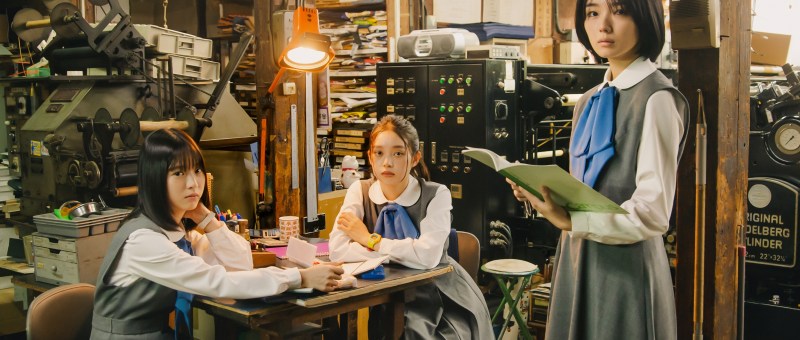
The Scoop! (新米記者トロッ子 私がやらねば誰がやる!, Keiichi Kobayashi, 2024)

The print media industry in Japan has often come in for criticism because of its perceived toothlessness in which it is often afraid of speaking truth to power lest it lose its access. Of course, as we’ve seen all too well just recently, that’s not a problem limited to Japan, but it’s something that’s preoccupied the students at the centre of Keiichi Kobayashi’s teen drama The Scoop! (新米記者トロッ子 私がやらねば誰がやる!, Shinmai Kisha Torokko: Watashi ga Yaraneba Dareka ga Yaru) whose unofficial newspaper club is threatened by the school because of its tendency to expose scandal and oppose the elitism which has otherwise taken over the institution.

Yui (Karin Fujiyoshi) only enrolled here because of the famous literature club and the possibility of meeting her idol, Konoha Midorimachi, the winner of a prestigious student writing competition. But as she quickly finds out, the Literature Club is pretty high up in the school hierarchy and only really open to those in the “advanced” class. All of its members wear red scarves to distinguish them from the other students who wear blue. You have to take a test to get in, but Yui’s dreams end before they’ve even started when she’s hit by a rogue drone and knocked out. They won’t let her retake the test because they say it would be unfair to the other students, but the club president, Mari (Rinka Kumada), has another proposition for her. It turns out that Konoha Midorimachi isn’t a member after all but a mysterious person using a pen name. Mari wants to know who it is too so she suggests they team up to find out. Following a lead to the unofficial Newspaper Club, Mari advises Yui to sign up there and win their trust to find out Konoha’s true identity on the promise of being admitted to the Literature Club once she’s solved the mystery.

Yui isn’t really happy with this plan in part because the Newspaper Club has a bad reputation for being a bunch of cranks and nerds. The Newspaper Club isn’t really all that keen on talking about Konoha either but is glad to have Yui on board while she also begins to embrace the opportunity to hone a different side to her writing skills. While there, she’s confused by the tactics employed the editor, Kasane (Akari Takaishi), whom she describes as more like a con-artist than a journalist as she employs some unorthodox methods to get to the truth, but also wakes up to the myriad problems at the school and comes to understand that the newspaper is necessary for exposing them. 

This does not, however, endear them to the headmaster, Numahara (Masahiro Takashima), who is a fascistic elitist intent on ruling the school with an iron fist. Backed into a corner, he agrees to make the Newspaper Club “official” with funding from the school but only as a gambit to control it. If Kasane accepts his offer, they will have to abide by his rules which means puff pieces and propaganda only. “Submit to me,” he snarls, inappropriately pinning the teenage Kasane to a wall while making her an ultimatum to join his side or get the hell out. “Women should be compliant,” he advises shortly before Kasane socks him on the jaw. What happens after that is a neutering of the paper while Numahara strengthens the elitism of the school by deepening the privileges held by the so-called “advanced” class represented by the Literature Club. 

The Japanese title of the film is the more evocative “Rookie Reporter “Trolley”: If I don’t do it, who will?” As Kasane had said to Numahara, silence changes nothing. Kasane later claims that she started the Newspaper Club because she lost faith in the power of fiction, but also wanted to bring about real change and expose Numahara’s corruption. Though their paper is suppressed, they do eventually manage to bring about something like a more egalitarian revolution and expose Numahara for what he really is by using the same tactics he used against them. In some ways, it’s an allegory for the wider society and an advocation for the power of journalism to bring about real change by refusing to shrink from the truth or be cowed by those in power, as much it is a coming-of-age tale in which the heroine learns that things aren’t always what they seem and a club that’s founded on the principle of excluding others isn’t one you want to join.


The Scoop! screens as part of this year’s Japan Foundation Touring Film Programme.

Trailer (English subtitles)
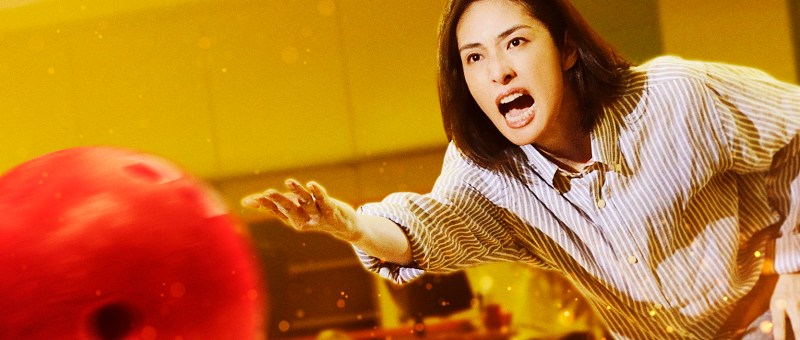
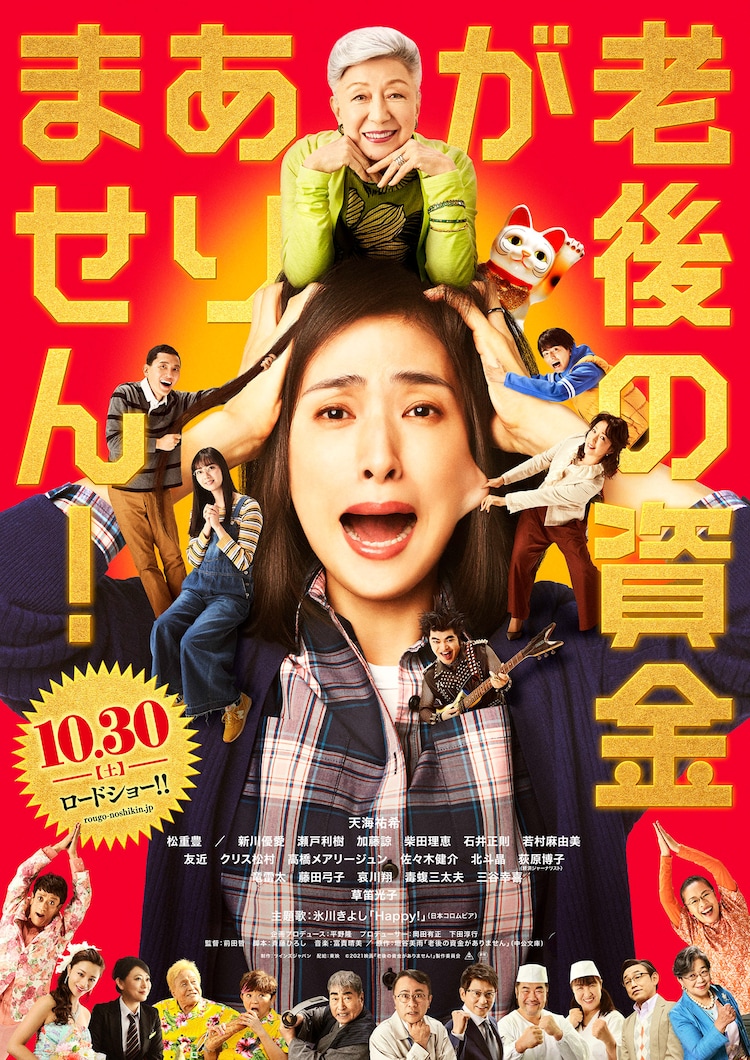
What Happened to Our Nest Egg!? (老後の資金がありません!, Tetsu Maeda, 2021)

A minor controversy erupted in Japan in 2019 when then finance minister Taso Aso issued a statement recommending that couples should have 20 million yen (£104,620 total at the time of writing) saved for their retirement on top of the state pension in order to live a comfortable life in old age. All things considered, 20 million yen actually sounds like quite a low sum for two people who might live another 30 years post-employment. Nevertheless, Atsuko (Yuki Amami) and her husband Akira (Yutaka Matsushige) are now in their mid-50s and don’t have anywhere near that amount in savings. They’re still paying off their mortgage and though their children are grown-up, neither of them seem to be completely independent financially and both still live at home. 

Tetsu Maeda’s familial comedy What Happened to Our Nest Egg!? (老後の資金がありません!, Rogo no shikin ga arimasen!) explores the plight of the sandwich generation which finds itself having to support elderly relatives while themselves approaching retirement and still needing to support their children who otherwise can’t move forward with their lives. Seeing an accusatory ad which seems to remind her personally that even 20 million yen isn’t really enough when you take into consideration the potential costs of medical treatment or a place in a retirement home, Atsuko has a sudden moment of panic over their precarious financial situation. The apparently sudden death of Akira’s 90-year-old father acts as a sharp wake up call especially as Akira’s apparently very wealthy but also selfish and materialistic sister Shizuko (Mayumi Wakamura) bamboozles him into paying for the entirety of the funeral while pointing out that they’ve been footing most of the bill for the parents’ upkeep over the last few years.

There was probably a better time to discuss the financial arrangements than with their father on his deathbed in the next room, but in any case Shizuko doesn’t pay attention to Atsuko’s attempt to point out they’ve been chipping in too. Akira’s mother Yoshino (Mitsuko Kusabue) also reminds them that their family was once of some standing and a lot of people will be attending the funeral so they need to make sure everything is done properly. The funeral arranger is very good at her job and quickly guilts Atsuko into spending large sums of money on pointless funeral pomp to avoid causing offence only to go to waste when hardly anyone comes because, as she later realises, all of the couple’s friends have already passed away, are bedridden, or too ill to travel. 

Yoshino is however in good health. When Shizuko suddenly demands even more money for her upkeep, Atsuko suggests Yoshino come live with them but it appears that she has very expensive tastes that don’t quite gel with their ordinary, lower-middle class lifestyle. Having lived a fairly privileged life and never needing to manage her finances, Yoshino has no idea of the relative value of money and is given to pointless extravagance that threatens to reduce Atsuko’s dwindling savings even more while in a moment of cosmic irony both she and Akira are let go from their jobs. Now they’re in middle age, finding new ones is almost impossible while their daughter suddenly drops the bombshell that she’s pregnant and is marrying her incredibly polite punk rocker boyfriend whose parents run a successful potsticker restaurant and are set on an elaborate wedding.

The film seems to suggest that Atsuko and Akira can’t really win. They aren’t extravagant people and it just wasn’t possible for them to have saved more than they did nor is it possible for them to save more in the future. Instead it seems to imply that what they should do is change their focus and the image they had of themselves in their old age. One of the new colleagues that Akira meets in a construction job has moved into a commune that’s part of the radical new housing solution invented by his old friend Tenma (Sho Aiwaka). Rather than building up a savings pot, the couple decide to reduce their expenses by moving into a share house and living as part of a community in which people can support each other by providing child care and growing their own veg. Yoshino too comes to an appreciation of the value of community and the new exciting life that she’s experienced since moving in with Atsuko. It may all seem a little too utopian, but there is something refreshing in the suggestion that what’s needed isn’t more money but simply a greater willingness to share, not only one’s physical resources but the emotional ones too in a society in which everyone is ready to help each other rather than competing to fill their own pots as quickly as possible. 


What Happened to Our Nest Egg!? screens as part of this year’s Japan Foundation Touring Film Programme.

Trailer (English subtitles)

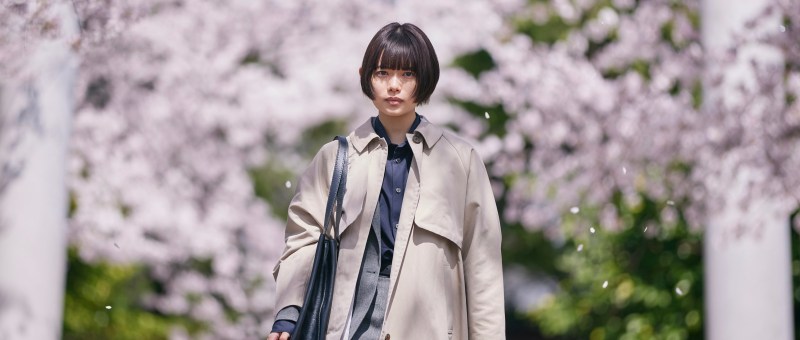
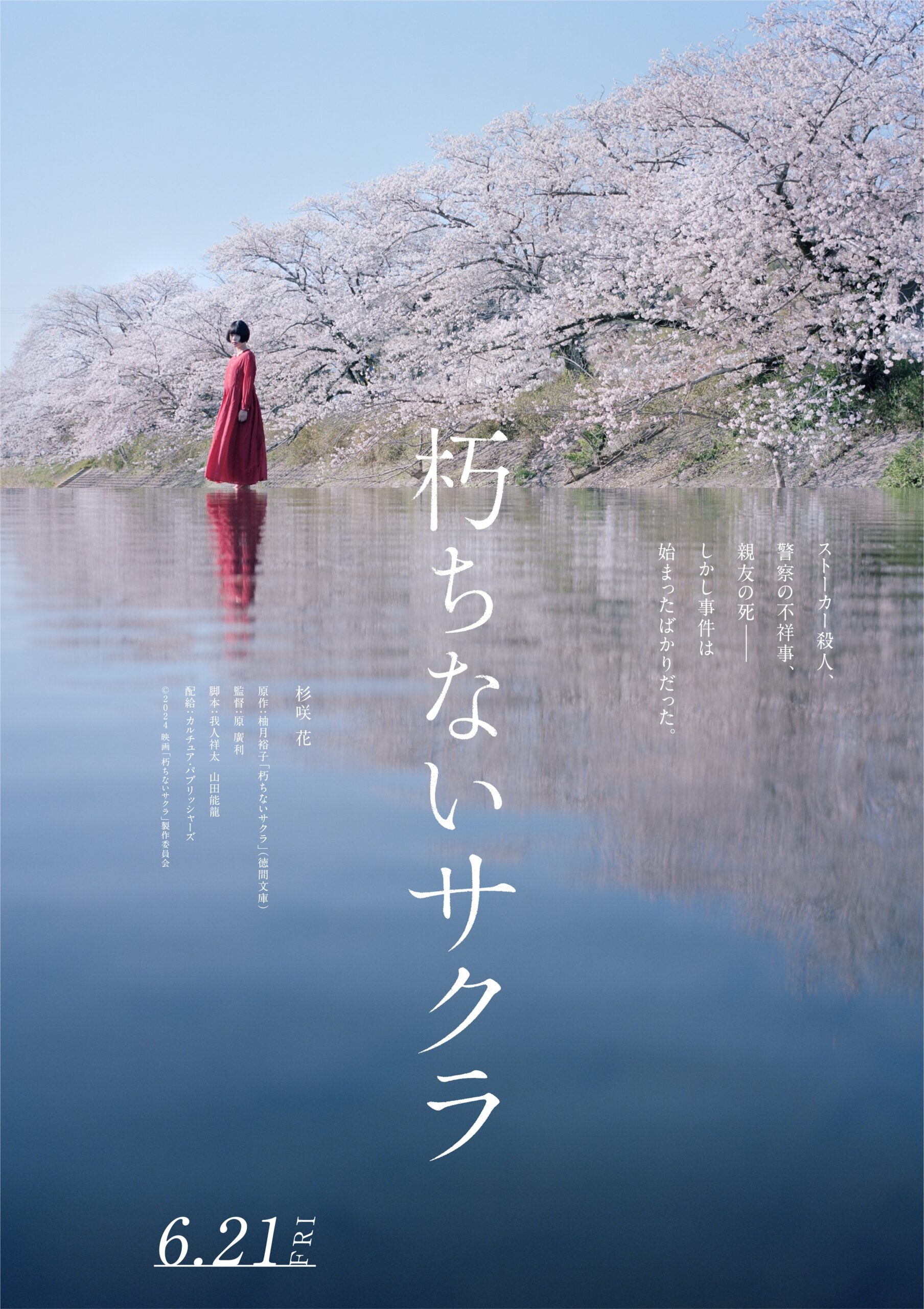
SAKURA (朽ちないサクラ, Hiroto Hara, 2024)

Sakura, or cherry blossoms, are often seen as emblematic of “Japan”. A potent poetic symbol, they blossom only for a short time and then slowly fade away. In the case of Hiroto Hara’s conspiracy drama SAKURA (朽ちないサクラ, Kuchinai Sakura), however, the title refers to a nickname for the security services. In fact, the title could be read either as the “sakura never decays,” or perhaps “will never be tarnished”, “will never die,” echoing the frequent messages that you can never really escape your past for like sakura it will always blossom again while the security services themselves will never fall.

In this case, the event that reverberates is a nerve gas attack on a station that is clearly an allegory for that conducted by Aum Shinrikyo in 1995. Like Aum which is now known as Aleph, the cult in the movie simply changed its name and carried on. Now the head of the police PR department for which the heroine works, former security agent Togashi (Ken Yasuda), is haunted by a mistake he made as a rookie cop and blames himself for not being able to stop the disaster. As fate would have it, the case they’re currently investigating ties back to the cult suggesting a much wider conspiracy in play than the simple intention to cover up a murder.

But there are also two killings here that are likely connected, the first being that of a woman whose allegation of stalking was ignored by the police who, rather than investigate, went off to enjoy themselves on some kind of outing The press is having a field day with the implication the police are both lacking in compassion and negligent in their work. Predictably, the PR division’s main intention is to uncover the source of the leak with Togashi seemingly already suspecting a woman in his department, Izumi (Hana Sugisaki), whose boyfriend, Isokawa (Riku Hagiwara), was himself on that outing. Izumi had accidentally let slip about the police’s activities to her best friend Chika (Kokoro Morita), a reporter who works at the local paper that broke the story. Chika insisted it wasn’t her who wrote the article, but Izumi didn’t believe her. Chika is then found dead after vowing to investigate more fully and prove Izumi wrong with an original hypothesis that she took her own life in guilt over betraying her friend.

Obviously, there’s more to it than that and it soon becomes clear she was murdered probably because she got too close to the truth. Izumi isn’t a detective, but finds herself trying to investigate out of a sense that she contributed to Chika’s death by not believing her when she said she never broke the promise she made not to tell anyone else about the police outing. One might legitimately ask why she is allowed to do this, and the lead detective is not originally happy about it, but as they’re grateful for the leads she turns up, Izumi effectively gets a sort of promotion to investigator. Later events might lead us to wonder if she isn’t being manipulated as part of a wider conspiracy, but then the central intention remains unclear as does the reason the shady forces in play would allow her to investigate Chika’s death knowing the possibility that she may stumble on the “real” truth in the process.

It could be that they simply don’t need to stop her because they know there’s nothing she can do. She has no evidence for her final conclusions and no one would believe her if she spoke out, but it seems odd that conspiracists who’ve already bumped off several other people would allow her to simply walk away knowing what she knows if there were not some grander plan in motion. The question is, is it justified to cause the deaths of a small number of people in order to save the lives of hundreds more who might otherwise die if the cult carries out another terrorist attack before they can be stopped? Sakura apparently have spies and informants everywhere and will do everything they can to protect them in order to facilitate their goal of protecting the nation. Thus the famed cherry blossoms now become another symbol of constant threat and oppression in the spectre of the security services who watch and oversee everything but remain in the shadows themselves. Hara homes in on this sense of paranoia and injustice but in the end cannot resist indulging Izumi’s plucky rookie investigator spirit. Her final decision may not make an awful lot of sense while essentially pitting one authority figure against another. Nevertheless, the tension remains high as Izumi presses forward towards the truth no matter what the danger while like her policeman boyfriend determined to pursue justice wherever it may lie.


SAKURA screens as part of this year’s Japan Foundation Touring Film Programme.

Trailer (English subtitles)
Images: ©2024 SAKURA Film Partners

Scent of a Spell (魔性の香り, Toshiharu Ikeda, 1985)

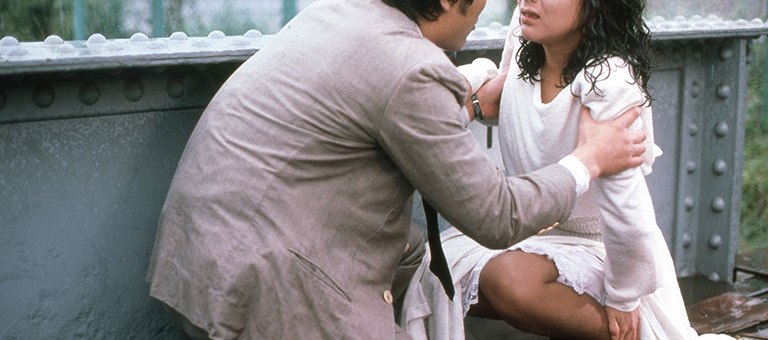
Esaka (Johnny Okura) feels like someone’s watching him. He has this sense of being observed by some otherworldly force along with a generalised feeling of uneasiness. But his paranoia seems to melt away after rescuing a young woman, Akiko (Mari Amachi), whose attempted suicide he witnesses during a rainstorm on his way home. He takes her in and one thing leads to another. For a time, they’re blissfully happy but then something starts to nag at him. Is Akiko really who she claims to be, or a demonic force of monstrous femininity?

It’s this malevolent quality to which the title of Toshiharu Ikeda’s noirish romance Scent of a Spell (魔性の香り, Masho no Kaori) alludes. Esaka is captivated by a hint of mystery and his own white knight syndrome, bewitched by Akiko but also perhaps growing tired of her and fearful of romantic commitment. He has after all been married before and his friend’s comments seems to suggest the cause of marital breakdown may either have been his womanising or his wife’s baseless jealousy. Akiko tells him that she’s on the run from an abusive husband prone to jealous rages and that though she has escaped from Osaka to Tokyo he always manages to track her down. Her sense of being pursued and Esaka’s of being watched seem to perfectly align while he seems to appreciate the fact that she needs him and he is quite literally sheltering her from danger.

Nevertheless, there are cracks in Akiko’s story beginning with the fact the bridge she threw herself off wasn’t the kind to pose a serious risk to life. The drop is only a few feet and though she resolutely refuses to be taken to a hospital because her husband might find her, she may be exaggerating the extent of her injuries. Meanwhile, she seems to have something of a jealous streak becoming irritated when Esaka talks to the proprietress of a local bar, thereafter apparently submitting herself to the attentions of his over-friendly colleague. Perhaps she had a reason to be annoyed given that she didn’t previously know any of these people and he inadvertently excluded her from the conversation, but it’s difficult for Esaka to know if she’s actually being unreasonable or he’s overreacting to a threat to his male pride and autonomy.

It’s this threat to his freedom that’s inflamed when he overhears another man talking to the lady behind the counter at a cafe he regularly goes to about his own girlfriend who is also named “Akiko” written with the character for “autumn”. Though there must be dozens of women with this not all that uncommon name combination in the city, it plants the seed of doubt in him that perhaps his Akiko and the other are the same and she’s two-timing him with this other guy while he’s at work. It also adds to his feeling that she has some kind of malevolent supernatural quality as if she were deliberately targeting lonely men for nefarious reasons. When the man from the cafe is found dead at home having been bludgeoned to death, he can’t help but feel that Akiko must have been involved and possibly intends to harm him too.

Of course, this may just be his fear that she will hurt him emotionally and his growing paranoia is a defence mechanism designed to protect himself against her abandonment or an infringement on his freedom. Or, alternatively, Akiko really is a dangerously crazed and jealous woman and letting her into his life will mean not a moment’s peace until it’s over. Even so, the pair of them discover intimacy in connection in their raw, desperate love making. Every time Esaka’s doubts rise to the surface, Akiko seduces him or he her and he momentarily forgets. In this, the film may have a latent misogyny as a final twist suggests that in the end all women are prone to fits of jealous rage not to mention cunning and trickery directed against each other as much as men who are also, to be fair, faithless liars and cheats. Akiko’s tragic backstory suggests something similar, that she is the inheritor of a legacy of compromised maternity and paternal betrayal. In any case, Esaka is not quite the hero he imagined himself to be either and in the end cannot save Akiko who may also in a way be choosing to sacrifice herself for love of him. Echoing the ending of In a Lonely Place, Ikeda casts their romance as fatalistic tragedy and bathes the noirish closing scenes in a heavenly golden light that suggests true love ends only in futility.


Scent of a Spell is released in the UK on blu-ray 17th February courtesy of Third Window Films.

Cottontail (コットンテール, Patrick Dickinson, 2023)

A recently bereaved widower travelling to Lake Windermere to scatter his wife’s ashes begins to reclaim an image of family in Patrick Dickinson’s melancholy character study, Cottontail (コットンテール). Having travelled to the Lake District in her childhood to visit her father who was working in the UK at the time, Akiko (Tae Kimura) recalled fondly a sense of familial connection symbolised by a photo she believes to have been taken on the lake’s shores and continued to wear a Peter Rabbit necklace right to her dying day.

In a poignant note to her husband Kenzaburo Lily Franky) written before her dementia worsened and left with a Buddhist priest until the time of her death, Akiko expresses regret that they were never able to go there again as a family while she was alive but would like him to scatter her ashes on Lake Windermere in the company of their Son, Toshi (Ryo Nishikido), who now has a wife and daughter of his own.

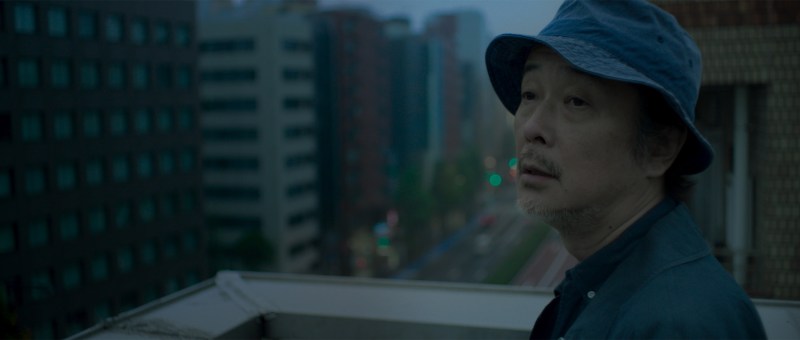
As we can see from the opening scenes, Kenzaburo is a man living at odds with the world around him. Emotionally distant, he finds it difficult to relate to his son and often quite literally shuts him out leaving Toshi hurt and resentful. To begin with, Kenzaburo insists he will go to Lake Windermere on his own and only later agrees to allow Toshi and his family to accompany him, making all the travel arrangements. Once there, however, he becomes impatient and after a minor argument over the itinerary takes off alone only to get on the wrong train and end up on the opposite side of the country as he’s kindly informed by a raucous hen party on their way to York. Forced to rely on the kindness of strangers, he’s taken in by a farmer (Ciarán Hinds) and his daughter (Aoife Hinds) who have suffered a bereavement themselves and attempt to help him process his loss while encouraging him to reconcile with his son. Presenting a kind of mirror he may bounce off while mediating these complex emotions in a second language allows Kenzaburo the opportunity to confront himself and his grief along with his feelings of inadequacy as a husband and father.

We can sense his own regret in a flashback to a meeting in a cafe shortly after Akiko was diagnosed with dementia in which she looks to Kenzaburo for reassurance but he remains in denial. She tells him that she’s afraid and can’t bear the idea of losing her family or becoming a burden to them but he simply tells her that it won’t come to that as if he were closing himself off to the reality but also from her in leaving Akiko alone to deal with her fear and loneliness in refusal to confront anything that is emotionally difficult or unpleasant. Yet Kenzaburo refuses to relinquish her memory, stubbornly carrying her ashes in a tea tin and at times holding it up as if he were showing her around and attempting to share this trip with her in a more literal way.

What threatens to devolve into a more conventional road trip drama in which Kenzaburo is helped on his way by a series of improbably kind and sagacious strangers develops into something deeper as he trudges his way through the English countryside which as it turns out is not all that aesthetically different from that of Japan and largely free of the often claustrophobic hedgerows that literally separate us from the surrounding scenery. The landscape further recalls scenes from Kenzaburo’s life as he begins to reflect on his time with Akiko and confront the reality of her loss along with his new life without her.

In effect, he’s journeying towards a recreation of Akiko’s photograph and its capture of a brief moment of familial unity in a gradual process of reconciling with Toshi and his own position as a father. Quiet and unassuming, Dickinson’s film is less a slow voyage through grief and learning to let go as it is one of gaining courage to open a door that had long been closed, Kenzaburo no longer the melancholy octopus hiding deep in the ocean but a bobbing rabbit eager to experience more of the world around him before it’s too late.


Cottontail opens in UK cinemas 14th February courtesy of Day for Night.

UK trailer (English subtitles)
In the Wake (護られなかった者たちへ, Takahisa Zeze, 2021)

According to a young woman at the centre of Takahisa Zeze’s In the Wake (護られなかった者たちへ, Mamorarenakatta Monotachi he), natural disasters are monsters that devour humans with no rhyme or reason, but people close to her have died by human hands while left at the mercy of a hypocritical social welfare system. Though the social workers insist that benefits are something everyone is entitled to when they need support, others go to great lengths to stop anyone getting them. “That’s the country we live in,” one explains with a tone that implies he thinks this is exactly as it should be.

That social worker is the second to be found dead in suspicious circumstances nine years after the devastating 2011 earthquake and tsunami. The police obviously suspect a grudge, that someone who was turned down for benefits got fed up and killed him in revenge. But as assistant Mikiko (Kaya Kiyohara) says, it’s unlikely to be any of them because they are all “too busy trying to survive,” so they don’t have time to waste on things like vengeance. Zeze then switches to the welfare office where a social worker is trying to explain to an elderly applicant all of the different forms and documentation he’ll need to prepare for his claim. These people already have to jump through hoops to prove their “neediness,” while most of them feel defeated and humiliated in even having to ask and would prefer not to have to depend on the government. 

But a lot of Mikiko’s work involves challenging those suspected of committing benefits fraud. The first of two people she talks to is a single mother with mental health issues (Chika Uchida) who’s had to start working full-time and consequently gone over her allowance meaning her benefits should stop and she should pay back what was “wrongfully” claimed. The woman insists she needs the extra money because her daughter was being bullied for being on benefits so she wants to send her to cram school and be able to buy educational supplies, but Mikiko remains unsympathetic. The second is a man who it’s admittedly harder to sympathise with as he appears to have bought quite a fancy car which again takes him over the limit as a car is classed as a luxury item rather than a necessity. Mikiko doesn’t think they should pay out when he could easily sell the car. Of course, it’s not that simple. The man may need the car in order to work and without it would have no choice but to rely on benefits to a greater extent. In any case, he gets on Mikiko’s nerves because to her it’s people like him that prevent them helping more “genuinely” needy cases. 

But on the other hand, when they could and should have helped they refused and effectively blackmailed an old lady into revoking her application even though she had only 6000 yen (£30) left in the bank and was on the brink of starvation with no one else to turn to. Another of the social workers insists that good neighbours are the most effective way of tackling poverty which is equal parts unreasonable and unrealistic. Then again, there was a kind of solidarity that arose in the wake of the earthquake in which an old woman’s kindness saved a young man and little girl from being dragged away by the weight of their despair, giving them a new home and surrogate family along with proof of the fact that there is always someone there to help and that kind of compassion can be a kind of salvation. 

Even so, Mikiko’s insistence that you have to ask to receive, along with the welfare officer’s almost vampiric obsession with getting the applicant themselves to clearly state they need help, seems contrary to her philosophy in which it should just be provided with no questions asked. They know how difficult asking for help can be and deliberately leverage the social stigma of being on benefits to discourage people from applying for them. Citing increased demand and government cut backs in the wake of the earthquake, the social worker confusingly suggests that by declining more cases they can help more people in the long run which doesn’t make a tremendous amount of sense while his eerie grinning hints that he has begun to enjoying sadistically humiliating these vulnerable people who’ve been brave enough to come forward and ask for that to which they are otherwise entitled. 

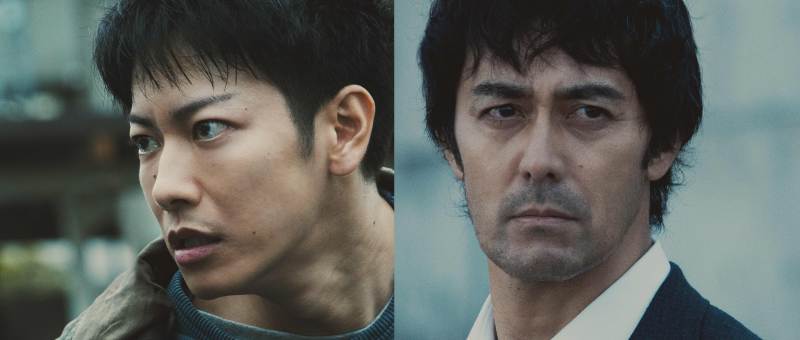
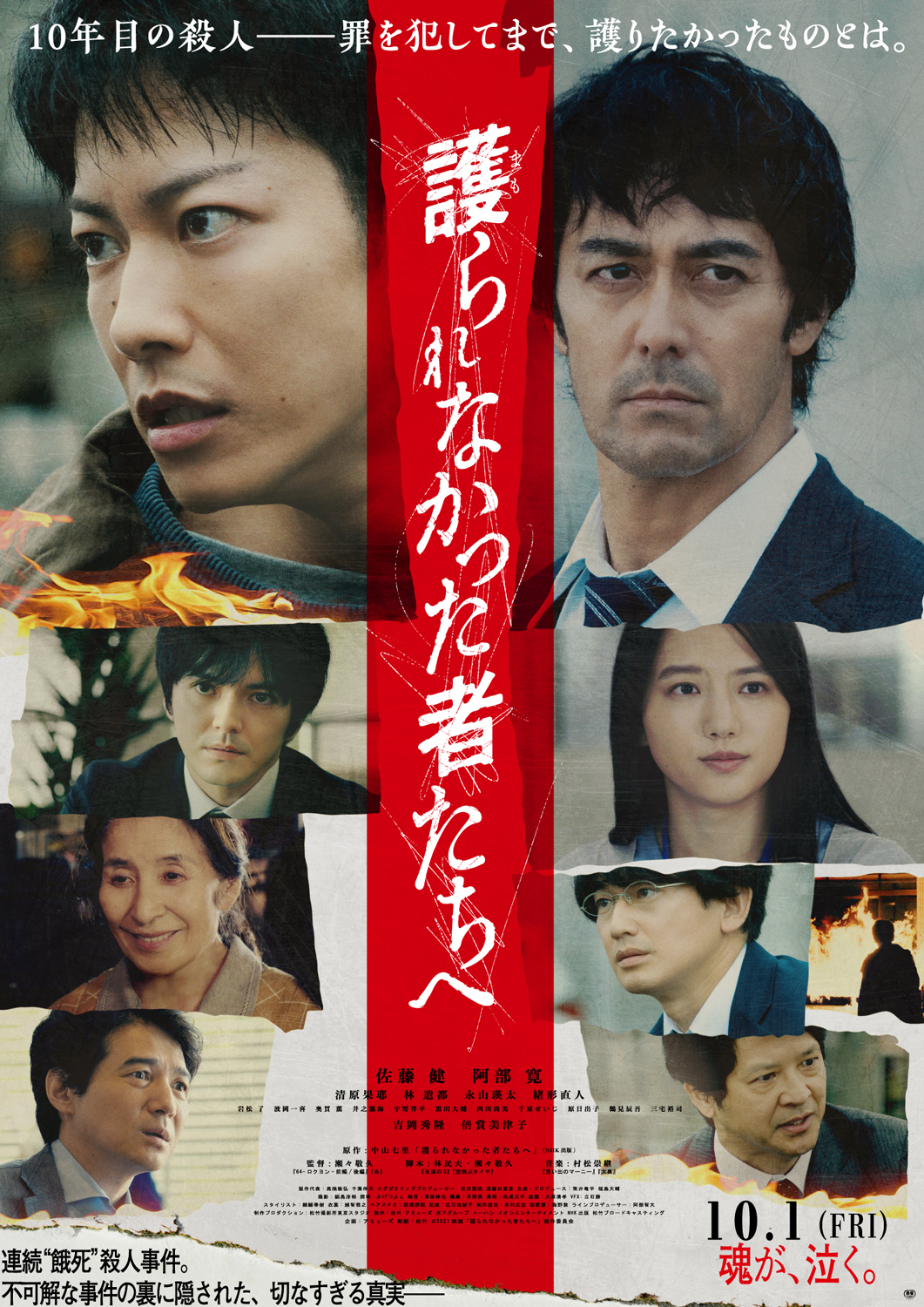
They are all living in the wake of this disaster, something of which aloof yet empathetic detective Tomashino (Hiroshi Abe) is all too aware having lost his wife and son in the disaster. As his son’s body was never found, he too lives in a state of limbo but through investigating the killings begins to find a kind of closure along with an unexpected sense of understanding with a gloomy young man, Yasuhisa (Takeru Satoh), himself a suspect and struggling to make sense of the past, his survival, and the ongoing injustice of the world around him. The film takes its Japanese title, “those who were not protected”, from a note Mikiko writes about the importance of empathy in social work encouraging her colleagues to rebel even if their bosses tell them not to, but also hints at the grief and guilt felt by those left behind that in the end there were those they were not able to save but they can perhaps make their peace with that by continuing to help those around them even if their society largely refuses to do so.


In the Wake screens as part of this year’s Japan Foundation Touring Film Programme.

Trailer (English subtitles)
To Mom, With Love (お母さんが一緒, Ryosuke Hashiguchi, 2024)

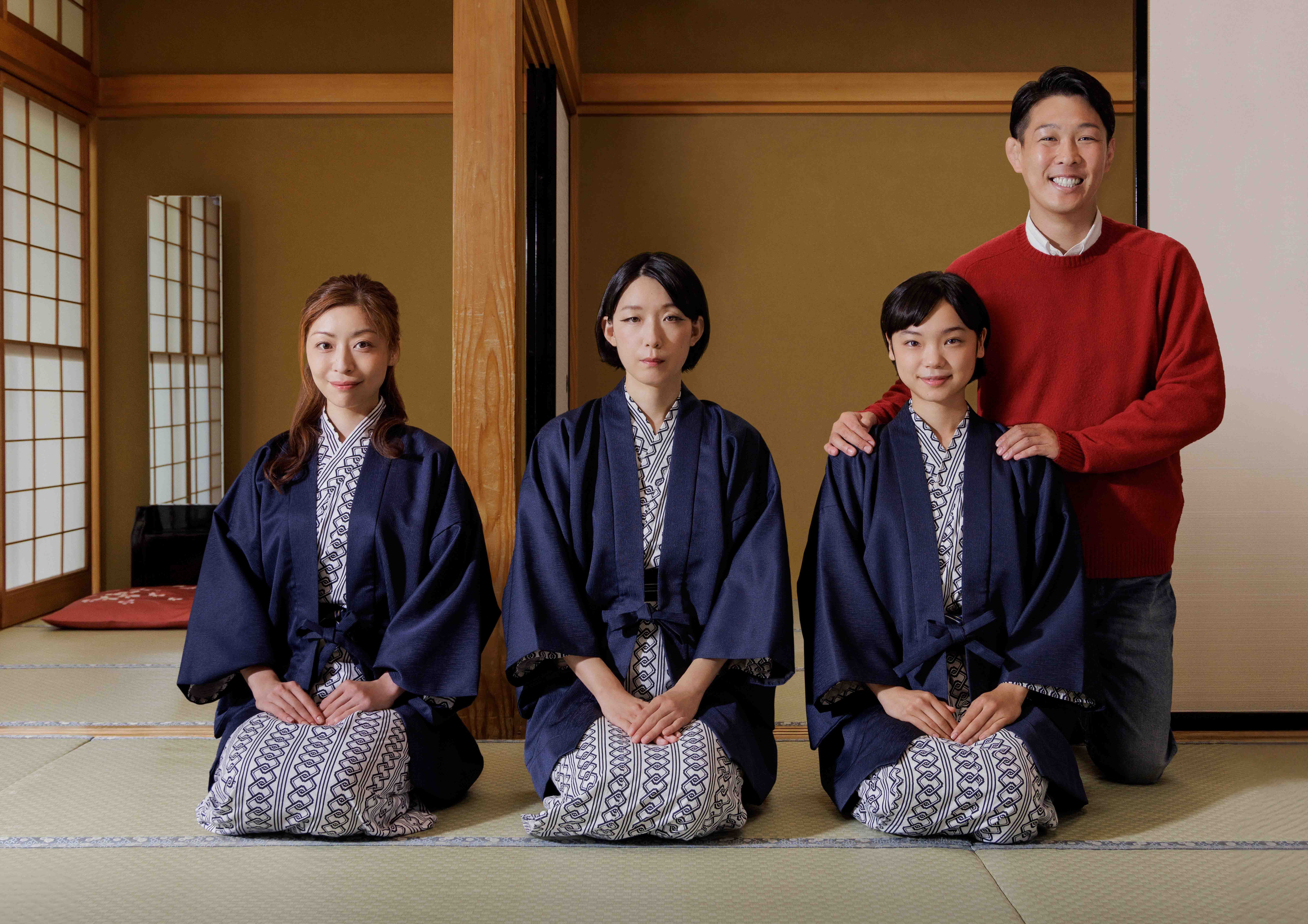
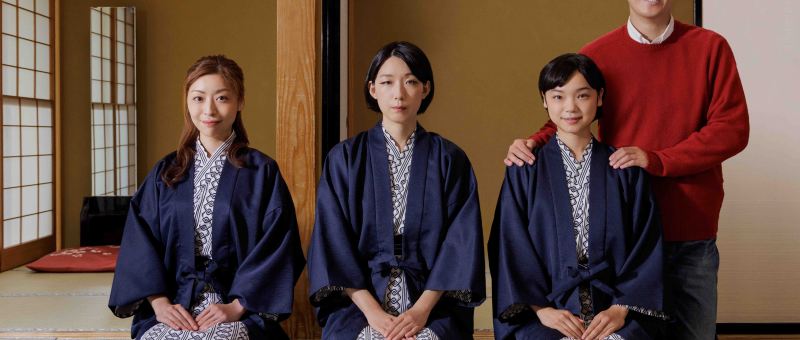
Three sisters embark on an ill-advised family trip to a rundown onsen to celebrate their difficult to please mother’s birthday but eventually discover a kind of serenity in their sisterhood in Ryosuke Hashiguchi’s To Mom, with Love (お母さんが一緒, Okasan ga Issho). Best known for his queer-themed films, this is Hashiguchi’s first feature in a decade and was made to celebrate the 25th anniversary of Shochiku’s family drama channel. As such it explores the perspectives of each of the sisters along with contemplating that of their unseen mother as they each find themselves trapped within oppressively patriarchal social structures.

Which is to say, the main problem is marriage. All the mother wants for her birthday is a grandchild but none of the sisters is married and the older two are ageing out of the prospect of motherhood. 40-ish Yayoi (Noriko Eguchi) has like her mother become somewhat embittered, constantly carping on about the facilities at the old-fashioned inn which she says smells of mould rather than the refreshing scent of tatami mats. She snipes at her sister Manami (Chika Udisa), 35, who has had a string of unsuccessful relationships including one with a married man, while the youngest sister, Kiyomi (Kotone Furukawa), 29, is about to spring the surprise that she is engaged to the son of their local liquor store, Takahiro (Fallgachi Aoyama), as a sort of birthday present for her nagging mother.

This pressure to marry and have children is overwhelming and largely stemming from the mother herself, but it’s clear that she suffered in life because of an arranged marriage to the sisters’ father which was ultimately unhappy. Manami recalls a rare family holiday in which her parents argued in a restaurant and her father violently threw his fork to the floor. He wasn’t an easy person either, but the mother still wants nothing more than to inflict this same misery on her daughters as means of declaring her own life successful. Manami may have a point when she says that they shouldn’t have come on this trip given that it doesn’t seem like something their mother would enjoy and in fact like Yayoi what she apparently enjoys most is complaining about it before going to bed early and ruining everyone’s plans for the evening. 

While all this is going on, Kiyomi has Takehiro hiding out in their room waiting for the signal to join them and doing so patiently without complaint. Though he seems fairly clueless, in contrast to the sisters he’s a calm, easy-going presence and eager to keep the peace. He might be a bit of a flirt, not exactly objecting to Manami’s inappropriately flirty behaviour and hanging out with two other women in the inn’s lounge while Kiyomi bickers with her sisters, but otherwise seems like he just might be nice. An only child, he might secretly be a little jealous of Kiyomi for having siblings to bicker with, though that’s something that Kiyomi is too insensitive to notice at least right away. In any case, his family life seems to have been much warmer and down to earth than that of the sisters who though they berate each other for blaming their problems on others struggle to let go of their familial traumas.

In part, that’s why Takahiro’s arrival sparks such a crisis for it means that Kiyomi will be moving on to the conventionally domestic future which has eluded Yayoi and Manami though they each appear to have desired it. Kiyomi says she was left with no choice but to spring this surprise because her mother wouldn’t listen to her otherwise, but it perhaps also hints at her self-doubt that she will really be able to fulfil these roles as wife and mother or that her own marriage will be any happier than her parents’. Tempers rise and grievances are aired, but in the end you can only really have these incredibly raw arguments with family because they’re the only ones who’ll forgive you once the storm has cleared. Though it may have been a bad idea to come on this trip, there is something in the healing powers of the waters or “power spots” at the local shrine which even seems to cause their constantly “negative” mother to say something nice even as the sisters realise that in the end they only have each other but perhaps need little else.


To Mom, With Love screens as part of this year’s Japan Foundation Touring Film Programme.

Trailer (Japanese subtitles)

Images: ©2024 SHOCHIKU BROADCASTING Co., Ltd.