KimStim Acquires North American Rights to Remembering Every Night

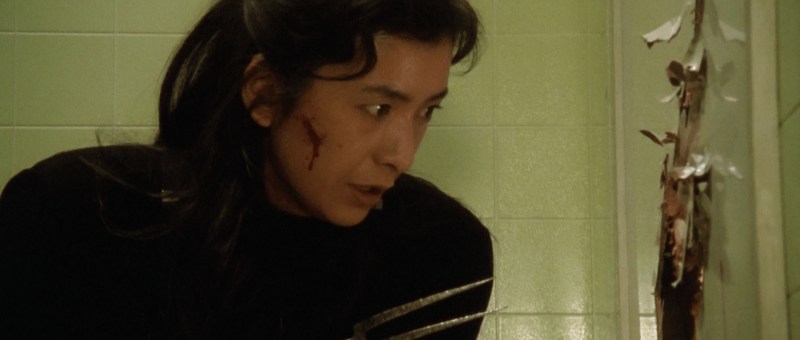
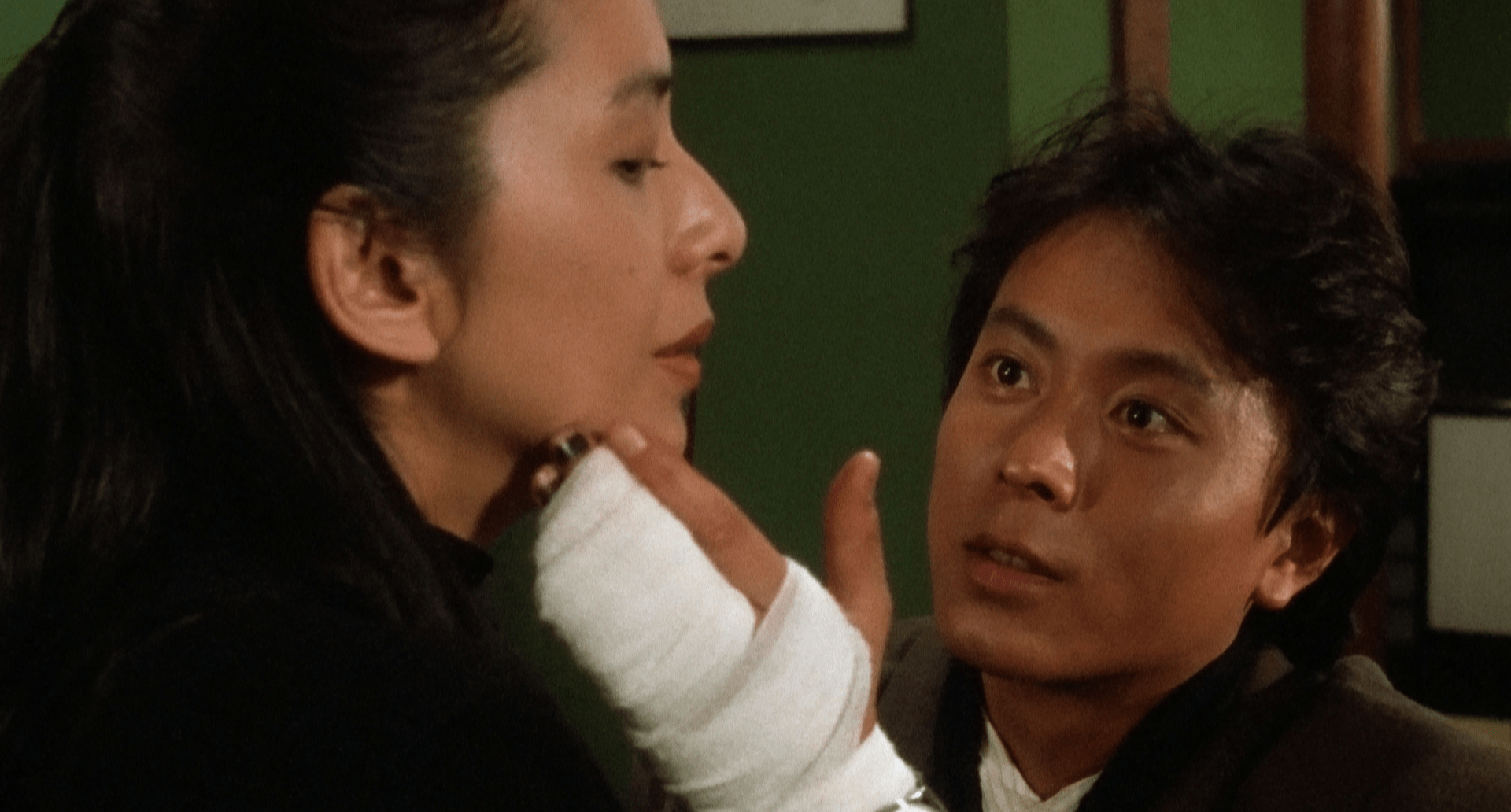
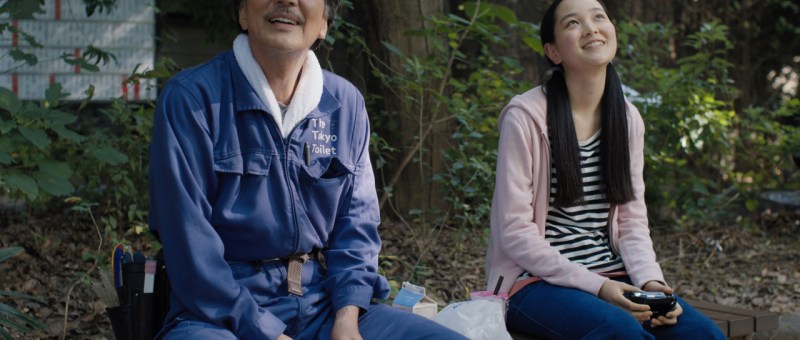
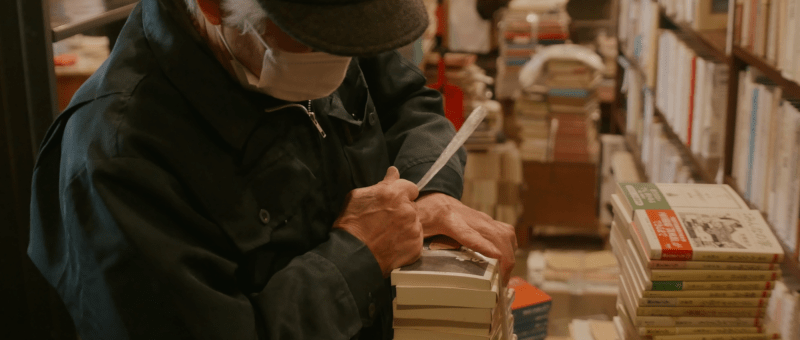
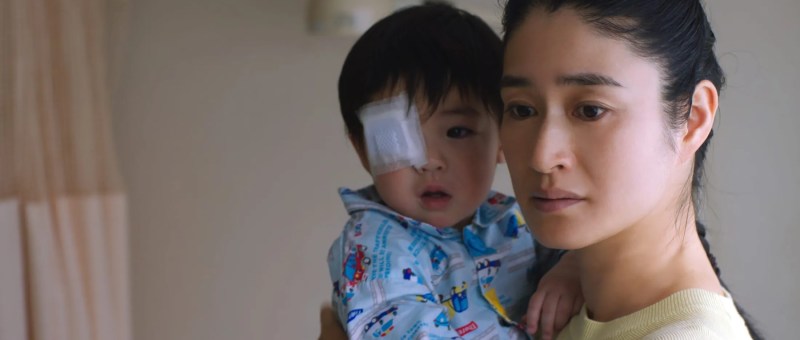
KimStim has acquired the North American rights to Yui Kiyohara’s breezy drama Remembering Every Night. Set in the tranquil environment of Tama New Town, the film follows a series of women each in search of something on a bright summer day.

Check out our review:

Told with breezy serenity, Kiyohara’s playful summer drama circles the unreality of the everyday but finds in it a kind of comfort if perhaps tempered by melancholy

Remembering Every Night’s theatrical release begins at New York’s Lincoln Center on Sept. 15 with a wider North American rollout to follow.

Party 7 (Katsuhito Ishii, 2000)

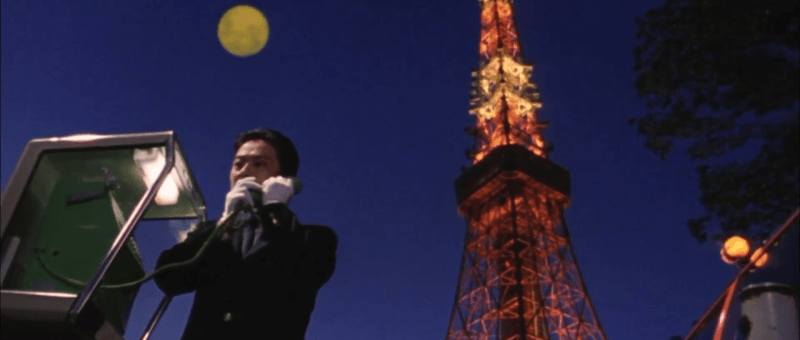
“This shit’s for real.” according to the front desk guy at Hotel New Mexico, an out of the way spot just perfect for those looking to lay low for a little while. Like a lot of Katsuhito Ishii’s work, Party 7 is essentially a series of self-contained vignettes which eventually collide following a series of bizarre coincidences revolving around some money stolen from the mob, a two-way mirror in a regular hotel room, and the receptionist’s tendency to almost literally shoot the shit. 

Following a brief prologue, Ishii opens with striking animated sequence which introduces each of the main players with an arcade game aesthetic and explains that Miki (Masatoshi Nagase) has stolen money from the mob and is currently on the run which is why he’s turned up at the infinitely weird Hotel New Mexico. The running gag is that Miki thinks he’s holed up somewhere no one will find him, but sure enough a series of “friends” soon turn up in part thanks to a loose-lipped travel agent. The fact that people can find it so easily dampens the impression of the Hotel New Mexico as some kind of interstitial space. It’s not so much existing in a weird parallel world as a bit run down and staffed by a series of eccentrics. It does however have a “peep room” hidden behind a two-way mirror where “Captain Banana” (Yoshio Harada) is attempting to pass his knowledge on to the young Okita (Tadanobu Asano), the son of a recently deceased friend who has been repeatedly arrested for voyeurism. 

Captain Banana’s insistence on his surreal superhero suit is in a way ironic, if perhaps hinting at the super empowerment of accepting one’s authentic self. “It’s your soul,” he tells Okita, “it’s screaming ‘I want to peep’.’” Meanwhile, Miki gets into an argument with his ex-girlfriend Kana (Akemi Kobayashi) who has turned up in the hope of reclaiming money that he owes her. Kana too seems to be less than rigorous with the truth if perhaps emotionally authentic. She’s now now engaged to a nerdy guy having somewhat misrepresented herself as the innocent girl next-door type. Her refusal to let her fiancé into her apartment perhaps hints at a more literal barrier to intimacy or at least that she is intent on preventing him from seeing her true self. What she doesn’t know is that her fiancé hasn’t been completely honest either, in part because he thinks she’s out of his league and is insecure in their romance. 

Miki too maybe somewhat insecure, having run off with the gang’s money after hearing them bad mouth his associate Sonoda (Keisuke Horibe) who has now been charged with killing him and getting the money back. But Sonoda too has reasons to doubt the boss’ affection for him after Miki and the others point out that gifts he thought were so valuable are really just cheap knock offs that suggest the boss thinks very little of him at all. Okita’s psychiatrist tells him that there are “no rules in making friends”, and maybe in a strange way that’s what everyone is trying to do. Kana wanted the money to overcome her anxiety about having no friends or family to invite to the wedding, while all Sonoda wanted was the boss’ approval and though Miki had deliberately gone somewhere he thought no one would find him nevertheless attracts a series of followers. 

Even the receptionists seem to be desperate for human contact with their strange stories of poo falling from the sky and bizarre approach to hospitality. “The point is whether you believe it or not,” one tells the other after spinning what sounds like a yarn but then again might not be. Ishii’s zany world has its own surreal logic culminating in a piece of cosmic irony and defined by coincidence as the otherwise unrelated stories begin to come together and slowly find their way to Hotel New Mexico but seems to suggest the point is in the serendipity of the meeting and its concurrent authenticity even if a literal shot in the arm is a less than ideal way of brokering a friendship.


Party 7 is released in the UK on blu-ray on 17th July as part of Third Window Films’ Katsuhito Ishii Collection.

Original trailer (English subtitles)

The Tunnel to Summer, the Exit of Goodbyes (夏へのトンネル、さよならの出口, Tomohisa Taguchi, 2022)

A pair of lonely teens begin to find direction in their lives while investigating a mysterious phenomenon in Tomohisa Taguchi’s The Tunnel to Summer, the Exit of Goodbyes (夏へのトンネル、さよならの出口, Natsu e no Tunnel, Sayonara no Deguchi). Adapted from the series of light novels by Mei Hachimoku, the film asks if it’s worth sacrificing the present to reclaim the past for an uncertain future, but also has a few things to say about grief and guilt and the necessity of moving on even if in this case a little further ahead than most. 

The mysterious “Urashima” tunnel is so named in reference to the classic folk hero who spends a few days with a princess at the Dragon Palace and then returns home to find that it is 100 years later and everyone he knew is dead. The princess gave him a box telling him never to open it but of course he does and suddenly becomes an old man. As high schoolers Kaoru (Oji Suzuka) and Anzu (Marie Iitoyo) discover, the tunnel works in much the same way. A few seconds inside is hours out, though they say that if you reach the end your wishes will be granted. Each desiring something, the pair team up to investigate together and gradually fall in love but are also divided by the contradictory nature of their quests. 

Reluctant to reveal the reasons behind her interest in the tunnel, Anzu fears that her desires are trivial in comparison to those of Kaoru who is trying to restore his family by bringing back his little sister Karen (Seiran Kobayashi) who was killed falling from a tree. Kaoru claims that he wants to see the kind of world that Karen had envisaged where everyone was happy, but is also trying to deal with his grief and guilt and looking for the restoration of a sense of stability he once had in his family. Anzu, meanwhile, is insecure in her gifts as an artist and has been rejected by her parents for her desire to make manga like her penniless grandfather. Kaoru tries to convince her that she has talent already but Anzu seems to believe that she needs once in a generation flair in order to be able to make her mark even if they get stuck in the tunnel and emerge hundreds of years later into a world in which manga no longer exists. 

But as Kaoru later finds out, the tunnel only lets you take back something you’d lost. It does not grant wishes for something that never belonged to you. Kaoru never really stops to think about the practicalities of his quest such as the increased age difference between himself and Karen or how he’d explain her sudden resurrection, while Anzu doesn’t really reflect on the how meaningless her success would be if didn’t come from her own efforts even as they work together to solve the mystery of the tunnel as a way of working through their individual anxities. Though their first meeting had been frosty, the pair soon bond in their shared loneliness and fractured families but like most teenagers don’t quite have the confidence to say the big things out loud. 

Taguchi makes the most of his summer countryside setting capturing the vibrancy of his surroundings from the cool blue sea to the bright yellow sunflowers near the train station while also hinting at the “boring” nature of small-town life in which there’s not much else to do than create your own adventure. Set in 2005, the film also has a meta time slip quality with its flip phones and minidisc players seemingly taking place in a more innocent age if also emphasising that the reason the teens can disappear for three days researching a tunnel is that their respective adults aren’t very bothered about what they’re doing or where they are. Each of them discover what it is they really wanted out of their mystical journey, if otherwise out of sync, as they learn to deal with their grief and insecurity before discovering the exit from the eternal summer of their youth into a less certain adulthood that no longer scares them but instead offers new opportunities amid the newfound solidarity of their togetherness.


The Tunnel to Summer, the Exit of Goodbyes opens in UK cinemas on 14th July courtesy of All the Anime.

International trailer (English subtitles)

Images: ©2022 Mei Hachimoku, Shogakukan/The Tunnel to Summer, the Exit of Goodbyes Film Partners

No Life King (ノーライフキング, Jun Ichikawa, 1989)

Taking place at the tail end of the Bubble era and on the eve of a technological revolution, Jun Ichikawa’s No Life King (ノーライフキング) in many ways anticipates the world we have today in which much of our communication has already become digitised. The cult-like speech of the next-gen guru who pops up towards the film’s conclusion may have eerie ring to it, but he has a kind of point in his talk of “new children” who will become “new adults” in a new digital world that was then only just becoming a reality. 

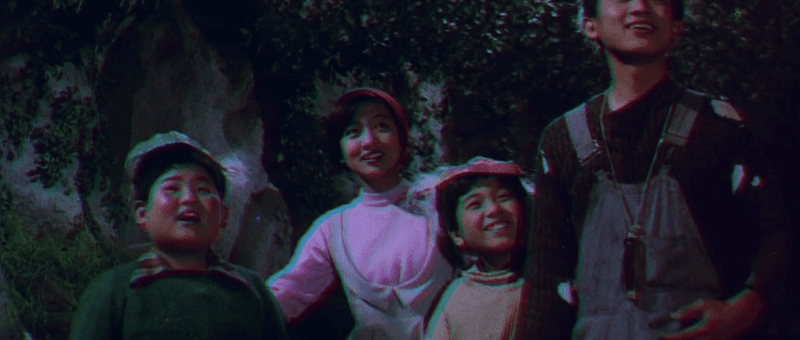
As someone later says, “the problem is not video games” though many seem to assume it is. The hero, Makoto (Ryo Takayama), whose name means “truth”, is one of a group of five boys obsessed with Nintendo console gaming. A game series known as Life King has become so popular that hundreds of youngsters camped out all night waiting for the release of the fourth instalment. The only problem is that the game seems to be unbeatable, and Makoto’s young friends begin to hear rumours that some of the cartridges are “cursed” with an alternate “No Life King” version that means death for players who cannot finish the game. 

The “curse” reflects a confusion that is beginning to emerge over what is “real” and what is “virtual” in an era of rapid technological development. The kids begin to worry that if you die in the game you die for real, while otherwise becoming obsessed with all kinds of urban legends relating to mysterious deaths and conspiracy theories such as that of the actor who plays tokusatsu hero Pris secretly being dead and that all the collectible Pris pencil erasers you can get from gachapon machines are cursed with the resentment he felt as he died. Some would be keen to dismiss this kind of thing as silly things kids say, but then Makoto’s mother also suggests that cakes from the bakery the family of his classmate Noriko owns are “cursed” as customers have been coming down with food poisoning after eating them. According to the guru’s assistant Mizuta (Neko Saito), the rumours are having a serious economic impact and have led to delays in product launches and construction projects in addition to provoking a politician’s resignation. 

Then again, the film seems to wonder if it’s the Bubble-era economy which is the enemy. While Makoto plays video games on his own but chats to his friends doing the same thing via telephone headset, his mother often works late into the night staring at a computer screen in their home. Makoto attends a summer cram school where all of the work is done via computers linked via a primitive version of the internet. The teacher is present but cannot actually see any of the children and they can’t see him. Questions are asked and answered via the interface rather than directly, though the computer network of cram school students does eventually allow Makoto to get in touch with other “new children” who are just as worried about the cursed game as he and his friends are while the adults respond by taking their consoles away which of course denies them the ability to lift the curse by beating the game. 

The “curse” itself may symbolise mortality, though obviously the children will still someday die regardless of whether they beat Life King IV because life itself is an unwinnable game. “The problem is…” the opening text crawl explains, “the battle has begun. It is unlikely to end until you die.” The same words are uttered by Makoto’s principle only he substitutes “video games” for the second part of the sentence before dramatically falling backwards just like the stricken king of the game while Makoto and the other kids are lined up almost identically to the ranks of soldiers amassed in front of him. This moment of symmetry links back to a line from the guru Akiyuki Mori who hints at a new world in which life and death exist simultaneously. It is this new world that “new children” must learn to adapt to as they grow with technology.

“It’s scary, but we’ll die if we can’t lift the curse” Makoto tells one of his online buddies and eventually becomes an accidental folk hero with the other kids looking to him to free them by beating the game. Graffiti tags go up all over the city reading, “hang in there, Makoto”, while he becomes preoccupied by the nature of the “real” as related to him by Mori and his assistant Mizuta who begin to view him as something like a prophet or at least the first of the “new children” to enter the “new real” in which the distinction between the “real” and “virtual” has disappeared. Fearing for his mortality, Makoto saves himself in the digital space by writing a bio and saving it to floppy disc much as a hero who died in the game was immortalised in stone so that no one would ever forget that he existed. 

By the film’s conclusion, “real life” has become a kind of game as evidenced by the advice of Makoto’s cram school tutor that he try and raise his score by 20 points to increase his chances of getting into a higher level institution. The mysterious boy somewhere on another computer tells him to go and look around outside at which point he wanders through the contemporary city and sees it with new eyes. “It is all real” he concedes, catching sight of Mori and his assistants in the crowd just as we start to wonder if this really is “reality’ after all. Then again, perhaps the best lesson the boys learn is from one of their grandfathers who simply “kept living until he died”. Ichikawa captures a sense of technological anxiety in the uncanny eeriness of the “real” world around the boys but is perhaps less pessimistic about the new age that awaits them in the solidarity that exists between the “new children” despite the seeming indifference of the adults incapable of understanding the anxiety that engulfs them.


The Sea of Genkai (任侠外伝 玄海灘, Juro Kara, 1976)

Juro Kara was an avant-garde playwright and theatre practitioner whose work was a part of the Little Theatre Movement which rejected conventional naturalism and prioritised the physicality of the actor over text and dialogue. Though he performed as an actor in films by other avant-garde filmmakers such as Shuji Terayama and Nagisa Oshima, he directed only one film. By these standards, the The Sea of Genkai (任侠外伝 玄海灘, Ninkyo Gaiden: Genkai Nada), a co-production with the Art Theatre Guild, may seem surprisingly conventional, but is also highly unusual not only in ATG’s filmography but also in its subversions of the yakuza film. 

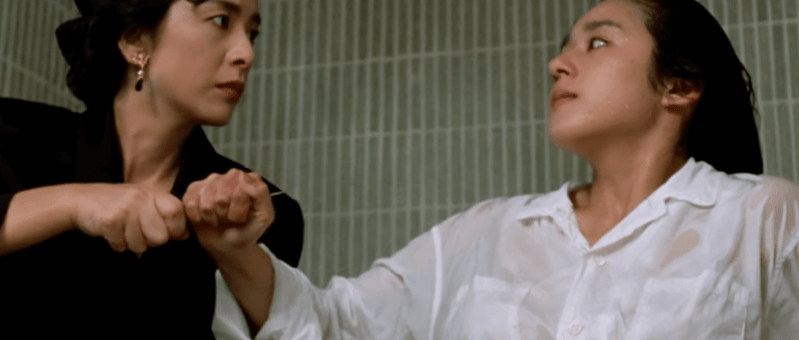
The Japanese title is prefaced by “ninkyo gaiden” which makes it sound like a spin-off to a ninkyo eiga or chivalrous gangster movie, which turns out to be incredibly ironic because there is no chivalry or honour here only cruelty and exploitation. Set in the port of Shimonoseki where boats leave for Korea, the film follows dejected petty yakuza Kondo (Noboru Ando) as fate finally catches up with him. He and his boss Sawaki (Jo Shishido) were once students together and took a job in Busan dealing with the corpses of American soldiers killed in the Korean War. Sent to deliver dog tags to widows, Sawaki spits in a distraught woman’s face and then attempts to rape her, only there is another couple in her home and the man soon wakes to challenge him. Kondo and Sawaki are then drawn into a brutal and ugly fight during which Kondo knocks out the man while Sawaki rapes the widow. The other woman then threatens them with a knife, taking back the dog tag only for Sawaki to pounce and strangle her. Sawaki then flees the scene confused by what he’s done, but Kondo stays behind and rapes the second woman’s corpse before leaving her for dead. 

Kondo later relates that he’s been unable to sleep with women ever since his experience of necrophilia in Korea in 1951. Kura often cuts back to the bundle of dog tags Kondo has been keeping all this time which hang by his window like a wind chime. He watches them sway and hears them jingle with the violent motion of Sawaki’s raping the woman, hanging that of, presumably, a random man around the second woman’s neck as he in turn rapes her body. He later finds a woman who reminds him of the one he raped while dead among a cohort of those he’s in the process of sex trafficking who has unwittingly put on one of the dog tags like an ironic necklace while taking a bath in his apartment on the invitation of his more sensitive associate Taguchi (Jinpachi Nezu). On catching sight of Kojun (Reisen Ri), he’s struck by a literal flashback that is a clear homage to Henri-Georges Clouzot’s Les Diaboliques as he watches a “dead” woman rise from a bath. Later he rapes her too, presumably the first (though not the last) “living” woman he’s had sexual contact with in 25 years. 

The dog tags take on a still more ironic relevance in the Korean song which plays over the opening titles and is sung frequently by the trafficked women. The song is sweet and innocent, narrated by a woman who is preparing a “flower garland” for someone that she loves, but its imagery is subverted in Kondo’s grim necklace of dog tags taken from fallen men. Even Sawaki describes him as someone who has been dead for 20 years while preparing to sacrifice him to curry favour with their creepy Tokyo boss Tahara (Taka Ohkubo) who permanently wears black gloves on both hands even while shirtless, while Kondo later sings a song characterising himself as a “black dog” who never stood a chance in this broken world of ruined dreams. Penned by Kura himself and performed by Ando, this song more clearly reflects his absurdist dialogue style in its deeply melancholy imagery as Kondo fully succumbs to his image of death. 

Kondo’s actions come to emblematise the continued violence inflicted on the bodies of Korean women by Japanese men from the colonial era onwards. The woman from the bath, Kojun, suffers continually throughout the film and is later forced to perform in strip shows by the Sawaki gang. She is clever, and fierce, but the world is all against her and the only answers that she ever gets as to why her “uncle” forced her to stowaway on a smuggling boat to Japan only further deepen the wounds inflicted by a deeply corrupted, imperialistic patriarchy. Kojun develops a fondess for Taguchi because he is the only man who doesn’t try to rape her and in fact saves her from being raped though later said to be impotent and rejected by the other gang members for his refusal to participate in their despoiling of the Korean women. Bloodstained underwear becomes a symbol of sexualised violence countered only by the plain white pairs Kojun later buys for Taguchi after replacing her own ruined clothing.  

She and Taguchi attempt to protect themselves by bringing the receipts, threatening to release the smuggling account books and expose a host of dodgy dealings if the Sawaki gang come for them, but in the end there is no escape. Taguchi finds himself wading through oil-soaked waters with his dreams in ruins before finally breaking the chain though it’s unclear if it will really free him. Bleak beyond measure in its deeply tragic denouement, Kara’s intense drama offers no respite from its nihilistic world of violence and exploitation and leaves us quite literally floundering in a dark sea of inevitable corruption. 


Trailer (no subtitles)

꽃목걸이 – 이영숙 (1972)

(꽃목걸이 = “flower necklace”. There doesn’t seem to be an official romanisation of singer 이영숙 (李英淑)’s name, but it does appear in a few places as “‘Iyeongsuk”, or “Lee Young Sook”. A contemporary romanisation would render it as “Lee Yeong-suk”)

Ghost in the Regiment (憲兵と幽霊, Nobuo Nakagawa, 1958)

A treacherous military police officer comes to embody the evils of war in Nobuo Nakagawa’s eerie psychological horror, Ghost in the Regiment (憲兵と幽霊, Kenpei to Yurei). Kyotaro Namiki’s The Military Policeman and the Dismembered Beauty (憲兵とバラバラ死美人, Kenpei to Barabara Shibijin) had been a big hit the previous year so studio head Mitsugi Okura tasked Nakagawa with producing something similar at which point he proposed a film centring on “treachery and patriotism”. The Japanese title closely resembles that of Namiki’s film in beginning “the military policeman and…” as if it were a continuation of an ongoing series but is otherwise unrelated and could even be interpreted to suggest that the protagonist is both malevolent supernatural entity and military policeman. 

Lieutenant Namishima (Shigeru Amachi) is indeed later described as “the embodiment of evil” and his desire for conquest, in this case of a woman about to marry another man whom he will eventually win and discard, is reflective of the destructive lust for imperialist expansion. When Akiko (Naoko Kubo) marries another member of the military police, Tazawa (Shoji Nakayama), in the autumn of 1941, Sergeant Takashi (Fujio Murakami) jokes with Namishima that he has “failed to win the girl”, but Namishima merely smirks and explains that he’s playing a long game, “The true spirit of a warrior is found in the final victory.” Soon after he frames Tazawa for having stolen secret documents he himself has sold to Chinese spy Zhang (Arata Shibata), subjecting him to heinous torture and having both Akiko and his mother (Fumiko Miyata) tortured in front of him to force Tazawa to confess. Thereafter he has him executed by firing squad but Tazawa, strung up on a cross, continues to protest his innocence until the final moment issuing a curse on all those that have wronged him. 

Unlike some of Nakagawa’s other films, the ghosts here are less supernatural than they are psychological. Namishima has frequent flashbacks and visions that remind him of his crimes and is quite literally haunted by his guilt while refusing to admit that he feels any. It seems that he harbours strong resentment towards the military and implicitly towards the militarist regime and emperor having been rejected by the military academy because his father had committed suicide. His treachery is revenge but also equal parts self-destruction and a wilful bid to assert himself through his transgressions marvelling at his success in becoming the sort of person who could betray his own country and kill his own people. Both Tazawa and his brother (also played by Shoji Nakayama), who later joins the military police hoping to investigate the circumstances of his death, were graduates of the military academy and therefore idealised cogs in the military machine. 

Somewhat uncomfortably, the righteousness of Tazawa’s brother effectively legitimises the militarists in suggesting that a man like Namishima is an aberrance unreflective of the militarist ideal. “Ignoring the innocent goes against all the military police stand for”, Tazawa earnestly tells Namishima when he attempts to cut corners framing another suspect for his own ends, lending the military police an air of legitimacy they may not have had in reality when we might ask ourselves what exactly it was that they “stood for” which is more likely the nihilistic amorality to which the narcissistic Namishima subscribes. As he said, women lose their lustre once he’s got them. Having pretended to be a friend to Akiko in her widowhood, he rapes her during an air raid and it’s at this point that Japan begins rapidly losing the war as Namishima’s moral decline mirrors the fortunes of his nation. Having got what he wanted, he callously discards her and is transferred to Manchuria where he continues to work with Zhang and his wife, Ruri/Honglei (Yoko Mihara), with whom he has something like a more genuine romance.

His crimes will, however, catch up with him and it’s in Manchuria that his schemes begin to unravel not least because of the unsettlement that the presence of Tazawa’s brother, who has been seconded to his unit, causes him. The film’s surreal conclusion takes place in a Christian graveyard with Namishima surrounded by crosses which align with the crucifix on which Tazawa was executed. The crucifix itself would have no particular religious connotation in Japan and is simply a convenient way of constraining someone for execution but here takes on a symbolic dimension in confronting Namishima with his sins of transgression. Soon he is surrounded by hundreds of Tazawas on crosses, echoing the many men who were in effect murdered by the imperialist regime in a war fuelled by the same lust for conquest that motivated Namishima. Nakagawa’s camera takes on the role of an observer, sometimes comically swooping between talking heads as if following an ongoing conversation while later rocking in unsteadiness as Namishima begins to lose his grip on reality, finally confronted with the “ghosts” that surround him. 


Original trailer (no subtitles)

Maelstrom (マエルストロム, Mizuko Yamaoka, 2023)

In her personal essay film Maelstrom (マエルストロム), Mizuko Yamaoka meditates on disability and the quest for fulfilment in a society that can be oppressive and unwelcoming. Accompanied by her continuous voiceover, she presents a series of slides and snapshots along with a handful of video captures and interviews to illustrate her life’s journey while simultaneously searching for direction and wondering where it is she is supposed to be or go to fully become herself.

Several times she asks herself if she’ll ever become nostalgic for what was otherwise a time of struggle, and does in fact find that she has a fondness for the childhood home from which she longed to escape and most particularly its flowering dogwood tree so cruelly cut down when the house was demolished in 2013. The destruction of the house at once leaves her painfully rootless but perhaps also free as it seems to have done for her parents. She observes her mother whom she otherwise describes as controlling and lacking in empathy finding a new lease on life living together with the husband with whom she still seems to be very much in love all these years later. 

Paradoxically it’s this kind of relationship that Mizuko describes herself as seeking, lamenting the end of a relationship with a German boyfriend she met while studying abroad which frittered out when he returned home and she stayed in New York. Though Mizuko had longed go to abroad as a way of escaping her family which also in its way represents the conservatism of Japanese society, she had not wanted to go to New York and had ambivalent emotions about accepting her mother’s offer to study there not least in the feeling that she was once again suppressing her own desires to follow her mother’s commands. It was while studying there that she was involved in a traffic accident which broke her neck. Now a wheelchair user she felt she had no option but to return to Japan for longterm treatment and to the home she’d been so desperate to escape. 

Even so, the wheelchair is for her a means of seizing her freedom and she determines to reclaim her independence. The middle section of the film centres on the difficulties of living with disability in the contemporary society. Her parents had had their house adapted for accessibility and provided a separate entrance to give her some privacy, but when her father’s business closes and they have to sell she finds it difficult to find accessible living spaces and has to make a few alterations including a new bathroom in the flat she moves into. Attending a residential programme in Denmark had given her new insights into accessibility which she hoped to bring to Japan while making her own accommodations where she can such as fitting a crane to her accessible car to help her lift her powered wheelchair into the back independently.

Later she remarks on how easy it seemed to be for an able-bodied man to carry the wheelchair she struggled to move for her while insisting that she didn’t want to let stairs become a barrier to her travel. Wanting to visit somewhere new, she goes to a hairdresser’s owned by someone she’d met at a bookshop but has to ask staff to physically carry her down the narrow stairs to the basement salon. She finds that though it requires thorough research and planning, she is able to enjoy international travel arriving safely in Venice by water taxi further boosting her sense of freedom and independence. A temporary sense of equality emerges during the coronavirus pandemic as events go online and accessibility issues decrease even if it doesn’t seem to have much longterm benefits in changing the way society thinks about disability and inclusion. 

There’s no denying that Mizuko’s voiceover is often bleak and rigorously honest in expressing her feelings especially those relating to her complicated family relationships, but is in it’s own way hopeful as she continues to strive to find fulfilment in her life even as she observes others move on and leave her behind. She reflects that the internal issues she’s trying to overcome were present long before her accident and rediscovers release in her art of which this documentary is only a part while beginning to reassess her relationships and realising that independence doesn’t necessarily mean doing everything alone. A poignant meditation on past, future, the floating nature of connection, and an ableist society Yamaoka assembles a kaleidoscopic vision of her life while musing on ambivalent nostalgia and the necessity of moving forward in the midst of the maelstrom of life.


Maelstrom screened as part of this year’s Nippon Connection

Original trailer (English subtitles)
Tokyo Uber Blues (東京自転車節, Taku Aoyagi, 2022)

Aspiring filmmaker Taku Aoyagi had been working as a substitute driver, driving people home in their own cars after they’ve had a drink, for a company owned by his uncle in rural Yamanashi when the pandemic hit in early 2020. With bars closed and fewer people going out in general, he soon lost his job while saddled with significant student debts. In Tokyo Uber Blues (東京自転車節, Tokyo Jitensha Bushi), he documents his decision to move to Tokyo and become an Uber Eats delivery agent having heard of big opportunities to earn easy money amid the delivery boom of the pandemic. 

Aoyagi’s capture of himself is not always sympathetic and he often appears relatively naive even while trying to contend with the vagaries of the Covid-era economy. He’s fortunate enough to be invited to stay with a friend but soon finds that the work is much more difficult than he’d been led to believe and a nine-hour shift earns him only around 60 US dollars. Most of the orders he’s carrying seem inordinately small, biking half way across the city just to deliver one burger or a pair of bubble teas meaning of course that he’s only picking up a minimal amount in tips. The work is also physically taxing though obviously becomes less so as he gets used to it and is then able to upgrade to an electric bike. 

The film is much more about Taku’s direct experience as an Uber Eats deliveryman than it is about the gig economy, the precarious working environment, pandemic or life on the margins of a prosperous society at a moment of crisis but nevertheless makes small asides hinting at a disparity between the people who order the deliveries and those who deliver them. Taku reflects that people in high rise condos seem to order an awful lot of stuff and is left with mixed emotions on the one hand recognising that they provide the work for him but also mildly resentful that they seem to spend their money so frivolously when he can barely get by. He swings between considering the implications of Uber’s business model for its workers and fully believing that he is “connecting people” through his work. As time goes on it’s almost as if he’s beginning to lose to mind, rambling about his “quest” to master the system and become the ultimate Uber rider maximising his profits while describing himself and his colleagues as “hyenas” prowling the city ready to pounce on the next opportunity. 

Aoyagi does not go into the reasons he chooses to move out after staying with friends though it may perhaps just have been that he felt bad about imposing on them for so long or simply wanted his own space. An attempt to stay in a cheap hotel does not go as well as hoped and hints at his difficulties managing his money on an unpredictable income. For a while he becomes technically homeless, sleeping on the streets before finding refuge in overnight manga cafes when they eventually reopen. A jobbing actor he meets on the street gives him advice about where to find cheap food while an old classmate helps him out with Uber-related advice such as where to wait to find the prime gigs hinting at the various ways people will still help each other even while similarly desperate or in direct competition. 

Even so, he’s still receiving calls about his overdue loan payments and reflecting on the way the government chooses to spend its money. They tell people to stay at home, but what are you supposed to do if you don’t have one? Taku asks the actor where the homeless people go but he tells him they’ve all been bussed out of the city in preparation for the Olympics. When an air display takes place to celebrate the efforts of frontline workers, Taku briefly explains that he also felt as if they were celebrating his successful mastery over the Uber system only to later reflect that it cost about 30,000 US dollars which might not have been the best use of such a large amount of money. Still wearing grandma’s home made mask, he rides all over the city observing all sorts of people and ways of life but doesn’t seem to have found much of a way forward for himself or decided whether this system represents “freedom” or is inescapably exploitative as he realises that Uber doesn’t cover maintenance or repairs on the equipment he has to supply himself. “What a world this is,” he chuckles to himself riding into a “new normal” none of us quite understand. 


Tokyo Uber Blues screened as part of this year’s Nippon Connection

Original trailer (English subtitles)

Our Huff and Puff Journey (私たちのハァハァ, Daigo Matsui, 2015)

Generally speaking, teenagers aren’t really known for their ability to think things through. If the four high school girls at the centre of Daigo Matsui’s Our Huff and Puff Journey (私たちのハァハァ, Watashitachi no Haa Haa) had stopped to think things through, they’d never have gone on their completely mad, actually quite dangerous, road trip to Tokyo by bicycle but then perhaps adolescence is all about completely mad, actually quite dangerous things a thinking adult would automatically reject. 

Like Matsui’s earlier anthology film, How Selfish I Am!, Our Huff and Puff Journey is essentially a promotional video for the band Creephyp whose music features prominently throughout. The girls are all devoted fans who take band loyalty incredibly seriously and having seen them in concert in their hometown of Fukuoka decide that they need to chase them to the final leg in Tokyo the only problem being they’re teenagers with no money and Fukuoka is a thousand miles away from the capital. Setting off with a great deal of excitement (and total secrecy from their parents), they run out of puff by Hiroshima and end up dumping the bikes to hitchhike the rest of the way. 

It’s after Hiroshima that the novelty and sense of freedom begin to wear off as the cold, hard reality of their plan begins to hit home. Matsui turns the film on its head a little, still proceeding from the point of view of the teenage heroines but revealing how dangerous a place the world can be for a naive high school girl. At one point, they try to get jobs at a hostess bar despite being under age to earn a little money only two of them are deemed not pretty enough and sent home which further strains their already fracturing relationship. Though some of the drivers who give them rides are nice and just want the girls to get where they’re going safely others are not, such as the young man (Sosuke Ikematsu) who transgressively kisses the gang’s leader Settsun for the thrill of trying it on with a high schooler seconds after she gets off the phone with her boyfriend who quite understandably disapproves of the gang’s Tokyo-bound adventure. 

Of course he already knows a lot of what’s going on because the girls keep posting pictures from the trip online including those of them hanging out in clubs and bars. They obviously assume their parents won’t be checking Twitter, but nevertheless soon discover that social media can be a double-edged sword. Though they’d got some interest posting about their mad bicycle trip, an attempt to appeal to netizens for help when they run out of options goes south when they’re widely mocked online as a bunch saddos who’ve taken devotion to their favourite band far too far. It’s this that provokes a major schism when Chie decides to message a band member directly to ask for help with Fumiko left distraught to think that they might have made him worry or feel guilty, aside from hugely embarrassing themselves, only to discover that Chie only came along for a fun trip and doesn’t even really like Creephyp while Fumiko feels she really might die if they don’t make it to the concert. 

Matsui switches between the low-grade handheld of the gang’s video camera and his own his own more abstracted perspective but generally allows the girls to speak for themselves in a manner that feels authentically adolescent and suggests their obsession with Creephyp is at least in part a means of escape from the pressures of their lives with each of them thinking about life after high school. What they discover through their trip maybe a sense of life’s dead ends and disappointments, and that decisions made impulsively rarely work out the way you hoped they would. Looking out at the darkened city Fumiko laments that nothing seems to have changed despite the concert having begun, while later making another impulsive decision that also spectacularly backfires. Even so, Matsui allows them the final thrill of arrival at Shibuya Scramble, four young girls from rural Kyushu taking in the streets of the capital while knowing they will soon have to return to the “reality” of their high school lives and anxiety of what lies ahead. 


Our Huff and Puff Journey screened as part of this year’s Nippon Connection

Original trailer (no subtitles)

My Anniversaries (オレの記念日, Kim Sungwoong, 2022)

“Life can’t be all good things,” the cheerful hero of Kim Sungwoong’s documentary My Anniversaries (オレの記念日, Ore no Kinenbi) sighs rather incongruously given that he spent 29 years in jail for a crime he didn’t commit. As Shoji remarks walking around the prison where he was once incarcerated he only seems to remember the “fun” things rather than the cold or the low level horror that marked his life inside. What continued to weigh on him was the the injustice he suffered and the stigma of being called a murderer though he was innocent. 

Shoji Sakurai freely admits he was no angel in his youth and part of the reason he was pulled in by the police was because he was a considered a troublemaker they wanted to get rid of anyway. He and a friend, Sugiyama, were picked up together and accused of robbery and the murder of a 62-year-old loanshark. They had actually been together at the time in a completely different part of town but the police refused to listen to their alibi and railroaded each of them into false confessions. After pleading not guilty at trial claiming that their confessions had been forced, both men were sentenced to life in prison and each served 29 years. 20 years old when they went in, they were 49 and 50 and when they eventually came out. 

Yet the incongruous thing about Shoji is just how happy he seems to be. He isn’t particularly embittered by his experience and even at one point thanks the police because it’s because of them that he now gets to live a great life doing what he always wanted to do. Rather than be consumed by the hopelessness of his situation, Shoji decided to make the best of his incarceration by looking to the future and working hard to build a life for himself when he got out. He spent his time writing poems and songs and even though he hated making shoes on the prison production line became the best shoemaker in the place. Together with the director he revisits the prison on what appears to be some kind of open day with former guards running stalls in the courtyard. Shoji makes polite small talk with them as if they had been colleagues rather jailor and prisoner describing most of them as kind and only alluding to one who wasn’t while remarking that it’s usually the latter sort who earn speedy promotions. 

After release from prison both Shoji and Sugiyama continued to campaign for their convictions to be overturned which they finally were after a retrial victory, an incredibly rare event in Japan. Since then, he’s continued to advocate for changes to the judicial system and help others in a similar position to clear their names so that they can try to move on with their lives. In some senses, his sentence didn’t end when he was released because he was still the victim of a false conviction and continued to suffer under its weight, unjustly labeled as a murderer even if he admits he had once been a thief. Shoji met and married his wife Keiko not long after he had come out of prison and she describes him as having been almost glowing with the joy of his newfound freedom, but also recounts that he once tried to jump out of a window because of the hopelessness of his situation. 

His success in overturning his conviction gives hope to others like him who feared they’d spend the rest of their lives in prison labeled as a criminal for something they didn’t do or perhaps never even happened. Relentlessly cheerful, always cracking jokes, he assures them he can win and will continue striving until all the falsely convicted prisoners of Japan (of which there are many given the prevalence of forced confessions) are freed and the laws changed so that all the available evidence has to be presented to the court rather than only that selected by the prosecution. Even after being diagnosed with terminal cancer he continues to travel around the country and exclaims how “blessed” he is to have led such a good life. In many ways it’s the definition of a life well lived by a man who decided to be a cheerful in the face of adversity and did his best to chase happiness in whatever form he found it even in the darkest moments of his life in the knowledge that spring would one day finally arrive. 


My Anniversaries screened as part of this year’s Nippon Connection

International trailer (English subtitles)