Rainbow Hill (虹立つ丘, Toshio Otani, 1938)

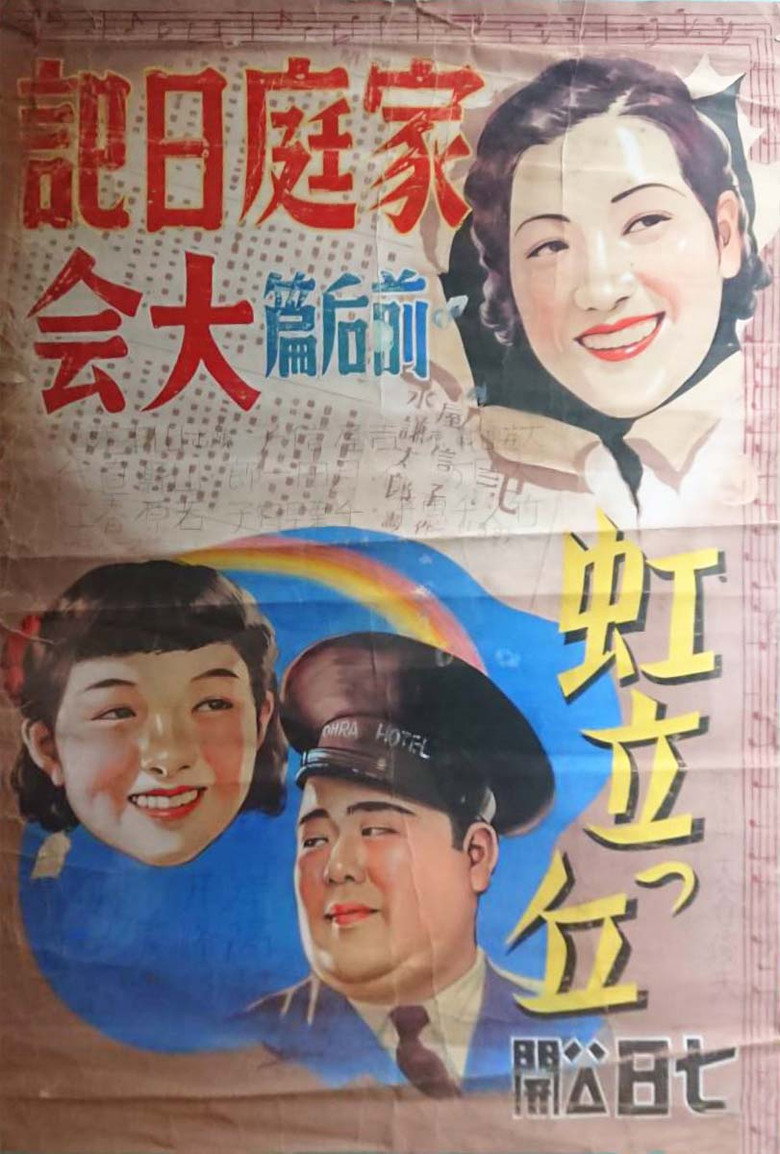
The cheerful life of a brother and sister in Hakone is disrupted by an unexpected revelation in Toshio Otani’s heartwarming drama, Rainbow Hill (虹立つ丘, Niji Tatsu Oka). In some ways, displaying an affluent quality of life perhaps unrealistic for the Japan of the late 30s, the theme is really family is and the importance of blood relations as one family is broken so another can be restored in a moment of healing and reconciliation with the traumatic past.

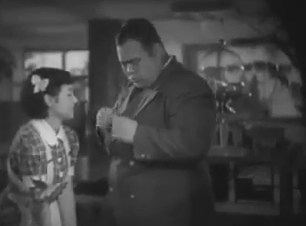
Shot predominantly on location at the luxury Gora Hotel in Hakone, the film revolves around a young girl, Yuri (Hideko Takamine), who works in the hotel’s shop while her bother Yatahachi (Akira Kishii) is also works at the hotel as a porter. The pair are incredibly close and would do anything for each other, though Yatahachi is also forced to conduct a romance somewhat clandestinely. He generally waits for Yuri to go to sleep before meeting his girlfriend, Fuji (Chizuko Kanda), who works in a local amusement centre. Yuri, however, is getting older and doesn’t always want to go to sleep early, which is the first note of discordance in their relationship in implying that Yatahachi’s childcare responsibilities stand in the way of marriage. Fuji, however, is also very fond of Yuri and sometimes looks after her when Yatahachi is not able to. 

The second note of discordance is when Yatahachi is dismissed from the hotel for having deserted his post after hearing that Yuri has fallen off a cliff and running off to save her. Though this is quite a valid reason for abruptly leaving work without permission, Yatahachi does not explain to his boss but only accepts his fate stocially while accepting that it was wrong of him to leave and that his actions caused the hotel reputational harm. Important guests were due from Manchuria and were apparently forced to carry their own bags. 

Another hotel guest who has become friendly with Yuri, Mrs Hayakawa (Sachiko Murase), who is staying at the hotel to recover from an illness, complains to the manager and gets Yatahachi reinstated with a promotion. Frequent guests the Hayakawas have some clout at the hotel, as perhaps do their friends the Mizutanis whose bag Yatahachi ends up tearing when asked to open it after the little boy loses his key. The film doesn’t really draw much of a contrast between the worlds of the people who stay in this luxury hotel and those who work in it, save that Yuri is full of tales of Mrs Hayakawa’s Western-style Tokyo home where she apparently has two dogs the size of Yatahachi. The pair, by contrast, live in quite a nice, if humble, traditional home and appear to have a good standard of life. 

Yuri is, however, somewhat drawn to Mrs Hayakawa who seems to fulfil the missing maternal role in her life by giving her gifts and taking her on outings. It’s not until Mrs Hayakawa visits her home and sees a familiar doll that she begins to suspect she could be the daughter from whom she was separated during the Great Kanto earthquake of 1923. The question then becomes whether it is right to disclose Yuri’s true identity and take her away from the brother with whom she has been so close. In another sign of his goodness, Yatahachi presumably found Yuri amid the chaos. Lacking any means of identifying her and believing that her parents were likely dead, he raised her himself as his sister. Though sensitive to the situation, the Hayakawas want her back. With them Yuri would have more opportunities and a better quality of life as a wealthy young woman in the capital, but it would also break Yuri and Yatahachi’s hearts. That Yuri agrees to go with them while Yatahachi accepts he must let her go to her biological parents hints at the importance of bloodlines and the necessity of familial restoration that acts as a means of laying the traumatic event of the earthquake to rest. Mrs Hayakawa’s malady is cured on having found her missing daughter, though she still vows to return to the hotel in the spring so Yuri and Yatahachi can be reunited. This also paves the way for a marriage between Fuji and Yatahachi as the pair look forward to welcoming Yuri’s return together.

An early leading role for Takamine, the film also features cameos from a series of other Toho stars as the hikers who rescue Yuri after she falls off the cliff, while Akira Kishii performs a few songs including a Japanese version of Home on the Range enhancing the film’s international feeling. It is perhaps unexpectedly breezy for the time period and basks in the lives of the super rich at a time when others are struggling to get by, but nevertheless offers a bittersweet and heartwarming tale of familial reconciliation and renewed hope for the future.


Ghost in the Regiment (憲兵と幽霊, Nobuo Nakagawa, 1958)

A treacherous military police officer comes to embody the evils of war in Nobuo Nakagawa’s eerie psychological horror, Ghost in the Regiment (憲兵と幽霊, Kenpei to Yurei). Kyotaro Namiki’s The Military Policeman and the Dismembered Beauty (憲兵とバラバラ死美人, Kenpei to Barabara Shibijin) had been a big hit the previous year so studio head Mitsugi Okura tasked Nakagawa with producing something similar at which point he proposed a film centring on “treachery and patriotism”. The Japanese title closely resembles that of Namiki’s film in beginning “the military policeman and…” as if it were a continuation of an ongoing series but is otherwise unrelated and could even be interpreted to suggest that the protagonist is both malevolent supernatural entity and military policeman. 

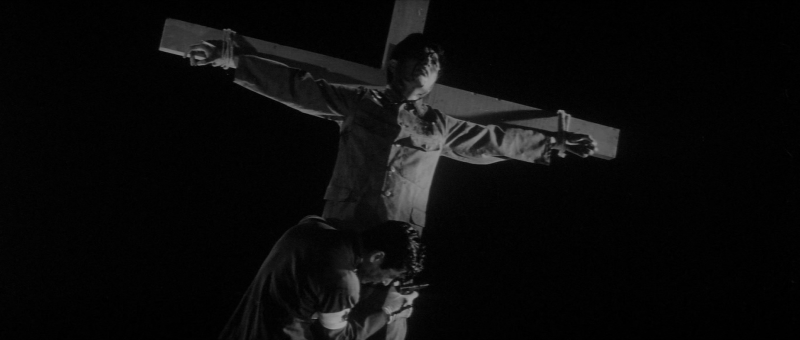
Lieutenant Namishima (Shigeru Amachi) is indeed later described as “the embodiment of evil” and his desire for conquest, in this case of a woman about to marry another man whom he will eventually win and discard, is reflective of the destructive lust for imperialist expansion. When Akiko (Naoko Kubo) marries another member of the military police, Tazawa (Shoji Nakayama), in the autumn of 1941, Sergeant Takashi (Fujio Murakami) jokes with Namishima that he has “failed to win the girl”, but Namishima merely smirks and explains that he’s playing a long game, “The true spirit of a warrior is found in the final victory.” Soon after he frames Tazawa for having stolen secret documents he himself has sold to Chinese spy Zhang (Arata Shibata), subjecting him to heinous torture and having both Akiko and his mother (Fumiko Miyata) tortured in front of him to force Tazawa to confess. Thereafter he has him executed by firing squad but Tazawa, strung up on a cross, continues to protest his innocence until the final moment issuing a curse on all those that have wronged him. 

Unlike some of Nakagawa’s other films, the ghosts here are less supernatural than they are psychological. Namishima has frequent flashbacks and visions that remind him of his crimes and is quite literally haunted by his guilt while refusing to admit that he feels any. It seems that he harbours strong resentment towards the military and implicitly towards the militarist regime and emperor having been rejected by the military academy because his father had committed suicide. His treachery is revenge but also equal parts self-destruction and a wilful bid to assert himself through his transgressions marvelling at his success in becoming the sort of person who could betray his own country and kill his own people. Both Tazawa and his brother (also played by Shoji Nakayama), who later joins the military police hoping to investigate the circumstances of his death, were graduates of the military academy and therefore idealised cogs in the military machine. 

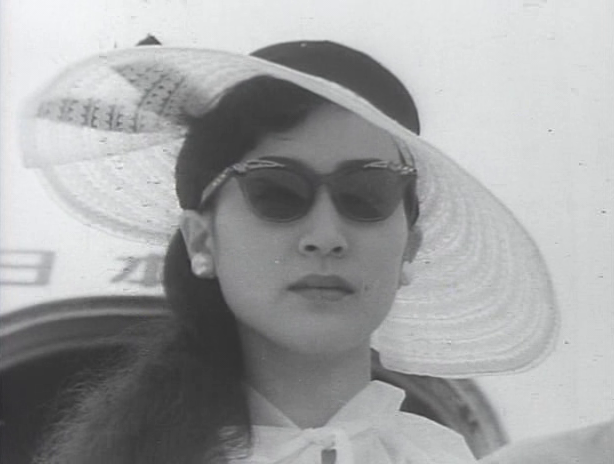
Somewhat uncomfortably, the righteousness of Tazawa’s brother effectively legitimises the militarists in suggesting that a man like Namishima is an aberrance unreflective of the militarist ideal. “Ignoring the innocent goes against all the military police stand for”, Tazawa earnestly tells Namishima when he attempts to cut corners framing another suspect for his own ends, lending the military police an air of legitimacy they may not have had in reality when we might ask ourselves what exactly it was that they “stood for” which is more likely the nihilistic amorality to which the narcissistic Namishima subscribes. As he said, women lose their lustre once he’s got them. Having pretended to be a friend to Akiko in her widowhood, he rapes her during an air raid and it’s at this point that Japan begins rapidly losing the war as Namishima’s moral decline mirrors the fortunes of his nation. Having got what he wanted, he callously discards her and is transferred to Manchuria where he continues to work with Zhang and his wife, Ruri/Honglei (Yoko Mihara), with whom he has something like a more genuine romance.

His crimes will, however, catch up with him and it’s in Manchuria that his schemes begin to unravel not least because of the unsettlement that the presence of Tazawa’s brother, who has been seconded to his unit, causes him. The film’s surreal conclusion takes place in a Christian graveyard with Namishima surrounded by crosses which align with the crucifix on which Tazawa was executed. The crucifix itself would have no particular religious connotation in Japan and is simply a convenient way of constraining someone for execution but here takes on a symbolic dimension in confronting Namishima with his sins of transgression. Soon he is surrounded by hundreds of Tazawas on crosses, echoing the many men who were in effect murdered by the imperialist regime in a war fuelled by the same lust for conquest that motivated Namishima. Nakagawa’s camera takes on the role of an observer, sometimes comically swooping between talking heads as if following an ongoing conversation while later rocking in unsteadiness as Namishima begins to lose his grip on reality, finally confronted with the “ghosts” that surround him. 


Original trailer (no subtitles)