
As We Like It (揭大歡喜, Chen Hung-i & Muni Wei, 2021)

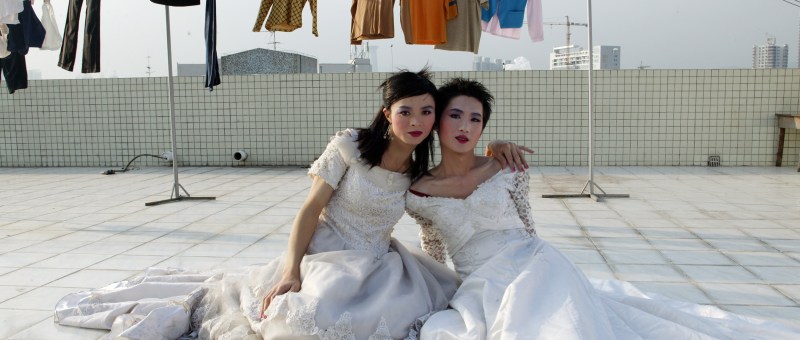
“It’s the crazy madness we call love” according to a series of bemused bystanders in Chen Hung-i and Muni Wei’s modernist take on the Shakespeare play, As We Like It (揭大歡喜, Jiēdàhuānxǐ). As the reframing of the title implies, no longer pleasing “you” but “we”, Chen and Wei’s all-female adaptation is an attempt to reclaim the stage taking a swipe at the Elizabethan prohibition on actresses while undermining the notion of a gender binary as the various lovers pursue their romantic destiny in defiance of heteronormative ideas of sex and sexuality. 

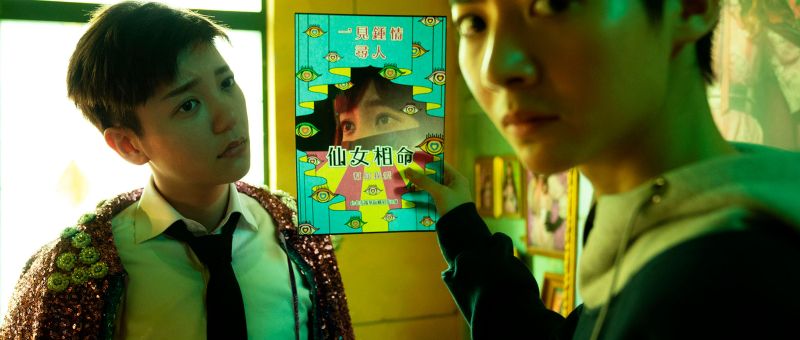
Rather than palace intrigue, however, the force which sends Rosalind (Puff Kuo) into the forest is romantic failure coupled with filial and financial anxiety. Her father, the Duke, has been missing for seven years and will shortly be declared dead at which point his company will be divided between the father of her best friend, Celia (Camille Chalons), and a random young man named Orlando (Aggie Hsieh) she was previously unaware of. Hoping to locate him, she winds up at a street fight in which she becomes Orlando’s eyes and he falls in love with her at first sight. For unclear reasons and drawing inspiration from traditional Taiwanese opera, Rosalind then decides to pose as a man, taking the name of Roosevelt, and later teaming up with Orlando in the hope of finding the Duke. 

Despite its best intentions, the awkward irony at the centre of As We Like It is that it accidentally ends up re-inforcing the patriarchal ideology it otherwise seeks to critique in that Rosalind’s romantic adventure turns out to be a series of manipulations at the hands of her long absent father. A romantic exile, it is she who remains unsure of her feelings, unwilling to admit the possibility that she is finally in love with Orlando and hiding behind the mask of masculinity in order to test her would-be-lover’s sincerity. The strange scavenger hunt the pair are forced to follow in order to find their way to the Duke amounts to a forced courtship, each of the pitstops another level up in terms of romantic intimacy culminating in an oddly eroticised ear cleaning date. While Orlando vacillates over whether it’s OK to fall for a boy because he reminds you of a girl, Rosalind is tasked with rediscovering her faith in romantic love which she does but only after talking to her father first. 

Celia, by contrast, seizes her own agency by defiantly seducing sometime antagonist Oliver (Joelle Lu) and becoming pregnant by him even before marriage. In this instance, Oliver is still the villain attempting to steal the business, even going so far as to send his thugs to chase Orlando down, the implication being that Celia’s love softens and then corrects him so that he might reconcile with his brother. Yet the final showdown introduces a new villain in the figure of Charles (J.C. Lei), Oliver’s chief thug apparently harbouring an unrequited crush on his boss and therefore extremely resentful of Celia. Yet her taunting of him asserting that hers is the final victory because she has done what Charles never could in conceiving Oliver’s child seems to fly in the face of the film’s otherwise egalitarian views on love, negating not only same sex love but also love between those unable to produce children uncomfortably heading back into a gender binary which makes maternity the essence of womanhood. This message is perhaps undercut by the closing moments in which Oliver and Celia argue about whether to buy boy clothes or girl clothes for the baby only for the shop assistant to advise a neutral white and cede the “choice” to the child in time but nevertheless seems an odd means of defeating the spectre of the unexpected antagonist driven to a dark place by the “madness” of love. 

Love’s “madness” may be the central theme though the sense of a world turned upside down is undermined by Celia’s maintenance of her position as a princess rather than relegation to the role of a peasant even as it affords her unexpected agency over the surprisingly pliable Oliver. The world’s uncanniness is fulfilled by its unreachability, set in an “internet-free” district of near future Taipei enhanced with frequent onscreen graphics where people send each other “slo-express” letter-pressed telegrams in place of “text messages” delivered by the human touch, implying perhaps that our increasingly depersonalised society is actively frustrating the path to love even while the idea of the idyllic and utopian Forest of Arden seems to have been co-opted by venal developers. Nevertheless, journeys end in lovers meeting to quote another play and love’s madness is eventually cured in its fulfilment. 


As We Like It screens on July 8 and streams online in Switzerland until July 10 as part of this year’s Neuchâtel International Fantastic Film Festival (NIFFF). Readers in London will also have the opportunity to see As We Like It at Genesis Cinema on 16th July courtesy of Chinese Visual Festival & Queer East

Original trailer (English subtitles)

Son of the Macho Dancer (Anak ng macho dancer, Joel Lamangan, 2021)

“How many have you buried? Why?!” asks the hero of Joel Lamangan’s Son of the Macho Dancer (Anak ng macho dancer), a quasi sequel to the 1988 Lino Brocka classic. Set during the early days of the pandemic, Lamangan’s salty drama hints at the radiating effects of an authoritarian culture for those living on the margins of the contemporary society but does so with a dose of trashy telenovela camp in its eventually redemptive tale of frustrated futures, sexual exploitation, drugs and murder in a time of increasing sickness. 

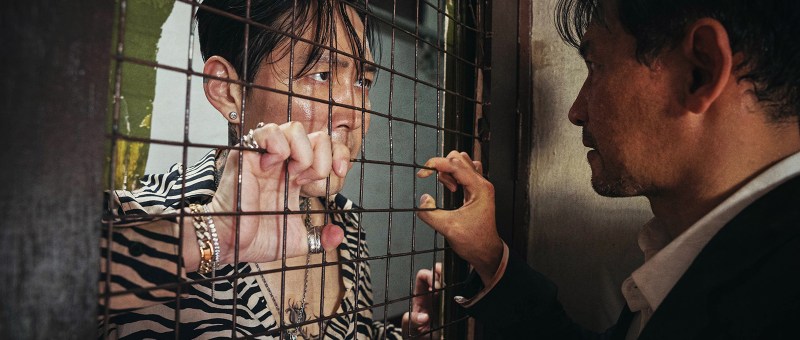
19-year-old Inno (Sean De Guzman) is in a casual relationship with a woman whose tendency to refer to herself as his girlfriend clearly irritates him, especially as their sex life seems to be frustrated by her fear of his apparently giant penis. When his father Pol (Allan Paule) who has become addicted to drugs after a car accident is arrested by the police and he needs money to bail him out, Inno’s mother (Rosanna Roces) seizes on his oversize appendage as a means of saving the family by dragging him straight to a local gay club to become a go-go dancer. While reluctant at first, Inno soon takes to his new life and decides to milk it for all its worth, latching on to VIP procurer Bambi (Jaclyn Jose) and her sidekick Roldan (Emilio Garcia) in the hope of being invited to one of their elite parties all of which later drags him into the orbit of sadistic gay drug dealer Jun (Jay Manalo). 

All the while, we see Duterte on TV giving updates in the corona virus crisis and the various measures to mitigate it which threaten the survival of gay bar Mankind as well as the illicit business enterprises operated by Jun, Bambi, and Roldan. A police officer reconfirms his warning to drug dealers that they shouldn’t expect an easy ride during the pandemic because they will “destroy all of you”. The police force is shown to be resolutely corrupt, firstly in its refusal to investigate the causes of the car crash which caused Pol’s descent into addiction because, he believes, the driver was a judge and the cops have been paid off, and lastly in its complicity with criminal activity as evidenced in their cooperation with Roldan to cover up his crimes. 

Obsessed with social media clout, Inno constantly documents and uploads his existence online marvelling at his new circumstances as a kept man of Jun only latterly reflecting on the ironies of his life in discovering that his father was once also a “macho dancer” while his mother was forced to turn to sex work to feed the family after Pol’s accident. Seduced by the lifestyle of the rich and powerful that Jun can give him he doesn’t stop to consider its wider implications even when warned by predecessor Kyle (Ricky Gumera) of the dangerously oppressive regime within the house. It’s not until he finds himself burying the body of a friend murdered by Jun after unwittingly failing to play along with his voyeuristic sexual fantasies that he begins to ask why, not only why he’s living this life but why Bambi has been living it all this time enabling Jun’s predatory violence in burying the bodies of unlucky young men who fell foul of his sadistic desires. 

For Kyle at least the answer may be a lifetime of violent abuse which which has left him too traumatised to believe escape is possible. Inno vacillates between resentment towards his father for his irresponsible drug use and mistreatment of his long-suffering mother, and the filial desire to protect him which led him to become a macho dancer in the first place. Bambi and Pol, meanwhile, the heroes of Brocka’s film have been consistently brutalised by an oppressive society apparently only awakened to the possibility of changing course by Inno’s corrective questioning. 

In any case, there’s a minor irony even in the wilful subversion of positioning the young hero as a sex object valued only for the size of his penis while the frequent full frontal male nudity often feels gratuitous and the final swing towards heteronormativity can’t help but align homosexuality with the psychopathic cruelty of Jun as something dark and perverse even while ending on a joyous if tempered moment of resilience in returning to Mankind with the house full of masked clubbers continuing to shove their notes into the dancers’ briefs. Though the final resolution may in a sense be too neat, a family restoring or remaking itself in the wake of trauma, Lamangan allows the sense of unease to continue in the callback to societal corruption as the ongoing pandemic seems to stand in for other kinds of increasing sickness. 


Son of the Macho Dancer streams worldwide until 2nd July as part of this year’s hybrid edition Udine Far East Film Festival.

Original trailer (English subtitles)

Deliver Us From Evil (다만 악에서 구하소서, Hong Won-chan, 2020)

A melancholy hitman bids for paternal redemption but finds himself literally stalked by the mistakes of his violent past in Hong Won-chan’s pulpy action drama, Deliver Us From Evil (다만 악에서 구하소서, Daman Akeseo Goohasoseo). Aptly named, Hong’s noirish thriller takes us from the back streets of Osaka to underground Bangkok while the hero longs for the tranquil horizons of Panama but finally discovers that he cannot outrun himself even if he can perhaps repay his karmic debt by freeing others from the riptide of his moral transgressions. 

A former government agent apparently unceremoniously burned, In-nam (Hwang Jung-min) has been earning his keep as a killer for hire hiding out in Japan. His “one last job” is knocking off a Zainichi Korean mob boss, Koreda (Kosuke Toyohara), after which he’ll be free to go wherever he wants, arbitrarily setting his sights on Panama solely because of the tranquil scene featured in a picture opposite his favourite seat in his local izakaya. The past is however not done with him yet. His old handler gets in touch to let him know old flame Young-ju (Choi Hee-seo) has been trying to contact him, but so consumed with shame and defeat is he that he declines to respond only to hear a short time later that Young-ju has been found dead in Bangkok and as she’d listed him as next of kin he’s responsible for the repatriation of her body. Remorseful, he’s shocked to discover that Young-ju had a daughter, Yoo-min (Park So-yi), whose kidnap by her Korean-Chinese nanny may be connected to her murder. Switching up his plans, In-nam determines to save the daughter he believes to be his own but is pursued by flamboyant Korean-Japanese gangster Ray (Lee Jung-jae) hellbent on getting revenge for his estranged blood brother Koreda. 

In-nam finds himself in a sense caught between a series of codes of masculinity, apparently a former government spy who seems to have been involved in state sanctioned acts of torture and murder that may privately be against his sense of morality only to fall still further as a killer for hire even if we’re told in no uncertain terms that Koreda was a bad guy, a killer of women whose death is perhaps morally justifiable within the codes of chivalry. In-nam’s partner warns him about Ray, reminding him that they should have killed him at some point in the past but apparently let him live, a decision that has led, as Ray later states, to their present confrontation. Quizzed by a local Thai mobster, Ray claims he can’t even remember why he’s so set on killing In-nam but is mindlessly bound to follow his own code of manliness in avenging the death of a blood brother he had apparently fallen out with some years previously.

Meanwhile, in retrieving his daughter In-nam attempts to reclaim the right to a peaceful life making up in a sense for the mistakes of the past in having first abandoned Young-ju because of his manly code and then failed her in refusing her request for help. He attempts to reassert himself as a father by saving his little girl, but in doing so opts only for the personal, unmoved on discovering a child trafficking network enabled by the peculiar medical regulations of Japan and Korea which prohibit child organ transplants looking to save only Yoo-min while making no real effort to help the others. On reporting her daughter missing to the police, Young-ju had been horrified to discover Yoo-min’s photo pasted onto a wall entirely covered in similar notices for other children the police, as we later discover somewhat complicit, have so far failed to find. Yet saving the children is more happy accident than design, an indirect consequence of In-nam’s violent intervention. 

Indeed, In-nam more or less leaves the kids to his local sidekick a Korean transgender woman whose confirmation surgery he’s promised to fund in return for her assistance as guide and translator while he remains bound to a nihilistic path of manliness knowing there’s no way out for him that does not end in violent confrontation with past sins. Caught between the outlandish pulp of the flamboyant Ray and the noirish fatalism of In-nam’s journey into the darkness of the Bangkok underworld, Deliver Us From Evil defiantly refuses to marry its conflicting sensibilities as the two men pursue their respective codes each looking for their own particular deliverance but finding that salvation lies only in confrontation. 


Deliver Us From Evil screens at Edinburgh Filmhouse on 22nd June and Genesis Cinema London 24th June as the first Teaser Screening for this year’s London Korean Film Festival. The next screening in the series, Voice of Silence, will screen at Edinburgh Filmhouse on 1st July and Curzon Soho 3rd July, while Samjin Company English Class will then screen at London’s Screen on the Green on 8th July.

International trailer (English subtitles)

Wonderful Paradise (脳天パラダイス, Masashi Yamamoto, 2020)

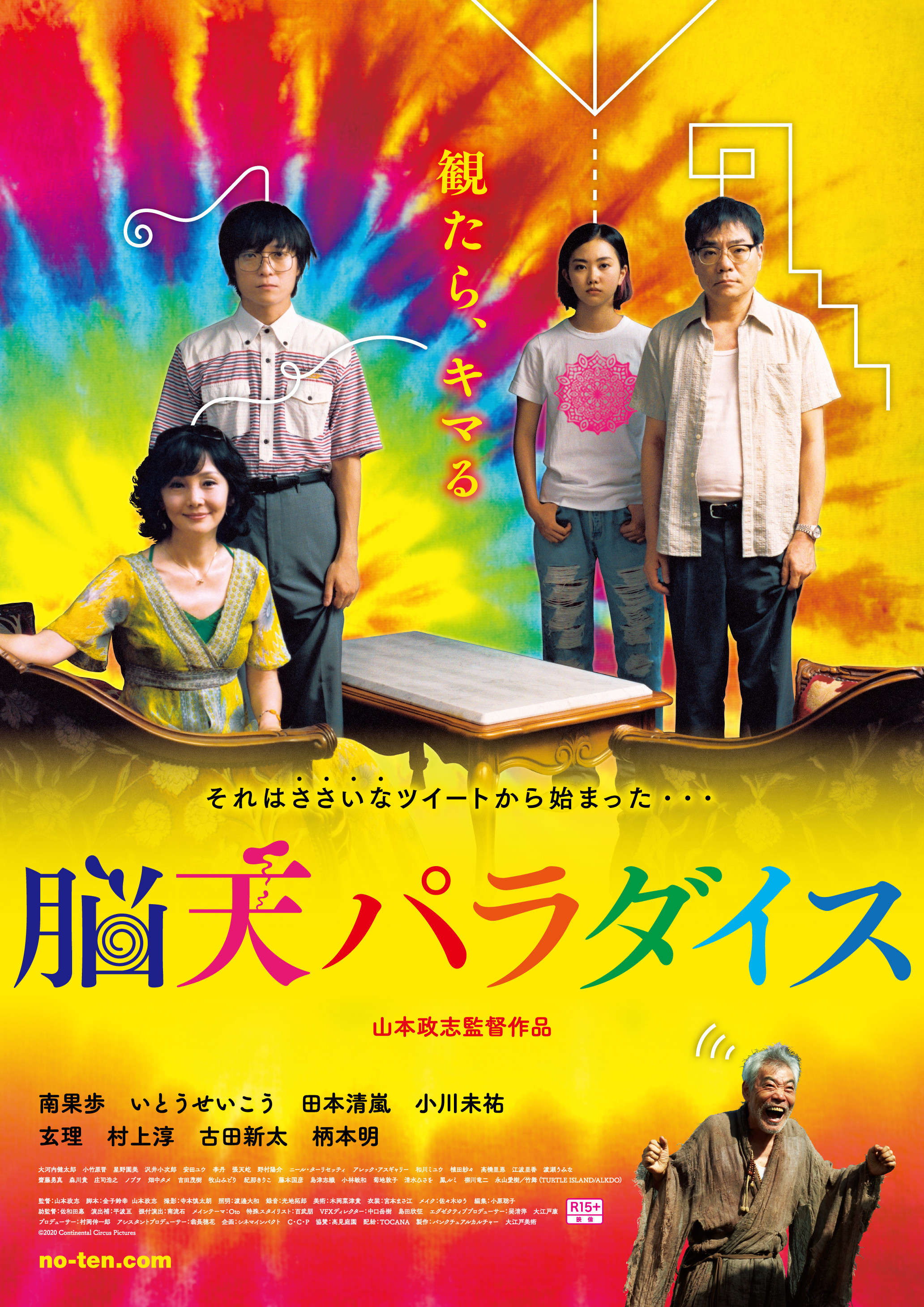
A moribund Tokyo mansion becomes the scene for an orgy of life, death, love, and rebirth in Masashi Yamamoto’s surrealist party movie Wonderful Paradise (脳天パラダイス, Noten Paradise). Sometimes you have to learn to say goodbye and move on, other times you have to learn to forgive and let go of past resentment. Of course, sometimes you have to do both of those things at the same time, which is perhaps appropriate for the former home of the Sasayas which seems to exist between the realms of life and death, a perpetual Bon festival where departed spirits and lost souls congregate for one almighty party. 

Dad Shuji (Seiko Ito) has had a run of bad luck and unfortunately lost the family home he inherited from his parents meaning he and his two adult children, son Yuta (Soran Tamoto) and daughter Akane (Mayu Ozawa), are having to move on though who knows where to. Resentful that she’s having her life uprooted by her father’s fecklessness, Akane takes to social media and Tweets that there’s a party at hers and everyone’s invited as kind of goodbye to the house. Meanwhile, a series of strange events occur from a weird old monk (Akira Emoto) who keeps trying to pray to the various neoclassical statues on the property going nuts at a belligerent removal man and then apparently dropping dead, to the resurfacing of mother Akiko (Kaho Minami) who apparently left the family some years previously for a man who ran a coffee shop but has since passed away. 

The first people to arrive for the party are a gay couple looking for somewhere to celebrate their marriage, a minor irony in that the event will later descend into an elaborate funeral for two people who may or may not be dead. As more and more guests arrive, along with a series of opportunistic commercial food stands and other businesses, the party begins to get out of hand becoming ever stranger as the night wears on. 

At the heart of it all are the tensions in the family, an unresolved resentment directed at son Yuta who is, according to his brash aunt Yuka (Sonomi Hoshino), overly preoccupied with his family circumstances to the extent that it prevents him from getting a regular job and moving on with his life. Shuji has quite clearly failed both as a son and as a father, eventually betting one of his dad’s precious antiques in a card game run by yakuza loansharks setting up shop in the house. Akane appears exasperated, but is also harbouring an intense resentment towards Akiko for her abandonment that prevents her being able to “move on” from her former family home. 

Moving on is also a problem for a few of the ghosts, the line between the living and the dead becoming increasingly blurred. One random surreal moment to the next, Yamamoto careers between absurdist episodes culminating in a fight between a murderous sentient coffee bean and a statue come to life. What began as a lowkey wedding eventually becomes a bizarre funeral enacted through the medium of Bollywood song and dance transitioning into a traditional enka festival number all of which happens before a couple of hapless crooks who’ve been operating a drug factory on the family’s property for the last two years without them ever knowing turn up with their “super mandala drug of paradise” to send the evening in a psychedelic direction. 

Yet for all the surreality of death, violence, sex, and rebirth when dawn arrives it brings with it a kind of calm brokering a new peace between friends and family members as they learn to accept each other and the past in an unburdened sense of openness. Possibly deceased monks, talking cats, kids who can’t figure out how to stop swinging and mysteriously turn themselves into sticks or dissolve in bath water, scorned lovers, unrepentant thieves, ghosts and family secrets descend on this weird gothic mansion in the middle of a city, creating a “wonderful paradise” for one night only filled with surrealist magic and unforgettable strangeness that nevertheless pushes the family back together through dream logic and a taste of the absurd. A weird, sometimes incomprehensible, journey into an etherial, psychedelic twilight psychodrama rave, Yamamoto’s charmingly bizarre nighttime odyssey is a law unto itself but one filled with wonder for the uncanniness of the everyday. 


Wonderful Paradise streamed as part of this year’s Nippon Connection.

Original trailer (English subtitles)

Company Retreat (ある職場, Atsushi Funahashi, 2020)

“You can’t be suspicious of your team” an older woman insists, trying to defuse a rapidly devolving situation of mistrust among co-workers away on a “Company Retreat” ostensibly to cheer up a female employee who has recently become the centre of an online storm after her name and photos were leaked in relation to a report of sexual harassment at a prominent hotel chain. Inspired by true events, director Atsushi Funahashi originally planned to make a documentary exploring the fallout from an accusation of sexual harassment but discovered that few were willing to put themselves on camera opting instead to craft a docudrama in part improvised by his cast of actors. 

Shot documentary style and in black and white save one colour flashback, the action is split between two distinct company getaways four months apart taking place at a coastal town the first in the winter and the second in spring. Saki (Saki Hirai), a young female employee, made an accusation of sexual harassment against her male middle-aged boss, Kumanaka (Makoto Hada), and has been receiving constant online abuse after being outed by an unknown figure for unknown reasons. While her colleagues are largely supportive, they may also be harbouring an unspoken resentment that her decision to speak up has indirectly endangered their jobs as the company continues to suffer a loss of reputation with the public. When another of the employees reveals that he’s tracked the IP address of a persistent troll and discovered they’ve been posting from nearby it invites the suspicion that one of her friends is behind the online hate campaign possibly at the behest of the hotel chain keen to blacken her name and reputation in order to safeguard their own. 

The sexual harassment accusation exposes the gulf between what people say and what they really feel with some of the other employees eventually losing their cool and taking their frustrations out on Saki, partly for spoiling the holiday with her gloominess but also for her tendency to isolate herself from the group now viewing each of them as a potential enemy. She later accuses Noda (Yoshio Taguchi), a placid company man she feels may have chosen to sacrifice her in order to save the company’s reputation and with it his own job. Noda is upset to realise Saki sees him as a heartless corporate drone but later claims to have forgiven her. At the second retreat, however, he begins to voice quite a different opinion, exposing a deeply held set of patriarchal values in playing devil’s advocate wondering if it wasn’t all a misunderstanding and the boss, who has been demoted and transferred but not fired, has had his life “ruined” over something that wasn’t “that big of a deal”. He says this, in part, because his new girlfriend who also happens to be an employee has advised him that he is inappropriately touchy feely in the office and has little understanding of boundaries or personal space. Noda doesn’t see a distinction in the way he interacts with men and women and feels that’s just how he is, laying the blame on the other party if they ever felt uncomfortable while tacitly sympathising with another man who he believes may have had no “bad intentions” and is simply the victim of a “misunderstanding”. 

Perhaps paradoxically, he also blames Saki for her complicity that she may have smiled or laughed and said it was fine on previous occasions giving the boss the green light to think there was nothing inappropriate in his behaviour. In this she finds herself agreeing, that is perhaps the way it works in the workplace. Another older woman in a senior position advises her to transfer to another department, eventually explaining she thinks that might be easier seeing as the bosses are all men unlikely to be sympathetic. Ushihara (Mikoto Yoshikawa) is not unsympathetic herself, but is also willingly complicit, among the contingent of older career women who feel that sexual harassment is something you just have to put up with while simultaneously claiming that nothing will change until there are more women in a position of power. Attempting to take her side, Kinoshita (Megumi Ito), a divorced senior employee, tells Saki to do the “right thing” and refuse the transfer but is shot down by Noda who exposes even more misogyny when he tells her that her “emotional” and “righteous” tone is “unattractive”, insisting that she needs to “win the respect of men” in order for her arguments have weight. 

For some, however, and particularly the younger men this sort of hypocrisy becomes too much to bear. A company is supposed to be a family, but no one trusts anyone. Several employees from the original retreat resign after a decision is taken to try ringing the troll to prove they aren’t among the group unable to bear the sense of mistrust and suspicion from their close friends and teammates. Another employee, Taku (Taku Tsujii), brings his boyfriend to the first retreat though closeted at work losing confidence to come out to his colleagues in case they reject him and worst case scenario it costs him his job. Eventually he makes the decision to explain, realising he’s placed his boyfriend in a difficult position, and is relieved to discover he is immediately accepted by all, but continues to sympathise with Saki knowing how devastating it can be to be outed while also irritated by her tendency to reject them while they are only trying to help her. Meanwhile, another awkward young man struggles to confess his crush on the increasingly paranoid young woman, overly invested in a patriarchal ideal of masculinity that women are in need of male protectors mistakenly believing that Saki will be impressed by his attempt to safeguard her which ironically becomes a secondary act of harassment even as he, like Kinoshita, attempts to convince her to rebel against her complicity with a relentlessly rigged, conformist and conservative social order. 

The conclusion that she comes to, however, is that she has to “survive in this world” rather than striving for a better one. She has been unfairly demonised as if the real problem is her speaking up rather than her boss’ inappropriate behaviour and is understandably weary with fighting a battle she doesn’t understand, willing to accept a level of complicity in order to end the hate and suspicion. Kinoshita fears she will never see a “safe workplace” while others relentlessly “try to make society work for them” rather than for everyone. A bleak picture of contemporary society ruled by oppressive social pressure and aggressively patriarchal norms, Funahashi’s empathetic drama offers no real answers but advocates for the right to say no in a society where dissent is an untouchable taboo. 


Company Retreat (ある職場, Aru Shokuba) streamed as part of this year’s Nippon Connection.

Dear Tenant (親愛的房客, Cheng Yu-Chieh, 2020)

Taiwan introduced marriage equality in 2019 and is often regarded as the most liberal of Asian nations but that does not necessarily mean that it’s free of prejudice or homophobia whether internalised or otherwise. Cheng Yu-Chieh’s melancholy family drama Dear Tenant (親愛的房客, Qīn’ài de Fángkè) begins in fog, mirroring it seems the hero’s sense of numb confusion consumed as he is with guilt and grief but also perhaps reflecting the miasma of his life in which he is forced to remain silent, prevented from fully expressing himself by a persistent sense of shame and anxiety. 

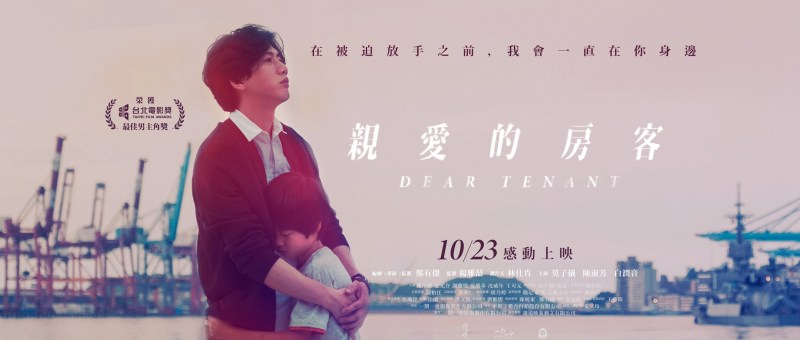
Chien-yi (Mo Tzu-yi) has been caring for his mother-in-law Mrs. Chou (Chen Shu-fang) and Yo-yu (Bai Run-yin), the son of his late partner Li-wei (Yao Chun-yao), for the past five years, but is described by them merely as a “tenant”, a lodger occupying the upstairs annex not really part of the family. His liminal status is fully brought home during the New Year dinner which he cooks and serves but, as Li-Wei’s brother Li-gang (Jay Shih) has decided to make a rare visit home from an extended stay in China, later excuses himself from as if he were the help not entitled to sit at the family table. Mrs. Chou, meanwhile, grumpily invites him to stay low-key resentful of Li-gang suspecting he’s only come to ask for more money, suspicions which are deepened after he starts talking about retirement apartments. When Mrs. Chou passes away suddenly a few months later Li-gang returns again and is both annoyed to learn that Chien-yi has already adopted Yo-yu and distressed to realise that his mother put the house in Yo-yu’s name which means he’s not getting the inheritance he assumed would be his. Consequently, he accuses Chien-yi of killing his mother to get his hands on the house, a series of events complicated by the autopsy report which suggests Mrs Chou’s death may have been hastened by over medication. 

A shy and reticent man, Chien-yi perhaps has reasons for his silence and his reluctance to speak openly with the police, who are needlessly aggressive and belligerent in their treatment of him, is easily understandable. Questioned by the relatively sympathetic prosecutor he is pressed about his “relationship” with the family and remains somewhat coy, later explaining that Mrs Chou had asked him not to tell Yo-yu that he and his father were lovers continuing to refer to him only as her “tenant” even as he took care of the household. The prosecutor asks him why he didn’t leave after his lover died, a question Chien-yi rightly feels to be absurd asking her if she’d ask the same question of a woman who stayed to look after her husband’s family after her husband died. Of course she wouldn’t, it would be ridiculous and insensitive.

It’s impossible to escape the sense that Chien-yi falls under greater suspicion solely because of his sexuality, the lead police officer quite clearly getting a bee in his bonnet about this particular case. They find him evasive and uncooperative, insensitive to the reasons he may have not to trust them that are later justified by their treatment of him as they again make moral judgements about his use of a dating app they likely would not make if he were picking up women though they might perhaps make of a woman in the same situation. Incongruously hanging out in a gay bar they hassle a former hookup who happens to be a drug user, blackmailing him into incriminating Chien-yi while Li-gang has Yo-yu taken to a psychiatrist in the suggestion that he may have been abused, explaining that he doesn’t want him raised in an “abnormal” environment. Chien-yi finds himself in handcuffs less for the alleged crime than for being a “suspicious” person who must surely be guilty of something even if it’s only his existence. 

It doesn’t seem to matter that Chien-yi tenderly cared for Mrs Chou even while she rejected him, angrily sniping that no matter how good he is to her it won’t bring her son back, or that he’s the only father the nine-year-old Yo-yu has ever really known having lost Li-wei when he was only four, he is condemned for his silence and his “secrets” ostracised by the previously warm parents at the piano school where he teaches after being outed by the insensitive police investigation. Consumed by grief and guilt he does his best to care for Li-wei’s family in his place, but is continually othered by a society which recognises him only as a “tenant” denying him his rightful place as bereaved spouse and step-father. As the melancholy ending perhaps implies, justice and equality are still very much works in progress even a rapidly liberalising society. 


Dear Tenant streams California until May 2 as part of San Diego Asian Film Festival’s Spring Showcase.

Original trailer (English / Traditional Chinese subtitles)

Spider Lilies (刺青, Zero Chou, 2007)

“I have no choice but to live in a virtual world” according to the lovelorn heroine of Zero Chou’s ethereal reflection on love and the legacy of trauma, Spider Lilies (刺青, Cìqīng). Two women connected by childhood tragedy struggle to overcome their respective anxieties in order to progress towards romantic fulfilment, eventually freeing themselves only by destroying the image of that which traps them. 

In the present day, Jade (Rainie Yang) is an unsuccessful camgirl with a habit of shutting down her clients on a whim which doesn’t play well with her boss. In an effort to spice up her live show, she decides to get a raunchy tattoo only to realise that the tattooist, Takeko (Isabella Leong), is in fact her long lost first love, a neighbour she took a fancy to at the tender age of nine. For her part, Takeko appears not to remember Jade but cannot deny the presence of her unusual spider lily tattoo, a version of which hangs prominently on her wall. Hoping to maintain contact, Jade decides to get the spider lily tattoo herself but Takeko is reluctant, explaining that the spider lily is a flower that leads only to hell. 

According to Takeko’s master, there is a secret behind every tattoo and the responsibility of the tattooist is to figure out what it is but never reveal it. Thus Takeko crafts bespoke tattoo designs for each of her clients designed to heal whatever wound the tattoo is intended to cover up, such as the ghost head and flaming blades she tattoos on a would-be gangster who secretly desires them in order to feel a strength he does not really have. Her tattoo, however, is intended as a bridge to the past, a literal way of assuming her late father’s legacy in order to maintain connection with her younger brother (Kris Shen) who has learning difficulties and memory loss unable to remember anything past the traumatic death of their father in an earthquake which occurred while she was busy with her own first love, a girl from school. Feeding into her internalised shame, the tattoo is also is a means of masking the guilt that has seen her forswear romance in a mistaken sense of atonement as if her sole transgression really did cause the earth to shake and destroy the foundations of her home. 

Then again, every time Takeko seems to get close to another woman something awful seems to happen. Jade, meanwhile, affected and not by the same earthquake is burdened by the legacy of abandonment and the fear of being forgotten. Living with her grandmother who now has dementia the anxiety of being unremembered has become acute even aside from the absence of the mother who left her behind and the father last seen in jail. “Childhood memories are unreliable” she’s repeatedly told, firstly by Takeko trying to refuse their connection, and secondly by a mysterious online presence she misidentifies as her lost love but is actually a melancholy policeman with a stammer charged with bringing down her illicit camgirl ring. The policeman judgementally instructs her to stop degrading herself, having taken a liking to her because he says he can tell that she seems lonely. 

A kind of illusionary world of its own, Jade’s camgirl existence is an attempt at frustrated connection, necessarily one sided given that her fans are not visible to her and communicate mainly in text. It’s easy for her to project the image of Takeko onto the figure of the mystery messenger because they are both in a sense illusionary, figments of her own creation arising from her “unreliable” memories. Jade wants the tattoo to preserve the memory of love as a bulwark against its corruption, at once a connection to Takeko and a link to the past, but the tattoo she eventually gets is of another flower echoing the melancholy folksong she is often heard singing in which the lovelorn protagonist begs not to be forgotten. 

“I am a phantom in your dream and you too live in mine” Jade’s mystery messenger types, hinting at the ethereality of romance and fantasy of love. Caught somewhere between dream and memory the women struggle to free themselves from the legacy of past trauma and internalised shame, but eventually begin to find their way towards the centre in making peace with the past in a sprit of self-acceptance and mutual forward motion.


Spider Lilies streams in the UK 26th April to 2nd May courtesy of Queer East

Original trailer (English subtitles)

The End of the Track (跑道終點, Mou Tun-Fei, 1970)

“It’s too dark in there, I can’t see the end” the hero of Mou Tun-fei’s The End of the Track (跑道終點, Pǎodào Zhōngdiǎn) complains though in the end he’ll find himself venturing into the darkness all alone. Like many of his contemporaries, Mou had come to Taiwan from the Mainland as a child during the Chinese Civil War but eventually made only two features on the island spending the bulk of his career working in exploitation cinema for Shaw Brothers in Hong Kong. The second of his two Taiwanese movies neither of which were ever given a mainstream release, The End of the Track continues in the broadly Neo-realist vein of I Didn’t Dare to Tell You while venturing towards the expressionistic in its innovative use of rhythmic editing and sound design to mimic the hero’s sense of confusion and anxiety in an oppressively authoritarian society. 

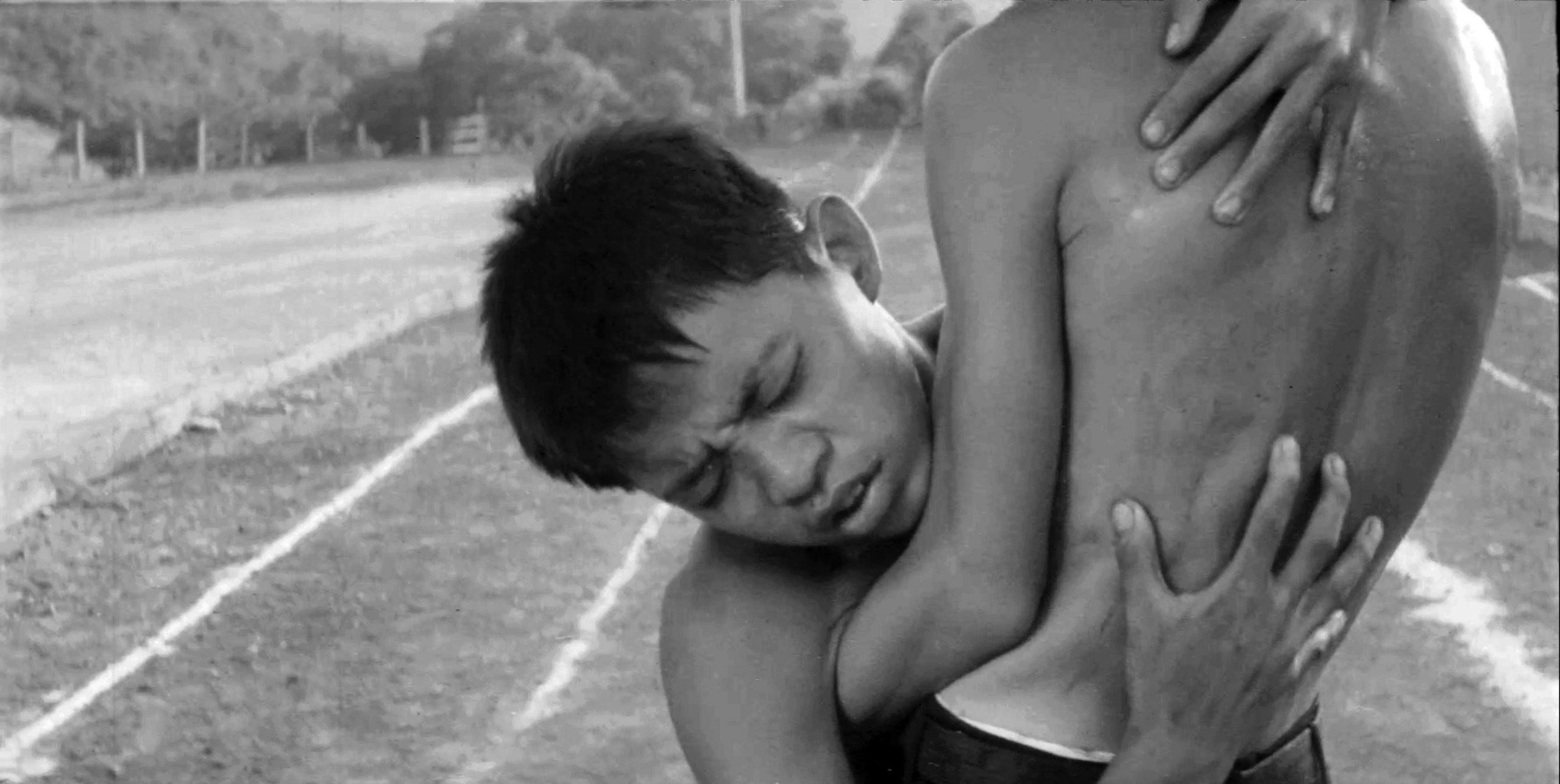
A middle-class boy, Hsiao-Tung (Chen Da-Wei) is best friends with Yung-Sheng (Tsai Tu-Chuen) whose parents operate a small noodle cart. Despite the class disparity between them, the boys are inseparable spending their time skinny-dipping at local beaches, play fighting, or exploring a disused mine they regard as their place joking about the possibilities of hidden gold. Tragedy strikes however when Hsiao-Tung gets bad vibes about venturing into the mine and suggests they head back to school to engage in a mutual “race”, he with his abacus and Yung-Sheng on the track. Shortly after Hsiao-Tung brings up the fact another boy has called them “queer” which they both laugh off with an intention to beat him up they later think better of because of his pimples, Yung-Sheng begins to tire but thanks to Hsiao-Tung’s encouragement continues to run until finally collapsing in his arms and thereafter passing away. 

The homoerotic undertones of the intense friendship between the two boys have been posited as a possible reason the film was not passed for release, and there is certainly something in the fact that Yung-Sheng dies seconds after the word “queer” is uttered though the underlying subtext seems to be bound up more with their class disparity than with the repression of their latent sexual desire. Academically gifted and from a middle-class family, Hsiao-Tung seems primed for conventional success in a rapidly developing economy while Yung-Sheng whose potential lies in his physicality will most likely be left behind. Hsiao-Tung’s attempt to push him beyond his limit eventually leads to his death in his inability to outrun the restrictions placed on him by his society. The two boys have been on different tracks all along, their paths set to diverge even as they fight desperately to maintain their friendship.

In the depths of his guilt feeling that he hastened Yung-Sheng towards his death in failing to recognise his distress, Hsiao-Tung attempts to atone by helping out at his parents’ noodle stand hoping to make his dream of opening a physical store a reality. Yet while his efforts eventually earn him acceptance from the Lees, the conclusion he comes to is that he cannot take his friend’s place or exchange his life for Yung-Sheng’s. He cannot change “track” to become a noodle stall owner’s son, but neither can he reconcile himself to the petty conservatism that defines the lives of his respectable middle-class parents, angrily throwing back at them the instructions given to children in order to become “model citizens” that they should work hard and mind their own business as his father berates him for his bad grades encouraging him to prioritise himself before others so that he might be of more use to society in the future. Hsiao-Tung finds himself bitterly remarking that Yung-Sheng’s death was then his own fault, reacting to the selfish individualism of an authoritarian society which tells him that his intense grief for his friend is wrong and that care and compassion for others is an inappropriate waste of potential. 

Continuing to visit his friend’s grave, Hsiao-Tung remains lost recalling the many conversations they had in which they were torn in their relationships with their parents feeling as if they ought to obey but also that there were times they desired their own freedom. “Everything is so changeable” he complains, “what’s right and wrong in this world all depends on the time, place and people.” He tells us that he doesn’t want to figure it out anyway, but claims to know now what’s going on coming to an understanding of himself as he re-contemplates the cave less afraid to face the darkness of adulthood as he ventures forth all alone in search of an ending.  


The End of the Track streamed as part of Electric Shadows.

Wrath of Desire (愛・殺, Zero Chou, 2021)

“Desire is the only truth. The body never lies” according to the prison missives penned by the heroine of Zero Chou’s latest meditation on sex, death, guilt, and repression, Wrath of Desire (愛・殺, Ài・Shā). As the title perhaps implies, Chou frames her epic tale in the extremes of Greek tragedy, opening with an ethereal desert scene and cryptic Butoh dance that equates desire with death as the victim later laments “it was I myself who pointed the knife at my heart”. 

The dreamlike opening gives way to a prophetic scene of violence as an androgynous young woman fends off an attack from a “burglar” who is later discovered to be part of a conspiracy sent to steal evidence that could be used against her father, a political candidate anxious that her existence as his love child not affect his chances of election. Visibly shaking from her traumatic encounter, Phoenix Du (Peace Yang) is comforted by the sympathetic female prosecutor in charge of her case, Jade Liu (Weng Chia-Wei), who finds herself somehow captivated by the intense tattoo artist. Witnessing her capacity for violence after they are attacked by more of the mayor’s thugs when she perhaps inappropriately offers her a ride home from the courthouse, Jade takes Phoenix back to her flat to tend to her wounds only to find herself overcome by desire when Phoenix playfully kisses her as if to test her naive hypocrisy. The two women share a single night of intense passion, but Jade is a pastor’s daughter and failure to resist her “blasphemous” desires leaves her only with shame and fear. In retaliation she has Phoenix sentenced to three years in prison hoping to forget her, while Phoenix spends her time inside writing 372 extremely intense love letters insistent that the body doesn’t lie and convinced that Jade has in fact imprisoned herself in her wilful repression. 

God is always between them, a cross hanging from the rear mirror in Jade’s car as they make their high speed getaway while it’s the Lord’s name that Jade cries out during their night of passion but out of guilt more than ecstasy as Phoenix urges her to let herself go, aware it seems that she continues to struggle against herself. While Phoenix is inside, Jade finds herself drawn to an androgynous young man, Meng Ye (Hsu Yu-Ting), who is accused of stabbing a cousin (Huang Shang-Ho) who had become his legal guardian and thereafter molested him. Referring to her as “sister’ Meng Ye reminds Jade of the younger brother who took his own life after being rejected by their religious family because of his homosexuality, something which undoubtedly contributes to her ongoing inability to accept her same sex desires describing her feelings for Phoenix as lust rather than love, something dirty and sinful to be rejected. After becoming aware of her inner conflict, Meng Ye suggests a platonic marriage to create a “family free from desire”, offering Jade the “stable family” she’s been looking for while he gains “social acceptance”. Yet on Phoenix’s release it’s Meng Ye who determines on bringing her into their life as a “friend” only to find himself consumed by jealousy while questioning the nature of desire. 

Chou intercuts the non-linear action with a series of black and white intertitles featuring Phoenix’s charred letters along with noirish, Rashomon-esque testimony from a handcuffed Jade and Meng Ye along with a third woman, Chrys (Chen Yu-Chun), who had apparently fallen for Phoenix in prison only to remain frustrated by her lack of interest in anyone outside of Jade. “Sex without love is as empty as violence without hate” Phoenix writes in one of her letters, repeating that the body does not lie and Jade is only harming herself in her continued denial. Phoenix is indeed correct, though 372 letters is rather excessive as is her stalkerish insistence in the face of Jade’s refusal. Nevertheless the ménage à trois eventually turns dark as Meng Ye determines to exorcise his resentment by making Phoenix betray herself in unmasking the hypocritical repression of her own desires. Meng Ye claims he’s a “pet” to his cousin and brother to Jade, what he wants from Phoenix is a love she might not choose to give him, but is also bound for a dark and nihilistic destination.

Though the mayoral conspiracy angle is an outlandish detail strangely forgotten in the ongoing narrative, all three are in a sense wounded orphans betrayed by parental failure and left adrift without firm anchor in a hostile society each looking for safe harbour whether in the certainty of bodily desire, its rejection, or subversion. Apparently the “first” in a six film series each set in different Asian cities (though the “second” The Substitute set in Beijing and filmed in 2017 is currently streaming via Gagaoolala, as is the reported third We Are Gamily set in Chengdu now streaming as a five-part webseries while the feature edit is also streaming via Amazon Prime US), Chou’s latest more than lives up to its name as the trio find themselves consumed by the fire of desire while unable to extricate themselves from a complex spiral of shame and repression.


Wrath of Desire screened as part of the 2021 Osaka Asian Film Festival

Original trailer (English subtitles)

Coalesce (Les affluents, Jessé Miceli, 2020)

The frustrated dreams of three young men eventually collide in Jessé Miceli’s aptly titled debut Coalesce (Les affluents). Starring mainly non-professional actors, Miceli’s neon-lit journey through the backstreets of Phnom Penh at night exposes a different side of a changing nation caught in the midst of rising urbanisation while contending with the aspirations both of neighbouring economic powers and a thriving ex-pat community. Yet in the end the prognosis is not as bleak as it first seems, some dreams are achieved, if imperfectly, while even those which are not still may be. 

The youngest of the three men, teenager Songsa (Sek Songsa), says almost nothing and if he has a dream it is perhaps only to live his own life as he pleases. 20-year-old Thy (Rom Rithy), meanwhile, yearns for a motorcycle and, apparently disowned by his father who prefers his half-brother, has taken a job as a host/dancer in a gay bar frequented mainly by Western men. 24-year old Phearum (Eang Phearum) borrowed money to buy a taxi to earn money for his family who are in danger of losing their land but is privately preoccupied and perhaps defeated by the news that his schoolteacher wife is expecting a baby. 

Each of the men ultimately find themselves in Phnom Penh in search of different things but discovering something much the same. The contrast with the rural homes of Songsa and Phearum couldn’t be more stark even if quite literally presented in day and night. Songsa, it seems, did not perhaps want to go to the city and especially to sell knock off jeans from a disused taxi bus at the behest of his frustrated tuktuk driver uncle, but in any case the responsibility proves too much for him and he’s clearly not ready for the adult world his uncle and the owner of the bus, Leap, already inhabit. He resents their drinking and rebuffs their attempts to force him to join them, but alone on the bus at night finds himself subject to another element of city darkness as a drunken middle-aged man crawls in through the window and attempts to grope him. His only solace is discovered when he wanders off and stumbles into a death metal rave, head banging his frustrations away. 

Across town, Phearum is at another party in an upscale gallery invited by two, fairly obnoxious, Western women who climbed into his cab not long after he dropped his wife off at a doctor’s clinic for a potentially dangerous medical procedure. Already drunk, the women insult and belittle Phearum in English while one eventually tries to proposition him, offering money when he turns her down. Phearum doesn’t take it but appears to accept the situation with good humour and bemusement. Thy, meanwhile, eventually turns to casual sex work to pay for a bike an injured friend of a friend needs to sell. It’s not clear if Thy is actually attracted to men even if not exclusively, later taking a girl home after a bike ride through the country, or merely in need of well-paying work but it’s difficult to dismiss the implications of exploitation at the American-run club which seems to cater almost exclusively to Westerners exoticising the young, good looking Cambodian staff who earn a dollar’s commission on every drink sold. 

Then again, Phearum’s dream is to give up his taxi and open a garage selling cars to the influx of Chinese businessmen driving the expansion of the local economy largely through casinos and other leisure facilities supported by the tourist trade. He listens intently to an estate agent in the back of his cab who works for Chinese developers, keenly asking about the price of land perhaps weighing up selling rather than buying. The aspirations of the three men are eventually headed for an ironic collision, though the “one year later” conclusion perhaps seems unduly contrived filled as it is with exposition and the conceit that former strangers have become lifelong friends through a single, traumatic episode. Nevertheless, there is more hope than expected in Miceli’s vision even if tempered by compromise as the trio remain determined to push forward having identified their direction of travel, reclaiming the city as their own while also looking out for each other in what appears to be an often hostile environment. 


Coalesce streams in the US until March 21 as part of the 12th season of Asian Pop-Up Cinema.

Original trailer (English subtitles)