So Long Summer Vacation (暑期何漫漫, Bo Ren, 2021)

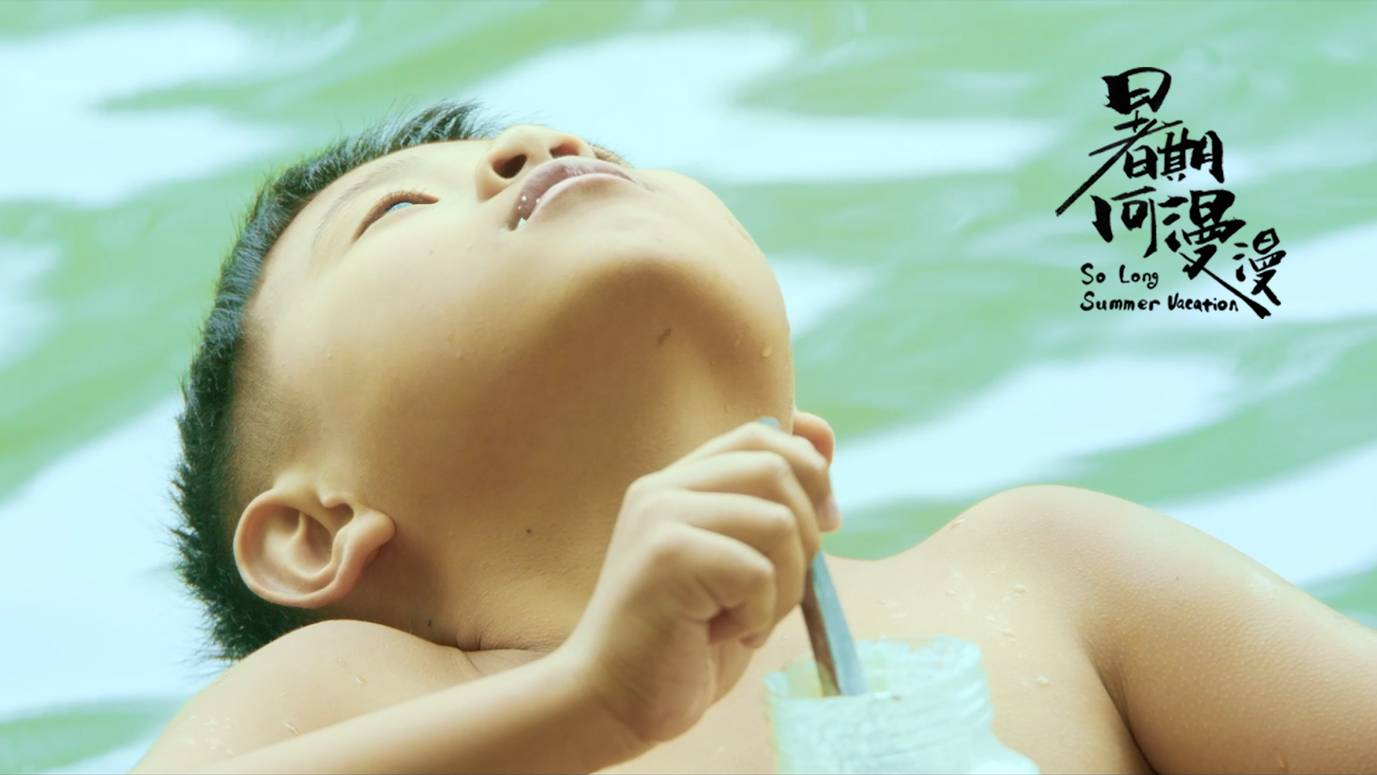
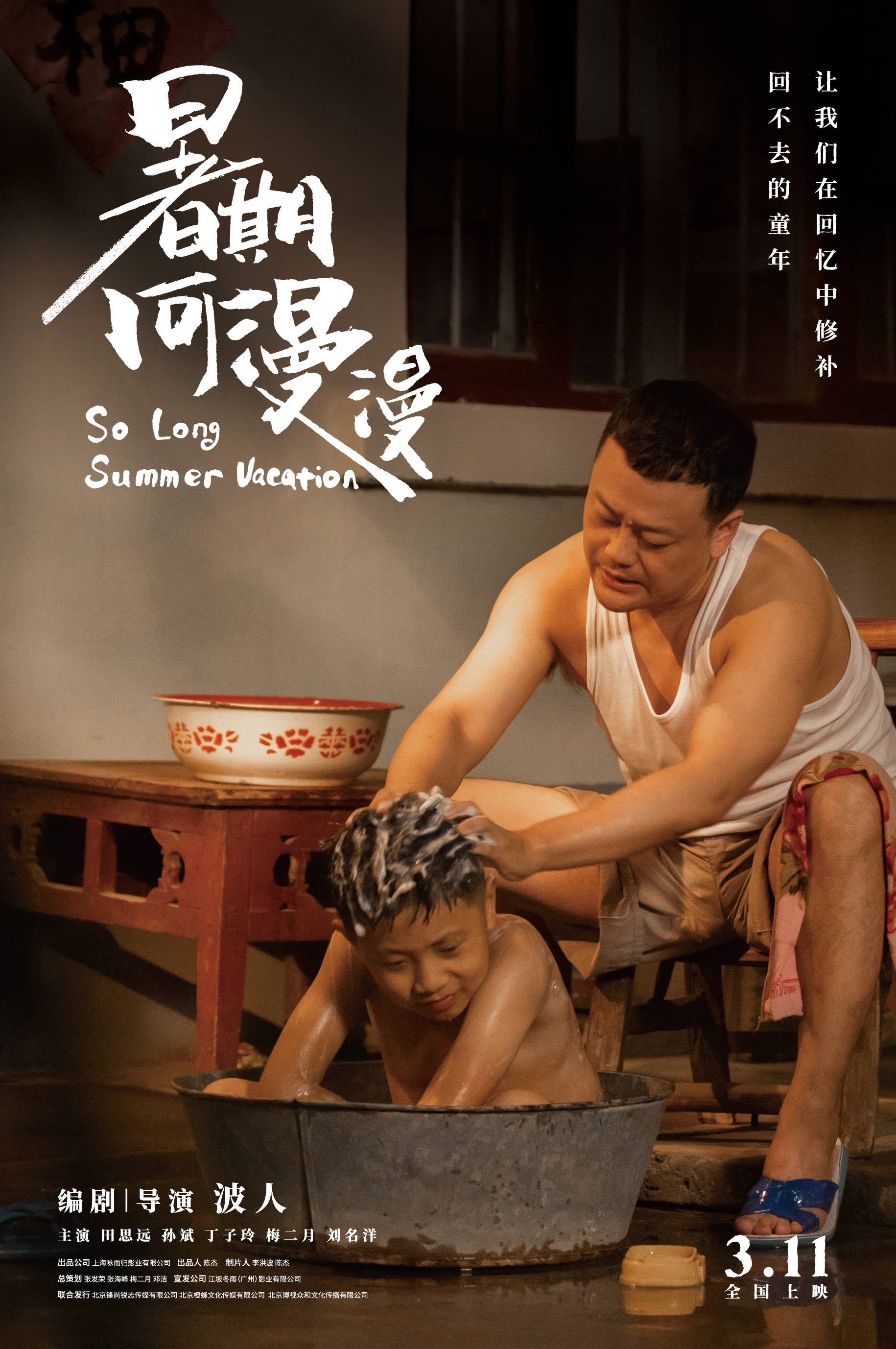
A small boy tries to work out what to do with a seemingly endless and infinitely boring summer in early ‘90s rural China in Bo Ren’s nostalgic childhood dramedy, So Long Summer Vacation (暑期何漫漫, shǔqī hé mànmàn). Told largely from the boy’s point of view, the film meditates on a China in the midst of transition along with the effects of the pre-reform work system on the family, the One Child Policy, sexism and conservatism all while the hero watches and learns.

All Xiaojin (Tian Siyuan) really wants for this summer is to learn to swim in the river, but his parents have banned him from going near it for the understandable reason that it’s dangerous. Usually, his father’s (Sun Bin) parents would be around to look after him, but they’ve decided to spend the summer with their other son while his father objects to his mother’s (Ding Ji Ling) idea of sending him to stay with his maternal grandma further out into the country because he thinks she’s too indulgent and last time he got into trouble for digging up the neighbours’ radishes. As Xiaojin is already 12 years old, they decide to let him stay home alone, but they also lock the front gate and tell him to spend his time studying though there’s not much else to do and he’s evidently bored and lonely as a child of the One Child Policy stuck in the house all day on his own. 

His problem is compounded by the fact that most of his friends have also gone away for the summer, the boy from next-door despatched to Shenzhen to spend time with his absent father. But while Weidong is away, Xiaojin begins to understand the hidden sadness of his mother, auntie Fengying (Mei Eryue), who has taken to having presents sent to herself to pick up at the local post office pretending that they are from the husband who otherwise seems to have abandoned her. As she tells Xiaojin, aside from the office job that affords her a slighter higher status than her factory worker neighbours, she has nothing to fill her time other than a little gardening. As no one else has much to do either, her life also becomes fodder for one of the few available activities, gossip, with the other neighbourhood ladies making scandalous allusions to her many “affairs” which are sadly unfounded. Pushed to the brink by the hopeless of her life, she even begins to consider suicide.

Xiaojin’s parents, meanwhile, are mainly consumed by their role as workers and left with little time to look after him. His father is preoccupied by the factory’s 100-day labour competition, seemingly less excited about the prospect of winning a significant prize than being “busy with work” and showing off his dedication through his productivity, while his mother is a seamstress who sometimes works unsociable hours. Little Xiaojin is pretty self-sufficient and as he is fond of saying has figured out how to do things like light a stove or cook a meal simply through having observed his mother and grandmother doing the same, but is obviously lonely at one point agreeing to swap one of his father’s valuable stamps with another boy on the condition that he comes to play with him for only three days. The other boy, Bin, hadn’t really wanted to because there’s “nothing to do” at Xiaojin’s house whereas his family has a TV set which still seems to be a rarity in the local area. 

When Bin takes Xiaojin to the river and they end up getting into trouble, one could argue that it wouldn’t have happened if only his parents had taught him to swim whether in the river or in a modern pool as his father suggested doing but never followed through. But their response is to tie him to a bench and beat him so badly that auntie Fengying and the other neighbours bang on their door and tell them to stop. Even grandma from the country who’s somehow ended up finding out about it comes straight over to tell them off, basically sending them to their room to think about what they’ve done while she looks after Xiaojin and asks the ancestors for their forgiveness. Part of his Xiaojin’s anxiety had rested on the fact that, because of the One Child Policy, she has only one son and has the twin pressures of needing to get it right with Xiaojin so that he grows up into a responsible member of society and living in constant fear that something will happen to him and they’ll be left alone in their old age. A short coda featuring Xiaojin in the present day as a father raising a son of his own suggests he’s doing things a little differently but still reflecting on that one very boring summer when the highlight of his day was ripping a page off the calendar and the only thing he wanted was to be able to swim in the river.


So Long Summer Vacation streams for free in the US and Canada until Feb. 5 as part of Asian Pop-Up Cinema’s Lunar New Year celebration.

Trailer (Simplified Chinese / English subtitles)
The Wandering Earth II (流浪地球2, Frant Gwo, 2023)

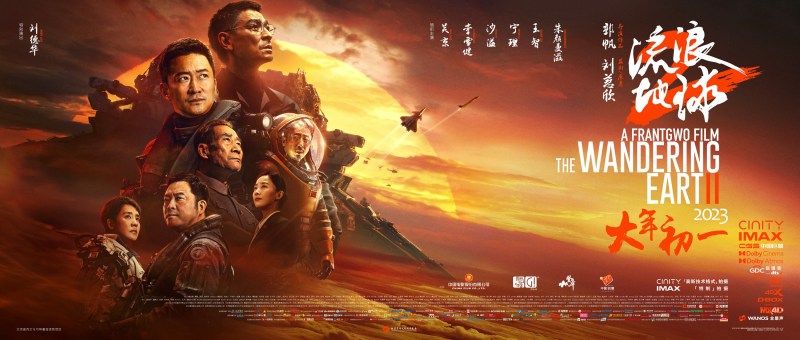
Back in what now seems like another world, Frant Gwo’s The Wandering Earth became a Lunar New Year box office smash and was described by some as China’s first foray into big budget sci-fi. Adapted from a novel by Liu Cixin, the film was much about fathers and sons as it was about sacrifice and solidarity in the face of oncoming apocalypse all of which are quite traditional New Year themes. Arriving four years later, The Wandering Earth II (流浪地球2, liúlàng dìqiú 2) largely drops overt references to the Spring festival bar the repeated motif of journeying home, but does once again stress the importance of international cooperation in safeguarding the future of the planet.

Then again, it seems that many feel it’s not a good use of time or resources to address a problem that will occur in a hundred years when they are long dead. A prequel to the first film, Wandering Earth II begins in the early days of the Moving Mountain Project which is the plan to push the Earth onto a different orbit to escape the sun’s eventual implosion. Given its enormous expense and the reality that much of the population will simply be left to die, the majority of the public back the rival Digital Life program in which humanity would be saved by relocating to a new virtual reality. Where this virtual reality is supposed to be stored is not exactly clear if there is no Earth for it to exist on, but it’s clear that some consider the possibilities of the digital existence preferable to allowing millions to die in the tsunamis which will engulf the Earth as it uncouples from the moon’s gravitational pull. 

Chief among them is software engineer Tu (Andy Lau Tak-wah) who is griefstricken by the loss of his wife and child in a traffic accident and has been secretly working on creating a fully fledged AI simulacrum of his daughter Yaya. He tells his more practically minded colleague Ma (Ning Li) that he doesn’t have the right to define what is “real” while eventually jeopardising the Moving Mountain Project by prioritising his desire to save Yaya over saving the Earth and eventually creating the AI system that will become Moss, a possibly dangerous entity which decides the best way to save humanity is to destroy mankind. 

The first film’s hero, Liu Peiqiang (Wu Jing), meanwhile is a rookie astronaut caught up in a terrorist incident carried out by militant opponents of the Moving Mountain project while enjoying an incongruously goofy courtship with fellow astronaut and future wife, Duoduo (Wang Zhi). This time around, he’s a dutiful son rather than conflicted father serving alongside his own dad who eventually becomes an example of intergenerational sacrifice as the old begin to make way for the young whose responsibility it now is to preserve the Earth. A nervous young aid serving the current premier later takes over the reigns and finds herself giving the same advice to a similarly nervous young man as they prepare to carry on the Wandering Earth project despite knowing that it will take thousands of years to complete. 

The ultimate message is therefore to choose hope, as Peiqiang later does striving to save the world even if it all turns out to be hopeless, rather than giving up and resigning oneself to one’s fate as many suggest doing when faced with the potential failure of their mission. As in the first film, the plan requires cooperation between nations and this time even more so as world powers must surrender their nuclear weapons to help blow up the moon. The Chinese premier looks forward to a day when governments can work on solving future problems rather than preparing for war, but then in an echo of the ongoing climate crisis some just don’t seem to see the point in dealing with something that won’t happen for a hundred years despite likely being among the first to complain no one did anything sooner when it finally affects them. Gwo adds a little whimsy in the technically pre-apocalypse setting with charming details such as Tu’s warm relationship with his dog-like robot helper and the general goofiness of Peiqiang’s attempt to court Duoduo while improving on the already polished visuals of the first film through several high impact set pieces but finally returns to its messages of hope and solidarity perhaps intended for a weary world attempting to find its own way out of a period of protracted strife.


The Wandering Earth II is in UK cinemas now courtesy of CineAsia.

International trailer (English voice over, Simplified Chinese / English subtitles)

Onlookers (Kimi Takesue, 2023)

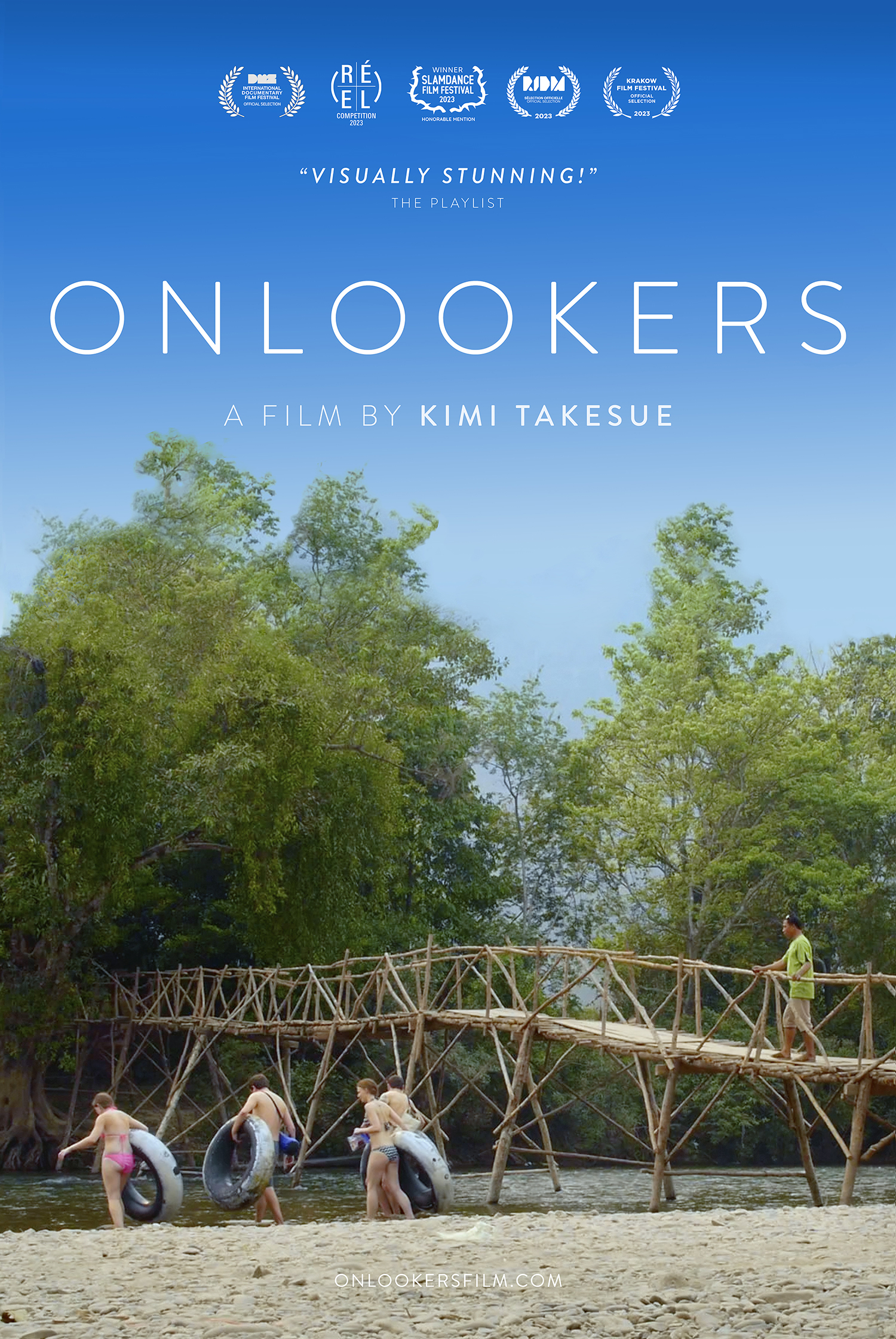
Onlookers is a strange word. It implies passivity, if also perhaps indifference, but nevertheless invites a question. Who exactly is looking at what or is the onlooker themselves also a spectacle of attention? The opening shots of Kimi Takesue’s Laotian documentary find a row of people waiting by the side of a road. A young man stares intently at his phone, as does an older woman two stools over, while an old lady’s eyes idly flicker as she watches the passing traffic. Another woman sits further away with a dog, facing an entirely different direction. 

Of course, we are also onlookers, watching the old lady as she watches if not exactly us then perhaps our ghost as manifested in the camera. In a sense the landscape is also onlooker, a passive presence often strangely forgotten by the tourists who pass through the frames throughout the rest of the film. In the early scenes, more local sightseers can be seen visiting temples and other landmarks, like others paying more attention to getting the perfect photographs rather than immersing themselves in the experience of actually being there. 

The temples seem to loom over them, onlookers too, passively observing their conduct which is not always respectful. “Don’t smoke weed here” a large sign pleads in English while large groups of tourists congregate at a swimming hole. In an elegantly composed shot of the mountains, most of the tourists are facing the wrong direction, quite literally bending over backwards to get the perfect selfie while otherwise oblivious to the beauty all around them. In a small waiting area near a shop offering tube swimming tours, the TV seems to be tuned in to ancient episodes of Friends while potential customers haggle with the driver leaving the young boy who accompanies him to wander out into the road. 

Even religious practice seems to have become a tourist attraction, gaggles of sightseers crowding round a small hut where monks ring bells, taking turns banging gongs themselves. Takesue contrasts these acts of accidental voyeurism with the local people simply trying to go about their business, a row of women again siting on the roadway though this time to offer alms to a seemingly endless parade of monks in a near eternal loop. Much of the local economy does seem to revolve around the tourist trade, the monk’s parade also attracting is share of onlookers, while a woman washes a dog in the street and others try to get on with selling their goods before Takesue abruptly switches to scenes of schoolchildren on scooters or filling plastic water bottles from the river. 

Then again, perhaps the real onlookers are the bemused cows fighting over tufts of grass as they wander onto temple grounds. The tourist trade may also be having a negative effect on the local environment, drowning out the sounds of the nature and disrupting the natural tranquility of the area while the tourists often appear indifferent to the world around them as if it were a mere playground and the people themselves little more than onlookers observing them from the outside. Occasionally Takesue cuts to scenes of nature without any people in them, bathing in the natural beauty of the landscape unsullied by human intervention as if to remind us of the various ways in which consumerism eats away at the world in which we live if also hinting at our own desire, as onlookers, to paint these scenes with a kind of pastoral innocence coupled with an otherwise uncomfortable exoticism. 

The film ends as it began, with another roadway only this time empty save for a dog who turns around to look towards the departed people before a second dog enters the frame and barks at the camera as he passes through as if to ask where everyone’s going or perhaps what they were doing here in the first place. A gentle meditation on the nature of “travel” and the disruptive qualities of “tourism”, Takesue’s elegantly lensed images seem to argue for a more active reflection on the world and our place within it rather than remaining a perpetual onlooker observing without thought or feeling.


Onlookers had its world premiere as part of Slamdance 2023.

Trailer

Lighting Up the Stars (人生大事, Liu Jiangjiang, 2022)

An immature young man recently released from prison for assaulting his girlfriend’s lover finally begins to grow up when unexpectedly saddled with looking after a grumpy little girl otherwise unwanted by her remaining family members in Liu Jiangjian’s feel good tearjerker, Lighting Up the Stars (人生大事, Rénshēng Dàshì). As much a tale of finding an accommodation with death and learning to move on as it is of the joys of forged families and unexpected connections, Liu’s drama is as the Chinese title suggests very much about the big things and what it takes to realise what they are. 

At this point in his life, San (Zhu Yilong) hasn’t been giving much thought towards the big things largely because he is consumed by resentment and a sense of inadequacy. He’s keen on getting back together with old girlfriend Xi (Janice Wu Qian) but sends her worryingly controlling voice notes and later becomes violent when she tries to break up with him before discovering that she is pregnant and plans to marry the guy he went to prison for beating up. “I can’t see you becoming a good father” she explains, regarding him as too immature to support the family she is keen to start. San is stung by the suggestion, as he is by his elderly father’s constant needling and refusal to hand the family funeral business over to him, but also has to concede she has a point. 

Nevertheless, there is a kind of tenderness to him as seen in his gentle washing of the body of an elderly woman still lying on the bed where she died while her son and his incredibly callous wife try to organise an express funeral so they can take their spoilt son to Beijing to participate in an academic competition. Meanwhile, little Xiaowen (Yang Enyou) watches while hiding in a cupboard before bursting out and demanding to know what they’ve done with her grandma. It seems that no one has taken the time to explain to Xiaowen exactly what’s happened or what’s going to happen to her now seeing as her grandmother had been raising her. Charging around like Nezha pointing her spear at everyone she meets, Xiaowen sets off to rescue grandma by chasing San’s van and eventually ending up at the funeral parlour which she then refuses to leave. Her uncle comes to fetch her but shockingly decides to leave her there with San and his two friends, asking them to look after her until they get back despite having absolutely no idea if they are suitable people to be looking after a little girl. 

These tears in the fabric of the traditional family are in some ways a result of a contemporary society. Xiaowen’s aunt point blank refuses to have her, insisting that she doesn’t want to expend resources on someone else’s child while blaming her husband for paying too much attention to his niece and not enough to their bratty son who lets them all down by humiliatingly failing the Beijing exam. Her hyperfocus is a reflection of the One Child Policy and rising consumerism as she seeks to express her status as a mother through her son’s success while simultaneously ruining their familial relationships with her constant nagging and hard-nosed practicality. Xiaowen’s henpecked uncle simply goes along with it for a quiet life, obviously very upset by his mother’s death but unable to defy his wife. San meanwhile is at odds with his father and sister who think he’s no good, will never be able to settle down and live a conventional life, and is incapable of accepting the responsibility of the family business. San may think some of this too, living with a sense of inadequacy feeling as if he doesn’t measure up to his absent elder brother, while seemingly floundering in his attempts to make something of himself. 

Through his relationship with Xiaowen he finally begins to come into his own in accepting the responsibility of fatherhood, caring for her both physically and emotionally while repairing his fracturing relationship with his own father and coming to terms with the past. He teaches Xiaowen about death and how to accept it, but also reminds her that her grandmother’s never really gone and will always be with her. Finally, San begins to think about the big things but about the small things too, planting stars in the sky as Xiaowen puts it as they prepare to get on with the business of living even in the presence of death.


Lighting Up the Stars streams for free in the US and Canada Jan. 22 to Feb. 5 as part of Asian Pop-Up Cinema’s Lunar New Year celebration.

International trailer (Simplified Chinese, English subitles)

Asian Pop-Up Cinema Celebrates Lunar New Year with Free Streaming Series

Asian Pop-Up Cinema will be celebrating the Year of the Rabbit with a series of films streaming for free in the US and Canada from Jan. 22 to Feb. 5.

Lighting Up The Stars

Streaming via Eventive

Recently released from prison, a jaded young man expected to take over the family funeral business gains a new perspective when he’s suddenly charged with looking after a little girl after her grandmother passes away.

So Long Summer Vacation

Streaming via Eventive.

A little boy tries to stave off loneliness while largely left to his own devices during a particularly dull summer in this nostalgic coming of age film.

GG Bond Ocean Diary

Streaming via Smartcinemausa.com 

Latest in the long-running series of children’s animated movies following humanoid pig and secret agent GG Bond. This time he’s on a mission in search of a dangerous weapon hidden somewhere in the ocean.

Hero

Streaming via Eventive

Three-part anthology film with segments directed by Li Shao Hong (Wuhan Story), Joan Chen (Beijing story), Sylvia Chang (Hong Kong story) each of which focus on the lives and loves of women in the contemporary society.

Four Springs

Streaming via Eventive.

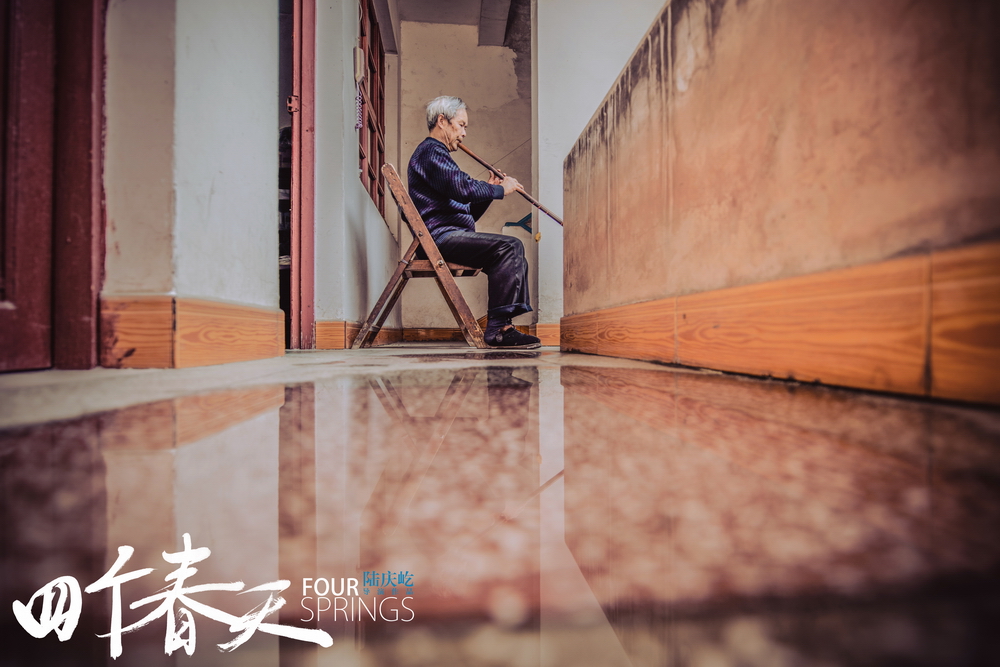
Director Lu Qingyi’s beautiful documentary follows his own family through four celebrations of New Year bringing with them both joy and sorrow. Review.

Each of the films is available to stream for free in the US and Canada Jan. 22 to Feb. 5. Simply register via the links above to receive a streaming link. You can find further information for all the films on Asian Pop-Up Cinema’s official website and you can also keep up with all the latest news by following the festival on FacebookTwitter, and Instagram.

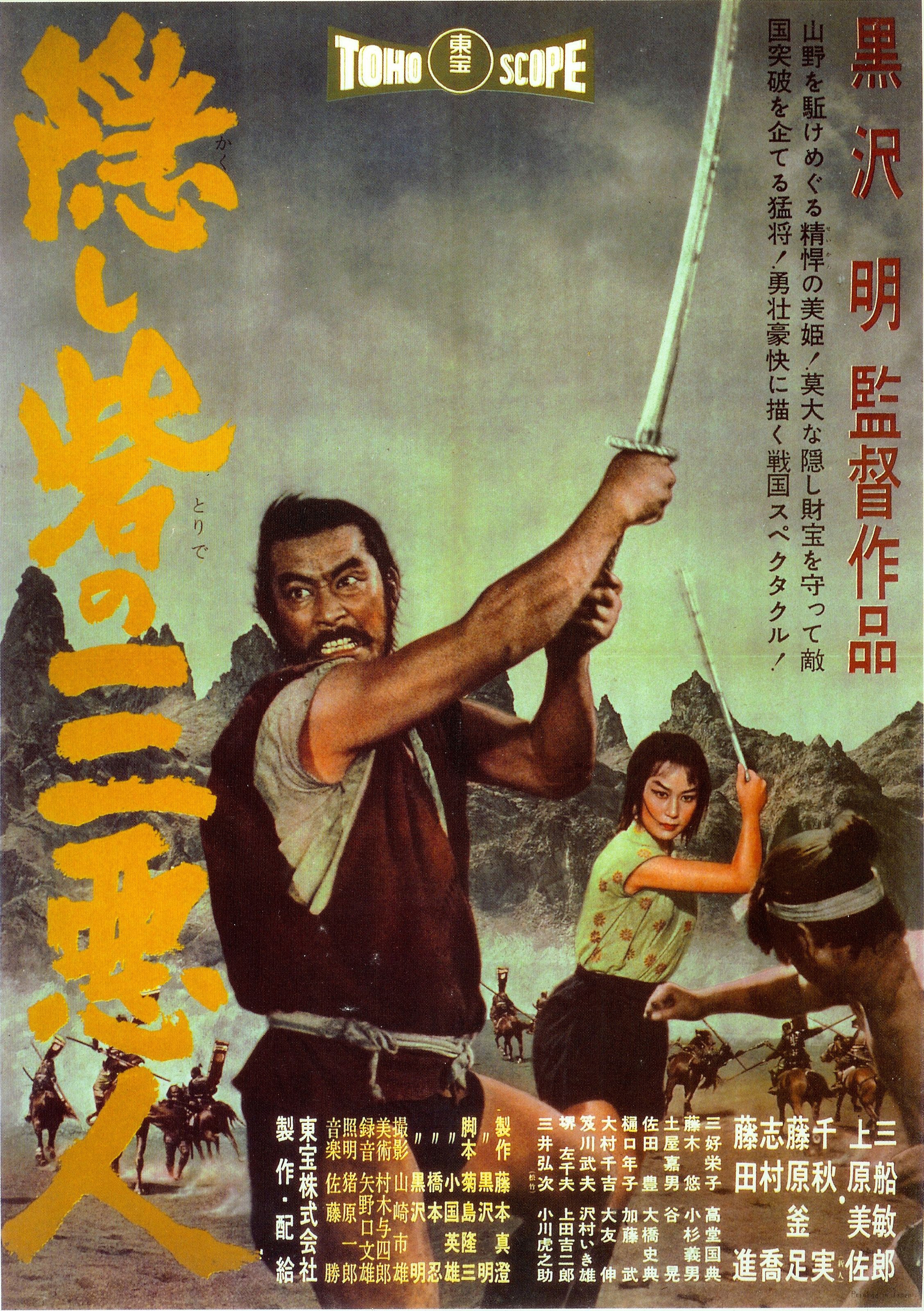
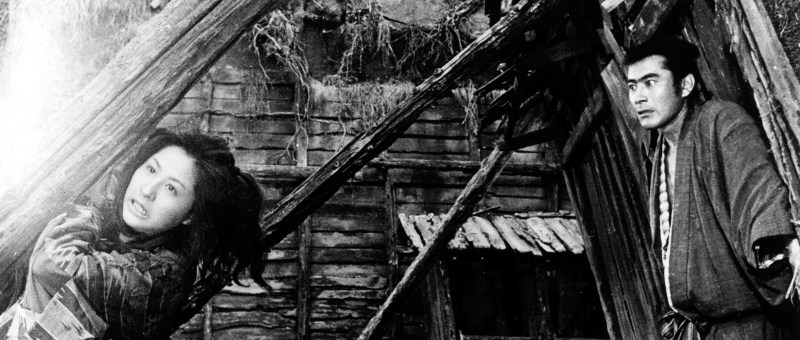
The Hidden Fortress (隠し砦の三悪人, Akira Kurosawa, 1958)

“Your kindness will harm you” a well-meaning retainer advises his charge, but in the end it is her kindness which saves her along with numerous others in Akira Kurosawa’s Sengoku-era epic, The Hidden Fortress (隠し砦の三悪人, Kakushi Toride no San Akunin). Largely told from the point of view of two bumbling peasants trying to get rich quick by exploiting the hierarchal fluidity of a time of war, the film nevertheless cuts against the grain of the democratic era in advocating not so much the destruction of the class-bound feudal order as benevolent authority. 

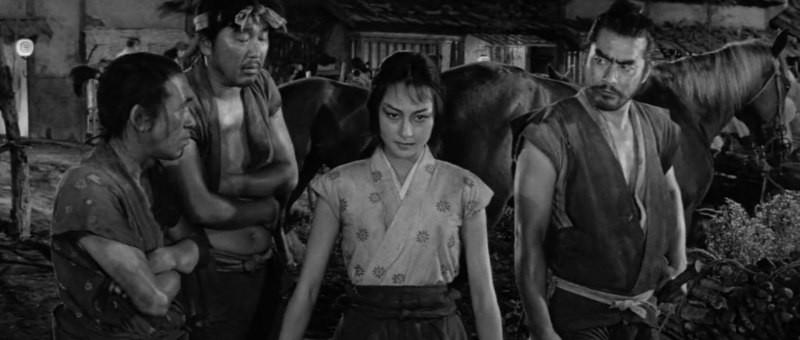
This can quite clearly be seen in the dynamic figure of displaced princess Yuki (Misa Uehara), the successor of her routed clan protected by a hidden fortress in the mountains which she must eventually leave. Her female servant laments that her father raised her as a boy which has given her a haughty and dominant manner at odds with the polite submissiveness usually expected of upperclass women. While often exerting her authority, she is otherwise uncomfortable with the uncritical servitude of her retainers, chief among them the talented general Makabe (Toshiro Mifune) who sacrificed the life of his own sister, allowing her to be executed in Yuki’s place buying them some time. “Kofuyu was 16. I am 16. What difference is there in our souls?” she asks, yet even if she believes their souls are equal she is not quite so egalitarian as to forget her position or the power and privilege that comes with it. 

Nevertheless, hers is an authority that is tempered by compassion and in the end chosen. Her salvation comes in speaking her mind to an enemy retainer, Tadokoro (Susumu Fujita), who has been savagely beaten by his own lord for losing a duel with Makabe who, to the mind of some, humiliated him with kindness in refusing to take his life leaving him to live in defeat. Yuki says she doesn’t know who is stupider, Tadokoro or his lord, for never would she punish a man in such a way simply for losing to an enemy. She tells him that there is another way, and that he need not serve a lord who does not serve him leading Tadokoro to defect and choose to follow her instead. 

She also inspires confidence in a young woman she insists on redeeming after discovering that she is a former member of the Akizuka clan sold into sexual slavery after being taken prisoner by the Yamane. Kurosawa presents the girl with a dilemma on realising that the mysterious woman who saved her is the fugitive princess, knowing that she could betray her and pocket the gold, but finds her resolving to serve Yuki all the more. In a moment of irony, we learn that the girl was bought for five silver coins, the same amount of money a wealthy traveller offers for Makabe’s horse, but displeases her master in refusing to speak or serve customers. For Yuki he offers gold, though withdraws on being told that she is mute. Knowing that she would be unable to disguise her speech or accent which would instantly give her away as a haughty princess, Makabe convinces her to stay silent though as she tells him he cannot make her heart mute too. 

Even the peasants, oblivious to her true identity, view Yuki as part of the spoils insisting that they should be entitled to a third of her too and at one point preparing to rape her only to be fought off by the rescued girl. “We can rely on their greed” Makabe had said, knowing that their material desires make them easy to manipulate and that their loyalties are otherwise fickle. Matashichi (Kamatari Fujiwara) and his friend Tahei (Minoru Chiaki) sold their houses in their village to buy armour in the hope of achieving social mobility through distinguishing themselves in war, but have largely been humiliated, robbed of their armour, mistaken for captured members of the enemy, and forced to dig the graves of others. They pledge eternal friendship but their bond is continually disrupted by the promise of monetary gain. They fall out over a moral quandary, one willing to plunder the body of a fallen soldier and the other not, while even on reuniting squabbling about how to divide the money first deciding it should be equal and immediately disagreeing as soon as they get their hands on it. At the film’s conclusion it rests on Yuki to play mother, telling them that they must be good and share the boon she’s given them equally without complaint each then too only quick to be generous insisting that the other can keep it. 

The implication is still, however, that Matashichi and Tahei should return to their village to live as peasants while Yuki assumes her place in a castle no longer hidden as its ruler. Order has returned and the old system remains in place, all that changes is that this is now a compassionate autocracy ruled by a benevolent lord who views her subjects lives as equal to her own yet not perhaps their status. Where it might prompt Tadokoro to conclude that he need serve no lord at all for there should be no leaders only equals, the film concludes that a leader should be just and if they are not they should not be followed. Then again, the disagreement between firm friends Matashichi and Tahei is ended when they each have enough and no longer find themselves fighting for a bigger slice of the pie content in the validation of their equality. As Makabe puts it, heavy is the head that wears the crown. Yuki’s suffering is in the responsibility of rebuilding her clan though she does so with compassion and empathy ruling with respect rather than fear or austerity. Kurosawa utilises the novel scope format to hint at the wide open vistas that extend ahead of the peasants as they make their way towards the castle in search of gold only to leave with something that while more valuable may also shine so brightly as to blind them to the inherent inequalities of the feudal order. 


The Hidden Fortress screens at the BFI Southbank, London on 20th & 27th January 2023 as part of the Kurosawa season.

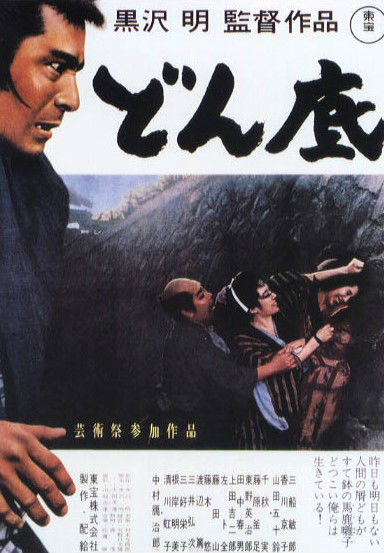
The Lower Depths (どん底, Akira Kurosawa, 1957)

“How can you go to hell if you’re already there?” quips a stoical gangster, perhaps the only denizen of a rundown tenement block no longer looking for escape in Akira Kurosawa’s adaptation of the Gorky play The Lower Depths (どん底, Donzoko). In general, much of Kurosawa’s post-war work decries deliberate falsehood but paradoxically suggests that some degree of self-delusion is essential for surviving an otherwise hopeless world. The wandering pilgrim who arrives like some kind of emissary from the land above says as much as he offers what may turn out to be false promises of a better world to come, but as one of his charges points out he does so “out of pity for those beyond hope.”

Then again, perhaps spirituality won’t save you either. As the film opens, it’s two monks who are seen throwing leaves over a cliff describing the settlement below as “just an old rubbish dump”, which in a sense it is if that were not such a cruel thing to say. In any case, the people who live here are all those who have already fallen into desperation, exiled from mainstream society and caught between a fierce desire to claw their way back up and the despair of knowing that in all likelihood they never will. A man who claims to be a former samurai waxes on his illustrious past, while a melancholy sex worker meditates on the lost love that reduced her to current position, and a stage actor laments his failing memory his mind now fogged by years of alcohol abuse that he says have already poisoned his “bitol organs”. A tinker secretly thinks he’s better than those around him. He’s only been here six months and insists that he’s a skilled craftsman who can continue working, but blames his desperate circumstances on the sickly wife whose death he quietly awaits assuming it will free him of this burden and thereafter this place.

It doesn’t, of course. He sells his tools to pay for her funeral, and otherwise appears lost no longer a husband to a dying wife. In essence the film revolves around a confrontation between the pilgrim who offers what may well be an illusion of salvation and the thief Sutekichi (Toshiro Mifune) who challenges him but begins to believe that it really may be possible for him to leave this place and take the woman he loves, Okayo (Kyoko Kagawa), with him or else fall further and remain trapped in this mortal hellscape. The problem there is that Sutekichi had previously been having an affair with the landlord’s wife Osugi (Isuzu Yamada) who is Okayo’s sister. Though Osugi, whose hope of escape through romance is dashed, first takes against her sister, she later offers to surrender her to Sutekichi if only he will assist her by killing her greedy husband Rokubei (Ganjiro Nakamura). 

In this cold and austere place which is in effect a living hell, there is a sense that many of the residents are already dead. Rokubei’s face is the palest of them all, suggesting that he is already too far gone ever to be saved and most likely doesn’t want to be anyway for in this terrible place he is in effect the king. Osugi is the queen, but often framed behind bars now a prisoner already too corrupt to leave the tenement behind. Her uncle, Deputy Shimazo (Kichijiro Ueda), has a largely illusionary sense of power in his position in a policeman which he prosecutes selectively and mostly at the service of the landlord. In the climactic closing scenes, his policeman’s baton is stolen by the drunkard Unokichi (Yu Fujiki) who dances through the streets with it demonstrating just how little authority he actually wields finally losing his position when the landlord is deposed and his familial connections become irrelevant. He inherits the landlord’s residence, but is reduced to the husband of the sweet seller Otaki (Nijiko Kiyokawa) whose status as a working woman is perhaps higher than his. 

Yet the pilgrim seems to think there is still time to save Sutekichi who at heart wants to go straight but is also resentful admitting that in a world where swindlers prosper perhaps it is foolish not to be a swindler. The pilgrim promises all of them a “better place”. “As long as you believe you’ll find it, you surely will”, he explains telling the actor about a temple that can help him cure his alcoholism while simultaneously urging the tinker’s suffering wife to give in to her fate and go to Buddha’s embrace as soon as possible. Perhaps he sincerely believes these things to be true, but also seems to have a sense that even if they weren’t these hopeless people could not go on if they knew there was no way out. They all say they’ll leave, but discover there are only two means of escape, to die or fall still further in banishment from this already banished place. Only Okayo whose final whereabouts remain unknown may finally have been able to free herself. Staying almost exclusively with the claustrophobic confines of the drafty tenement as wind the whistles through it, Kurosawa frames the space of one of existential purgatory but perhaps suggests that in the absence of salvation a comforting falsehood is the only means of survival.


The Lower Depths screens at the BFI Southbank, London on 19th & 30th January 2023 as part of the Kurosawa season.

High and Low (天国と地獄, Akira Kurosawa, 1963)

A self-made man is landed with an unthinkable dilemma when his chauffeur’s son is kidnapped in place of his own just at the moment he’s staked his entire fortune on a manoeuvre to outsmart cynical executives set on taking over his company in Kurosawa’s post-war crime film, High and Low (天国と地獄, Tengoku to Jigoku). The movie’s Japanese title, Heaven and Hell, might hint more strongly at the growing economic disparities in the era of the economic miracle but also at the dualities embodied in the hero’s choices. “Success isn’t worth losing your humanity” his wife tells him, but he still struggles with the validity of choosing his heart over his head knowing that to pay anyway even though it’s another man’s son means financial ruin, the final question being if he is really prepared to allow a child to die simply to maintain his own wealth and status. 

The problem is that Gondo (Toshiro Mifune) has attempted to mount a rebellion against the evils of consumerism, incurring the ire of the cynical executives who attempt to get him on their side in their attempt to oust the boss whose outdated ideas are running the business into the ground. Though Gondo appears sympathetic, hinting that he might be interested if there’s a good enough promotion in it, he later tells them where to go on seeing that their business plan is to start producing poor quality disposable footwear. Gondo started on the factory floor and he doesn’t want to put the company’s name on such shoddy produce nor does he think that their admittedly fair point that if the shoes are well made and last a long time no one will need to buy any is a good way to do business. He doesn’t think the boss is right either and wants to make shoes his own way which is why he’s remortgaged the sizeable mansion he owns on top of a hill overlooking the city and has pretty much run through his wife’s dowry to buy a majority stake in the company.

On top of a hill is a good place to live if you want a good vantage point to oversee the land below, but while you’re looking down others look up and not all of them kindly. Gondo is as he says a self-made man, but also out of touch with contemporary society and not so far from an ambitious courtier always after a little more. He says it isn’t about getting the top job but getting shoes made right, but it seems he too had been bitten by the consumerist bug and is otherwise unable to affirm his status without material proof. When he thinks it’s his own son that’s been kidnapped, he’d have given it all away but when it’s the driver’s boy it’s a different question. Shinichi (Masahiko Shimazu) isn’t his responsibility and as he points out there are plenty of other wealthy men, why is he the only one to pay? While his wife (Kyoko Kagawa) tearfully urges him to do the right thing, his assistant (Tatsuya Mihashi) tries stop him, insisting he should take the sizeable cheque they’ve had drawn up to Osaka and the stakeholder he’s buying the shares from. 

While he vacillates, the driver, Aoki (Yutaka Sada), is humiliated and forced into servitude. Gondo seems to have the old-fashioned idea that the kidnappers would simply let Shinichi go on realising they’ve got the wrong boy and his father can’t pay, but Aoki knows there’s nothing he can do to save his son but throw himself on Gondo’s mercy. He falls to the ground and prostrates himself, but later retracts all telling Gondo it doesn’t matter, that he hadn’t realised what he was asking of him, and insisting that Shinichi is a bright boy who will look for a chance to escape on his own. Once the boy is returned he treats him harshly, interrogating him about anything he might have forgotten and later driving him around looking for the hideout where he was kept in an attempt to do something and repay the debt he now feels he owes to Gondo by helping the police retrieve the money Gondo eventually agreed to pay for him. 

In agreeing to give up the money, Gondo is in a sense unburdened knowing he has made the right choice and realising that he would never live a comfortable life in that house if cost a child’s life to keep it. Part of his rationale for not wanting to pay had been that though he had been poor before and might be again, his wife had not been and does not truly understand what it is to live in poverty much as she says her life of luxury means nothing to her. She has never wanted for anything, after all. As for the kidnapper, Ginjiro (Tsutomu Yamazaki), we know little of his motives save for his intense resentment living quite literally in the shadow of Gondo’s mansion and feeling as if it were mocking him. Then again, though his life is hard Ginjiro already had a path to success in that he would soon have completed his medical studies implying at least that he or someone else was able to cover his tuition and costs of living, that he was able to continue in education, and really had no need to take such drastic action in rebellion against the antagonistic capitalism of the post-war society. “Do you think we have to hate each other?” Gondo asks him, but Ginjiro has no answer only his intense resentment for everything he represents.

The “hell” that Gondo inhabits is a backstreet wasteland peopled by the hopeless. Tokura (Tatsuya Nakadai), the earnest policeman, follows him through thronging clubs and on into “dope alley” where Ginjiro picked up his accomplices so desperate to escape their suffering that they’d agree to help him kidnap a child. Though it costs him his job, Gondo decision to do the right thing makes him a national hero, the working class millionaire who mows his own lawn and can still knock up a pair of shoes should the occasion call while women across the country decide to boycott the company in protest at his treatment. Ginjiro can only howl like a caged animal while facing a death sentence for the coldblooded murder of his accomplices. The light bouncing off his mirrored sunshades gives him an eerie supernatural quality, a demon arising from depths of hell to wreak havoc in heaven but finding only infinite tragedy in the contradictions of the consumerist post-war society.


High and Low screens at the BFI Southbank, London on 19th January 2023 as part of the Kurosawa season.

Original trailer (English subtitles)
Japan Society New York to Host Seijun Suzuki Centennial Feb. 3 – 11

In collaboration with The Japan Foundation, Japan Society New York will be marking the 100th anniversary of late director Seijun Suzuki’s birth with a mini retrospective featuring six of his films from across his career each screening from imported 35mm prints.

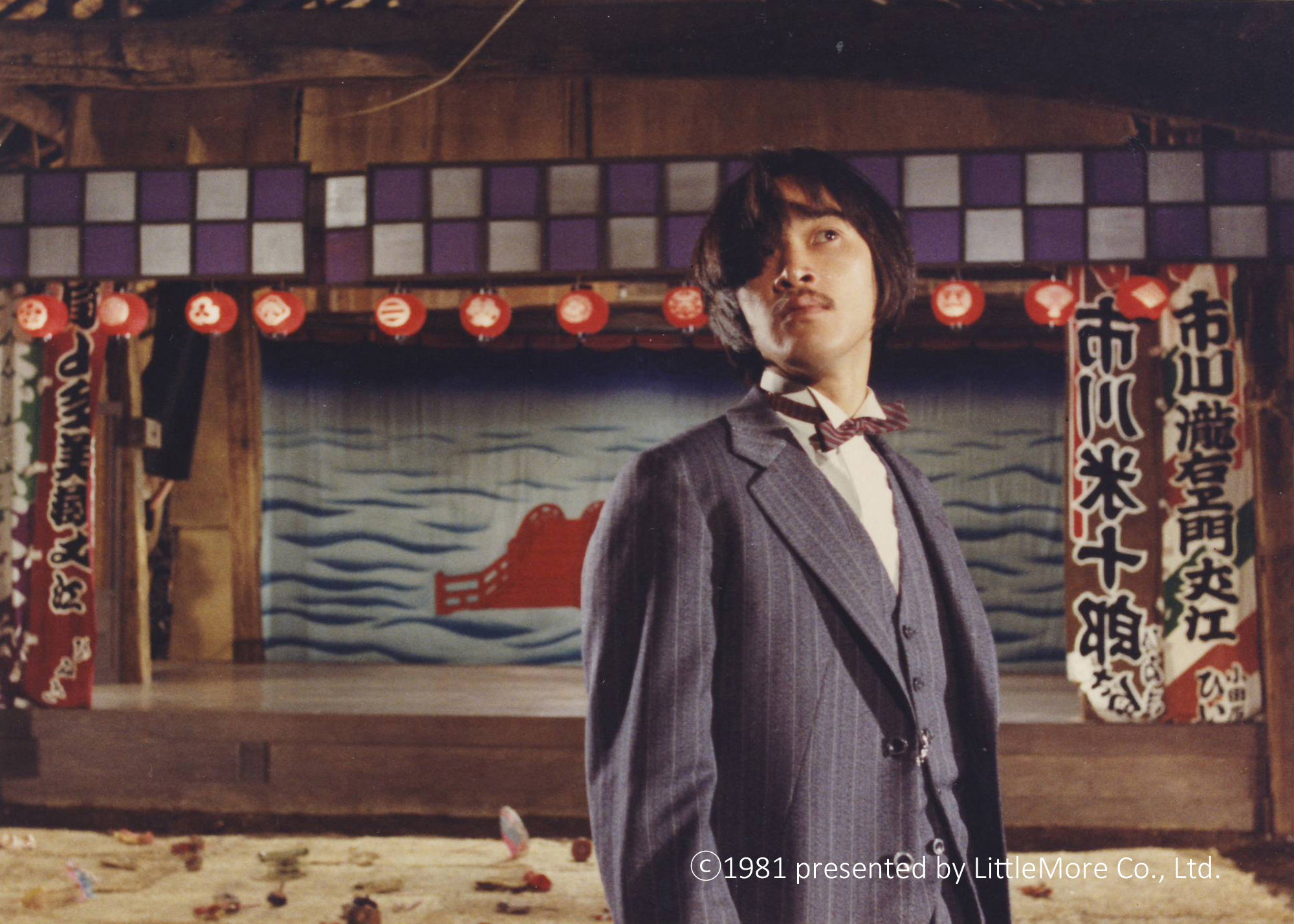
Feb. 3, 7pm: Kagero-za

Yusaku Matsuda stars as a confused playwright drawn to a woman who may be a ghost in Suzuki’s hallucinatory Taisho-era drama adapted from a story by Kyoka Izumi.

Feb. 4, 5pm: Satan’s Town / Love Letter

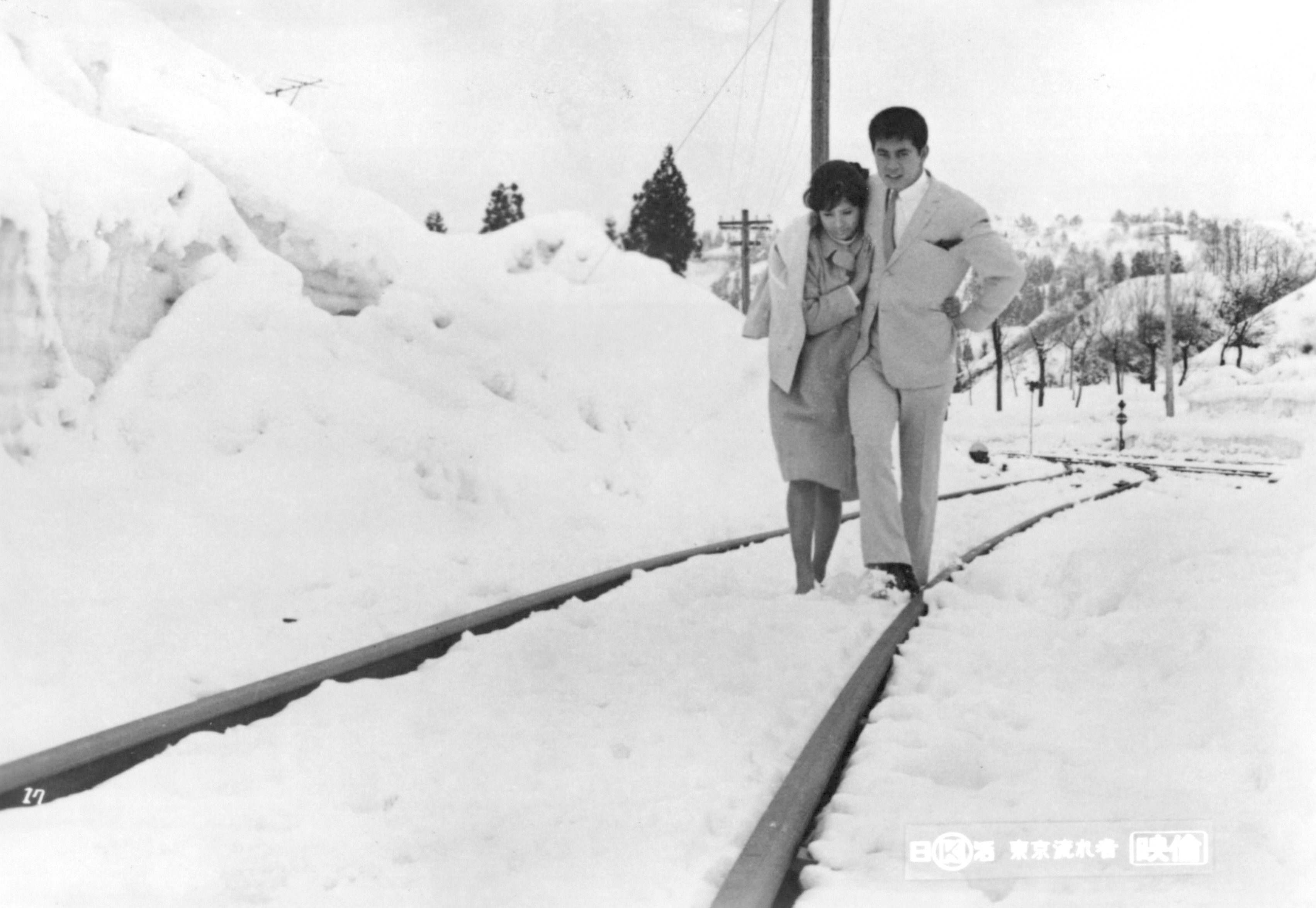
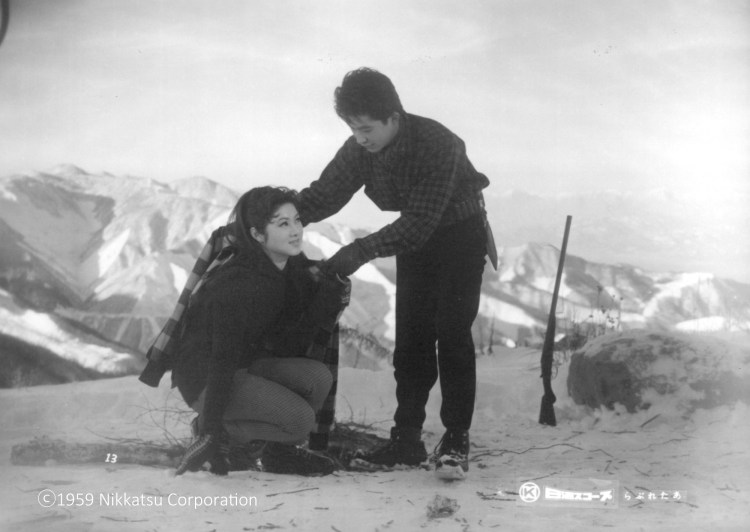
Early Nikkatsu crime feature Satan’s Town hints at the future direction of Suzuki’s career in its dark humour and anarchic use of freeze frame while charting a gang boss’ attempts to set up a new heist after getting out of prison only to find his scheme undermined by the competing desires of his gang of thieves. Satan’s Town screens with the short kayo or ballad film Love Letter starring singer Frank Nagai as a performer whose pianist makes a new discovery when she attempts to visit her lover with whom she has been corresponding by mail after he moved to the wilderness.

Feb. 4, 8pm: Tokyo Drifter

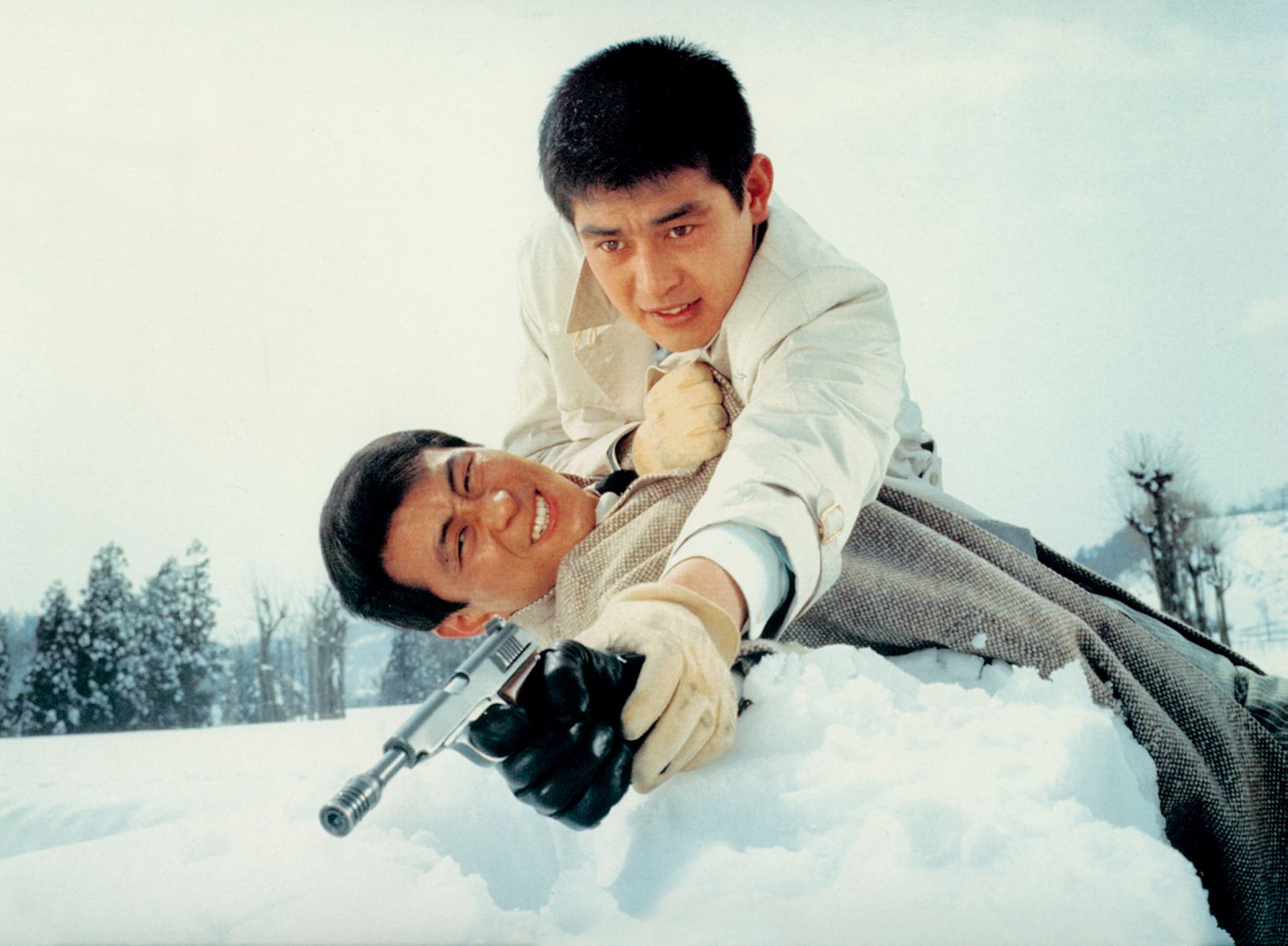
Avant-pop gangland drama starring Tetsuya Watari, who also performs the opening ballad, as a recently released yakuza trying to start again but immediately drawn back into underworld intrigue as his old associates attempt to knock him off.

Feb. 10, 7pm: Carmen from Kawachi

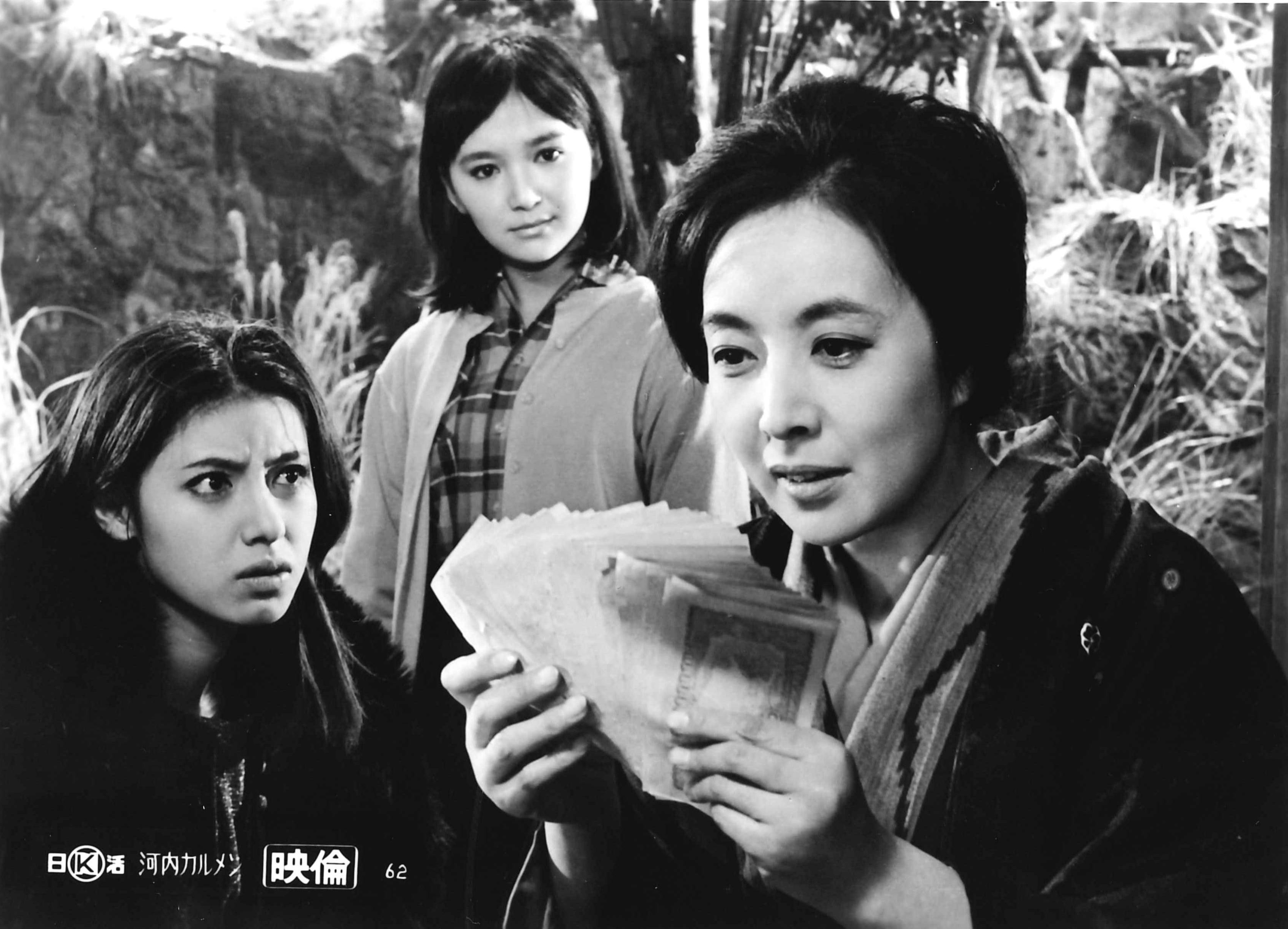
(c)1966 Nikkatsu Corporation

Surreal picaresque inspired by Bizet’s Carmen following a naive young woman’s flight to the city where she progresses through a series of exploitative jobs and disappointing relationships before regaining a sense of confidence and independence.

Feb. 11, 7pm: A Tale of Sorrow and Sadness

Suzuki’s comeback after being fired by Nikkatsu is a surreal media satire inspired by Ikki Kajiwara’s sports manga in which a fashion studio wanting to compete with a rival who’ve just made a top Russian gymnast their brand ambassador decide to create a homegrown star by grooming a promising golfer. Events take a darker turn when her newfound fame attracts the attentions of a psycho housewife stalker from the conservative upper middle class neighbourhood her bosses have chosen for her new home.

The Seijun Suzuki Centennial runs at Japan Society New York, Feb. 3 – 11. Tickets priced at $15 / $12 students & seniors, and $10 Japan Society Members are on sale now via the official website while you can also keep up with all the year-round events by following Japan Society Film on FacebookInstagram, and Twitter.

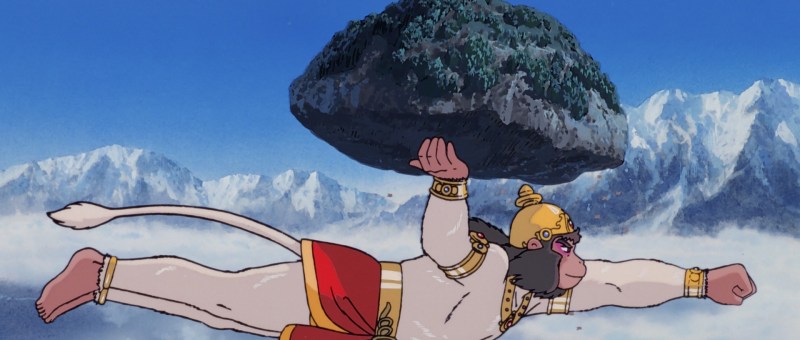
Ramayana: The Legend of Prince Rama (ラーマーヤナ ラーマ王子伝説, Ram Mohan, Yugo Sako, Koichi Sasaki, 1992)

Raised in a Buddhist temple after an early orphanhood, documentary filmmaker Yugo Sako became a great devotee of Indian culture and apparently fell in love with the story of the Ramayana while filming a documentary for NHK, later reading as many as 10 different translations of the classic legend in Japanese. Certain that only animation could do justice to this epic tale of gods and demons, he proposed adapting it in the style of Japanese anime which was then gaining in popularity all over the world. 

It was though a somewhat sensitive topic. Following a minor misunderstanding concerning Sako’s documentary, complaints were submitted to the Japanese Embassy on behalf of religious organisations who objected to the film on the grounds that it was inappropriate for a Japanese company to adapt their national epic, that their culture was being misappropriated and that they worried the animation format may damage the ethics of the tale. Working with veteran director Ram Mohan, Sako had wanted to make the film in India with Indian animators but given all the difficulties he faced eventually decided to produce it in Japan bringing Mohan and other consultants with him to advise the Japanese animation team how best to reflect the local culture. 

Starring a cast of Indian actors, the film was released first in an English-language audio version only later dubbed into Hindi. In essence it follows Prince Rama (Nikhil Kapoor), the seventh of Lord Vishnu’s 10 incarnations and the first son of a good king, Dasharatha (Bulbul Mukherjee), who rules the happy and prosperous kingdom of Ayodhya. Rama is first called on to deal with a cannibalistic mother and son demon tag team terrorising the local forest but must then tackle the evil demon king Ravana (Uday Mathan) who kidnaps his beautiful wife, Sita (Rael Padmasee), in an attempt to intimidate him during a particularly low point in which he has been exiled to forest for 14 years because of some otherwise fairly gentle palace intrigue. Perhaps surprisingly, each of Rama’s three brothers are also goodhearted and righteous, possessing no desire to unseat him or usurp the throne for themselves despite the machinations of some around them. Rama is also well loved by his people who can see that he is a righteous person prepared to risk his life killing demons to protect them. 

Yet the lesson he learns through his journey to defeat Ravan’s darkness once and for all while rescuing Sita, is that it’s more important to be a good person than it is to be a good warrior. He laments that so many have lost their lives in this “avoidable war” and dreams of the day such sacrifices will no longer be necessary while even Sita begins to feel guilty on realising that people from a series of different kingdoms have died to win her freedom. Rama earns the censure of his brother Lakshman (Mishal Varma) when he suggests burning the bodies of fallen soldiers on both sides together, reflecting that they are all the same now and were so even before they died as were the creatures of the mountains and the sea. 

Even so, the difference is stark between the gloomy and ominous castle where Ravan holds court and the bright and airy chambers of government in Dasharatha’s home. The animation style is strongly reminiscent of the contemporary work of Studio Ghibli particularly in its depictions of the natural world along with the various demons with whom Rama comes into conflict which may not be surprising given that several key members of the creative team were Ghibli alumni. Yet it also reflects its Indian influences, featuring a soundtrack of traditional music along with several songs performed in sanskrit, musical sequences otherwise not generally a feature of this kind of animation in Japan. Epic in nature, it also employs the voice of a storyteller to fill in the blanks as Rama progresses from one adventure to the next while chasing his quest to free the world from darkness and war as represented by venal Ravan who is not above using trickery to disadvantage his foes nor wilfully sacrificing the lives of his men. Sadly, given the controversy which surrounded it, the film struggled at the box office and was largely relegated to a handful of festival screenings before being rediscovered by its intended audience after India’s Cartoon Network began regularly screening it finally allowing the film to take its place in animation history.


Ramayana: The Legend of Prince Rama screens at Japan Society New York on Jan. 20 as part of the Monthly Anime series.

Restoration trailer (Japanese narration, English voice track)