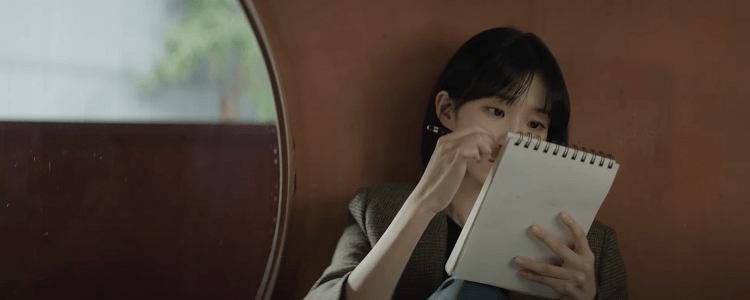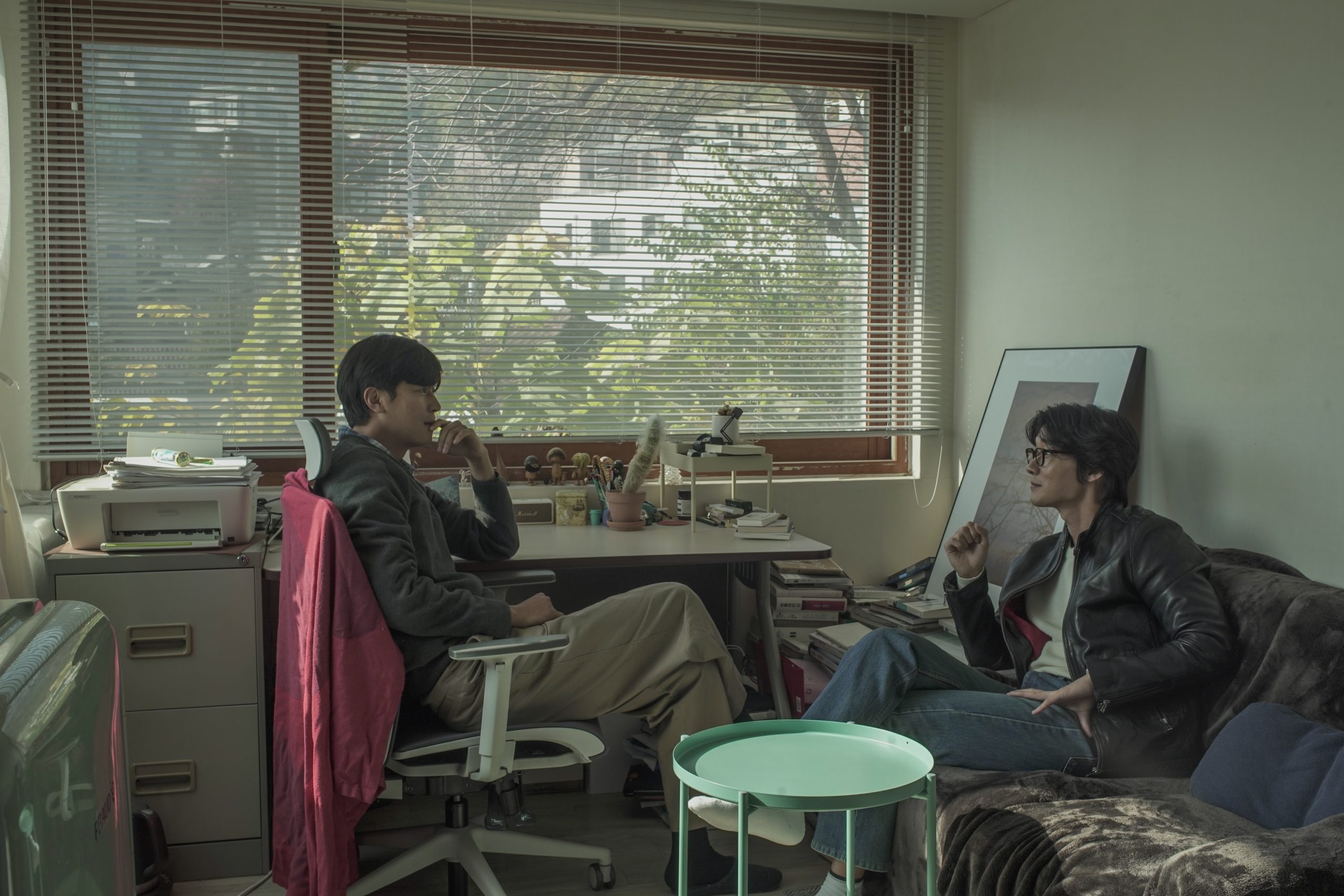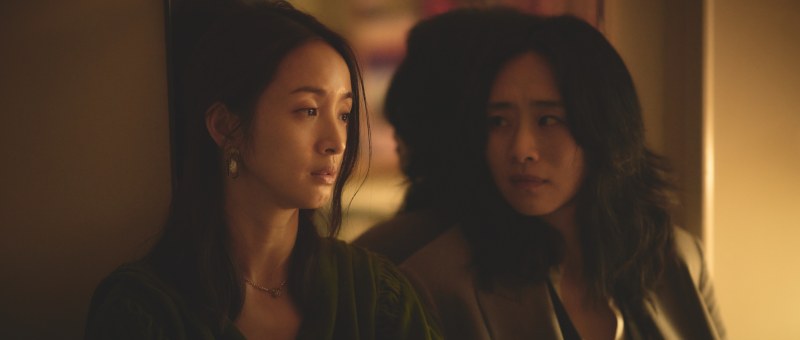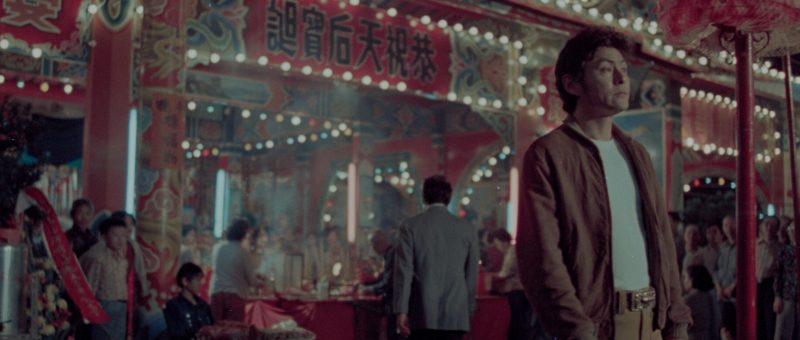
New Female Prisoner Scorpion: Special Cellblock X (新・女囚さそり 特殊房X, Yutaka Kohira, 1977)

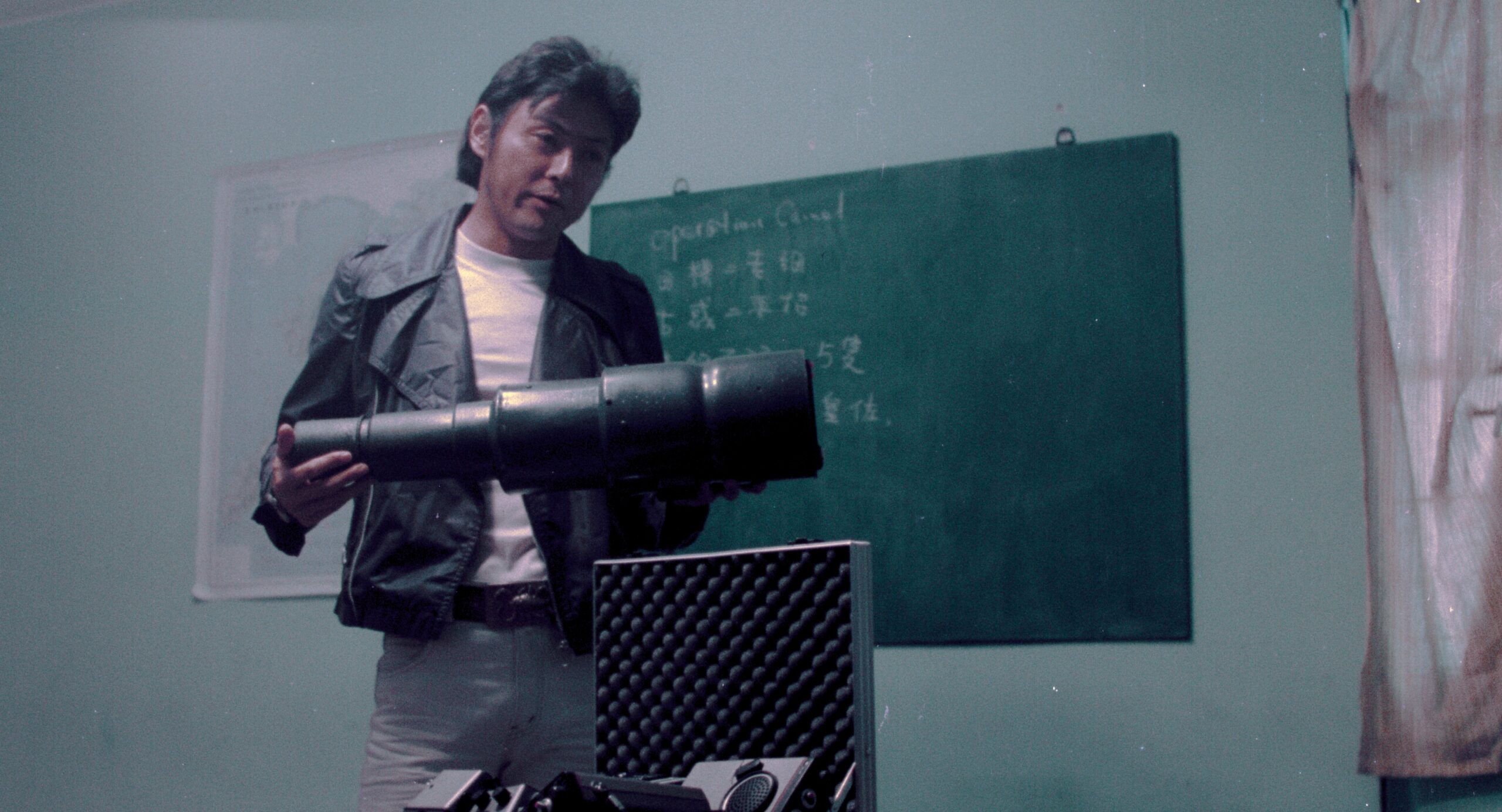
After Meiko Kaji declined to appear in further Female Prisoner Scorpion movies, Toei attempted to reboot the franchise under the “New Female Prisoner Scorpion” banner much as they did with some of their other franchises such as New Battles without Honour and Humanity. This second, and in fact final, instalment Special Cellblock X (新・女囚さそり 特殊房X, Shin Joshu Sasori: Tokushu-bo X) is not a sequel to New Female Prisoner Scorpion but itself another reboot that like its predecessor takes place amid a backdrop of paranoia and political corruption. 

Arriving back at the prison after a failed escape attempt, this Nami (Yoko Natsuki) has an all new backstory as an idealistic nurse whose doctor boyfriend was given shock therapy that destroyed his mind and left him in a vegetative state after threatening to blow the whistle on his hospital’s decision to let the man at the centre of a growing political scandal quietly pass away. These facts are first communicated to us through a surreal fever dream Nami has presumably caused by an infected wound on her leg. She first dreams herself frolicking cheerfully with the doctor before frightening figures of darkness pull him back into an abyss while terrifying clowns leer over and then rape her. She’s only saved from her life-threatening medical condition by the intervention of Kiyomi (Kaori Ono), a fellow prisoner who feels indebted to her because of a blood transfusion she received three years earlier before everything in Nami’s life went wrong. 

But otherwise Nami enjoys little respite in the prison as the other inmates take out their frustrations on her in regards to the reprisals enacted on them following her escape attempt. Like most other prisons in the franchise, this one employs a tactic of divide and rule encouraging the prisons to turn on Nami rather than the guards for their treatment of them. But things are changing in the prison. Chief guard Kajiki (Takeo Chii) had ruled supreme, but the warden has different ideas and objects to Kajiki’s tactic of appeasement by allowing things like cigarettes and chocolate to circulate in the prison to keep the inmates happy. He brings in a super tough security enforcer from the face male Abashiri prison which means Kajiki’s career is definitely on the decline and leaving him increasingly siding with the prisoners over the cruel treatment they’re exposed to by the warden who is too busy courting the justice minister in the hope of a government position to consider things like prison regulations or the welfare of the prisoners. 

Of course, it’s also the justice minister against whom Nami wants revenge. This Sasori is even more silent than most, glaring angrily at those around her but saying little other than stopping to advise Kiyomi not to get involved with her because it won’t end well in a prediction that turns to be accurate. When she eventually assumes her Sasori persona, it’s a little different from that of her predecessors as she dresses all in white (perhaps apt for a former nurse) with a long black over coat. Her black hat has a wide, stiff brim and a feather tucked in the side. She kills with a scalpel, as if she were literally excising the corruption in society and is prepared to play a little bit dirty. The justice minister had asked the warden to kill her and pass it off as an illness. She threatens to blackmail him though it’s obvious she’s not after money and executes the warden when he delivers the pay off on a cheerful fairground ride. 

Though it may lack the striking cinematography found in Ito’s trilogy, the film nevertheless skews surreal with its strange fever dream that turns out not to be so far from the reality as you’d assume along with weird gags like Nami and Kojiki stealing the clothes of a young couple after escaping together who happened to be dressed in identical outfits. Nami teaming up with a former guard is also something of a surprise and though she fights with him and rejects his romantic advances, she seems to have genuine pity when he gives up his life to save her. In any case, they each have something in common as those who now resist the system as Kajiki became a victim of a more authoritarian regime that doesn’t like his lax approach to rule keeping and Nami pursues her desire for justice in an unjust society at all costs. Dropping a bloody scalpel behind her, she disappears into the night, justice done, but presumably onto some other kind of vengeance against a corrupt authority that equally will stop at nothing to hang on to its power.


New Female Prisoner Scorpion (新・女囚さそり 701号, Yutaka Kohira, 1976)

After the fourth film in the Female Prisoner Scorpion series, star Meiko Kaji decided to move on but Toei had other ideas and opted for a reboot as signalled by the addition “shin” or “new” to the otherwise identical title to the very first film. New Female Prisoner Scorpion #701 (新・女囚さそり 701号, Shin Joshu Sasori: 701-go) moves in a slightly different direction spinning a tale of a less straightforward revenge coloured by conspiracy cinema and a series of real life high-profile corruption cases including the Lockheed Scandal, itself name checked in the film. Just a few months earlier, Roman Porno actor and fervent nationalist Mitsuyasu Maeno had lost his life in a suicide attack on the home of underworld figure and right-wing fixer Yoshio Kodama who had been instrumental in “convincing” Japanese airlines to buy Lockheed planes over McDonnell Douglas.

In any case, this Nami Matsushima (Yumi Takigawa) is an ordinary young woman who becomes concerned about her sister Taeko (Bunjaku Han) when she uncharacteristically drops out of contact after behaving strangely. Taeko is a political secretary to assemblyman Miura (Ichiro Nakatani) who is currently the vice-minister for justice and at the centre of a burgeoning corruption scandal. After Nami and her fiancée Toshihiko (Yusuke Natsu) manage to meet up with Taeko, she is suddenly kidnapped from the hotel car park while the man who was with her, Sugino (Nenji Kobayashi), is gunned down. Sugino is found to be carrying his passport and two airline tickets to Paris which, along with Taeko’s strange behaviour, imply they were planning to flee the country together. Looking more closely at the wedding presents her sister had given her, Nami realises she’s left her a cassette tape with the instruction to leak its contents to the press should anything untoward happen to her. 

Nami uses the tape as leverage with Miura to try and rescue her sister but ends up learning some unpleasant truths before being framed for Taeko’s murder and sentenced to 15 years in prison. Toshihiko, who had originally been supportive, betrays her, testifying at her trial that she may have been resentful that Taeko was against their marriage only to later marry Miura’s daughter and go into politics apparently siding with the bad guys. Toshihiko may have seemed like a nice guy, but it’s also true that he tried to pressure her into premarital sex that she didn’t want by insisting that he couldn’t wait for marriage, suggesting they blow off her sister and go to a hot springs in Hakone instead. Most of the men in the film are equally spineless and duplicitous not least the guards who with the exception of one are all corrupt and/or abusing the inmates. 

Not content with sending her to prison, Miura tries to have Nami offed with the assistance of the warden who puts her in a cell with the prison’s most notorious offender. Fusae (Mitsuyo Asaka) orders her minions to beat and torture Nami, at one point gang raping her while the only way she can think of to save her life is by claiming there’s another tape so if they kill her they’ll never know where it is and run the risk of the contents leaking. 

Meanwhile, she’s approached by a group of anarchists who tell her they need a leader which seems a little contradictory but nevertheless enables a jailbreak even as Nami develops a rivalry with the feisty prisoner number 804. Though she obviously didn’t commit the murder for which she was imprisoned, Nami is no pushover and in fact burns one of her tormentors alive not to mention stabbing another in the eye with a pencil and cunningly splitting a pair of scissors to gain twin knives. Rather than the classic scorpion look, she appears almost batlike, spreading her arms in her cape as she prepares to make her final act of revenge right outside the Diet building itself as if she were making a point about cleaning up politics aside from avenging her sister’s death and her own mistreatment. Director Kohira lends her a supernatural quality in her eerie silhouette as if she’s already become something else, a force of nature transformed by her righteous anger towards a corrupt society largely ruled by venal men willing to kill and use women for their own benefit or pleasure. Even Nami is forced to admit her complicity having learned her sister may have paid for her education through allowing herself to be traded by Miura as a political bargaining chip. She is not, however, willing to let it stand, resisting a controlling a patriarchal society with all of the resources available to her.


Linda Linda Linda (リンダ リンダ リンダ, Nobuhiro Yamashita, 2005)

“We’ve only got a little more time to be the real us,” according to a young woman making a promo video for the upcoming school festival, but who really is the “real us”? Now celebrating its 20th anniversary, Nobuhiro Yamashita’s wistful high school dramedy Linda, Linda, Linda (リンダ リンダ リンダ) is in many ways about the process of coming into being along with the anxieties of what comes next. “We won’t end here,” the girl later adds, “We won’t let our high school days become a memory,” yet they already are in a kind of contemporaneous nostalgia and elegy for idealised youth.

Or at least, there’s already a kind of reaching back taking place as the tracks the girls pick for a replacement act are by The Blue Hearts, a 1980s punk band that has become a kind of cultural touchstone echoing a sense of youthful alienation and rebellion. “Linda Linda” is the kind of song everyone knows, and even if for some reason they don’t or don’t even speak Japanese, can at least join in with the riotous chorus. It’s this sense of universality that eventually gives it its power as torrential rain brings the entire school inside just in time to see the girls’ belated act and find themselves captivated by its infectious energy and an identification with their own sense of insecure anxiety.

It’s also the serendipitous rain that allows lonely songstress Takako an opportunity to perform having previously declined to do because it’s no fun playing on your own and all her former bandmates graduated the previous year. Moe, the girl who broke her fingers playing basketball in PE leaving the original band members unable to take the to the stage, also gets an opportunity to sing having otherwise been denied a moment of closure in being prevented from taking part in her final school festival. While Moe feels intensely guilty about rendering all their time spent rehearsing somewhat pointless, it’s really the drama between founding members Kei and Rinko that leads to the band’s demise in Rinko’s conviction that it’s “meaningless” to continue while the others decide to go ahead anyway asking Korean exchange student Son (Bae Doona) to be their vocalist because she just happened to come down the stairs at the right moment and said yes because she didn’t really understand what they were saying.

Prior to her involvement with the band, Son had been a rather isolated figure trapped in the “Japan-Korea Culture Exchange Exhibit” which seems to have been more her teacher’s idea than her own and in any case gets no actual visitors. Her Japanese is a bit limited and most of her interactions are with a little girl who lends her manga to help her learn quickly, but becoming part of the band allows her to find her voice both literally and figuratively in taking the lead as the vocalist. A boy who claims to have fallen in love with her (Kenichi Matsuyama) goes to the trouble of learning a long speech in Korean to convey his feelings, yet a bemused Son replies to him in Japanese that she’s pretty indifferent to his existence before switching to Korean to explain that she’s leaving because she’d rather be hanging out with her friends with an expression that implies she’s only just realised that’s what they are. By contrast, she has a bilingual conversation with guitarist Kei (Yu Kashii) in which they seem to understand each other perfectly and each express how glad they are that they got to be in the band together. 

Similarly, it’s the concert itself that seems to heal rifts with a simple “Are you alright?” from Rinko (Takayo Mimura) to Kei whose friendship might, as someone says, essentially be too close for them to really get along. Drummer Kyoko (Aki Maeda) decides to declare her feelings for a longstanding crush before the concert. In the end she doesn’t manage it, but it doesn’t quite matter somehow because their performance is itself a kind of coming into being in which “the real us” comes into focus if also in a moment that itself becomes romanticised or idealised as an encapsulation of youth. Yamashita travels through the school festival as if it were a passage from one state of being to another, from the noodle stalls and crepe stands to haunted houses and the boy creating his own moment through encapsulating them on film, before ending with an unending song “so we can laugh tomorrow,” and the “real us” lives on.


Linda Linda Linda opens in US cinemas 5th September courtesy of GKIDS.

Trailer (English subtitles)

Lost Land (Harà Watan, Akio Fujimoto, 2025)

The world’s largest group of stateless people, the Rohingya have been persecuted under several authoritarian regimes in Myanmar and forced continually on the move throughout the region. Having previously explored the lives of Burmese migrants in Japan, and those of Vietnamese workers caught in exploitative training contracts, in Lost Land (Harà Watan), Fujimoto follows a community of Rohingya refugees as they embark on a perilous journey across South East Asia to reach Malaysia.

Somira and her brother Shafi don’t know much about this. They’ve been told that they have an uncle living there, but they don’t know his name or his phone number. Shafi keeps asking when they’re going “home”, but in reality they don’t quite have one. Their mother tells them stories about her childhood in Myanmar and a large mango tree that to her seems to embody the idea, but it’s an abstract concept that occupies a space of fairytale or mythical origin story. Later, Shafi will tell a kind young man looking after him that his uncle lives near a big mango tree, mixing up the stories he’s been told in his internal search for a home. He wanders off and finds a tall tree for himself in the middle of the city, looking up at it plaintively and playing hide and seek on his own knowing that no one’s coming to look for him. 

The siblings continue to play like children, but their games take on a darker quality when they become separated from their community and must try to look after themselves. They steal sugarcane to suck on, and beg local women for water, while planning to walk to Malaysia on their own despite not knowing the way. Eventually, they’re taken in by another fleeing Rohingya community who find themselves conflicted about what they should do with them. Though they may want to help these lone children for humanitarian reasons, they also know that they make their own passage more difficult and that the brokers will demand extra money they don’t have when they get to the next check point. 

By this time, it’s already been a couple of weeks since the children left their previous “home”. Their journey began by walking through the night to a dinghy that took them to a small ship where they encountered a storm, blew off course, and began to run out of food. One of their community died in the liminal space of the boat and was buried at sea. They frequently have to leave people behind because they couldn’t keep up or the authorities got them. This community too walk in the through the night clipping metal fences and then are forced to run for their lives. A horrifying moment finality demonstrates what it costs to look back or to try to help others while bullets fly indiscriminately in the darkness. 

Then again, there are moments of joy as a mother is reunited with her son after ten years even if he tells her that his workplace was raided and many of his friends were arrested. He was spared because he wasn’t working that day but ended up losing his job and will now struggle to find a new one while making sure to not blow his cover or be caught by the authorities. His mother’s faith remains strong as she insists that God wouldn’t let him suffer and is sure to find him a new job, despite all the fear and horror she’s been through on her journey towards him. She and her son are good people who look after Shafi even though they don’t have to because it’s the right thing to do. Though the siblings encounter good people like the Thai man who wanted to help them because he saw once Rohingya being taken away but couldn’t do anything about it, the world is otherwise heartless traffickers who’ll kill those who talk back to them or aren’t able to pay the extra money they’re sure to ask for. Wherever they go, the children aren’t welcome but are pushed on somewhere else, forced on more perilous journeys towards a distant homeland in an endless game of hide-and-seek. The first film ever produced in the Rohingya language, Fujimoto’s hard-hitting drama is a quiet plea for a little more compassion for those who are only in search of a home.


Los Land had its World Premiere at the 2025 Venice International Film Festival in the Orrizonti Section.

Virus (바이러스, Kang Yi-kwan, 2025)

Falling in love is like catching a virus, according to lonely scientist Gyun (Kim Yoon-seok), but how can you know if your feelings are “real” or just part of a crazy fever dream you won’t even remember as soon as the infection leaves your system? “There are no fake feelings,” lovelorn translator Taek-seon (Bae Doona) counters, which is true, but sometimes people do things they don’t recognise or later understand because they weren’t in their right mind, whether because of the sickness called love or a more literal kind of contagion. 

Anyway, this particular virus makes people incredibly happy for the short period time before they die and was developed as part of a project to create an anti-depressant with no side effects. Taek-Seon gets infected after a disastrous date her sister forces her to go on with socially awkward scientist Su-pil (Son Suk-ku). Su-pil is overly attached to the mice in his lab and is still mourning the death of Masako who appeared to him in a dream and told him to make sure her death wasn’t in vain. In retrospect, perhaps these are symptoms of the infection bubbling away in his body as much as they are of his loneliness, but it’s understandable that Taek-seon wasn’t really considering seeing him again only she’s forced into it when her mother and sister invite Taek-seon over to her apartment as a kind of enforced date. The mother and sister’s insistence on Taek-seon meeting someone and getting married is itself a reflection of a patriarchal society in which being unattached is taboo, while Taek-seon’s sister snaps back that translators won’t be needed soon because of AI implying she should find a husband to support her financially.

But then again, though she might claim to be, it does seem that Taek-Seon isn’t all that happy with her life and later confesses to being “always depressed”. She rarely leaves her apartment and lives a dull and unstimulating existence. Infected with the virus, she suddenly becomes sunnier, more confident, and independent, while chasing romance by approaching a childhood crush she seemingly never had the courage to pursue before. Yeon-u (Chang Kiha) is now a car salesman, and Taek-seon now suddenly has the urge to buy a Mini though she’s never actually driven outside the test centre despite having a license. In one sense, yes, it’s Yeon-u she’s after but the car also represents her latent desires for freedom and a more active life. 

Nevertheless, the corrupting aspects of the virus are all too present as Taek-seon begins to act in ways she may be embarrassed by if she could remember them once she’s better. Her memories seem to have remade themselves more to her liking. She’s forgotten that Yeon-u wasn’t quite the hero she thought he was in her overly idealised vision of the innocent childhood sweetheart that she never had the courage to pursue. On the run from “evil” scientists from the lab where Su-pil worked, she starts to fall for Gyun, the expert that’s helping her, but who’s to say whether her feelings are just a product of the virus, an attachment born of their relationship as doctor and patient, or something deeper. 

For his part, Gyun starts to fall in love with her seemingly before he himself is infected while knowing that she likely won’t remember any of this once she’s been cured. He too is still dealing with the romantic fallout of an improperly ended relationship in which he apparently stepped back because one of his friends liked his girlfriend more. The now-divorced girlfriend seems resentful that he didn’t put up more of a fight for her, and perhaps it’s true that he’s just a romantic coward and it’s a combination of the virus, a sense of responsibility, and the fact that Taek-seon’s natural immunity could hold the key to unlocking his own research that pushes him to try so hard to find a cure for her.

But his research goals are at least altruistic in his desire to find a depression cure without side effects to help people like his brother who took his own life. Dr Seong’s (Moon Sung-keun) lab, however, is entirely focussed on profit and protecting its own reputation. They’re mostly interested in Taek-seon because of her usefulness to them and are prepared to endanger her life if necessary. Even Gyun admits he acted unethically in agreeing to bypass animal testing but otherwise draws the line at anything that puts lives additionally at risk. Taek-seon, meanwhile, later signs over her antibodies so they can be used for free worldwide for the good of all. Even after the fever has cooled, the virus does seem to have made her a happier, more outgoing person who has the courage to pursue her dreams rather than living in lonely defeat. Whether her feelings were ”real” or merely part of her “sickness” and if the distinction really matters either way is up for debate, but that’s not to say she might not catch the love bug again from a less compromised position and actively in the driving seat of her own life.


Trailer (Korean subtitles only)

Cow (斗牛, Guan Hu, 2009)

“We’ll stay in the mountains and never go back down,”  embattled peasant Niu Er (Huang Bo) insists having safeguarded his Dutch cow through the Sino-Japanese war and onward towards the new China. A satire revolving around the senselessness of war and the endurance of Chinese everyman, Guan Hu’s Cow (斗牛, Dòu Niú) is also testament to the bond between man and beast who somehow manage to survive through the chaos and the carnage all around them.

That said, Niu Er was not originally happy about being forced to take care of the giant black and white cow he christens Jiu after his feisty wife (Yan Ni). He had a cow of his own. A nice little yellow one he thought was perfectly fine. He didn’t really see why his little yellow cow didn’t deserve the fancy grain reserved for Jiu and got into trouble for giving some of it to her. But when the entire village is wiped out by the Japanese with the cow the only other survivor, Niu Er thinks he has a duty to save it because the village was supposed to be keeping it safe for the 8th Army. It turns out it was an anti-fascist cow sent by the Dutch to feed wounded soldiers busy fighting the Japanese and the 8th Army are supposed to be coming back for it after they return from a strategic retreat. 

But Niu Er’s problem is he’s not just in hiding from the Japanese because there’s also fighting going on between the nationalists and communists. Once bandits have killed all the Japanese who invaded Niu Er’s village, refugees soon turn up with their eyes on the cow. Because he’s a nice man, Niu Er shares some of the milk with a starving woman cradling a baby before realising there’s a whole crowd of other displaced people behind her. But as much as Niu Er gives them, they can’t be satisfied, and insist on over milking Jiu until she becomes ill with mastitis before one of them suggests killing and eating her instead. Not only is this quite shortsighted given that it will only feed them immediately whereas Jiu could still go on producing milk indefinitely if only they were a little less greedy, but it speaks to the loss of their humanity in the midst of their desperation. When Niu Er makes it clear he’s not on board with them killing his cow, the doctor leading the refugees pretends to help cure Jiu’s illness but is really trying to corner Niu Er so they can kill him and eat the cow anyway. In any case, they end up paying for their greed and cruelty by falling foul of all the booby traps the Japanese troops left behind.

To that extent, the Japanese aren’t all that bad. One of them, whom Niu Er finds hiding in a tunnel, used to be a dairy farmer and shows Niu Er how to treat Jiu’s illness which is why Niu Er decides to save him and take him with them to their place of salvation in a cave in the mountains. But a nationalist is already hiding there and the pair end up killing each other. The film seems to ram the point home that there was no real difference between these men who had no particular reason to fight when Niu Er ends up burying them together in a makeshift grave. Setting himself apart from all this war and absurdity, he resolves to stay above it by living in the mountains with Jiu and planting new grain up there for them both to live on.

Seven years later when the PLA eventually turn up, they’ve forgotten all about the cow and are keen to tell Niu Er that they don’t take things off peasants so the cow is now lawfully his. The soldier may be a representative of the new Communist and caring China, but it otherwise seems that Niu Er has been become a guardian of the China that existed before the Japanese with the petty goings of his random village in a way idyllic and filled with nostalgia. Yet it had its problems too. The village chief seems to have had a xenophobe streak, restricting milk from those not born in the village like the widow Jiu who became Niu Er’s wife. She is in many ways an envoy of an idealised communist future in her feminist attitudes and feistiness even amid the sexist and traditionalist culture of the village. Nevertheless, Niu Er and Jiu the cow seem to have found a little alcove of serenity up the mountains of the real China free from the chaos below.


Trailer (Simplified Chinese / English subtitles)

Angel Guts: Red Flash (天使のはらわた 赤い閃光, Takashi Ishii, 1994)

Sent to cover a pornographic movie shoot, a young woman finds herself confronted by the teenage trauma that continues to haunt her in the final instalment in the Angel Guts series, Red Flash (天使のはらわた 赤い閃光, Tenshi no harawata: Akai senko). Adapting his own manga, Ishii draws on giallo and classic noir as the heroine attempts to reclaim herself from the spectres that are haunting her even as Japan itself seems to be a land of predatory and dangerous men.

Nevertheless, as the film begins, Nami (Maiko Kawakami) seems to be holding her own aside from an apparent problem with alcohol that sees her drink far to much and end up in vulnerable, potentially dangerous situations. She has a job as an editor and ad hoc photographer where she’s regularly subjected to extreme imagery, while her sleazy boss is also sexually harassing her and in fact attempts to force himself on her in the lift. It’s being sent to take photos at a porno shoot featuring intense rape scenes that awakens her buried teenage trauma of having been abducted and raped on her way home from school.

Nami is haunted by the spectre of her attacker, though as her new ally Muraki (Jinpachi Nezu) tells her it’s only by killing this ghost that she might be able to “erase” the harmful memories of her rape and overcome the repulsion she feels towards sex with men. Perhaps problematically, the film then phrases Nami’s journey as one of repair in which the ultimate goal is being able to enjoy heterosexual sex which seems to be something Nami herself desires to the extent her inability to do so leaves her feeling as if there’s something wrong with her. Even so, it seems she is able to have successful and enthusiastic sex with bar owner Chihiro (Noriko Hayami) who seduces, or perhaps takes advantage of, Nami after bringing her home because she’d had too much to drink at the bar.

On another drunken occasion, Nami is ushered into a love hotel where she wakes up naked several hours later with no recollection of how she got there. Looking around, she spots not only a bloody knife in the sink, but the body of a middle-aged man hidden under the duvet, and camera which has apparently been filming the whole thing. The act of watching her assault, of which she has no memory, echoes the out of body experience of her rape in which she sees another version of herself save her by killing the attacker. What Nami is essentially trying to do is kill the attacker in her mind through discovering what really happened in the hotel room. As Nami has developed a fear of sex of men, she has a tendency to kick and punch violently in self-defence which, coupled with her drunkeness, lead her to fear that she killed this man after waking up during the assault. In another kind of haunting, Nami begins receiving unpleasant phone calls from someone using a voice disguiser who knows she was at the hotel and attempts to blackmail her in exchange for sexual favours. 

Her first suspect is Muraki, which makes sense because he was at the bar and saw her leave with the other customer so could easily have followed her and either observed her entering the hotel and put two and two together after seeing the crime on the news, or actually committed the murder himself while she was unconscious. She’s also been given a negative impression of Muraki by her jealous boss who tells her that his wife killed herself because his constant infidelities. But Muraki is also carrying traumas of his own in his guilt over his wife’s death which he acknowledges was influenced by his behaviour even if because of a misunderstanding or irrational jealousy rather than sexual or emotional betrayal. Thus, Nami becomes to him a means of atonement in the form of a woman he could save in place of the wife he could not.

Which is to say, Nami is pulled towards trusting the improbable presence of a “good” man even as Chihiro insists that they don’t exist. After they made love, Chihiro deepened the intimacy between them by revealing that she had been abused by her stepfather, though it does not prompt Nami to reveal her own traumatic memories of her rape and abduction. She is reluctant to go to the police not because she fears she is guilty of the crime and wants to avoid punishment, but feels ashamed and can’t bear the idea of the police watching the tape which would amount to a kind of second rape. She does eventually allow Muraki to watch it, but on realising that it may exonerate her is still reluctant to let the police see it while torn by her civic duty in knowing that she has evidence that may help catch the “real” killer. She and Chihiro wonder why it is men like to watch the rape videos she was sent photograph, but can’t come up with much of an answer though it hints and an ingrained misogyny, a desire for control and dominance of a woman and her sexuality. The fact that she was sent to photograph it all by this otherwise mainstream company again hints at a kind of desensitisation amid an overly sexualised atmosphere even as her boss tells her the UN has been critical of Japanese attitudes to sex. Nevertheless it seems that Nami is able to overcome her trauma, to an extent, through reclaiming her identity even if she still has the occasional red flashes of violent fantasy.


Angel Guts: Red Flash is available as part of Third Window Films’ Takashi Ishii: 4 Tales of Nami boxset.

A Tour Guide (믿을 수 있는 사람, Kwak Eun-mi, 2023)

“We look the same, but they treat us less than foreigners.” Han-young’s (Lee Seol) friend Jung-mi (Oh Kyung-hwa) laments, explaining that she’s decided to move abroad for a better life rather than scrape by in a country that is not always welcoming. Kwak Eun-mi’s A Tour Guide (믿을 수 있는 사람, Mid-eul su issneun salam) explores the position of North Koreans in South Korean society, but also the difficulties of assimilating into a new culture that is not primed to accept you, the isolation of being of this place and not, and the heroine’s complex cultural background that leaves her feeling torn between competing ideas of homeland. 

Having lived in China for a while after escaping North Korea, Han-young worked hard to harness her Mandarin-speaking skills to earn a license to work as a tour guide and interpreter. Even so, she struggles to find employment as many companies are unwilling to hire those from the North whom they view with suspicion. When she eventually is hired, it’s a for a zero hours contract freelance job in which her pay is dependent on the amount of souvenirs her wealthy Chinese holidaymakers purchase. The ironies could not be starker. While Han-young struggles to get by, the residents of the formerly communist turned hyper capitalist society have more money than they know what to do with and often aren’t really interested in the information she has to give them about Korean historical sites but are eager to get to the duty free.

In her interview, Han-young had said she wanted to share Korean culture with visitors to the country but it also seems like this wasn’t really what she worked so hard to get her license for. She also said she wanted to earn a lot of money and have a nice life, which is more honest, but the job doesn’t really allow her to do that. She was told that she shouldn’t force people to buy goods, but it’s clear that this is essentially what the company’s hired her for. Under increasing pressure, she finds herself bending the rules and her own integrity. Copying a less earnest colleague, she begins embellishing her speeches with made-up information to appeal to the Chinese tourists, while later colluding with the saleswoman to put on a snake oil-style act selling Korean cosmetics in the hope of getting her ranking up and being kept on while the company experiences a period of financial difficulty. MERS and declining political relations between China and South Korea see a huge drop off in tourism and a fair amount of economic damage. 

Her brother (Jeon Bong-seok) too has witnessed the implosion of his South Korean dream having failed to get into university. Manual labour at the docks wasn’t what he had in mind, which might be one reason he drops out of contact with Han-young who tries to look for him but continues to hit a brick wall. She eventually discovers that he thought about going back to the North despite knowing what might happen to him if he did. In some ways it may not be all that surprising that some people find themselves unable to adapt and prefer the brutal certainty of their old lives, but it’s equally true that the siblings encounter only futility. Viewed with suspicion, they are constantly monitored by a “protection officer” who is supposed to be helping them adapt to life in the South and prevent them being exploited or harassed, though Jang-mi thinks it’s more like “surveillance” than “protection” and the focus is really on whether they present a danger rather than are presented with it. Nevertheless, her aunt decided to extend her protection period voluntarily because she said it was easier that way.

One by one, each of Han-young’s lifelines disappears, from her friend who decides to try her luck abroad, to her brother, and then protection officer. Asked why she doesn’t go abroad too, Han-young replies that if she stays closely, her family call live together again as if hinting at a desire for reunification even as she desperately tries to get the money together to bring her mother to the South while prejudiced bosses tell her she should just work in a factory, or a cafe, or a convince store, which is to say casual labour jobs they look down on and consider unworthy for South Koreans because someone like Han-young isn’t really entitled to become a tour guide. Eventually she’s joined by a friend from China whom she has to disabuse, reminding her you’re poor here too if you can’t find work and it’s not exactly the kind of utopian paradise she might have thought it to be. Nevertheless, it seems as Han-young is leading herself towards her own liberation and a future less constrained by loneliness and petty prejudice.


Trailer (English subtitles)

Alone in the Night (夜がまた来る, Takashi Ishii, 1994)

A woman enters the homosocial world of the yakuza in search of revenge for her murdered husband, but discovers only more degradation and hopelessness in Takashi Ishii’s rain-soaked noir, Alone in the Night (夜がまた来る, Yoru ga mata Kuru). Then again, perhaps it’s not really revenge Nami (Yui Natsukawa) is after so much as death itself, her relentless fall one of self-harm born of her sense of futility in world ruled by irony in which there is no such thing as truth or justice.

Indeed, one of the things that propels Nami on her mission is the injustice that her husband Mitsuru (Toshiyuki Nagashima), killed while working undercover investigating a gang dealing drugs, is then accused of taking the drugs he seized and selling them on himself. After her husband dies, she’s hounded by the press who paint him as a corrupt cop while she’s also denied his police pension because he died in disgrace. What she wants is to clear his name and thereby drag her husband back from the netherworld in an affirmation of their love for each other. 

But she too becomes corrupted by the darkness of the criminal underworld. Soon after the funeral, yakuza thugs break into her home and rape her while looking for the drugs they assume Mitsuru stashed somewhere. Amid the chaos, she attempts to take her own life by slashing her wrist with one of Mitsuru’s bones but is unexpectedly saved by a mysterious man. Reborn after her brush with death, she reinvents herself as bar hostess “Mitsuru” as a means of getting close to the gang boss, Ikejima (Minori Terada), she believes to be responsible for her husband’s death. Her attempts to kill him, however, prove unsuccessful. She’s once again raped, this time by Ikejima, and thereafter becomes his mistress until another opportunity arises which she then botches by stabbing him in a non-lethal way which only gets her beaten and tortured by his underling Shibata (Kippei Shiina) and eventually sold to a brothel in Chiba where they get her hooked on drugs to make her easy to control. 

In fact, she’s only spared death once again thanks to the intervention of the mysterious man, Muraki (Jinpachi Nezu), a middle-aged yakuza seemingly weary of life and perhaps drawn to Nami as to death. He seems uncomfortable and out of place in this world of brutal masculinity while his modernity is singled by his association with the gun to counter Shibata’s with the sword. He has other reasons for his duality, but is charged with rooting out moles in the yakuza of which there seem to be an inordinately large number. Despite warning her off, he does what he can to help Nami, in part of out of guilt and a need for atonement, but also a kind of escape from his own entrapment within the purgatorial space of the yakuza underworld. 

Permanently raining and shot in an eerie blue, the world around Nami and Muraki takes on an etherial, dream-like quality as if taking place somewhere between sleeping and waking. After rescuing her from an attempt to drown herself, Muraki remarks that Nami slept like the dead or perhaps as if someone was calling to her from the other side. Death seems to be beckoning each of them, even as Muraki desperately tries to keep Nami alive by tenderly nursing her back to health and helping her beat drugs so she can finally free them both by achieving their mutual revenge.

But the film’s irony is that Nami cannot achieve her vengeance on her own. She’s constantly rescued by Muraki who achieves some if for her while each of her attempts only plunge her further down the cycle of degradation and in danger of losing herself entirely. She is and remains an ordinary woman venturing into hell in search of justice, but discovering only cruel ironies and futility. Muraki too is unable to transcend himself and meets a personal apocalypse in embracing his authentic identity. Nami has been chasing a ghost all along, though in some ways it may be her own as she tries to make her way back into the world of the living by reclaiming a vision of the world she had before in which her husband was a good and honest man and there was justice in the world even she declared herself largely disinterested in world outside of their romance and their private paradise just for two.


Alone in the Night is available as part of Third Window Films’ Takashi Ishii: 4 Tales of Nami boxset.

The Killer (喋血雙雄, John Woo, 1989)

“We’re outmoded characters,” a dying man laments, having previously advanced that “nostalgia is one of our saving graces.” The heroes of The Killer (喋血雙雄) are indeed remnants of an earlier time, out of place amid the modern city and adhering to a code that has long since fallen by the wayside. “Our world is changing so fast,” hitman Jeff (Chow Yun-fat) exclaims of a Hong Kong hurtling not only towards the Handover but an increasingly amoral capitalism in which friendship and brotherhood no longer have any currency.

We can tell this straightaway from the fact that the man who ordered the hit on the drug lord Jeff took out at the dragon boat races was his own nephew, Weng (Shing Fui-on). To tie up loose ends, Weng also sends his own hitmen to take out Jeff, who can’t be sure if his handler and best friend Sidney (Chu Kong) is involved in the plot to knock him off. Later in the film, Inspector Li (Danny Lee) asks what Jeff will do if Sidney betrays him, but he merely says that he will still treat him as a friend because he has been good to him in the past. Jeff says this in an abandoned church, echoing not only the codes of jianghu brotherhood now largely absent in the contemporary society but Christianising notions of forgiveness and acceptance. 

Jeff claims that he isn’t a religious man but appreciates the tranquillity of the disused chapel. Inspector Li meanwhile is often pictured next a statue of the Buddhist god of war and dressed in black in opposition to Jeff’s white, but what emerges is that the two men are effectively the same and somewhat interchangeable. Jennie (Sally Yeh), the nightclub singer Jeff accidentally blinded during a a chaotic hit and subsequently falls in love with, first mistakes Li for Jeff while Woo also pictures him sitting in Jeff’s chair and pulling a gun on his partner in much the same way Jeff cooly dispatched an assassin sent by Weng. Chang had told Li that he looked exactly like what he was, an undercover policeman, which is obviously a problem, but Jeff remarks that he is a “very unusual cop,”while Li agrees he’s a very unusual killer. 

In some senses, Li will also become the killer of the film’s title in the closing moments, a man who believes in justice but is not himself believed and knows that there will be no real justice for a man like Weng. Both men share a code which is essentially the same, a more primal kind of morality largely incompatible with the modern society and in many ways rightly so. Li even says that Jeff does not look like a killer, that there’s something “heroic” about him, and that his eyes are full of passion as if he had a dream. His words have a kind of irony to them, but Jeff does indeed have a dream in the desire to gain redemption for himself by restoring Jennie’s eyesight, which is the reason for his last big job having now been reformed by her no longer believing that the people he killed deserved to die but that everyone has a right to live.

Despite the triangular relationship with Jennie, there is an undeniably homoerotic tension in the connection between Li and Jeff even if they are also two sides of the same coin. They train their guns on each other and lock eyes, but unexpectedly find a kindred spirit in a man who should be an enemy. “The only person who really knows me turns out to be a cop,” Jeff chuckles but has an equally deep relationship with handler Sidney just as Li has with parter Chang (Kenneth Tsang) while the homosociality that defines their world is subverted by Weng who simply shoots his own underling when he becomes inconvenient to him. 

Both Li and Jeff are effectively men left with “no way out” and “nowhere to go” because their code of brotherhood is no longer understood by the contemporary society. Jennie’s progressive loss of sight also echoes their dwindling futures as if the light were going out of their world long before Woo shatters the statue of the Virgin Mary and unleashes the doves of futility inside the no longer quite so tranquil church that becomes the final resting place of manly honour and brotherly love. “Perhaps we are too nostalgic,” Jeff sighs but nostalgia is indeed his saving grace in a world in which honour and friendship exist only in a mythologised past or may never have really existed at all.


Trailer (no subtitles)