Comrades, Almost a Love Story (甜蜜蜜, Peter Chan, 1996)

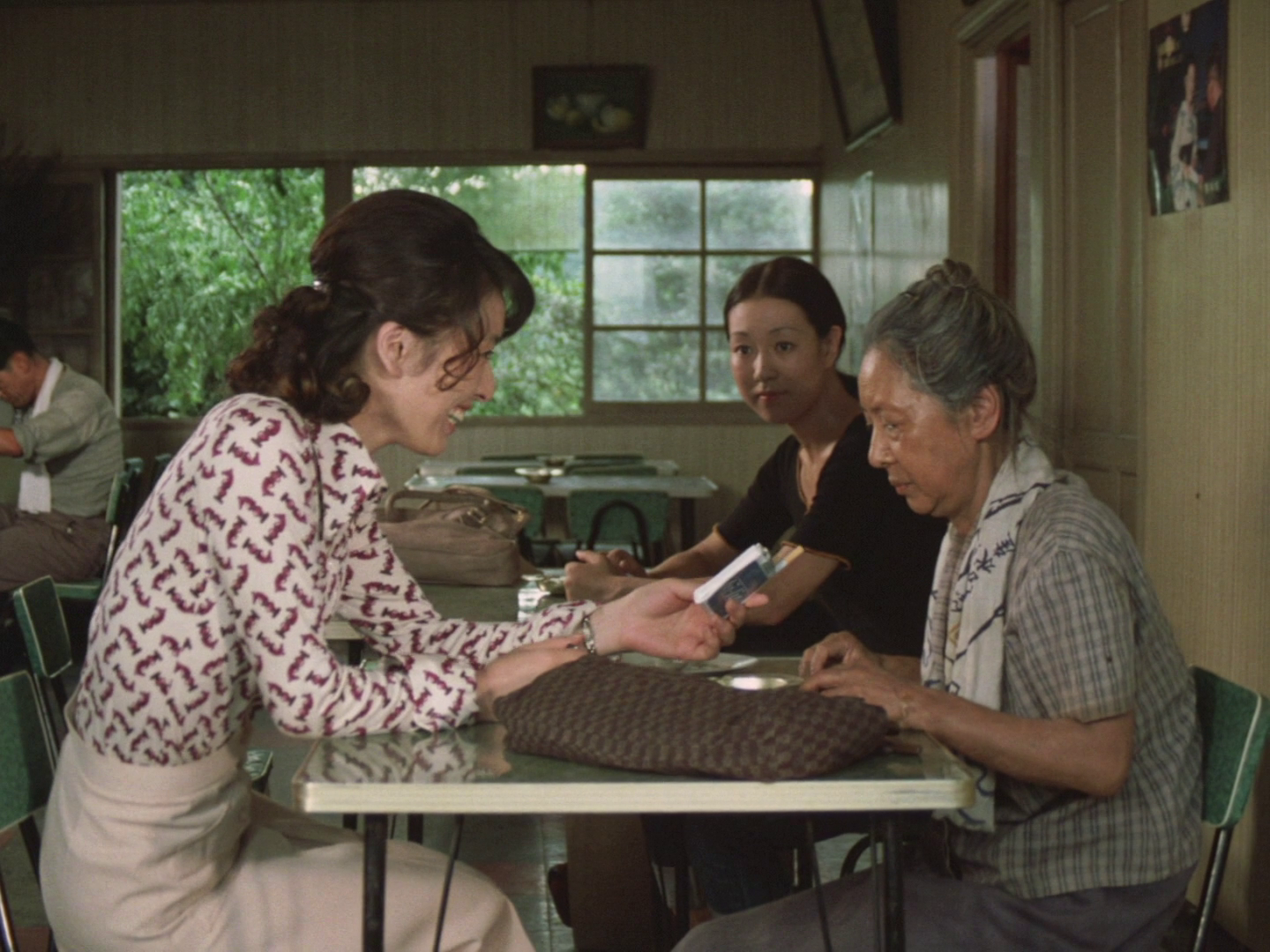
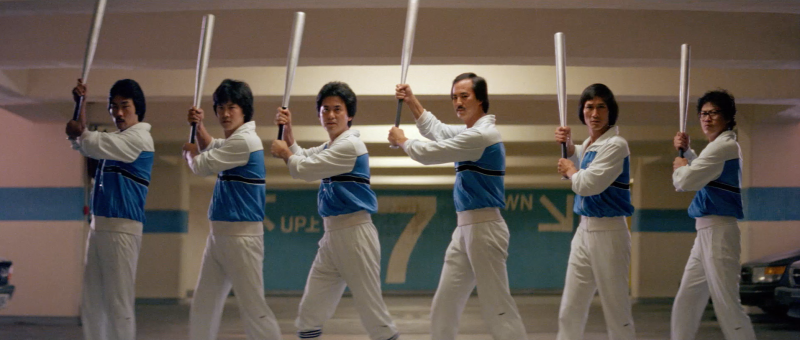
“Fate brings people together, no matter how far” according to a wise old chef in early ‘90s New York. He’s not wrong though Peter Chan’s seminal 1996 tale of fated romance Comrades, Almost a Love Story (甜蜜蜜) is in its own way also about partings, about the failure of dreams and the importance of timing in the way time seems to have of spinning on itself in a great shell game of interpersonal connection. But then, it seems to say, you get there in the end even if there wasn’t quite where you thought you were going. 

As the film opens, simple village boy from Northern China Xiaojun (Leon Lai Ming) arrives in Hong Kong in search of a more comfortable life intending to bring his hometown girlfriend Xiaoting (Kristy Yeung Kung-Yu) to join him once he establishes himself. His first impressions of the city are not however all that positive. In a letter home, he describes the local Cantonese speakers as loud and rude, and while there are lots of people and cars there are lots of pickpockets too. It’s in venturing into a McDonald’s, that beacon of capitalist success, that he first meets Qiao (Maggie Cheung Man-Yuk), a cynical young woman hellbent on getting rich who nevertheless decides to help him by whispering in Mandarin realising he doesn’t understand the menu. Hailing from Guangdong, Qiao can speak fluent Cantonese along with some English and thus has much better prospects of succeeding in Hong Kong but takes Xiaojun under wing mostly out of loneliness though accepting a kickback to get him into an English language school where she piggybacks on lessons while working as a cleaner. Bonding through the music of Teresa Teng, they become friends, and then lovers, but Xiaojun still has his hometown girlfriend and Qiao still wants to get rich. 

As we later learn in one of the film’s many coincidences, Xiaojun and Qiao arrived on the same train if facing in different directions. Hong Kong changes each of them. When Xiaojun eventually manages to bring Xiaoting across the border, he’s no longer the simple village boy he was when he arrived while Qiao struggles with herself in her buried feelings for Xiaojun unwilling to risk the vulnerability of affection but visibly pained when confronted by Xiaojun’s responsibility to Xiaoting. She finds her mirror in tattooed gangster Pao (Eric Tsang Chi-Wai) who, like her, shrinks from love and is forever telling her to find another guy but is obviously hoping she won’t as afraid of settling as she is. 

For each of them this rootlessness is born of searching for something better yet the irony is as Xiaojun says that Hong Kong is a dream for Mainlanders, but the Mainland is not a dream for most in Hong Kong who with the Handover looming are mainly looking to leave for the Anglophone West. Qiao’s early business venture selling knock off Teresa Teng tapes fails because only Mainlanders like Teresa Teng so no-one wants to buy one and accidentally out themselves in a city often hostile to Mandarin speakers as Xiaojun has found it to be. What they chased was a taste of capitalist comforts, Qiao literally working in a McDonald’s and forever dressed in Mickey Mouse clothing which Pao ironically imitates by getting a little Mickey tattooed on his back right next to the dragon’s mouth. But when they eventually end up in the capitalist homeland of New York, a driver chows down on a greasy, disgustingly floppy hamburger while Qiao finds herself giving tours of the Statue of Liberty to Mainland tourists in town to buy Gucchi bags who tell her she made a mistake to leave for there are plenty of opportunities to make money in the new China. 

Ironically enough it’s hometown innocence that brings them back together. The ring of Xiaojun’s bicycle bell catches Qiao’s attention though she’d thought of it as a corny and bumpkinish when he’d given her rides on it in their early days in Hong Kong. Xiaojun had in fact disposed of it entirely when Xiaoting arrived partly for the same reason and partly because it reminded him of Qiao. The pair are reunited by the death of Teresa Teng which in its own way is the death of a dream and of an era but also a symbol of their shared connection, Mainlanders meeting again in this strange place neither China nor Hong Kong, comrades, almost lovers now perhaps finally in the right place at the right time to start again. Peter Chan’s aching romance my suggest that the future exists in this third space, rejecting the rampant consumerist desire which defined Qiao’s life along with the wholesome naivety of Xiaojun’s country boy innocence, but finally finds solid ground in the mutual solidarity of lonely migrants finding each other again in another new place in search of another new future. 


Comrades, Almost a Love Story screens at Soho Hotel, London on 9th July as part of Focus Hong Kong’s Making Waves – Navigators of Hong Kong Cinema.

Short clip (English subtitles)

Teresa Teng – Tian Mi Mi

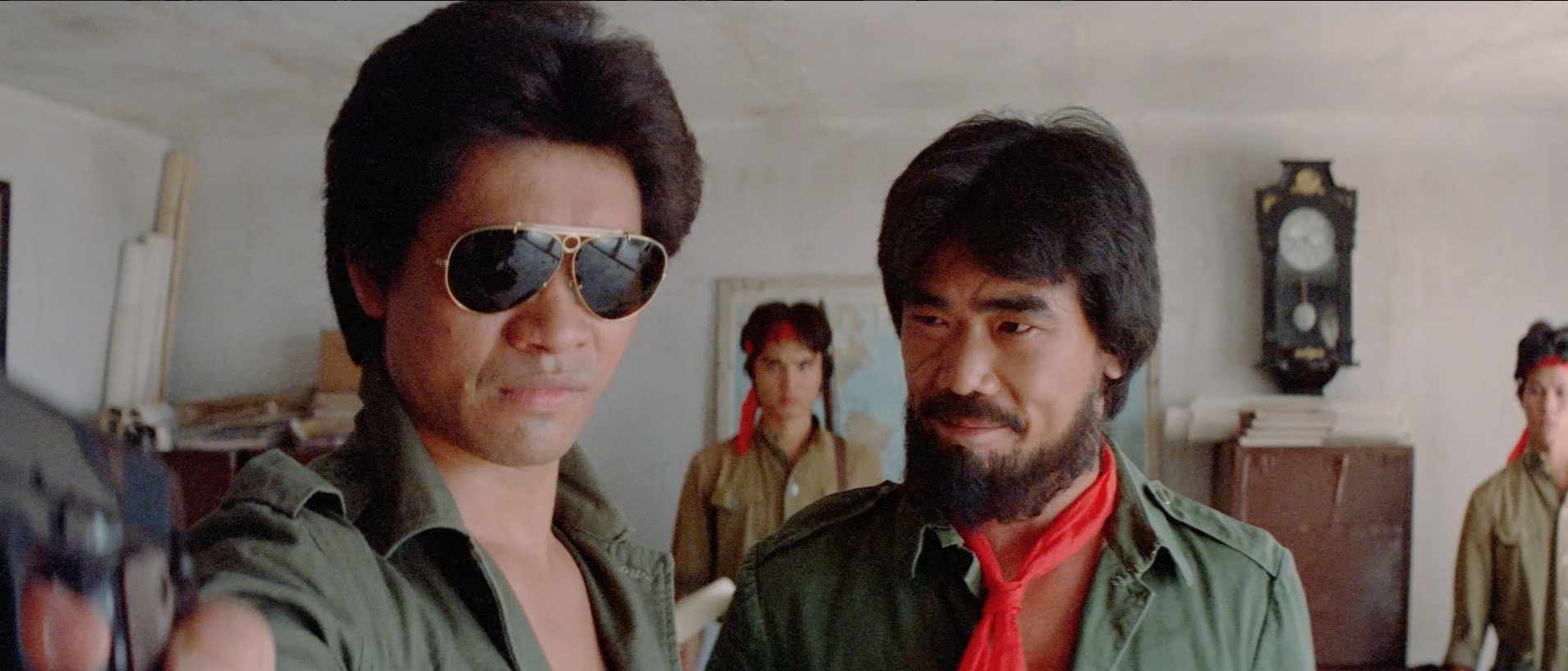
Tales from the Occult (失衡凶間, Fruit Chan, Fung Chih-Chiang, Wesley Hoi Ip-Sang, 2022)

A collection of Hong Kongers contend with the hidden horrors of the contemporary society in the first instalment in a series of anthology horror films, Tales from the Occult (失衡凶間,). Veterans Fruit Chan and Fung Chih-Chiang are accompanied by Wesley Hoi Ip-Sang making his directorial debut as the three directors each tackle lingering terrors as the protagonists of the three chapters are quite literally haunted by past transgressions from a pop singer on the edge consumed with guilt over a teenage trauma, to a sleazy financial influencer who might inadvertently have killed a hundred people, and the denizens of a rundown tenement who are too afraid to report a possibly dangerous presence to the police lest it damage the property value of their flats. 

In Wesley Hoi Ip-Sang’s opening instalment The Chink, a carefree high school girl chasing a stray cat stumbles on the body of a burglar who apparently fell from the rooftops and was trapped in a tiny cavity between two buildings. Some years later Yoyi (Cherry Ngan) has become a successful pop star but is still haunted by her failure to report the body to the police all those years ago worried that perhaps if she had he might have been saved though he had obviously been dead for some time when she found him. Her kindly psychiatrist uncle Ronald (Lawrence Cheng Tan-shui) tries to assuage her anxiety but fails to consider that there might actually be a dark presence in her new flat. Meanwhile, she’s also under considerable stress given that she’s in an ill-defined relationship with Alan, her married manager, who eventually brands her “mentally unstable”, and she’s somehow oblivious to the fact her high school best friend is clearly in love with her. Even so, as it turns out, perhaps you can also be haunted by the living while there are some threats that even the most well-meaning of psychiatrists is ill-equipped to cure. 

It’s ironic in a sense that Yoyi was provided with her new apartment as a path towards an illusionary freedom which is really only a means for Alan to exert greater control over her life while the heroine of Fung Chih-Chiang’s final sequence The Tenement has in a sense chosen seclusion in installing herself in a moribund tenement block in order to concentrate on her writing. The contrast between the two buildings couldn’t be more stark but even the tenement dwellers are paranoid about house prices while assuming the creepy, water-drenched presence encountered by author of pulpy internet novels Ginny (Sofiee Ng Hoi Yan) is an attempt by developers to scare them out of their homes amid Hong Kong’s horrifyingly competitive housing market. Still, like Yoyi they are each haunted by past transgressions but pinning the blame on former gangster Frankie Ho (Richie Jen) who was once accused of drowning a man. What began as a haunting soon descends into farce as they realise the “water ghost” seems to be a young woman who has passed away in their stairwell and decide to “dispose” of her with Frankie’s help to avoid a scandal destroying the value of their homes. But then, all is not quite as it seems as the sudden appearance of a journalist investigating a scandalous “love crime” makes clear. 

Fruit Chan’s middle chapter Dead Mall also takes aim at internet investigators and dodgy “influencers” as sleazy financial snake oil vlogger Wilson (Jerry Lamb) fetches up at a shopping centre surrounded by shoppers in masks to advertise that the mall is actually doing fine despite the economic downturn produced by the pandemic which he describes as worse than that of SARS. In reality the mall is “dead” with barely any customers and rows of shuttered stores, Wilson is simply doing a paid post in an attempt to raise its fortunes not least because the original mall was destroyed in a fire 14 years previously started by a carelessly discarded cigarette. Wilson is pursued not only by those who claim they lost money because of his terrible financial advice, but by a paranormal live streamer who has a separate grudge against him while he continues to refuse any responsibility for his actions answering only that investment carries risk and there’s no opportunity without crisis. What he discovers is perhaps that you reap what you sow, Chan frequently cutting to hugely entertained netizens baying for his blood while he attempts to outrun his fiery karma. 

In each of the increasingly humorous storylines, Chan’s being a particular highlight of wit and irony, there is a lingering dissatisfaction with the contemporary society from the pressures of the fiercely competitive housing market to the kind of financial desperation and longing for connection that fuels the consumerist emptiness of influencer culture. The jury might be out on whether there’s really any such thing as “ghosts” but the haunting is real enough even if it’s only in your mind. 


Tales from the Occult screens at the Garden Cinema, London on 9th July as part of Focus Hong Kong’s Making Waves – Navigators of Hong Kong Cinema.

Original trailer (English subtitles)
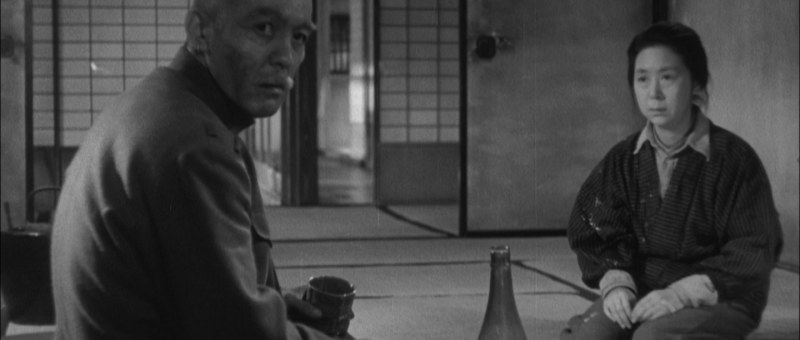
A Far Shore (遠いところ, Masaaki Kudo, 2022)

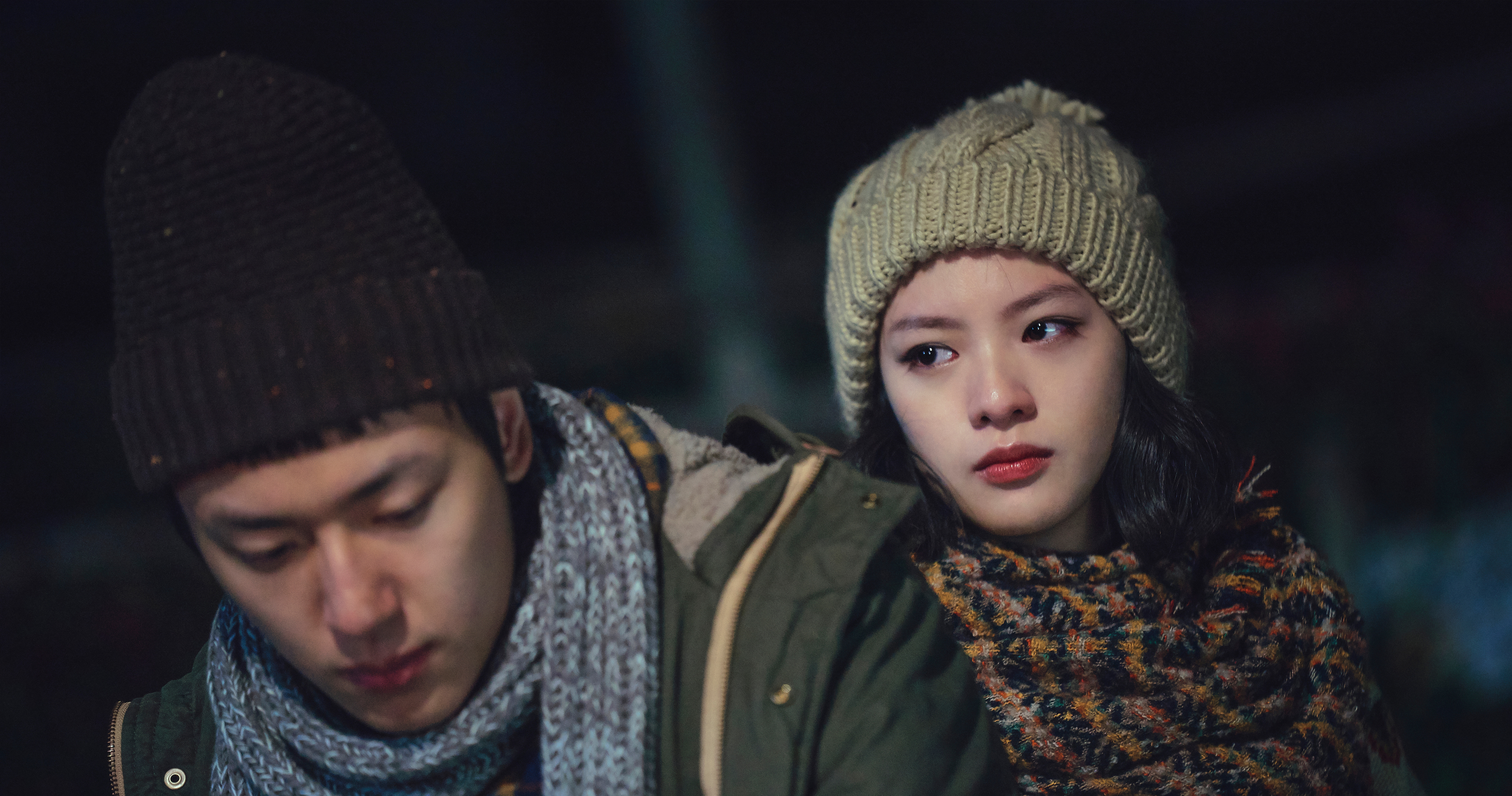
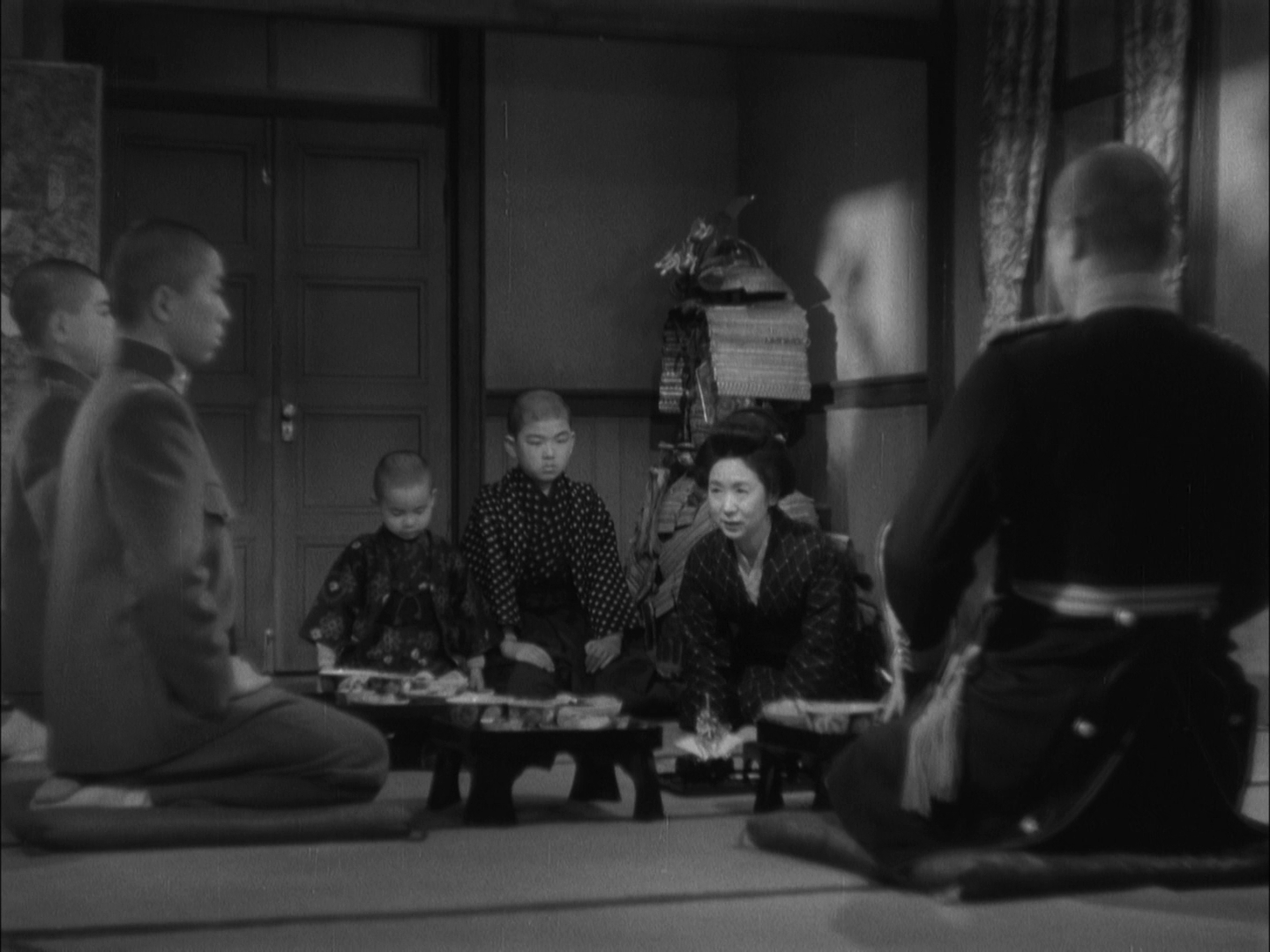
A young mother struggles to find a way through a legacy of parental abandonment and exploitation in Masaaki Kudo’s Okinawan drama, A Far Shore (遠いところ, Tooi Tokoro). As the title implies, the heroine does indeed long to go somewhere far away but finds herself hemmed in by the nature of the island on which she lives while facing rejection from all sides. She tries to do everything right, working to support herself and her son, but is finally left with no place to turn in a fiercely patriarchal and judgemental society. 

At 17 (Kotone Hanase), Aoi makes her living as a bar hostess leaving her two-year-old son Kengo (Tsuki Hasegawa) with her grandmother. Her husband, Masaya (Yoshiro Sakuma), is a drunken lout who can’t, and doesn’t want to, hold down a job. She hides the money she earns in various stashes around their apartment including in the bathroom bin fearful that Masaya will take it and they’ll be left short on the rent again. Though he refuses to work, Masaya resents being kept by his wife and often turns violent, viciously beating Aoi if he suspects her of hiding money from him or otherwise feels in some way belittled. 

On the one had, she isn’t supposed to be working in the clubs because she’s a minor but realistically they are the only place where she can find the kind of employment that will pay enough to support herself and her son. The clubs know they make more money off underage girls so they are keen to employ them, a gaggle of men from Tokyo obviously taken with the transgressive thrill of buying cocktails for a girl who technically isn’t old enough to drink, but cut them loose when the police come knocking as Aoi discovers when she is picked up by a patrol who take her in for questioning and ask insensitive questions such as how a woman who does what she does can love her son while making her the criminal rather than prosecuting the bar which employed her. In any case when Masaya beats her so badly she is forced to take on even more debt paying for hospital treatment she can no longer do bar work because men won’t want to drink with a woman whose face is bruised. In another irony, it’s the inability to work in bars, which only requires sitting and talking with men, that finally leaves her with little option other than sex work in which her clients are also often violent. 

Her plight in a sense echoes a legacy of abandonment in the Okinawan islands, her own parents having seemingly disowned her with her mother apparently in prison on the mainland and her father remarried with other children. When she asks him for help he just tells her that it’s easy for a woman to find work when men will struggle all their lives in Okinawa’s difficult employment environment, brushing off grandma’s reminder of the lucrative subsidy she assumed he had as a fisherman. Meanwhile Grandma also takes against her, believing she’ll end up wayward like her mother but seemingly accepting little responsibility for either of the women while suggesting that part of her problem lies in not having given enough respect to her local Okinawan heritage neither speaking the language nor obeying the customs. Grandma’s last straw is seeing Aoi take back Masaya after he abandoned her and ran off with all her savings, while he echoes his refusal to work by insisting they move in with his mother who can’t do anything with him either because he’s been indulged by a fiercely patriarchal social culture that encourages him to think he owes women no basic respect or decency. To add insult to injury he ends up landing Aoi with even more debt when he’s arrested after a bar fight and tells the police that his wife will pay the compensation money he owes to the other guy for throwing the first punch.

Eventually Aoi is brought to the attention of social services who do actually seem a little more sympathetic than might be expected but still largely fail to accept that she may be a mother but she’s also a child in need of care. She tries get to a respectable job in a cafe but encounters only further exploitation with extreme low wages, a shift pattern that doesn’t suit a working mother, and a one month probationary period during which she wouldn’t be paid which is obviously impossible for her to manage with no other means to support herself while everywhere she goes people just look down on her. A bleak portrait of life in contemporary Okinawa, Kudo’s icy drama suggests the hope of a distant place is all women like Aoi have to keep them going but in the end it may not be enough. 


A Far Shore made its World Premiere at this year’s Karlovy Vary International Film Festival.

Anita (梅艷芳, Longman Leung Lok-man, 2021)

“I have the spirit of Hong Kong in me, I won’t resign to fate so easily” insists Anita Mui in a television interview following a year-long career break after a slap in a karaoke bar earned by standing up to a drunken gangster sparked a turf war and sent her into a temporary exile in Thailand. Running away wasn’t something Anita Mui was used to, though she had been it seems humbled by the experience and in Longman Leung Lok-man’s perhaps at times overly reverential biopic of the star who passed away of cancer at 40 in 2003, primed to rise stronger than before with greater focus and determination to serve the people of her home nation. 

Leung does indeed paint Anita (Louise Wong) as a daughter of Hong Kong, opening with her childhood as a vaudeville double act with self-sacrificing sister Ann (Fish Lew) in 1969. Jumping forward to 1982, the pair enter a TV talent competition but only Anita makes through to the final and then eventually wins launching herself into superstardom and path to success that later seems to her to have been too easy. Indeed, Leung frequently cuts to montage sequences featuring stock footage of the real Anita Mui receiving a series of awards and eventually moving into a successful film career with her appearance in Stanley Kwan’s Rouge bringing her best friend Leslie Cheung (Terrance Lau Chun-him) with her as she goes. 

If there’s a defining quality beyond her defiance that Leung is keen to capture, it’s Anita’s generosity and kindheartness. In the opening sequence, the 6-year-old Anita goes to great pains to rescue a balloon trapped in a tree for a little boy who then runs off happily forgetting to say thank you. Ann tells her off for going to trouble for someone who couldn’t even be bothered to say thanks but as she said it makes no difference she’d just just have told him it was no bother and the whole thing would be a waste of time. Her path to fame is not one of ruthless, she is keen to pay it forward and to help others where she can. She is obviously pained when her sister is cut from the competition and mindful of her feelings while bonding with life-long friend Leslie Cheung after his performance at a nightclub bombs while hers is a hit thanks in part to her ability to charm her audience in three different languages switching from Cantonese to Mandarin for a contingent of Taiwanese guests and Japanese for a gaggle of businessmen sitting at the back during a rendition of classic unifier Teresa Teng’s Tsugunai. 

Then again, though we see much of Anita Mui’s post-comeback charity work including that to raise money for flood victims in Taiwan, we obviously do not see any of her pro-democracy political activism or role in assisting those fleeing the Mainland after Tiananmen Square. Such controversial aspects of her life may be taboo for the contemporary Hong Kong or indeed Mainland censor, as perhaps are any overt references to Leslie Cheung’s sexuality even if Anita’s other key relationship, her stylist Eddie, is played with a degree of camp by a fatherly Louis Koo. For similar reasons, despite the emphasis on supporting other artists her major protege Denise Ho, who was recently arrested for her support of Hong Kong independence, is also absent. 

Meanwhile, the film is otherwise preoccupied with a more literal kind of maternity in directly contrasting the course of Anita’s life with that of her sister Ann who married and had children but later passed away of the same disease that would claim Anita just a few years later. The film presents her life as one of romantic sacrifice, that she was forced to choose between love and career and never found true romantic fulfilment. The love of her life, according to the film, was Japanese idol Yuki Godo (Ayumu Nakajima) who was more or less ordered to break up with her because the Japanese idol industry is much more controlling of its stars than that of Hong Kong, only his real life counterpart Masahiko Kondo was actually involved in a fair amount of scandal a short time later having become engaged to a Japanese idol who broke into his apartment and attempted to take her own life after he broke up with her and began dating another pop star. Anita is often described as the Hong Kong Momoe Yamaguchi with whom she shares her low and husky voice as well as rebellious energy, though Momoe Yamaguchi in fact retired quite abruptly after marrying her on-screen co-star and devoted herself to becoming the perfect housewife and mother in an echo of the romantic destiny the film implies continually eluded Anita culminating in her decision to marry the stage during her final concert. 

At the end, however, the film returns to her as a daughter of Hong Kong embodying a spirit of rebellion it subversively hints is now in danger of being lost. Yet Anita refused to resign herself to fate, ignoring her doctor’s advice to stop singing after developing polyps in her vocal chords and again when told to stop working during her treatment for cancer. Her defiance and resilience along with the conviction that anything is possible if you want it enough echo the spirit of Hong Kong in 2003 though later wounded by her loss and that of Leslie Cheung who tragically took his own life a few months before Anita too passed away. Featuring a star-making turn from model Louise Wong in her first acting role, Leung’s brassy drama capturing the fervent energy of Hong Kong in its pre-Handover heyday is a fitting tribute to the enduring spirit of its defiant heroine. 


Anita screens at the Soho Hotel, London on 8th July as part of Focus Hong Kong’s Making Waves – Navigators of Hong Kong Cinema.

International trailer (English subtitles)

Teresa Teng’s Tsugunai

Momoe Yamaguchi – 曼珠沙華 (Manjushaka)

Anita Mui – 曼珠沙華

Ode to the Spring (没有一个春天不会来临, Zhou Nan, Zhang Chi, Dong Yue, Tian Yusheng, Rao Xiaozhi, 2022)

There isn’t any denying that the last two years have been extremely difficult for everyone all around the world. Multi-strand “main melody” drama in praise of frontline workers Ode to the Spring (没有一个春天不会来临, méiyǒu yī gè chūntiān bùhuì láilín) may in itself be slightly optimistic in that its perspective is clearly one assuming that the worst is over and the pandemic is largely a thing of the past. Ironically the film’s release, previously scheduled for April, had to be delayed until the early summer because of rising cases in Mainland China. Nevertheless, its messages of hope and the importance of community have lost none of their power while the film’s willingness to admit that some things could have been handled better, even without expressly stating by who, is surprisingly subversive. 

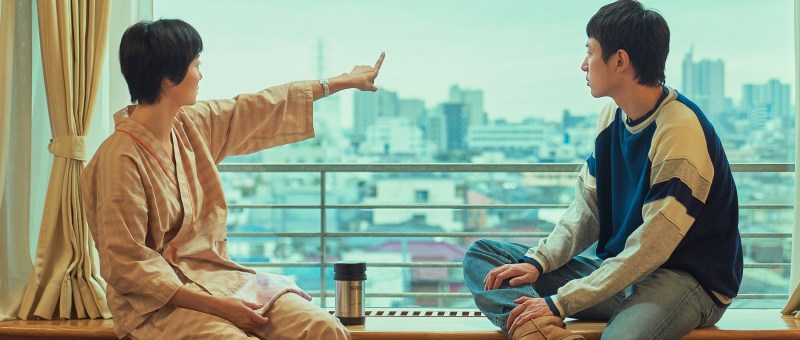
Structured as a multi-strand drama rather than a traditional omnibus movie, the film follows five groups of people mainly in Wuhan at the beginning the outbreak. The first story revolves around a young man, Nanfeng (Yin Fang), whose relationship with local florist Xiaoyu (Zhou Dongyu) had become strained by his decision to move to Shanghai to earn more money for their future. As the New Year Spring Festival approaches, he returns to Wuhan in an attempt to patch things up oblivious of the new disease engulfing the city. Xiaoyu and her mother, who had not approved of him, have each been hospitalised but were separated in the chaos and are now in different hospitals with no way to stay in touch. In a mild rebuke to modern day consumerism, the message that Nanfeng is forced to learn is that he should have been thinking how best to support his community rather than leaving to make more money in Shanghai. Running all around town looking for Xiaoyu’s mother, he eventually wins her approval but is simultaneously warned that he is too impulsive and should think more about what it is others actually want rather than giving them what he thinks they should have. 

Meanwhile a pair of migrant workers struggle to make a living but are given a load of face masks and told to sell them in Wuhan. They too are little aware of how bad things have already become. The older of the drivers is rebuked by his wife because he hasn’t come home in several months and his daughter is beginning to forget him. Though they become increasingly afraid of infection, the truckers maintain their compassion helping an elderly lady and her granddaughter, whose parents are already in a quarantine centre, get to a hospital and then deciding that perhaps they shouldn’t be trying to profit from the pandemic no matter their own desperate circumstances. 

Then again, the film is surprisingly frank about the supply problems in the hospitals which have already run out of high grade medical masks while medics are close to burn out. A doctor is forced to sleep in his car because he’s technically on call. His wife, a nurse, chooses to join him rather than stay in the hotel room they’ve been provided while their son is cared for by his grandparents. He calls a man to tell him his father has passed away and ask for additional documentation to release the body, but the grieving son is himself in a quarantine centre as are all the other family members who have so far survived. The inability to save a fellow doctor who was shortly to become a father almost breaks him, while his wife wonders what’s to become of their son if they should both fall ill. Despite having scolded the boy on the phone about not doing his homework, the doctor has recorded a poignant voice message for his son just in case letting him know that he bought him the toy he wanted for his birthday and has been paying attention even if it didn’t seem like it at the time. 

The themes of parental separation echo through each of the stories, Xiaoyu is separated from her mother, the trucker cannot return to his family because of the lockdowns and his precarious financial position, and the doctor is staying away from his son to treat the sick. In the final strand, a naughty little boy obsessed with legendary child warrior Nezha is separated from his doctor mother (Song Jia) who is despatched to Wuhan to help with the relief effort while his father (Huang Xiaoming), unused to taking care of him, is preoccupied because he unwisely invested in buying a bus he cannot now use because no one is allowed to go anywhere. The boy dreams of visiting a local Buddha statue and getting him to “awaken” from his “quarantine” to show the virus who’s boss only for the Buddha to let him take on Nezha’s form to stamp on those nasty viruses so his mum can come home.

Similarly, the head of a local neighbourhood committee struggles to deal with complaints about a young woman playing piano at all hours while left home alone because her mother is a doctor staying at the hospital. Mr. Wang (Wang Jingchun) becomes something of a local hero, selflessly caring for the residents of a series of apartment blocks ensuring they get food deliveries and dealing with disputes. When he comes down with a fever and has to isolate, the whole block turns out their lights in support waving the torchlight on their phones like tiny stars shining in the distance. It’s here that the film’s real message lies in praising the value of community, not just the doctors and frontline health workers but the civil servants who kept everything running and the ordinary people who did their best to follow the rules and stay at home, while also hinting at some of the failures in the response from the random veg that keeps turning up at the depo to lack of PPE and the total disregard for the migrants stuck far from home in the midst of an economic collapse. Shot by five directors, the strands each have idiosyncratic flare from the chaotic handheld of the hospital scenes to the gentle romance of Nanfeng’s quest and the cheerful adventures of the would-be-Nezha but are otherwise of one voice in the film’s consistent messaging of mutual solidarity and praise for frontline workers. 


Ode to the Spring opens in UK cinemas on 8th July courtesy of CineAsia.

International trailer (English subtitles)

Fantasia International Film Festival Confirms Complete 2022 Programme

The Fantasia International Film Festival returns to cinemas for its 26th edition taking place once again in Montreal from July 14 to Aug. 3. With the full lineup now confirmed here’s a rundown of the East Asian features included in this year’s programme:

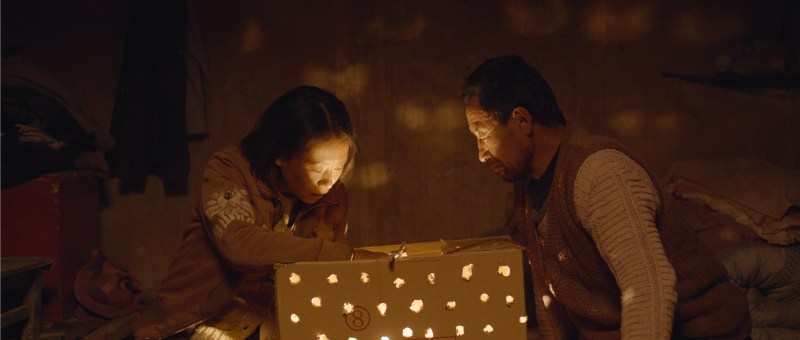
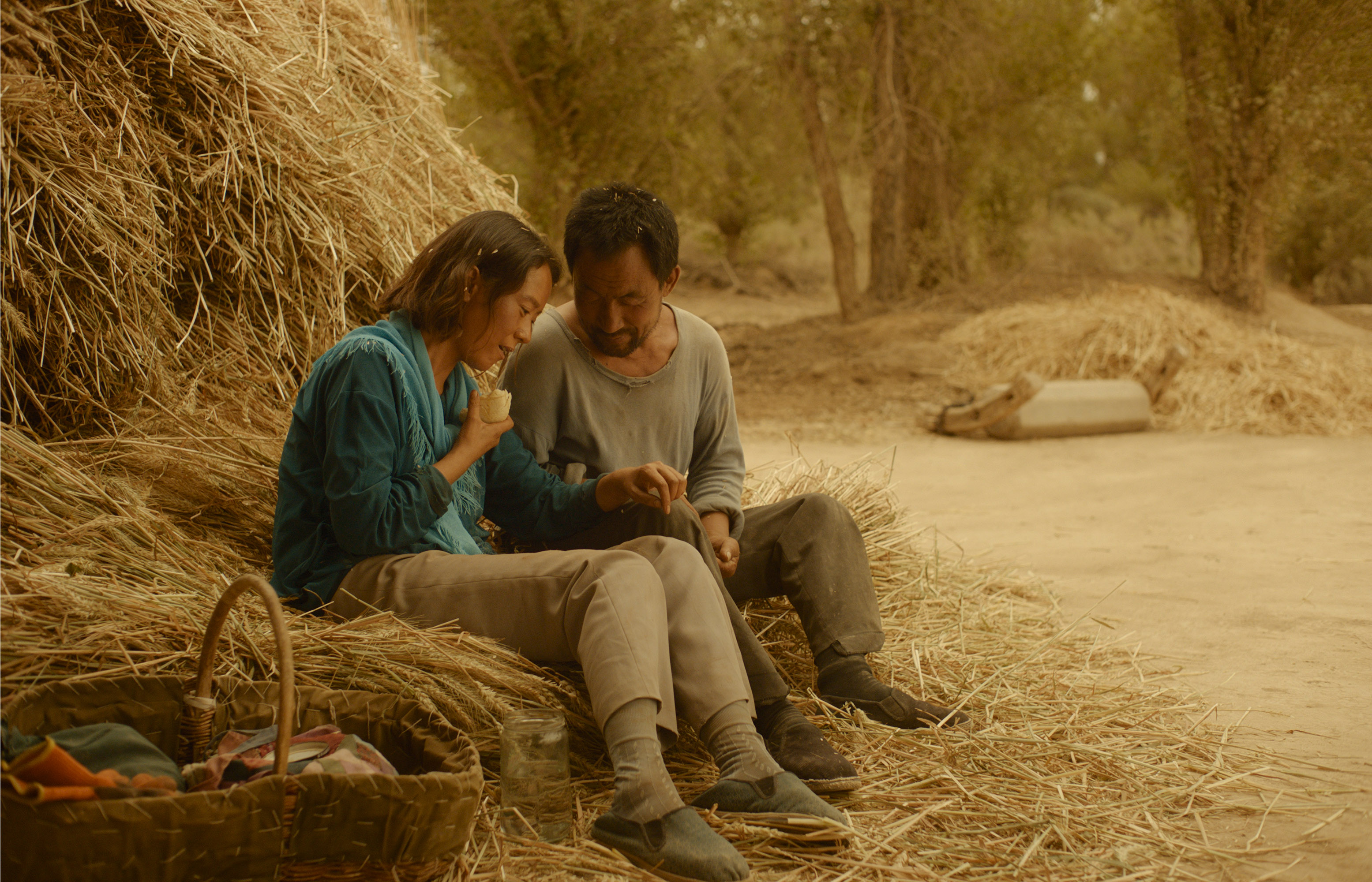
China

  • One and Four – Tibetan drama in which a forest ranger is surprised by a bloodied man entering his cabin.

Hong Kong

  • Chilli Laugh Story – comedy starring Sandra Ng and Gigi Leung in which a son tries to convince his mum to turn her hot sauce into a home business.
  • Detective vs Sleuths – latest from Wai Ka-Fai starring Sean Lau Ching-wan in which a former top policeman who left the force after suffering a nervous breakdown chases a serial killer known as the sleuth who bumps off suspects in cold cases.
  • Dr. Lamb – notorious Category III true crime drama starring Simon Yam as a bloodthirsty taxi driver.
  • The Heroic Trio – Anita Mui, Maggie Cheung, and Michelle Yo star in Johnnie To’s 1993 classic.
  • Kid with the Golden Arm – 1979 Chang Cheh classic.
  • Legendary in Action! – retro martial arts drama in which a formerly successful director gets a second shot at the big time by directing his childhood hero in a remake of a classic serial.
  • Mercenaries from Hong Kong – 1982 Wong Jing classic starring Lo Lieh, Johnny Wang Lung Wei, Wong Yue, Chan Wei Man and Nat Chan as a team of mercenaries hot on the trail of a fugitive murderer.

Japan

  • Anime Supremacy – adaptation of the novel by Mizuki Tsujimura following three women in the anime industry.
  • Baby Assassins – a pair of mismatched high school girls raised as elite assassins get swept into gangland conflict while forced to live together to learn how integrate into society in Yugo Sakamoto’s deadpan slacker comedy. Review.
  • Convenience Story – comedy from Satoshi Miki in which a failed comedian encounters a mysterious woman at a convenience store.
  • Girl from the Other Side – dark anime adaptation of the manga by Nagabe in which a little girl lost in the forest bonds with a mysterious beast.
  • Goodbye, Donglees! – animation in which two boys head off into the woods after being falsely accused of starting a fire.
  • Just Remembering – bittersweet love story from Daigo Matsui inspired by Jim Jarmusch’s Night on Earth.
  • Inu-Oh – a blind Biwa player and a cursed young man exorcise the spirits of the Heike through musical expression in Masaaki Yuasa’s stunning prog rock anime. Review.
  • Kappei – quirky comedy in which a collection of adults raised for an apocalypse that never happened must try to live normal lives.
  • Missing – darkly comic thriller in which a young girl searches for her father who went missing after saying he was going to claim the bounty on a serial killer he spotted in town.
  • My Broken Mariko – Yuki Tanada’s adaptation of the web manga by Hirako Waka in which a woman goes on a journey following the death of a childhood friend.
  • My Small Land – a young woman who came to Japan as refugee when she was a child finds her life upended when her family’s refugee status is revoked.
  • The Mole Song: Final – undercover cop Reiji finds himself increasingly conflicted in his mission to take down Todoroki in the final instalment of the comedic trilogy. Review.
  • The Pass: Last Days of the Samurai – holding fast to samurai ideals a progressive retainer realises his era is at an end in Takashi Koizumi’s homage to classic samurai cinema. Review.
  • Popran – a self-involved CEO gets a course correction when his genitals suddenly decide to leave him in Shinichiro Ueda’s surreal morality tale. Review.
  • Sadako DX – Sadako gets an update in a contemporary digital horror from Hisashi Kimura.
  • Shari – experimental film in which a red monster invades the ordinary life of a snowy town.
  • Shin Ultraman – big budget adaptation of the classic tokusatsu series directed by Shinji Higuchi with a screenplay by Hideaki Anno.
  • Special Delivery – a jaded delivery driver’s finely tuned existence is upended when she’s forced on the run with the young son of a wanted man in Park Dae-min’s high octane thriller. Review.
  • The Fish Tale – latest from Shuichi Okita starring Non in a tale inspired by the life of “fish ambassador” Sakana-kun.
  • Tang and Me – futuristic adventure from Takahiro Miki starring Kazunari Ninomiya as a dejected young man who sets off on a journey with an adorable robot when his wife throws him out of the house.
  • What to Do with Dead Kaiju – satire from Satoshi Miki in which bureaucrats must try to decide how to dispose of the corpse of a defeated kaiju.
  • What’s Up Connection – 1990 drama from Masashi Yamamoto in which a Hong Kong teenager wins a trip to Japan.

Korea

  • Alienoid – highly anticipated sci-fi drama from Choi Dong-hoon starring Kim Tae-ri in which aliens open a portal between feudal Korea and the present day.
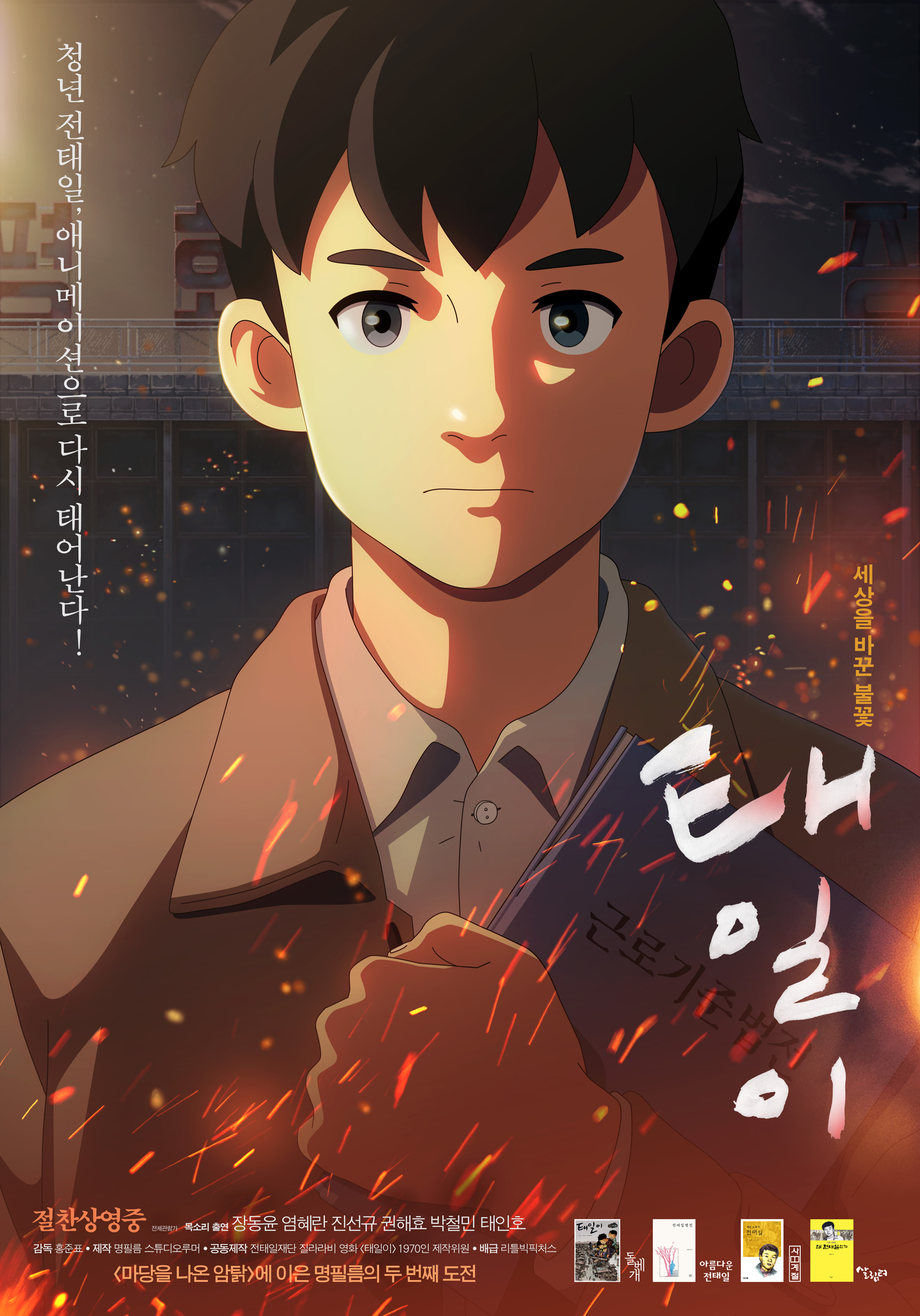
  • Chun Tae-il: The Flame That Lives On – animated biopic of labour activist Chun Tae-il who self-immolated in protest of Korea’s exploitative employment environment.
  • Confession – mystery drama in which a man is accused of a locked room murder
  • Heaven: To the Land of Happiness – a chronically ill thief and a “poetic fugitive” find themselves on the run from a “philosophical gangster” in Im Sang-soo’s playful existential drama. Review.
  • The Killer – a former hitman is charged with babysitting a friend’s daughter only for her to be kidnapped by thugs.
  • The King of Pigs – live action adaptation of Yeon Sang-ho’s animated drama in which a policeman must stop his childhood friend from taking revenge on those who bullied them.
  • Next Door – drama inspired by the life of Kim Dae-jung in which the leader of the opposition tries to battle a government which has installed a surveillance team in the house next door.
  • Next Sohee – latest from July Jung starring Bae Doona as a policewoman taking aim at those who exploit vulnerable teenage girls.
  • On the Line – a former policeman gets back on the case when his wife is targeted by telephone scammers in Kim Gok & Kim Sun’s steely action thriller. Review.
  • Rising Dragon – sequel to The Admiral: Roaring Currents following Admiral Yi Sun-sin (Park Hae-il).
  • The Roundup – sequel to The Outlaws starring Ma Dong-seok as a detective who pursues a vicious killer all the way to Vietnam.
  • Seire – folk horror in which a man pays a heavy price for attending the funeral of an old flame shortly after his child is born.
  • Space Monster Wangmagwi – kaiju classic from 1967.
  • The Fifth Thoracic Vertebra – eerie drama told from the point of view of some mold growing on a mattress.
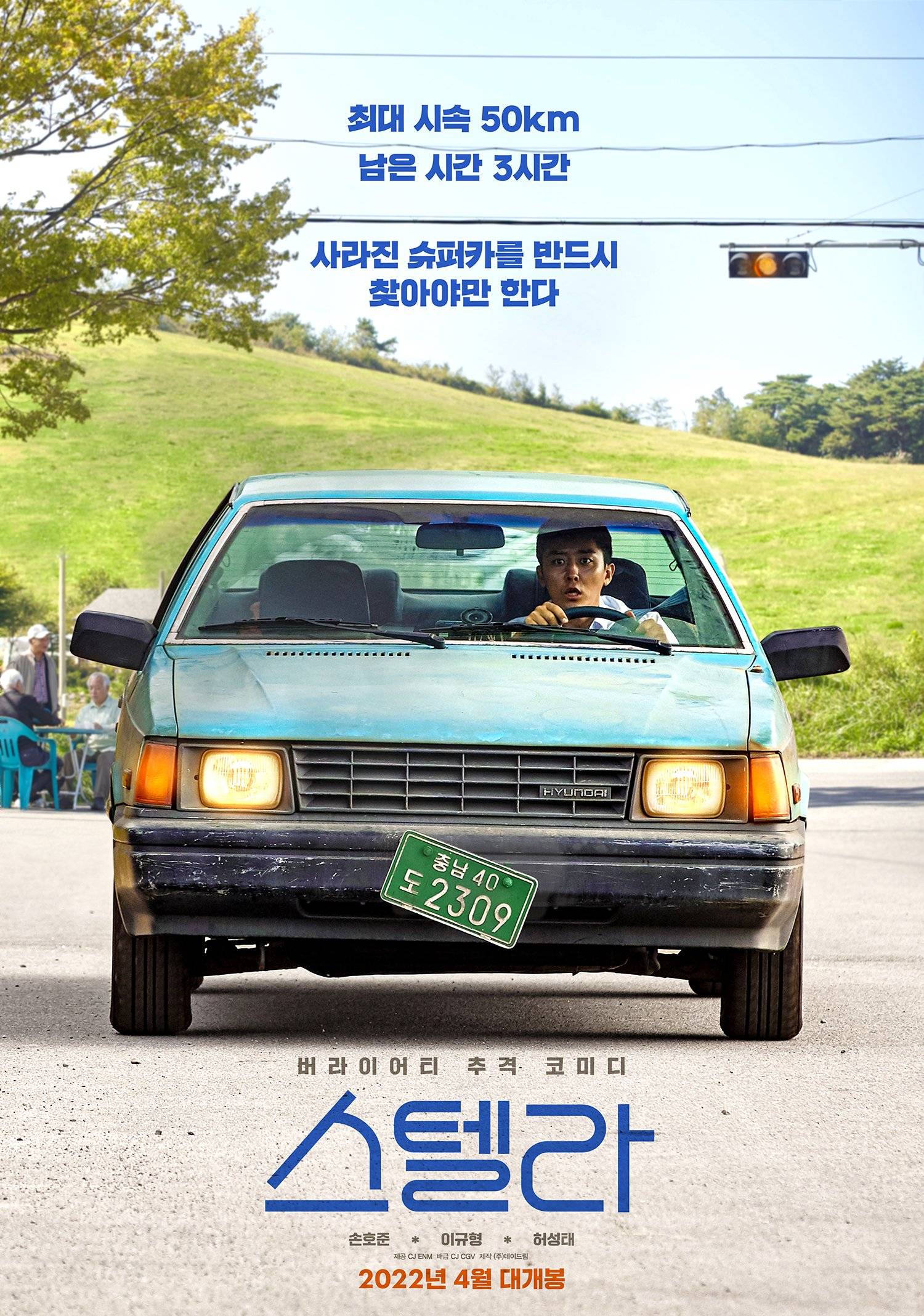
  • Stellar – dramedy in which a man comes to understand his father while on the run in his beat up Hyundae Stellar.
  • The Witch: Part 2. The Other One – long awaited continuation of Park Hoon-jung’s The Witch.

Philippines

  • Whether the Weather is Fine – Philippine drama in which a mother and son search for missing loved ones in the aftermath of disaster.

Taiwan

  • Demigod: The Legend Begins – Taiwanese puppet drama from Pili International Multimedia.

Thailand

  • Fast and Feel Love – drama in which a world champion sport stacker has to learn to look after himself after his girlfriend dumps him.
  • One for the Road – a New York club owner returns to Thailand on learning that his friend has been diagnosed with terminal cancer.

The Fantasia International Film Festival runs in Montreal, Canada, July 14 to Aug 3. Full details for all the films are available via the the official website, and you can also keep up with all the latest news via the festival’s official Facebook pageTwitter account, Instagram, and Vimeo channels.

Life Without Principle (奪命金, Johnnie To, 2011)

A financial earthquake destabilises the ordinary lives of a series of Hong Kongers in Johnnie To’s circular thriller, Life Without Principle (奪命金). As one character puts it, greed is human and everyone always seems to want more but even a little is out of the reach of many and so perhaps their desire is understandable in a world in which a loan shark can lord it over the bank who are in essence little better than he is in exploiting their customers by charging them extortionate fees yet failing to protect their investments. 

Just before the financial crisis of 2008, bank clerk Teresa (Denise Ho Wan-see) is beginning to fear for her job because she’s stuck at the bottom of the staff sales leader board and her boss doesn’t even bother to tell her off anymore. Under pressure she finds herself misselling a high risk BRIC loan to an older woman seemingly fearful of her declining economic power and hoping to make her savings pay a little more rather than just sitting in the bank doing nothing. Meanwhile Teresa is at the constant beck and call of boorish loanshark Yuen (Lo Hoi-pang) who won’t take out a loan with her because banks just rip you off. “Business is about profit but you have to play fair” he unironically explains handing over a card in case Teresa ever needs a “fair” loan pointing out you’ll pay 35% interest on a credit card but he’ll give you 15% even with bad credit. In any case, he leaves with only half of the 10 million he took out, asking Teresa to deposit the rest and sort the forms out later because he’s in a hurry, only he ends up getting offed in the car park meaning that second five million is in paper limbo. 

Teresa can’t really argue that the bank is morally any better than the loanshark, only that what they’re doing is legally regulated even if she has just broken a series of regulations in talking the old woman into the risky loan because she herself fears a financial crisis in losing her job. Meanwhile in another part of the city, one old man ends up killing another in a property dispute amid the city’s notoriously difficult housing market. The policeman investigating, Cheung (Richie Jen), is ironically called away because his wife, Connie (Myolie Wu Hang-yee), is nagging him about buying a new apartment requiring a one million deposit on a 30-year mortgage. She complains that he’s stubborn and overcautious, but he is at least pretty much the only person showing any kind of prudence in the cutthroat investment world even as he hesitates on learning that his estranged father is at death’s door leaving behind an illegitimate little girl it falls on he and his wife to adopt. 

If Cheung’s caution seems cold, it’s ironically mirrored in the film’s only pure hearted hero, ironic triad parody Panther (Sean Lau Ching-wan) who only cares about old-fashioned ideals like gangster loyalty even if those ideals are often expressed through money. Complimented by a boss for not trying to steal from a wedding collection he nevertheless games the restauranteur but only desires money in order to bail out his gangster friend Wah (Cheung Siu-fai) who is immediately deserted by all his minions who obviously don’t have the same ideas of loyalty as old school Panther. “Loyalty matters most” he insists to an old friend who left the triads to work as a junk collector because you can make more money recycling cardboard than in the contemporary underworld. Even his former sworn brother Lung (Philip Keung Ho-man) has managed to do very well for himself as a legitimate businessman hosting online gambling platforms and playing the stock market. 

Yet as Panther pores over data it becomes obvious that they are all betting on the market remaining the same, blindsided by the advent of the Greek Debt crisis and its devastating destabilisation. They thought they had control, that the decisions they made based on the data they received would remain correct only to realise that they are almost entirely powerless. Teresa fiddles with the jammed lock on her cabinet as she vacillates over whether or not to cash out of the corporate life with the “invisible” money, while Connie reckons with potentially losing her deposit when the already risky mortgage application is turned down, and the old lady is left to face potential financial ruin all alone in the twilight of her life. Then again, fate is fickle. The crisis passes as quickly as it arrived allowing a kind of normality to return but finding the desperate protagonists largely unchanged if perhaps emboldened by the feeling of relief resulting from their accidental lucky escapes from certain ruin. A slick and intricately plotted elliptical thriller, Life Without Principle revels in cosmic ironies but nevertheless holds only scorn for the dubious promises of spiralling consumerism in an increasingly jaded society.


Life Without Principle screens at London’s Prince Charles Cinema on 7th July as part of The Heroic Mission: Johnnie To Retrospective.

Original trailer (English subtitles)
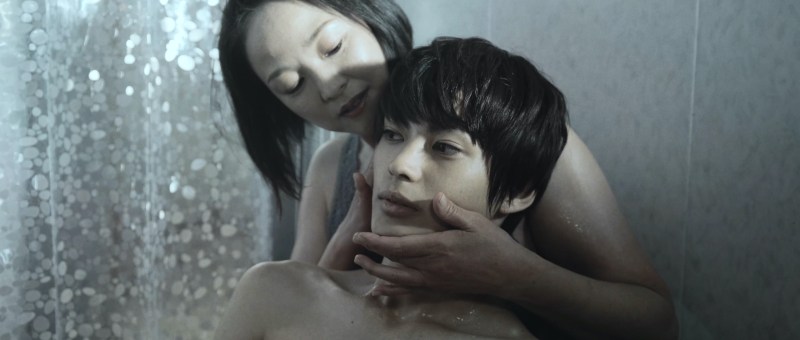
Embalming (EM エンバーミング, Shinji Aoyama, 1999)

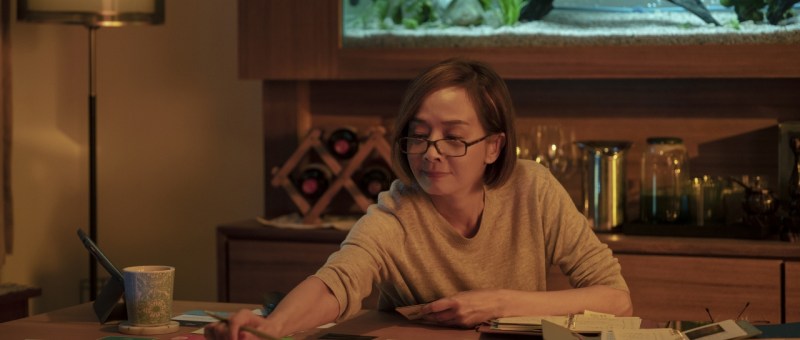
“Nothing can last forever” according ironically enough to an embalmer who feels it is her calling to preserve the bodies of the dead she says to help their grieving families, but does that actually help or is she actively preventing them from moving on in enabling their desire to hold on to something beautiful that is already gone? Jumping on the J-horror boom, Shinji Aoyama’s adaptation of the mystery horror novel by Michiko Matsuda Embalming (EM エンバーミング, EM Embalming) is another millennial mediation on the loss of bodily autonomy amid the corruptions of the late 20th century. 

A predominantly Buddhist funerary culture, embalming is rare in Japan which generally favours cremation over burial. As the opening crawl explains to us, the process may be familiar from the ancient Egyptian mummy, but was also put to use during the American Civil War in order to transport bodies of fallen soldiers home to their families. It also says that through technological advances, bodies can now be preserved for up to one hundred years though according to embalmer Miyako Murakami (Reiko Takashima), the best she can do is 50 days or perhaps she’s merely decided that after the the 49th day it’s inappropriate to hold on any longer. Apparently friendly with local policeman Hiraoka (Yutaka Matsushige), Miyako is called in when the 17-year-old son of a local politician, Yoshiki, is found dead on the pavement outside a tall building having fallen from above. Having no reason to suspect foul play, Hiraoka concludes it’s most likely to be a suicide. The reason he’s called Miyako is that the mother is out of her mind with grief and insisting her son be embalmed to preserve him as he was for all eternity though his father does not agree. 

Neither does local priest Jion (Kojiro Hongo) who sends a couple of his goons to pick Miyako up so he can tell her in imposing and ritualistic tones that she must stop the “evil acts” she’s “inflicting” on Yoshiki’s body, insisting that she’s spanner in the karmic wheel of life and death holding up the cosmos by refusing to let nature take its course in returning Yoshiki’s body to the universe. “What you are carrying out is a violation of the silence of Bodhisattva, and is therefore an act of evil!” he explains though Miyako is hardly about to be swayed from her life’s work and as we later realise Jion has motives other than the spiritual in mind. Nevertheless, it’s true enough that even if Miyako insists embalming gives dignity to the dead, Yoshiki has no further say as to what happens to his body or how much longer he remains in this world. There’s no way to know how the bodies Miyako works on would have felt about the prospect of being mummified or if they would be happy with the way their bodies may go on being used after their death. 

“When a human being dies, they become an object. Human flesh becomes food for maggots and bacteria and eventually the bodies disappear completely” according to another embalmer, Dr. Fuji (Toshio Shiba), who works with shady “death dealers” and in Miyako’s opinion betrays the art of embalming by frankensteining his bodies using a series of replacement parts to achieve the appearance of perfection. He seems to regard human bodies dead and alive as inanimate entities to be treated no differently from plant matter, recounting tales of his war trauma which seems to have permanently disconnected him from his humanity. The only reason Miyako has tracked him down is because Yoshiki’s head was severed and stolen in freak burglary and she’s received word he might know where it is. Yet to Dr. Fuji and other death dealers as Hiraoka had previously mentioned, the head is the least valuable part as he proves by simply dropping one in the bin while talking to an unfazed Miyako. 

Miyako may be as some accuse her “possessed by death” and attempting to exorcise her unresolved grief and mortal anxiety through the art of embalming in search of an eternity she does not really believe exists. But then as her assistant Kurome (Seijun Suzuki) reminds her, the dead cannot be brought back to life, “you can only be a flower while alive”. Dr. Fuji hints at a dark history that recalls the crimes of Unit 731, experimentation on living bodies and total disregard for the dignity of the dead, while an even older corruption seems to stem from shady priest Jion, “some rip-off faith healer targeting society’s political and economic echelons” as Hiraoka describes him. At times darkly humorous, Aoyama’s bleak drama is filled with existential dread and a sense of the uncanny as we see corpses twitch and flicker with the absence of life while Miyako meditates on an impossible eternity rejecting her powerlessness in the face of transience in favour of the simulacrum of existence in a world ruled by death. 


Paper City (Adrian Francis, 2021)

In March 1945, the firebombing of Tokyo killed 100,000 civilians and devastated 16 square miles of the city yet 70 years later those who survived have yet to be acknowledged by their government which has made no investigation or attempt to assist those who lost everything to the fires. Adrian Francis’ documentary Paper City follows a series of now elderly men and women who experienced the tragedy first hand and worry that the lessons of the past are being lost especially with the increasingly nationalistic mindset of the current government which seems hellbent on remilitarisation and the end of the pacifist constitution. 

One of the chief concerns of the survivors is that there is no dedicated memorial to those died in the bombing. The remains of some victims are housed behind the memorial to the victims of the 1923 Great Kanto Earthquake, hidden away and out of sight. Survivors cite the example of other nations such as Germany in which the government has acknowledged its role in the harm caused to civilians through warfare and has acted to protect those who lost their homes, livelihoods, and families because of it. In Japan they feel ignored and forgotten, particularly aggrieved because government policy at the time exacerbated the problem in that they were instructed to stay and fight the fires rather than to evacuate the city. Many had been lulled into a false sense of security believing that as the areas they lived in were residential and had no military facilities they would not be targeted little knowing that the bombing would be indiscriminate with no intention to spare civilian life. 

As one elderly man puts it, they lost everything. Only a child himself as many of these now elderly people were, he lost not only his closest family members but his home and community along with any means they may have had to support themselves economically leaving them little more than destitute beggars in the ashes of a ruined city yet the government did nothing to help them. The Morishita district is one of few that made an attempt to record the names of the victims, those who were confirmed dead and those who were assumed so whose bodies were never found, holding a memorial service for them every year. Meanwhile another man only 14 at the time recalls being drafted to help clear up bodies using firemen’s hooks to pull them from the local river and now all these years later still unable to forget the face of a young mother with a child on her back whose hands still held tight to her hair. Another recalls seeing bodies piled up in a local park and disposed of en masse without dignity or identity as if they had never existed at all. 

What they fear most is being forgotten, that with the city entirely rebuilt no one even remembers anymore that it was once burnt to the ground. They petition the government for official recognition while protesting the injustice of war and the Abe administration’s determination to abandon the pacifist constitution. Protesting outside the Diet, they are ironically heckled by a nationalist counter protest who insist that the Japanese state is not at fault and the protestors should be taking their concerns to the American embassy instead. A kind of hopelessness sometimes falls over them, believing that the prospect of change is slim while the current iteration of the LDP remains in government while knowing that a change of government is also itself all but impossible. 

In any case, they know that their time is running short and they will need new voices to carry their message to the next generation to ensure that the firebombing of Tokyo is never forgotten. They share their harrowing stories of rivers on fire and blood red skies as a warning to the living while honouring the souls of the dead pausing for a moment to admire the figure of a wounded tree still standing tall reaching for the sky, in its way also a monument to endurance. Mainly observational in style with some direct interviews, Francis’ documentary captures the sense of desperation in the older generation that their suffering must not be in vain hoping that their message will get through and that one day there will be no more cities of ash or lonely children left behind to mourn them. 


Paper City streamed as part of this year’s Nippon Connection.

Original trailer (English subtitles)
Salaryman (サラリーマン, Allegra Pacheco, 2021)

The concept of the salaryman is deeply associated with Japan and with a particular way of working but is also in its own way troubling in its implications about the relationships between the employed and the employer in the contemporary society. Allegra Pacheco’s documentary Salaryman (サラリーマン) explores this culturally specific phenomenon along with its radiating effects on the wider society and the attitudes of younger workers who are beginning to turn their backs on the duplicities of the salaryman dream.

Originally from Latin America, Pacheco was first struck by the ubiquitous sight of drunk men in suits asleep on the streets of the nighttime city. The phenomenon has become so commonplace that few would remark on it or even really notice, yet to an outsider such as Pacheco it appeared strange. After all in few other cities would it be possible to fall asleep in a public place and wake up unharmed in full possession of one’s belongings. What she discovers through talking to several salarymen is a story of continual erasure in which the “corporate cattle” as one brands himself are left with no other acceptable outlets to relieve workplace stress born of an oppressive and bullying culture than excessive drinking often as part of the semi-compulsory nomikai afterwork drinking sessions. Having missed the last train, these men often have no other option than to simply wait until the morning when rather than returning home they replace their shirt at a convenience store and head straight back into the office.

These excessive working practices of course take a toll on the family when men rarely arrive home before 10pm if at all and leave early for the morning commute with little opportunity to interact with their wives and children. Pacheco then follows one working mother who is more or less left to handle the entirety of childrearing alone in her husband’s continual absence having to work taking her son to daycare and picking him up into her own working day along with the housework and cooking her own dinner. Meanwhile Pacheco also turns her attention to the phenomenon of the Office Lady or “OL” which is not exactly a salarywoman but separate category of worker treated almost like corporate domestic staff. Such women are often looked down on by the society around them which views the job solely as a stopgap for those looking to leave the workforce on marriage to become a traditional housewife. 

The presence of the OL may reinforce the idea of the corporate entity as a patriarchal authority in which the female executive or salarywoman is not regarded as an equal in what is often regarded as a homosocial society. One commentator describes the self-image of the salaryman as a contemporary samurai who owes ultimate loyalty to his company prioritising his corporate family over the social. Another reason salarymen can be found scattered over the city another expert argues is that they simply fear going home to a less certain environment in which familial bonds may have begun to fray under the strain of their workplace stress. Though Japan actually has well placed labour law designed to protect employees from exploitation it is not well enforced partly because of the nature of the relationship between workers and employers that prevents employees from speaking up about workplace bullying or injustice. 

These bonds between the employed and the employer are largely founded on the post-war promises of the era of rising prosperity in which companies offered jobs for life along with a tacit agreement to look after employees and their families which encouraged the already collectivist mindset that allowed workers to believe they were working towards a common goal of rebuilding the nation and ensuring economic prosperity for all. Such bargains however largely fell apart after the collapse of the Bubble Economy leaving the present generation with all of the stress and few of the rewards their parents may have enjoyed. Pacheco interviews the mother of Matsuri Takahashi who sadly took her own life in exhaustion born of the exploitative working environment at a top advertising firm with a reputation as a “black company” regularly ignoring standard employment law in the knowledge that they are unlikely to be challenged for breaking it. Other young people similarly cite burnout and the fear of karoshi or death from overwork as reasons they decided to leave the corporate world but even they do not necessarily find fault with the system only point out that it suits some better than others and was no good for them.

Then again according to a man who organises the extreme commute as an ironic sporting contest, the pandemic may have issued a wakeup call to the ranks of salarymen realising how nice it is not to have to cram themselves into a rush hour train or miss their kids’ bedtimes because they can’t get out of a nomikai. According to him the salarymen and women of tomorrow will demand the right to work when and where they want less likely to conform to outdated ways of doing business or wilfully participate in a system of widespread exploitation when offered no guarantees of future employment by a company who may try to silence them if they speak up and is just as likely to casually discard them at the first sign of trouble. His belief that this working revolution may usher in a new age of mutual compassion may seem naive or idealistic but it seems there’s hope for the salaryman yet that he may finally discover the means to free himself from an oppressive and exploitative working culture. 


Salaryman streamed as part of this year’s Nippon Connection.

Original trailer (English subtitles)