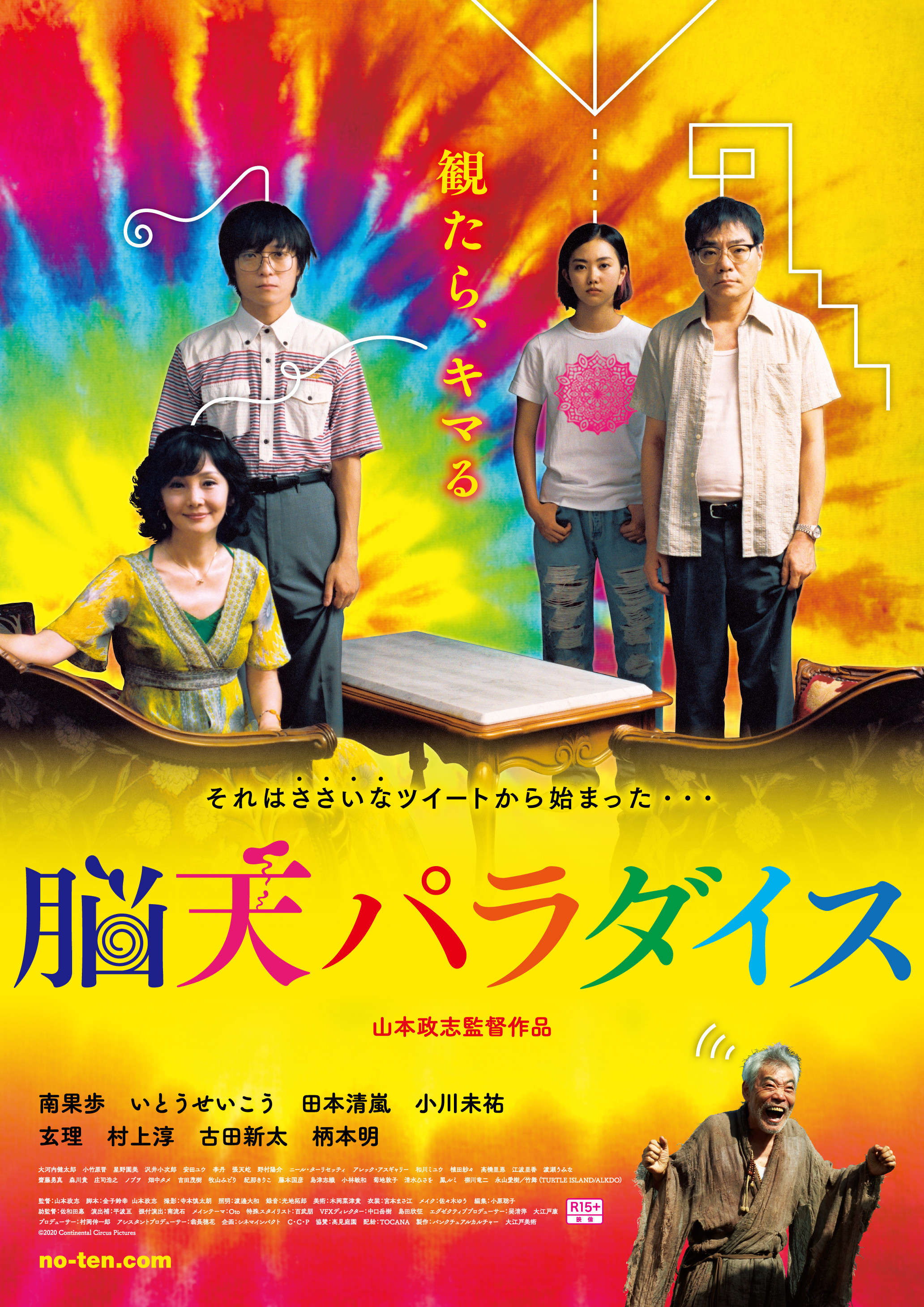
Fanfare (팡파레, Lee Don-ku, 2019)

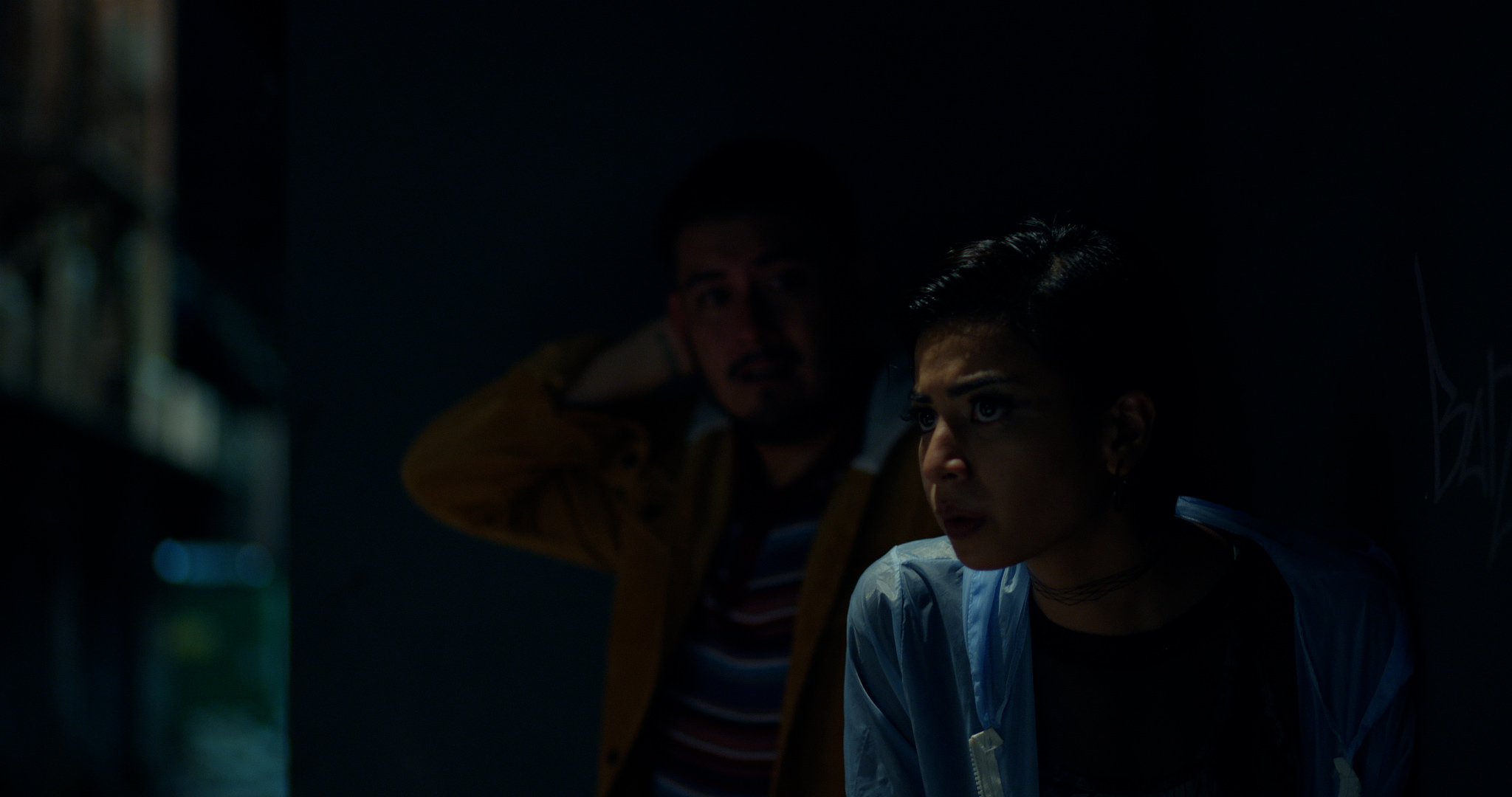
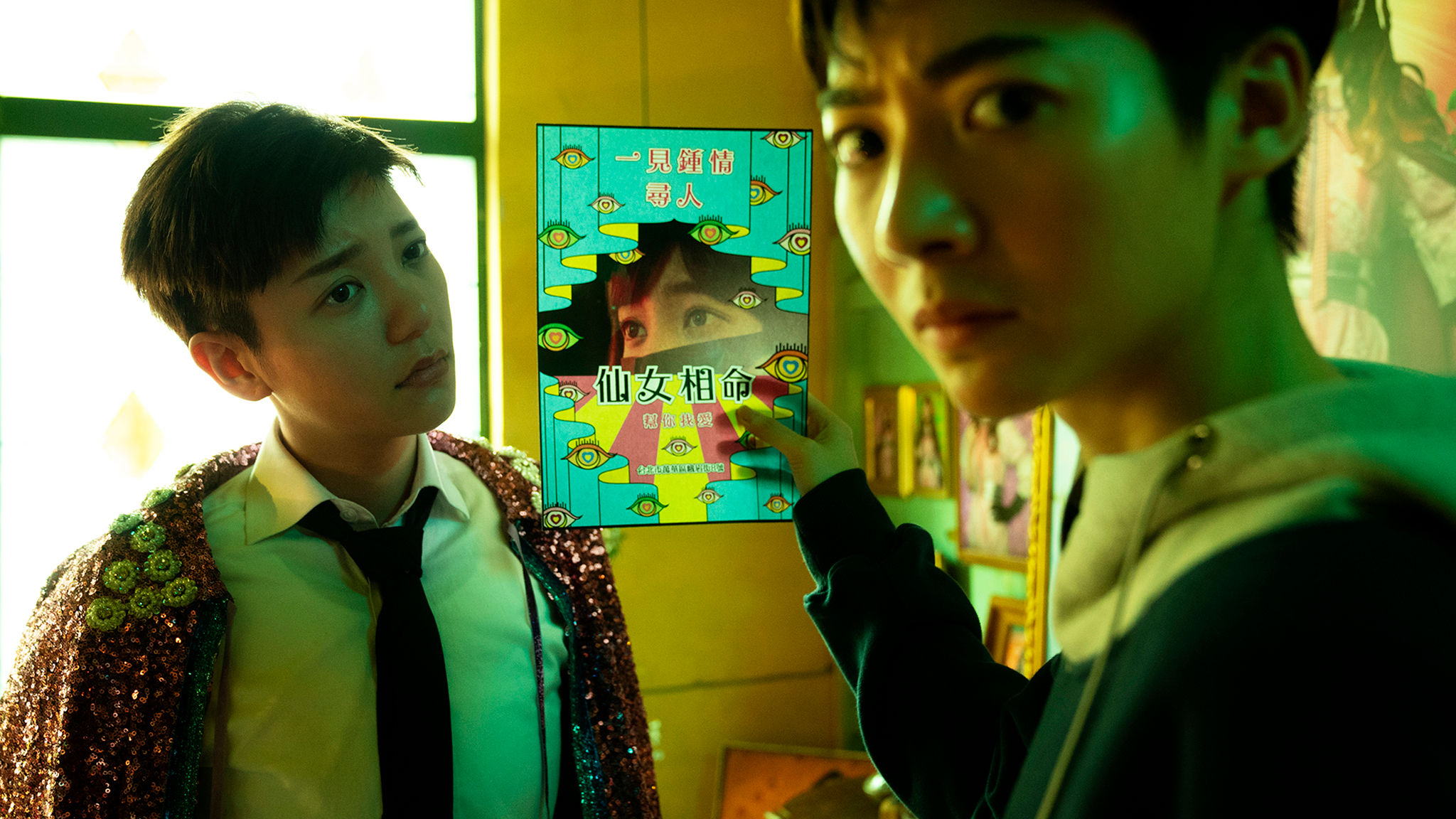
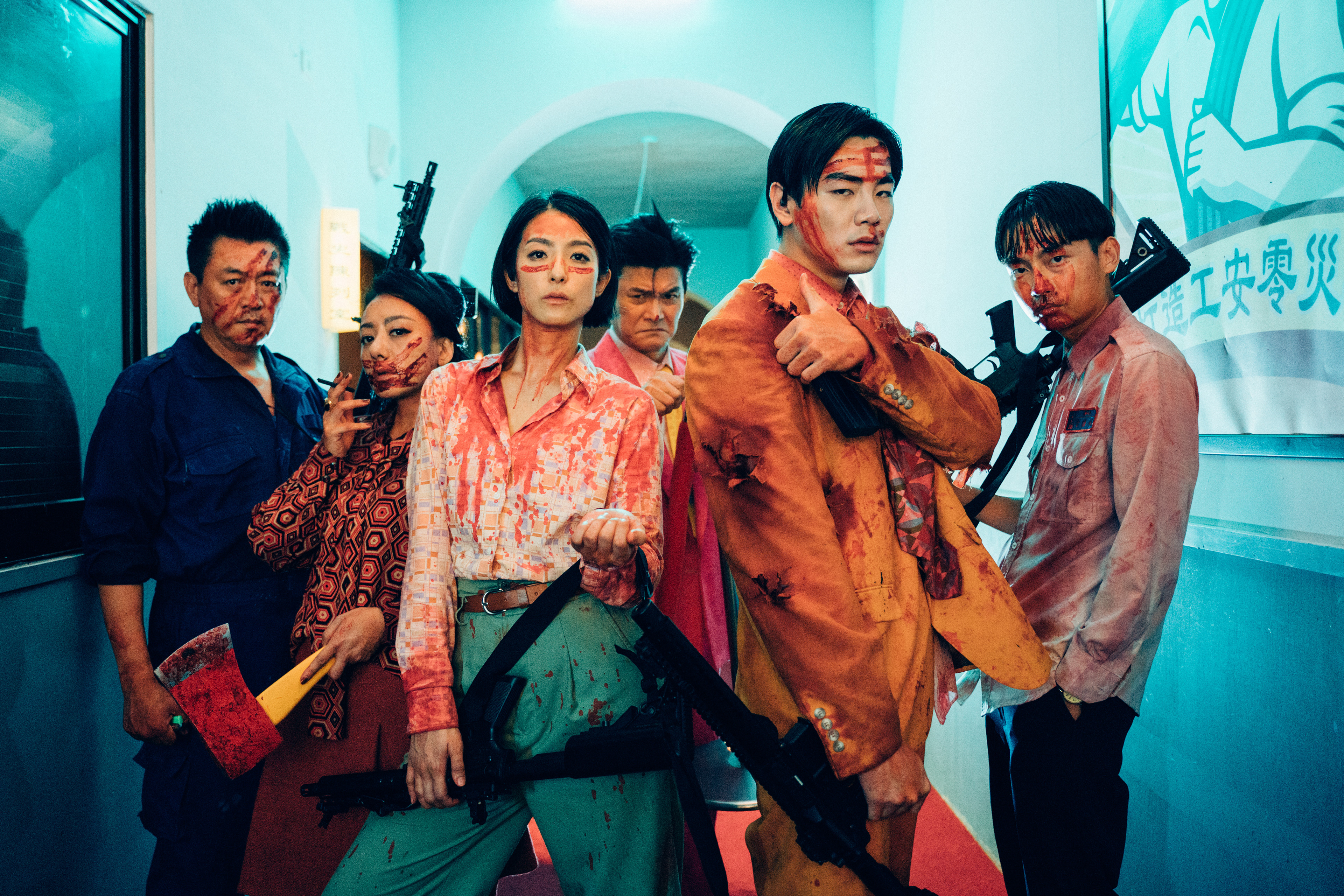
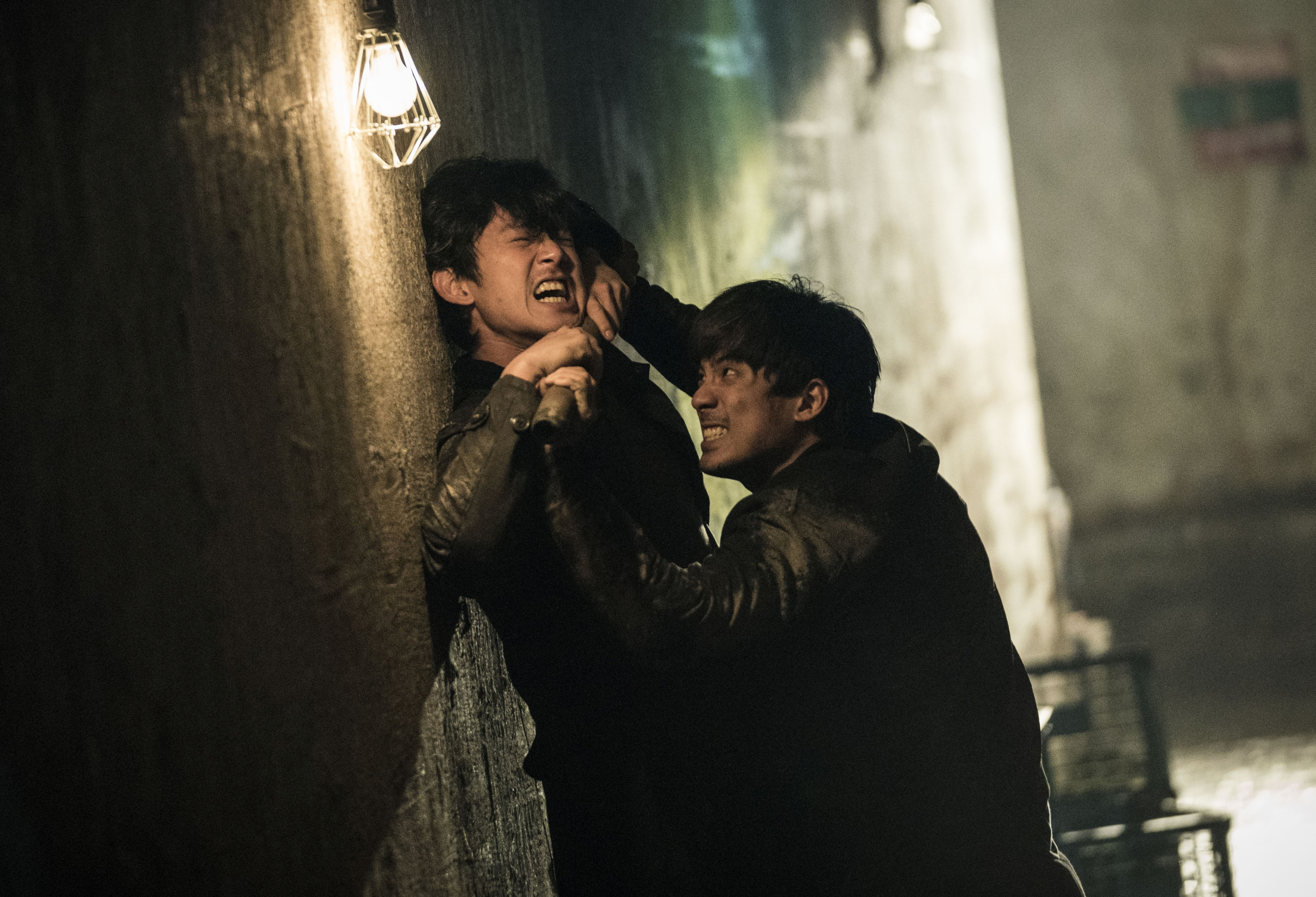
“I’m the only one who gets out alive!” insists an accidental antagonist in Lee Don-ku’s tense theatrical chamber piece, Fanfare (팡파레). The ironic title perhaps hints at the surreal pettiness of four criminals as they find themselves engaged in a pointless battle to the death trapped in a record shop / cafe bar one very bloody Halloween, but Lee’s drama is less concerned with their darkly comic fecklessness than with the rapidly changing power dynamics of an uncertain situation largely determined as they are by initial impressions and societal prejudices. 

That’s one reason no one pays too much attention to the mysterious J (Lim Hwa-young), a young woman we first meet putting on her makeup before getting a call from a man using a voice disguiser who is supposed to send her information on her upcoming “appointment”. We can’t really be sure what it is J’s job entails, but the three men who later take her hostage seem to have drawn the conclusion that she’s some kind of sex worker and largely regard her life as unimportant while believing that she poses no kind of threat to them. She, meanwhile, strangely calm bides her time watching largely passively while sometimes playing into their stereotypical view of her as a weak and defenceless woman, crying and pleading for her life. 

J later explains to her boss that she missed her appointment because she “ran into some fun guys” which may be a strange way of describing the evening’s events but perhaps makes sense given what we can gather of her. In fact she only snuck into the cafe a little before closing because she was early and needed somewhere to hang out, ordering a tequila from the sleazy barman, dressed as Dracula, while he continues to make somewhat inappropriate and flirtatious comments that she ignores. While he goes to tidy up after the Halloween party on the upper floor, a man comes to the door pleading to be let in explaining that his brother has been taken ill. J waves them through but of course it’s a ruse, they intended to rob the place but can’t figure out the till. Younger brother Hee-tae (Park Jong-hwan) goes looking for the barman but accidentally kills him, leaving the guys with a series of problems. To solve them, older brother Kang-tae (Nam Yeon-woo) calls an underworld friend, Sen (Lee Seung-won), promising him a share of his non-existent (?) drug stash in return for help. Sen calls “cleaner” Mr. Baek (Park Se-Jun), but after a series of arguments and altercations the situation continues to deteriorate. 

The problem is, perhaps, that everyone thinks of themselves as the good guy. Hee-tae is apparently in this out of desperation trying to pay off his student loans while painting his older half-brother Kang-tae as a deadbeat drop out whose involvement with drugs brings shame on their family, both boys keen to go home and see their mum anxious that they don’t cause her any more worry. Kang-tae meanwhile evidently thinks he’s some kind of gangster mastermind, entirely unaware he’s in way over his head but reacting to the news that his brother’s just killed someone with bemusement more than horror. Hee-tae didn’t think it was a good idea to involve anyone else in their situation but is persuaded by Kang-tae’s supposed underworld experience while later resenting him, wondering if he really has a valuable drug stash he never mentioned while forcing him to help in his criminal schemes knowing he needed the money. Meanwhile, the more experienced Sen thinks he’s in control but quickly finds himself outmanoeuvred in part because of the boys’ panicky naivety. Baek is there as a contractor but finds himself without protection, a continual outsider with only the necessity of his skills to leverage for his survival along with a possible professional alliance with Sen.  

Set almost entirely within the bar, Fanfare is testament to snowballing chaos of cumulative bad decisions along with the dangers of misreading others based on impressions formed through the prism of societal prejudice. Ironic music cues lend a sense of surreal irony, though Lee’s humour is pitch black as the gang of bumbling criminals eventually consumes itself while those assumed to have the least power simply wait for events to run their course.  


Fanfare screens at Chicago’s Lincoln Yards Drive-in on April 30 as part of the 12th season of Asian Pop-Up Cinema.

Original trailer (no subtitles)

My Missing Valentine (消失的情人節, Chen Yu-Hsun, 2020)

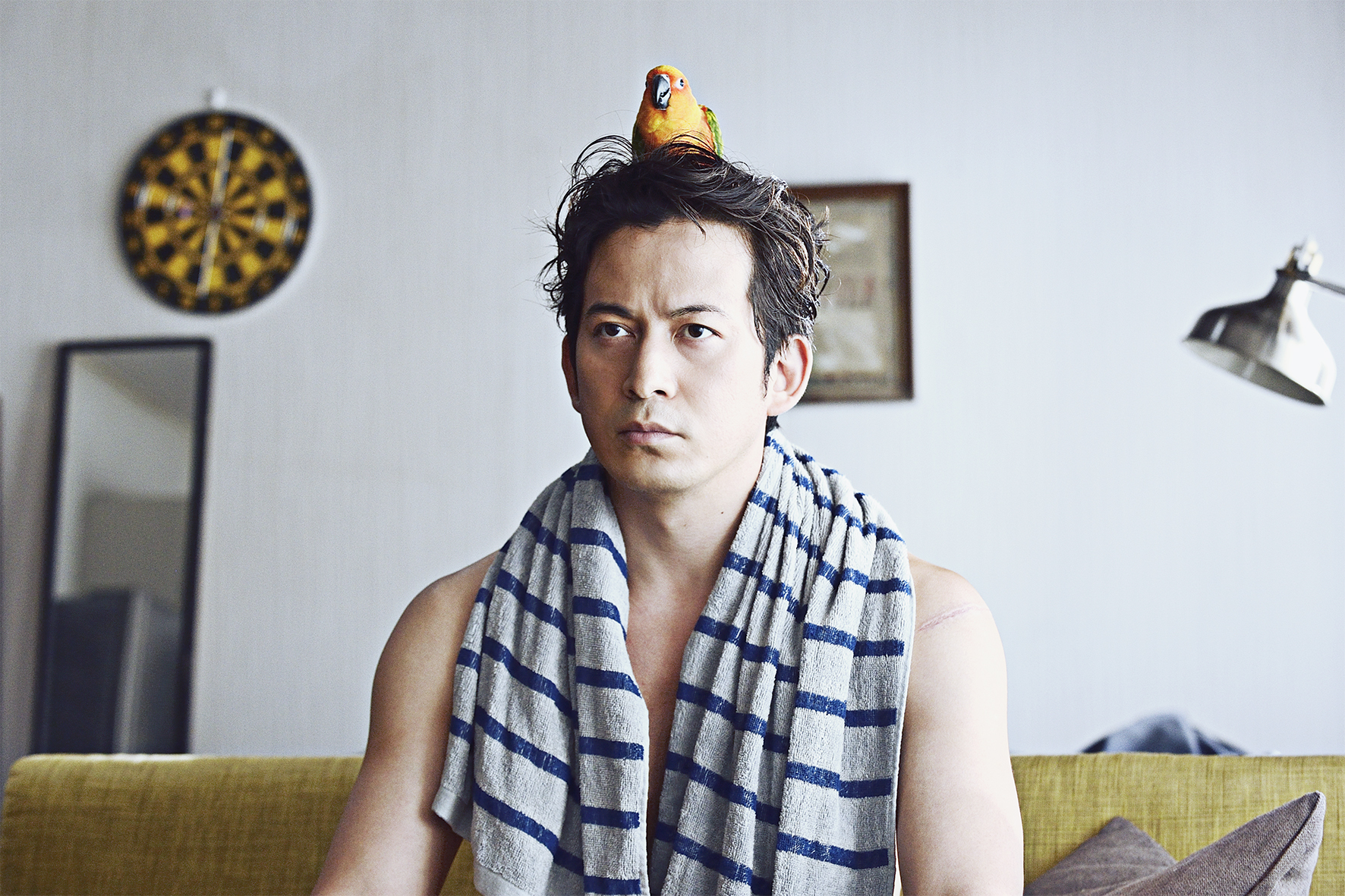
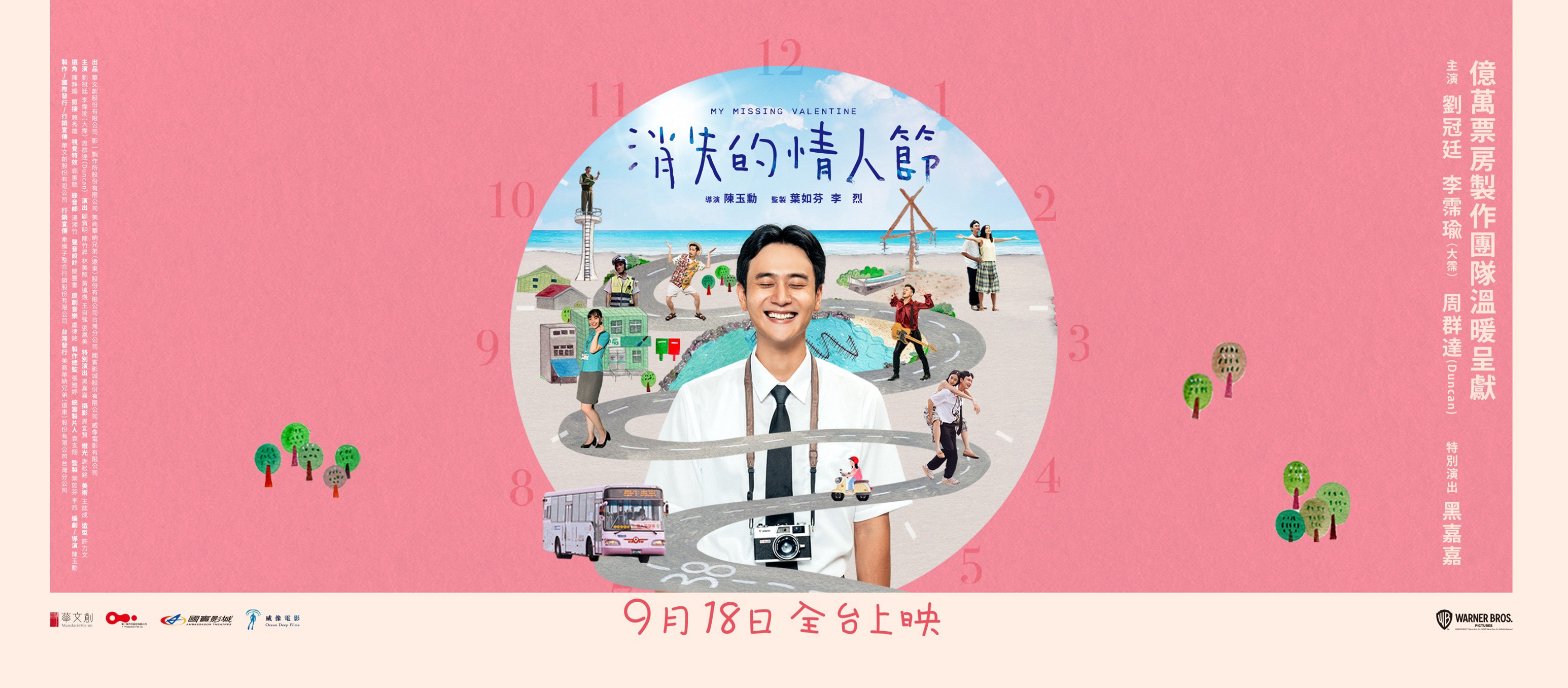
“There’s a lot you don’t remember” the heroine of Chen Yu-Hsun’s quirky rom-com My Missing Valentine (消失的情人節, Xiāoshī de Qíngrénjié) is advised by a mysterious dream gecko arriving with clues retrieved from her subconscious to guide the way towards her romantic destiny. He also tells her that love is a matter of self-hypnosis, and in a sense he might be right in that what Hsiao-Chi (Patty Lee Pei-Yu) apparently needs is a time out, quite literally, to enable her gain a slightly different perspective in order to make peace with the half-remembered past and repair her fracturing sense of self. 

At 30, Hsiao-chi laments that she’s always been slightly out of sync with the world around her, perpetually racing ahead, laughing before the punchline and caught with her eyes closed in photographs. She blames this case of bad timing for her continued romantic failure along with the sudden disappearance of her father ten years previously who went out for tofu pudding and never came back. When she joins in with a dance class in the park and is courted by the handsome teacher (Duncan Chow) who asks her out on Chinese Valentine’s Day she thinks her luck is beginning to change, but when she wakes up with a mysterious sunburn and is told Valentine’s has been and gone she’s left only with a sense of existential confusion. 

As the gecko implies, Hsiao-chi’s existence is defined by the things that she’s “lost”, be they fathers, orphaned memories, or an entire day. The sunburn at least tells her that she experienced Valentine’s outdoors, only she has no memory of it, while she later comes across a photo of herself, unblinking, taken in a place in which she’s sure she’s never been. As it happens, the sweet and funny explanation has its unpalatable qualities, Hsiao-Chi quite literally manipulated without her knowledge or consent unwittingly on an awkward “date” while in a catatonic state but nevertheless guided back towards the hidden secrets of her past the discovery of which will eventually allow her to shift into sync with the world around her.

Meanwhile she remains hopelessly smitten with the improbably suave dance teacher, falling for his obvious scam as he sells her a sob story about his traumatic past and an orphan with a heart condition only for her to ironically suggest they enter a three-legged race in an effort to get money to help her. She resents her pretty colleague at the post office (Joanne Missingham), complaining that ability is irrelevant when all anyone cares about is the superficial while presented with a series of eccentric characters including a chubby guy in search of a wife and a pervert professor, lowkey dismissive of a young man she refers to as the “weirdo” (Liu Kuan-ting) who comes in every day to mail a letter. Living in a rundown house share with another set of unusual people, she penny pinches for all she’s worth while listening to a sympathetic talk radio host and dreaming of romantic fantasy. Ironically what she finds is that she needs to slow down, see things from a different perspective not quite as “superficial” or judgemental as she’s hitherto been while opening herself up to receiving the messages from her past she’d long forgotten were even waiting for her. 

With its retro colour scheme and quirky worldview, Chen’s charmingly sophisticated screenplay marries an intriguing puzzle box structure with a genuine sense of existential questioning as Hsiao-chi ponders the nature of loss wondering if it’s really possible to mislay an entire day even trying to report it to the police as stolen while wondering if her new “boyfriend”, also missing, is more than mere romantic fantasy. The irony is that Hsiao-Chi works at the post office but struggles with communication, finally discovering she can only unlock the secrets of her past through the recollections of others, adding their perspective to her own in order to complete the panorama of their lives and allowing her interior mantra to shift from “love yourself because no one else will” to “love yourself because someone out there loves you”. Hsiao-Chi’s missing Valentine is in many ways the one to her herself as she rediscovers a sense of self-acceptance while finally finding her rhythm in sync with the world around her as she resolves to wait for love hopeful that it too will eventually catch her up. 


My Missing Valentine streams California until May 2 as part of San Diego Asian Film Festival’s Spring Showcase.

Original trailer (English subtitles)
Spider Lilies (刺青, Zero Chou, 2007)

“I have no choice but to live in a virtual world” according to the lovelorn heroine of Zero Chou’s ethereal reflection on love and the legacy of trauma, Spider Lilies (刺青, Cìqīng). Two women connected by childhood tragedy struggle to overcome their respective anxieties in order to progress towards romantic fulfilment, eventually freeing themselves only by destroying the image of that which traps them. 

In the present day, Jade (Rainie Yang) is an unsuccessful camgirl with a habit of shutting down her clients on a whim which doesn’t play well with her boss. In an effort to spice up her live show, she decides to get a raunchy tattoo only to realise that the tattooist, Takeko (Isabella Leong), is in fact her long lost first love, a neighbour she took a fancy to at the tender age of nine. For her part, Takeko appears not to remember Jade but cannot deny the presence of her unusual spider lily tattoo, a version of which hangs prominently on her wall. Hoping to maintain contact, Jade decides to get the spider lily tattoo herself but Takeko is reluctant, explaining that the spider lily is a flower that leads only to hell. 

According to Takeko’s master, there is a secret behind every tattoo and the responsibility of the tattooist is to figure out what it is but never reveal it. Thus Takeko crafts bespoke tattoo designs for each of her clients designed to heal whatever wound the tattoo is intended to cover up, such as the ghost head and flaming blades she tattoos on a would-be gangster who secretly desires them in order to feel a strength he does not really have. Her tattoo, however, is intended as a bridge to the past, a literal way of assuming her late father’s legacy in order to maintain connection with her younger brother (Kris Shen) who has learning difficulties and memory loss unable to remember anything past the traumatic death of their father in an earthquake which occurred while she was busy with her own first love, a girl from school. Feeding into her internalised shame, the tattoo is also is a means of masking the guilt that has seen her forswear romance in a mistaken sense of atonement as if her sole transgression really did cause the earth to shake and destroy the foundations of her home. 

Then again, every time Takeko seems to get close to another woman something awful seems to happen. Jade, meanwhile, affected and not by the same earthquake is burdened by the legacy of abandonment and the fear of being forgotten. Living with her grandmother who now has dementia the anxiety of being unremembered has become acute even aside from the absence of the mother who left her behind and the father last seen in jail. “Childhood memories are unreliable” she’s repeatedly told, firstly by Takeko trying to refuse their connection, and secondly by a mysterious online presence she misidentifies as her lost love but is actually a melancholy policeman with a stammer charged with bringing down her illicit camgirl ring. The policeman judgementally instructs her to stop degrading herself, having taken a liking to her because he says he can tell that she seems lonely. 

A kind of illusionary world of its own, Jade’s camgirl existence is an attempt at frustrated connection, necessarily one sided given that her fans are not visible to her and communicate mainly in text. It’s easy for her to project the image of Takeko onto the figure of the mystery messenger because they are both in a sense illusionary, figments of her own creation arising from her “unreliable” memories. Jade wants the tattoo to preserve the memory of love as a bulwark against its corruption, at once a connection to Takeko and a link to the past, but the tattoo she eventually gets is of another flower echoing the melancholy folksong she is often heard singing in which the lovelorn protagonist begs not to be forgotten. 

“I am a phantom in your dream and you too live in mine” Jade’s mystery messenger types, hinting at the ethereality of romance and fantasy of love. Caught somewhere between dream and memory the women struggle to free themselves from the legacy of past trauma and internalised shame, but eventually begin to find their way towards the centre in making peace with the past in a sprit of self-acceptance and mutual forward motion.


Spider Lilies streams in the UK 26th April to 2nd May courtesy of Queer East

Original trailer (English subtitles)

Fan Girl (Antoinette Jadaone, 2020)

Never meet your heroes is the conventional wisdom, and for good reason in that nobody’s perfect and when you place someone on a pedestal they can’t help but disappoint you when they step down. For the heroine of Antoinette Jadaone’s Fan Girl, however, the clash between her youthful escapist delusions and the ugly truth that lies behind them is more than just a cautionary tale about the commodification of the human image exposing the unpleasant duplicities of a fiercely patriarchal, misogynistic society that those escapist images both mask and reinforce. 

16-year-old Jane (Charlie Dizon) is completely obsessed with rom-com star Paulo Avelino (playing a heavily fictionalised version of himself), bunking off school to attend a publicity event at a local mall at which he and his co-star Bea Alonzo (also playing “herself”) with whom he is apparently in a real relationship are set to appear to promote their latest movie. In the ensuing crush, Jane manages to slip away from the crowd and stowaway on a pickup truck that improbably enough belongs to Paulo who will be driving himself away from the event. Excited in her illicit adventure, Jane snaps candid picks of her crush peeing on the roadside scandalised by the realisation that she’s glimpsed his intimate area, zooming in on her pic while messaging her friend to share the news that Paulo is “a biggie”. Soon after, however, she falls asleep and when she wakes up it’s already dark. The truck has arrived at a creepy gothic mansion out in the country. She thinks she sees Paulo beckon her inside and jumps the gate, only the figure she spots on the upstairs balcony doesn’t match the idea of the romantic prince in her mind nor is he very excited to see her. 

To begin with, perhaps our sympathies are all with Paulo unwittingly stalked by this obsessive teenage fan who’s already invaded his privacy and feels herself entitled to his attention solely because of her devotion towards him. Yet we also fear for her, in the beginning at least Paulo is careful to rebuff her youthful romantic feelings and shows no signs of taking advantage of a naive teenager in the way some other stars might. In this situation of mutual threat, we can’t be sure who is most in danger, the vulnerable star struck fan or famous actor pursued by crazed stalker. 

Nevertheless, Paulo is quickly stripped of his star appeal, his gentlemanliness undercut by his constant insistence that “this can’t get out” eventually knocking Jane’s phone out of her hand as she takes a selfie next to his sleeping face lest she post it online and cause a scandal. As soon as he climbs inside his pickup truck he begins to shed his star persona, wiping the makeup from his face complaining they’ve made him look “like a faggot”, pausing only when stopped by police who immediately let him off after getting him to sign one of the many posters he has on hand for their lovestruck teenage daughter at home. Sitting in the back Jane can perhaps hear his constant swearing, but it doesn’t seem to penetrate. When she calls out his name in the villa she finds him shirtless, slightly pudgy with a lewd tattoo of a cobra woman on his back, his long hair greasy as he snorts cocaine from his curled fist. 

Paulo appears to live in the mansion but its gates remain permanently locked as if he doesn’t carry the key while the place is almost devoid of furniture, creepy its dusty emptiness. Perhaps it in a sense reflects his sense of self, somewhat hollow and ill-defined. Unravelling throughout his night with Jane he hints at a sense of impotence and despair, that he’s a slave to his image and in a sense no longer exists. The image Jane has of “Paulo Avelino” is entirely created by the marketing department, as is his apparently fictitious relationship with Bea, while he inhabits this shabby castle like a moody vampire apparently in love with a local woman who bore his child but is married to someone else. His lover later complains he treats her “like a whore”, stopping by only when he feels lonely or unfulfilled but apparently unready or unwilling to take real responsibility. 

Nevertheless, the scales do not fall from Jane’s eyes for quite some time. We gradually realise that her warm romantic fantasies are a displacement activity masking her fear and her sorrow over all the men who have already betrayed her. We might ask if her mother isn’t wondering where she is, but she later calls only to complain about her abusive boyfriend who hasn’t returned home fearing he is with another woman. Jane recalls seeing her estranged father who abandoned her with his new family, perhaps reflecting on Paulo’s complicated familial situation while clinging fiercely to the image of “Paulo Avelino” from the movies, a sensitive, romantic man who’s not afraid to cry. But underneath it all the real Paulo is just as much a product of toxic masculinity as any other man, a closet misogynist who thinks all women are “whores” and reacts with violence when his authority is challenged.  

Jane keeps insisting that she isn’t a kid anymore, consciously acting older drinking and smoking to perform the role of a mature woman, but finally comes of age only when all her illusions are shattered realising that Paulo is just another violent, abusive, man child resentful of his own insecurities. Returning home she surveys her pinups of him with a sense of regret, now denied even this small refuge of fantasy from the realities of her existence. Yet now she truly is no longer a child, angry but also realising that she doesn’t have to simply accept it in the way her mother has done resolving to seize her own agency though it remains unclear what kind of consequences if any her act of resistance may eventually provoke. A dark exploration of the interplay between fan and idol, the duplicities of image, and the persistent harm of an authoritarian patriarchy as evoked by the ubiquitous Duterte posters, Antoinette Jadaone’s nuanced drama paints a bleak portrait of the contemporary society but ends perhaps on a brief note of hope if also of tragedy as Jane smokes her cigarettes, not a kid anymore. 


Fan Girl streams in the US until May 2 as part of San Diego Asian Film Festival’s Spring Showcase.

Original trailer (English subtitles)
All About Ing (小伟, Huang Zi, 2019)

A small family finds itself pulled in different directions in the wake of a medical emergency in Huang Zi’s poetic family drama All About Ing (小伟, Xiǎo Wěi). The three are perhaps in slightly different places, each longing for freedom from one thing or another but finding themselves bound by a sense of legacy while haunted by both past and future as they attempt to reorient themselves around their shared loss, searching for new ways forward while always looking back. 

Opening with the poignant image of an empty chair, Huang slowly walks us into the “Ing” home (not their name though each of their names contain it) as patriarch Weiming (Ko Hon-man) gets a haircut from his wife while his son Yiming (Howard Sit Lap-Yin) lazes on the sofa behind. The sense of familial harmony is however soon broken as mother Muling (Janis Pang Hang-ying) chases down her indifferent son while her husband has recently entered hospital with a condition that appears to be much more serious than he thought it to be. Firstly criticising the hospital unsure if he’s getting the best care because the place seems “too new”, Weiming is convinced there’s nothing seriously wrong with him because the doctor says he can go home in a few days. Muling, however, is aware the reality is a little different and has decided not to tell her husband that he has advanced liver cancer letting him believe he merely has “cirrhosis”. 

Divided into three arcs following each of the family members as they attempt to come to terms with the ways their lives will change, the first part of the film follows Muling as she finds herself carrying the burden of family all alone trying to keep them together while her son dreams of escaping abroad and her husband is in continual denial about the state of his health. Perhaps she wants to escape too, her friends at a factory cafeteria gossiping about a mutual acquaintance who was so set on going abroad that she apparently left her husband to marry a wealthy old man living in Cyprus. “What freedom? Is abandoning her son and husband freedom now?” her friend asks while Muling pensively stirs her soup thinking something much the same, later identifying with the lonely old granny who keeps wandering off from the flat next-door while her family it seems don’t even really bother to look for her. Will that be her future too, wandering all alone like a living ghost forgotten by those closest to her? 

A teenage boy Yiming is not particularly primed to see things from his mother’s perspective, longing for escape through studying abroad keeping the news of his acceptance at university in the US a secret from Muling just as she keeps the extent of Weiming’s illness a secret from him. He resents her for her thinking “something bad” will happen to his father while slacking off in class, rejecting her offer of an introduction to a cram school run by a friend but cheating on his homework by copying another girl’s answers. Like Muling’s friend, Yiming’s classmates are convinced there’s no future for them in China joking about jobs as security guards or successful shop merchants while determined to seek their fortunes abroad perhaps partly out of a sense of teenage rebellion against constraining family mores. Yet Yiming is also struggling to process the idea of death experiencing strange dreams of a ruined village he eventually visits with his father on a last trip back to his hometown. 

Weiming’s elderly mother looks not unlike the escaped granny framed vaguely from behind, while his brother too appears somewhat ghostlike as if frozen in time dressed in an old-fashioned donkey jacket and carrying a mysterious photo tube. The two boys he meets on a misty beach who do not acknowledge his presence appear like ghosts of their younger selves while Weiming himself has begun to haunt the landscape ominously looking in through a window at his wife and son on the other side. The family went back to visit Weiming’s family grave but they can’t find it, the town now in ruins while a holiday resort is currently under construction slowly taking over the mountain featured in a picture the family retrieve of Weiming’s father they will later hang on their living room wall. “I want to change the world” Yiming idly mutters on the train home though Weiming doesn’t hear him, the son poignantly turning round to share something with his father after they return home only to find his chair empty. Another his elliptical long shots, Huang closes by returning to his opening POV once again a ghost exiting the space as if returning to a familiar chair while the family attempts to repair itself, moving forward in memory of the past not trapped by it but carrying it with them as they go. 


All About Ing is currently available to stream in the UK as part of the Chinese Cinema Season.

Original trailer (English / Simplified Chinese subtitles)
The End of the Track (跑道終點, Mou Tun-Fei, 1970)

“It’s too dark in there, I can’t see the end” the hero of Mou Tun-fei’s The End of the Track (跑道終點, Pǎodào Zhōngdiǎn) complains though in the end he’ll find himself venturing into the darkness all alone. Like many of his contemporaries, Mou had come to Taiwan from the Mainland as a child during the Chinese Civil War but eventually made only two features on the island spending the bulk of his career working in exploitation cinema for Shaw Brothers in Hong Kong. The second of his two Taiwanese movies neither of which were ever given a mainstream release, The End of the Track continues in the broadly Neo-realist vein of I Didn’t Dare to Tell You while venturing towards the expressionistic in its innovative use of rhythmic editing and sound design to mimic the hero’s sense of confusion and anxiety in an oppressively authoritarian society. 

A middle-class boy, Hsiao-Tung (Chen Da-Wei) is best friends with Yung-Sheng (Tsai Tu-Chuen) whose parents operate a small noodle cart. Despite the class disparity between them, the boys are inseparable spending their time skinny-dipping at local beaches, play fighting, or exploring a disused mine they regard as their place joking about the possibilities of hidden gold. Tragedy strikes however when Hsiao-Tung gets bad vibes about venturing into the mine and suggests they head back to school to engage in a mutual “race”, he with his abacus and Yung-Sheng on the track. Shortly after Hsiao-Tung brings up the fact another boy has called them “queer” which they both laugh off with an intention to beat him up they later think better of because of his pimples, Yung-Sheng begins to tire but thanks to Hsiao-Tung’s encouragement continues to run until finally collapsing in his arms and thereafter passing away. 

The homoerotic undertones of the intense friendship between the two boys have been posited as a possible reason the film was not passed for release, and there is certainly something in the fact that Yung-Sheng dies seconds after the word “queer” is uttered though the underlying subtext seems to be bound up more with their class disparity than with the repression of their latent sexual desire. Academically gifted and from a middle-class family, Hsiao-Tung seems primed for conventional success in a rapidly developing economy while Yung-Sheng whose potential lies in his physicality will most likely be left behind. Hsiao-Tung’s attempt to push him beyond his limit eventually leads to his death in his inability to outrun the restrictions placed on him by his society. The two boys have been on different tracks all along, their paths set to diverge even as they fight desperately to maintain their friendship.

In the depths of his guilt feeling that he hastened Yung-Sheng towards his death in failing to recognise his distress, Hsiao-Tung attempts to atone by helping out at his parents’ noodle stand hoping to make his dream of opening a physical store a reality. Yet while his efforts eventually earn him acceptance from the Lees, the conclusion he comes to is that he cannot take his friend’s place or exchange his life for Yung-Sheng’s. He cannot change “track” to become a noodle stall owner’s son, but neither can he reconcile himself to the petty conservatism that defines the lives of his respectable middle-class parents, angrily throwing back at them the instructions given to children in order to become “model citizens” that they should work hard and mind their own business as his father berates him for his bad grades encouraging him to prioritise himself before others so that he might be of more use to society in the future. Hsiao-Tung finds himself bitterly remarking that Yung-Sheng’s death was then his own fault, reacting to the selfish individualism of an authoritarian society which tells him that his intense grief for his friend is wrong and that care and compassion for others is an inappropriate waste of potential. 

Continuing to visit his friend’s grave, Hsiao-Tung remains lost recalling the many conversations they had in which they were torn in their relationships with their parents feeling as if they ought to obey but also that there were times they desired their own freedom. “Everything is so changeable” he complains, “what’s right and wrong in this world all depends on the time, place and people.” He tells us that he doesn’t want to figure it out anyway, but claims to know now what’s going on coming to an understanding of himself as he re-contemplates the cave less afraid to face the darkness of adulthood as he ventures forth all alone in search of an ending.  


The End of the Track streamed as part of Electric Shadows.

I Didn’t Dare to Tell You (不敢跟你講, Mou Tun-Fei, 1969)

Born on the Mainland in 1941, Mou Tun-Fei was one of many making the move to Taiwan with his family following the Chinese Civil War in 1949. In fact, he made only two films in Taiwan, neither of which were ever released, and spent the bulk of his career in Hong Kong working for Shaw Brothers where he became associated with a brand of extreme exploitation cinema before finally returning to the Mainland, later working on the notorious co-production Men Behind the Sun. 

His debut, however, I Didn’t Dare to Tell You (不敢跟你講, Bù Gǎn Gēn Nǐ Jiǎng), is a gritty social drama inspired by the neorealist movement and the French New Wave even throwing in a few nods to The 400 Blows. No single reason is offered as to why it ultimately went unreleased, it was apparently not because Mou was unhappy with the film, though its mildly subversively digs at contemporary authoritarianism and perhaps problematically left-wing take on structural inequalities may have made it unpalatable to the censors even if its unexpectedly rosy coda feels like a concession made for their benefit. 

The hero, Da-Yuan (Hsu Jian-Sheng), is a lonely little boy tormented by playground bullies and raised by an often absent single-father (Chen Kuo-Chun) who has despite himself pledged his son as an apprentice in settlement for his gambling debts. Da-Yuan, however, wants to stay in education after middle school and is wary of an older man, Uncle Chen, who often drops by the house inspecting his teeth as if he were a horse at market. Consumed by guilt, Da-Yuan’s father eventually decides to honour his son’s wishes and send him to the public high school telling Uncle Chen that the deal is off. Uncle Chen, however, is less than sympathetic insisting that Da-Yuan’s father pay back the money he owes within the month. Spying on his father Da-Yuan overhears their conversation and begins to feel guilty himself, wondering if he should give up on staying at school but later deciding to look for work to help his father pay off the debt entering an arrangement with another boy who had to drop out of education to work in a print house, pulling his shifts while his friend does Da-Yuan’s homework to prepare for entering the high school the next year as his older brother had promised him he could. 

The subject of child labour seems to have been the controversial element that may have upset the censor’s board, suggesting a series of economic and social problems at the heart of a developing society as kids like Da-Yuan find themselves exploited while at the mercy of an irresponsible parent, in this case his father’s gambling which sees him berated by their no-nonsense landlady who makes no secret of her disapproval of his parenting style. Da-Yuan’s father, meanwhile, desperately tries to make amends by thrusting himself into overwork in low pay, exploitative conditions which have left him exhausted and in poor health as his constant coughing hints. Discovering that Da-Yuan has been neglecting his studies to work, he is crushed and betrayed, feeling as if all his sacrifices have been for nothing throwing his son out never knowing that he did it only in an attempt to ease his burden. The truth is eventually only revealed by Da-Yuan’s staunchly loyal friends who eventually “dare” to tell in the interests of justice. 

Meanwhile, a parallel conflict is going on in the heart of Da-Yuan’s school teacher (Grace Gua Ah-leh) who first appears as an austere figure with her hair in a tight bun wearing thick-framed glasses and dressed in a severe suit. Outside of school she finds herself at odds with her beatnik artist fiancé who complains that she’s travelled too far to the dark side and that her newfound conservatism is turning the kids into identical mindless drones devoid of life or creativity. She meanwhile, intensely resents his beard and shaggy hair complaining that he wasn’t “like this” when they first met two years previously, but once he smashes her unfashionable glasses which were merely an affectation designed to add to her sense of authority, her outlook does indeed begin to change. Letting her hair down and dressing in a more comfortable fashion she begins to bond with the kids and develops a sympathy for Da-Yuan investigating why it is he’s always falling asleep in class now determined to help rather than punish. 

In the end, authoritarianism loses out, the teacher’s earlier assertion that pupils need to be obedient members of society replaced by a more compassionate desire to nurture their individual talents and personal happiness. Nevertheless, the coda occurring after a poignant freeze-frame a little after the boy utters the film’s title to his chastened father, seems improbably optimistic, subtly re-enforcing the power of the state in its parade of pristine public high schools as if to say the system works in direct contrast to everything we’ve just seen implying that the dissatisfying reality of boys like Da-Yuan can be fixed by a simple act of truth sharing and an acceptance of mutual responsibility. Shot with unflinching though never preachy naturalism, Mou’s steely drama is otherwise resolute in its anti-authoritarianism condemning both the deadening effects of a rigid educational system and an unforgiving society that actively frustrates the hopes and dreams of ordinary kids like Da-Yuan and his friends. 


I Didn’t Dare to Tell You streamed as part of Electric Shadows.

Warm Current (暖流, Yasuzo Masumura, 1957)

Never one to tread the beaten path, Yasuzo Masumura studied film abroad in Italy before, perhaps counter intuitively, entering the Japanese studio system apprenticing at Daiei where he’d remain until its bankruptcy in the early ‘70s forced him into freelancing. His 1957 debut Kisses was a response to the taiyozoku or sun tribe craze of nihilistic youth movies though it was in its own way quietly hopeful and even sweet, at least in contrast to some the more cynical views of romance which colour some of the director’s later work, but again despite being positioned as precursor to the New Wave is also very much in the classical tradition if owing something to contemporary European art house. Masumura’s second film Blue Sky Maiden continued in the same vein, an ostensibly cheerful take on Sirkian melodrama in which the plucky heroine finds self-actualisation while dealing with her difficult family history. Warm Current (暖流, Danryu), meanwhile, builds on the same Sirkian foundations, remaking a popular weepy which had proved a big hit for Kozaburo Yoshimura 20 years earlier, but further undercutting it with a sense of ironic inconsequentiality as the heroes engage in a background battle for the post-war future. 

The film opens with a suicide, a nurse discovered dead on a bench after apparently having poisoned herself. She is, however, not the focus of the story and all too quickly forgotten in favour of the return of Keiko (Hitomi Nozoe), the daughter of the hospital’s director who has until recently been studying abroad. She’s come to the hospital because she has a piece of a sewing needle somehow embedded in her finger which needs rather more treatment than one might expect. Anyway, while there she attracts the attentions of handsome doctor Sasajima (Ryuji Shinagawa) and meets up with old schoolfriend Gin (Sachiko Hidari) who has since become a nurse. The problem is that the hospital is in big financial trouble and Keiko’s father Shima (Toranosuke Ogawa) is secretly terminally ill with cancer. He brings in Hibiki (Jun Negami), a pharmaceuticals executive he’s been supporting as a favour to his late father, as a consultant to streamline the business, while sidelining his rather feckless son Yasuhiko (Eiji Funakoshi), an orthopaedics doctor who might be assumed to take over were he not so entirely useless. 

Introduced rather late, Hibiki is positioned almost as a villain, a destabilising force within this very bourgeois world of the hospital determined to strip it of the corrupt entitlement of the surgical class. To that extent, he comes in like a new broom to apply modern business thinking to the ancient art of medicine but does so with rather old-fashioned ideas of gratitude and loyalty to Shima, always acting in the best interests of the family while positioning himself as a servant retainer. This the minor conflict that defines his complicated relationship with the equally confused Keiko who too has returned from abroad with taste for Western individualism but is uncertain how to live her life as a woman in still conservative Japan. All her friends ask her about blue-eyed boyfriends, and though it seems that she is immediately smitten with Hibiki she quite rudely dismisses him for his slightly condescending manner later remarking that she was turned off by a sense of his overconfidence. 

Keiko tells her father she’s no plans to marry and has come back to Japan intending to continue her studies. For his part, Shima is all for a woman working but not as he puts it if it causes her to become a “brainy spinster”. Eventually courted by Sasajima she finds herself torn, even as he tells her that, unexpectedly, he has no issue with her desire to work or study were she to become his wife, uncertain in her attraction to Hibiki while drawn back towards conservatism in knowing that her father favours marriage and that Sasajima is her class-appropriate match. Despite his own attraction to her, Hibiki says nothing even on hearing of her engagement precisely because of this increasingly outdated sense of social inferiority. Meanwhile, he remains seemingly oblivious to the fact that Gin, who like him is a war orphan, has fallen in love with him which is why she continues to help him as a “spy” within the hospital. 

In response to her war trauma, Gin has developed the habit of laughing loudly, an especially unusual trait in a generally reserved culture, and often remarks on her own “stupidity”, the childlike excitability which so clearly positions her as a mirror to the elegant Keiko. Yet the push and pull between the two women has little rancour in it, save that Gin is already aware that Sasajima was responsible for the suicide of the nurse on the rooftop but has chosen not to say anything hoping they’ll marry and Hibiki will be hers. As Keiko later discovers, Sasajima is fairly brazen in his “modernity”, having lived with an aspiring model who declines to marry him because it would adversely affect her career but has no problem with him marrying someone else confident that their physical relationship will continue. Sasajima turns up while Keiko is visiting her, but calmly sits down on the bed and explains that he essentially plans to have two wives, the model for the bedroom and Keiko to be his companion of the mind. He brands her vulgar and small-minded in her conservatism when she proves unconvinced, laying bare an essential misogyny when he echoes that brainy women are “boring”, which is why he “needs” the model to satisfy himself sexually. Nevertheless, Keiko is not that kind of “modern” and in any case not so in love with Sasajima nor deluded enough to think she needs him to agree to his arrangement. 

Gin meanwhile echoes something of the model’s passive resignation when she too declares that she doesn’t care if Keiko marries Hibiki because she’s certain he’s supposed to be with her in the end because they are “alike”. There is no class conflict between them, and as they are both war orphans they share a sense of displacement in the post-war society. Unlike Keiko Gin is open in her feelings, declaring her love for Hibiki even chasing after him at the station and calling out across the ticket barriers that she’ll wait forever even if she only becomes his mistress. Earlier on, Keiko had been reading a foreign romance about a woman courted by two men she was unable to choose between only making up her mind when one of the men’s accent slipped, but in essence it’s Hibiki who finds himself torn if earnestly, thinking himself in love with Keiko but prevented from pursuing her because of his class anxiety rather than attracted to her precisely because of her class standing and everything it represents which is in a sense the target of his “revolutionary” reforms at the hospital. Tempted, he is eventually pulled back towards the side of “passion”, won over by Gin’s slightly scary if unwavering love for him. 

Yet this is no grand weepy, just the romantic confusion of three young(ish) friends who eventually find direction in their lives as mediated through “love”. Keiko reassumes her stance as a thoroughly modern woman, explaining to her rather naive mother that Yasuhiko, who has wrested control of the estate away from Hibiki, is not capable of looking after them even if he had the desire and so she intends to work, apologising to her father for her intention to become a “brainy spinster” after all. Hibiki loses out in the hospital too which is quickly retaken by the same corrupt forces Shima brought him in to combat. “I understand a woman’s feelings” Hibiki somewhat patronisingly claims as a result of his experiences, immediately proving that he doesn’t in misreading Keiko’s intentions while she, ironically, claims that she is no longer afraid of being overwhelmed by male authority. Unable to change their respective futures, the only option that remains is to abandon them for new ones of their own making but this is far from a tragedy, merely the ironic fate of the post-war generation remaking itself in real time, letting the door close behind them as they walk away from the irredeemably corrupt. 


Original trailer (no subtitles)
Prison Boss (獄中の顔役, Yasuo Furuhata, 1968)

“Both you and I must do what a man must do and live this life to the very end” according to the melancholy theme song of Yasuo Furuhata’s fatalistic tale of gangster nobility, Prison Boss (獄中の顔役, Gokuchu no Kaoyaku). Another vehicle for tough guy star Ken Takakura, this post-war drama despite the name spends less time in a cell than one might imagine but casts its melancholy hero as a man imprisoned by the times in which he lives, too good to survive in an ignoble society and eventually brought down by his self-destructive need for retributive justice. 

As the film opens, Hayami (Ken Takakura) is goaded into a knife fight with a foot soldier from the evil Honma gang, Tetsu the Viper, and eventually kills him. Stumbling into a nearby bar, his only intention is to do the right thing and turn himself in filled with remorse as he is that he’s offed Tetsu in territory which belongs to “good” mob boss Tajima (Ichiro Ryuzaki). Tajima lives up to his name when some of his guys rescue Hayami and take him to their HQ where the old man insists that he rest and recover from his wounds. Whilst there, Hayami is cared for by Tajima’s teenage daughter Toshiko (Junko Fuji) who falls in love with him and vows to wait while he honours his word and spends seven years in jail for the killing of Tetsu. 

Meanwhile, awkward small-town politics is destabilising the precarious post-war environment as the Honma, embodiments of the new, venal and violent yakuza who care nothing for honour or humanity, are intent on squeezing Tajima’s influence mostly through muscling in on the running of the local bike races for which Tajima currently runs security. Though the Tajima gang is presented as an unambiguous good, the old style noble yakuza who live by a code and care about protecting the little guy, you can’t deny the levels of nepotistic corruption on display at the local council meetings given that the mayor and Tajima are apparently childhood friends while his rival shouts about allowing yakuza too much sway in politics while in the pay of Honma. 

Nevertheless, the central drama exists solely in the soul of Hayami who emerges from seven years in prison into this already destabilised environment owing a debt of honour to Tajima. Not quite a yakuza, he feels himself a perpetual other forever tainted by his crime having lost the right to live as other men live. Thus he struggles with discovering that Toshiko has also remained true to her word, having waited for him all this time running a small coffee bar rather than getting married. Even so, he finds himself dragged back into yakuza drama avenging the death of a Tajima man gunned down by Honma and thereby ending up back inside where he’s reunited with another childhood friend, Kurosaki (Ryo Ikebe), who’s been far less fortunate and is now affiliated with Honma.  

Kurosaki and veteran prisoner Pops (Shogo Shimada) are perhaps both mirrors of Hayami’s internal conflict, Kurosaki like him bound by a code but forced to act in ways which betray his own sense of honour and humanity and eventually paying a heavy price for doing so. Pops meanwhile as a man nearing the end of his life tries to talk him down from the road of destructive nobility, reminding him that he has a choice and ought to choose himself rather continuing to suffer for an outdated ideal. Hayami’s selflessness, his oft remarked tendency to disregard his own interest to protect others (the true mark of the noble gangster), is his weakness and fatal flaw. A yakuza’s daughter, Toshiko understands the code of manliness well enough and even she eventually tells him to run, to abandon his revenge and live free rather than becoming just another sacrifice on the altar of yakuza honour, but of course a man has to do what a man has to do. 

Though Hayami himself becomes a big man in prison, it’s Honma to whom the film’s title primarily refers hinting at the corruption involved in a society in which it is perfectly possible (and in some ways advantageous) to continue running a yakuza gang from behind bars, while the central crisis also turns on post-war desperation in betting all on controlling the lucrative bicycle races. In such a world as this, there’s precious little room for the noble gangster who must in the end damn himself if only to redeem it. 


Black Light (빛과 철, Bae Jong-dae, 2020)

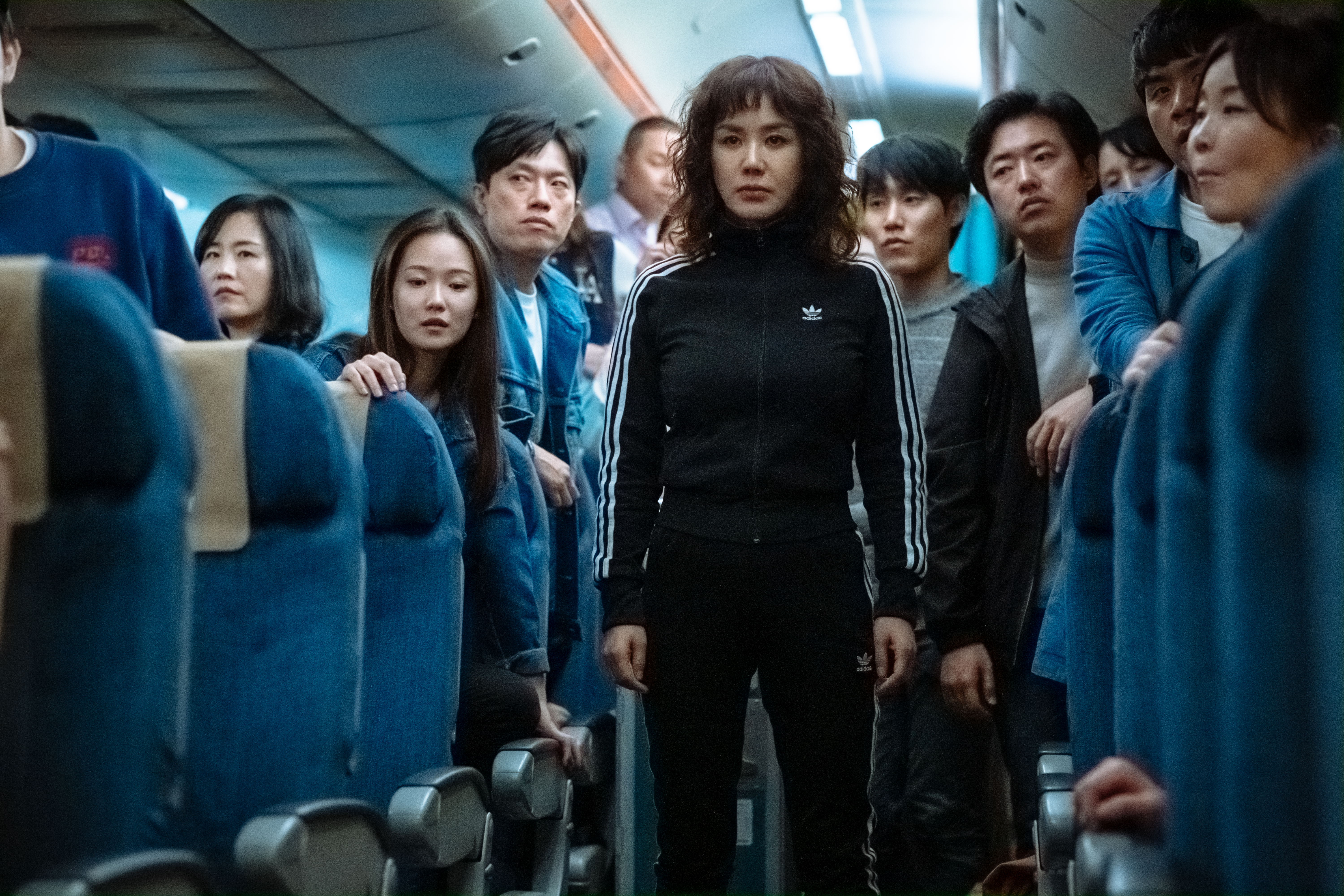
“Everyone here is at fault” according to the heroine of Bae Jong-dae’s spiralling mystery drama, Black Light (빛과 철, Bich-gwa Cheol). Two women on opposite sides of an accident that may have been something darker find not so much common ground as mutual resistance as they each alternately long for and reject answers as to how and why their husbands eventually collided in a deadly car crash which has had very different consequences for each of their families, discovering a sense of conspiracy and corruption which leads straight to the dark heart of modern capitalism. 

Distressed and anxious, 30-something Hee-ju (Kim Si-eun) has returned to her hometown and is about to start back at the factory where she worked five years’ previously prior to her marriage. As we later realise, Hee-ju’s husband passed away in a car accident which was ruled to have been his own fault after he veered across the central reservation and collided with another vehicle the driver of which has been in a coma ever since. What Hee-ju doesn’t know is that Young-nam (Yeom Hye-ran), the other man’s wife, also works at the same factory while looking after her teenage daughter and caring for her husband, who is not thought likely to wake up, at the local hospital. 

Filled with a sense of guilt, Hee-ju avoids Young-nam like the plague, dropping her shopping in the street and running in the other direction after catching sight of her on the other side of a pedestrian crossing even though Young-nam makes an attempt to be kind to her and obviously bears no ill will. That sense of guilt, however, soon turns to resentment after she accidentally befriend’s Young-nam’s daughter Eun-young (Park Ji-hoo) who in the depths of her own grief and internalised guilt gives her cause to believe that what she’s been told of the accident may not in fact be the whole truth. 

Everyone is indeed acting out of a sense of guilt in that they feel their own actions in some way contributed to the fatal collision, certain that if they had acted differently Hee-ju’s husband may still be alive. Spitting fire and vengeance, Hee-ju determines to discover “the truth”, now convinced that her late husband has been unfairly maligned and is in fact the victim rather than the guilty party, but the more questions she asks the more frustrated she feels. According to her, the police investigation may have been flawed with crucial evidence uncollected, later discovering that her own brother who dealt with the aftermath of the accident in her absence may have been involved in an effort to cover something up not quite realising that he may have attempting to protect her from an uncomfortable truth she may be better off never knowing. 

Meanwhile, she also realises that the causes of the collision may stem back to a workplace accident caused by improper labour practices at the factory and that her own position, and perhaps that of Young-nam, is directly related to the factory’s desire to assuage their guilt while preventing any possible blowback from the two women should they draw a direct line between the oppressive working environment and the eventual collision. Hee-ju is desperate to apportion blame so that she can let herself off the hook. A nervous wreck of a woman she is plagued by a debilitating ringing in her ears and at least appears to be somewhat unbalanced. Young-nam, meanwhile, appears to be genuinely kind and forgiving if urging herself towards a kind of stoicism resentful of her husband and fearful that her daughter’s guilt-ridden conclusions about why he went out that day may in fact be correct.  

Nevertheless, Young-nam as a middle-aged woman with a teenage daughter is in a much different position from the still young and childless Hee-ju having lost her source of economic support with few savings to fall back on. She needs to make sure she keeps the insurance payout because she needs to pay her husband’s medical fees even while the doctors caution her it may be time to consider longterm hospice care, implying there’s little more that can be done for him medically and he will likely never regain consciousness. With heartbreaking simplicity she explains to Hee-ju that in someways it may be better to die, implying perhaps that if her husband were “guilty” then he, or more to the point she, is already paying for it. She just wants to move on and resents Hee-ju’s attempts to dig up the past while also sorry for her, realising she knows almost nothing and that what she doesn’t know is only going to end up causing her more pain. Forced to confront their mutual sense of guilt and responsibility, the two women eventually find an uneasy solidarity in their desire for answers, only to wonder if the accident was just that after all if informed by a confluence of ugly circumstances from rampant capitalism to relationship breakdown and emotional crisis. The light at the end of the tunnel is pitch black. It really doesn’t matter whose fault the accident was, the waves of guilt and recrimination spiral all the same. 


Black Light screens at Chicago’s Lincoln Yards Drive-in on April 22 as part of the 12th season of Asian Pop-Up Cinema.

Original trailer (English subtitles)