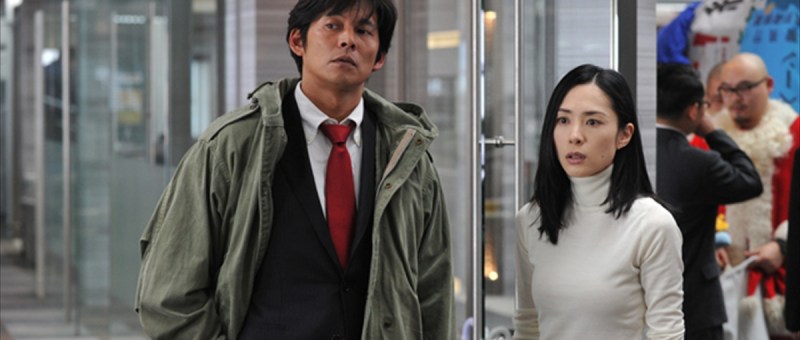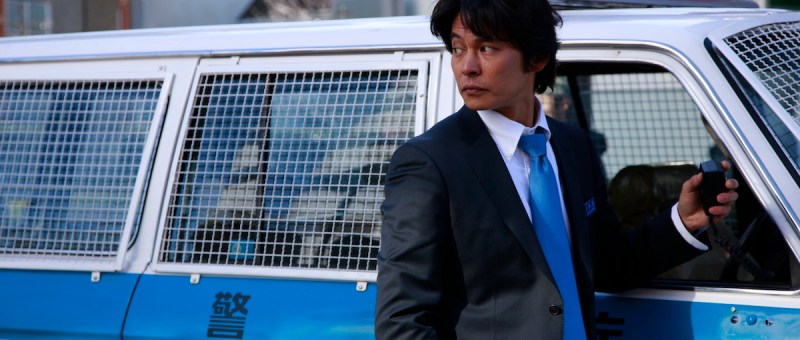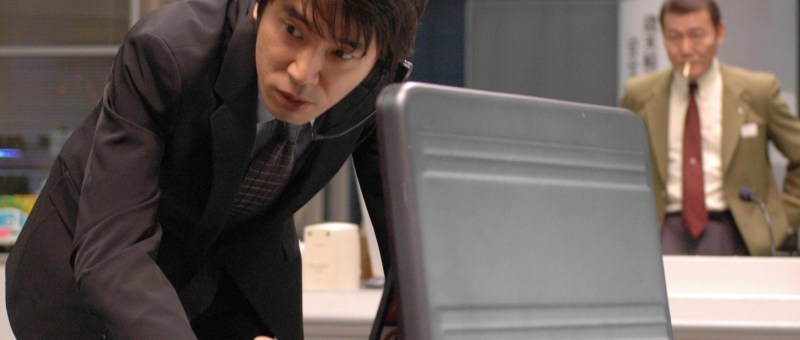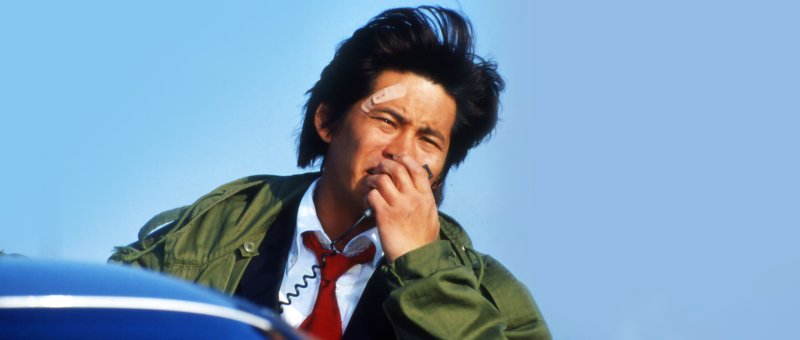
Behind the Shadows (私家偵探, Jonathan Li Tsz-Chun & Chou Man-Yu, 2025)

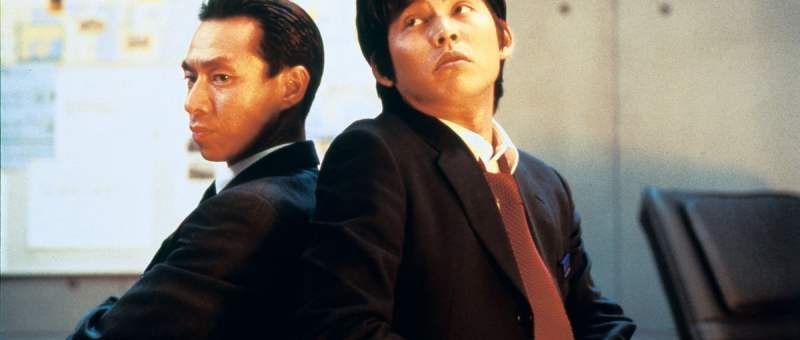
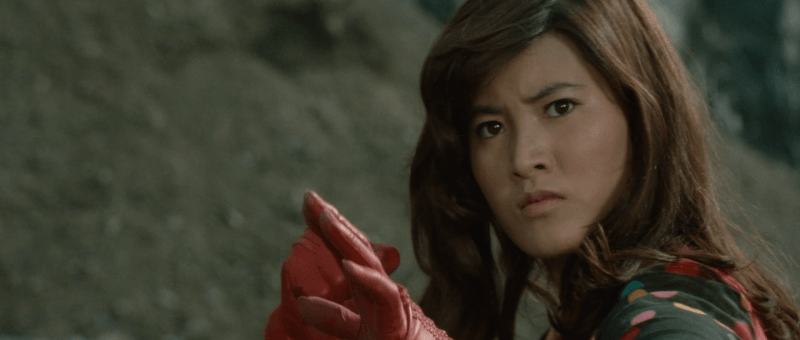
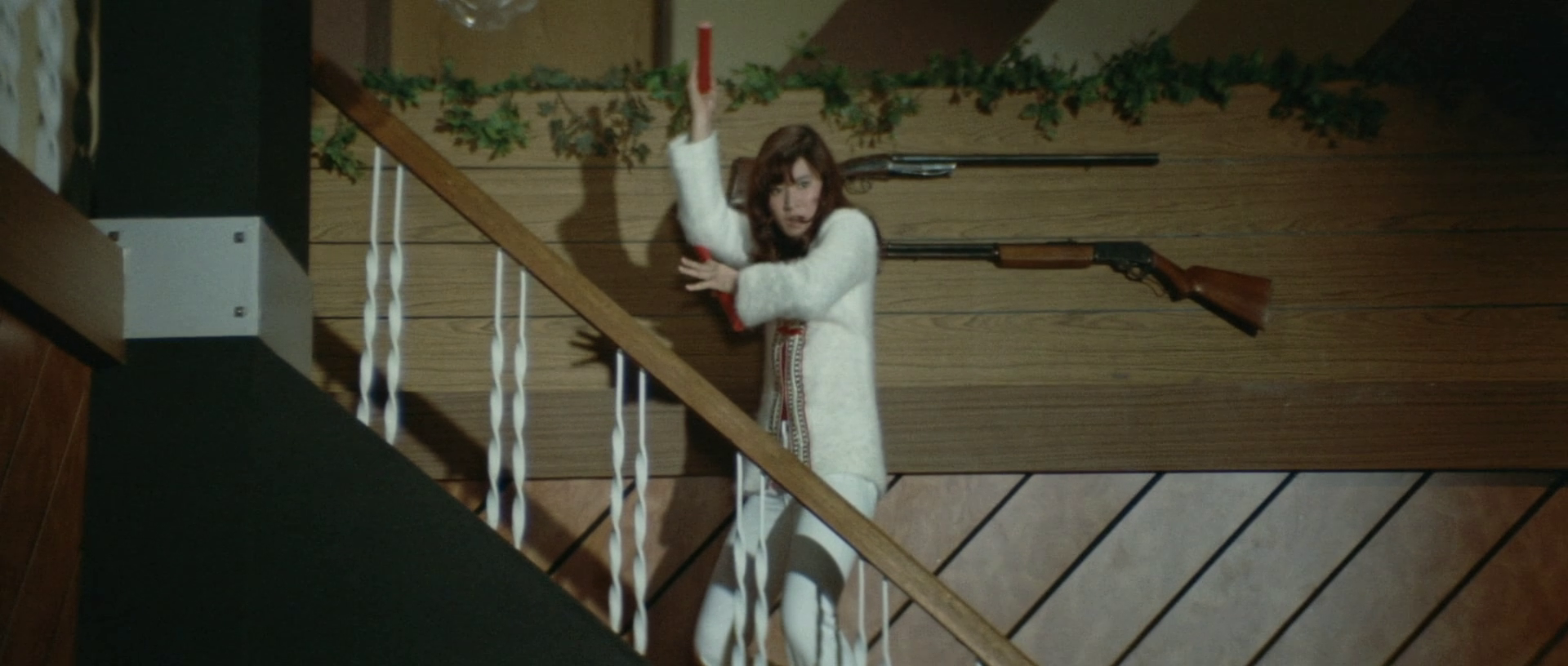
“At our age, we do what we have to do instead of obsessing over the good old days,” according to a put upon wife sick of waiting for her husband to make good on his promises. Jonathan Li Tsz-Chun and Chou Man-Yu’s Malaysia-set drama Behind the Shadows (私家偵探) is in its way as much about the disconnect in modern romance which has now been corrupted by capitalistic desires and frustrated notions of traditional masculinity as its central mystery. 

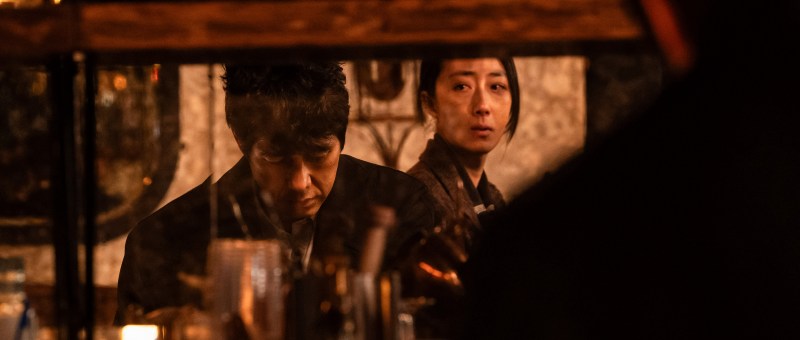
As someone says, in the old days women hired private detectives to chase their men, but now it’s the other way around. In someways, the parade of men rocking up at Wai-yip’s (Louis Koo Tin-lok) office to hire him to follow their wives, girlfriends, or women with whom they may not actually have much of a connection, all seem to be trying to regain control over their lives by asserting it over a lover they fear has betrayed them. Ironically, this is sort of true of Wai-yip too in that he’s taken to spending his evenings at his friend’s restaurant to escape his moribund marriage. When one customer brings him a photo of his own wife, Kuan (Chrissie Chau Sau-na), little knowing he’s the other man Wai-yip is irate but not as surprised as might be expected. Still, he hands the case off to a junior associate and tries to avoid thinking about it while otherwise passively seething about his wife’s potential betrayal.

But the ironic thing is that Kuan might only have done this to get Wai-yip’s attention and force him to confront their fracturing relationship. While Wai-yip hangs back, tries to act with maturity, and struggles to accept his wife’s decision, she privately wants him to fight back, to shout at her or punch her lover as a sign of manly love. She attacks his masculinity by berating him for being work-shy and refusing to have a child because they can’t afford it, though she can support them all on her salary, while Wai-yip remains hung up on the lost glory of his life in Hong Kong which he gave up to marry Kuan and move to Malaysia. The suggestion is that Wai-yip has been trapped in a kind of limbo, unable to let go of the past and embrace his new life and now Kuan is sick of waiting for him. 

The circumstances of his own marriage and the cynicism of 20 years spent chasing cheating spouses cause Wai-yip to be wary when a man comes and asks him to look for a runaway fiancée. He wonders if they’ve just had a tiff, if she’s left because the man was violent or unfaithful, or if the man is delusional and the woman doesn’t believe herself to be in a relationship with him and so is just happily living her own life. Along with all these anxieties is his sense of responsibility in knowing that this woman may be in danger if he finds her, as will Betty if Wai-yip manages to uncover evidence of her infidelity and relays it back to her gangster boyfriend. Like Kuan, Betty (Renci Yeung Sz-wing) says she just wants a man who will listen to her when she wants to talk and is half-minded to let Wai-yip send the video to find out if the gang boss cares about her enough to actually do anything about it. 

But the consequences of inaction are also brought home to Wai-yip when one of the women he’s following is murdered after he leaves his investigation to chase Kuan and her lover. Trying to makeup for his failure brings him into contact with a zombified cop, Chen (Liu Kuan-ting), whose wife is in a coma after a car accident. While Chen’s solicitous care and repeated pleading that his wife wake up may paint him as a lovelorn man, the marks on her arm that perfectly fit his fingers suggest a violent and controlling past along with a thinly concealed rage that she may have escaped him at last. “There’s nothing much the police can’t do,” he ominously tells Wai-yip while hinting at his desire for authoritarian control as mediated through the patriarchal institution of the police force and his rejection of a woman’s sexual freedom. Wai-yip feels similarly trapped as his own increasing sense of inadequacy deepens the gap between his wife and himself that leaves him unable to have an honest conversation with her about how he really feels and prevents him from healing the rifts within his own marriage even as he chases answers on behalf of other insecure men. What he indeed realises is that it’s time to move on from the past and live in the present, though as it turns out not even he may be strong enough to leave his insecurities behind. 


Behind the Shadows screened as part of this year’s New York Asian Film Festival.

Trailer (Traditional Chinese / English subtitles)

How Dare You? (ふつうの子ども, Mipo O, 2025)

“I told you to shut up about that,” Kokoa’s mother (Kumi Takiuchi) tells her after she gets caught with two other children trying to start an environmental revolution by releasing cows from their paddock. It’s not difficult to see why Kokoa (Ruri) feels so strongly about global warming even if it’s probably her home environment that she most wants to change given adult indifference to climate issues, though Mipo O’s charming family dramedy How Dare You? (ふつうの子ども, Futsu no Kodomo) is less about the issues themselves than the relationships between the children and the adults around them.

The point being that Kokoa hates adults for trashing the world and creating an environment in which she feels it’s impossible to live. Fellow student Yuishi (Tetta Shimada) is drawn to her Greta Thunberg-style speech in class having just embarrassed himself with an essay about his toilet habits and suddenly develops an interest in the environment as a means of getting close to her. Which isn’t to say that he didn’t really care before. In this semi-rural area, he and his friends still go outside every day to catch woodlice to feed his friend Soma’s lizards, and Yuishi is also very keen on animals in general. He’s sympathetic to the cause, but on the other hand, is only really into this because of Kokoa who pretty much ignores him in favour of class bad boy Haruto (Yota Mimoto) who tells her that they need to take “action” to wake the adults up or no one’s going to listen to a bunch of kids whining about methane emissions. 

There is something pleasantly old-fashioned about their tactics which include cutting letters out of magazines to make protest signs they hang up all over town telling people not buy so much stuff, eat meat, or drive cars. But while the other two are increasingly emboldened their actions and their revolutionary activities begin to get out of hand, Yuishi finds himself conflicted. When they spot similar signs springing up made by other kids they don’t know, Kokoa and Haruto are annoyed rather than pleased that more people are joining the cause. Yuishi agrees with a sign saying people should catch the bus because it’s better than driving a car even if buses also pollute while Haruto opposes it. But he also points out that the firework rockets Haruto has bought for another action give off CO2, so perhaps they shouldn’t use them. He tries to deescalate and avoids becoming radicalised, but is eventually bullied into going along with the other two and suggests releasing the local farmer’s cows as their next protest assuming it’s a “nice” thing to do and less aggressive than some of Haruto’s ideas.

But they’re still just children and don’t really understand the consequences of their actions. After all, what’s a wild cow supposed to do? It doesn’t occur to them that the cows could get hurt or end up causing accidents and damage, let alone that they may alienate the local community who are already fed up with their stunts because it’s affecting their livelihoods. Of course, this is also part of the problem. The adults ignore the children because what they’re saying is inconvenient for the way they live their lives under capitalism which isn’t something they think they could change even if they wanted to which they likely don’t. Yuishi’s sympathetic mother is forever reading books about how to raise children well, and so she tries to listen to Yuishi but also “corrects” him in subtle ways like hiding meat in his spring roll after he tells he wants to give up eating it for the environment. Though she may have correctly assumed that he’s not really serious about it and tells him what she’s done after his first bite of the spring roll, there’s no getting around the fact that just as Kokoa said she’s not really listening. Nor does she sort her rubbish and recycling responsibly. When Yuishi looks up global warming on his tablet, his mother remembers being told about this at school too, which just goes to show how long this has been going on and how easily everyone forgot about the ozone layer panic of 1980s and 90s.

Nevertheless, the gradual escalation of the children’s activities towards something akin to ecoterrorism echoing the student protest movement on the 1960s satirises the dangers of radicalisation especially as neither of the boys are really invested in the cause and are only there because they’re each drawn to Kokoa who remains intense and implacable. Their true natures are exposed when they’re caught with only Yuishi stoic and remorseful, admitting it was his idea to release the cows and that he did it because he liked Kokoa and wanted her to like him back, while Haruto spends the entire time crying in his mother’s arms and Kokoa glares at everyone while reciting environmental statistics. Maybe she isn’t overly invested either so much as trying to regain control over her life and using cold hard facts as an escape from her overbearing mother who liked her better when she was “sweet” and ‘cute” and never asked any inconvenient questions. Even so, there is something very charming about the children’s earnestness that’s largely lost on the well-meaning adults around them who may be trying their best in lots of other ways but have already given in to the idea that the world can’t be changed and nothing they do makes a difference so there’s no point doing anything. Yuishi at least has learned some valuable lessons, if only that things go better when you’re straightforward and honest your feelings even if it might be embarrassing in the moment.


How Dare You? screens 20th July as part of this year’s New York Asian Film Festival.

Original trailer (English subtitles)

Somebody (침범, Kim Yeo-jung & Lee Jeong-chan, 2024)

“A mother should do everything to protect her child,” according to one young woman, but are there, or perhaps should there be, limits even to a mother’s love? Adapted from a webtoon, Kim Yeo-jung and Lee Jeong-chan’s Somebody (침범, Chimbeom) is really about what it means to be a family and who it is that gets to be included in one more than it is about its otherwise outlandish premise or how we should deal with young children who have severe mental health issues accompanied by violent tendencies. 

Then again, as So-hyun (Gi So-yoo) herself says she isn’t like the others and in that sense not necessarily good or bad but only what she is. It’s obvious that she has no understanding of conventionally held notions of right and wrong and actively enjoys inflicting pain on others, perhaps because as she later says it’s when she feels people are being most honest. She’s only seven years old, but she’s already been expelled from several schools and nurseries for scaring the other children, and her mother now locks all the sharp implements away at night having previously woken up to So-hyun slashing away at her arms and legs. But in a paradoxical way, it’s abandonment that So-hyun fears the most in knowing that her mother cannot fully accept what she is, while Young-eun (Kwak Sun-young) does her best to “protect” her at the cost of her own mental and physical health. 

So-hyun’s parents’ got a divorce because her father felt she could be better cared for in an institution, while Young-eun was determined to care for her herself despite the fact that So-hyun’s behaviour is not improving even with therapy and she continues to be a threat to those around her. This is particularly true of other girls her age towards whom she becomes jealous when they approach her mother as if they meant to replace her in Young-eun’s affections and So-hyun would lose her home. The film’s Korean title translates more literally as “invasion”, and this fear of being pushed out and excluded that motivates the actions all concerned.

20 years later, we’re introduced to Min (Kwon Yu-ri), who is living with an older woman, Hyun-kyung (Shin Dong-mi), who lost her daughter, it’s implied to suicide, while her own mother lives in a psychiatric institution. Though she is reserved and emotionally distant, Min has taken the place of Hyun-kyung’s daughter only to find it threatened when they take on another young woman, Hae-young (Lee Seol), to help with their business clearing houses after lonely deaths. Min too fears invasion, that Hae-young has come to kick her out and take her place by monopolising Hyun-kyung’s position as their “mother” in this accidental “family” unit. Hyun-kyung too fears abandonment, knowing what it’s like to be left alone and only too happy to become a maternal figure to these two orphaned young women each in search of a place to belong.  

But there’s also a question mark over whether someone like So-hyun whose brain is wired differently can ever be accepted into a conventional family unit. She has no understanding of human empathy, but simultaneously longs to be loved and accepted and is resentful that she doesn’t feel herself to be even by her mother or other maternal figures whom she believes owe her all those things. Min too seems to have a dark past and on discovering that she has become pregnant by an apparently controlling and violent boyfriend struggles with the decision of whether to keep the child. She fears that she may turn out to be like her own mother and does not particularly seem to want to raise it, but at the same time reflects that the baby has done nothing wrong and therefore it’s unfair to prevent it from being born. 

So-hyun also insists that she’s done nothing “wrong,” though her understanding of what “wrong” means is obviously different from most people’s. She expects unconditional love from her mother, and Young-eun gives it to her to the best of her ability despite the fact that she is afraid of her daughter and ultimately at a loss as to how best to protect her and also the outside world. Though at times hamstrung by its webtoon origins, Kim and Lee’s handsomely lensed thriller explores this the irony in this need for maternal acceptance with a genuine sense of poignancy and more than a little sympathy for the “inhuman” So-hyun if also terror of the hell she creates around her in her constant quest to find a place where she can truly be herself.


Somebody screens 20th July as part of this year’s New York Asian Film Festival.

Trailer (English subtitles)
Dirty Ho (爛頭何, Lau Kar-leung, 1979)

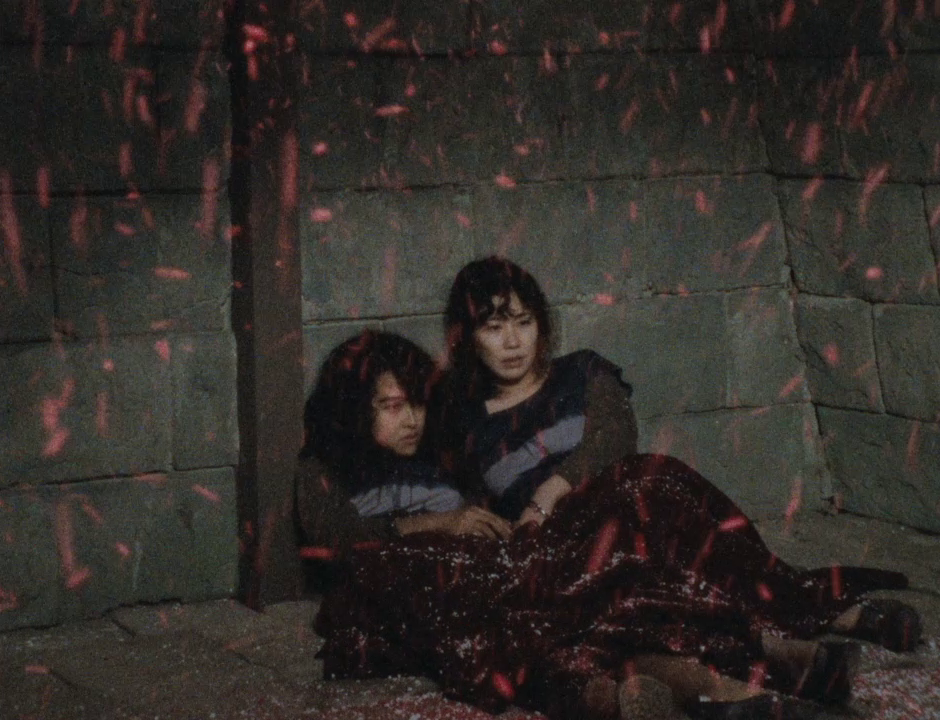
A prince in hiding develops a fondness for a bumbling jewel thief in Lau Kar-leung’s anarchic kung fu comedy, Dirty Ho (爛頭何). The English title is apparently intended as a Dirty Harry reference, though the film obviously has nothing at all to do with the Don Siegel procedural, the Chinese meaning something like “rotten head Ho”, and is in effect a homoerotic buddy movie as the various power balances begin to shift between the two men until they come to function in perfect synchronicity almost in fact as one.

The film opens, however, with a dispute over courtesans and a game of one-upmanship between prince in disguise Wang (Gordon Liu) and cocky jewel thief Ho (Wong Yue). The pair promise ever greater sums of riches in return for female company, eventually ending up in a fight interrupted when the police are called about some stolen treasure. However, at the last second, Wang says both the treasure chests are his and that he is a legitimate jewel seller from Beijing. He saves Ho from arrest, but also takes the stolen treasure chest with him, ensuring Ho will later return to take it back.

Why Wang takes a liking to him isn’t really clear, but even in his clumsy martial arts skills he seems to see something that could be polished if only he could turn him into an upright citizen. He does this partly by means of trickery, injuring Ho on the head with a poisoned sword and then promising him the antidote but only if he agrees to become his disciple and do exactly as he says. For the rest of the film, Ho wears a large black plaster on his head that slowly decreases in size as he begins to reform under Wang’s tutelage. But the power dynamic between them later shifts when Wang is injured and has to use a wheelchair with Ho now dependent on him for care and protection. 

What emerges between them is strangely like a marriage while the two of them are later accosted by the “Seven Agonies” led by a very effeminate man who also causes Ho to take on a camp persona until actively rejecting it. No one is really quite as they seem, Wang actually a prince in disguise hiding out from his 13 brothers, and in particular the fourth one, who really want him dead so they can inherit the kingdom. In true martial arts fashion, Wang isn’t interested in the throne, fame, or fortune, but rather than a commitment to resisting oppression simply wants to be free to enjoy the finer things in life like art, antiques, and strong liquor. 

Meanwhile, the two are also attacked by a gang of bandits faking disabilities and Wang at one point tries to pass off one of the concubines as his bodyguard to conceal the extent of his martial arts skills. Reuniting with Gordon Liu after 36th Chamber of Shaolin, Lau’s choreography has a playful, slapstick sensibility such as in the ongoing duel of swapped tankards with one of the assassins. The hand movements are fast and precise, a maze and flurry of moment culminating in the final showdown with Lo Lieh’s enemy general in which the two men are so perfectly in tune that they move almost as one. 

Lau stages an increasingly surreal sequence of events, including the pair sheltering under umbrellas in the middle of a dilapidated town while targeted by assassins hired by Wang’s brother, but ends in curiously ambiguous fashion with the matter of the court unresolved despite Wang’s desire to live freely as he chooses. Of course, a prince he is but Wang is also constrained by his social status in much the same way Ho is prevented from living his authentic life because of the obligations entailed with being a potential heir to the throne. Meanwhile, it seems the king is doddery and has unwittingly created a vacuum which has pit his 14 sons against each other, destabilising the society in the process. Not wanting the job actually makes Wang an ideal candidate though, he’d have to survive all the assassination attempts first. A riot of colour and witty humour, the film boats some of Lau’s most intricate choreography performed by two actors at the top of their game who are perfectly primed to bounce of each other in a humorous back and for between the shifting sands of master and pupil.


Still the Water (2つ目の窓, Naomi Kawase, 2014)

“Why is it that people are born and die?” asks the heroine of Naomi Kawase’s existential odyssey Still the Water (2つ目の窓, Futatsume no Mado). It’s a question with which the director has long been wrestling, though this time more directly as her adolescent protagonists ponder life’s big questions as they prepare to come of age. Moving away from the verdant forests of Nara Prefecture with which her work is most closely associated, Kawase shifts to the tropical beaches of Amami Oshima, a small island somewhere between Kyushu and Okinawa as two youngsters discover life and death on the shore while contemplating what lies beneath the sea. 

Opening with rolling waves and the graphic death of a goat, Kawase’s trademark visions of nature soon give way to night and the discovery of a tattooed man washed up on the shore made by moody teen Kaito (Nijiro Murakami) who leaves abruptly, walking past the confused figure of his tentative love interest Kyoko (Jun Yoshinaga) with whom he was supposed to meet. The next morning the townspeople are all aflutter with news of the body, confused by the sight seeing as there are few crimes in this community but admittedly many accidents. The cause of death however is an irrelevance, the import is in the body and what it represents. 

First and foremost, it turns the ocean into an active “crime” scene, placed off limits to the locals but Kyoko, a bold and precocious young woman, dives right in in her school uniform and all merely laughing as Kaito remains on the jetty asking her if she isn’t afraid. Raised in they city, Kaito finds the sea disquieting, apparently squeamish of its “stickiness”, describing it as something “alive” only for the bemused Kyoko to point out that she is a living thing too, exposing his essential fear of her as she kisses him and he freezes. On the brink of adulthood, Kaito is afraid to live, afraid of the “death” that change represents, and most of all afraid of the sea inside in the infinite confusion of human feeling. 

That confusion spills over into animosity towards his mother, Misaki (Makiko Watanabe), who, obviously at a different stage of life, exists in a world inaccessible to him. He’s at school during the day while she works evenings at a restaurant so they are rarely together and he’s quietly resentful on coming to the realisation that his mother is also a woman, berating her for daring to have a sex life and flying to Tokyo to attempt a man-to-man conversation with his absent father to figure out why their marriage failed. His dad, however, spins him some poetic lines about fate and romance which don’t really explain anything, paradoxically affirming that he feels more connected to Misaki now that they’re apart while admitting that age has shown him “fate” is less soaring emotion and more an expression of something which endures. 

Kyoko meanwhile is considering something much the same as she tries to come to terms with her shaman mother’s terminal illness, reassured by another priest that although her mother’s body will leave this world her warmth will survive. She and Kaito are treated to a lesson in nature red in tooth and claw as an old man slits the throat of a goat while the pair of them watch something die. “How long will it take?” Kaito asks in irritation, while Kyoko looks on intently until finally exclaiming that “the spirit has left”. Later she is forced to watch as her mother dies but even on her deathbed is painfully full of life, listening to plaintive traditional folksongs and moving her arms in motion with the music as the others dance. 

The old man, Kame, tells the youngsters that as young people they should live life to the full without regret, do what they want to do, say what they want to say, cry when they want to cry, and leave it to the old folks to pick up the pieces. But he also admonishes them for not yet understanding what lies in the sea. It’s Toru, Kyoko’s equally new age father, who eventually talks Kaito out of his fear which is in reality a fear of life, explaining that the ocean is great and terrible swallowing many things but that when he surfs it’s akin to becoming one with that energy and achieving finally a moment of complete stillness. Kaito needs to learn to “still the water”, to bear the “stickiness” of being alive to enjoy its transient rewards while the far more active Kyoko finds solace in her mother’s words that they are each part of a great chain of womanhood which is in itself endless, something Kame also hints at in mistaking the figure of Kyoko walking on the sand for that of her long departed great grandmother. 

Nature eventually takes its course and in the most beautiful of ways as the young lovers learn to swim in the sea in spite of whatever it is that might be lurking under the surface. Death and life, joy and fear and misery, the sea holds all of these and more but they roll in and out like waves hitting the shore and the key it seems is learning to find the stillness amid the chaos in which there lies its own kind of eternity.


Trailer (English subtitles)
Fantasia International Film Festival Confirms Complete 2025 Programme

The Fantasia International Film Festival returns for its 29th edition taking place once again in Montreal from July 17 to Aug. 3. As usual this year’s programme includes a host of new and classic features from East Asia:

China

  • Contact Lens – Experimental drama in which a young woman longs to break free.
  • The Girl Who Stole Time – Animation in which a young girl gains the ability to control time.

Hong Kong

  • The Battle Wizard – Zany Shaw Brothers fantasy in which a man is imbued with the knowledge of kung fu and the ability to shoot lasers after biting a snake.
  • Bullet in the Head – 4K restoration of the John Woo classic in which a trio of friends flee Hong Kong only to be trapped in Vietnam.
  • A Chinese Ghost Story III – 4K restoration of the Tsui Hark /Ching Siu-Tung classic in which the arrival of a young monk destabilises a community of fox vixens.
  • Good Game – With business declining, a middle-aged internet cafe owner sets his sights on an esports championship.
  • Stuntman – A legendary action choreographer gets a second chance on a retro movie but finds himself out of step with modern filmmaking in Herbert Leung & Albert Leung’s elegiac drama. Review.

Indonesia

Japan

South Korea

  • Fragment – Drama in which the children of a murderer and their victim live in the same village.
  • Hi-Five – Five people receive super powers after receiving an organ transplant.
  • Holy Night: Demon Hunters – The mighty fists of Ma Dong-seok punch the Devil right back to hell in Lim Dae-hee’s supernatural action drama. Review.
  • The Last Woman on Earth – A film student writes a vengeful satire against men.
  • Noise – A woman investigates her sister’s disappearance.
  • Omniscient Reader: The Prophecy – Isekai drama in which an office worker is thrust into the world of the web novel he’s been reading.
  • The Woman – A woman suspects a man she was trying to buy a second-hand hoover from may have murdered her friend.

Taiwan

The Fantasia International Film Festival runs in Montreal, Canada, July 17 to Aug 3. Full details for all the films along with scheduling and ticketing information are available via the the official website, and you can also keep up with all the latest news via the festival’s official Facebook page,  X (formerly Twitter) account, BlueskyInstagram, and Vimeo channels.

Daughter’s Daughter (女兒的女兒, Huang Xi, 2024)

Never having fully dealt with the trauma of her teenage pregnancy and decision to give her child up to be raised by a family friend, 64-year-old divorcee Jin Ai-xia (Sylvia Chang Ai-chia) finds herself in an eerily similar position on on learning that the daughter she raised in Taiwan has been killed in a car accident in New York where she was receiving fertility treatment. The process resulted in a healthy embryo of which Ai-xia now finds herself the “guardian”. She is given four options, keep the embryo in storage and pay to renew the contract when it runs out, find a surrogate to carry to it term, donate it to another couple, or have it destroyed.

The fact that there are eight months left on the contract that her daughter Zuer (Eugenie Liu Yi-er) signed makes this almost another pregnancy which Ai-xia must decide whether or not to continue. Keeping the embryo in storage only defers the decision and traps it in the same mental space in which Ai-xia thinks of Emma (Karena Lam), the daughter she did not raise and tried to put out of her mind. In its consideration of motherhood, the film does shy away from suggesting that it is a kind of burden and requires sacrifice whether willing or not. Later confronted, if gently, by Emma who has unbeknownst to her become a single mother who chose to keep her child, Ai-xia justifies herself that she was 16 and afraid. Most of all, she was afraid the baby would trap her in New York’s Chinatown and that her life would never change after that. She wanted more, so she went along with her mother’s proposed solution of giving her daughter to a childless couple to raise while she returned to Taiwan and never looked back.

Yet it’s Emma who seems to haunt her while she’s in New York trying to sort out Zuer’s affairs while mired in her grief. It’s clear that she feels that she failed both her daughters as her unresolved trauma over separating from Emma left her unable to fully bond with Zuer whom she raised at arms’ length. When Zuer and her same-sex partner Jia-yi (Tracy Chou Tsai-shih) decide to have a child, Ai-xia is against it. It seems there may be some lingering prejudice in her about their relationship as she tells Zuer that the baby won’t be able to explain their family situation, but it’s also partly that she doesn’t want her to be trapped by motherhood as she felt herself to be. She asks her why she and Jia-yi don’t just enjoy their life together rather than complicate with a child. Ai-xia tells Emma that she wanted to live her own life, while expressing the same desire now that she has become a second mother to her own mother, Yan-hua (Ma Ting-Ni), who is living with dementia. Once her mother passes away, she’s looking forward to enjoying her freedom for once. 

Ai-xia rails that no one ever really considered her feelings and that she’s been given this burden without ever really being given an opportunity to ask herself if she wanted it. There’s a minor irony in Yun-hua’s segueing back into the past to tell the 64-year-old Ai-xia that she can’t raise a child at this age as if she were still a pregnant 16-year-old. As an older woman, she reflects that Yun-hua probably didn’t make that decision solely because she was embarrassed by the stigma of teenage pregnancy but genuinely thought it was best for both her daughter and her granddaughter. But now Ai-xia is facing the same choice at the other end of her life knowing that if she chooses to raise Zuer’s baby she may not live long enough to see it to adulthood, nor may she have the energy to look after a small child even if she has the time. 

But Ai-xia carries Zuer’s ashes around with her holding them in front of her belly as if they were the embryo and she were already carrying it. Placing the square black container on the airport scanner and watching it travel through the tunnel is oddly like an act of rebirth. Attempting to come to terms with her own complicated maternity, she thrashes out the past with Emma but also really with herself in trying to decide whether or not to continue this maternal legacy despite the sacrifices and compromises it entails. For her, motherhood becomes an act of self-forgiveness in which she learns to understand both her own mother and her daughters along with their shared connection in this ever-increasing line.


Daughter’s Daughter screens 18th July as part of this year’s New York Asian Film Festival.

Trailer (English subtitles)
See You Tomorrow (ほなまた明日, Saki Michimoto, 2024)

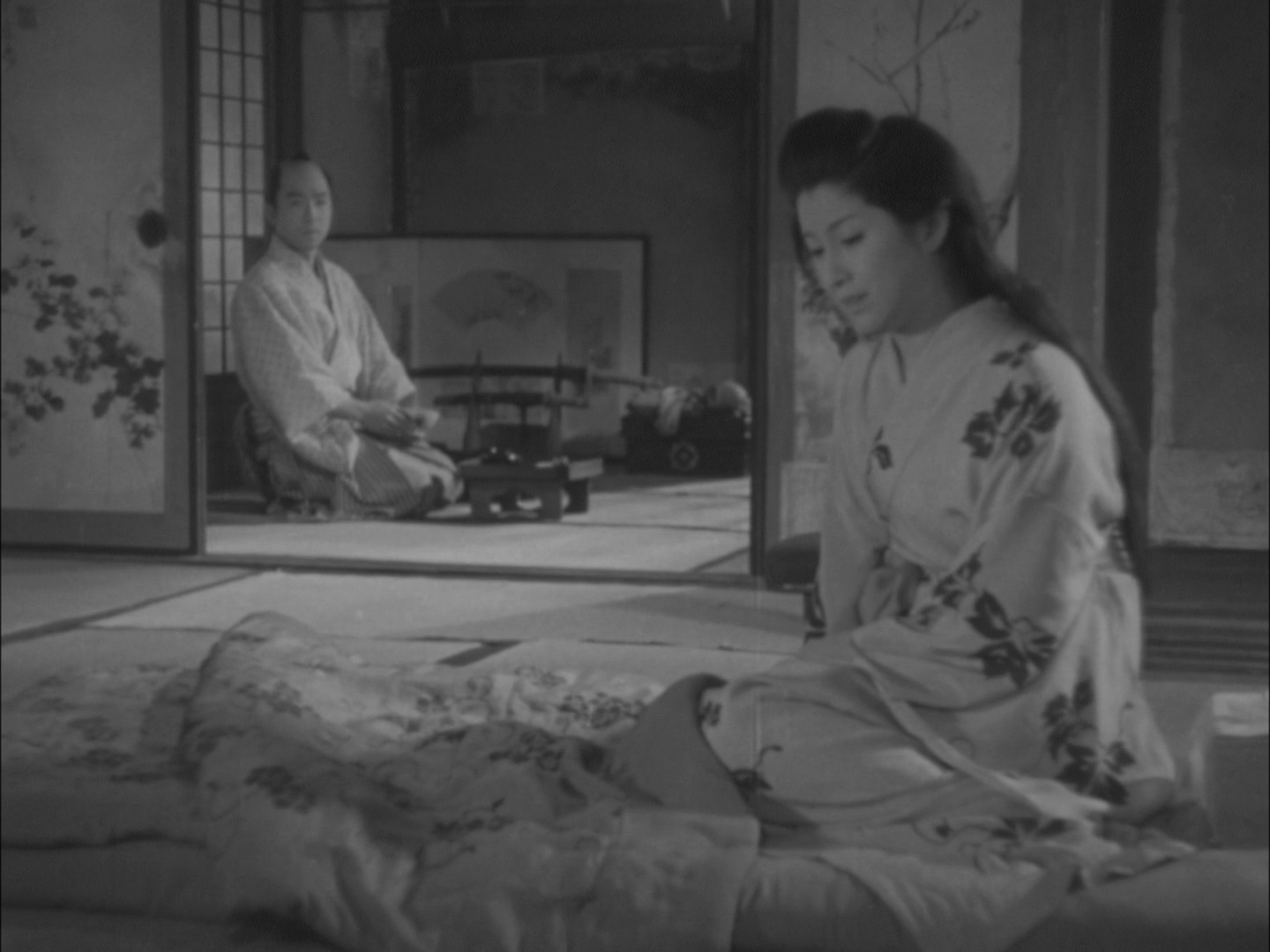
On witnessing her take photos in the street, a shopkeeper remarks that Nao (Makoto Tanaka) must be happy, but Nao doesn’t seem so sure and suddenly there’s a kind of gloom that descends over her. Something similar happens later when she asks a pair of women in town on holiday to pose for her photos, but looks on sadly while the women begin to feel uncomfortable. Eventually they leave, complaining that Nao was too weird it was it was creeping them out.

Saki Michimoto’ Saki’s See You Tomorrow (ほなまた明日, Hona Mata Ashita) is in part about Nao’s isolation, but it’s an isolation born of being different by virtue of her talent and the bright future that exists ahead her. Her small group of friends have no such certainty and in Nao’s shadow are only increasingly sure that they don’t really have what it takes to become star photographers. On some level, they may resent her, but not seriously and are mostly supportive of her success. Nao, meanwhile, is a displaced soul. She seems to have become estranged from her mother who does not answer the door when she visits leading her to get a friend to ring the bell instead, and has been continually couch surfing among her friends before settling on Yamada (Ryota Matsuda) as a more permanent point of refuge. Nao asks him out, but when he asks if she loves him only replies that she has some affection for him.

In some ways, this speaks to Nao’s headstrong nature. She speaks the truth and forges ahead chasing what she wants without really giving that much thought to those around her.  The others have all lined up positions working with professional photographers for when they graduate, but Nao honestly tells them that she’s not cut out to be someone’s assistant and has no choice but to become a pro photographer right away. One of the other girls says that she finds Nao “scary,” while even Yamada describers her as “merciless” if in a more positive way that it sounds. For her, photographs are a martial art and in setting her sights on art school in Berlin she plans to use her camera to take down the opposition,

Yet there’s a part of her that wants to stay part of the group and remain close to her friends even while knowing that her talent sets her apart from them. Sayo (Risa Shigematsu), whose apartment Nao had described as to tidy to feel comfortable in, seems to be the most conflicted even if as others remark she rarely expresses anger and keeps her feelings to herself. She is painfully aware that her talent isn’t on the same level, while frustrated by the cryptic comments of their teacher, Kitano, and additionally irritated by Nao’s treatment of Yamada whom she may also have a secret crush on herself. Cowed by Nao’s abilities, Yamada ulmitaly decides to give up taking photos altogether and look for work in a more supportive role such as an assistant or an editor. 

When the others reunite in Tokyo four years later, Yamada has dropped out of touch and perhaps out of life while mired in feelings of loneliness and inadequacy. One of the cryptic notes Nao had got on her work had been that she should walk more, which confused her because all she ever does is walk and take photos though mostly alone and often wandering off losing sight of everyone else while carried along by the rhythms of the city. But on reuniting, the gang resolve to keep walking and see where it leads them, much as Nao always has but this time together as they move towards the city. They’ve all changed, grown, drifted apart to an extent and come back together with a little nostalgia and melancholy disappointment, but in other ways settled and more at home with themselves save perhaps for Yamada who seems to be in hiding from the world while Nao still seems to have nebulous feelings for him along with unfinished business. Delicate and gentle, Saki’s etherial camera captures the fragile bonds between them and the steeliness that underlines Nao’s independence but also sets her adrift, a perpetual outsider living life through a lens snatching momentary connections with strangers in the street while continually on her own, solitary, path.


See You Tomorrow screens in New York 15th July as part of this year’s JAPAN CUTS.

Trailer (no subtitles)

The World of You (麻希のいる世界, Akihiko Shiota, 2021)

A girl with a chronic illness becomes fixated on a traumatised classmate in Akihiko Shiota’s meditation on the self-destructive effects of obsessive love, The World of You (麻希のいる世界, Maki no iru Sekai) . It is not, however, the heroine that primarily experiences them, as her own romantic obsession is in one sense a purer love, but in another is a way of making her mark on the world before her short life comes to an end. 

Yuki (Yuzumi Shintani) spots Maki (Marin Hidaka) leaving a local shack and locking the door behind her preceded by a shady-looking young man. She later recounts that she once stayed in this same shack for three days after running away from home following her parents’ divorce which she thinks her illness may partly have been responsible for her. The shack represents different things for each of them, but is also a space of their otherness and isolation from which neither of the girls is able to escape. It’s clear that Yuki’s growing obsession with Maki who is ostracised at school and resented by all is romantic, yet Maki appears to reject her attentions and reminds her she’s the type of girl who sleeps with guys.

Yuki sighs and she says knows as if she’s already resigned herself to the impossibility of her romantic desires being fulfilled, but Yuki continues to behave flirtatiously and otherwise uses the desire she knows Yuki feels for her as a means to manipulate her. Even so, on some level, she too has genuine feelings for Yuki and repeatedly tries to push her away in fear that she will only cause her trouble and pain. She tells her that her father is a convicted paedophile, which is why she is shunned by the local community. Though people are sympathetic at first, they often come to reject and resent her which is why she alternately responds to and then refuses Yuki’s insistence on connection. Though she never says so, her behaviour hints her father may have abused her too or at least that was she sexualised at an early age now and has a self-destructive attitude to sex in which she engages in potentially dangerous relationships with older men and uses her desirability to manipulate her male classmates.

Among them is Yusuke (Airu Kubozuka), who has a one-sided crush on Yuki that she continually rejects but he seemingly cannot take no for an answer. The situation between them is further complicated in that Yusuke’s father is also Yuki’s doctor. After her parents’ divorce, Yusuke’s father entered an affair with Yuki’s mother and eventually left his wife for her, breaking up their family. It’s already a messy situation, though Yusuke’s obsessive love is seemingly more possessive, whereas Yuki’s has taken on a passive quality. She does not really expect that Maki will ever return her feelings and seems to be aware that she uses them to manipulate her, but makes it her remaining life’s purpose to ensure that Maki’s musical talent is appreciated by the wider world. 

In some senses it’s a classic tale of an incredibly toxic love triangle in which Maki plays off both Yusuke and Yuki though may not actually care for either them as all romantic desires are effectively processed through her. Each of the teens is unfairly made to pay for the sins of their parents and effectively left without proper guidance or more positive examples of healthy romantic relationships. Though they all lose something, Yuki’s loss of her voice is especially ironic given that she’d barely talked to begin with but had bared her soul to Yuki who is then in fact reborn, possibly as the “even more wonderful Maki” that Yuki hoped she be though she no longer remembers her. Nevertheless is there is something that seems more hopeful in Yuki’s insistence that they will meet again when pitted against Yusuke’s repeated claims that he knows Yuki will come to love him eventually, especially considering the destructive actions they ultimately lead him to. Yuki’s love, meanwhile, is only self-destructive or in its way life giving in allowing her to sacrifice herself for the world that has Maki in it but that she may never see.


Trailer (no subtitles)

So Close (夕陽天使, Corey Yuen Kwai, 2002)

A latish entry in post-millennial cyber thrillers, Corey Yuen’s So Close (夕陽天使) finds two hit women sisters safeguarding next generation technology in keeping it out of the hands of corrupt businessmen who in fact murdered their father to get it. They claim he always intended to gift his all-powerful mass surveillance tool to the police, which either seems politically uncomfortable or incredibly naive, but have been using it themselves to earn their keep as killers for hire albeit justifying themselves in insisting on the moral bankruptcy of their targets.

In this case, that would be Chow Lui (Shek Sau) who according to “Computer Angel” made his “evil fortune” through drug smuggling. Infinitely smug, Chow thinks he has better technology but is soon proved wrong as Computer Angel admits she also sent the virus, or more accurately manifested it, to teach Chow a lesson. Yuen fills the film with 90s cyberpunk motifs, even having Computer Angel, later identified as Lynn (Shu Qi), jump off a building in a shot that is a clear homage to Ghost in the Shell while otherwise employing electronic imagery of cables and wires though the “World Panorama” system largely works through satellite.

In the opening sequence, Chow’s company is also revealed to be a global enterprise connected around a large table via the internet while futuristic systems allow him to have video calls with associates speaking Japanese and English. He suggests they simply pay the hackers to save their reputation which is apparently built on their world-class security systems though he himself perhaps remains sceptical abruptly shutting down his younger brother’s attempt to broker a deal investing in a company called Dragon. His office meanwhile has a bonsai tree in the background and his brother Nunn seems to have very close ties with a Japanese gangster hinting at a possible economic anxiety.

This fraternal conflict is eventually reflected in the fracturing relationship between the two sisters as field agent Lynn informs her sister Sue (Zhao Wei) that she wants to give up the killing trade after reuniting with an old boyfriend and deciding to get married. Techno wiz Sue has no other means of supporting herself and is resentful that Lynn always takes charge and won’t let her participate in missions, though Lynn is later vindicated when Sue’s hasty decision to take on a solo job goes just about as wrong as it can go. Meanwhile, their relationship is also strained by the presence of Hung (Karen Mok), a policewoman investigating Chow’s death who, as she later says, is strangely drawn to Sue who rollerblades around her at a record store with thinly concealed desire. 

There might be something in the fact that the actresses playing Sue and Lynn are from the Mainland and Taiwan respectively each performing their scenes in Mandarin but dubbed into Cantonese for the local release. They are indeed outsiders, firstly because of their unusual profession and secondly because of their all-powerful surveillance tool that allows them to carry out their missions yet also acting as a moral authority even if as Lynn later says they kill for money not conviction. World Panorama allows them to edit surveillance footage, placing fake avatars of themselves in the digital space and allowing them to otherwise recreate reality in a way that seems in keeping with the film’s otherwise low-key special effects which have an almost tongue-in-cheek quality parodying other more serious cyber thrillers from the mid-90s. 

The film’s English title comes from Yuen’s use of the Carpenters’ track (They Long to Be) Close to You, yet the Chinese is the more melancholy Sunset Angel which is most obviously refers to the film’s final scene if also perhaps calling time on the sisters’ roles of guardians of next-gen tech and avenging ghosts of the machine working out the bugs of corrupt gangster businessmen. In any case, they move through the “real” world like digital avatars performing incredible feats of human agility and not least in the high impact action scenes culminating in a lengthy katana fight in a tatami mat room which both echoes the cyberpunk aesthetics and reinforces an idea of corporatising colonialism finally blown away by the forces of female solidarity and an unlikely loves story between a soldier and a bandit. 


Trailer (English subtitles)