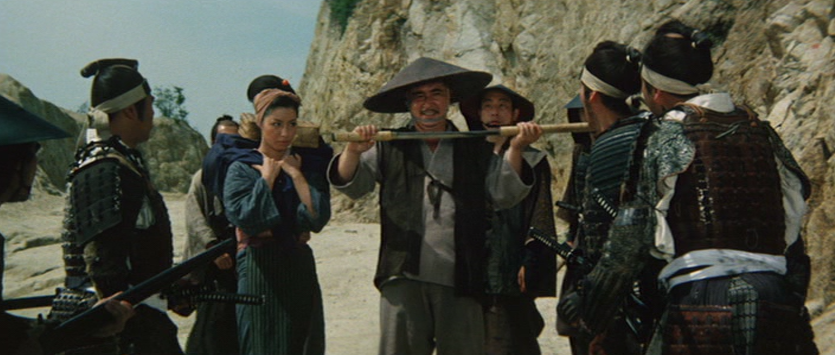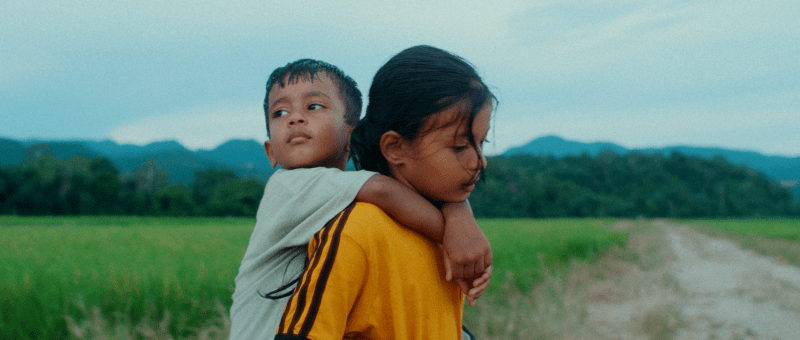
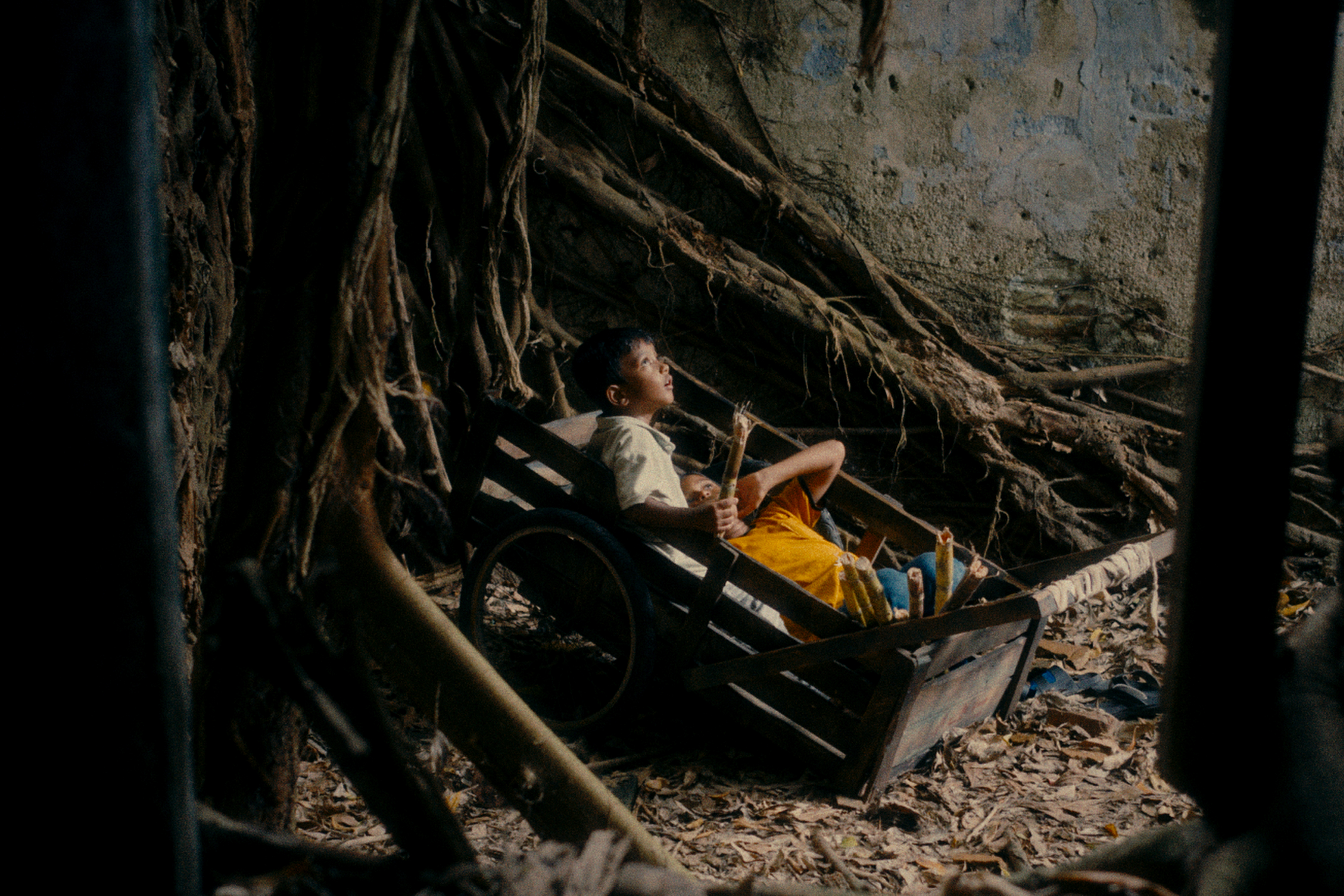
The Old Woman with the Knife (파과, Min Kyu-dong, 2025)

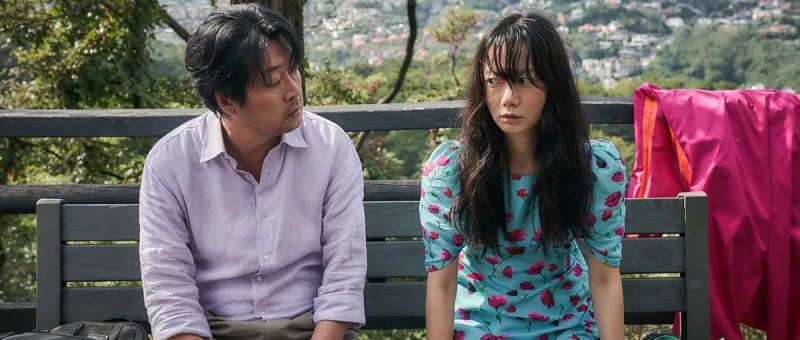
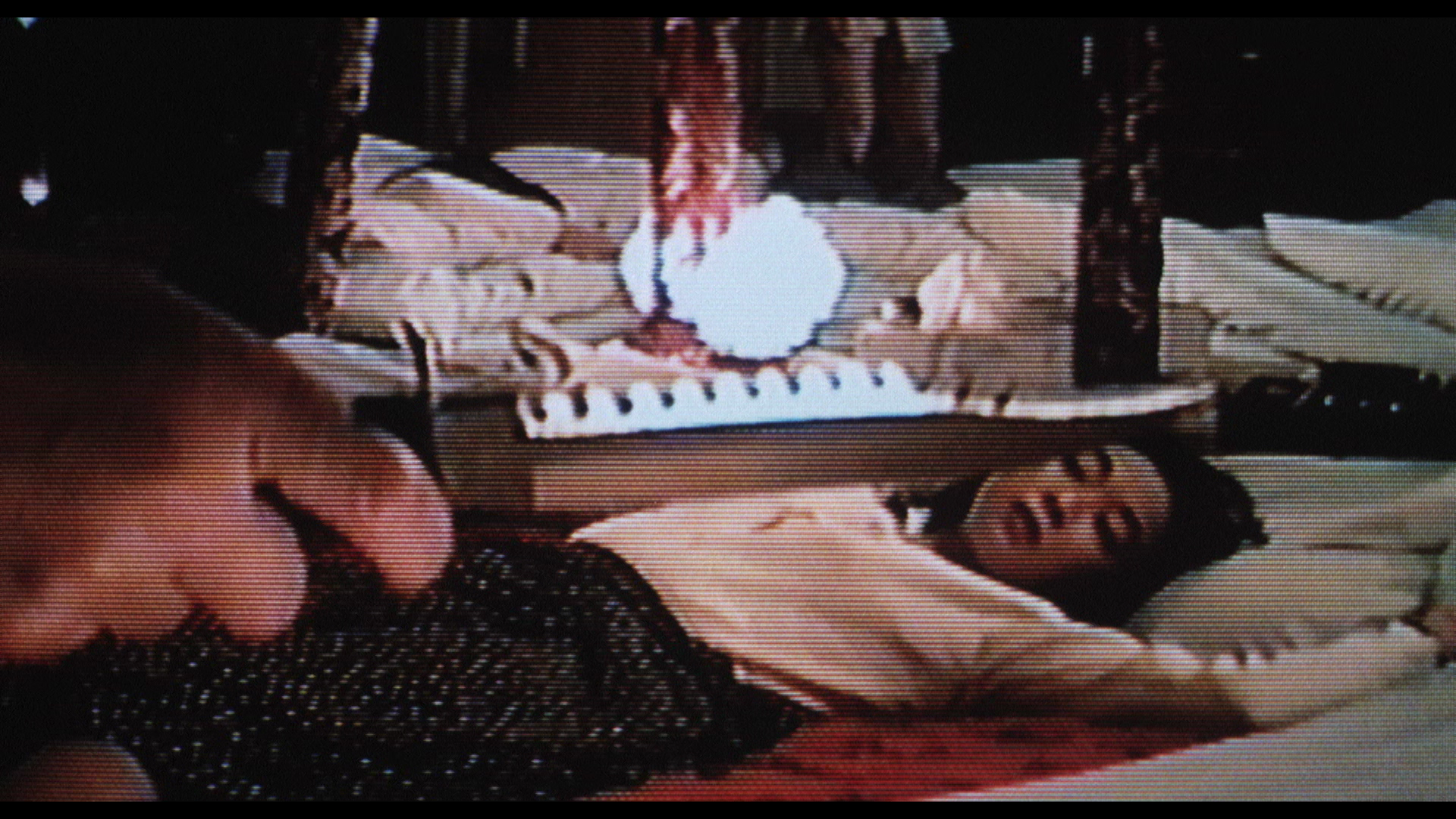
There’s an acute vulnerability that comes with ageing. It’s not vanity or mortality so much as your body betraying you as even once simple tasks become increasingly more difficult. When you’re an assassin, a loss of speed or dexterity is cause for concern and Hornclaw (Lee Hye-young) is beginning to feel her age. Her hands have begun to shake uncontrollably and as she admits to a stray dog she finds herself taking in, you forget things when you’re old. There are those in the office who have begun to notice that Hornclaw is not quite as she was and view her as a thorn in their side, a relic of an earlier era preventing them from moving on into a hyper-capitalistic future.

The original Korean title of Min Kyu-dong’s The Old Woman with the Knife (파과 Pagwa) is “bruised fruit”. An old woman working at a greengrocers throws in an extra peach for free because it’s damaged and people won’t buy them, which is silly, in her view, because they’re the best ones and always taste the sweetest. On that level, the film is about ageism and the ways older people are often written off as past their prime, but on another also about Hornclaw’s bruised but not quite buried heart and the hidden empathy that defines her life even as a contract killer. It may also in its way refer to her opposite number, Bullfight (Kim Sung-cheol), a hotshot young assassin recruited by her less ethically minded boss Sohn (Kim Kang-woo) who despite his sadistic cruelty is really just a hurt little boy looking for a maternal figure in the legend that surrounds Hornclaw. 

She was a stray dog herself until someone took her in and gave her a home, much as Bullfight is now looking for a place to belong. Hornclaw comes to identify with the dog she rescues, Braveheart, because as the vet says it’s awful to be abandoned when you’re old and sick, but perhaps also when you’re young and lonely. As her mentor taught her, having something to protect also makes you vulnerable while as you age the people you’ve lost return. Like her underling Gadget who sees visions of his late daughter, Hornclaw too is drawn back towards the past in seeing echoes of Ryu (Kim Mu-yeol), the man who saved her, in altruistic vet Dr Kang (Yeon Woo-jin).

There may be something disingenuous in the insistence that each of us must save the world coming from a band of supposedly ethical hitmen who only knock off “bugs” that are actively harmful for society. After all, who is making those decisions as to what constitutes “harmfulness”? Everyone Hornclaw takes out is indeed morally indefensible, but as she cautions Bullfight, when you start seeing people as insects you become an insect yourself. Sohn wants to reform the agency to take on more lucrative contract killing jobs such as taking out a wealthy man whose only crime appears to be being a cheating louse, while Hornclaw insists on sticking to their principles and only carrying out missions of justice which are the cases Sohn keeps turning down like that of a religious leader who has been abusing his followers. 

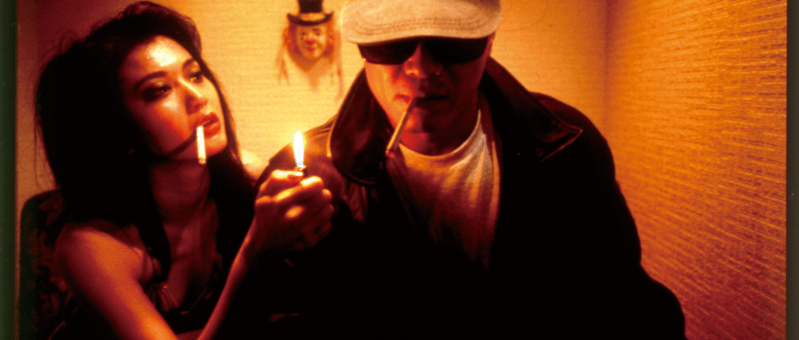
The vision of Hornclaw as a resentful avenger echoes that of Meiko Kaji in the Female Prisoner Scorpion series. Often caught in silhouette, she too wears a wide-brimmed hat that hides her eyes and aids anonymity, while she at one point gives her real name as “Seol-hwa” which means “snow flower” and hints at Lady Snowblood but also to her own moment of rebirth after being discovered half-dead in the snow and rescued by Ryu who gave her a purpose and sense of self-worth, not to mention a home. The irony is that Hornclaw ends up creating a monster because of her own repressed emotionality and is then unable to understand why this figure from the past has returned to her because her way of seeing the world only allows her to interpret it in terms of vengeance.

But what her new mission tells her is that having something to protect is in many ways the point and the very thing that gives her an edge over those who have nothing left to lose. Wresting back control over the agency, she vows to continue their mission as it’s always been rather than allow Sohn’s amoral capitalism to win out over justice and righteousness. Truth be told, the superhuman quality of Hornclaw’s movements is slightly at odds with the otherwise realistic tone of the rest of the film in which, as the secretary puts it, the weight of all the years is beginning to take its toll. But ironically it’s in closing her escape route that she finds true liberation in putting her ideas into practice in a more direct way while opening herself up to the world around her. There’s still life in the woman with the knife yet, and there are still plenty of bad guys out there along with a stack of files in need of attention, which is all to say retirement is going to have to wait.


International trailer (English subtitles)

Forte (포르테, Kimbo Kim, 2025)

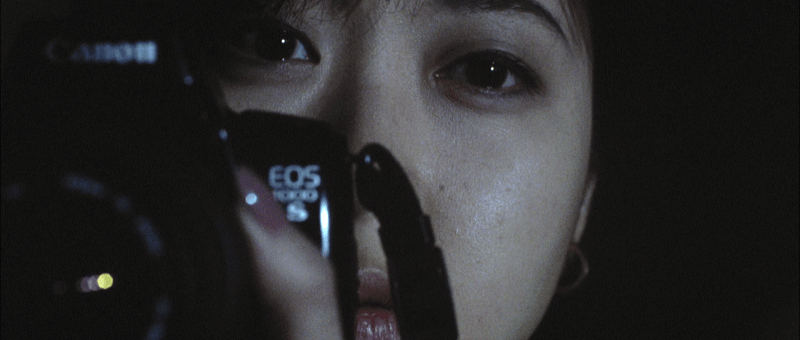
A worried policeman nervously asks Yeonji (Im Chae-young) if the rumours are true. They say that everyone who works at Studio Forte ends up going mad or dying, but Yeonji has only just started working there herself and it’s too early for her to say whether that really is the case, though it’s true enough that the building has an eerie energy. Even a visiting film director remarks that the atmosphere is unusual, though it doesn’t seem to have put him off returning. The director, Jeonghwa (Lee Jung-eun), is one of the best after all which is why Yeonji took this job in the first place.

On arriving at recording studio Forte, Yeonji remarks that it seems like a great place for inspiration but the building itself is anything but inspiring. A block of concrete and glass, it stands ominously and incongruously in the middle of nature as a defiantly manmade structure intent on disrupting the natural order. It feels oppressive, rigid, and constraining. Not the sort of environment that best serves creative impulses despite the well-appointed interior with its modern design and copious light from the large windows. 

Yeonji walks the surrounding forest in wonder, but at the same time there’s something odd about it in a bewitching sort of way. Her colleagues seem to be haunting her, seemingly standing around and staring while she’s otherwise disappointed by the lack of faith Jeonghwa seems to have in her. At the first team briefin,g she neglects to give Yeonji anything to do and then tells her to help her colleague Haejoon finish his section of the score for an upcoming film. Only Haejoon already seems to be having strangely. He looks ill, and sometimes doesn’t even turn up for their work sessions to the point that Yeonji ends up working with another colleague, Dojin (Cha Se-jin), to get everything finished on time. 

“Everything that happened here is real.” Haejoon later says cryptically after screaming that something is “here” and means him harm. Yeonji begins having visions of the forest and an oily, muddy figure along with images of death and fire. In any case, even without the existential dread of lingering supernatural threat, it’s easy to see why this place might drive someone mad. Yeonji tries asking Dojin what’s happening with credits on the movie and he brushes the question off, replying only that Jeonghwa will sort it out, which sort of implies only she will actually be credited. When the director arrives for a test screening, Jeonghwa treats Yeonji like the tea girl and explains that she’s “new”, but the director asks for her opinion anyway and she gives it, honestly, though it contradicts Jeonghwa’s. The producer (Cho Sueun) claims she could tell that Yeonji wrote the tail end of the music because it was “different”, which gives her the feeling that her work may be good after all and that Jeonghwa is playing it too safe with her conventional approach. 

Though she had been somewhat mousy and earnest on her arrival, dressed in an elegant if constraining outfit, Yeonji gradually becomes bolder and wilder. She lets her hair down and dresses in darker, looser clothing while often talking back to Jeonghwa and contributing her own contradictory opinions. But in the end none of it matters. She realises that Jeonghwa is basically exploiting her, getting her to ghostwrite the score while taking all the credit. The director makes a drunken pass at her, and while confused by her reaction explains that this is her big opportunity. Both Jeonghwa and himself only got to where they are by playing the game, which means submitting oneself to this kind of quid pro quo. 

It stands to reason that Yeonji’s barely suppressed desires would eventually burst through as they eventually do in the bloody climax building towards a crescendo of emotion in which Yeonji appears to become smaller and smaller behind the piano as the music overcomes her as if she were possessed. Only now has she released her creative freedom, playing Jeonghwa’s piano with a furious abandon that threatens to burn the whole edifice to the gound. Drawing on 1970s folk horror in it its aesthetic the film has an intriguingly eerie, surreal sensibility deepened by its own unsetting score as the evil haunting the studio begins to make its presence felt if only in Yeonji’s mounting resentment towards an industry that does indeed view her as little more than an inconvenient ghost in the machine.


Trailer (English subtitles)

The Square (광장, Kim Bo-sol, 2025)

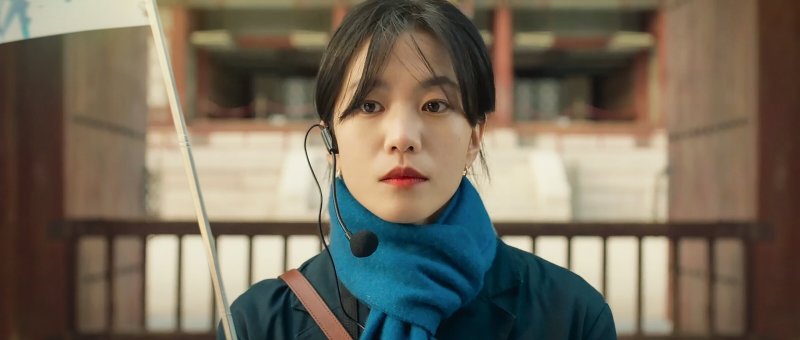
A young man with blond hair and blue eyes stands out in North Korea, though Isak speaks the language fluently, if with a Southern inflection, and tries to make friends with those around him but is generally kept at arms’ length by those who struggle to understand his motivations. As his boss tells him, foreigners are destined to be lonely, but that goes for the local community too. Constant observation has a curiously isolating quality, as if you were always under a spotlight with every word and gesture scrutinised for potential signs of dissidence, though ironically you are never really alone.

Set in the secretive Communist state, Kim Bo-sol’s melancholy animation The Square (광장, Gwangjang) is in many ways about the dehumanising effects of a surveillance state and the pressures of living in a society in which it becomes impossible to communicate with other people because every interaction has the potential to destroy your life. Everyone you meet is a potential enemy and betrayal lurks around every corner. To begin with, the perspective is Isak’s. He looks at North in the same way we do. Scenes familiar from North Korean travelogues such as the underground station and passages with social realist artwork featuring soldiers smashing capitalism dominate, but he also as an abstracted perspective in trying to reconcile this place with that of his Korean grandmother who followed his grandfather to Sweden before the Korean War. A Swede should eat Swedish food, she ironically tells him in a letter included with a care package full of tinned sausages, through he washes them down a few glasses of soju.

He tries to share them with Myeong-jung, ostensibly his interpreter though Isak is in the North to work as a translator himself and doesn’t really need one despite Myeong’s advanced skills in both English and Scandinavian languages. Myeong-jung always rudely rebuffs his attempts at friendship and appears displeased when Isak tells him he’s trying to get his stay extended. This is partly because of the tense situation, it would be difficult for Myeong-jung to be on friendly terms with a foreign diplomat without arousing suspicion, but also because Myeong-jung seems to have developed some genuine affection for Isak which makes his real job, monitoring him for signs of “harmful” behaviour, much more difficult. Myeong-jung lives in the apartment across the courtyard and has a camera trained on Isak’s window. Like the hero of the Conversation or the Lives of Others he’s become invested in Isak and has begun doctoring his reports to protect him after becoming aware that he has become romantically involved with a young woman who directs traffic for a living, Bok-joo. 

Asked why he tried to help him, Myeong-jung replies that perhaps he was just “lonely” though there is something of a homoerotic tension in his relationship with Isak. After Isak drinks too much on realising that the woman he loves has been disappeared, Myeong-jung steps out of the shadows to rescue him and Isak rests his head on Myeong-jung’s back as they ride home, just as Bok-joo had while riding behind Isak on his bicycle. If that really were the case, his love is as futile as Bok-joo’s or perhaps more so. In any case, he’s right when he calls Isak naive. If their affair were exposed, Bok-joo could be in a lot of danger. His pursuit of her is selfish, and perhaps if he really loved her, the most sensible thing would be to avoid seeing her again. Isak seems put out when Bok-joo tells him she won’t leave with him because she doesn’t want to leave her country or her family for the complete unknown, but were she to do so it would also be selfish. Her family would be made to pay in her absence.

Then again, the worst thing that happens to anyone in this film is being exiled from Pyongyang and other than their loneliness, they do not seem to be particularly unhappy in the North and have no real desire to leave though arguably that’s because they are already resigned its futility. Isak asks Myeong-jung why he doesn’t apply to travel with his advanced language skills but Myeong-jung brushes the question off and replies he’s barely been out of the city let alone another country though his interest in Isak maybe a reflection of his desire for the world outside of the North. Isak, by contrast, asks himself if he could stay in the North forever to live with Bok-joo and make the reverse decision his grandmother once made though in the end the decision is not really his to make. He has to accept that love is an impossibility under such a repressive regime let alone love between a citizen and a foreigner and that the division will forever keep them apart. Whatever choice his grandmother had, Isak does not have any. But despite the melancholy setting of Pyongyang in the snow, there is a kind of warmth to be found that these connections were made at all even as Myeong-jung spins his wheels, riding in circles like Isak and listening to the DiscMan Isak left behind like an echo of a far off freedom.


Trailer (English subtitles)

Winter in Sokcho (Hiver à Sokcho, Koya Kamura, 2024)

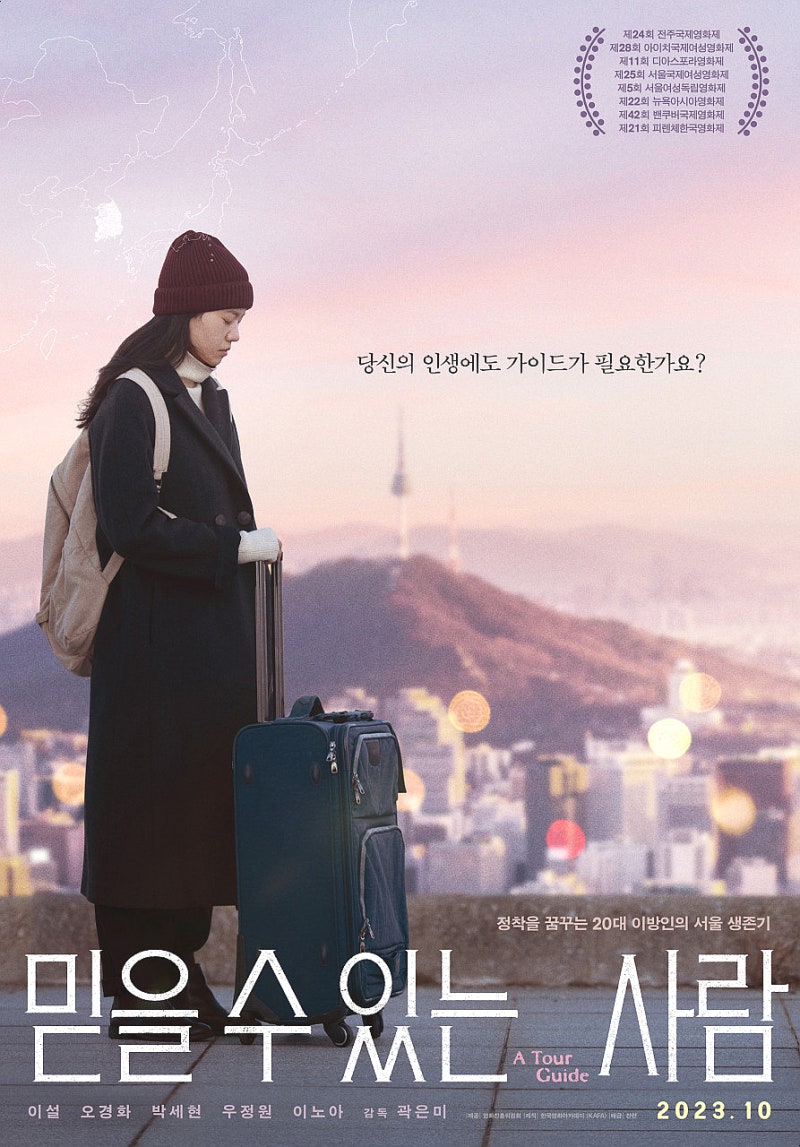
A young woman is awakened from a kind of spiritual hibernation by the unlikely arrival of an incredibly brusque French artist in Koya Kamura’s adaptation of the Elisa Shua Dusapin novel, Winter in Sokcho. Like many, Soo-ha (Bella Kim) is waiting for spring, though it’s less this place that has her feeling trapped than an inability to find her place within it, or indeed anywhere, as she struggles with her own identity and the unanswered questions about the father she never knew.

In any case, it seems clear that Soo-ha as begun to resent herself on some level and is unhappy in her long-term relationship with a high school boyfriend, Joon-ho (Gong Do-yu), an aspiring model. It’s not clear why shy returned to Sokcho after studying French and Korean literature in Seoul, but she otherwise lives her life in peaceful monotony working at a small boarding house where the owner, Mr Park (Ryu Tae-ho), has recently lost his wife and is therefore in need to practical and emotional support. One night a week she spends with her mother (Park Mi-hyeon), a fishmonger specialising in fugu, though there’s a frostiness and frustration to their relationship in which neither seems quite satisfied with the other’s life choices. 

Soo-ha repeatedly asks her mother why she never attempted to look for her father, a Frenchman who worked in the fishing industry, though her mother doesn’t really want to talk about, it leaving Soo-ha with unresolved doubts and questions about her past. Her interest in French literature may be a way of trying to explore this side of herself in the absence of a guide, though the attempts at connection a frustratingly one-sided. When a Frenchman suddenly turns up at the boarding house, Mr Park encourages her to use her skills “the one time they’re useful”, though she herself is reluctant, giving Yan (Roschdy Zem) the smallest room in the adjacent annexe like a thought paused for later.

Yan asks her to show him her Sokcho, but as he later says, he’s just a tourist and like the father she never met is just passing through. There may be something a little exploitative in his working visit for though he’s come to draw inspiration from this place, he is willing to give almost nothing to it. He refuses to eat the food that Soo-ha cooks at the boarding house and instead badgers her to take him to restaurants while finding little to like there either. As his incredibly outdated, paper driving licence isn’t valid in Korea, he talks her into taking him to the DMZ which seems to echo the liminal space that exists between them. Soo-ha talks about how sad it is that people still yearn to be reunited with their relatives all these years later, though Yan is indifferent and later mentions a son that it seems he may rarely see. But as he tells her, she may be looking in the wrong place if it’s a deeper connection that she’s seeking or searching for something that will unlock the secrets of herself.

There are reasons for her to feel displaced even in Sokcho given that her unusual height makes her stand out as the nickname “beanpole,” makes plain. Her mother nags her for never eating properly or enjoying her food which may be another expression of her listlessness, but also reminds her not to eat too much and get fat. Joon-ho tells her get plastic surgery, as do a few other people, and though it’s even more insensitive and troubling given that Soo-ha’s father was French. It’s as if they’re telling her to erase these parts of herself, as if she were not “fully” Korean and should become so by adjusting her jawline and the shape of her eyes. Soo-ha’s internal questioning is expressed in brief animated sequences in the style of Yan’s ink paintings as she tries to conjure the image of herself.

There’s a woman at the guest house who’s there recovering from extensive plastic surgery that will give her a whole new face. She sits in the dining area, simultaneously anonymous and instantly identifiable by her bandaged face. Her story is never revealed, so it’s impossible to say whether her decision was motivated by a desire for conformity and conventional beauty or to become more herself and have her outside reflect the person she feels herself to be. Sokcho is also undergoing a process of renewal, as high-rise office blocks spring up everywhere and the traditional quality of the streets disappears as if this urbanisation were creeping up on Soo-ha and taking from her even the anchor of this place which no longer quite exists. 

Joon-ho assumes they will move back to Seoul together when his career takes off because “who doesn’t want to get out of Sokcho?” But Soo-ha may be beginning to feel that perhaps this place might suit her after all. A few cosmetic upgrades could breathe new life into the old-fashioned boarding house and brighten an otherwise gloomy existence. While showing Yan around town she describes a local legend, or perhaps concocts one for the occasion, about a bird who wanted to fly above the clouds but couldn’t. She, meanwhile, may have begun to soar amid the arrival of spring, finally ready to break out of her self-imposed winter in having discovered a way to become more herself rather than what others perceive her be.


Trailer (English subtitles)

A Century in Sound (百年の音色, Nick Dwyer & Tu Neill, 2024)

Listening cafes are a phenomenon particular to Japan in which the music is the draw rather than the quality of whatever refreshments are available. Indeed, as Nick Dwyer and Tu Neill’s documentary A Century in Sound (百年の音色, Hyakunen no neiro) makes plain, they are spaces of community and identity in which people with similar tastes come together even if, as at classical music cafe Lion, they sit in silence to better absorb the music. Exploring three such cafes which are themselves a dying breed, the film also examines Japan’s complicated 20th century history and the shifting tastes that accompanied it.

This is evident in the first cafe visited, Cafe Lion, which opened in 1926 and catered to a then new interest in European classical music which in Japan was viewed as something new and exciting. The nation was still emerging from Meiji-era transition and at that time, before the war, entering a moment of fierce internationalism and creativity. The current manager is in her 80s and relates her own memories of another Tokyo before the fire bombing along with the ways the city changed afterwards. Cafe Lion was among the first buildings to be rebuilt and they pride themselves on the quality of their sound system, even deciding to stop serving food because it was considered too noisy and got in the way of the customers’ ability to hear the music. Her son will be taking over the business, so she’s hopeful that this tradition will survive and they’ll be able to continue spreading the love of classical music in the wider community.

The reason these spaces originated was that in the beginning records and sound equipment were expensive so people couldn’t afford to buy their own and would request music they wanted to hear at a cafe instead. Jazz Kissa Eigakan didn’t open until 1978, but though it may have arrived earlier, the owner, Yoshida, attributes the popularity of jazz to a desire for freedom in the post-war society as exemplified by the protests against the security treaty with the Americans and subsequent anti-Vietnam War movement. A former film director, he found the same energy in the Japanese New Wave and opened the cafe to share his love of jazz and film even going so far as making it his life’s work to construct his own sound system to get the best possible sound for his customers that won’t leave them feeling tired or overwhelmed. He also hosts film screenings demonstrating the various ways these spaces have become community hubs that provide a refuge for people with similar interests along with a place to relax and be welcomed in an otherwise hectic city. 

That seems to be the draw for Atsuko, a regular at rock music cafe Bird Song which mainly plays Japanese music from the 70s and 80s. In her teenage years, she’d been a frequent visitor to famed rock cafe Blackhawk before going travelling and then settling down to have a family. Now regretting that she gave up her love of music, she’s returned to Bird Song to rediscover it along with another community of like-minded regulars. While Yoshida discusses the era of the student protests, the owner of Bird Song cites Happy End’s 1971 album as a turning point in not only in Japanese music but culturally in moving towards the post-Asama-Sanso society and the consumerist victory that led to the Bubble Era. He posits City Pop as the sound of consumerism and while looking back on his time as an ad exec in the era of high prosperity does not appear to think they were particularly good times or at least that they lacked a kind of spirituality that his customers are looking to rediscover in music. 

Dwyer and Neill make good use stock footage and films as well as artful composition to compensate for the talking heads while fully conveying the richness and warmth of these spaces along with their welcoming qualities. Though it’s obviously much easier now to access music wherever and whenever one wants, the cafes provide an optimal listening environment that no home system can replicate while simultaneously providing a place where people can come together and shut out the outside world. Though they may be dying out in a society driven by convenience, the owner of Bird Song has to work a second job as a security guard just to keep the lights on, the cafes represent the best of what a city can be in recreating, as one customer describes it, a village mentality of care and community built on the back of a love of music.


A Century in Sound Escape screened as part of this year’s Nippon Connection.

Trailer (English subtitles)

Escape (逃走, Masao Adachi, 2025)

Satoshi Kirishima’s incongruously smiling face was a familiar presence across on the nation for over 40 years until he finally made a deathbed confession revealing his true identity as a man wanted in connection with a series of bombings in the 1970s and that he’d successfully evaded the authorities until the very end of his life. What apparently appealed to director Masao Adachi, a former Japanese Red Army member, was the question of why he chose to come clean rather than enjoy his secret victory by taking the truth to his grave.

That might be a minor irony at the centre of the Escape (逃走, Toso) in that Satoshi (Kanji Furutachi) is essentially in flight from himself only to finally escape from his torment by accepting his original identity. As a young man, Satoshi had been a member of a left-wing cell that wanted to awaken the population at large to the ways Japanese society had not changed in continuing to discriminate against the Ainu, those from the Ryukyu Islands, Koreans and other minorities while modern corporations enact another kind of capitalistic imperialism built on exploitation. It was for this reason that they embarked on a bombing campaign targeting large companies, but due to a miscalculation with the explosives, the bombing of the Mitsubishi Heavy Industries Building in 1974 proved more destructive than intended resulting in loss of life. 

Satoshi was not directly involved in that bombing which was carried out by another cell but was wanted for allegedly setting up a bomb in the Economic Research Institute of Korea which did not result in any casualties. Details of the real Satoshi’s life during his 40 years on the run are thin on the ground, but Adachi paints him as a man torn apart by internalised conflict and unable to make peace with the sense of guilt he feels for those who killed even if he was not directly responsible. The film’s Japanese title is a kind pun in that it’s a homonym which can mean both “escape” and “struggle” which for Satoshi become one and the same. He’s in flight from his younger self while simultaneously preoccupied with how he can continue the revolution in the name of his friends who were not so lucky. Adachi structures the later part of the film as a kind of self-criticism session as Satoshi engages in various dialogues with himself notably as a Buddhist priest interrogating him about his worldly attachments. 

These worldly attachments also obviously separate him from his true calling to revolution including a non-relationship with a woman he meets at a concert venue and is later told has two previous convictions for marriage fraud. Most of the people around him are also leading double lives or harbouring secrets of their own including a man that Satoshi once worked with whom he finds out years later was also another former member of the far left movement living life on the run. The implication is that this sense of isolation and aloneness in wilfully having to suppress his identity became a kind of prison, but that it also liberates Satoshi to a more intensive examination of the self. 

To that extent, his escape is also from contemporary Japan and an act of resistance towards an increasingly capitalistic and indifferent society. Hoping to stay below the radar, Satoshi works a series of casual construction jobs chiefly because of their anonymity. There was plenty to be built in this era and jobs like these were plentiful, usually offering basic accommodation in a company dorm. He experiences the hardships of the working man first-hand and lives a life of asceticism in which live music and drinking are his only outlets. “We’re all dying to survive,” he reflects, “trying to go home,” though he no longer has a home to go to and has become estranged from his previous identity. He meditates on fallen comrades who either took their own lives or spent them in prison while convincing himself that he’s continuing the struggle on their behalf even in the act of running away in perfecting his “escape”. Though Adachi’s approach is less sentimental than Banmei Takahashi’s in I am Kirishima, he is not immune to sentiment as in his depiction of Satoshi’s final escape from life as the ultimate form of liberation even as his ghost proclaims he will continue to fight, but nevertheless introduces a meta commentary of self-examination in Satoshi’s constant questioning if his long years of struggle have really been worth it.


Escape screened as part of this year’s Nippon Connection.

BAUS: The Ship’s Voyage Continues (BAUS 映画から船出した映画館, Hokimoto Sora, 2025)

According to the hero of Sora Hokimoto’s BAUS: The Ship’s Voyage Continues (BAUS 映画から船出した映画館, Eiga kara Funadeshita Eigakan), films are born of man’s battle against time and the desire to extend one moment into eternity. Yet his father was always looking for a new “tomorrow” and a path towards the future that ironically kept him from being fully in the  present. Inspired by the memoirs of Takuo Honda, the film is effectively a people’s history of cinema culminating in 2014 with the closure of the Baus Town cinema amid a climate in which film itself seems to have entered a terminal decline.

Indeed, Takuo’s father Shigeo (Shota Sometani) becomes almost a ghost himself. Having come to Tokyo insisting that movies were his “tomorrow,” the war leaves him a shadow of his former self and a spectral presence in the auditorium. Though Takuo’s mother (Kaho) and others at the cinema have discovered a new community eating together every night after the final screening, Shigeo is often out drinking with the chamber of commerce and rarely returns home. Still looking for “tomorrow,” he appears lost for direction despite opening a new, more modern cinema fit for the post-war era. 

As the mother of Shigeo’s wife Hama says, men are focused on past and future while it’s women who are forced to face the present leaving most of the more practical problems for Hama to deal with. Shigeo’s brother Hajime (Kazunobu Mineta) had perhaps been overly obsessed with the past and ultimately unable to move forward. After coming to Tokyo with Shigeo, he became an unsuccessful benshi only to be rendered obsolete by the arrival of talkies. Despite being drawn to the anti-capitalist rhetoric of the migrant workers, he later falls hard for militarism and becomes a casualty of the war both literally and spiritually. Shigeo laments the increasing censorship of the late 1930s complaining that it has become impossible to make or show films, but it’s little better afterwards as the Occupation forces push Hollywood movies at the expense of the European or Japanese.

Hajime had snapped back that entertainment wouldn’t change anything and that war purified the world, but Shigeo insists that films are a window from which the local population can learn about other lives and other places, a means of “building the heart” that might a save a soul. The older Takuo envisages a world in which watching a film normally or loving someone normally might become political acts in themselves. He weaves his personal history of film, which is also that of his family, with the political realities of the mid-20th century in which beautiful forests are cut down to make coffins for the endless dead and unexploded incendiaries lurk like ticking time bombs both literally and psychologically as, as one old man puts it, the nation’s struggles to reckon with its role in the war or its traumatic consequences. 

Nevertheless, even if Takuo is closing Baus Town for reasons stemming from his own traumatic loss, he continues to look for tomorrow despite his old age. Asked what his dream was, he replies only that he wanted his children to have better lives than he did, though he worries he may have failed. In any case, he remains lost within the labyrinths of cinema. The building itself, originally surrounded by fields in a much smaller Kichijoji, becomes a haunted space in his memory, half dream and longed-for place of warmth and salvation in which he remains a small child searching for his father in the empty auditorium.

The name for Baus Town is taken from the bow and stern of a ship, echoing Takuo’s own search for other horizons and a constant process of moving through the world. He too is trying battle time and make a moment last an eternity while admitting that there’s nothing so beautiful as smoke in the projector beam. He asks his daughter if smoke, like movies, isn’t connected to the afterlife and there are ways in which Takuo has also become a ghost, both haunted and haunting while films are themselves a kind of other world of the living past and a way of communing with those no longer here. Taking over production after Shinji Aoyama passed away, Sora gives the film an elegiac, poetic quality while asking if cinemas too might be resurrected in the same way as film even as Takuo ponders new directions while continuing to sail ahead in search of tomorrow.


BAUS: The Ship’s Voyage Continues screened as part of this year’s Nippon Connection.

Original trailer (no subtitles)

Images: ©Honda Promotion BAUS/boid 

Diamonds in the Sand (砂の中のダイヤモンド, Janus Victoria, 2024)

A middle-aged salaryman is awakened to the depths of his loneliness when his upstairs neighbour dies in an apparent lonely death in during the pandemic in Janus Victoria’s Filipino co-production, Diamonds in the Sand (砂の中のダイヤモンド, Suna no Naka no Diamond). Contrasting an epidemic of loneliness with the more literal spread of Covid-19, the film finds its hero trying to redefine his life and discover what gives it meaning in making connections with others. 

Yoji (Lily Franky) is indeed an isolated man whose world is shrinking around him. The DVD department of a large manufacturer where he works has been wound up and he’s been transferred to one that seems to deal in pornography is basically four men in a room with nothing to do. It’s no surprise that he tells his bosses he doesn’t need his computer when they go remote during the pandemic. A large clock seems to tick out his remaining time as if reminding him that his life is running out. Things aren’t much better at home, either. Divorced, he lives in a tiny, colourless flat and seems to have few friends. He’s aloof from even those he does know and always stands slightly outside of the group. One of his former colleagues has been given a big promotion, but it involves moving to Thailand which Yoji seems to regard as a kind of exile or age-based banishment even as he reminds them how much Japan has invested in the nation.

Yoji first becomes aware of the death of his upstairs neighbour when his discomposing body begins leaking through his ceiling. Staring at the stain left behind, he begins to contemplate the reality of his own lonely death and the meaninglessness of his life. He begins going to visit his mother in a care home and trying to rebuild a meaningful relationship with her, but she also asks him if he’s ever really been happy in his life. Though her body is failing and her days are sometimes dull or lonely, the memories of past happiness sustain her. If Yoji doesn’t even that, then his old age would be even more miserable and his life not worth living. The only spark of joy is a colourful pinwheel he bought for his mother on a whim but enlivens each of their worlds with a sense of fun and vibrancy.

This sense of encroaching isolation and emptiness is directly contrasted with the bustling streets of Manila which are alive with colour and life and where, Yoji is told, there is no loneliness. Minerva (Maria Isabel Lopez), the middle-aged woman who looked after his mother in the care home, is one of many working abroad to support a family in the Philippines and experiencing different kinds of loneliness and isolation in Japan. She has an almost grown-up daughter, Angel (Stefanie Arianne), whose father was Japanese, but she was not really accepted by his family and struggles to find a place for herself in either society. After abruptly travelling to Manila in search of a life less lonely, Yoji becomes to her almost a surrogate father offering the reassurance and connection that her own father obviously did not.

But Minerva has a point when she says Yoji lacks compassion and even after being warmly accepted by the community in the Philippines and witnessing their interconnected way of life refuses to become fully a part of it or to help others when they are in need. He sees coverage of extrajudicial killings on the television and is confronted by the fact that life is cheap here too, but is also judgemental and unwilling to fully embrace the community around him. Still, he ironically comes across a kind of graveyard of “surplus” Japanese goods like Mr Suzuki’s bowls that the house clearance staff patiently boxed up and threw away as if erasing his existence. One of the ashtrays still has ash in it. It’s this that perhaps enlightens him to what’s really important in life and convinces him of the necessity of accepting his responsibility to others rather wanting love connection from them without really thinking about giving anything in return. Like looking for diamonds in the sand, it’s the little things that matter and just asking someone if they’ve eaten yet can in its way save a life.


Diamonds in the Sand (砂の中のダイヤモンド, Janus Victoria, 2024) screened as part of this year’s Nippon Connection.

Trailer (English subtitles)

Husband and Wife (夫婦, Mikio Naruse, 1953)

Kikuko (Yoko Sugi) climbs the stairs to the roof of a department store and pauses at the top looking down on her friends below, but they appear to be looking down on her. They’re disappointed. She looks so “provincial”, even though she has no children and therefore more time to spend on herself. They’re envious of her “freedom” to return home late while they have to get back to their husbands or in-laws, but Kikuno isn’t really free at all while trapped in a stifling marriage to the incredibly dull and petulant Isaku (Ken Uehara). 

One of a series of films about marriage and originally envisaged as a sequel to Repast until Setsuko Hara fell ill, Husband and Wife (夫婦, Fufu) paints a rather bleak picture of married life even by Naruse’s standards. The couple are quite literally but also spiritually “homeless” in that they cannot find a home to share, while the absence of a domestic space to call their own prevents them from solidifying their marriage. They’re pushed out of Kikuko’s parents’ home because her brother’s getting married and they need the space, but Isaku drags his feet over finding somewhere else and leaves much of the legwork to Kikuko alone. The main problem seems to be that Isaku can’t afford anything decent, which places a strain on his male pride, but in a repeated motif, rather than confront the situation, he ignores it completely and then crassly presses his recently widowed colleague to let them rent a room in his now much emptier house. 

It’s a mystery why Isaku has so many financial problems when he and Takemura (Rentaro Mikuni) work for the same company, save that Isaku had evidently spent some time working in the provinces, and his colleague had already bought a home with no apparent money worries, but it further sets the two men apart and fuels Isaku’s sense of inadequacy. Having returned from a leave of absence following his wife’s death, Takemura is grief-stricken and apparently uxorious. He complains that he’ll never find another woman like his late wife, all while Isaku won’t shut up about the house and others relentlessly encourage him to remarry. Nevertheless, after the couple move in with him, a natural connection arises between Kikuko and Takemura who is Isaku’s total opposite, both in his treatment of Kikuko and general personality. Where Isaku is sullen and resentful, Takemura is cheerful despite his grief and generous of spirit. Kikuko effectively becomes a wife to both men, taking care of each of them by cooking and cleaning, but while Takemura goes out of his way to thank her, all Isaku does is run her down and humiliate her in front of company.

Then again, having fallen in love with Kikuko precisely because she is a “proper wife,” Takemura then runs his own late wife down by complaining that she wasn’t very pretty and couldn’t cook. The only thing she had going for her was her health, and then she died. He says got a bum deal, and that Kikuko has shown him a different side of womanhood. When two colleagues come to the house and compliment Kikuko’s cooking but are surprised when she eats nothing herself (because they have no money), Isaku responds to their assertion that it’s difficult to be a housewife by replying that men work hard all day while women “only” have to look after the house. For her part, Kikuko says that she was happier when she was working. Men can fall in love several times, but once a woman’s married her romantic life is over. As her friend tells her, men soon get bored of their wives and hers has already taken a mistress at work. 

At several points and with the women in earshot, the men warn each other about the pitfalls of marriage. Irritated that Kikuko has returned to their home on New Year’s Eve after becoming fed up with Isaku, her father advises her brother that women show their true faces after six or seven years and it’s going to horrify him. Isaku tells him not to be too nice or obedient during the early days because his wife will get used to it, while Kikuko counters that men are overgrown children and as long as you make sure to cradle them like babies everything will be fine. Neither of them seem to have a very positive idea of what marriage should be and frame it almost in terms of a war in which they are continually at odds with each other. Isaku describes a husband and wife as a pair of scissors, intending it as a positive metaphor about how one half can’t cut alone, before reframing it as two knives coming together. He becomes unpleasant and chauvinistic, blaming Kikuko for everything by complaining that it’s her fault that he wears a torn up old coat that causes him some embarrassment in front of his boss and a tactless geisha, while criticising her for not having the bath ready when he comes home tired from working all day. Kikuko points out that men seem to assume they’re the only ones who get tired while her loved up brother swears he’ll be different and even if they’re in the honeymoon phase, they do seem much happier and more suited than the already resentful Kikuko and Isaku.

It’s the sister-in-law who throws them a lifeline by introducing them to a relative looking to rent a vacant room, allowing them a means to save their marriage by leaving Takemura’s house. Increasingly resentful of the growing attachment between Kikuko and Takemura, Isaku starts avoiding coming home and hanging out with a young woman at the office with, at least, the danger of a burgeoning affair for which he’s taken to task by Takemura. As Takemura says, it’s not much of a marriage if Isaku can’t trust his wife while Kikuko is eventually so sick of the cold shoulder and constant denigration that she considers leaving him. The new apartment finally gives them a domestic space they can call their own, but it comes with the caveat. The landlady doesn’t allow children because the tenant next door is an ikebana teacher who demands peace and quiet, but Kikuko is in fact already pregnant which might present another means of saving their marriage by becoming a family but Isaku immediately rejects it. He complains he doesn’t have any more money to move again and tells Kikuko to get an abortion, strong-arming her when she refuses. Kikuko can’t go through with it and the nicest thing Isaku says to her in the entire picture is that they can go home, he’s giving in and will raise the child even if it’s difficult. But even this bittersweet moment seems more like condemning them to marriage rather than repairing their relationship with Isaku only grudgingly accepting, most likely because he realises that his marriage is dead anyway if he forces Kikuko to give up their child against her wishes. Despite the changing season, the air between them remains frosty, and marriage is exposed for the prison that it is trapping each of them in loneliness and resentment rather than bringing them together in joy as they prepare to become a family rather than just husband and wife.


Husband and Wife  screened at Japan Society New York as part of Mikio Naruse: The World Betrays Us – Part I.

The Door into Summer (夏への扉 ―キミのいる未来へ―, Takahiro Miki, 2021)

Takahiro Miki has made something of a name for himself with a particular brand of bittersweet youthful romance often featuring a fantastical element such in Girl in the Sunny Place, or My Tomorrow, Your Yesterday. Adapted from a novel by Robert A. Heinlein, The Door Into Summer (夏への扉 ―キミのいる未来へ―, Natsu e no Tobira: Kimi on iru Mirai e) is in many ways more of the same, repurposing a sci-fi-inflected, slightly uncomfortable love story as an inspirational tale of never giving up and learning to overcome personal trauma in order to seek true happiness. 

In 1995, 27-year-old Soichiro (Kento Yamazaki) has experienced a lot of loss in his life. His mother passed away soon after he was born, followed by his father when he was 17. He was then taken in by a family friend and became a big brother to then 7-year-old Riko (Kaya Kiyohara), but his adoptive parents then died in a plane crash. While Riko went to live with her uncle Kazuto, Soichiro became a robotics prodigy with an internalised sense of despair that prevents him making lasting connections, believing that his fate is always to lose everything he loves. His prophecy is in a sense fulfilled when he’s duped into signing away some of his shares in the robotics company founded by his adoptive father by an unscrupulous colleague. Filled with despair, he decides to enter a cryostasis programme for 30 years intending to transfer his remaining stocks to Riko, in part avoiding the inappropriate crush she has on him and hoping to escape from reality along with his best friend/cat Pete to start again in another time when the programme promises his investments will have matured leaving him with a good quality of life. Before he can do that, however, an attempt to confront his wrongdoers backfires when he’s placed into their proprietary cryosleep programme to ensure he’s out of the way for the next three decades. 

To that extent, you’d have to wonder why they’d bother rather than just getting rid of him for good. In any case, when he wakes up he realises that the shady company that housed him, Mannix, went bust years ago leaving him with no savings and also no cat because his enemy didn’t give much thought to poor Pete. In the future, however, he gets a fancy new rogue robot companion, also called PETE, who supports him as he tries to adjust to the digital world his inventions helped create before realising that he must have at some point time travelled back to 1995 to put things “right” (to a certain extent) so that could happen and starting in on that. This accidental paradox is never really addressed, Soichiro travelling to the past because he knows he already has, but not giving himself very much time to complete the magic plasma battery that powers the future while remaining in hiding until ready to disrupt his tormentors’ dastardly plan, rescue his beloved cat Pete, save Riko, and return to the future to make sure that nothing else changes in the new 2025. 

It is indeed Pete that inspires the film’s title in his revulsion of winter weather, always insisting on checking all the internal doorways in the hope that one magically leads to summer which is a roundabout metaphor for film’s secondary message in the insistence on perseverance, never giving up or losing hope in a brighter future even it seems impossible. Nevertheless, it can’t be denied that there’s something slightly uncomfortable in the relationship between 27-year-old Soichiro and his 17-year-old adoptive sister Riko even as he repeatedly reminds her she’s still a child and should live her life with people her own age, especially given the implications of the romantic resolution which attempts to smooth over this awkwardness by placing them on a more equal footing if somewhat artificially. In the end, however, the most important tool for saving the future turns out to be companionship and unconditional support of the kind that Pete offered the orphaned Soichiro, a quality he later programs in to his over-curious robot “son”, PETE. Miki doesn’t do much with the hard sci-fi trappings of the original novel, but does in his best tradition craft an innocent romance as the hero learns to look for his eternal summer in the present rather than the past while overcoming his internalised despair in his cursed fate to embrace love and happiness. 


Trailer (no subtitles)