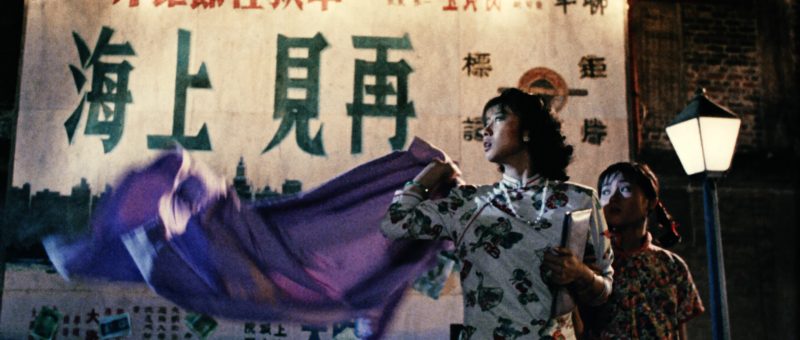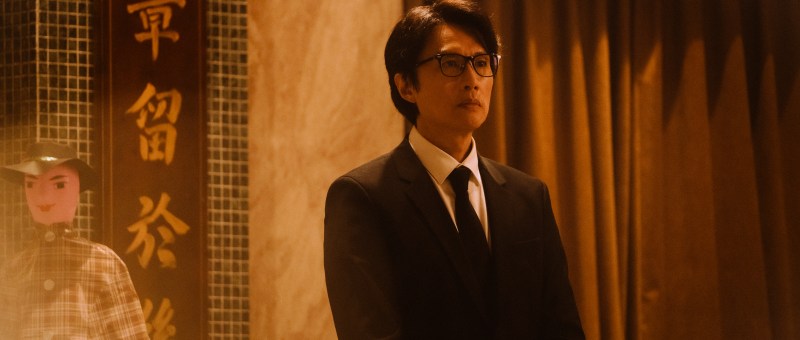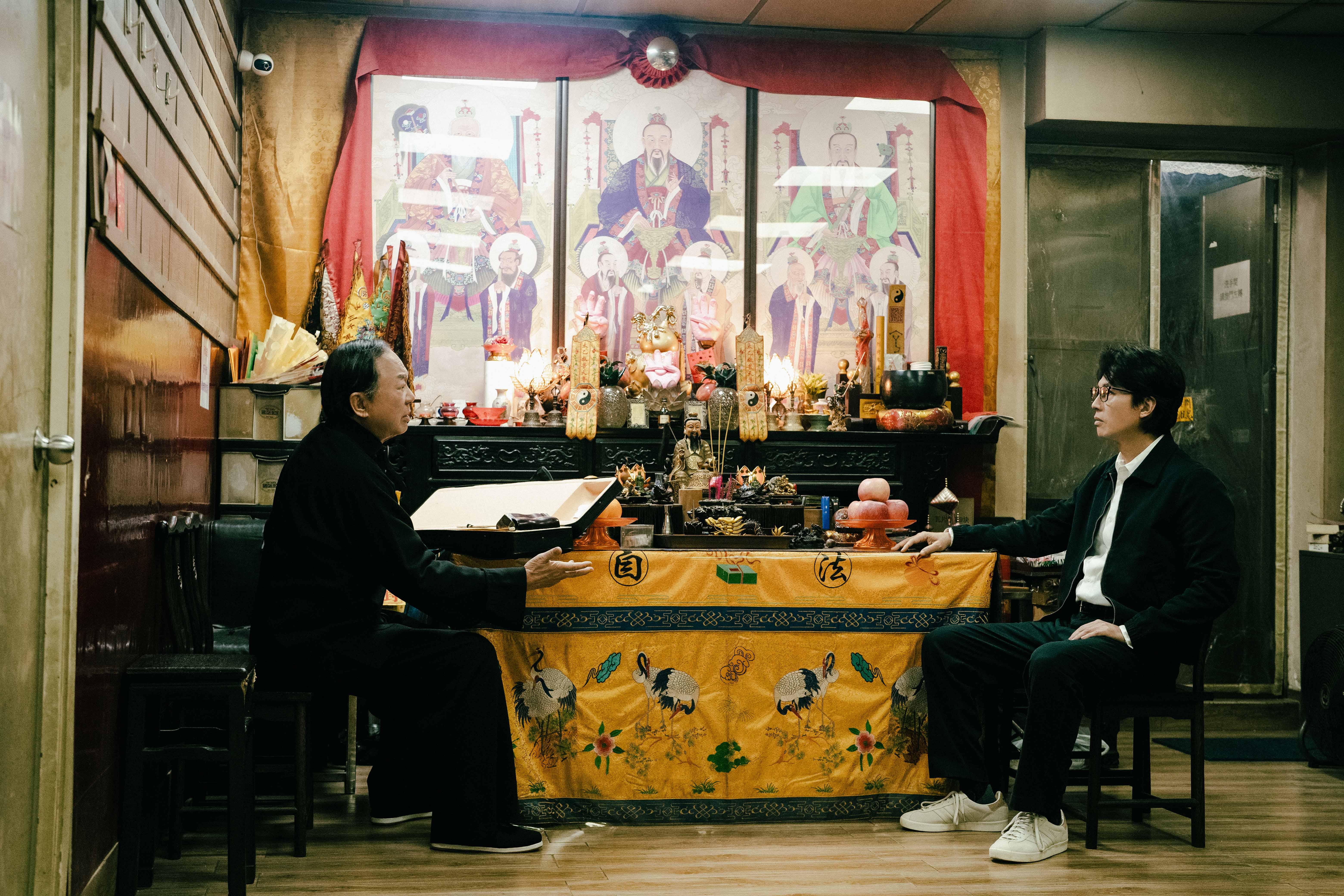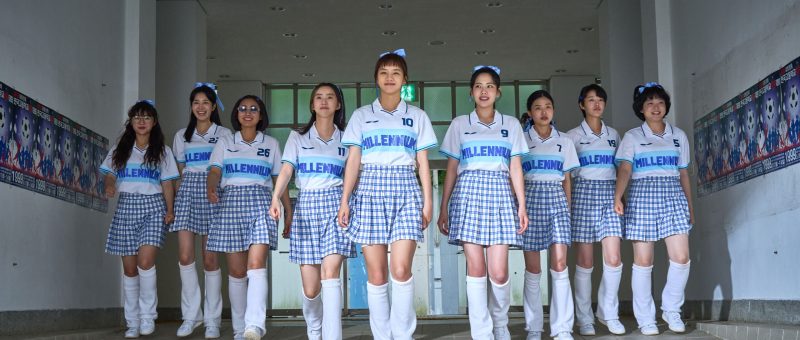
Escape (탈주, Lee Jong-pil, 2024)

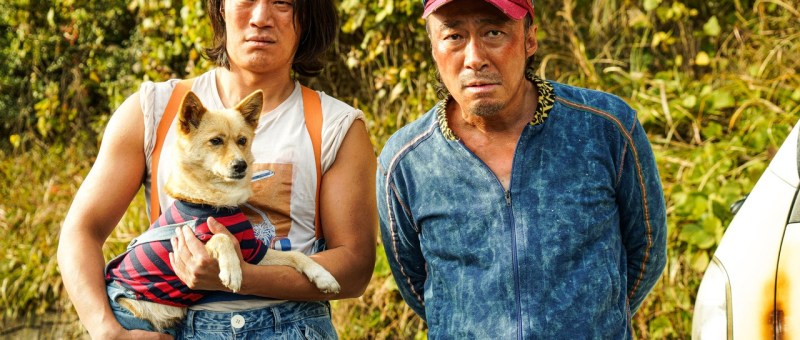
Lee Jong-pil’s existential action drama Escape (탈주, Talju) opens with scenes of a man running. He runs his way through the rest of the film, continually on the move and chasing a dream of freedom outside of the oppressive society in which he is otherwise trapped. The man who chases him, meanwhile, is himself running away. His movements are slow, calculated, and cold but also somehow tender and almost it seems an act of self harm. 

The fact that the oppressive regime is North Korea is almost irrelevant and the film is less about Communism than it is lack of autonomy that may be found in any other democratic or developed nation in which people are driven to erase a part of themselves in order to fit in or to prosper amid rigidly defined social codes. Nevertheless, there is a direct criticism of the Democratic People’s Republic in the ironic signage, a car ploughing straight through a sign that reads “for freedom and happiness of people”. But then, even if deserter Kyu-nam (Lee Je-hoon) finds happiness in the South we can’t be sure it’s really any better. The welcome message blasted through loudspeakers over the wall that marks the border doesn’t sound all that different from the propaganda messages on Kyu-nam’s radio, while the deserter’s phone positioned to appeal to men like him appears to be out of order. 

But to Kyu-nam, “the South” is only really an idea and it’s clear he intends to transcend those borders too, venturing on to the wider world and wherever it pleases him to go. What he rails against is fate, that his life is dictated by forces outside of his control or more accurately by Field Officer Hyun-sang (Koo Kyo-hwan) from State Security who takes him under his wing and tries to make something of him as a loyal soldier of the North. What becomes clear is that Hyun-sang is a man who fears freedom and that the presence of a man like Kyu-nam is a threat to him because he awakens his own deeply buried desire for liberation. 

From the longing looks he directs at a man with whom he studied abroad in Russia we infer that Hyun-sang is gay and the suppression of his authentic self in order to keep himself safe in a repressive culture has made him cruel and vindictive. Unfortunately, this presumably unintentionally plays into a homophobic trope which aligns queerness with sadistic villainy, but does nevertheless lend a kind of poignancy to Hyun-sang’s otherwise vindictive quest to prevent Kyu-nam’s escape precisely because he himself desires to be free but is too afraid to free himself. From a wealthy and prominent family and with an important position within the regime, this system otherwise works out well for Hyun-sang but he is also imprisoned by it and will forever be prevented from becoming his authentic self or gaining what he truly wants so long as he remains within North Korea. 

A homoerotic charge exists between the two men though what Hyun-sang may really be chasing is himself and half-hoping he’ll be caught. Kyu-nam meanwhile has a single-minded desire for autonomy and individuality, to live and die on his own terms rather than live with no right or power to decide his future. There are those who’ve found other ways to reject the system, a group of mostly female nomads seeking a new place to belong after being kicked out of their village but seemingly with no intention of leaving the country, but for Kyu-nam there is no freedom inside the walls and his determination to find it is what makes him so dangerous to Hyun-sang for whom the very idea of freedom is so painful he’s sublimated himself entirely into an oppressive regime.

With pulsing synth scores, Lee keeps the tension high as Kyu-nam runs and runs through minefields and bullets while pursued by the full force of the North Korean army and the steely Hyun-sang who always seems to be one step ahead. His passage takes on an existential quality, risking death rather than continue to live a “meaningless life” in which he has no power to decide his own fate. His escape is finally self-liberation, taking the decision to free himself because no one else is going to, while Hyun-sang remains a prisoner too afraid of freedom to actively pursue it though perhaps tempted by his encounter with Kyun-nam, a man free in his mind if nowhere else.


Escape screened as part of this year’s London East Asia Film Festival.

US trailer (English subtitles)

Jungle Block (地図のない町, Ko Nakahira, 1960)

The contradictions of the post-war era are thrown into stark relief in the forced redevelopment of slum area on the edge of an increasingly prosperous city in Ko Nakahira’s intense noir, Jungle Block (地図のない町, Chizu no nai Machi). The slightly unfortunate English title may hark back to that chosen for a US screening of Nakahira’s landmark film Crazed Fruit, Juvenile Jungle, or just echo the titles of classic Hollywood noir movies such as Asphalt Jungle and Blackboard Jungle, but otherwise has little to do with the content of the film. The Japanese title, meanwhile, means something like “a town not marked on the map” and hints at the invisibility of those who live in this slum, a self-built post-war shantytown inhabited by those largely left behind by the nation’s rising prosperity. 

Then again, Shinsuke (Ryoji Hayama) seems to have fallen behind on his own account. We’re later told that he resigned from his position at the hospital because of some kind of medical mistake for which he blames himself and has since taken to drink and gambling while working at the poor clinic run by his former mentor Kasama. The most immediate effect of his, perhaps unnecessary, decision to resign was that it prevented the marriage of his younger sister, Sakiko (Kazuko Yoshiyuki), as he was then financially dependent on her. Having delayed the wedding for two years waiting for Shinsuke to pull himself together, Sakiko and her fiancé are set upon by local gangsters working for yakuza turned politician and legitimate businessman Azusa (Osamu Takizawa). Sakiko attempts to take her own life and the relationship does not survive this crisis thanks to her fiancé’s wounded masculinity in having been unable to save her or stand up to the goons afterwards. 

As repeated flashbacks reveal, Azusa is the root of the disease spreading across the city. It’s he that’s intent on clearing the slum, as he says just doing what the government has asked him to do, planning to build luxury apartments on its site along with supermarkets and entertainment facilities. Perhaps it’s not an entirely bad thing to clear a slum, the living conditions are in themselves a health hazard, but Azusa has drastically cut the amount of compensation on offer preventing the residents from securing new places to live and essentially rendering them homeless which defeats the humanitarian justification for forcing them out when most of them don’t want to go. 

Kayoko (Yoko Minamida), an old flame of Shinsuke’s who’s since become a sex worker to pay off her father’s debts to loan sharks and ends up as Azusa’s mistress, has a cat that she confesses to mistreating which makes her feel better only to feel terrible afterwards. The film seems to align the cat with the people of the slums who are bullied by men like Azusa who have untold influence buying off police and politicians while he himself later holds public office. The cat eventually fights back by scratching Kayoko who acknowledges it’s her own fault for her treatment of it, while it’s clear that the anger of the slum dwellers will eventually boil over and they too will strike back against the corruptions of this post-war era which otherwise sees fit to leave them behind. 

Meanwhile, Shinsuke plots a revenge he may not have the courage to take explaining to Kasama (Jukichi Uno), otherwise the voice of moral reason, that it’s the city that sick and the only way to save it is an operation to remove the Azusa-shaped tumour that’s currently killing it. It’s not for mere convenience that his weapon of choice is a scalpel. Kasama, however, tells him that he’s got the wrong idea and it’s their responsibility as doctors to take the long-term view and patiently run their clinic to produce results in the far off future. But Kasama’s eventual decision would seem to walk that back, suggesting that perhaps a radical solution really is necessary to save the patient from the ravages of amoral capitalism. 

Then again, like Kayoko’s father Yoshichi (Jun Hamamura) who is branded a “cripple” and “only half a man” by Azusa, Shinsuke begins to realise that perhaps you can’t create lasting change on your own and taking out Azusa won’t solve the problem as someone else will simply rise to take his place. There is a pervasive sense of hopelessness, Shinsuke caught and frantic amid the dim backstreets of this rundown town desperate for revenge when the police are in league with Azusa and no one really cares about the residents of the slum who are beginning to lose the will to resist. Nevertheless, eventually rediscovering himself Shinsuke opts to follow Kasama’s path insisting that will join the ranks of “good, honest, people” who, like the cat, will eventually scratch back until then resisting by “doing the right thing” even in the face of violence and intimidation while staunching the flow of corruption and cruelty from the seeping wounds of the post-war society.


DVD release trailer (no subtitles)

High Forces (危机航线, Oxide Pang Chun, 2024)

It’s always a worrying sign when the guy in front of you at check-in has brought a parachute. Shot back in 2021 and finally hitting screens three years later, Oxide Pang’s airborne hijack thriller High Forces (危机航线, wēijī hángxiàn), pits veteran star Andy Lau against a gang of crooks who’ve taken his plane hostage in order to convince the CEO of the airline to reveal the password to his accounts so his wife can send them a large amount of money.

Perhaps surprisingly given recent Chinese cinema’s attitudes to wealth, the film remains uncritical of the existence of a luxury airliner with a top deck hotel complete with duty free. The CEO in fact later becomes a hero, fighting alongside Lau’s Haojun in order to save the lives of the passengers, while it’s revealed that it’s his wife’s family who founded the airline he took over that may have been conducting some very shady business dealings. Nevertheless, it’s the economy class passengers the amoral Mike (Qu Chuxiao) starts bumping off before planning to vacate the plane via parachute along with the pilots leaving it to plunge to the ground.

Yet, the hijacking is also Haojun’s chance for redemption seeing as his estranged wife (Liu Tao) and daughter are coincidentally on the same plane while travelling to seek medical treatment for daughter Xiaojun’s (Zhang Zifeng) eyes. Haojun was driving recklessly and got into an accident after which Xiaojun lost her sight and gained a deep-seated resentment towards her father. This reckless streak is attributed to anger issues stemming from untreated bipolar disorder which Hao now believes he now has under control. Mike is also taking the same medication and the two men are presented as reflections of each other. Haojun’s flashes of rage are expressed through the colour red flooding the screen, while Mike’s greed and envy seem to be reflected in green. Whether this is a helpful framing of bipolar disorder or not is up for debate, but the implication is that through defeating Mike Haojun can overcome himself, triumph over his anger issues, and regain his rightful place as a husband and a father.

Ironically he first tries to do this by using a toy walkie-talkie dropped by a little boy whose father seems to have a lot of issues of his own to communicate with Xiaojun who is trapped in first class with the kidnappers. Using his special forces and security skills, Haojun crawls all over the plane trying to pick the kidnappers off one by one until being left with the core group led by Mike. A slightly bum note is struck when one of the stewardess’ suddenly overcomes her aversion to a sleazy colleague who was harassing her after he takes a bullet on her behalf, but she too rises to the occasion helping Haojun fight back against the kidnappers as do several of the passengers who set on the last of Mike’s men making sure he can’t leave the plane. 

Of course, the film ends with the usual set of title cards explaining that all the wrongdoers were caught and punished while Haojun was rewarded for his heroic actions in saving the lives of the passengers and crew. Nevertheless, in the grand tradition of overblown action dramas it also has its share of silliness such as the obvious set up of one of the stewardesses showing off her new skydiving certification. This particular airline should also probably have another look at its hiring procedures and employee vetting. The real enemy is perhaps corporate corruption and shadiness in business though these leads are never really followed in much more than a cursory fashion with the action remaining mainly on the plane even as Mike seems content to simply shoot people just to make a point. Like The Captain, the film’s conclusion is basically a celebration of the nation’s emergency services who all come together to help the plane land safely through a rather improbable solution to its myriad problems. Nevertheless, for much of its runtime it’s a very effective, if occasionally absurd, action drama in which a lone vigilante takes on a plane full of crooks with sometimes surprising violence while trying to fight his way back to his family and restore his image of himself as father if only in his daughter’s eyes.


Original trailer (Simplified Chinese / English subtitles)

Happyend (Neo Sora, 2024)

The central thesis of Neo Sora’s mildly dystopian drama Happyend is that the real looming earthquake the powers that be are so afraid of is a youth revolution. But the film seems to ask if that’s something that’s really achievable or if idle teenage fantasies of a better world will soon be snuffed out by its seeming impossibility or the internalised desire for a conventionally successful life lived under a system they know to be corrupt, unfair, prejudiced, and staunchly hierarchal.

Thus the school at its centre becomes a microcosm for the society at large. Set slightly in the future, though with a retro sensibility, the film revolves around a close group of friends who are nevertheless pulled in different directions as they approach the end of high school while becoming aware of the destructive effects of an authoritarian educational system on children across the nation. The priggish headmaster (Shiro Sano) is involved in dubious schemes with local government and high tech companies and drives a flashy yellow sports car to work. Somehow the teens manage to prank him by standing it on its end like some kind of monolith to his hypocrisy and corruption. The headmaster quickly brands the obviously harmless prank as a “terrorist” action and uses it to crack down on lapses of discipline in the school. 

His actions are mirrored in those of the Prime Minister who uses the looming fear of “the big one” as a means of forwarding his fascitistic agenda. He alludes to the false narrative that Koreans and other minorities committed crimes and poisoned wells in the wake of the 1923 earthquake as justification for his tough approach to immigration while limiting the ability of those who do not hold Japanese citizenship to participate in democracy. Kou (Yukito Hidaka), the most conflicted of the teens is a zainichi Korean whose family as he points out has been in Japan for four generations. He’s not obliged to carry his permanent residency documentation on him, but is repeatedly asked for it by police who scan his face to pull up his records on their ominous new devices. Drawn to rebellious student Fumi (Kilala Inori), he’s minded to resist social oppression but also mindful of his single-mother’s hopes that he will win a scholarship and attend university. 

Nevertheless, he begins to drift away from childhood friend Yuta (Yuta Hayashi) who resists by immersing himself in the dance music of the past. Kou regards him as childish or unenlightened, irritated that he doesn’t seem to have grown or changed at all and increasingly convinced he’s outgrown their friendship. There may be something naive about Yuta’s simple desire to enjoy his time with his friends and find his freedom in music, but he is the only one of the teens who really does reject the system by choosing to live outside it. 

Tensions come to a head when the school instals a mass surveillance system under the cute name “Panopty,” doubtless inspired by Jeremy Bentham’s famous design for the perfect prison. The system awards points for infractions on discipline but ruthlessly and without thought. A delicious moment sees a telltale baseball student fined once for smoking after picking up a discarded butt with the intention of throwing it away and then again for littering when he inevitably drops it. Led by Fumi, the kids resist in distinctly old-fashioned ways with a sit-in at the headmaster’s office but cracks soon start to appear and some aren’t willing to risk their academic futures on something which will only benefit the kids of tomorrow. In the end they win the right to a free vote on the surveillance system, but have perhaps underestimated how many of the young will also vote for “safety” over freedom in the mistaken belief that the system does not infringe on the rights of people like them.

This is a city in which ominous red lights blink in the distance like silent alarms, where the kids are forever hanging out next to signs that read “caution”, where earthquake alerts are so common no one really pays much attention to them but the looming threat of mass destruction hangs over everything and everyone. Even so, these kids are just teens growing up, having fun with their friends, and beginning to decide which path they’ll take in life. A poignant moment takes place at the end of a bridge with steps on either side and the sense that at some point you go one way and your friend another and you may never see each other again. Perhaps this is their earthquake, the silent tremor that sends them into adulthood and a society still in flux that seems somehow beyond repair.


Happyend screened as part of this year’s BFI London Film Festival.

Original trailer (no subtitles)

When I Get Home, My Wife Always Pretends to be Dead (家に帰ると妻が必ず死んだふりをしています。, Toshio Lee, 2018)

“If you give it some time it becomes just right,” according to the eccentric wife in Toshio Lee’s quirky contemplation of the modern marriage, When I Get Home, My Wife Always Pretends to be Dead (家に帰ると妻が必ず死んだふりをしています。Ie ni kaeru to tsuma ga kanarazu shinda furi wo shite imasu.). A more cheerful take on Harold and Maude, Lee’s not quite newlywed couple are heading out of their honeymoon phase and perhaps harbouring twin anxieties as they face the three year itch and start to wonder what marriage is all about and if they have what it takes to go the distance. 

Regular salaryman Jun (Ken Yasuda) is particularly preoccupied with the “three year wall” because he was married once before and the relationship failed at the three year level which is, coincidentally, when many small businesses and restaurants fail. Perhaps unusually he has a friend at work, Sano (Ryohei Ohtani), with whom he discusses his marriage who ironically points out that Jun is essentially thinking of his marital status in the same way as a “contract renewal” as if worried he’s about to be let go. Around this time, however, he gets a nasty shock on returning home discovering his wife Chie (Nana Eikura) lying on the living room floor covered in blood. Distraught, he struggles to remember the number to call an ambulance only for Chie to suddenly burst out laughing. The same thing begins happening to him every time he goes home with the scenarios becoming increasingly elaborate such as being eaten by an alligator, for example, or being abducted by aliens. All things considered, Jun is quite a dull man, too embarrassed even to let his wife kiss him goodbye on the doorstep lest it scandalise the neighbours, so all of this fantasy is doing his head in but his rather blunt hinting that he’d prefer it Chie stop with the playing dead stuff only seems to hurt her feelings while she shows no signs of abandoning her strange hobby. 

Part of the problem is that Jun is also intensely self-involved and perhaps the product of a conformist, patriarchal society. He never reveals the reasons why his first marriage failed, only that his wife abruptly left him without much of an explanation. It never seems to occur to him that Chie may be fixating on death because she lost her mother young, possibly around the same age she is now, and is in a sense role playing demise to ease her anxiety probably grateful each time he returns home and “saves” her. For his part he insists he doesn’t “need excitement” and wants “a normal wife”, desperate to appear conventional and paranoid that Chie is going out of her mind. Rather than fully see her he keeps trying to “fix” the problem by encouraging her to take a part-time job and make new friends, worried she’s bored at home and lonely after moving away from her family home in Shizuoka.  

His friend Sano, seemingly happily married for five years, has a much more relaxed attitude to the mysteries of marriage but as the two wives begin to bond the cracks in their respective relationships are gradually revealed. Like Jun, Sano is also a conventional salaryman with traditional ideas about marriage which he somewhat rudely exposes in thinking he’s doing Jun a favour by “explaining” to Chie that her hobby is offensive to Jun because men work hard all day and want to sit down quietly without any bother when they come home. His quiet word provokes an outburst in his own wife Yumiko (Sumika Nono) who can no longer bear the irony, asking him why it is that she’s supposed to tiptoe around because he’s “tired” as if she does nothing at all day just waiting for him to come home. It’s as if they think their wives go back in the box until they ring the doorbell in the evening and wake them up again, as if the only value in their existence lies in supporting their husbands. Sano is mildly shocked on witnessing Yumiko suddenly brighten and embark on a mini lecture of crocodile facts after catching sight of Chie’s prop (bought on sale, making the most of her thrifty housewife skills), totally unaware she was into reptiles and equally stunned to learn she’s also a karate master. Five years, and it’s like they’re strangers. 

“Thinking won’t give you answers, when you don’t know, ask,” advises Jun’s boss, constantly carping about his ungrateful wife but later revealing that his deep love for her is what’s kept him going all these years. Miscommunication lies at the root of all their problems, Jun even failing to identify the most common if poetic of cliched idioms in his wife’s tendency to remark on the beauty of the moon seemingly at random. Clued in a little by Chie’s patient father, Jun begins to wake up himself, finally seeing his wife and understanding that she’s been trying to tell him something all this time only he was too self-involved to notice. “You can always find me if you look,” Chie was fond of saying, indirectly hinting that marital bliss is a matter of mutual recognition aided by empathy and a willingness to be foolish in the pursuit of happiness. 


When I Get Home, My Wife Always Pretends to be Dead is available to stream in the UK via Terracotta

Original trailer (English subtitles)

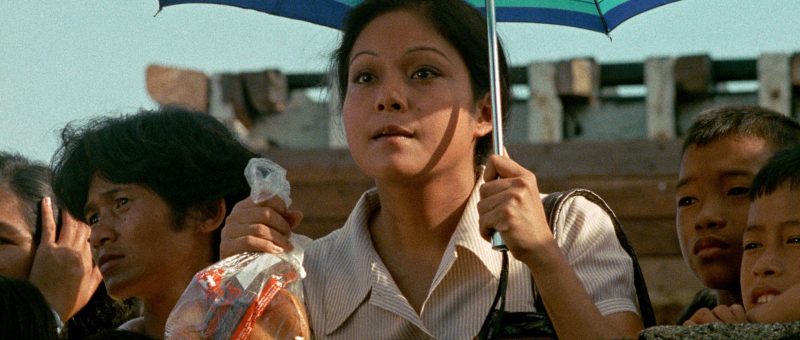
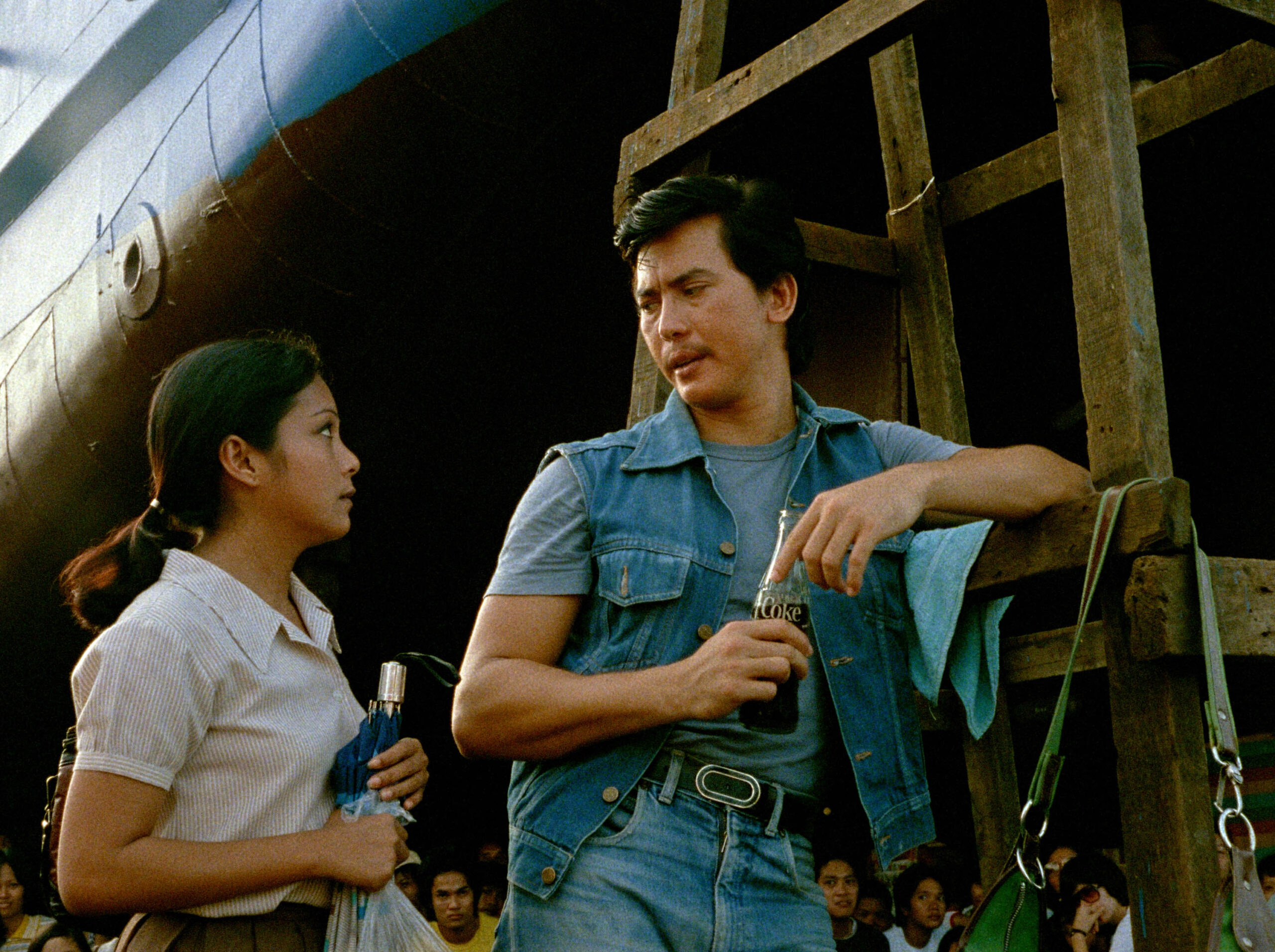
A Water Mill (물레방아, Lee Man-hee, 1966)

It’s not every day you wander into your own funeral. Or to be more precise, the death rite that Bong-won (Shin Young-kyun) unwittingly intrudes on in Lee Man-Hee’s feudal era fable A Water Mill (물레방아, Mullebanga) is for someone who died in a time no can remember. The old lady who explains it to him says that it happened long before she was born, implying at least the villagers have been enacting this ritual since time immemorial yet it’s almost as if Bong-won were walking towards a point of origin, drawn inexorably by forces beyond his control to play his part in this immortal ritual dance.

To that extent, Bong-won becomes a kind of “everyman” in this cautionary tale by virtue of the fact that he is nameless. Asked for his surname, he says he isn’t sure. It might be Kim or Park, later someone else says Lee which fills out the triumvirate of Korea’s most common family names. He says at one point that he doesn’t remember his mother, but thinks that she may have been a sex worker and his father a man who didn’t pay. But the fact he has no last name places him firmly at the bottom of the feudal hierarchy and most at the mercy of its hypocrisies and contradictions. He was on his way somewhere else when he fatefully found a sock floating the river that seems to flow towards him from his own future but that he will later gift perhaps to its original owner, the mysterious Geum-boon (Ko Eun-ah) with whom he falls in a deep, obsessive love that takes over the whole of his life.

Others in the village tell him that there is no such woman. An old man assures him she must have been some kind of ghost or supernatural creature come to trick him and Geum-boon does indeed take on a kind of eeriness. After deciding to stay in the village and look for her, Bong-won catches sight of Geum-boon in a forest glade bathing naked in a pool as the bright summer sun beats down on her but when he eventually makes his way down the mountain she has already disappeared. In chasing Geum-boon, he chases death but most evidently in the ways his obsession with her causes him to contravene the feudal order. He rebels against the landlord he was working for in refusing to collect her debt, then contracts himself to another in order to pay it so that he might marry her.

But ghost or not, Geum-boon is herself constrained by feudalism’s aggressive patriarchy. Force married to an invalid, she cared for him for three years until his death and then is pressed for his debts by the local landlord who wields them against her in order to claim her body. Married to Bong-won who has become an indentured servant, she is once again pursued by a landlord insistent on his droit du seigneur who exiles Bong-won to the pottery fields to get him out of the way. Geum-boon’s ambivalence does seem to give her a sometimes demonic quality as she laughs in the face of the landlord like something possessed and though she at first seems to like Bong-won and fear the attentions of the landlord she is also intrigued by the frankness of his current mistress who sees in her relationship with him the possibilities of transgressing class boundaries not to mention escaping a dull husband who will never be anything other than a servant. 

The film seems to suggest that Bong-won is powerless, while Geum-boon does at least have some power to wield. Even the landlord tells her that he has nothing to offer other than his money and power and even if becoming lady of the manor is a little far-fetched it seems unreasonable to criticise her if she did decide to become the landlord’s mistress as the path towards overcoming her circumstances lies in trading her body for influence. One could argue Bong-won does the same in leveraging his strength and his labour, but all it buys him is further exploitation and the eventual humiliation of knowing the landlord has been sleeping with his wife. 

Feudalism therefore destroys natural human emotions such as love when all life is transactional in a constant, and largely futile, struggle for survival. Bong-won turns to the spiritual realm for help, asking a shaman how he can win back his wife but she gives him the rather bizarre instructions to steal three sets of underwear and throw them in the river on 3rd August while bowing to the west. Needless to say, that doesn’t work out very well for him. The fates truly do seem to be against Bong-won. Lee adds a touch of supernatural dread as Bong-won finds himself surrounded by howling winds as he fatefully makes his way towards the water mill and his destiny. The ritual dance is perfectly recreated as Bong-won and Geum-boon retake their roles in the play, their actions matching those of the masked players as Bong-won collapses on the bridge just as the demon had though there is no positive resolution in what is now both reality and fable. What we’re left with is the tragedy of feudalism, but also the maddening futility of obsessive desire for that which is and has always been ever so slightly out of reach.


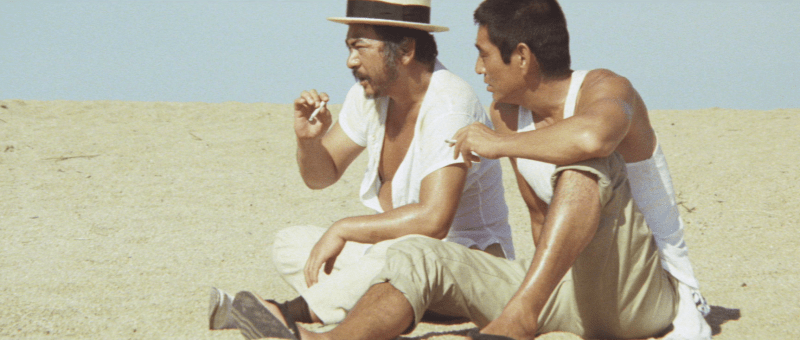
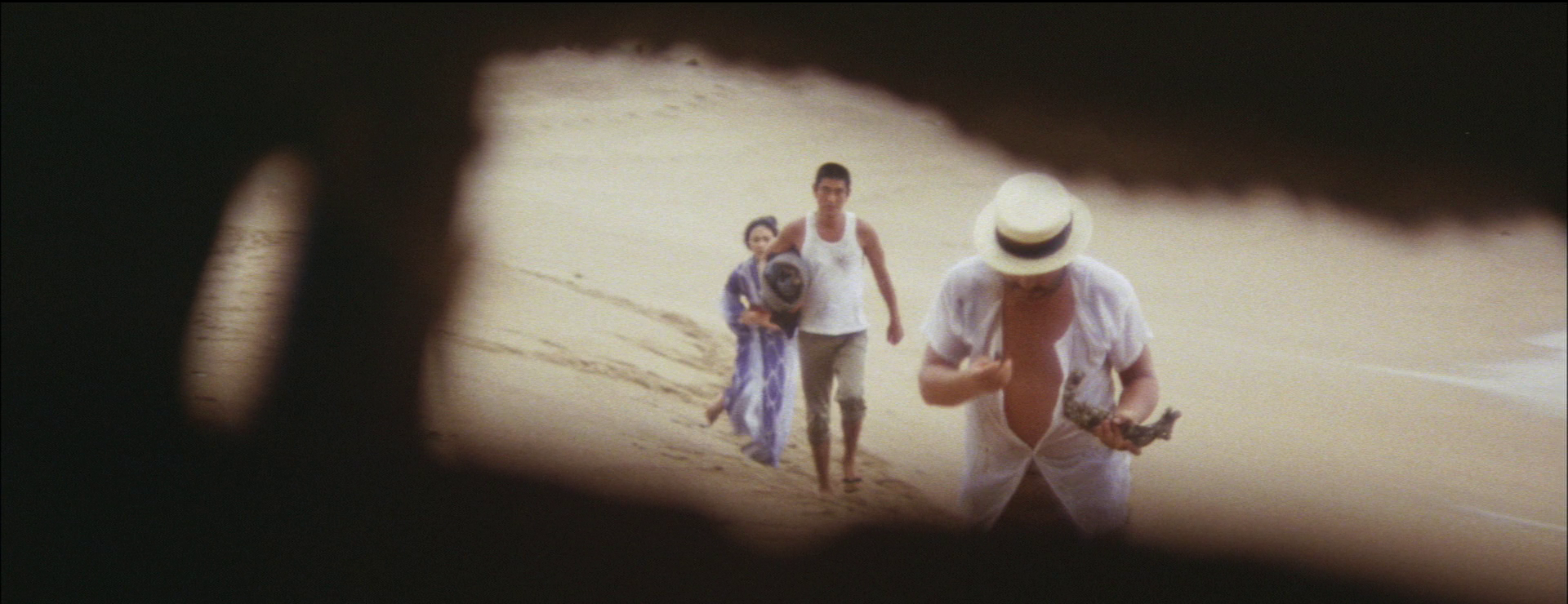
The Living Koheiji (怪異談 生きてゐる小平次, Nobuo Nakagawa, 1982)

“This play will never end,” says one of a pair of actors, in love with the same woman near the conclusion of Nobuo Nakagawa’s haunting final feature, The Living Koheiji (怪異談 生きてゐる小平次, Kaiidan: Ikiteiru Koheiji). Based on a 1924 play by Senzaburo Suzuki which had not originally been a kaidan or ghost story, what originally seems seems to be a conventional love triangle drama develops into something darker and stranger as its trio of protagonists find themselves trapped in an escapable loop of obsession, violence, love and misogyny.

At heart, this is a story of a woman trapped between two men, an abusive husband she cannot leave and a childhood friend who says he loves her she may want not want either. We’re told that Ochika (Junko Miyashita) was once the daughter of a wealthy landlord and entered into an arranged marriage with wealthy man but was eventually sent back and married Taku (Shoji Ishibashi), the son of a teacher the landlord may otherwise have regarded as beneath them. A childhood friend of each of them, Koheiji (Fumihiko Fujima) was the son of an itinerant actor and loved Ochika too but bit his tongue. However, he can do so no longer. At breaking point, he must make his feelings known. Ochika does not accept them, but neither does she fully reject him. At an impasse, Koheiji states that he will kill Taku so that Ochika will then be free to marry him. On a fishing trip with Taku he directly asks him to surrender Ochika, but he refuses and becomes angry. Knocking him into the water and hitting him with an oar, Taku believes he has killed Koheiji, dissolves the acting troupe to which they all belong, and returns home. Koheiji soon turns up there but relief turns to rage when he repeats his request for Ochika’s hand and Taku kills him again.

We can never really be sure if “the living Koheiji” as he takes to calling himself is alive or dead, an actual ghost or a man with a talent for surviving living only for his obsessive love. He continues to haunt the couple, or more directly Taku whose guilt he may be manifesting. From what we can tell of Taku, he is a monstrously insecure figure who attempts to assert dominance through violence. Of the three, he is the only one outwardly frustrated by his lowly socio-economic position as an itinerant actor and only the troupe’s drum player at that. He has been writing his own play, a love suicide drama, in an attempt to bump himself up to the intellectual position of playwright but the manager rejects his work or else Taku lacks the economic power to bribe him. 

It’s possible in one sense that what we’re watching is the love suicide drama that Taku is writing. He does indeed later invite Chika to die with him while haunted by the living Koheiji. The dialogue between the three is ostensibly theatrical and delivered in the rhythms of kabuki theatre as if they were constantly rehearsing a play, yet Koheiji in particular often slips into a rhythm that mimics that of the Akita Ondo, a bawdy folk chant that is part nonsense song and part improvised diatribe against the state of the nation. Koheiji may also have been professionally frustrated in his desires to become another Danjuro, his lack of success another barrier to romantic fulfilment, but ultimately feels that Ochika should be his and Taku should consent to give her up. 

He points out that Taku is violent towards her. When Ochika asks him about his play, she says that women shouldn’t pry into men’s work and beats her. She asks him for a divorce which he refuses to grant, but later tells Koheiji that his violence is only a sign of his love for her though it’s clearly an expression of his wounded masculinity. In many ways, Ochika is a woman haunted by two men neither of whom she can fully escape. We can’t even be sure she isn’t dead too, or else a figment of Taku’s fevered imagination furiously writing out this love tragedy in real time. In any case, she continues to follow him and is continually disillusioned. On discovering that she engineered a miscarriage, he questions the parentage of the child and is resentful that she chose not to tell him about the pregnancy because it trapped her in an abusive relationship from which she wanted escape. She may have been willing to use Koheiji to help her, but does not appear to return his feelings and is in any case denied any agency. Just as she was traded away by her father, Koheiji simply demands her of Taku as if she had no right to refuse.

The living Koheiji becomes more grotesque each time he resurrects himself, eventually disguised as a leper and as pale as a ghost whether or not he actually is one. Wracked with guilt, Taku begins to experience ghostly nightmares featuring scenes from classic tales of horror such as Koheiji tied to a board and floating in a lake much as Oiwa and the servant in Nakagawa’s own Yotsuya Kaidan. A master of the genre, the eeriness that Nakagawa conjures here is of a different order. An ancient, unending haunting that as Koheiji says will never end destined to be repeated by the trio in an eternal and irresolvable cycle of suffering. The final scene takes place at Sai-no-kawara, the shore of the river of life and death to which the souls of deceased children go to be watched over by the crowds of jizo at the cave, echoing the faces of the dolls that once watched Taku and Ochika. What happens there may represent escape or merely damnation, Ochika perhaps freed or only to repeat this cycle for all eternity. 


Trailer (English subtitles)

The Way We Talk (看我今天怎麼說, Adam Wong Sau-Ping, 2024)

In the opening scenes of Adam Wong’s The Way We Talk (看我今天怎麼說), deaf children are being taught in a specialist school but are prohibited from using sign language to communicate with each other. The teacher, who does not sign, reprimands them severely insisting that they must speak to her. Her harsh and authoritarian approach is akin to that taken by colonialising authorities insisting that children must speak their language in an attempt to wipe out that which is spoken in their homes and among their families in a concerted attempt to weaken the bonds of their communities. The teacher claims she’s doing this for their own good, as do some of the children’s parents, because they believe that they will not be able to live “normal” lives if they cannot speak and that signing weakens their ability to do so. 

Of course, this is also motivated by internalised ableism and the stigma surrounding disability. Bella lost her hearing following a childhood illness and received a cochlear implant at an early age. Her mother did not want her to learn sign language because she believed doing so would set her back but instead forced her to listen to lines from television dramas multiple times, beating her with a coat hanger when she failed to repeat them with perfect pronunciation. Her prejudice is later exposed when she discovers that Bella has begun learning to sign as an adult, asking her if she wants to be like “one of those deaf people”. 

Bella had internalised a degree of this stigma herself, receiving financial aid as a kind of poster girl for an organisation promoting cochlear implants for whom she gives what is an incredibly insensitive speech in which she remarks that she believes that thanks to technology like this there will one day be no more deaf people in the world. Later she tries to use the sign language she’s learned in one of their videos but is quickly told off. The way the videos are framed presents the use of cochlear implants as a path towards a “normal” life, the point being that wearers could communicate in a way they describe as “normal”. If they were also signing it would imply that implants didn’t work and people wouldn’t buy them. In a later and even more insensitive ad, Bella is pictured with a caption that says the implants restore “joy and colour” to the wearer’s world as if the lives of deaf people were somehow colourless or devoid of joy.

It’s being called out for these unexamined views that gives Bella pause for thought on encountering Wolf, a tempestuous young man who refused a cochlear implant and is determined to preserve the existence of sign language which is after all his mother tongue. Wolf is frustrated by the march of technology. At Bella’s conference, he’s annoyed by the organisers who tell him they’ve cancelled the sign language interpreter because the captioning machine is good enough while appearing indifferent to his objection that they’ve removed the ability for a deaf person to ask a question. He isn’t against the use of cochlear implants for those who want them, like his friend Alan, but is also determined to preserve deaf culture through the preservation of sign language. 

Alan, meanwhile, has swung in the opposite direction and agrees that speech is essential for integration into mainstream society without really considering that it’s the society that should change to become more inclusive rather than forcing everyone to conform with it. Having been repeatedly turned down for employment, ironically in one case at least because she didn’t know sign language, Bella begins to feel that her dream of becoming an actuary is eternally out of reach. Though she’s secured a job at a high profile company, she feels as if she’s a diversity hire, essentially exploited while the company uses her to improve their image as a caring employer but only ever has her doing busy work as if they don’t trust her with anything important. Her mother had always pushed her to be “normal”, as if her deafness were something shameful to be concealed but it becomes clear that living this way places her under a lot of pressure while she may be more comfortable with communicating through sign language which affords her the freedom to express herself without constraint.

Crucially, the point is that Bella should have the choice to use whichever communication style she likes or all of them together rather than being pushed towards that which best suits a hearing society. Those in charge of decision making often claim they’re acting in the interests of inclusivity, but more often than not their decisions are influenced by a desire to cut costs such as relying on AI captions rather than paying an interpreter. Wolf’s dream of becoming a diving instructor is dealt a blow when the Hong Kong diving agency refuses to allow him to take the exam without a qualified deaf diver to interpret, only there obviously aren’t any because they’d all have been in the same position. With a gentle empathy, Wong exposes the petty prejudices of the hearing society but equally reveals the path towards the claiming of an identity among a strong and vibrant community.


The Way We Talk screened as part of this year’s BFI London Film Festival.

Original trailer (English subtitles)

Don’t Cry, Butterfly (Mưa trên cánh bướm, Linh Duong, 2024)

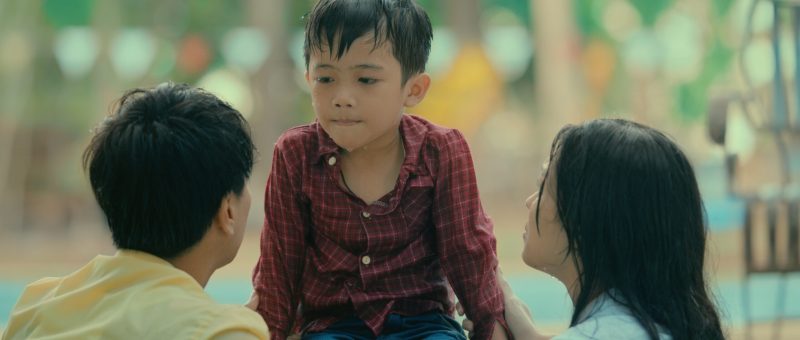
There’s an odd moment of calm in the opening stretches of Linh Duong’s debut feature, Don’t Cry Butterfly (Mưa trên cánh bướm), as the heroine, Tam, dances alone as if enraptured by the music flooding in from the open air aerobics going on in the square downstairs. The Vietnamese cover of ‘90s dance hit Smile by a band also called Butterfly maintains its distinctive “find my samurai” chorus in English though its vision of idealised masculinity couldn’t be further from the reality of Tam’s laconic and apparently unfaithful husband Thanh who utters precisely one line and only at the film’s conclusion which seems to take place in a possibly imaginary past. 

The irony is that Tam works as a wedding planner. We see her shepherd a couple through rehearsal with business-like efficiency, as they were on some kind of conveyor belt to be rushed in and out as quickly as possible. But for all that the wedding is display of untold extravagance that stands in stark contrast to the reality of Tam’s marriage. Even so, many of the attendees apparently to do not show up because the couple have scheduled their nuptials on an auspicious day which also happens to be that of the cup final. Auspicious it is not for Tam who is passed a phone by her 20-something-daughter Ha revealing Thanh at the football with another woman. In a meta touch, the commentator seems to narrate her discovery while photos soon go viral among her friendship group adding to the sense of displacement and humiliation that eventually send her to a soothsayer for a black magic cure to bring her husband’s affections back to her. 

Ha doesn’t understand her mother’s calmness, why she hasn’t thrown Thanh out or raised hell, but also perhaps does not feel the same sense of failure and despair resulting from the end of a marriage as a woman of her mother’s generation might. Though the other women joke about cutting Thanh’s bits off, they too put up with cheating husbands and the onus is on the woman to change and recapture her husband’s love as if she were somehow at fault for losing it. One of the videos Tam watches online features a middle-aged woman who claims to have reformed herself after her husband’s infidelity insisting that it was her fault for letting herself go but now she’s lost weight and dresses more youthfully so her marriage is repaired. Tam goes the black magic route instead but is tempted by memories of a fantasy romance from the past with her college crush though he ultimately turns out to be a loyal husband to a woman none of them liked. 

The slow drip of poison into her life is manifested by a leak in the ceiling and its surrounding mould which only women can see. Another woman knocks on her door with some irritation and asks if she has a leak too, dragging the landlord who declares himself oblivious unable to see the obvious problems of their society because of course he’s a man so everything seems just fine to him. Eventually he sends some anti-mould paint to placate them, leaving Tam and Ha to apply it though it does little to cover up their mounting unhappiness and despair. Ha, fearing that her parents always wanted a boy, wants to go abroad and is intent on taking her best friend from across the way with her but as in her parents marriage never really thought to ask him if actually wanted to go. Trong seems to have a number of abandonment issues seeing as his mother left choosing to pursue her desires to become a dancer rather be trapped by conventional domesticity. 

In the final and increasingly surreal stretches of the film it becomes clear that the women are drowning amid the floods of a patriarchal culture, no different from the fish in Thanh’s tank that he randomly buries in their houseplants and then simply replaces when they die. As the soothsayer had told her, Tam does indeed live a thankless life in which all her efforts are on the behalf of others leaving nothing for herself while slow poisoned by the mould in her ceiling that eventually threatens to consume her whole or else suck her back to time that at least seemed happier but in retrospect may not have been even at its most idealised.


Don’t Cry, Butterfly screened as part of this year’s BFI London Film Festival

Original trailer (English subtitles)

Living in Two Worlds (ぼくが生きてる、ふたつの世界, Mipo O, 2024)

Mipo O had been quietly building a reputation as one of Japan’s most promising young indie directors with such lauded films as The Light Shines Only There but has been on an extended hiatus since 2015’s Being Good. Living in Two Worlds (ぼくが生きてる、ふたつの世界, Boku ga Ikiteru, Futatsu no Sekai) marks her return to filmmaking after taking a break to raise a family and, adapted from from an autobiographical book by Daisuke Igarashi, not only explores the realities faced by the deaf community but the complicated relationship between a son and his mother.

Indeed, at times the issue is less that both of Daisuke’s (Ryo Yoshizawa) parents are deaf as it is that he does not listen. When he becomes a teenager, his mother Akiko (Akiko Oshidari) spends a huge amount of money on a high tech hearing aid because she wants to hear his voice, though most of what he says to her is hurtful and unpleasant. His older self is probably regretful, ashamed of the way he treated his mother in particular but also in regards to his rejection of his family because he felt embarrassed by their difference in what is a fiercely conformist culture. He doesn’t give his mother a letter about parents’ day because he doesn’t want her to come and also thinks it would be pointless because she wouldn’t be able to hear anything anyway. Later he tries to get his grandmother to come with him to a parent teacher meeting about his plans for high school and beyond, telling his mother she’d only be in the way. In fact, the meeting is quite awkward because the teacher talks directly to him without trying to include Akiko while Daisuke makes infrequent signs under the table as if embarrassed to have the teacher see them.

As a young child, Daisuke had interpreted for his mother using sign language publicly despite the awkward attitude towards it at home. His grandmother writes things down on paper instead, telling him that it’s too difficult for her to learn. That doesn’t make sense to his young brain as after all he’s picked it up since birth. But this early tension perhaps contributes to his increasingly conflicted feelings. When he brings a friend home, he asks him why his mother speaks in such a funny way but of course it’s normal to Daisuke and this perhaps innocent question begins to cement for him that his family isn’t “normal” and he isn’t like the other children. Resentment towards his mother only grows to the point he begins to blame all of his problems on her including his failure to get into the better high school though she has done nothing but support and encourage him. As she points out, she never had any choice about her schooling and received little education because her parents thought she’d recover her hearing and refused to send her to a specialist school until she was 14 meaning she was just sat there all day twiddling her thumbs while unable to make friends with hearing children who mostly ignored her.

The parents were also against the idea of her marrying her husband Yosuke (Akito Imai) because he was also deaf, nor did they support their decision to have a child believing two deaf parents would not be able to raise one safely or effectively. Such attitudes lay bare the lingering stigma towards disability which remains even within the family unit. Unable to separate himself from being the child of working class deaf parents, the teenage Daisuke abruptly moves to Tokyo with a vague idea of becoming an actor signalling his internal search for an independent identity. The film hints that his liminal status existing between the worlds of the hearing and the deaf has left him with subpar communication skills as seen in his repeated faux pas at job interviews until he finally tells the truth and is offered a job on the spot. There’s an intimacy involved in his interactions with his parents which often can’t be understood by others, but also a less pleasant undercurrent in the way these interplay with speech and his own decisions of when to switch between dialogue and sign. 

Having gone to Tokyo to escape being the child of deaf parents, he discovers that being “ordinary” doesn’t really suit him either and only begins to accept his identity after meeting a deaf woman at a pachinko parlour who invites him to her class for learning sign language in a more a formal way while another of her pupils gently explains to him that though he means well he sometimes does them a disservice by taking over as a hearing person when he should let them do the things they can do for themselves. The absence of musical score and variation in the sound mix emphasise Daisuke’s transition between worlds and his own attempts to locate himself within them eventually discovering the equilibrium that allows him to realise he was the one who couldn’t hear along though his mother had always been talking to him. Touching but resisting sentimentality, O’s poignant drama never shies away from the failings of its protagonist but equally from those of the society within which he lives that can itself be unwelcoming of difference.


Living in Two Worlds screened as part of this year’s BFI London Film Festival

International trailer (English subtitles)