Strawman (稻草人, Wang Tung, 1987)

The literal “strawman” at the centre of Wang Tung’s colonial era satire is a scarecrow who occasionally narrates the events of this small village where, he laments, almost all the young men have been sent off to die in small corners of South East Asia in the name of the Japanese emperor. All of this sounds quite absurd to A Fa (Chang Po-Chou) and Big Mouth (Cho Sheng-Li), two brothers who’ve evaded the draft because their mother cleverly smears cow dung in their eyes while they sleep so they won’t get taken by the Japanese like everything else in the village.

The brothers are caught in a clash of imperial powers and changing times yet are busy just trying to live their ordinary lives. They each have several children, so many the scarecrow quips that they can’t remember all their names, which might be why the most recognisable two are nicknamed “doo-doo” and “stinky head,” and struggle to support themselves by farming sweet potatoes on the land that turns out to be owned by their pro-Japanese brother-in-law. Not really wanting to admit that the war is all but lost, the brother-in-law is planning to sell the farm and move his family to Japan, meaning the brothers will be displaced from their land and lose their livelihood with few other prospects for making a living. 

Though things carry on as normal in the village, it’s clear that the Japanese are essentially looting and exploiting them. Not only do they take the young to die for the emperor, but later come for the brothers’ cows too, insisting that they need them for “taxes” because men are starving at the front. This clash of cultures is obvious in the opening scenes as a Japanese soldier returns the ashes of men who fell in battle to their families while reading out a formal speech in his own language that the villagers do not really understand. While their brass band plays the ironically Westernised sounds of militarism, the villagers drown them out with their traditional instruments as they start their own set of death rituals. These two communities are essentially incompatible and effectively living separately. The soldiers turn around and walk in one direction, while the villagers walk in the other releasing the tension born of this oppositional meeting.

Indeed, the villagers all speak Taiwanese (though Wang was ironically, and anachronistically forced to use Mandarin at the time of release) and exist in a slightly different world to the Japanese-speaking soldiers. A Fa is annoyed with Doo-doo for asking if he should take a Japanese name but subsequently asks if he can have one too on learning that he’ll get better sugar rations. The brother-in-law mixes Japanese and Taiwanese in the same sentence while his wife mainly answers in Taiwanese when her children exclusively speak Japanese. The sight of the children’s traditional Japanese geta wooden sandals scandalises and confuses the brothers’ children, while the cousins mock them in Japanese knowing they won’t understand. Only the slightly bumbling local Japanese official straddles the two worlds by conversing mostly in Taiwanese with the villagers and Japanese with his bosses.

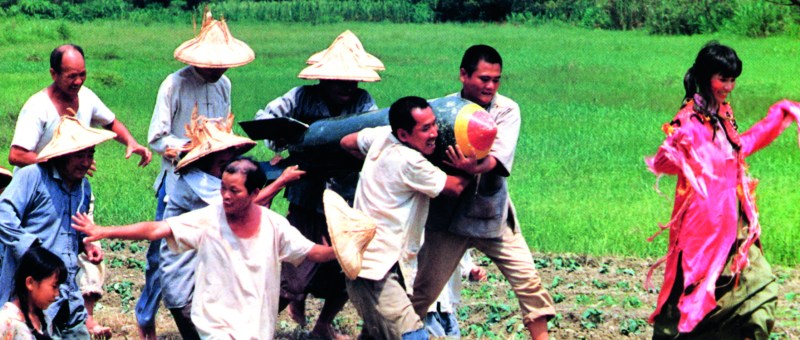
As good citizens of the empire, the children are asked to participate in metals collection and are given rewards for their finds. Doo-doo gets extra again when he picks up shrapnel from an American bomb which sets up a more complex relationship with American imperialism that will arrive after the war when the island is essentially recolonised by the arrival of the KMT and a large influx of mainlanders fleeing the communist take over. When a bomb lands on the brothers’ land but doesn’t go off, they think it’s manna from heaven and determine to take it to the main police station in the town in the hope of a large reward, while the official is convinced he’s going to get a big promotion for this tremendous find. 

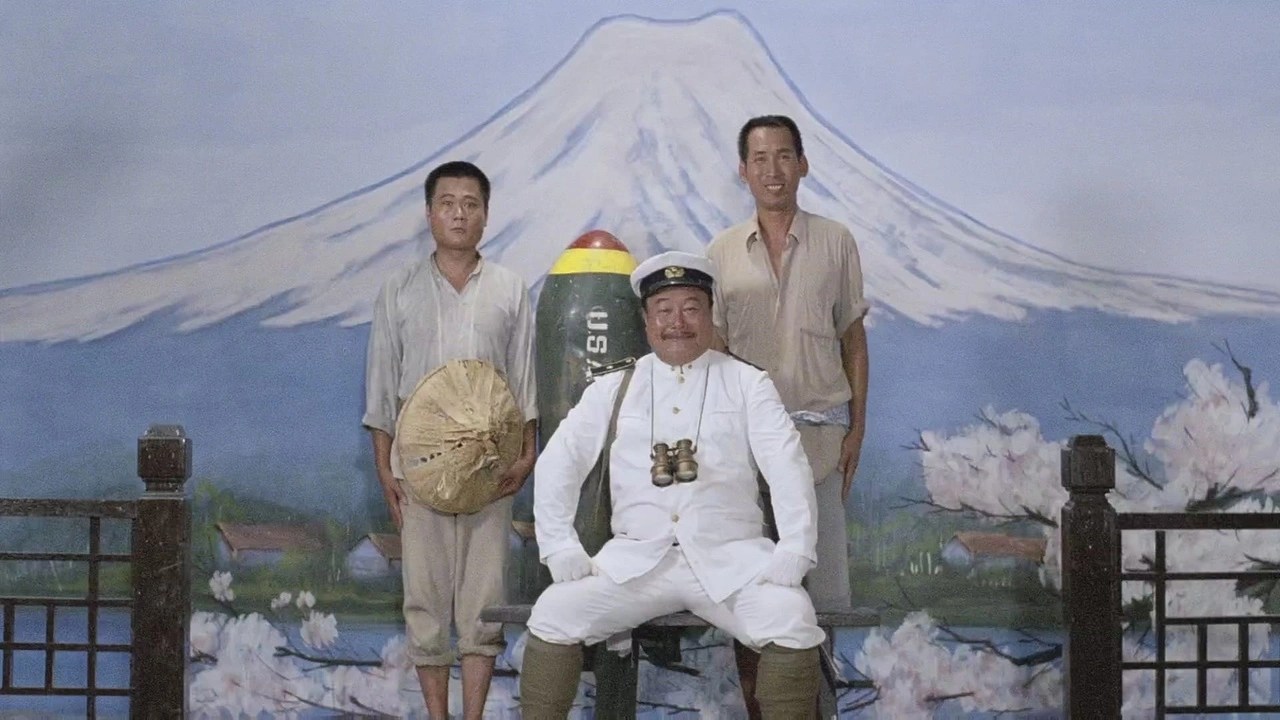
Everyone is so fixated on the economic potential that they’ve forgotten this is a bomb and even if it seems like a dud, there’s still a chance it could go off any second and this could all quite literally blow up in their faces. In this, the film seems to be satirising an over dependence on America who were the main backers of the KMT regime. The film was released shortly after the end of martial law during which there had been an attempt to rewrite the history of the island, preventing open discussion of the fact that Taiwanese men had died fighting for Japan and that the island had been bombed by the Americans. So impressed with themselves are they that the brothers and the official have their photo taken with bomb in-between and Mount Fuji backdrop behind as if signalling this complex network of relationships.

Still, even after the prize turns out not to be great riches after all but a hefty supply of fish, the Doo-doo and his grandmother cheer on the bombings hoping for more of the same in the future. The kids even put buckets out in the field waiting for the next raid hoping they can catch some of the shrapnel while forgetting that bombings are actually dangerous, rather than just lucrative, until being caught in one. Small moments of terror and sadness such as the brothers’ finding a frightened deserter hiding in their shed who doesn’t want to go to war because his wife’s pregnant and his family’s economically dependent on him, interrupt what is otherwise a warm and humorous depiction of rural life. A Fa and Big Mouth might be strawmen too, living their lives knowing little of the geopolitical situation but just trying to keep the crows off the grass long enough to get a little to eat before that too is taken away from them.


Strawman screened as part of the BFI’s Myriad Voices: Reframing Taiwan New Cinema.

Trailer (Traditional Chinese / English subtitles)
Seven Years Itch (七年之癢, Johnnie To, 1987)

The shifting social codes of late ‘80s Hong Kong come under the microscope in Cinema City sex farce, Seven Years Itch (七年之癢). Loosely inspired by the 1955 Billy Wilder film, Johnnie To’s third directorial feature may in some senses suggest contemporary Hong Kong is little different from mid-50s America in its overly patriarchal gender politics but does in some senses at least attempt to redress the balance by turning the tables on the feckless husband if only to defiantly restore the status quo in the uncomfortable positioning of domestic violence as a means of social control. 

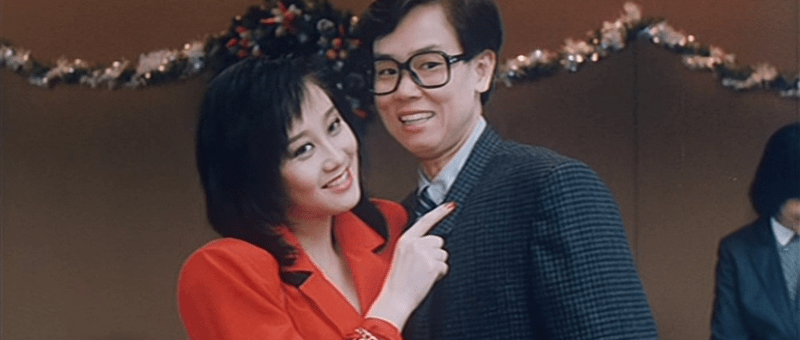
The ironically named Willie (Raymond Wong Pak-Ming) is a rising executive in a quasi marriage with Sylvia Chang (Sylvia Chang Ai-Chia) which is to say they live together as man and wife but Wille has never bothered to put in the paperwork (something which continues to annoy his harridan of a not quite mother-in-law). The couple have been together for seven years and Willie is beginning to tire of the monotony of (not actually) married life, irritated by Sylvia’s early morning Chinese Opera practice sessions and the fact he’s had nothing but sausage and egg for breakfast every day since moving in. Consequently, he fantasises about having an affair but is too mild-mannered despite the gentle ribbing of his colleagues and constant attempts of his brother-in-law John (Eric Tsang Chi-Wai) to introduce him to the red light district. 

In an early meeting with his colleagues after work, the men all discuss affairs suggesting that if a man isn’t chasing a woman it’s because he’s “sexually disabled” or gay quite clearly tying sexual prowess to masculinity. It’s also quite clear that the men view themselves as a group entirely separate from women, brother-in-law John evidently not thinking anything of it that he’s tempting his brother-in-law to cheat on his own sister implying that to him at least Willie’s masculinity is far more important than his sister’s feelings which in the end don’t seem to matter very much to him at all. John is also, however, a henpecked husband and moral coward. Challenged by his wife, sister, or mother, he immediately changes tack, dobbing Willie in when he’d tried to use him to placate Sylvia’s suspicions of an affair and quickly backtracking after having defended his decision not to file the papers by insisting “marriage is nonsense, old fashioned” only to counter with “I’m just saying for those silly men who try to overthrow the marriage tradition, I’m not one of them,”, “I absolutely agree with marriage. For women’s respect, I oppose living together”. 

Both John, whose constant badgering for loans also places a financial strain on the (non) marriage, and Wille feel themselves emasculated by the constraints of a monogamous relationship as the constant references to wild meat imply. Meanwhile the women are also depicted as vain and parasitical, the collection of trophy wives at Sylvia’s cookery class forever showing off the expensive gifts their husbands have bought them while alternately complaining they feel ignored. The implication is that the men can’t win, if they seem indifferent the wife worries they’re playing around, but too much affection is also regarded as a sign of infidelity. 

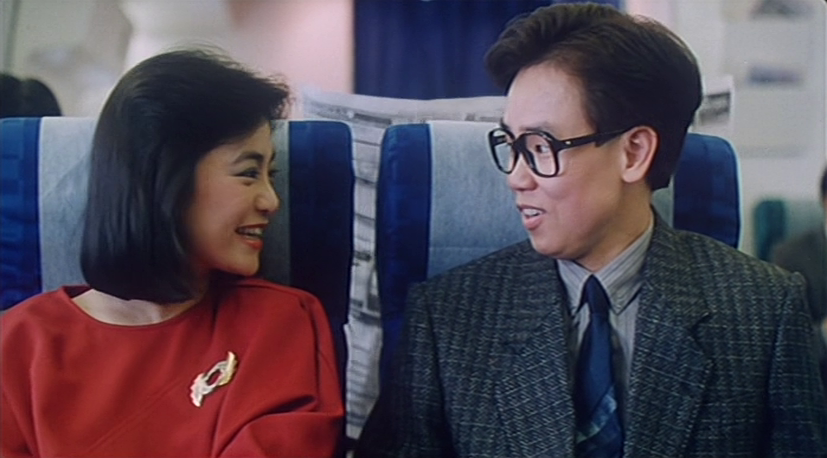
Even so it’s Sylvia who eventually gains the upper hand in refusing to play along with Willie’s games after he convinces her join him for a little Vertigo-esque role-play on a second honeymoon in Singapore, re-enacting his brief encounter with a foxy woman he met on a plane who was in fact conning him in order to facilitate a drug smuggling mission. Fed up with his ill-treatment, she falls asleep before the couple end up in an argument about her relationship with her “gay cousin” Chinese Opera partner with an inexplicably jealous Willie descending into an unpleasant homophobic rant. When he goes back to his own seat she has a meet cute of her own with a Chinese-American businessman literally named “Mr. Money” (Wu Fung) who took a liking to her in the departure hall and quite clearly needles Willie in the soft spots of his masculinity being both wealthy and cultured, able to take Sylvia off to a much more comfortable life in America with someone who is almost certainly going to treat her better than he ever intended to. 

As in many subsequent To comedies, it’s then the man who is put on the back foot blindly flailing while trying to win back a woman he took for granted. But if it seemed as if Sylvia might actually have more power in this relationship that either of them had assumed, the notion is quickly knocked back, literally, when her henpecked father raises a hand to her mother at the airport in order to support Willie’s attempt to prevent her leaving not because he thinks his daughter will be happier but in support of Willie’s compromised masculinity while reaffirming his own. An uncomfortable suggestion to a policeman that if “you slap her everything will be OK” reinforces the idea that actually the harridan mother-in-law now respects him more because of his show of manly violence, rebalancing the relationship back towards patriarchal norms while the father-in-law then turns full on sleaze cavorting with young women in public parks. 

It all adds to the impression that Willie is a sad sack, ineffectual man but largely because he turns back towards his wife while continuing to fantasise about other women seven years later claiming no longer to find her attractive and anticipating another itch this time presumably to escape his responsibilities as a father, his eyes following a pretty park jogger played by a then rising now iconic Hong Star who had appeared in the previous film Wong and To had made together. While To’s dancing camera shows glimpses of its future romanticism, it can’t quite escape the contradictions of the material even as it does its best to hand the balance of power back to Sylvia who could, it has to be said, do better. 


The Man with Three Coffins (나그네는 길에서도 쉬지 않는다, Lee Jang-ho, 1987)

“What a piteous soul who wanders around with sorrow.” The echoes of a funeral song haunt the melancholy hero of Lee Jang-ho’s Division Film, The Man With Three Coffins (나그네는 길에서도 쉬지 않는다, Nageuneneun kileseodo swiji anhneunda). Adapting a novel by Lee Je-ha, Lee Jang-ho positions the divided nation as a more literal kind of limbo filled with wandering ghosts and souls who no longer have a home to return to in which the echoes of shamanism ring with fatalistic intensity.

In Lee’s elliptical screenplay, moments replay and reverberate in a stream of memory that echoes the protagonist’s fractured state of being. What eventually becomes apparent is that he is on a quest to return his wife’s ashes to her hometown, the problem is that she was one of many displaced by the Korean War. She became separated from her parents and no longer knew where her hometown was except somewhere in the North. The man who is being discussed in the opening sequence, Mr Kim, is also on a quest to return to his hometown but like that of Sun-seok’s wife (Lee Bo-hee) it lies in the North and it is unlikely he can reach it. The old man tightly grips a photograph of his family before the war, finally releasing it only when some henchman working for his son who only sees the South as his home come to retrieve him and destroy his hopes of dying in the place where he was born.

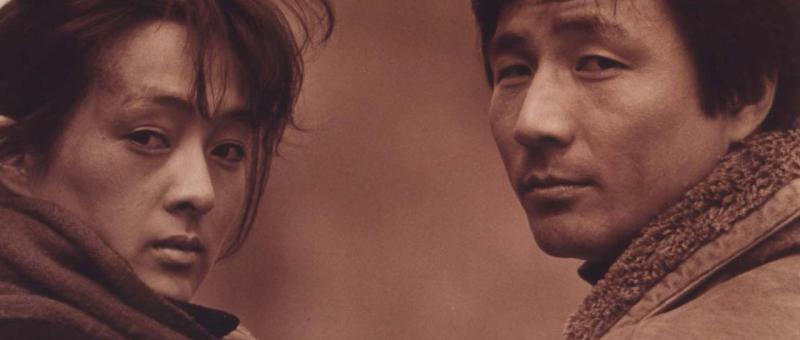
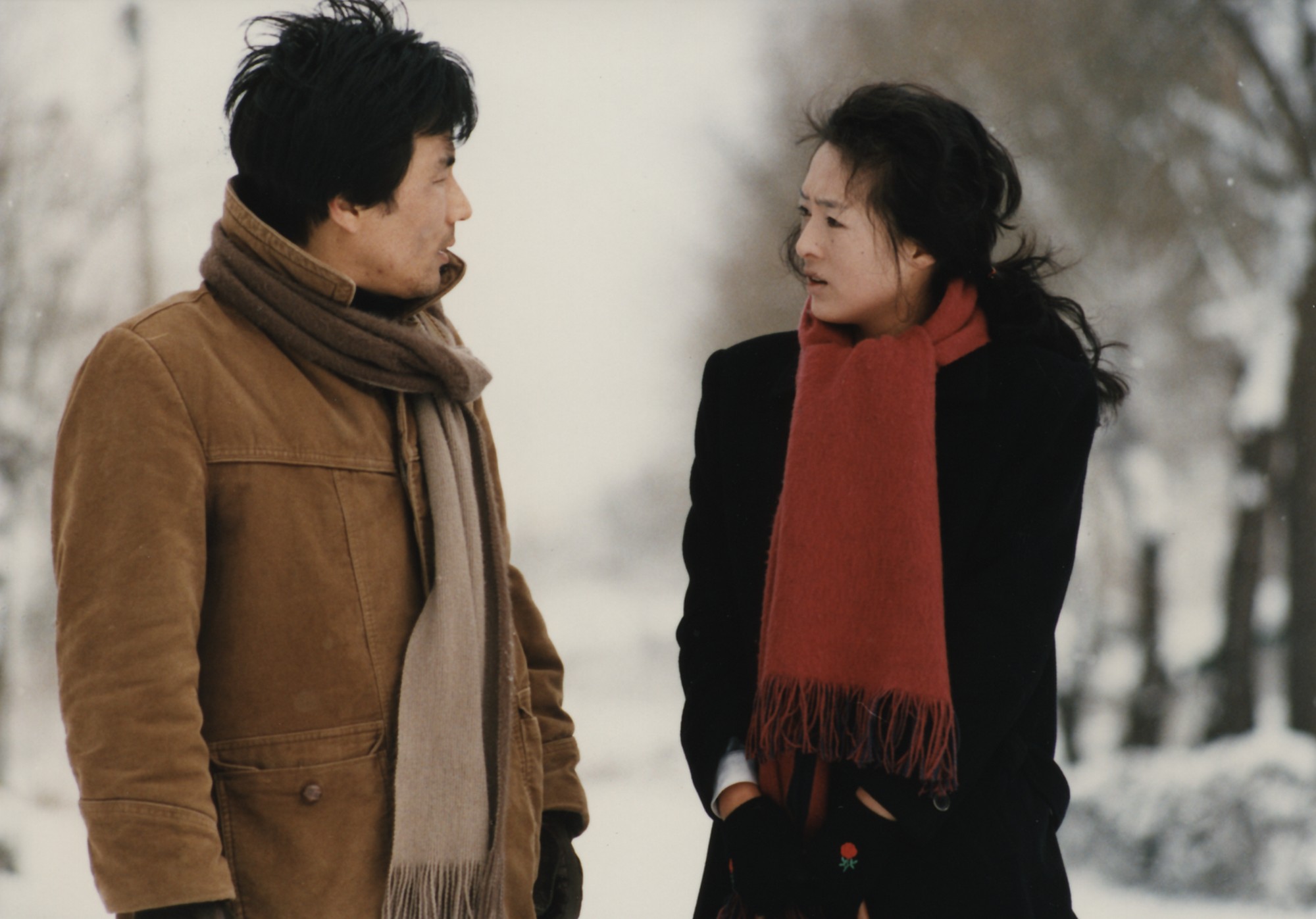
During his journey, Sun-seok (Kim Myung-gon) passes a sign which reads “Road to Reunification” but the bridge alongside it has been removed with only the supports remaining like thorns embedded in the landscape. Another sign reads “Restricted Area” marking the line beyond which Sun-seok cannot pass, like the man in the funeral song unable to pass through mountain or water. As he nears his destination, Sun-seok’s paths are blocked by snow preventing him from moving on or from returning to his ordinary life in Seoul. He is in more ways than one a purgatorial figure, a man already dead but trapped in the mortal realm even as the shamans attempt to guide him towards his rightful direction, a direction which Sun-seok may finally realise only on witnessing a woman with whom he may have fallen in love join in with the shamanistic dance though she two had been as soulless as he was and it may be impossible to say which of them is bound for the land of the dead. 

Mrs. Choi (Lee Bo-hee), the only woman given a name, remarks that a shaman had told her that at 30 she would meet a man by a river who was carrying three coffins and that this man was her husband in a previous life. This might explain why all of Sun-seok’s women are played by the same actress, as if they are all echoes of the same soul though equally it could reflect Sun-seok’s myopic view in which there is only ever really one woman. In any case, their connection seems both fated and frustrated because in this divided world there are only ever partings. Unable to reach his destination, Sun-seok scatters his wife’s ashes in the closest town to the DMZ, the same town where Mrs Choi and Mr Kim are also prevented from moving forward though in this case pulled back towards the soulless capitalism of the contemporary South as symbolised by Mr Kim’s son and his political ambitions. 

The implication is that is the division itself which caused the death of Sun-seok’s wife, ultimately unable to reconcile the division within herself and eventually consumed by it. Her death is echoed in that of a sex worker who dies gripping her throat and foaming at the mouth shortly after an encounter with Sun-seok, while a sex worker he meets in another town suffers a similar fate as if he were somehow spreading death along his way bringing him to his three coffins, which are in a way one and also four including perhaps his own. The washed out red of Lee’s distinctive colour palate lends the dusty land a hellish glow while the unusual camera techniques, a copulating couple superimposed on Sun-seok’s playing cards and a giant hand suddenly appearing in the sky for example, add a sense of ominous dread enhanced by the constant intrusions of shamanic ritual. It seems that as the song says, a funeral lament for a boy who disappeared feared drowned but also for Sun-seok himself, he really can’t go anywhere and is condemned to wander, a lost soul in a divided land who cannot any longer return to his home.


Luminous Woman (光る女, Shinji Somai, 1987)

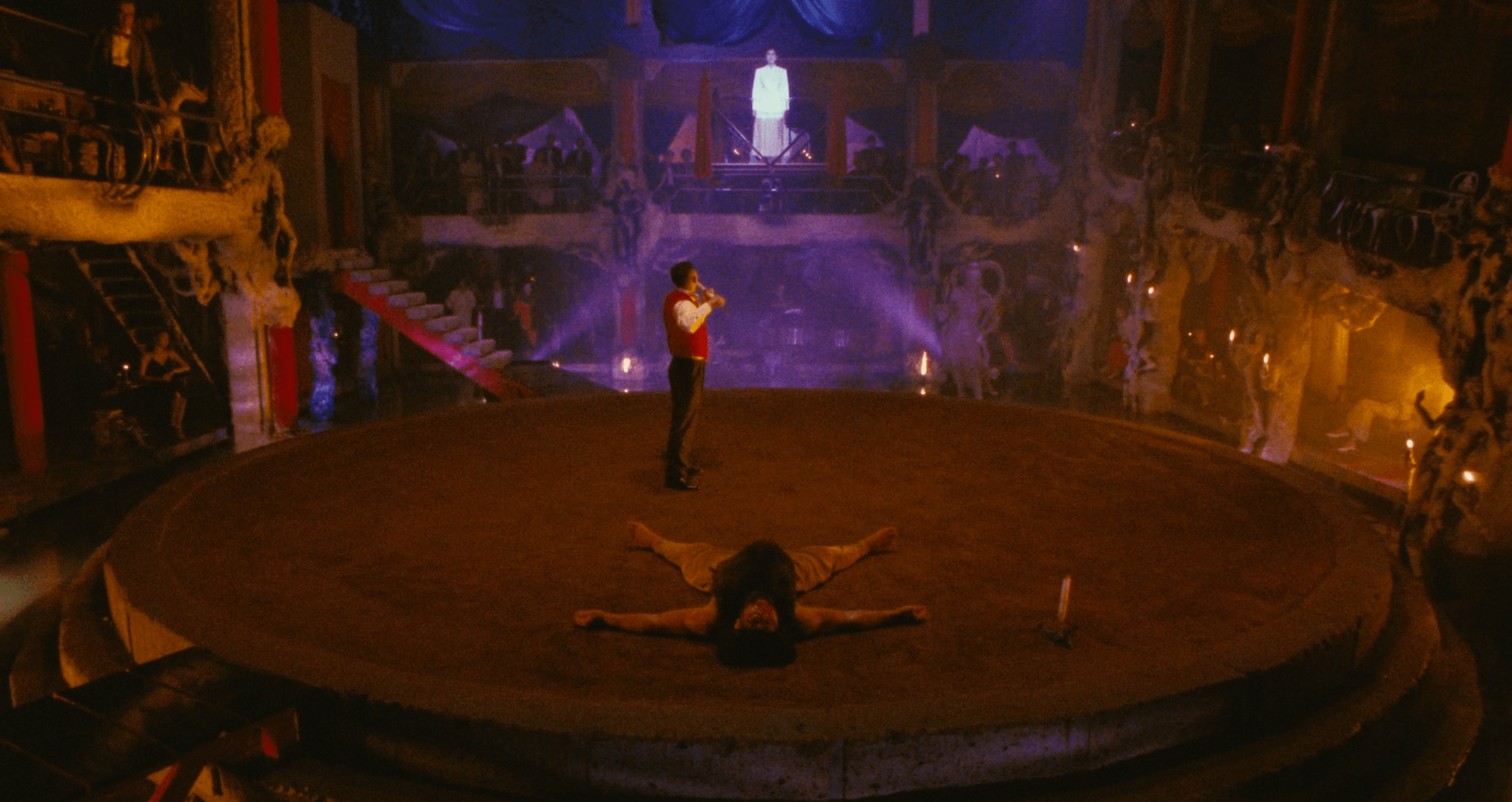
“I’ve come to the city and my heart has turned black” sings a monstrously corrupt former opera singer turned bizarre nightclub impresario in hellish Bubble-era Tokyo. A tale of urban “sophistication” versus pastoral innocence, Shinji Somai’s Luminous Woman (光る女, Hikaru Onna) sends a pure-hearted mountain man into the dark heart of the modern day city hoping to rescue the woman he loves who swore she would return to him but instead has been swallowed whole by the neon-lit landscapes of the contemporary capital. 

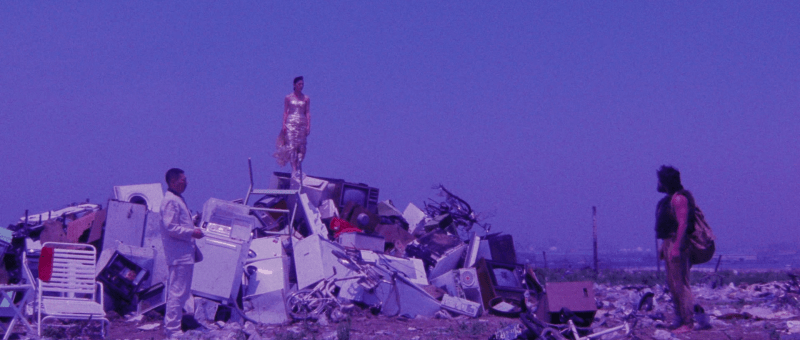
“Tokyo is lonely place” the hero immediately exclaims on witnessing it from the urban sprawl across the water in the company of an opera singer, Yoshino (Monday Michiru), whom he describes as like a doll without any blood coursing though its body. The incongruity of Sensaku’s (Keiji Muto) presence is immediately signalled by his appearance. Dressed in a bearskin jerkin and baggy trousers, walking with bare feet (all the way from Hokkaido!) and his face mostly beard, he looks every part the frontiersman as if he’d somehow stepped out of the 19th century straight into Bubble-era Japan. As he explains, he’s come looking for his woman, Kuriko (Narumi Yasuda), who travelled to Tokyo to study accounting to help the local farmers manage their businesses when she returned to run a farm with Sensaku. 

The first note of discord arrives when the man travelling with the opera singer, Shiriuchi (Kei Suma), tells him that he knows a woman by that name who also came from the same town in Hokkaido but she now works as a bar hostess. Shiriuchi only agrees to tell Sensaku the rest of what he knows if he makes an appearance at his club in its gladiatorial floor show. Sensaku is used to the primal struggle, he’s a mountain man after all and physically robust. He isn’t afraid of a fight only warning that there’s a chance he may kill his opponent to which Shiriuchi declares so much the better.

This a Tokyo populated by those who are in a sense already dead. Shiriuchi’s floor shows leverage mortal struggle as a means of existential validation, yet his concept of “sophistication” founded in European classicism is directly contrasted with the idealised pastoralism to which Sensaku eventually returns as he and the other villagers plant new crops surrounded by greenery and an incongruous mix of animals including a mischievous racoon. Yoshino, the “bloodless” opera singer has lost her ability to sing seemingly because of her oppression at the hands of Shiriuchi who describes as her as a “commodity”, “precious as a diamond”, but later treats her as a kind of broken toy complaining that if he cannot “enjoy” her body nor exploit her voice she has no further value to him. 

It soon becomes clear that Kuiriko too has fallen under his spell, working at an equally weird nightclub where the pale-faced hostesses wear kimono and sing children’s folksongs. She came to the city for education, but has become a drug user which leaves her vulnerable to Shiriuchi’s manipulation. Several times he is referred to as “master” and there is something Devil-like about him in the influence he seems to wield in these strange spaces of the prosperous city buried somewhere beneath the neon lights and sprawling office blocks. The pinkish tint of Somai’s colour grading along with his characteristically roving camera add to the sense that we already in hell and if Sensaku does not escape from it soon, he too will be consumed like Akanuma (Hide Demon) before him who came to look for a woman only to discover that she had already found happiness with someone else. 

Mountain man Sensaku’s identification with fisherman Akunuma is only further deepened by the sensation that he too is “burning” in the literal flames which lend a hellish glow to the empty swimming pool where he consummates his relationship with Yoshino who subsequently regains the ability to sing. They are both in a sense pure-hearted men out of place in the emotional austerity of a modern capitalist society, a pair of Orpheuses descending into hell in search of lost love but finding only disappointment and ruination. Sensaku is finally able to escape in accepting that he cannot rescue Kuriko in part because she has no desire to be rescued, while Yoshino may still come with him if she too chooses to leave. Somai’s characteristically long takes add an edge of eerie oscillation to his often theatrical composition which culminates in the scene of two women connected via telephone call seemingly sharing the same space even as one is surrounded by a spiderweb of laser-like red string. Dreamlike and often surreal, Somai’s etherial fable casts the Bubble-era society as a hellish underworld of broken dreams and human cruelty but finally takes refuge in a scene of pastoral restoration neatly mirroring the trash-heap paradise of its opening.


Luminous Woman screens at Japan Society New York on May 5 & 13 as part of Rites of Passage: The Films of Shinji Somai

Teaser trailer (no subtitles)

An Autumn’s Tale (秋天的童話, Mabel Cheung, 1987)

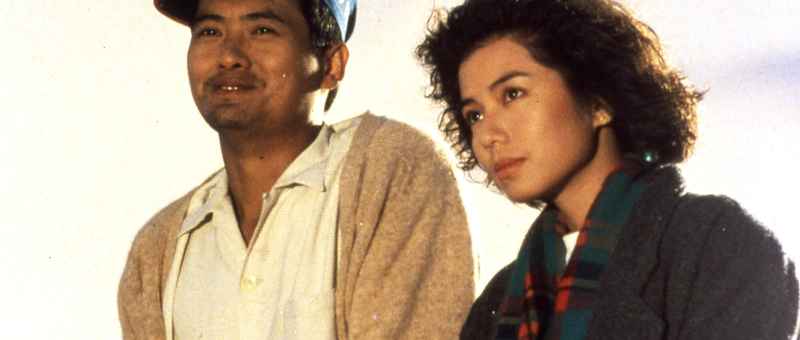
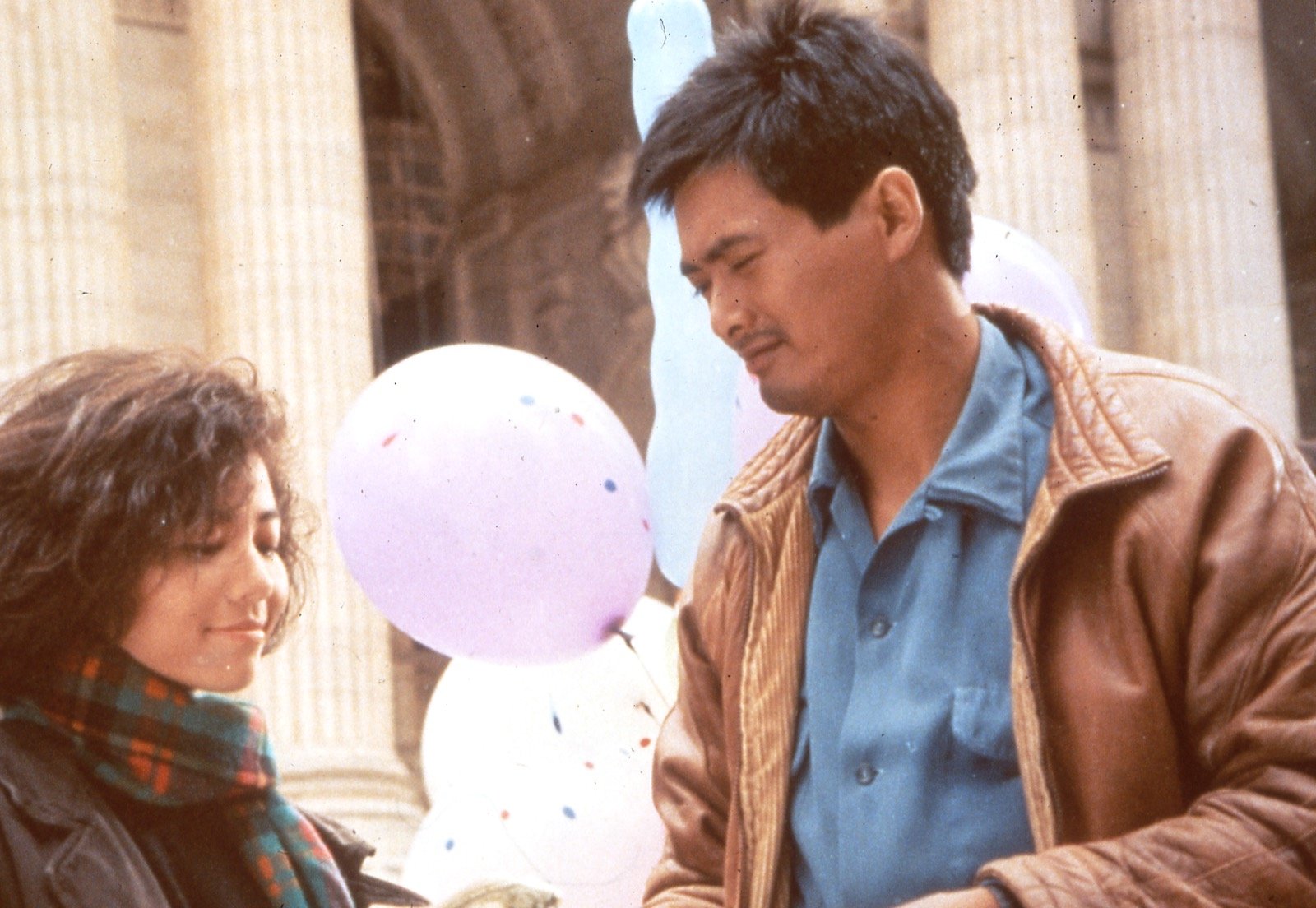
Cherie Chung and Chow Yun-fat find love in exile in Mabel Cheung’s charming New York rom-com, An Autumn’s Tale (秋天的童話). Penned by Alex Law, Cheung’s breezy chronicle of love and handover anxiety is subtle and sophisticated romance for grownups finding its youthful heroine stepping into herself in stepping away from home springboarding from emotional heartbreak into personal growth while beginning to fall for her equally lost and hoplelessly diffident yet larger than life new city neighbour. 

After two years of patient saving, Jennifer (Cherie Chung Chor-hung) is finally heading to New York to reunite with hometown boyfriend Vincent (Danny Chan Pak-keung) and study acting in the city. Her mother has put her in touch with a distant relative who is apparently a former sailor turned big man in Chinatown nicknamed “Figurehead” (Chow Yun-fat) who’s agreed to pick her up from the airport and sort her out with a flat. What Jennifer hasn’t disclosed is that she hasn’t told Vincent she’s coming and plans to surprise him when he returns from a baseball game in Boston. When she arrives, however, she discovers not only that Figurehead has somewhat misrepresented his level of success but that Vincent is seeing someone else and places little value on their past relationship, viewing his hometown girlfriend as childish and unsophisticated now he’s a big city guy changed by his new environment but not for the better. 

Jennifer’s culture shock on arriving in late 80s New York is instantly apparent as “Figgy” takes her back to the rundown Chinatown slum where he is living to a flat which looks like no-one’s been up there in 20 years, still has a gas-operated refrigerator, and is filled with the last tenant’s abandoned belongings. Perhaps bearing out the realities of the international dream, Figgy has obviously been telling everyone back home how great his life is in New York and how well he’s been doing for himself while living aimlessly in the city spending his days drinking, gambling, and fighting paralysed by anxiety and too frightened to move forward. Even so he does his best to help Jennifer adjust to life in New York, helping her fix up the apartment and trying to be sympathetic after witnessing her brutal breakup with the no-good Vincent.

Then again, “We belong to two different worlds” she eventually reflects in trying to decide not only if she’s fallen in love with Figgy or he her but if he’s really got longterm potential. She says he makes her feel free, but as she becomes more used to life in New York and less afraid of its differences she grows eager to see the rest of the world while Figgy, 10 years older, claims he’s seen it all already and has no real desire to go anywhere anymore. To him, everything in New York is just an inferior version of something they already had in Hong Kong, broadway musicals are “yankee opera”, pizza is “yankee pancakes”, the music of Americana street musicians is “yankee tunes” that remind him of a Chinese funeral march. While he works in a Chinese restaurant for Chinese people, Jennifer gets a job at an upscale place going by the name “Big Panda” run by a sleazy friend of woman she babysits for that is intent on selling a Westernised idea of China to the locals. Trying to play the big shot in his ill-fitting suit, Figgy doesn’t even understand the menu or the extortionately priced itemised bill presented to him in English but recklessly throws $20 bills at the tip-happy waiter. His only dream is to open a small restaurant on a pier overlooking the ocean that Jennifer convinces him to name “Sampan” like the boat but also in honour of his English name, Samuel Pang. While Jennifer continues to move forward, Figgy remains diffident, too afraid to voice his feelings and consumed by a sense of under-confidence that leaves him unable to pursue either his dream or innocent love. 

To put it bluntly it’s the 33-year-old Figgy who is not really ready for serious romance while through her failed relationship with Vincent and growing experience of independent city living Jennifer is beginning to figure out what it is she wants out of life and out of love. Their romance can’t blossom until they meet each other as equals, Figgy finally pulling himself together and gaining the confidence to chase both love and his dreams. A beautifully understated, naturalistic romance with an ending to rival Comrades Almost a Love Story, An Autumn’s Tale is also love letter to the city of New York with all of its danger and possibility as two lost youngsters learn to find a home in each other while discovering the courage to become themselves.


An Autumn’s Tale screens at the BFI 25th January as part of Focus Hong Kong

Original trailer (no subtitles)

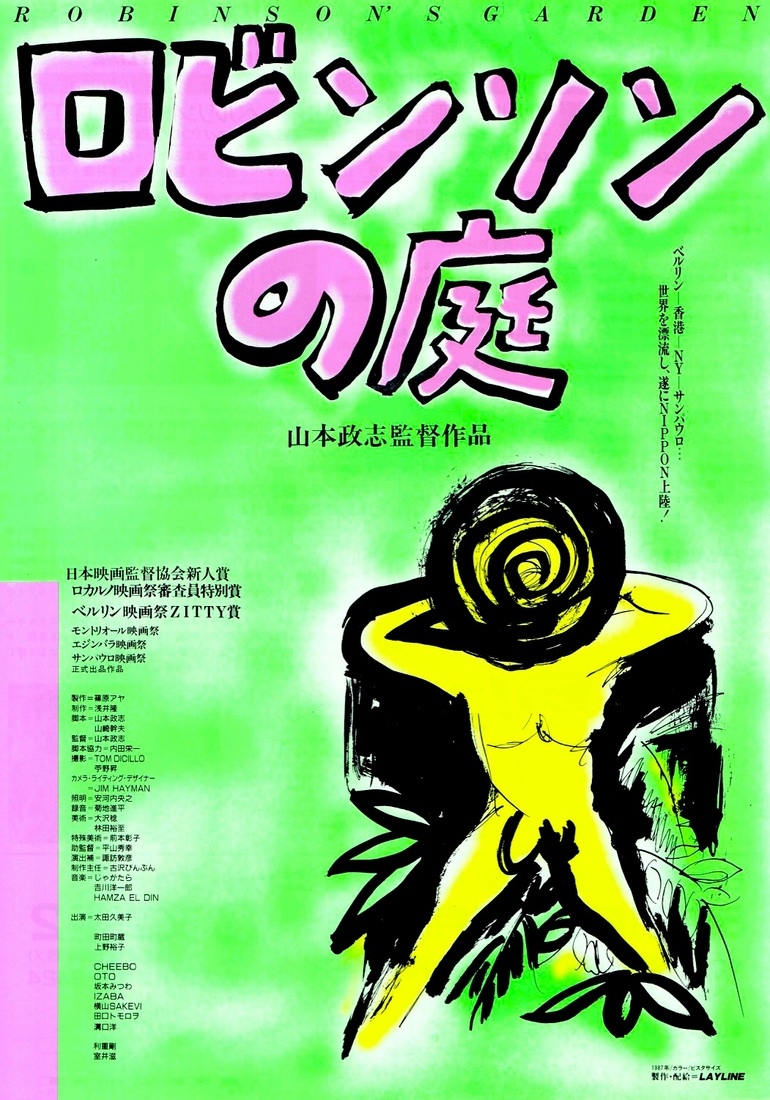
Robinson’s Garden (ロビンソンの庭, Masashi Yamamoto, 1987)

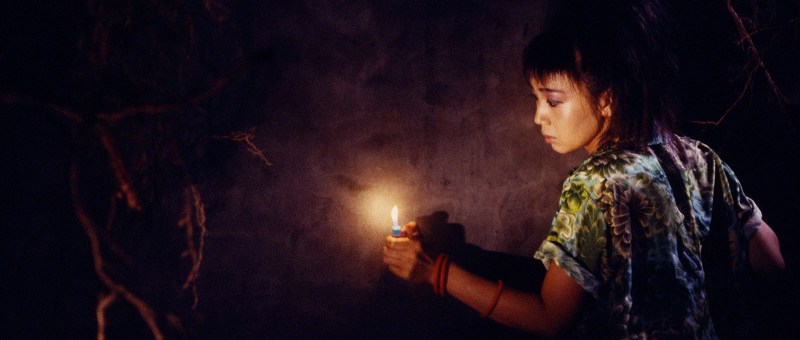
By 1987 Japanese society was at the height of Bubble-era consumerism. Everything was bright and exciting, money flowed freely, and everyone worked all the time. Meanwhile, there was also a flourishing of avant-garde subcultures among young people who actively rejected the salaryman straitjacket and sought for more individualistic freedoms in their lives. Masashi Yamamoto had begun his career with explorations of counter-culture life such as his 1982 debut Carnival of Night but shifts into a more metaphysical gear with his trippy 1987 tale of nature’s revenge and the costs of life in a solo commune, Robinson’s Garden (ロビンソンの庭, Robinson no Niwa). 

Two years later, Junichi Suzuki would also draw inspiration from the tale of Robinson Crusoe in the Bubble-era farce Robinson on the Beach which is in many ways an inversion of Robinson’s Garden in which a low-level salaryman’s life is upended when he wins a brand new house in the suburbs but becomes the subject of class-based resentment from his bosses while expected to play act the “model family” as part of the developer’s ideal homes marketing campaign. Kumi (Kumiko Ohta) by contrast is a floating bohemian living at the beginning of the film in a multi-cultural commune and supporting herself by selling drugs of which she is also a user. Drunk and stumbling around in the darkness, she accidentally comes across an abandoned industrial complex and is bewitched by the garden growing inside its walls as nature begins to reclaim its own. Selling most of her possessions in a yard sale, she leaves the commune and begins squatting in the factory attempting to return to the land by growing her own produce and living entirely alone. 

The bohemian, internationalist Tokyo that Kumi inhabits stands in direct contrast to that often seen in contemporary mainstream cinema, her eventual decision to leave this globalised communal society for ultra isolationism an intense irony. Then again, there is something of a negative judgement towards the aimless way she lives her life which extends to the wider world around her. Meeting up in a cafe with a friend recently released from prison, an extremely drunk man continues to have significant difficulty understanding where he is and what’s going on eventually picking up a table but unsure what to do with it. She and her friends are often described, and sometimes describe themselves, as “wacko” in their attempts to live outside of accepted social norms and it’s when Kumi invites her friends into her new private utopia that it first begins to betray her as a prayer circle and a pointless argument somehow provoke a mass brawl while Kumi remains on her sun lounger feeling the first pangs of an illness which will continue to plague her throughout the rest of the film. 

This may in part be down to a strange painting placed on her wall by an intruder, but nature also begins to take against her best efforts as the seasons change and her large crop of cabbages, for some reason all she appears to plant, is destroyed by heavy rainfall which later leads to flooding. Best friend Maki (Cheebo) ventures into a basement and finds tree roots growing through it, listening intently to rumbling behind a wall she attributes to the presence of the subway but is later implied to echo the scrabbling of a ghostly otter looking for its family. A casual boyfriend who stays the night appears to have an episode of mental instability while exploring as if the environment has driven him mad while Kumi becomes progressively sicker with debilitating stomach pains and fever. 

Yet the only lesson that we see her learn is that we are not the masters of our environment. With her help, nature gradually reclaims this previously industrial space filling halls with flowers and covering the walls with greenery. Even her pink moped lies rusty and half-buried while she furiously digs a hole with seemingly no way of climbing out unassisted. Meanwhile, a mean little girl that for some reason always hung around the factory, even at one point eating KFC in the rain, flies a model aeroplane around a sacred tree and trashes a toy birdcage as if playing in the ruins of a post-industrial world. Called to something older and earthier, Kumi retreats fully from the highly corporatised, consumerist society of the Bubble era but the jury seems to be out on whether her experiment in isolationism is success or failure. Yamamoto’s famous distain for logical narrative progression lends an absurdist air to Kumi’s continuing desire to return to the garden but captures the mystifying allure of nature in all its ethereal, if perhaps sinister, glory. 


Robinson’s Garden streams in the US until Sept. 2 as part of this year’s Japan Cuts.

Restoration trailer (no subtitles)

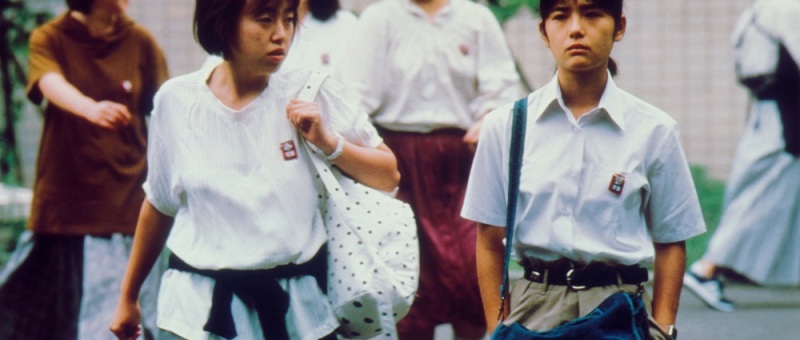
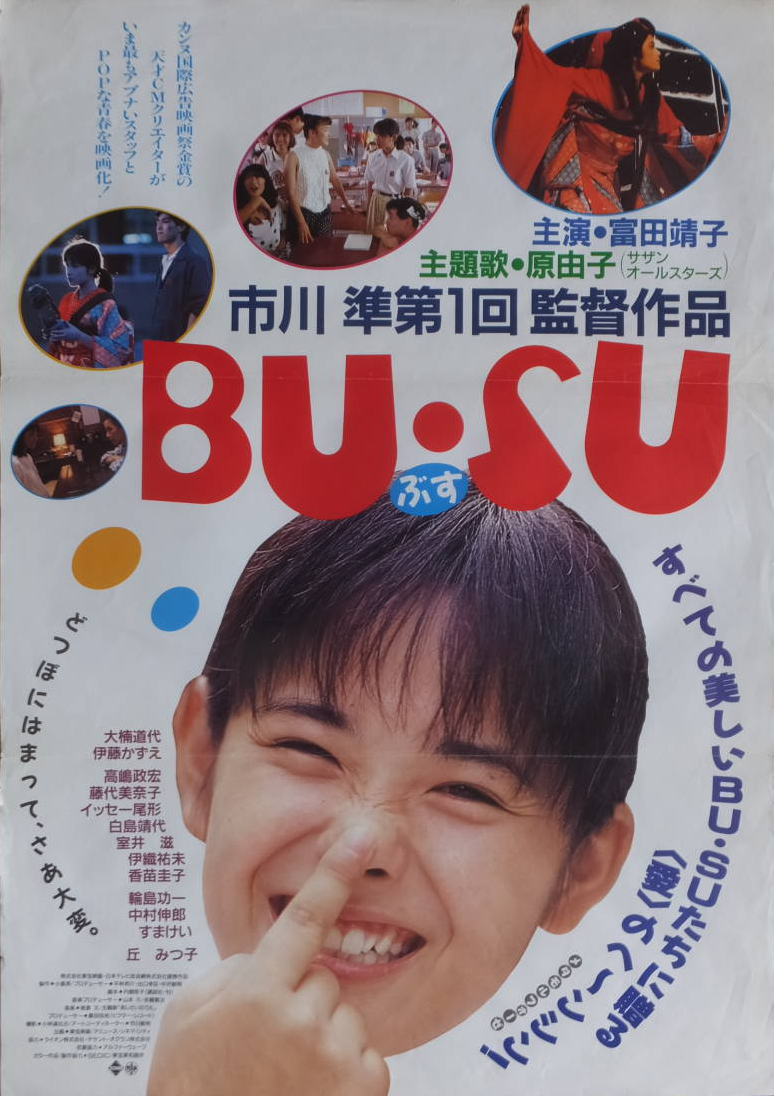
Bu Su (BU・SU, Jun Ichikawa, 1987)

Busu poster 2Already a well respected and much in demand director of television commercials Jun Ichikawa released his debut feature, Bu Su (BU・SU), in 1987. “Bu Su” is, loosely translated, pejorative slang for a woman who is not considered to be attractive. The closest equivalent, in British English at least, would be something like “a dog”. It’s especially ironic then that the movie was conceived as a vehicle for a popular idol whose success was perhaps dependent on a perception of attractiveness, or at least of “kawaii” innocence. Yasuko Tomita was at that time at the height of her fame having shot to stardom through open audition leading to an award winning role in Aiko 16 Sai. Two years later she starred for Nobuhiko Obayashi, who was originally slated to direct Bu Su, in Miss Lonely, but even in comparison to Obayashi’s melancholy heroines, Bu Su’s Mugiko (Yasuko Tomita) is a particularly moody teen, the “ugliness” here apparently relating to her emotional isolation.

For reasons we never quite understand, Mugiko leaves her island home after a traumatic incident and moves in with her aunt in Tokyo with the intention of becoming a geisha. It seem’s Mugiko’s mother was once a famous geisha herself until she met Mugiko’s late father and left for a more conventional life in the peaceful countryside. Mugiko’s flight then has a peculiarly perverse quality in being both to and from her mother with whom she seems to be on bad terms despite her mother’s obvious affection for her. Unfortunately Mugiko is not a fantastic fit for the world of the geisha, being somewhat innocent and childishly clumsy, not to mention her ongoing grumpiness. Nevertheless, everyone at the geisha house is keen to help her if only out of loyalty to her mother.

At school, meanwhile, Mugiko is nervous and withdrawn, barely audible during her introduction to her new classmates and with her eyes permanently on the floor. Her teacher, taking her aside, adds to the mystery in remarking that she’s certainly been through a lot back in Izu and that she should leave all that behind and try to make a new start. Nevertheless, she remains sullen and isolated, barely speaking to anyone yet perhaps examining the dynamics of the people around her. Maybe that’s why she alone finds the strength to stand up to a popular kid bullying another girl (Yuriko Hirooka) considered to be “plain” with a mean trick teasing a nasty surprise lurking in a box which turns out to be nothing more than a hand mirror.

Mugiko might not be quite sure what it is that’s worrying her, or at least we can’t be sure because we don’t know exactly what happened in Izu, but the rest of her classmates have their own insecurities to deal with from Sakurako’s preoccupation with her perceived lack of looks to boxing enthusiast Tsuda (Masahiro Takashima) who knows he’s not much for studying but is less than convinced of the possibility of living off his fists. What they’re going through is the normal teenage process of figuring themselves out, which they begin to do through the time-honoured fashion of the school cultural festival which is an extra special event this year because it’s the school’s centenary. Goaded into it by the mean popular girl who meant to embarrass her by outing her as a geisha, Mugiko agrees to dance the dance of Yaoya Oshichi who was prepared to burn the world in the hope of meeting her love.

Yaoya Oshichi was burned at the stake for arson, and though Mugiko’s path eventually ends in flames they’re of a much less threatening variety. When she first arrives in Tokyo we see her taking in some of the iconic sights of the city, crossing at Shibuya Scramble and taking a stroll through upscale Ginza before taking a bite out of a fast food hamburger as if she were about to taste some famous local delicacy. When not training with the other geisha we see her wander through the city alone, sullen but also taking pleasure in exploring her new environment. It’s here that we hear the film’s title uttered, crudely, by a sleazy middle-aged man who picks Mugiko up and takes her to a coffeeshop where he embarks on weird chat up lines about the beauty of the local railway before trying to drag her into a love hotel. Luckily, Mugiko manages to get away from him only for the man to shout “busu” after her, implying that he didn’t want her anyway but also that her refusal is in someway arrogant.

By Ichikawa’s logic, Mugiko’s “busu”ness is not because she’s “ugly” but that she’s so sour faced, permanently sulky and angrily keeping a deliberate distance from everyone around her. We see her spikily refuse her mother’s tearful attempt to see her off to the train, and then speak rudely to her on the phone, while remaining aloof from most of the other geishas save her aunt’s daughter, primed to take over the business but unbeknownst to most longing for a more conventional life with a boring salaryman husband. Yet through all of these encounters, some friendlier than others, her heart finally begins to open and she’s no longer so closed off or aloof, eventually able to laugh along with her mother and pithily dismiss her questions with the generic answers that Tokyo is “fun” and yes she’s going to school. Mugiko’s path is certainly a meandering one, taking the scenic route through the charms of bubble era Tokyo, but it has its charms and even if she takes her time she gets there in the end, smiling at last having rediscovered the joys of being alive.


Short clip (Japanese subtitles only)

https://www.youtube.com/watch?v=1PDPc0W-kr8

The Emperor’s Naked Army Marches On (ゆきゆきて、神軍, Kazuo Hara, 1987)

The Emperor's Naked Army Marches On PosterThe relationship between a director and a subject can often be a complex one. Who is really leading who and towards what end is a difficult enough question at the best of times, but when your subject is an unhinged crackpot with a definite agenda, a natural love of the camera, and an unpredictable violent streak, it’s an inescapable conundrum. Kenzo Okuzaki, a Pacific War veteran with a deeply seated grudge against the emperor for his refusal to acknowledge his war guilt, first came to the attention of director Shohei Imamura but a second stretch in prison for firing pachinko balls at the object of his wrath put paid to his directorial hopes. 10 years later Imamura passes his subject on to Kazuo Hara who finds himself increasingly at the mercy of his mercurial campaign for truth and reconciliation.

The main thrust of Okuzaki’s current activities lies in uncovering the facts behind the deaths of two enlisted men who were executed in New Guinea three weeks after the war was over. Okuzaki believes the men were murdered and lays the blame at the feet firstly of the officers on the ground and ultimately at those of the emperor who created the circumstances in which all of this horror was allowed to bloom. To assist him in his investigations, Okuzaki ropes in the families of the victims – one a Shinto priestess who is convinced she sees her brother in her dreams and on her altar, and the other a conflicted brother who just wants to know the truth. The truth, however, may be hard to hear, as one of the men Okuzaki corners tries to tell them. Like most of the others questioned about the events of almost forty years before, he advises the family that it’s better not to know while emphasising that their relatives died through no fault of their own.

What is probably obvious to Okuzaki but not to the relatively less cynical family members is that an issue is being skirted. The soldier makes out that he doesn’t want to go into the deaths because the men were executed for desertion – something which is absurd in itself when the war was already over, and that he did not want the family to experience the shame and social stigma of being related to “cowards” who failed in their “duty”. Such notions are already out of date by the late ‘80s, but evidently still weigh heavily on the minds of veterans. Wanting to spare others the pain and shame of discovering the truth about what happened in New Guinea is a frequent excuse offered by those questioned, but perhaps a way of deflecting their own reluctance to speak of such deeply traumatic, extremely difficult events.

Getting them to open up is not Okuzaki’s first thought. Okuzaki himself is a strange man with a disturbing aura and a tendency to self-aggrandisement. When we first meet him he’s acting as a go-between at a wedding of a man he met through his “activism” which is to say a fellow combatant in Okuzaki’s campaign against “The Establishment”. A wedding speech might not be the most appropriate moment to embark on a personal history that involves going to prison for murdering someone you “did not want” to murder as well as a litany of anti-establishment acts including the pachinko ball incident and distributing “pornographic” pictures of the emperor to shoppers at a Tokyo department store. Nevertheless, Okuzaki is extremely proud of these “achievements” which exemplify how he alone has continued to fight the good fight in the post-war world. He sees his original conviction as karma not for his actions in the Pacific but the wastefulness of his life afterwards. He now believes he was saved from New Guinea in order to educate the young about the horrors of war and ensure none of this ever happens again.

Problematically, his main weapon in this fight is violence. Okuzaki’s manner is one of extreme politeness, bordering on obsequiousness, but he is also direct and aggressive, becoming violent when his subjects decline to answer his questions. The relatives are there to shame the officers into speaking the truth through being directly confronted by the human costs of their actions, but Okuzaki’s personal bluster hasn’t thought through the various ways in which his tactics might make it more difficult for them to speak. After all, Okuzaki is a veteran of New Guinea himself, if these men could feel comfortable talking to anyone about their experiences, you’d think they could turn to someone like Okuzaki if only he were not so frightening a presence. Uncomfortably enough, the violence does seem to work and Okuzaki gets his answers through intimidation which leaves his quarry broken and compliant. Despite claiming to work for world peace, Okuzaki believes that his violence is justified by the worthiness of his aims, which you have to admit is an oddly familiar mantra.

His subject’s propensity for violence places Hara in a difficult position, as do his frequent attempts at engineering the situation including roping in his wife and a couple of male friends to pose as relatives of the deceased when the original couple tire of Okuzaki’s exploitative antics. Okuzaki quite obviously has a very clear aim for what he perhaps sees as a propaganda exercise for his ongoing cause which might stand in deep contrast to that of his director who is, after all, a bystander reconstructing narrative after the fact. Okuzaki emerges as a symbol of a nation’s repressed trauma, skittering between officious politeness and belligerent violence while offering a bizarre, quasi-religious philosophy about god’s plan for us all. Hara remains caught between conflicting impulses, unwittingly complicit in Okuzaki’s personal war against war while trying to maintain control in the face of his constant manipulations. As a portrait of a madman The Emperor’s Naked Army Marches On excels, painting Okuzaki as a product of his own mad times while refusing to back away from the bitter truths his madness is so keen to expose.


The Emperor’s Naked Army Marches On (ゆきゆきて、神軍, Yuki Yukite, Shingun) was screened as part of a Kazuo Hara focus at Open City Documentary Festival 2018.

Short clip from the film (English subtitles)

The Lady in a Black Dress (黒いドレスの女, Yoichi Sai, 1987)

Lady in a Black Dress posterHaruki Kadokawa had become almost synonymous with commercial filmmaking throughout the 1980s and his steady stream of idol-led teen movies was indeed in full swing by 1987, but his idols, as well as his audiences, were perhaps beginning to grow up. Yoichi Sai’s first outing for Kadokawa had been with the typically cheery Someday, Someone Will Be Killed which was inspired by the most genre’s representative author, Jiro Akagawa, and followed the adventures of an upperclass girl who is suddenly plunged into a world of intrigue when her reporter father disappears after dropping a floppy disk into her handbag. A year later he’d skewed darker with a hardboiled yakuza tale starring Tatsuya Fuji as part of Kadokawa’s gritty action line, but he neatly brings to two together in The Lady in a Black Dress (黒いドレスの女, Kuroi Dress no Onna) which features the then 20-year-old star of The Little Girl Who Conquered Time, Tomoyo Harada, in another noir-inflected crime thriller again adapted from a novel by Kenzo Kitakata.

We first meet the titular “lady in a black dress” walking alone alone along a busy motorway until she is kerb crawled by a yakuza in a fancy car. Declaring she intends to walk to Tokyo (a very long way), Reiko (Tomoyo Harada) nevertheless ends up getting into the mysterious man’s vehicle despite avowing that she “hates yakuza”. The yakuza goon does however drive her safely into the city and drop her off at her chosen destination – a race course, where she begins her quest to look for “someone”. By coincidence, the yakuza was also heading to the race course where he intended to stab a rival gangster – Shoji (Bunta Sugawara), who makes no attempt to get away and seemingly allows himself to be stabbed by the younger man. Shoji, as it happens, is the temporary responsibility of the man Reiko has been looking for – Tamura (Toshiyuki Nagashima), a former salaryman turned bar owner with fringe ties to the yakuza. Putting on her little black dress, Reiko finally finds herself at his upscale jazz bar where she petitions him for a job and a place to stay, dropping the name of Tamura’s sister-in-law who apparently advised her to try hiding out with him.

Reiko is, after a fashion, the dame who walked into Tamura’s gin joint with the (mild) intention to cause trouble, but, in keeping with the nature of the material, what she arouses in Tamura and later Shoji is a latent white knight paternalism. Curious enough to rifle through her luggage while she’s out, Tamura is concerned to find a pistol hidden among her belongings but when caught with it, Reiko offers the somewhat dark confession that the gun is less for her “protection” than her suicide. Not quite believing her, Tamura advises Reiko not to try anything like that in his place of business and to take it somewhere else. Nevertheless, Reiko stays in Tamura’s bar, eventually sharing a room with melancholy yakuza Shoji who is also hiding out there until the plan comes together to get him out of the country and away from the rival gangsters out for his blood.

As it turns out, Reiko had good reason to “hate yakuza” but she can’t seem to get away from them even in the city. Tamura’s life has also been ruined by organised crime as we later find out, and it’s these coincidental ties which eventually bring Reiko to him through his embittered sister-in-law who had been the mistress of Reiko’s lecherous step-father. The codes of honour and revenge create their own chaos as Shoji attempts to embrace and avoid his inevitable fate while his trusted underling (the yakuza who gave Reiko a lift) tries to help him – first by an act of symbolic though non-life threatening stabbing and then through a brotherly vow to face him himself to bring the situation to a close in the kindest way possible.

Meanwhile, a storm brews around a missing notebook which supposedly contains all the sordid details of the dodgy business deals brokered by a now corporatised yakuza who, while still engaging in general thuggery, are careful to mediate their world of organised crime through legitimate business enterprises. Reiko, like many a Kadokawa heroine, is an upperclass girl – somewhat sheltered and innocent, but trying to seem less so in order to win support and protection against the forces which are pursuing her. Though the film slots neatly into the “idol” subgenre, Harada takes much less of a leading role than in the studio’s regular idol output, retaining the mysterious air of the “lady in a black dress” while the men fight back against the yakuza only gradually exposing the truths behind the threat posed to Reiko.

Consequently, Reiko occupies a strangely liminal space as an adolescent girl, by turns femme fatale and damsel in distress. Wily and resourceful, Reiko formulates her own plan for getting the gangsters off her back, even if it’s one which may result in a partial compromise rather than victory. Though Kadokawa’s idol movies could be surprisingly dark, The Lady in a Black Dress pushes the genre into more adult territory as Reiko faces quite real dangers including sexual violence while wielding her femininity as a weapon (albeit inexpertly) – something quite unthinkable in the generally innocent idol movie world in which the heroine’s safety is always assured. Sai reframes the idol drama as a hardboiled B-movie noir scored by sophisticated jazz and peopled by melancholy barmen and worn-out yakuza weighed down by life’s regrets, while occasionally switching back to Reiko who attempts to bury her fear and anxiety by dancing furiously in a very hip 1987 nightclub. Darker than Kadokawa’s generally “cute” tales of plucky heroines and completely devoid of musical sequences (Harada does not sing nor provide the theme tune), The Lady in a Black dress is a surprisingly mature crime drama which nevertheless makes room for its heroine’s eventual triumph and subsequent exit from the murky Tokyo underground for the brighter skies of her more natural environment.


TV spot (no subtitles)

Theme song – Kuroi Dress no Onna -Ritual- by dip in the pool.

A Taxing Woman (マルサの女, Juzo Itami, 1987)

A Taxing Woman posterIn bubble era Japan where the champagne flows and the neon lights sparkle all night long, even the yakuza are incorporating. Having skewered complicated social mores in The Funeral and then poked fun at his nation’s obsession with food in Tampopo, Juzo Itami turns his attention to the twin concerns of money and collective responsibility in the taxation themed procedural A Taxing Woman (マルサの女, Marusa no Onna). Once again starring the director’s wife Nobuko Miyamoto, A Taxing Woman is an accidental chronicle of its age as Japanese society nears the end of a period of intense social change in which acquisition has divorced mergers, and individualism has replaced the post-war spirit of mutual cooperation.

Ryoko Itakura (Nobuko Miyamoto), a single mother and assistant in the tax office, has a keen eye for scammers. She demonstrates this on a stakeout with a younger female colleague in which she keeps a shrewd eye on the till at her local cafe and comes to the conclusion that they’ve been running a system where they don’t declare all of their cheques. Running her eyes over the accounts of a mom and pop grocery store, she notices some irregularities in the figures and figures out the elderly couple feed themselves from the supplies for the shop but don’t “pay” themselves for their own upkeep. That might seem “perfectly reasonable” to most people, but it’s technically a small form of “embezzlement” and Ryoko doesn’t like figures which don’t add up. Seeing as the couple probably didn’t realise what they were doing was “wrong” she lets them off, this time, as long as they go by the book in the future. A more complicated investigation of a pachinko parlour finds a more concrete form of misappropriation, but Ryoko is fooled by the owner’s sudden collapse into inconsolable grief after being caught out and leaves him in the capable hands of his confused accountant.

Nevertheless, Ryoko may have met her match in sleezy corporate yakuza Hideki Gondo (Tsutomu Yamazaki). Dressing in a series of sharp suits, Gondo walks with a pronounced limp that hints at a more violent past but as his rival from the Nakagawa gang points out, violence is a relic of a bygone era – these days gangsters go to jail for “tax evasion” as means of furthering their “business opportunities” and facilitating ongoing political corruption. Gondo’s business empire is wide ranging but mainly centres on hotels, which is how he arouses Ryoko’s interest. She looks at the numbers, does a few quick calculations, and realises either the business isn’t viable or the correct figures aren’t being reported. Ryoko doesn’t like it when the books don’t balance and so she sets her sights on the seedy Gondo, but quickly discovers she has quite a lot in common with her quarry.

Itami was apparently inspired to make A Taxing Woman after the success of Tampopo shoved him into a higher tax bracket. Given Japanese taxes (at the time) were extremely high, getting around them had become something of a national obsession even if, in contrast to the preceding 30 years or so, there was plenty of money around to begin with. More than the unexpected tendency towards civil disobedience the times seemed to cultivate, Itami homes in on the increasingly absurd desire for senseless acquisition the bubble era was engendering. Thus Gondo who owns a large family home well stocked with symbols of his rising social status, also occupies a bachelor pad where he keeps a mistress which reflects the gaudy excess of the age right down to its random stuffed hyena. Nevertheless when one of the tax clerks asks for some advice as to how to have it all, Gondo replies that that’s easy – to save money, you simply avoid spending it. Gondo lets his glass run over and delights in licking the edges. It’s all about delayed gratification, apparently, and having a secret room full of gold bars to gaze at in order to relieve some of that anxiety for the future.

Gondo, like many of his ilk, has “diversified” – yakuza are no longer thuggish gangsters but incorporated organisations operating “legitimate” businesses through “illegitimate” means. Thus we first find him using a nurse who allows herself to be molested by an elderly, terminally ill client whose identity they will steal to found a company they can quickly dissolve when he dies to shift their assets around and avoid the tax man. Later he pulls another real estate scam by pressing a desperate family but his real focus is the love hotels, whose slightly embarrassing existence ensures that not many come poking around. Ryoko, however, is unlikely to let such a large scam slide and delights as much in closing loopholes as Gondo does in finding them. Noticing a kindred spirit, Gondo quite openly asks his new tax inspector “friend” what she’d think if he married his mistress, gave her all his money, and divorced her – divorce proceeds are after all tax free. Sounds great, she tells him, as long as you trust your wife not to skip town with all the doe.

Ryoko, a modern woman of the bubble era, single and career driven, is a slightly odd figure with her officious approach to her job and unforgiving rigour. Unlike her colleague who dresses in the glamorous and gaudy fashions of the times, Ryoko wears dowdy suits and her mentor boss is always reminding her about her “bed hair”, meanwhile she stays late at the office and offers instructions to her five year old son over the phone as to how to microwave his dinner. Though there is another woman working with her at the tax office, when she’s finally promoted to full tax inspector status she finds herself in a room full of guys who apparently hardly ever go home. On her first job she’s only really brought along because she’s a woman and they want to threaten a mob boss’ mistress with a strip search to find a missing key for a safety deposit box. The mistress, however, tries to throw them off the sent by publicly stripping off and encouraging them to check her “cavity” if they’re so keen to find this key, only for Ryoko to find it under the sink while all the guys are busy being shocked. Ryoko’s methods are occasionally as underhanded as Gondo’s and, like his schemes, built on gaming the system but she’s certainly a force to be reckoned with for those considering defrauding the Japanese government.

Gondo’s schemes excel because they aren’t entirely illegal, only clever ways of manipulating the system, but they’re also a symptom of a large conspiracy which encompasses improprieties right up the chain as banks, corporations, and politicians are all part of the same dark economy managed by a corporatising yakuza. Gondo takes frequent calls from a local representative who often “helps him out”. Later the same representative tries to put pressure on the tax office to back off, but Ryoko’s boss points out that he doesn’t need to because the press are already on the story so he should probably get started on his damage control rather than bothering public servants. Gondo and Ryoko, perhaps as bad as each other, lock horns in a battle wills but discover a strange degree of respect arising between them in having discovered a worthy adversary. There’s something undeniably absurd in Ryoko’s firm determination to catch out struggling businesses and the confused elderly with the same tenacity as taking on a yakuza fronted conspiracy, and there’s something undeniably amusing in Gondo’s attempts to beat the man by playing him at his own game, but the overall winner is Itami who once again succeeds in skewering his nation’s often contradictory social codes with gentle humour and a dispassionate, forgiving eye.


Currently available to stream in the US/UK via FilmStruck.

Original trailer (no subtitles)