Phantom of the Toilet (トイレの花子さん, Joji Matsuoka, 1995)

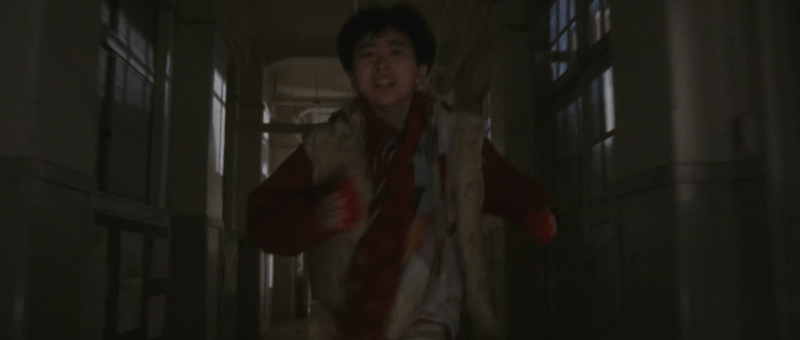
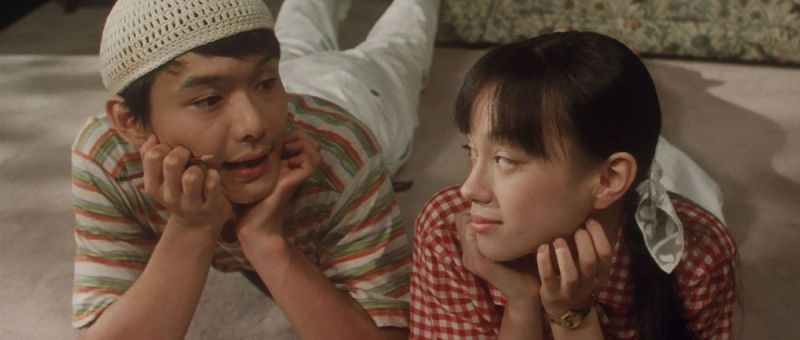
A transfer student quickly becomes the magnet for the anxieties of her classmates amid an ongoing spate of serial murders of primary school children in Joji Matsuoka’s kids adventure movie Phantom in the Toilet (トイレの花子さん, Toiret no Hanako-san). Loosely inspired by the classic urban legend about the ghost of a little girl who haunts school toilets, the film is less a horror movie than a tale of bullying, mass hysteria, and the ways in which childish emotions can spiral out of control.

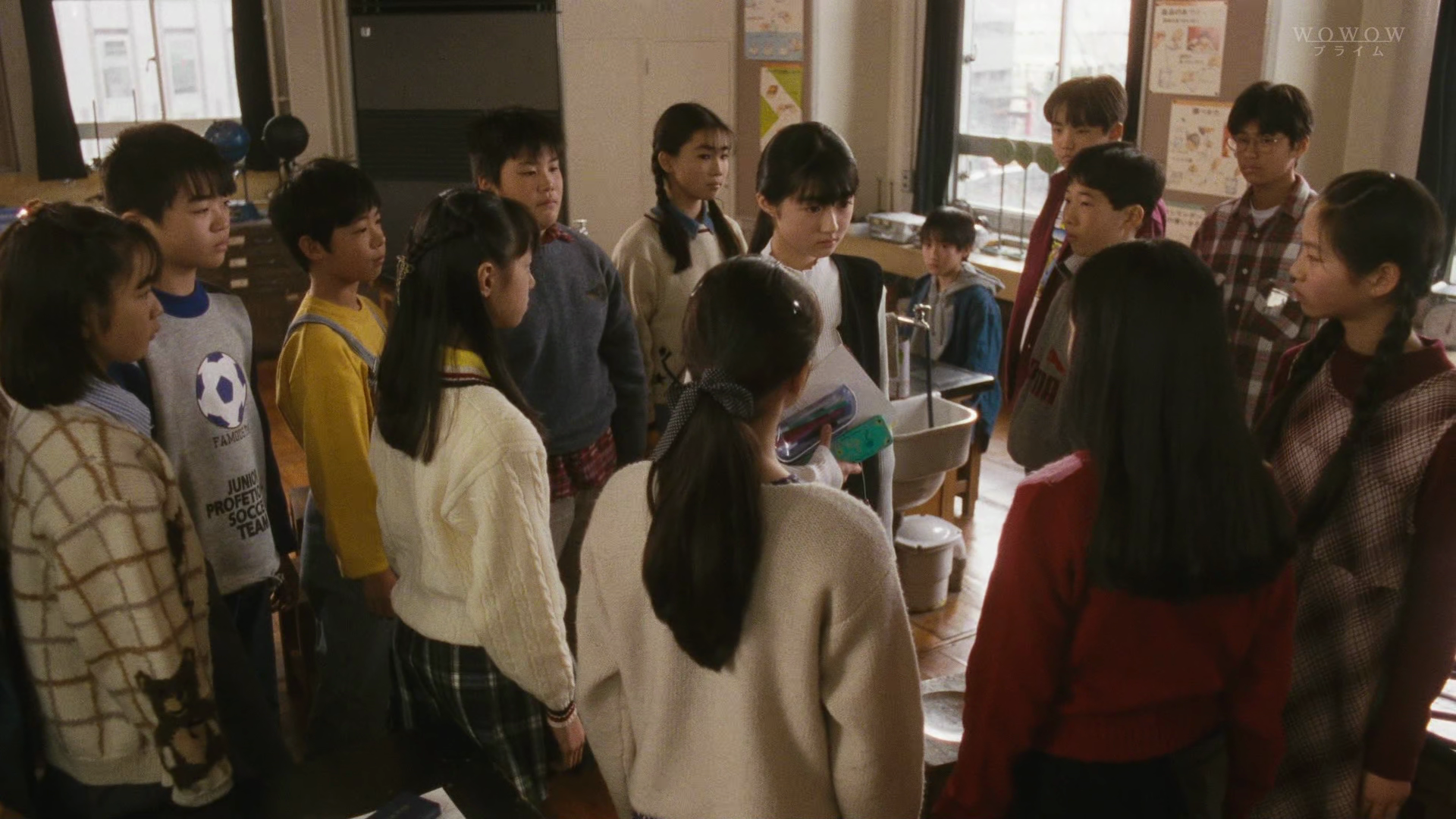
Natsumi’s (Ai Maeda) no stranger to that herself. A tomboy, she’s largely excluded from the group of popular girls at her school and exists in a rather liminal space. Her older brother Takuya (Takayuki Inoue) is in the year above, but predictably doesn’t like being bothered by his little sister at school and is for some reason embarrassed by the fact his widowed father is a milkman. Nevertheless, he’s incredibly earnest and righteous and volunteers for various things at the school like the student council. Natsumi’s problems begin when the popular girls insist on doing a Ouija board to find out the identity of a serial killer who’s already killed two children their age from different schools. Natsumi doesn’t realise that it’s a trick the other girls are playing on her, but the Ouija board says the killer is Hanako, the toilet ghost, and Natsumi is the next victim.

Meanwhile, a new girl joins their school in Takuya’s class and is immediately resented by the popular girls because she’s pretty and clever, so obviously they turn against her. Chief among the complaints against Saeko (Yuka Kono) is that she used the cubicle at the end of the girls’ toilets which supposedly belongs to Hanako, because obviously she doesn’t yet know this bit of school lore. After a series of odd things happen, including the murder of the school’s pet goat, everyone comes to the conclusion that Saeko must be possessed by Hanako and is planning to murder them all. Even Natsumi has her doubts, but eventually decides to defend Saeko while Takuya, who seems to have a crush on her, eventually gives in to peer pressure despite his promises to protect her and vision of himself as someone who does the right thing.

To that extent, it isn’t really Hanako that haunts the children so much as the idea of her is misused as a means of social control. A silly rumour soon gives way to mass hysteria as the popular girls bring more of the children over to their side to gang up on Saeko while the teachers are largely absent or oblivious. While in another film the kids might band together to look for the killer of the other children and thereby protect themselves and each other, instead they become ever more paranoid and the outsider figure of Saeko becomes the focus of all their negative emotions from the jealousy of the other girls to the uncertainness of Takuya who doesn’t know what to do with his confusing feelings for Saeko. In a touching moment, he replies via writing on the blackboard rather than speaking when Saeko uses it to communicate with him after losing her voice, but later ends up shouting at her to go away and leave him alone. “Silence means you agree,” one his classmates points out when Takuya attempts to abstain from an otherwise unanimous vote to subject Saeko to a kind of test akin to a ducking stool to prove whether or not she really is Hanako. Only Natsumi remains on her side.

Meanwhile, the real child killer hovers in the background like an abstract threat before finally invading the school like a refugee from a slasher movie. Swinging his scythe around, his crazed moaning may prove too prove frightening for younger audiences while not even Natsumi’s father and their teacher can stop him from murderous wandering. In the end, the “real” Hanako surfaces but as a more benevolent figure who calls the kids back to the school and creates a more positive sense of mob mentality as they all shine their torches on the killer as if confronting him with what he is and what he’s done. The curse itself is lifted as the other kids rally round to save Saeko and finally accept her as one of them. A charming exploration of a 90s childhood from Grandpa playing Nintendo shogi to the looming anxieties of stranger danger, the ultimate message is one of solidarity and friendship as Hanako helps the kids let go of their petty disagreements to confront the real monster and save each other.


Trailer (no subtitles)

The Phantom Lover (夜半歌聲, Ronny Yu, 1995)

For his last film in Hong Kong before decamping to Hollywood, Ronny Yu looked back to a lost classic in loosely remaking 1937’s Song at Midnight, itself loosely based on Gaston Leroux’s The Phantom of the Opera. A Hong Kong/Singapore co-production, the film was, perhaps surprisingly, shot entirely in Beijing where Yu constructed an opulent set including a full-scale replica of the theatre which he then burnt down for real during the legendary climax of the classic story. 

Set in 1936 (one year before the release of A Song at Midnight and the intensification of the Sino-Japanese war), the film opens with a gothic scene of carriages racing through the fog. A troupe of left-wing actors has come to make use of a ruined theatre to put on their revolutionary play. On arrival, the troupe’s leading man Wei Qing (Lei Huang), who is in a relationship with leading lady Landie (Liu Lin) but claims he is too poor to marry so they will have to wait until he’s famous, is captivated by the auditorium, convinced he can hear strange sounds of a woman singing. The strangeness of the surroundings continues to bother him until he finally decides to ask creepy caretaker Uncle Ma (Cheung Ching-Yuen)to disclose what he knows of the fire which destroyed the theatre 10 years previously. 

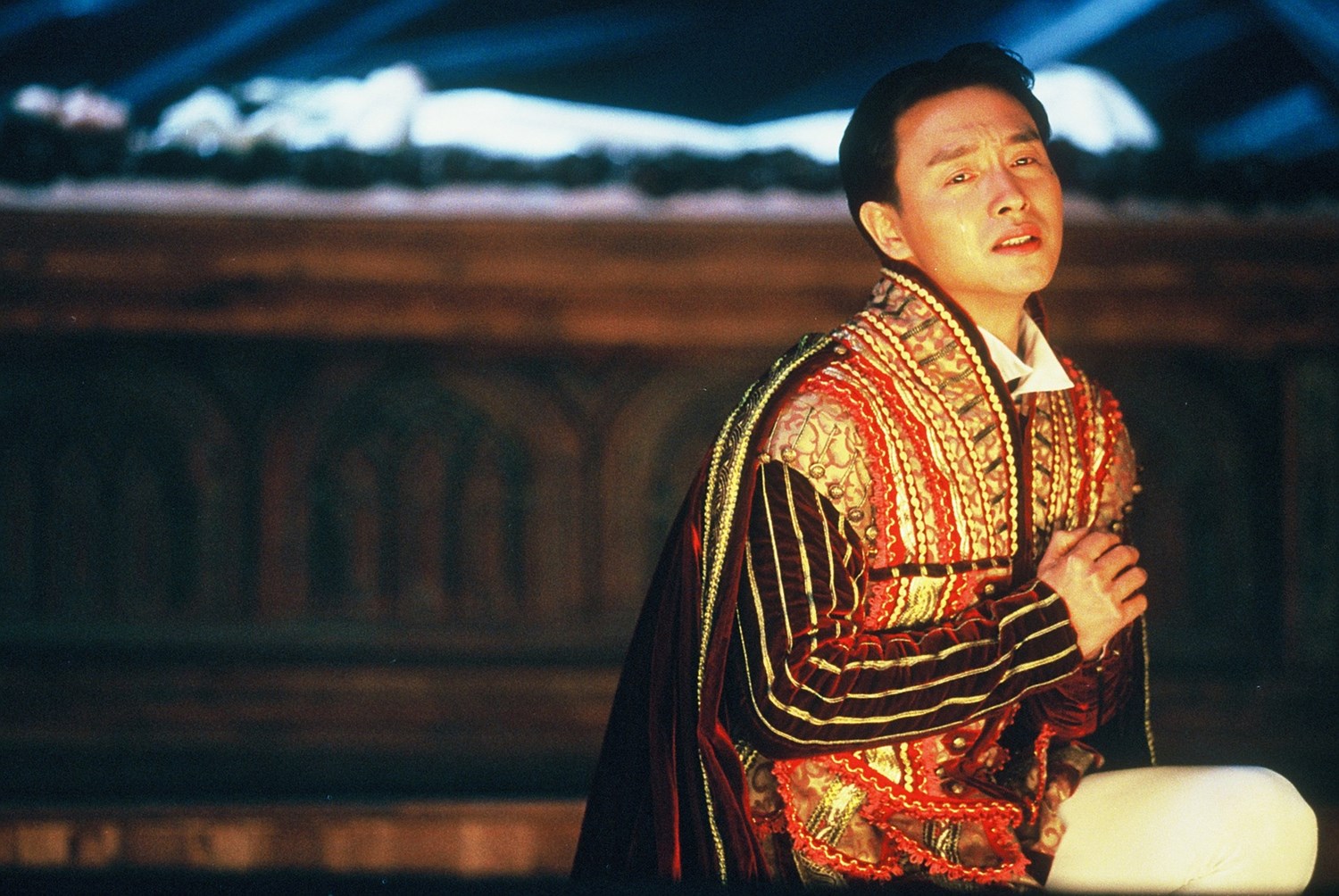
Counter-intuitively, Yu shoots the ‘30s sequence in a washed-out sepia with occasional flashes of colour almost like hand-tinted photographs. As Ma spins his story, we transition into a sumptuous world of reds and golds in the old opera house designed, as we’re told, by the famous actor Song Danping (Leslie Cheung Kwok-Wing) who is said to have perished along with it in the fire. Danping, to whom Wei Qing is constantly likened, was the greatest actor of the age famous for his performances in Western theatre, such as the Mandarin musical adaptation of Romeo and Juliet in which he was performing immediately before his death. In a case of life imitating art, Danping had fallen in love with the daughter of a wealthy family, Yuyan (Geng Xiao-Lin), and wished to marry her, but actors belong to an undesirable underclass and in any case, Yuyan’s father had already arranged her marriage to the idiot son of a powerful politician, Zhao (Bao Fang), in exchange for smoothing the path for his new factory enterprise. 

In a direct reversal of the 1937 film, it is Wei Qing who is the left-wing revolutionary proudly singing communist songs about the “national humiliation” which, it seems, partly accounts for their low audience numbers, while Danping is the reactionary libertine performing in “decadent” Western theatre which seemingly has no political import other than its capacity to cause annoyance to the conservative older generation extremely concerned about Danping’s effect on the local young women. With that in mind, it seems strange that Wei Qing is so quick to accept Danping’s offer once he finally reveals himself and drops the playbook for Romeo and Juliet into his hands. Nevertheless he is content to accept the older man’s tutelage, hoping that the increased revenue will save the troupe and, as implied earlier, he doesn’t actually seem to be very invested in the idea of revolution so much becoming famous. 

Nevertheless, it turns out that he does indeed have integrity. To gain additional funding, the troupe’s leaders end up schmoozing with none other than Zhao, the man who eventually married Yuyan after the fire but quickly discarded her on learning she was not a virgin. Now apparently having risen in politics in Shanghai, Zhao is a misogynistic bully carrying a grudge towards women because of his humiliation by Yuyan. In the scene in which we re-meet him, no longer quite so moronic but definitely nastier, he forces his dining companion to eat 60 meat buns because she had the temerity to declare herself full and try to leave the table. When Wei Qing snaps at him he takes a liking to Landie who is more or less pimped out by the impresario in the same way that Yuyan was sold by her father to the Zhaos in order to further his business interests. On discovering Yuyan, who has since descended into madness, wandering the streets, he stops his carriage to give her a public whipping, ranting about how he had her 10 years preciously but she turned out to be a “slut” who’d already slept with the famous actor Song Danping which seems like a curious thing to announce in the public square. 

Then again, these fascist stooges have an odd approach to public humiliation, stopping Danping’s play mid-performance to call out Yuyan which seems like a counter-intuitive and extremely embarrassing move when they could simply have dragged her out of her box. Danping strikes a minor victory for art when he get the goons ejected from the theatre by the irate audience who, he points out, have had their evening spoiled by officials misusing their authority for a spot of personal pettiness. The intervention is mirrored in the film’s conclusion with the “villains” effectively put on trial in the theatre, as theatre, with an appeal made to law enforcement which is eventually successful as the police commander affirms his intention to act for the public good (though in this case is also serving his own while ironically giving justification to mob rule). 

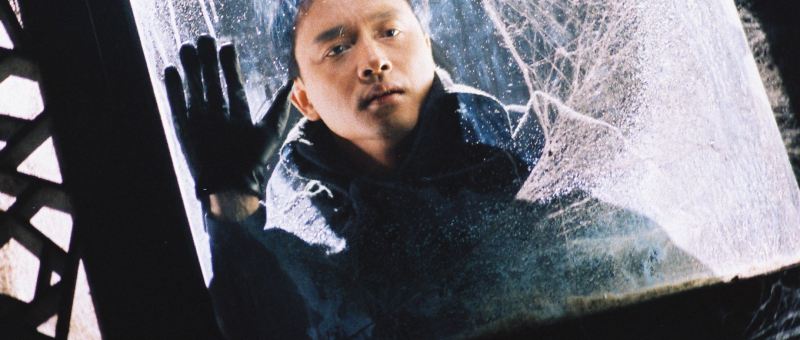
Despite all of that, however, the major stumbling block to the tragic romance turns out to narcissistic vanity on the part of former matinee idol Danping who has been hiding himself away even though he knows Yuyan has gone mad in love for him simply because his face was ruined when Zhao’s goons threw acid at it and then locked him in the burning theatre. He contents himself with singing on nights when the moon is full knowing that hearing his voice on such occasions is the only thing keeping her going. On learning of his mentor’s true purpose to make Yuyan think he, the handsome young actor, is the Danping of old, Wei Qing is extremely conflicted, unable to understand why the now ghoulish Danping would put Yuyan through so much grief when he could simply have revealed himself a decade ago. Nevertheless, realising the intensity of the romantic suffering all around him perhaps pushes him towards ”forgiving” Landie for having schmoozed with Zhao. 

Full on gothic melodrama, Yu’s adaptation of the classic story is all fog and cobwebs, situating itself in a world which is already falling apart. In photographing the 30s in washed-out greys, he perhaps suggests that something has already faded, or at least become numb, in comparison with the life and colour of mid-20s Shanghai in all its art deco glory. Yet even in giving us a superficially happy ending in which justice, moral and romantic, appears to have been served Yu denies us the resolution we may be seeking with a melancholy title card reminding us that happiness in the China of 1936 may be a short-lived prospect.


The Stairway to the Distant Past (遙かな時代の階段を, Kaizo Hayashi, 1995)

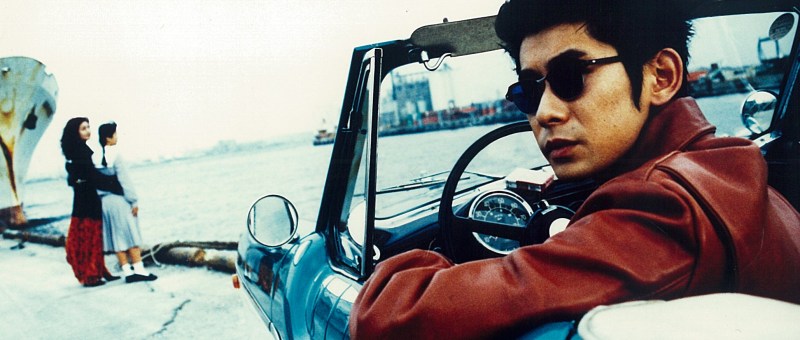
If The Most Terrible Time in My Life was channeling Nikkatsu Noir, Stairway to the Distant Past (遙かな時代の階段を, Harukana Jidai no Kaidan wo) sees Hayashi channel Fukasaku for a full-on confrontation with the legacies of the post-war era just as PI Maiku (Masatoshi Nagase) is forced to confront and attempt to cure the corrupted legacies of his own origins all while trying to save the city of Yokohama from drifting off to “another hell.” This time shooting in colour, Hayashi conjures a sense of mythic dread in the purple haze that hangs over a hidden city and the eerie blue of the path to get there.

But before all that, Maiku has fallen on such hard times his beloved car’s been repossessed and he’s stuck finding lost dogs for wealthy yet eccentric clients. Meanwhile, leader of New Japs gang Kanno (Shiro Sano) is running for political office while two of his underlings decide to freelance in order to take over the lucrative river trade which no one, not even the Taiwanese gang otherwise apparently in the ascendent, has ever dared to touch in fear of the mythic “White Man” who’s controlled the area since the post-war era with a ruthless efficiency that has seen any man challenge him not live to tell the tale. In the midst of it all is bigoted, and apparently pretty corrupt, policeman Nakayama (Akaji Maro) who first blackmails Maiku into helping him investigate a theft and smuggling ring on the river then apparently makes a deal with the White Man’s underlings who in turn blackmail him over his gambling debts but also claim they can make him chief of police if he chooses to play along.

Nakayama is a symbol of the rot in the contemporary city though he is in fact merely spineless, greedy, unpleasant and prejudiced. He asks Maiku for help because he’s hamstrung by the rules of policing which prevent him from doing the nefarious things he asks Maiku to do all of which leads to some pretty tragic consequences and a pair of orphaned children. The New Japs are perhaps a sign of further corruption still to come as Kanno tries to go legit as a politician but only as a means of increasing his influence and earnings. 

The river becomes a kind of nexus, the shore line between contemporary Japan and the “distant past” of the post-war era. Nakayama discovers that no one is technically policing it because it’s outside of everyone’s jurisdiction, while the White Man seems to have been in a position of unassailed power for half a century. As he later says, he’s the only one “living in the past” and perhaps quite literally so as Maiku has to transcend a literal stairway while guided by some kind of local prophet in order to travel to his world and finally risk his life to confront him. At the same time, Maiku is threatened by his own point of origin in the unexpected return of his mother, a now middle-aged stripper known as Dynamite Sexy Lily (Haruko Wanibuchi), who abandoned him and his sister and when he was just a child. 

Her name, along Maiku’s own, are perhaps hangovers from the Occupation era now even more out of place in a changed Japan. Making full use of the colour palate, Hayashi repeatedly flashes back to a pair of Lily’s red shoes as if signalling the unreality of the hidden city and the superimposition of past and present. His flashbacks to the late 1940s echo the cinematography of Fukasaku’s jitsuroku epics with their frenetic chases through black markets, but towards the conclusion the canted angles make it through to our era too and most particularly in the White Man’s lair, a blue-tinged industrial labyrinth that recalls the post-apocalyptic visions of a city still in ruins.

“Yokohama’s changed a lot,” Lily is told on her return and in fact several times after that. She likes it a little better now, the White Man no so much complaining that this city no longer has a place for him as if foreseeing his own eclipse and the oncoming end of an era. But then again, perhaps only the names have changed. All we’re left with is new gangsters with no code, and the White Man did at least stick to the rules even if he did so with ruthless authority. As for Maiku, his passage to the underworld seems to have brought him new clarity. His outfit now a little more sophisticated and mature, less an affectation borne of watching too many movies than an expression of himself. Nevertheless, Yokohama remains a small-town city, a cosy place with a generally friendly and easy going population albeit one with darkness hovering around the edges.


The Stairway to the Distant Past screens 18th/19th October at Japan Society New York.

Original trailer (no subtitles)

August in the Water (水の中の八月, Sogo Ishii, 1995)

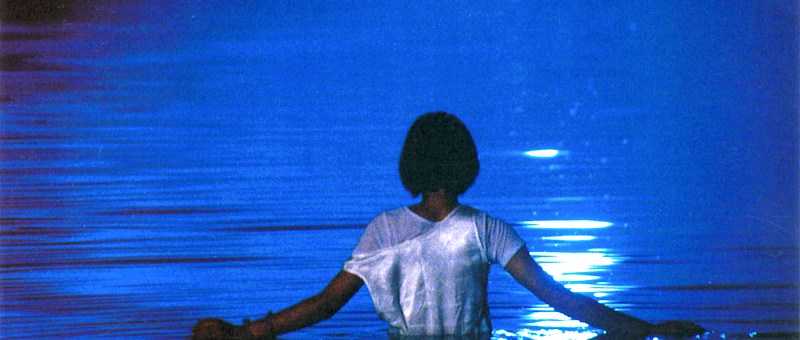
How does the world, or perhaps the cosmos, attempt to communicate with us? As Douglas Adams once did, August in the Water (水の中の八月, Mizu no naka no Hachigatsu) suggests it maybe through the dolphins who here at least seem to be quasi-mystical beings existing in what is really the lifeblood of humanity. In the film’s opening scenes, we’re told that the hero, Mao (Shinsuke Aoki) whose name means “true fish” and his friend Ukiya (Masaaki Takarai) have taken part-time jobs at a marine part to learn how to communicate with dolphins, but it’s the heroine Izumi, whose name means “spring” who eventually claims to have learned to do so. 

At least, her final words are that the dolphins have taught her “the perfect balance” which has allowed her to open the floodgates both literal and metaphorical to return water to an arid land. We’re repeatedly told that there’s been a lengthy drought and a water shortage leading to rationing and locked pipes though the marine park remains open and the local festival goes ahead  hinting at the ways in which we do and don’t value our natural resources. Izumi’s science teacher tells the kids that humans don’t contribute to the Earth and waste the resources that it gives us which might help to explain the gradual ossification of the planet including a mysterious condition known as the Stone Disease which causes people to collapse in the street as their organs harden. 

Izumi’s sister Yo later remarks that she thinks humanity came from a distant planet long ago and yearns to go home but to do so we must become stone because water is a substance that exists only here on Earth. Turning to stone is however seen as quite a bad thing and also echoes a millennial distrust in increasing technology with TV pundits positing that if human brains were replaced with computer chips we wouldn’t need to worry about water shortages anymore. In Yo’s dream, after people’s brains have become computer chips they become connected to the universe and can transport their minds to the moon enabling them to communicate with anyone anywhere at any time. 

But then despite the potential for communication that computers were only just beginning to offer in the mid-90s, Izumi warns her sister to stay away from them as they leave you vulnerable to the Stone Disease. The boys’ ultramodern friend, Miki (Reiko Matsuo), is a computer addict and it’s she who eventually manages to unlock parts of the mystery but paradoxically as if she were some kind of seer correctly predicting that an accident will befall Izumi on 23rd August and discovering a prophecy that in the year humanity neglects the water god two meteorites will fall in close proximity and drought will follow. Only a ritual conducted by the chosen one under a full moon will be able to cure it. Two child-like old men also warn that nothing’s been the same since they moved the old shinto shrine over which there have also been sightings of UFOs.

After the diving accident in which Izumi plunges meteor-like into the pool, she herself feels as if she’s been split in two almost like the world itself which is divided between these ancient beliefs and modern advancements that have perhaps blocked the flow that once allowed us to communicate with each other and with the universe. A psychiatrist suggests that Izumi may be suffering with sudden onset schizophrenia as a result of her accident and that all of her talk about secret messages from dolphins and mysterious aliens who want to turn the world to stone is nothing but confused delusion though in the film’s closing scenes she herself takes on a supernatural quality as a kind of etherial saviour figure who realises that she may have been dead ever since the accident and is now something different, different and distant as her sister puts it, charged with the mission of rejuvenating a human spirit long since dulled by mechanisation.

In contrast to Ishii’s earlier films which brimmed with punkish energy, August in the Water unfolds at a leisurely pace with eerie yet nostalgic mood music and a new age sensibility speaking to millennial youth with a sense of turn of the century anxiety and human remorse that perhaps we’ve already poisoned our futures. Nevertheless, despite his youthful heartbreak, what Izumi bequeaths to Mao and humanity itself is seemingly the ability to live in the abundant fullness of existence until that existence is done and we return once again to water and the comforting embrace of the Earth.


August in the Water screened as part of this year’s JAPAN CUTS.

A Quiet Life (静かな生活, Juzo Itami, 1995)

“One person is not a tool for another” the heroine of Juzo Itami’s 1995 melodrama A Quiet Life (静かな生活, Shizukana Seikatsu) eventually writes in her diary quoting her novelist father but also reflecting on herself and her life in which some have indeed attempted to use others for their own ends. Outside of international mega hit Tampopo, Itami is best known for a series of anarchic comedies each starring his wife Nobuko Miyamoto as forthright woman tackling the ills of contemporary Japan from tax evasion and increasingly amoral capitalism to the yakuza and shady cults. Based on a novel by his brother-in-law Kenzaburo Oe, A Quiet Life is therefore something of an outlier yet once again addresses a number of social issues from treatment of disability in the contemporary society to the relationships between parents and children and the dangers of a rapidly modernising society. 

Middle daughter Ma (Hinako Saeki) lives in a large Western-style in the country with her father, internationally renowned author K (Tsutomu Yamazaki), mother and two brothers the oldest of which, Eeyore, has some learning difficulties but is largely independent. Nevertheless, when K, who is experiencing a moment of crisis that leads him to consider suicide when he is unable to fix a problem with the drains and has to resort to a plumber, is offered a job at a university in Australia Ma is left in charge at home and therefore responsible for her brother. Though the family fully accepts Eeyore, it’s clear the world around them is not always so kind. As they approach a centre for the disabled on a walk, others around them openly express disgust, suggesting they are a “bad influence” and wanting to leave the area entirely. 

Meanwhile as the film opens two children are locked together in a game of magnets, a collection of adults attempting to pull them apart by force. The shot is later repeated as Eeyore holds his sister in the rain following a traumatic and unexpected incident and demonstrating the close and affectionate bond between the siblings. Yet there is an uncomfortable suggestion from some that Ma is being asked to sacrifice her life to look after her brother who after all is unlikely to marry and will require additional care as long he lives, while she is perhaps slightly overprotective and wilfully self-sacrificing. “Don’t expect another human to sacrifice their life for you” goes another of her father’s lines, “to expect such a thing is the worst kind of depravity”, the family otherwise committed to the insistence that Eeyore has his own life and interiority which must neither be sacrificed, nor sacrificed for, for to do so would be to deny his personhood. Eeyore is not a tool for Ma’s charity nor is she a tool for the family’s duty towards him. 

Nevertheless even she is not immune to negative stereotyping becoming increasingly concerned that her now adult brother may pose a threat to the local community in his lack of understanding and inability to control his impulses. When a child molester is on the loose in the village, she is terrified Eeyore may be involved having read a newspaper report about a similar crime committed by someone with learning difficulties uncomfortably echoing the prejudice of the walkers by the disabled centre not to mention to middle-aged women who openly gossip about it in front of their house. Meanwhile, her own naivety becomes a threat when she allows a smarmy young man, Arai, to give her brother swimming lessons later learning that he has a grudge against her father who he feels “used” him to facilitate his art having bought and drawn inspiration from his experiences of being accused of a crime but leaving readers with the impression that he was a sex offender. 

Arai may indeed be trying to use her for revenge and at any rate is not all he seems even if the implication of her father’s story is that he wanted to sacrifice himself to save the young man. While K works through his artistic block offscreen aided by his wife (whom he soon forgets once he’s well), Ma has a series of epiphanies of her own over an eventful summer you couldn’t really call “quiet” even if there’s a strange tranquility in its anarchy. Going to some dark and unexpected places, Itami’s gentle dramedy veers away from the zany comedies of his earlier career but discovers a kind of serenity in the quiet of life of the siblings getting on with business of living in the sometimes hostile Japanese countryside. 


Original trailer (no subtitles)

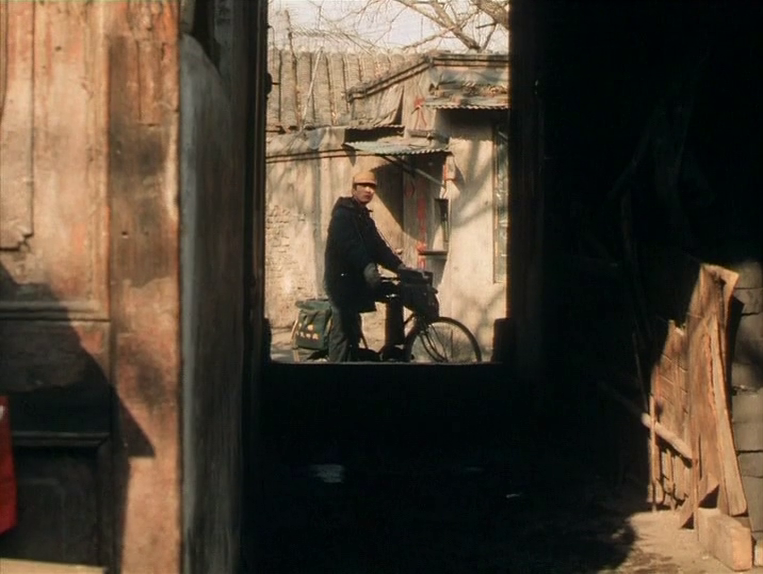
Postman (邮差, He Jianjun, 1995)

“You young people ask too many questions,” an exasperated postmaster tells a young man trying to refuse a job transfer but somehow embodying an authoritarian voice of order in post-Tiananmen China. The statement is in many ways ironic not least of them being that Xiao Dou (Feng Yuanzheng) barely speaks at all and mounts only a passive resistance to his dissatisfying existence. A portrait of repression, alienation, despair and hopelessness He Jianjun’s epistolary drama Postman (邮差, Yóuchāi) casts its hero as little different from the pillar boxes he instals on behalf of a distant authority, a soulless conduit for the thoughts and feelings of others. 

Xiao Dou is only “promoted” to the role of postman after his predecessor, an elderly man, confesses that he had taken to reading the letters he was supposed to be delivering and is ominously put into the back of a police van. In any case, it’s not long before Xiao Dou starts doing the same thing himself, transgressively relishing in his life as an epistolary voyeur reading the correspondence between an unhappily married woman and her lover with salacious obsession. Objecting to the affair on moral grounds he rejects his role as a passive messenger to interfere in their lives and put to a stop to it though later finds himself visiting a sex worker whose letters to a doctor he had stolen, while otherwise withholding a letter from a young man to his father in which he informs him of his intention to take his own life. 

Ironically assigned to the “Happiness District”, Xiao Dou encounters only yearning and confusion which echo the sense of hopelessness and despair among post-Tiananmen youth which continues to flounder in the changing China of the mid-90s. Then again in this rural backwater not much seems to have changed in the past few decades. The post-office where Xiao Dou works is marked by the maddening rhythms of his colleague Yun Qing (Huang Jianxin) rapidly stamping letters individually by hand before handing them off to Xiao Dou to deliver. The relentless sound and motion seems to reflect her own sexual repression which she eventually relieves by seducing the shy Xiao Dou who then takes another step forward towards transcending himself in completely abandoning conventional morality and compassion for others. 

Hitherto, Xiao Dou had not shown much interest in women and is annoyed when his sister suggests introducing him to a girl from the factory. His first visit to the sex worker, more out of voyeuristic curiosity than desire, ended in failure, yet he remains obsessively invested in the melancholy love letters he collects on his rounds detailing the longing and unhappiness of those around him. Perhaps the most surprising is between a gay writer who has become a drug user and his lover who seems to have disappeared. The writer later dies, presumably of an overdose if one provoked by a broken heart and despair for his life, but the existence of homosexual relationships usually considered so problematic by the censor’s board is otherwise depicted without comment save the uncomfortable implication that is a symptom of the moral decline of contemporary society. In any case, Xiao Dou does not seem to object to it or to the drug taking in the same way he does the affair though he may just assume it will eventually take care of itself. 

Like the writer’s lover, however, disappearances become common place. We see someone approach the pillar box to post a letter but when Xiao Dou turns around they have disappeared almost as if they too were sucked inside. Later he will disappear behind a pillar box he has just fitted in a new part of town the mail did not previously reach while his sister watches him fade out of view from the window of a bus as it rounds a corner. Xiao Dou’s sister had been keen for him to marry because she wanted to get married herself but was reluctant to leave the home their parents left them and wary of Xiao Dou’s ability to get by on his own. Yet through his various transgressions, Xiao Dou in a sense comes of age and is able of overcome his own repression to embrace his otherwise taboo desires in defiance of conventional morality. 

Xiao Dou asks his colleague why it is that things that are so hard to say come out easier in letters, but she answers him that for her it’s the opposite. She prefers to talk and once wrote a letter to a friend only to find herself unable to post it while standing in front of the box ironically enough because she doubted that it would arrive safely. His sense of reticence reflects the enforced silence of life in post-Tiananmen China, men and women afraid to speak their minds and imparting their true souls only to a trusted confidant in a letter but discovering that not even that is safe from prying eyes or the oppressive judgement of an unseen authority. Xiao Dou may see himself as a kind of angel, a passive emissary working on behalf of a higher power, but in liberating himself from his own repression falls still further a product of an ongoing moral disintegration born of nihilistic despair. 


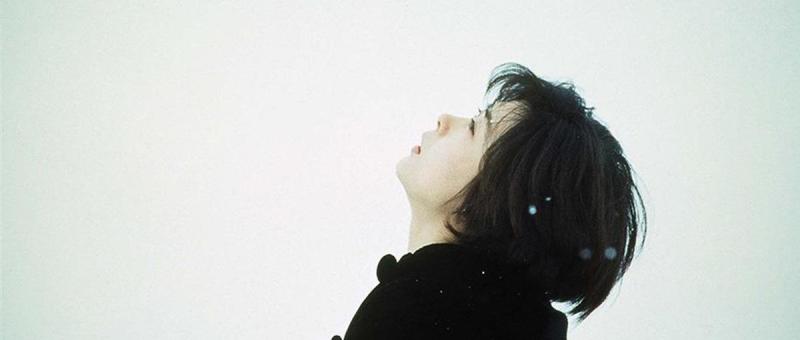
Love Letter (ラブレター, Shunji Iwai, 1995)

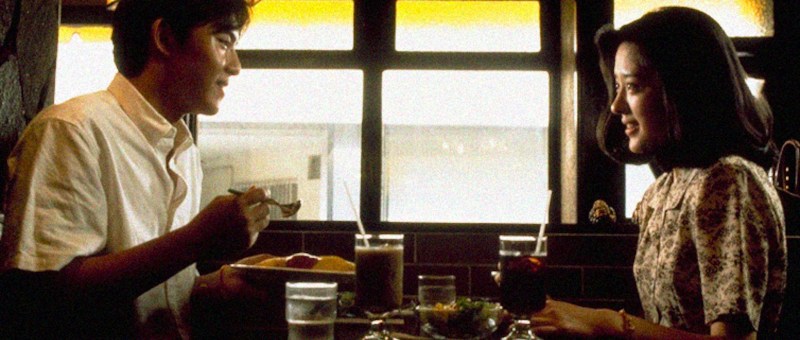
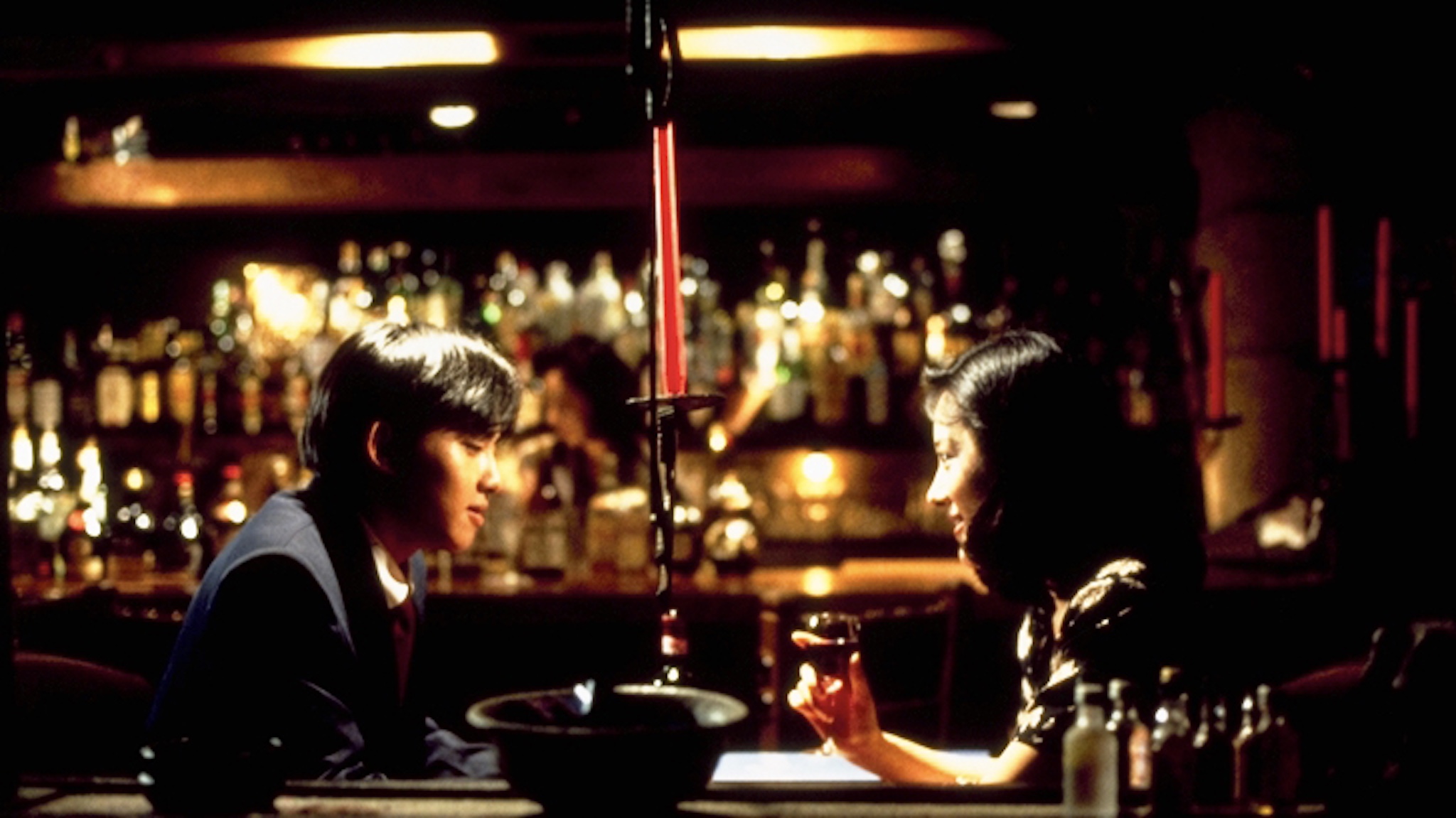
“People are forgotten so easily” a widow laments after an insensitive comment from a family friend, yet there is perhaps a difference between forgetting and letting go as exemplified in the distance between two accidental pen pals in Shunji Iwai’s profoundly moving romantic melodrama, Love Letter (ラブレター). A huge hit and pop culture phenomenon throughout Asia on its 1995 release, Iwai’s first theatrical feature bears many of the hallmarks of his enduring style in its soft focus, ethereal lighting and emphasis on nostalgia as the two women at the film’s centre each restore something to the other through their serendipitous correspondence. 

Iwai opens with a memorial service for Itsuki, the late fiancé of the heroine, Hiroko (Miho Nakayama), who passed away two years previously in a mountain climbing accident. Hiroko has since started a relationship with his friend Akiba (Etsushi Toyokawa) who avoided attending the memorial out of misplaced guilt and gave up mountaineering soon after Itsuki’s death. Akiba is keen to move their relationship forward, but fears that Hiroko is still stuck in the past unable to let go of her love for Itsuki. On a visit to Itsuki’s mother (Mariko Kaga), she finds an old address in his middle school year book for a home that apparently no longer exists and decides to mail him a letter saying nothing more than “How are you? I’m fine” of course expecting no reply. What she didn’t know, however, is that there were two Itsuki Fujiis in her Itsuki’s class, the other being a woman still living at the same address to whom Hiroko has accidentally mailed her correspondence. Confused, the other Itsuki (also played by Miho Nakayama) mails back and eventually finds herself recalling memories of the male Itsuki as an awkward, diffident teen she may have entirely misunderstood. 

Played by the same actress the two women are each in a sense trapped in an eternal present, unable to move forward with their lives. While Hiroko is consumed by grief and fearful of committing to her new relationship with Akiba lest she betray the memory of Itsuki, Itsuki is still struggling to come to terms with the traumatic death of her father 10 years previously who passed away from pneumonia after contracting the common cold leaving her with persistent health anxiety. Meanwhile, she is also struggling to move on from her family home which is in an increasingly perilous state of disrepair. She and her mother (Bunjaku Han) want to move into a modern apartment, while her grandfather (Katsuyuki Shinohara) prefers to stay even though it seems that the house will soon have to be demolished. 

Through their accidental correspondence, both women are forced to deal with recent and not so recent loss, Itsuki in some senses having forgotten the boy who shared her name while Hiroko remains unable to forget. Through his trademark ethereal lighting and frequent use of dissolves, Iwai hints at a sense of perpetual longing for the nostalgic past. The letters may not have been from the late Itsuki in a literal sense but were perhaps a message from him, connecting the two women and eventually freeing each of them as the love letter of the title is finally delivered ironically enough hidden inside a copy of Remembrance of Things Past. 

This sense of grief-stricken inertia is perfectly reflected in the snowy vistas of the lonely northern town of Otaru, thrown into stark contrast with the intense heat of the furnace in Akiba’s glassblowing workshop, or the gentle warmth of the old-fashioned stove in Itsuki’s room as she types replies to Hiroko’s handwritten letters. As Hiroko eventually reflects, they each knew a different Itsuki and have each in a sense both lost him if restoring something one to the other through the exchange of memories that grants Hiroko the understanding she needs to let go and Itsuki the poignant realisation of a youthful missed connection. A bittersweet meditation on love, loss, grief, and memory, Iwai’s epistolary drama has its own sense of magic and mystery in the strange power of this serendipitous connection leading to a tremendous sense of catharsis as a long delayed message finally makes its way home bringing with it a shade of melancholy regret but also possibility in the new hope of forward motion.


Love Letter screens at the BFI on 22/28 December as part of BFI Japan.

Original trailer (no subtitles)

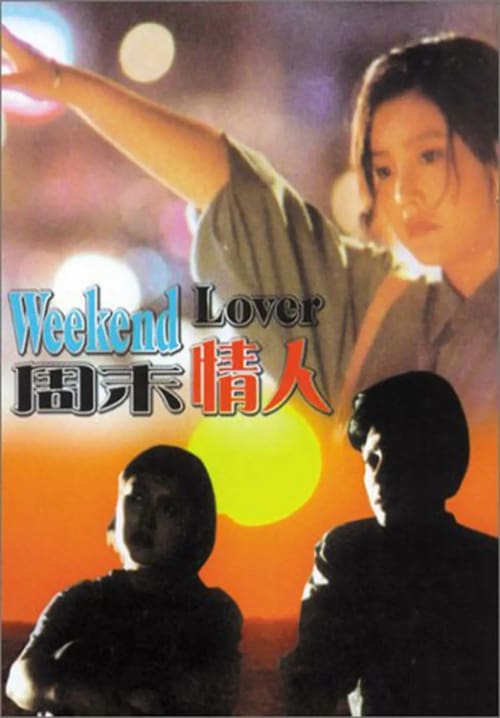
Weekend Lover (周末情人, Lou Ye, 1995)

Lou Ye’s troubles with the censors began at the very beginning of his career. Shot in 1993, his first feature Weekend Lover (周末情人, Zhōumò Qíngrén) was held up until late ’95, making ’94’s Don’t Be Young his accidental “debut”. Set in the contemporary era the film nevertheless has a strong sense of melancholy nostalgia coupled with air of nihilism that perhaps distressed the censors more than the otherwise potentially problematic bohemian setting, finding the post-Tiananmen generation floundering in a changing China in which the dream of freedom has long since flown. 

In one of many title cards, Lou opens with a lengthy piece of text claiming that this is a true story, a claim he will return to with the closing card the fantastical quality of which perhaps undermines the idea of its “reality”. The author of the text claims that this is a story some did not want to tell but mostly because it makes them sad to recall bygone days for reasons we will come to understand. Nevertheless, the filmmakers claim to have tracked down the central figure of Lixin (Ma Xiaoqing) who has agreed to share her story, which turns out to be the story of two men, violent thug Axi (Jia Hongsheng) and sensitive musician Lala (Wang Zhiwen), who find themselves bound for confrontation in order to lay claim to the affections of Lixin. 

Axi is the “weekend lover” of the title, a high school boyfriend of Lixin’s who used to spend weekends in her apartment while her parents were out but later went to prison for killing another boy who threatened their relationship. Lixin vows to wait, but ends up meeting Lala in a case of mistaken identity tasked with venturing into the unfamiliar world of back street pool halls to find a man in plaid in order to deliver something on behalf of Axi. The pair start dating, but Axi returns unexpectedly some years later put out to realise that Lixin has forgotten him and quite literally moved on. Hoping to get her back he threatens Lala and later Lixin herself, remaining somewhat obsessed with recapturing the past while little more than a violent street thug with nothing to offer other than intimidation. 

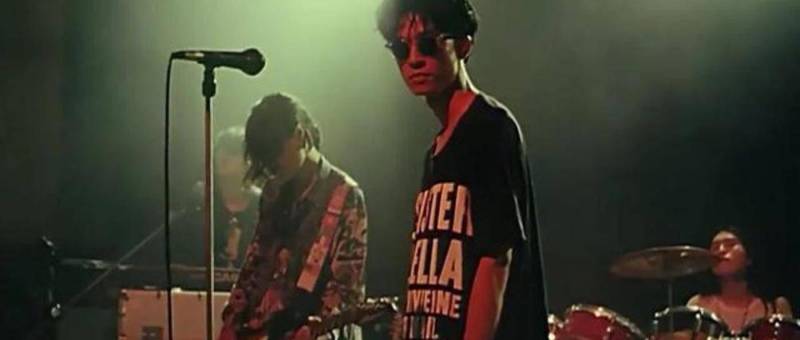
One could see Axi and Lala as embodiments of past and future with Lixin trapped painfully in an interminable present. Lala dreams of becoming a singer, eventually joining a band with whom Lixin also becomes friends hanging out in the beatnik bohemian space of the disused building she decribes as a “jail” they repurpose as their arena. Yet even this potential future is flawed. The band’s leader (Wang Xiaoshuai) explains to Lala that they will disband after their big concert as most of the members are going abroad, perhaps he will even go to America. There is no future for any of them in China while Lala rejects the idea he may stay and marry Lixin, realising she has not completely severed her connection to Axi believing their relationship is doomed to failure. 

Westernisation is indeed a persistent background theme from the discarded Coke cans, Marlboro cigarettes, and Lipton tea in Axi’s rundown room to the fancy new fast-food restaurant where Lixin works going under the name “California Rainbow”. These Bohemians dream of Western freedoms aside from the power of consumerism, longing for the right to seize their artistic potential but finding themselves continually constrained by a society they do not understand. “We drank a lot, always felt we were the most miserable and that society didn’t understand us. Later I came to realise it’s not that society didn’t accept us it’s that we didn’t understand society” Lixin explains in voiceover apparently from the vantage point of “many years” later in which she seems to have in part at least rejected her countercultural youth and developed an understanding of the contemporary society. 

Nevertheless, the film closes with both her wilful self-exile and an improbably optimistic coda which may only be a reflection of her dream followed by the title card which suggests that the couple may find happiness but only “many years later” in another city. “We felt the whole world belonged to us, as if everything would last forever. But we didn’t know what would happen.” Lixin laments, recalling her brief moment of youthful freedom later ruptured by the re-introduction of the violent past in a touch of rather elliptical irony that perhaps evokes Lou’s later taste for non-linear narrative. Moody yet imbued with a kind of youthful ennui, Weekend Lover’s frequent use of title cards, pop music, and self-consciously cool imagery may never quite coalesce beyond their various influences but edge towards an attempt to capture youth in a new age of anxiety caught between the death of idealism and the opportunities of a newly consumerist economy. 


Weekend Lover is currently available to stream in the UK as part of the Chinese Cinema Season.

Musical sequence (English subtitles)

Fallen Angels (墮落天使, Wong Kar Wai, 1995)

4K

Wong Kar Wai may be associated with a melancholy existentialism but Chunking Express, filmed on the fly in an effort to shake off frustration during the famously difficult shoot on Ashes of Time, had been a breath of fresh air which characterised pre-Handover Hong Kong as a place of anxiety mired in nostalgia but also with tremendous energy and a fervent hope for the future. Its quasi-sequel, however, is the other side of the coin. If Chungking Express’ Hong Kong were heaven Fallen Angels (墮落天使) is its hell. 

As if to signal the connection between the two visions of Hong Kong, the twin protagonists of Fallen Angels each repeat the words of He Qiwu, cop 223, that daily one rubs elbows with a thousand strangers some of whom may later become friends or confidants, but this time around the words spell less of possibility than of a fatalistic inevitability. Indeed, the central drama occurs because melancholy hitman Ming (Leon Lai-ming), tired of his life, yearns for control after years of “lazily” allowing all of his decisions to be made for him. “The best thing about my job is there’s no need to make decisions” he explains, “who’s to die, when, where..it’s all decided by others.” “I don’t know whether it’s a good decision or not” he adds after vowing to make a change, “but at least it’s mine”. 

Good or bad it hardly matters, it is all decided. The protagonists of Fallen Angels live in a kind of purgatory of perpetual longing, looking for a connection which seems to elude them. Ming has been in a non-relationship with his “partner” (Michelle Reis), more of a handler, for 155 weeks, a “dating” method which seems to spell out his preoccupation with time. Despite their long association, however, the pair rarely meet in person, believing that “partners should never get emotionally involved with one another”. That’s something the unnamed partner later comes to accept, explaining that after moving on from Ming she’ll be careful to avoid becoming attached. Mirroring Chungking’s Faye, we find her in Ming’s apartment, sharing his space, tidying up for him, changing his sheets, and repairing his ansaphone but slipping past him at the train station careful that the streams do not cross. Yet she also tells us that sometimes she sits in his favourite seat at their favourite bar because it makes her feel close to him, avowing that sometimes it’s better not to get too close, find out too much about someone and you lose interest. “I know how to make myself happy” she adds, ironically resorting to just that, alone on Ming’s bed while he drifts into another non-relationship with a woman who dyed her hair blonde (Karen Mok) in the hope that it would make her memorable. 

The obsession with blondes recalls Brigitte Lin’s wigged assassin from Chungking Express, another “Blondie” bringing together mute ex-con Ho Chi Moo (Takeshi Kaneshiro), prisoner no. 223 neatly mirroring He Qiwu’s badge number in addition to sharing his nickname and having apparently lost his voice as a child after eating expired tinned pineapple, with his “first love” Charlie Young (Charlie Yeung Choi-Nei) who enlists his help to track down the treacherous young woman about to marry her ex. He later rubs elbows with a changed Charlie, dressed in a stewardess’ uniform ironically mirroring the romantic ending of Chungking Express seconds after Chi Moo’s clumsy mimicking of Faye’s iconic dancing, though she does not remember him. Like Ming, Chi Moo wants control over his life, deciding to be his own boss, but does even this partly out of resignation that his muteness makes it much more difficult to make the kinds of connections he longs to make. He lives parasitically making an illicit living “borrowing” other people’s businesses after hours and intimidating customers into buying his services, eventually losing two father figures in quick succession, thrusting him into an unsought adulthood in which he returns to his former life but tries to pick stronger businesses that won’t “get hurt easily”.

Despite its sense of defeat and melancholy, perhaps even a touch of nihilism, Fallen Angels does however end with a sense of peace and positivity even in that which may or may not be a transitory connection for the gentle warmth it imparts. Collaborating once again with Christopher Doyle, Wong’s underground Hong Kong is a purgatorial dreamland of infinite longing filled with the fatalism of a gangster noir in which there is no future and no freedom only loneliness and death punctuated with brief moments of warmth, but in those brief moments is perhaps a reason for living at least until one’s “expiration date” arrives. 


Transfer: The most radical of the 4K restorations, Fallen Angels is presented in a 2.35:1 aspect ratio, cropped from the 1.79:1 of the original release with the effect that the images appear further constrained while additional distortion occurs at the edges of the frame. In his introduction to the series, Wong offered the following comment on the aspect ratio change:

With Fallen Angels, I have changed the format to CinemaScope, because it was originally what I had intended to release the film in. When we were cutting the film, we accidentally turned the Steenbeck on anamorphic instead of standard. I felt that the film looked much more interesting because the setting[ck] enhanced the distance of the characters on top of the extreme wide angle that we shot with. Back then, it was impossible to shoot a film in standard and release it in anamorphic. With this restoration, we have successfully fulfilled this wish.

Additionally, while the film maintains the distinctive green tint in keeping with the house style of the new restorations, several scenes originally in colour have been regraded to monochrome while others originally in monochrome have been retouched with elements of colour.


Fallen Angels is currently available to stream in the UK via BFI Player in its newly restored edition as part of the World Of Wong Kar Wai season.

Restoration trailer (English subtitles)

A Single Spark (아름다운 청년 전태일, Park Kwang-su, 1995)

In the present day, South Korea has become a prosperous society and leading world economy, but the miracle of its modernisation came at a heavy price. Socially committed filmmaker Park Kwang-su’s A Single Spark (아름다운 청년 전태일, Areumdaun cheongnyeon Jeon Tae-il) takes a trip back to the “truly dark days” of the Park Chung-hee dictatorship to expose the exploitation on which the modern society was, and in fact still is, founded, enabled largely by the wilful misuse of a fear of “communism” as manifested in the problematic presence of threat from “the North”.

Park filters his true life tale through the figure of a fictionalised author and activist, Kim (Moon Sung-Keun), who finds himself on the run from the authorities in 1975. Hiding out in a small town in a backroom rented by his pregnant factory worker girlfriend Jung-soon (Kim Sunjae), Kim is working on a biography of a labour rights activist, Jeon Tae-il, who self-immolated in order to protest the failure to properly enforce existing workers’ rights five years’ earlier in 1970.

Switching to crisp black and white, Park paints a bleak picture of working class life in the late 1960s as the oppressive Park Chung-hee regime imposed extreme export goals designed to boost the local economy. We first meet Jeon (Hong Kyeong-in), who was only 22 at the time of his death, selling umbrellas on the street before he is “lucky” enough to get a job in a tailoring factory. Committing himself to working hard and getting on, he is quickly disillusioned with conditions at the plant which has little light or ventilation and often forces its employees to work through the night without adequate breaks for food. When the young woman next to him begins vomiting blood and is sent home but subsequently fired, Jeon becomes radicalised. Told that there are no laws which protect workers, he is surprised to discover that there are but their existence has been wilfully kept from him. The law is written in a language which is almost impossible for him to understand, in highly formal text using Chinese characters which most ordinary Koreans, never mind those like Jeon denied a proper education, struggle to read.

Jeon begins agitating. He takes a copy of the statutes and a series of violations at the factory to those in charge, but no one is interested. Even when he convinces some of the other workers to come with him, the boss is eventually forced to make a token concession of listening to them but ultimately rolls his eyes and says it’s all very well but not good for business. Jeon isn’t asking for anything radical (save the later addition of provision for menstrual leave), only for better ventilation and for the existing laws to be obeyed.

Meanwhile, Kim meditates on his legacy in the dark days of 1975 where anti-communist sentiment runs high in the wake of the end of the Vietnam War. “Anti-communism” and the demonisation of the North were a central part of Park Chung-hee’s right-wing, nationalist military dictatorship and any attempts to form things like unions or left-leaning political associations were quickly decried as “communist”. Kim’s girlfriend Jung-soon is currently involved in trying to set up a union at her factory to combat many of the same kinds of issues that Jeon was fighting five years’ earlier, but she too is under a lot of pressure. Afraid of the authorities and of losing their jobs, many workers refuse to join and even after she reaches her quota the request for recognition is denied. She and the other activists are harassed by factory management beginning with a “friendly” meeting outside her home in which they try to bribe her with money and expensive fruits, and ending with a raid on the building in which some of the workers are holding a protest during which a woman falls ill and the others are badly beaten when they try to get her to a hospital.

Jeon and the others are lectured by management that they should try to feel more “patriotic” and be willing to suffer in order to raise the economy, bribed with false promises that they’ll all be driving luxury cars in 10 years’ time. Meanwhile, a woman coming to collect money from Jeon’s mother angrily exclaims that debtors should take rat poison and die (which seems counterproductive when they owe you money), and the managers dismiss workers’ concerns with the rationale that they obviously “aren’t hungry enough” to put up with starvation wages and poor working conditions. From the vantage point of 1975, Kim meditates on Jeon’s sacrifice as he witnesses the suicide of another young man, Kim Sang-jin – a student who quoted Thomas Jefferson’s words that democracy is an outcome of struggle at a rally at Seoul National University before publicly slashing his belly. He sees the tragedy of Jeon’s death as the “single spark” which lit a fire under the democracy movement, a torch he wants to pick up and keep aflame to guide them towards a better future.

20 years later, Park may be acknowledging that some battles have been won in a newly democratised Korea as Kim looks on with satisfaction in a peaceful marketplace while a student carries the book he has written about Jeon Tae-il under his arm, but implicitly suggests that not enough has changed and the same battles Jeon was fighting are still being fought. A melancholy meditation on political martyrdom, art, and legacy, A Single Spark pays tribute to those who gave their lives for a fairer world but is equally intent that their sacrifice must not be forgotten.


A Single Spark was screened as part of the 2019 London Korean Film Festival.