Spacked Out (無人駕駛, Lawrence Ah Mon, 2000)

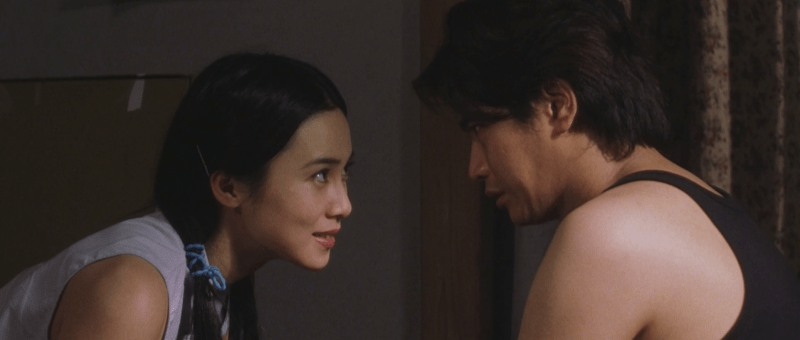
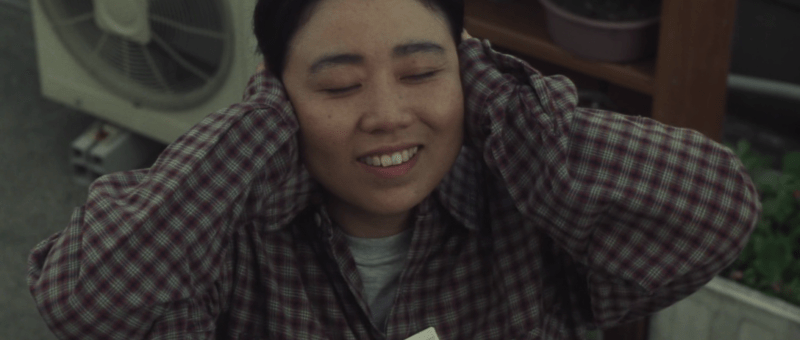
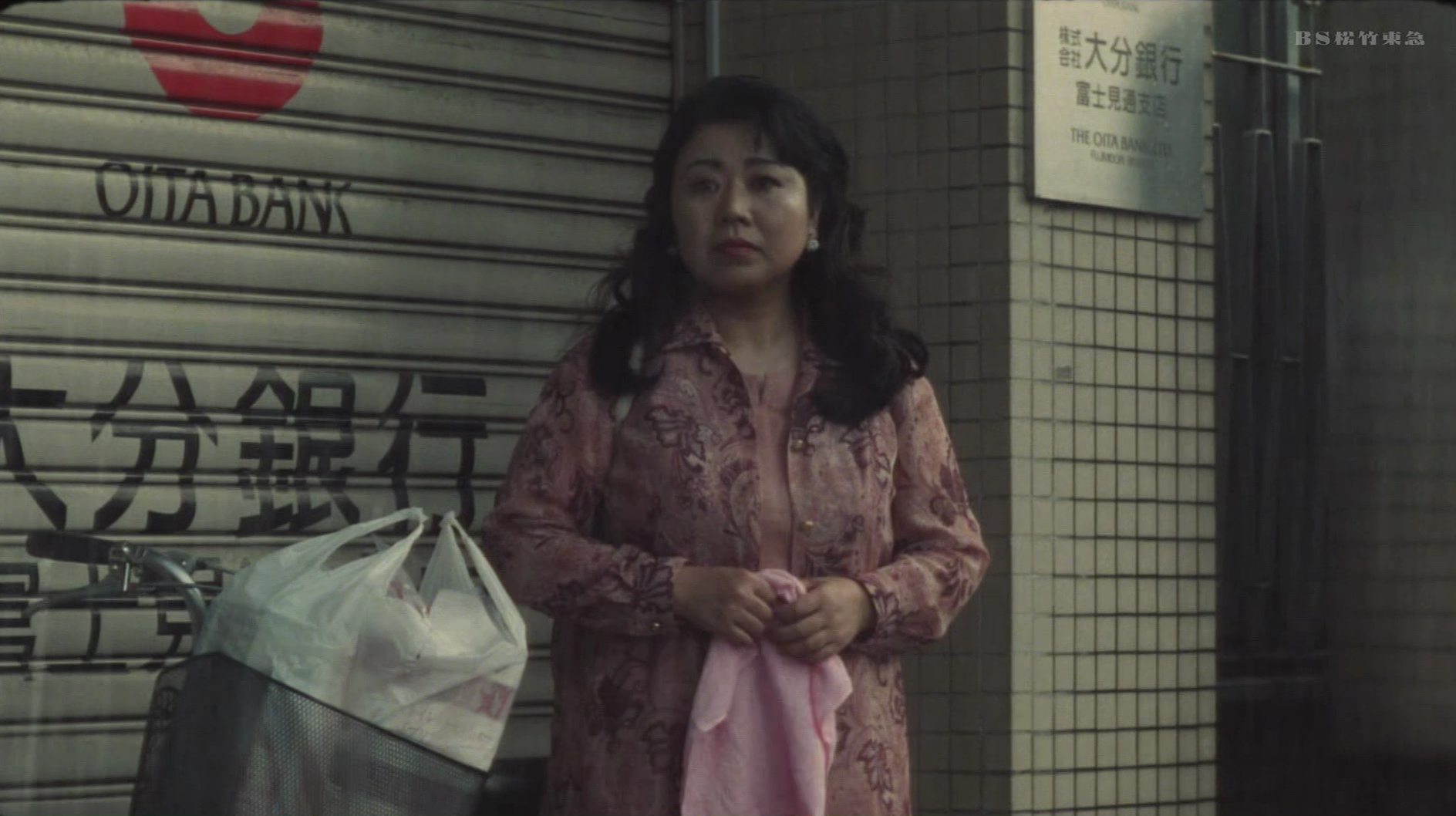
There’s a sense of abandonment and rootless melancholy that pervades Lawrence Ah Mon’s post-Handover drama Spacked Out (無人駕駛). Each shorn of their parental relationships, the four teenage girls at the film’s centre find themselves floundering for direction, seeing no real future for themselves in a Hong Kong that has itself in a way also been abandoned to a new perhaps overbearing parental entity that cannot really be embraced or fully trusted while struggling to find the means to redefine itself. 

The only real authority figure the girls know is their is ineffectual, authoritarian school teacher, Mr.Chan, who challenges 13-year-old Cookie (Debbie Tam Kit-Man) on her late arrival to school over her dyed hair and (according to him) inappropriate footwear. He asks her if she really wants an education, but then robs her of it by forcing her to stand in the playground all morning next to two other students, a girl getting similar treatment for wearing earrings, and a boy who isn’t wearing any socks. Mr. Chan evidently isn’t interested in these kids, their lives or prospects, but only in enforcing the arbitrary rules of social conformity. When another of the girls, Beancurd (Maggie Poon Mei-Kei) whose head is shaved, is accused of slashing another girl with a box knife in a convenience store, he point blank tells them that he doesn’t usually care about what happens to them outside the school but knives are on another level. “How is she supposed to wear low-cut clothes from now on?” he rather bizarrely asks despite having reprimanded each of the girls for their “inappropriate” attire while advocating a rather sexist vision of his teenage charges in which all that matters is that the wounded girl may no longer be as conventionally attractive as she might have been rather than focusing on the causes of this problematic violence or the mental and physical distress caused to the victim.

The film’s Chinese title, “unmanned”, neatly symbolises the girls’ rootlessness but also their own internalised patriarchy in which they continue to look to men for protection and guidance. Abandoned by her mother to whom she leaves long voice messages she never replies to, Cookie has only a violent father who seems otherwise absent from her life. She has begun dating a young man, Wing who is 16 years old and sells pirated VCDs in Mongkok. After sleeping with him Wing has ghosted her while Cookie is worried she’s pregnant having fallen for Wing’s dubious insistence that the first time doesn’t count. Her friend, Banana (Angela Au Man-Sze), meanwhile is the group’s man expert, having apparently had several abortions while continuing to meet men through telephone dating lines as well as the girls’ work in local karaoke booths. Only Beancurd who is a lesbian and in a fraught relationship with the more materialistic Sissy (Christy Cheung Wing-Yin) attempts to subvert male authority but is also driven to acts of self harm by traumatic memories of sexual assault. 

Box cutters become ominous symbols of the frustration and despair felt by the teens, another boy in the girl’s class openly self harming but finding no support from those around him. At least the girls have each other even if they’re all just as lost and confused. On learning that Cookie may be pregnant, they rally round to solve the problem by pooling their resources to get her a backstreet abortion though on another level they’re also railroading Cookie into a decision she hasn’t quite accepted for herself. The place they end up in is grim in the extreme, filthy and with rusty equipment not to mention unsympathetic staff who just like all of the other adults care little for her wellbeing. 

For much of its running time, the film adopts a kind of naturalism but descends into nightmarish psychedelica, possibly provoked by the drug-fuelled party the girls had just left after it took a rather sour and tragic turn, as Cookie undergoes the abortion and simultaneously accepts her abandonment acknowledging that boyfriends aren’t important only friends are suggesting a new solidarity which exists between the Handover generation navigating turbulent seas together in the absence of parental care or guidance. Unjudgemental of his young heroines, Lawrence Ah Mon captures a breezy sense of teenage of life with days spent at the pool with friends if equally the more destructive presence of sex, drugs, cross border smuggling, and exploitation in all of their lives while granting them at least a degree of freedom to define themselves in a new and confusing age. 


Spacked Out opens at New York’s Metrograph Dec. 29 and will also stream in the US via Metrograph at Home courtesy of Kani Releasing.

Trailer

Party 7 (Katsuhito Ishii, 2000)

“This shit’s for real.” according to the front desk guy at Hotel New Mexico, an out of the way spot just perfect for those looking to lay low for a little while. Like a lot of Katsuhito Ishii’s work, Party 7 is essentially a series of self-contained vignettes which eventually collide following a series of bizarre coincidences revolving around some money stolen from the mob, a two-way mirror in a regular hotel room, and the receptionist’s tendency to almost literally shoot the shit. 

Following a brief prologue, Ishii opens with striking animated sequence which introduces each of the main players with an arcade game aesthetic and explains that Miki (Masatoshi Nagase) has stolen money from the mob and is currently on the run which is why he’s turned up at the infinitely weird Hotel New Mexico. The running gag is that Miki thinks he’s holed up somewhere no one will find him, but sure enough a series of “friends” soon turn up in part thanks to a loose-lipped travel agent. The fact that people can find it so easily dampens the impression of the Hotel New Mexico as some kind of interstitial space. It’s not so much existing in a weird parallel world as a bit run down and staffed by a series of eccentrics. It does however have a “peep room” hidden behind a two-way mirror where “Captain Banana” (Yoshio Harada) is attempting to pass his knowledge on to the young Okita (Tadanobu Asano), the son of a recently deceased friend who has been repeatedly arrested for voyeurism. 

Captain Banana’s insistence on his surreal superhero suit is in a way ironic, if perhaps hinting at the super empowerment of accepting one’s authentic self. “It’s your soul,” he tells Okita, “it’s screaming ‘I want to peep’.’” Meanwhile, Miki gets into an argument with his ex-girlfriend Kana (Akemi Kobayashi) who has turned up in the hope of reclaiming money that he owes her. Kana too seems to be less than rigorous with the truth if perhaps emotionally authentic. She’s now now engaged to a nerdy guy having somewhat misrepresented herself as the innocent girl next-door type. Her refusal to let her fiancé into her apartment perhaps hints at a more literal barrier to intimacy or at least that she is intent on preventing him from seeing her true self. What she doesn’t know is that her fiancé hasn’t been completely honest either, in part because he thinks she’s out of his league and is insecure in their romance. 

Miki too maybe somewhat insecure, having run off with the gang’s money after hearing them bad mouth his associate Sonoda (Keisuke Horibe) who has now been charged with killing him and getting the money back. But Sonoda too has reasons to doubt the boss’ affection for him after Miki and the others point out that gifts he thought were so valuable are really just cheap knock offs that suggest the boss thinks very little of him at all. Okita’s psychiatrist tells him that there are “no rules in making friends”, and maybe in a strange way that’s what everyone is trying to do. Kana wanted the money to overcome her anxiety about having no friends or family to invite to the wedding, while all Sonoda wanted was the boss’ approval and though Miki had deliberately gone somewhere he thought no one would find him nevertheless attracts a series of followers. 

Even the receptionists seem to be desperate for human contact with their strange stories of poo falling from the sky and bizarre approach to hospitality. “The point is whether you believe it or not,” one tells the other after spinning what sounds like a yarn but then again might not be. Ishii’s zany world has its own surreal logic culminating in a piece of cosmic irony and defined by coincidence as the otherwise unrelated stories begin to come together and slowly find their way to Hotel New Mexico but seems to suggest the point is in the serendipity of the meeting and its concurrent authenticity even if a literal shot in the arm is a less than ideal way of brokering a friendship.


Party 7 is released in the UK on blu-ray on 17th July as part of Third Window Films’ Katsuhito Ishii Collection.

Original trailer (English subtitles)

Space Travelers (スペーストラベラーズ, Katsuyuki Motohiro, 2000)

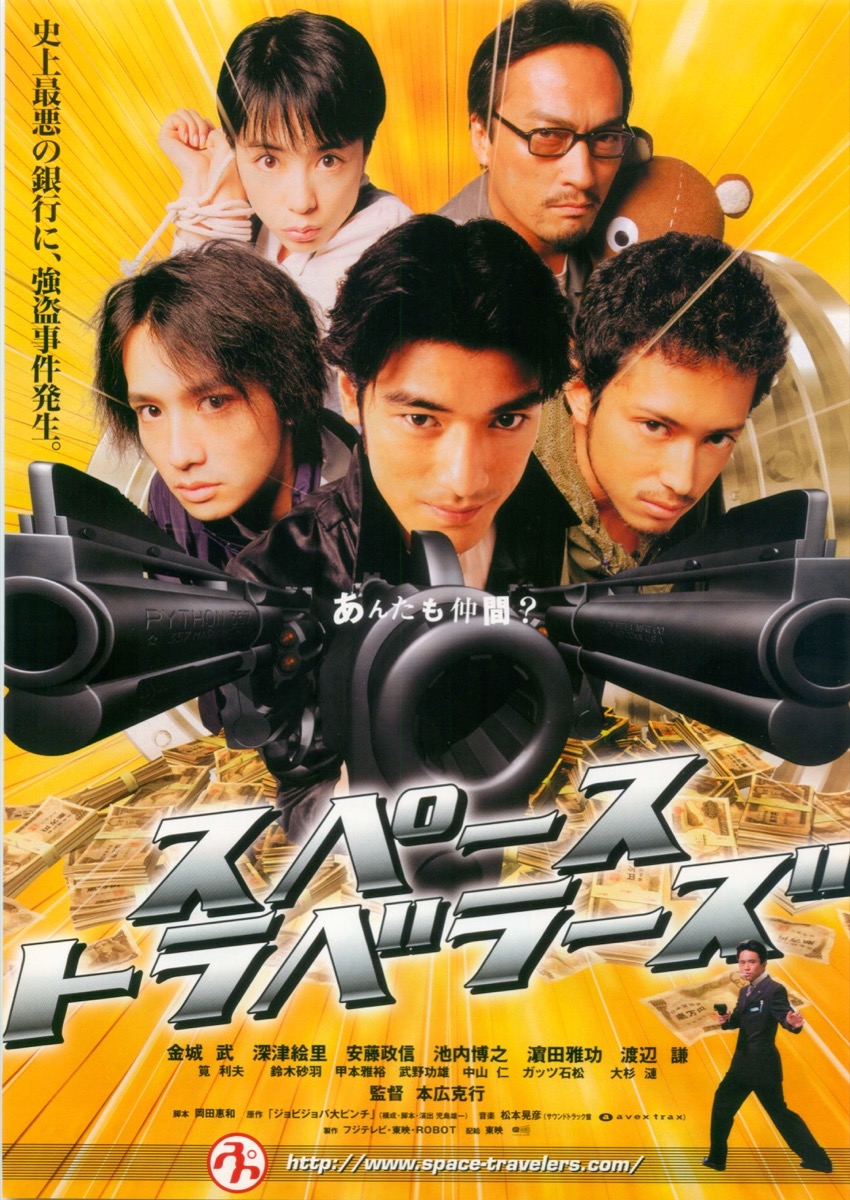
“What are you doing now?” asks a very zeitgeisty set of onscreen titles at the beginning of Katsuyuki Motohiro’s millennial heist comedy, Space Travelers (スペーストラベラーズ). Both hopeful and not, Motoyuki’s cosmic farce takes the sense of anxiety and despair which colour other similarly themed turn of the century movies and turns them into a source of possibility while simultaneously implying that for some paradise may always be out of reach or else relegated to a state of mind. After all, “reality is different from animation”.

The idea of a far off paradise is what drives a trio of orphans (Takeshi Kaneshiro, Masanobu Ando, and Hiroyuki Ikeuchi) to consider armed robbery, planning the slick kind of heist they’ve seen in the movies in which they run into off into the sunset with a bag full of cash after holding a bank to ransom. Of course, it doesn’t quite go to plan leaving the three essentially good-hearted guys with a problem because they weren’t really prepared to harm anyone (two of their three weapons are duds) and they don’t have a plan B. What happens then is somewhat unexpected as a degree of camaraderie begins to arise between the would-be-thieves and the small number of customers and employees trapped in the foyer who then become something of an artificial team trying to overcome the rapidly escalating situation as the police surround the building in the incorrect assumption that the robbery is connected to terrorist action. 

What soon becomes apparent is that for the trio the heist is part wish fulfilment fantasy and a last ditch attempt to catapult themselves out of a sense of impossible despair. As they are all orphans, they feel a deeper sense of disconnection from a society which has in itself abandoned them, partly as it turns out hoping to find their long-lost parents in a tropical island paradise known to them only from a faded postcard. For the customers and employees, the robbery is the most exciting thing to happen to them in their entire lives and the proximity to mortal danger soon forces them to wrestle with their personal dissatisfaction. Before the heist took place, bank clerk Midori (Eri Fukatsu) had been planning to attend a party to celebrate her engagement to another employee branded a sleazy creep by most of the other female members of staff with whom he had apparently tried it on on previous occasions. She had agreed to marry him despite her reservations because he had sworn to lay down his life for her if she were ever in danger only to spot him trying to escape on his own via the air conditioning ducts. Being caught up in this bizarre situation forces her to accept she had been leading a “conveyor belt life” out of fear, always picking the safe option rather than take a risk chasing personal happiness even picking a husband solely because he promised her protection. 

In the Japan of the 2000s, chasing personal happiness might have seemed like a fools errand trapped in a stagnant economy with no prospect of improvement and only increased risk if you fall from one particular rung on the ladder. Yet the conclusion Midori seems to come to is that the only way of rebelling against this sense of nihilistic frustration is to take the risk and look for the paradise that is waiting for her rather than settle for a disappointing status quo. She learns this partly through her connection with one of the bank robbers who casts each of the hostages as members of his favourite, now cancelled, anime “Space Travelers” created according to an onscreen interview to offer a sense of something tangible to an increasingly disconnected youth that would allow them to experience a full range of emotions (the animated sequences created for the film were later spun off into an OVA of their own). Through their accidental role playing, the hostages each discover the sides of themselves they’d been missing to claim their true identities, Midori learning that she can protect herself, nerdy clerk Shimizu (Masahiro Komoto) overcoming his crippling shyness, a middle-aged electrician flummoxed by modern technology proving that his skills aren’t obsolete, and a feuding couple on the brink of divorce reflecting that they actually do work well as a team. 

Even so, not everyone comes out of the situation with new hope for the future with the implication being that some gambles are simply too big or that for some paradise will always lie just out of reach even if Midori remains committed to seeking it out on her own whether she eventually finds it or not. Meanwhile, Motohiro takes potshots at the media reality of the day as a cynical boyband publicity stunt to announce their breakup tour to rake in more cash before announcing a comeback is derailed by the press tripping over themselves to get to the unfolding bank hostage crisis with the police also doing their bit to hog the media spotlight while mistakenly believing a suspicious-looking man who actually is a fugitive terrorist is responsible for the heist. With the world as messed up as it clearly is, the film seems to say, chasing paradise is the least risky thing of all. 


Trailers (no subtitles)

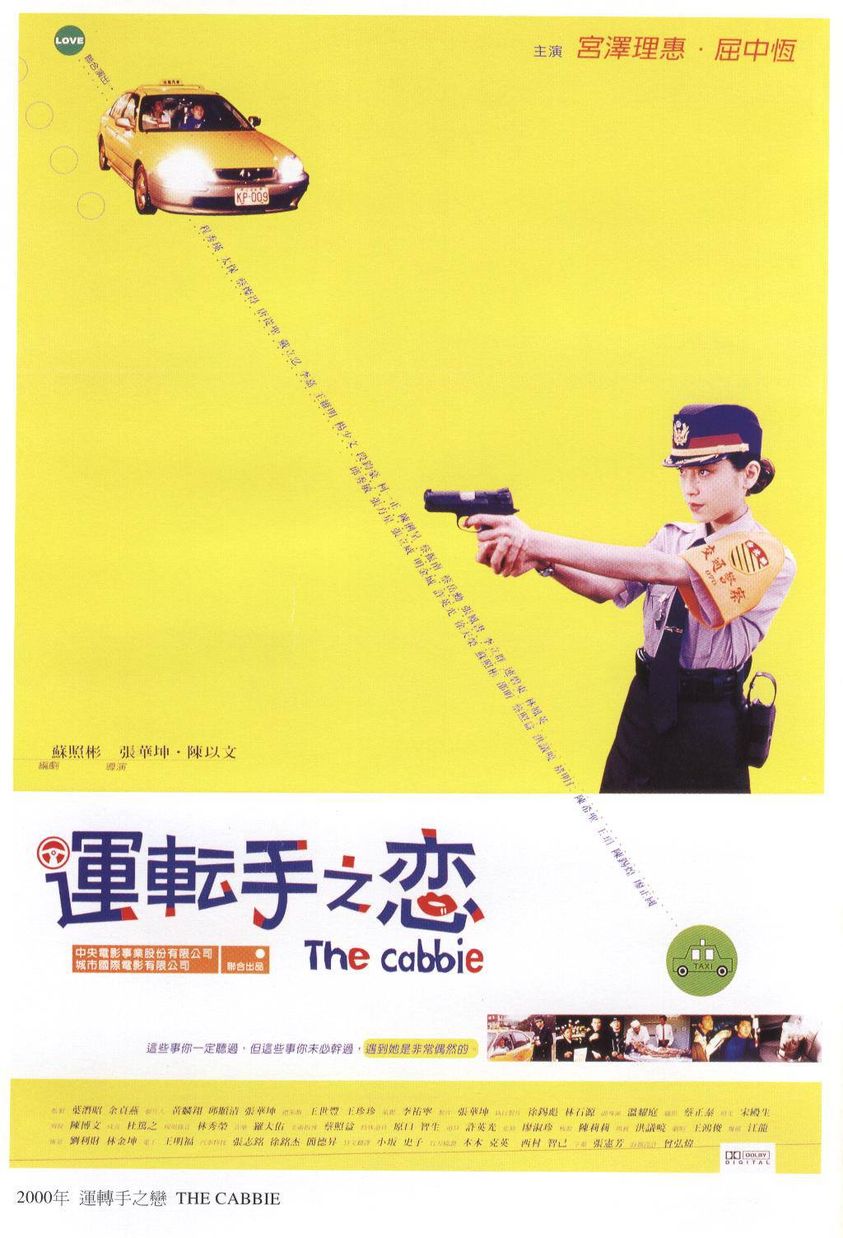
The Cabbie (運転手之戀, Chen Yi-wen & Chang Hwa-kun, 2000)

The crazy freewheeling life of a lovestruck taxi driver eventually takes a turn for the contemplative in Chen Yi-wen & Chang Hwa-kun’s infinitely charming comedy, The Cabbie (運転手之戀, yùn zhuǎn shǒu zhī liàn). Despite the film’s sunny atmosphere, darkness does indeed hang around the edges in the frequent references to car accidents and dismemberment yet it seems to be something that the affable hero can live with as he narrates a series of strange incidents from his ordinary life while meditating on his zany family when faced with mortal anxiety. 

As taxi driver Quan (Chu Chung-heng) points out, life can be pretty strange. His taxi can sometimes act as an unofficial confessional as his fares take the opportunity to unburden themselves to a complete stranger in a confined space, confessing the embarrassing details of their lives and even at one point seemingly confessing to a murder. Quan takes it in his stride, feeling as if he is one with his cab, Ah Di, and duty-bound to deliver his charges to their rightful destinations physical and emotional. Yet in an odd way it’s almost as if we’ve become the driver in this story and Quan is our fare, breaking the the fourth wall to speak to us directly of his strange life and the circumstances which led to this present turn of events. 

Quan is however unusual in that he tells his mother and father quite directly that he has no intention of marrying, giving a fairly logical reasoning based on the fact he believes women do not like him and he is not apparently much interested in them. This is of course a source of anxiety for his parents, his taxi driver father also turning fare in ranting at an old lady at the convenience store about his wayward son before trying to awaken something within him by gifting him porn. His mother meanwhile, the local coroner, decides to give up on him while ordering Quan to freeze his sperm so she can have a grandchild with or without his direct involvement at some point down the line. 

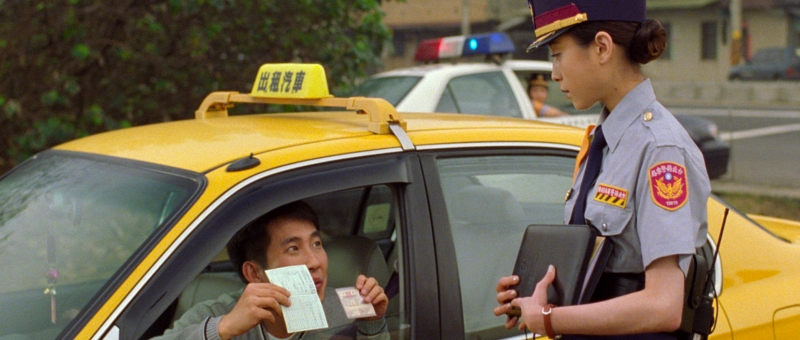
In any case, Quan changes his mind on falling in love at first sight with grumpy policewoman Jingwen (Japanese actress Rie Miyazawa, dubbed into Mandarin). Taking his mother’s advice about making an impression (not necessarily a good one) to heart, Quan decides the best way to woo his crush is to get fined by her as many times as possible. Even so there’s an undeniable Romeo and Juliet vibe to their relationship given the natural animosity between taxi drivers and traffic cops, along with a sense of cosmic irony that feeds directly back into the film’s darker themes. So much of life for Quan is coincidence, an act of cosmic collision not unlike the car crashes that occur so frequently outside the taxi depot. Quan encounters Jingwen by chance and then continues to push his luck by meeting her again in similar circumstances until she gives in to his unusual ardour. Yet not all of these accidents end well. One of Quan’s neighbours earns extra cash turning up at crash sites and making sure that the family gets all of the deceased’s body parts, reaching under twisted metal to retrieve pieces of severed flesh while his mother is indeed a coroner with a severed head in a jar sitting proudly in her office. 

In the end it might be that Quan is a mere passenger of fate, relating his life to us as it flashes before his eyes while threatened by a weird fare. What begins as absurd nonsense comedy as Quan tells us about his crazy family and the strangers who climb into his cab eventually takes an unexpected, poignant turn for the existential even as Quan continues to closely identify himself with Ah Di which might beg the question of who is driving who. Madcap and anarchic, there is something genuinely cheerful in Quan’s often simple existence governed both by chance and the rules of the road lending a fatalistic pall to all of his otherwise freewheeling adventures. Things don’t always always go right for him, but even when they go wrong it’s generally in the right way. Fast-forwarding though the “boring bits”, Quan races us through his life in the cab before taking us where we need to go keeping it cheerful while preparing for the inevitable collision with cosmic irony. 


The Cabbie screens 20th October as part of this year’s Taiwan Film Festival Edinburgh.

Original trailer (Traditional Chinese / English subtitles)

The Foul King (반칙왕, Kim Jee-woon, 2000)

A dejected office worker seeks release from a mundane life of constant degradation as a masked wrestler but finds himself ultimately unable to escape the headlock of the corporate society in Kim Jee-woon’s pro wrestling farce The Foul King (반칙왕, Banchikwang). As the title may suggest, you might have to play a little dirty in order to claw back some dignity but then perhaps everyone’s struggling to free themselves from something be it old debts, middle-aged disappointment, or complicity with the dubious business practices of turn of the century capitalism. 

Even before he enters the ring, Dae-ho (Song Kang-ho) is wrestling, fighting his way onto and out of a packed rush hour train only to arrive at work a few minutes late to be given a passive aggressive dressing down from his boss (Song Young-chang) during the morning pep talk. His boss then in absurd fashion corners him in the gents and places him in a headlock while telling him off some more just to ram the message home. Poor Dae-ho finds this so humiliating that all he really thinks of is a short term solution of learning how to evade his boss’ control while mooning over his attractive desk mate Miss Jo and further berating himself for being too shy to ask her out. His other problem is that he’s not very good at his job as a low-level bank cashier. He and his work friend Doo-sik (Jung Woong-in) are bottom in the office rankings for failing to secure any new accounts.

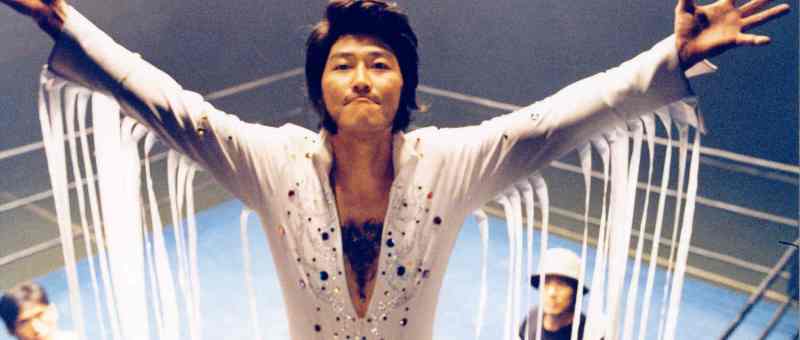
Trapped between his abusive boss and dismissive father (Shin Goo) with whom he still lives, Dae-ho finds himself both emasculated and infantilised while continuing to indulge childhood fantasies drifting off into a dream sequence in which he is Elvis in the wrestling ring trying to impress Miss Jo but still defeated by his giant bug of a boss. He first turns to a friend who teaches Taekwondo to children but he tells him Taekwondo is a “mental discipline” while a real martial artist would never end up in a headlock anyway. But then as if by magic he wanders past a moribund wrestling gym and ventures inside only for the coach, Jang (Jang Jin-young), to throw him out for being a bit odd. Threatened by a gangster into training up a comic relief character specialising in cheating to bolster the profile of another wrestler, Yubiho (Kim Su-ro), hoping to drum up publicity for a Japan tour, Jang relents remembering Dae-ho’s manic rank about his love for classic heel Ultra Tiger Mask as seen on TV decades earlier. 

Being a heel is not quite what Dae-ho had in mind, after all what he wants is to figure out how to escape a headlock yet he finds himself bizarrely in his element if a little clumsily rejoicing in moustache twirling villainy, cartoonish pranks, and comic pratfalls. He begins to grow in confidence but also overreaches, managing to teach a gang of youths (amusingly standing under a huge mural ironically reading “Korea! Fighting!”) a lesson and redeeming his sense of masculine pride after a defeat while making a total drunken fool of himself in his unrequited love for Miss Jo at the office karaoke party once again getting pummelled by his boss. While Dae-ho turns to wrestling in search of freedom and personal fulfilment, Doo-sik tries to regain his self-respect by doing the right thing refusing to be a part of his boss’ obviously dodgy business practices while threatening to blow the whistle if like Dae-ho perhaps realising that there is no way to beat this system while remaining inside it. 

Dae-ho discovers that he gains confidence by putting on a mask, specially the Ultra Tiger Mask worn by his childhood hero, while “winning” in the ring through “cheating” getting audience laughs with zany cartoon stunts. Only when the mask is torn by an unnecessarily aggressive Yubiho does he enter full on rage mode attempting to take revenge for his constant belittlement by ignoring the script to teach Yubiho a lesson as the pair of them brawl all over the stadium making weapons of random chairs and even at one point the session bell itself. Yet in a real sense Dae-ho never really achieves much of anything, scoring a symbolic victory in provoking a tie but never figuring out how to escape the corporate headlock while continuing to be bullied by his boss, rendered entirely powerless within the hierarchal corporatised society of early 2000s Korea. A darkly comic take on existential futility, Foul King meditates on the compromises inherent in playing the game Dae-ho ironically finding confidence in wilful humiliation as a dishonourable heel while unable to escape his constant degradation wrestling for agency within the confines of his regular office worker life. 


The Foul King streams in Poland until Nov. 29 as part of the 15th Five Flavours Film Festival.

Trailer (English subtitles)

In the Mood for Love (花樣年華, Wong Kar Wai, 2000)

“That era has passed. Nothing that belonged to it exists anymore.” So runs a melancholy title card placed a little before the conclusion of Wong Kar Wai’s Sirkian melodrama, In the Mood For Love (花樣年華). Extracted perhaps from the hero’s nascent foray into romantic fiction, the lines hint both at his plaintive sense of longing for lost love, and also to a changed Hong Kong which leaves the lovers stranded having missed their moment for happiness and thereafter trapped, like so many Wong heroes, in a perpetual evocation of the nostalgic past. 

Set like Days of Being Wild in the Hong Kong of the early 1960s, In the Mood for Love is in a sense an anti-melodrama concerning itself with the other side of an affair as betrayed spouses find in each other a kind of solace which ironically leads to love but a love that can never truly be fulfilled. Reporter Chow Mo-wan (Tony Leung Chiu-wai) first brushes past secretary Su Li-zhen (Maggie Cheung Man-yuk), sharing a name with the lovelorn box office girl of Days of Being Wild, when he attempts to rent a room for himself and his wife only to discover she has already taken it. The couple next door, however, are also looking to rent out their spare room now their son has married and so the pair find themselves next-door neighbours. Their respective spouses, seen only from behind and heard only on the other end of telephone calls or distantly from another room, eventually become more than that, their affair exposed as much as by their excessive business trips and suspicious overtime as by the rather crass practice of buying identical gifts for the illicit lover and legal partner, something also practiced by Li-zhen’s sleazy boss (Kelly Lai Chen) who enlists her husband to pick up a pair of handbags for wife and mistress. 

Li-zhen’s husband Chan (Roy Cheung Yiu-Yeung) seems non-plussed by the request but it perhaps gives him ideas, though not particularly good ones considering his mistress lives next-door, Li-Zhen pointing out to Mo-wan that a woman might not like a gift of a handbag identical to that of her neighbour before admitting she’s noticed his wife carrying just that, while Mo-wan is wearing the same tie as Chan who claimed it was a present from his boss which is why he’s been wearing it every day. Confronted on a similar point, Li-zhen’s boss makes a point of changing his tie before meeting his wife for a birthday dinner. Male adultery is, it seems, normalised and to an extent permissible as long it remains a secret even if openly. With her husband so frequently away, however, Li-zhen becomes a figure of suspicion, her landlady Mrs. Suen (Rebecca Pan Di-hua) warning her that her late night returns have not gone unnoticed while others marvel at her elegance, unable to accept she’s all dressed up just to buy noodles in the rain. 

For all these reasons, the relationship between Mo-wan and Li-zhen must remain chaste and pure even as they consciously role play their adulterous spouses. “We won’t be like them” Li-zhen insists, later echoed by Mo-wan’s admission that “I thought we wouldn’t be like them, but I was wrong.” He wanted to know how it started, and now he does. “Feelings can creep up just like that. I thought I was in control” he remarks in a speech which seems to echo Celia Johnson’s shattering revelation in Brief in Encounter “I didn’t think such violent things could happen to ordinary people”. Like the old busybodies of Coward’s prurient, middle class England, the landlady acts as an enforcer of conventional morality, always on the look out for breach of conduct and believing herself acting in Li-zhen’s best interest even as her admonition leaves her in a moment of virtual collapse, grasping the doorframe for support as her eyes momentarily fill with tears. 

Yet it’s Mrs. Suen’s eventual absence that informs us of a sea change. Years later, in 1966, she’s one of many in an apparent mass exodus fleeing the political instability in the wake of a series of riots against British colonial rule. Mrs. Suen is vacating her apartment to live with her daughter in the US where she may stay indefinitely. The Koos from next-door have already moved to the Philippines to live with their son, laying bare the ongoing expansion of the Hong Kong diaspora. Mo-wan eventually finds himself in Singapore, though fleeing emotional rather than political instability, eventually travelling to Angkor Wat in a failed attempt to exorcise his sadness, while Li-zhen, unable to act on her desires and trapped by patriarchal ideas of conventional morality is, like Happy Together’s Po-Wing, left only with memory living in the metaphorical past of Mrs. Suen’s apartment. Something has changed, a once impossible love may now be possible, but “that era has passed”. The couple have missed their moment, trapped on either side of an unbreachable divide. 

For Mo-wan, “the past is something he could see but not touch” a subject of perpetual longing blurred and indistinct as if seen through a dusty window pane. Working again with Christopher Doyle, Wong’s sweeping cinematography captures Mo-wan’s etherial existence through comparatively restrained composition and use of gentle tracking shots following the lovers as they repeatedly pass each other in shadow on the stairs or wander along the deserted, rainy streets of a midnight city. Like a long slow waltz, In the Mood For Love sends its protagonists spinning back towards opposite sides of the floor, trapped in a world which no longer exists and consumed by an irresolvable longing for the nostalgic past. 


Transfer: presented in the original 1.66:1 aspect ratio though like the other films in the series of 4K restorations featuring the near universal green tint in a significant change for a film known for sumptuous colour and particularly associated with the use of deep reds.


In the Mood for Love is currently available to stream in the UK via BFI Player in its newly restored edition as part of the World Of Wong Kar Wai season.

Restoration trailer (English subtitles)

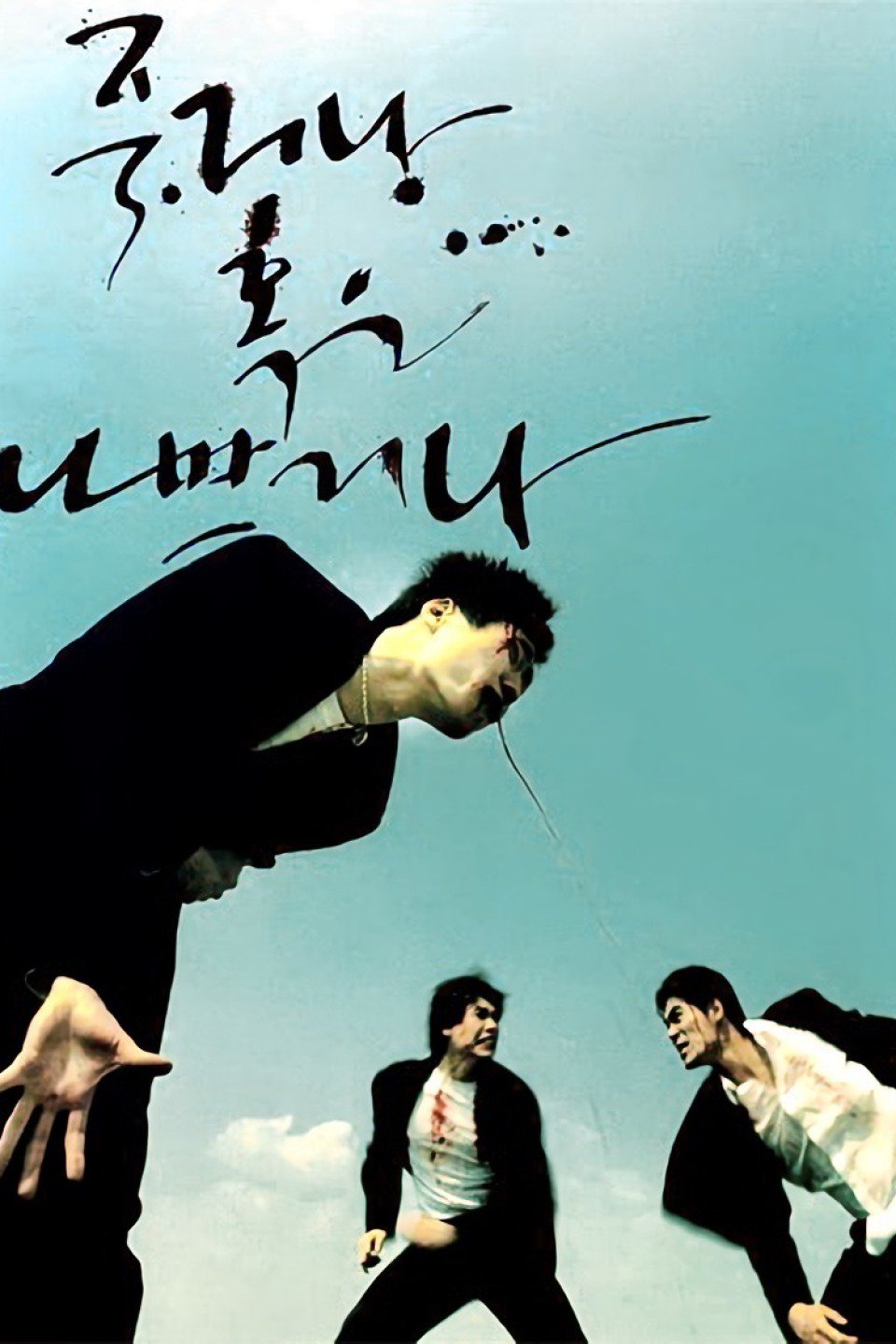
Die Bad (죽거나 혹은 나쁘거나, Ryoo Seung-wan, 2000)

die bad posterRyoo Seung-wan is now one of Korea’s top directors with such high profile box office hits as Berlin File, Veteran, and Battleship Island to his name. Back in 2000, he was just a young punk trying to make his mark in the film industry. Die Bad (죽거나 혹은 나쁘거나, Jukgeona Hokeun Nabbeugeona), Ryoo’s feature debut is, in reality, a series of four connected shorts (some of which were screened individually) telling an all too familiar story of a life ruined in adolescence giving way to a gangland nightmare and a nihilistic struggle for survival. Shot on grainy, low budget 16mm, Ryoo’s aesthetic is clearly influenced by the cinema of Sogo Ishii and perhaps Shinya Tsukamoto in its intensely kinetic, punk rock rhythms but he brings to it a youthful, angry fatalism so often seen in Korean youth drama.

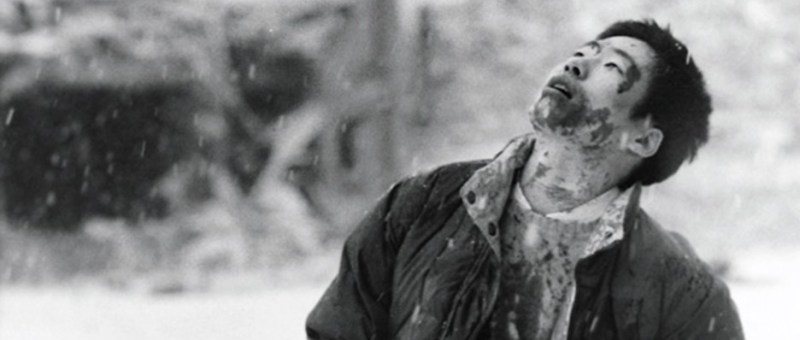
Told in four chapters each of which is filmed with a different conceit, Die Bad is the story of Sung-bin (Park Sung-bin), a young man whose future is derailed after he kills a boy by accident in a pool room scuffle. When he gets out of jail, his father doesn’t want to know him and his friends have moved on but his brother gets him a job in a garage and it seems as if he’s finding his feet. When he comes across a guy getting beaten up in the street, he’s hesitant to get involved – literally seeing the ghost of the boy he killed in amongst the aggressors. Eventually he intercedes and rescues the guy who turns out to be a well connected mobster.

Meanwhile, while Sung-bin was inside, his friend who started the fight that fateful night, Seok-hwan (Ryoo Seung-wan), has become a policeman. Seok-hwan’s little brother, Sang-hwan, is getting involved in the same typically teenage punk violence which defined the adolescence of Sung-bin and Seok-hwan. A police round up engineers a fateful reunion between Seok-hwan and Sung-bin who discovers a way of getting back at the “friend” he feels destroyed his life though targeting the impressionable little brother with big time gangster dreams.

Given the unusual production circumstances behind Die Bad – the decision to incorporate two existing short films and combine them with two new ones to create a single feature, it’s no surprise that it can feel disjointed. The first segment, The Rumble, is pure punk spectacle. Set to a ferocious beat, the camera becomes a protagonist as Ryoo mixes frequent POV shots careering down narrow streets with more abstract sequences of the boys fighting the camera, extreme close-ups and artful contemplations of the awful beauty of violence.

Nightmare continues in more or less the same vein but “grows up” along with Sung-bin, dropping the frenetic, testosterone fuelled pace for a slower kind of melancholy as Sung-bin tries to find his feet as an ex-con in an unforgiving society. The Rumble was an indictment on the hopeless situation of young men without prospects – unlikely to escape through academic success, Sung-bin and Seok-hwan exorcised their feelings of impotence and impossibility through violence, but The Nightmare is its inescapable aftermath in which Sung-bin, having paid for his crimes, is unable to come to terms with his guilt and is haunted by the face of the boy he killed by accident. Given no real hope for a positive future, Sung-bin gives in to the lure of violence and eventually pursues gangland success rather than a life on the straight and narrow.

The ironically titled Modern Men rams this point home in its deliberate contrasting of Sung-bin and Seok-hwan – the gangster and the cop. Ryu moves away from the naturalism of the earlier scenes for a docudrama conceit as both Seok-hwan and Sung-bin’s mentor Tae-hoon give direct to camera interviews talking about their respective careers. Tae-hoon wound up a gangster for similar reasons to Sung-bin, he was a regular punk teen with no prospects who was handy with his fists so he joined a gang where his talents could be of the most use. Seok-hwan joined the police but his job involves a lot of tussling with thugs and there are times he’s not even sure if he’s a policeman or state sponsored gangster. He no longer has hopes or dreams and his only desire is to work hard without encountering any hassle. Both men define themselves through violence, they dress for the fight and chart their success through defeats and conquests. Yet both also claim that their violence is in the name of “maintaining order” even as they create chaos in facing each other.

For the final segment, Die Bad, Ryoo shifts to black and white as the stories of Seok-hwan and Sung-bin reunite. Times have changed, but not all that much. Sang-hwan, Seok-hwan’s little brother, hangs around in arcades with his buddies but Streetfighter soon gives way to Streefighting as the boys determine to work out their youthful frustrations through violence. Sang-hwan, brought up on an image of violence as masculinity is eager to prove himself, and dreams of the glamorous gangster life. Sung-bin, the jaded, reluctant veteran, makes cynical use of Sang-hwan’s desperation to get revenge on his brother for ruining his life by engineering the fight that cost both Sung-bin and his victim their lives. Cop or thug, there are no winners in Ryoo’s violent world in which the disenfranchised masses are encouraged to scrap to the death for the mere crumbs thrown to them. Fiercely kinetic and filled with the fire of youth Ryoo’s debut is an extraordinary meditation on the fatalism of violence as the most intimate, or perhaps the only, means of communication between men.


Screened at London Korean Film Festival 2017.

Love/Juice (Kaze Shindo, 2000)

vlcsnap-2017-07-08-23h24m47s422Some situations are destined to end in tears. Kaze Shindo’s Love Juice adopts the popular theme of unrequited love but complicates it with the peculiar circumstances of Tokyo at the turn of the century which requires two young women to be not just housemates but bedmates and workmates too. One is straight, one is gay and in love with her friend who seems to get off on manipulating her emotions and is overly dependent on her more responsible approach to life, but both are trapped in a low rent world of grungy nightclubs and sleazy hostess bars.

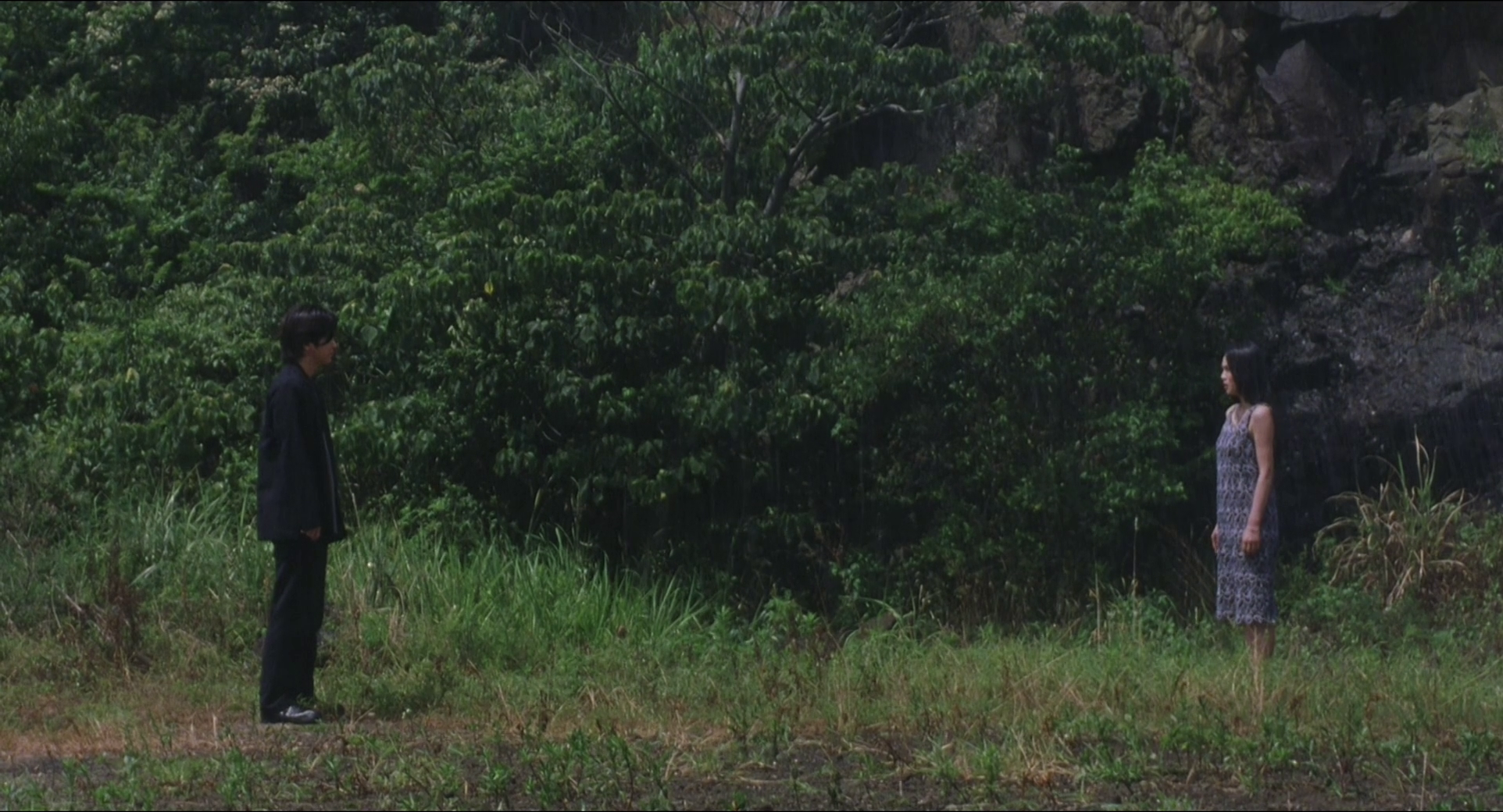
Chinatsu (Mika Okuno) and Kyoko (Chika Fujimura) are roommates sharing not just a house but a bed and almost everything else too. Best friends, their relationship is necessarily close and broadly supportive save for a persistent level of tension when it comes to romance. Chinatsu, openly gay, is in love with Kyoko who isn’t interested but somehow keeps stringing her along and makes a point of flirting with every guy she meets. The back and fore continues until the girls are forced to take degrading work as bunny suited hostesses and Kyoko becomes obsessed with the boy working in the local tropical fish shop (Hidetoshi Nishijima).

Though living openly as a gay woman, Chinatsu is far from happy with her life as her constant complaints of “why was I born a girl” bear out. Attending clubs with her live-in non-lover, Chinatsu picks up dates but it never gets anywhere. Her heart belongs to Kyoko and so she tortures herself by continuing to pine after her emotionally manipulative roommate before adopting an unpleasant forcefulness as she tries to persuade her friend to acquiesce. Snapping away at her with her camera (which she refuses to be turned on herself), Chinatsu becomes jealous and possessive, irritated by Kyoko’s various suitors and wishing she and Kyoko could remain cooped up alone together like the two goldfish sitting in their makeshift bowl.

Where Chinatsu is down to earth and restrained, Kyoko is a lively free spirit adrift for reasons of aimlessness rather than the anxious wandering her friend. Living on the fringes of mainstream society, the women are forced into their inconvenient living arrangements thanks to ongoing poverty. This same poverty eventually forces them both into taking a humiliating job as waitresses at a bunny girl themed hostess bar. Much to Chinatsu’s consternation, Kyoko revels in the constant male attention, flirting awkwardly with the owner who seems to prefer her friend. Uncomfortable with the job and more particularly with the uniform, Chinatsu experiences yet more degrading treatment when she’s brutally assaulted by a colleague after work and can’t even turn to her friend and roommate for help and comfort.

Eventually matters come to a head, the situation can’t endure, suicide is considered, choices are made, sadness and regret litter the scene. Shindo creates a claustrophobic world for two into which the outside occasionally pokes its unwelcome nose. The whimsical score lends a quirky, romantic air to the less destructive side of the two women’s relationship even as it progresses further and further towards its inevitable conclusion. Painting an authentic picture of Tokyo as seen by the disillusioned and desperate turn of the century youth, Shindo’s tale of ordinary heartbreak in unusually difficult circumstances is a nuanced look at a toxic (non)relationship in all of its destructive glory.


Dead or Alive 2: Birds (DEAD OR ALIVE 2 逃亡者, Takashi Miike, 2000)

dead-or-alive-2-birds

How do you make a sequel to a film which ended with the apocalypse? Takashi Miike is no stranger to strange logic, but he gets around this obvious problem by neatly sidestepping it. Dead or Alive 2: Birds (DEAD OR ALIVE 2 逃亡者, Dead or Alive 2: Tobosha) is, in many ways, entirely unconnected with its predecessor, sharing only its title and lead actors yet there’s something in its sensibility which ties it in very strongly with the overarching universe of the trilogy. If Dead or Alive was the story of humanity gradually eroded by internecine vendetta, Dead or Alive 2 is one of humanity restored through a return to childhood innocence though its prognosis for its pair of altruistic hitmen is just as bleak as it was for the policeman who’d crossed the line and the petty Triad who came to meet him.

Signalling the continuous notions of unreality, we’re introduced to this strange world by a magician (Shinya Tsukamoto) who uses packets of cigarettes to explain the true purpose of a hit ordered on a local gangster which just happens to be not so different from the plot of the first film. Because the gangster world has its own kind of proportional representation, neither the yakuza nor the Triads can rule the roost alone – they need to enter a “coalition” with a smaller outfit no doubt desperate to carve out a little more power for themselves. The free agents, however, have decided on a way to even the power share – hire a hitman to knock off a high ranking Chinese gangster and engineer a turf war in which a proportion of either side will die, leaving the third gang a much more credible player.

Mizuki (Sho Aikawa), bleach blond and fond of Hawaiian shirts, is an odd choice for a secret mission but his sniper rifle is rendered redundant when a man in a dark suit does the job for him – loudly and publicly. So much the better, thinks Mizuki, but the memory of the strangely familiar figure haunts him. Finding himself needing to get out of town, Mizuki has a sudden urge to go home where he encounters the suited man again and confirms that he is indeed who he thinks he is – childhood friend, Shuichi (Riki Takeuchi).

Revisiting an old theme, Mizuki and Shuichi are orphans but rather than being taken directly into the yakuza world they each spent a part of their childhood in a village orphanage on an idyllic island. Miike frequently cuts back between the violent, nihilistic lives of the grown men and the innocent boyhood of long hot summers spent at the beach. The island almost represents childhood in its perpetual safety, bathed in a warm and golden light at once unchanging and eternal. Reconnecting with fellow orphan Kohei (Kenichi Endo) who has married another childhood friend, Chi (Noriko Aota), the three men regress to their pre-adolescent states playing on the climbing bars and kicking a football around just like old times.

Returning to this more innocent age, Mizuki hatches on an ingenious idea – reclaim their dark trade by knocking off those the world would be better off without and use their ill gotten gains to buy vaccines for the impoverished children of the world. In their innocent naivety, neither Mizuki nor Shuichi has considered the effect of their decision on local gangland politics (not to mention Big Pharma) and their desire to kill two “birds” with one stone will ultimately boomerang right back at them.

Innocence is the film’s biggest casualty as Miike juxtaposes a children’s play in which Mizuki and Shuichi have ended up playing a prominent role, with violent rape and murder going on in the city. Whether suggesting that the posturing of a gang war is another kind of playacting, though one with far more destructive consequences, or merely contrasting the island’s pure hearted fantasy with the cold, hard, gangland reality, Miike indulges in a nostalgic longing for the simplicity of childhood with its straightforward goodness filled with friendship and brotherhood rather than the constant betrayals and changing alliances of the criminal fraternity.

The question “Where are you going?” appears several times throughout the film and perhaps occurred to Mizuki and Shuichi at several points during their journeys from abandoned children to outcast men. Neither had much choice in their eventual destination and if they asked themselves that same question the answer was probably that they did not know or chose not to think about it. All of these hopes and ruined dreams linger somewhere around the island’s shore. Kohei is about to become a father but the birth of a child now takes on a melancholy air, the shadow of despair already hanging over him. There is no way out, no path back to a time before the compromises of adulthood but for two angelic hitmen, the road ends with meeting themselves again and, in a sense, regaining lost innocence in shedding their city-based skins.


Out now in the UK from Arrow Video!

Original trailer (English subtitles)

Monday (マンデイ, SABU, 2000)

mondayWaking up in an unfamiliar hotel room can be a traumatic and confusing experience. The hero of SABU’s madcap amnesia sit in odyssey finds himself in just this position though he is, at least, fully clothed even if trying to think through the fog of a particularly opaque booze cloud. Monday (マンデイ) is film about Saturday night, not just literally but mentally – about a man meeting his internal Saturday night in which he suddenly lets loose with all that built up tension in an unexpected, and very unwelcome, way.

Mild mannered salaryman Takagi (Shinichi Tsutsumi) wakes up in his cheap hotel room dressed in a pitch black suit and with no recollection of how he got there. A packet of purification salt reminds him he was going to a funeral, but what happened after that? Takagi, it seems, enjoys a drink or two to ease that ever present sense of dread and impotence which dominates his life and so the events of the previous two days are lost in that pale space obscured by a booze drenched curtain of brain fog. Spotting various reminders hidden in his room Takagi begins to piece his strange adventure together from a bad date with the girlfriend whose birthday he blew off to go to the funeral, to a weird fortune teller, a beautiful woman, guns, gangsters and a homicidal killing spree. All in all, perhaps it was better when he couldn’t remember.

As usual, SABU weaves his complex comedy into a complicated cycle of interconnected gags. Takagi remains within the purgatory of his hotel room, furiously trying to remember how he got there but this otherwise anodyne space seems to be a reflection of his everyday persona in its inoffensive blandness, littered as it is with indications of the deeper layers implied by the still unknown actions of the previous few days. Judging by his appearance, Takagi is a shy, nervous man hidden behind his unstylish glasses and neatly swept back hair. Fearing his adventures are about to signal the end of his existence, Takagi suddenly gets the inspiration to make a proper will/suicide note which largely consists of a number of apologies firstly to his parents and siblings and finally to the girlfriend who walked out on him in the bar owing to his failure to appear for her birthday celebration and subsequently bizarre behaviour. The second portion of the letter also includes some advice to his siblings about how to look after the family pets and some horticultural tips but as he takes a few more drinks to steady his nerves, those deeper layers start to bleed through and so he takes this opportunity to advise his girlfriend that she should work on her anger issues and also avoid finishing other people’s sentences for them.

In Takagi’s defense, he has had a strange few days. The funeral of a close friend, especially one so young, might be enough to tip anyone into a spot of drunken introspection but the send off for former hair model Mitsuo (Masanobu Ando) is hardly a typical one given that it ends with the corpse exploding after Takagi is asked and then fails to “defuse” it. When he should probably take the opportunity to talk to someone about the things which are bothering him, Takagi has another drink, does his strange little laugh, and internalises his irritation with the very people who might be able to help him. Retreating to the bathroom carrying the memory of a stunning woman spotted at the bar with him, he returns to find a gloomy yakuza sitting in the adjacent seat intent on drinking and talking. Rather than saying a flat no and going home like a sensible person, Takagi keeps drinking until he feels like partying with the most dangerous guys in the room, even going so far as a raunchy dance with the gangster’s girl. The gangster, strangely, doesn’t mind and even seems to think he’s found a cool new friend but when everyone’s this drunk and there are guns around nothing is going to end well.

The finale finds SABU at his most sarcastic as the imprisoned Takagi indulges in a hero fantasy of taking the cops hostage and heading outside to meet the forces of authority head on only to give them a lecture about the danger of firearms and the necessity of love and kindness in a strange world. Needless to say, his message of peace is not universally well received. Takagi might have a point when he says that none of this would have happened if it hadn’t been for the shotgun – such a powerful and easy to use weapon in the hands of those who previously felt so powerless can indeed be a dangerous thing, but the fact remains that he harboured all of this fear and resentment inside himself, attempting to drown it with booze but continually failing. We leave Takagi trapped inside the hotel room, as he’s always been trapped inside his mind, holding a possibly empty shotgun at a flimsy hotel room door with all of that pressure pushing down outside it. The gun is one thing, and guns are bad, but the enemy will always be Monday – the modern world is driving people crazy and could use some of that love and kindness Takagi was so keen on during his hostage crisis but it probably won’t work until he puts the gun (and the booze) down and opens that hotel room door.


Original trailer (no subtitles)