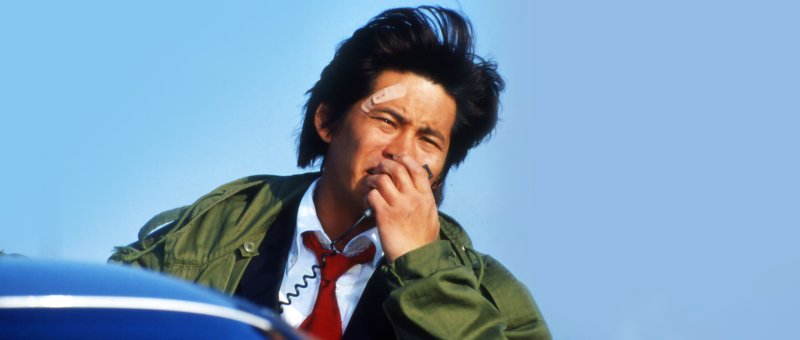
Bayside Shakedown 2 (踊る大捜査線 THE MOVIE 2 レインボーブリッジを封鎖せよ!, Katsuyuki Motohiro, 2003)

A big screen outing for a popular TV drama, Bayside Shakedown proved a runaway box office hit on its release in 1998. Five years later the team at Wangan Police Station are back and much seems to have changed even as the sequel cleverly mirrors the first instalment, but where the earlier film had satirically taken aim at chronic underfunding and excessive bureaucracy, Bayside Shakedown 2 (踊る大捜査線 THE MOVIE 2 レインボーブリッジを封鎖せよ!, Odoru Daisosasen the movie 2: Rainbow Bridge wo Fuusa seyo!) ultimately ends a defence of authority in the face of criminal anarchy. 

Five years on, the team are faced with yet another difficult serial killer case in which top CEOs are being bumped off and artfully posed in public places next to a rotten apple, once again necessitating the arrival of the guys from HQ. This time, however, Muroi (Toshiro Yanagiba), a friend of earnest detective Aoshima (Yûji Oda), has been pushed to the sidelines in favour of the big wigs’ latest favourite, Okita (Miki Maya), who has a much more authoritarian view of policing than many at Wangan are comfortable with. Meanwhile, Sumire (Eri Fukatsu) and Aoshima are busy with their own cases, a pickpocketing family and a “vampire” who bites high school girls’ hair and then runs off respectively, but all the office is a twitter over a love letter penned by their boss and accidentally emailed to everyone in the station because of a computer virus. 

Former Wangan guy Mashita (Yusuke Santamaria), who had transferred to the city, returns having trained as a negotiator but for some reason mostly doing profiling and eventually figuring out that their killers are likely disenfranchised salarymen made redundant by their companies amid the backdrop of a stagnant economy. With no hope for the future, they’ve turned against society and started an anarchist revolution as a collective without leaders. “No bosses, no workers. No ordering, no obeying. No firing, no being fired,” they explain of their principle of equality, adding, “when there’s a leader the individual means nothing”. On one level the film sympathises with them in recognising the pressures they’re facing and unfairness of the economic reality, while simultaneously condemning the idea of a horizontal society. “If the leader is good then the group is strong,” Aoshima explains to them though of course they don’t agree. 

Then again, he says this immediately Muroi has resumed command in the knowledge that he is a “good” leader precisely because he trusts those under him and gives them the freedom to exercise their own judgement in contrast to Okita whose authoritarian micromanaging is soon exposed as a cover for under confidence. A police officer is seriously injured during an operation because she hesitates to make a decision, while both Sumire and Aoshima are forced to let their suspects escape when Okita orders them to stay at their post trying to protect a woman she has effectively decided to use as bait. “Organisations don’t need emotion,” she insists, later irritated by the officers’ reluctance to follow her command when she simply instructs them to “replace” the critically injured officer as if their life were completely disposable. 

Just in the first film, Sumire and Aoshima are forced to question the value of local policing in the face of Okita’s elitism as she tells them that their individual cases can wait because the murder takes priority, describing them as “just local stuff”. “Punch ups and pickpockets, what a waste of police time,” she adds leaving each of them feeling as if their work has no meaning and is not useful to or valued by the community. Aoshima only gets his mojo back after remembering an act of kindness done to him by someone he’d helped in the past, realising that even small things have a positive effect on the society and are always worth doing. That said, he’s not especially sympathetic towards the teenage “vampire” victim largely because he only bit her hair but later gets on the case after more girls turn up with bite marks on their necks. 

In the end it is indeed the local which is good, Okita’s failure allowing Muroi to make good on his promise and allow the local police to do their jobs rather than being relegated to boring legwork such as traffic stops and trawling surveillance footage. Despite having rejected the leaderless anarchy of the villain’s horizontal society, Muroi’s first instruction is to “forget rank, forget class” and have everyone work together encouraging the local cops to help them identify the kinds of places only a local would know which might not be on the map and may be a good hideout for the assassins. There might be something uncomfortable in Aoshima’s insistence on the necessity of a leader in the implicit defence of the hierarchal society, but then Muroi is a good leader who can indeed be trusted wield his power well largely because he trusts those below him, while a weak leader like Okita who holds tight to power because they don’t have the confidence to wield it freely is worse than no leader at all. Once again ending on a note of ironic police accountability, Bayside Shakedown 2 takes aim at the inequalities of the modern society but ultimately makes the case for the value of compassionate local policing in which all crimes at least are treated equally.  


Original trailer (no subtitles)
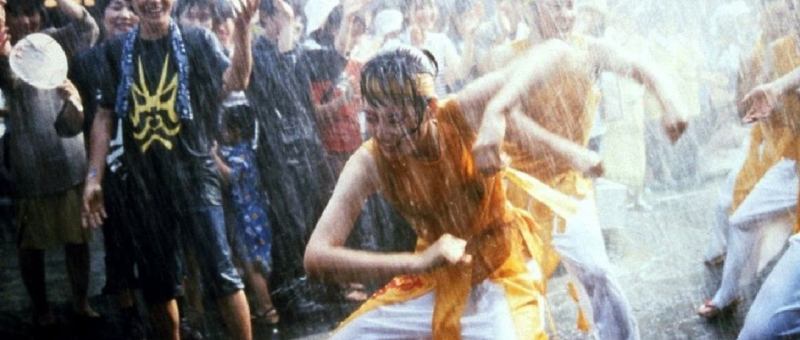
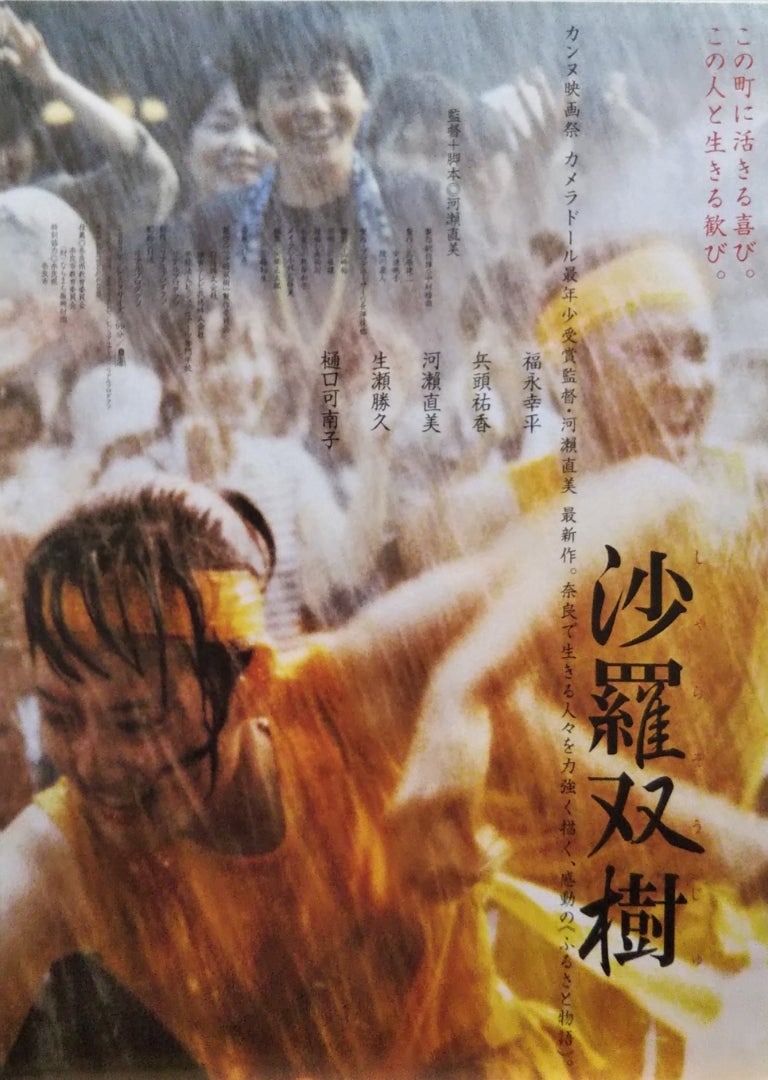
Shara (沙羅双樹, Naomi Kawase, 2003)

Familial absence and painful nostalgia once again take centre stage in Naomi Kawase’s third feature, Shara (沙羅双樹, Sharasoju), in which she also stars as an expectant mother still contending with tremendous loss. Set once again in the director’s hometown of Nara, Shara continues Kawase’s key themes in its gradual healing of a fractured family which finds itself at a point of departure, struggling to accept the path forward but finding strength in friendship and community spirit as they prepare to welcome a new life both figurative and literal. 

Shooting in her usual documentary style, Kawase opens with an ethereal handheld sequence wandering through an antiquated atelier until finding twin brothers playing with charcoal ink in a pure white room. Suddenly one of the boys, Shun, runs off and is chased by his brother, Kei, as the chanting of monks and the sound of bells accompany them marking this as a festival day. At some point, the boys switch places. Shun pauses to bounce off a car and realises his brother has turned a corner and can no longer be seen. He looks for him in vain before returning to his mother, making preparations at the temple, and explains what’s happened but Kei is not found nor ever seen again. 

An unannounced time jump moves us on some years into the future in which Shun (Kohei Fukungaga) is now a moody teenager obsessively painting a portrait of his absent brother, while his mother, Reiko (Naomi Kawase), is heavily pregnant and father, Taku (Katsuhisa Namase), is once again preparing for the festival. The family is, of course, defined by its absence, the unanswered question of Kei one they each actively avoid trying to address even as the impending birth of the new baby forces them into a reconsideration of their familial bonds. While Reiko tends to her flowers, which is to say to life, Taku busies himself to the street festival while only Shun remains definitively locked within his grief, isolating himself to finish the painting while tempted away from broody introspection by his pretty neighbour, Yu (Yuka Hyodo), who we learn is also contending with displacement and identity in learning that her mother is actually her aunt who had slightly problematic feelings for her older brother who like Kei simply disappeared one day and never returned. 

As often in Kawase’s filmmaking, the literal truths may be less important than the emotional or the spiritual. Kei’s body is eventually found, an event greeted with stoic resignation by the parents who must perhaps have been expecting it, while only Shun is thrown into chaotic despair in once again being confronted not only by his loss but the guilt and the finality. Both Reiko and Taku declare that it’s time to “face” things, something they have perhaps been refusing to do even while Shun was literally facing his brother in painting his portrait. Taku explains to his son that there are things which can be forgotten, others which must not, and more that must be. Painting a calligraphy banner with the characters for shadow and light, he tries to show his son a new way forward.

Yet it’s the local festival with its traditional Basara dance which finally allows Shun to find the path out of his grief. Kawase captures the local planning meeting with documentary rigour, Taku listening patiently while a local man explains the point of their festival is to make sure that the whole community is involved, something later made plain when Shun, hitherto a marshal, is invited to join the dance which continues even as the rain falls. Taku’s final speech in which he describes Basara dance as “a unique event in which each of us can shine our brightest” takes on new significance as the sun finally comes out. “When you’re offered the opportunity to shine you must grab it”, he concludes, hoping that the spirit of Basara dance will make its way into the rest of their lives. 

Elliptically structured and shot with Kawase’s trademark handheld, the film finds its way back to where it started as the chiming of the temple bell recurs with its air of anxious alarm, but is finally quieted, giving way to the peaceful summer sounds of the cooling breeze and ubiquitous cicadas as the family is perhaps repaired with the advent of new life, not replacing the old, but beginning again even in the midst of such unanswerable grief. 


Trailer (no subtitles)

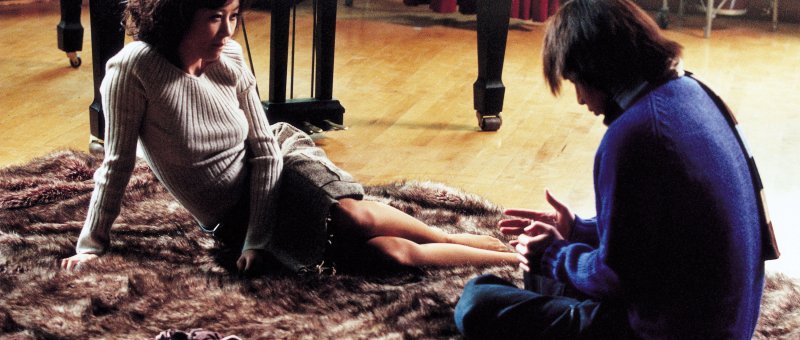
A Good Lawyer’s Wife (바람난 가족, Im Sang-soo, 2003)

Sexual repression and rigid patriarchal social codes slowly dissolve a “normal middle class” family in Im Sang-soo’s extremely frank treatise on contemporary gender roles, A Good Lawyer’s Wife (바람난 가족, Baramnan Kajok). The Korean title translating as “adulterous family” perhaps hints at Im’s winder intentions focussed not only on the role of “wife” but each of those within the family unit which is it seems resistant to change even as the society changes around it, the widowed mother-in-law ironically emerging as the most liberated and progressive of them all. 

Hojung (Moon So-ri) may be a good lawyer’s wife, but she’s also quietly dissatisfied eventually drifting into a relationship with a strange teenage neighbour she caught peeping at her in the nude. Her husband Youngjak (Hwang Jung-min), the lawyer, is a poor lover unable to satisfy her sexually while conducting a secret affair with a bohemian artist with whom he is able to have transgressively kinky sex. The couple have a young son, Soo-in, who is adopted and a little insecure worried that his grandmother doesn’t really like him because they aren’t related by blood while the other kids sometimes pick on him at school. Grandma Byunghan (Youn Yuh-jung) meanwhile is also having an affair, contemptuous of Youngjak’s father Changgeun (Kim In-mun) who has just been told he has only a month to live. 

Yet to everyone else the Joos lead “normal middle class life”, words Youngjak later uses unsuccessfully to help a woman get off on charges she otherwise admits. It might be taboo to speak of it, but sexual repression seems to be at the root of all their problems or at least an incompatibility between leading a what is conceived as “normal middle class life” and embracing one’s sexuality. As good lawyer’s wife Hojung remarks to a friend, once you get married “you’re not a woman anymore, you’re really nothing”. As his wife, and as a mother to Sooin, Hojung is no longer perceived as a sexual being by her husband, though as we later discover he remains somewhat passive both with his wife and with his mistress by whom he is penetrated from behind. Hojung meanwhile achieves her only orgasm when positioning herself on top of her inexperienced teenage lover, symbolically if also problematically reclaiming her sexual agency.

Hojung’s rebellion also has an ironic quality in that finally restores her maternity as she experiences what she describes as a miracle pregnancy, pointing at the couple’s sexual incompatibility as the primary reason they were not able to conceive a child. Even so, the film heavily suggests the cruel and unexpected tragedy which later befalls the family is a kind of punishment for the mutual transgressions of husband and wife as they sought the fulfilment denied to them by the constraints of a “normal middle class life” within the confines of a patriarchal marriage. “If your body wants it, give it what it wants” Byunghan eventually offers when meeting with her lover, declaring herself too old to feel guilty or embarrassed for satisfying her sexual desire while openly contemptuous of her husband with whom it seems she had an unhappy life. “Life’s about being truthful to yourself” she explains to her son, finally taking control now freed from marital constraints if ironically immediately considering re-marriage. 

Changgeun meanwhile sings North Korean military songs in the operating theatre and as we eventually realise, has no siblings because his mother and six sisters were all abandoned in North Korea where they died. His father escaped with him alone though it appears they are now estranged and it can be assumed that Changgeun’s drinking habit which eventually leads to the illness which kills him and destroys his marriage is born of a desire to overcome his guilt and trauma. Changgeun’s past too is something which must be repressed, he cannot easily speak of it because of the stigma surrounding his North Korean roots neatly linking back to Youngjak’s work with the families of those still looking for loved ones executed during the war quite literally falling into a mass grave in the film’s opening. All of these buried truths erode the foundations of the traditional family, yet Im seems to suggest perhaps the family in this form at least isn’t worth saving if it only causes people to hurt each other while forced to conform to a series of socially defined roles unable to be their most authentic selves even within a bubble of supposedly unconditional “love”.


Trailer (no subtitles)

Spring Bears Love (봄날의 곰을 좋아하세요?, Yong Yi, 2003)

Sometimes it’s nice to think there’s more to life, that that there’s some kind of greater plan or grand adventure in the works but there’s always the danger of falling into the wrong story on a desperate quest for meaning in the mundane. This is in a sense what happens to Hyun-chae (Bae Doona), the quirky heroine of Yong Yi’s charming rom-com Spring Bears Love (봄날의 곰을 좋아하세요?, Bomnalui Gomeul Johahaseyo?) as she comes to believe that someone is leaving her secret messages in a series of art books she’s been borrowing for her hospitalised father from the local library. 

The notes in the books are poetic if a little absurd which Hyun-chae attributes to their nature as a code which she’s come to believe is exclusively for her. She has no real reason for thinking this yet is determined to find the author whom she’s privately called “Vincent”. Meanwhile, she abruptly runs into an old high school friend, Dong-ha (Kim Nam-jin), who has since become a train driver and is currently working as an operator on the Seoul underground (according to Hyun-chae he’s only there as a ringer crossing a picket line). It’s quite clear that Dong-ha has designs on her, in fact he says she’s the whole reason he came to Seoul in the first place. Yet Hyun-chae isn’t really interested, partly because she’s hung up on her illusionary romance with Vincent and partly because it seems she just looks down on him, idly catching sight of his oil-stained fingers as they sit down at a greasy burger bar. 

It has to be said, Dong-ha is his own kind of strange as obsessed with trains as Hyun-chae is with Vincent yet his interest is at least practical and down to earth. As he says, thousands of people travel on the subway every day. It’s a good steady job with a nice salary and drivers’ families can ride for free. By contrast, Hyun-chae’s high school dream was to become an air hostess travelling the world literally with her head in the clouds. Now she’s working a dead end job at supermarket and lamenting that nothing, not even her love life, seems to go her way. Her dilemma is in a sense between fantasy and reality dismissing the wholesome practically of a man like Dong-ha for the ethereal romanticism of Vincent whom she has after all almost entirely constructed in her mind without really even knowing if the messages were actually intended for her in the first place. 

Her taste for fantasy can be seen in her tendency take off on flights of fancy imagining herself in theatre scenes inspired by the paintings in the books and starring her current Vincent suspect. Her more worldly friend, Mi-ran (Yoon Ji-hye), tries to explain to her where she’s going wrong with dating leading to a flashback in which she’s basically Dong-ha on a date with a sophisticated guy who is clearly exasperated with her constant slurping of a soft drink and chattering through the movie (One Fine Spring Day), describing song at a restaurant they go to as reminding him of Bagdad Cafe while she sings loudly and publicly. 

During her search for Vincent, she ends up on a date with the librarian (who later claims to be married) to a zoo where he mainly gives her lectures about bears which had featured in the first note and she tries her best to play the straight woman to his absurdist banter. Uncharitably her journey could be read as one of learning to settle, that she should give up on her dreams and submit to the practicality of Dong-ha, yet for her it is perhaps shaking off her fear of the real letting the idealised vision of Vincent go while coming to accept Dong-ha’s earthiness. Then again, he does hide a few truths from her in order to manipulate her feelings, so perhaps not all that wholesome after all even if he does put it right in the end and can always be counted on for midnight ramen. Replete with zeitgeisty detail and and absurdist humour, Yong Yi’s quirky comedy may not have all the answers in its convoluted mystery but does at least allow its heroine to find her feet finally getting the message and running fast towards her certain destiny.


Bright Future (アカルイミライ, Kiyoshi Kurosawa, 2003)

Bright future posterThe cinema of the late ‘90s and early 2000s is one defined by alienated youth kicking back against a stagnant society in which they see no place for themselves now that the dull and conventional salaryman world of their parents can no longer offer security in place of fulfilment. Kiyoshi Kurosawa’s early masterpieces had edged towards the nihilistic, embracing this sense of generational hopelessness but finding perhaps glimmers of possibility in the longing for escape no matter how far off. Bright Future (アカルイミライ, Akarui Mirai), shifting away from the genre fare which had made his name, does something much the same but perhaps even bleaker in its melancholy acceptance of intergenerational disconnection.

Our two heroes, Yuji (Joe Odagiri) and Mamoru (Tadanobu Asano), have workaday jobs at a factory which they find fulfilling only in their emptiness. The guys have found a fan in the factory’s ageing boss, Fujiwara (Takashi Sasano), who begins giving them special jobs and trying to hang out with them while promising a special signing bonus should they agree to become regularised employees. Bonding in their resentment towards men of Fujiwara’s age who romanticise their youth while exercising paternal authority and entitlement, the two hatch their revenge on an unforgiving society through the strange plan to acclimatise their pet jellyfish to life in modern Tokyo.

The jellyfish, closely associated with the ethereal Yuji, becomes a kind of symbol of the “bright future” the two young men fear will elude them. They, like the jellyfish, have tried to acclimatise themselves to living in the otherwise hostile environment of contemporary Tokyo but also accept that the ability to survive may not be enough and it may eventually be necessary to remove oneself from an unforgiving society until such time as it is possible to return.

This or something like it seems to be Mamoru’s key philosophy as the owner of the jellyfish and the chief architect of the “bright future” both men dream of – literally in the case of Yuji who is the idea’s unwilling prophet. Mamoru has, for reasons unknown, decided to take the strangely melancholic Yuji under his wing, eventually entrusting sole custody of the jellyfish to him in an attempt to force him to look after “himself”. In service of this ideal and perhaps of Yuji’s unwilling visions, Mamoru takes more immediate revenge against the literal Fujiwara – murdering his boss and his wife (Marumi Shiraishi) in their well appointed middle-class home (only their small daughter is spared). Yuji interprets this gesture as protective seeing as he himself had found the bodies after wandering into the Fujiwara home with violence on his mind, but misinterprets Mamoru’s intentions for him in disappointing his mentor by insisting that he is prepared to “wait” for him rather than take this cue to step up and take control of his own life’s direction. 

Yuji is indeed, like the majority of heroes in turn of the century Japanese cinema, entirely directionless. He appears to have no surviving family in the older generation, only an exasperated sister who does her best to help but doesn’t know how, attempting to straightjacket him into a salaryman world of conventional success with an office boy job at her understanding company. A strange young man, Yuji has has vivid dreams and a need for control and routine – it’s the closure of the local bowling lanes which sends him round to the Fujiwara’s in a calm yet violent rage while repeatedly losing in a video arcade to his sister’s boyfriend also sends his insecurity into overdrive. He once dreamt of a “bright future” but now sees only darkness. Stepping up onto the roof of a building in which he is learning to find a home, he is forced to admit that despite attempting to look far into the distance he can’t see much of anything at all from where he is right now.

Yet for all his resentment towards men like Fujiwara, it’s a father figure which eventually begins to push him in a more positive direction. Mamoru’s father Shinichiro (Tatsuya Fuji) takes his son’s vulnerable best friend under his wing, giving him a home and a purpose as he begins to teach him how to repair things that might ordinarily be thrown away. Shinichiro’s previous assistant quit because he saw no future in this line of work, but Yuji seems to delight in the repurposing of the previously useless for arcane ends even if his chief contribution is a continuation of his jellyfish experiments. Shinichiro, superficially supportive, cannot understand the obsession with the jellyfish. Attempting to reassure a thwarted Yuji, he asks him what exactly the jellyfish could achieve in a world so resistant to real change yet he also berates him with the impassioned impotence of age in decrying his contemptuous dismissal of the reality which, after all, belongs to men like Shinichiro who will demand respect while offering very little in return.

The jellyfish find they can’t live in Tokyo, but youth adopts a different solution as it runs rampant with out purpose or direction but seemingly delighting in meaningless anarchy. A group of teens Yuji runs into wear identical Che Guevara T-shirts while sporting light-up microphone headsets as they wander round the city kicking cardboard boxes and laughing as they go, like overgrown children with no clear forward path before them. Age and youth seem primed to exist in differing realities, perpetually unable to understand each other while youth struggles to find direction in the absence of parental guidance. Ironic in the extreme, the “bright future” here seems to exist only as a vague hope but, perhaps, the only guiding light in an ever darkening world.


Original trailer (English subtitles)

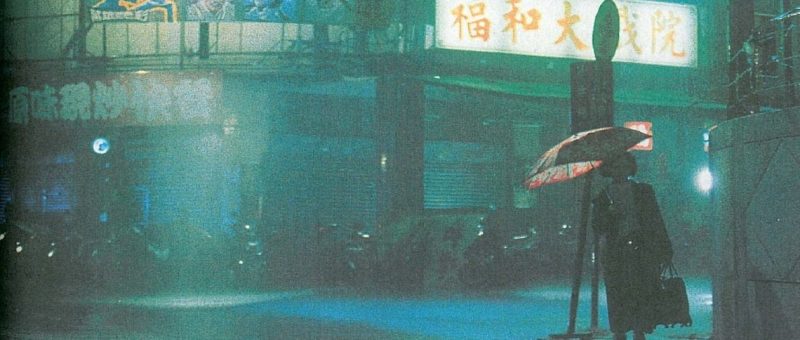
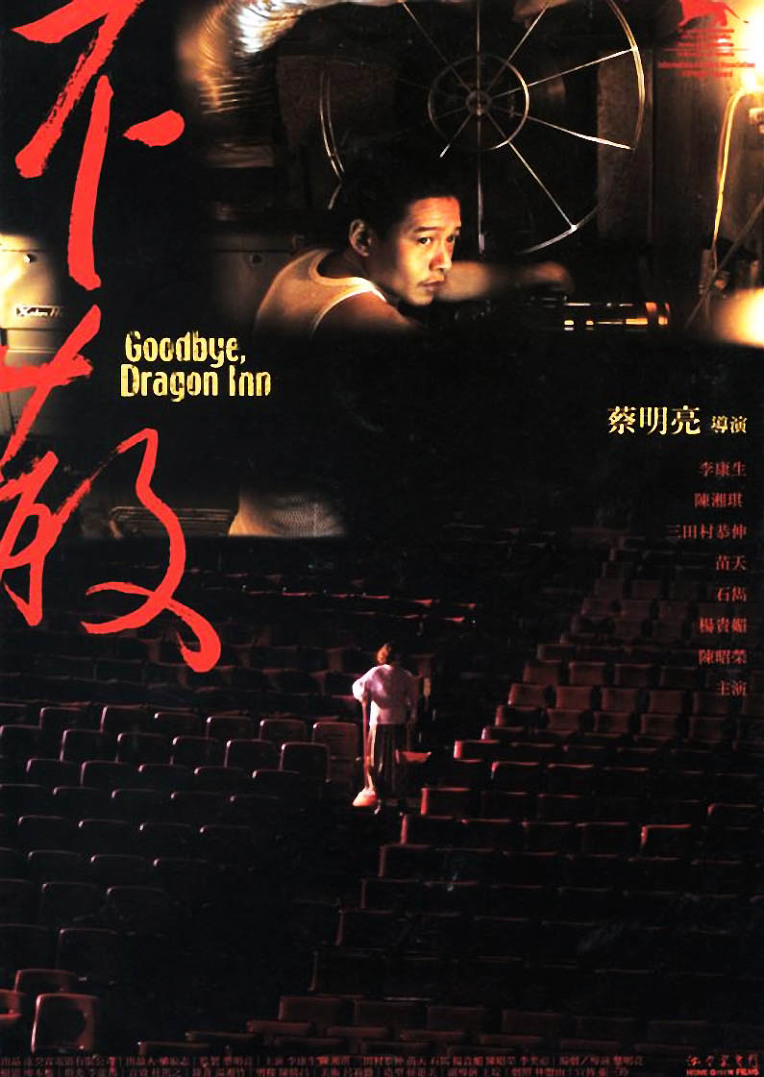
Goodbye, Dragon Inn (不散, Tsai Ming-Liang, 2003)

Goodbye, Dragon Inn poster“So much of the past lingers in my heart” laments the melancholy song which closes Tsai Ming-Liang’s Goodbye, Dragon Inn, (不散, sǎn) “I’ll remember with longing forever”. What is cinema if not an expression of irresolvable nostalgia, a kind of visual hiraeth for something that probably never quite existed but is so painfully missed. Everything in here stayed the same, but everything outside changed and now the present seems to be literally raining in leaving the last few fugitives from reality lost in halls of memory like lonely ghosts trapped on the wrong side of the screen.

On the wrong side of the screen is where we find ourselves. We begin in darkness with the opening narration from King Hu’s 1967 wuxia masterpiece Dragon Inn before the curtain in front of us begins to flicker and reveal an entire theatre filled with people. We pull back, and eventually the people are gone leaving just a few desperate souls returning to watch this now classic picture on what could be its very last evening as this theatre – now so unsuitable for the modern cinema environment, will be closing “temporarily” as soon as the reels stop turning.

Truth be told, no one much is even very interested in the movie. Some have merely come in to shelter from the rain, but unfortunately for them not even here is safe thanks to a leaky roof. The dazzling labyrinths of the backstage environment seem to have been co-opted by the local cruising community, men brushing past each other looking for another like them but needing to be sure their desires will be returned. Meanwhile they gaze at each other in the dim half light of the cinema screen, aching with unspeakable longing.

Longing is also something on the mind of an older gentlemen, seemingly the only one actually watching the film, who turns out to be one of its actors shedding a silent, solitary tear for time passed. Running into a friend much like himself outside he laments that “No one comes to the movies anymore”. Everyone has forgotten them, turning them into ghosts of cinema, immortal but unremembered. They have, in a sense, been attending their own funeral, entombed inside a moribund building lit only by spectres of the past.

All this is, however, secondary to the backstage drama of the lonely box office cashier (Chen Shiang-chyi) and her inexpressible crush on the projectionist (Lee Kang-sheng) who never seems to be around when she needs him. Sadly cutting into a celebratory bun, she saves half of it for him – the least ambiguous expression of love which seems to be possible within this space. Slowly climbing the stairs with a lame leg, she gazes fondly at the screen while the heroine fearlessly dispatches a series of bad guys, but the light cast on her face seems only to emphasise her lack of courage before she sadly retreats back to the ticket booth where no customers require her services.

Meanwhile, in the auditorium, a young woman (Yang Kuei-mei) munches peanuts and throws her legs over the backs of the seats in front much to the chagrin of the confused tourist whose confusion seems only to deepen when the crushing noise stops and the woman disappears (unbeknownst to him she’s on a mission to retrieve a lost shoe, or perhaps has evaporated into thin air). The first words spoken, which occur at the 45 minute mark, are to state that this theatre is haunted. Departed spirits all, the lonely denizens are indeed haunting the room and themselves as they attempt to escape the relentless march of the modern world through self-internment in a damp and crumbling mausoleum of cinema.

A lament for a dying world stripped bare by the passage of time, Tsai’s exploration of urban loneliness is a nostalgic elegy for a simpler age, filled with unresolvable longing and the ironic misconnection of an individualised communal activity. Stillness and solitude define all for these lonely, disconnected souls chasing oblivion. The past can never return, nor can the missed opportunities and brief moments spent bathed in celluloid splendour, but then perhaps you wouldn’t want it to anyway because then you couldn’t miss it. “I’ll remember with longing forever” – romanticism at its finest, but it’s a trap that’s difficult to resist.


Goodbye, Dragon Inn screened at Tate Modern as part of the Taiwan Film Festival UK 2019 and The Deserted film series.

International trailer (dialogue free)

Liu Lian by Yao Lee – the poignant song playing over the end credits.

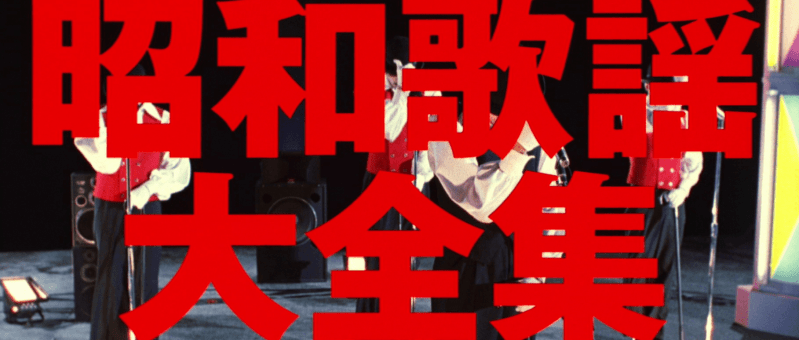
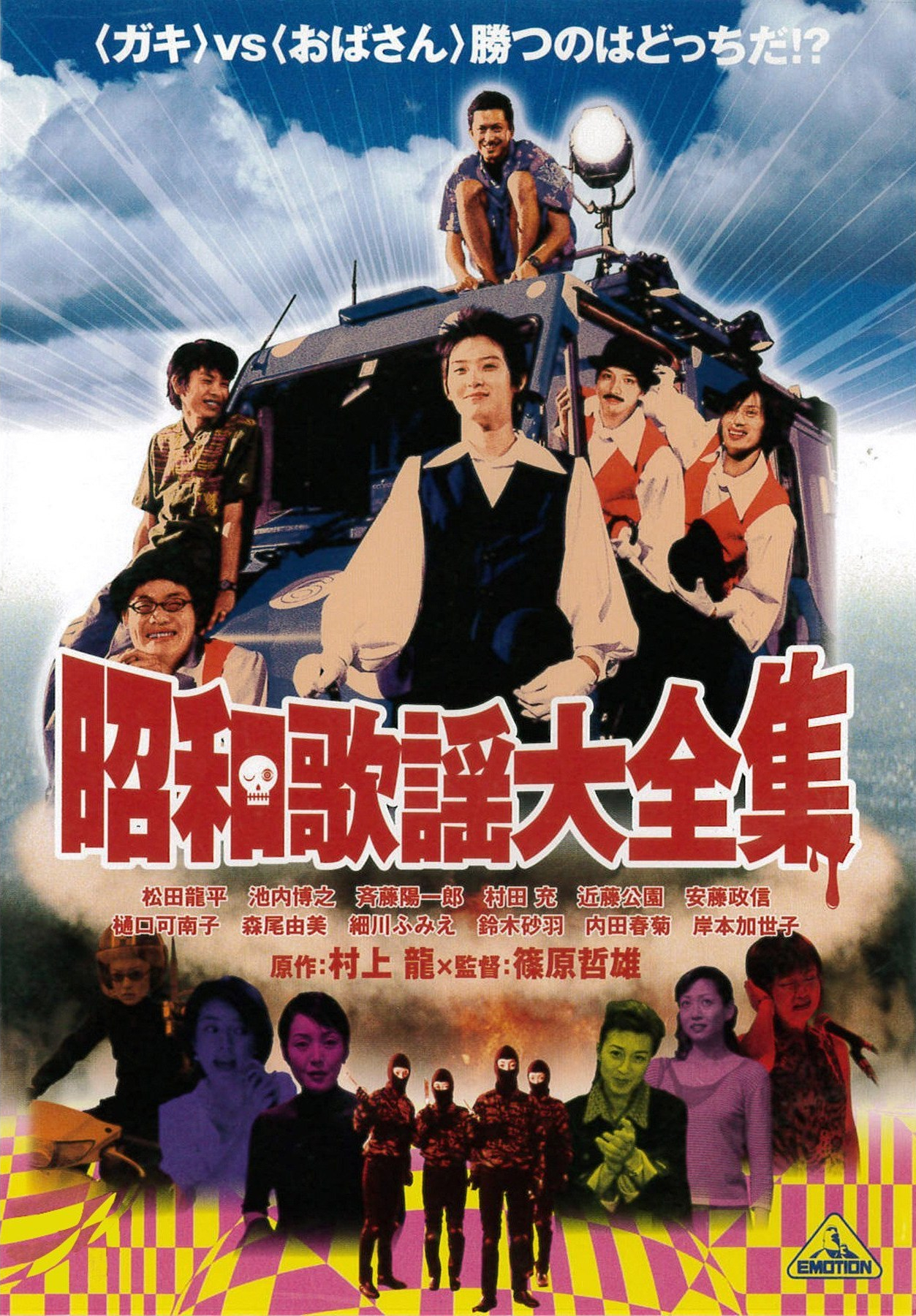
Karaoke Terror (昭和歌謡大全集, Tetsuo Shinohara, 2003)

karaoke terror poster.jpgEver since its invention karaoke has provided the means for many a weary soul to ease their burdens, but there may be a case for wondering if escapism is a valid goal in a society which seems to be content in stagnation. The awkwardly titled Karaoke Terror (昭和歌謡大全集, Showa Kayo Daizenshu), adapted from the book Popular Hits of the Showa Era by Audition’s Ryu Murakami, pits two very different groups of karaoke enthusiasts against each other – aimless adolescent males, and jaded middle-aged women. Despite the differences in their ages and experiences, both enjoy singing the wistful bubblegum pop of an earlier generation as if drunk on national nostalgia and longing for the lost innocence of Japan’s hopeful post-war endeavour to rebuild itself better than it had been before.

We open with the slackers and a voice over from the presumed “hero” of the film, Ishihara (Ryuhei Matsuda), who informs us that he can’t really remember how he met most of the guys he hangs out with but that he always knew the one of them, Sugioka (Masanobu Ando), was a bit cracked in the head. In a motif that will be repeated, Sugioka catches sight of a middle-aged woman just on the way back from a shopping trip and decides he must have her but his attempts to pick her up fail spectacularly at which point he whips out his knife and slashes her throat.

Meanwhile, across town, a middle-aged woman, Hemmi (Kayoko Kishimoto), offers to let a co-worker share her umbrella but the co-worker misinterprets this small gesture of courtesy as romantic interest and crudely asks her “how about a fuck?” to which Hemmi is quite rightly outraged. Rather than apologise, the co-worker shrugs and says his “direct” approach works six times out of eight and some women even appreciate it. Once she manages to get away from her odious aggressor, Hemmi ends up stumbling over the body of the woman murdered by Sugioka and realises she knows her. The murdered woman was one of six all named Midori who were brought together for a newspaper article about the lives of middle-aged divorced women and have stayed “friends”. Outraged about this assault not just on their friend and their sex but directly against “women of a certain age” who continue to be the butt of a societal joke, the Midoris decide they want revenge and hatch a plan off Sugioka, but once they have, the slackers hit back by offing a Midori and so it continues with ever-increasing levels of violence.

Which ever way you slice it, you can’t deny the Midoris have a point and Hemmi’s continuing outrage is fully justified. When the boys rock up at a mysterious general goods store out in the country looking for a gun, the proprietor (Yoshio Harada) is only too happy to give it to them when they explain they need it for revenge and that their targets are middle-aged women. The proprietor has a lot to say about ladies of a certain age. In fact he hates them and thinks that bossy, embittered, unproductive women “too old” to fulfil their only reason for existence will be the only ones to survive a nuclear apocalypse that even the cockroaches cannot overcome. The boys appear timid and inexperienced but ironically enough can’t take their eyes off the middle-aged woman from across the way and her sexy dance routines. They feel entitled to female deference and cannot accept a woman’s right to decline. The Midoris are sick of being “humiliated”. They’ve fallen from Japan’s conformist path for female success in getting divorced or attempting to pursue careers. They’ve lost their children and endured constant ridicule as “sad” or “desperate”, made to feel as if their presence in the workplace past a certain age was “inappropriate” and the prices they have paid for their meagre successes were not worth the reward. They strike back not just at these psychotic boys but at a society which has persistently enacted other kinds of violence upon them.

Meanwhile, the boys remain boys, refusing adulthood and responsibility by wasting their time on idle pursuits. Truth be told, karaoke performances involving dance routines and elaborate costumes is not a particularly “cool” hobby by the standards of the time but it appears that none of these men have much else in their lives to invest themselves in. With the economy stagnating and the salaryman dream all but dead, you can’t blame them for their apathy or for the rejection of the values of their parents’ generation, but you can blame them for their persistent refusal to grow up and tendency to allow their insecurities to bubble over into violence.

As it turns out, adolescent males and middle-aged women have more in common than might be thought in their peripheral existences, exiled from the mainstream success which belongs exclusively to middle-aged and older men who’ve been careful to (superficially at least) adhere to all the rules of a conformist society. Neither group of friends is especially friendly, only latterly realising that “real” connections are forged through direct communication. Their mutual apathy is pierced only by violence which, ironically, allows their souls to sing and finally shows them just what all those cheerful songs were really about. Darkly comic and often surreal, Karaoke Terror is a sideways look at two diametrically opposed groups finding unexpected common ground in the catharsis of vengeance only for their internecine warfare to graduate into world ending pettiness.


Original trailer (English subtitles)

The greatest hits of the Showa era:

Koi no Kisetsu – Pinky & Killers

Hoshi no Nagare ni – Akiko Kikuchi

Chanchiki Okesa – Haruo Minami

Shiroi Cho no Samba – Kayoko Moriyama

Linda Linda – The Blue Hearts

Sweet Memories – Seiko Matsuda

Kaze Tachinu – Seiko Matsuda

Minato ga Mieru Oka – Aiko Hirano

Sabita Knife – Yujiro Ishihara

Hone Made Aishite – Jo Takuya

Kimi to Itsumademo – Yuzo Kayama

Mata Au Hi Made – Kiyohiko Ozaki

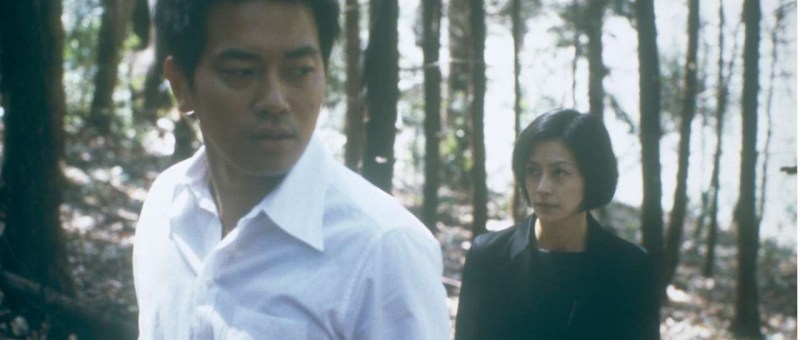
Purple Butterfly (紫蝴蝶, Lou Ye, 2003)

Purple Butterfly posterChinese films about the resistance movement towards the Japanese occupation tend to veer towards the hagiographic. The business of resistance may be complex, may require unfortunate moral compromises, and may in fact prove ruinous but it is always righteous. Lou Ye’s Purple Butterfly (紫蝴蝶, Zǐ Húdié) wants to tell a different, sadder story. Set between 1928 and 1937, Purple Butterfly pits love and oppression against each other and asks whether feeling is a worthy causality of war or if compassion is merely a weakness which must be eradicated in the quest for political freedom.

In Manchuria in 1928, Ding Hui (Zhang Ziyi) is having an affair with a Japanese man raised in China who is also a childhood friend. Itami (Toru Nakamura) is being called back to Japan and has asked Ding Hui to go with him. As if trapped within a melancholy film noir, she goes to the station but does not board the train. When she comes home, she witnesses her brother, the editor of an underground resistance newspaper, being assassinated by a Japanese nationalist. Ding Hui joins the cause.

Flashforward to 1931 and Ding Hui makes her second trip to the station as part of an operation to pass important papers to an operative. However, the operation goes as wrong as it could possibly go. Szeto (Liu Ye) – an ordinary passenger, picks up the assassin’s jacket by mistake and is passed the briefcase. When he tries to give it back, the operative panics and starts shooting, assuming they have been betrayed. Many innocent people are killed, including Szeto’s fiancée Yiling (Li Bingbing) who had made the perilous journey to the station to meet him despite the ongoing unrest gripping the city.

Train stations become a point of transition, of loss and compromise in more ways than one and especially for Ding Hui who feels herself fracturing, anxious to the point of breakdown and wondering what exactly it is they’re fighting for. As coincidence would have it, also on the train is Itami – returned from Japan and now an intelligence officer tasked with rooting out the “Purple Butterfly” resistance cell of which Ding Hui is a prominent member. It is decided that Ding Hui must rekindle her romance with Itami in order to have an eye in the intelligence department and engineer access to assassinating the top officer, Yamamoto (Kin Ei).

Lou deliberately fragments his narrative, allowing the shockwaves from the central train station sequence to radiate outward as the three protagonists dance around each other willingly or otherwise. Dance is, indeed, the primary metaphor as he digresses from the central narrative to give us Szeto’s backstory in his dreamy, innocent romance with Yiling which is destined to end in tragedy. The pair dance to Shanghai jazz, giddy, as if the world itself has receded from them and they exist only within this present and this space. Later Szeto puts the same record on again as he contemplates suicide, longing to be back inside that moment. As we had two train stations we also have two dances but our second is danced to a Japanese tune as Ding Hui and Itami attend a party, each sorrowful, each dreading what must come next but also perhaps mildly hopeful that it will finally be over and perhaps they can both catch that train out of Shanghai after all.

War defeats them all. Szeto’s life is ruined, as are the lives of many, by resistance panic at a busy train station. His pain and his rage and the impotence of his times threaten to push him over the edge, consumed by hatred for both sides who have each taken from him the only things which ever mattered. Ding Hui sacrificed her love for patriotism, Itami sacrificed patriotism for love, they win and lose in equal measure cementing only the inevitable sense of impossibility which continues to define Shanghai in the 1930s. Lou paints their destinies like film noir, fatalistic and romantic yet human and painful. Feeling is powerless in the face of historical circumstance, or so Lou seems to say as he closes out with a selection of stock footage depicting the fall of Shanghai and the Nanjing Massacre. What are we fighting for? Ding Hui asks, but it’s a question with no answer when all around is chaos.


Purple Butterfly is available to stream on Mubi UK until 3rd September 2018.

 Original trailer (dialogue free, English captions)

https://www.youtube.com/watch?v=obPlDxm_LbM

Wild Berries (蛇イチゴ, Miwa Nishikawa, 2003)

wild berries poster

The family drama was once the representative genre of Japanese cinema. In the turbulent post-war world, the one unchanging, unbreakable touchstone was the bonds between parents and their children even if it must also be realised that those bonds will necessarily change over time. Tiny cracks might have been visible even in Ozu’s Tokyo Story in the growing disconnection between the old folks in the country and their city kids, but it wasn’t until the ‘80s when Japan’s economic recovery had fully taken hold that the family itself began to come under fire. Yoshimitu Morita’s The Family Game kickstarted a trend of family implosion movies which implied that familial bonds were more social affectation than genuine connection, but post-bubble the tables turned again. These days, Hirokazu Koreeda has picked up the family drama mantle, depicting broadly positive pictures of normal family life. It is then all the stranger that his protege, Miwa Nishikawa, should be the one to ask again if family really is all it’s cracked up to be.

An ordinary breakfast in the Akechi household. Grandpa (Matsunosuke Shofukutei ) is dipping his toast in the coffee again while salaryman dad Yoshiro (Sei Hiraizumi) reads his paper. Schoolteacher Tomoko (Miho Tsumiki) barely has time to look at her breakfast before her mother, Akiko (Naoko Otani), reminds her that today is “Wednesday” – not only does she need her PE kit, but it’s also the day that her fiancé, Kamata (Toru Tezuka), is coming round to tea to meet the folks. The atmosphere is pleasant, genial, but why has Yoshiro had his mobile phone cut off and is the bald spot Akiko has just discovered on the top of her head really anything to worry about?

The Akechis are the archetype of a modern middle-class family, living a comfortable life in a nice home while dad goes out to work and mum does everything else. It is not, however, quite as it seems. Yoshiro’s phone has been cut off because he hasn’t paid the bill. He hasn’t paid the bill because he’s lost his job. He hasn’t told his wife he’s lost his job because he’s too ashamed, so he’s taken out vast loans from gangsters rather than trying to find a more honest solution. Mum Akiko plays the dutiful housewife, cooking, cleaning, putting up with Yoshiro’s imperious behaviour and looking after grandpa who has advanced dementia and thinks he’s still at war. In reality she’s bored and resentful, tired of the burden of looking after her husband’s ungrateful father and longing to have some time for herself. The only uncorrupted member of the family is schoolteacher Tomoko who finds herself giving a strange lesson on the evils of lying to her class of small children. Tomoko is perhaps too uncorrupted, prim as a schoolmarm but dull with it.

When grandpa meets an unfortunate end, the longstanding family secret is revealed – Tomoko is not an only child, she had an older brother, Shuji (Hiroyuki Miyasako), who had been expelled from the family for his immoral ways – i.e, lying, cheating, and stealing. In fact, Shuji’s return was an accident – his main job is stealing the condolence money from funerals and he just happened to be at the one next door. Shuji’s conman credentials might be just what the family needs, but could they and should they let him save them and is “saving” the family that rejected him really a part of Shuji’s grand plan?

Japan’s rapid economic recovery is usually blamed for the collapse of the family, sending sons away from the villages and prizing the commercial over the spiritual. Tomoko’s fiance, Kamata, has a slightly different take on the problem. After his first meal with the Akechis he’s touched by the warm and friendly family atmosphere, comparing them favourably with his own upperclass family which he feels to be cold and austere. The class difference and Kamata’s obvious discomfort surrounding it is one problem as is his problematic characterisation of Tomoko’s family as earnest and hardworking as, perhaps, he thinks people without inherited wealth ought to be is another, but the real irony is reserved for Kamata’s eventual reaction to discovering the truth. Yoshiro didn’t take to Kamata because he thought him “unconventional” with his unkempt hair and pretentious tastes, but Kamata proves himself the most conventional of all in his cruel rejection of his fiancée over what he sees as a betrayal by her family.

Wild berries, once they take root, quickly take over, leaving a trail of destruction in their wake. Secrets, and the need to keep them, have eaten away at the foundations of the Akechi family but which is the best way to repair them – starting all over again and working hard to put things right, as Tomoko would have it, or opting for Shuji’s dishonest quick fix? The youngsters battle it out amongst themselves for the soul of the family unit while mum and dad are just too world weary to even care anymore. Faith in the family may be running at an all time low, but Nishikawa at least manages to mine the situation for all of its bleak irony, laughing along knowingly with each dark revelation or small tragedy.


Screened as part of Archipelago: Exploring the Landscape of Contemporary Japanese Women Filmmakers.

Original trailer (no subtitles)

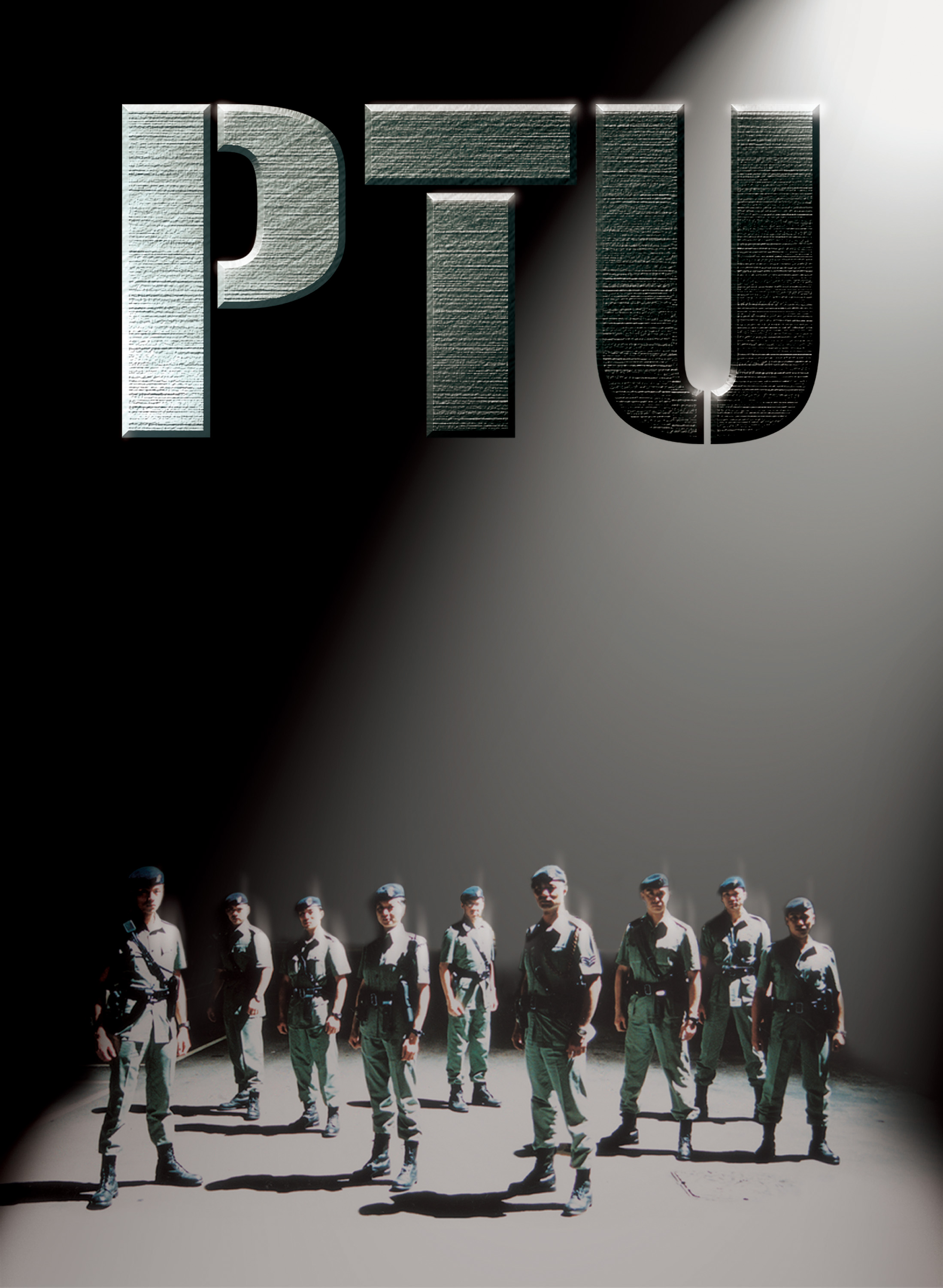
PTU (Johnnie To, 2003)

PTU_PosterMissing gun thrillers have become a mainstay of Asian cinema from Kurosawa’s Stray Dog right up to the Jiang Wen starring The Missing Gun. Less than a year after Lu Chuan’s existential drama, Johnnie To takes a typically ironic look at the same problem as an arrogant yet incompetent officer gets into a disagreement with a gang of thugs and loses his gun just as a particular moment of chaos is about to strike the local gang scene. Set over the course of a single night, To’s film has an ambiguous attitude to its central collection of street cops and detectives as they attempt to recover the missing firearm before it causes more harm than they are able to contain.

A gang of petty thugs led by local bigwig “Ponytail” marches into small restaurant and commandeers the best table, forcing the young man already sitting at it eating his dinner to move further back. A short time later, Officer Lo (Lam Suet) gets into an altercation with a young man outside and then marches in and commandeers Ponytail’s table, forcing the group onto the table behind, and the young man from before onto a tiny perch near the kitchen. Only a few minutes later, Lo gets a call and leaves but is followed by some of Ponytail’s guys while Ponytail stays behind is knifed in a shock execution attempt which threatens to permanently unbalance the precariously held equilibrium of the local underworld scene.

When Lo the leaves the restaurant, he discovers that the first guy who he arrogantly disrespected has thrown yellow paint all over his car but his real problem occurs when Ponytail’s guys start chasing him and he decides to play along, only to slip on a banana skin halfway through his big moment. When he wakes up surrounded by cops, he realises he’s missing his gun and that he has a big problem. Sympathetic nighttime beat cop Mike (Simon Yam) agrees to help him find it out of a sense of solidarity, managing to get his by the book colleague to agree to give them until dawn to sort it all out.

To opens the film with a news report of an event earlier in the evening in which a police officer was killed during a robbery. Some of the PTU guys react with gallows humour only to be shot down by the fairly humourless Mike who reminds them that one of their own died today and they ought to have some respect. That is perhaps why he decides to help Lo, whom all of the other police officers regard as something of a ridiculous embarrassment. A rare leading role for To favourite Lam Suet, Lo is a genial figure of fun whose ongoing self aggrandisement mixed with pure panic at the thought of all his dodgy dealings coming out if he has to report his gun stolen makes for entertaining viewing, especially as his incompetencies are usually of the amusing rather than dangerous kind.

Yet “good guy” Mike is not exactly the beacon of fairness that he first seems. His resentment at being shouldered with a straight laced rookie from HQ, tonight of all nights, is more than just irritation with playing babysitter. Concerned that HQ may have sent a spy to look in on his very own night watch, Mike keeps the rookie in the back away from the less palatable parts of his evening which include getting information out of suspects through torturing their friends, and nearly kicking a guy to death in an alleyway. King of the night, Mike knows each and every dodgy spot and is perfectly primed to track down Lo’s gun through his thorough knowledge of the local gang scene.

Taking the tripartite structure common to many of To’s films, PTU makes full use of the director’s familiar world view in which all outcomes are the result of random acts of fate and unforeseeable coincidence. Thus, Lo slips on a banana skin, an insignificant young man turns out to be of pivotal importance, and everyone keeps thinking their phone is ringing but it turns out to be someone else’s. The gun, the great Mcguffin in all this, is revealed to be an irrelevance, resolving itself in due course just as the real chaos – the all out gang war between two rival Triad clans, brings the evening to a close. At the end of this extremely long night, Lo, Mike, a female police detective investigating Ponytail’s murder, and just about everyone else has their own version of what really happened, but, as to be expected, none of them quite tally with the events we have just witnessed.


Screened at Creative Visions: Hong Kong Cinema 1997 – 2017

Original trailer (Cantonese with English subtitles)