Useless (无用, Jia Zhangke, 2007)

Perhaps in no other medium does the relationship of art and utility present itself quite so much as in fashion. As the primary subject of Jia Zhang-ke’s Useless (无用, wúyòng), second in a trilogy of films examining Chinese artists, points out China is the world’s largest manufacturer of textiles. Yet until she took it upon herself to found one, it had no fashion label to call its own. Travelling from the garment factories of Guangdong, to the artisan studio of Ma Ke, and bright lights of Paris Fashion Week, before arriving firmly back in Jia’s hometown of Fenyang with its independent tailors and the miners who frequent them for repairs and alterations, Jia zooms in to the modern China probing the divides of art and industry in an increasingly consumerist society. 

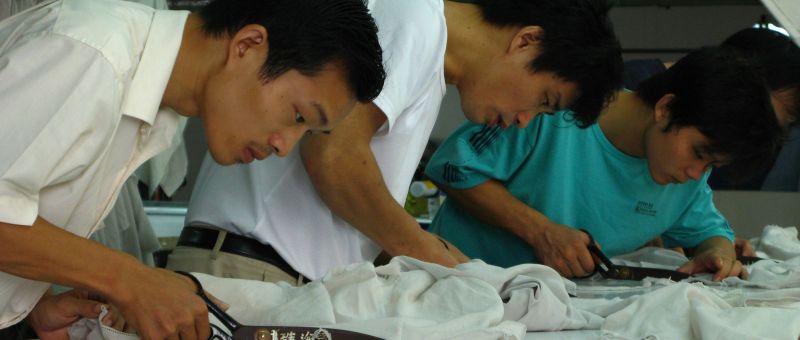
Jia begins with a lengthy pan across a strangely silent factory floor, seemingly a relic of a previous era. The workers dine in a quiet cafeteria they have to squeeze through a gate which remains locked to enter, and have access to an on-site doctor. They get on with their work quietly without overseers breathing down their necks and do not seem unhappy, oppressed, or exploited, at least as far as the camera is permitted to see. The camera hovers over the label of a just-completed garment which belongs to Exception, the fashion store launched Ma Ke in the mid-90s, ironically she says as a reaction against mass-produced, disposable fashion. 

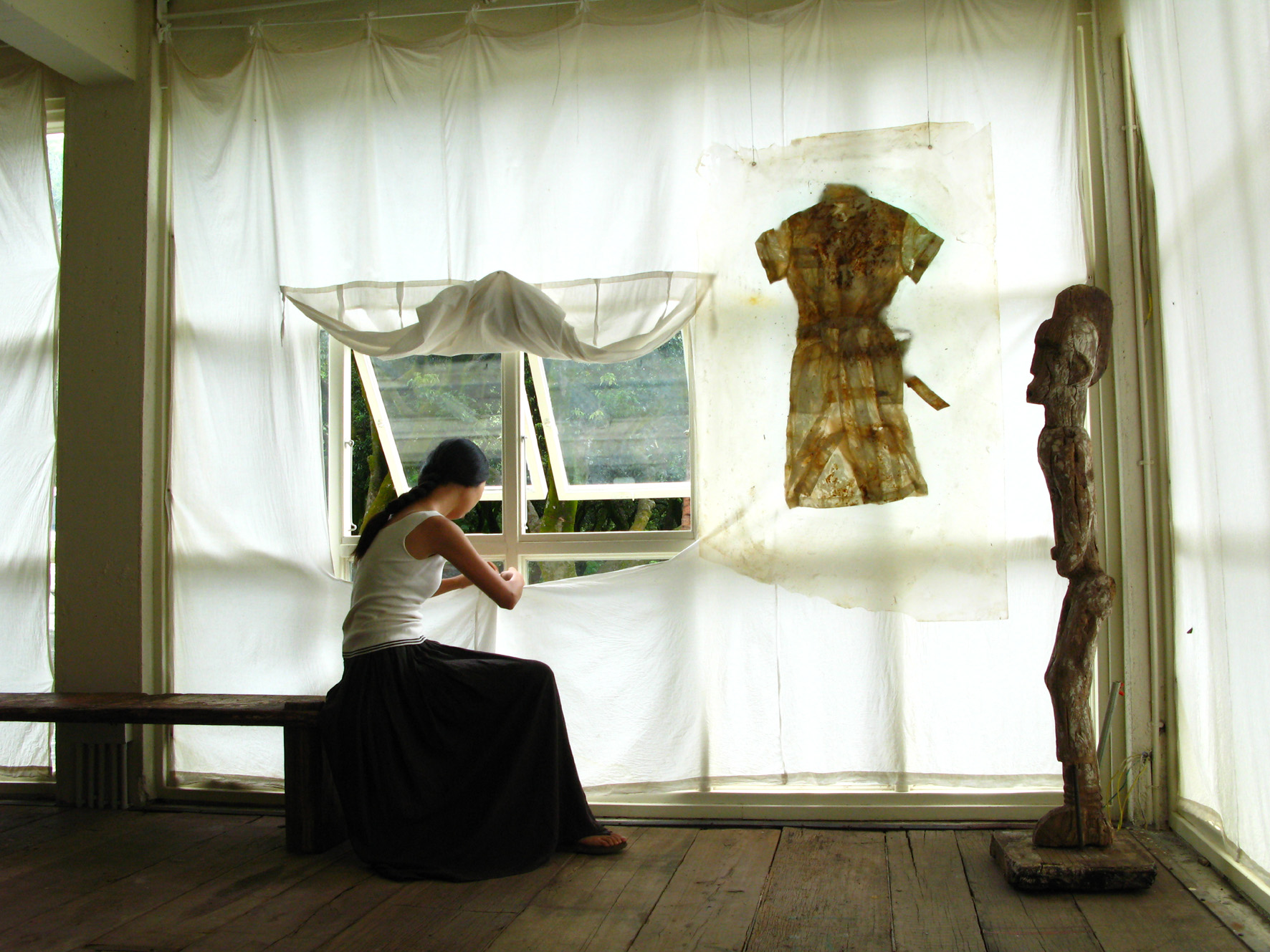
Nevertheless, as she points out, you can’t be free to experiment when you’re a recognisable brand with a clear place in the market, which is why she started an artisan side label, “Wu Yong” meaning “useless”, hinting at her desire to find a purer artistic expression within the realms of fashion design. For the camera at least, Ma Ke casts an eye over her atelier like a factory foreman, though her studio space is a million miles away from the Guangdong factory, though borrowing the aesthetics of the early industrial revolution. Her employees weave by hand using antique looms, Ma Ke reflecting on the differing relationships we might have to something made by hand which necessarily carries with it the thoughts and emotions of the maker, and that made “anonymously” in a factory. Yet these designs are crafted with concerns other than the practical in mind, Ma Ke travelling to Paris to exhibit them in a living art exhibition that, in some senses, repackages the concept of Chinese industry for a Western palate. 

It’s Ma Ke, however, who guides Jia back towards Fenyang, explaining that she likes to travel to forgotten, small-town China where she describes familiarising herself with these other ways of life as akin to regaining a memory. In the dusty mining town he follows a man taking a pair of trousers to a tailor to be repaired, perhaps something unthinkable in the consumerist culture of the cities where clothing is a disposable commodity to be discarded and replaced once damaged. Jia spends the majority of the sequence in the shop of a pregnant seamstress who loses her temper with her feckless, drunken husband while seemingly supporting herself with this intensely practical art. Yet it’s in her shop that he encounters another woman also after alterations who explains to him that her husband was once also a tailor but found his business unviable and subsequently became a miner instead. Like Ma Ke he laments the effect of mass production on the market, knowing that a lone tailor cannot hope to compete with off-the-peg for cost and convenience. As we watch the miners shower, washing the soot from their flesh, we cannot help but recall Ma Ke’s avant-garde installation with its faceless, blackened figures, nor perhaps the workers at the factory visiting the doctor with their various industrial illnesses. 

Objects carry memories according to Ma Ke, they have and are history. The clothes tell a story, every stitch a new line, but they also speak of the contradictions of the modern China in the push and pull between labour and exploitation, art and industry, tradition and modernity, value and consumerism. Yet Jia leaves us with the figure of the artisan, patiently pursuing his small, functional art even as they threaten to demolish his studio around him. 


Alone (แฝด, Banjong Pisanthanakun & Parkpoom Wongpoom, 2007)

A young woman returns to her apartment in Seoul to find the lights don’t work. She begins to feel uneasy, as if there’s a presence around her she can’t see or hear. Slowly, she moves towards the source of her discomfort, but the lights soon come back on. This isn’t a haunting, it’s a party. Her devoted boyfriend Wee (Vittaya Wasukraipaisan) has organised a surprise birthday celebration, though Pim (Marsha Wattanapanich) is indeed a haunted woman attempting to outrun her ghosts in a new country a world away from the nexus of her trauma.

This is just one of many ways in which Banjong Pisanthanakun and Parkpoom Wongpoom attempt to misdirect us while foreshadowing Pim’s eventual confrontation with ghosts of her past on returning to Thailand after her mother suffers a stroke and is hospitalised. A brief prologue sequence had seen her mother sewing a dress that’s oddly shaped, we later realise intended for her daughters who are conjoined twins. A guest reading the tarot at Pim’s party had hinted that something she’s lost would soon return, or else someone to whom she’d broken a promise would come back seeking recompense. This soon proves to be true, Pim haunted by the spectre of her sister Ploy (also played by Marsha Wattanapanich) who passed away unable to adjust after Pim’s apparently unilateral decision to separate.

It’s for this reason that Pim feels intense guilt, convinced that she killed her sister in breaking their promise to always stay together because she desired individual fulfilment. To that extent, some might wonder if the ghost Pim sees is “real” or merely a manifestation of her unresolved trauma. Wee eventually convinces her to see a psychiatrist, who is also a good friend of his, who tells him that Pim is suffering from a delusion while advising her to try to make peace with herself over her sister’s death if she wants to stop seeing the ghost. But perhaps there really is something dark and malevolent, a resentful spirit haunting her family home which is otherwise full of childhood memories. Pim flips through old photos all featuring her and her sister living their shared life of enforced closeness that is at first blissfully happy in its isolation but then suffocating and constrained. 

Nevertheless, though it’s Pim who’s left “alone” in being the one left behind, it’s also true that Pim’s actions have left Ploy “alone” too, only on the other side. The film plays into their nature as twins who represent two halves of one whole rather than two separate beings and locates the source of trauma in their separation as if they must in some sense be reunited in order to exorcise its taboo. In many ways, the psychological drama revolves around a quest for identity as Pim tries to reassert herself in the face of Ploy’s reflection, to become the whole rather than an orphaned part of it, while in other ways affecting a persona that is not quite her own. One cannot take the place of the other, just the new dog the pair get after moving to Thailand cannot replace their old one even if as Pim says they are otherwise identical. 

Yet Pim wonders if it was alright to desire an individual future, choosing herself over Ploy and thereby condemning her to a life of loneliness. To that extent, her dilemma is that of a contemporary woman torn between familial devotion and personal fulfilment, though of course, her words turn out to have a hidden implication suggesting that all is not quite as it seems even if she begins to confront her trauma by finally explaining the circumstances of her separation to an ever supportive but increasingly worried Wee. As the tarot reader had implied, perhaps all promises must in the end be fulfilled as the grim conclusion suggests, literally burning down the house as if to purify this space and restore order in uniting the sisters in an eternal embrace, alone together. Banjong Pisanthanakun and Parkpoom Wongpoom engineer a slowly creeping sense of dread in the gothic eeriness of Pim’s family mansion while edging towards the fatalistic conclusion in which a kind of balance is finally restored, the sisters are both separated and united once again two halves one perfect whole.


Alone is available as part of Umbrella Entertainment’s Thai Horror Boxset.

International trailer (English subtitles)

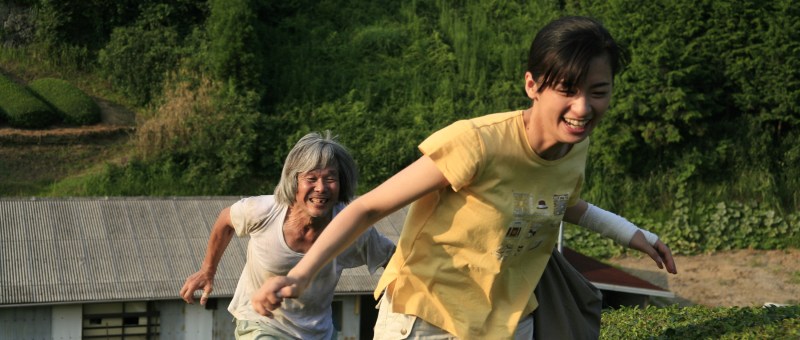
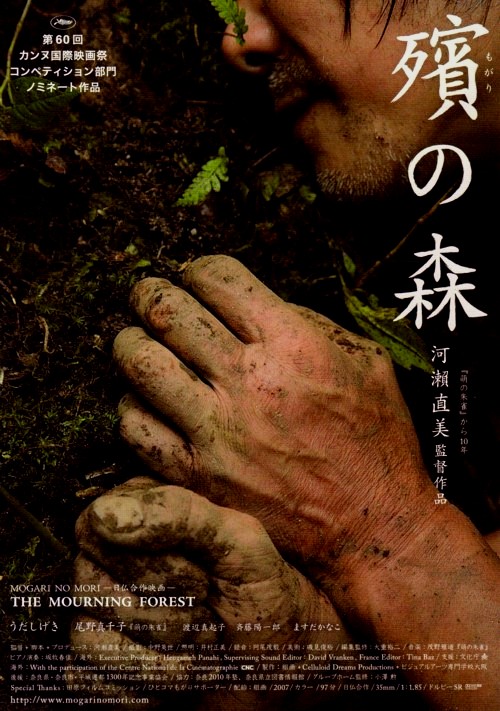
The Mourning Forest (殯の森, Naomi Kawase, 2007)

“There are no set rules,” according to the reassuringly steadfast head of a rural nursing home in Naomi Kawase’s The Mourning Forest (殯の森, Mogari no Mori). Uttering the phrase several times in many different contexts, the words prove truer than they first seem, eventually reassuring the grief-stricken heroine that there is no right way to feel or correct way to mourn, simply a gentle process of accommodation. An unexpected Palme d’Or winner, Kawase’s fourth feature sees her shifting into a more familiar arthouse register yet maintaining her trademark style as two lost souls, one old and one young, search for the “end of mourning” in the beauty of nature. 

The young one, Machiko (Machiko Ono), is a recently bereaved mother who has just taken a job at a local nursing home. We never find out exactly how her son died, in fact we only infer he did from the photo and incense on Machiko’s makeshift altar, but a later conversation with her presumed husband encourages us to assume that she blames herself for his death. Consequently, she perhaps recognises something in the dead-eyed vacancy of one of the home’s residents, Shigeki (Shigeki Uda), who crosses out the middle character, meaning 1000, in her name to make it read the same as his late wife Mako’s. Mako (Kanako Masuda) died 33 years previously, which according to the Buddhist priest visiting the facility means that her spirit will soon be leaving this plane for good, transitioning to the other world to become a Buddha.  

Something in Shigeki, whose name literally means “stimulation” though it is in fact the actor’s own, is awakened by the priest’s pronouncement, encouraging him to embark on a long-delayed journey. The priest too had been responsible for the initial connection between the two grieving souls, giving a perhaps insensitive lecture on the difference between living and existing which lies apparently in the ability to feel alive, something which neither of them perhaps do. For unclear reasons, Machiko agrees to travel with Shigeki to look for his wife’s grave, deep in the forest. Unfortunately they get into an accident on the way and while Machiko goes to look for help, Shigeki wanders off with the consequence that the pair of them eventually end up lost in the woods. 

“I was lost but now I’m here,” Shigeki finally explains, fighting his way through what was assumed to be dementia in his quest to say goodbye to his late wife for good before her soul leaves this world. The pair traverse somewhat difficult terrain, culminating in a painful episode in which Machiko begs the older man not to cross a wild river as if he were determined to cross the styx, or then again perhaps there is another explanation for the rawness of her distress. “We’re alive” they exclaim as they warm themselves by an elemental fire, settling the priest’s question once and for all as they press on in search of a grave and each of making peace with the past. 

As Wakako (Makiko Watanabe) had said, there are no set rules for mourning. Shigeki lived with his grief for 33 years and only found the courage to face it in the knowledge that there was no more time. Yet he reassures Machiko that “the water of the river which flows constantly never returns to its source”. In travelling with Shigeki, Machiko too begins to reckon with her grief, finding a kind of release in his catharsis and witnessing the proof of his long years of devotion suddenly given new purpose. She too is able to lay her mourning to rest in the natural beauty of the verdant forest.

Beautifully capturing the majesty of nature, Kawase shifts away from her trademark style swapping anarchic handheld for stateliness in the stillness of Machiko’s grief while quietly observing the ordinariness of the nursing home even as one resident relates her own grief in having lost a child. Filled with a deep sadness in its melancholy meditation on love, death, loss, and grief, The Mourning Forest is nevertheless a strangely uplifting, elegiac experience in which an old man and young woman find strength in their shared connection as they journey together towards the end of mourning and, perhaps, a rebirth in making at least a kind of peace with their grief and their longing.


Original trailer (English subtitles)

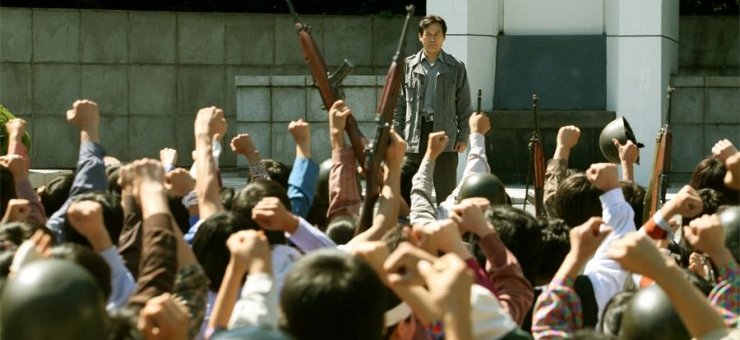
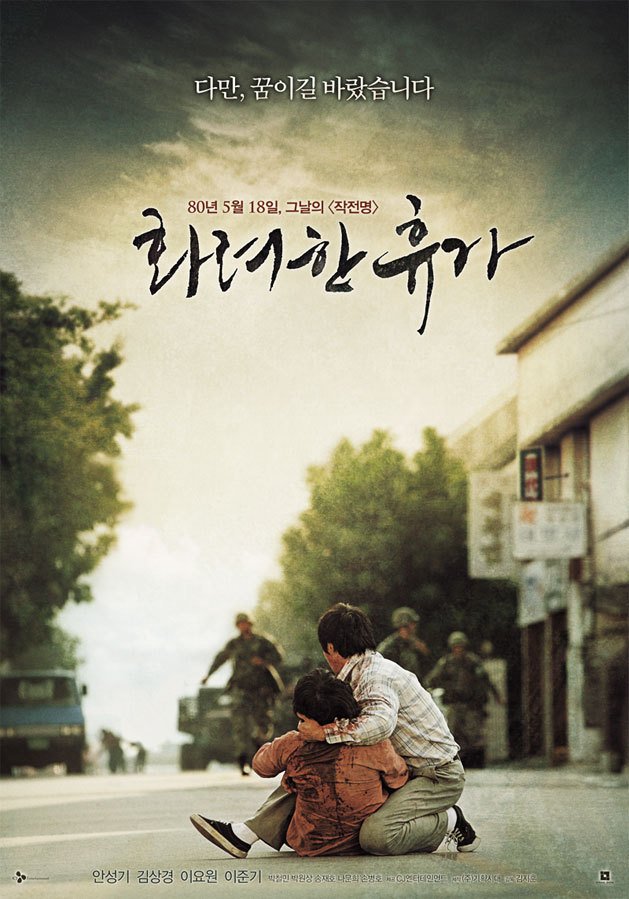
May 18 (화려한 휴가, Kim Ji-hoon, 2007)

Following the assassination of president Park Chung-hee in 1979, many assumed that democracy would return and that the society would be liberated from its authoritarian past. That did not, however, come to pass. While the government floundered, general Chun Doo-hwan launched a coup that led to nothing other than a second military dictatorship. Citizens continued to press for democratisation and the lifting of the martial law that had been declared in the wake of Park’s death. In order to cement his authoritarian rule, Chun embarked on an oppressive crackdown of resistance activity, actually expanding martial law and sending troops to monitor universities where the majority of protests were taking place.  

It’s against this backdrop that Kim Ji-hoon’s May 18 (화려한 휴가, Hwaryeohan hyuga) unfolds, so named for the first day of Gwangju Uprising in which citizens of the small provincial city were subject to beatings, torture, rape and murder at the hands of military forces. He opens however with pleasant scenes of the local countryside as taxi driver Min-woo (Kim Sang-kyung) heads back into the city eventually arriving to pick up his younger brother Jin-woo (Lee Joon-gi) from high school and deliver him to the local church. Min-woo also has a crush on mutual friend and fellow attendee, Shin-ae (Lee Yo-won), who works as a nurse at the local hospital. For some reason even though this is a fairly small place, Min-woo also seems to be unaware that Shin-ae is the daughter of his boss Heung-su (Ahn Sung-ki ), a former army captain now retired and running a taxi firm. 

In an attempt to make the political personal, Kim spends the first hour on Min-woo’s awkward romance which by modern standards is quite problematic in that he basically ends up following Shin-ae around and offering to give her free lifts even though she seems annoyed to see him and isn’t keen on him effectively deciding where she doesn’t and doesn’t go. Meanwhile, as he and his brother are orphaned he’s adopted a paternal role towards Jin-woo who is bright and studying hard with the aim of getting into Seoul University to study law while Min-woo most likely had to give up school to drive the taxi so he could support them both. This is also in its way a little uncomfortable in its emphasis on Jin-woo’s bright future which is about to be destroyed by the uprising as if his life is worth more because of all the ruined potential rather than just because he was an ordinary human betrayed by his government and trapped by hellish atrocity. Even so, it hints at a conflict within Min-woo as he wants to keep his brother safe but also has a natural desire to resist injustice and is moved when Jin-woo explains that one of his best friends has been murdered by state violence. 

Then again, the film’s framing is also in a sense reactionary in Jin-woo’s intense offence against being branded as a “rebel” or a “communist” rather refocusing on the fact the military’s actions are inhuman and the their attempt to slur the local people only a means of justification. As the local priest accurately suggests, the military provokes them in order to have an excuse to crack down with extreme prejudice ensuring that there will be no further resistance to increasing authoritarianism. Some army officers begin to ask questions but are quickly shut down by their overzealous commander who claims the North may be on its way to link up with these “communists” and is quite clearly prepared to wipe out the entire town rather than back down and risk a further escalation of their resistance. 

While the soldiers are faceless and implacable, the townspeople are sometimes depicted as naive bumblers with significant time spent on a “loudmouth” comic relief character who is nevertheless one of the first to pick up a gun and join the town’s civilian army led by Heung-su who like the priest is under no illusions and assumes troops will soon storm the town. The comedic tone and melodramatic undercurrent often undercut Kim’s attempts to depict the horror of the massacre even in the irony of their juxtaposition as bullets suddenly rip into a cheerful crowd which had been laughing and joking only seconds before. The closing scenes in which a man refuses to surrender and is killed are framed as heroic but in the end seem futile, as if he’s thrown his life away for no reason. Even so there is something Shin-ae’s loudspeaker pleas to remember the citizens of Gwangju who stayed strong and resisted to the last rather than consent to their oppression even if she is in a sense condemned to be the storyteller bearing the horror of it all alone along with the loss of her own happy future crushed under the boots of violent authoritarianism.


International trailer (English subtitles)

Adrift in Tokyo (転々, Satoshi Miki, 2007)

An aimless young man finds unexpected direction while walking the streets of the city with an unlikely father figure in Satoshi Miki’s meandering dramedy Adrift in Tokyo (転々, Tenten). These two men are indeed adrift in more ways than the literal, each without connections and seeking a concrete role in life while attempting to make peace with the past. But like any father and son there comes a time when they must part and their journey does indeed have a destination, one which it seems cannot be altered however much they might wish to delay it.

That Fumiya (Joe Odagiri) is aimless might be assumed from his unruly hair and the fact that he thinks tricolour toothpaste might be enough to jolt him out of his sense of despair but is confirmed by his matter of fact statement that he’s in his eighth year of university where nominally at least he’s studying law. His problem is that he’s amassed massive debts to a loanshark, Fukuhara (Tomokazu Miura), who breaks into his apartment and threatens him by shoving a sock in his mouth before leaving with his ID and driving licence. Fukuhara, however, later decides to make him another offer that he will cancel the debt and even give Fumiya even more money if only he will agree to wander around Tokyo with him for an unspecified time until they reach Kasumigaseki where he intends to hand himself in at police headquarters claiming to have recently murdered his wife. 

Like many things that Fukuhara says, it’s not clear whether or not he has indeed killed his wife though Miki frequently switches back to a scene of a woman who seems to have passed away and has been laid out in bed though she shows no signs of having died violently. Her zany co-workers keep thinking they should check on her seeing as she hasn’t shown up in days but something always distracts them and they end up forgetting about her entirely. The body appears to have been treated with love, hinting that if what Fukuhara says is true and this woman was his wife whom he killed in a fit of passion he has quite clearly thought through his plan of action rather than attempting to flee the scene and is perhaps only delaying the inevitable while walking out some other trauma in the company of Fumiya a surrogate son mirroring the description he gives of taking walks in the company first of his father and then of his wife. 

Fumiya deflects every question and agrees that he hates memories having burned his photo albums before leaving for university. He claims that he has no parents, describing the people who raised him as just that, as his mother and father both abandoned him as a child leaving him in a perpetual state of arrest which is one reason he’s still a student four years after most people have graduated. He never went to the zoo or rode a rollercoaster or called a man dad and seems to think of himself as nothing much of anything at all. Yet the fake can sometimes be more real than the real as he eventually discovers becoming part of an awkward family unit with Fukuhara’s “fake” wife (Kyoko Koizumi) he used to accompany to weddings as a paid guest, just beginning to enjoy being someone’s son when Fukuhara decides he’s reached the end of his road. 

There is a sense that everyone is chasing the ghost of someone else or perhaps even themselves, Fumiya finding shades of the father who abandoned him in career criminal Fukuhara who tells someone else that he once had a son who died in infancy, and seeing something of his mother in fake wife Makiko discovering transitory roots in an unlived imaginary childhood. But then there are also occasions of cosmic irony such as a coin locker bag being full not of money but of bright red daruma dolls and tengu noses, or a rebellious street musician meekly bowing to the police. A repeated gag says you’ll have good luck if you spot iconic actor Ittoku Kishibe out and about in the streets, and perhaps in a way Fumiya does in learning to make peace with his childhood self walking with Fukuhara who also comes to accept his failures as a man, a husband, and perhaps a father too. Filled with zany humour and a warmth underlying its melancholy, Adrift in Tokyo is a meandering journey towards a home in the self and a sense of rootedness in the middle of a sprawling metropolis filled with infinite possibility. 


Adrift in Tokyo is released on blu-ray in the UK on 12th December courtesy of Third Window Films.

Original trailer (English subtitles)

Love of Siam (รักแห่งสยาม, Chookiat Sakveerakul, 2007)

Two young men contending with grief and familial dislocation begin to wonder if it’s possible to love someone knowing that you’ll lose them, or conversely if it’s possible to live without love in Chookiat Sakveerakul’s melancholy drama Love of Siam (รักแห่งสยาม, Rak haeng Siam). The title may sound overly patriotic but in actuality refers to the Siam Square shopping area when the boys meet again as teenagers after many years apart and rekindle their friendship only to be confused by their growing feelings for each other while each struggling with contradictory demands from fracturing family and romantic drama to the responsibilities of friendship and career. 

When they first meet as small boys, Mew (Arthit Niyomkul), who has come to live with his elderly grandmother, and Tong (Jirayu La-ongmanee) live opposite each other in a small Bangkok back street. When Mew is hassled in the school toilets, Tong comes to his rescue and gains a black eye in the process, cementing the boys’ friendship. Everything begins to change, however, when Tong goes on holiday with his family to Chiang Mai. His older sister Tang (Laila Boonyasak) stays on to hang out with friends and later disappears during a hiking trip leaving the family devastated. To escape their grief they decide to move away, breaking the friendship between the two boys. A decade or so later, they re-encounter each other by chance in Siam Square where Tong (Mario Maurer) is trying to buy a CD of rising boyband August of which Mew (Witwisit Hiranyawongkul) just happens to be the lead singer. 

In the intervening years, Tong has become somewhat distant and is now in an unsatisfying relationship with one of the school’s most popular girls, Donut (Aticha Pongsilpipat). As we discover, his father has developed an alcohol problem unable to overcome his guilt and grief over what happened to Tang, while his mother attempts to power through by exerting control over every aspect of her life. In a shocking coincidence, Mew’s band manager June (Laila Boonyasak) happens to look exactly like Tang, Tong and his mother eventually asking her to play the part of the absent sibling in the hope of curing his father’s depression. 

As much as the film revolves around the love story between the boys as they begin to figure out their sexuality, at the end it’s a story of love in its many forms and key among them the familial. Both the boys are in a sense displaced, Mew for reasons not explicitly stated living not with his father but his grandmother and then as a teenager alone following her death while Tong is caught between his grieving parents looking for new signs of stability. Understandably anxious, Tong’s mother still makes a point of picking him up by car though he is already a teenager when such solicitation might seem embarrassing. When she catches Tong kissing Mew, her world is destabilised attempting to reassert her control by asking Mew to stay away from her son fearful of losing him and the life she’d envisioned for his future with a wife and children. Yet through her interactions with June, who is also displaced having lost her parents in some kind of accident, she begins to realise that her need for control is not the way to save her family as they each begin to face their grief and repair their familial bonds accepting both the continuing presence and absence of Tang as symbolised by the family photo taken on their last holiday in which she is not pictured but only because she was standing behind the camera. 

In this way, Mew perhaps gets his answer to whether it’s possible to go on loving someone knowing that you’ll lose them unwilling to live a life without love even if the price is grief and loneliness. Where there’s love, there’s hope according to a Chinese song translated by Mew’s lovelorn neighbour, Ying (Kanya Rattapetch), who becomes an accidental friend of Tong learning to put her hurt and jealousy aside to embrace her friendship with both boys. As someone else puts it, mistakes are just opportunities for change and perhaps doing the wrong thing out of love is better than doing nothing at all. Nevertheless, as the family begins to repair itself, healing in mutual acceptance along with acceptance of their loss, the youngsters discover the strength to accept themselves discovering their place amid the admittedly chaotic streets of Siam Square. 


Love of Siam screens at Rich Mix on 29th May as part of this year’s Queer East.

Original trailer (English subtitles)

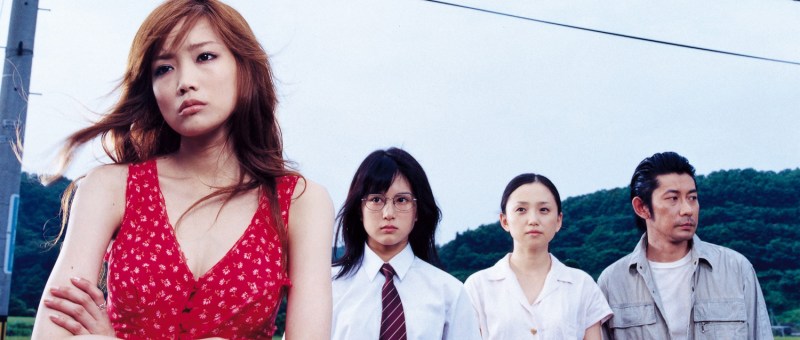
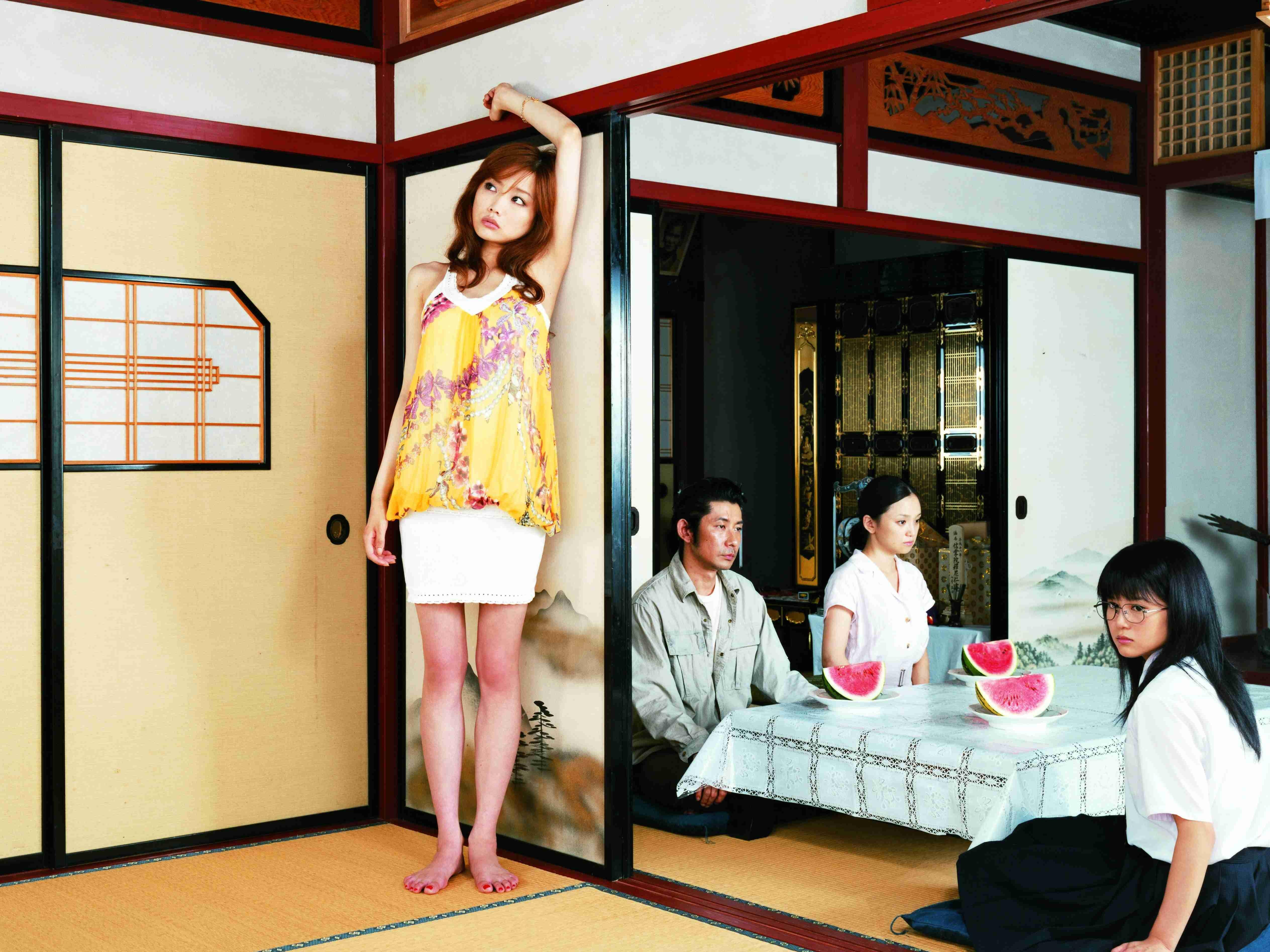
Funuke Show Some Love, You Losers! (腑抜けども、悲しみの愛を見せろ, Daihachi Yoshida, 2007)

“We’re family, I’m sure we’ll understand each other” a conciliatory big brother tries to console, but family is it seems a much more complicated matter than one might assume it to be in Daihachi Yoshida’s debut feature, Funuke Show Some Love, You Losers! (腑抜けども、悲しみの愛を見せろ Funukedomo, Kanashimi no Ai wo Misero), adapted from the novel by Yukiko Motoya. Released in 2007, Yoshida’s film is one among a series of cynical reevaluations of the meaning of “family” in the contemporary society but eventually skews towards the uncomfortably conservative in its implicit suggestion that a family which is not bound by blood cannot succeed while even blood connection may prove inherently toxic. 

Fittingly the film opens with a freak yet largely offscreen accident as Mrs & Mrs Wago are killed by a runaway bus while attempting to save a stray cat, an event witnessed by their 18-year-old daughter Kiyomi (Aimi Satsukawa). The Wagos were a blended household, Kazuko and Shutaro having married later in life and bringing with them their children from previous marriages in Kazuko’s daughters Sumika (Eriko Sato) and Kiyomi, and Shutaro’s son Shinji (Masatoshi Nagase). Four years previously, Sumika left home after a traumatic family incident with the aim of becoming an actress in Tokyo, while her place has perhaps been taken by Shinji’s new wife Machiko (Hiromi Nagasaku) whom he has only recently married. Yet Kiyomi seems more perturbed by the possibility of her sister’s return than she is grief-stricken by her parents’ death, while Sumika barely glances at the altar on her arrival immediately treating Machiko as a servant sent out to pay the taxi and collect her bags. 

As we quickly gather, Sumika is an intensely narcissistic, self-absorbed sociopath intent on manipulating everyone around her in order to assume a position of dominance yet her resentment is perhaps the only thing glueing the family together. Her grudge against Kiyomi apparently stems back to her having used her for inspiration for a manga about a young woman driven to psychotic violence in her ambition to become an actress which later won a prize and was printed under her real name with the consequence that everyone in town quickly realised it was about her. Sumika repeatedly uses this excuse as to why she hasn’t been successful, that the manga forced her into a moment of introspection that destroyed her self-confidence, later saying something similar to an unresponsive audition panel bearing out her tendency to blame her failures on others. Yet Kiyomi apparently feels intensely guilty. “I never thought of myself as the kind of person who’d turn her family into manga for money” she laments shortly after Sumika attempted to boil her to death in the bath, “I want to transform into the kind of person who can sympathise with family members’ pain”. 

“Family means supporting each other at times like this” the relentlessly cheerful Machiko had tried to comfort Kiyomi at the funeral, yet she is constantly reminded that she is not quite included as a family member. Shinji tells her to keep out of family business and later to avoid getting between the sisters, denying her an equal status within the home despite the reality of their marriage. Ironically enough, Machiko was abandoned at birth and raised in an orphanage apparently so desperate to belong to a family that she willingly puts up with Shinji’s abusive treatment while making creepy dolls as a hobby. Yet at the end of the film it’s she who is left on her own, inheriting the family home, while the two blood sisters are eventually forced out but bound to each other if only in unresolved and continual resentment. 

Nevertheless there is also a degree of pathos in the series of frustrated dreams which prevent each of the siblings from escaping the otherwise perfectly nice if dull rural hometown where they were born. Sumika’s tragedy is her refusal to accept she has no talent and is unlikely to find career success because she is an unpleasant person, a meta plot strand seeing her writing letters to a director whose new movie is apparently about whether you can love someone you’ve only communicated with remotely and never met. Sumika seeks only dominance, manipulating her siblings through guilt and shame in order to encourage a sense of dependence while also dependent on them for financial support. Her need prevents either Kiyomi or Shinji finding happiness, their attempts to escape her control eventually leading in very different directions. 

Unlike similarly themed familial dramas, Funuke situates the fault line in its dysfunctional family not in the changing society but in its lack of blood relation while eventually suggesting that even the blood bond between the two sisters is more grimly toxic than it is supportive. In an odd way, it leaves Machiko as the winner while uncomfortably implying that her orphanhood prevents her from becoming part of a conventional family, literally left home alone. A more literal translation of the title might be “show some miserable love, you cowards”, suggesting that these anxious siblings are too afraid of themselves and each other to embrace familial affection Kiyomi eventually affirming “In the end I couldn’t change either, sorry”. While the limitations of early digital photography may not stand up a decade and change later, Yoshida’s occasionally experimental flair including an entire sequence playing out as manga panels helps to overcome the unfortunate lifelessness of a typically 2000s low budget aesthetic while the universally strong performances do their best to gain our sympathy in an otherwise cruelly cynical, if darkly humorous, take on post-millennial family dynamics. 


Funuke Show Some Love, You Losers! is available on blu-ray in the UK from Third Window Films.

Trailer (English subtitles)

Spider Lilies (刺青, Zero Chou, 2007)

“I have no choice but to live in a virtual world” according to the lovelorn heroine of Zero Chou’s ethereal reflection on love and the legacy of trauma, Spider Lilies (刺青, Cìqīng). Two women connected by childhood tragedy struggle to overcome their respective anxieties in order to progress towards romantic fulfilment, eventually freeing themselves only by destroying the image of that which traps them. 

In the present day, Jade (Rainie Yang) is an unsuccessful camgirl with a habit of shutting down her clients on a whim which doesn’t play well with her boss. In an effort to spice up her live show, she decides to get a raunchy tattoo only to realise that the tattooist, Takeko (Isabella Leong), is in fact her long lost first love, a neighbour she took a fancy to at the tender age of nine. For her part, Takeko appears not to remember Jade but cannot deny the presence of her unusual spider lily tattoo, a version of which hangs prominently on her wall. Hoping to maintain contact, Jade decides to get the spider lily tattoo herself but Takeko is reluctant, explaining that the spider lily is a flower that leads only to hell. 

According to Takeko’s master, there is a secret behind every tattoo and the responsibility of the tattooist is to figure out what it is but never reveal it. Thus Takeko crafts bespoke tattoo designs for each of her clients designed to heal whatever wound the tattoo is intended to cover up, such as the ghost head and flaming blades she tattoos on a would-be gangster who secretly desires them in order to feel a strength he does not really have. Her tattoo, however, is intended as a bridge to the past, a literal way of assuming her late father’s legacy in order to maintain connection with her younger brother (Kris Shen) who has learning difficulties and memory loss unable to remember anything past the traumatic death of their father in an earthquake which occurred while she was busy with her own first love, a girl from school. Feeding into her internalised shame, the tattoo is also is a means of masking the guilt that has seen her forswear romance in a mistaken sense of atonement as if her sole transgression really did cause the earth to shake and destroy the foundations of her home. 

Then again, every time Takeko seems to get close to another woman something awful seems to happen. Jade, meanwhile, affected and not by the same earthquake is burdened by the legacy of abandonment and the fear of being forgotten. Living with her grandmother who now has dementia the anxiety of being unremembered has become acute even aside from the absence of the mother who left her behind and the father last seen in jail. “Childhood memories are unreliable” she’s repeatedly told, firstly by Takeko trying to refuse their connection, and secondly by a mysterious online presence she misidentifies as her lost love but is actually a melancholy policeman with a stammer charged with bringing down her illicit camgirl ring. The policeman judgementally instructs her to stop degrading herself, having taken a liking to her because he says he can tell that she seems lonely. 

A kind of illusionary world of its own, Jade’s camgirl existence is an attempt at frustrated connection, necessarily one sided given that her fans are not visible to her and communicate mainly in text. It’s easy for her to project the image of Takeko onto the figure of the mystery messenger because they are both in a sense illusionary, figments of her own creation arising from her “unreliable” memories. Jade wants the tattoo to preserve the memory of love as a bulwark against its corruption, at once a connection to Takeko and a link to the past, but the tattoo she eventually gets is of another flower echoing the melancholy folksong she is often heard singing in which the lovelorn protagonist begs not to be forgotten. 

“I am a phantom in your dream and you too live in mine” Jade’s mystery messenger types, hinting at the ethereality of romance and fantasy of love. Caught somewhere between dream and memory the women struggle to free themselves from the legacy of past trauma and internalised shame, but eventually begin to find their way towards the centre in making peace with the past in a sprit of self-acceptance and mutual forward motion.


Spider Lilies streams in the UK 26th April to 2nd May courtesy of Queer East

Original trailer (English subtitles)

Crime and Punishment (罪与罚, Zhao Liang, 2007)

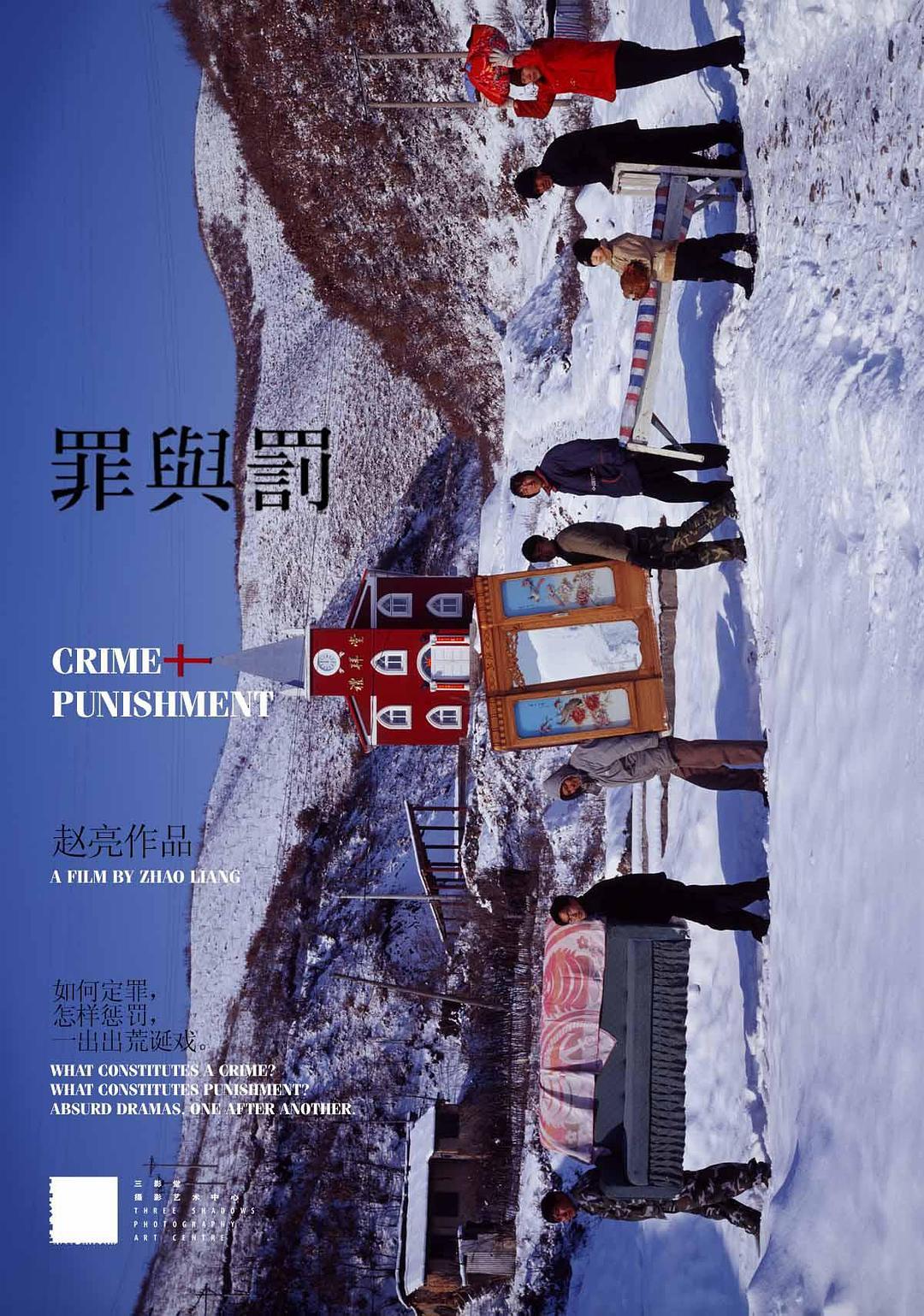
Crime and Punishment posterThe life of a small-town policeman is an often thankless one. When they’re not dealing with petty neighbourhood disputes, people who are essentially just lonely, and acts of elaborate busywork, there’s not much else to do but wear the uniform with pride. Unfortunately, the uniform can eventually consume the person inside it, turning them into fastidious prigs obsessed with the letter of the law. Locating itself in a small town near the North Korean border, Zhao Liang’s Crime and Punishment (罪与罚, Zuì ) paints an ambivalent portrait of local law enforcement, in this case operated by the Military Police who are themselves perhaps victims of the austerity of the system.

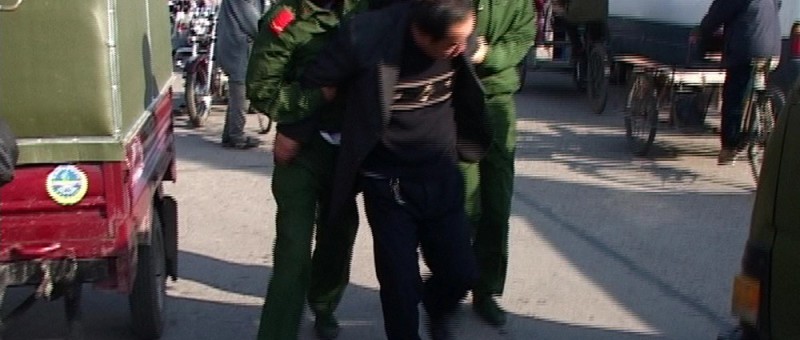
Zhao opens with a lengthy sequence of the soldier policemen meticulously folding their bedsheets into perfect squares, neatly symbolising their insistence on precision and discipline. Far from neat, however, their interactions with the locals are often messy and confused. Called out by a man with obvious mental health issues who wanted to report a murder but is discovered to have mistaken a bedsheet for a body, the pair of policemen are initially sympathetic if confused but become increasingly frustrated by his inability to acknowledge his mistake. Accusing him of drinking, they later threaten his elderly mother with wasting police time, suggesting that this sort of thing has happened before but refusing to believe that perhaps the man needs more help than they can give him, and that shouting at him to stop drinking is unlikely to have much effect.

Helping is not something they particularly see as their duty. They are, after all, here to be the face of authority, enforcing the law and keeping the locals in line. Thus they largely spend their time engaged in acts of extreme pettiness such as their dogged pursuit of an elderly man who can’t produce his permit for collecting junk. Old Wang gives them the runaround, claiming that the permits are all in order but at home, just trying to get them to give him his donkey cart so he can get back to business but the jobsworth on the desk isn’t having it. He won’t let the donkey go ’til they sort this out. No permits, no donkey. It’s then that Wang makes a strategic mistake in calling home. The jobsworth lends him a phone but on speaker, leading to a comical interlude of Wang’s presumably very young grandson screaming into the receiver before his son comes on and, not knowing he’s audible to all, says some very unkind things about policemen which don’t go down well with the guys in charge. Things aren’t looking great for Wang’s donkey, especially as his permits appear to have expired some years previously (which he blames on the permit office not sending the new documents), but by this stage all the jobsworth wants is an apology from Wang’s son for the stain on his honour as a policeman. Eventually he gets bored and lets Wang go with a warning, only for Wang to go around the corner with his donkey and immediately start collecting junk again.

This Kafka-esque futility is further rammed home when we see the police paste up a wanted sign for a suspected murderer. They set up a roadblock and earnestly question the passing cars only for one elderly gentleman to insist he doesn’t have time for this nonsense and speed off leaving the police dumbfounded and repeating his plate numbers with the intention of tracking him down later. As part of the sweep they discover a far more banal crime – three men with a pickup truck full of lumber they “found” supposedly abandoned and were hoping to sell to some guy named Wang in order to get a few extra pennies for the New Year. Eventually confessing, the ring leader is frogmarched home, allowed to remove his cuffs so as not to unduly alarm his family members, and forced to track through the mountains showing them the corpses of these illegally dismembered trees. The policemen with him are suddenly sympathetic, sorry for his obvious poverty and grateful for his co-operation (he even asks them to stay for lunch and apologises for making them tired with all this walking), offering to have a word with the chief to see if they can’t get the fine reduced. Of course, maybe that’s got something to do with his wife’s anger on noticing her husband’s swollen face and dejected expression. Her complaints about police brutality unsettle the officers so much that they overcompensate by giving the guys a token fine and letting them go home right away with all the lumber that they stole so that the families won’t kick up a fuss about the violence.

Despite the squeamishness, violence is a key tool of the military police who aren’t afraid of expressing their authority physically even knowing Zhao’s camera is capturing their every move. An old man is brought in on suspicion of stealing a mobile phone. So obsessed are they with shouting him into a confession, that it takes them a while to realise he is deaf and has a speech impediment which is why he is unable to answer their questions, but it doesn’t stop them whipping him with a belt to make him try. Eventually they have to let him go too because they don’t have an interpreter on hand and are unable to interview him or collect any evidence.

Life as a military policeman appears to be defined by tedium dressed up as correctness and punctuated by brief moments of brutality born of a desperate need to mask their sense of insignificance. They are victims of the system too. One young man who had invested everything in the dream of getting into the military academy laments that his life would be so easy if he had money for bribes and connections to hook him up, but he doesn’t so now he’s getting demobbed from the army against his will with no other choice than to go back home and live pretty much like the denizens of this tiny impoverished town where pensioners illegally hunt scrap and dejected dads steal trees to buy New Year gifts for their kids. One of the soldiers even complains that he’s losing his hair because of the stress and physical demands of the job, but there doesn’t seem to be much of an outlet for his frustrations other than taking pleasure in priggishness. A subtle and subversive condemnation of the violence embedded in the orchestration of the state, Crime and Punishment dares to suggest that its heroic policemen are little more than bumbling, self-important fools unable to think much beyond dogma, exerting authority through thuggery. Yet it is also reserves a degree of sympathy for them too, corrupt and cruel as they are, they are also products of the system that will eventually consume them.


Screened as part of the 2019 Open City Documentary Festival.

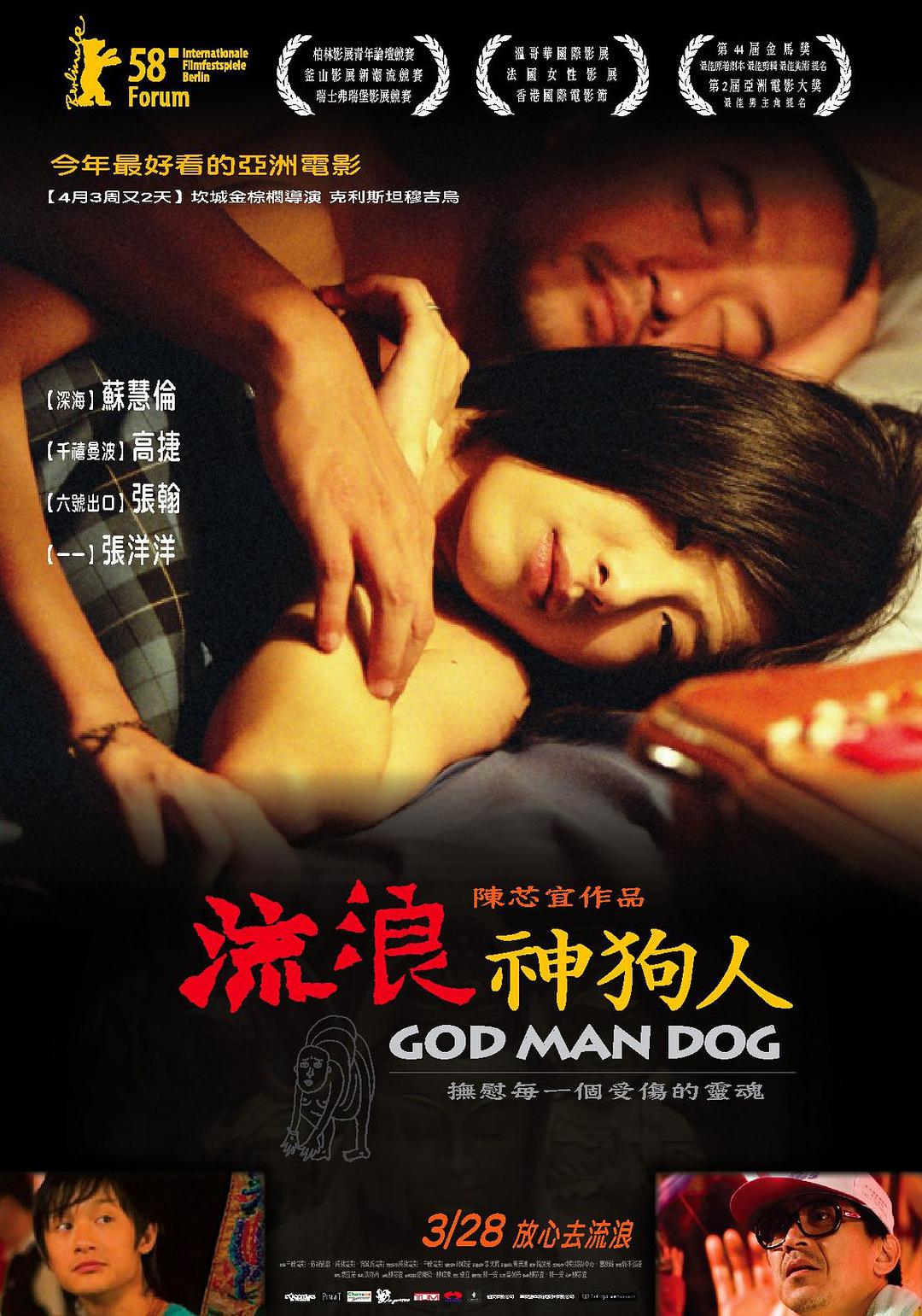
God Man Dog (流浪神狗人, Chen Singing, 2007)

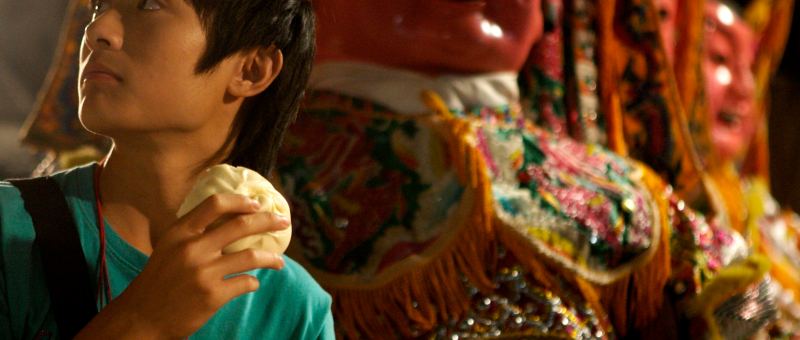
God Man Dog posterEverybody’s looking for something but mostly in all the wrong places in Chen Singing’s spiritually inclined God Man Dog (流浪神狗人, Llàng Shén Gǒu Rén). Lonely and disaffected, Chen’s portrait of contemporary Taiwan is of an island set adrift with no clear path to the future and no reliable guides to follow. Many turn to religion, be it Eastern or Western, while others embrace consumerism or literally fight to find a way out while refusing to let those around them drag them down. Cosmic coincidence does perhaps begin to show them the way, but it’s less a matter of faith than chance as they each find opportunity to refocus and reclaim what it is they really wanted out of life.

Hand model Ching (Tarcy Su) is suffering from postnatal depression after the birth of her first child but her husband, Hsuing (Chang Han), remains detached and insensitive – running off to new age country retreats to avoid the strain of caring for his delicate wife and baby daughter. Meanwhile, an indigenous couple have lost a child of their own and then suffered the departure of both their daughters because of the father’s persistent alcoholism. Their daughter, Savi (Tu Hsiao-han), is living in Taipei with a beauty obsessed friend who’s doing dodgy modelling to pay for a boob job while Savi works hard on her martial arts as a possible path out of rural poverty. A chance encounter brings her into contact with mysterious Buddha bus driver Yellow Bull (Jack Kao) who is saving money to pay for a new prosthetic leg while making a point of rescuing and reviving the many broken and abandoned Buddha statues which seem to call out to him from around the island, adopting a stray child, Xian (Jonathan Chang), in the process.

Everybody here wants something that they aren’t convinced they can have. The upper middle class couple Ching and Hsuing might seem comfortable enough but are filled with spiritual emptiness and feel trapped by conventionality. They’ve started to drift, and the baby far from bringing them together has only forced them further apart in thinly veiled mutual resentment. Hsuing refuses to play any role in caring for his daughter, or in trying to care for Ching whose dangerously deteriorating mental state seems to be receiving almost no support from family or medical personnel even when she tries to ask for it. In desperation she turns to Christianity, creating a further rift between herself and the intensely Buddhist Hsuing (not to mention his fortune telling obsessed mother).

Christianity is also a dominant force in the life of the indigenous couple who have been participating in AA meetings led by the local church in an effort to get their daughters to return though their faith is beginning to wane thanks to constant setbacks and the lingering conviction God has it in for them. Only through an improbable encounter with the Goddess of Mercy sitting beatifically on the back of Yellow Bull’s truck does the drunken father begin to wake up in making a symbolic act of sacrificial recompense in the hope of being forgiven for a transgression he did not perhaps wholly make. Guanyin, apparently, is there for them even if God was sleeping.

The indigenous couple, whose land is being infringed on by those like Hsuing who want to repurpose it to turn the beautiful natural surroundings into man made spas and thereby turn spiritual peace into a marketable commodity, tried to escape their troubles via alcohol and then turned to religion to save them from drink only to find it not quite as supportive as they’d hoped. Then again, kindly Yellow Bull stuffs his fortune telling box full of positive fortunes because, after all, people looking for fortunes are looking for hope so perhaps it’s not so much that Buddhism is “better” than Christianity, as it is that people are basically good and in the end that’s what you ought to have faith in. On the other hand, Savi and her friend end up making extra pennies through a fake dominatrix double act during which the girls rob their sleazy johns in a potentially dangerous piece of societal revenge that is, ironically, her friend’s plan to save money for a boob job to conform to those same patriarchal conventions they were just superficially rebelling against.

In any case, some kind of cosmic force eventually pulls them all together through the intervention of the many “abandoned” stray dogs who run free across the landscape, as does one supposedly million pound pedigree pup after making a break for freedom as the sole survivor of a nasty car wreck. “Freedom” might mean different things to different people at different times, but each of these lonely souls is in a sense trapped by their own sense of disconnection and the anxiety of feeling abandoned by those around them. Dogs, or maybe gods, bring them back together and accidentally reawaken their faith in themselves and each other to send them back out into the world with slightly lighter hearts if in acceptance more than hope.


God Man Dog was screened as part of the Taiwan Film Festival UK 2019. Also available on DVD in the UK courtesy of Terracotta Distribution.

UK Terracotta release trailer (English subtitles)