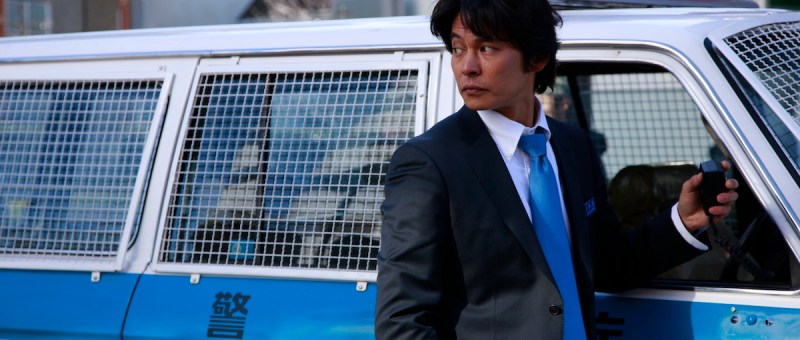
Bayside Shakedown 3: Set the Guys Loose (踊る大捜査線 THE MOVIE 3 ヤツらを解放せよ!, Katsuyuki Motohiro, 2010)

It’s all change at Wangan police station in the third instalment in the Bayside Shakedown series, Let the Guys Loose (踊る大捜査線 THE MOVIE 3 ヤツらを解放せよ!Doru Daisousasen the Movie 3: Yatsura wo Kaihou seyo!). Seven years on from the previous film, many things have changed. Aoshima (Yuji Oda) is now in charge of his team and the precinct is set to move to new purpose-built premises boasting the latest high-tech security systems which will aid them in combating potential terrorism and safeguarding local dignitaries. Even so, the gang will have to deal with some unfinished business from the past before they can fully move on as the circular tale takes us right back to the original film’s villain. 

Following the familiar formula, Motohiro opens with a gag sequence in which Aoshima prepares to give a briefing only it’s not about a case it’s about the logistics of moving offices of which he is in charge and characteristically vowing to do the best job possible. Hindering his progress, however, are two bizarre crimes, the first a bank robbery investigated by his colleague/long-term love interest Sumire (Eri Fukatsu) in which no money is stolen, and a bus hijacking he investigates himself in which the hijackers simply left the scene again without stealing anything. Ironically enough a theft does take place during the move involving three pistols which happen to belong to Aoshima, Sumire, and a new recruit from China, Wang (Kenichi Takito). Soon enough a body turns up on a boat along with Aoshima’s gun sending the gang on the chase for the mysterious thieves. 

The thing we’re constantly told about the new building is how secure it’s going to be, which makes the theft even more ironic, but the truth is that in true franchise style pretty much anyone and everyone is walking in and out carrying moving boxes so nothing is ever really “secure” even in the police station, harking back to the minor villain in the first film who was able to sneak in because he was wearing a fake cosplay police uniform and no one noticed him. Inevitably, this invisible vulnerability eventually comes back to haunt them when the criminals are simply able to steal the manual for the security system and replace it with one of their own to render it unusable to the police later trapped inside the building. Meanwhile approaches to public safety become a matter for debate when it arises that the criminals’ demand is that all of the villains we’ve seen Aoshima arrest so far including psychopathic serial killer Manami (Kyoko Koizumi) who still has a sizeable following online should be released. Counter-intuitively, the police bigwigs are in favour of acquiescing with only Muroi (Toshiro Yanagiba), who has now been promoted to sit at the table himself, objecting on the grounds that it simply isn’t safe to release such dangerous criminals back into society. 

Rather than simply bureaucracy and funding concerns, Bayside Shakedown’s third instalment is more directly critical of the interplay between politics and justice as it becomes clear that the majority of police chiefs care more about public opinion than the law while also mindful of the upcoming general election. Meanwhile the same problem arises with the local police being sidelined by the elites from HQ, a smooth liaison officer Torikai (Shun Oguri) arriving to solve any disputes insisting that the locals be fully respected and allowed to turn their jobs only to turn dark and authoritarian after suffering a catastrophic injury on the job. Once again, Aoshima is forced to consider if his work has real value not only because of the way he’s treated by the cops from HQ but subjected to a healthcare crisis which leads him and many others to assume he’s not long to live. It’s later discovered that he’s been misdiagnosed during his annual checkup, but his boss unethically decides to keep that from him noticing he’s become depressed and lost his mojo, hoping that he’ll be easier to manager but quite the reverse turns out to be true. Again mimicking their previous heart-to-hearts throughout the series, Aoshima perks up after some encouraging words from Sumire in addition to some words of wisdom from the late Waku presented by his rookie nephew and decides to live as if there’s no tomorrow going flat out for justice while caring nothing for his safety. 

Even more than ten years on from the TV series and first big-screen outing, the romance between Aoshima and Sumire still hasn’t quite blossomed despite their respective brushes with death. Many things seem set to change for the Wangan police, the new building acting as a kind of reset while Muroi prepares to move into a more political role and a new, somewhat surprising, local police chief is selected to lead them into a new future just as dedicated to compassionate local policing defined by fairness and justice as they have ever been. 

Trailer (no subtitles)
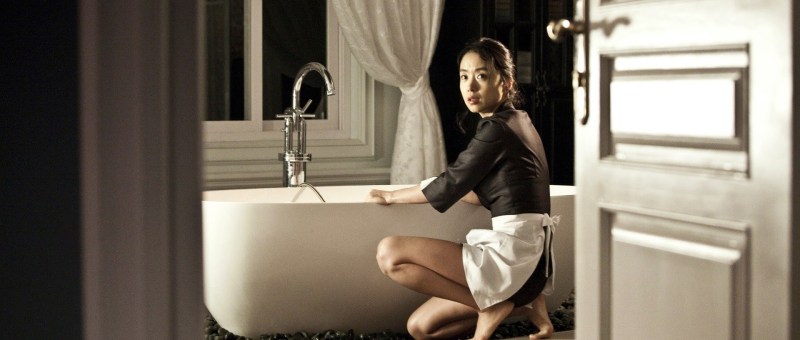
The Housemaid (하녀, Im Sang-soo, 2010)

Kim Ki-young’s landmark 1960 film The Housemaid (하녀, Hanyeo) was a gothic tale positioning the source of its horror in the temptations of an increasingly consumerist society as a moderately wealthy man acquires the means to hire a domestic servant only to give in to sexual temptation which brings about his ruin. Kim’s moralising drama may cast a young woman as a salacious femme fatale, but it also ends with a perhaps surprising coda that reminds the male members of the audience that rules exist for them too and they can’t expect to escape unscathed should they break them. 

Im Sang-soo’s 2010 “remake”, perhaps more accurately described as a re-imagining, updates the tale for the modern day in which a class of super elites has become almost entirely detached from regular society and with it any sense of conventional morality. The heroine, Eun-yi (Jeon Do-yeon), is not a naive schoolgirl but a mature woman once divorced, while the head of the household, Hoon (Lee Jung-jae), is in fact absent for most of the picture which otherwise features only women engaged in accidental class warfare and desperate, internecine fights for survival. 

Im opens, however, with a tense and prophetic scene roving around the night market where Eun-yi is temporarily working alongside a friend while waiting for another opportunity. A young woman hovers over a rooftop railing, eventually falling to her death. Eun-yi is oddly fascinated, asking her friend to come with her to check out the scene on their way home. This odd reaction may fit with later characterisations of her as “childlike”, though otherwise in conflict with constant reminders that Eun-yi is a “good person” despite the potential for corruption offered by the Goh mansion. While Mrs Goh, Hae-ra (Seo Woo), is heavily pregnant with twins and unable to satisfy her husband sexually, he turns to the maid who is much older than she is but also more experienced, earthier, and freer in spirit. Eun-yi is a willing participant in their affair, but is surprised when Hoon leaves her a cheque the next morning as if he were paying her an overtime bonus or merely trying to justify his sexual transgression as a transaction sealed off from his family life. 

Nevertheless, the situation reaches a crisis point when veteran housekeeper Mrs Cho (Youn Yuh-jung ) discovers the affair and suspects that Eun-yi may be pregnant. While as Hae-ra’s mother Mi-hee (Park Ji-young) puts it, affairs are part of the package with a rich husband, a child is an existential threat yet for all her plotting Mi-hee may be overplaying her hand pushing Eun-yi from a second floor ladder in full view of her daughter and granddaughter hoping to engineer if not a death then at least a miscarriage. Victims of this same system of class and patriarchy, Hae-ra and her mother believe they must destroy another woman to ensure they hang on to their position which they only occupy in their relationship to Hoon. 

Mrs Cho, meanwhile, once felt something similar, in essence a turncoat believing that her only possibility lies in toadying for the super rich but now that her son has been made a prosecutor she’s beginning to tire of a life of constant degradation. “R.U.N.S.” is her favourite acronym for describing her existence, “Revolting, ugly, nauseating, and shameless”. Fearing for her safety, she advises Eun-yi not to linger too long in the house, but is finally forced to admit that she feels ashamed in her complicity with the shady machinations of her employers whom she describes as “scary people” willing to act with absolute impunity when it comes to protecting their wealth and position. “Why’d you just stand still and let her slap you like that?” she asks of Eun-yi confronted by the jealous wife, indigent on her behalf but also unable to deny that it’s an apt metaphor for the way she has lived her life trapped in the house of Goh. 

As for the house itself, its fierce modernity makes for a cold home along with its sense of spotless sterility in which everything, and everyone, must have a place. The only source of heat provided is by a raging fire in front of which Hae-ra and her mother plot their “revenge” behind the back of an otherwise emasculated Hoon who is later forced to confront the reality that he is largely without power in this matriarchal household. Im’s camera tilts at these destabilising moments, a degree of unease lurking in the house’s shadowy interiors. Eun-yi wanders around in her white nighty like a living ghost now defined by her complicated status straddling a class divide. Yet she really is a “good person” with a “pure heart”, her desire for revenge largely turning inward but also doomed to fail in that you cannot shame the shameless into recognising their own immorality. Eun-yi never considers digging in and taking over the house herself, while her opposing numbers operate under a misplaced terror of her potential to unseat them. Their ongoing oppression is both modus vivendi and ingrained defence mechanism. 

Yet they are all victims of the same systems of entrenched class privilege and patriarchy that set one person against another driven by fear and desperation. Only Mrs Cho finally has the courage to reject the system altogether by removing herself from it, no longer willing to be complicit with her own degradation. “That’s what these people are like,” Hoon sneers, almost offended but perhaps shaken by Mrs Cho’s quiet revolution in realising he holds no power over those who’ve decided to be free. 


International trailer (English subtitles)

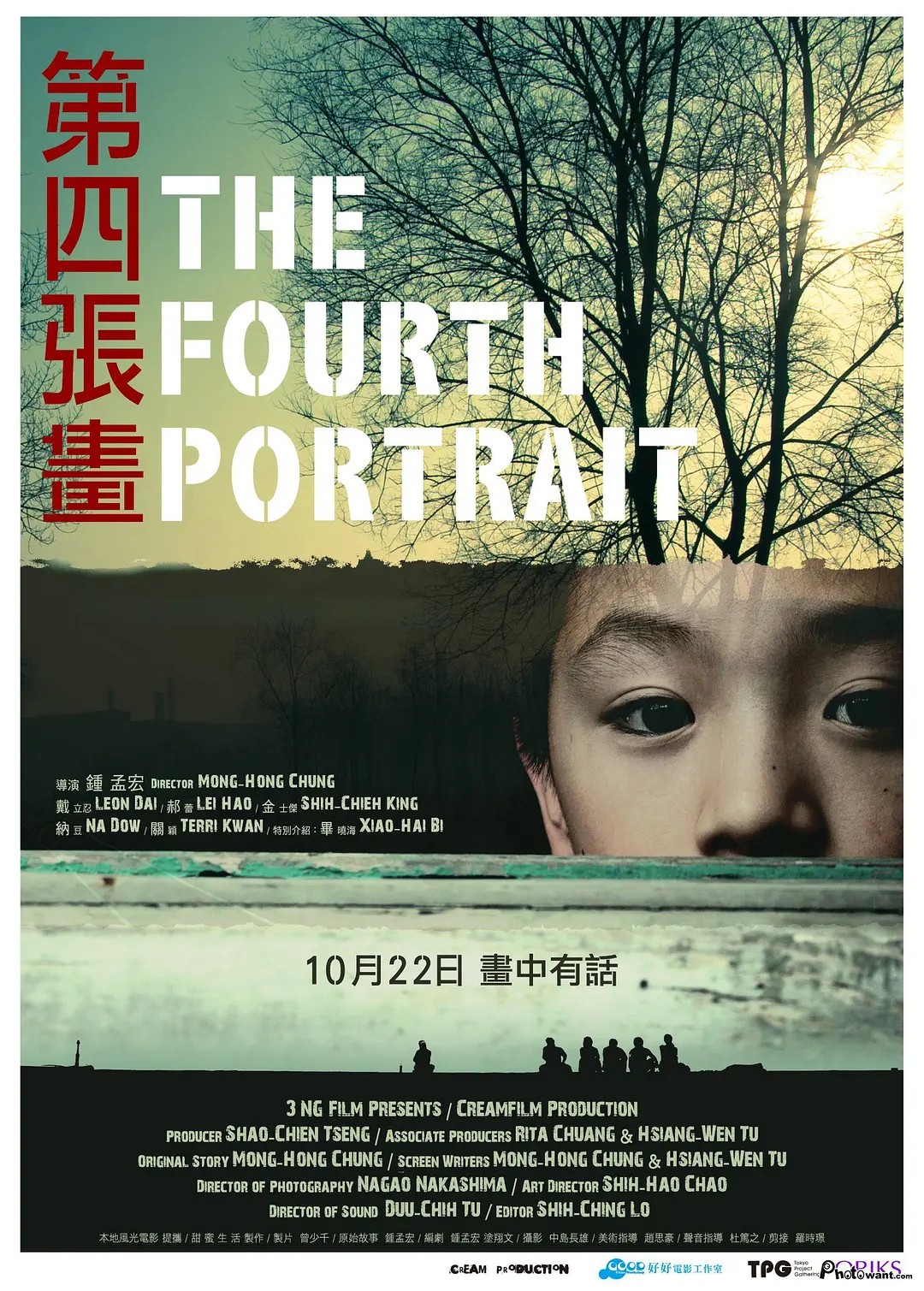
The Fourth Portrait (第四張畫, Chung Mong-Hong, 2010)

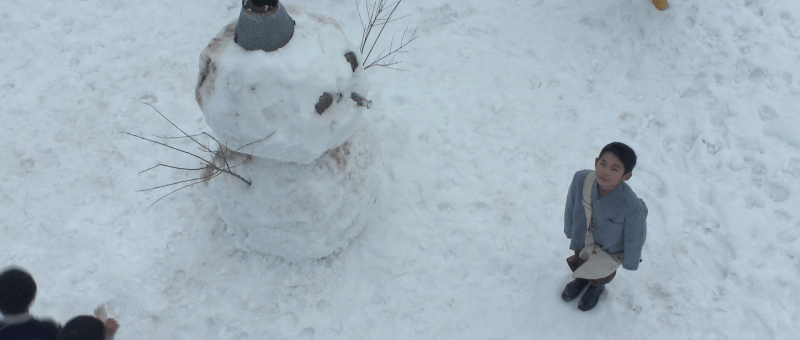
A young boy struggles to forge his own identity while lost amid the legacy of perpetual displacement in Chung Mong-Hong’s whimsical coming-of-age drama The Fourth Portrait (第四張畫). As the title implies, Chung structures his tale around four images as the boy looks for guidance through each of his relationships but perhaps finally discovers only that he is on his own and has only himself for protection yet must find the courage to try and escape even if it causes him pain. 

At 10 years old, young Xiang (Bi Xiao-Hai) is impossibly burdened in the way no child should be as a doctor coldly tells him that his father will soon pass, a nurse instructing him to stay put and let them know when his father is gone. Xiang impassively places a napkin over his father’s face, the undertakers bickering amongst themselves while deciding to do the funeral for free seeing as this child is now all alone and seemingly has no other family. Yet no one comes to take care of Xiang, he has to go home on his own and begins living independently eventually resorting to stealing lunch boxes at school only to be caught and scolded by a grumpy janitor who both tenderly offers him food but then roughly slaps him when he notices the boy is crying. 

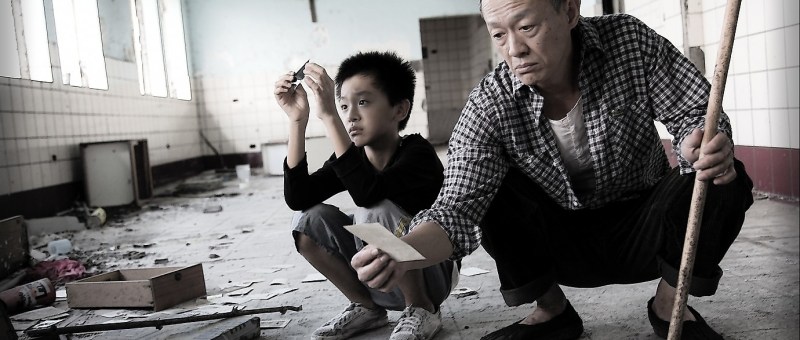
As Xiang is about to become, the old man, Zhang (Chin Shih-Chieh), is also a displaced person having travelled from the Mainland 50 years previously. He takes him to scavenge abandoned buildings meditating on what it is that gets left behind, why it has value to some and apparently not to others. Xiang himself was abandoned by his mother who took his older brother with her but chose to leave him with his father, wondering perhaps if he is valuable or not. Technically if not literally orphaned, Xiang is later reunited with his mother, Chun-lang (Hao Lei), but is then displaced himself, forced to move to the city and into the house she shares with her second husband and infant child. Like Zhang his mother came from the Mainland in search of a better life she did not find and is living with a sense of disappointed futility trapped in her marriage to a dejected and violent man (Leon Dai) while forced to support the family through sex work at a nearby hostess club frequented largely by Mainland gangsters. 

Unanchored and insecure in his new environment, Xiang begins having strange dreams of his apparently absent brother Yi but his attempts to discover the truth about the past only further destabilise the foundations of his new home. His mother cannot fully embrace him because of her guilt over leaving him behind while unable to fully process the reality of what may have happened to Yi too frightened of the truth to risk poking around. His stepfather meanwhile is a haunted man, unable to work and seemingly the primary carer to their small child though neither them are ever really seen paying much attention to the baby. When Chun-lang tells Xiang that he is a stranger in their house, that she is no longer the mother she once was because she has married another man and has another child with him, she does so perhaps partly to encourage him to leave advising him to steer clear of his stepfather in a bid to keep him safe yet blaming herself for all the tragedy which has befallen her accepting it would not have happened if she had not “messed up” her life. 

Perhaps this is why Xiang finds himself bonding with a decidedly strange middle-aged man he meets by accident in a public toilet. “Big Gun” paints himself as something of a big brother figure, suggesting that they can drift together travelling around on his moped. His conduct towards the boy is extremely inappropriate in more ways than one involving him in his life of petty crime, yet Xiang finds in him a sense of acceptance that he doesn’t get from the other adults along with a new sense of independence. Yet Xiang’s illusions are eventually shattered twice over, the first revelation paving the way for a greater loss of innocence in discovering the truth about his brother while the second perhaps leads him to feel that he really is alone, continually displaced, and entirely unanchored in a world with offers little prospect of warmth, affection, or a place to belong. 

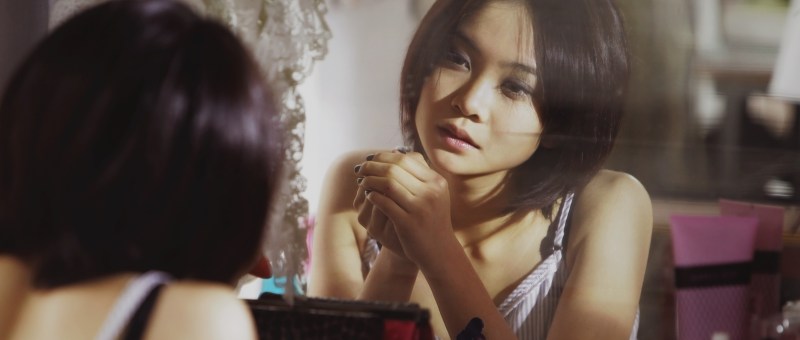
Like Zhang and his mother, Xiang is fails to settle in contemporary Taiwan lost amid a stream of constant dislocations and bound only for endless wandering. Yet staring into a mirror preparing for his fourth portrait he perhaps begins to forge an image of himself informed by those he’s drawn before and giving him the sense of confidence to survive the emptiness of the world around him. Beautifully shot with a lingering ethereality, Chung’s enigmatic storytelling coupled with the whimsical score lend a note cheerfulness to what in many ways is a fairly bleak situation but perhaps reflects the surreality of the boy’s life in his constant quest for belonging. 


International trailer (English subtitles)

Heaven’s Story (ヘヴンズ ストーリー, Takahisa Zeze, 2010)

“When your family’s murdered, aren’t you entitled to happiness?” remarks a bereaved husband trying to move on from tragedy to a similarly bereaved little girl who is determined not to. “I don’t think so”, she coldly replies, dragging him back into a dark world of hate and vengeance. At that time perhaps best known for his career in pink film, Takahisa Zeze’s 4.5-hour epic Heaven’s Story (ヘヴンズ ストーリー) weaves a tale of interconnected hurts born of violence and its legacy, parental betrayals, and irreconcilable loss. The only victory is survival, but it’s a prize none of us will win. The best we can hope for is continuity, and perhaps leaving something more behind us than fear or rage. 

Our heroine, Sato (Moeki Tsuruoka), is orphaned when her parents and older sister are brutally murdered by a disgruntled employee exacting some kind of petty revenge on her father. The killer is later found dead in a hotel room, presumed to have taken his own life. The tragedy is however just one of many. Passing by a TV screen, Sato catches a report detailing the death of her family members and their murderer which is immediately followed by a press conference with a very angry young man whose wife and infant daughter were killed in random attack by a passing drifter who has been given an indeterminate sentence on account of the fact that he was underage and suffered greatly during his childhood. Tomoki (Tomoharu Hasegawa), the bereaved husband and father, vows revenge angrily insisting he won’t ask for the death penalty because he wants the killer, Mitsuo Aikawa (Shugo Oshinari), released as soon as possible so he can kill him with his own hands. Only eight years old, Sato identifies with his rage. The man she wants to kill is already dead and she’s been robbed of the chance of closure through vengeance so vicariously latches on to Tomoki’s quest for retribution, making him something of a personal hero. 

Tomoki’s words were offered in the raw pain of his loss. His reaction is understandable, but as he later says, people started to lose sympathy for him once he called for the killer’s death. As time moves on, he perhaps starts heal, marrying again and having another little girl, starting a new life in a new place which of course does not overwrite his past loss but is a new start. That’s something Sato can’t allow or understand. She feels irrationally betrayed by Tomoki’s decision to leave his loss in the past and move on to a new life. Rocking up at his tranquil island home, she accuses him of forgetting the dead, guilting him into thinking he’s betrayed the memories of his wife and child by not knowing that Mitsuo has been released from prison let alone not having taken his revenge. 

Mitsuo, however, has also attempted to move on. It can’t be denied that he committed a heinous, unforgivable crime, but he is also, in a sense, a victim himself. His mother took her own life when he was 13 because his father was abusive and he carries that abuse with him, which of course does not excuse his crime but might help to explain it. Kyoko (’70s folk singer Hako Yamasaki), a lonely doll maker, is taken by his enigmatic statement that he wants to be remembered by the unborn and begins writing to him in prison, eventually agreeing to adopt him as her son though she is already suffering with the early stages Alzheimer’s. Later in a tense conversation with Tomoki, Mitsuo describes Kyoko as a woman of great warmth and if it were not for her he might perhaps have killed again. Her positive maternal presence gives Mitsuo the sense of anchoring through parental love that he had never had, restoring him towards a more normal kind of existence as he diligently cares for her while her condition continues to deteriorate. 

Time swindles them all. Kyoko desperately tries to remember something she’s forgotten, while Sato is locked into a pleasant childhood memory of walking with her parents to see a newly completed housing estate which seems to be the very embodiment of a post-war utopia, a large green space surrounded by neatly arranged, identical blocks with well appointed family homes piled one on top of the other. The conclusion takes us somewhere similar, only inverted, in the empty shell of a disused danchi, once a home to a bustling mining community now abandoned by the modern era. In the monologue which opens the film, Sato recounts a folktale about a monster who lived in the hills and attacked people, but did so only accidentally in his loneliness and longing to be a part of the world around him, but the people were afraid and so they rejected him and his monstrousness intensified. Tomoki destroys his second family in an internecine need to avenge the first driven by Sato’s demonic need for vicarious retribution, while Mitsuo’s attempt to move into the light is frustrated by an inability to escape his past. All the fear, and hate, and suffering, breeds only more of the same. “Heaven’s Story” may be in many ways the story of violence, but violence is not its resolution. Sato makes a kind of peace with the past, but will also carry that legacy of pain back into the complicated urban world as far from the heavenly vistas of tranquility which exist now only in her memory as it’s possible to be. 


Original trailer (no subtitles)

Dream Home (維多利亞壹號, Pang Ho-cheung, 2010)

“In a crazy city, if one is to survive, he’s got to be more crazy.” according to the opening titles of Pang Ho-cheung’s surprisingly poignant slasher satire Dream Home (維多利亞壹號). In the 10 years since the handover, the average wage has increased by a measly 1% while house prices have risen by 15% in 2007 alone. Sheung’s (Josie Ho) one overriding mission in life is to buy a flat for her family to live in, but it’s clear that her struggles to become a homeowner aren’t the only pressure points in her life in an increasingly capitalistic society. 

As we later discover, Sheung is set on one particular flat because the building it’s in stands on the spot where she once lived as a child before her family was pushed out by rampant gentrification. In essence, she’s just trying to take back what’s hers and restore her family’s sense of dignity and security. A flashback to her childhood reveals her father’s own insecurity in having been unable to secure a larger living space in which she and her brother could have their own rooms while her grandfather, a sailor, longed for a sea view and the sense of an expanding horizon otherwise denied to the family in a cramped Hong Kong council flat. In a touch of irony, Sheung’s father himself worked in construction building apartment blocks he couldn’t afford to live in and in the end it killed it him through exposure to asbestos and other dangerous fibres. 

Sheung works at a bank but is conflicted about her job cold calling account holders to try to get them to buy into dodgy loans neatly echoing the film’s closing moments which hint at a coming economic crash precipitated by the subprime mortgage crisis which will threaten Sheung’s homeowning dream. Her friends think she’s crazy to buy a flat at all, but she’s completely fixated on repairing her broken childhood by taking back her family home and ending her displacement. Meanwhile, she’s in a dissatisfying dead end relationship with a married man which largely takes place in love hotels he sticks her with the bill for and turns up late to only to immediately fall asleep. When Sheung asks him for a loan to help pay for her father’s medical care after the insurance she got for him is voided because he never told her he’d been diagnosed with a lung complaint before she took it out, he tells her to use her deposit fund instead and give up on homeownership because only fools like her would buy in such a volatile market. 

Disappointment in both her personal and professional lives continues to place a strain on Sheung’s fragile mental state that eventually tips her over the edge. Hoping to bring the apartment’s price down, she goes on a murder spree in the building killing it seems partly out of resentment and otherwise pure practicality. There is irony here too, in that she kills her victims with the weapons of their privilege. A cheating husband who comes home unexpectedly after lying to his wife that he’s gone golfing but was actually with his mistress is whacked on the head with a golf club while an obnoxious stoner kid is stabbed in the neck with his bong. Sheung murders a Filipina helper, but also the snooty middle-class woman who employed her by using the vacuum pack machine the helper had been using on her behalf. One might ask if she really needed to kill the helper or the pair of Mainland sex workers in the next apartment, but when it comes to devaluing property prices “massacre” sounds much better than “killing” and so it’s the more the merrier. 

In the end, it’s this city that’s driven her out of her mind with its status-obsessed consumerism and constant sense of impossibility. After her killing spree, she doesn’t even seem very conflicted about selling dodgy loans to vulnerable people not so different from herself while she was so desperately trying to get approval on a mortgage there was no way she could afford despite working a series of other part-time jobs including one selling designer handbags to the kind of wealthy women she resents. Her dream apartment has a view quite literally to kill for, though there’s a sense that Sheung’s dream will always be futile with the same motivations that brought her here leading to the mortgage crisis and economic shock that could eventually take it from her. Bloody, gory, and at times sickeningly violent Pang’s satirical horror show paints contemporary capitalism as the real villain and even in its dark humour reserves its sympathies for the wounded Sheung pushed to breaking point by a pressure cooker society. 


Dream Home available to stream in the UK until 30th June as part of this year’s Odyssey: A Chinese Cinema Season.

International trailer (English subtitles)

Yes or No (Yes or No อยากรัก ก็รักเลย, Saratswadee Wongsomphet, 2010)

An uptight girl from a wealthy conservative family finds herself conflicted on falling for her tomboyish farmer’s daughter roommate in Saratswadee Wongsomphet’s romantic dramedy, Yes or No (Yes or No อยากรัก ก็รักเลย, Yak Rak Ko Rak Loei). Yes or no is in some ways the question each of the heroines find themselves asking struggling not only with their feelings for each other but their respective identities along with stereotypical visions of homosexuality wondering if it’s your appearance that defines you or something less visible deeper inside. 

That’s something doubly true for Pie (Sucharat Manaying), who exasperatedly exclaims that she “ran away from a lesbian” and “ended up with a tom”. As the film opens we see her switching rooms in her uni dorm explaining to her mother on the phone that her previous roommate, Jane (Arisara Tongborisuth), was perfectly nice but had a lot of problems notably her heartbroken sobbing on being dumped by her latest suitor who happened to be a butch lesbian. Pie leaves that bit out in talking with her mother, later revealing that her mum hates anything gay or even androgynous and finds tomboyish women disturbing.That’s one reason why she immediately tries to switch rooms again only to run into Kim (Suppanad Jittaleela) on coming out of the shower. 

For her part, Kim largely rejects the “tom” label and repeatedly reminds Pie she is a girl who happens to have short hair and is dressed in a comfortable fashion. Nevertheless, she continues to experience a degree of hostility based on her appearance, a gang of sexist boys giving up on their cheesy pickup lines while taunting her as she walks past. “She’s more handsome than me” one of them jokes as Kim ignores them with Pie looking on from an upper balcony. Kim isn’t particularly aware of her sexuality either, seeing herself as inherently different from those like Jane who readily identify themselves as lesbians while confused on two levels seeming to simultaneously believe both that Pie cannot be a lesbian because lesbians look the way she herself does and that she is not a lesbian and should not be assumed to be one simply because of her appearance in which she obviously has a point. 

Pie’s animosity towards Kim is originally so extreme that, on being unable to switch yet again, she simply runs red tape down the centre of the room though she has also brought with her much more stuff than simple farmer’s daughter Kim. The resentment only really eases once she comes to appreciate that Kim has unexpected skills such as the ability to run up delicious meals in only a rice cooker. In a running gag, the supposedly masculine Kim is often afraid of childish things such as cockroaches and thunder storms, while Pie declares herself fearless but is actually deeply afraid and carrying a degree of internalised shame while confused by her changing feelings for Kim. Though they continue to grow closer, not only pulling up the tape but pushing their beds together, each continue to hold back Kim trying to figure out her identity and Pie preoccupied with her mother’s homophobia. While Pie is jealous of Jane who is also in love with Kim, Kim contends with Pie’s family friend, Waen (Soranut Yupanun), her mother’s chosen suitor and the symbol of the lingering heteronormativity that overshadows their relationship, 

Then again, there may be an uncomfortable emphasis placed on traditional gender roles in which the tomboyish Kim is cast as the man, eventually trying to cement her relationship with Pie by approaching her mother for permission to date her despite knowing of her animosity to what she labels “abnormal sexuality” having taken one look at Kim on campus and exclaimed “good thing you aren’t like that or I’d be dead by now”. Kim’s farmer father and his male best friend (?) meanwhile, are far more understanding instantly welcoming Pie when she, essentially, tries to do the same thing seeking Kim’s forgiveness for having faltered in the moment and failed to stand up to her mother. While there might also be an unpleasant stereotype in Jane’s emotional instability which later leads her to the point of self harm in the depths of her unrequited love, and the gang’s gay male friend is depicted rather shallowly little more than as sassy and effeminate, Yes or No nevertheless does its best to navigate the difficult path on which the women find themselves figuring out their feelings for each other and perhaps discovering the only important question is is this love, yes or no. 


Yes or No screened as part of this year’s Queer East. It is also available to stream in many territories via GagaOOLala.

Original trailer (English subtitles)

When Love Comes (當愛來的時候, Chang Tso-Chi, 2010)

“I like the feeling of home” the conflicted heroine of Chang Tso-Chi’s When Love Comes (當愛來的時候, Dāng Ài lái de Shíhou) eventually admits, finally coming to an understanding of her admittedly unusual family even if not, it seems, fully aware of her place within it. A chronicle of displacements, cultural, familial, adolescent, and romantic, When Loves Comes is also in its own way an ode to female solidarity as well as a coming-of-age tale as its feisty young heroine gains the courage to step into herself while preparing for the role of matriarch in accepting her responsibility towards those around her. 

About to turn 16, Laichun (Lee Yi-chieh) is a rebellious teenager who enjoys scandalising her heavily pregnant mother by walking out in skimpy outfits and elaborate makeup. So displaced is she within her own family, that she is not invited to meet her new baby brother at the hospital but is asked to stay home looking after recently arrived uncle Jie (Kao Meng-chieh), her father’s younger brother who has learning difficulties and has come to live with them following the death of his grandmother. Laichun, however, goes out anyway, meeting her as we soon discover no good boyfriend Zongfu (Chris Wu Kang-ren) in a love hotel. Like any teenager, Laichun thinks she’s invincible but she’s also incredibly naive or perhaps merely in denial. By the time she realises she might be pregnant, it’s already too late for an abortion and Zongfu has vanished into thin air. 

“It’s because you’re a girl” a postman with whom Laichun had been engaged in an elaborate flirtation unironically tells her after her impassioned monologue railing against the unfairness of her situation, that Zongfu has vanished while she is blamed for everything, branded a “slut” simply for embracing her sexuality. Her pregnancy places a further strain on her familial relations, though she finds an unexpected ally in her emotionally austere second mother, her father’s first wife Xuefeng (Lu Hsueh-Feng). As we gradually come to understand, Laichun’s father “Dark Face” (Lin Yu-Shun) hailed from rural Kinmen and married into Xuefeng’s family. But Xuefeng was not able to have children of her own so she allowed Dark Face to take a second wife, accepting Laichun’s mother, former gangster Zihua (Ho Tzu-Hua), into their family. 

“I was scared to be responsible for him” Dark Face later admits of his brother, revealing that he left his island home in secret, abandoning Jie to their grandmother who cared for him until the day she died. Dark Face indeed struggles to understand Jie, often frustrated by quirks and frequent meltdowns, cruelly tearing up his drawings somehow incensed as if refusing his brother’s attempt to communicate with the world around him. Jie has been patiently filling a jar with pennies because his grandmother told him to save up for a wife, but like Laichun remains an outsider in the family with only Xuefeng willing to include him. Yet faced with her impending maternity it’s Laichun who eventually becomes his primary carer, patiently taking him to the bank to pay in all his pennies, embracing her responsibility as a member of a family. 

“I like the feeling of being protected”, Laichun had said, “so why is it that I end up looking after everyone else?” only figuring out later that perhaps that’s because they’re sometimes the same thing. Gaining a sense of confidence from her father who reassured her that “you can face whatever comes along” she begins to step into a maternal role, emerging with a new respect for each of her mothers and for the complicated yet functional unit which is her unconventional family. Chang both begins and ends with a birth, taking place on the same spot behind a screen in the family restaurant as the family is first destabilised and then repaired by its new additions. In the opening scene Laichun had been told off for flirting with a man in the family’s restaurant who told her he was unafraid of the “unlucky” table because he worked as a mortician only to get run over on his way out. At the conclusion she meets him again along with his wife who just happened to be the woman who was driving the car that hit him. Not so “unlucky” after all. Life is chaotic and unpredictable, sometimes it presents you with a problem that’s really a solution. “I really very much like the feeling of sunlight” Laichun affirms, no longer so worried about the dark skies, now more assured in herself and her family as she prepares to welcome a new life that anchors her to the old. 


When Love Comes streams in the UK until 27th September as part of the Taiwan Film Festival Edinburgh.

Original trailer (English subtitles)

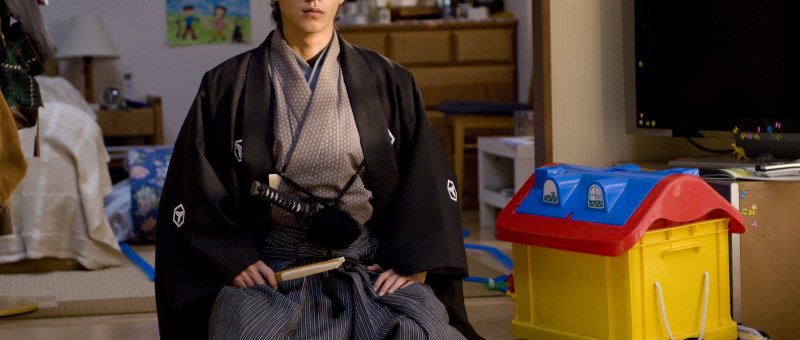
A Boy and His Samurai (ちょんまげぷりん, Yoshihiro Nakamura, 2010)

Boy and his samurai poster 1Edo/Tokyo – what difference can a name make? A lot, it seems, but then perhaps not so much as you’d think. “Edo” was the seat of power in Japan from 1603 until it was renamed “Tokyo” during the Meiji Restoration, heralding a brand new era of modernity following more than 200 years of self-imposed isolation. Logically, there must have been people who went to sleep in Edo and woke up in Tokyo, but most of them didn’t nap for nearly 200 years. The hero of A Boy and his Samurai (ちょんまげぷりん, Chonmage Purin) didn’t exactly nap either, but he’s fetched up 200 years in the future, which, you have to admit, is very disorientating.

Divorced single mother Hiroko (Rie Tomosaka) is late getting her 6-year-old son Tomoya (Fuku Suzuki) out of the house and on his way to school so she’s less than interested when he suddenly stops in the street to stare at a severe man in samurai dress standing outside a supermarket. Assuming it’s some kind of advertising stunt, Hiroko drags her son away, but the man turns up again later wandering around their apartment block and seemingly very confused. Hiroko tries to help him, but he is extremely rude and intimidating, eventually demanding to be taken back to her apartment almost at sword point. Nevertheless, once everyone has figured out the man, who says his name is Kijima Yasube (Ryo Nishikido) and he’s a samurai retainer, is either quite mad or a time traveller, the trio being living together and trying to bridge their very different social values.

Those values have obviously changed a lot, but in many ways not enough. Hiroko has a regular job at an advertising agency but is disrespected by some of her colleagues because she can’t work overtime and has to leave early to make sure someone picks up Tomoya. We learn that the reason she divorced her husband two years ago is that while he pretended to be modern and progressive, he was unwilling to share his portion of the domestic burden and secretly wanted his wife to quit work and look after the house despite superficially encouraging her with her career. Hiroko figured it made no difference if he was around or not, so she left him and took Tomoya with her. Hiroko likes her job, but working also reinforces her individual identity (even if blending into the corporate) aside from that of wife and mother which has all too often been all that a woman is in a rigid and conformist society.

Indeed, when Yasube first arrives he adopts a superior tone and refers to Hiroko only as “woman”, viewing her as necessarily inferior by reason of sex while also reasserting himself as a samurai communicating with someone he assumes to be of the lower orders. Yasube is stunned to learn that Hiroko has a surname – a reminder that those of the lower orders did not (officially) have surnames until the Meiji Restoration. He now thinks she must be very noble, adopts a suitably humble tone, and resigns himself to accepting her hospitality in the absence of other options. He can’t get his head around her family situation or process the various motions towards sexual equality the modern world has produced. To him women manage the house and men protect it from outside. He finds Hiroko’s desire for independence strange and this new world uncivilised.

Nevertheless, he decides to give the Tokyo way a go by stepping briefly beyond himself – in return for room and board, he’ll effectively become Hiroko’s “wife”, managing all the domestic chores while she concentrates on her career. Yasube finds a strange affinity for domesticity, quickly getting to grips with white goods and taking recipe notes from cooking TV (to write them down with ink and a brush using classical Japanese script). Despite never tasting them before, he finds himself a natural baker providing sweet treats for all. However, Hiroko perhaps disappoints herself by accidentally slipping into the role of workaholic salaryman, suddenly embracing the art of overtime and leaving everything at home in the capable hands of Yasube without really considering his feelings even if he never seems to resent it.

Trouble brews when Yasube gets the opportunity to build a career of his own as a pastry chef. Hiroko, true to her word, is encouraging and obviously wants to give him the opportunity to fulfil himself, but the same situation recurs – Yasube becomes obsessed with his professional development leaving little Tomoya brokenhearted and missing his surrogate dad. The problem isn’t so much gender roles as a reluctance to fully commit by agreeing to share domestic responsibilities equally in recognition of equal commitment to a mutual endeavour. Then again, Yasube disappoints – his Edo ethics reassert themselves. he answers Hiroko’s pleas that he spend more time with Tomoya by suggesting she quit her job so he won’t be lonely while his wages can support them as a family. He thinks he’s saying something nice, confirming his loyalty to them as a father figure who will protect and provide, but it’s the wrong the thing to say and only goes to show that his “ancient” way of thinking is sadly not quite archaic enough.

Likewise, his old-fashioned parenting style of fatherly authority advanced with shouts and stares would likely not be approved by most today but it does uncomfortably seem to be accepted by the film, as if Tomoya needs male parental input rather than just benefiting from having a mum who’s less tired and stressed out for having someone to share her life with. He does, however, soften on exposure to Tokyo liberality, willingly embracing modern equalities in realising that there’s nothing wrong with a man supporting a woman and a child in ways other than the financial even if he eventually goes back on it when presented with the opportunity to reassert his male pride as a provider, declaring that domestic matters “no longer concern” him now that he has “other duties”. “Tokyo” still has a ways to go (where doesn’t?), but it’s moving in the right direction even if there are some who are content to be slow in catching up.


Original trailer compilation (no subtitles)

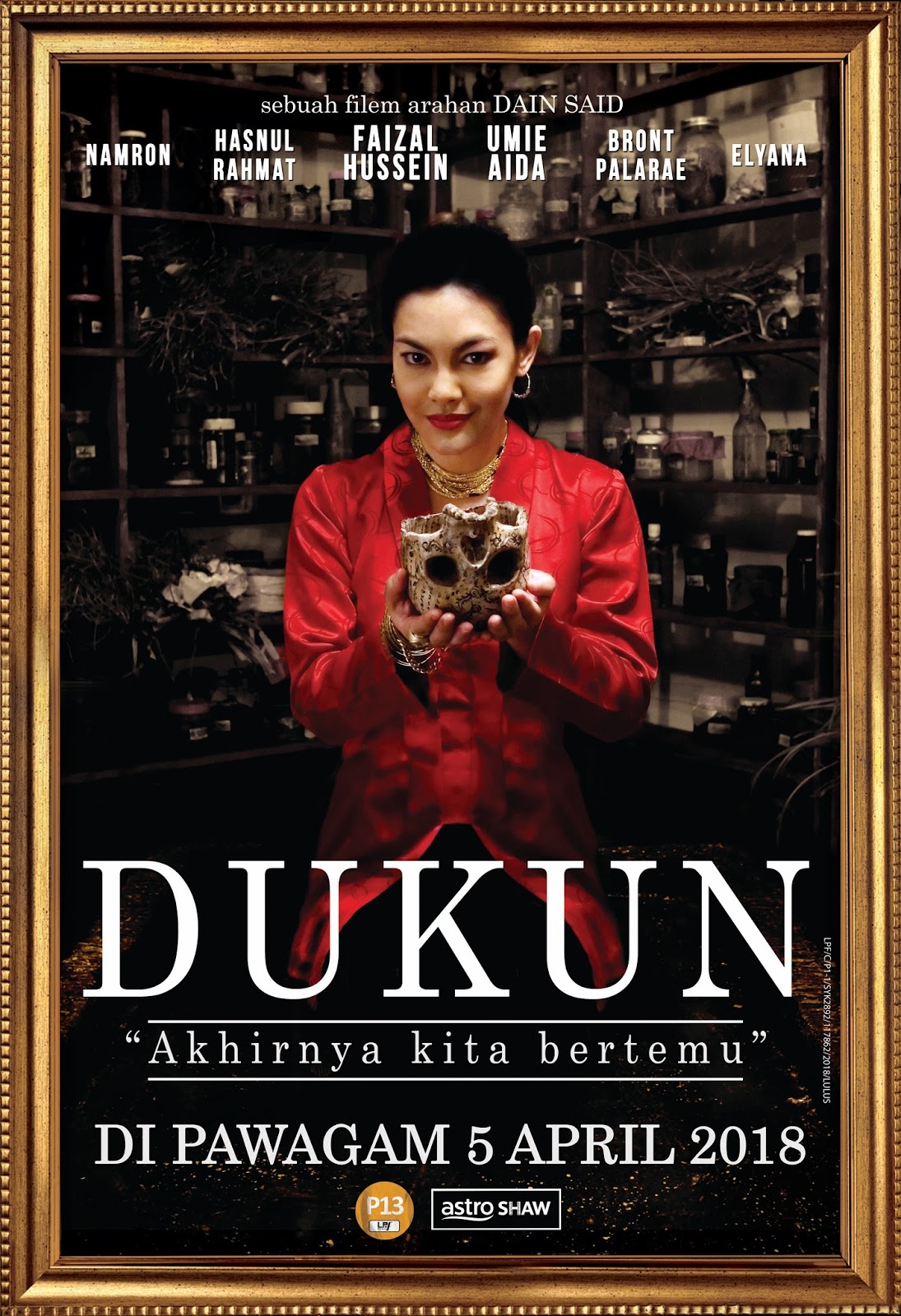
Dukun (Dain Iskandar Said, 2018)

Dukun posterInspired by a notorious real life crime, Dain Iskandar Said’s Dukun proved too controversial Malaysia’s censors and is only now reaching cinema screens after languishing on a studio shelf for the last twelve years. It arrives, however, alongside a number of similarly themed East Asian horror films which pit ancient “superstitions” against “respectable” religions and, unlike many, broadly comes down on the side of Islam which perhaps makes the fact that it was banned a little surprising. Then again, as a lawyer points out midway through the unconventional femme fatale’s murder trial, there are many who believe in “black magic” and perhaps faith is not enough to hold off the overwhelming supernatural dread of incomprehensible otherworldly forces.

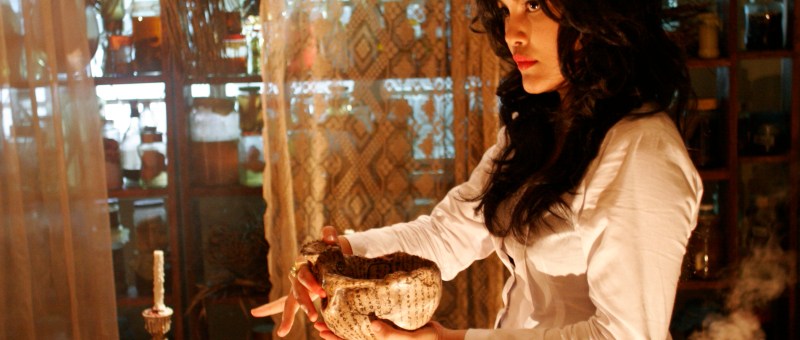
Said opens with the conclusion as Diana (Umie Aida), the “gifted” shamaness and glamorous nightclub singer, dolls up in a beautiful ballgown to be sure of making an impression at her own hanging. Dialling back a little, the dismembered body of a businessman is discovered with evidence that suggests a ritualised killing. Meanwhile, veteran lawyer Karim (Faizal Hussein) is desperately searching for his 17-year-old daughter Nadia (Elyana) who ran away from home after an argument. Fearing Nadia has gotten herself mixed up with drugs, Karim hopes to get an old police contact to help him keep tabs on new arrests but in return he finds himself agreeing to defend a difficult client who has already rejected all 23 public defenders put in front of her. Diana argues that the businessman died as a result of a ritual intended to make him invincible because he didn’t listen to her instructions and the spells didn’t work – his death, therefore, is not her “fault” but the unfortunate consequence of improper respect for shamanistic practices.

Dukun’s banning is apparently not so much down to a direct confrontation of Islam and shamanism, but the sensitivity surrounding the real life case which inspired it. In 1993, former pop-singer Mona Fandey, who had rebranded herself as a top shaman catering to the rich and famous, was arrested for the murder of a politician whose dismembered body was eventually discovered in her storehouse. As the investigation progressed, more bodies were discovered as was a lengthly paper trail detailing a shopping spree which even included a face lift. Unsurprisingly given all the grizzly details and celebrity connections, the trial was a media sensation which Fandey milked for all it was worth.

Though the narrative and facts of the case have obviously been fictionalised, the comparisons are obvious – the accused shamanesss is even called “Diana” which was the title of one of Fandey’s unsuccessful albums. Actress Umie Aida perfectly mimics Fandey’s deluded fame hungry creepiness but also adds the oddly alluring quality of a film noir femme fatale as she shifts between elegant nightclub singer and all powerful practitioner of black magic. Diana plays to the gallery, attempts to charm the court, and acts as if her trial is just another show conducted in front of her adoring fans while preparing herself for the grand “finale” which, unbeknownst to the legal system, may all be a part of her greatest work of ritual magic.

Meanwhile, Karim attempts to defend her with a keen application of the law, pitting “irrational” ritual against state sponsored logic which itself is perhaps largely under the sway of conventionally religious thinking. Karim’s wife disappeared ten years previously, leaving him to raise his daughter alone only to have her disappear too. Diana seems oddly familiar with Karim’s difficult family circumstances and offers to “help” him in return for delivering makeup and a mysterious object from her apartment. Karim is desperate enough to accept, but in accepting may have already betrayed himself even if he’s careful to also consult his local Imam as to the best course of action.

As in the all best supernatural noir, darkness is coming for Karim. Engulfed in an inescapable spiral of dread and despair, Karim finds himself sinking ever deeper in his quest to rescue his daughter little knowing that they are all involved in an ancient conspiracy over which they have little or no control. You can’t play around with the supernatural, Diana counsels, but the supernatural may very well play around with you.


Dukun screens as part of the New York Asian Film Festival 2018 on 13th July 6.15pm

Official trailer (English subtitles for dialogue, contains disturbing imagery)

Secret Reunion (의형제 / 義兄弟, Jang Hoon, 2010)

secret reunion posterStrangely enough, North Koreans in South Korean films are often marked by a naive nobility, filled with all the “goodness” that is otherwise so absent from the hypocritical egalitarianism of the nation that raised them. Jang Hoon’s Secret Reunion (의형제 / 義兄弟, Uihyeongjae) is a perfect example of the ongoing trend in its direct contrasting of a pure hearted North Korean operative betrayed by his comrades, and the cynical NIS officer who turns to a shady career in the private sector when a botched operation gets him fired. An interesting look at North/South relations, Secret Reunion is equal parts buddy cop comedy and probing thriller but places the heartfelt connection between its perfectly mirrored protagonists firmly at its centre.

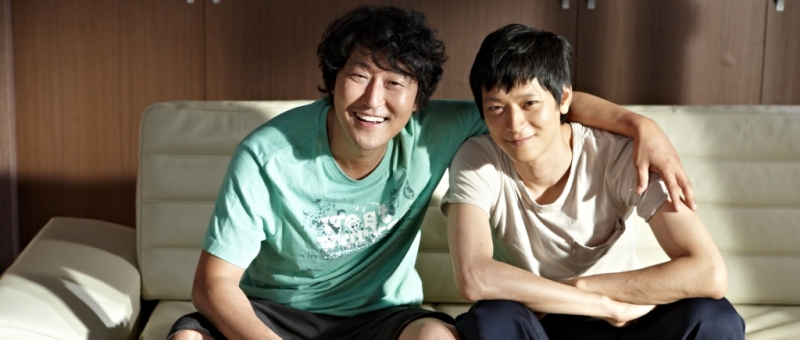
North Korean agent Song (Gang Dong-won) reads a bedtime story to his unborn child over a telephone whilst preparing for an operation south of the border, while NIS officer Lee (Song Kang-ho) bickers with his wife about their daughter’s education. Song, along with another agent, Tae-soo (Yoon Hee-seok), is to meet a top North Korean hitman known as Shadow (Jeon Kuk-Hwan) and assist in his mission to take out a prominent North Korean defector. Horrified by Shadow’s abrupt murder of the target’s wife and mother-in-law, Song draws on Shadow in defence of the man’s young son whom Shadow has also marked for death and places himself in the firing line in the process but is “saved” when Lee and the NIS turn up following a tip-off from Tae-soo who has betrayed them. Lee and Song briefly catch sight of each other but the operation is a bust which allows both Shadow and Song to escape whilst causing mass civilian casualties from stray police bullets and general panic.

Six years later Lee, fired from the NIS and divorced by his wife, spots Song again during his shady line of work as a finder of missing persons which often sees him tracking down runaway mail order brides from Vietnam. Unable to go home after being branded a traitor, Song is living as a casual labourer under a false South Korean identity. Unbeknownst to Lee he recognises the NIS agent but is unaware Lee has recognised him, especially when he offers him a job at his “company”. Song, intrigued, accepts in the hope of getting enough money together to bring his family to the South while Lee is hoping Song will lead him to Shadow and path back into the NIS but despite their best efforts the two men begin to develop a deep and warm understanding of each other even whilst working at cross purposes.

Song and Lee are indeed mirror images. When we first meet Song he’s eagerly embracing his role as a father and lamenting the fact that he cannot be with his pregnant wife while promising to be home soon. Lee, by contrast, argues with his wife over the phone and abruptly hangs up to go back to police business. Neither man is able to have the close and loving relationship with their daughters they would like – Song because he cannot return home and worries for the safety of his family, and Lee because his wife has remarried and moved to England. Lee’s loss of family is a personal failure first and foremost, but also a consequence of the botched operation in which Song escaped – hence Lee’s desire to capture Song is also part payback for ruining his life, but one which is frustrated by his gradual awakening to Song’s uncomplicated pureheartedness and identification with his own separation from his wife and child.

Song’s nobility is used against him by the heartless North Korean hitman, Shadow, who decries the “pathetic Southerners ruled by emotion” and warns Song that the “Great Nation cannot tolerate someone so fragile” when taken to task over his heartless murder of the defector’s South Korean family members. Lee, the NIS agent, resorts to barely legal immorality when stripped of his authority in becoming a finder of missing persons. The work largely involves tracking down trafficked women who’ve been tricked into coming to South Korea to marry rich and handsome men but often find themselves shackled to cruel husbands who regard them as slaves to be beaten and tortured. Yet Lee sends them back, knowing exactly what will happen to them when he does – something which Song refuses to allow. Despite coming from a brutalising regime, Song has retained his innate humanity, battles injustice and (tries to) protect the weak where Lee, a police officer in a (recently) democratic developed nation, quips about the nature of capitalism being learning to find happiness in stealing the wealth of others and is content to make himself complicit in a system he otherwise does not condone.

Despite their differences the two men come to see themselves in the other, discovering the better qualities of an “enemy” and becoming conflicted in anticipating the day when they will eventually have to confront the secrets they’ve been keeping. Jang keeps the tension high as Lee and Song play each other while Shadow dances around in the background, presumably playing a game which is entirely his own. Nevertheless the bonds of brotherhood between North and South are firmly repaired in Lee and Song’s eventual transition to blood brothers, restoring their severed familial connections whilst building and strengthening new ones.


International trailer (English subtitles)