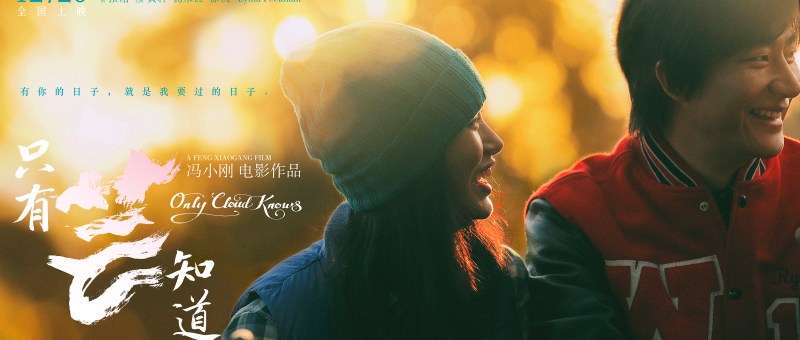
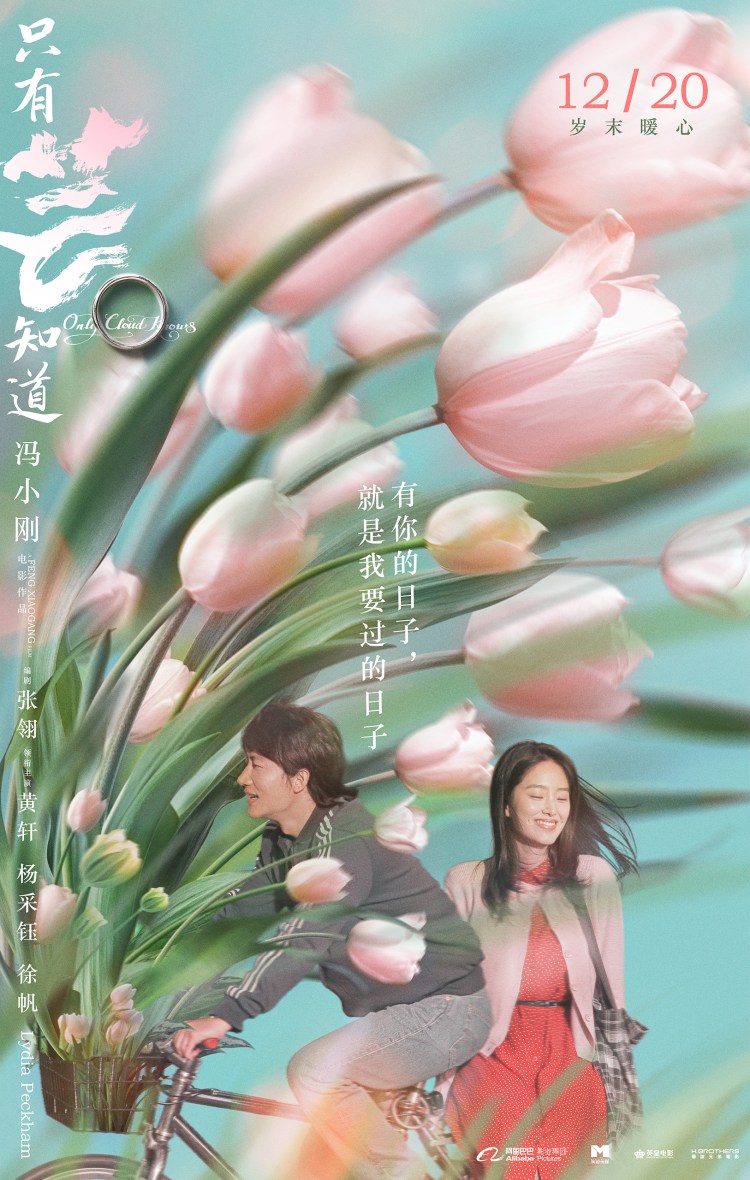
Only Cloud Knows (只有芸知道, Feng Xiaogang, 2019)

930161b9ca654d4cac056b550c6d0542If contemporary Chinese cinema has one message, it’s come home to China. Feng Xiaogang, however, has never been keen to go with the flow for all of his occasionally problematic affection for the nation as it was before the ‘80s reforms. A co-production with New Zealand, unabashed romantic tearjerker Only Cloud Knows (只有芸知道, Z Yǒu Yún Zdào) seems primed to speak directly to the diaspora audience, asking if perhaps the meaning of the word “home” has changed, less place than people and, therefore, infinitely portable.

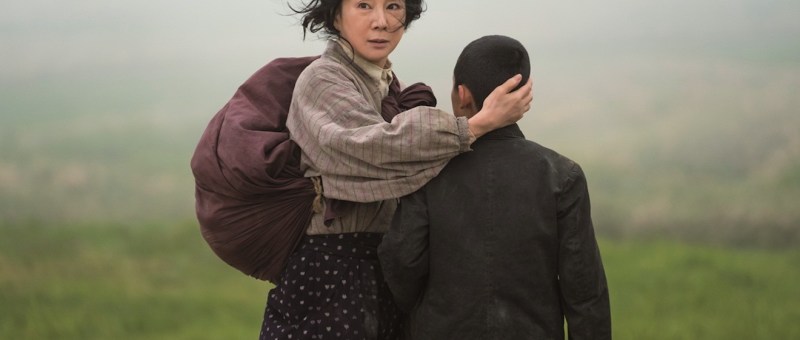
In the present day, recently widowed Dongfeng/Simon (Huang Xuan) prepares to say goodbye to his late wife, Yun/Jennifer (Yang Caiyu), by travelling back through their long years together facing many ups and downs as they strove to make a life for themselves in the laidback greenery of the New Zealand countryside. Dongfeng travels first to the small town where they started a humble restaurant, cooking the kind of food Westerners expect rather than the authentic Chinese dishes they fear no one will try, and using their English names “for convenience”. While there they employ a friendly waitress, Melinda (Lydia Peckham), who is something of a free spirit saving up money to travel to distant lands, touring Asia and Africa.

Though they are blissfully happy, life is not without its difficulties. Working so hard to make the restaurant a success leaves them with time for little else and wondering if they’ve perhaps lost sight of something important. Dongfeng no longer plays his flute, and Yun worries that he’s sacrificed a part of himself to provide for her, becoming a slightly different person in the process. Obsessed with blue whales, Yun craves protection and security, the kind of things many associate with a building a stable home, but she also yearns for freedom and for something more than ordinary happiness. Minor resentment creeps in born of that central contradiction. Dongfeng wants to give Yun the kind of security he assumes she needs by betting everything on the restaurant, but all she really wants is him.

Nevertheless, protection and security were the things which attracted her to Dongfeng in the first place as symbolised by her obsession with blue whales. Somewhat improbably, his hotheaded decision to start a fight with a man who cut them up in a carpark and then insulted Yun only endears him to her further and also gets him a commendation from a local policeman who even tells him he might be cut out for life on the force, but to ease back on the violence because New Zealand is a peaceful place. There are things, however, that one cannot be protected from and as much as fate gives it also takes away. Yun craves protection because she feels insecure in an existential sense, convinced that she is “unlucky” and originally reluctant to agree to Dongfeng’s proposal in fear that she is destined to make him unhappy.

Sadly, that prediction eventually proves correct though through no fault of her own. Lucky in love, the couple face their share of hardships from an inability to start a family to losing beloved pets and dealing with illness, but there’s no joy without sadness and if your time together is shorter perhaps it is equally sweet. In his opening monologue, Dongfeng muses, quoting poetry, that time moved slower in the past and there was only enough of it to love one person before telling us that his life has been about one woman. Only Cloud Knows is the story of how he learned to say goodbye, but also of a 20-year love that endures to transcend time.

Apparently inspired by the true life love story of one Feng’s friends and collaborators, Only Cloud Knows has a rare kind of authenticity in its deeply felt romance which somehow seems all the more real for its clichéd genesis. Foreshadowings of partings echo throughout, reminding us that all love ends one way or another and it’s the ones left behind who mind it most, but rather than dwell on the maudlin, Feng shows that life goes on even in the midst of heartbreak. Houses change hands, old owners with teary eyes making space for bright-eyed youngsters full of hope for the future, while those who are leaving bequeath their unlived years to those they love with hopeful generosity. What Dongfeng discovers is that home is where the heart is, even if the heart is forever in the past.


Currently on limited release in US/UK cinemas courtesy of China Lion.

Original trailer (English subtitles)

The Laundryman (青田街一號, Lee Chung, 2015)

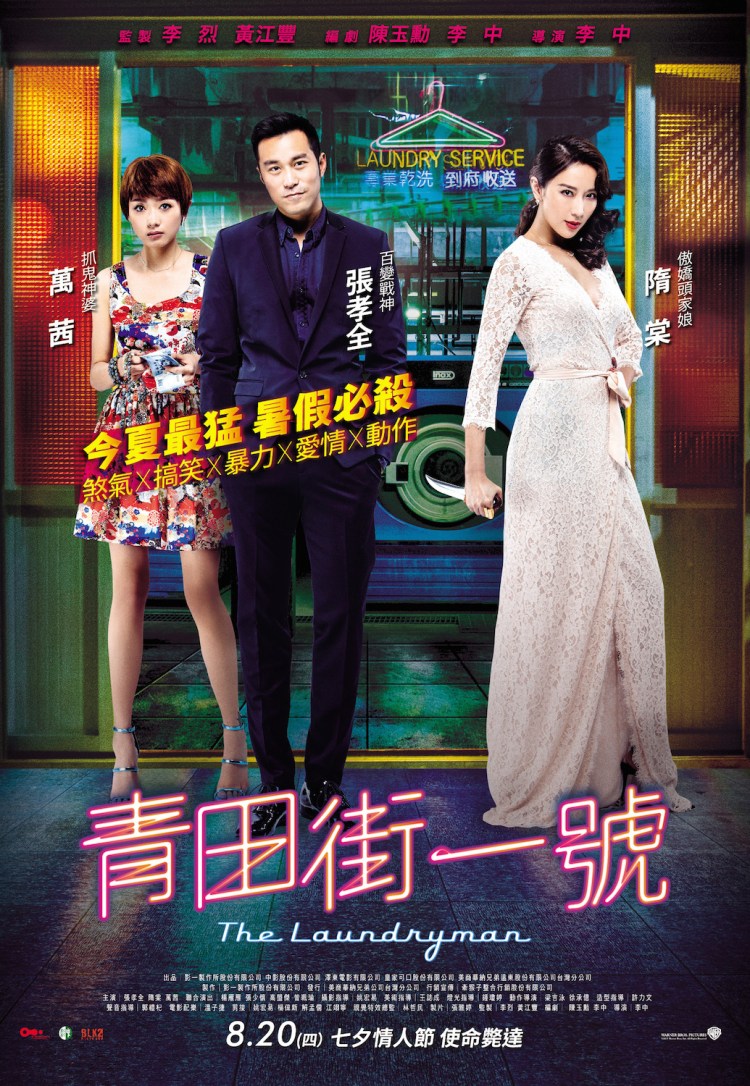
青田街一號_主海報A_直式_有贊助_OLCould you, should you, attempt to wash away life’s “stains” by erasing them? The hero of Lee Chung’s The Laundryman (青田街一號, Qīngtián J Yīhào) is engaged with just that in his clandestine occupation in which he works as a kind of “cleaner”, smoothing the wrinkles out of life’s little problems for the monied and unscrupulous. Yet he finds himself “haunted” by his crimes, accused by those he so casually dispatched without asking why, and eventually forced into a reexamination of his life and work.

Known only by the cryptic codename “No. 1, Chingtian Street” (Joseph Chang Hsiao-chuan), our hitman is one of many working for the mysterious A-gu (Sonia Sui Tang) at her family laundry which she runs as a cover for her stable of assassins, claiming that they merely clean the stains from people’s lives rather than their clothes. A-gu’s methods are complex and exacting. Picking up concerned citizens in the street, she guides them towards her services before Chingtian or one of his colleagues inserts themselves into their target’s daily routine, knocks them off in a quiet sort of way, then brings the body “home” to be “laundered”.

The snag is that Chingtian has recently become plagued by the spirits of those he’s killed. Three of them, to be exact (and an extra one he didn’t off but has started following him anyway). Traditional therapy proving no help, A-gu sends Chingtian off to see Lin (Regina Wan Qian), a pretty psychic, despite affirming that all of this is some weird thing going on with Chingtian’s head rather than genuine paranormal activity. Lin, spotting his ghostly followers right away, explains to Chingtian that they most likely have unfinished business – i.e. finding out who wanted them dead and why. There is, however, a little more to it than that as a further trail of death begins to linger behind Chingtian that leads back to a dark and repressed memory of his youth.

Despite its whimsical tone, Lee’s drama leans heavily into the darkness in asking why it is someone might decide to pay to have someone else killed. The answers aren’t the ones you’re expecting. No business disputes or political machinations, only frustrated loves and loneliness. A nerdy young loner falls for the larger lady from next-door and is horrified to realise that her boyfriend beats her to the point at which she has begun to consider suicide as a means of escape. He wants to save her, and after all the world might be “better off” without the violent boyfriend, so he gives in to A-gu’s alluring offer to have the guy offed (for a small fee). Meanwhile, another mark decided on his course of action out of an excess of love, or to put it more pointedly, its dark side as he became increasingly convinced he could not live up to its expectation and determined to free himself of the burden, damning himself further into a downward spiral of self-destructive humiliation.

A-gu’s life philosophies lean to towards the callous with all her talk of “cleaning” and affirmations that “useless people should be destroyed”, but as Lin points out it’s quite something else to bump off a lovely older couple – some might even call it heartless. Heartless is what Chingtian has been raised to be, so his recently reawakened humanity is quite a problem. Caught between A-gu who alternates between something like possessive mother and femme fatale (which is just as strange a dynamic as it sounds), the pixyish Lin, and later the dogged policewoman Yang (Yeo Yann Yann) who’s picked up on a trail set down for her to find but followed it further than intended, Chingtian is forced to confront himself and his past, in a sense putting his psyche on a spin cycle to reverse a lifetime’s worth of brainwashing and remember who it is he really is.

Strangely warm and fuzzy, Lee’s whimsical world of colour is a perfect mix of film noir fatalism and fairytale promise as Chingtian walks a precarious path towards reintegration of his personality while trying a fair few others on for size. The childlike silliness of an anti-ghost musical number mingles with the hard edged kung fu of a violent procedural but Lee never loses his sense of cartoonish fun even as Chingtian begins to find his answers and with them a clue to inner darknesses personal and otherwise.


Currently available to stream in the UK (and possibly other territories) via Amazon Prime Video.

International trailer (English subtitles)

Eating Women (食べる女, Jiro Shono, 2018)

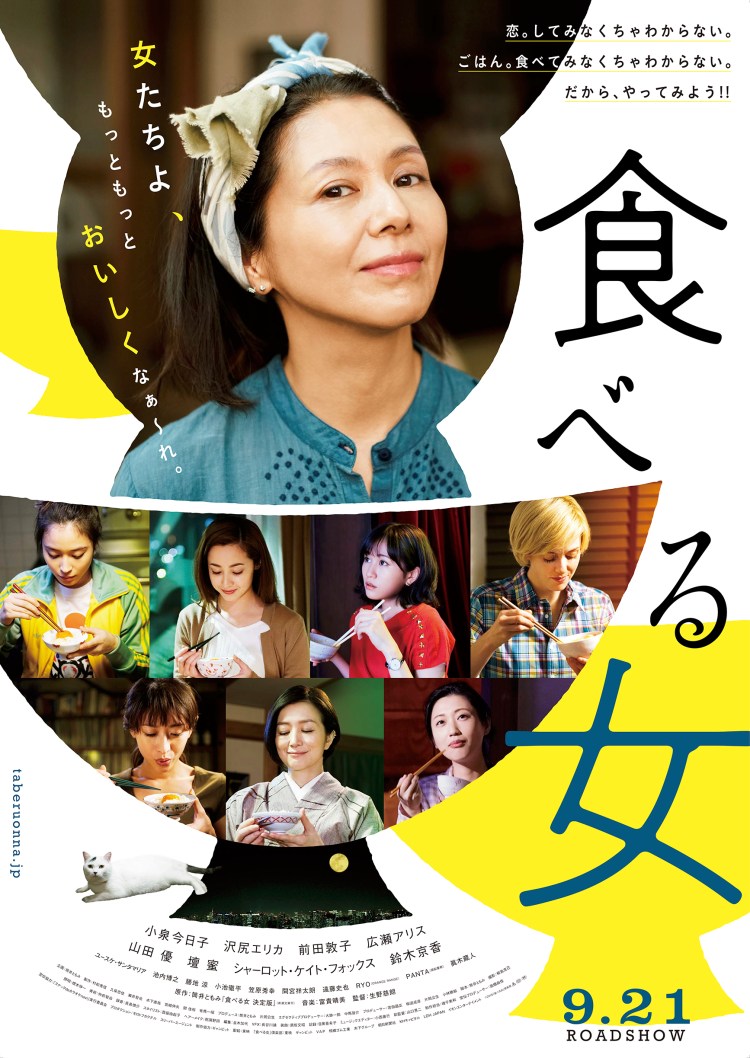
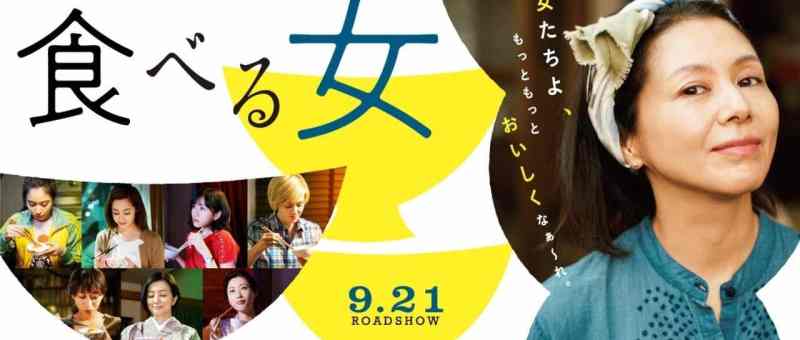
Eating Women poster 2“Comfort cinema” may be a slightly maligned genre, disregarded for its throwaway pleasures, but it can often be much more subversive than it’s given credit for. Jiro Shono’s adaptation of Tomomi Tsutsui’s novel Eating Women (食べる女, Taberu Onna), refusing to unambiguously reinforce contemporary social norms, it actively undercuts them as it pushes its lonely heroines towards more positive paths of self-fulfilment while remaining unafraid to embrace the sometimes taboo idea of female desire as something entirely normal.

The heroine, however, is someone who’s decided to live without it. Food writer and bookstore owner Atsuko (Kyoko Koizumi) lost the love of her life at 29 and has lived alone ever since. She does, however, have a very committed group of female friends who get together once a month to enjoy a tasty dinner she and her friend Mifuyu (Kyoka Suzuki), who runs the local restaurant, cook for them. Unlike Atsuko, Mifuyu is a sexually liberated older woman, complaining once again that both of her (young, male) apprentices have quit after she seduced them. Keiko (Erika Sawajiri), Atsuko’s editor, has hatched on a different solution in affirming that she has already achieved financial independence and has no real desire for male companionship, preferring to embrace her freedom to live as she chooses while Tamiko (Atsuko Maeda), an assistant TV producer and the youngest of the group, is facing the opposite dilemma – her boyfriend has proposed to her, but she’s unconvinced because he’s just too “nice” to make her heart beat faster.

Though at different points of their lives, the women are always there to support each other while permitting themselves the indulgence of fully enjoying beautifully cooked meals taken with good company. Meanwhile, across town, an American woman, Machi (Charlotte Kate Fox), seems to be content to play the role of a 50s housewife to a grumpy salaryman husband (Hiroyuki Ikeuchi) who barges in through the front door and roughly forces himself on her before retreating to the bedroom. The problem in their marriage is, apparently, that Machi can’t cook, providing mostly Western-style microwavable dinners which fail to excite her husband who tells her he’s been having an affair with someone who can make good food. Heartbroken, Machi runs into Mifuyu and eventually ends up living in one of Atsuko’s spare rooms where she slots right in with the other gourmet women as she begins to learn to cook under Mifuyu’s gentle guidance.

It is not, however, a pathway towards regaining her husband or “fixing” a perceived fault so that she can be a “proper” wife, but a way for Machi to rediscover life’s small pleasures along with a sense of independence, rejoicing in her own success as she enjoys a meal she cooked herself made with ingredients that she earned the money to pay for. Tamiko’s barfly friend Akari (Alice Hirose) begins to discover something similar on her own, repeatedly dumped by snooty salarymen boyfriends who objected to her preference for minced meat over whole steak. Akari had a habit of thinking of herself in terms of the meat – quick, cheap, and simple, but finally finds love with a gentlemanly colleague after she gains the confidence to share with him her real self by embracing her love of mince without embarrassment.

The only “misstep” is perhaps in Keiko’s tale in which her bid for solo independence is eventually negated by her loneliness, implying that in the end she did need male companionship after all. Indeed, only Atsuko who rejects sex in favour of vicarious maternity is allowed to live life alone, though conversely Mifuyu’s free spirited pursuit of younger men is never judged negatively nor is she encouraged to settle down even while she ironically advises Tamiko to do just that, and pointedly tells Keiko that she’s running out time to find anyone halfway decent. Yet all of that aside, the ladies are an accepting bunch, emphasising that love is love and refusing to judge others, making sure to offer support to all who need it. We’re never the same people as yesterday, Atsuko writes in her book, we just need to be ourselves. Above all, however, she seems to say you have to be kind to yourself, embracing life’s small pleasures such as the simple joy of well cooked food made with love, and the rest you can figure out later.


Original trailer (no subtitles)

The Drug King (麻藥王 / 마약왕, Woo Min-ho, 2018)

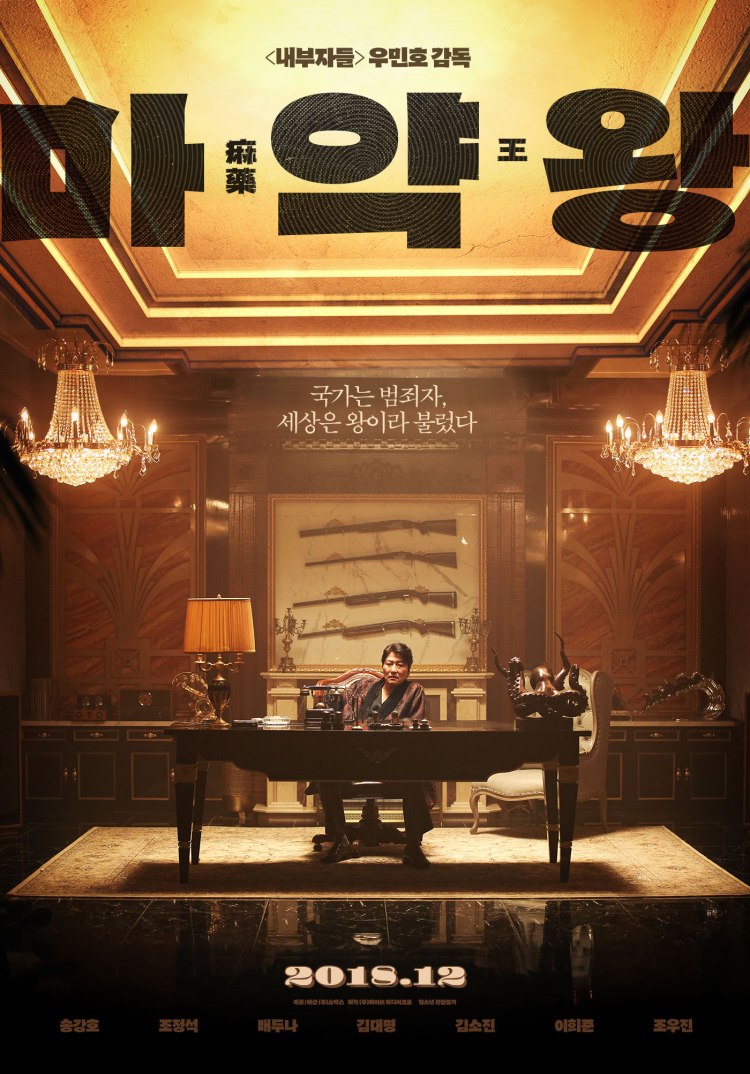
Drug King posterKorean cinema has been in a reflective mood of late, keen to re-examine the turbulent post-war era in the wake of a second wave of democratic protest and political turmoil. Even so, dealing with the difficult Park Chung-hee era has remained sensitive with the legacy of life under a repressive regime apparently very much still felt. Woo Min-ho’s Drug King (麻藥王 / 마약왕, Mayakwang) is first and foremost a crime doesn’t pay story, but it’s also a subtle condemnation of authoritarianism and the corruption and cronyism that goes along with it. Painting its hero’s rise as a consequence of the society in which he lives, it perhaps implies the new wind of egalitarian democracy made such amoral venality a thing of the past but then again is at pains to show that nothing really changes when it comes to greed and resentment.

Our hero, Lee Doo-sam (Song Kang-ho), starts out as a jeweller dabbling in smuggling in Busan in 1972. Just as the smuggling business starts to take off, Doo-sam’s boss falls out with his friends in high places and decides to throw him to the wolves while he escapes abroad to safety. Doo-sam, not one to be beaten, starts coming up with ideas. Mobilising his wife (Kim So-jin) to get him out of jail through a combination of bribery and blackmail, he teams up with the area’s smuggling king to act on a tip-off he got from a Korean-Japanese yakuza and begins producing popular drug Crank for export to Japan.

As the opening voice over explains, Crank is a dangerous stimulant developed by the Japanese during the war and given to factory workers and kamikaze pilots because of its ability to eliminate both fear and fatigue. It is also highly addictive and provides an extreme high which have made it a popular recreational drug but, crucially, the real value is economic. The rising Japan is keen to make use of foreign labour, and Korea is keen to up its export capability. This, coupled with poor regulation of the workforce, has led to extreme exploitation in which factory workers are encouraged to hop themselves up on stimulants to keep working overtime for the sake of economic expansion. Thus, the influx of Crank is, in many ways, simply another facet of ongoing Japanese imperialism.

Not that Lee Doo-Sam cares very much about that. An honest prosecutor later puts it to him that he’s contributing to the exploitation of ordinary workers who might earn a few pennies extra for working a few more hours but at the cost of their health and wellbeing, while he gets filthy rich off the back of their misery. Doo-sam is, however, unrepentant. In the beginning he just wanted to provide for his wife, children, and unmarried sisters, but perhaps he also wanted to kick back against his reduced circumstances and he certainly did enjoy playing the big man. In any case, it has paid off. Doo-sam too has friends in high places and they won’t want to let him sit in a police cell for long in case he starts feeling chatty.

Times change, however, and whatever standing and influence Doo-sam thought he’d accrued his life is built on sand. When Park is assassinated by a member of his own security team, all those contacts are pretty much useless because the cronies are now out in the cold. There are protests in the streets and the wind of a new era is already blowing through even if it is still a fair few years away. That bold new era will, it hopes, do away with men like Doo-sam and their way of thinking, eradicating corruption and backhanders in favour of honest meritocracy. Naive, perhaps, and idealistic but it is true enough that Doo-sam is a man whose era has passed him by while he, arrogantly, burned all his bridges and gleefully sacrificed love and friendship on the altar of greed and empty ambition.

Hubris is Doo-sam’s fatal flaw, but he remains a weasel to the end only too keen to sell out his associates in order to save his own skin. He may claim he was only trying to live a “decent” life, but his definition of “decent” may differ wildly from the norm. Nevertheless, perhaps he was just like many scrappy young men of post-war years, desperate, hungry, and left with few honest options to feed his family if one who later found himself corrupted by backstreet “success” and the dubious morals of the world in which he lived which encouraged him to disregard conventional morality in favour of personal gain. Much more about life in Korea in the authoritarian ‘70s than it is about crime, The Drug King is nevertheless an ironic tragedy in which its drug peddling hero eventually enables the birth of a dedicated narcotics squad and helps to dismantle system which allowed him to prosper all while grinning wildly and, presumably, planning his next move.


Currently available to stream online via Netflix in the UK and possibly other territories.

International trailer (English subtitles)

Key tracks from the (fantastic) soundtrack:

Jung Hoon-Hee – Flower Road

Kim Jung Mi – Wind

Sakura Guardian in the North (北の桜守, Yojiro Takita, 2018)

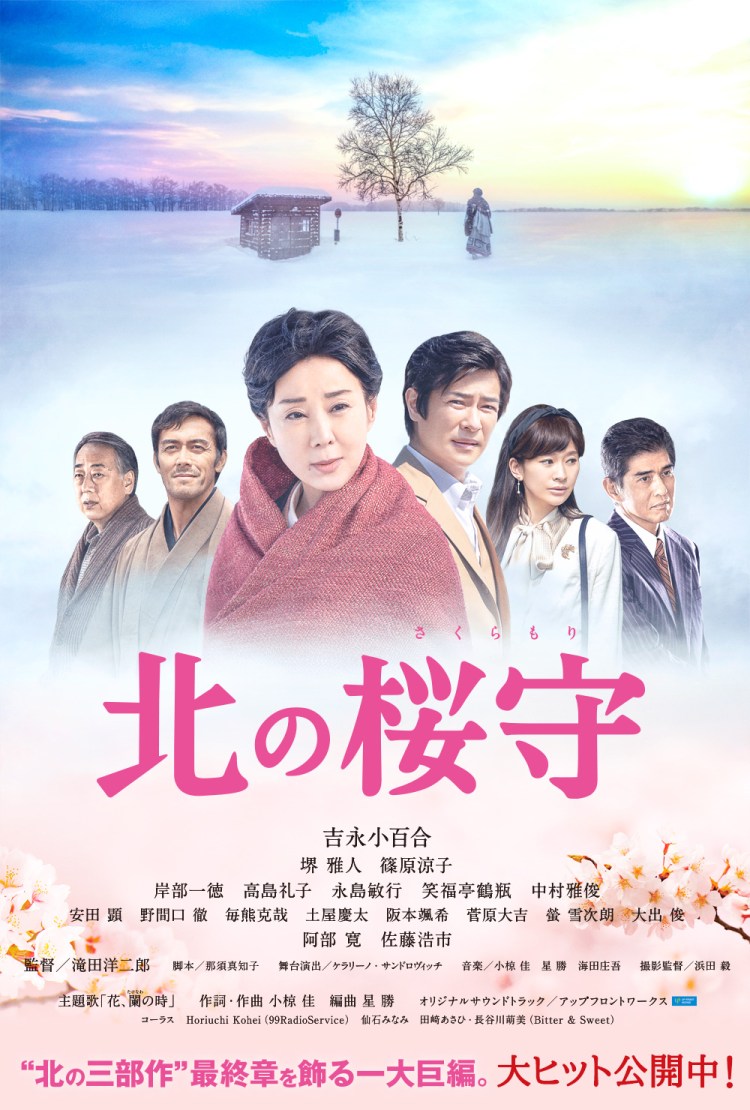
Sakura Guardian in the North posterStill a major marquee star and one of the few golden age actresses regularly playing leading roles in box office hits, Sayuri Yoshinaga has for one reason or another become somewhat synonymous with a brand of quietly patriotic tales of wartime endurance and maternal suffering. Sakura Guardian in the North (北の桜守, Kita no Sakuramori), apparently the conclusion of a loose trilogy of “Northern” films which began with Year One in the North in 2005 and led on to Junji Sakamoto’s A Chorus of Angels in 2012, sees her once again engage with post-war trauma as a mother eventually driven out of her mind by the inability to come to terms with the weight of tragedy.

The tale begins on Sakhalin in spring 1945. Despite the intense cold of the frozen North, Tetsu (Sayuri Yoshinaga) – mother to two young sons, Seitaro and Shujiro, has carefully nurtured cherry trees grown from seeds brought from the mainland ensuring that they blossom even here. The family’s happiness will however be short lived. Dad Tokujiro (Hiroshi Abe) is sent off to the war while Tetsu and the children are eventually forced to evacuate to escape the Russian invasion, planning to wait for Tokujiro in Abashiri on the north coast of Hokkaido.

Flashing forward to 1971, we find ourselves in Tokyo with Shujiro (Masato Sakai), now a grown man married to the Japanese-American daughter of an LA hot dog entrepreneur, Mari (Ryoko Shinohara). Having made something of himself in the New World, Shujiro has returned to Japan to open the first branch of his father-in-law’s convenience stores. His plans are disrupted when he gets an unexpected call from Abashiri about his mother, whom he hasn’t seen since she told him to leave her behind and seek his fortune 15 years previously. The public housing shanty town where Tetsu ran her restaurant is being torn down but she’s showing no signs of leaving, and not only that, she’s begun to act strangely.

This Shujiro finds out for himself by visiting her and witnessing Tetsu talk to her own reflection as if it were a long lost friend. His sudden decision to bring his mother back with him to Tokyo without talking to his wife, who has never even met her mother-in-law, places a strain on his marriage on top of the already heavy burden of the store but Shujiro is determined to make it work. Tetsu, however, finds its hard to adjust. Used to living in small country towns where everyone knows everyone, she doesn’t realise you can’t just walk off from stores shouting “put it on my tab”, and annoys the neighbours by starting a smoky fire outside trying to cook rice the old fashioned way. With Shujiro busy with work, the burden falls disproportionately on the patient but exasperated Mari who is forced to apologise when Tetsu walks off in someone else’s shoes after trying on city-style outfits at a department store, and looks on in horror as her new mother-in-law starts an intense conversation with a cherry blossom tree.

Tetsu’s down home charm does, however, begin to give Shujiro some business inspiration as he ponders why his top American hotdogs aren’t selling now the novelty’s worn off. As his staff tell him, maybe they need to think a little more “Japanese” – more fresh veggies and innovative toppings, less ketchup and mustard. Shujiro has another idea – the original Japanese “convenience” food, onigiri, made with rice cooked in a pot and roughly shaped by a loving mother’s hands.

Rice, however, despite its ubiquity in the comparatively comfortable world of 1971 brings with it traumatic memories. Starving after the war, white rice was something Shujiro and Tetsu could only dream of, getting their first taste of it in many moons only when cooked to place on a funeral altar. Meanwhile, rice was also the only reason they survived after running into a slightly dodgy young man who gave them “jobs” helping him to smuggle it for sale on the black market. Shinji (Koichi Sato) helped them in other ways too, eventually putting up the money for Tetsu’s homely eatery, and would have married her if she were not on the one hand loyal to the memory of her absent husband, and so troubled by survivor’s guilt as to believe that she is “a person who does not deserve happiness”.

To punish herself for perceived failures, Tetsu has lived a life of austerity – working hard in the restaurant, dressing in simple ragged clothes, and eating only enough not to starve. She forced Shujiro away to make something of himself, but never spent any of the money he sent home to her nor answered any of his letters. Shujiro, by contrast, has swung the opposite way – determined to live a life of luxury and becoming unforgiving with it. Mari sees an ugly side to him when he’s visited by one of the boys who used to bully him (Ken Yasuda) for being a refugee and a black-marketeer back in Abashiri now fallen on hard times. Superficially polite, Shujiro humiliates him with undignified zeal while wilfully planning to exploit his workforce, quickly silencing an employee who tries to point out violations to the labour code.

Yet like Tetsu, who is somewhat unstuck in time, he begins to find a softer side of himself as the pair of them journey back into the past and revisit the sites of their shared traumas. Yojiro Takita stages Tetsu’s internal confusion somewhat incongruously as an avant-garde stage play offering occasional background info on the exodus from Sakhalin, an experience Shujiro is seemingly shut out from as he tries to reconnect with his mother only to lose her again but rediscovering a better version of himself before he was hardened by the burden of his memories and the hardships of the post-war era. Tetsu keeps the cherry blossoms in bloom in the North, cultivating beauty as a means to connect with her loss, and eventually finding a kind of resolution in the returned ghosts of her past given life once again by the strength of her devotion.


Singapore trailer (English / Simplified Chinese subtitles)

An Inspector Calls (浮華宴, Raymond Wong & Herman Yau, 2015)

Inspector Calls poster 1J.B. Priestley’s An Inspector Calls found itself out of favour until a phenomenally successful stage production brought it back into the national consciousness in the early ‘90s, but even if some decry its inherent melodrama as a relic of another era the play’s comments on the entrenched classism of British society sadly still ring true. An Inspector Calls is many things, but one thing it defiantly is not is funny – a series of concentric tales of betrayals and oppressions, Priestley’s drama lays bare the callousness with which the privileged bolster their position through the story of one faceless factory girl standing in for an entire social class whose lives are often at the mercy of those “above” them.

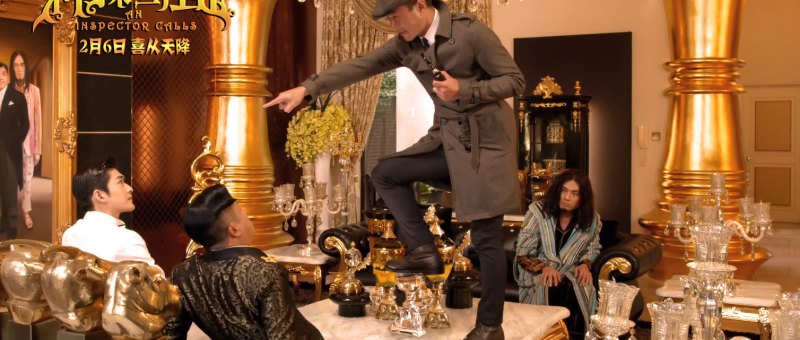
In adapting Priestley’s play as a Chinese New Year movie (a strange concept in itself), Herman Yau and Raymond Wong relocate to contemporary Hong Kong, re-conceiving it as a broad comedy of the kind one might expect for the festive period. The setup is however still the same. The Kau family will be receiving a visitation – this time from Inspector Karl (Louis Koo Tin-lok) who has some difficult news for each of them. Three hours previously, a young woman committed suicide in her apartment by drinking bleach, taking the child she was carrying with her. Inspector Karl views this as a double murder and, based on the diary they found at the crime scene, has brought the reckoning over to the Kaus’.

The Kaus, at the present time, are preparing an engagement party for daughter Sherry (Karena Ng) who will be marrying the handsome younger brother of a factory owner, Johnnie (Hans Zhang Han). What no one can know is that the family business is going under, the Kaus are broke, mum and dad don’t get on, and all of this finery is merely rented affectation. The only member of the family who still seems to have something like a social conscience – Tim (Gordon Lam Ka-tung), the 27-year-old younger son, is viewed by all as a feckless and naive hippy, hiding out in his childhood bedroom, still all fluffy cushions and toy soldiers.

As the Inspector explains, he holds Mr Kau (Eric Tsang Chi-wai) responsible because the woman once worked in his factory and he fired her for participating in a strike for better pay and conditions. Sherry got her fired too when she worked in an upscale fashion store. Johnnie knew her during an unfortunate period as a bar hostess, and Tim as a masseuse. Mrs Kau (Teresa Mo Shun-kwan), who heads up a woman’s charity and publicly espouses tolerance while privately judgmental, once turned her down for familial support seeing as the father of her child was still living. She advises holding him to account and if he won’t pay, forcing his family to take responsibility on his behalf. The irony being that the father is likely her own son and that if this poor woman had rocked up at the Kaus’ with a sad story and an infant in her arms, she would have been met with nothing more than contempt save perhaps some hush money to send her on her way.

The Kaus are merely a series of examples of the various ways the wealthy mistreat the poor, wielding their sense of entitlement like a weapon. Yau and Wong adopt an oddly Brechtian approach in their expressionist production design with the faceless masses identified only through titles – the word “labour” on the workers’ caps, “manager” in the fashion store, “secretary” at the foundation. None of these people are really worthy of names because they will always be “less” while the Kaus are “more” in more ways than one. Actions, however, have consequences. The family console themselves that this is all far too coincidental, that they couldn’t all have known the “same” woman in different guises, but that in many ways is the point – she isn’t one woman but all women, used, abused, and discarded not only by heartless men but by jealous and judgemental members of her own sex too. Better than her than me, they might say, but that’s no way to run a healthy society as the sensitive, slightly damaged Tim seems to see.

Like the Birlings, the Kaus attempt to brush the Inspector’s warning off, thinking it’s all been some elaborate prank that can they laugh about and then forget, but there will be a reckoning even if they attempt to gloss over the various revelations regarding their moral failings. Wong and Yau’s vague gesturing towards the outlandish greed of the hypocritical super wealthy is undercut by the ridiculous New Year slapstick of it all despite the Metropolis-like production design and expressionist trappings, giving in to an excess of its own in an extremely unexpected musical cameo from a martial arts star and the decision to end on a social realist photo of an innocent, pigtailed proletarian woman dressed in red. Nevertheless, strange as it all is the bizarre adaptation of Priestley’s play has its own peculiar charm even if it’s outrageousness rather than moral outrage which takes centre stage.


Currently available to stream online via Netflix in the UK and possibly other territories.

Original trailer (English / Traditional Chinese subtitles)

Weathering with You (天気の子, Makoto Shinkai, 2019)

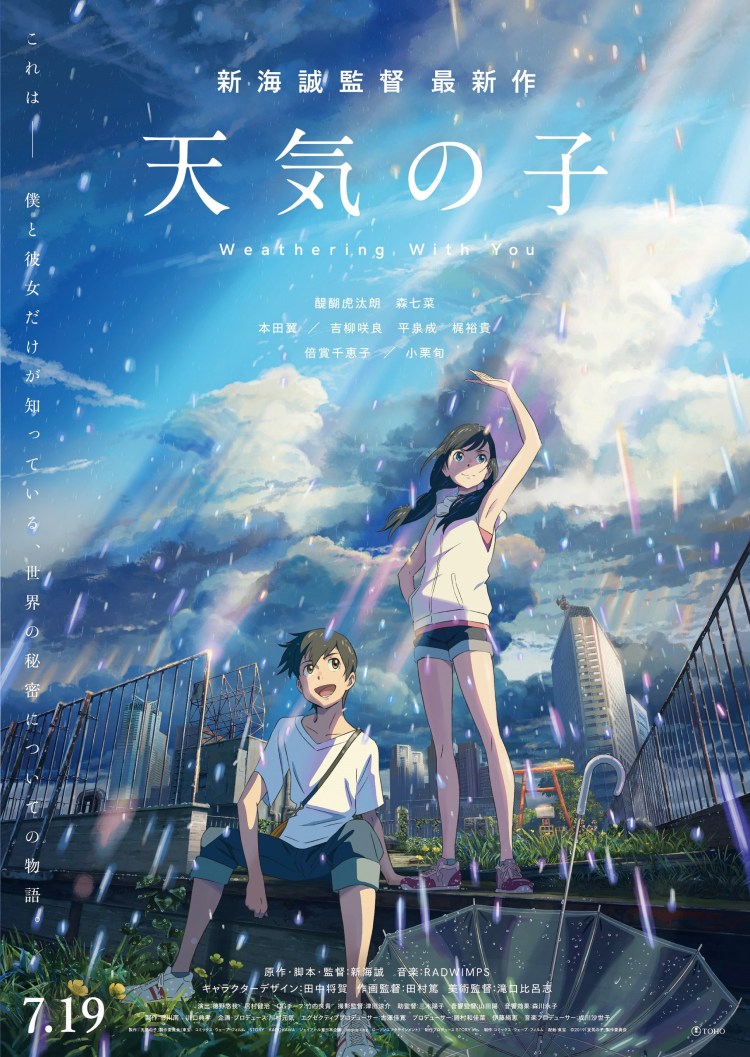
weathering with you poster 2Some might say much of life is learning to weather the storm, but when the storm is literal as well as metaphorical it’s easier said than done. Following his 2016 mega hit Your Name, Makoto Shinkai’s Weathering with You (天気の子, Tenki no Ko) opts for much of the same but grafts an additional layer of anxiety onto the lives of his precarious teen heroes who are left largely adrift, betrayed by corrupt adult society and plagued by doubt and despair in a world which, it seems, is trying to drown them in existential hopelessness.

16-year-old Hodaka (Kotaro Daigo) has run away from his parochial island home for the bright lights of Tokyo. Beyond disconnection from his parents and small-town ennui, he never gives much of a reason why he’s so determined not to go back, but tries to make a go of it in the city with all the prideful naivety of an adolescent young man. What he discovers is that, because of laws in place to protect him, he can’t support himself honestly as an independent teen, ironically placing him firmly at risk in shady Kabukicho but it turns out that you can’t even get a job as a host in a sleazy bar without proper ID. Just when he’s hit rock bottom, Hodaka is given new hope when a friendly employee at McDonalds decides to gift him a burger just because she can see that he’s hungry.

Hodaka describes the BigMac as the best meal he’s ever tasted, because he’s tasting kindness in an environment which has turned out to be far more hostile than he’d anticipated. He tries to repay that kindness when he spots the girl out in Kabukicho being manhandled by a gangster trying to coax her into a love hotel, threatening him with a gun he picked up from the rubbish bin outside a club. The girl, Hina (Nana Mori), ends up saving him again, but the rescue originally backfires because of Hodaka’s problematic adoption of the gun. He regains Hina’s sympathy by throwing it away, allowing a genuine connection to arise between them, especially when he discovers that Hina has an unusual power – she can stop the rain with the power of prayer.

It’s the height of summer, but it hasn’t stopped raining since Hodaka arrived in Tokyo. In fact, it’s just about time for Obon when the departed souls of long gone relatives are able to return. Hina apparently became linked with the sky after praying at a shrine during her mother’s illness, but if the gloominess of the heavy skies and constant rain is a reflection of her unhappiness, it’s one belied by superficial cheerfulness even though her life is just as hard as Hodaka’s. In addition to trying to support herself on the kind of money you can make as a teenage part-timer, she’s also responsible for her younger brother Nagi (Sakura Kiryu) which is why, perhaps, she was tempted by that gangster’s offer of big bucks to be made in Kabukicho.

Hodaka too looks for familial connections, moving in with a middle-aged man who saved his life during the storm that brought him to Tokyo. Like Hina, Keisuke (Shun Oguri) is also drowning in grief, in his case for a beloved wife killed in an accident, while dealing with separation from his daughter who has been taken in by her grandmother in disapproval of Keisuke’s scrappy lifestyle. It’s working for Keisuke’s occult-themed magazine that leads Hodaka to recognise Hina as a “Sunshine Girl”, but also to learn that such “weather maidens” were once common in ancient Shinto Japan and mostly met a bad end. A fortune teller makes it clear that exercising the kind of power that Hina has is likely to deplete her capacity for life, a mild irony in that it’s the inability to feel alive that these rains seem to symbolise.

Ironically enough, both teens met their destiny because they were chasing the light – Hina drawn to a rooftop shine illuminated by an improbable ray of sunshine in the rain, and Hodaka longing to find his place in the sun and resolving to live inside the light that Hina casts. Eventually, Hodaka is forced to make a decision and comes to the conclusion that he can accept Hina for all that she is, that she doesn’t need to be the “Sunshine Girl”, she can feel what she feels and the world will cope. He will weather the storm along with her.

Meanwhile, the spectre of real world climate change looms in the background. Hodaka’s decision necessarily means he has chosen to drown the world to save his love. Faced with the gradual submergence of the city of Tokyo, an old woman waxes philosophical, remembering that back in Edo most of this land was underwater so perhaps it’s just going back to the way it’s supposed to be. Hodaka is swayed but unconvinced. Still young, he is very invested in the idea that he has changed the world, for good or ill, seizing his agency as path out of his despair. But Shinkai’s messages are mixed. Hina continues to pray, but Hodaka comes to the conclusion that the world has always been messed up so perhaps all you need to do is learn to live in it and the rest will figure itself out. As much as it’s true that the problems of climate change should not rest on the young, who are blameless, it is perhaps irresponsible to advocate cautious indifference. Hodaka remains wedded to the idea that he’s made a choice and his choice has changed the world, while beginning to realise that changing the world is not his responsibility, or at least not his alone and not in that way. He has, however, found a way at least to live with all his choices, undefeated by the rain.


Original trailer (English subtitles)
A Beautiful Star (美しい星, Daihachi Yoshida, 2017)

A Beautiful Star poster 1Given life’s anxieties, it can sometimes be hard to remember that the world is a beautiful place. If only we humans could learn to stop and smell the flowers every so often, we wouldn’t be so eager to destroy the place that gave us life. Loosely adapting a novel by Yukio Mishima, Daihachi Yoshida’s A Beautiful Star (美しい星, Utsukushii Hoshi) swaps Cold War nuclear paranoia for climate change anxiety as a collection of extra-terrestrials consider differing strategies to save the Earth, the most radical of them being the eradication of the human race.

Yoshida opens with the Osugi family, minus son Kazuo (Kazuya Kamenashi), “enjoying” a birthday dinner at an Italian restaurant. The tension between them is obvious as patriarch Juichiro (Lily Franky) bad mouths his absent son, daughter Akiko (Ai Hashimoto) sits sullenly not touching her food, and mum Iyoko (Tomoko Nakajima) tries to keep the peace. Juichiro, as we later realise, is a minor celebrity – a much loved TV weatherman whose predictions are not terribly good but he does have a very personable manner. Unfortunately, he’s not so nice offscreen and has been cheating on his wife with a much younger woman who is after his job. After a tryst at a love hotel, the pair get into some kind of bizarre car accident and Juichiro wakes up on his own in a field feeling not quite right. After a colleague suggests he might have been abducted by aliens, he develops an interest in UFOs and, after being moved to tears on air, comes to the conclusion that he is a Martian emissary from the League of Solar Planets come to enlighten the Earth to the dangers of global warming before it’s too late.

In fact, Juichiro is not the only member of the Osugis to believe he is not of this Earth. Except for mum Iyoko, everyone eventually realises they are actually from another planet but their feelings of “alienation” are perfectly Earthbound and born of extremely normal anxieties the like of which can cause discord in any family. Complaining about his son’s lateness to the birthday dinner, Juichiro runs down Kazuo’s lack of full-time employment and writes him off as “just an errand boy”. Kazuo, resentful of his father, feels an intense insecurity about his failure to forge a successful life for himself – something that is thrown into stark relief when he meets an old college buddy now a salaryman who seems to take pleasure in the fact that the captain of the basketball team has made a mess of things where he is now on the road to career success. So when Kazuo meets shady fixer Kuroki (Kuranosuke Sasaki), currently running the campaign for conservative politician and climate change denier Takamori (Jyunichi Haruta), and finds out he is actually from Mercury, it restores his sense of purpose even if it pushes him towards becoming a slightly dangerous right-wing manipulator.

His sister, meanwhile, is a lonely, depressed university student with a complex about her appearance. Approached by a creepy guy running some kind of campus beauty pageant, she can’t get away fast enough but is captivated by the song of a street busker who eventually tells her she likes his music because it’s inspired by their shared roots as Venusians and that the reason she “despises” her own beauty is that Venusians used to set the beauty standards on Earth but now they’ve been usurped. Feeling not quite so alone and more confident in her skin, Akiko decides to enter the pageant to “correct” the perception of beauty in human society.

“Beauty” seems to be the key. Iyoko finds herself sucked into a pyramid scheme selling “beautiful” water mostly out of a sense of lonely purposelessness. Apparently from power spot deep within the Earth, the water is supposed to be its rejuvenating life blood but like so much else, humanity has misused and commodified it. Juichiro’s Martians have a conventional solution to the present problem in that they want humanity to wake up and slow down. The Mercurians, however, have more radical ideas. Seeing as humanity is toxic to this planet that we all love, the obvious answer is simply to eliminate it, engineer a reset in which the Earth could heal itself after which point a new, more responsible humanity could be permitted to return. The problem, they say, is that humans do not think of themselves as a part of nature or realise that extinction is a perfectly natural part of the ecological life cycle. If they did, they might not be in this mess, but now they need to accept their responsibility and agree to a mass cull to save the planet.

Each of the Osugis has their insecurities wielded against them, and in the end each of them is in some way deceived. Kazuo’s resentful ambition is exposed by Kuroki, but he eventually realises he’s not much more than a patsy, while Akiko has to face up to the possibility that she’s been spun a yarn by an unscrupulous man who was only after the usual thing from a naive and vulnerable young woman. Iyoko’s deception is of the more usual kind as she figures out that “beautiful water” is an obvious scam she only bought into because of the false sense of belonging and achievement it afforded her, and Juichiro has to wonder if his Martian “delusion” has a medical explanation, but through their various deceptions the family is eventually forced back together again springing into action as a unit. The Mercurians dismissed humanity as unable to see the world’s beauty, remaining wilfully ignorant of the gift they had been given. The Osugis have at least been awakened to a kind of beauty in the world and in themselves as they face their alien qualities and integrate them with those of others. Yoshida may not have a clear answer for the problems of climate change (who does?), but he is at least clear on one thing – you lose that which you take for granted. Smell the flowers while the flowers last.


International trailer (English subtitles)

Jo Pil-ho: The Dawning Rage (악질경찰, Lee Jeong-beom, 2019)

Jo Pil-ho- The Dawning Rage posterThe Man From Nowhere’s Lee Jeong-beom returns five years after No Tears for the Dead with another retro crime thriller, though this time one with additional bite as he digs into a nation quite clearly failing its young. Another of the recent films set in the post-Sewol world, Jo Pil-ho: The Dawning Rage (악질경찰, Akjilkyungchal) is a noirish voyage through an intensely corrupt society in which Chaebols act with impunity while goodhearted schoolgirls are branded delinquents and left to fend for themselves by the “adults” who seem to have abandoned all sense of social responsibility.

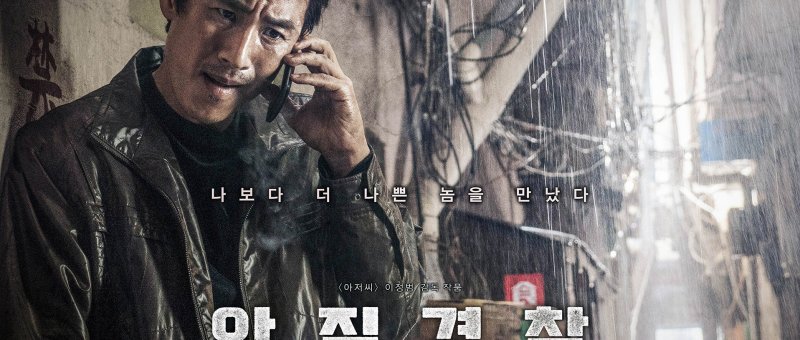
Our hero and the titular “bad cop” of the Korean title, is Jo Pil-ho (Lee Sun-kyun) – a corrupt police officer who abuses his position to force criminals to commit crime on his behalf. Recently, he’s teamed up with a teenage safecracker, Gi-chul (Jung Ga-ram), and is also involved in an ill-advised business relationship with a petty gangster. IA are all over him, but they don’t have anything yet. Everything is about to change, however, when an angry Pil-ho decides it would be a good idea to rob the police warehouse. The gangster’s minion makes a mistake and the place blows up with Gi-chul trapped inside. Suddenly it’s not looking so rosy for Pil-ho who is now implicated in a series of crimes only to discover that there is far more going on than he could have anticipated. The warehouse fire appears to be connected to an ongoing corruption case involving one of Korea’s biggest conglomerates and Pil-ho may have just destroyed key evidence without realising in an attempt to save his own skin.

Despite himself, Pil-ho is not such a bad guy. He’s corrupt and greedy, but he has a moral compass and probably sees himself as kicking back against the system rather than abusing it seeing as he only seems to take money from sources he feels could stand to lose. This is perhaps why he finds himself increasingly shaken by his investigations, eventually forced to pick a side – surrender to Chaebol influence as a willing underling or expose the corruption possibly at the cost of his own life.

In true noir fashion his own past comes back to haunt him as he re-encounters the father of a young woman (Im Hyeong-gook), Song Ji-won (Park So-eun), who died in the ferry tragedy and had wanted to become a policewoman when she grew up. Pil-ho was the officer charged with the empty gesture of presenting him with a police uniform with his daughter’s name on it. In an unlikely coincidence, the girl Pil-ho needs to find, Mina (Jeon So-nee), was Ji-won’s best friend. Alone and without family, Mina has been living by her wits on the streets but as Mr. Song points out she’s not a bad kid at heart and goes to great lengths to protect those close to her.

Despite their original mutual distrust, a kind of camaraderie eventually builds up between the cynical cop and the jaded teen who views the so-called “adults” around her with nothing more than contempt. Her admiration for Pil-ho begins when he beats up a sleazy backstreet doctor who tries to swap treatment for sexual favours and then continues as Pil-ho, against the odds, begins to look out for her in ways no one else ever has. Mina, like many kids, is simply trying to survive in a world which is often actively hostile to her existence, but unlike Pil-ho she has avoided becoming cynical and remains committed to protecting those weaker than herself even if others may write her off as a lost cause delinquent.

Set in Ansan which, as an ironic sign tells us before falling to the ground, is the “city of happiness”, Dawning Rage locates itself in a haunted land in which the lingering effects of the ferry tragedy are impossible to ignore. Pil-ho begins catching sight of teenagers everywhere but their presence only seems to highlight absence while providing a kind of chorus watching and observing the adults around them in order to learn how to live. The corrupt Chaebol cites his provision of scholarships as evidence of his commitment to building a fairer society, all while knowing that by doing so he is really buying influence and loyalty. He spins a yarn about his humble origins and makes a show of inspiring the next generation, but thinks nothing of silencing those who stand in the way of his selfish aims.

The corruption rains down from above – the Chaebols make their money and they cut corners, leaving ordinary people squeezed. Fear and deference are the primary contributors to the societal decline which placed innocent young people directly, if unwittingly, in harm’s way. This is Pil-ho’s “dawning rage” as he awakens himself to the depths of injustice within his own society with which he had blindly gone along thinking only of himself. With a distinctly 1970s aesthetic, Dawning Rage is a dark conspiracy thriller in which the system is so hopelessly corrupt as to be beyond saving. Pil-ho is a “bad cop” who turns out to be acting for the public good after all but finds himself pushed towards the dark side by the intransigence of his society and forced into an act of violent revenge both personal and social.


Currently available to stream online via Netflix in the UK and possibly other territories.

Original trailer (English subtitles)
Tenzo (典座 -TENZO-, Katsuya Tomita, 2019)

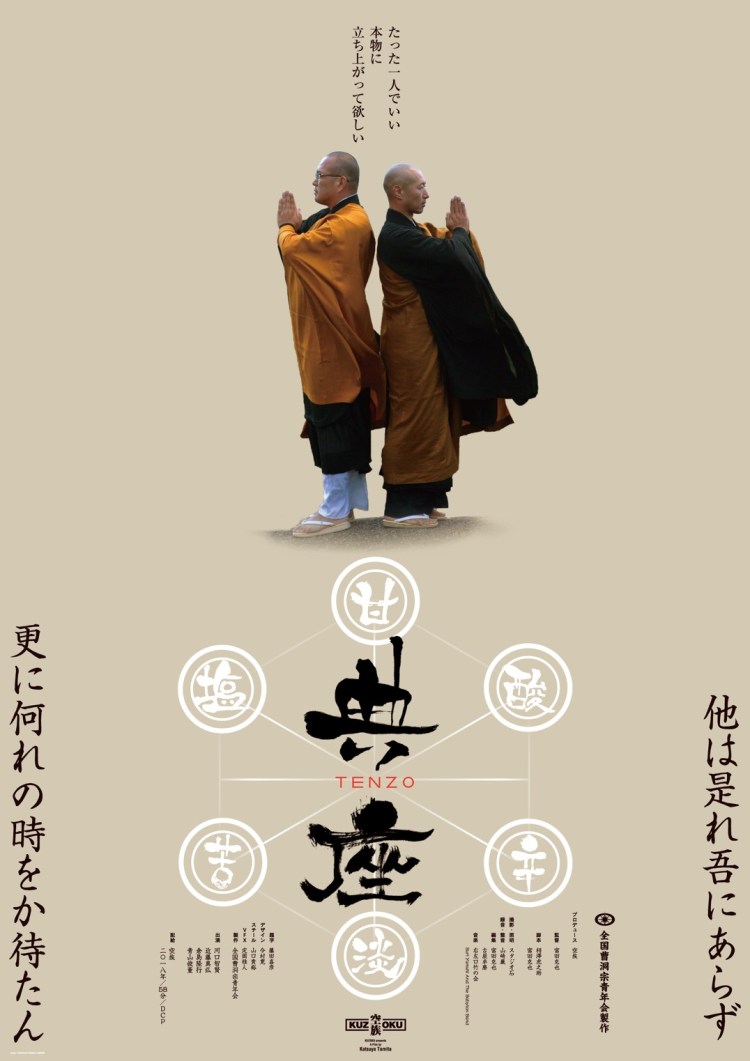
Tenzo posterIf you think the world has declined, how should you continue to live in it? The monks at the centre of Katsuya Tomita’s documentary hybrid Tenzo (典座 -TENZO-) have committed themselves to living intensely in the moment, following the teachings of zen master Dogen and embracing the uniqueness of each and every day even in its banality. But the search for truth necessarily takes one away from demands of daily living, from the entrenched suffering that pushes record numbers of people towards suicide and leaves others feeling as if they have no hope for the future.

Monk Chiken once felt hopeless himself. In Japan, temples are a family business and it is expected that the oldest son will succeed whether he feels any call to religion or not. Chiken, as a young man, did not and resented his lack of choice in his future, but eventually came around to the idea of being a monk in part in recognition of a need for increased spiritual support in a nation he, and others, felt to have lost its way. 10 years previously, he spent some time in a monastery before returning home, getting married, and becoming a father.

At a loss for what to do, Chiken decided to bring temple food to the people by holding cookery classes as a kind of local outreach project. Believing that food is medicine which nourishes the soul as well as the body, he hoped to help repair the connection between people and nature. He also believes, perhaps privately, that the gradual decline of the environment has contributed to his son’s serious allergies and that though a wholesome diet may help, it may not be enough to prevent him coming to harm.

Other ways he tries to help include taking calls from people in distress and listening to their troubles. Chiken is part of a collective of local monks helming a helpline in the Fukushima area for those who want someone to talk them out of taking their own lives. That’s not to say, however, that being a monk necessary makes one free of troubles. Chiken occasionally resents himself for not being there for his family, snapping at his wife and unable to visit his son in the hospital because of ceremonial duties. Faced with a call from another monk on the helpline, he simply doesn’t answer. The other monk, Kondo, retreats to a nearby window and vapes while staring at the moon, proving that monks are regular people too who drink and smoke and live their lives while continuing to search for the truth.

For some, however, the rug has been unexpectedly pulled from under them, making any sense of truth they may have discovered seem hollow. Ryugyo, like Chiken, was the son of a Buddhist priest but he lost his family temple to the earthquake and nuclear disaster. Still living in cramped temporary housing, he makes ends meet as a construction worker, occasionally visiting some of his old neighbours in the place of a monk while lobbying to get the funds together to build a new temple. Originally not sure he should be part of the helpline seeing as he’s no longer, technically speaking, a monk he finds himself pouring out his troubles to a stranger.

Chiken, meanwhile, finds himself branching out in his search for truth – heading to Shanghai and Dogen’s temple looking for guidance towards a way forward. He meets with an esteemed nun who tells him that his youthful sense of rebellion was only natural and probably a good thing because becoming a monk should be a choice not an obligation. She laments that Buddhism in Japan has become “corrupt”, that the demise of the old apprentice system in favour of patrilineal inheritance has led to a decline in rigour. Chiken feels as if it’s the world which has declined, that the post-war drive towards economic stability and its eventual implosion have resulted in an empty consumerism which is contributing to an ongoing sense of hopeless malaise. Trapped in a limbo of his own Ryugyo may feel something similar, wondering how to rebuild while conducting lonely services over ruined graveyards. What they do is return to Dogen, living in the everyday and continuing to look for truth to counter the meaninglessness of the consumerist society.


Screened at the ICA as part of their Katsuya Tomita retrospective.

Original trailer (no subtitles)