The Bravest (烈火英雄, Tony Chan, 2019)

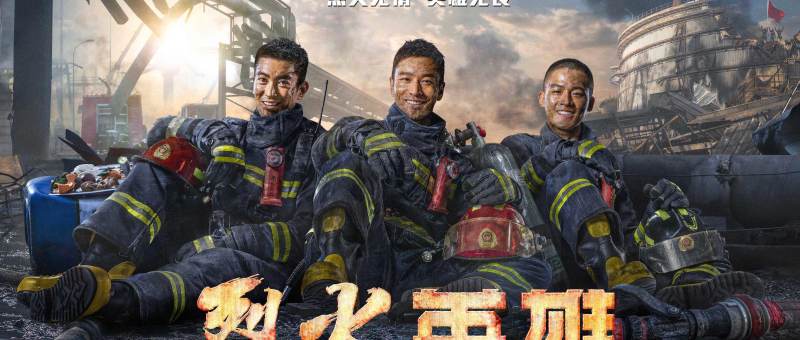
The Bravest poster 12019 is an important year for China’s Communist Party. Not only is it the 70th anniversary of the founding of the People’s Republic, but it’s also the centenary of the May 4th Movement which saw Chinese students protest against increasing foreign influence. To mark the occasion, Bona Film Group is set to produce what it calls the “China’s Pride Trilogy”, or as the less generously minded might see it, a trilogy of propaganda movies of which The Bravest (烈火英雄, Lhuǒ Yīngxióng) is the first. While China’s military has frequently taken centre stage in the nation’s increasingly jingoistic action movies, The Bravest is the first to focus on the heroic efforts of the fire service, which in China is operated by the army.

Inspired by a real life fire which broke out in Dalian, Liaoning Province in July 2010 and adapted from Mongolian author Bao’erji Yuanye’s book “Tears Are the Deepest Water”, The Bravest follows a collection of differing brigades who come together to battle a raging fire which has engulfed a coastal oil refinery. When we first meet our heroes, the Special Squadron, they’re in the middle of rescuing a little girl from a fire in hotpot restaurant. Though the operation is initially successful with the girl rescued and the fire extinguished, the owner has neglected to inform the fire fighting team that the back room is full of propane tanks, which is something he probably should have mentioned. One of the team is killed in the ensuing explosion while captain Liwei (Huang Xiaoming) is knocked out and thereafter removed from active duty while he deals with PTSD related to the incident.

Flashing forward, we’re told that if the wrong quantity of chemicals are added to the oil running through the refinery then it could catch fire, which it eventually does. The problem isn’t just the potential economic effects or even the possibility of a large scale explosion causing widespread infrastructure damage and loss of life, but that there is a possibility that the fire will release cyanide gas which has the potential to kill everything within the surrounding area. In the immediate aftermath of the fire breaking out, the harbour brigade, Special Squadron, and the tinpot rural team Liwei has been demoted to are all summoned to help but, unusually considering this is a propaganda film designed to praise the emergency services, are largely ill-equipped to deal with such a large and potentially hazardous incident.

Nevertheless, they live up to the movie’s name, bravely wading into harm’s way to minimise the damage. Meanwhile, mass panic is quickly overtaking the city as people begin to become aware of the potential danger through their smartphones or messages from someone connected to the refinery which is, after all, the economic centre of the area. Economics are partly what’s on the mind of the refinery’s chief who is often less than truthful with staff at the command centre, deliberately keeping information from them in an effort to control the situation and avoid being the guy who plunged an entire province into poverty. He does however give himself brownie points for sticking around when similar big wig villains in disaster movies usually get on their private jets and leave the emergency services to it. He’s joined by a selection of party officials who also break with cinematic tradition by standing next to the firefighters, a little way back from the frontline but very much still in harm’s way as they attempt to ensure a satisfactory outcome for all. In the hospitals too, doctors and nurses remain at their posts treating the injured rather than tending to their own wellbeing.

The focus is, however, the heroically altruistic actions of the firefighters who disregard their own safety in order to ensure that of others. Thankfully, in the real life incident no one was killed but in Movieland no one is that lucky and The Bravest remains remarkably unafraid to indulge in obvious foreshadowing such as poignant scenes of familial discord and even one pair of firefighters rushing to the scene still dressed in their outfits from getting their wedding pictures taken. Sad salutes and moments of silence are the order of the day while the firefighters divide up the hazardous duties by volunteering those with siblings so parents will be protected should the worst happen. Unashamedly melodramatic, there’s no denying the sheer spectacle of The Bravest’s cleverly crafted fire effects or its mammoth scale, even if it never manages to escape its nakedly propagandistic genesis. 


Currently on limited release in UK/US/Canada/Australia/NZ cinemas.

Original trailer (English subtitles)

I Go Gaga, My Dear (ぼけますから、よろしくお願いします。, Naoko Nobutomo, 2018)

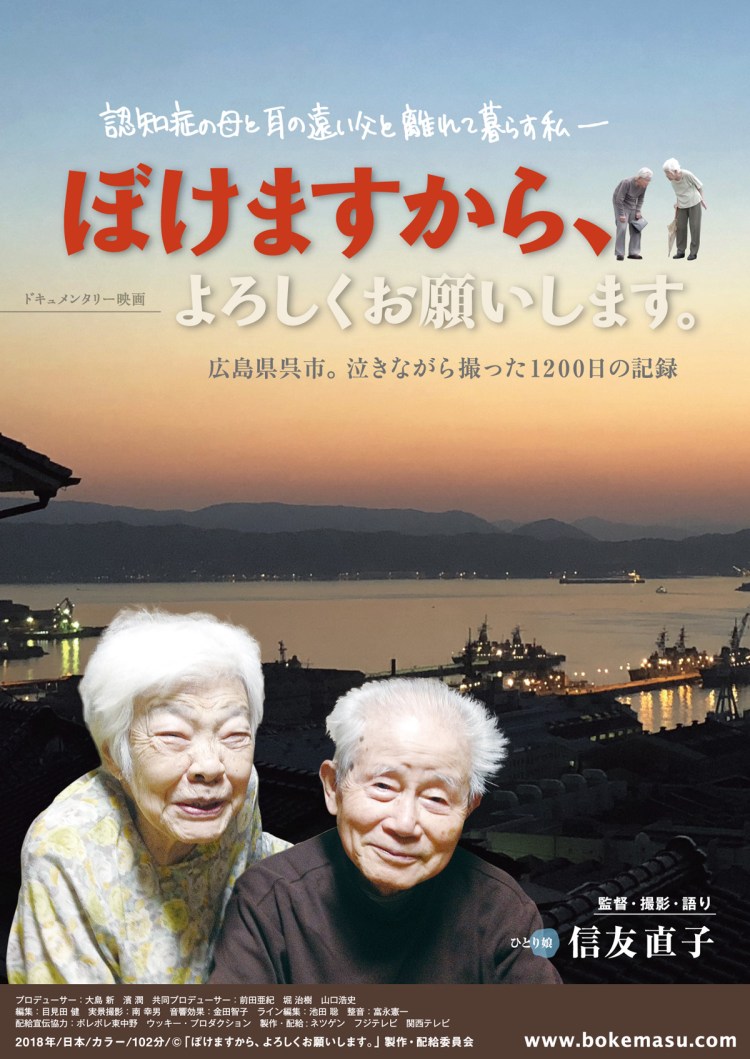
I go gaga posterWith the population ageing at unprecedented levels, Japanese society is facing a series of interconnected social issues as it contemplates the best way of caring for large numbers of elderly people often living away from family members who, in the past, might have been expected to bear responsibility. What sometimes gets forgotten, however, is the human dimension as older people go on living their everyday lives sometimes surrounded by family and sometimes not. Veteran TV director Naoko Nobutomo’s first feature I Go Gaga, My Dear (ぼけますから、よろしくお願いします。, Bokemasukara, Yoroshiku Onegaishimasu) follows her ageing parents from her own perspective as their daughter as they continue supporting each other into old age.

Nobutomo begins her story on New Year’s Day 2014 as she begins to notice a change in her sprightly, independent mother Fumiko and decides to take her to a doctor where they discover she is in the early stages of Alzheimer’s. Over the next three years, Fumiko’s condition intensifies while her husband of 60 years, Yoshinori, does his best to care for her though he himself is already over 90.

Flashing back to home video taken in earlier years, Nobutomo recalls her difficulty dealing with breast cancer at 45 throughout which her mother had been there to look after her. Having looked after her family for all of her life, there is an especial irony that now it’s Fumiko who needs looking after and it is perhaps these small moments of change that force her to acknowledge a gradual decline in her living standards even if she cannot clearly process them. Though Yoshinori bravely starts taking more domestic responsibility at 95, losing the ability to cook for herself is an obvious blow to Fumiko who nevertheless determines to keep her kitchen spotlessly clean.

Luckily, Fumiko and Yoshinori have a generous health insurance policy which entitles them to assistance in the home though that is something they obviously feel ambivalent about accessing. Fumiko, in particular, remains confused about the presence and role of their new helper, believing she is something to do with the insurance company, and is a little resentful of her offer to help with physically difficult housework such as cleaning the bath and emptying the washing machine. Likewise, she is originally reluctant to attend the daycare centre but noticeably perks up after being given a valuable opportunity to socialise rather than staying home all day with relatively little stimulation.

Seeing that her parents are struggling to manage on their own, Nobutomo wonders if she should give up her job in Tokyo and come home to Kure to look after them but is assured by her father that they’d prefer her to go on living her own life. Yoshinori, born in 1920, wanted to study literature at university but the war got in the way. Perhaps for this reason, he was determined that his daughter follow her dreams and is profoundly happy that she’s been able to make a career doing something she loves in the big city. Fumiko too, marrying at the comparatively late age of 30, had been a career woman, graduating from a woman’s school and working as an accountant before her marriage. A notably progressive pair, perhaps usually for the times in which they lived, they were content to let their daughter live the life she wanted to live and never placed any particular pressure on her to conform by getting married and having children.

Married for over 60 years, Fumiko and Yoshinori are determined to go on living independently and managing on their own as best they can. Fumiko, however, has brief painful moments of anxiety in which she is acutely aware of her declining condition and implications for her future. Some days she refuses to get out of bed, either resigned to the fact that “life isn’t always happy”, or lamenting that her life “miserable”. Neither of them want to be a “burden”, but find it increasingly difficult to continue managing on their own as much as they prefer to be as independent as possible. Nevertheless, they go on supporting each other much as they always have living together in hope and happiness while Nobutomo watches warmly from the sidelines supporting them in the same way they supported her, gently and with compassionate understanding.


I Go Gaga, My Dear was screened as part of Japan Cuts 2019.

Original trailer (English subtitles)

Red Snow (赤い雪, Sayaka Kai, 2019)

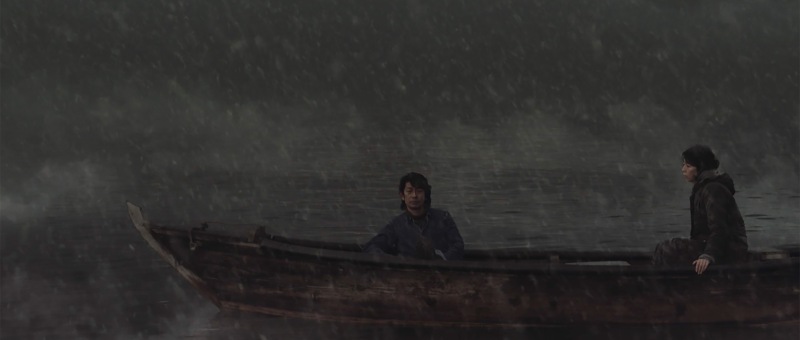
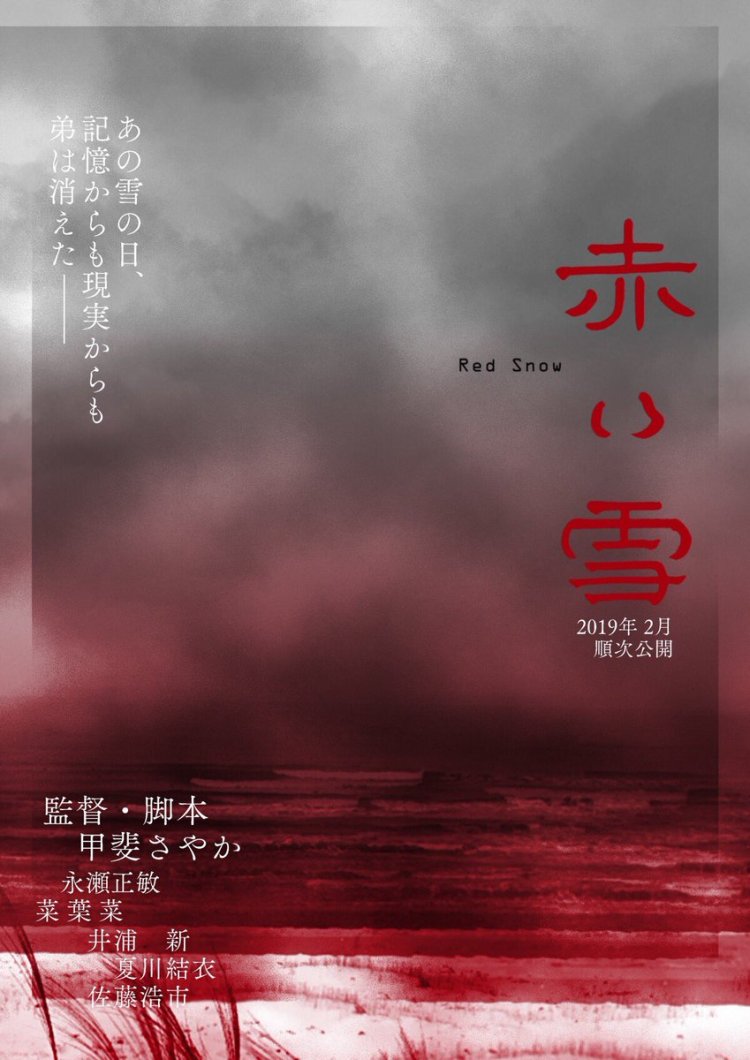
Red Snow poster 2“We’re just pieces of a puzzle” a temporarily deranged woman exclaims to a gloomy seeker after truth in Sayaka Kai’s eerie debut Red Snow (赤い雪, Akai Yuki). Truth, as it turns out is an elusive concept for these variously troubled souls trapped in a purgatorial tailspin on their gloomy island home. When a stranger comes to town intent on unearthing the long buried past, he stirs up deeply repressed emotion and barely concealed anger but finds himself floundering in the maddening snows of a possibly imaginary coastal village. 

30 years previously, a young boy, Takumi, went missing on the way to a friend’s house accompanied by his brother Kazuki who claims he simply disappeared from view in the heavy snow. Sometime later, a child’s remains were found in a burned out building. The prime suspect was a strange woman with a young daughter who escaped the fire in the middle of the night in a suspiciously elegant outfit. Nevertheless, the woman was later exonerated and the truth behind Takumi’s disappearance remained shrouded in mystery.

In the present day, a reporter, Kodachi (Arata Iura), arrives in town with the intention of writing some kind of exposé on the case. He interviews the detective involved and makes contact with Kazuki (Masatoshi Nagase), now a broken middle-aged man who has dedicated his life to perfecting the art of lacquerware. A secondary lead takes him to Sayuri (Nahana) – the daughter of the prime suspect now, in a tragic piece of circularity, an outcast herself and possibly a sex worker in a violent relationship with an older man (Koichi Sato) who may or may not be her pimp.

Each of them has tried to move on from the unresolved tragedy of Takumi’s disappearance, but all appear to have failed. Kazuki dreams of the day his brother vanished right in front of his eyes, seeing a little red jumper lost in the snow but unable to remember anything more. He fears he will never know what happened unless his memory somehow returns, though as his mentor tells him what actually happened and the way you remember it are often different. Waxing philosophical, Kodachi muses that memory is what links the past and future but memory, and therefore life itself, is ambiguous. The “truth” may be unknowable and known at the same time to those who refuse to confront its various contradictions. 

Like the young Sayuri watching through a tiny crack in the wardrobe door where her abusive mother has placed her out of the way of all her “fun”, nobody sees the whole of anything. The young Sayuri morphs into the adult Sayuri and into her mother whom she fears she has become. The only witness to the incident, Sayuri refuses to speak of it though perhaps there’s more kindness in her silence than it first seems even if her unwillingness to remember may also be a kind of self preservation. She too is a victim, but is blamed all the same despite being only a small child powerless to intervene or be held complicit in whatever it is her mother might have done or not done in her quest for survival.

Sayuri remains trapped within the orbit of her now absent mother, herself an outcast in another abusive relationship this time with a sociopathic old man, while Kazuki struggles to accommodate his sense of guilt for something he can’t quite remember. Emotions briefly bubble to the surface, petty resentments and jealousies that pass between all small children but might perhaps have had terrible consequences one snowy night. Sayuri may be right when she insists that they are pieces of a puzzle, each holding tiny fragments of truth that might be assembled into a coherent whole, but also aware that if they did so they may not like the picture that they see.

Eerie and ethereal, the snowy coastal town almost may not exist at all haunted as it is by traumatised souls trapped in a purgatorial cycle of guilt and confusion as they try to piece together the past. Sayaka Kai’s dreamlike, poetic debut is a visually impressive existential mystery in which past and present intertwine leaving our troubled heroes lost in a fog of falling snow unable to access the future through the corrupted pathways of memory.


Red Snow was screened as part of Japan Cuts 2019.

Original trailer (English subtitles)

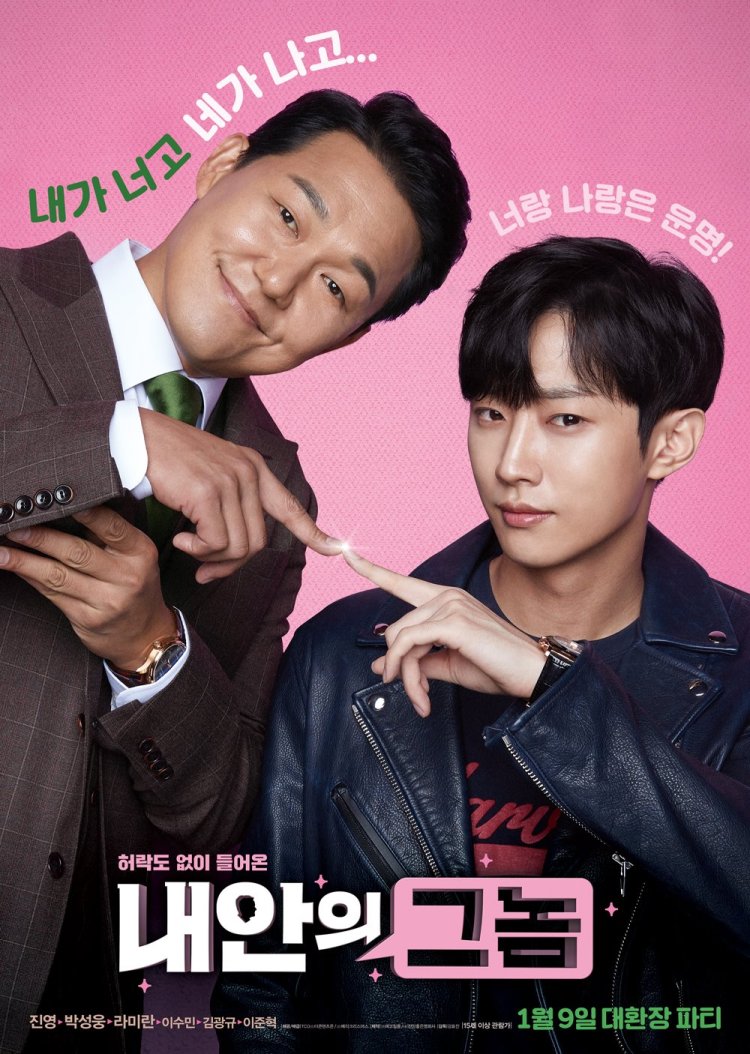
The Dude in Me (내안의 그놈, Kang Hyo-jin, 2019) [Fantasia 2019]

Dude in Me poster 3“What’s more important than being with your family?” – A cynical crime boss is forced to reconsider his life choices following a series of crises which see him inadvertently swap bodies with a dimwitted high school boy in Kang Hyo-jin’s take on the classic genre, The Dude in Me (내안의 그놈, Naean-ui Geunom). Less a story of two men from different generations learning from each other, Kang’s film leans heavily into patriarchal myths as its jaded hero is given a second chance at youth and discovers he may have made a grave error in choosing to reject love in favour of advancement.

17 years after breaking up with high school sweetheart Mi-sun (Ra Mi-ran), Pan-su is a high flying “businessman” in the newly corporatised world of suited gangster thuggery. Old habits die hard, however, as his current problem is his minion’s failure to put sufficient pressure on the last holdout in an area they’ve earmarked for redevelopment – Jong-gi (Kim Kwang-kyu), the earnest owner of a carpentry firm intent on holding on to the family business. It’s during a visit to Jong-gi’s that Pan-su stops off at a ramen joint he used to go to in his youth, only to discover that the young woman who owned the restaurant all those years ago has moved on which is why his favourite dish doesn’t taste like it used to.

Inside, he gets into a heated debate with the new owner while a portly high school boy, Dong-hyun (Jung Jin-young), who needs to leave in a hurry, discovers he’s lost his wallet. The old lady bamboozles Pan-su into paying for the kid’s (unusually large) meal, assuring him that she has “something in store” for him. That “something” turns out to be Dong-hyun falling from a nearby roof and landing on Pan-su’s head. When Pan-su wakes up, he realises he’s in Dong-hyun’s body while Dong-hyun is presumably still inside his which remains in a coma.

Such is the force of Pan-su’s personality that he’s able to convince his chief underling of his real identity pretty quickly, but it remains a serious problem for him that a once serious gangster is humiliatingly trapped in the body of a misfit high schooler ostracised by all but the equally bullied Hyun-jung (Lee Soo-min) for his pudgy physique and dimwitted cowardice. Pan-su makes little attempt to blend into Dong-hyun’s life, behaving much as he has before and seemingly oblivious to the commotion his newfound boldness provokes in those around him. Though Dong-hyun’s new crazy backbone could be written off as a bizarre side effect of his head injury, the contrasts between the diffident teenager and unpredictable gangster do not end there. Where everything about Pan-su screams control from his obsession with straightening other people’s ties to habitually wiping down surfaces, Dong-hyun is the sort of boy who doesn’t think too far beyond his belly. Indeed, Dong-hyun’s vast appetite does not sit well with Pan-su’s uptight concern for his health even as his new body finds it almost impossible to resist the lure of tasty junk food in truly staggering proportions.

Nevertheless, Pan-su gradually begins to take ownership of Dong-hyun’s body, doing him the “favour” of “improving” it by shedding all that weight and revealing the hot guy trapped inside. Part of the reason he decides to do that is realising that the mother of Dong-hyun’s childhood friend Hyun-jung is none other than love of his life Mi-sun, who seems to have remained single since they broke up around the time in which Hyun-jung must have been conceived. Wielding his newfound hotness as a weapon, he vows to protect Hyun-jung in the most fatherly of ways – by teaching her to protect herself through shared self-defence classes. He will, however, need to sort out a few other problems on his his own, going up up against an entrenched system of delinquency and a dangerously predatory high school prince who likes to invite vulnerable girls to his parties as a form of entertainment.

Meanwhile, he’s still dealing with the ongoing gang war and a series of personal problems relating to his treacherous wife and austere father-in-law who praises “family values” above all else. Living as a high school boy again and realising that he’s got a daughter whose life he has entirely missed out on because of a choice he has always on some level regretted forces Pan-su to wonder if his ill-gotten gains were really worth the lonely, loveless years. Strangely, perhaps only Dong-hyun is brave enough to admit for him that perhaps they weren’t and what he really wants is a warmer kind of “family” than the cold obligation of gangster brotherhood. A quirky tale of softening bad guys and toughening soft ones, The Dude in Me eventually locates a happy medium in the merger of the professional and personal as a new family rises up in Mi-sun’s homely new restaurant filled with warmth and possibility in having rediscovered the simple joys of true human connection.


The Dude in Me was screened as part of the 2019 Fantasia International Film Festival.

International trailer (English subtitles)
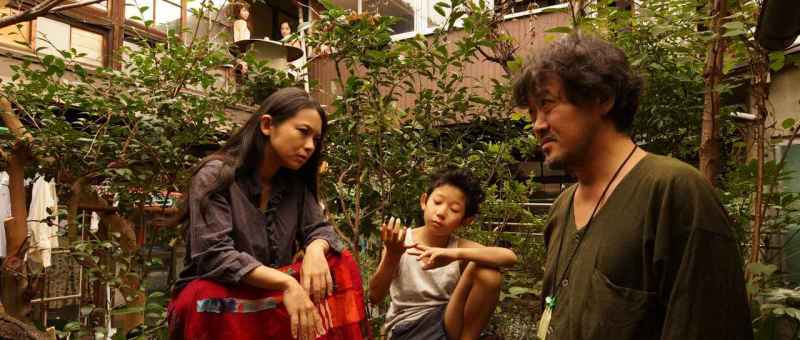
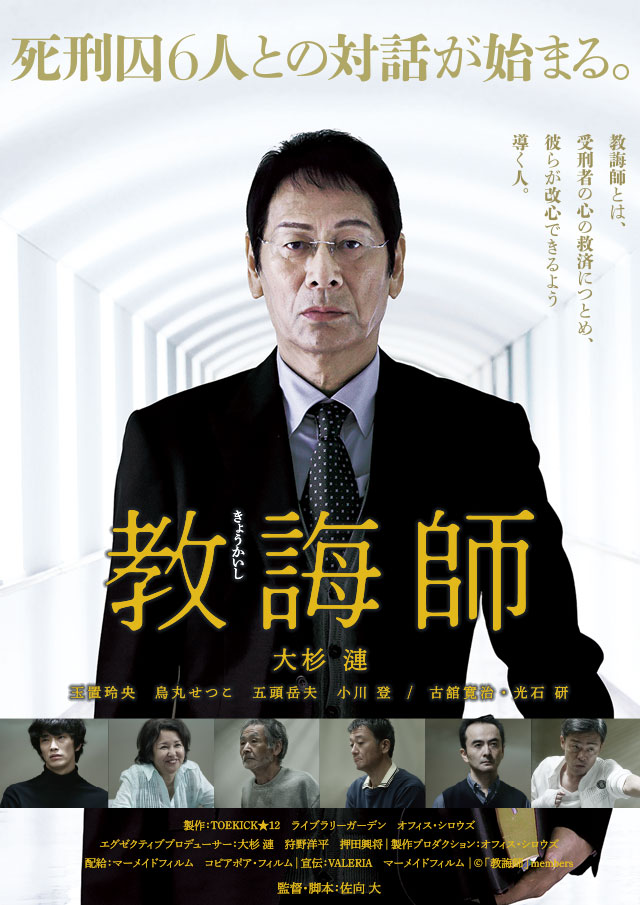
The Chaplain (教誨師, Dai Sako, 2018)

The Chaplian posterJapan is one of the few developed nations which still maintains the death penalty, though in practice infrequently. The sentence of death is handed down almost exclusively to mass or serial murderers, child killers, or those whose crimes are judged to be of extraordinary barbarity. Unlike other nations, Japan houses those on death row not in prisons but in detention centres, denying them the rights that are afforded to regular prisoners such as visitation, exercise, and entertainment. Execution must be carried out within five days of the judgement being handed down. The prisoner themselves is informed on the morning of their death and given a choice of last meal, but their family members, legal team, and the general public are only informed once it has taken place preventing any last minute attempts for a stay.

In what would be his final screen role (and his first as a producer), Ren Osugi stars as a prison chaplain, Saeki, attempting to guide a series of Death Row prisoners towards spiritual peace as they prepare to accept their judgement. Though none of the prisoners he visits protests their innocence, some are more repentant than others and not all of them have fully internalised the fact they will never leave the facility even when no further legal attempts to commute their sentences seem to be underway. Some might say there is an element of exploitation in sending a chaplain in at all seeing as this is literally a captive audience. The crimes which lead to being on Death Row are necessarily extreme, many prisoners either have no remaining family members or have been abandoned by them out of shame, leaving them intensely lonely and devoid of human contact (not even televisions or radios are permitted). They are therefore much more interested in conversation than they are in The Bible or accepting Jesus into their hearts.

Then again, Saeki’s first visit is to a man who says nothing at all, allowing him to fill the silence with some of his own backstory which hints at a personal trauma possibly informing his desire to save the souls of these unfortunate people. Another prisoner, by contrast, is all too eager to convert but, as Saeki soon realises, is almost entirely illiterate and therefore struggling to hear the word of God through being unable to read. Saeki does his best to help them, gently listening to their fears and worries but encounters a familiar series of social problems which made their fates inevitable stemming from entrenched poverty and social inequality.

Only six months into the job, he wonders if he’s really getting through and if his efforts are worthwhile. His most challenging prisoner is a young man convicted of a mass killing of those with learning difficulties (inspired by a real life case), whom he deemed to be a drain on national resources. A hyper-rational sociopath, Takamiya (Leo Tamaoki) baits Saeki with unassailable, coldhearted logic which asks why, if he’s happy enough to kill and eat “stupid” animals like cows and pigs, but not “clever” ones like dolphins, his application of the same logic to the human world can be wrong? If all creatures have an equal right to life, then killing for food is as wrong as any other kind of killing and the death penalty nothing more than state sanctioned murder. There is no rational answer for Takamiya’s philosophy and aside from his abhorrent, unfeeling rationality he may have a point when it comes to social hypocrisy. All Saeki can do is ask him to stand with the people that he killed, and acknowledge that God or no God, Saeki too will be with him until the very end.

If Takamiya begins to question the terrifying rationalism which led him to his truly barbaric act, he does so probably not because of Saeki’s ministrations but because of his proximity to death. Meanwhile, another prisoner, Suzuki (Kanji Furutachi), convicted of a stalker murder, seems to have picked up entirely the wrong message in coming to blame just about everyone else for his crime and absolving himself of responsibility. He might have found peace, but it is not the kind of peace he was supposed to find. Noguchi (Setsuko Karasuma), meanwhile, the only female prisoner, continues to talk about the future as if she really thinks she’s getting out. Only Shoichi (Takeo Gozu), an elderly man, seems to truly accept Saeki’s teachings though it is perhaps enough to make him feel as if he really is making a difference.

Sako opts for subtlety in pointing out the inherent hypocritical immorality of the death penalty and particularly in the context of the Japanese legal system which relies heavily on confessions often extracted under duress. Battling his own sense of guilt, Saeki tries to save himself by saving the souls of others but finds his work an uphill battle in a society which prefers not to speak of unpleasant matters and thereby renders itself absolute and unaccountable in the rigidity of its justice.


The Chaplain (教誨師, Kyoukaishi) was screened as part of Japan Cuts 2019.

Original trailer (English subtitles)

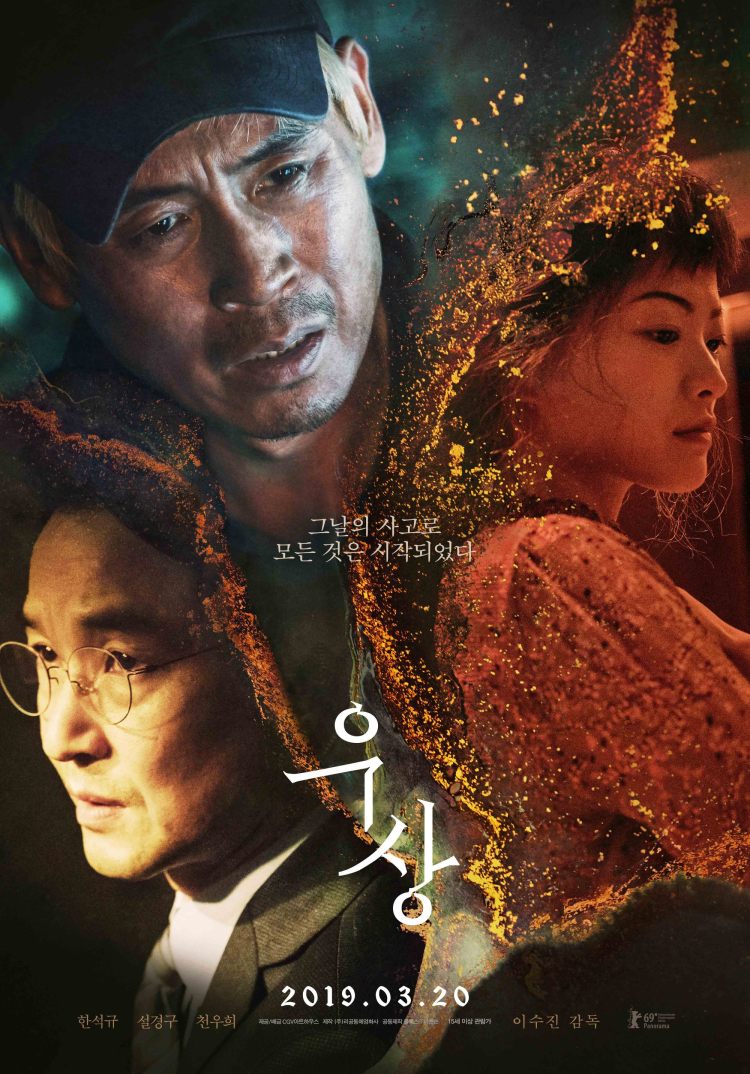
The Gangster, The Cop, The Devil (악인전, Lee Won-tae, 2019) [Fantasia 2019]

81745_1000“Two bad guys will catch the worst man” according to irritated gangster Jang Dong-su (Ma Dong-seok) in Lee Won-tae’s The Gangster, The Cop, The Devil (악인전, Akinjeon). He doesn’t quite know how right he is, even as he forms an unlikely alliance with a maverick cop himself highly irritated because his lazy colleagues won’t listen to his theory that a spate of unsolved murders are the work of a serial killer. More alike than they’d care to admit, the two “bad guys” team up to do what they have to do in order to make the killing stop but at what price?

A vicious killer (Kim Sung-kyu) has developed a habit of rear-ending solo drivers on lonely roads, stabbing them repeatedly and then leaving them for dead. Maverick cop Tae-seok (Kim Mu-yeol) has become convinced that the killings were carried out by the same perpetrator and that they have not yet been identified as a “serial killer” partly because the crimes took place in different districts and there is insufficient co-operation between precincts, and partly because his colleagues think serial killers are something you see in American movies. His superiors just want to close cases, they aren’t particularly concerned with upholding justice or protecting the innocent and so Tae-seok starts thinking outside of the box when he hears that the killer’s latest target was none other than top mob boss Jang Dong-su.

Dong-su got rear-ended after running an errand to have a word with a wayward underling, Hur (Yoo Jae-myung), who has forgotten his place. The killer made a serious mistake going after Dong-su who is a big, handy kind of guy and therefore manages to fend him off, even wounding him in the shoulder despite being badly injured himself. Though the obvious conclusion is that Hur sent someone after him, Dong-su is unconvinced seeing as he had never seen his assailant before and is pretty sure he’s not a member of the gangster underworld. Still, he’s very annoying because a gangster only has power in being respected and right now Dong-su looks a fool. If he wants to get his “professional” life back on track, he needs to get his revenge but to do that he’ll have to cross the floor and work with law enforcement, temporarily teaming up with rogue cop Tae-seok whose heart is in the right place even if he’s not averse to bending the rules.

One of the things which most bothers Tae-seok about amoral killer “K” is that, unlike most serial killers, he kills indiscriminately and purely for pleasure. He has no “type” and generally goes up against those most likely to fight back, unlike your average pattern killer who targets the vulnerable. Like Tae-seok and Dong-su, he is however quite annoyed – this time because someone has “framed” him for a murder he didn’t commit in order to further their own ends. Hugely overconfident and cooly psychopathic, he sits in the dock and asks what makes his crimes different than the state’s if the state is fixing to execute him without proper evidence. Pointedly looking at law enforcement, he affirms that the real villains are those who commit crime with kind faces (say what you like, but at least K looks the part).

When it comes to Tae-seok he might have a point. Conspiring with Dong-su to “kill him with law”, Tae-seok gleefully manipulates the system while giving Dong-su tacit permission to take his revenge as long as “justice” has been properly served. K doesn’t believe in anything, Tae-seok believes in a particular kind of “justice” if not quite in the law, while Dong-su mourns the sense of self-belief that allows you to rule the roost as an all powerful gangster. The three men are a perfect storm, each angry, each resentful, each vowing a particular kind of revenge against the forces which constrain them be they corrupt and lazy superiors, gangsterland disrespect, or the “injustice” of being accused of a crime you did not commit but not being properly credited for the ones you did. Bathed in a garish neon, Lee’s anti-buddy-cop drama embraces its noirish sense of fractured morality with barely suppressed glee as its similarly conflicted heroes pursue their violent destinies, true to their own but dragged to hell all the same.


The Gangster, The Cop, The Devil was screened as part of the 2019 Fantasia International Film Festival.

International trailer (English subtitles)
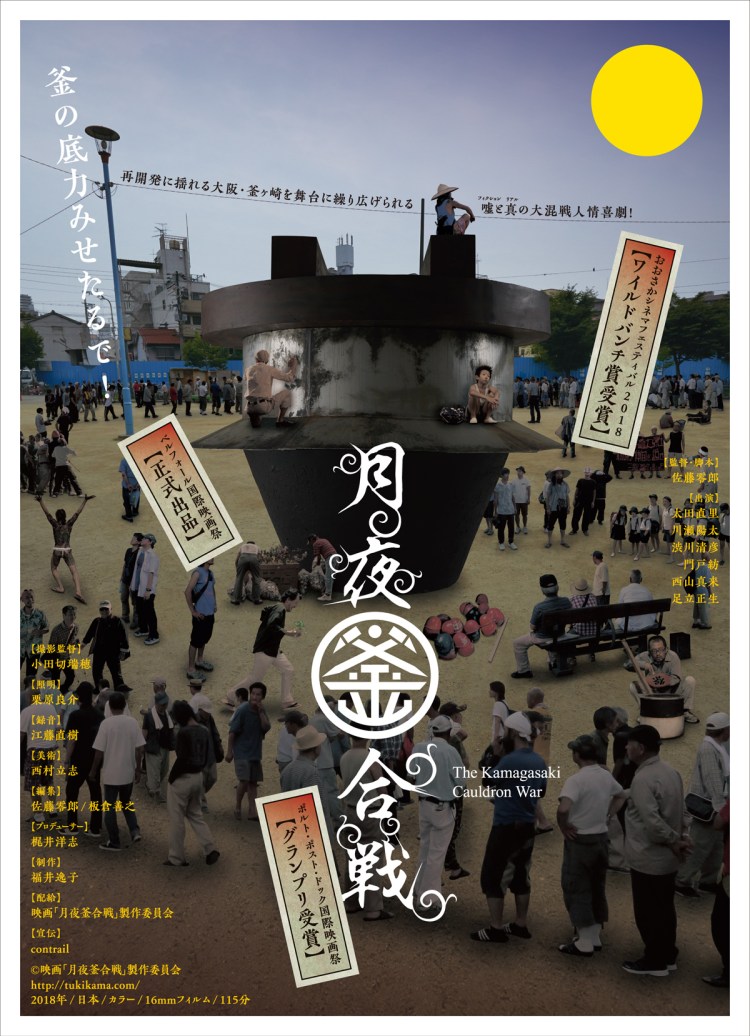
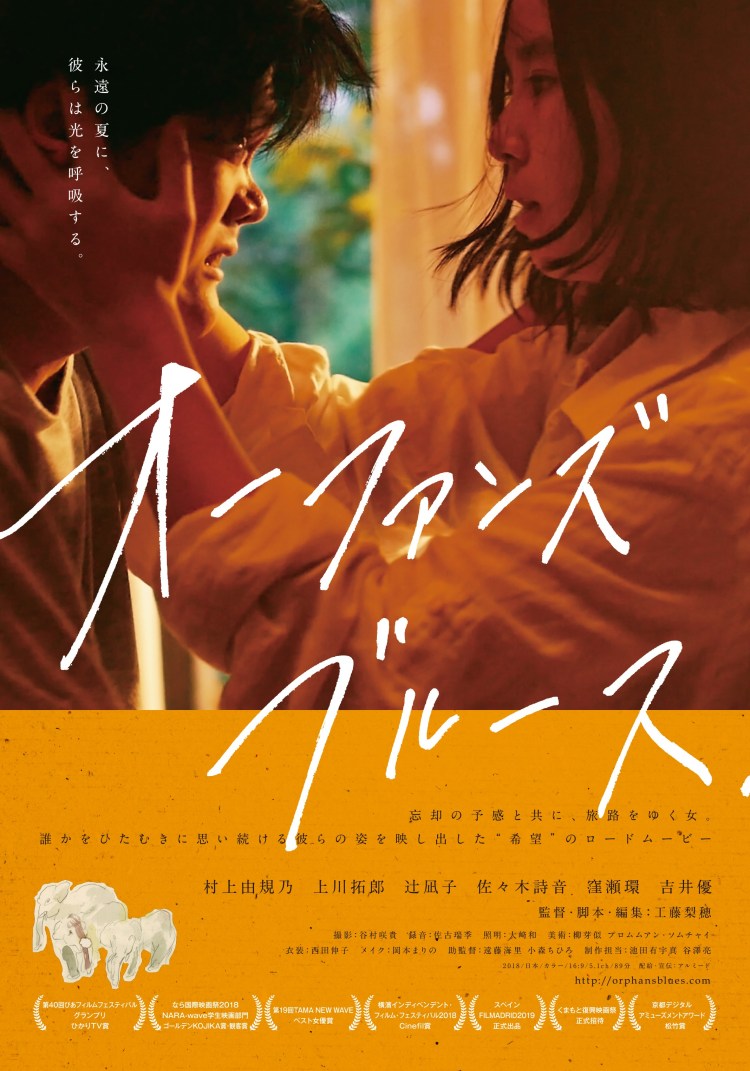
Orphan’s Blues (オーファンズ・ブルース, Riho Kudo, 2018)

Orphan's Blues posterThe past becomes an irresistible trap for a collection of variously troubled souls in Riho Kudo’s Pia winning feature Orphan’s Blues (オーファンズ・ブルース). “Things change” the heroine laments, unable to keep up with the relentless passage of time as her memory begins to collapse in on itself, leaving only nostalgia behind. A poetic exploration of grief, rootlessness, and trauma, Kudo’s bold debut sends its fugitive protagonists on a sad road trip into the long buried past as they attempt to dig up their childhood innocence in escape from an intolerable present.

Emma (Yukino Murakami), a middle-aged woman making a living with a tiny book stand at the side of the road in a small town, has been experiencing unexplained moments of memory loss – forgetting to place a customer’s order, leaving taps on, repeating herself having forgotten that she’s asked this question several times before. Losing the present sends her back to thoughts of the past as evidenced by a picture of a pack of elephants drawn by her childhood friend, Yang (Yu Yoshii), with whom she grew up in the same orphanage. Longing for that same closeness, she decides to track him down but a visit to Chinatown proves fruitless, as does an attempt to call in at the last address she had. Determined to find out what happened to Yang, she reconnects with another friend, Van (Takuro Kamikawa), who is in the process of fleeing to Tahiti with his girlfriend Yuri (Nagiko Tsuji) after stealing some gangsters’ money. When that doesn’t work out they end up accompanying Emma to a small inn run by a woman, Luca (Tamaki Kuboso), who was once in a relationship with Yang, and where a mysterious young man, Aki (Shion Sasaki), is currently staying.

All of our protagonists, bar perhaps Yuri, have a prominent burn somewhere on their body. Emma’s is on her left shoulder – a scald mark she keeps rubbing at times of stress. Van has a scar from a cigarette burn on his right arm, while Luca has what looks like a brand where a wedding ring might once have been worn. Even Aki has some kind scar on his right wrist, conveniently hidden by his long-sleeved shirts. Each of these people is in some way connected by the absent Yang, desperately in search of him even if some perhaps are more aware than others what might have befallen their absent friend.

Luca, who has a series of elephant tattoos across the nape of her neck, recounts that Yang once told her that elephants separate from the pack after receiving a premonition of their deaths. To spare the others the suffering of seeing them pass away, they leave before they go. Yang, they posit, may have followed their example but if he has all he has done is provoke additional suffering among his confused friends. Emma struggles to remember, frustrated by her inability to stay in the present while being pulled towards the past, feeling as if she’s missing some vital clue which will explain everything.

Meanwhile, the tensions between the five residents at the inn ebb and flow. Yuri, who never knew Yang and is beginning to fear she and Van will never get to Tahiti after all, feels herself excluded from the ongoing drama. She resents the closeness between Van and Emma, irritated that only Emma knows how to calm him down in the midst of emotional meltdown, while wondering how long he’s going to keep her waiting in this strangely liminal space caught between a past she never knew and a possibly unattainable future.   

Waiting is however where they are. Van wants to go back, return to a happy place the three childhood friends once travelled and dig up something they buried but can no longer remember. Emma, confused, eventually finds herself rooted in a delusion of the past, unable to see the present clearly while Van is left with little choice other than to abandon himself to facilitate her temporary happiness. Scarred, they run from a disappointing future into childhood nostalgia unable to reconcile the adults they’ve become with the children they once were. Literally as well as figuratively orphaned, they remain adrift with no clear place to belong or return to. Subtle and poetic, Kudo’s beautifully lensed debut is an achingly melancholy piece but one which perhaps finds hope in the solidarity of the lost as much as it suggests there is no path forward for those who can only look back.


Orphan’s Blues screens in New York on July 28 as part of Japan Cuts 2019.

Original trailer (English subtitles)

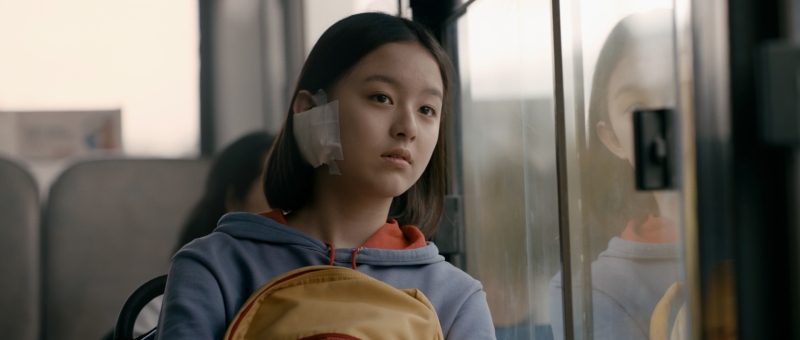
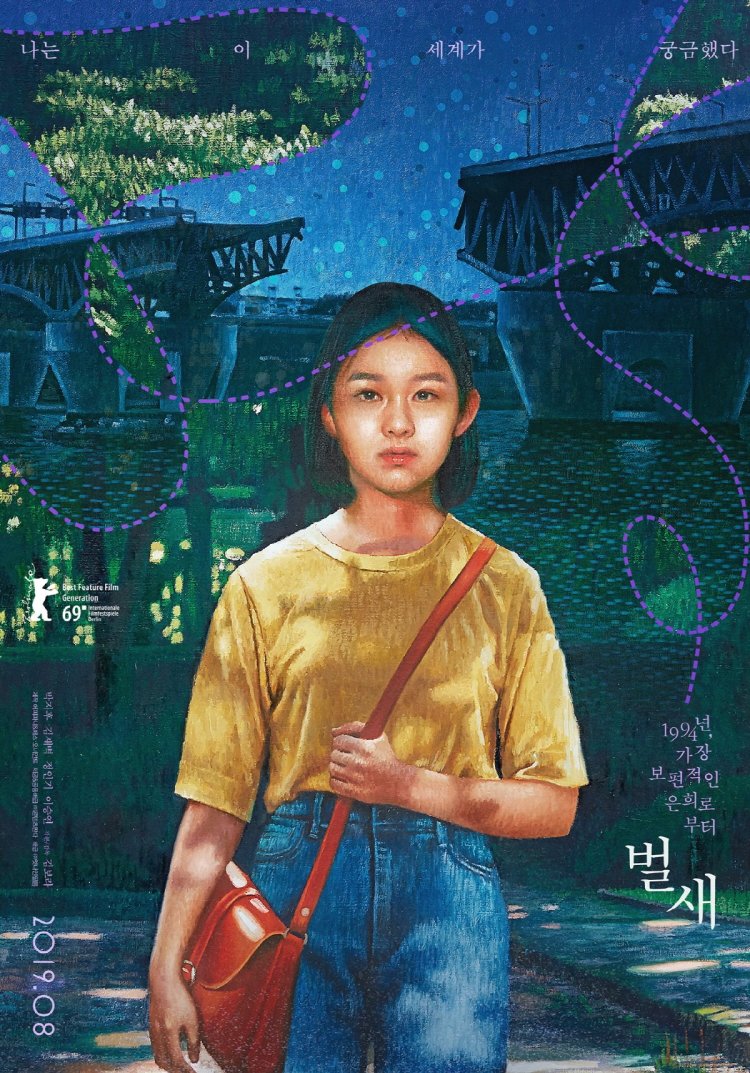
House of Hummingbird (벌새, Kim Bora, 2019) [Fantasia 2019]

House of hummingbird poster 1“The world is fascinating and beautiful” the teenage protagonist of Kim Bora’s House of Hummingbird (벌새, Beolsae) is told in an especially poignant letter recited in the film’s closing moments. It’s a lesson that she’s longing to learn, but finds few willing to teach her in a society whipping itself up into a frenzy of aspiration perhaps at the cost of true human connection. A chronicle of one surprisingly traumatic summer in the newly democratised Korea of 1994, Kim’s film charts its heroine’s gradual progress towards a kind of self acceptance with a melancholy ease as she begins to find her own way despite the toxicity of the world all around her.

14-year-old Eun-hee (Park Ji-hu) is one of three siblings living in a cramped apartment with her harried, emotionally distant parents who run a small rice cake shop. A mediocre, disinterested student she falls asleep at school where the other kids cruelly exclaim that dozy girls like her never make it to college and are destined only to become housemaids to the “successful” adults they assume they’ll be. Meanwhile, Eun-hee’s hardline dad (Jung In-gi) makes her go to Chinese cram school where she “studies” along with her best friend, Ji-suk (Park Seo-yun), spending most of their lesson time making fun of the teacher in hastily written notes.

Previously purposeless, her world begins to widen when the Chinese teacher abruptly quits and is replaced by the infinitely cool, enigmatic university student Young-ji (Kim Sae-byuk) whom she first glimpsed smoking a melancholy cigarette by an open window on the stairs. Strangely captivated by this “odd” young woman, Eun-hee suddenly has the urge to study, especially as Young-ji turns out to be unique among the adults that she knows in that she seems to genuinely care about her and is interested in hearing all about her troubles, which, as we will find out are many.

In the mid-90s, Korea was a newly democratised and rapidly modernising society keen to claim its place on the economic world stage. Where Eun-hee’s parents are defeated, disappointed figures, they want better for their children in the new society but struggle as to how to get it for them. Eun-hee’s mother (Lee Seung-yeon), as we find out from her dejected brother, was bright but had to leave school to pay for his tuition (a promise he seems to think he has not fulfilled). Consequently, the parents are convinced “education” is the way out but fail to realise that their obsession with academic grades is slowly destroying their family home. While Eun-hee is sullen and withdrawn, pushed out by her rowdy family, her older brother’s exam stress often turns violent and her sister skips school to go clubbing in an attempt to escape adolescent anxiety.

Even when Eun-hee discovers a lump on the side of her neck, her mother sends her off to the doctor’s alone though he can’t actually treat her without parental consent which Eun-hee fears they won’t get round to giving. Though they visit her once, they don’t bother to pick her up from an extended stay in hospital and are not home when she returns. Not even an accusation of shoplifting rouses them from their busyness. Eun-hee’s father rudely tells the shopkeeper to stop bothering him and call the police, causing the shopkeeper to feel so sorry for her that he lets her go.

Meanwhile, Eun-hee looks for intimacy in other places. She tries innocent teenage romance with a feckless but good-looking boy, Ji-wan (Jeong Yun-seo), whom truth be told she perhaps likes more as an abstract idea than in himself. The unexpected gift of a bright red rose from a bashful girl (Seol Hye-in) sends her thoughts in another direction but leaves her more confused than ever when that too betrays. Through it all she idolises the mysterious figure of Young-ji with whom she seems to share some kind of affinity and the sense of connection so painfully absent in her frenetic family home.

Eun-hee’s difficult path towards an acceptance of adulthood mirrors that of her nation, finding itself in one particularly traumatic summer marked by a dangerous sense of anxiety in the end of eras as the North’s Kim Il-sung passes away, provoking fears of a disturbance in carefully won political equilibrium. Meanwhile, a literal bridge collapse threatens to destroy Eun-hee’s new path towards maturity once and for all, taking her only source of solace with it. Yet what she learns is that though bad things happen, good things happen too and there are always new people to share them with. She may feel herself to be alone, lost in a confusing landscape and uniquely indifferent to her nation’s relentless pursuit of consumerist success, but she does finally perhaps have herself and new hope for the future found in the security of her own hands.


House of Hummingbird was screened as part of the 2019 Fantasia International Film Festival.

Festival trailer (English subtitles)

The Journalist (新聞記者, Michihito Fujii, 2019)

The Journalist poster 2In these days of “fake news” and misinformation, a robust press is more important than ever. In Japan, however, the news media institution has long been decried as toothless, if not actually in league with the ruling regime. A timely and appropriately exasperated conspiracy thriller, Michihito Fujii’s The Journalist (新聞記者, Shinbun kisha) is inspired by the non-fiction book by newspaper reporter Isoko Mochizuki who makes a brief appearance at the beginning of the film and has herself been singled out as “problematic” by politicians unused to being held to account and objecting to her intensive interview technique.

Mochizuki’s fictionalised stand in, Erika Yoshioka (Shim Eun-kyung), is a rookie reporter who grew up in America with her Japanese journalist father and Korean mother. Following her father’s “suicide” she returned to Japan and is currently working for Toto News where she receives a mysterious fax containing information about a suspicious government plan to found a new medical university.

Meanwhile, idealistic former international diplomat Sugihara is on temporary secondment to CIRO (Cabinet Intelligence and Research Office) – a secretive organisation set up under the occupation to mirror the US’ CIA but often criticised for acting like a secret police force and expending too much effort on spying on ordinary Japanese citizens on Japanese soil rather than gathering useful international intelligence. Sugihara (Tori Matsuzaka) finds himself conflicted in his new work, the first assignment of which is handling a smear campaign against a young woman (clearly inspired by the Shiori Ito case) who has accused a high ranking journalist close to the government of rape. A married man with a baby on the way, he fears rocking the boat but resents his complicity with such obvious government finagling and failure to counter the misogynistic narrative that passes for office banter.

When his former mentor, Kanzaki (Kazuya Takahashi), commits suicide, no longer able to live with his compromises, Sugihara begins to reconsider his decision not to go against his superiors but finds it difficult to countenance “betraying” his organisation even in the knowledge that they are no longer working in the best interests of the people. Yoshioka, with whom he eventually bonds after witnessing her sympathetic treatment of Kanzaki’s bereaved daughter, may in some senses be better placed to resist given her overseas upbringing. Where Sugihara and the news media at large struggle with the idea of standing up to authority, Yoshioka is keen to sell the ideals of journalistic integrity, insisting that a robust press is essential in holding power to account.

Meanwhile, she finds herself a lone voice adrift in the largely patriarchal world of Japanese news media. Leaving the press conference called by the woman accusing the government crony of rape, she stops to tell off a pair of journalists making sexist comments but receives only a brief eye roll before they walk away laughing. She also finds herself resented by her colleagues for pointing out that their hounding of Kanzaki’s bereaved wife and daughter at his funeral is insensitive and inappropriate, but refuses to back down in fierce determination to do what is right even if it is not popular.

Meanwhile, Sugihara’s odious boss Tada (Tetsushi Tanaka) is desperately trying to keep a grip on power from the shadows. He uses Sugihara’s conflicted loyalties against him, subtlety reminding him that he has a wife and newborn daughter to whom he has a greater responsibility, and insisting that there is no “shame” in complicity when it comes to maintaining “the illusion of democracy”. CIRO, it has to be said, does not come out of this well as it wilfully does the government’s dirty work – covering up the indiscretions of “valuable” politicians and their relatives in order to avoid the unpleasant chaos of unwelcome political scandals. Kanzaki’s compromises left him a broken and defeated man, Sugihara wonders what kind of man his daughter would think him to be if he too just went along with the government line and enabled their subversion of democracy solely for personal and economic security.

The press may be waking up, but The Journalist’s chief takeaway is that change comes when enough people find the courage to keep saying no. As the ending implies, the battle is far from over but it has perhaps begun thanks to the efforts of those like Mochizuki and her filmic counterpart Yoshioka as well as the courage of whistleblowers like Sugihara who risk personal ruin merely for speaking out. A timely, urgent defence of press freedom in the face of tightening authoritarianism, The Journalist is an all too plausible conspiracy thriller in which the last guardians of liberal democracy are the nails which refuse to be hammered down.


The Journalist screens in New York on July 27 as part of Japan Cuts 2019.

Original trailer (English subtitles)

Erica 38 (エリカ38, Yuichi Hibi, 2019)

Erica 38 poster“Everybody’s life is in someway unfulfilling”, admits the philosophical victim of a con woman in ripped from the headlines tale Erica 38 (エリカ38). “It’s like a crutch” he adds, without a little fantasy you can’t go on. Like the “Erica” of the title, her victims are also looking for escape from an unsatisfying reality, and unfortunately for them already have what she feels would make her life more bearable – vast wealth. Returning to Japan after three decades abroad, director Yuichi Hibi does his best to humanise the figure of the coldhearted grifter, painting her as just another disappointed, lonely old woman desperately trying to recapture the sense of possibility so cruelly denied her in youth.

Later rebranding herself as “Erica”, a 38-year-old woman of means, our “heroine” is Satoko Watanabe (Miyoko Asada), an ageing bar hostess supplementing her income by peddling a dodgy multi-vitamin pyramid scheme to bored housewives eager to make a few extra bucks. Her sales pitch, however, gets her noticed by a refined old woman sitting close by in an upscale hotel during in one of her sessions. The woman, Mrs. Ito (Midori Kiuchi), introduces her to a “friend”, Hirasawa (Takehiro Hira), who cuts in with a sales pitch of his own in branding himself as a paid up member of the global elite who works with the Pentagon on important international matters. Hirasawa heavily implies his business is not quite on the level, but Satoko, captivated by his suave sophistication, fails to realise just how dodgy he really is. Before long, she’s joined him in his “consultation” business, selling fraudulent investment opportunities in the emerging market of Cambodia.

It is surprisingly easy to sympathise with the dejected Satoko as she falls under Hirasawa’s spell. Already well into her 50s when the film begins and clearly over 60 when she rebrands herself as the 38-year-old Erica, Satoko has led an unhappy life beginning with a traumatic childhood lived in the shadow of an abusive, adulterous father. The only memory of joy from her youth is when she and her mother (Kirin Kiki) giggled together after accidentally tipping rat poison into dad’s miso soup. Life since then, it seems, has been one disappointment after another spent in the hostess bars of Kabukicho. What all of that means, however, is that she’s become skilled in the art of selling fantasy. All that time invested in extracting cold hard cash from lonely men has set her in good stead for selling unrealistic investment opportunities to the already comfortably off.

Unrepentant, Satoko tells herself that she bears no responsibility towards those who lost money in her scams because they were chasing exactly the same thing she was – escape, and they both found it at least for a moment. Her victims made the decision themselves, she never forced anyone, and so it’s their own fault that they fell for her patter while she perhaps laments only that she’s been foolish and profligate in not planning better for the eventual implosion of all her schemes.

“There’s a thin line between real and fake”, she tells a party guest admiring one of her paintings, “if someone sees it as real then real it is”. Satoko’s cons are, in essence, an extension of the paradox of the hostess business. Anyone with an ounce of sense would have seen that the business isn’t legitimate, but like a salaryman in a hostess bar they invest in the semblance of connection while knowing in a sense that isn’t “real”. Ironically enough, Satoko is forced to realise that the first victim of her subterfuge is herself. Chasing a dream of love, she fell hard for Hirasawa without thinking him through. Hirasawa succeeds in his schemes because he’s scrupulously careful in maintaining his persona – he operates out of hotels, has no fixed address, and uses several cellphones. As Satoko later finds out, he is effectively running a harem, romancing several women all like herself bringing in the big bucks while he sits back relatively risk free. She has been used, once again.

The implosion of her dream of romantic escape is what sends her to Thailand where she ponders a reset, rebranding herself as the 38-year-old Erica of the title and beginning an affair with a young and handsome Thai man she rescued from gangsters with her ill-gotten gains. Porche (Woraphop Klaisang) later describes her as “My Angel”, of course realising that she was much older than she claimed but claiming not to care. It may be that he really did love her, but you can’t ignore the corruption of all that money and the power that it buys. In the end, money can’t buy you love, or a path out of loneliness, or a cure for disappointment.

Satoko was, like many, just another lonely, disappointed old lady trying to escape an unsatisfying present through a fantasy of returning to the past, rebooting herself as a successful business woman, loved and in love, as someone with a brighter future to look forward to. Her sales patter worked because it was “true”, the similarly dejected could sense in her the desperation for escape and as they wanted to escape too they let her take them with her. A melancholy tale of delusion and disillusionment, Erica 38 has immense sympathy for the scammer and the scammed painting them both as victims of an often unfair, conformist society in which freedom is the rarest commodity of them all.


Erica 38 screens in New York on July 25 as part of Japan Cuts 2019.

Original trailer (English subtitles)