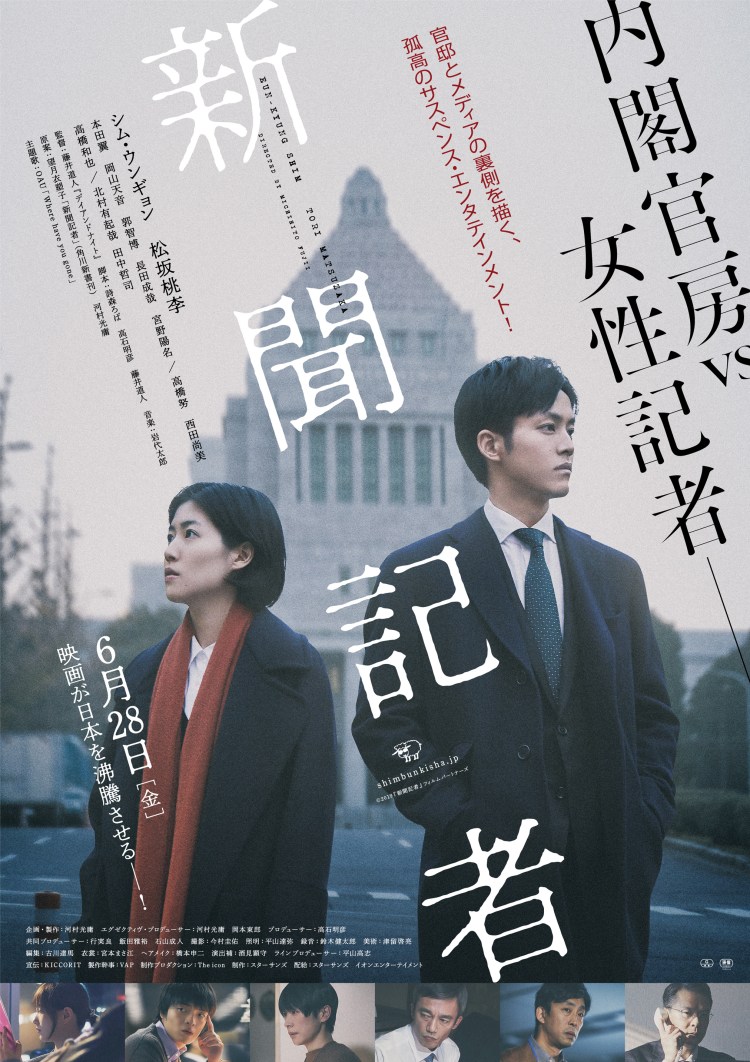
The Journalist (新聞記者, Michihito Fujii, 2019)

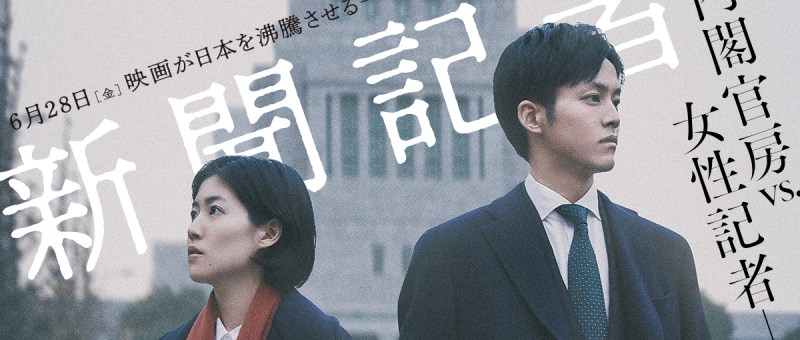
The Journalist poster 2In these days of “fake news” and misinformation, a robust press is more important than ever. In Japan, however, the news media institution has long been decried as toothless, if not actually in league with the ruling regime. A timely and appropriately exasperated conspiracy thriller, Michihito Fujii’s The Journalist (新聞記者, Shinbun kisha) is inspired by the non-fiction book by newspaper reporter Isoko Mochizuki who makes a brief appearance at the beginning of the film and has herself been singled out as “problematic” by politicians unused to being held to account and objecting to her intensive interview technique.

Mochizuki’s fictionalised stand in, Erika Yoshioka (Shim Eun-kyung), is a rookie reporter who grew up in America with her Japanese journalist father and Korean mother. Following her father’s “suicide” she returned to Japan and is currently working for Toto News where she receives a mysterious fax containing information about a suspicious government plan to found a new medical university.

Meanwhile, idealistic former international diplomat Sugihara is on temporary secondment to CIRO (Cabinet Intelligence and Research Office) – a secretive organisation set up under the occupation to mirror the US’ CIA but often criticised for acting like a secret police force and expending too much effort on spying on ordinary Japanese citizens on Japanese soil rather than gathering useful international intelligence. Sugihara (Tori Matsuzaka) finds himself conflicted in his new work, the first assignment of which is handling a smear campaign against a young woman (clearly inspired by the Shiori Ito case) who has accused a high ranking journalist close to the government of rape. A married man with a baby on the way, he fears rocking the boat but resents his complicity with such obvious government finagling and failure to counter the misogynistic narrative that passes for office banter.

When his former mentor, Kanzaki (Kazuya Takahashi), commits suicide, no longer able to live with his compromises, Sugihara begins to reconsider his decision not to go against his superiors but finds it difficult to countenance “betraying” his organisation even in the knowledge that they are no longer working in the best interests of the people. Yoshioka, with whom he eventually bonds after witnessing her sympathetic treatment of Kanzaki’s bereaved daughter, may in some senses be better placed to resist given her overseas upbringing. Where Sugihara and the news media at large struggle with the idea of standing up to authority, Yoshioka is keen to sell the ideals of journalistic integrity, insisting that a robust press is essential in holding power to account.

Meanwhile, she finds herself a lone voice adrift in the largely patriarchal world of Japanese news media. Leaving the press conference called by the woman accusing the government crony of rape, she stops to tell off a pair of journalists making sexist comments but receives only a brief eye roll before they walk away laughing. She also finds herself resented by her colleagues for pointing out that their hounding of Kanzaki’s bereaved wife and daughter at his funeral is insensitive and inappropriate, but refuses to back down in fierce determination to do what is right even if it is not popular.

Meanwhile, Sugihara’s odious boss Tada (Tetsushi Tanaka) is desperately trying to keep a grip on power from the shadows. He uses Sugihara’s conflicted loyalties against him, subtlety reminding him that he has a wife and newborn daughter to whom he has a greater responsibility, and insisting that there is no “shame” in complicity when it comes to maintaining “the illusion of democracy”. CIRO, it has to be said, does not come out of this well as it wilfully does the government’s dirty work – covering up the indiscretions of “valuable” politicians and their relatives in order to avoid the unpleasant chaos of unwelcome political scandals. Kanzaki’s compromises left him a broken and defeated man, Sugihara wonders what kind of man his daughter would think him to be if he too just went along with the government line and enabled their subversion of democracy solely for personal and economic security.

The press may be waking up, but The Journalist’s chief takeaway is that change comes when enough people find the courage to keep saying no. As the ending implies, the battle is far from over but it has perhaps begun thanks to the efforts of those like Mochizuki and her filmic counterpart Yoshioka as well as the courage of whistleblowers like Sugihara who risk personal ruin merely for speaking out. A timely, urgent defence of press freedom in the face of tightening authoritarianism, The Journalist is an all too plausible conspiracy thriller in which the last guardians of liberal democracy are the nails which refuse to be hammered down.


The Journalist screens in New York on July 27 as part of Japan Cuts 2019.

Original trailer (English subtitles)
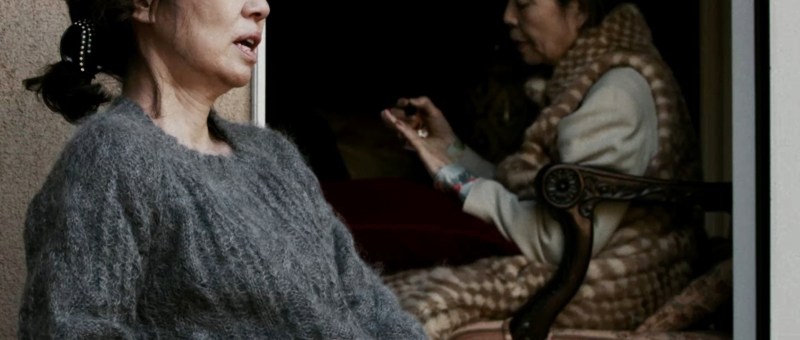
Erica 38 (エリカ38, Yuichi Hibi, 2019)

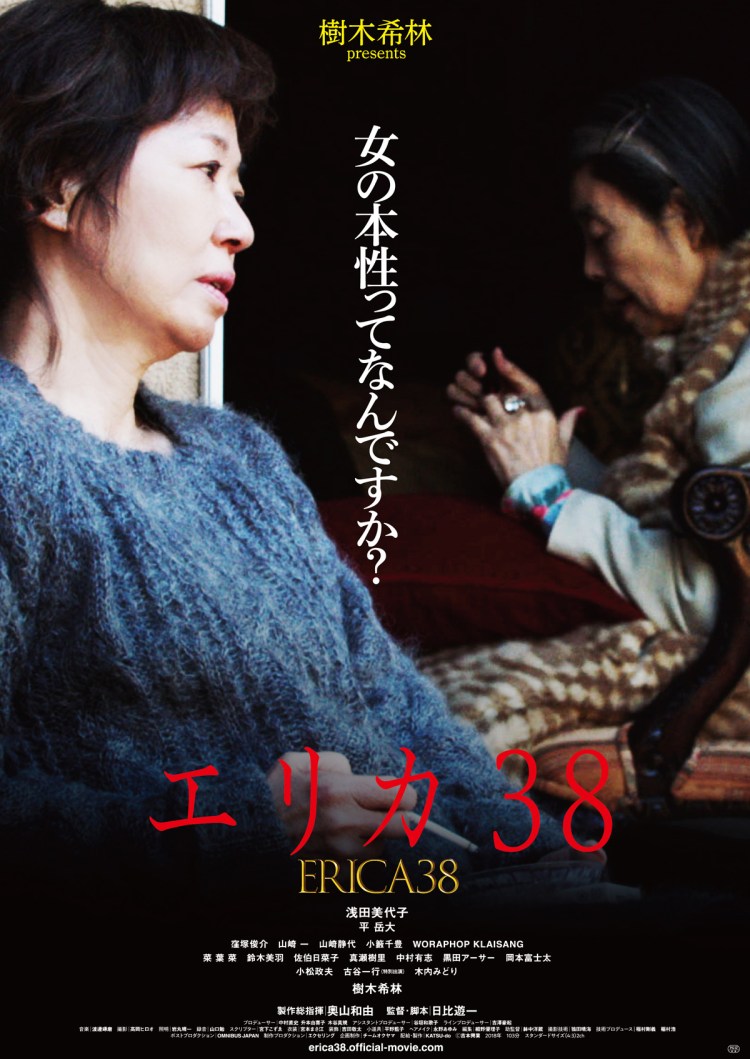
Erica 38 poster“Everybody’s life is in someway unfulfilling”, admits the philosophical victim of a con woman in ripped from the headlines tale Erica 38 (エリカ38). “It’s like a crutch” he adds, without a little fantasy you can’t go on. Like the “Erica” of the title, her victims are also looking for escape from an unsatisfying reality, and unfortunately for them already have what she feels would make her life more bearable – vast wealth. Returning to Japan after three decades abroad, director Yuichi Hibi does his best to humanise the figure of the coldhearted grifter, painting her as just another disappointed, lonely old woman desperately trying to recapture the sense of possibility so cruelly denied her in youth.

Later rebranding herself as “Erica”, a 38-year-old woman of means, our “heroine” is Satoko Watanabe (Miyoko Asada), an ageing bar hostess supplementing her income by peddling a dodgy multi-vitamin pyramid scheme to bored housewives eager to make a few extra bucks. Her sales pitch, however, gets her noticed by a refined old woman sitting close by in an upscale hotel during in one of her sessions. The woman, Mrs. Ito (Midori Kiuchi), introduces her to a “friend”, Hirasawa (Takehiro Hira), who cuts in with a sales pitch of his own in branding himself as a paid up member of the global elite who works with the Pentagon on important international matters. Hirasawa heavily implies his business is not quite on the level, but Satoko, captivated by his suave sophistication, fails to realise just how dodgy he really is. Before long, she’s joined him in his “consultation” business, selling fraudulent investment opportunities in the emerging market of Cambodia.

It is surprisingly easy to sympathise with the dejected Satoko as she falls under Hirasawa’s spell. Already well into her 50s when the film begins and clearly over 60 when she rebrands herself as the 38-year-old Erica, Satoko has led an unhappy life beginning with a traumatic childhood lived in the shadow of an abusive, adulterous father. The only memory of joy from her youth is when she and her mother (Kirin Kiki) giggled together after accidentally tipping rat poison into dad’s miso soup. Life since then, it seems, has been one disappointment after another spent in the hostess bars of Kabukicho. What all of that means, however, is that she’s become skilled in the art of selling fantasy. All that time invested in extracting cold hard cash from lonely men has set her in good stead for selling unrealistic investment opportunities to the already comfortably off.

Unrepentant, Satoko tells herself that she bears no responsibility towards those who lost money in her scams because they were chasing exactly the same thing she was – escape, and they both found it at least for a moment. Her victims made the decision themselves, she never forced anyone, and so it’s their own fault that they fell for her patter while she perhaps laments only that she’s been foolish and profligate in not planning better for the eventual implosion of all her schemes.

“There’s a thin line between real and fake”, she tells a party guest admiring one of her paintings, “if someone sees it as real then real it is”. Satoko’s cons are, in essence, an extension of the paradox of the hostess business. Anyone with an ounce of sense would have seen that the business isn’t legitimate, but like a salaryman in a hostess bar they invest in the semblance of connection while knowing in a sense that isn’t “real”. Ironically enough, Satoko is forced to realise that the first victim of her subterfuge is herself. Chasing a dream of love, she fell hard for Hirasawa without thinking him through. Hirasawa succeeds in his schemes because he’s scrupulously careful in maintaining his persona – he operates out of hotels, has no fixed address, and uses several cellphones. As Satoko later finds out, he is effectively running a harem, romancing several women all like herself bringing in the big bucks while he sits back relatively risk free. She has been used, once again.

The implosion of her dream of romantic escape is what sends her to Thailand where she ponders a reset, rebranding herself as the 38-year-old Erica of the title and beginning an affair with a young and handsome Thai man she rescued from gangsters with her ill-gotten gains. Porche (Woraphop Klaisang) later describes her as “My Angel”, of course realising that she was much older than she claimed but claiming not to care. It may be that he really did love her, but you can’t ignore the corruption of all that money and the power that it buys. In the end, money can’t buy you love, or a path out of loneliness, or a cure for disappointment.

Satoko was, like many, just another lonely, disappointed old lady trying to escape an unsatisfying present through a fantasy of returning to the past, rebooting herself as a successful business woman, loved and in love, as someone with a brighter future to look forward to. Her sales patter worked because it was “true”, the similarly dejected could sense in her the desperation for escape and as they wanted to escape too they let her take them with her. A melancholy tale of delusion and disillusionment, Erica 38 has immense sympathy for the scammer and the scammed painting them both as victims of an often unfair, conformist society in which freedom is the rarest commodity of them all.


Erica 38 screens in New York on July 25 as part of Japan Cuts 2019.

Original trailer (English subtitles)
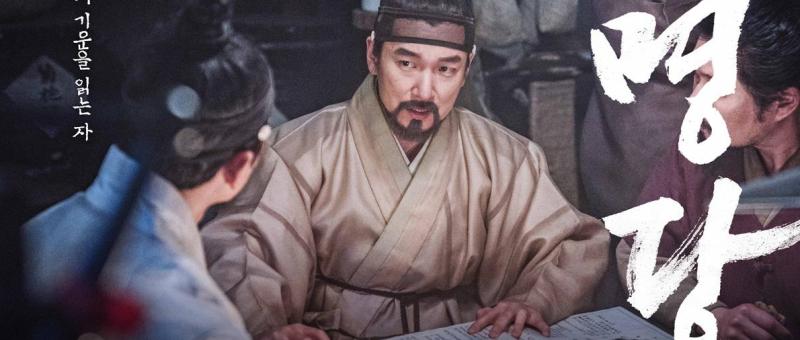
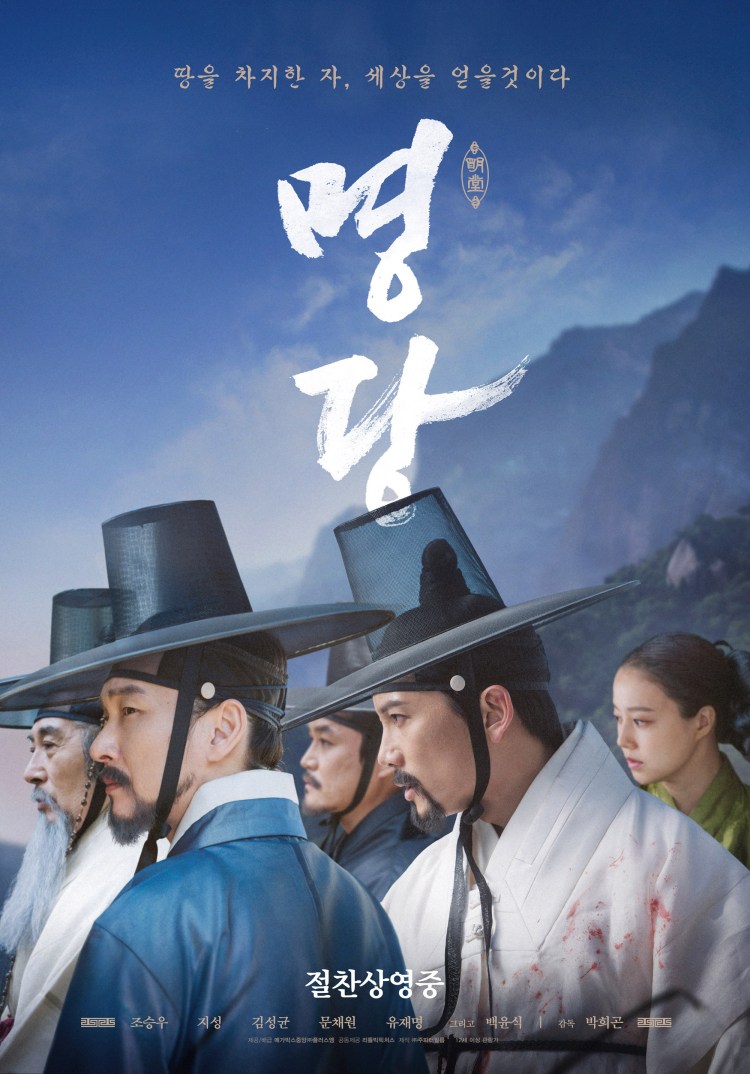
Fengshui (명당, Park Hee-gon, 2018)

FengShui poster 1A would-be-dynast gets overly involved with a weird spiritualist and almost (?) ruins the nation. Does that sound a little familiar? As metaphors go, it might be a stretch but then so much of Park Hee-gon’s Fengshui (명당, Myeong-dang) is just that. Set in the late 19th century, Park’s film is the third in a loose trilogy themed around Korean fortune telling traditions (following The Face Reader, and The Princess and the Matchmaker), but rather than questioning the efficacy of its art asks a series of questions about its application and the internecine lengths those who lust for power or otherwise feel themselves unfairly oppressed will go to to reclaim their rightful position.

Our hero, unwisely honest fengshui master Jae-sang (Cho Seung-woo), is the only one brave enough to point out that the site chosen for the burial of the late king is cursed, but inevitably he is ignored. He is of course right, which means he must be eliminated which is why a troop of soldiers working for the nefarious Kim clan show up and burn his house down, executing his wife and child by the sword when they manage to escape. 13 years later, he finds his expertise called on again when the weak and inexperienced king begins to suspect the Kim clan is plotting against him and that their shenanigans over his father’s grave may have something to do with it.

Like any typical Korean period drama, Fengshui is chiefly concerned with palace intrigue, only this intrigue is stranger than most in its bizarre obsession with the possibilities of manipulating spiritual power through acquiring “auspicious” land for whichever purpose one might wish from conceiving an heir to making sure your line holds power. The Kims are convinced they can win the throne (if by proxy) through digging up their ancestors and replanting them in more advantageous places only to discover that the grass is (literally) always greener. Still, they will stop at nothing from outright murder to psychological game playing in order to manipulate the teenage king into acting as their puppet.

One might ask themselves what the point is, what’s so great about being king anyway? The actual king might say not much, as he discovers himself a humiliated, hollow figure who wields no real power seeing as his soldiers seem set to side with Kim. Heungseon (Ji Sung), however, his “cheerful” uncle might feel differently after experiencing a lifetime of just the same. Forced to prance about doing party tricks for the Kims, barking and eating scraps from the floor like a mangy dog, he might say that being king is the only way to reclaim your self-respect and ensure you will never be at the mercy of ruthless men ever again.

The real key, however, is presented at the end when Jae-sang and his money loving friend Yong-shik (Yoo Jae-myung) are visited some years later by two men in suits who want to know the best place to start a military school to train Independence fighters. Jae-sang, having vowed to stop looking for places to bury people so he can find one to save them, is only too happy to oblige and even comes up with the name “Shinheung Military Academy” (a real school which is also, quite bizarrely, the subject of a smash hit musical). The point is further brought home with Kim’s descendent standing next to a family grave and lamenting that it can’t have been auspicious enough because they’ve lost all their power since the Japanese arrived. The subtext seems to be that feudal corruption and a subversion of traditional values such as ancestor worship and filial piety contributed to the gradual weakening of the Korean state which was plagued by insecure kings and political finagling until finally “sold” to foreign powers in the early 20th century.

Indeed, the ambitious usurpers eventually burn the soul of Korea in order to ensure their own, or rather their children’s, futures even at the expense of their nation’s. Literally fighting over a grave, the elites waste their time on pointless, internecine dynastic squabbling while ordinary people continue to suffer. Jae-sang, having given up on his own petty quest for revenge, comes to the conclusion that all this looking back is a waste of time when what they should be thinking about is the future – not burying things, but planting them. It is a good lesson, but, Park seems to suggest, perhaps one that has not yet been fully learned.


Screened as the latest teaser for the upcoming London Korean Film Festival. The next teaser screening, Zhang Lu’s Ode to the Goose, takes place on 19th August at Picturehouse Central.

International trailer (English subtitles)

His Lost Name (夜明け, Nanako Hirose, 2018)

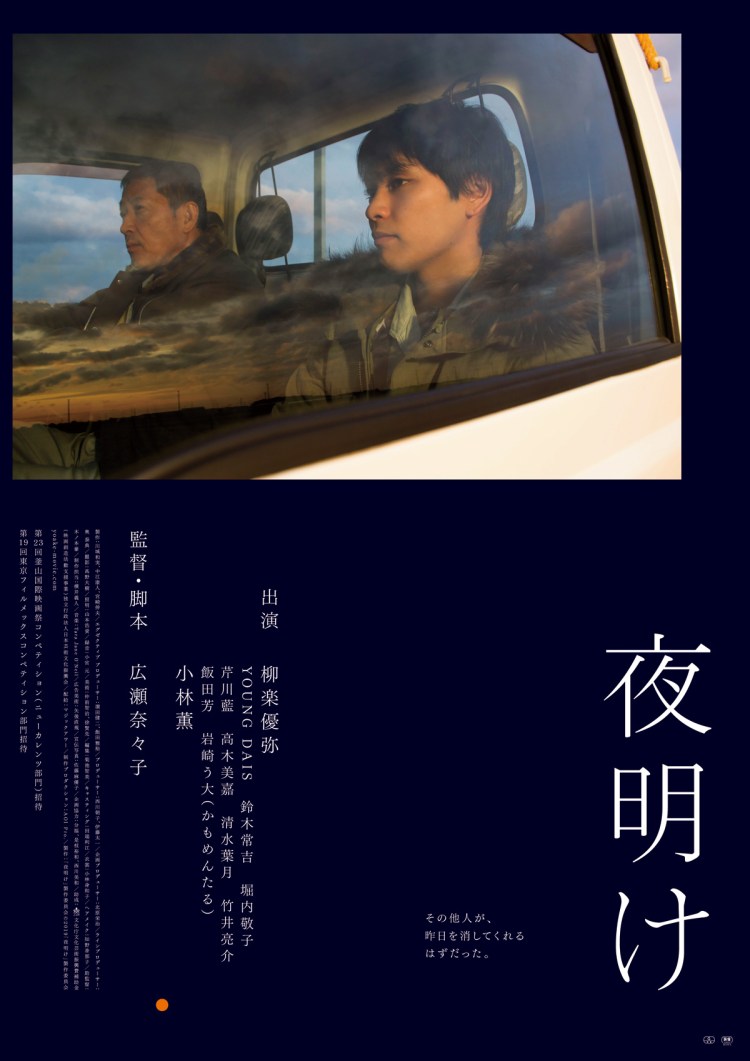
His Lost Name poster 1Family as performance has become a prominent theme in the ongoing development of the family drama. Ever since The Family Game punched a gaping hole through the sanctities of the family unit, nothing has quite been the same. Then again, performance only goes so far and will necessarily fail when there is no genuine connection to back it up. Every family has its problems, according to Tetsu the bereaved patriarch at the centre of His Lost Name (夜明け, Yoake), but you cannot simply escape them through substitution or subterfuge.

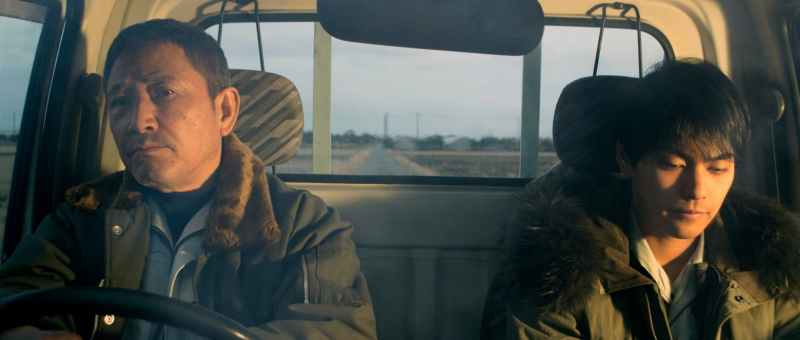
When Tetsu (Kaoru Kobayashi) finds a young man passed out on a riverbank, his first instinct is to help him. He takes him home, but the man though obviously grateful remains reticent, only latterly identifying himself as “Shinichi Yoshida” (Yuya Yagira) which, as Tetsu points out, is a suspiciously common name. “Shinichi” starts working at Tetsu’s furniture factory and is warmly welcomed by the other employees as well as Tetsu’s fiancée Hiromi (Keiko Horiuchi) who runs the office. He is, however, somewhat nervous, shrinking away from passing policemen and having a full on meltdown when a friend tries to take his picture.

Tetsu, meanwhile, has not been entirely truthful either. His wife and son, also (coincidentally) called Shinichi, were killed in a car accident some years previously. Despite having arranged to officialise his relationship with Hiromi, it seems he’s not quite ready to leave the past behind and is not planning to live with her even after they marry nor has he made much of a motion to separate himself from his former family home.

The arrival of the new “Shinichi” is then a fortuitous one, in some senses, in that it affords Tetsu a path back towards the son he’s lost. This is perhaps why he is so keen to look after Shinichi despite knowing that he’s not telling him the whole truth and is obviously on the run from something or other. Shinichi tells him that he’s on a “soul-searching” vacation and is in this tiny village because he visited it at some unspecified point in the past. Tetsu is content to let him be, confident that Shinichi will offer up more truth when the occasion calls but also hoping to persuade him to stay in the place of the Shinichi he has already lost.

Snippets of what he says may be true – an overbearing, authoritarian father and cold family background suggest Shinichi is looking for exactly what Tetsu offers him. Yet Tetsu, trying his best to do better, may be little different. He argued with his Shinichi because he rejected the furniture business to be an electrician. Tetsu railroaded his son in much the same way Shinichi’s father did him, and despite his instruction to “choose your own path” is clearly grooming his surrogate son as an heir (much to the disappointment of Shoji (Young Dais), a loyal worker at the factory who clearly loves Tetsu and is a good friend to Shinichi).

Both accepting that what passes between them is to some extent a simulacrum, the two men take what they need, fulfilling the roles of family a little more than superficially but painfully missing the mark. Meanwhile, their awkward closeness begins to disrupt Tetsu’s peaceful existence in dredging up memories of the past, damaging his relationship with Hiromi and placing a strain on his business. Shoji, upset that Shinichi froze rather than back him up during an incident we can infer was in some degree triggering, angrily tells him that he should “trust us more”. He may well have a point in that Shinichi’s reticence prevents him becoming a full member of the “family” but it’s less a matter of trust in others than belief in himself that keeps Shinichi silent.

Unable to accept himself as himself, and failing to step into the persona of “Shinichi”, all Shinichi is left with is intense shame and self-loathing. The failure of the Shinichi persona perhaps forces him to reclaim his own name, but the shame still remains as does the sense of drifting confusion which prevents him from moving forward with his life. Tetsu meanwhile is forced to accept that he cannot save his son and is ill-equipped to help this confused young man with whom he has made all the same mistakes as before, burdening him with unfair parental expectations he knows for certain that the boy cannot carry. A tale of fractured identities, fraying familial bonds, and irresolvable guilt, His Lost Name leaves its heroes much as it found them, mired in shame and regret but with perhaps a degree of acceptance for that which cannot be changed.


His Lost Name screens in New York on July 23 as part of Japan Cuts 2019.

International trailer (English subtitles)

Ode to Nothing (Oda Sa Wala, Dwein Ruedas Baltazar, 2018) [Fantasia 2019]

Ode to Nothing poster 3“Maybe it would be better if I just disappeared rather than physically be here but feel invisible all the time” the lonely heroine of Dwein Ruedas Baltazar’s Ode to Nothing (Oda sa wala) sadly laments to her only source of comfort, a semi-embalmed corpse. A melancholy meditation on the living death that is existential loneliness, Ode to Nothing takes its alienated heroine on a journey of hope and disappointment as she rediscovers a sense of joy in living only through befriending death. 

43-year-old Sonya (Marietta Subong, AKA Pokwang) lives alone with her elderly father (Joonee Gamboa) to whom she barely speaks in a large Spanish-style house which doubles as a moribund funeral home. Short on custom, Sonya’s only frequent visitor is sinister loanshark Theodore (Dido de la Paz) who currently holds the deeds to the house while she struggles to make the interest payments. Meanwhile, she spends her days gazing out of open windows, waiting for the handsome young taho seller to arrive, and listening to an ancient cassette tape of Chinese folksong Mo Li Hua.

The stillness of her life is ruptured late one night when a couple of men arrive with the fresh corpse of an old woman, seemingly having run her over and not wanting the bother of taking her to a hospital seeing as she is already dead. Sonya is dubious. She doesn’t want any trouble either, but needs the money and the custom and so she agrees to take the woman in and see if anyone claims her. No one does, and soon enough the corpse has become a new presence in Sonya’s life and home. She begins to confide in it, dresses it in her mother’s old clothes, and sits it at the dinner table where her father too indulges the illusion, finally talking to her once again as if the family had really been restored.

In an odd way, the corpse guides Sonya back to life. No longer so sullen, her funeral parlour finally attracts some customers while she begins to dress more cheerfully, even dancing and skipping along to Mo Li Hua with girlish enthusiasm. “As you get older, you have more reason to do the things you were too afraid to do when you were younger” she explains to the corpse, outlining a brief overture she just made to Elmer (Anthony Falcon), the taho vendor, whose grandfather she also saw off around three years ago after which Elmer took over the taho vending business.

Taho is perhaps the perfect encapsulation of Sonya’s newfound hopes, wholesome sweetness and easy comfort. The blandness of off-white silken tofu mixed with the gentle colouring of the amibal syrup and sago pearls, like the Jasmine flower of the folksong, seem to symbolise the brief moments of possible happiness in an otherwise dull existence but even within her increasing sense of positivity she perhaps knows her rekindled desire for Elmer and for life is likely go answered. In any case, she falls into the corpse’s lap as if it really were her mother, attributing to it a supernatural power that keeps the corpses flowing and beckons both life and death to her lonely home.

As in any good fairy tale, however, you have to be careful what you wish for. Sonya gets what she wanted, but not at all in the way she wanted it. The corpse betrays her, leaving her bereft once again and entombed inside her own funeral home with the feeling that there is only one way out. Baltazar shoots in 4:3 with the rounded corners of nostalgic 16mm, but the frame cannot help but recall the small window on the surface of a coffin, as if we were peeking in on her still life from some other plane. Sonya is, in many ways, already dead, trapped in a moribund and hopeless world where even the fragmentary past is being slowly taken away from her – the broken cassette tape, the rapidly depleting furniture, Elmer’s crushing absence. She confesses that she’s afraid of the dark and of being alone, tired enough of her resignation to abandonment to embrace a corpse which can, of course, never leave you. It can, however, disappoint as all false idols will. A melancholy exploration of loneliness, defeat, and despair, Baltazar’s whimsical drama is a haunting ode to emptiness but one that clings sadly to life and hope even as the night draws in.


Ode to Nothing was screened as part of the 2019 Fantasia International Film Festival.

Original trailer (English subtitles)
Mo Li Hua

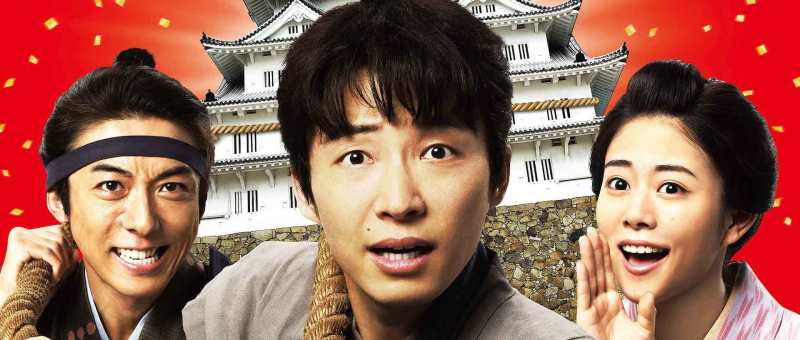
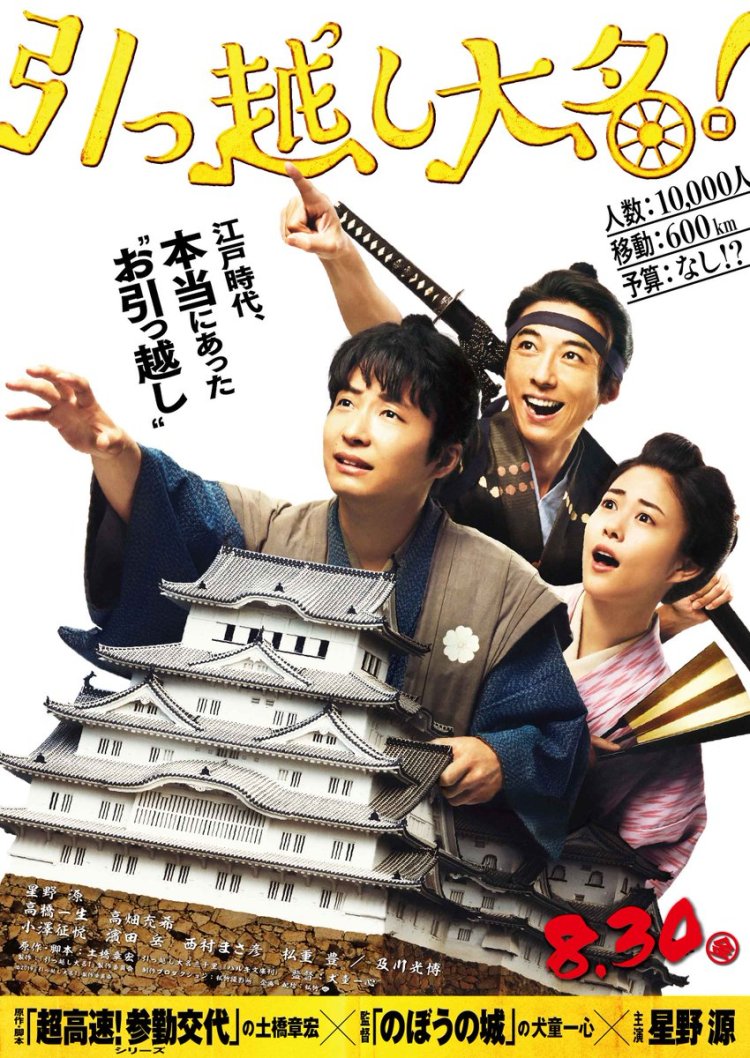
Samurai Shifters (引っ越し大名!, Isshin Inudo, 2019)

Samurai Shifters poster 1Forced transfers have been in the news of late. Japanese companies, keen to attract and keep younger workers in the midst of a growing labour shortage, have been offering more modern working rights such as paid parental leave but also using them as increased leverage to force employees to take jobs in far flung places after returning to work – after all, you aren’t going to up and quit with a new baby to support.

As Isshin Inudo’s Samurai Shifters (引っ越し大名!, Hikkoshi Daimyo!) proves, contemporary corporate culture is not so different from the samurai ways of old. Back in the 17th century, the Shogun kept a tight grip on his power by shifting his lords round every so often in order to keep them on their toes. Seeing as they had to pay all the expenses and handle logistics themselves, relocating left a clan weakened and dangerously exposed which of course means they were unlikely to challenge the Shogun’s power and would be keen to keep his favour in order to avoid being asked to make regular moves to unprofitable places.

When the Echizen Matsudaira clan is ordered to move a considerable distance, crossing the sea to a new residence in Kyushu which isn’t even really a “castle”, they have a big problem because their previous relocation officer has passed away since their last move. Predictably, no one wants this totally thankless job which warrants seppuku if you mess it up so it falls to introverted librarian Harunosuke (Gen Hoshino) who is too shy refuse (even if he had much of a choice, which he doesn’t). Unfortunately for some, however, Harunosuke is both smart and kind which means he’s good at figuring out solutions to complicated problems and reluctant to exercise his samurai privilege to do so.

In fact Harunosuke is something of an odd samurai. As others later put it, he doesn’t care about status or seniority and has a natural tendency to treat everybody equally. When the head of accounts advises him to take loans from merchants with no intention to pay them back, he objects not only to the dishonesty but to the unfairness of stealing hard-earned money from ordinary people solely under the rationale that they are entitled to do so because they are samurai and therefore superior. Likewise, when he finds out that his predecessor was of a lower rank and that all his achievements were credited to his superiors he makes a point of going to his grave to apologise which earns him some brownie points with the man’s pretty daughter, Oran (Mitsuki Takahata), who was not previously minded to help him because of the way her father had been treated.

Harunosuke’s natural goodness begins to endear him to the jaded samurai now in his care. Though they might be suspicious of some of his methods including his “decluttering” program, they quickly come on board when they realise he is not intending to exclude himself from his ordinances and even consents to burn his own books in order to make it plain that everyone is in the same boat. He hesitates in his growing attraction to Oran (who in turn is also taken with him because of his atypical tendency to compassion) not only because of his natural diffidence but because he feels it might be selfish to pursue a romance while urging everyone else towards austerity.

Meanwhile, “romance” is why all this started in the first place. The lord, Naonori Matsudaira (Mitsuhiro Oikawa), is in a relationship with his steward (something which seems to be known to most and not particularly an issue). While he was in Edo, he rudely rebuffed the attentions of another lord, Yoshiyasu Yanagisawa (Osamu Mukai), who seems to have taken rejection badly and has it in for the clan as a whole. In an interesting role reversal, his advisor laments that perhaps it would have been better for everyone if he’d just submitted himself, but nevertheless a few thousand people are now affected by the petty romantic squabbles of elite samurai in far off Edo.

Bookish and reticent as he is, Harunosuke sees his chance to “go to war against the unjust Shogunate” by engineering a plan which allows them to reduce the burden of moving, reluctantly having to demote some samurai and leave them behind as ordinary farmers with the promise that they will be reinstated as soon as the clan resumes its former status. Asking the samurai to drop their superiority and carry their own bags for a change has profound implications for their society, but Harunosuke’s practical goodness eventually wins out as the clan comes together as one rather than obsessing over their petty internal divisions. A cheerful tale of homecoming, friendship, and warmhearted egalitarianism, Samurai Shifters is an oddly topical period comedy which satirises the vagaries of modern corporate culture through the prism of samurai-era mores but does so with a wry smile as Harunosuke finds a way to live within the system without compromising his principles and eventually wins all with little more than a compassionate heart and a finely tuned mind.


Samurai Shifters screens in New York on July 21 as part of Japan Cuts 2019.

Teaser trailer (English subtitles)

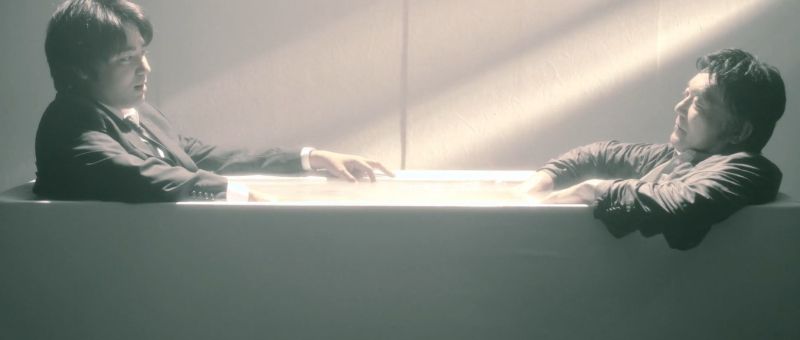
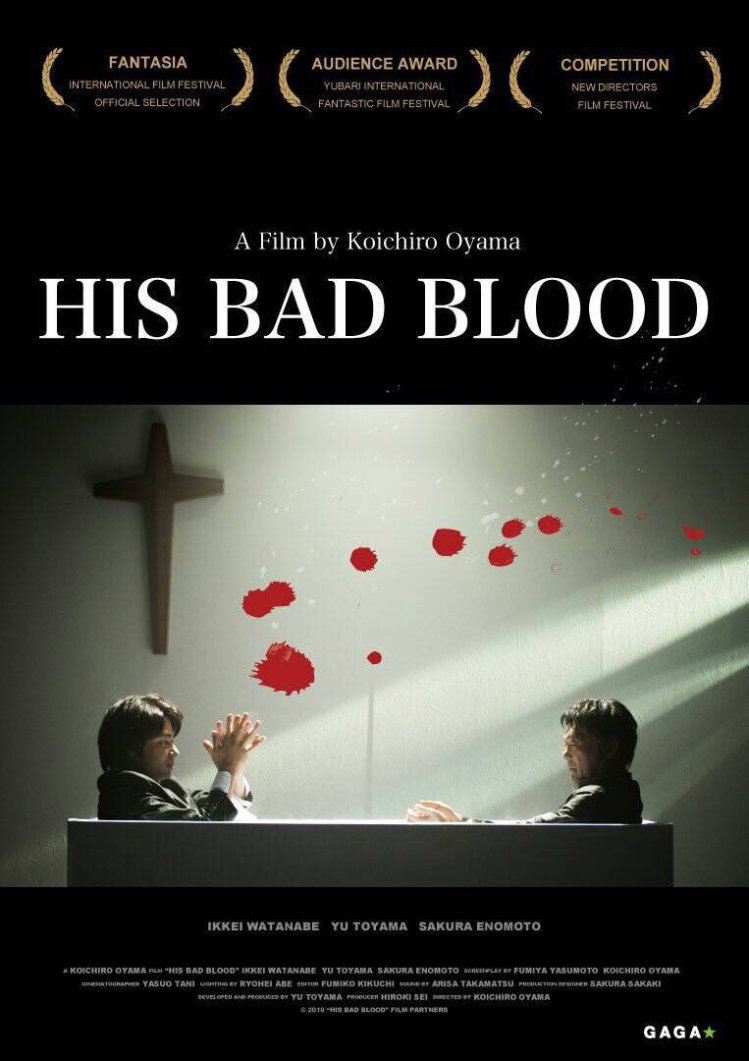
His Bad Blood (いつくしみふかき, Koichiro Oyama, 2019) [Fantasia 2019]

His Bad Blood PosterThe sins of the father are visited on the son. Rural superstitions run deep, but is it really fair to condemn a child for having “bad blood” or will the prejudice itself become a self-fulfilling prophecy? The young man at the centre of Koichiro Oyama’s debut feature His Bad Blood (いつくしみふかき, Itsukushimi Fukaki) struggles to assert himself in a small community where his father’s (minor) crimes are still painfully present, but then perhaps like any other young man he himself needs to lay his father’s ghost to rest in order to find his own path.

Decades ago, no good drifter Hiroshi (Ikkei Watanabe) drifted into a small-town in search of a place to die after his latest business venture collapsed, but there found the kindly Kayoko who gave him a home and a chance to start again. Unfortunately, however, Hiroshi reverted to type and after being sent home to get the baby clothes while his wife was in labour, decided to run off with the family’s savings instead only to be caught in the act by Kayoko’s brother Yoshitaka whom he wounded in a fight that eventually saw him beaten by a mob and hounded out of town.

In the present day, Shinichi (Yu Toyama), the son, is a strange, shy young man who has been unable to hold down a job and is widely disliked by the community and especially by his resentful uncle. When the area is plagued by a spate of burglaries, Yoshitaka jumps to the “obvious” conclusion and attempts to have Shinichi hounded out of town the same way he got rid of his father. Hurt that not even his mother believes he is innocent of the crimes of which he is accused, Shinichi takes refuge with the local preacher (Akio Kaneda) where, unbeknownst to him, his estranged father has also decamped to hide out after a life of petty crime finally catches up to him.

Though set firmly in the present day, Oyama’s debut has a distinctly depression-era dustbowl feel with its rural backwater suddenly stirred up by rumours of the railroad’s eventual arrival while the non-conformist Christian church hands down messages of love and compassion in trying times. Hiroshi, possibly unreformable, even puts on a show of getting religion only to go full snake oil salesman in staging a revival inside the Reverend’s church in which his personal prophet, Tanaka Xavier XVI, makes a “disabled” woman walk and successfully stimulates the record crowd to hand over their cash in hope of salvation while Shinichi and the Reverend look on in confused horror.

To engineer some kind of forward motion, the Reverend pushes the two men together but keeps their connection a secret until finally revealing it in the hope that the pair might finally be able to put some kind of lid on the past. Looking for his father, Shinichi avows he’d like to mess up his life just like his father has done to his, but discovers that Hiroshi’s life is pretty messed up already and likely always has been. His fate was pretty much sealed the day pushed the baby clothes out of the way and opened the family safe instead. Shinichi’s job isn’t to save his dad, no one can, but try and accept him so that he can, a sense, reject his “bad blood” and those who condemn him for it to claim his own identity and walk his own path.

Before he can do all of that, however, he’ll have to escape the secondary curse of the unfair prejudice he faces from his home community as a supposed carrier of “bad blood”, destined for criminality and inherently untrustworthy. Despite all he suffers, Shinichi valiantly refuses to become what everyone says he is while deeply resenting his absent father for saddling him with this unhappy destiny. It is, however, Hiroshi who accidentally gives him forward motion through the unlikely shared dream of making an honest killing in the shortly to boom real estate business when the railroad comes to town. An equally unlikely love affair with a similarly strange young woman (Keiko Koike) provides additional possibilities, but still leaves Shinichi feeling trapped by his past despite her urgings to “just be yourself and live in the future with me”. A melancholy tale of freeing oneself from the judgement of others and learning to step out of a father’s shadow, His Bad Blood is a promising debut from Oyama who addresses a difficult subject with compassionate humanism as his melancholy hero finds the courage to walk away from a toxic past towards a more promising future.


His Bad Blood was screened as part of the 2019 Fantasia International Film Festival.

International trailer (English subtitles)

The Island of Cats (ねことじいちゃん, Mitsuaki Iwago, 2019)

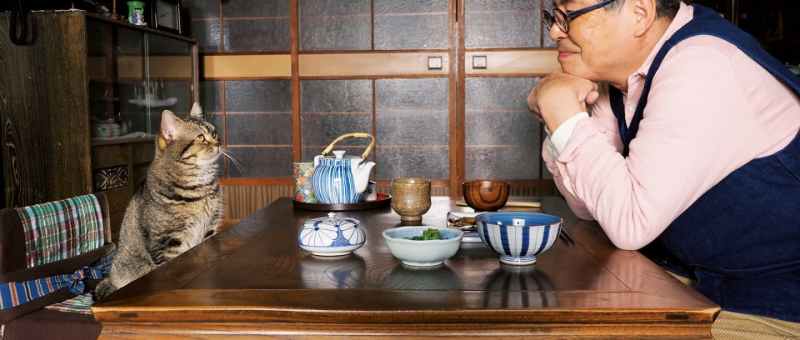
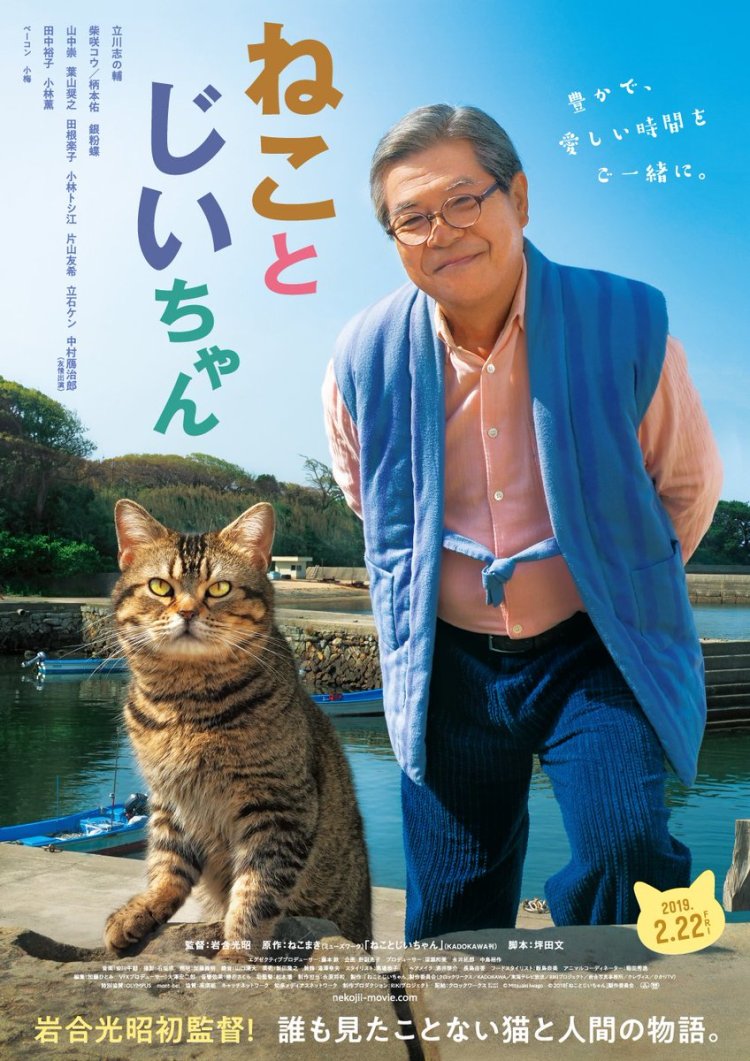
Island of Cats Poster“The best is yet to come” resolves 70-year-old Daikichi (Shinosuke Tatekawa) at the conclusion of The Island of Cats (ねことじいちゃん, Neko to Jiichan). Inspired by the manga by the appropriately named Nekomaki, the debut feature from wildlife photographer Mitsuaki Iwago is a decidedly laidback affair, neatly fusing two genres of Japanese comfort cinema – cats and cuisine. It’s also another in the recent run of films deliberately targeting the older generation in its quiet celebration of community and late life serenity, but it’s very existence is also perhaps a mild dig at cold and frenetic Tokyo which can’t help but pale next to the island’s inherent charms.

Daikichi has lived alone with his cat, Tama (who neatly introduces himself using the exalted “Wagahai” in a reference to Soseki’s famous novel), since his wife Yoshie (Yuko Tanaka) passed away two years previously. He has a grown-up son (Takashi Yamanaka) who is married with a teenage daughter of his own in Tokyo, but mostly spends his life hanging out with his old friends and playing with the island’s many cats. His peaceful days begin to change, however, when a pretty middle-aged (“young” to Daikichi and his friends) woman, Michiko (Kou Shibasaki), arrives from Tokyo and opens a cafe – the island’s first. In fact, the older generation find the cafe slightly intimidating, thinking such modern innovations are only for the youngsters, but are finally tempted in when directly invited by Michiko herself who serves up a selection of cream sodas and tasty ice creams in addition to slightly more rarefied treats like fish carpaccio.

In contrast to many an island drama, though the bulk of the population is older there are a fair few youngsters around and plenty of children too – at least enough to keep the local school open and the ferries running frequently. It is true however that most leave when they come of age either heading off to university on the mainland or seeking their fortunes in the cities. Nevertheless, the despite the absence of family the elderly are well cared for by the recently arrived young doctor (Tasuku Emoto) who takes his responsibility extremely seriously and is grateful for the opportunity to come to the island because it’s enabled him to become the kind of doctor he always wanted to be.

Michiko, meanwhile, has come to the island in search of relief from city life which she felt was gradually crushing her. An instant hit with the local cats as well as Daikichi and his friends, her presence adds a new energy to the island as the older generation start to enjoy both trying new things they thought perhaps were “inappropriate” when you’re old, and revisiting those they missed out on in their youth. Friends reconnect, bickering is exposed as an odd kind of affection, and cats just generally make everything better. The island may be dull compared to the bright lights of Tokyo, but it has its charms and those that live there are one big family taking care of each other and enjoying the laidback rhythms of coastal life.

Daikichi’s son, visiting when he can, is keen for him to come and live with the family in Tokyo but he and Tama are happy enough on the island just muddling through the way they always have surrounded by friends and happy memories. Reconnecting with his late wife through the recipe book she left behind, he resolves to learn a few dishes of his own – filling the rest of the pages with recipes learned from Michiko, his friends, newspapers and TV, determined to go on learning as long as he can. Sharing his life with others on the island, Daikichi too finds a new zest for living even as his days pass much as before, resolving that there is still plenty more to enjoy as he enters his twilight years. Gentle and mellow in the extreme, The Island of Cats is not promising much more than living up to its name but does its best to sell the charms of serene island life as Daikichi and his friends rejoice in the simple pleasures of shared cuisine and admiring “everybody’s” cats as they continue to do pretty much whatever they please while warming the hearts of the kindly islanders as they enjoy their days of fun and sunshine with nary a care in the world.


The Island of Cats screens in New York on July 20 as part of Japan Cuts 2019. It will also screen in Montreal as part of the 2019 Fantasia International Film Festival on July 28.

Original trailer (English subtitles)
Chiwawa (チワワちゃん, Ken Ninomiya, 2019) [Fantasia 2019]

Chiwawa posterFollowing indie drama The Limit of Sleeping Beauty, Ken Ninomiya takes a further step towards the mainstream with Chiwawa (チワワちゃん, Chiwawa-chan), inspired by Kyoko Okazaki’s 1996 manga. Updated for the Instagram generation, Ninomiya’s adaptation leans heavily on his trademark clubland style and sheds the sense of nihilism which defined mid-90s pop culture in favour of a world weary exploration of identity in the internet age in which connections are wilfully fleeting and personas easily interchangeable. The party is, however, about to come to an end for the latest generation of bright young things seeking hedonistic release but finding only emptiness in the superficial pleasures of meaningless excess.

The titular “Chiwawa” (Shiori Yoshida) is found dead, floating in pieces in Tokyo Bay. The notice of her demise is, in fact, the first time many of her friends discover her real name, Yoshiko Chiwaki, apparently 20 years old and according to the news a nursing student. She was for a time a big star on Instagram and a popular internet model whose face could be seen all over the city on mile high billboards, but before that she was just a girl looking for fun and friends in the Tokyo club scene which is how she met our heroine, Miki (Mugi Kadowaki). Like Miki herself, Chiwawa was added to the small group of clubland friends as the current squeeze of playboy student Yoshida (Ryo Narita), introducing herself with her enigmatic nickname supposedly a reference to her petite stature. Branding herself as an ultra cute airhead, she quickly worked her way into the disparate group of Bohemians but eventually outgrew them and moved on to more dubious pleasures including an ill-fated love affair with a famous photographer (Tadanobu Asano).

The only one of her friends seemingly preoccupied about what happened to Chiwawa, Miki begins an investigation but her research is less geared towards finding out who killed her – something the police don’t seem to be very invested in, but discovering who she “really” was. Mimicking the structure of Okazaki’s episodic manga, Miki begins interviewing her friends to build up a kaleidoscopic composite of the woman she thought she knew while perhaps discovering something about herself as she reconsiders her own life trajectory and the coming end of her youthful days in the clubland scene while pondering where it is she’s supposed to go next.

Like much of Okazaki’s work, the manga’s mid-90’s setting is soaked post-bubble malaise as her dejected youngsters escape from the sense of crushing disappointment in the wake of the abrupt end of the heady ‘80s heyday of Japan as leading global economy, but for Miki and her friends twenty years later perhaps things aren’t all that different as they fight the onset of adulthood and the relative lack of freedom and possibility they will encounter when their student lives end and the workaday world finally arrives. Aspiring filmmaker Nagai (Nijiro Murakami) captures everything with his video camera while working as a photographer’s assistant by day, allowing Miki and her friends to use the studio at night for their Instagram side gigs which is how Chiwawa winds up in the fashion biz.

Some starving artists, others merely nervous hedonists, the gang have no money but when Chiwawa runs off with the gigantic bribe a group of slimy businessmen were boasting about carrying, the gang manage to blow it in just three days of upscale partying. Miki alone, and perhaps more in hindsight, feels the emptiness of all this senseless excess but it’s Chiwawa herself who seems to fear the party’s end most of all. When you start to think it’ll go on like this forever, that’s when you know it’s about to end she laments, apparently missing her old gang like crazy but knowing you can’t put something back together after it falls apart.

Miki fails to solve the mystery of Chiwawa, perhaps sorry that she didn’t try harder to know her while she was alive but also knowing that’s partly because “Chiwawa” might not have wanted to be known for all that she was chasing love and acceptance in all the wrong places. In the end, she retreats into a past that no one quite remembers, another melancholy ghost of Tokyo’s neon-tinged nightlife. Youth moves on, clubs close down, the world keeps turning. That may be the saddest thing of all, Chiwawa remains unknown, unloved, and finally unremembered. A melancholy exploration of fractured identities, the ethereality of youth, and the impossibility of true connection, Chiwawa is another zeitgeisty piece from Ninomiya which takes the manga’s post-bubble anxiety and reboots for an age of alienation in which the end of the party is always lingering painfully on the horizon.


Chiwawa was screened as part of the 2019 Fantasia International Film Festival

Original trailer (English subtitles)
Images: (C)2019 CHIWAWA Chang PRODUCTION COMMIIEE(TOEI VIDEO, VAP, KADOKAWA, GEEK PIKTURES, TOEI ADVERTISING)

Dance with Me (ダンスウィズミー, Shinobu Yaguchi, 2019)

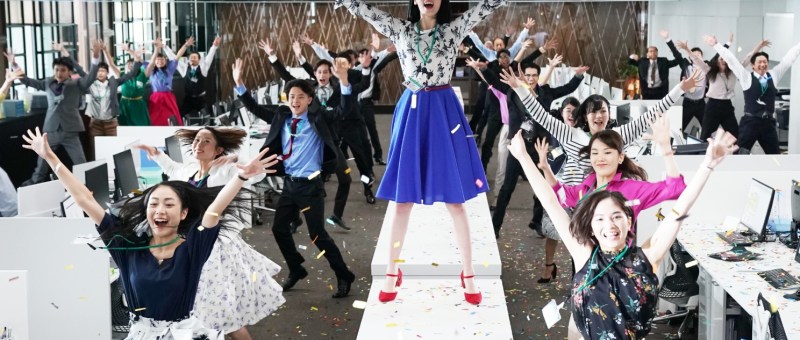
Dance With Me posterYou might be rich and successful, but are you really being true to yourself? The heroine of Shinobu Yaguchi’s latest comedy Dance With Me (ダンスウィズミー) thinks that she is, cynically rolling her eyes at her colleagues mooning over the cute new boss but jumping at the opportunity to join his elite team. Meanwhile, she’s ignoring her family, has few friends, and seems distinctly uptight. Is there more to Shizuka (Ayaka Miyoshi) than meets the eye, or is she really destined for the life of a dull office drone?

Everything starts to change for her one day when she’s bamboozled into looking after her teenage niece and decides to take her to a weird theme park she noticed on a flyer that got stuck to her shoe. It’s there, in Fortune Land, that Shizuka ends up visiting a shady hypnotist named “Martyn” (Akira Takarada) who offers to give her niece some treatment so she can perform to her full potential in an upcoming high school musical. This comes as news to Shizuka, because they were just mocking the art of the musical on the bus, but when she steps out to answer her phone she notices the cheapo ring Martyn gave her on the way in won’t come off. Sure enough, his “treatment” seems to have worked, only on the wrong person. Now whenever Shizuka hears any kind of music at all she can’t resist breaking into song and dance like the heroine of an old Hollywood musical.

It seems in her youth Shizuka loved singing and dancing, but a traumatic bout of stage fright put her off for life. While her family are all cheerfully energetic and easy going, she is uptight and reserved. Now a middle-rank executive at a top rated company, she’s dedicated herself to achieving the idealised image expected of female businesswomen – elegant, professional, and above all quiet. Her new affliction is therefore a major problem, as she proves to herself by breaking into song during an important meeting with the magic Mr. Murakami (Takahiro Miura) who might be able to take her career to the next level.

Luckily, the incident isn’t really quite so bad as she thought seeing as Murakami’s business idea was a little left of centre so her strange behaviour looked like an unusual pitching technique that makes her seem an attractive asset to Murakami’s new team which is currently a member down after the last girl took too much vacation time and then quit. Offered the post, Shizuka asks for a week’s grace and determines to track down Martyn so he can undo the hypnotism, but Martyn is currently on the run from loan sharks so it’s going to be more difficult than she thought.

Forced to sell all her worldly possessions to make up for a restaurant she accidentally trashed, Shizuka takes to the road armed only with her niece’s piggy bank and accompanied by Martyn’s former shill, Chie (Yu Yashiro). Despite herself, she begins to shake off her carefully crafted corporate persona and open herself up to the pleasures of music and movement, freeing both her body and her mind. Her total opposite, Chie is a laidback woman who loves to have a good a time and doesn’t generally think too much beyond the present moment. Though obviously very different and united only by their quests to track down Martyn, the two women develop an awkward friendship in which they begin to see their own flaws as reflected in each other and shift into the centre as they learn to work together while chasing Martyn all the way to Hokkaido.

A chance encounter with a crazy hippie singer-songwriter (Chay) who claims she broke up with her last band because she couldn’t bear to hide from herself anymore pushes Shizuka (whose name literally means “quiet”) into a reconsideration of her life choices, feeling that perhaps she was wrong to reject the frightened little girl she was so completely out of embarrassment and insecurity, wilfully suppressing her sense of fun and freedom for the safety and security of corporate button-down respectability. As the mental health specialist she visited in hope of a cure suggested, maybe the reason she was so suggestible is that, deep down, she always wanted to sing and dance anyway. A musical celebration of the pleasure of living life to its fullest, Dance With Me is a cheerful exploration of one woman’s gradual emergence from emotional repression into a richer, fuller existence as she rediscovers her essential self through the medium of song and dance.


Dance with Me screens in New York on July 19 as the opening night gala of Japan Cuts 2019.

Original trailer (English subtitles)
Playlist:

Tonight -Hoshi no Furu Yoru ni- (Kumiko Yamashita, 1991)

ACT-SHOW (Spectrum, 1979)

Happy Valley (Orange Pekoe, 2002)

Neraiuchi (Linda Yamamoto, 1973)

Yume no Naka e (Yosui Inoue, 1973)

Toshishita no Otoko no Ko (Candies, 1975)

Wedding Bell (Sugar, 1981)

Time Machine ni Onegai (Sadistic Mica Band, 1974)