Lucid Dream (루시드 드림, Kim Joon-sung, 2017)

lucid dream posterA relatively rare phenomenon, a lucid dream is one in which the dreamer is aware they are asleep and “awake” enough to influence the outcome. Rather than using the ability to probe some kind of existential question, Korean science fiction thriller Lucid Dream (루시드 드림) focusses on the evidence gathering possibilities, going one step further than hypnotic regression to revisit old memories and zoom in on previously missed details.

Dae-ho (Ko Soo) is an investigative reporter currently in hot water over a controversial story. He’s also a doting single father to a little boy, Min-woo (Kim Kang-Hoon), who resolves to put his work aside for a day to take his son to an amusement park. Tragedy strikes as Dae-ho is busy having words with a paparazzo and then notices Min-woo has disappeared from his horse on the carousel. Catching sight of Min-woo walking off with another man, Dae-ho collapses, a tranquilliser dart sticking out of his leg. Dae-ho searches for his son with no concrete leads until, three years later, he hears about the possibilities of lucid dreaming and attempts to figure out exactly what happened that day by reliving it in his sleep.

Lucid Dream begins in true conspiracy thriller mode by introducing Dae-ho’s past as a controversial journalist responsible for ruining prominent businessmen by exposing their corruptions and manipulations of the laws everyone else is expected to abide by, but this potentially rich seam of social commentary is cut off in full flow as paternal concerns take centrestage.

Dae-ho is a single dad raising Min-woo alone with the help of a friendly nanny. Although he tells Min-woo his mother is “in America” no concrete information is given regarding her whereabouts though the fact that she is never heard from after Min-woo’s disappearance suggests she may be somewhere further away. Apparently a devoted and good father from the very beginning, Dae-ho will stop at nothing to find out what’s happened to his son. Three years on he remains distraught and desperate, willing to try anything that might help him uncover the truth. He finds an ally in the policeman handling his case who is in a similar predicament as his own daughter lies in a hospital bed, born with serious medical abnormalities. The true paternal love, determination, and sacrifice of men who are already good and devoted fathers raising pleasant, uncomplicated children define the drama as others attempt to subvert that same love in choosing to sacrifice one child in favour of another.

Though Dae-ho originally assumes the plot is directed at him alone, possibly revenge for his exposés, the truth is darker and moves towards child trafficking and the trade in illicitly harvested organs though this too is mostly glossed over in favour of competing parental needs. The men who’ve taken Min-woo veer between amoral gangsters and those who can’t stomach the outcome of their actions ultimately deciding to rebel against their own side, and even if the real perpetrator turns out to be someone not so different from Dae-ho, there can be little justification in this dark flip side to Dae-ho’s all encompassing paternal love.

The central premise of dreams and memory is an interesting one, but largely squandered by the increasingly dull narrative progression in which Dae-ho moves from clue to clue in linear fashion and along predictable genre lines. Most viewers even remotely familiar with similarly themed films will have correctly identified the villain right away thanks to the heavily signposted script, and will necessarily be disappointed by the rather predictable yet action packed finale.

Dae-ho travels through dream states, eventually learning to invade the dreams of others thanks to the guidance of a mysterious shared dreamer but the application is inconsistent and relegated to plot device only. The finale takes place within a dream and with the stakes heightened as it becomes clear death inside someone else’s mind results in death outside it, but the imagery remains clichéd as Dae-ho battles the villain inside a rapidly disintegrating building before being forced into a literal leap of faith. Despite the surface level grimness of the story, Lucid Dream remains firmly in mainstream thriller territory with under developed characters, dead end sub plots, and a satisfying if not entirely earned moment of final closure. It is, however, also a rare example of a broadly happy ending in a Korean procedural, in which a father’s love can and does save the day, if not the film.


Original trailer (English subtitles)

Sketches of Kaitan City (海炭市叙景, Kazuyoshi Kumakiri, 2010)

sketches of kaitan cityYasushi Sato, a Hakodate native, has provided the source material for some of the best films of recent times including Mipo O’s The Light Shines Only There and Nobuhiro Yamashita’s Over the Fence but it has to be said that his world view is anything but positive. Kazuyoshi Kumakiri takes on Sketches of Kaitan City (海炭市叙景, Kaitanshi Jokei) inspired by a collection of short stories left unfinished on Sato’s death by suicide in 1990. Despite the late bubble era setting of the stories (now updated to the present day), his Kaitan (eerily close to the real life Hakodate) is a place of decline and hopelessness, populated by the disillusioned and despairing.

The first story concerns a brother and sister whose lives have been defined by the local shipbuilding industry. Since their father was killed in a dockside fire, older brother Futa (Pistol Takehara) has been taking care of his little sister Honami (Mitsuki Tanimura) and now works at the docks himself. Times being what they are, the company is planning to close three docks with mass layoffs inevitable. The workers strike but are unable to win more than minor concessions leaving Futa unable to continue providing for himself or his sister.

Similar tales of societal indifference follow as an old lady living alone with her beloved cat is hounded by a developer (Takashi Yamanaka) desperate to buy her home. Across town the owner of the planetarium (Kaoru Kobayashi) is living a life of quiet desperation, suspecting that his bar hostess wife (Kaho Minami) is having an affair. Meanwhile a gas canister salesman (Ryo Kase) is trying to branch out but having little success, and a tram driver dwells on his relationship with his estranged son.

Economic and social concerns become intertwined as increasing financial instability chips away at the foundations of otherwise sound family bonds. Futa’s situation is one of true desperation now that he’s lost the only job he’s ever had and is ill equipped to get a new one even if there were anything going in this town which revolves entirely around its port.

Yet other familial bonds are far from sound to begin with. The gas canister salesman, going against his father’s wishes in trying to diversify with a series of water purifiers he believes will be a guaranteed earner because of the need to replace filters, takes out his various frustrations through astonishing acts of violence against his wife who then passes on the legacy of abuse to his son, Akira (You Koyama). Resentful towards his father and embarrassed by his lack of success with the water filters, the gas canister salesman threatens to explode but unexpectedly finding himself on the receiving end of violence, he is forced into a reconsideration of his way of life – saving one family member, but perhaps betraying another.

The gas canister salesman is not the only one to have a difficult relationship with his child. The planetarium owner cannot seem to connect with his own sullen offspring and is treated like an exile within his own home while the tram driver no longer speaks to his son who is apparently still angry and embarrassed that his mother worked in a hostess bar.

Yet for all of this real world disillusionment, despair takes on a poetic quality as the planetarium owner spends his days literally staring at the stars – even if they are fake. The gas canister salesman’s son, Akira, becomes a frequent visitor, excited by the idea of the telescope and dreaming of a better, far away world only to have his hopes literally dashed by his parents, themselves already teetering on the brink of an abyss. Futa’s lifelong love has been with shipping – the company officials are keen to sell the line that it’s all about the boats and an early scene of jubilation following the launch of a recently completed vessel would seem to bear that out, but when it comes down to it the values are far less pure than a simple love of craftsmanship. Kaitan City is a place where dreams go to die and hope is a double edged sword.

There are, however, small shoots of positivity. The old lady welcomes her cat back into her arms, discovering that it is pregnant and stroking it gently, reassuring it that everything will be OK and she will take care of the new cat family. Signs of life appear, even if drowned out by the noise of ancient engines and the sound of the future marching quickly in the opposite direction. Bleak yet beautifully photographed, Sketches of Kaitan City perfectly captures the post-industrial malaise and growing despair of those excluded from economic prosperity, left with nothing other than false promises and misplaced hope to guide the way towards some kind of survival.


Original trailer (no subtitles)

The Tale of Nishino (ニシノユキヒコの恋と冒険, Nami Iguchi, 2014)

tale of nishinoEvery love story is a ghost story, as the aphorism made popular (though not perhaps coined) by David Foster Wallace goes. For The Tale of Nishio (ニシノユキヒコの恋と冒険, Nishino Yukihiko no Koi to Boken), adapted from the novel by Hiromi Kawakami, this is a literal truth as the hero dies not long after the film begins and then returns to visit an old lover, only to find her gone, having ghosted her own family including a now teenage daughter. The Japanese title, which is identical to Kawakami’s novel, means something more like Yukihiko Nishino’s Adventures in Love which might give more of an indication into his repeated failures to find the “normal” family life he apparently sought, but then his life is a kind of cautionary tale offered up as a fable. What looks like kindness sometimes isn’t, and things done for others can in fact be for the most selfish of reasons.
Ten years prior to his death in a traffic accident, Yukihiko Nishino (Yutaka Takenouchi) has taken a (former?) lover and her little girl out for drinks and parfait at a lovely seaside cafe. The woman, Natsumi (Kumiko Aso), declines the offer of dessert but Nishino orders two anyway – one for himself and one for the little girl, Minami, though it seems neither of them really wanted one anyway. An odd flirtation exists between the adults but Nishino laments his ability to gain exactly what this situation might look like from the outside – a “normal” family. He wants to get married, have a daughter of his own, but his relationships always end in failure. Natsumi tells him why – he always gives women exactly what they want, which sounds good, but really isn’t.

Nishino’s problem is that he’s almost irresistible to women, but sooner or later they all leave him. He believes he has an almost telepathic ability to figure out what it is women want from him coupled with an intense need to satisfy their innermost desires. Ironically enough, it’s this strange kindness that eventually leads to his death when he runs into an old friend at a crowded marketplace. Excited to see him she calls and waves, dropping her shopping and losing one of her crutches in the process. Rushing to help, Nishino does not see an oncoming van and is run over. Quite literally the story of his life.

Reappearing as a ghost he attempts to pay a visit to Natsumi, having jokingly promised to do so while they were dating. Natsumi, however, is nowhere to be found and so Nishino is left to exorcise his demons with the now teenage Minami (Yurika Nakamura) who decides to attend his funeral in case her long absent mother decides to pay her respects. It’s here that she begins to learn a little of Nishino’s sad romantic history courtesy of an older woman who became a friend and confident rather than a lover (and consequently remained in his life a little longer).

The problem is, Nishino’s desire to be eternally helpful means that he’s always pulled in more than one direction. A slow burn affair with shy and retiring superior Manami (Machiko Ono) looks as if it could be the one, but she eventually points out to him that he’s not the sort of man who can have the life he craves because he never fully commits to any one person and never truly loves anyone. His irresistibility apparently even extends to one half of the lesbian couple from next door though, notably, not the half you’d expect.

Nishino first gets to know Tama (Fumino Kimura) and Subaru (Riko Narumi) when their cat, Nau, invites himself over, after which the feline Subaru decides to do the same, flirting away with her uptight girlfriend presumably going crazy in an adjacent room. Subaru is Nishino’s opposing number, the kind of girl that gets everything done for her, but there are obvious cracks in the strained relationship between the two women and it’s the neurotic Tama he finally bonds with after an unusually perceptive conversation over convenience store ice cream. Nishino, as he later puts it, is faithful in mind if not in body but satisfying immediate desires is not always the best idea. Trying to provide comfort, Nishino adds even more confusion to a messy situation and, even if it perhaps works out for the best, Nishino is left alone once again.

A botched proposal leads Nishino to let slip the real reason for his boundless desire to please – it’s because he’s lonely. Desiring to keep these women around him, he gives them whatever it is they want to stay. Just like Tama has effectively relegated Subaru to the same level as their cat – giving in to her every demand in the terror that she will leave, Nishino loses the women he loves by embracing his selfish desire to keep them rather than acting in their best interests and recognising the true depth of love which may not always work out in his favour. The interfering spectre of old girlfriend Kanoko (Tsubasa Honda) who can’t let go even though the relationship is over is a lingering hangover of this tendency as she too cannot seem to commit and wants to keep Nishino as a backup plan, resenting his interest in other women yet not willing to make a permanent decision to stay with him.

A whimsical fable of a man looking for love in all the wrong places, The Tale of Nishino is a long, melancholy journey through modern relationships in which not just romantic but platonic and familial love find themselves under the microscope. As Manami points out, you can’t share loneliness – Nishino’s need to be needed eventually drives a wedge between himself and everything he wanted. Natsumi’s words of wisdom for her injured daughter offer only that romantic love necessarily ends, whereas a mother’s love for her child is ever lasting even if it does not necessarily look that way. Iguchi’s style is typical of the “quirkier” end of Japanese indie, shooting with a deadpan abstraction, but the slight feeling of alienation works well with Nishino’s ultimate refusal to bare his heart in a more “straightforward” manner. A bittersweet story of love lost and found, Nishino may have given up the ghost but perhaps he did find that family after all, in a way, even if it was not his own.


Original trailer (no subtitles)

Midnight Diner 2 (続・深夜食堂, Joji Matsuoka, 2016)

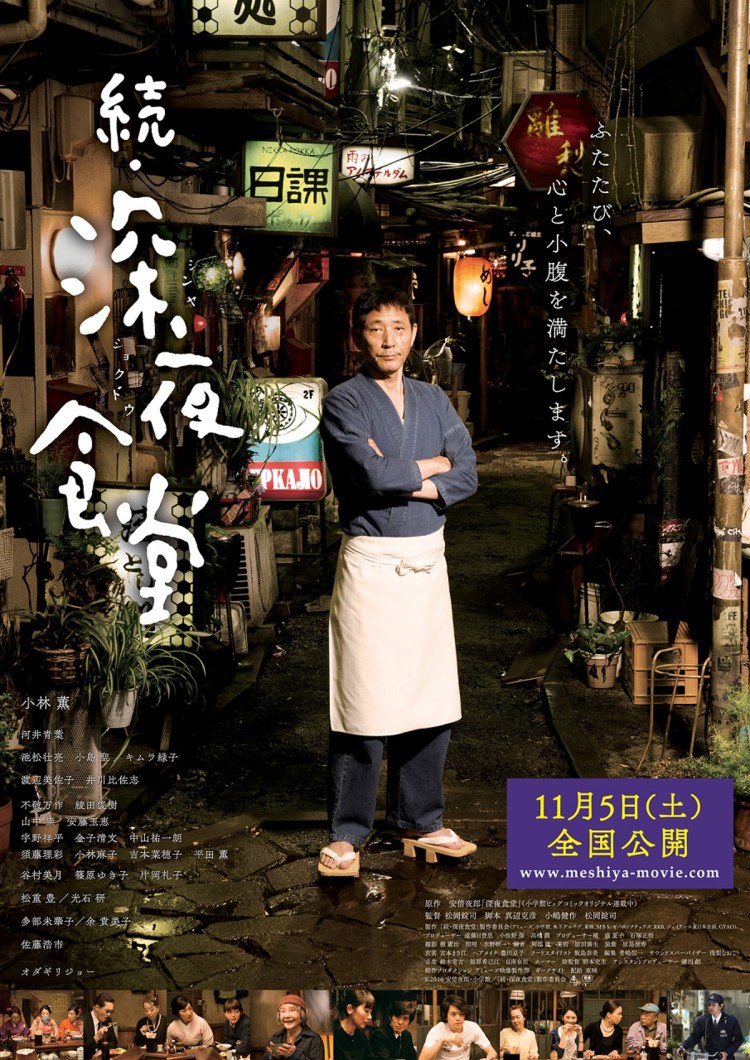
midnight diner 2 posterThe Midnight Diner is open for business once again. Yaro Abe’s eponymous manga was first adapted as a TV drama in 2009 which then ran for three seasons before heading to the big screen and then again to the smaller one with the Netflix original Midnight Diner: Tokyo Stories becoming the de facto season four. Midnight Diner 2 (続・深夜食堂, Zoku Shinya Shokudo) returns with more of the same as Master puts out his sign and opens the shop, welcoming the denizens of Tokyo after dark in search of a little place to call home amid all the chaos and alienation.
To re-cap, the Midnight Diner is a casual eating establishment run by Master which opens only between the hours of midnight and 7am. The restaurant has only a small formal menu but Master’s selling point is that he is prepared to make whatever the customer so desires (assuming the ingredients are available). Regulars and newcomers alike are given a warm welcome and a place to feel at home, free of whatever it was that was bothering them in the outside world.

Like the first film, Midnight Diner 2 is really three TV episodes stitched together. The first begins on an ominous note as each of the regulars arrives in mourning clothes only to be struck by the coincidence that they’ve each been to a different person’s funeral. A woman arrives dressed in black but reveals she hasn’t been bereaved, she simply enjoys dressing like this to destress from the difficult atmosphere at her publishing job. Noriko (Aoba Kawai) is a top editor but often finds herself sidelined – this time by a young author whose book she made a success but has now dumped her owing to all her notes on his second effort. Saddled with an elderly client who doesn’t like taking advice from a woman, Noriko’s fortunes fall still further when she finds him dead. A visit to a real funeral threatens to change her life completely.

Strand two follows the son of a nearby soba shop, Seita (Sosuke Ikematsu), who has fallen in love with a much older woman and wants to marry despite his mother’s reservations. The third segment continues along the familial theme with an old woman travelling all the way from Kyushu to Tokyo after falling victim to an “Ore Ore” scam.

Scams and parental bonds become the central themes tying the episodes together as each of the lovelorn protagonists finds themselves taking advantage of Master’s sturdy shoulders. Noriko and Mrs. Ogawa (Misako Watanabe) fall victim to an obvious conman but do so almost willingly out of their desperate loneliness. Noriko, dissatisfied with her working environment, takes to the streets dressed in black but becomes the target of “funeral fetishists” who are only interested in her “bereaved” state. A chance encounter at a real funeral makes her believe her life can change but she is deceived again when a man she came to care for is unmasked as a serial trickster. Mrs. Ogawa faces a similar problem when she races all the way to Tokyo to pay off a “colleague” of her son’s, so desperate to help that she never suspects that she’s fallen victim to a scam.

Mrs. Ogawa’s deep love for the son she has become estranged from is contrasted with that of the soba noodle seller for the son she can’t let go. Seita cares for nothing other than ping pong, much to his mother’s consternation and has little interest in taking over the family business. A young man, he’s tired of the constraints his lonely widowed mother continues to place on him though his determination to marry an older woman at such a young age bears out his relative maturity.

As usual Master has good advice and a kind word for everyone that helps them get where they need to go, softly nudging them in the right direction through the power of comfort food. By now the cast of familiars is well and truly entrenched but there will always be space at Master’s counter for those in need who will be greeted warmly by those already aware of its charms. True enough, Midnight Diner 2 offers little in the way of innovation (though we do get a little more information about the mysterious Master) but no one comes the Midnight Diner looking to try something new. In here, nostalgia rules and we wouldn’t have it any other way.


Original trailer (no subtitles)

Genocidal Organ (虐殺器官, Shuko Murase, 2017)

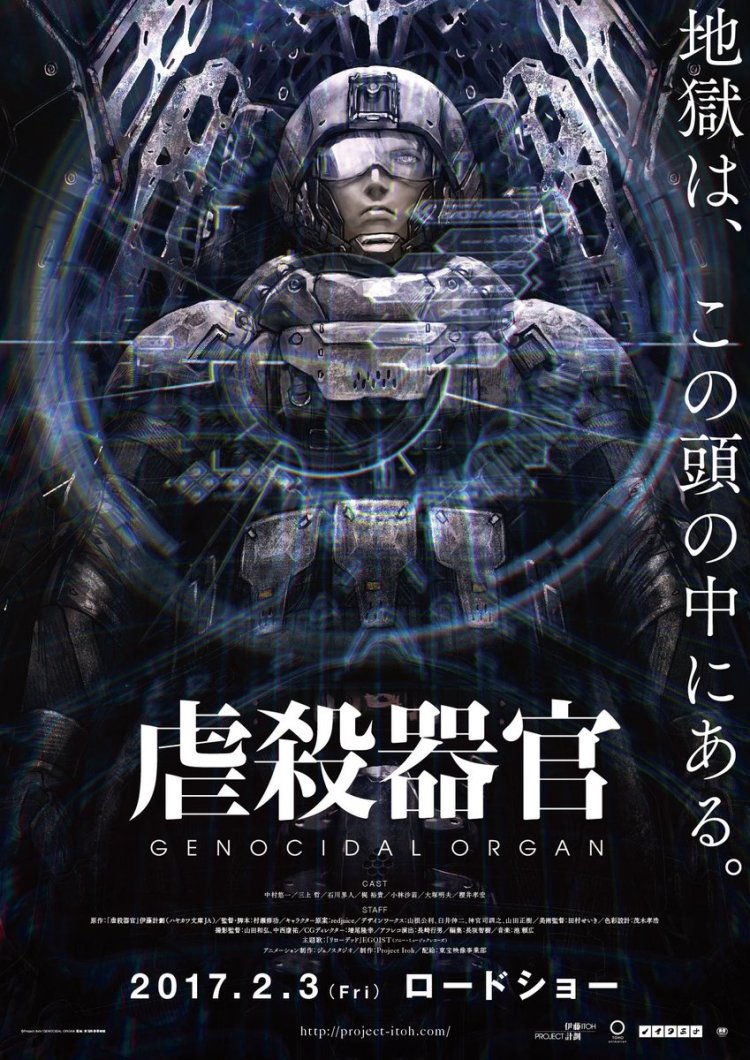
genocidal organHistory books make for the grimmest reading, subjective as they often are. Science fiction can rarely improve upon the already existing evidence of humanity’s dark side, but Genocidal Organ (虐殺器官, Gyakusatsu Kikan) has good go anyway, extrapolating a long line of political manipulations into the near future which neatly straddles a utopian/dystopian divide. Plagued by production delays and studio bankruptcy, Genocidal Organ is the third of three films adapted from the novels of late sci-fi author Project Itoh, arriving nearly two years after previous instalments Harmony and Empire of Corpses. Sadly, its message has only become more timely as the world finds itself on the brink of a geo-political recalibration where fear and division rule the roost.
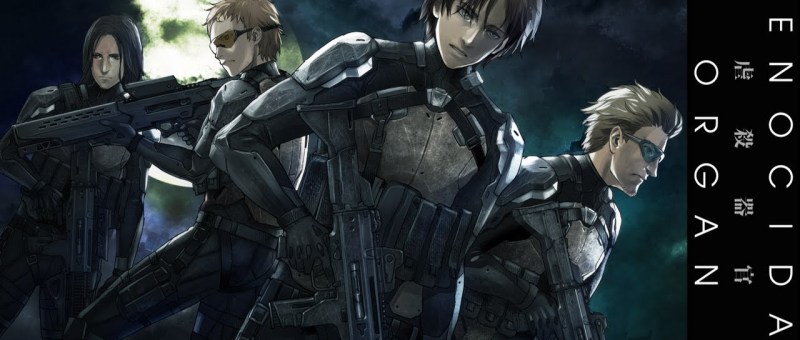
Set in 2022, the world of Genocidal Organ is one of intense “security”. Following the detonation of a nuclear bomb in Sarajevo in 2017, developed nations have once again become jumpy. As the world weary narrative voice over informs us, Americans have sacrificed their freedoms for an illusion of safety which decreases the burden of living under the threat of terrorism. This brave new world is a surveillance state where citizens are chipped and monitored, even the simple act of buying pizza requires an identity check.

Less developed nations, however, have descended into a hellish cycle of internecine wars and large scale atrocities. American special forces have identified a pattern which puts one of their own, mysterious linguistics professor John Paul (Takahiro Sakurai), at the centre of a vast conspiracy. Army Intelligence officer Clavis Shepherd (Yuichi Nakamura) is despatched to track the master criminal down through his sometime girlfriend Lucia (Sanae Kobayashi), a Czech national and former MIT linguistics researcher now teaching Czech to foreigners in Prague.

Clavis, like the best film noir heroes, finds himself falling down a rabbit hole into an increasingly uncertain world. A top soldier, he has been “engineered” to decrease emotionality and limit pain response to make him a “better” soldier. His world is first shaken when one of his comrades goes rogue, kills a valuable mark, and then turns a gun on him. The top brass blame PTSD but not only that, PTSD that was in fact induced by the very processes the soldiers undergo to ensure than PTSD is impossible. He has always believed that his actions, and those of his superiors have been for the greater good, but he has rarely stopped to think what that greater good may be.

Clavis’ missions see him jumping into a coffin-like landing pod and parachuting into street battles in which many of the combatants are children who have been drugged “to make them better soldiers”. Just as you’re starting to wonder who exactly is perpetrating the genocide, Clavis is asked the relevant question by a captive John. He replies that it’s just his job. John reminds Clavis that that particular justification has a long and terrifying history and so perhaps he ought to ask himself why he chooses to do this particular job and do it so blindly.

John’s big theory is that violence has its own grammar, a secret code buried in language which can be engineered to provoke political instability but then conveniently contained within its own language group. Essentially, he posits the idea of sicking the “terrorists” onto each other and letting them fight it out amongst themselves in those far off places which no one really cares about. The citizens of the developed world might frown at their morning papers, but they’ll soon file it under “terrible things happening far away” and go back to enjoying their lives of peace and security. John’s plan, he claims, is the opposite of vengeance, a means of keeping his side safe by ensuring that the terrible things stay far away, contained.

The “genocidal organ” is the heart hardened towards the suffering of others. John has some grand theories about this, about the survival instinct, fear, suspicion and desperation, but he also has a few on the trade offs between freedom and security. Itoh’s vision is bleak, and the prognosis bleaker but its logic cannot be denied, even if its execution is occasionally imperfect.


Currently on limited theatrical release throughout the UK courtesy of All the Anime.

Original trailer (English subtitles)

Scabbard Samurai (さや侍, Hitoshi Matsumoto, 2011)

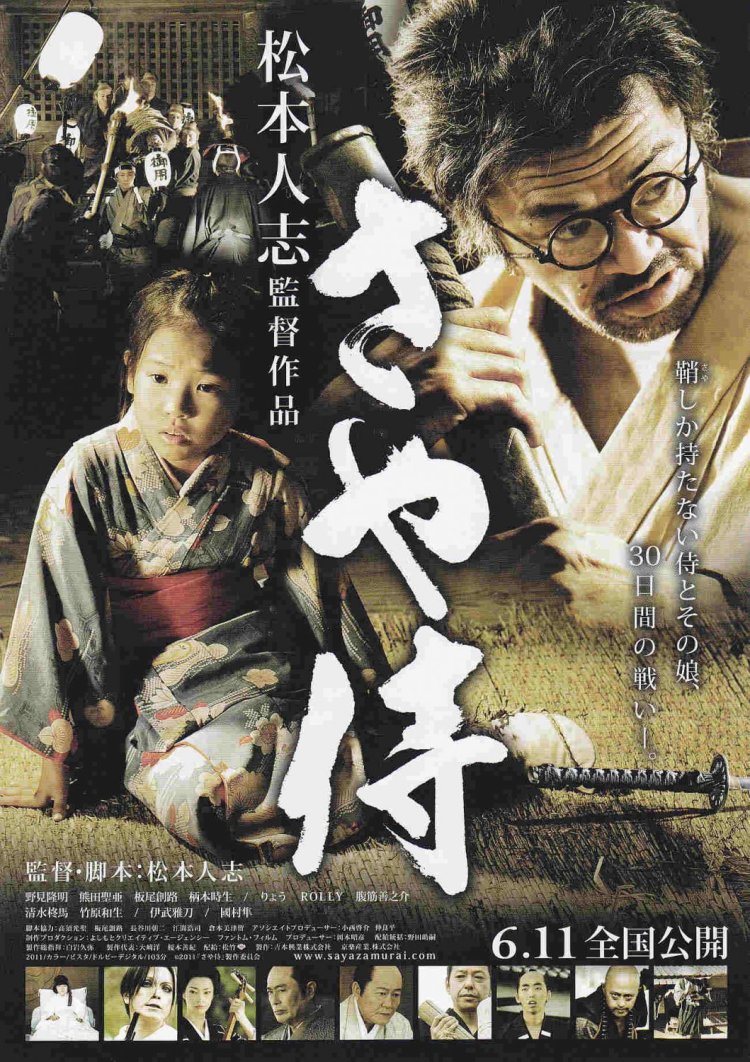
scabbard samuraiA samurai’s soul in his sword, so they say. What is a samurai once he’s been reduced to selling the symbol of his status? According to Scabbard Samurai (さや侍, Sayazamurai) not much of anything at all, yet perhaps there’s another way of defining yourself in keeping with the established code even when robbed of your equipment. Hitoshi Matsumoto, one of Japan’s best known comedians, made a name for himself with the surreal comedies Big Man Japan and Symbol but takes a low-key turn in Scabbard Samurai, stepping back in time but also in comedic tastes as the hero tests his mettle as a showman in a high stakes game of life and death.
Nomi Kanjuro (Takaaki Nomi) is a samurai on the run. Wandering with an empty scabbard hanging at his side, he pushes on into the wilderness with his nine year old daughter Tae (Sea Kumada) grumpily traipsing behind him. Eventually, Nomi is attacked by a series of assassins but rather than heroically fighting back as any other jidaigeki hero might, he runs off into the bushes screaming hysterically. Nomi and Tae are then captured by a local lord but rather than the usual punishment for escapee retainers, Nomi is given an opportunity to earn his freedom if only he can make the lord’s sad little boy smile again before the time is up.

Nomi is not exactly a natural comedian. He’s as sullen and passive as the little lord he’s supposed to entertain yet he does try to come up with the kind of ideas which might amuse bored children. Given one opportunity to impress every day for a period of thirty days, Nomi starts off with the regular dad stuff like sticking oranges on his eyes or dancing around with a face drawn on his chest but the melancholy child remains impassive. By turns, Nomi’s ideas become more complex as the guards (Itsuji Itao and Tokio Emoto) begin to take an interest and help him plan his next attempts. Before long Nomi is jumping naked through flaming barrels, being shot out of cannons, and performing as a human firework but all to no avail.

Meanwhile, Tae looks on with contempt as her useless father continues to embarrass them both on an increasingly large stage. Tae’s harsh words express her disappointment with in Nomi, berating him for running away, abandoning his sword and with it his samurai honour, and exposing him as a failure by the code in which she has been raised. She watches her father’s attempts at humour with exasperation, unsurprised that he’s failed once again. Later striking up a friendship with the guards Tae begins to get more involved, finally becoming an ally and ringmaster for her father’s newfound career as an artist.

Tae and the orphaned little boy share the same sorrow in having lost their mothers to illness and it’s her contribution that perhaps begins to reawaken his talent for joy. Nomi’s attempts at comedy largely fall flat but the nature of his battle turns out to be a different one than anyone expected. Tae eventually comes around to her father’s fecklessness thanks to his determination, realising that he’s been fighting on without a sword for all this time and if that’s not samurai spirit, what is? Nomi makes a decision to save his honour, sending a heartfelt letter to his little girl instructing her to live her life to the fullest, delivering a message he was unable to express in words but only in his deeds.

Matsumoto’s approach is less surreal here and his comedy more of a vaudeville than an absurd kind, cannons and mechanical horses notwithstanding. The story of a scabbard samurai is the story of an empty man whose soul followed his wife, leaving his vacant body to wander aimlessly looking for an exit. Intentionally flat comedy gives way to an oddly moving finale in which a man finds his redemption and his release in the most unexpected of ways but makes sure to pass that same liberation on to his daughter who has come to realise that her father embodies the true samurai spirit in his righteous perseverance. Laughter and tears, Scabbard Samurai states the case for the interdependence of joy and sorrow, yet even if it makes plain that kindness and understanding are worth more than superficial attempts at humour it also allows that comedy can be the bridge that spans a chasm of despair, even if accidentally.


Currently streaming on Mubi

Original trailer (no subtitles)

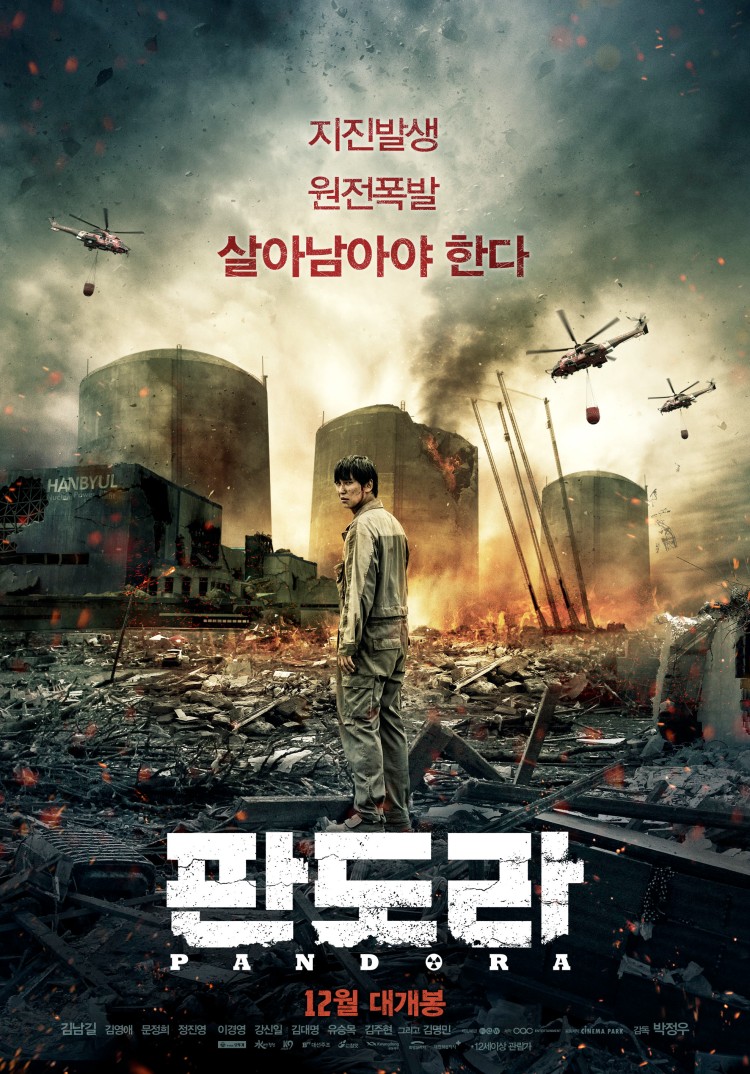
Pandora (판도라, Park Jung-woo, 2016)

pandora (korean) posterIn a time of crisis, the populace looks to the government to take action and save the innocent from danger. A government, however, is often forced to consider the problem from a different angle – not simply saving lives but how their success or failure, decision-making process, and ability to handle the situation will be viewed by the electorate the next time they are asked who best deserves their faith and respect. Pandora (판도라) arrives at a time of particularly strained relations between the state and its people during which faith in the ruling elite is at an all time low following a tragic disaster badly mishandled and seemingly aided by the government’s failure to ensure public safety. Faced with an encroaching nuclear disaster to which their own failure to heed the warnings has played no small part, Pandora’s officials are left in a difficult position tasked with the dilemma of sacrificing a small town to save a nation or accepting their responsibility to their citizens as named individuals. Unsurprisingly, they are far from united in their final decision.

As the film opens, a group of children marvel at the towers of the new nuclear plant which has just been completed in their previously run down rural town. Not quite understanding what the plant is, they repeat snippets they’ve heard in their parents’ conversations – that the plant is a “rice cooker” that’s going to make them all rich, or it’s a “Pandora’s box” which may unleash untold horrors. Still, they seem excited about this new and futuristic arrival in their dull little village.

Flashforward fifteen years or so and one way or another all the kids now work at the plant, like it or not, because there are no other jobs available. Kang Jae-hyuk (Kim Nam-Gil) is one such conflicted soul who doesn’t disapprove of the plant in itself but has good reason to fear that the powers that be are not taking good enough care seeing that both his father and older brother were killed during a previous incident at the plant some years previously. Jae-hyuk lives with his widowed mother (Kim Young-ae), sister-in-law (Moon Jeong-Hee), and nephew (Bae Gang-Yoo) but is reluctant to marry his long-term girlfriend Yeon-ju (Kim Joo-Hyun) due to his lack of financial stability and growing disillusionment with small town life.

Meanwhile, the wife of the Korean president has been passed a file by a whistle-blower hoping to bypass the corrupt bureaucracy and go directly to the top. The file, compiled by a worried engineer, details all of the many failings at the recently reconfigured plant which has been recklessly rushed into completion without the proper safety checks and required maintenance procedures. Unfortunately the president does not have time to read the report before a 6.1 magnitude earthquake strikes and destabilises the plant to the extent that it edges towards meltdown.

Unusually, in a sense, the president is a good man who genuinely wants to do the best for his people even if he sometimes ignores sensible advice out of a desire to protect those on the ground. Unfortunately, he is at the mercy of a corrupt cabinet headed by a scheming prime minister intent on withholding information in order to push the president into cynical decision-making models predicated on the idea of the needs of the many outweighing the needs of the few but which mainly relate to the needs of the prime minister and his cronies in the nuclear industry.

The man in charge of the plant has only been there a few weeks and has no nuclear industry experience. His second in command is a company man and his loyalty lies with his employers – he needs to keep everything functioning and ensure the plant will not be decommissioned. The only voice of reason is coming from the chief engineer who wrote the whistle blowing report and nobly remains on site throughout the disaster putting himself at grave personal risk trying to ensure the plant does not pose a greater danger to those in the immediate vicinity.

Claiming a desire to avoid mass panic, the government attempts to order a media blackout, giving little or no information to civilians stranded in the town and fitting communications jammers to prevent the spread of information. The town is eventually given an evacuation order and orderly transportation to a shelter but once there the townspeople are kept entirely in the dark. When they become aware of the full implications of the disaster and try to leave independently, they are locked in while officials flee and leave them behind.

Conversely, the emergency services are hemmed in by regulations which state they cannot act because they would be putting themselves at unacceptable risk. Kang Jae-hyuk, despite his earlier irritation with his place of work, abandons his own cynicism to walk back into the disaster zone to help his friends still trapped inside. The president nobly refuses to order anyone to tackle the disaster directly knowing that it would mean certain death but opts to appeal for volunteers willing to sacrifice themselves for the greater good. Unexpectedly, he finds them. The president is well-meaning but ineffectual, the government is corrupt, and the emergency services apparently overburdened with regulation while under-regulated commercial enterprises put lives in danger. The only force which will save the Korean people is the Korean people and its willingness to sacrifice itself for the common good even in the face of such cynical, self-interested greed.

Despite the scale of the disaster, Pandora takes its time, eschewing the kind of black humour which typifies Korean cinema disaster or otherwise. Serious rigour, however, goes out of the window in favour of overwrought melodrama, undermining the underlying messages of widespread societal corruption from corporations cutting corners with no regard for the consequences to politicians playing games with people’s lives. The powers that be have opened Pandora’s Box, but the only thing still trapped inside is men like Kang Jae-hyuk whose disillusioned malaise soon gives way to untempered altruism and eventually offers the only source of hope for his betrayed people.


Original trailer (English subtitles available from menu)

In This Corner of the World (この世界の片隅に, Sunao Katabuchi, 2016)

in this corner of the world J posterDepictions of wartime and the privation of the immediate post-war period in Japanese cinema run the gamut from kind hearted people helping each other through straitened times, to tales of amorality and despair as black-marketeers and unscrupulous crooks take advantage of the vulnerable and the desperate. In This Corner of the World (この世界の片隅に, Kono Sekai no Katasumi ni), adapted from the manga by Hiroshima native Fumiyo Kouno, is very much of the former variety as its dreamy, fantasy-prone heroine is dragged into a very real nightmare with the frontier drawing ever closer and the threat of death from the skies ever more present but manages to preserve something of herself even in such difficult times.

We first meet Suzu (Non) in December 1933 when, due to her brother’s indisposition, she’s sent to deliver the seaweed from the family business to the city. Observing pre-war Hiroshima with the painful tinge of memory, Suzu, her head in the clouds as always, gets herself completely lost and is eventually “rescued” by a strange man who puts her in a basket with another boy he’s “found”. Life goes on for Suzu, the tides of militarism rising in the rest of the country but seemingly not in this tiny rural village where she dreams away her days sketching fantasy stories to entertain her younger sister.

Despite a putative romance with a melancholy local boy, Tetsu (Daisuke Ono), Suzu is soon married off and travels to the harbour town of Kure to be with her new husband, Shusaku (the boy from the basket who carried a torch all those years, tracked her down and sought her hand in marriage on the basis of a single encounter). Always a dreamy girl and still only in her late teens, Suzu struggles with the business of being a wife and, though Shusaku’s family are nice people and welcoming to their new daughter-in-law, she constantly provokes the wrath of her widowed sister-in-law Keiko (Minori Omi) while striking up a friendship with her daughter Harumi (Natsuki Inaba).

The atmosphere in the cities may have been tense, but here in a traditional rural backwater, politics rarely rears its ugly head. Suzu and her family are just ordinary people living ordinary lives, yet they are literally on the fringes of the battlefield, gazing in wonder at the impressive array of giant battleships in the harbour including, at one point, the Yamato which becomes a kind of symbol of the nation’s hubris in its claims of invincibility. Shusaku, like his father, works as a clerk at the local naval offices which means he’s present (and as safe as anyone else), but this is otherwise a land of women alone, waiting for brothers, husbands and sons to come home or learning to accept that they never will.

Suzu’s troubles are normal ones for a woman of her age and time in learning to adjust to a new life she has not exactly chosen and which has meant cutting herself off almost entirely from everything she’s known. The severed connection with troubled childhood sweetheart Tetsu lingers but Suzu learns to make Kure her home, developing a deep love both for her husband (to whom she was fated, in an odd way, by their fairytale meeting) and for his family. A mildly conservative message is advanced as Suzu learns to become “happy” even in the midst of such anxiety while her sister-in-law Keiko’s attempt to forge her own future by becoming a ‘20s city flapper and marrying a mild mannered man for love has brought her nothing but heartbreak. Keiko pays dearly for her acts of individualism, suffering (the film seems to say) unnecessarily through allowing her sorrow to make her bitter, though hers is undoubtedly the most tragic of fates only offered respite by the growing community and interconnectedness of the little house in Kure.

Time moves on a pace as Suzu climbs ever closer to the climactic event she has no idea is coming, but has been on the viewer’s mind all along. The bombings intensify, the losses mount, and the future recedes but sooner or later it has to become not about what has gone or what could have been but what there is and what there will be. Suzu’s dream world colours her vision and ours as explosions in the sky become beautiful splashes of paint and raining fire bombs fireflies blinking out in the night sky. The more unbearable everything becomes the more her picture-book illustrations take over until one particular event becomes so painful, so difficult visualise that it is only possible to describe in abstract, black and white line drawings. The bomb is almost a peripheral event to Suzu, considering leaving her new home for the old one. A tremor, a flash, and a feeling of unidentifiable dread. Katabuchi’s aim not to show the direct horror of war (though there is plenty of that), but its effect on the lives of ordinary people just trying to survive in difficult circumstances not of their making. Filled with a sense of essential goodness, In This Corner of the World is a tribute to those who endured the unendurable and remained kind, determined to build a better world in which such horrors belong only to the distant past.


UK trailer

Mozu the Movie (劇場版MOZU, Eiichiro Hasumi, 2015)

mozu-posterThe criticism levelled most often against Japanese cinema is its readiness to send established franchises to the big screen. Manga adaptations make up a significant proportion of mainstream films, but most adaptations are constructed from scratch for maximum accessibility to a general audience – sometimes to the irritation of the franchise’s fans. When it comes to the cinematic instalments of popular TV shows the question is more difficult but most attempt to make some concession to those who are not familiar with the already established universe. Mozu (劇場版MOZU) does not do this. It makes no attempt to recap or explain itself, it simply continues from the end of the second series of the TV drama in which the “Mozu” or shrike of the title was resolved leaving the shady spectre of “Daruma” hanging for the inevitable conclusion.
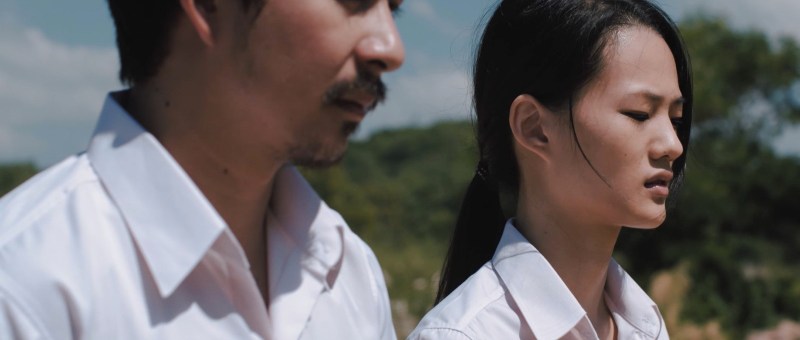
Six months on from the climatic events at the end of season two, Kuraki (Hidetoshi Nishijima) has become a drunk, Ohsugi (Teruyuki Kagawa) has left the force for the private sector, while Akeboshi (Yoko Maki) is still preoccupied with the strange phone calls she sometimes receives and the fate of her long lost father last seen on the deck of a sinking submarine. The dreams of the citizens of Tokyo are being haunted by the mysterious face of “Daruma”, but this is quickly superseded by an explosion in an office building which turns out to be a diversionary exercise as the autistic daughter of a refugee with diplomatic immunity is kidnapped by terrorists.

At this point, Kuraki appears at the scene, beats the bad guys into submission and rescues the girl, Elena, and her mother who are then taken into protective custody. However, things go south when Ohsugi’s daughter and Akeboshi are taken by the bad guys in the hope of an exchange forcing the gang to take Elena to a neighbouring Asian nation.

Mozu the movie suffers from many of the same problems which plagued the generally impressive TV series in its wildly inconsistent tone and increasingly convoluted, often bizarre plot twists. Assuming the audience will be familiar with the TV series, the film provides no recap, leaving the casual viewer completely lost amongst the numerous numbers of subplots held together by Kuraki’s need to find the answers behind the death of his wife at the site of a suicide bombing and the drowning of his daughter a year or so before. Likewise, Akeboshi’s familial concerns – her absentee father whose dark past was hinted at in the previous series and her close relationship with her two neices, is glossed over, as is Ohsugi’s ongoing battle to win back the respect of his teenage daughter. When a key character suddenly and quite unexpectedly appears to save the day (and then disappears again), the casual viewer has a right to be utterly baffled.

Where the central tone is one of cool noir supported by occasionally poetic camera work, Nishijima’s laid back minimalism gives way to broad, over the top villainy from Hasegawa’s Higashi as well as the punkish Mozu copycat who kickstarts the action. Kuraki remains an unbeatable super agent, taking out bad guys with well placed kicks to the chest and enduring numerous acts of torture whilst remaining doggedly fixed on his quest to find out the truth about his wife and a possible conspiracy plaguing Japanese society. Ohsugi is still the bumbling cop but equally committed to protecting his daughter while Akeboshi is underused, her slow burn romance with Kuraki simmering away in the background.

What remains is a collection of impressive action scenes and mysterious conversations offered with portentous seriousness. The purpose of Elena’s kidnapping is predictably grim yet reduced to a single sentence shortly before Kuraki apparently saves the day once again through undisclosed means. The central conspiracy in this conspiracy thriller, that Japan has been manipulated by a shadowy figure literally cannibalising his own children, fades into the background as Kuraki is left to affirm that all that remains now is chaos. Mozu the movie is season three with all the important bit stripped out – strange, confusing, and ultimately hollow. Yet for those well versed in the Mozu universe, it may provide a degree of closure to its ongoing mysteries, even if ultimately unsatisfying.


Original trailer (no subtitles)

By the Time it Gets Dark (ดาวคะนอง, Anocha Suwichakornpong, 2016)

by the time it gets darkAnocha Suwichakornpong’s second feature, By the Time it Gets Dark (ดาวคะนอง.Dao Khanong), bills itself as an exploration of a traumatic moment from the recent past but quickly subverts this conceit for a wider meditation on the veracity of cinema. Beginning in a manner typical of indie-leaning Thai films, Anocha gently undercuts herself as her images prism into their separate “realities”, informing and commenting on each other but perhaps not fully interacting. The Thammasat University student massacre of 1976 is the dark genesis of this fracturing future, but it’s also in the process of becoming a collective legend, cementing a “historical truth” as cultural currency even whilst expunged from the history books, leaving its young lost in a black hole of memory from which they are powerless to emerge.

A young woman welcomes an older one to a remote country villa. The younger woman treats the older with respect, talks up the merits of the house and insists she take the larger upstairs room. The younger woman, Ann (Visra Vichit-Vadakan), is a 30-something filmmaker who has invited the older woman, Teaw (Rassami Paoluengtong) – a former student protest leader turned respected writer,  for a prolonged interview period she hopes to use as research for a film about the events of 1976. Ill equipped to cope with the weight of her grim investigation, Ann begins to slip into something like a nervous breakdown filled with strange visions culminating in a forest chase in which she follows the figure of a young girl in a bear suit, eventually falling into a grove next to a strange sparkly mushroom.

Anocha takes us on an odyssey through contemporary Thailand all the while holding 1976 in the back of the frame. From Ann we jump to Peter (Arak Amornsupasiri), whom we meet as a tabacco farmer only to realise he’s also a much lusted after singer/actor/model with a complicated love life and media set friends. Peter’s story seems unrelated but then it turns out he might be up for a part in Ann’s movie (written for him, in director speak at least as one of his less tactful friends points out), but more than that they’re connected by the shadowy figure of an invisible working class woman, Nong (Atchara Suwan), whom we first met serving coffee to Ann and Teaw at a rural bar but now switches between waitressing at a country club, bussing at riverboat diner, and cleaning toilets at a gym. Unseen as it is, it is her private revolution which ultimately forces a cinematic reset as the screen dissolves into dizzying disruption only to morph into the true beauty of Thailand’s untouched natural vistas.

Ann intends to film “a drama of sorts” about the events of 1976. An early scene exposes Anocha’s more subtle motive as Ann stages a reconstruction of an act of state brutality. Students lie on their bellies, stripped of their shirts and with hands tied behind backs while soldiers with guns bark at them to keep their faces on the floor. We think this is a flashback – an objective capture of objective truth, but we’re wrong, this is a scene from Ann’s movie and it takes a few liberties with the tale later told by Teaw in which she talks about seeing her fellow students in a similar situation on but a football pitch rather than an indoor hanger. Similarly, we get the first scene again half way through with slightly different lines as two entirely different actresses inhabit the roles of Ann and Teaw. The house is now more opulent, the women more conventionally beautiful and elegantly dressed. We film “the truth”, but we can’t help “colour correcting” it towards that which seems prettier than the way we really view things.

“The truth” is a similarly difficult concept to pin down. Ann is fascinated by the massacre but from her rather privileged, largely apolitical viewpoint she can’t quite understand it. She asks Teaw banal questions about her student life – boyfriends, her parents, the gradually unfolding horror of it all. In one particularly tone deaf moment, she marvels at Teaw as a piece of “living history” – a first hand witness to the (failed) revolution. No, Teaw tersely points out, she is merely “a survivor”. Tellingly, Teaw’s early monologues do not quite tally with her later ones, but asked on her current views towards her past self and her more engaged generation she simply replies that where they saw injustice, the young rose to oppose it. They wanted to make things right – unlike the young of today. Ann obsesses over a failed revolution yet regards herself as an empty vessel who “appropriates the lives of others” for her films. She pithily asks a local waitress where the beans come from for her coffee but doesn’t seem to know what to do with the impressive answer that they’re a locally sourced variety brokered by an American living nearby who speaks excellent Thai right down to mastery of the local dialect. Her concerns are surface ones whereas Teaw felt her concerns to be deeper and more important – her friends died for them, but then nothing in particular came of it.

The camera lies repeatedly, from the restaged footage to ever the apparent reframing of “reality” and our own inability to discern one from the other. Peter’s life is perfect, but then perhaps it’s not or at any rate, he’s subject to the same vagaries of fate as the rest of us. Nong, the working class woman may be one girl trapped in a casual employment nightmare or a symbol of the faceless masses who are largely ignored by the likes of Peter and his friends and even by the well meaning Ann, gazing out into a world which they can barely touch. Cinema is not a place for objective truths but for emotional ones – a ghost can be interrogated, its existence explained, but it cannot be exorcised, the film traps it in concentric mirrors, forever distorting its reflection.


Released in the UK by Day for Night

Original trailer (English subtitles)