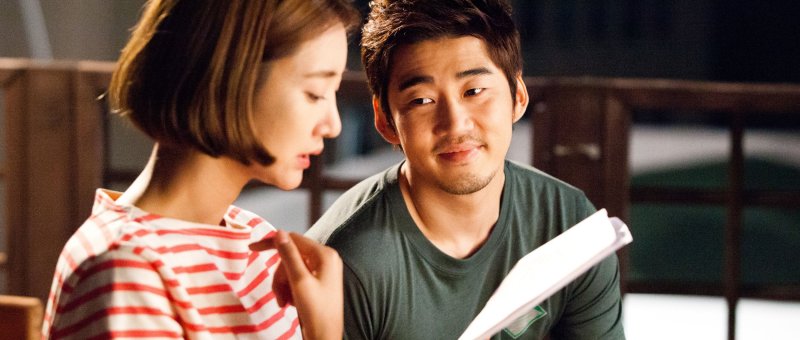

Red Carpet (레드카펫, Park Bum-soo, 2014)

red carpet posterExpectation is a heavy burden for a film. Not just the hopes built by excessive hype, but the way it chooses to define itself in advance. Of course, particularly with big budget studio movies it’s marketing men who decide all that rather than filmmakers but still, it’s hard to escape the feeling of confusion when the way a film was marketed works against its true nature. For a film like Red Carpet (레드카펫), an indie rom-com with a strangely innocent heart, it cuts both ways. The salacious hook is that this is a story of porno hell – tortured artists, egotistical men, and abused women. This is couldn’t be further from the truth. In fact, Red Carpet is deeper than it seems, asking real questions about the place of the porn industry in a modern society and attacking our own unfair and hypocritical judgements on its existence.

Park Jun-woo (Yoon Kye-Sang) is a lifelong cinephile who dreams of making award winning films he can watch on a Sunday afternoon with his parents, but life has been unkind to him and so he’s been working in the adult video industry for the last ten years. His life changes when he arrives home one day to find a strange young woman waiting there who accuses him of being a prowler and repeatedly hits him over the head with a frying pan. When the police get involved and take Jun-woo’s side seeing as he has the proper documentation it’s revealed that the woman, who has just returned for an extended period living in Spain, has been duped by a housing scam. Jung-woo, being the kindly soul he is, lets the woman, Eun-soo (Koh Joon-hee), live with him until she figures things out. Eun-soo is also a former child actress keen to get back into the profession and takes a keen interest in some of Jung-woo’s scripts never knowing exactly what kind of films it is that he really makes…

Though the setting is the porn industry, director Park makes sure to keep things light and humorous, showing the reality of adult video making but avoiding directly displaying it on the screen. Jung-woo’s work is almost entirely themed around porn parodies of famous movies as in the first shoot we witness where we gradually realise that the whole thing is Oldboy remade as a sex film (apparently including the corridor hammer fight, though no one’s figured out what to do with that yet). More amazing titles follow including the amusing “Inspect Her Gadget”.

Jung-woo may be conflicted about his career as a porn director, longing for the chance to make more “serious” films, but the rest of the crew is fairly happy with their choice of profession. This is, after all, just a job the same as any other. No one here is forced to work in the porn industry. There are no gangsters, no women trapped, abused, or forcibly hooked on drugs to keep them compliant. Everyone here seems to have made a free choice to engage in this type of work and is free to stop anytime they choose.

The problem, in this sense, is ours. Jung-woo and the crew face constant social stigma for what they do. At several points someone (well, always a man) is asked if they watch porn – to which they sheepishly admit, giving the impression that it is something they rarely do and are ashamed of doing. This central fallacy is the entire problem, everyone is watching the films Jung-woo makes – probably thousands more people have watched his adult movies online than have seen the legit movie which was plagiarised from a script that he wrote but was not allowed to direct because he didn’t have the “experience”. Yet everyone disapproves of pornography, tries to deny they watch it, and has the impression that people who make these films are in some way damaged or perverted. Enjoying a meal together in a restaurant, the gang are accosted by a “fan” who asks for a photo with a “famous actress” only to suddenly grab her breast. Just because she’s an actress in adult movies, the man thinks it’s OK to grab her  – “she sells her body”, so what’s the problem? The man, who obviously watches porn, does not think of the people who make it as other human beings but as commercial products existing only for his pleasure.

Jung-woo, in a sense, thinks this too but doesn’t quite realise until he’s made to read out a statement at a press conference in which he’s supposed to apologise for his “unethical” behaviour but refuses, avowing that neither himself or his crew has ever felt ashamed of the work they do. Jung-woo’s dreams are directly contrasted with Eun-soo’s as she works hard to become a legitimate actress all the while loosing her individual freedom to the marketing concerns of her agency and facing the prospect of being forced to abandon Jung-woo, whom she has come to care for, in order to keep her new career and avoid the “scandal” of being in any way associated with the porn industry.

Even if it seems like people such as Jung-woo are not allowed their dreams, it can still all work out in the end as long you’re true to yourself and accepting of everything you are and were. Jung-woo’s early career was harmed by an unscrupulous competitor who stole Jung-woo’s shot and took the credit himself but his “success” may only be temporary because he’s living a lie of artistic integrity while Jung-woo and Eun-soo have maintained their authenticity even when it looked like it may cost them everything they wanted. Improbably sweet and charming, Red Carpet is an innocent love story in which dreams come true through hard work, perseverance, and compromise but finally through truthfulness in the refusal to be shamed for simply being what you are.


Original trailer (English subtitles)
Midnight Runners (청년경찰, Kim Joo-hwan, 2017)

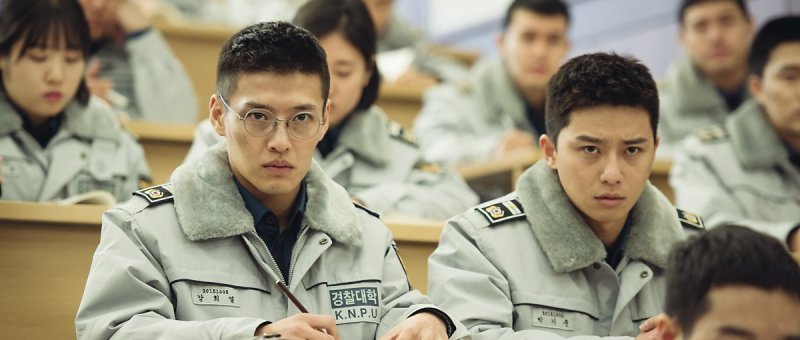
b861faaff73e4760fa673b9ca1b1468dffb7a334b9e43caee1065e675364da586d07306fe12f0a8d2f3556ef798dde699b6f2adc283c1ae8d9b53a8d85745de393ee015725bff3c47298edfb94e7f49fThere are many good reasons for applying to Police University, even if many people can’t see them. That aside, the heroes of Kim Joo-hwan’s Midnight Runners (청년경찰, Chungnyeongyungchal) have ended up there not through any particular love of honour and justice, but simply because it was cheap, on the one hand, and because it was different, on the other. An ‘80s-style buddy (not quite) cop comedy, Kim’s followup to the indie leaning Koala is the story of two young men finding their calling once their latent heroism is sparked by witnessing injustice first hand, but it’s also careful to temper its otherwise crowd pleasing narrative of two rookies taking on evil human trafficking gangsters with a dose of background realism.

Rookie recruits to Seoul’s Police University, Gi-jun (Park Seo-joon) and Hee-yeol (Kang Ha-neul) could not be more different. Gi-jun is exasperated by his worried mother’s words of parting, but hugs her goodbye anyway. Hee-yeol’s dad looks on in envy at this touching scene, but asking if he should hug his son too gets a resounding “no” before Hee-yeol begins to walk away, turning back to remind his father to button his coat because it’s cold outside. Gi-jun doesn’t want to get his hair cut because he’s fashion conscious, whereas Hee-yeol doesn’t want his cut because they don’t sterilise the clippers and he doesn’t want to catch a bacterial skin infection. Nevertheless, the pair eventually bond first during lunch as Hee-yeol surrenders his “carcinogenic” sausages to the always hungry Gi-jun, and then when Hee-yeol sprains his ankle during the final endurance test and Gi-jun (eventually) agrees to carry him to the finish line. Not for the first time, Gi-jun’s “selfless” actions to help a person in need earn the pair a few words of praise from their commander who berates the others for running past an injured comrade and thinking only of themselves when the very point of a police officer is to help those in need.

A year a later the pair are firm friends and decide to take a night on the town to find themselves some girlfriends to spend Christmas with. Sadly, they do not find any but they do find crime when they spot a pretty girl in the street and then spend ages arguing about asking for her number only to see her being clubbed over the head and bundled into a black van. Slightly drunk, the boys panic, chase the van, and ring the police but are told to stay put and wait for a patrol car. They figure they can get to the police station faster than a car can get to them but once they do they realise the entire station is being pulled away on another high profile case and no one’s coming. They do what it is they’ve been trained to do, investigate – but what they discover is much darker than anything they’d imagined.

Police in Korean cinema often have a bad rap. It’s nigh on impossible to think of any examples of heroic police officers who both start and finish as unblemished upholders of justice. Midnight Runners, however, attempts to paint a rosier picture of the police force, prompting some to describe it almost as a propagandistic recruiting tool. It helps that Gi-jun and Hee-yeol are still students which means that the idealistic line they’re being fed goes mostly unchallenged (at least until the climactic events prompt them to think again), but there are certainly no beatings, no shady dealings with the underworld, or compromised loyalties in the boys’ innocent quest to rescue a damsel in distress.

The spectre of corruption hovers in the background but on a national, rather than personal, level as the news constantly reports on the kidnapping of a wealthy CEO’s child while a young woman from a troubled background has also gone missing but no one, not even the police who have devoted all their resources to the CEO’s case, is interested. Meanwhile, Gi-jun and Hee-yeol, having just escaped from certain death, attempt to get help from a nearby police box but the shocked jobsworth of a duty officer won’t help them because they don’t have their IDs. The boys’ outrage on being informed that despite all their efforts, the specialist team who handle cases like these won’t even be able to look at it for weeks is instantly understandable, but so is their professor’s kindly rationale that all lives are equal and the squad can’t be expected to dump their current caseload and swap one set of victims for another. The police, so it goes, are heroes caged by increasing bureaucracy which has made them forget the reasons they became policemen in the first place. 

Despite the grim turn the film takes after Gi-jun and Hee-yeol make a shocking discovery as a result of their investigation, Kim keeps things light thanks the boys’ easy, symbiotic relationship filled with private jokes and even a cute secret handshake. Jokey slapstick eventually gives way to hard-hitting action as the rookie officers finally get to try out some of their training and find it effective on entry level street punks, but less so on seasoned brawlers with mean looks in their eyes. Told to “leave things to the grown ups”, Gi-jun and Hee-yeol decide there are things which must be done even it is dangerous and irresponsible because no one else is going to do them (whether that be eating sausages or rescuing young women no one else seems to care about). A strange yet fitting place to make the case for a better, less selfish world, Midnight Runners is a buddy cop throwback which brings the best of the genre’s capacity for humour and action right back with it.


Currently on limited release in UK cinemas.

Original trailer (English subtitles – select from menu)

Queen of the Night (밤의 여왕, Kim Je-young, 2013)

Queen of the NightThere are only two things which spring to mind on hearing the words “Queen of the Night” – Mozart and…something else. Anyway, Kim Je-yeong’s Queen of the Night (밤의 여왕, Bamui Yeowang) is about neither of these. It’s about a dreadfully self-centred IT guy who finds out something he didn’t previously know about his wife and then decides to go all CIA about it. It’s also about her boss who turns out to have a connection to her hidden past and a taste for date rape. Queen of the Night is a comedy in which in which nothing seems very funny, at least if you don’t happen to be a nerdy IT guy whose dream it is to marry a kind and “frugal” woman who will have just emerged from a nunnery or spent her formative years at a conservatoire where all male contact was expressly prohibited.

Young-soo (Chun Jung-myung) is a lonely, middle-aged computer guy whose continual search for love is often undermined by his money-saving mania which extends to leaving his lunchtime blind date waiting while he runs back to the office to retrieve the discount coupon he’d intend to use to buy her a cheap meal. All he wants is a wife who is “frugal” and kind. One day he ventures into a Subway and lays eyes on the girl of his dreams, Hee-joo (Kim Min-jung), who doesn’t seem to notice him and also seems to be the reason this is store completely packed out with middle-aged salarymen. Finally she sees him, the pair start dating, and eventually get married.

Everything is amazing, Young-soo has never been happier. The pair have bought their own apartment in Seoul and are even about to get rid of Young-soo’s horrible old fridge. Young-soo’s life begins to derail when his good-looking but sleazy boss, Park Chang-joo (Kang Sung-ho), asks him to install a dodgy surveillance app across the office network but it’s a trip to a uni reunion which plants doubts in Young-soo’s mind as to how well he really knows his wife.

Without giving too much away, Queen of the Night’s big secret is not what you think it is. In fact it’s nothing at all. All it amounts to is that Hee-joo was once young and a bit mixed up. She spent some time abroad, didn’t feel like she fit in, came back to Korea and felt even more out-of-place. So she started going to clubs and hanging out with delinquents – how scandalous! Of course, Young-soo wanted a nice, level-headed girl who was careful with money so this information disturbs him. Hee-joo has definitely outgrown her wild years and is exactly the woman he wants her to be, but Young-soo just can’t let it go.

The ironic thing is, spineless Young-soo is conflicted about employing the spy program but does it anyway while planning to write a blocking program to stop it working. Meanwhile he’s basically stalking his wife, googling her on the internet and trying to track down her old friends to find out who she really was before he met her. Simply asking Hee-joo does not occur to him.

The world Hee-joo is forced to live in is extremely misogynistic. Young-soo’s suspicions are first aroused when he is talked into making a rare appearance at a uni reunion after being assured he can take his new wife with him. Young-soo only wants to do this to show off that’s netted himself such a lovely, pretty girl but the reunion itself takes a turn for the strange when the wives (there is only one female computer engineer in the group and she apparently owes her graduation to Young-soo who supposedly ghostwrote her thesis for her, because you know women and computers, right?) are expected to participate in a bizarre talent contest to win white goods by showing off their special skill. Hee-joo ends up winning a kimchi fridge her mother-in-law had been desperate for by showing off her smooth moves on the dance floor, much to Young-soo’s surprise and mild displeasure.

Aside from being thrust into combat with the other wives of engineers, Hee-joo is also forced to contend with the unwanted attentions of Young-soo’s boss, Park. As part of his attempts to defeat the spying app, Young-soo discovers surveillance footage of Park taking women back to his office and spiking their drinks after which he assaults them. Despite seeming outraged, Young-soo does nothing at all about this. When Hee-joo looks set to become his latest victim, Young-soo busts a gut to save her but later descends into a bout of victim blaming, preferring to bring up the small amount of info he’s discovered about Hee-joo’s past to imply this was all her fault. Matters are made worse by Young-soo’s geeky friend (Kim Ki-bang) who spends too much time on the internet and assures him that the reason he and Hee-joo haven’t conceived is because of the anti-sperm antibodies in her system generated by promiscuity. Absolute and total rubbish, but Young-soo falls for it without reservation, largely because he has such low self-worth that he assumes any woman who falls for him must in some way be damaged.

Hee-joo is allowed to get her own back, to a point, by reuniting with some of her delinquent friends to scare the living daylights out of Park before telling Young-soo to get lost. He, of course, tries to win her back but he’ll have to learn to love her past too if he’s to have any chance of regaining his bright and happy future. This is a positive step, in a sense, as Young-soo seems to have acknowledged Hee-joo is a person and not just a personification of his hopes and dreams, but it’s also painted as a kind of forgiveness rather an acknowledgement of his totally inappropriate behaviour. Nothing about this is funny to anyone born after 1780, it is rather profoundly depressing. Queen of the Night may shine a little light on male/female relations in modern-day Korea but the picture it paints is far from inspiring.


Original trailer (English subtitles)
The Villainess (악녀, Jung Byung-gil, 2017)

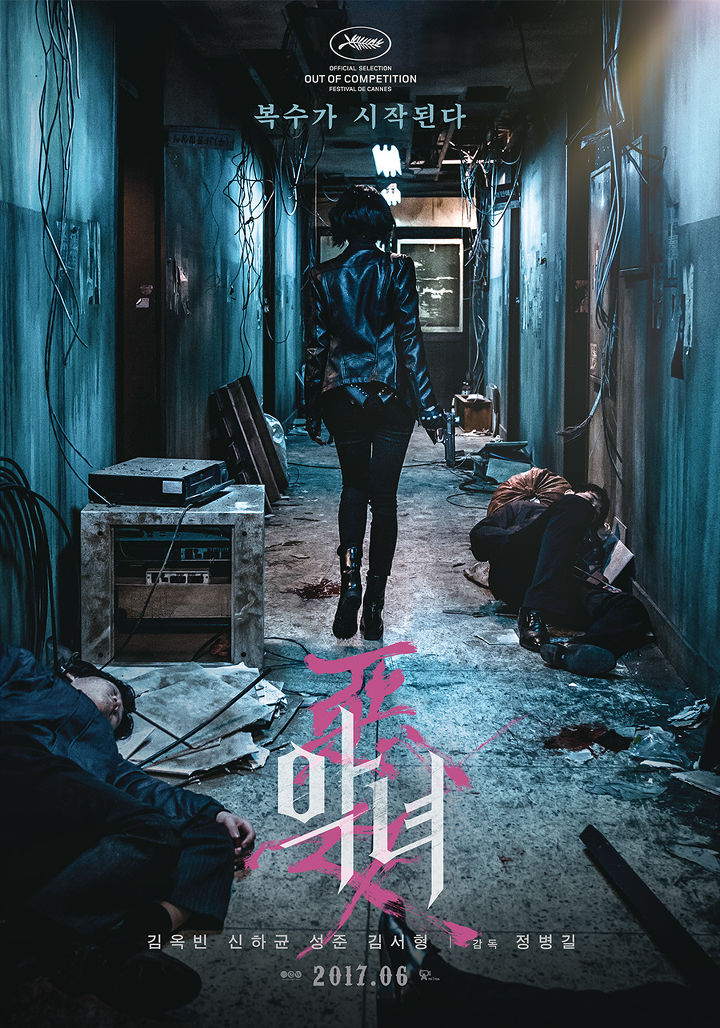
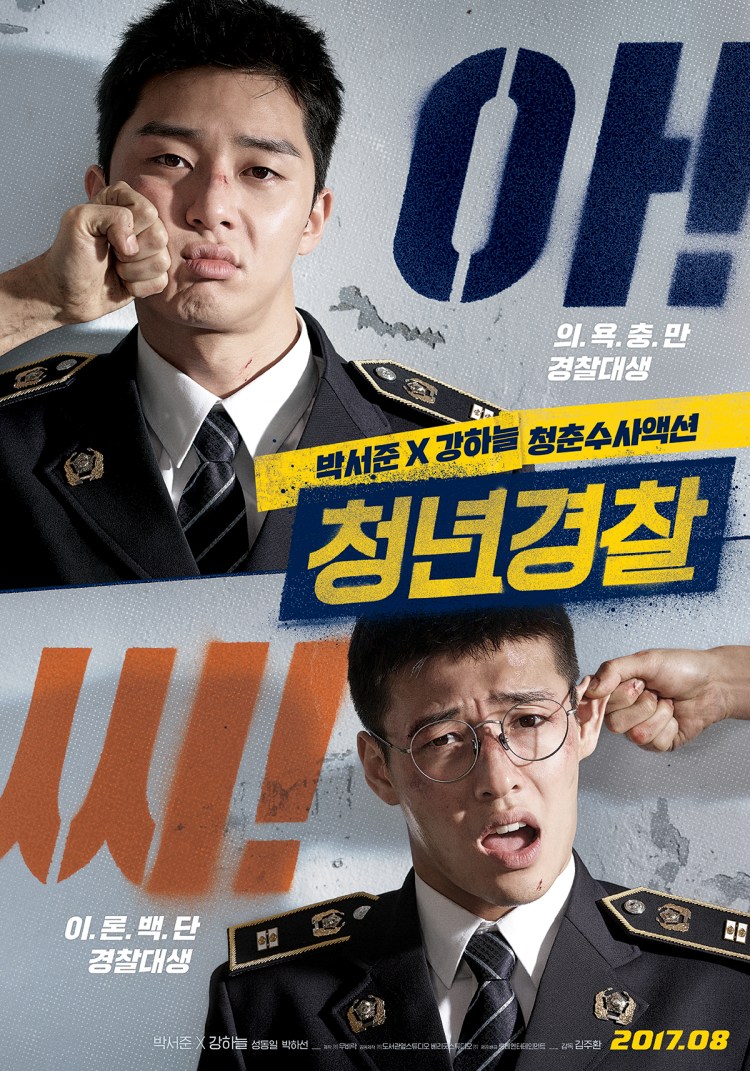
the villainess korean posterVengeance is a doubled edged sword, it cannot help but wound the wielder. The heroine of Jung Byung-gil’s ironically titled The Villainess (악녀, Aknyeo) has more to be revenged of than even she knows. Yes, the narrative beats are familiar and Jung has clearly drawn inspiration from Luc Besson’s seminal hit woman movie La Femme Nikita as well as the long history of female revenge films from Lady Snowblood to Kill Bill, but he does it with style and style is always hard to argue with. A new kind of action cinema, The Villainess makes a performer of its camera, darting frantically like an animal on the run and then drifting listlessly between dreamlike visions of half remembered traumas. Jung remains firmly in B-movie territory but owns it, unafraid to embrace the genre’s more extreme qualities and all the better for it.

When we first meet Sook-hee (Kim Ok-vin), we are Sook-hee. Jung opens with a lengthy (seeming) one take POV shot of an assassin fearlessly taking down untold numbers of bad guys in a tightly controlled corridor battle before we are suddenly ejected from her head when it connects with a mirror. Sook-hee has come here for revenge, though we don’t know that yet. Leaping from an upper window and landing heroically in an alleyway below, Sook-hee is taken into custody by a shady government organisation intent on turning her into a sleeper assassin. She is uniquely qualified for the task but has lost all hope and longs only for death. The revelation that she is pregnant gives her a reason to keep on living, as does the promise of her new mentor, Kwon-sook (Kim Seo-Hyung), who assures her ten years of service will buy a lifetime of comfort and freedom both for herself and the young life inside her.

Of course, it is not that simple. Jung gradually reveals Sook-hee’s backstory through brief flashbacks and lengthier evidence gathering sequences but her story is one of constant abandonment, adoption, betrayal, and vengeance. As if she could ever have forgotten them, the seminal images of Sook-hee’s life are frequently thrown back at her – an innocent girl witnessing the bloody death of her father, the eyes of the dying gazing back at something they once loved, games of death and of salvation. Sook-hee has been used and misused by men all her life, traded for jewels, and tricked into a murder of the self as sheds her skins to transform from frightened child to heartless killer, loyal wife, and loving mother. Swapping one master for another she is lied to and manipulated, denied her own identity in service of someone else’s ideals.

Ironically enough the prize which is dangled in front of Sook-hee’s eyes is nothing more than the prospect of a “normal life”, free from crime, killing, and fractured identities. As elliptical as the film itself, Sook-hee’s adult life is an ongoing quest to regain what was taken from her in childhood. A “normal life” is what’s offered to her by each of her respective masters but none of them has the capability, and only one the will, to give it to her. There can be no normal life for Sook-hee, reduced as she is from a name to an epithet. A villainess – no longer a woman, merely a faceless archetype, a grudge bearing revenger with dead eyes and an icy heart.

When Sook-hee performs in her strangely meta, Hedda Gabler inspired play, she remarks that she and the (presumably) long lost lover to whom she is speaking can no longer exist in the same space, in order for one to live the other must die. This line has an obvious correlation in the narrative but Sook-hee isn’t just speaking of her unseen enemy but of her own dualities. Only one Sook-hee can survive, but so many Sook-hees have died already starting with the lost little girl offered salvation in the barrel of the gun. Beginnings become endings, and endings become beginnings, but whether The Villainess is the story of a woman assuming her true identity or being subsumed by it, Sook-hee remains where she’s always been – alone and encircled by men with guns whose infinite authority she is perpetually unable to evade.


The Villainess was screened at FrightFest 2017 and will also be screened as the final Teaser for the upcoming London Korean Film Festival at Regent Street Cinema on 11th September ahead of a limited cinema outing and October DVD/blu-ray release from Arrow Video.

International trailer (dialogue free, English captions)

Plastic Love Story (プラスチック・ラブ・ストーリー, Ryutaro Nakagawa, 2014)

plastic love story posterFake plastic love, in the words of Radiohead – it wears you out. For three young women in contemporary Japan each seeking an identity through romantic connection, plastic love will have to do, for a time at least. Ryutaro Nakagawa’s indie feature Plastic Love Story (プラスチック・ラブ・ストーリー) is, in essence, anything but romantic as its three heroines veer dangerously between life and death, each lost, lonely, and lovelorn as they search for the pathways to lead them into a settled adulthood. For all of its gentle coming of age qualities, Plastic Love Story is a dark tale in which release is found only through loss, shared pain, and finally sacrifice.

Office lady Eri (Mai Sakata) is about to quit her job as she believes herself to be pregnant. A common occurrence even in modern Japan, though Eri’s case is less usual because she is not married. After confronting the probable father who wants nothing to do with it or her, Eri becomes fixated on a middle school classmate whom she feels was the last person to really understand her.

Meanwhile, high school girl Rina (Manami Takahashi) has a difficult home life with a flighty mother and distressed father. She dreamed of becoming a ballerina but since a leg injury put paid to her dancing dreams, Rina has tried to fill the void left by parental absence and early disappointment by hooking up with a string of useless boyfriends.

Kanae (Yumi Yamawaki), by contrast, is also a high school girl but sullen and depressed. A childhood trauma involving the death of her younger brother who had learning difficulties which was quickly followed by the death of her mother, has left her with an ongoing sense of guilt and hopelessness. Rejecting an erstwhile suitor from school, Kanae develops an odd relationship with a disturbed, suicidal young man currently in her doctor father’s care.

Each of the three women is in some way damaged, attempting to deal with extreme trauma and doing it all alone. Though they do not know each other and never meet, there are strange connections which bind them in their shared sufferings and inability to escape their oppressive environments. Eri’s loneliness is longstanding, leading her to attempt suicide as a schoolgirl at which point she was saved by the kindly attentions of another loner, Yasu, whom she has come to regard as a kind of absent soulmate. Yasu, in a trope which is repeated in all three stories, has since committed suicide but has left behind a series of videotapes through which, his sister says, he was able to make himself understood as he never could without a camera in his hand. The tapes centre on another high school classmate who seems to have been Yasu’s first (unrequited) love. Watching the videos forces Eri to face facts about her non-existent middle school romance and eventually helps her exorcise the ghost of her lonely teenage self.

Rina and Kanae are not quite so lucky, a little way behind on the path and each required to make a sacrifice of their potential mates in order to achieve what Eri achieves though her unattainable soulmate has already passed on. Rina’s life has been one of subservient neediness as she finds herself trapped in unfulfilling relationships with boys who see her only as a sex object. In fact, one of them actually describes her as a “toilet”, but all Rina says she wants is a “normal” relationship which starts as friends and gradually becomes something more. The janitor at her university has an intense crush on her which Rina originally rebuffs but every insane demand she makes of him, the janitor fulfils making more than a few sacrifices of his own.

Kanae’s relationship with the equally guilt ridden, suicidal young man at her father’s surgery is even less positive than Rina’s manipulative romance as the pair bond through their shared self loathing in feeling responsible for the deaths of people close to them whom they feel they did not try hard enough to save. Leaving aside the fact that the man is in his twenties and Kanae still a schoolgirl, the relationship is an intentionally doomed one. Kanae does not seek love but only an end to loneliness, avowing that no one has enough happiness to save someone else but that someday she plans to go faraway and learn to love herself once again.

Taking a turn for the poetic, Nakagawa has each of the women dance happily as they learn to let go of the objects which have bound them, smiling less painfully and walking with a little more lightness. Three expressions of womanhood, they exclaim that now they know love, they know beauty, they know solitude. The path that leads them here is dark, littered with bodies of those they have lost or have sacrificed in order to enact their own happiness. Plastic does not only imply something “fake” or engineered, but something soft and pliable, which is to say it can be moulded for good or ill. These plastic loves have soon turned rotten, but perhaps there is hope for a better future for each of these women for having come through them, even if their escape was not without cost.


Original trailer (English subtitles)

Once Upon a Time (三生三世十里桃花, Zhao Xiaoding & Anthony LaMolinara, 2017)

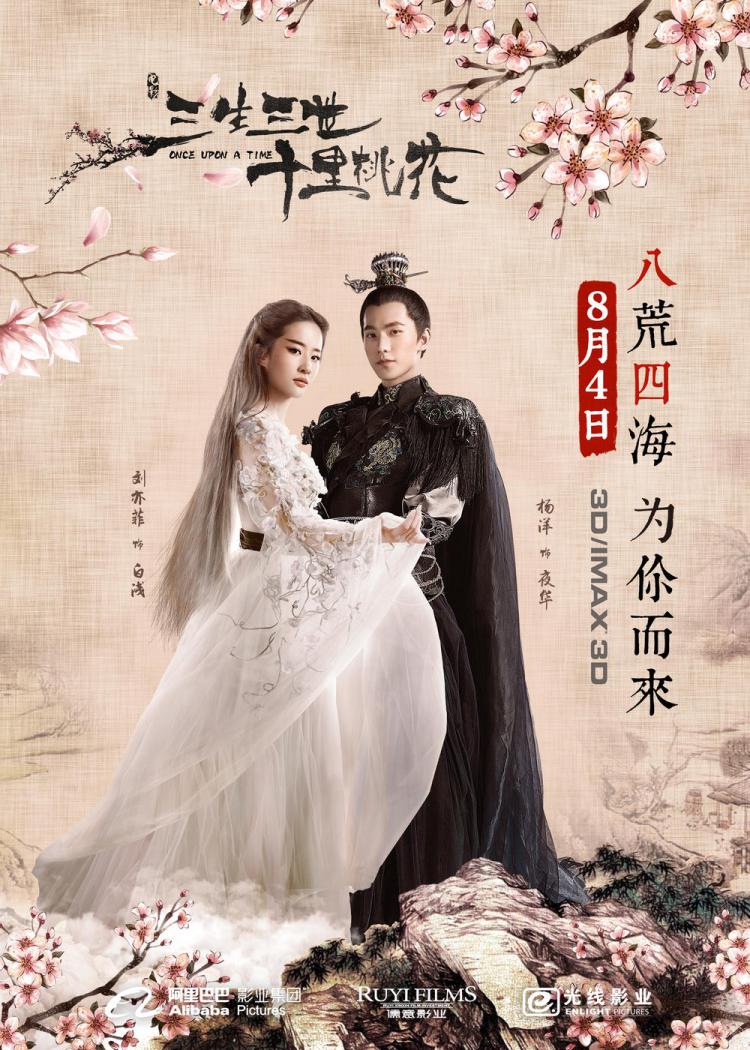
once upon a time posterTang Qi’s popular online novel Three Lives Three Worlds, Ten Miles Peach Blossoms (三生三世十里桃花, Sān Shēng Sānshì Shílǐ Táohuā) has already been adapted into a phenomenally popular TV drama spanning 58 episodes but the big budget, blockbuster adaptation by Zhang Yimou’s regular cinematographer Zhao Xiaoding making his directorial debut in a co-production with Anthony LaMolinara, thinks it can make do with just 110 minutes. Retitled Once Upon a Time in an obvious nod to the film’s attempt to blend classic Western fairytales by way of Disney with traditional Chinese mythology, Zhao’s approach is a (mostly) family friendly one complete with superfluous CGI characters and a kind of essential innocence in its emotional landscape. Yet it also falls into the traps of many a Chinese fantasy blockbuster in its convoluted, confusing narrative, over reliance on CGI visuals, and host of pretty but bland leading players.

A blindfolded woman bids her lover goodbye as she falls through a storm before landing softly in a beautiful orchard covered in peach blossom to be woken by a friend who tells her she had just been asleep. The woman says she remembers nothing but feels as if she’s been inside a dream. He tells her to let it go, in her dream world she lived a very sad life and it’s better not to remember.

As it turns out the woman is the queen of this realm, Bai Qian (Liu Yifei). She spends her days alternating between frolicking with mystical forest creatures like your average Disney princess (only with less singing) and drinking so heavily she passes out. In fact, drinking is pretty much her only hobby and her general demeanour is moodiness born of being sad over something she does not remember. Technically speaking, she’s been engaged to a mysterious prince from an undersea kingdom for quite sometime but has no desire to marry, firstly out of the aforementioned sadness, but also out of a preference for independence, and the fact that the prince is apparently 70,000 years younger than she is and she thinks it’s inappropriate. Nevertheless, she goes (blindfolded due to a problem with her oversensitive eyes) and meets Ye Hua (Yang Yang) and his son Ah Li (Peng Zisu) who immediately recognise her as “Su Su” – the boy’s mother who died 300 years ago.

Though Once Upon a Time is based on a fairly recent novel and draws much of its inspiration from Western fairytales, some familiarity with Chinese mythology will undoubtedly help. Bai Qian is apt to suddenly morph into a white nine tailed fox while her friend Zhe Yan (Luo Jin) is a glowing, fiery phoenix of the battlefield and though the gods possess a number of surprising powers from the ability to spontaneously generate fire or chop vegetables in mid-air, they fight the way any mortal would only with much more destructive effects.

At heart, apt phrase as that is, Once Upon a Time is an epic love story in which two souls wait and search for each other through eons, pushing and probing for recognition all while failing to grasp that which seems to exist between them. The title of the novel is almost a spoiler in itself as it details the passage through three worlds and three lives which has brought Bai Qian and Ye Hua to this particular impasse of awkward, screwball romance. A repeated phrase between the lovers, the Ten Miles of Peach Blossom is a byword for excess – what is the point of ten miles of peach blossoms, when a single petal is enough? Ye Hua affirms he’s found his petal already, though she refuses to come down from her tree. Bai Qian is the obstinate one, pining for a lost love and, perhaps, one she doesn’t remember but there are things Ye Hua has hidden from himself too.

As much about identities in flux eventually settling in love, Once Upon a Time also has its standard fairytale tropes from the “ugly” sisters at the beginning to the wicked step-mother stand in Su Jin (Li Chun) and her machinations to get rid of Su Su/Bai Qian by means of her wicked white tiger. Bai Qian and Ye Hua must come to know all of themselves before recognising their opposing number, seeing straight through the fog of love to its shining core. Despite the depth of its ideas, Once Upon a Time fails to move beyond its fairytale setting, caught between the bright and colorful world of a peach blossom orchard filled with adorable woodland creatures, and the darkness of the woman who lives inside it, slowly killing herself with drink to blot out the inability to remember long buried pain. Intermittently charming, Once Upon a Time is among the better fantasy films emerging from mainland China in recent times but unlike its forgetful lovers never quite manages to recover its heart.


Currently on limited release in UK cinemas.

Original trailer (English subtitles)

A Man and a Woman (남과 여, Lee Yoon-ki, 2016)

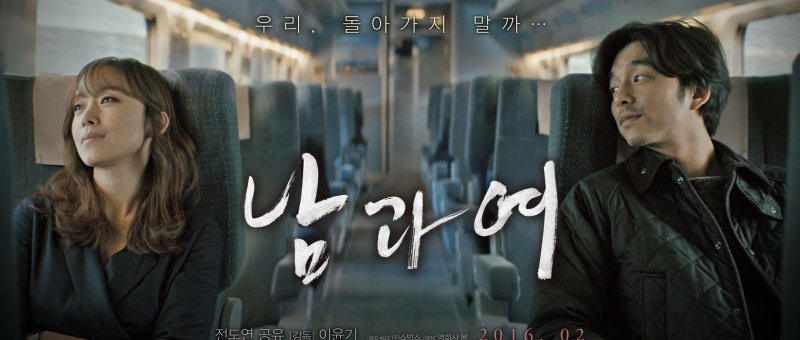
A man and a woman postetSome memories are better when forgotten, according to the heroine of A Man and a Woman (남과 여, Namgwa Yeo) – the latest romantic melodrama from Lee Yoon-ki. The title, deceptively simple as it is, makes plain Lee’s intention to reduce this melancholy love story to a universal level in which two people who share a deep and genuine connection choose to sever it rather than break with social convention and/or incur the additional risks of ongoing entanglement. An elongated Brief Encounter, the ballad of Sang-min and Ki-hong is a strangely old fashioned one in which unhappiness appears to be the ideal choice and a satisfied life an indulgent luxury.

Sang-min (Jeon Do-yeon) has brought her almost teenage son to Finland for treatment at a special needs school. Dropping him off for a school trip, Sang-min gets cold feet and tries to insist on accompanying the boy, only to be roundly refused by the carers. In the car park she runs into another Korean – Ki-hong (Gong Yoo) has been living in Finland for a couple of years and his young daughter attends the school to help with depression. Sang-min presses Ki-hong for information about where the camp is and eventually he offers to drive her. Predictably, they get caught in a snowstorm and have to stay overnight. A visit to a woodland sauna the next day leads to an intimate encounter but as soon as they arrive back in the city, the pair part ways without even exchanging names.

So begins the sad ballad of Sang-min and Ki-hong which eventually takes them back to Seoul where they resume their affair, putting each of their families at risk. Both parties are married already but each desperately lonely in very ordinary ways. Sang-min is a highflying CEO of a small fashion line but also shoulders most of the responsibility of looking after her son who needs a lot of extra help to cope with his autism. Her husband is rational and distant; the marriage is not unhappy but perhaps emotionally unfulfilling. Ki-hong’s marriage is also under strain as his wife has ongoing mental health issues leaving him to look after their equally distressed daughter whilst also pursing a career as an architect. 

The snowbound, silent forests of Finland are an appropriate point for the start of the affair, echoing the couple’s frozen, interior blankness. Sang-min has a pre-occupation with time in Helsinki which she abandons in Seoul, less because of a literal return to the alternation of light and darkness than a inner feeling of it passing at a more predictable rate. In Finland she wanted to know everything, in Seoul she decides perhaps it’s better not to know. Ki-hong, by contrast, is a vague sort of person in both places. Yet their instant connection is real and deep. They echo each other, repeating their shared phrases and sharing something to which they cannot give a name.

Though living in more permissive times, the love of Sang-min and Ki-hong remains impossible despite the ongoing unhappiness of their married lives. Sang-min looks on enviously at her younger sister who is dallying in marrying her American boyfriend. Her sister tells her she wants what Sang-min has – to be “happily” married, entirely unaware of Sang-min’s loneliness and dissatisfaction. Ki-hong’s moribund marriage is difficult enough but the spark has already gone – his wife tells him she feels like a patient, the subject of Ki-hong’s dutiful devotion rather than a woman who is loved by the man with whom she shares her life. Despite all of this the idea of leaving their unhappy situations to find happiness in each other is never a real possibility for either Sang-min or Ki-hong who each remain trapped both by adherence to social conventions and a lingering reluctance to fully commit.

The forces which keep them apart are less societal than personal, an unwillingness to embrace the possibility of happiness or perhaps a sense that it is not something which is permitted to them. Times have moved on since Alec and Laura said goodbye to each other in a station cafe, unspoken emotion filling the room as a busybody inserts herself into a private world about to end. There is no particular reason why Sang-min and Ki-hong cannot be happy, yet they each eventually choose not to be. Frosty indeed, this is a love which is apparently best relegated to memory, untainted by time and eternally pure. Beautifully photographed and heartbreakingly bleak, A Man and a Woman is a sad story of refused connection in which love is a risk too great for two lonely souls.


Original trailer (English subtitles)
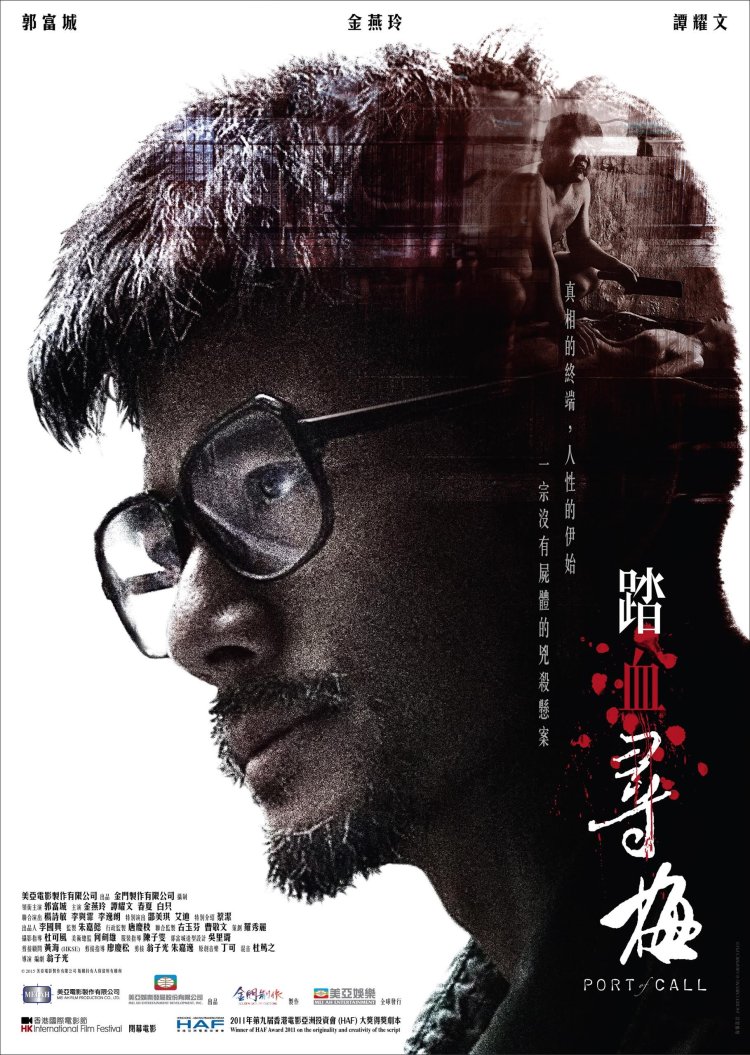
Port of Call (踏血尋梅, Philip Yung, 2015)

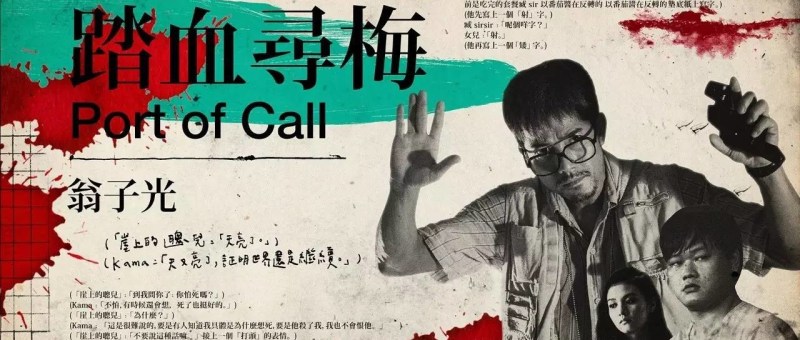
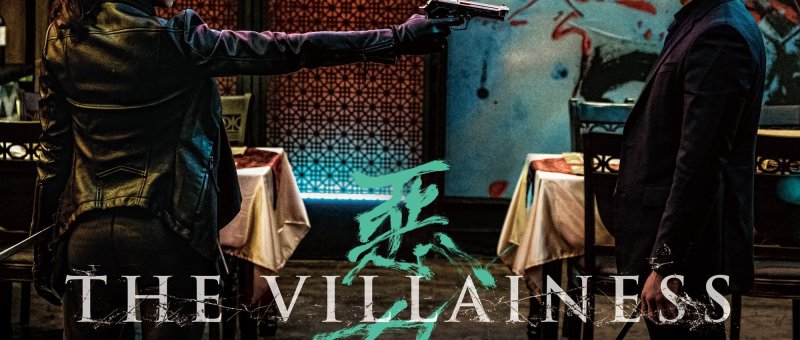
port of call posterBoy meets girl. Girl says she wants to die. Boy says OK. Philip Yung’s third feature, Port of Call (踏血尋梅), attempts to find out how such a thing could happen and does so by means of a state of the nation address. Shot by Christopher Doyle, Yung’s early 21st century Hong Kong is a place of broken dreams and empty promises in which past traumas become inescapable phantoms, hungry for blood and pain. More than the sum of its parts, Port of Call is a murder mystery and noirish crime thriller which rejects its procedural roots for a deeper investigation of how a young man and a young woman might have been brought to such a desperate and tragic end.

Eccentric detective Chong (Aaron Kwok) finds himself investigating the disappearance of a 16 year old prostitute believed murdered due to evidence of extensive bloodstains at the presumed scene of crime. The culprit soon turns himself in and confesses to both murder and dismemberment, avowing that he killed the girl because she asked him to. It seems like an open and shut case, at least to Chong’s superiors, but Chong cannot quite let it go. How could someone meet another person for the first time and take something as banal as “I wish I were dead” so literally as to decide to help them achieve their wish?

Chong, a divorced father to a young daughter, wants to know the why but what he discovers shakes his own already weary heart. The murdered girl, Jia-mei (Jessie Li), came to Hong Kong a little while after her mother (Elaine Jin) and sister, following the divorce of her parents. Her mother, a nightclub singer, has little money and is rarely present. Lonely, Jia-mei dreams only of becoming a model but this is a city which eats dreams and so she finds herself working admin jobs at a modelling studio as well as working at McDonalds in the hope of escaping her unsatisfying home environment. Eventually she is pulled into the world of escorts and compensated dating before winding up as a casual prostitute who forms an unwise romantic attachment to a client.

Neither Chong, Jia-mei, or the damaged killer Chi-sung (Michael Ning) is able to escape the weight of the pain and suffering they have seen or experienced. A long term employee of the Regional Crimes Bureau, Chong has seen the most gruesome, heinous, and incomprehensible crimes culminating in an unforgettable 1998 murder and kidnap case in which he discovered a small child tied up next to decomposing body covered in fattened maggots and swarming flies. Chong no longer sleeps because of the bloody nightmares which see him take the place of both victim and observer, laid low by an escaping Chi-sung whose crime is recreated in glorious technicolor.

Jia-mei’s world is bloodier still even at such a young age. A disturbing Facebook post recounts the loss of her virginity as a young teenager as a gory battlefield in which she and her boyfriend roll around in bloody sheets. Apparently not the only depressed young girl, Jia-mei’s classmate grabs her scissors and slashes her wrists all while Jia-mei does nothing. As she later tells an online friend, it’s sad when no one sees you. Separated from her home and father, Jia-mei’s model dreams are less a vacuous search for fame as they are a desperate attempt for connection. Looking for love in all the wrong places, Jia-mei’s world gradually shrinks away from her as the emptiness of her transactional relationships produces the opposite of what she wanted, eventually sending her straight into the arms of the equally lonely Chi-sung.

Chi-shung’s problems also stem back to childhood trauma and feelings of abandonment, but have taken on an additional layer of resentment following the failure of his first love affair. A melancholy, damaged man, Chi-sung almost sees his crime as a kind of salvation, rescuing Jia-mei from becoming what he hated and what she longed not to be. His icy practicality is chilling as he recounts how he dismembered and disposed of the body as if he were simply describing how to cook spaghetti but even as he seems to regard his crime as a kindness, there is something else lurking at the bottom of his coolness.

Yung’s Hong Kong is cold and unforgiving. The policeman, the victim, and the killer are all, in a sense, displaced – from their families, from the normal world, and from their homes. Jia-mei’s search for affection and an end to loneliness took her to the loneliest of places, while Chi-sung kills the things he loves to save them the pain of being alive, and Chong solves crimes but is powerless to stop them. Told in four acts and with a non-linear structure, Port of Call is a meandering voyage through life’s unpleasantness in which trauma stains, pain grows, and loneliness kills the spirit. Yung’s unflinching look at the dark underpinning of modern society is a sad and hopeless one yet there are brief flashes of hope, if only in stray cats finding unexpected safe harbours.   


Original trailer (Cantonese with English/Traditional Chinese subtitles)

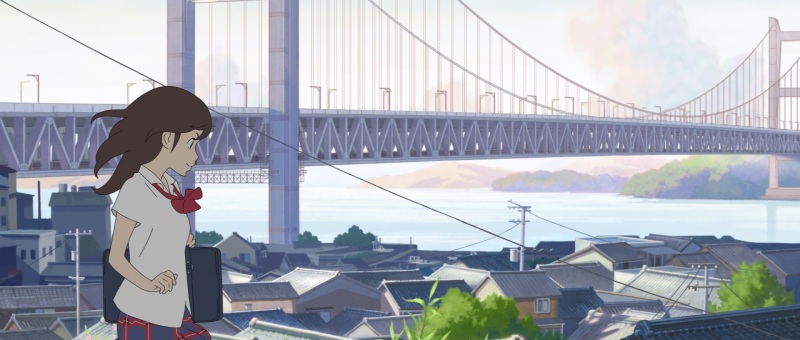
Napping Princess (ひるね姫 ~知らないワタシの物語, Kenji Kamiyama, 2017)

napping princess posterKenji Kamiyama has long been feted as one of Japan’s most promising animation directors, largely for his work with Production I.G. including the Ghost in the Shell TV anime spin-off, Stand Alone Complex, and conspiracy thriller Eden of the East. Aside from the elegantly shaded quality of his animation, Kamiyama’s work has generally been marked by thoughtful social and political commentary mixed with well executed action scenes and science fiction themes. Napping Princess (ひるね姫 〜知らないワタシの物語〜, Hirune Hime: Shiranai Watashi no Monogatari, also known by the slightly more intriguing title Ancien and the Magic Tablet) swaps science fiction for steampunk fantasy and, in a career first, is aimed at younger children and family audiences.

With the 2020 Tokyo Olympics fast approaching, Kokone (Mitsuki Takahata) is a regular high school girl about to enjoy her very last summer holiday before graduation. With no clear ideas of what it is she wants to do with her life, Kokone idly whiles away her time looking after her monosyllabic single dad, Momotaro (Yosuke Eguchi), who only seems to be able to communicate with her via text. Momotaro is a mechanic with a difference – he knows how to retrofit cars with a hi-tech, experimental self driving software that’s a real boon to the ageing population in the tiny rural town where the pair live.

A dreamy sort of girl, Kokone is always tired and frequently drifts off into a fantasy land where the car industry is all important and all are at the mercy of an iron fisted king whose sorceress daughter continues to cause problems for the population at large thanks to her strange powers. Whilst in her dream world, Kokone (or Ancien as she is known in “Heartland”) is accompanied by a her stuffed toy come to life and interacts with slightly younger versions of the people from her town including a dashingly heroic incarnation of her father as a young man.

The main action kicks off when Momotaro is arrested by an evil looking guy who wants a mysterious tablet he says Momotaro has stolen from their company. The fairytale inspired dreamworld might indicate a different kind of tablet, but this really is just a regular iPad with some information on it that certain people would very much like to get their hands on and other people would very much prefer that they didn’t. The tablet itself is a kind of macguffin which allows Kokone to process some long held questions about her past and that of her late mother who passed away when she was just an infant.

Kokone’s frequent flights of fancy start to merge with the real world, firstly when she shares a lucid dream with companion Morio (Shinnosuke Mitsushima) who helps her on her quest, and then later when magic seems to come to the pair’s aid through the tablet (though this turns out to have a more prosaic explanation). At 17 or so, you’d think perhaps Kokone is a little old for these kinds of fantasies, or at least for carting around a stuffed toy which is in remarkably good nick for something which apparently belonged to her mother when she was a child. Nevertheless, her dreamland is a long buried message which helps her piece together her mother’s story and how it might relate to her own all while she’s busy saving the Opening Ceremony of the 2020 Olympics from becoming a possibly lethal international embarrassment which would destroy the Japanese car industry for evermore.

Despite his prowess with harder science fiction subjects, Kamiyama can’t quite corral all of this into a coherent whole. Valiantly trying to merge the twin stories of Kokone’s coming of age and the problems of the Japanese auto industry which is good at hardware but struggles with soft, Napping Princess narrowly misses its target neither quite charming enough in its fantasy universe or moving enough in the “real” one. This may perhaps rest on a single line intended to be a small revelation which melts the icy CEO’s heart but essentially comes down to the use of a kanji in a name being different from one on a sign, losing much of its impact in translation as it accidentally explains the whole of Kokone’s existence in one easy beat which easily missed. Failing to marry its two universes into one perfect whole, Napping Princess is a pleasant enough though perhaps inconsequential coming of age story in which a young girl discovers her own hidden powers whilst unlocking the secrets of her past.


Currently on limited UK release from Anime Limited.

Trailer featuring a (very nice) Japanese cover of Daydream Believer


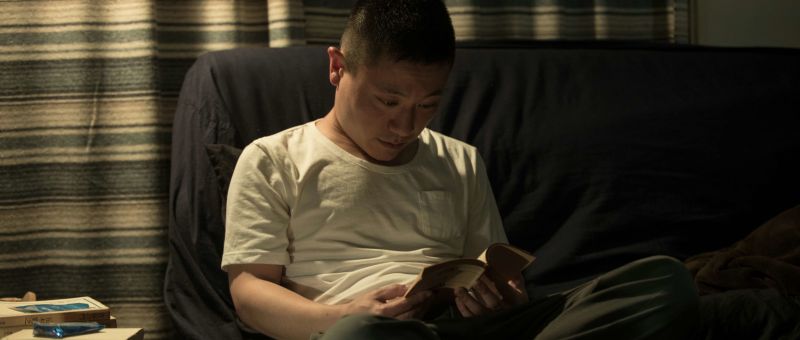
Sweating the Small Stuff (枝葉のこと, Ryutaro Ninomiya, 2017)

Sweating the Small StuffAs portraits of stagnation go, Japanese indie is no stranger though few have found a protagonist as passive as the hero of Ryutaro Ninomiya’s Sweating the Small Stuff (枝葉のこと, Edaha no Koto). Played by the director himself and sharing his name, Ryutaro is a man who barely speaks and has long since given up the illusion that anything that might be said could be of real consequence. Like most of the men in his run down town he has no dreams or ambitions, barely tolerates those who might regard him as a friend, and finds his only refuge in the pages of a book. A chance phone call produces a brief change in his routine but perhaps not enough to shake him from his committed course of listlessness.

At 27, Ryutaro lives alone in a modest, messy apartment filled with empty beer cans, cigarette butts, and piles of books. He has a dead end job at a moribund garage and spends his breaks avoiding his co-workers whom he seems to find annoying. Receiving a phone call from a childhood friend, Ryutaro informs his drunken boss that he needs to leave early before going home to eat noodles, read, and wait to be picked up. His friend, Yusuke, takes him to see his mother, Ryuko, who has been ill with hepatitis C for some years during which time Ryutaro has avoided seeing her despite having been close to her following the death of his own mother when he was just a child.

Ryutaro is a sullen sort of man, almost vibrating with an internalised rage which is only calmed at home with his books. Conversations with his friend Yusuke and later with Ryuko reveal that Ryutaro once had literary aspirations himself, even placing well in competitions, but has more or less given up writing. Yusuke also wanted to be an artist but has abandoned his dreams for a regular salaryman life, as has Yusuke’s brother Satoshi who used to bleach his hair and play in a band. Ryutaro’s boss seems to be among the few who has yet to definitively give up, planning to leave the garage to take over an interiors company owned by a friend of his mother’s who has no heirs to inherit it. Ryutaro’s boss has mentioned similar schemes before and they’ve always fallen through, but he thinks this time will be different. Ryutaro, in contrast, seems to have abandoned any idea of forward motion, refusing to pursue his literary goals, a more stable career, or relationships with friends and lovers in favour of whiling the time away inconsequentially.

Having lost his mother at a young age and then watched his step-mother battle a serious illness which she seems to have recovered from, Ryutaro perhaps has reasons to be wary of forming deep attachments. Only once does his stony facade crack, during a private conversation with Ryuko in which he tells her that sometimes he cheers himself up by remembering that there must be people in a much worse place than he is. Yet Ryutaro is not an unkind man, much of the little he does say is offered quietly in kindness such as his defence of Ryuko’s sometimes absent minded husband, but what he can’t stand is babble and insincerity. Pushed into an unwanted, vacuous conversation with a potential girlfriend he quips that he likes his cheap hairdressers because they get it done without talking before becoming overwhelmed and cruelly laying into the chatty woman with a lengthy rant about the utter pointlessness of her one-sided loquacity. Failing to realise the depth to which he’s hurt her, Ryutaro goes back to the bar where she works to try and see her again only to be rebuffed.

A similar event occurs in another bar when his boss makes a joke about his seeming blankness. Twice Ryutaro gets himself into fights and twice he refuses to defend himself, remaining passive as blows rain down on him. Trying to shut everything out, Ryutaro drinks heavily, declines invitations, and stays at home alone but Ryuko’s illness has forced him to re-emerge, to a degree at least, into the world. Caught in a state of permanent anxiety, Ryutaro finds himself paying repeated visits to Ryuko before finally attempting to talk with his equally detached father who appears to suffer from many of the same problems as Ryutaro himself.

Inspired by true events, Sweating the Small Stuff is both a picture and mild rebuke of aimless youth and of a generation which has collectively decided that everything is meaningless and devoid of purpose. In an odd way, Ryutaro, in his inertia, may be the last man standing, still resentfully clinging on to an idea of real meaning which is defined by its own absence. Ryutaro’s tragedy is that he wants more out of life than there perhaps is to be found and remains frustrated among all those content to waste their time in idle pursuits or surrender themselves to a life of respectable drudgery and ordinary happiness but there are perhaps brief flickers of connection to found even within his ever more disconnected world.


Currently available to stream via Festival Scope as part of their Locarno Film Festival selection.

Original trailer (dialogue free, no subtitles for captions)