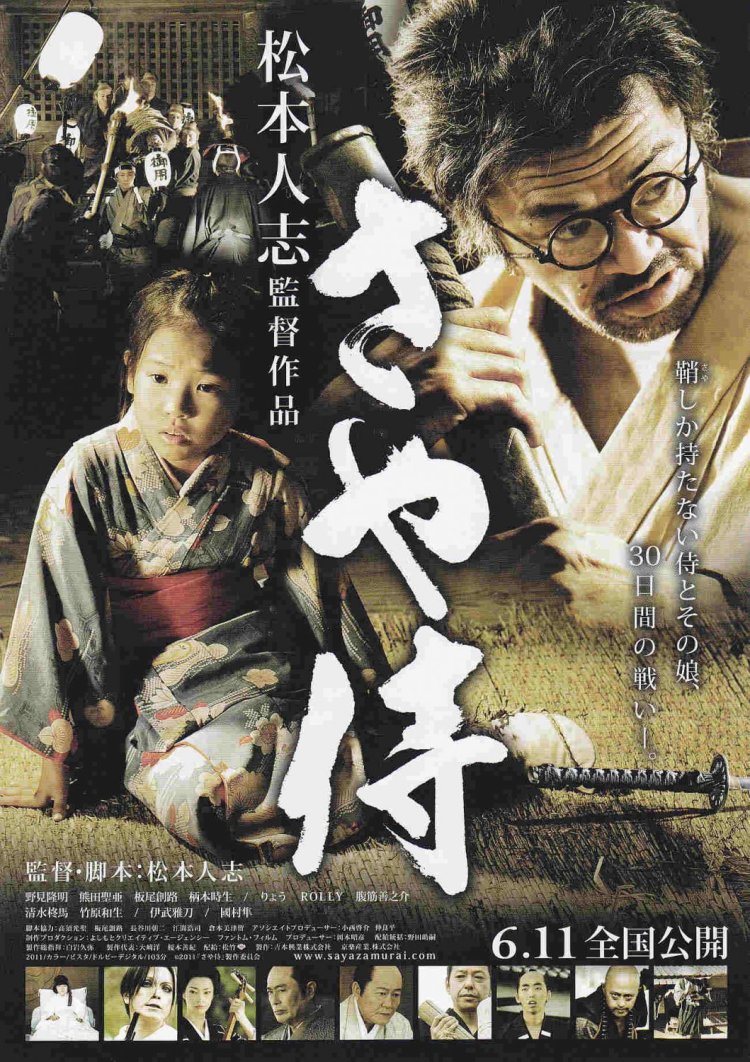
 A samurai’s soul in his sword, so they say. What is a samurai once he’s been reduced to selling the symbol of his status? According to Scabbard Samurai (さや侍, Sayazamurai) not much of anything at all, yet perhaps there’s another way of defining yourself in keeping with the established code even when robbed of your equipment. Hitoshi Matsumoto, one of Japan’s best known comedians, made a name for himself with the surreal comedies Big Man Japan and Symbol but takes a low-key turn in Scabbard Samurai, stepping back in time but also in comedic tastes as the hero tests his mettle as a showman in a high stakes game of life and death.
Nomi Kanjuro (Takaaki Nomi) is a samurai on the run. Wandering with an empty scabbard hanging at his side, he pushes on into the wilderness with his nine year old daughter Tae (Sea Kumada) grumpily traipsing behind him. Eventually, Nomi is attacked by a series of assassins but rather than heroically fighting back as any other jidaigeki hero might, he runs off into the bushes screaming hysterically. Nomi and Tae are then captured by a local lord but rather than the usual punishment for escapee retainers, Nomi is given an opportunity to earn his freedom if only he can make the lord’s sad little boy smile again before the time is up.
Nomi is not exactly a natural comedian. He’s as sullen and passive as the little lord he’s supposed to entertain yet he does try to come up with the kind of ideas which might amuse bored children. Given one opportunity to impress every day for a period of thirty days, Nomi starts off with the regular dad stuff like sticking oranges on his eyes or dancing around with a face drawn on his chest but the melancholy child remains impassive. By turns, Nomi’s ideas become more complex as the guards (Itsuji Itao and Tokio Emoto) begin to take an interest and help him plan his next attempts. Before long Nomi is jumping naked through flaming barrels, being shot out of cannons, and performing as a human firework but all to no avail.
Meanwhile, Tae looks on with contempt as her useless father continues to embarrass them both on an increasingly large stage. Tae’s harsh words express her disappointment with in Nomi, berating him for running away, abandoning his sword and with it his samurai honour, and exposing him as a failure by the code in which she has been raised. She watches her father’s attempts at humour with exasperation, unsurprised that he’s failed once again. Later striking up a friendship with the guards Tae begins to get more involved, finally becoming an ally and ringmaster for her father’s newfound career as an artist.
Tae and the orphaned little boy share the same sorrow in having lost their mothers to illness and it’s her contribution that perhaps begins to reawaken his talent for joy. Nomi’s attempts at comedy largely fall flat but the nature of his battle turns out to be a different one than anyone expected. Tae eventually comes around to her father’s fecklessness thanks to his determination, realising that he’s been fighting on without a sword for all this time and if that’s not samurai spirit, what is? Nomi makes a decision to save his honour, sending a heartfelt letter to his little girl instructing her to live her life to the fullest, delivering a message he was unable to express in words but only in his deeds.
Matsumoto’s approach is less surreal here and his comedy more of a vaudeville than an absurd kind, cannons and mechanical horses notwithstanding. The story of a scabbard samurai is the story of an empty man whose soul followed his wife, leaving his vacant body to wander aimlessly looking for an exit. Intentionally flat comedy gives way to an oddly moving finale in which a man finds his redemption and his release in the most unexpected of ways but makes sure to pass that same liberation on to his daughter who has come to realise that her father embodies the true samurai spirit in his righteous perseverance. Laughter and tears, Scabbard Samurai states the case for the interdependence of joy and sorrow, yet even if it makes plain that kindness and understanding are worth more than superficial attempts at humour it also allows that comedy can be the bridge that spans a chasm of despair, even if accidentally.
Currently streaming on Mubi
Original trailer (no subtitles)
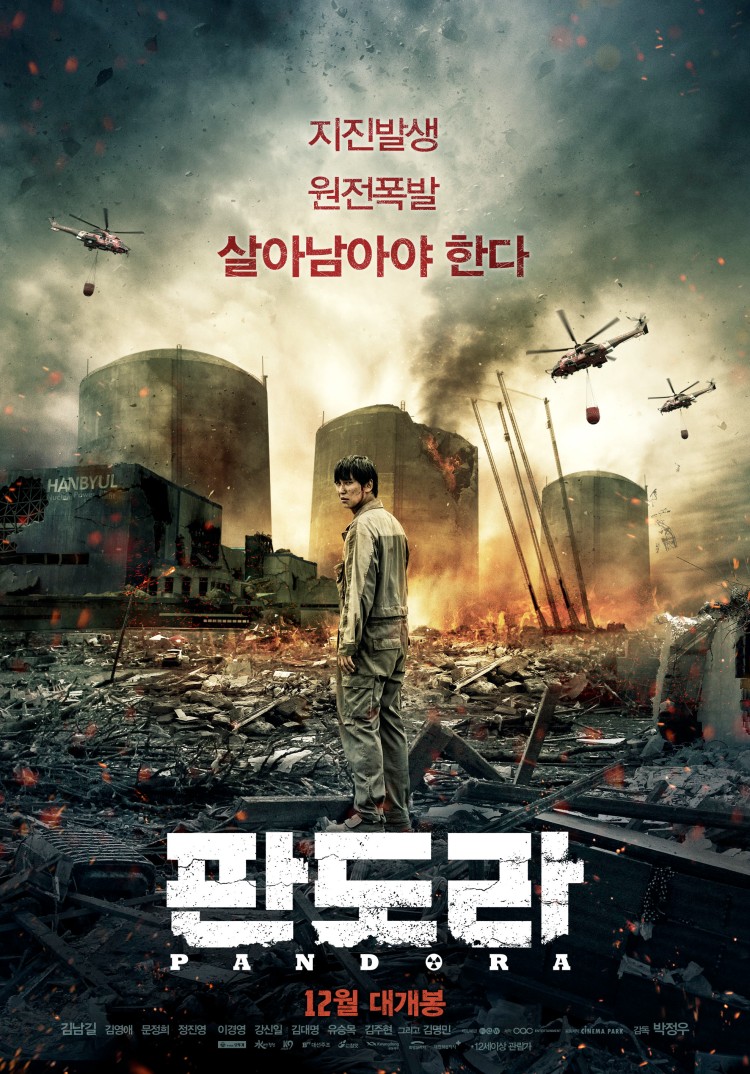 In a time of crisis, the populace looks to the government to take action and save the innocent from danger. A government, however, is often forced to consider the problem from a different angle – not simply saving lives but how their success or failure, decision-making process, and ability to handle the situation will be viewed by the electorate the next time they are asked who best deserves their faith and respect. Pandora (판도라) arrives at a time of particularly strained relations between the state and its people during which faith in the ruling elite is at an all time low following a tragic disaster badly mishandled and seemingly aided by the government’s failure to ensure public safety. Faced with an encroaching nuclear disaster to which their own failure to heed the warnings has played no small part, Pandora’s officials are left in a difficult position tasked with the dilemma of sacrificing a small town to save a nation or accepting their responsibility to their citizens as named individuals. Unsurprisingly, they are far from united in their final decision.
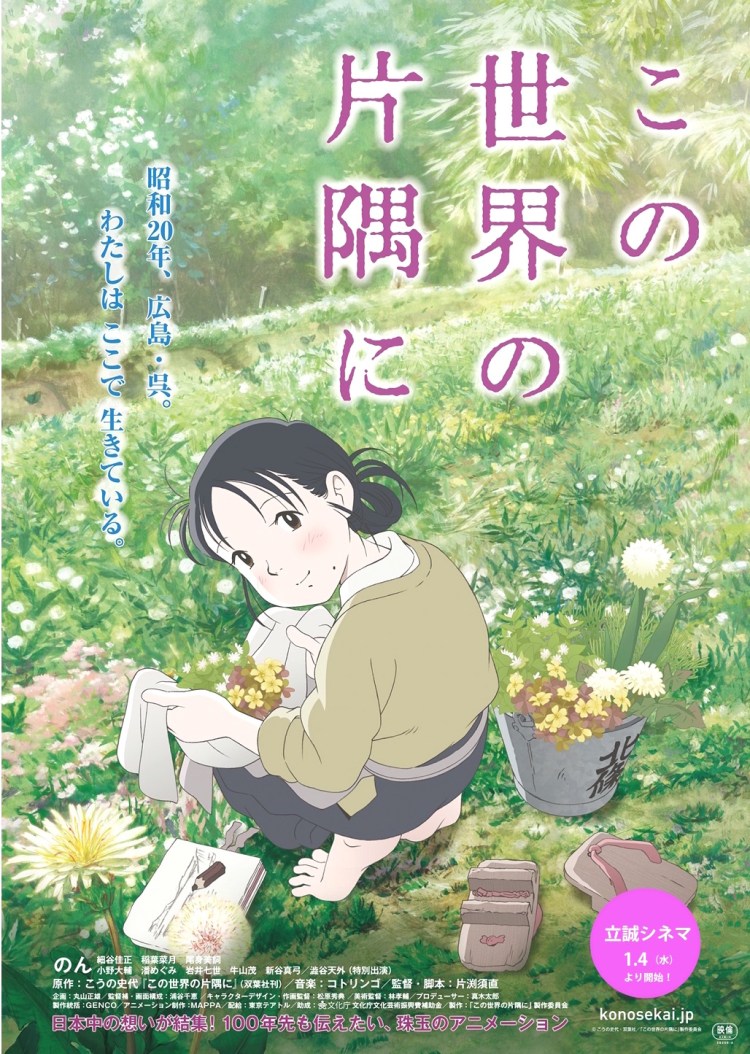 Depictions of wartime and the privation of the immediate post-war period in Japanese cinema run the gamut from kind hearted people helping each other through straitened times, to tales of amorality and despair as black-marketeers and unscrupulous crooks take advantage of the vulnerable and the desperate. In This Corner of the World (この世界の片隅に, Kono Sekai no Katasumi ni), adapted from the manga by Hiroshima native Fumiyo Kouno, is very much of the former variety as its dreamy, fantasy-prone heroine is dragged into a very real nightmare with the frontier drawing ever closer and the threat of death from the skies ever more present but manages to preserve something of herself even in such difficult times.
 The criticism levelled most often against Japanese cinema is its readiness to send established franchises to the big screen. Manga adaptations make up a significant proportion of mainstream films, but most adaptations are constructed from scratch for maximum accessibility to a general audience – sometimes to the irritation of the franchise’s fans. When it comes to the cinematic instalments of popular TV shows the question is more difficult but most attempt to make some concession to those who are not familiar with the already established universe. Mozu (劇場版MOZU) does not do this. It makes no attempt to recap or explain itself, it simply continues from the end of the second series of the TV drama in which the “Mozu” or shrike of the title was resolved leaving the shady spectre of “Daruma” hanging for the inevitable conclusion.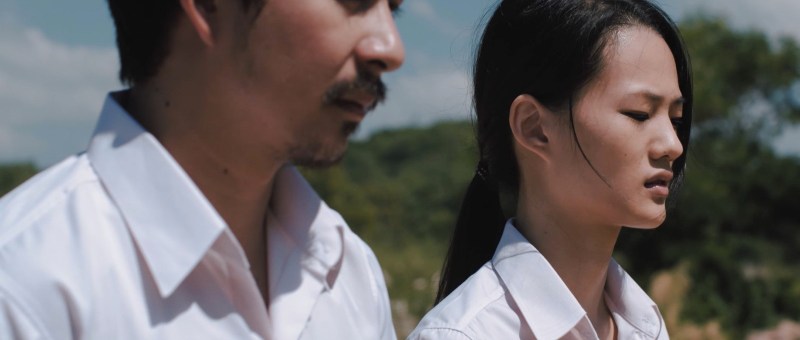
 Anocha Suwichakornpong’s second feature, By the Time it Gets Dark (ดาวคะนอง.Dao Khanong), bills itself as an exploration of a traumatic moment from the recent past but quickly subverts this conceit for a wider meditation on the veracity of cinema. Beginning in a manner typical of indie-leaning Thai films, Anocha gently undercuts herself as her images prism into their separate “realities”, informing and commenting on each other but perhaps not fully interacting. The Thammasat University student massacre of 1976 is the dark genesis of this fracturing future, but it’s also in the process of becoming a collective legend, cementing a “historical truth” as cultural currency even whilst expunged from the history books, leaving its young lost in a black hole of memory from which they are powerless to emerge.
 North Koreans have become the go to bad guys recently, and so North Korean spies have become the instigators of fear and paranoia in many a contemporary political thriller. The Suspect (용의자, Yonguija), however, is quick to point the finger at a larger evil – personal greed, dodgy morals, and the all powerful reach of global corporations. Opting for a high octane action fest rather than a convoluted plot structure, Won’s approach is (mostly) an uncomplicated one as a wronged man pursues his revenge or redemption with no thought for his own future, only to be presented with the unexpected offering of one anyway alongside the equally unexpected bonus of exposing an international conspiracy.
 Kiyoshi Kurosawa has taken a turn for the romantic in his later career. Both 2013’s Real (リアル 完全なる首長竜の日, Real: Kanzen Naru Kubinagaryu no Hi) and
 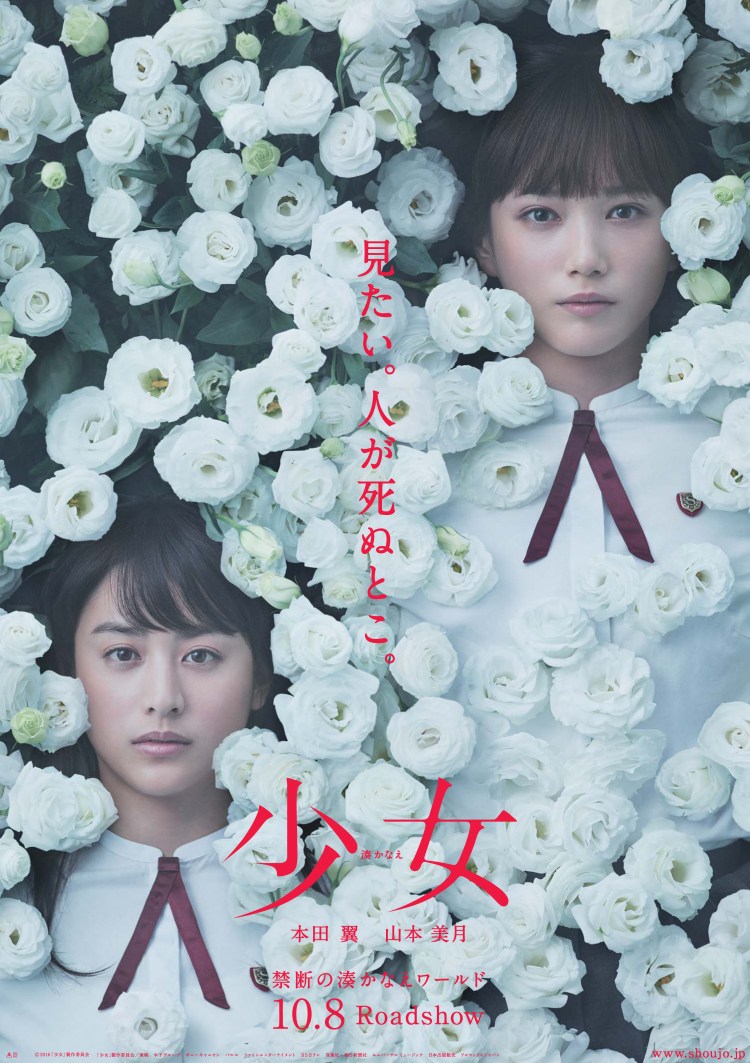 Kanae Minato is known for her hard-hitting crime stories from Confessions to
 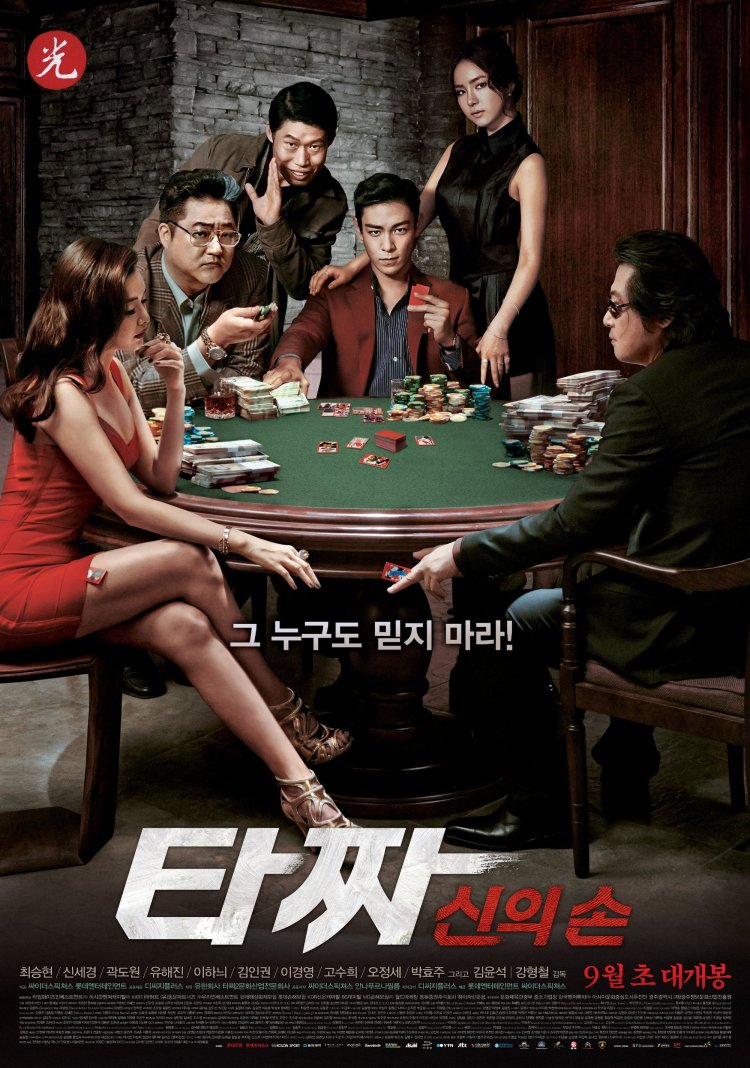 You gotta know how to hold ‘em, know when to fold ‘em, know when to walk away and know when to run. Apparently these rules of the table are just as important in the cutthroat world of the Korean card game Hwatu as they are in the rootinest tootinest saloon bar. Like most card games, having the winning hand is less important than the ability to play your opponent and so it’s more a question of who can cheat the best (without actually breaking the rules, or at least being caught doing so) than it is of skill or luck. A second generation sequel to 2006’s Tazza: The High Rollers, The Hidden Card (타짜-신의 손, Tajja: Shinui Son) is a slick, if overlong, journey into the dark, underground world of gambling addicted card players which turns out to be much more shady than the shiny suits and cheesy grins would suggest.
 Despite the potential raciness of the title, The Liar and his Lover (カノジョは嘘を愛しすぎてる, Kanojo wa Uso wo Aishisugiteru) is another innocent tale of youthful romance adapted from a shojo manga by Kotomi Aoki. As is customary in the genre, the heroine is cute yet earnest, emotionally honest and fiercely clear cut whereas the hero is a broken hearted artist much in the need of the love of a good woman. Innocent and chaste as it all is, Liar also imports the worst aspects of shojo in its unseemly age gap romance between a 25 year old musician and the 16 year old high school girl he picks up on a whim and then apparently falls for precisely because of her uncomplicated goodness.
