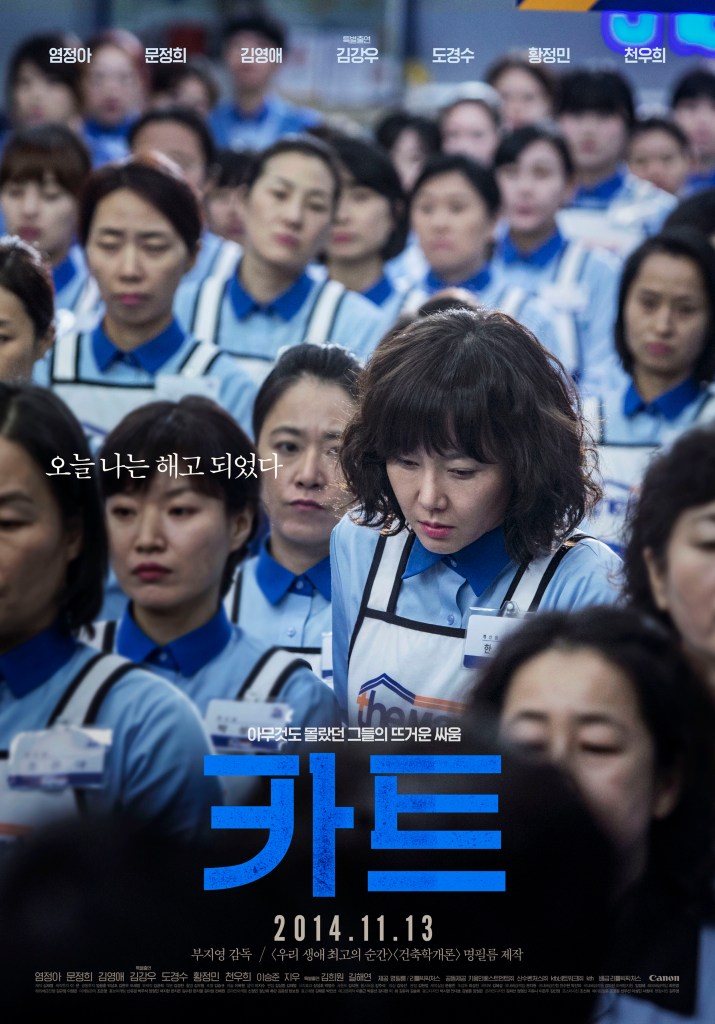
 Up until very recently, many of us lucky enough to live in nations with entrenched labour laws have had the luxury of taking them for granted. Mandated breaks, holidays, sick pay, strictly regulated working hours and overtime directives – we know our rights, and when we feel they’re being infringed we can go to our union representatives or a government ombudsman to get our grievances heard. If they won’t listen, we have the right to strike. Anyone who’s been paying attention to recent Korean cinema will know that this is not the case everywhere and even trying to join a union can not only lead to charges of communism and loss of employment but effective blacklisting too. Cart (카트), inspired by real events, is the story of one group of women’s attempt to fight back against an absurdly arbitrary and cruel system which forces them to accept constant mistreatment only to treat their contractual agreements with cavalier contempt.
Sun-hee (Yum Jung-ah) is a loyal employee at the Mart. She’s had zero penalty points for five whole years and has been told that she’s about to be transferred from a temp worker contract to a regular employee position. Run more like a cult than a supermarket, the Mart’s workers all wear pristine blue and white uniforms and recite the dramatic sounding company credo every morning, vowing to increase sales whilst honouring customer service, and are instructed to say “Welcome Beloved Customer!” to each and every visitor. Eager to take on extra overtime with no extra pay and always at the beck and call of brusque manager Choi (Lee Seung-joon), Sun-hee is respected by her colleagues but perhaps not always liked as her goody two-shoes persona both makes them look bad and encourages the management to continue taking advantage.
Sun-hee’s dreams are about to crumble when the evil corporate suits at HQ decide it would be cheaper to fire all the temp workers and use outsourced labour instead. Despite all her long years of hard work and sacrifice, not only is she not getting her secure position, she might not have a job at all. Some of the other women decide they’ve had enough with their poor working conditions and it’s worth taking the chance on forming a union to fight head office together. Sun-hee is reluctant but is eventually convinced to become one of the spokespeople, after all, if they won’t listen to miss five years no penalties, who will they listen to?
It’s worth asking the question why all these terrible jobs with low pay and frequently exploitative conditions are being done exclusively by women. All of the workers on temporary contracts are female from the cleaning staff to the shelf stackers and cashiers, but all come from different backgrounds from young university graduates to old ladies and ordinary working wives and mothers. The management is unwilling to listen to the concerns of their staff because they are “only women”, “working for pocket money” and should just be grateful that the store gave them something to do rather than being bored at home. Pointing out that many of these women are single mothers or live in difficult economic circumstances meaning they need that money to eat would likely not go down well with these fiercely conservative, wealthy executives whose only response is to tell the women not to be so silly and to stop making a fuss over nothing because the men have business to do.
After just ignoring the women fails and they decide to go on strike eventually occupying the store for a longterm sit in, the company go on the image offensive, offering minor concessions including the reinstatement of some, but not all, workers and other small improvements designed to guilt some of the employees with more pressing circumstances to cross the picket line. Eventually, they go to the extreme measures of employing armed thugs and riot police to remove the women by force. In contrast with other similarly themed films from other countries, there is no attempt to get the press onside to expose the company’s workings and the only news reports seen in the film are extremely biased, painting the women as selfish loonies making trouble for everyone by refusing to shut up and accept the status quo.
Following a fairly standard trajectory, the main narrative thrust is the gradual blossoming of near brainwashed and timid employee Sun-hee into a firebrand campaigner for social justice. Through being encouraged to stand up for the other women, Sun-hee becomes concerned not just with her own treatment but the general working environment in Korea. This new found indignation also helps rebuild her relationship with her sullen teenage son after he experiences some workplace discrimination of his own which his mother is able to sort out for him now that she is not prepared to simply smile, nod, and apologise every time someone attempts to get their own way through intimidation.
Cart treats an important issue with the kind of levity and interpersonal drama which make it primed for a screen one hit rather than a later night run in screen five catering to those already aware of the issues. It probably isn’t going to agitate for any direct social change and according to the final caption the outcome of the original incident was more of a bittersweet accomplishment rather than an outright victory. Still, the fight goes on, even if you find yourself ramming a supermarket trolley into a riot officer’s shield to get the message across – an effect which Cart mimics in its quest to ensure as many people as possible get the memo that the time for passive acceptance has long since passed.
Reviewed at the 2016 London Korean Film Festival.
International trailer (English subtitles)
 No names, no strings. That’s the idea at the centre of Daisuke Miura’s adaptation of his own stage play, Love’s Whirlpool (愛の渦, Koi no Uzu). Love is an odd word here as it’s the one thing that isn’t allowed to exist in this purpose built safe space where like minded people can come together to experience the one thing they all crave – anonymous sex. From midnight to 5am this group of four guys and four girls have total freedom to indulge themselves with total discretion guaranteed.
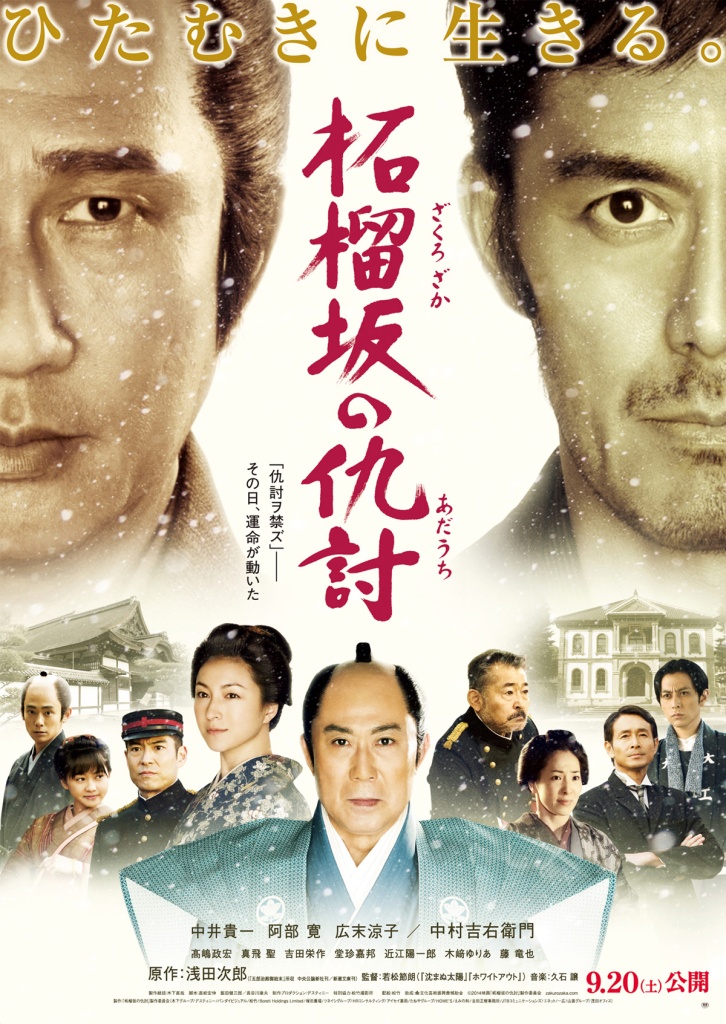 Times change, and men must change with them or they must die. When Japan was forced to open up to the rest of the world after centuries of isolation, its ancient order of samurai with their feudal lords and subjugated peasantry was abandoned in favour of a more Western looking democratic solution to social stratification. Suddenly the entirety of a man’s life was rendered nil – no more lords to serve, a man must his make his own way now. However, for some, old wounds continue to fester, making it impossible for them to embrace this entirely new way of thinking.
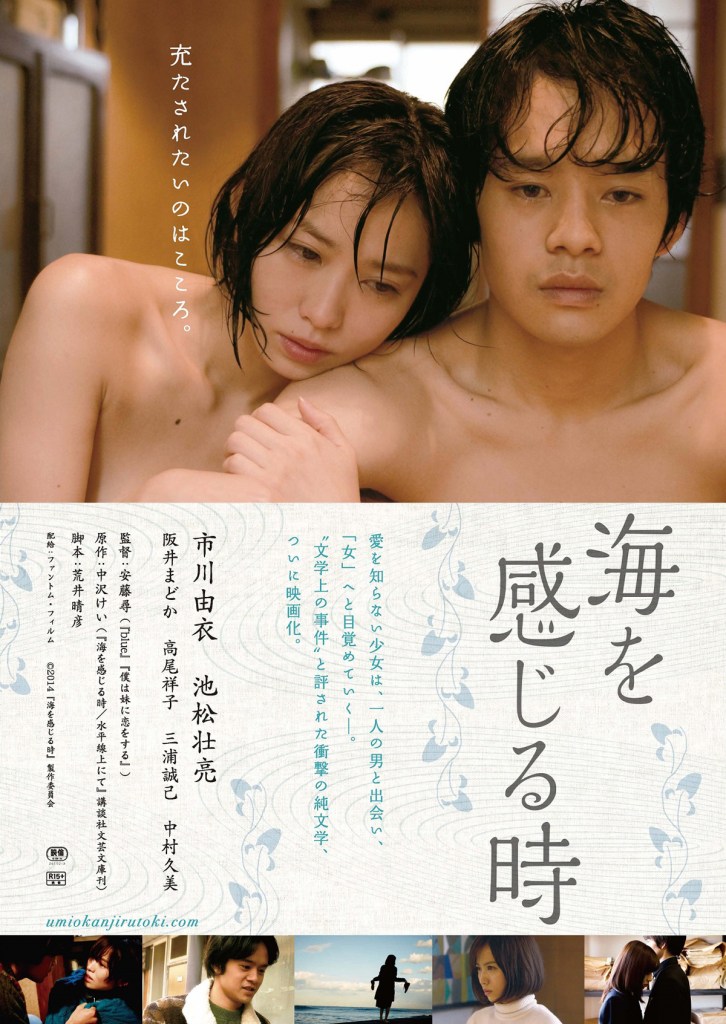 One of the most surprising things about the 1978 novel When I Sense the Sea is that its author was only 18 years old when the book was published. Though the protagonist begins as a 16 year old high school girl, author Kei Nakazawa follows her on into adulthood as the damage done to her teenage psyche radiates like a series of tiny, branching chasms stretching far back into a difficult childhood. This 2015 adaptation from Hiroshi Ando, Undulant Fever (海を感じる時, Umi wo Kanjiru Toki), maintains a distant and detached tone which, while not shying away from the erotic nature of the discussion, is quick to underline the unfulfilling and often utilitarian nature of the central couple’s relationship.
 In late June of 1945, one woman is escorting another through a US checkpoint in Berlin. The young American soldier is somewhat cocky and feigns an officious sort of suspicion that causes him to demand the bandaged woman reveal her face – just to be sure. The obvious agony she feels just beginning to unwind the various layers which hide her identity is enough to convince him that he’s made a cruel mistake and he lets the pair pass.
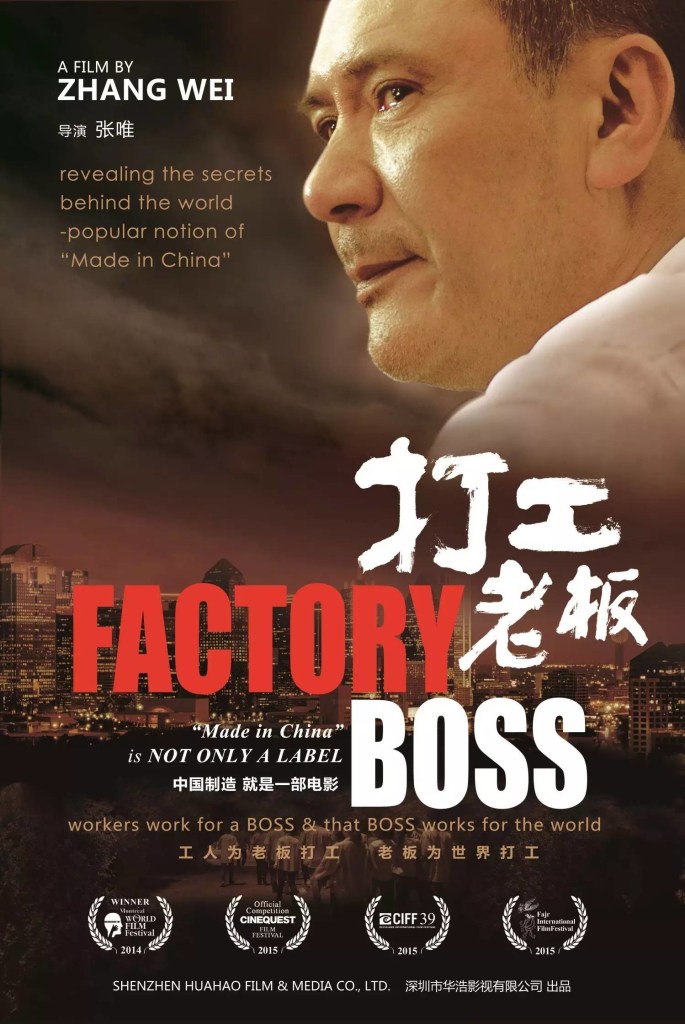 Generally speaking, capitalists get short shrift in Western cinema. Other than in that slight anomaly that was the ‘80s when “greed was good” and it became semi-acceptable to do despicable things so long as you made despicable amounts of money, movies side with the dispossessed and downtrodden. Like the mill owners of nineteenth century novels, fat cat factory owners are stereotypically evil to the point where they might as well be ripping their employees heads off and sucking their blood out like lobster meat. Zhang Wei’s Factory Boss (打工老板, Dagong Laoban) however, attempts to redeem this much maligned figure by pointing out that it’s pretty tough at the top too.
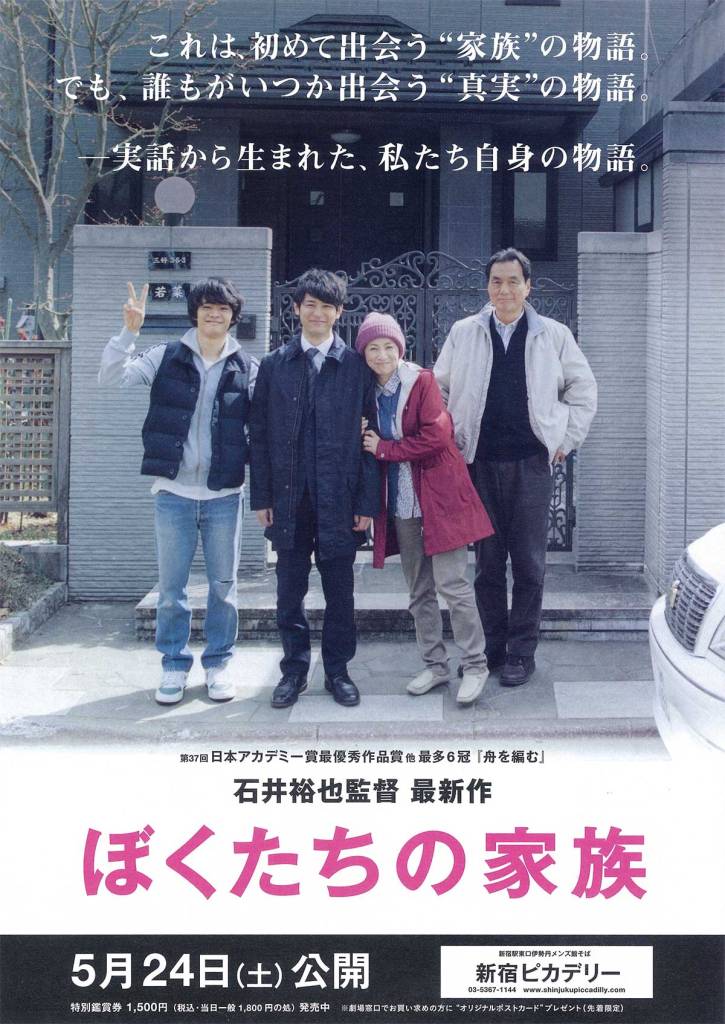 Yuya Ishii’s early work generally took the form of quirky social comedies, but underlying them all was that classic bastion of Japanese cinema, the family drama. If Ishii was in some senses subverting this iconic genre in his youthful exuberance, recent efforts have seen him come around to a more conventional take on the form which is often thought to symbolise his nation’s cinema. In Our Family Ishii is making specific reference to the familial relations of a father and two sons who orbit around the mother but also hints at wider concerns in a state of the nation address as regards the contemporary Japanese family.
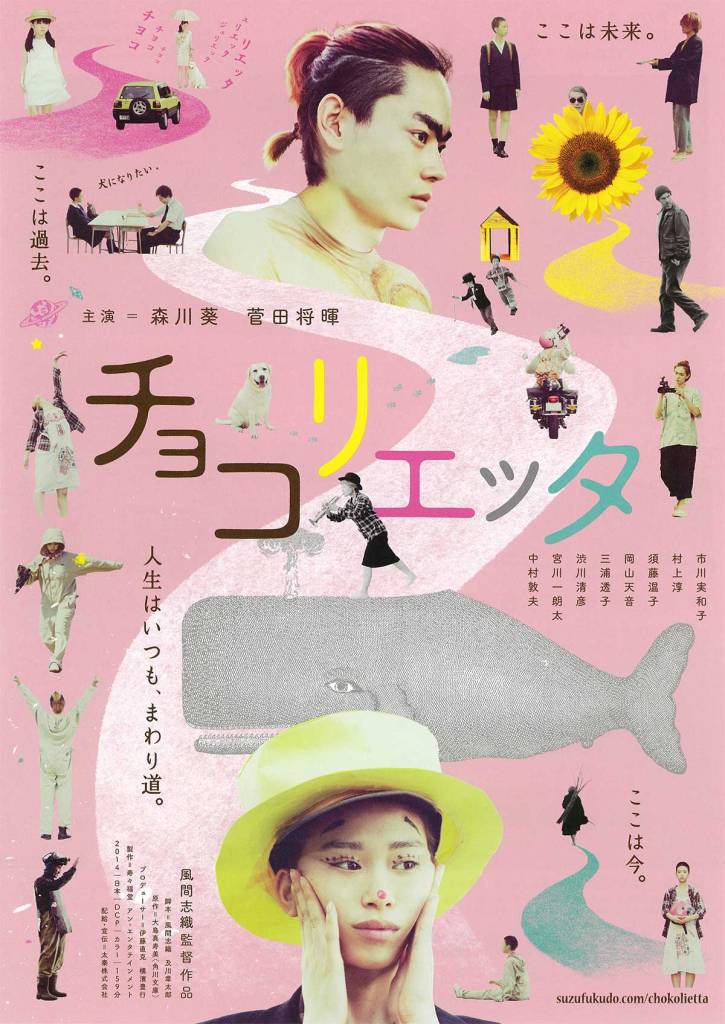 When examining the influences of classic European cinema on Japanese filmmaking, you rarely end up with Fellini. Nevertheless, Fellini looms large over the indie comedy Choklietta (チョコリエッタ) and the director, Shiori Kazama, even leaves a post-credits dedication to Italy’s master of the surreal as a thank you for inspiring the fifteen year old her to make movies. Full of knowing nods to the world of classic cinema, Chokolietta is a charming, if over long, coming of age drama which becomes a meditation on both personal and national notions of loss.
 Windows on Worlds