
 Everybody knows the story of The Monkey King. His “journey to the west” has been reimagined by everyone from Tsai Ming-liang to Akira Toriyama but, all power to them, no one has yet had the courage to stuff Donnie Yen into a monkey suit to fully recreate the legend. Cheang Pou-Soi’s The Monkey King (西游記之大鬧天宮) rectifies this problem but makes up for it by adding a lot more to the already overcrowded arena. Based on a few early chapters of the story, this first of three Monkey King films could best be classified as an origin story as it retells the events which eventually see Sun Wu-kong imprisoned underneath Five Finger Mountain for 500 years.
Basically, a long, long time ago there was a war between gods and demons after which a fragile truce was formed. The demons were defeated and exiled from Heaven which is repaired thanks to the sacrifice of Princess Nuwa (Zhang Zilin) who transforms herself into crystal tears, one of which births a strange divine creature who has a long and arduous journey ahead of him. Emerging from his crystal egg, The Monkey King (Donnie Yen) returns to lead his people before being discovered by a monk who seeks to train him and make sure he remains on the path of the light. Now renamed Sun Wu-kong, The Monkey King finds himself summoned to the heavenly court where he causes a bunch of trouble and becomes swept up in the Demon King’s ongoing plot for revenge.
A super high budget production, The Monkey King is a live action/animation hybrid even beyond that of any recent Chinese fantasy blockbuster. Utilising green screen for the majority of backgrounds, Cheang also adds in a menagerie of strange creatures including supernatural dragons before the final fight develops into a complete CGI fest as a giant cow and super powered monkey duke it out for the rights to define their world. Rendered in 3D the battles are a whirl of brightly coloured mythic action but it’s often a confection too sweet to be to be truly satisfying, backed up only by a very variable quality of animation.
The film’s true standout element is in the surprisingly nuanced performance of Yen who completely becomes The Monkey King right down to his animalistic gestures. This being a family film he’s much more of a recalcitrant fun lover than someone who likes to cause trouble, but nevertheless trouble is usually what you get if The Monkey King pays you a visit. He is, however, hampered by the slightly incongruous obviousness of his monkey suit given the more abstract designs afforded to other characters. Despite the inherent strangeness of his appearance, Yen is afforded the opportunity to do some quality acting alongside killer fight sequences even if he’s often let down by the lacklustre script and production design.
The origin story of The Monkey King is a necessarily long and complicated one but even so, Cheang seems to have decided that coherence is unnecessary when his audience knows the story so well already. Consequently, the potential romance between Son Wu-kong and the fox spirit Ru-xue is inadequately backed up given its importance to the central narrative whereas other characters appear for such little screen time that they almost seem like excuses to add yet another famous name to the poster. Meandering from one episode to another, the film makes little attempt to maintain engagement between its large scale set pieces, becoming over reliant on its parade of well known personages.
Despite the gravitas offered by Chow Yun-fat and the intense villainy of Aaron Kwok’s poisonous antagonist, The Monkey King remains a fairly silly exercise, a visual sugar rush which seems primed to put viewers off their tea whilst leaving them with a slight headache to boot. Playing best to small children and family audiences, The Monkey King’s only selling point is in the surprising (and almost unrecognisable) performance of Yen as its titular hero whose good hearted japes are sure to be appreciated by the young of heart everywhere. The Monkey King will return, but hopefully with a little more maturity as his quest nears its iconic destination, or at least with a little more finesse.
Original trailer (English subtitles)


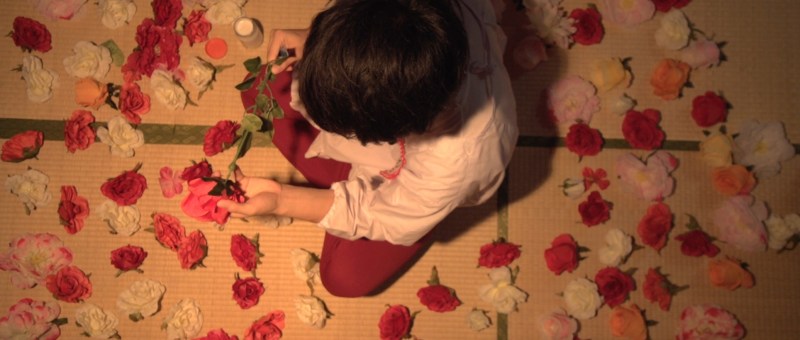
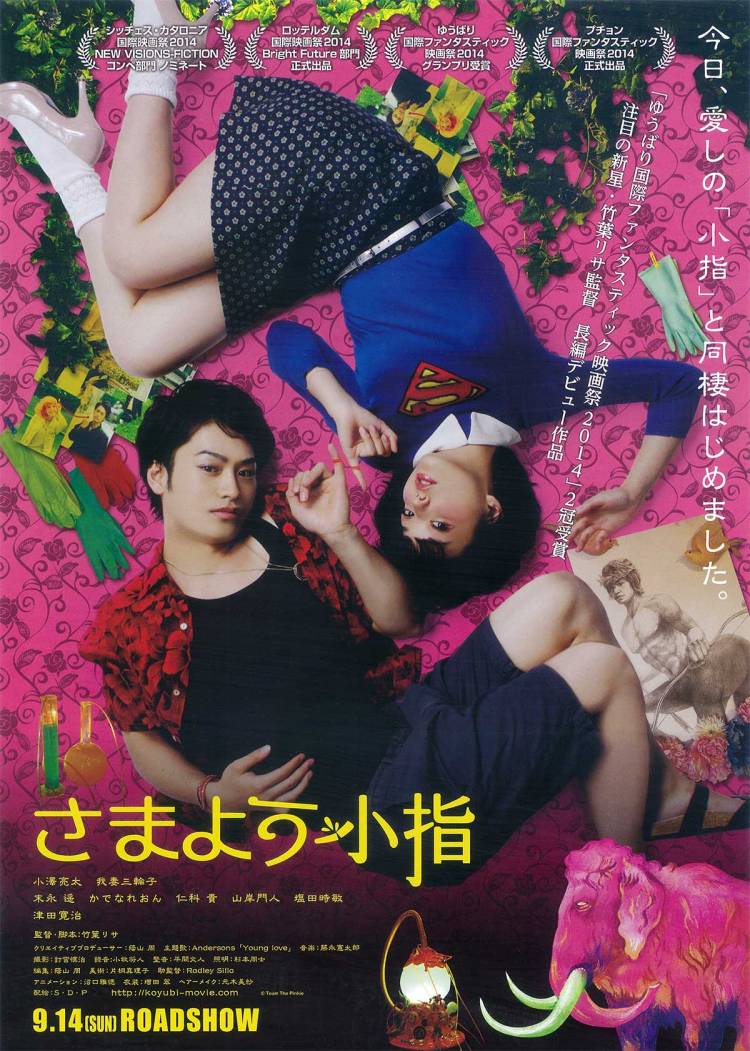
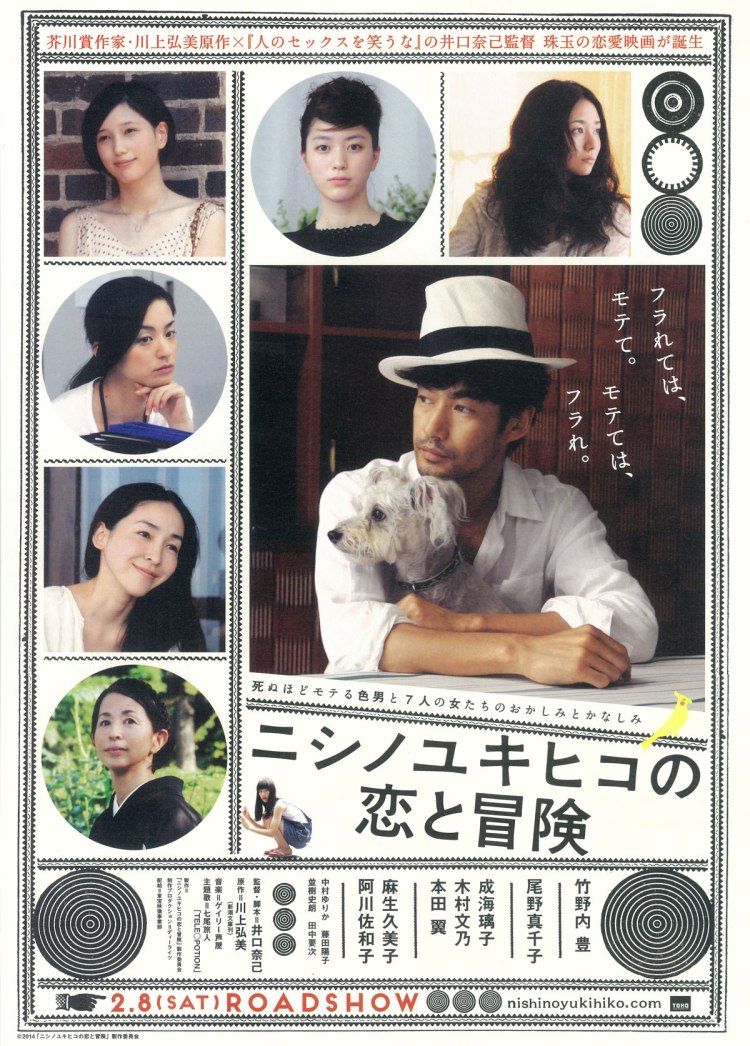 Every love story is a ghost story, as the aphorism made popular (though not perhaps coined) by David Foster Wallace goes. For The Tale of Nishio (ニシノユキヒコの恋と冒険, Nishino Yukihiko no Koi to Boken), adapted from the novel by Hiromi Kawakami, this is a literal truth as the hero dies not long after the film begins and then returns to visit an old lover, only to find her gone, having ghosted her own family including a now teenage daughter. The Japanese title, which is identical to Kawakami’s novel, means something more like Yukihiko Nishino’s Adventures in Love which might give more of an indication into his repeated failures to find the “normal” family life he apparently sought, but then his life is a kind of cautionary tale offered up as a fable. What looks like kindness sometimes isn’t, and things done for others can in fact be for the most selfish of reasons.
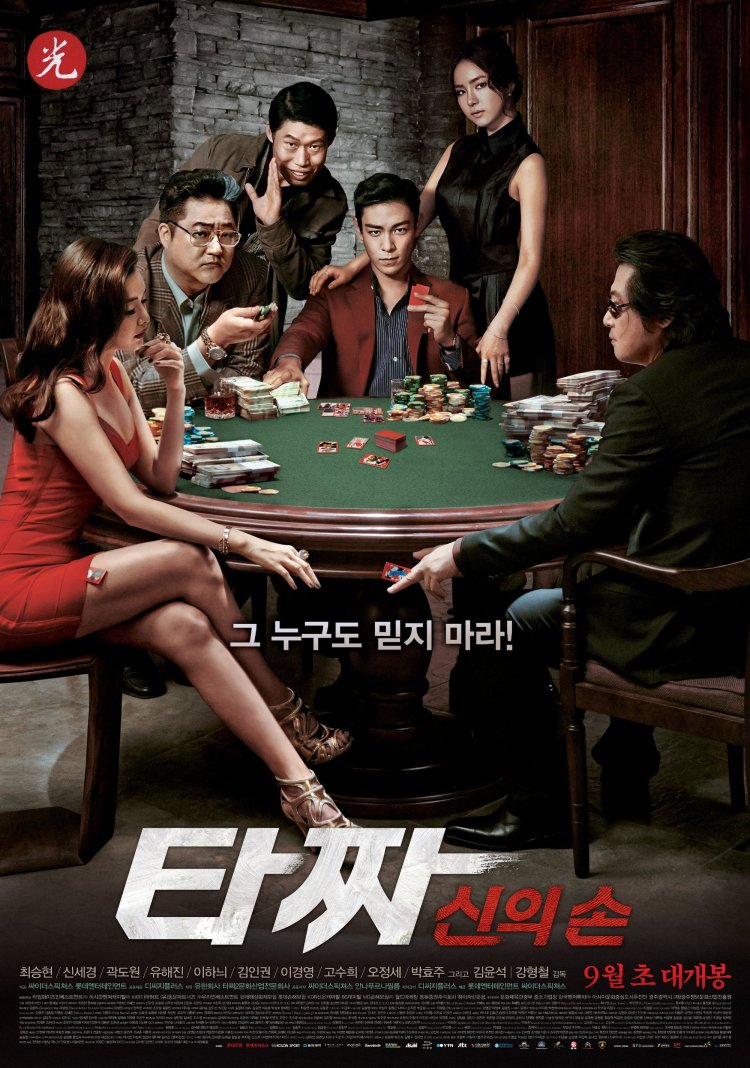 You gotta know how to hold ‘em, know when to fold ‘em, know when to walk away and know when to run. Apparently these rules of the table are just as important in the cutthroat world of the Korean card game Hwatu as they are in the rootinest tootinest saloon bar. Like most card games, having the winning hand is less important than the ability to play your opponent and so it’s more a question of who can cheat the best (without actually breaking the rules, or at least being caught doing so) than it is of skill or luck. A second generation sequel to 2006’s Tazza: The High Rollers, The Hidden Card (타짜-신의 손, Tajja: Shinui Son) is a slick, if overlong, journey into the dark, underground world of gambling addicted card players which turns out to be much more shady than the shiny suits and cheesy grins would suggest.
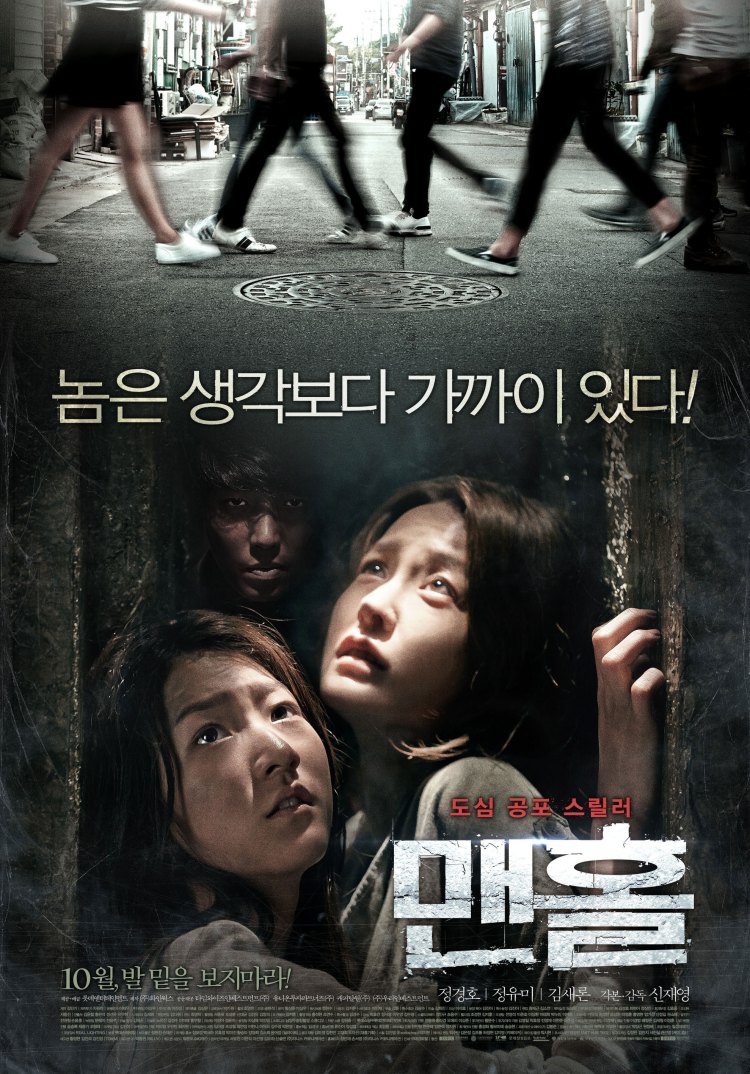 Finding the sinister in the commonplace is the key to creating a chilling horror experience, but “finding” it is the key. Attempting to graft something untoward onto a place it can’t take hold is more likely to raise eyebrows than hair or goosebumps. The creators of Korean horror exercise Manhole (맨홀) have decided to make those ubiquitous round discs the subject of their enquiries. They are kind of worrying really aren’t they? Where do they go, what are they for? Only the municipal authorities really know. In this case they go to the lair of a weird serial killer who lives in the shadows and occasionally pulls in pretty girls from above like one of those itazura bank cats after your loose change.
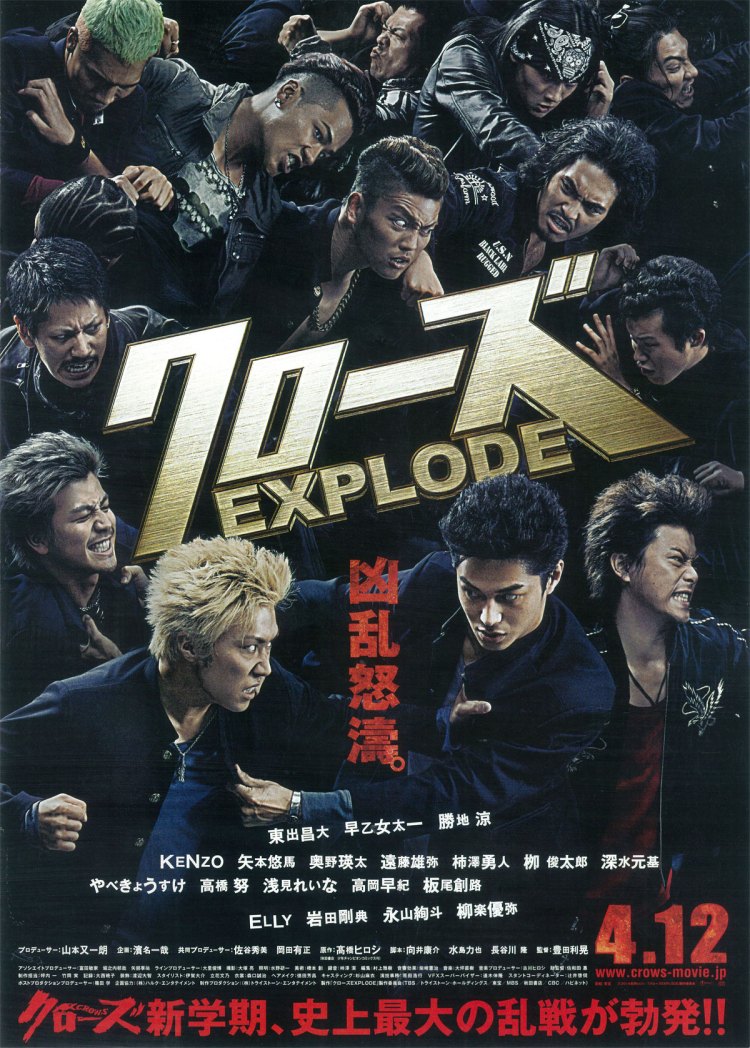 Toshiaki Toyoda made an auteurst name for himself at the tail end of the ‘90s with a series of artfully composed youth dramas centring on male alienation and cultural displacement. Attempting to move beyond the world of adolescent rage by embracing Japan’s most representative genre, the family drama, in the literary adaptation
 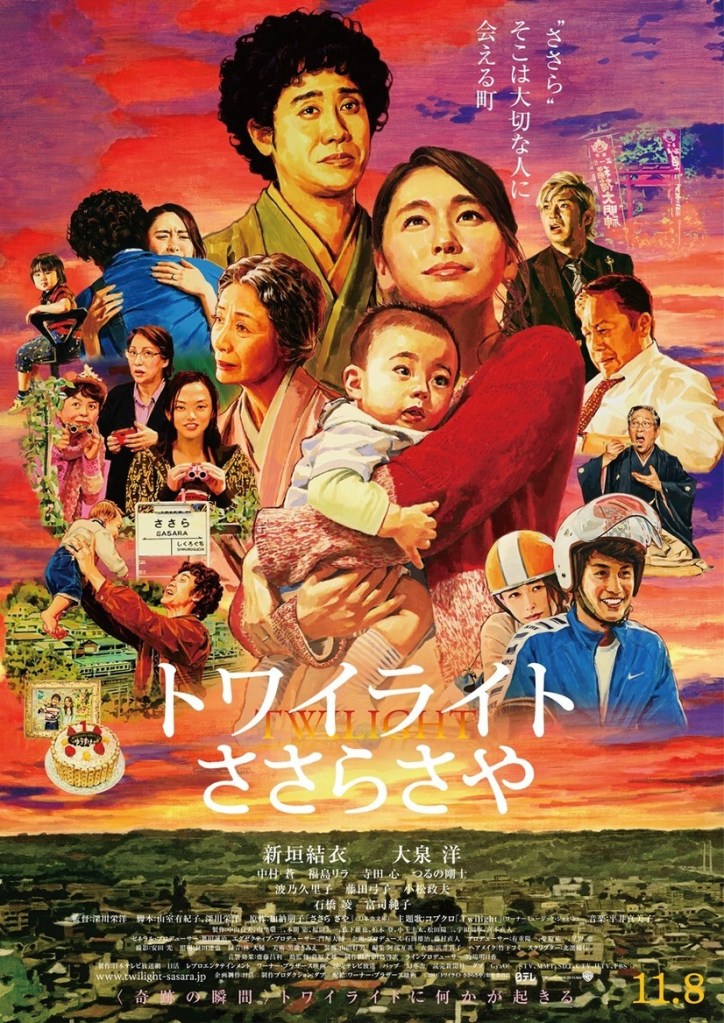 Japanese cinema has its fare share of ghosts. From Ugetsu to Ringu, scorned women have emerged from wells and creepy, fog hidden mansions bearing grudges since time immemorial but departed spirits have generally had very little positive to offer in their post-mortal lives. Twilight: Saga in Sasara (トワイライト ささらさや, Twilight Sasara Saya) is an oddity in more ways than one – firstly in its recently deceased narrator’s comic approach to his sad life story, and secondly in its partial rejection of the tearjerking melodrama usually common to its genre.
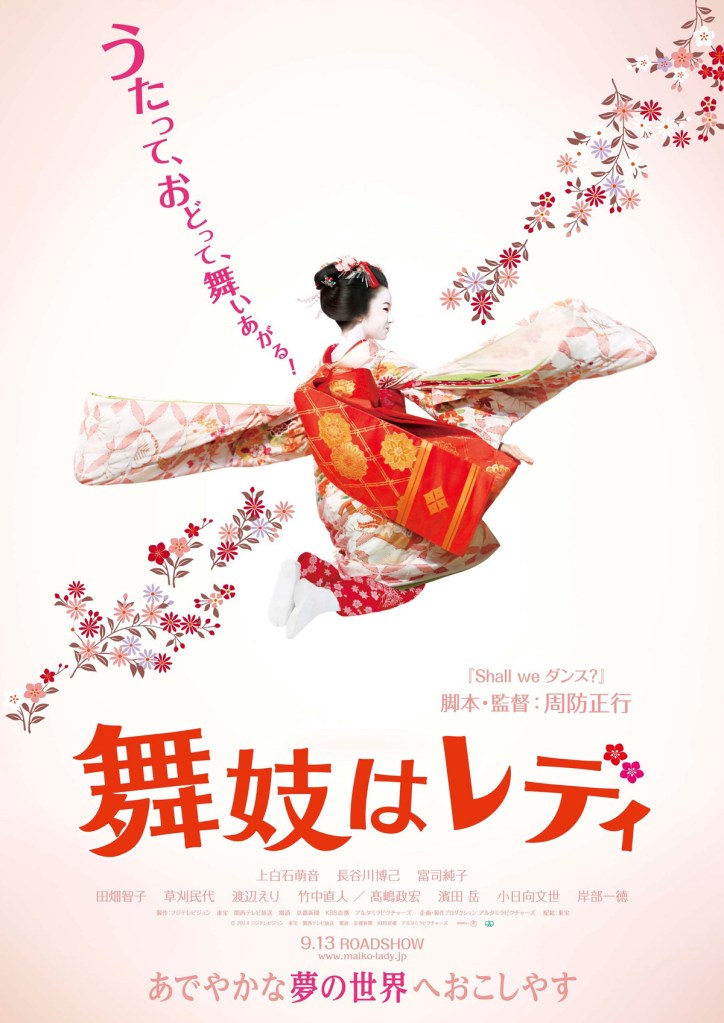 When Japan does musicals, even Hollywood style musicals, it tends to go for the backstage variety or a kind of hybrid form in which the idol/singing star protagonist gets a few snazzy numbers which somehow blur into the real world. Masayuki Suo’s previous big hit, Shall We Dance, took its title from the classic Rodgers and Hammerstein song featured in the King and I but it’s Lerner and Loewe he turns to for an American style song and dance fiesta relocating My Fair Lady to the world of Kyoto geisha, Lady Maiko (舞妓はレディ, Maiko wa Lady) . My Fair Lady was itself inspired by Shaw’s Pygmalion though replaces much of its class conscious, feminist questioning with genial romance. Suo’s take leans the same way but suffers somewhat in the inefficacy of its half hearted love story seeing as its heroine is only 15 years old.
