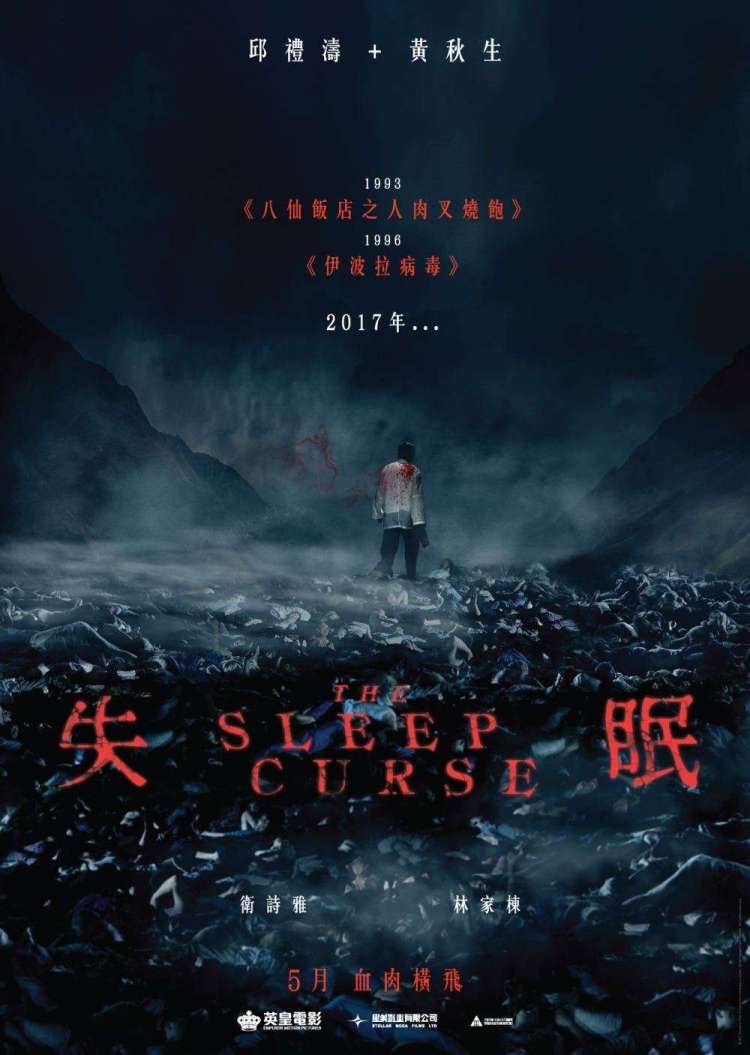
The Sleep Curse (失眠, Herman Yau, 2017)

sleep curse posterInsomnia can be like a curse, a yearning for sleep that yields no rest and paints the days with a lingering greyness but the regular kind of sleeplessness rarely has consequences as extreme as those experienced by the beleaguered protagonists of Herman Yau’s The Sleep Curse (失眠). Historical trauma and cultural memories continue to haunt the present, the refusal to lay the dead to rest giving rise to a hundred hungry ghosts all asking for recognition and some gesture of atonement from those that have come later. Yau’s film touches on some thorny, even taboo areas but doing so in the context of a Category III horror extravaganza that eventually descends into a bloodbath of perverse depravity might even push poor taste too far.

In 1990, a Malaysian Chinese grandfather celebrates his birthday and then develops chronic insomnia which eventually drives him insane, murderous, and suicidal. Meanwhile, abrasive professor Lam Sik-ka (Anthony Wong) is hard at work on a controversial research programme to discover a way for people to live without the need for sleep. His latest grant application has just been turned down because the university can’t see the benefit in his research and claim his methods are unethical. Sik-ka is, therefore, even happier than might be thought to reunite with a former girlfriend, Monique (Jojo Goh), who is the granddaughter of the Malaysian Chinese grandpa and suffers from a rare sleep disorder herself. It’s not for herself she’s approaching Sik-ka though, but for her brother.

For unrelated reasons, Sik-ka is also anxious to lay his own father’s ghost to rest by visiting a Taoist priest to help him remember what happened to his dad back in 1943. What ensues is two lengthy flashbacks to occupied Hong Kong in which Sik-ka’s father, Sing (also played by Wong), is coerced into collaborating with the Japanese when it is discovered that he was raised in Japan and has fluent command of the language. While Sing’s capitulation is guilt-ridden and born of fear for himself and his family, another turncoat, Chow Fok (Gordon Lam), has embraced his role as an active participant in Japanese rule, rounding up girls for the local “comfort station” which he himself runs.

The Japanese are an easy target, but Yau has his sights set on the evils of collaboration and his eye is particularly unforgiving. Sik-ka’s father is repeatedly described as a “good man”, though often by those seeking to justify his less good actions. The film acknowledges the difficulty of Sing’s position as a single father desperate to protect his son and mother yet fearing that one wrong move or unwise refusal may get them all killed. He does good where he can – helping a small number of young comfort women to escape, but finds that his “good” deed provokes only more harm when 40 are required to take the place of four escaped. Sing saves one of twins, “awarded” to him in place of a wife by the lecherous Japanese Colonel, but finds himself the subject of a curse by her supernaturally endowed sister who casts her evil eye upon all those who have wronged her.

This particular plot development makes little sense seeing as Sing is the one thing between her sister and the fate worse than death that she has just endured. Nevertheless, the vengeful ghost of a betrayed woman follows one generation to the next in her quest for retribution, remaining unseen and unremembered by those who should avenge her. Given the sensitivity of the issues, which maybe more pronounced in territories further North than Hong Kong, it is perhaps in poor taste to make them the centre of an exploitation leaning Category III horror film, offering only the message that the unresolved past will eventually consume the children who inherit only past trauma from their guilt ridden (or unrepentant) forebears.

Yau begins in the mode of tame absurdity as Sik-ka calmly breaks into a morgue for an impromptu bit of brain theft (later shoving his loot into a hollowed out durian fruit to hide his crime), but descends into blood soaked depravity in the increasingly strange final reel. Genuinely outrageous, though also incoherent, The Sleep Curse should provoke nightmares enough with its shocking, gore filled finale but may also leave a sour taste in the mouth.


Original trailer (Cantonese with English subtitles – contains intense gore/violence!)

The Liquidator (心理罪:城市之光, Xu Jizhou, 2017)

The Liquidator posterGiven a strangely ‘80s nonsensical two word title, Xu Jizhou’s The Liquidator (心理罪:城市之光, Xīnlǐ Zuì: Chéngshì Zhī Guāng) is a retro throwback to the lurid macho pulp which has largely faded from the crime procedural since its ‘90s heyday. Adapted from a novel by Lei Mi, the film follows last year’s Guilty of Mind as the second in the Fang Mu series only this time the eccentric profiler is played by marquee star Deng Chao rather than Guilty Mind’s Li Yifeng or Chen Ruo Xuan who starred in the Fang Mu TV drama, Evil Minds. A pulpy battle of wits between a crazed vigilante and a world weary cop, The Liquidator is already treading on some overly familiar territory but its main target is the rule of law apparently under threat of mob justice now that China too has entered the social media age.

Fang Mu (Deng Chao) is no longer a police officer after becoming the prime suspect in the disappearance of a man who escaped justice through judicial corruption, but he’s pulled back into the law enforcement fold when young policewoman Mi Nan (Cecilia Liu) is dispatched to get his profiling opinion on a difficult murder case. Calling himself “The Light of the City”, a vigilante killer is already amassing a collection of dedicated online followers thanks to his choice of targets which, to put it bluntly, are not law breakers just terrible people that most would like to get revenge on for one reason or another.

Originally reluctant, Fang Mu is soon hooked on the case only to realise that the crime scenes are being created entirely for his benefit – the killer is attempting to pull him into a battle of wits and taking innocent lives to do it. As it transpires the killer’s name, Light of the City, is inspired by something Fang Mu said in his graduation speech to the effect that the police are the light that shines in the darkness. The killer thinks the law doesn’t go far enough – his targets are bullying teachers, impious sons, and greedy lawyers, the immoral rather than the criminal. He exposes their transgressions online and then allows “netizens” to have their say. Netizens, as they have often been in the “real” world, are not a particularly understanding bunch and are firmly behind the “entertainment” the killer is providing, even down to the decision to live stream a murder.

Fang Mu’s defining trait is his liminal status as a law enforcement officer often pulled towards the dark side – hence why many of his colleagues think it’s perfectly possible that he’s guilty of the crime that got him kicked off the force. The vigilante’s “plan” is to pull him over the line by forcing Fang Mu to execute The City of Light and thereby become the thing he most fears. The Liquidator posits that a robust judicial system free from interference from both government and people is a prerequisite of a well functioning society and the police must be the shining beacons of these laws – if not even law enforcement obeys the law, then all is lost.

What transpires is a battle of minds between the brainy Fang Mu and the psychotic killer, but it’s also a battle for the soul of “society” which ought to place compassion and rationality over the sensationalism of trial by media and arbitrary mob justice. The killer works out his frustrations by proxy through attacking those who committed the same “crimes” which have led to their feelings of frustration and humiliation – chief among them being Fang Mu who has, apparently, offended solely in his continued excellence, but the killer’s personal vengeance is harsh and unforgiving, handing down a death sentence simply for unpleasant or anti-social behaviour.

Beginning in a promising vein, Xu nevertheless introduces his dedicated female cop only to sideline her in favour of Fang Mu before turning her into a mild love interest, potential victim, and sometime comic relief. Filled with macho histrionics (including, at one point, a gun fired in the air followed by a manly wail of grief), The Liquidator is an old fashioned action drama filtered through pulp noir and ‘90s horror with its grimy walls and dingy basements, but it straddles a fine line between ridiculous slasher serial killer thriller and serious cerebral procedural, landing somewhere around heroic bloodshed without the bromance. Ridiculous and melodramatic, Xu’s debut feature boasts excellent production design and innovative photography, but its slick aesthetic cannot overcome the more outlandish elements of the otherwise generic script.


Currently on limited release in UK cinemas courtesy of Cine Asia

Original trailer (Mandarin with English subtitles)

Namiya (解憂雜貨店, Han Jie, 2017)

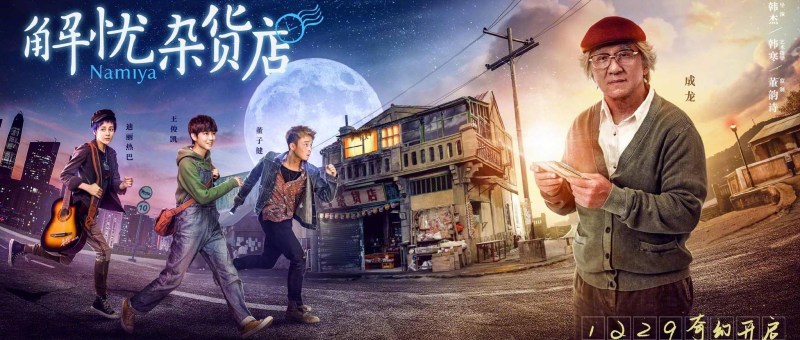
Namiya posterKeigo Higashino is almost certainly best known for his crime novels and in particular his most famous detective, Galileo, whose exploits have spawned a successful TV drama series and a fair few cinematic adaptations including the international bestseller, The Devotion of Suspect X. One might expect a writer of mystery novels to be a fierce rationalist, but Higashino occasionally dabbles in the fantastic – The Miracles of the Namiya General Store is more or less a nostalgia fest praising the pre-bubble Japan, implying that the modern world is colder and less kind than the aspiring society of 1979. Adapted for the Chinese market by Han Jie, Namiya (解憂雜貨店, Jiě Yōu Zá Huò Diàn) retains the corner shop where time stands still but locates it in 1993, which is not so much a significant date save being 25 years in the past.

On New Year’s Eve 2017, three teens break into a woman’s home with the idea of causing some damage, but the event goes south when she comes home early and one of the three decides to tie her up and steal a bunch of her stuff. Having gone further than they meant to, the trio wind up in an unfamiliar part of town when the car they’ve stolen runs out of petrol. An improbably quaint, apparently disused corner shop attracts their attention but when they break in to shelter for the night they discover that this is no ordinary store. A ghostly miasma gradually creeps its way in and the three youngsters find themselves answering a collection of letters meant for the store’s owner written in 1993 but only dropping through the letter box now. They funny thing is, they get almost immediate replies.

As one of the teens points out, they weren’t even born in 1993 – this store might as well be from 1793 as far as they’re concerned. Though it drips with nostalgia for a simpler time, Namiya treads (understandably) more carefully in painting early ‘90s Beijing and its rural backwater setting, strenuously avoiding any mention of politics and characterising China’s economic development as an entirely good thing despite the troubles the three teens at the centre have been subject to throughout their apparently difficult lives.

The letter writers have various problems but each in someway relates to being a little lost, a little bit confused about how to move forward in life. A frustrated musician (Lee Hong-chi) whose career is not taking off wants to know whether he should give up and come home, a little boy has a bad relationship with his go-getter parents who have lost all their money and got into trouble with loan sharks, and a melancholy bar hostess (Hao Lei) wants to know if she should become the mistress of a gangster who promises to set her up in a shop that would get her out of her dead end life and still enable her to support her family. The kids are not really qualified to offer any kind of real life advice, with sensitive Xiaobo (Karry Wang) and plucky Tong Tong (Dilraba Dilmurat) reacting in broadly sympathetic terms while the sullen Jie takes a hardline moralist stance in which he just wants to write angry letters to everyone telling them they’re doing everything wrong.

Jie has his own reasons for being so angry, especially as one of the letters touches a nerve in his own personal history but his ambivalence was at one point shared by Papa Namiya (Jackie Chan) himself after he feared his treasured advice might have ended up having a negative effect on people’s lives. Papa Namiya tells the troubled little boy to stick with his parents no matter what because family is the most important thing in a person’s life which might be true much of the time, but not when the parents actively endanger their child. What he finally reassures himself with is that his advice was largely meaningless because most people have already made up their minds what they’re going to do, they just want someone to help them feel like they’re doing the right thing. In fact, no one really follows Papa Namiya’s advice anyway, but the kids are able to make a concrete change when they reveal the economic realities of modern China to a young hopeful who then uses the knowledge to build an international business empire (but makes sure to pay it forward whilst paying tribute to their roots by committing to sponsor an orphanage in need of renovation/expansion).

The slightly awkward message Namiya leaves behind is that dreams come true when people work hard to achieve them but that the young are also free to forge their own destinies, that the world is, for them, infinite and filled with boundless possibility. Optimistic and inspiring as it is, it isn’t terribly realistic and does rather imply that those who haven’t made it are either lazy or dishonest as echoed in the mildly moralistic tone taken with the bar hostess’ dilemma or the odiousness of the corrupt businessman and his failure to protect his family from his own mistakes. Moral judgements and naivety aside, Namiya is an otherwise heartwarming, deliberately uncynical New Year tale which does its best to engender hope for the future in an otherwise cold and unforgiving month.


Currently on limited release in UK cinemas.

Original trailer (Mandarin with English subtitles)

March Comes in Like a Lion (3月のライオン, Keishi Ohtomo, 2017)

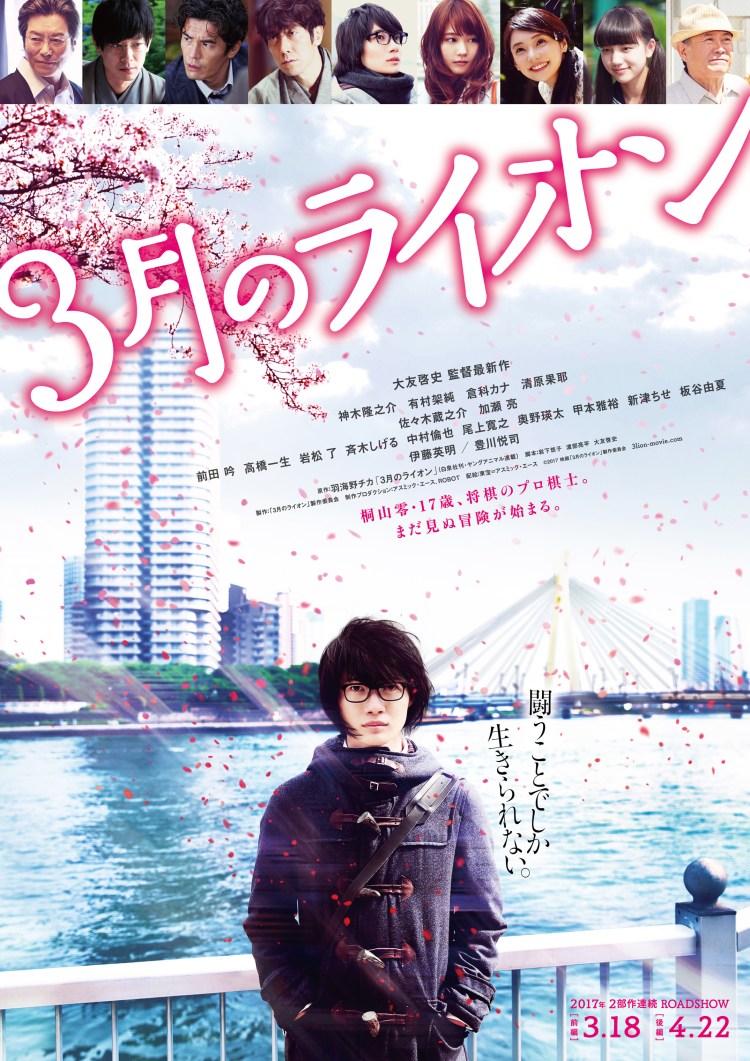
march comes in like a lion posterShogi seems to have entered the spotlight of late. Not only is there a new teenage challenger hitting the headlines in Japan, but 2017 has even seen two tentpole Japanese pictures dedicated to the cerebral sport. Following the real life biopic Satoshi: A Move for Tomorrow, March Comes in Like a Lion (3月のライオン, Sangatsu no Lion) adapts the popular manga by Chica Umino in which an orphaned boy attempts to block out his emotional pain through the taxing strategising becoming a top player entails. Shogi, however, turns out to be a dangerous addiction, ruining lives and hearts left, right and centre but, then again, it’s not so much “shogi” which causes problems but the emotional volatility its intense rigidity is often masking.

Rei Kiriyama (Ryunosuke Kamiki) lost his family at a young age when both parents and his little sister were tragically killed in a car accident. Taken in by a family friend, Rei takes up shogi (a game also apparently beloved by his late father) in the hope of being accepted in his new home. A few year’s later, Rei’s plan has worked too well. Better than either of his foster-siblings, Kyoko (Kasumi Arimura) and Ayumu, Rei has become his foster-father’s favourite child causing resentment and disconnection in the family home. Believing himself to be a disruptive influence among those he loves (even if he suspects they still do not love him), Rei removes himself by deciding to live independently, shunning all personal relationships and dedicating his life to the art of shogi.

Everything changes when Rei is taken for a night out by some senior colleagues and is encouraged to drink alcohol for the first time despite being underage. A kindly young woman who lives nearby finds Rei collapsed in the street and takes him home to sleep things off. The oldest of three sisters, Akari (Kana Kurashina) has a habit of picking up strays and determines to welcome the lonely high schooler into her happy home. Suddenly experiencing a positive familial environment, Rei’s views on interpersonal connection begin to shift but people are not like shogi and you can’t you can’t expect them to just fall into place like a well played tile. 

Like Satoshi, the real life subject of which is also echoed in March through the performance of an unrecognisable Shota Sometani who piles on the pounds to play the sickly yet intense shogi enthusiast and Rei supporter Harunobu Nikaido, March dares to suggest that shogi is not an altogether healthy obsession. Koda (Etsushi Toyokawa), Rei’s foster-father, is a shogi master who trained both his children to follow in his footsteps only to pull the rug from under them by ordering the pair to give up the game because they’ll never be as good as Rei. Thinking only of shogi, he thinks nothing of the effect this complete rejection will have on his family, seeming surprised when neither of his children want much more to do with him and have been unable to move forward with their own lives because of the crushing blow to their self confidence and emotional well being that he has dealt them.

Kyoko, Rei’s big sister figure, remains resentful and hurt, embarking on an unwise affair with a married shogi master (Hideaki Ito) who is also emotionally closed off to her because he too is using shogi as a kind of drug to numb the pain of having a wife in a longterm coma. Believing himself to be a disruptive influence who brings ruin to everything he touches, Rei has decided that shogi is his safe place in which he can do no harm to others whilst protecting himself through intense forethought. He is, however, very affected by the results of his victories and failures, feeling guilty about the negative effects of defeat on losing challengers whilst knowing that loss is a part of the game.

Drawing closer to the three Kawamoto sisters, Rei rediscovers the joy of connection but he’s slow to follow that thread to its natural conclusion. His shogi game struggles to progress precisely because of his rigid tunnel vision. Time and again he either fails to see or misreads his opponents, only belatedly coming to realise that strategy and psychology are inextricably linked. Yet in his quest to become more open, he eventually overplays his hand in failing to realise that his viewpoint is essentially self-centred – he learned shogi to fit in with the Kodas, now he’s learning warmth to be a Kawamoto but applying the rules of shogi to interpersonal relationships provokes only more hurt and shame sending Rei right back into the self imposed black hole he’d created for himself immersed in the superficial safety of the shogi world.

As Koda explains to Kyoko (somewhat insensitively) it’s not shogi which ruins lives, but the lack of confidence in oneself that it often exposes. Rei’s problem is less one of intellectual self belief than a continuing refusal to deal with the emotional trauma of losing his birth family followed by the lingering suspicion that he is a toxic presence to everyone he loves. Only in his final battle does the realisation that his relationships with his new found friends are a strength and not a weakness finally allow him to move forward, both personally and in terms of his game. Rei may have come in like a lion, all superficial roar and bluster, but he’s going out like a lamb – softer and happier but also stronger and more secure. Only now is he ready to face his greatest rival, with his various families waiting in his corner silently cheering him on as finally learns to accept that even in shogi one is never truly alone.


Released in two parts – 3月のライオン 前編 (Sangatsu no Lion Zenpen, March Comes in Like a Lion) / 3月のライオン 後編 (Sangatsu no Lion Kouhen, March Goes Out Like a Lamb).

Original trailer (no subtitles)

Youth (芳华, Feng Xiaogang, 2017)

youth posterOn the surface of things, one might be forgiven for thinking that Feng Xiaogang, “China’s Spielberg” – the director of such fluffy hits as If You Are the One and the prestige picture The Banquet, might not be the one to look to for nuanced takes on the state of his nation but, as he proved with the irony filled I am Not Madame Bovary, there has always been a persistent resistance in his superficially crowd-pleasing filmography. The exact nature and extent of that resistance is however harder to assess. Youth (芳华, Fāng huá), Feng’s latest historically probing epic, made headlines when its mainland release was blocked at short notice immediately before its international premiere at the Toronto International Film Festival and in some respects it’s easy to see why it may have raised an eyebrow or two at the censor’s board. A literal story of “youth” and the various ways that the concept becomes romanticised even when one’s own coming of age took place in otherwise difficult times, Feng’s film is also the story of modern China, baptised in the fire of the Cultural Revolution only to finally succumb to the consumerist one 15 years later.

Narrated by bystander Suizi (Zhong Chuxi), later a successful author apparently looking back on her own “youth” with a writerly eye, the tale begins in the early 1970s with two pillars of the arts division of the People’s Liberation Army. Suizi informs us the the protagonists of this story are Lui Feng (Huang Xuan) – a model soldier, and Xiaoping (Miao Miao) – a poor girl mercilessly tormented by everyone throughout her entire life. Xiaoping’s birth father has long been languishing in a re-education camp but as she’s taken her step-father’s name, Liu Feng assures her that he’s kept her bad class background off her record and will make sure no one else knows about it.

Performing propaganda ballets, the arts division is at its zenith at the height of the Cultural Revolution. The troop as a whole enjoys extreme privilege – they are well fed and cared for, evade the dangerous front line work many other members of the armed forces are subject to, and receive the respect due to them as the embodiment of a revolutionary ideal. They are, however, still guilty of the various hypocrisies coded into the system. Though many of the dancers have family members with “bad class backgrounds”, undergoing re-education or otherwise better not mentioned, the top guys and girls are the ones with parents high up in the party who use their untouchable status to paper over cracks in their own development with inherited superiority.

Lui Feng is perhaps an aberration. Nicknamed “Lei Feng” – a mythical figure created for propaganda purposes to embody the “ideal” revolutionary soldier in his selfless dedication to his comrades and communist virtues, Lui Feng is indeed a model party member whose goodness and kindness know no bounds. Unlike Lei Feng, however, he is a real man of flesh and blood not some far off and untouchable god. Having sanctified him in this way, the collective has effectively raised Lui Feng up to an unfair and unattainable ideal and is then “betrayed” on realising that Lui Feng is a man with a man’s hopes and desires. Lui Feng’s transgression is inappropriate to be sure but also somehow innocent in its naivety and his counter betrayal by the system to which he has dedicated his life all the more difficult to bear because of the unfair deification his better qualities have earned him.

Xiaoping meanwhile, who expected only betrayal, betrays the system through passive resistance in resentment of the way it has treated her friend. “Abandoned” by the collective which is the arts troop, Xiaoping exiles herself from a society she thinks has little need of her yet she then continues to serve it fully as a frontline nurse. The “youthful” idealism of Lui Feng and Xiaoping is tested as they find themselves caught up in a far off war while their former comrades dance around with wooden swords on a painted stage. Wounded in body and mind, the pair continue onwards even as their nation conspires to leave them behind.

Shifting into the ‘90s and then the 21st century, Feng’s messages become muddier and harder to grasp. In one sense what is celebrated is “youth” itself which, in this case, happened to take place against the backdrop of terrible events (albeit it ones from which many of the protagonists save Lui Feng and Xiaoping were largely shielded) enabling the growth of a generational family destroyed by a change in the political wind. It is however hard not to infer that everything was better during the turbulent ‘70s in which the delusion of innocence, if not its actual existence, was easier to bear than the soulless march into the future of Coca-Cola signs, Transformers toys and fathers who never come home because they’re too busy making money. Feng’s heroes are the ones who exiled themselves from the reality of China as a modern economic superpower, holding fast to their innate senses of honour and justice, yet in this Feng does to them exactly what he criticises his society for doing – he makes them martyrs, mythologises them as embodiments of revolutionary ideals, a pair of real life Lei Fengs all over again. In telling a story of how the revolution betrays and is betrayed, Feng makes the heroes emerge damaged but unbroken, chaste children trapped by the “innocence” of the pre-capitalist age, but whether their survival is victory or defeat remains unclear. 


Youth is currently screening at selected cinemas across the UK courtesy of CineAsia.

UK release trailer (English subtitles)

Lu Over the Wall (夜明け告げるルーのうた, Masaaki Yuasa, 2017)

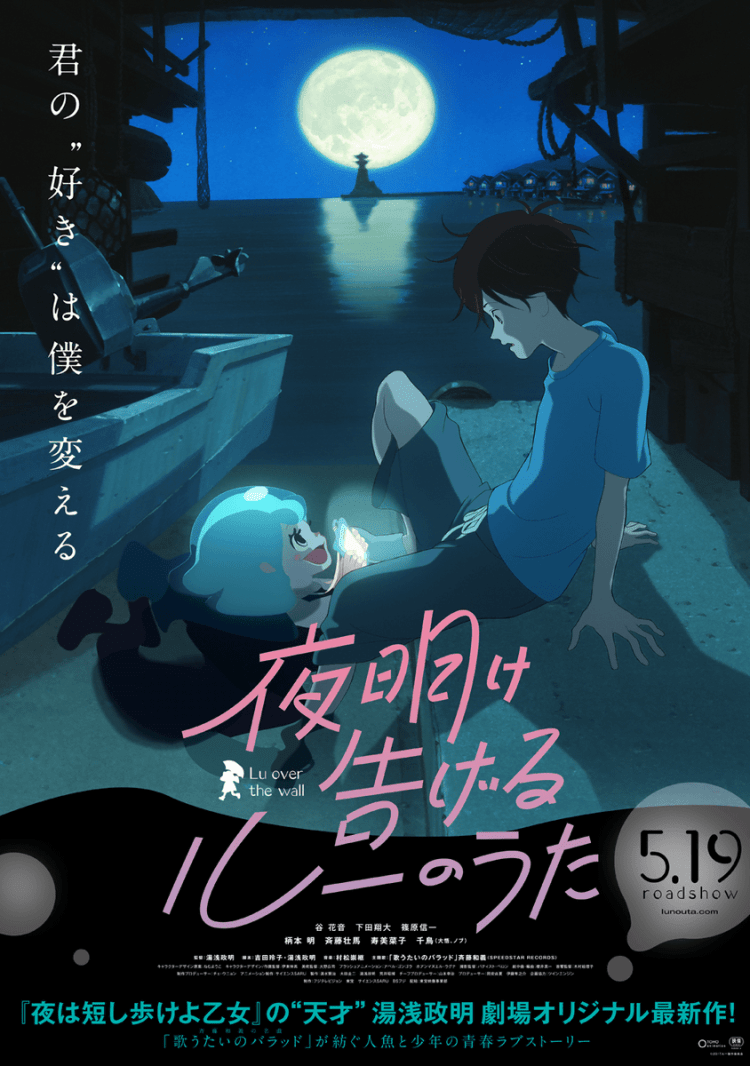
Lu over the wall posterComing of age dramas are the mainstay of anime, but if anyone was going to take one in a pleasingly new direction it would be Masaaki Yuasa. His second release of 2017 following the comparatively more abstract The Night is Short, Walk on Girl, Lu Over the Wall (夜明け告げるルーのうた, Yoake Tsugeru Lu no Uta) is the tale of a boy learning to break of out his emotional repression in order to step into a healthier adulthood but it’s also one of learning to live with loss and grief. From the Irish selkie to the conventional mermaid, people of the sea have more often than not stood in for people from a land of lost things where souls are carried away and lonely sailors lured to their doom, but perhaps we’ve simply misunderstood them and the song they sing isn’t intended to make us sad but only to make us remember the joy of living.

Sullen teenager Kai (Shota Shimoda) is in his last year of middle school with a lot of decisions awaiting him as to the further direction of his life. For the moment, Kai lives in the small fishing village of “Hinashi” somewhere in Southern Japan. “Hinashi” literally means “sunless” and the town is indeed overshadowed by a large cliff which blocks the town from the sun but there’s a more metaphorical kind of gloominess lurking here too. Kai is not the only miserable one, pretty much all of the townspeople once dreamt of escape but have either proved unable to get away from their small town roots, or have tried and failed to make it somewhere else before reluctantly returning, salmon-like, to the place of their births. The only one, it seems, to successfully make it out is Kai’s mum who left the family when Kai was small.

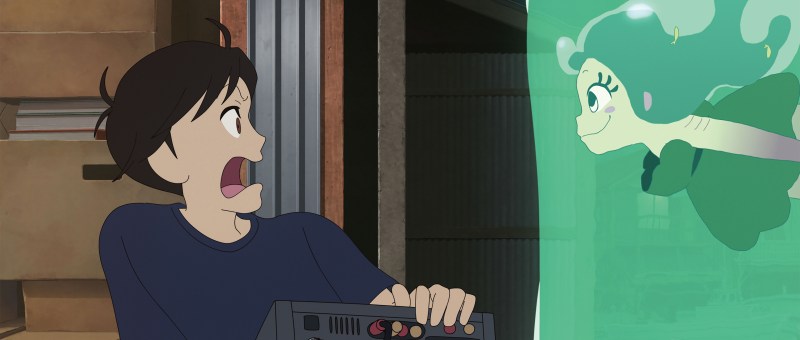
Much to his father’s (Shinichi Shinohara) irritation, Kai’s big dream is music though he’s less than thrilled when bamboozled into joining two other aspiring rockstar teens, Kunio (Soma Saito) and Yuho (Minako Kotobuki), as the third member of “Seirèn” even if it does give him an excuse to explore the generally forbidden territory of Mermaid Island. Whilst there, the trio’s song calls out to a music loving Merfolk girl, Lu (Kanon Tani), who can’t resist joining in and, awkwardly, is a much better lead vocalist than the divaish Yuho.

Lu, a charmingly vibrant toddler-type, is perfectly primed to bring this moribund town back to its sunny old self. Able to conjure her own portable corridors of water to travel over land, Lu tracks down Kai hoping to hear more wonderful music and making childish attempts to communicate through broken Japanese so that she can learn to understand the human world. Lu is not, however, the image most of the townspeople have when they think about Merfolk considering most of the local legends paint them as voraciously carnivorous predators existing only to steal landlubbing souls.

The Merfolk are a perfect metaphor for most of the ills consuming the town – a never seen manifestation of unknown fears. Everyone here has lost someone or something at sea (this is, after all a fishing village) or to the city, or just in themselves in learning to accept reality over the lure of unattainable dreams. Kai’s young and caring if distant father tries to push his son towards the “correct” path of non-stop studying and moral uprightness, but his son is just like teenage him, dreaming musical dreams of escape. It might have all gone wrong for Kai’s dad, but as he’s finally able to admit thanks to the guidance of Lu, he doesn’t regret a minute of it.

Ironically enough, Kai’s name is also the word for shellfish in Japanese, making his grandfather’s (Akira Emoto) frequent lament that the muscles in his dinner won’t open more than a little pointed. Kai is definitively closed off, refusing to even open the letters from his mother and keeping himself aloof at school and at home. Yet he’s not the only one who needs to open up – forced to dance to Lu’s tune (literally) each of the townspeople comes to make peace with those things that are so very hard to say, either letting past traumas float away or deciding to swim away with them.

It is, however, a little uncomfortable when the final resolution takes on a romantic dimension seeing as Lu has been painted as an adorable child with her giant bubbly head, cute high pitched voice, and childishly broken Japanese, not to mention that a secondary plot strand revolves around her father (an anthropomorphised shark/killer whale) who has attempted to shed some prejudices of his own to help his daughter in her desire to make friends with humans. Nevertheless, Yuasa and his scriptwriter Reiko do their best to do justice to all the ills of the town from the corporate greed of the mermaid loving old timer who wants to open a theme park exploiting their image, to the creepy behaviour of Yuho’s governor father, and the ever present themes of loss, guilt, and disappointment. The trio of teens at the centre may have felt themselves trapped in a dead end town, but thanks to Lu they come to realise that they too can jump over the wall and go wherever they want so long as they take the music with them.


Lu Over the Wall is in UK cinemas for one night only on 6th December 2017 courtesy of Anime Ltd.. Find out where it’s screening near you via the official Lu Over the Wall microsite.

Anime Ltd. trailer (Dialogue free)

The Brink (狂獸, Jonathan Li, 2017)

the brink posterDesire makes beasts of us all. Longtime assistant director Jonathan Li makes his feature debut with a waterborne pulp noir which takes on more than a hint of gloomy sea shanty in its musings on sailors, their eternal brotherhoods, and ocean owned souls. The Brink (狂獸) mixes metaphysical drama with the more usual procedural tropes as a wounded, maverick cop chases his prey through hell and high water, refusing to acknowledge that his own “recklessness” is the single cause of the chaos he currently finds himself embroiled in.

The exhilarating opening sequence tracks around a ruined building before finding ruthless cop Sai Gau (Zhang Jin) engaged in a brutal fight with a suspect who later lands right on his police car after careering out of a top floor window. In addition to the death of the suspect, Sai Gau’s recklessness also causes the death of a fellow officer and sees him suspended from the police force after being charged with possible manslaughter. Six months later he’s absolved of guilt, released, and reinstated but clearly not forgiven by his colleagues and superiors who continue to regard him as a liability.

Hair dyed blond, Sai Gau sets about investigating a notorious gold smuggling operation operating under the cover of the local fishing trade. Meanwhile, smuggling underling Gui Cheng (Shawn Yue) has learned he’s about to be sidelined by his adopted father figure in favour of a feckless biological son and suspects his boss is about to have him offed. Gui Cheng preempts the situation by taking out the son’s guys and replacing them with his own before turning his would-be-assassin’s knife (or more accurately harpoon gun) back on him only for Sai Gau to arrive and ruin everything, unwittingly kicking off a series of unfortunate events for all concerned.

Li sets up Sai Gau and Gui Cheng as inverted mirrors of each other – hence Sai Gau’s ridiculous blond hair which sets him apart from the darkness of the long haired Gui Cheng. Where Sai Gau is all impulsive, instinctual action, Gui Cheng is calm and distance personified. Gui Cheng rarely speaks and when he does he’s concise and to the point, whereas Sai Gau, while not especially loquacious, is a classic wisecracker who speaks without thinking and is unafraid of the consequences of his words. Yet both men are also playing against themselves – Sai Gau has adopted the teenage daughter of the man he killed but refuses to allow himself to care for her, whereas the otherwise heartless Gui Cheng seems to have an intense yet platonic relationship with his female sidekick.

Twin betrayals set Sai Gau and Gui Cheng on an inevitable collision course leading towards a tussle over the gold which becomes more symbol than pure financial gain. Gui Cheng, once so calm and calculating, becomes fixated on harvesting what’s his, turning the buried treasure into his personal white whale while for Sai Gau it becomes the symbol of a long buried evil, a cursed charm designed to lure men to their doom by sending them into the centre of a storm it knows they cannot survive. Gui Cheng believes himself blessed by the goddess of the sea and that the gold is his for the taking, but it is ultimately the sea which claims him as he attempts to defy the elements to stake his claim on the cursed treasure which it has already swallowed. Sai Gau claims no particular spiritual affiliation but the gold, and its corrupting influence, reawakens his sense of morality as he becomes as convinced that the gold is evil as Gui Cheng is that it is his salvation.

The gold turns men into the “wild beasts” of the Chinese title though the English one seems to place them on the “brink” of losing themselves at any given time. Highly stylised, Li’s Hong Kong is one of neon lit darkness in which it is always raining and the air hangs heavy with despair and impossibility. The action scenes are impressively choreographed sequences of balletic beauty captured with Li’s gift for unusual composition and an urgent energy which acts as a harbinger for the coming storm. Pure pulp noir, The Brink has an almost Lynchian sense of lurking darkness creeping in from another, more mythical world the kind of which sailors sing about in their shanties and only talk about by candlelight.


Screened at Creative Visions: Hong Kong Cinema 1997 – 2017

Original trailer (dialogue free, English captions)

Paradox (殺破狼・貪狼, Wilson Yip, 2017)

paradox posterLouis Koo, possibly the hardest working actor in Hong Kong, has played his fair share of heroic (and not so heroic) cops but you’d be hard pushed to describe him as an action star. Proving nothing if not his dedication, Koo gives it his all as the lead in Paradox (殺破狼・貪狼), the latest in the SPL franchise directed by Ip Man’s Wilson Yip. Yip also directed the first in the series but stepped away for the second, though there is no narrative continuity with any of the films and, confusingly enough, the SPL tag seems to have been dropped from the international title altogether. In any case, what Paradox shares with instalments one and two is a series of intensely kinetic action scenes built around a storm of three incompatible personality types coupled with a quest narrative as Koo searches for clues in the disappearance of his 16 year old daughter.

Yip begins the film inside the memories of Hong Kong cop Lee Chung-Chi (Louis Koo) as he remembers the golden time when his daughter was young and worshipped her dad, crawling into his bed in the morning with a video camera ready for a whole day of birthday fun. Lee buys a cute a silver bracelet with a teddy bear charm but it’s the 16 year old Wing-Chi (Hanna Chan) he gives it to. Lee and his daughter are in a restaurant, not at home, and the air between them is tense. A boy turns up and Wing-Chi introduces him as her boyfriend but if Lee is annoyed things are about to get worse. The pair want to get married because Wing-Chi wants “to keep the baby”. Lee barely reacts save for abruptly stepping away from the table. When he returns he seems as if he’s composed himself, but in reality he has already made a catastrophic error of judgement which will force his daughter away from him.

Wing-Chi goes to Thailand to visit a friend and disappears. Lee goes to look for her, breaking out his best investigator skills and teaming up with local cop Chui Kit (Wu Yue) who is soon to be a father himself, but what he finds there leads him onto a dark path of paternal guilt, regret, and suffering whilst wading through the corruption and cruelty of the Thai underworld.

Though the narrative is, in a sense, unimportant, Yip homes in on the nature of fatherhood and the sometimes difficult or conflicted position a father finds himself in when trying to protect his child. Lee may think he’s “doing the right thing” when he clamps down on his teenage daughter’s plans to start a family of her own way ahead of schedule, but then again perhaps this was not his decision to make and ruining three lives to suit himself is nothing more than selfishness masquerading as love. It is his own actions which send his daughter into the path of danger, and then later decide her fate on a split second decision.

Later, Kit’s father-in-law (Vithaya Pansringarm) faces a similar dilemma when he’s threatened by government big wigs and fears his own daughter (and unborn grandchild) may be in danger if he does not play along. Lee’s quest to find Wing-Chi runs in parallel with that of the local mayor to win re-election, only the mayor has a bad heart which causes him to collapse before an important rally. Shady fixer Cheng (Gordon Lam) decides the mayor needs a heart transplant (seemingly unaware of the complexity of the operation and the time needed for recovery) which all links back to a dodgy American ex-pat (Chris Collins) who operates a large scale meat factory as a front for illegal organ trafficking.

The stories of Kit and Lee are linked by the curious use of the classic Chinese pop song The Moon Represents My Heart made famous by Teresa Teng. The song with its constant references to the “heart” which is also visually represented by the cheerful cards around the mayor’s bed perhaps over does things in the metaphor stakes but does its best to tug at the heartstrings in its insistence on a fathomless love in this case of fathers for their children. Koo’s rage only intensifies the more desperate he becomes as his quest hits continual dead ends punctuated by the discovery of various unpleasant characters lurking not just in the backstreets but in the police stations and political institutions of Pattaya.

The action scenes are visceral and kinetic though Koo makes the most impact when acting with stone cold efficiency, leaving the most memorable sequences to rising star Wu and Tony Jaa whose extremely brief appearance as a psychic / extremely buddhist cop may disappoint those deceived by his top billing into expecting his role to be more than a cameo. Nevertheless, Paradox delivers what it promised in Koo’s unexpected metamorphosis into an ultra cool action star whilst sending his moody cop on a dark journey of the soul as he confronts the depths of his own complicity in the corruption which is consuming him.


Screened as the opening film of Creative Visions: Hong Kong Cinema 1997 – 2017

Original trailer (English subtitles)

Co-stars Louis Koo and Wu Yue recorded a new version of The Moon Represents My Heart especially for the film

Teresa Teng’s The Moon Represents My Heart

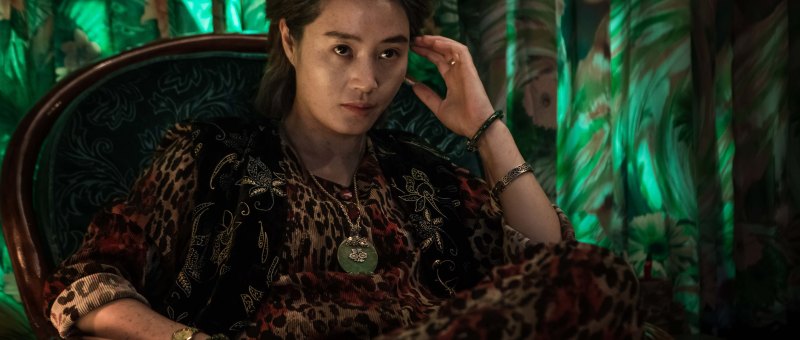
Coin Locker Girl (차이나타운, Han Jun-hee, 2015)

coin locker girl posterFamily in Korean films, unlike those say of Japan, has always been something of a double edged sword. Coin Locker Girl (차이나타운, AKA Chinatown) takes the idea of “family” and twists it around, bites into it to test its veracity, and offers a wry smirk as the metal begins to bend. Set in Incheon’s Chinatown, Han Jun-hee’s noirish thriller sends its heroine down a series of dark alleyways as she both fights and fights to retain her humanity whilst inhabiting an extremely inhuman world.

Il-young (Kim Go-eun) was found, covered in blood, hidden away in a coin locker, an abandoned child with no clue as to her identity or that of the woman who gave birth to her. Named and taken in by a collection of beggars at the station, she began her life as a street rat though not, perhaps, entirely unloved or friendless. As a young child she was then taken by gangsters working for a fearless female gang boss known as “Mom” (Kim Hye-soo). Mom is not one to suffer fools and feels no compunction in getting rid of those no longer useful to her. She soon puts Il-young to work, pamphleteering, begging, and eventually debt collecting as she grows older under Mom’s watchful eyes. By the time Il-young is almost come of age, she has an older brother and a sister as well as a younger brother with learning difficulties whom Mom still looks after despite her otherwise unsentimental approach to life.

The trouble starts when Mom sends Il-young to collect a debt from the young son of a man who’s skipped the country. Seok-hyeon (Park Bo-gum) is not like the typical clients she’s met before. He opens his door, invites her in, even offers to feed her before she leaves. Il-young finds all of this very strange. She’s never met anyone “nice” before and wonders what his angle is. Seok-hyeon, however, does not appear to have much of an angle aside from perhaps the usual one. Spending a bit of time with him, Il-young begins to develop certain feelings which see her swapping her Mom-style slacks and jackets for pretty summer dresses. Despite his son’s faith in him, Seok-hyeon’s father has not kept his end of the bargain and so Mom decides it’s time to call in the debt by offing Seok-hyeon and harvesting his organs. Il-young has a choice – between the woman she calls “Mom”, and a naive young man she has come to like though he has no place in her kill or be killed world.

One of the most attractive qualities about the young Il-young was that she didn’t exist. No birth certificate and no identity meant that she could be Mom’s to do with as she pleased. Consequently, adolescent Il-young has a more complicated relationship with her “Mom” than most young women but is also acutely aware of the debt of gratitude which is owed, the precariousness of her position, and the reality that she has nowhere else to go should she decide to try and break away from the world in which she has been raised. Never quite sure what her relationship to Mom is, Il-young has come to think of the other children in the same situations as siblings, but again cannot be sure that they feel the same.

Like many a good film noir, the tragedy lies in not completely closing off one’s heart as the harshness of the world dictates. Mom rejects those who are not useful and terminates those who have betrayed her with extreme prejudice, but despite herself she cannot destroy Il-young. Stepping back from her code, her orders are to let Il-young live, condemning her to a fate perhaps worse than death but alive all the same. Mom is betrayed by another child figure enacting a petty act of revenge, but her decision to let Il-young live is the one which threatens to condemn her. Having believed herself an unloved, unwanted child, Il-young is left with two terrible legacies of abandonment and the feeling that she will never leave that coin locker in which she has been trapped since birth. The cycle of maternal sacrifice continues, though Il-young has the opportunity to change her fate by taking charge of it, picking up where Mom left off but with greater compassion even within the confines of her still cruel world.


Screened at London Korean Film Festival 2017. Also screening at Manchester (11 Nov) and Glasgow (16 Nov).

Original trailer (English subtitles)

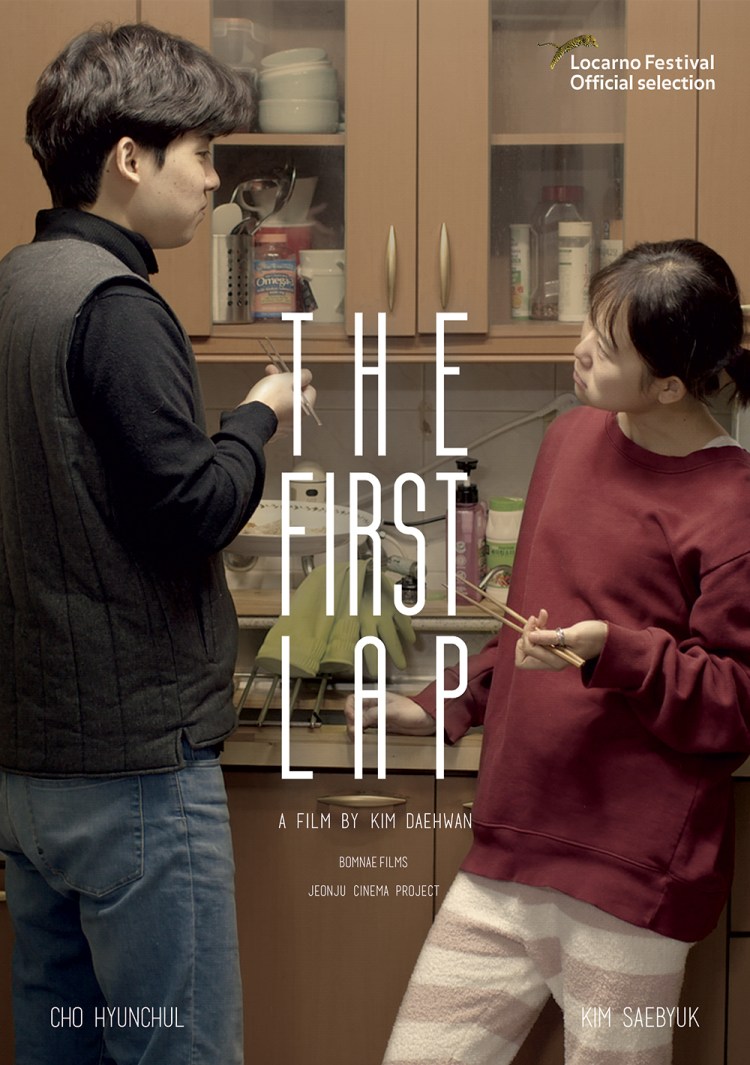
The First Lap (초행, Kim Dae-hwan, 2017)

The First Lap posterFor some, life is a series of stages. Education, work, marriage, parenthood, death. For others, life is more like a continuous stream, a series of minor movements in an ongoing symphony. The couple at the centre of Kim Dae-hwan’s second film, The First Lap (초행, Cho-haeng), are contentedly (for the most part) trapped in a permanent adolescence living chaotic lives aside from what most would consider the mainstream. Together for seven years but still unmarried, Ji-young (Kim Saebyuk) and Su-hyeon (Cho Hyun-chul) are forced to confront their liminal status when the twin pressures of a pregnancy scare and obligatory family visits place a strain on their otherwise settled relationship.

Their two year rental contract up for renewal, Ji-young and Su-hyeon are packing up to move somewhere cheaper when Su-hyeon gets an awkward phone call from his brother inviting him home for his father’s 60th birthday party. Su-hyeon obviously does not want to go and makes a series of excuses despite Ji-young’s urging that he should probably attend. Ji-young also drops the bombshell that she’s worried she might be pregnant which raises several problems for the couple both financial and emotional. The next day they set off on a trip, but it’s to visit Ji-young’s well-to-do parents in their new high-rise Incheon apartment.

Kim structures the film around the two very distinct family environments, subtly suggesting the various reasons neither Ji-young or Su-hyeon are in favour of moving onto the next stage stems back to their own problematic upbringings. Though Ji-young’s family are financially secure and occupy a traditionally middle-class social stratum with her father working for the government and mother in real estate, the home is a cold one and Ji-young’s mother a harsh and direct woman who is unafraid to speak her mind regarding what she sees as her daughter’s poor life choices. In what will become a recurrent motif, Ji-young’s mother wants to know why the couple aren’t married, pointing out Ji-young’s advancing age and the unseemliness of an unmarried woman over thirty. After pointedly telling Ji-young she is not proud of her and in fact thinks of her as a disappointing embarrassment, Ji-young’s mother goes off the deep end on discovering the pregnancy test in Ji-young’s bag, driven into a fury of conservative discombobulation at the thought of being grandmother to a child born out of wedlock.

Ji-young is afraid to become a mother in case she becomes hers and does to her child what her mother has done to her. Su-hyeon has a similar problem, though his is one of intense discomfort with his familial environment in growing up in an unhappy home. Travelling back to the tiny fishing village where Su-hyeon’s parents used to own a sashimi restaurant but now apparently work for a factory which has all but destroyed the area’s previously lucrative tourist industry, Ji-young could not be more out of place. Unlike the ordered coldness of Ji-young’s parents’ swanky apartment, Su-hyeon’s family home is one of repressed heat in which longstanding arguments seem permanently primed to spark. Su-hyeon, depressingly used to this kind of scene, ushers Ji-young out the door just as it looks about to kick off, only for her to urge him back to “do something’ – something he’s long given up the idea of doing. Su-hyeon does not want to live in this kind of family or make his wife as miserable as his mother has been married to a man she can’t stand who holds only contempt for his more sensitive son.

Thus Ji-young and Su-hyeon find themselves at an impasse facing both economic anxiety and long-standing emotional fears for the future. All around them, society seems to be in flux, Su-hyeon travels through a subway as protestors from the “Candlelight Revolution” make their way home after another long day spent peacefully protesting the administration of Park Geun-hye. Even young couples like Ji-young and Su-hyeon not usually interested in politics are drawn to the movement, suddenly finding themselves free to consider a better future, not the one they’re supposed to have but the one they actually want (if they can figure out what that actually is). A visit to the protest proves a surprisingly romantic outing. Sharing hot soup in the midst of candle light and gentle music, the pair wander around, still directionless and unsure where exactly it is that they’re going but happy to be together wherever it is they might end up.


Screened at London Korean Film Festival 2017. Screening again in Manchester in 11th November, 1.30pm.

Original trailer (English subtitles)