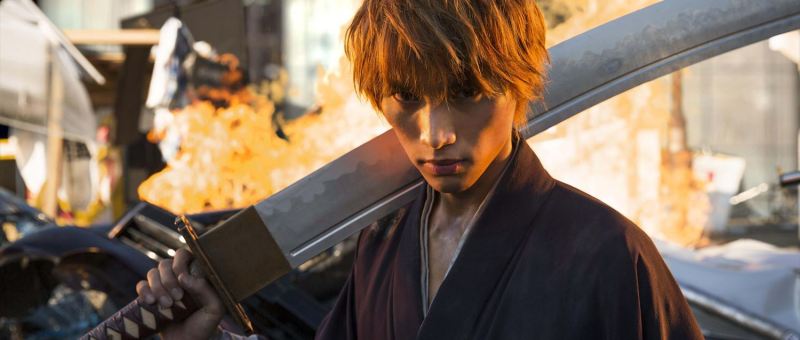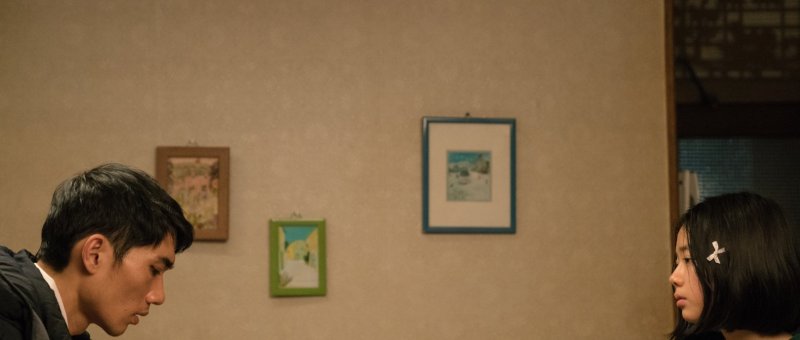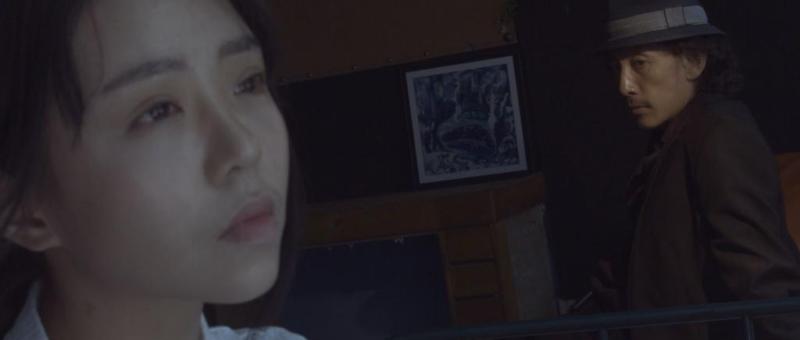
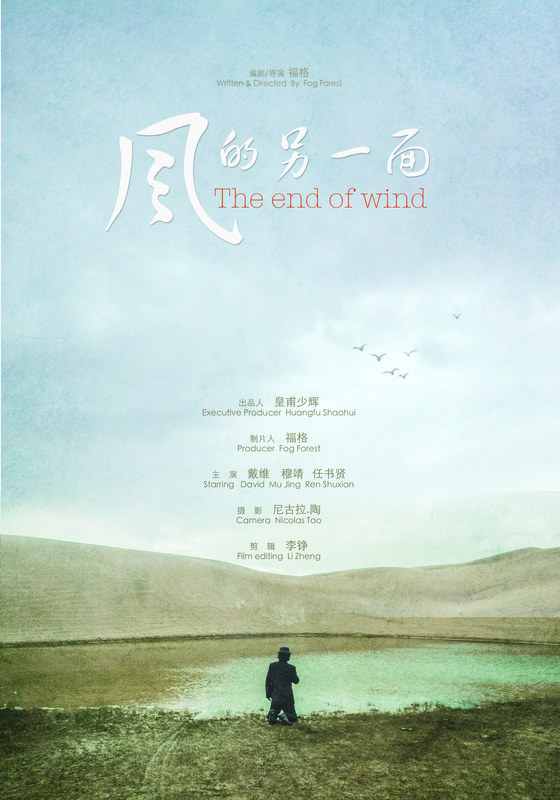
The End of Wind (风的另一面, Fog Forest, 2018)

The End of Wind posterDoes beauty still exist in the world or only in the minds of lonely people? Director Fog Forest wants to know if there is anything pushing back against the forces of indifference in his debut feature, The End of Wind (风的另一面, Fēng de Lìngyī Miàn) which follows the melancholy fates of three individuals each looking for connection in an increasingly apathetic society. A salaryman with an existential crisis, a man wrongly imprisoned for a violent crime, and a young woman whose escape from North Korea led her straight into the hands of human traffickers, ponder if life is still worth living when the bonds between people have become so weak and distorted.

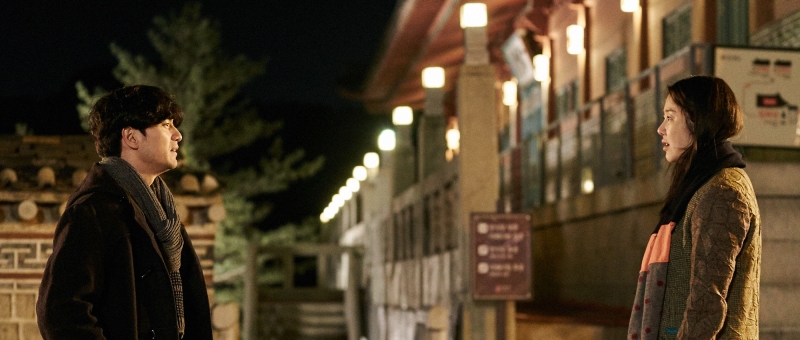
Wang Ran, a frustrated company man and all round snappy dresser, has long been in a depressive slump. Lamenting the attitudes of those all around him, he resents their all encompassing greed and self-interest. He can’t understand why they are so keen to destroy the “beautiful things” of the world in order to continue their quests towards materialist success. Then again, Wang is no longer sure that the “beautiful things” really exist outside of his own mind and if they do he has no idea how to find them. Meanwhile, Yang Botao has just been released from a ten year prison sentence for a crime he did not commit only to find that his mother passed away while he was inside and his father has spent all their money trying to get him released. To make matters worse, Yang is also suffering from kidney disease thanks to constant beatings from sadistic prison guards. A series of events brings the two men together when they decide to rescue a young woman, Kim Meishan, who escaped from North Korea but fell into the hands of human traffickers when her father was killed during the journey.

Each of the three protagonists is looking for some kind of connection which will restore their will to continue living even when life is so obviously meaningless and depressing. In order to find his purpose, Wang gives up his job and goes wandering, living in bare apartments and trying to make connections with kind people he finds along the way. Yang too decides to set off on a journey when his attempts to restart his life are frustrated by an inability to find a job in his hometown where the spectre of his “crime” haunts him everywhere. Unlike Wang, Yang decides to try rekindling an old connection in looking for a woman he knew before he went away who has apparently moved on, possibly to the North West. A true journeyman, Yang becomes the conduit which delivers the path to destiny that Wang has been seeking when his delivery job brings him into contact with Meishan who is able to pass him an SOS in the form of a cassette tape. Intended for her long lost mother, the message is in Korean and Wang is therefore unable to understand it save for identifying Meishan’s distress and realising that he has received a literal cry for help.

Though helping Meishan, Wang’s sense of purpose beings to return, warmed by her desire for life as evidenced by her ravenous hunger. In her he perhaps comes to believes that the “beautiful things” he dreamed of really do exist, and can be found by building genuine connections with others even if they are not supported by common language. His final answer is, however, not quite so positive and all three of our protagonists realise different destinations in their mutual quests for fulfilment. Having been abandoned by all each exists separately, unable to reconcile themselves either to the compromises of the consumerist world or discover a new one through forging bonds with other similarly lonely people. Wang’s world is one of imperfect destruction, surrounded by ruins and filled with nihilistic emptiness from which there may be no escape. Or perhaps, the only possibility of escape ends in an “end” which is not an end but a release. Poetic, if at times obtuse, Fog Forest’s debut is a noirish exploration of the sadness of being alive but one which offers no sign of hope for a society in terminal decline.


The End of Wind was screened as part of the 2018 Raindance Film Festival.

Original trailer (english subtitles)
Love At Least (生きてるだけで、愛, Kosai Sekine, 2018)

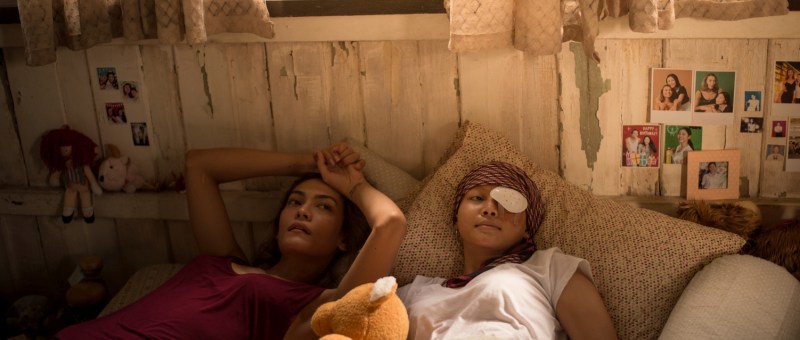
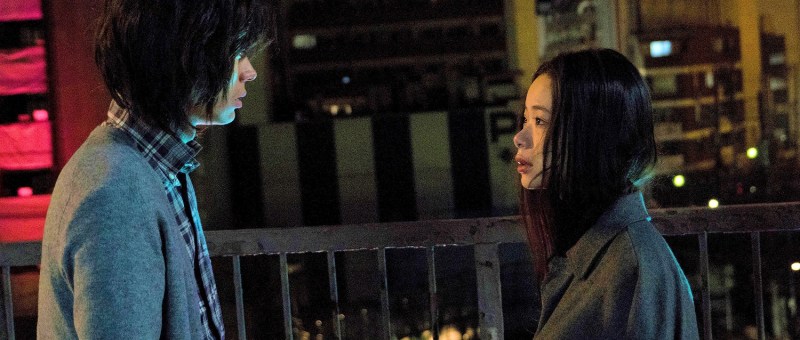
love at least posterFor some, it might be impossible grasp just how exhausting it can be merely being alive. For the heroine of Kosai Sekine’s debut feature Love At Least (生きてるだけで、愛, Ikiteru Dake de, Ai) , adapted from the novel by Yukiko Motoya (Funuke, Show Some Love You Losers!, Vengeance Can Wait), life is a draining cycle of waking and sleeping from which she fears she will never be able to free herself. An encounter with an equally atypical though perhaps more destructive young woman who orders her to leave her ordered existence so that she might step into the newly vacant space unwittingly helps her towards a moment of clarity though not the one it might at first seem.

Yasuko (Shuri) has vague memories of her mother dancing when the power went out but she herself is afraid of the dark. Looking back there’s a lot that makes sense to her about her mother’s behaviour and subsequently her own, but she hasn’t yet found a way to come to terms with her psychology. Yasuko has bipolar and is currently unemployed as she suffers with hypersomnia and hasn’t been able to hold down a job. She’s supported by her live-in boyfriend of three years, Tsunaki (Masaki Suda), who once dreamed of being a writer but now has a soul crushing job at a tabloid magazine writing salacious exposés about celebrities.

Yasuko is currently in the middle of a depressive spell and rarely leaves the house, spending most of the day asleep and exchanging texts with her somewhat unsupportive sister but her life is turned upside-down when she receives a surprise visit from a woman calling herself Ando (Riisa Naka) who drags her off to a nearby cafe and explains that she previously dated Tsunaki three years ago and now she wants him back. Viewing Yasuko as some kind of lesser human, Ando thinks she should see sense and leave Tsunaki to which Yasuko quite reasonably points out she has no income and so the request is quite unreasonable. Ando, however, is nothing if not thorough and it’s not long before she’s bamboozled both the cafe and Yasuko into taking her on as a part-time waitress.

Ando, an extremely unpleasant and manipulative woman, may be as Yasuko points out even “sicker” than she is but somehow she seems to make all around her do her bidding. Oddly enough, working at the cafe might actually be good for Yasuko – the cafe owner and his wife are kind and sympathetic people who seem to want to help and the other waitress was once a hikikomori so they might truly have some idea of what is involved in trying to help those in need. Ando, however, doesn’t quite seem to want her to succeed – she turns up at the cafe on a regular basis to feed Yasuko’s insecurities, pointedly asking her if she’s considered whether the problem might not just be that she’s “useless”, telling her that it’s pointless to try because she’ll inevitably fail, all of which seems quite counterproductive to her nefarious plan.

Then again, kindness and sympathy are not always quite as helpful as they seem. The cafe owner’s wife is nice, to be sure, but is fond of repeating the mantra that depression is caused by loneliness and that therefore making friends with the people at the cafe will make everything better. There might be something in her way of thinking, but it’s also a superficial approach to a more complicated problem and mild refusal to face some of the more serious aspects of Yasuko’s condition. When she’s started to feel as if the cafe is a safe space, told to think of herself as “family”, Yasuko lets down her guard and reveals one subject of her obsessive anxieties which just happens to be the washlet and the possibility of its sudden explosion should the water pressure go haywire. All of a sudden it’s as if the air changes, they look at her like she’s “mad” and the facade of their patronising desire to help is suddenly ripped away. Yasuko’s worst fear has been realised, they “see through” her and she feels as if there’s no hope any more.

Being seen through is perhaps something which Yasuko both fears and craves. Tsunaki, meanwhile, is suffering something similar only in a less extreme way. He also feared being seen through, but unlike Yasuko chose to isolate himself, rarely speaking and maintaining a healthy distance to the world. For this reason he’s been able to put up with his awful tabloid job, even excusing himself when an actress whose affair they’d exposed committed suicide because after all it was “nothing to do with” him despite the fact he was so obviously complicit. Increasingly conflicted, he begins to pull away from Yasuko, unwilling to overburden her with his own worries or perhaps more accurately equally afraid to expose them. Yasuko’s cruel barb that she wished Tsunaki’s “lack of character” would infect her hints at her mild frustration with his passivity, that his refusal to engage and habit of pussyfooting around her illness to avoid creating a scene are also contributing to her ongoing lethargy. The passive aggressive texts from her sister which seemed so unsupportive are perhaps less so as she is the only person willing to go toe to go with her and suddenly Yasuko’s meanness towards her outwardly patient and caring boyfriend reads more like provocation, as if she’s trying to make him respond rather than allow him to continue enabling her inertia.

Being driven apart by their parallel crises eventually brings the pair back together again, closer to an emotional centre and reaching a brief moment of understanding. As Yasuko says, the connection may have been only momentary, but within that infinitesimal space she can perhaps find a life. The dark is not so scary after all. Anchored by an extraordinary performance from Shuri, Love at Least is a beautifully composed examination of the costs of modern living in which fragmentary moments of absolute connection become the only source of salvation in a world of broken dreams and hopeless futures.


Love At Least made its World Premiere at the 2018 Raindance Film Festival.

Original trailer (no subtitles)

Fat Buddies (胖子行动队, Bao Bei’er, 2018)

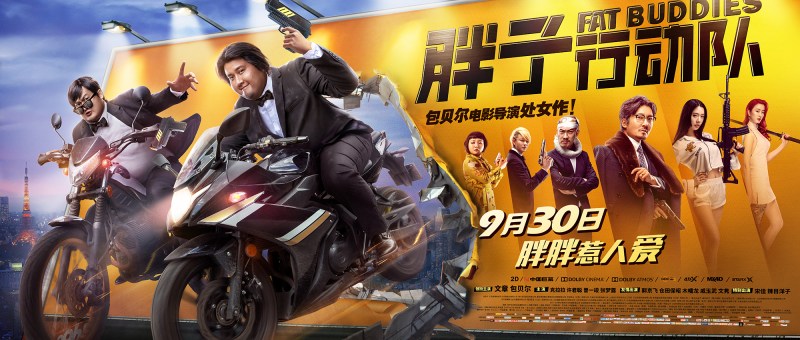
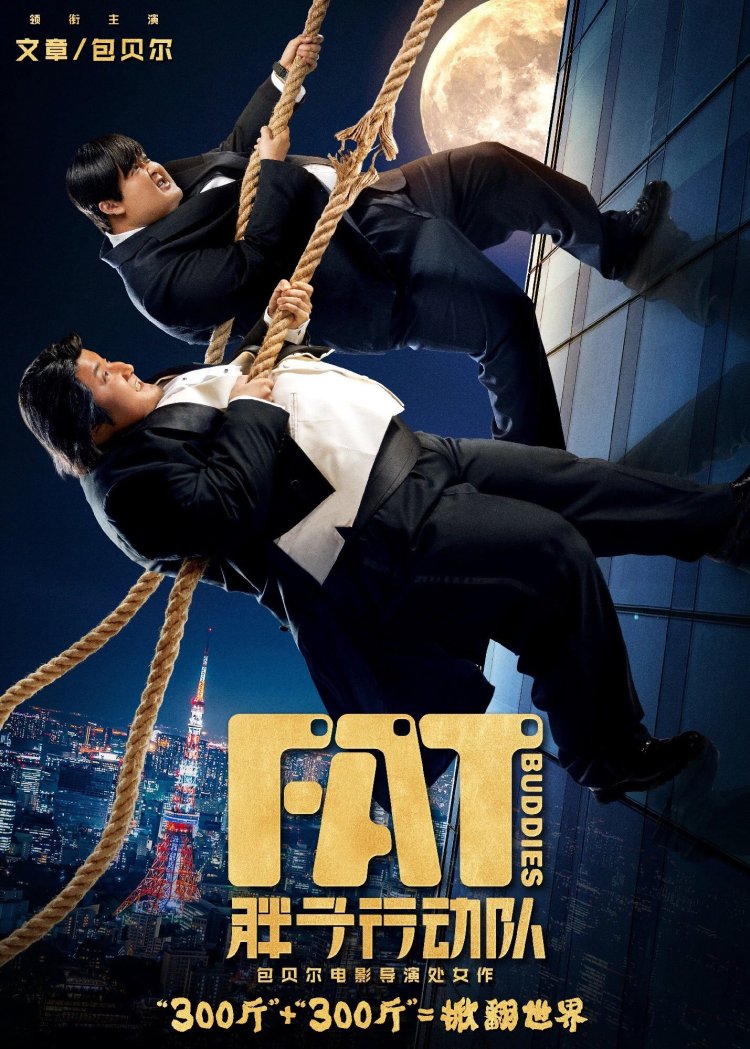
Fat Buddies posterChinese cinema hasn’t exactly had the best record when it comes to dealing with atypical heroes, but then no cinema really has. Gazing at the poster for Fat Buddies (胖子行动队, Pàngzi Xíngdòng Duì) – the debut directorial feature from actor Bao Beier who also stars, one can’t help but assume the next two hours will be one long joke at the protagonists’ expense, but to its credit Fat Buddies is not (entirely) the film it seems to be and, ironically enough, there is more going on beneath the surface than an excuse to have at a “permissible” target.

The hero, played by Bao Beier himself, is a very rotund security guard currently working in a hospital in Tokyo for reasons which will (mostly) be explained later. Though Hao is a cheerful and friendly man with a strong sense of justice, he is ostracised by the (strangely large number of) other guards and has no real friends save his extraordinarily beautiful Japanese wife. Hao’s life changes forever one day when another large Chinese man calling himself “J” arrives at the hospital and causes a ruckus by trying to escape without paying. J convinces Hao that he is an international super spy on a top secret mission and that he needs Hao’s help to get out of the hospital so he can save the world. Believing he is finally being given the chance to become the agent of justice he’s always dreamed of being, Hao is only too eager to oblige.

Strangely enough, the entire film takes place in Tokyo even though the heroes and antagonists are all Chinese. Even so, it never resorts to the comedic caricatures common in recent mainland cinema when depicting the Japanese with even the police characterised as dedicated and efficient if sometimes a little overzealous and misguided, though one does wonder if the setting was chosen solely for the sumo associations of the grand finale. There is however a degree of bite in Hao’s view of himself as a non-Japanese person living in Japan who is married to a Japanese citizen and speaks the language fluently but still remains an outsider both because of his unusual appearance and because of his nationality (with a mild implication from some that perhaps the two things are not entirely unrelated). In an early set piece, Hao and J find themselves trying to infiltrate an upscale party where they have unwittingly stolen the clothes of a pair of famous dancers and eventually end up improvising a strange routine to a bawdy song which is all about being a “foreigner” in Japan who “doesn’t understand Japanese but loves Sora Aoi” and then continues in a similarly lowbrow vein with a mix of Mandarin, international English, and intentionally broken Japanese.

Rather than a two hour fat joke – though there are a fair few of those in a recurrent motif of J getting stuck in things Pooh-style and losing his trousers in the process, the the major message is that the pair are fine as they are and apart from the aforementioned problem, their size is not a barrier to being able to do anything they want including taking on international spy missions. Despite his happy marriage, Hao still suffers from loneliness and low self-esteem due to a lifetime of being looked down and on belittled, unable to make friends because of prevalent social stigma towards those on the heavier side. The solution, however, is not a makeover or a crash diet but a gradual process towards Hao regaining his sense of self worth and realising he has plenty to offer the world despite what anyone else might say. Similarly J, who experienced rapid weight gain after a life threatening injury and also suffers from narcolepsy, proves that he is still able to do his job even if he benefits from having a partner around when he randomly falls asleep at inopportune moments.

Fat Buddies isn’t claiming to be high art and there is certainly enough of the low humour the title implies to keep those enticed by the poster happy enough, but there is also genuine heart in its odd couple buddy comedy as the two similarly under-appreciated big guys bond in their shared desire to reclaim their sense of dignity and refuse to be shamed or belittled just because of their size (even if they are otherwise quite bumbling and inefficient in their mission). Strangely uplifting, Fat Buddies is an extremely silly comedy starring two men in fat suits repeatedly bumping into things but like its heroes refuses to be bound by stereotypical conventions and manages to make heartwarming drama out of its admittedly ridiculous premise. 


Fat Buddies is currently on limited release in UK Cinemas.

International trailer (English subtitles)

Hello, Mrs. Money (李茶的姑妈, Wu Yuhan, 2018)

Hello Mrs Money posterComedy theatre company Mahua Funage have been dominating the lucrative National Day box office for the past few years with a series of late September hits beginning with Goodbye Mr Loser back in 2015 and running to last year’s run away success Never Say Die. This year’s offering, Hello, Mrs. Money (李茶的姑妈, chá de Gūseems set to continue the trend with another hilarious farce loosely inspired by Charley’s Aunt which, ironically enough, hits modern day capitalism right where it hurts through the form of a crowd pleasing rom-com.

Opening with a lengthy musical number which turns out to be a rehearsal for a welcome celebration for the titular auntie, “Miss Monica” (Celina Jade), the action takes place on a romantic island on which rich kid Richard (Song Yang) plans to propose to his reluctant girlfriend, Lulu, who is the daughter of a wealthy businessman, Andy Wong, who has talked her into dating Richard because the family business is failing. Also at the celebration is Lulu’s sister, Lili, who is unhappily married to Jerry (Allen Ai) who has brought his dad, Liang, along because their family business is also failing and he keeps trying to kill himself. In order to save his dad’s life, Jerry has convinced Liang his best shot lies in seducing Monica and becoming a wealthy husband. Monica, however, will not be coming – she wants to see whether Richard and Lulu really want to get married or are just putting on a show for her money, which presents a serious problem for Richard and Jerry.

Meanwhile, Huang (Huang Cailun), the lowly assistant charged with setting all of this up, decides that if Monica won’t be using the luxury villa he took the trouble of furnishing for her, he might as well make use of it himself. As Huang has a naturally small frame, he is accidentally mistaken for a sleeping Monica after passing out drunk in her bathrobe which gives Richard and Jerry and idea. Huang finds himself having to play the part of a wealthy woman but discovers that it’s not quite all as easy as he assumed it would be, especially when the “real” Monica also turns up but decides to go along with the ruse by posing as his “personal housekeeper”.

Monica largely remains on the sidelines, a passive observer to the chaos all around her as just about everyone else becomes obsessed with the idea of helping themselves to a part of her money. This seems to be a phenomenon she’s well familiar with which is why she decided not to go the island in the first place, but finds the act of watching someone pretend to be her and experience a gentle erasure of identity in being reduced to a giant walking wallet fascinating if also perhaps surprising and occasionally hilarious. Both Liang and Wong, a pair of failed middle-aged men, are determined to make themselves kings by becoming Mr. Monica, willing to undergo any and all kinds of humiliation as long as they get the cash. In a story Wong is fond of telling, he once made a speech in college in which he offered the audience a $20 bill only to throw it to the floor and crush it with his heel in an act intended to humiliate by proving that still they wanted the money. His loathsome life lesson eventually gets fed back to him by a revolutionary “Monica” but it proves a difficult one to overturn as evidenced by the ironic rejection of her act of insurrection which sees her chased by a mob of zombified, money crazed men who all somehow think they’re better than Wong and Liang for being exactly the same.

To begin with, Huang is no different – he loved helping himself to Monica’s villa with its fancy cigars and well stocked bar. Consistently humiliating himself by scaling the garden wall to swap identities, it’s all Huang can do to hold on to his job as he becomes consumed by ambition and determined to manipulate Jerry into getting him a promotion to the executive class. Only latterly does he begin to wake up, realising just what his pointless quest has cost him. It’s a move which can’t help but endear him to the “real” Monica who remains surprised by his essential goodness even if he began to lose his way for a time.

The message is clear – the older generation who might praise the economic reforms which have allowed them to become wealthy and powerful are also corrupt, selfish, and immoral perpetuating a system of diminishing returns in which money is the only thing that matters. The central irony is that Monica is really rich, and so when you lose you also win and it’s difficult (or perhaps easy) to claim that money doesn’t matter when you have a lot of it. Nevertheless Huang’s increasingly frantic scheming, the frustrated romances, and conflicting motivations of the family members each contribute to a fast moving farce in which the money is really just a MacGuffin which forces an eventual reconsideration of the follies of greed, providing a (mild) course correction towards a less avaricious future.


Hello, Mrs. Money is currently on limited release in cinemas across the UK.

Original trailer (no subtitles)

Concerto of the Bully (大樂師.為愛配樂, Fung Chih-chiang, 2018)

Concerto of the Bully posterRemember the heady heydays of the Hong Kong rom-com in which a series of zany, often entirely random adventures eventually led to true love? Director Fung Chih-chiang evidently does judging by the innocent charms of Concerto of the Bully (大樂師.為愛配樂) – a beautifully pitched soulmates thrown together romance with a kidnapping at its centre. For many things to work, they need to be in sync, as an unexpected utterance from the vacuous pop star boyfriend of the female lead points out, but sometimes you have to turn the volume down in order to hear the harmony.

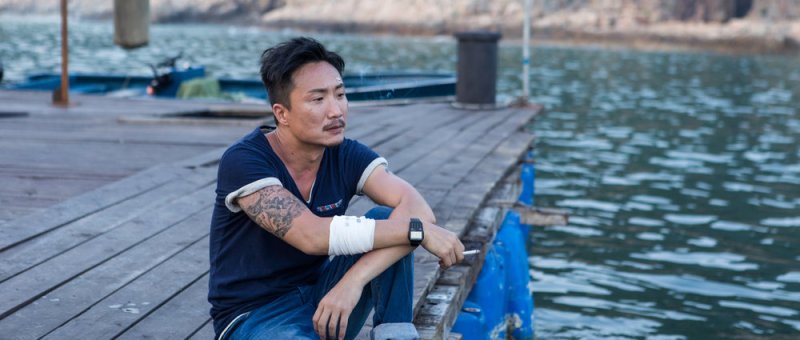
Yung (Ronald Cheng Chung-kei) is a petty thug with a difference. Unable to cope with the noisiness of modern life which often pushes him into fits of erratic violence when overwhelmed, he lives out on a remote fishing raft and carries around with him a soothing track he discovered on the internet by an artist known as “Hit Girl”. His life becomes a lot more complicated when he returns home one evening to find a mysterious sack lying in the middle of the floor with a note reading “please feed” right above it. Yung’s no good gangster friend has kidnapped a young woman, Jamie (Cherry Ngan Cheuk-ling), after recognising her as the girlfriend of a famous pop star from whom he hopes to arrange a ransom. Yung is not very keen on this plan for several reasons but finds himself going along with it. Meanwhile Jamie, who is secretly “Hit Girl”, attempts to plan her escape by ingratiating herself with the guys while thinking about her unfinished composition to keep her mind off the potential danger of her predicament.

The central irony is that Jamie is a girl who loves noise – all the sounds of the world, natural and manmade, are music to her ears and part of the great song of the universe. Yung, however, prefers things quiet save for Hit Girl’s calming song. Forced to babysit Jamie, Yung begins to fall under her spell which is partly weaved solely to lower his guard so that she can escape, but soon enough both begin to get a glimpse of what it is that might be missing in each of their lives.

All the standard romantic comedy tropes are out in force – the boyfriend is a no good heel who isn’t keen on paying the ransom and already has someone else, while Yung is a noble and good man who has been brought low by his no good buddies who have once again gotten him into a lot of trouble. Yung’s inability to process sound turns out to be a life limiting condition which has forced him into a career of violence but Jamie’s musical philosophy eventually allows him to see “another world” – literally, as he re-imagines a crowd of street thugs performing an epic dance routine to Mozart’s Seranade No. 13 in G Major. Unmasked as “Little Fairy”, Hit Girl’s only fan, the shy and under confident Yung gets a new lease on life thanks to Jamie’s less than patient tutelage as she tries to convince him to help her complete her masterwork in time for the big concert finale.

Like her boyfriend said, sometimes it’s no good if it’s not in sync. Many things in the relationship of Yung and Jamie are fake – Jamie has been kidnapped and is taking care to be “nice” and “useful” to her captors, while the pair begin with playacting music through a series of homemade mock up instruments until the arrival of a beaten up tinny piano which might be just the sound Jamie has been looking for. Gradually, the melody begins to come together, working towards a graceful harmony even while the distant drums of trouble in the city continue to threaten their quietly growing romance just as it begins to hit a more authentic key. A strangely sweet love story with a kernel of darkness at its centre, Concerto of the Bully is a hopelessly innocent fairy tale about an unwitting musical genius who never learned to hear his own voice, and a melancholy songstress who finally finds the key to her musical dreams in an unexpected place, as they meet on a floating musical stage which is both silent and somehow alive with all the quiet joys of a melodious life.


Concerto of the Bully is screening in Chicago as part of the seventh season of Asian Pop-up Cinema on 2nd October, 7pm, at AMC River East 21 where Director Fung Chih-chiang and Art Director Chet Chan will be present for an intro and Q&A. Tickets on sale now!

Original trailer (English subtitles)

The Return (Malene Choi, 2018)

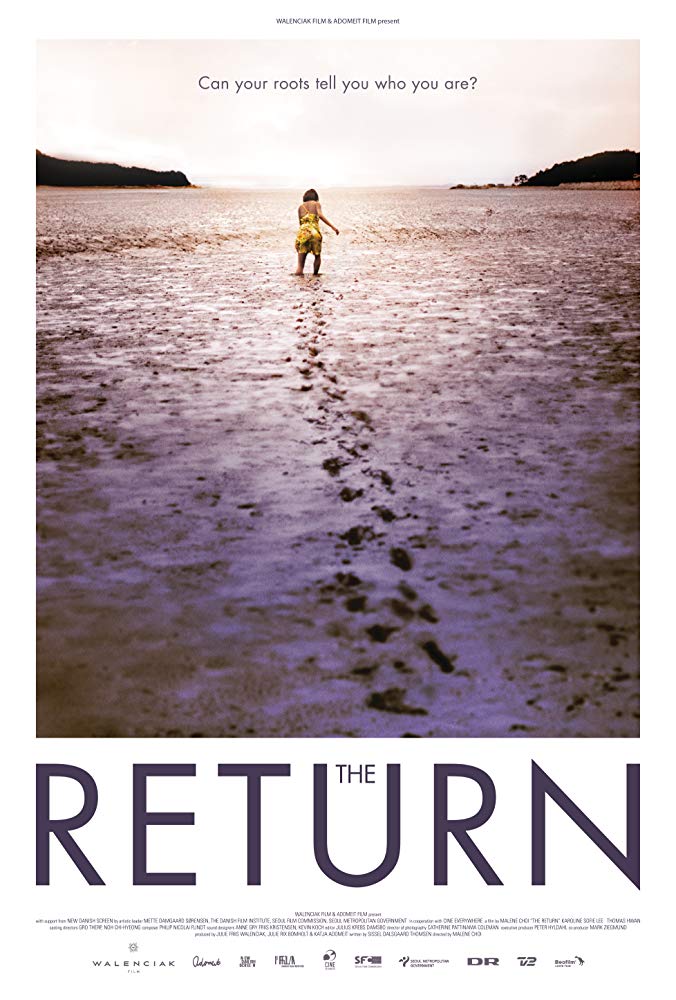
the returm posterIn today’s sometimes hostile political environment, the question of transnational adoption has become a hot button issue with adoptees raised abroad in sometimes difficult circumstances where paper work was never correctly filed finding themselves exiled to the land of their birth despite having no knowledge of the culture and no means to support themselves. Documentarian Malene Choi, a Korean-Danish adoptee herself, frames her first narrative feature around this very thorny issue, taking inspiration from her own experiences and from those of fellow adoptees from around the world she encountered during her own attempts to find her birth parents and unlock the secrets of her history.

The central narrative revolves around two Korean-Danish adoptees, Karoline (Karoline Sofie Lee) and Thomas (Thomas Hwan), who meet for the first time at a hostel exclusively for “returnees” traveling to Korea to find their birth parents. Karoline, nervous and conflicted, talks to some of the other guests hoping to find strength in their stories of successful reunion but the stories she gathers are generally less conclusive than she perhaps expected them to be. Choi, originally planning to make a documentary focussing on the hostel itself, often found the same things – that guests would appear and disappear after only a few weeks, returning perhaps years later either to visit their birth families or to try pressing the adoption agencies again in the hope of finding more information.

Karoline’s own visit to the adoption agency turns out to less positive than she’d envisaged. The “excessively polite” employee managing her case explains that although there is actually “quite a lot” of information attached to Karoline’s file – her mother’s full name (only without her Chinese characters to help narrow it down further), a verified date and place of birth, and a reason the adoption was sought, none of it is much use in trying to find her birth mother. Later discussing the meeting with Thomas who seems a little more experienced, Karoline begins to doubt she was told the whole story and is convinced that the adoption agency is either wilfully holding information back or is simply disinterested in helping her.

Given the various circumstances surrounding international adoption from Korea from the end of the Korean War through the pre-democratic period, the government and adoption agencies might have reasons to avoid revealing the entirety of the truth. In an interview talking about the genesis of her film, Choi mentions meeting a British researcher who described the process of adoptions in this period as akin to “human trafficking”. Children, not only infants but those old enough to have memories of Korea and of their birth families, were sometimes taken without it being fully understood that they were being adopted and sent abroad, never to be returned to their parents or relatives.

A fictionalised scene of a child reuniting with a mother tells a common yet tragic story of a young girl taken advantage of by an older boy, falling pregnant, and then being disowned by her family. Talked into signing adoption papers she tries to change her mind once the child is born, but it’s whisked away from her after only seconds and she is powerless to resist. A combination of oppressive social forces from an unforgiving conformist society which looks down on “immoral” women pregnant out of wedlock to economic impossibilities and bureaucratic concerns all conspire to remove children from their birth families without proper scrutiny or much thought for where exactly they might be going.

Though Karoline and Thomas appear to have been raised well in loving families, they have each experienced other difficulties which have left them feeling adrift, caught between two cultures an unsure where exactly they fit. Karoline’s socially conservative parents were ill equipped to support her when she experienced racial bullying from the other children. They saw her as their daughter and a Dane and therefore could not understand why others didn’t because to them she “doesn’t even look Korean” – well meaning though they might have been, their solution to her suffering was an attempt to erase her ethnicity rather than embrace it. Though Thomas’ experiences were different he too experienced typically xenophobic micro aggressions, but it was the aggressors’ constant taunts of “go back to where you came from” that most hurt him. His persecutors seemed to have such a clear idea of where he “belonged” when he himself did not.

This sense of dislocation is further brought out by Thomas and Karoline’s experiences in Korea where they find themselves supposedly “at home” yet unable to communicate as neither of them speak Korean or have the necessary cultural knowledge to easily navigate the city. It also puts them at a disadvantage in their respective quests, leaving them reliant on the kindness of the hosts at the hostel to help explain some of the information they’ve been able to find as well as interpreting for them when they need to ask further questions.

Yet for others, a return Korea has become a kind of answer in itself. Another American adoptee Thomas meets at the hostel first came to Korea for only a few days but felt an instant connection, as if he’d finally found what it was he’d been looking for. His adopted family, however, were far from happy with his desire to explore his Korean roots and made him an ultimatum (something which might explain why he had previously felt so unhappy) which convinced him to move “back” to Korea on a more permanent basis, certain it was the place he was “truly” supposed to be. The hostel becomes a kind of community base in itself, connecting Korean adoptees from across the world who have each had very different experiences but share something otherwise unique. Thomas, however, remains conflicted, unsure if the connection to his fellow adoptees is real or illusionary, created out of his own desire to find in them what he sought in himself.

Making use of her documentary background, Choi mixes the real and the fictional, blending unscripted sequences and interactions with non-actors with a fiercely hyper naturalist approach only to undercut it with the artifice of strange and unexpected cuts to remind us we are watching a construction. Rather than an attempt to undermine the idea of adoption itself transnational or otherwise, Choi’s aims to look at the complicated, often uncomfortable, ideas of identity, belonging, and family through her protagonists’ continuing struggle to find resolution. Feeling as if they’ve been robbed of their histories, Karoline and Thomas’ quest is an attempt to come to terms with the loss of something which perhaps cannot be returned, but only eased through the restoration of a severed connection.


The Return was screened as part of the New York Asian Film Festival 2018 and will also be screened plus Q&A with actress Karoline Sofie Lee in London on 14th November as the closing night gala of the London Korean Film Festival.

Original trailer (English language dialogue/subtitles)

Sad Beauty (เพื่อนฉัน…ฝันสลาย, Bongkod Bencharongkul, 2018)

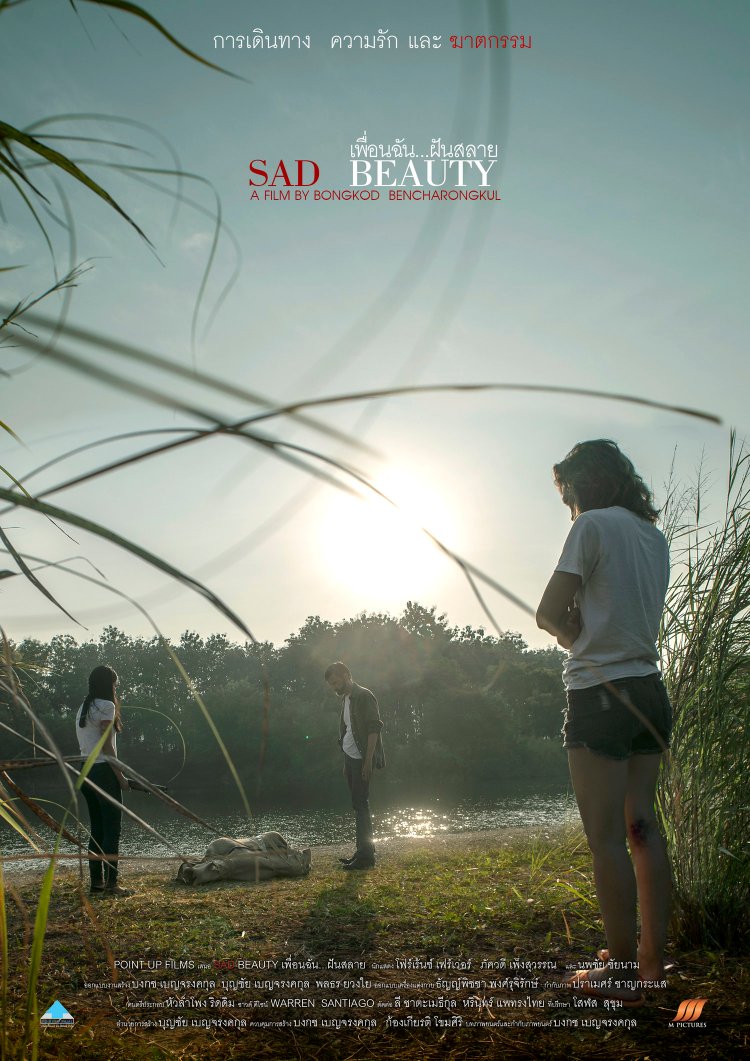
Sad Beauty posterToxic friendship poisons the lives of two young women each somewhat adrift in the modern Thai society in Bongkod Bencharongkul’s noir-infused tale of betrayals and frustrated futures, Sad Beauty (เพื่อนฉัน…ฝันสลาย). A former actress, Bencharongkul’s post-credit’s dedication may imply a degree of autobiographical inspiration, but the film’s uneasy mix of the upscale world of the showbiz elite and the relatively humble lives of the ordinary people on its fringes can be no accident as the two women at its centre struggle to maintain their lifelong friendship in the face of intransigent social pressures.

Yo (Florence Faivre), a famous actress and model, and Pim (Pakkawadee Pengsuwan), an ordinary young woman, have been friends ever since they were little. The friendship is close and intense, but Yo often over relies on Pim’s unwavering kindness, all take and no give, while Pim remains in awe of her beautiful and talented friend, unwittingly fulfilling the role of an unofficial assistant. Yo’s career has hit a rough patch thanks to an unwise public rant and subsequent refusal to apologise while her personal life is also threatening to implode thanks to an increasing drug and party habit. Pim maybe the only one able to prevent Yo’s self-destructive habits from going nuclear, but Pim has problems of her own – she has recently been diagnosed with cancer and, for a change, is now the one in need of care and support. Already strained, things go from bad to worse when the girls return home to Pim’s one night and discover her mother badly beaten by Pim’s drunken and abusive step-father who then turns on them. During the struggle, the step-father is killed and the two friends find themselves on the run with a dead body they don’t know how to get rid of.

A friend will help you move, a real friend will help you move a body – so the old adage goes, but the sudden introduction of crime on top of cancer and persistent narcissism injects another layer of complication into the friendship of the two women. Whether they like it or not they are now bound by something more than natural affection or loyalty and the increasing claustrophobia of their guilt forged connection cannot but paradoxically push them apart. Though Pim, who is perhaps in a way glad to have ended her mother’s suffering, seems to put the trauma of the crime and its aftermath behind her while consumed with mortal fear and the pain of her illness, Yo is haunted and even if her chastened attitude helps to put her career back on track, her self-destructive pursuit of sex and drugs and continues unabated.

When Pim tearfully revealed her cancer diagnosis to Yo, Yo promised she would be there for her no matter what. She promised the same thing again when Pim was trying to decide between chemo and “natural” treatments, but Yo is selfish and afraid – she fails her friend by refusing to accept the seriousness of the situation and offering only superficial reassurances that everything will be alright. Somehow or other, Yo manages to make even Pim’s suffering all about her, finally ready to be “supportive” only in time for the tragic finale in which she realises what she had only in losing it.

Strangely, the murder and its grisly coverup recede into the background – the real “crime” here is in the failure of friendship and the betrayal of a sacred trust. Yo took Pim for granted, relying on her for unconditional emotional support but refusing to offer much of anything in return. She basked in Pim’s admiration but also in her essential ordinariness as way of making herself feel superior, irritated when handsome men show an interest in Pim and not in her. Meanwhile Pim pines for her friend, longing for the reciprocity which is so defiantly absent yet also grateful for the sentiment of friendship and understanding (if also resentful) of Yo’s various reasons for retreating into solipsistic oblivion. This is perhaps the “sad beauty” of the title as the two women attempt to cling on to their friendship even while knowing that it must someday end, allowing the spectre of that final disappointment to poison what it is they have in the present.


Sad Beauty + introduction and Q&A with Director Bongkod Bencharongkul screens as part of the seventh season of Chicago’s Asian Pop-Up Cinema at AMC River East 21 on 26th September, 6.30pm. Tickets on sale now!

Original trailer (English subtitles)

A Tiger in Winter (호랑이보다 무서운 겨울손님, Lee Kwang-kuk, 2018)

Tiger in Winter poster“Life just keeps getting harder” sighs a weary policeman charged with extracting a coherent statement from an accidental hero who only wants to talk about a tiger. Lee Kwang-kuk’s third feature, A Tiger in Winter (호랑이보다 무서운 겨울손님, Horangiboda Museoun Gyeoulsonnim), is in some ways a more conventional exercise in comparison with the time bending reflexivity of his earlier work, but the journey he takes us on is similarly circular as a melancholy young man finds himself chased out of his natural habitat and cast adrift, outside of his comfort zone too resentful to crawl back into a familiar cage but too afraid to embrace his freedom. 

On the day a tiger escapes from the zoo, Gyeong-yu (Lee Jin-wook), a failed writer, “loses” his day job and has to temporarily vacate his apartment because his girlfriend’s parents are coming to visit and she evidently hasn’t told them she is “living in sin”. Gyeong-yu offers to stay and meet them, but bristles when his girlfriend wonders if he’s ready to make a firm a commitment. He packs and leaves, planning to return in a few days’ time when the coast is clear. Decamping to a friend’s place, Gyeong-yu continues his night “job” as a designated driver which brings him into contact with an old girlfriend – Yoo-jung (Ko Hyun-jung), who is also a writer and apparently successful but suffering from an extended bout of writer’s block and has descended into a self destructive spiral of alcohol fuelled existential desperation.

After reconnecting with Gyeong-yu, Yoo-jung pulls down a book he once gave her from her well stocked bookcase – a Korean translation of Hemingway’s The Old Man and the Sea. Hemingway’s hero fights his age as manifested in a powerful marlin and dreams of youth in the lions of Africa. The film’s English title, “A Tiger in Winter”, is perhaps a mild pun on “The Lion in Winter” which again tells of a once proud old man struggling to deal with his bodily decline, only Gyeong-yu is still young even if he feels himself diminished and brought low by life. Unlike the old man, he has stopped fighting and accepted his defeat. He no longer writes and flounders aimlessly, running away from the things that frighten him without aim or purpose. The loosed tiger is a manifestation of the fears Gyeong-yu refuses to fight which render him both physically and artistically impotent.

Writing, or perhaps art of any kind, becomes its own kind of vice – a dangerous addition, a need which must be sated or displaced without which the rest of life remains hollow. Unable to satisfy her need for creation, Yoo-jung has crumbled under the pressure of her own expectations and retreated into the comforting world of the permanently tipsy even whilst knowing that the alcohol itself inhibits her ability to create and forever separates her from that which would make her whole. She wants to stop, throws away her soju, but can’t move past her inability to face herself and resolve her creative doubts. Yoo-jung wants the quick fix, and like any addict, she is past caring about the harm she might do to herself and others in the pursuit of it.

Gyeong-yu, meanwhile, almost wallows in his degradation as he allows himself to be belittled by the customers who call for his services and insist on treating him like a servant. Designated driving doesn’t seem like a particularly safe arrangement for either party – many of Gyeong-yu’s customers are extremely drunk and willingly allowing a man they don’t know to drive them somewhere in their own car while they are barely conscious, while conversely many refuse to pay or accuse Gyeong-yu of damaging the car while berating him for acting in an insufficiently humble manner. Yet it’s not humiliation that knocks Gyeong-yu out of his stupor but trauma and a direct confrontation with someone else’s despair.

Tigers lurk everywhere, though when Gyeong-yu finally learns to look his in the eye it’s a very cute and non-threatening sort of tiger which perhaps makes him feel foolish for having evaded it for so long. Lee may not be playing with time in his usual fashion, but he sends Gyeong-yu retreating into the past all the same in an attempt to hide from his fears only to discover you can’t walk backwards into the future. An exploration of the destructive power of the creative urge, the soul crushing inertia of artistic block, and the continuing rootlessness of a life lived in flight, A Tiger in Winter is another beautifully poetic character drama from Lee whose world weary optimism loses nothing in its seeming simplicity.


A Tiger in Winter was screened as the final teaser for the London Korean Film Festival which will open on 1st November with Microhabitat. The full programme for this year’s event is now available on the official website – tickets on sale soon!

International trailer (English subtitles)

Bleach (BLEACH ブリーチ, Shinsuke Sato, 2018)

BL_honpos_setTite Kubo’s Bleach (BLEACH ブリーチ) had the distinction of being one of three phenomenally popular long running manga series (alongside Eiichiro Oda’s One Piece and Masashi Kishimoto’s Naruto) which dominated the industry from the early 2000s until its completion in August 2016. The series spans 74 collected volumes and was also adapted into a successful television anime which itself ran for several seasons and spawned a number of animated movies. It might seem like a no brainer to bring the series to the big screen with a live action adaptation but Bleach is no ordinary manga and the demands of recreating its fearsome world of cruel death gods and huge soul sucking monsters are a daunting prospect. Perfectly placed to tackle such a challenge, director Shinsuke Sato (I am a Hero, Inuyashiki) spent more than a year in post-production working on the CGI and has brought his characteristic finesse to the finely crafted world of Kubo’s Karakura.

Our hero, Ichigo Kurosaki (Sota Fukushi), is a regular fifteen-year-old high school student, save for his fiery orange hair and the ability to see ghosts. He lives with his relentlessly cheerful father (Yosuke Eguchi) and two cute little sisters but is also nursing guilt and regret over the death of his mother (Masami Nagasawa) who died protecting him from a monster when he was just a child. Feeling disconnected from his family, Ichigo likes to put on a front of bravado – taking on petty punks to teach them a lesson though, in a motif which will be repeated, he only escapes an early encounter unharmed thanks to the intervention of his unusually strong friend, Chad (Yu Koyanagi). Ichigo’s life is changed forever when he finds a strange girl, Rukia (Hana Sugisaki), in his room where she despatches a lingering spirit back its rightful destination of Soul Society. That was not, however, her primary mission and a giant “Hollow” suddenly punches a fist through Ichigo’s living room and scoops up his littlest sister. Rukia does her best to defeat the beast but is seriously wounded. Sensing Ichigo’s high psychic ability, she breaks the rules of her own society and transfers her powers to him but later discovers she gave him too much and is unable to return to Soul Society unless Ichigo ups his Soul Reaper rep to the point he is strong enough to survive giving her powers back.

Loosely speaking Sato adapts the “Soul Reaper Agent” (which is eventually attached to the title during the credits sequence) arc, otherwise known as “Substitute Shinigami”, in which Ichigo gets used to his new life as a Soul Reaper. Condensing Kubo’s considerably lengthy manga to a mere 108 minutes is obviously a difficult exercise necessitating a slight refocussing of Ichigo’s essential character arc as well as that of the feisty Rukia. Sato’s streamlined narrative emphasises Ichigo’s ongoing psychodrama as an adolescent young man attempting to deal with the repressed trauma of his mother’s death and his own feelings of guilt and regret in having unwittingly dragged her into a dangerous situation from which he was unable to protect her. Being “the protector” remains a primary concern of the young Ichigo who withdraws from his family but is determined to protect them from harm. His odd friendship with the similarly conflicted Rukia whose upbringing in the austere surroundings of Soul Society has left her also feeling isolated and friendless (but believing these are both “good” things to be) paradoxically returns him to the real world just he’s turned into an all-powerful monster fighting hero.

Yet the important lesson Ichigo learns is through repeated failures. His mother died saving him, his first fight is ended by a friend, and he is finally redeemed once again by an act of selfless female sacrifice. What Ichigo is supposed to learn, is that he doesn’t always need to be the protector and that being protected is sometimes alright because what’s important is the mutuality of protection, emotional, spiritual, and physical. Meanwhile Rukia, having lost her powers, is perhaps sidelined, rendered both vulnerable and empowered as she becomes Ichigo’s mentor in all things Soul Reaper. This quality of restraint is also how she chooses to make use of her power – something beautifully brought out in Sugisaki’s wonderfully nuanced performance as Rukia’s icy Soul Reaper exterior begins to thaw thanks to her unexpected connection with Ichigo.

Rather than get bogged down in exposition, Sato is content to let the world simply exist with occasional explanations offered in the form of Rukia’s improbably cute rabbit drawings in a motif borrowed from the manga. Sato makes sure to include a number of background players including the strong armed Chad and the lovelorn Orihime (Erina Mano) as well the omniscient shop owner Urahara (Seiichi Tanabe) though their role is strictly to add background colour rather than actively participate in the plot. Despite occasional narrative fudging, Bleach succeeds as a high-octane action blockbuster, by turns slick, ironic, and affecting but always grounded in the real even in excess.


Bleach is currently available to stream worldwide via Netflix.

Original trailer (no subtitles)

Adulthood (어른도감, Kim In-seon, 2018)

Adulthood poster 2Growing up is a funny thing, most of us are content to let it run as a background task while we get on with our daily lives but some of us are forced to contemplate the nature of “adulthood” from a transitionary perspective when confronted with independence delivered at an unexpected juncture. The debut feature from Kim In-seon, Adulthood (어른도감, Eoreundogam) is a coming of age tale but it’s also one about family, responsibility, integrity, and the social fabric as a teenage girl’s attempts to adjust to life alone are frustrated by the arrival of an irresponsible uncle with issues of his own.

14-year-old Kyung-un’s (Lee Jae-in) father (Choi Duk-moon) has just passed away following a lengthy illness. Her mother left when she was small, and now Kyung-un is all alone. The funeral is lonely, and Kyung-un is otherwise unaccompanied, without friends or relatives to assist in the business of mourning. That is, until a good-looking young man suddenly jumps on the bus to the crematorium and bursts into tears. Jae-min (Um Tae-Goo) claims to be the younger brother of Kyung-un’s father whom she has never met. Sceptical, Kyung-un has no other option than to allow Jae-min to invade her life even though she felt as if she was managing fine on her own.

However, Jae-min’s intentions turn out to be less than honourable. He’s a conman and a gigalo who’s forever failing in various scams and deceptions, and despite Kyung-un’s prudent caution towards him, he manages to trick her out of her dad’s life insurance money thanks to making himself her legal guardian on a pretext of saving her from a foster home. Being the clever little girl she is, Kyung-un manages to track her errant uncle down to a shady part of town, but the only way she’s getting her money back is if she consents to become Jae-min’s accomplice and pose as his daughter in order to win over his latest mark, lonely pharmacist Jum-hee (Seo Jung-yeon).

Forced to care for herself from an early age thanks to her father’s illness, Kyung-un is a mature little girl who can manage perfectly fine on her own, even dealing with complicated formalities like submitting death certificates and dealing with insurance companies. At 14 she probably shouldn’t have to do any of this alone but doesn’t want to lose her independence or have her life further disrupted by being forced out of her home and into foster care. Despite her natural caution there is perhaps a part of her that wants to believe Jae-min’s story, even if the other part of her is cloning his mobile phone and going through his bag to try and figure out what it is he’s after.

Jae-min, however, is a selfish man child perpetually chasing quick fixes and conveniently deciding to ignore whoever might end up getting hurt in the process, though it’s also true that he’s not completely unaffected by the pain he causes to others. His moral scruples do not extend to cheating his niece out of her father’s money which is all she has to live on and probably means she will also become homeless seeing as her landlord (who hasn’t even noticed her dad has died) is pushing the rent up. Eyes always on the prize, Jae-min’s dream of opening a Japanese restaurant is real enough and he doesn’t much care what he has to do to make it a reality.

However, when Jae-min and Kyung-un are forced to start playacting family for the lonely Jum-hee, a genuine connection is set in motion. As it turns out, there’s a reason for Jum-hee’s continued aloofness and fear to engage and her interactions with the “widowed” father and daughter do indeed begin to shift something inside her too. Despite all the lying and the natural mistrust, something true bubbles to the surface even if the continued deceptions threaten to push it all back down again.

In the end perhaps that’s what adulthood means, understanding that sometimes people tell the truth when they lie. Kyung-un and Jae-min, both orphans, both lonely, both doing “fine” on their own, nevertheless come to realise that perhaps it’s not so bad to be doing fine on your own with someone else. It’s not perfect, and perhaps it’s not what you wanted, but then that’s “adulthood” for you. A promising debut from Kim In-seon, Adulthood is a warm and empathetic look at different paths to maturity as a little girl and a hollow man bond in their shared sense of aloneness and come to realise that independence does not necessarily require solitude.


Adulthood gets its North American premiere as the opening night gala of the seventh season of Asian Pop-up Cinema which takes place in Chicago from 12th September to 14th November 2018. Director Kim In-seon and actress Lee Jae-in will be in attendance for the opening night screening at AMC River East 21 on 12th September for an introduction and Q&A. Tickets are already on sale via the official website.

Original trailer (no subtitles)