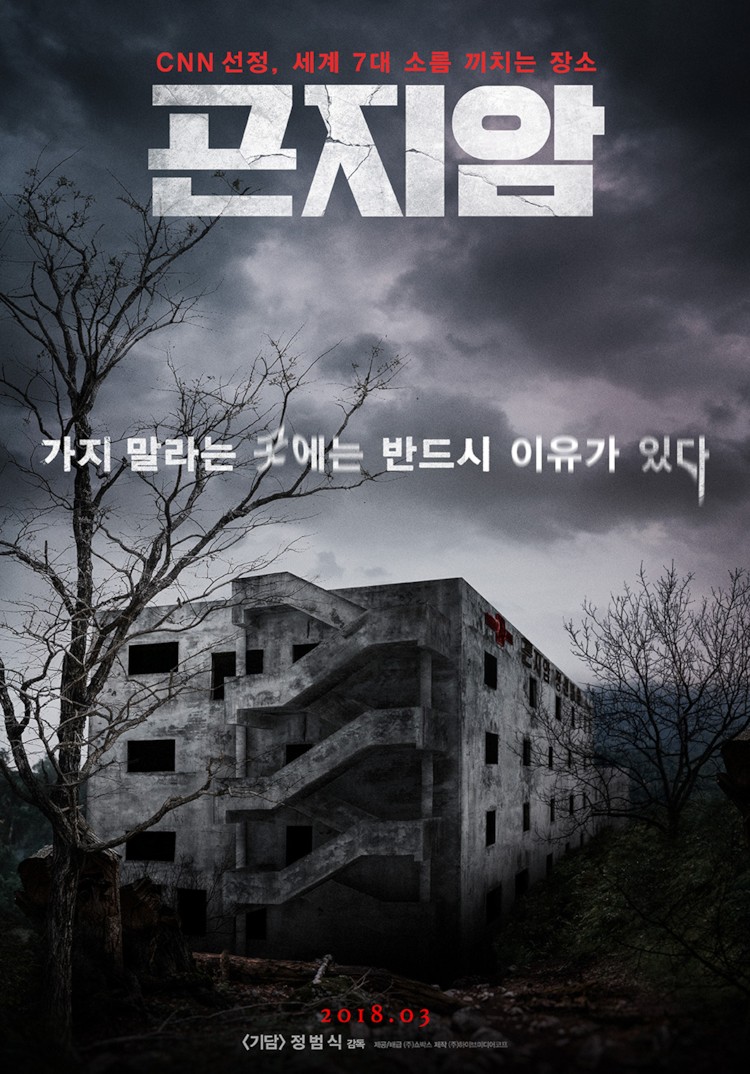
Gonjiam: Haunted Asylum (곤지암, Jung Bum-sik, 2018)

Gonjiam Haunted Asylum posterBack in 1992, all of the UK was scandalised by a strangely realistic “drama” starring three well respected TV personalities “investigating” poltergeist activity in an ordinary house. Screened as part of an ongoing anthology drama series, the show was presented as if it were live complete with a telephone number for viewers to ring in. Many were tricked into believing the events they were witnessing were “real” and that a genial children’s TV presenter they knew and loved had been dragged off by a malevolent supernatural entity. Fast forward 10 years and the nation was once again gripped by a “live” ghost hunting show presented by a dubious psychic and a (former) children’s television presenter but this time at least keeping up a pretence of “reality” even if the show’s appeal lay more in its exaggerated seriousness than it did a genuine interest in the paranormal.

The world may have been a more innocent place back in 1992, but ghost shows are still big business even in this comparatively more cynical age. Reality TV ghosthunters Horror Times decide the best way to pick up their flagging views is to go viral by going live inside a notorious disused sanatorium listed as one of CNN’s seven freakiest places on Earth. Rumour has it that Gonjiam Mental Hospital (a place all too real though here given a fictionalised history) was built by the Japanese over the top of a mass grave for resistance fighters though, according to our guides, it was also accounted one of the best psychiatric facilities in the country. Its director received numerous awards from the government of Park Chung-hee (which ought to tell you she was probably up to no good), but the hospital fell into disrepute after an incident in which all the patients mysteriously died and the director herself “disappeared”. Ever since then teenagers have been breaking in to try their luck, but anyone who’s tried to open the door to room 402 has met a sticky end.

Gonjiam: Haunted Asylum (곤지암, Gonjiam) is a found footage horror movie in the modern mould and like most, the crime our “heroes” are about to commit is one of extreme hubris. Cynical in the extreme, the Horror Times crew have absolute certainty in the non-existence of the supernatural and actively mock it through their exploitation of engineered “scares”. In an odd way, if you really thought about it, Horror Times would be quite an exploitative show if it involved “real” ghosts – perhaps you should let malevolent spirits lie rather than bullying them to fight you for the entertainment of others. Nevertheless, the Horror Times crew are about to find out just how wrong they are. While they bicker amongst themselves, hatching plans to wind up the most “expressive” of the team members, setting up bizarre “rituals”, and faking being “scared” to get more money, the Captain keeps a firm eye on the numbers from the safety of the editing tent and the horrors of Gonjiam begin to bubble quietly below the surface.

The thing is, there is clearly horror in spades in this version of Gonjiam where we are told the directoress excelled at treating not only the “distressed” but also “political prisoners”. The lab holds its share of bizarre discoveries including some kind of weird chicken in preserving fluid while the “collective treatment room” is filled with individual confessional boxes which are completely closed save one opening at the chest level. The spectres we later see have large scars running down their torsos and we can only image the true horror of whatever it was that was done here and to whom and on what grounds, but Horror Times aren’t interested in any of that despite their rather superficial “investigations” of the directoress’ office and her many photos of that time she got a prize off a dictator. By the time everyone starts speaking in tongues and getting trapped in strange underwater realms, it becomes clear the “truth” is going to remain buried. 

Maybe the other lesson the Horror Times guys should have learned is that the traumatic past is not your playground and it’s probably fair enough if those unable to pass on begin to feel upset about their personal pain being exploited for ghoulish thrills. Perhaps there’s a mild lesson in the unhappy fates of those who’d rather poke the ghosts than cure them, revelling in the darkness of another era rather than trying to expose it, but Gonjiam isn’t so much about lessons as good old fashioned scares. The abandoned hospital itself is atmospheric, as are the distant banging and doors opening of their own accord but there’s a glibness in its unease that undercuts the sense of dread and inevitability so essential to the genre. The biggest irony of all is that Horror Times’ viewers lost interest when the “real” ghosts showed up – reality TV never really was about “reality” anyway.


Screened as a teaser for the upcoming London Korean Film Festival. The next and final teaser screening will be A Tiger in Winter on 17th September at Regent Street Cinema at which the full programme for this year’s festival will be revealed.

International trailer (English subtitles)

For the curious, a clip from Ghostwatch (1992)
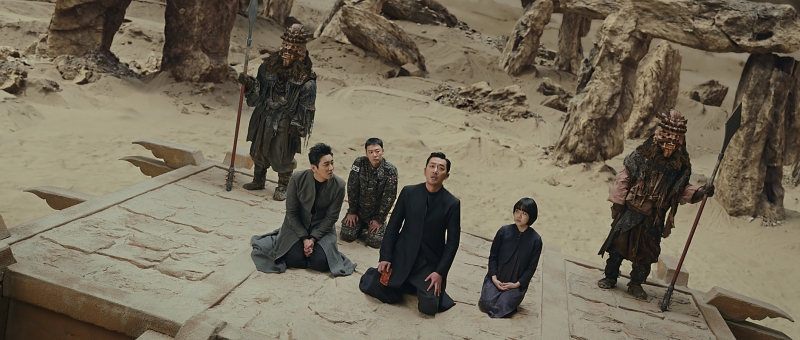
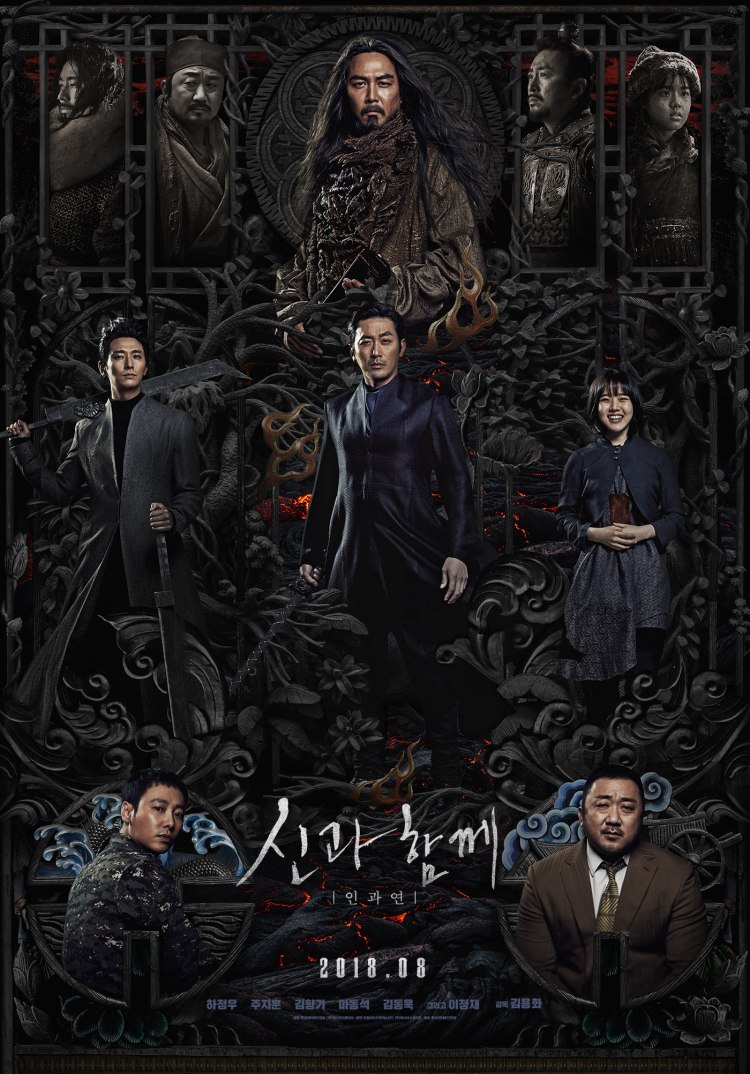
Along With the Gods: The Last 49 Days (신과함께-인과 연,Kim Yong-hwa, 2018)

Along with the gods 2 posterKarma is a bitch, and Korean hell is apparently full of it. You don’t have to be guilty to work here, but it certainly seems to help. Picking up straight after the conclusion of the first film, Kim Yong-hwa’s Along with the Gods sequel, The Last 49 Days (신과함께-인과 연, Singwa Hamgge: Ingwa Yeon) sees stern grim reaper/celestial defence lawyer Gang-lim (Ha Jung-woo) make good on his promise to clear the name of a once vengeful spirit now cheerfully deceased, but willingly or otherwise it’s himself he’s putting on trial as the facts of his client’s case veer eerily close to his own. King Yeomra (Lee Jung-jae) is up to his old tricks once again.

Brother of the first film’s “paragon” Ja-hong, Kim Su-hong (Kim Dong-wook) is headed nowhere good – after being accidentally shot by one friend and then buried alive by another to cover it up, Su-hong became a vengeful spirit creating havoc in the mortal and underworlds. Gang-lim, however, is convinced that Su-hong’s death was “wrongful”, that he died as a deliberate act of murder rather than simply by a tragic accident, and commits himself to clearing Su-hong’s name so that he can be reincarnated immediately. He manages to win King Yeomra over, but there is one condition – an old man, Hur Choon-sam (Nam Il-Woo), is an overstayer in the mortal world and should have been “ascended” long ago but his household god, Sung-ju (Ma Dong-Seok), keeps despatching the Guardians to keep the old man safe. If Gang-lim and his assistants Hewonmak (Ju Ji-Hoon) and Deok-choon (Kim Hyang-Gi) can clear Su-hong’s name and ascend Choon-sam within 49 Days King Yeomra will at last set them free and allow them to be reincarnated.

Having dealt so thoroughly with the mechanics of hell in The Two Worlds, Kim expands and deepens his canvas to delve into the lives of our various Guardians. As it turns out Sung-ju was once a Guardian himself and so he knows a thing or two about our two underlings – Hewonmak and Deok-choon, whose memories were wiped when they became employees of King Yeomra. As Sung-ju spins a yarn, it becomes clear that the fates of the three Guardians were closely linked in life and death, bound by a series of traumatic events over a thousand years ago during the Goryeo dynasty.

As in the Two Worlds it all comes down to family. Gang-lim’s memories are fractured and confused, he’s convinced himself he’s a righteous man and wilfully misremembered his death (or at least misrepresented it to his cohorts). Stiff and lacking in compassion, Gang-lim was at odds with his gentle hearted father who, he thought, had found a better son in a boy orphaned by the cruelty of his own troops. These broken familial connections become a karmic circle of resentment and betrayal, enduring across millennia in the knowledge that even to ask for forgiveness may itself be another cruel and selfish act of violence. The circle cannot be closed without cosmic justice, but justice requires process and process requires a victim.

Gang-lim plays a bait and switch, he walks the strangely cheerful Su-hong through the various trials but it’s himself he’s testing, working towards a resolution of his own centuries old burdens of guilt and regret. There are, however, unintended victims in everything and the fate of orphans becomes a persistent theme from the orphaned foster brother Gang-lim feared so much, to those who lost their families in the wars of Goryeo, and a little boy who will be left all alone if Hewonmak and Deok-choon decide to ascend Choon-sam. Choon-sam’s adorable grandson is only young but he’s already been badly let down – his mother sadly passed away, but his father ran up gambling debts and then ran off to the Philippines never to be seen again. He didn’t ask for any of this, but there’s no cosmic justice waiting for him, only “uncle” Sang-ju who has taken the bold step of assuming human form to help the boy and his granddad out while trying to come up with a more permanent solution.

Nevertheless, compassion and forgiveness eventually triumph over the rigid business of the law, finally closing the circle through force of will. Kim doubles down on The Two Worlds’ carefully crafted aesthetic but perhaps indulges himself with a series of random digressions involving psychic dinosaur attacks and lengthy laments about stock market fluctuations and failing investments. Along With the Gods: The Last 49 Days may lack the narrative focus of its predecessor but is undoubtedly lighter in tone and filled with the sense of fun the first film lacked, which is just as well because it seems as if hell is not done with our three Guardians just yet.


Along with the Gods: The Last 49 Days is currently on limited release in UK cinemas.

Original trailer (English subtitles)

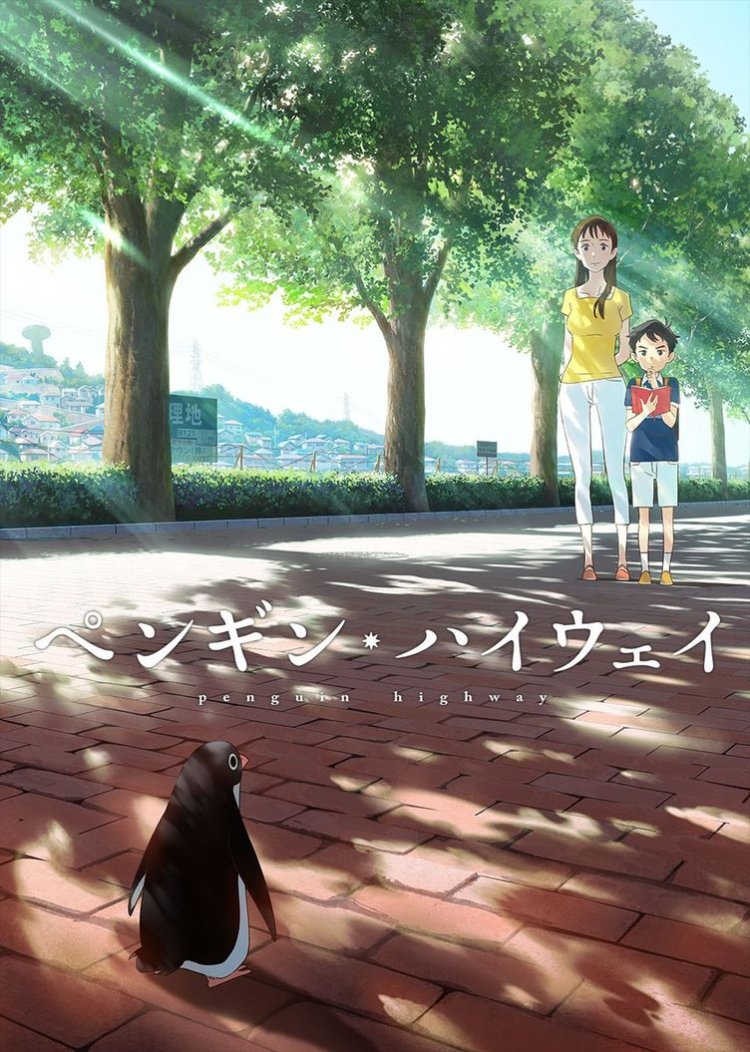
Penguin Highway (ペンギン・ハイウェイ, Hiroyasu Ishida, 2018) [Fantasia 2018]

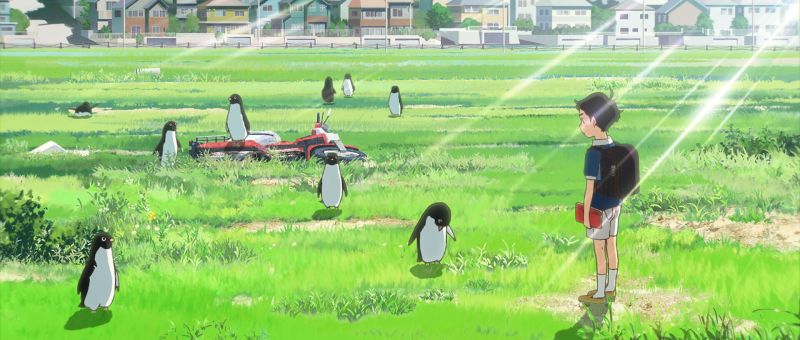
Penguin Highway posterRandom penguins might be the very opposite of a problem, but what exactly does it all mean? Tomihiko Morimi has provided the source material for some of the most interesting Japanese animation of recent times from Masaaki Yuasa’s wonderfully surreal Tatami Galaxy and Night is Short, Walk on Girl, to the comparatively calmer Eccentric Family. Hiroyasu Ishida’s adaptation of Morimi’s Penguin Highway (ペンギン・ハイウェイ) may be a far less abstract attempt to capture the author’s unique world view than Yuasa’s anarchic psychedelia, but preserves the author’s sense of every day strangeness as an ordinary primary school boy’s peaceful life is suddenly derailed by the appearance of random penguins in a small town way in land in the middle of a hot and humid Japanese summer.

Aoyama (Kana Kita) is, as he tells us, “very smart”. He thinks its OK to tell us this because unlike some of his classmates he isn’t conceited, which is what makes him so great. He’s absolutely positive that he’s going to become an important person in the future and can’t wait to find out just how amazing he’s going to be once he’s grown up. Aoyama is also sure that crowds of girls will be lining up to marry him, but they’re all out of luck because he already has a special someone in mind – the friendly young receptionist from the dentist’s (Yu Aoi) who has been coaching him at chess and just generally hanging out with him chatting about life.

Everything begins to change one day when random penguins start appearing all over town. Penguins are, after all, cold climate creatures and this is a glorious summer in Southern Japan so even if these are rogue penguins who’ve managed to escape from a zoo, it’s anyone’s guess how they’ve managed to survive. Being the scientifically minded young man he is, Aoyama becomes determined to solve the penguin mystery, especially as it seems to have something to do with the young lady from the dentist’s who he can’t seem to get out of his mind.

Aoyama is, despite his opening gambit, a fairly conceited young man who thinks himself much cleverer than those around him – not only his schoolmates but the adults too (possibly with the exception of the lady from the dentist’s who is after all teaching him how to be better at chess). With an intense superiority complex, Aoyama has few friends (not that that bothers him, particularly) and is often bullied by the class bruiser, Suzuki (Miki Fukui), and his minions, all of which he takes in his stride. He is, however, slightly thrown by the presence of an extremely bright girl in his class, Hamamoto (Megumi Han), who regularly beats him at chess and is interested in black holes among other areas of scientific endeavour Aoyama had earmarked as his own.

Despite suspecting that Hamamoto might be “even more amazing” than he is, Aoyama is not resentful or jealous but remains seemingly oblivious to her attempts to make friends with him. Aoyama, as an intensely “rational” person, is also sometimes insensitive and remains entirely unable to pick up on social cues unlike his more perceptive friend/assitant, Uchida (Rie Kugimiya), who is well aware of the reason Suzuki keeps picking on Hamamoto, but is unable to convey his instinctual understanding of human nature to the logical Aoyama. Armed with this new fragment of information from Uchida, Aoyama uses it in a predictably “rational” fashion by suddenly bringing it up in front of both Hamamoto and Suzuki in “advising” him that liking someone isn’t “embarrassing” and Suzuki should just say what he means rather than making passive aggressive attempts to get attention by being unpleasant. All of which is, ironically enough, quite awkward.

Through carrying out his investigation into the penguin phenomenon, Aoyama is forced to confront his less rational side, eventually affirming that he’ll live his life based on a “personal belief” rather than a scientific principle. Getting a glimpse of the edge of the world and coming to accept that not matter how much fun you’re having there will always come an end, Aoyama decides to live his life in haste anyway running fast towards an inevitable conclusion in the hope of a longed for reconciliation. Sadly, his discoveries don’t seem to have made him any less conceited but he is at least good hearted and eager to help even if he remains determined to walk his “Penguin Highway” all alone while concentrating on becoming a better person. Beautifully animated and tempering its inherent surrealism with gentle whimsy, Penguin Highway is a promising start for Studio Colorido, mixing Ghibli-esque charm with Morimi’s trademark surrealism for a moving coming of age tale in which a rigid young man learns to find the sweet spot between faith and rationality and pledges to live his life in earnest in expectation of its end.


Penguin Highway was screened as part of Fantasia International Film Festival 2018.

Original trailer (no subtitles)

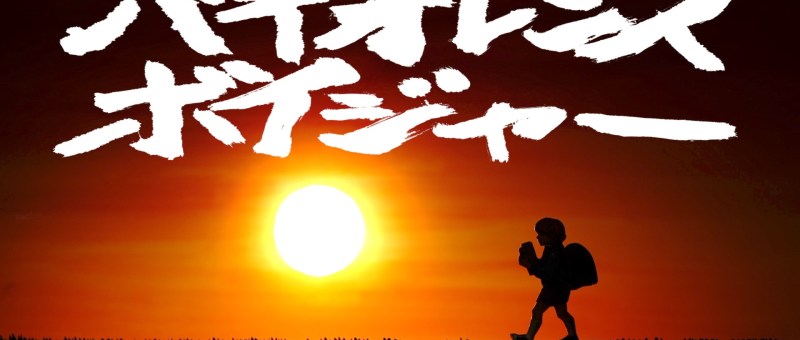
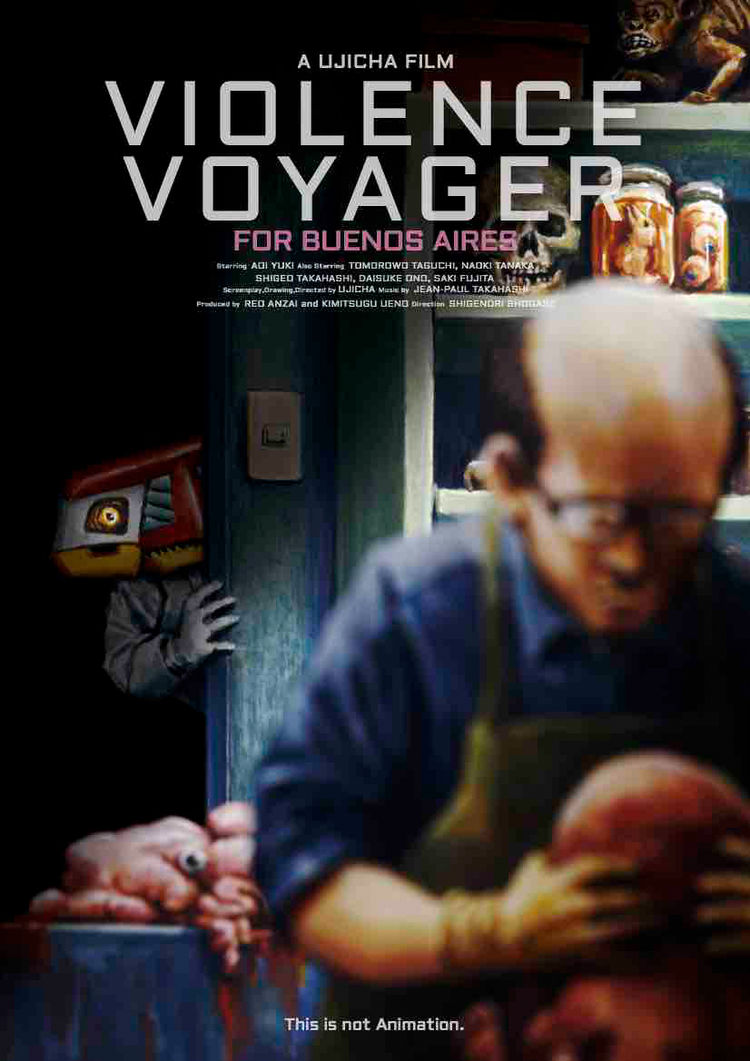
Violence Voyager (バイオレンス・ボイジャー, Ujicha, 2018) [Fantasia 2018]

violence voyager posterWeird stuff happens out in the mountains, stuff you wouldn’t even believe. Ujicha’s Burning Buddha Man followup Violence Voyager (バイオレンス・ボイジャー) is a pleasantly retro treat, set sometime in the more innocent past when the landscape still held hidden mysteries for small boys to find and anything goes so long as you’re home in time for tea. There are some mysteries, however, that it’s better not to solve and if something seems too good to be true, that’s usually because it is. Little Bobby (Aoi Yuki) is about to become a hero, but his journey will be a one way trip of unwelcome transformations, losses, and betrayals.

Bobby, an American boy with a blond bowl cut living in a little rural town with his distant dad and bedridden mum for otherwise unexplained reasons, has impressed his best friend Akkun (Shigeo Takahashi) with his high-tech pinball baseball computer console he made for the science fair, even if it has put the strange monster toys Akkun and his brother Yakkun entered with the intention of masking a lack of skill with pure strangeness to shame. Ostracised by the other kids, Bobby and Akkun long to cross the mountain and find their other friend, Takaaki (Daisuke Ono), who moved away to the next village. Akkun has heard tell of a secret mountain path which would take them there for free and it’s only *slightly* dangerous even if it does take time. Luckily it’s the summer holidays so time is something the boys have plenty of.

Setting off despite the warnings of Old Man Lucky Monkey (who actually lives with a chimpanzee as a “friend”), the boys are sidetracked when Bobby spots a fallen sign for something called “Violence Voyager” which sounds like too good an opportunity to miss. Ending up at an abandoned theme park, the boys are surprised to find the proprietor (Tomorowo Taguchi) still hanging around and overjoyed when he offers to let them in for free seeing as he rarely gets any business owing to the rapidly declining number of children in the area (alarm bells should be ringing right about now). Handed a “voyager suit” (an anorak and pair of wellies), the boys are shown an informational video explaining that the world has been invaded by aliens in the form of robot soldiers who shoot alkaline from their plant-like hands. Choosing a “weapon” (water pistol) each (Bobby a rifle, Akkun a tiny little dolphin), the boys set off but it’s not long before they start to suspect something isn’t quite right. Discovering another little girl lying injured, Bobby and Akkun plan an escape only to find their bullying classmates also facing the same dilemma.

It will come as no surprise that there really is something not quite right going at Violence Voyager. Like a combination of Westworld and Soylent Green, the park exists to strip the young of their innocence by exploiting it. A mad scientist desperately trying to save his only family is literally eating his young – sacrificing the souls of innocent children and “remaking” them in his own image to feed his ruined son. Meanwhile, Bobby’s dad fights equally hard to track down and rescue his own errant boy from an obviously bad situation.

Bobby emerges scarred and fundamentally “changed” mentally and physically but with his humanity fully intact, carrying a pretty bunch of flowers to take to his mum to cheer up her sickbed (and presumably lessen the shock of seeing him as he now is). An extreme coming of age tale, Violence Voyager runs from exposing the cynicism of businesses aimed at children to the desperation faced by a parent prepared to protect their offspring at all costs (including their remaining family).

Ujicha’s trademark “geki-animation” is a perfect fit for the bizarre tale at hand, filled with beautiful hand painted backgrounds and accompanied by the sonorous narration of comedian Hitoshi Matsumoto (Symbol, Big Man Japan). The retro design from Bobby’s bowl cut to the ‘70s musical score and noticeably old-fashioned composition (one shot even seems to reference the poster for Fukasaku’s Virus) allows the warmth of nostalgia to mix with its less positive elements all while indulging in a surreal B-movie adventure which starts with “aliens” and ends with the horror that men do. Whether a metaphor for the conformist meat grinder which strips children of their individuality to trap them in the straight jacket of the salaryman world, the ravages of grief, or just a B-movie body horror adventure, Violence Voyager is a surreal fever dream of bodily corruption but undercut with its own sense of fantastical whimsy and an oddly innocent heart for so dark a tale.


Violence Voyager was screened as part of Fantasia International Film Festival 2018.

Original trailer (English subtitles)

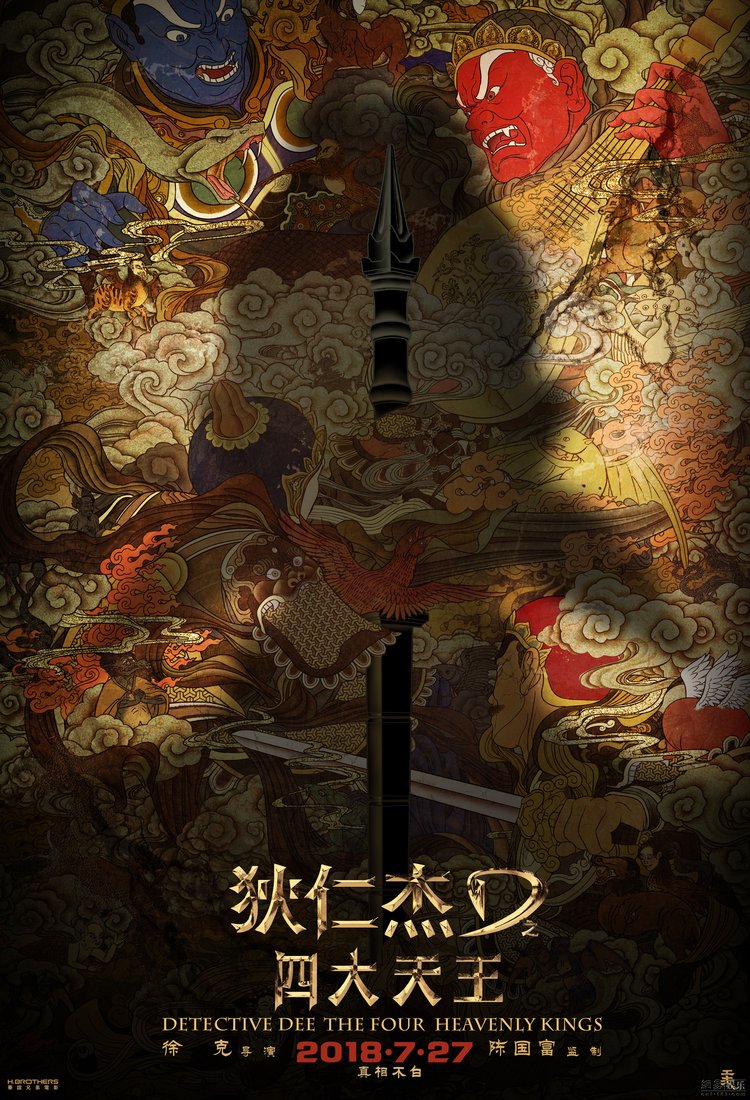
Detective Dee: The Four Heavenly Kings (狄仁杰之四大天王, Tsui Hark, 2018)

Detective Dee four heavenlu kings posterMaybe we could use a Detective Dee or two in this bold new age of fake news and powerful ideologies. Tsui Hark at least finds another case for the famed Tang Dynasty detective though this time one which sees him at the centre of a conspiracy, a bug in the system which must be squashed in order to pave the way for someone else’s revolution. The Four Heavenly Kings (狄仁杰之四大天王, Rénjié zhī Sìtiānwáng) of the title (no, sadly Andy Lau has not returned with a few of his friends in tow) refers to the four Buddhist deities which ought to tip us off to the kind of story this is as personal desires, of one sort or another, threaten to destabilise a state.

At the end of the previous film, Young Detective Dee: Rise of the Sea Dragon, Dee (Mark Chao) was “rewarded” with a place in the inspectorate and guardianship of the Dragon Taming Mace. However, scheming consort Wu Zetian (Carina Lau) is not particularly happy about her husband’s grand gesture and still has her doubts about Dee. Claiming that she fears such a powerful weapon/symbol being in the hands of someone who may betray the crown, Wu instructs Dee’s Sworn Brother and head of the Justice department Yuchi Zhenjin (Feng Shaofeng) to retrieve the Mace at any cost. Yuchi is reassured that Dee is not in danger and so agrees to work alongside Wu’s handpicked troop of “magical” crooks (who have actually been hired to take care of Dee to stop him messing up Wu’s grand plan). Needless to say all is not as it seems and Wu has fallen under the influence of nefarious forces who are merely using her lust for power as a convenient mechanism for facilitating their own agenda of revenge for a past era’s betrayal and oppression.

Dee’s methods are, more or less, inspired by Sherlock Holmes, granting him almost supernatural powers of foresight and observation though this time he is not occupied with one specific case so much as solving the mystery of the hidden insurrection within the Tang. The Mace may seem like a MacGuffin but its power is real and eventually holds the key to defeating the forces of chaos which threaten to bring down the state. Wu’s quartet of “Taoist” magical mercenaries are quickly exposed as expert wielders of tricks and trinkets rather than supernaturally charged avengers, but the state can’t help being captivated by the “magic” which finally puts paid to their ambition and is rocked by the power of the false images which continue to assault their senses.

Tellingly the big bad here is a foreign cult which makes extensive use of “hypnosis”, strange potions, and smokescreens in order to create the illusion of magic. Illusion, however, is as good as or perhaps better than the truth when it comes to political manipulation. The cult’s powers apparently aided the creation of the Tang state but once they were no longer needed, they found themselves cast out, tortured, and humiliated. Unsurprisingly they want their revenge and will settle for nothing less than the humiliating fall of the nation they helped to build.

Good old fashioned deduction and rationality are useless in the battle to free infected minds from the hypnotic power of fake news perfectly tailored to embrace one’s darker instincts. Wu, secretly or otherwise, lusts for power of her own and was easily manipulated by the promise of support in her campaign to seize the throne. Meanwhile, the leader of the Wind Warriors is infected with an intense desire for violence and killing to ease his deep seated rage over the misuse of his people. The answer is, of course, Buddhism. Life is too beautiful to be marred by hate while the act of forgiveness is the ultimate show of strength. Nevertheless, Tsui abandons Dee’s cool, analytical approach for a strangely spiritual final battle in which the fake news machines wielded by the Wind Warriors are pitted against the intense calm of a finely tuned mind (and the slightly moodier one of a giant white gorilla). Hell is full of suffering, Dee reminds the monk, enlightenment will have to wait. Perhaps “enlightenment” is merely another selfish desire won at the expense of blocking out the calls for help from those in need.

The Dragon Taming Mace is the ultimate symbol of justice, literally able to cut through the spell of illusion to expose the truth below. Wu had reason to fear it, even if she was not in the position to understand why. Dee is indeed a worthy guardian and unsullied soul, committed to the pursuit of compassionate justice wherever he goes even if he does so as a representative of the authority. Wu may have regained her senses, but that doesn’t mean she’s cured of the underlying causes of her possession as the large statue of Guan Yin which looks mysteriously like her seems to prove. Dee may have another mystery on his hands, but in any case his work is far from done in a land of intrigue and duplicity in which justice hangs by a slippery thread.


Detective Dee: The Four Heavenly Kings is currently on limited UK cinema release courtesy of Cine Asia. Find out where it’s playing near you via the official website.

Original trailer (English subtitles)

Lôi Báo (Victor Vu, 2017) [Fantasia 2018]

Lôi Báo posterThe world can be a strange place. Tam (Cuòng Seven) felt safe in his small town surrounded by his wife and son who were determined to support his artistic dream despite its long genesis, but a dark shadow is about to be cast over his otherwise pleasant existence that will threaten to destroy everything he has built. Victor Vu’s Lôi Báo is perhaps Vietnam’s first superhero movie but it’s also a familiar tale of a conflicted man entering middle-age learning to reaccept his responsibilities, both to his wife and son and to his society as he attempts to balance his desire to help others with that of protecting his family. With great power comes great responsibility as the saying goes and Tam is a responsible guy but the past is calling him and he’ll need to face it head on if he’s to put his fracturing family back together.

Six years after his critically acclaimed graphic novel Descendents of the Crossbow, comic book artist Tam has just come out of a period of writer’s block and is working on a new project – an American-style Superhero book about a pure hearted warrior for justice with intense fighting skills and extreme athletic ability. Not many people are convinced by Tam’s desire to create a Vietnamese superhero, but his family support him and that’s all that matters. In fact, they literally support him because his wife Linh’s (Tran Thi Nha Phuong) coffeeshop is the family’s sole source of income. Tam has a tendency to get lost in his work, which is one reason he’s been putting off seeing the doctor about a serious cough that just won’t go away. When he finally decides to get it checked out it’s already too late – he has terminal lung cancer and only a few months left to live. It’s at this point that his life starts to take a strange, unexpected turn. Uncle Ma (Huàng Son), an older man Tam thought was a farmer, is actually a secret mad scientist who has a hidden laboratory in his garden where he continues to research human head transplants. The obvious conclusion presents itself – Tam decides to undergo experimental surgery to abandon his cancer ridden body and move into a nice new model.

Lôi Báo is the latest in the long line of movies indulging in the thoroughly B-movie science of “Cellular Memory”. Illegal head transplantation is already somewhat unethical, but Tam and Ma acquired their donor body through less than ethical means by grabbing a guy who was mysteriously gunned down in a forest where Tam had just tried to commit suicide out of total despair. Of course, the dead “gangster” came with his own share of baggage which leaves Tam feeling much more impulsive had than he had done before and though he seems to have lost the ability to draw, Tam is thrilled that his new body seems to be a much stronger, faster model than his old one. Not quite able to leap tall buildings in a single bound, Tam can now scale them with little difficulty and lift heavy vehicles all alone. Now he no longer needs to draw superhero stories, he can be a hero for real fulfilling his lifelong dream of being able to save lives and protect the vulnerable from evil.

Only, his new body is not quite so altruistic as he once was, and Tam begins to get off on the fame his newfound heroism is bringing him even while it puts his family danger should anyone find out about all the illegal head transplantation action that’s been going down at uncle Ma’s. He also finds himself strangely drawn to a pretty young doctor who might have been something to the dead gangster, further distancing him from Linh and his son Bu. As expected, there was a little more to the gunfight in the woods than a gangster squabble and Tam will have to learn to put body and soul back together while also dealing with the ghosts of his past and a latent discomfort with the idea of being a husband and father which betrays a lack of faith in the idea of “family” itself.

With plenty of high octane action scenes, Lôi Báo more than does its home genre justice, creating a notably mature origin story for a new kind of superhero who accepts that perhaps he’s not the hero in this story after all. Justice is served, the family repaired, the past laid to rest and there might even be a new book in it too. It has been a busy a few months for Tam, but at least he’s learnt the true meaning of heroism – something which will place him in good stead during his eagerly awaited further adventures!


Lôi Báo was screened as part of Fantasia International Film Festival 2018.

Original trailer (English subtitles)

The Vanished (사라진 밤, Lee Chang-hee, 2018) [Fantasia 2018]

The Vanished posterThe past refuses to die in The Vanished (사라진 밤, Sarajin Bam) – Lee Chang-hee’s remake of the 2012 Spanish thriller, The Body. Ghosts, of one sort or another, torment both of our male leads – a dogged policeman and increasingly unhinged husband, as they try to solve the mystery of a disappearing corpse whilst each battling a degree of latent resentment towards various forces of social oppression. A tale of conflicting bids for vengeance, The Vanished pits an emasculated trophy husband against a controlling career woman wife while the forces of order look on in disapproval but then all is not quite as it seems and perhaps this is not the story we first assumed it to be.

The horror-inflected tale begins in a morgue on a rainy night as a disinterested security guard becomes unexpectedly spooked by his surroundings. Discovering one of the trays open and a body missing, the guard panics and feels himself stalked by something undead before being clubbed on the back of the head and knocked out. Maverick cop with a traumatic past Woo Joong-sik (Kim Sang-Kyung) arrives on the scene and discovers the missing cadaver belonged to prominent businesswoman Yoon Seol-hee (Kim Hee-Ae). The cause of death is thought to have been a heart attack brought on by her workaholic lifestyle but Joong-sik isn’t so sure. He hauls in the “trophy husband” – improbably good-looking university professor and sometime employee of Seol-hee’s pharmaceuticals company, Jin-han (Kim Kang-Woo). Jin-han has come straight from the flat of his pregnant mistress and is understandably on edge as every move he makes only further incriminates him in the “death” of his wife.

Increasingly unhinged, Jin-han is certain that Seol-hee is not really dead and has embarked on an elaborate plan of revenge for his affair with a student, Hye-jin (Han Ji-An). Lee wastes no time in confirming that Jin-han had at least intended to do away with his wife. Jin-han was apparently no longer interested in her money and would have wanted a divorce but believed his wife to be a ruthless woman who would never willingly let him go. Using an experimental anaesthesia drug, he hoped to get rid of her undetected but now fears that she has somehow woken up and wants her revenge. What Jin-han wanted, he claims, was his freedom – Seol-hee, an older career woman, bought him with trinkets, belittles his work, and refuses him all agency. He was tired of playing the toy boy and wanted his life back and so he chose to reassert his manhood through murder.

Of course, all is not quite as it seems. Through Joon-sik’s investigations, Jin-han comes to believe that perhaps Seol-hee planned the whole thing – anticipating that he would try to use the drug against her and engineering a situation in which she would fake her own death just to get back at him. Whether a ghost or not, Seol-hee haunts him, threatens his happy future with the sweet and innocent Hye-jin who calls him professor and respects him as a learned man, and seems set to achieve her goal if only by driving Jin-han out of his mind with worry and confusion.

Meanwhile, Joon-sik is battling another series of oppressive presences in the form a grudge against “the wealthy” possibly relating to a mysterious traumatic incident from his past, and a boss who wants him to find the missing body as quickly as possible and then forget the whole thing given the fact that Seol-hee and Jin-han had been a “celebrity couple” which makes all of this quite embarrassing for everyone. The two men end up engaged in a cat and mouse game as Jin-han becomes convinced that he’s the real victim in all this and is at the centre of an elaborate conspiracy leaving his pregnant girlfriend alone and vulnerable, while Joon-sik continues to push him towards confessing that he took the body and hid it possibly in some kind of fugue state.

“The body” is perhaps a better title as the concept itself comes in for constant reappraisal and we gradually understand that not everyone is talking about the same thing, leaving aside the complete erasure of Seol-hee as a woman with a name who may have been murdered by a vengeful husband (as unpleasant as she is later shown to be) in favour of viewing her simply as a nameless corpse or grudge bearing ghost. Twists pile on twists and history rewrites itself, but the buried past will someday be unearthed and justice served, if with a side order of irony.


The Vanished was screened as part of Fantasia International Film Festival 2018.

Original trailer (Korean subtitles only)

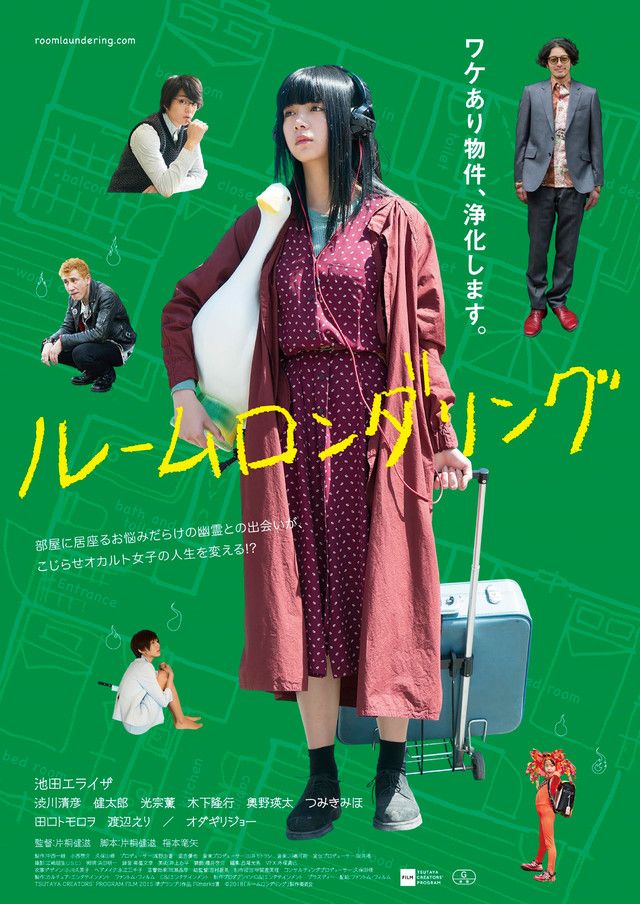
Room Laundering (ルームロンダリング, Kenji Katagiri, 2018) [Fantasia 2018]

Room Laundering posterIn the olden days, when there had been a traumatic incident, holy people would be brought in to perform some kind of ritual to “purify” the air so life could go back to “normal”. These days people don’t believe in ghosts, or at least not in ghosts of that kind, but there is still a degree of discomfort involved in spending time in a place where something unpleasant has happened. Japanese rental laws state that a prospective renter/buyer should be informed if something untoward has occurred in the property, but the law only requires you to tell the next person in line. Therefore, if you can find a person willing to spend a few days in an apartment with a troubled past, they could be quite a useful asset to the unscrupulous estate agent.

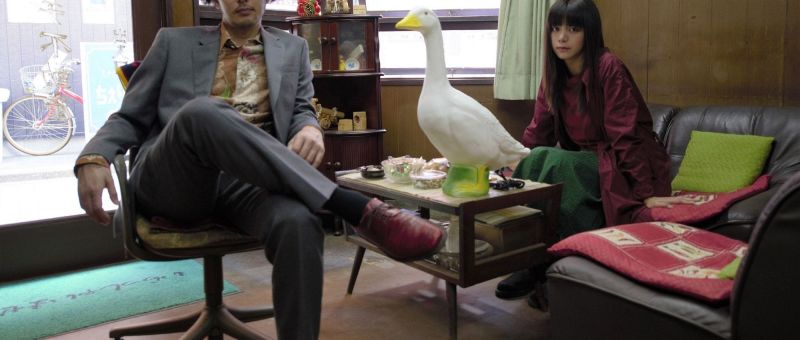
Miko Yakumo (Elaiza Ikeda) is just such a woman and has therefore found herself falling into a “room laundering” career thanks to her uncle Goro (Joe Odagiri), a roguish real-estate-broker-cum-underworld-fixer with a sideline in fake IDs for undocumented migrants. Miko’s father died when she was five, and her mother disappeared without warning a few years later leaving her with her grandmother who died when Miko was 18. She’s now 20 and is nominally in her uncle’s care but having dealt with so much loss and abandonment, she prefers to keep to herself, always closed off with a pair of headphones blocking her ears, speaking to no one. The apartment “job” therefore suits her well enough with its clear stipulation to avoid mixing with the neighbours, but there’s one big drawback. Miko has recently developed the ability to see ghosts which is sometimes a problem given the circumstances her new places of residence became vacant.

A tale of learning to deal with the past, Room Laundering (ルームロンダリング) takes its heroine on some long, strange journeys but despite its death laden themes and Miko’s emotional numbness it has its essential warmths even if they’re sometimes harder to see. Miko’s travels chart a course of modern loneliness as she encounters those who’ve found themselves passing away alone, in pain and in sadness – old ladies whose bodies weren’t found until they’d almost all rotted away, neglected children who starved to death after being abandoned, businessmen who killed themselves after getting into debt, a catalogue of human misery seemingly without end. Miko doesn’t find the ghosts scary because she thinks real people are scarier. They lie, and they leave, and they let you down. At least the ghosts will stick around even if you wish they wouldn’t.

Even so, interacting with the recently deceased begins to reawaken Miko’s sense of vitality. Drinking with (or more accurately on behalf of) an insecure punk rocker (Kiyohiko Shibukawa) who took his own life before sending off his demo tape proves an oddly fulfilling experience for the otherwise introverted young woman, while staying in the apartment of a murdered cosplayer (Kaoru Mitsumune) gives her a sense of purpose when she decides to help the unfortunate woman move on by unmasking the real killer. Meanwhile, she also breaks her non-fraternising rule to chat to the geeky boy next-door (Kentaro Ito) and starts to wonder if maybe not all the living are so bad after all.

In dealing with the legacy of abandonment while literally living a transient life, Miko is forced to confront the ghosts of her past and exorcise them in order to escape her self imposed limbo. Only by being on her own can she reach the realisation that she is not alone. Meanwhile, Uncle Goro’s originally shady looking services for migrants without the proper papers begin to look more altruistic than they first seemed. He, like Miko, is helping himself by helping others who are also trapped in a kind of limbo only a more prosaic earthbound one of rigid bureaucracies and xenophobic exploitation. Goro maybe a dodgy estate agent with a sideline in forcing grannies out of their homes to pave the way for “redevelopment” but at least he’s found a better system of room laundering than his colleague who generally just rents to foreigners and visa overstayers he can either evict or extort if things go wrong. It just goes to show a little bit of empathy goes a long way. After all, you’re a long time dead.


Room Laundering was screened as part of the Fantasia International Film Festival 2018.

Original trailer (no subtitles)

I Have a Date with Spring (나와 봄날의 약속, Baek Seung-bin, 2018) [Fantasia 2018]

I have a date with springIf the world was going to end tomorrow, which of your many anxieties would you most like to ease before you go? I Have a Date with Spring ( 나와 봄날의 약속, Nawa Bomnalui Yaksok) is, as its name suggests, a hopeful tale despite its apocalyptic pretence as its lonely film director hero learns to accept the looming presence of death in order to move beyond his creative block. He may need aliens and the promise of knowledge from beyond our world to do it, but in contemplating the many ways in which modern life is unsatisfactory, he can perhaps begin to envisage a world in which it might not be so bad to live.

Depressed director Lee Gwi-dong (Kang Ha-Neul) hasn’t made a film in 10 years. The last decade has seen him struggling with the same script, an apocalyptic tale of the end of the world in which three unhappy individuals are visited by omniscient aliens to help them celebrate their birthdays which happen to fall on the day before the Earth will be destroyed. Sitting in a forest on his own birthday, reminding us that he came here to work and not to die, Gwi-dong is shocked to receive a visitation from four mysterious campers, one of whom claims to be a fan of his earlier work.

The picture Gwi-dong (and by extension Baek Seung-bin) paints of modern Korean society is one marked by extreme loneliness and existential isolation. The death obsessed director is currently sporting a large cast on his arm apparently a result of an act of self harm committed in frustration regarding his own sense of disconnection and personal failure. The three “heroes” of his tales within a tale are all also shy, lonely, and increasingly withdrawn, no longer interested in finding escape from their personal imprisonment. A dreamy high school girl longs for the destruction of the world while a middle-aged professor laments his missed opportunities for romance and a harried housewife feels both guilt and regret in remembering she was once the leader of a militant feminist movement back in college.

Each of them is, like Gwi-dong, “celebrating” a birthday but due to their specific personal circumstances they are each celebrating alone as those close to them are either absent or have entirely forgotten. The aliens, not revealing the imminent destruction of the planet, promise each of them something special in return for trust and time but the gifts they deliver are perhaps not altogether welcome despite their original appearance. The lonely high school girl bonds with the middle-aged alien over a shared sense of childish glee in monsters and adventure, relieved simply to hear the word “friend” but still unsure whether she should trust him and follow his instructions. Meanwhile the housewife, ignored at home by her noisy child and indifferent husband, is glad to be recognised once again and have the power of her youth literally returned to her in the form of a gun but remains unsure if she should use it. The professor, on the other hand, is corrupted by his original encounter but grateful for his “mother’s” gift and commits himself to living fully and finding love despite the potential risks.

As the mysterious older lady at the campsite tells Gwi-dong, we’re all doomed anyway so we might as well go nicely, beautifully – if we can. Through each of his various stories, Gwi-dong learns to see the presence of death, the end of all things, as not such a bad thing after all. It will come, bidden not, and so there seems little point in worrying about it now. Suddenly his creative world expands. No longer thinking only of death he conjures hundreds of other universes each filled with their own stories, certain that one day “spring will come”. Oddly optimistic for a film about the end of the world, I Have a Date with Spring makes the case for reaching out in a sometimes cold world even if it risks being devoured by strange space crabs or suddenly developing painful boils (tiny bubbles of love?) all over your body. You have to go sometime, so you might just as well sit back and see what happens. The Earth is a beautiful place, enjoy it while it lasts.


I Have a Date With Spring was screened as part of Fantasia International Film Festival 2018.

International trailer (English captions/subtitles)

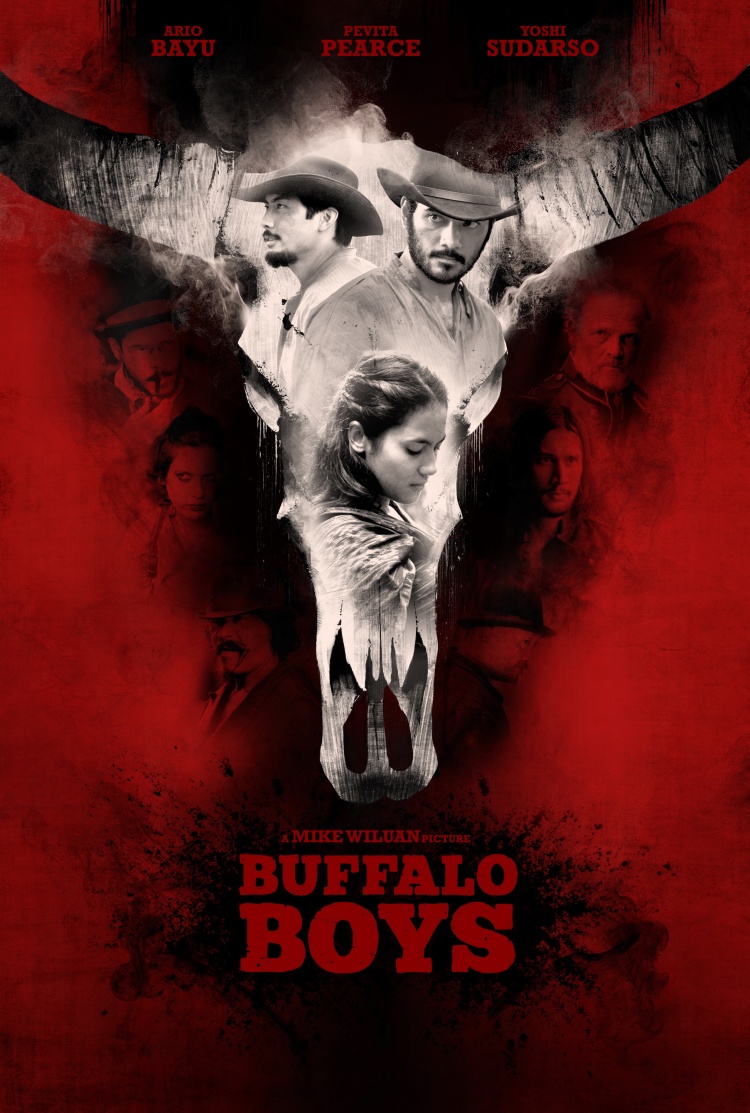
Buffalo Boys (Mike Wiluan, 2018)

Buffalo Boys PortraitIndonesia is embracing the western in grand style. Following hot on the heals of Marlina the Murderer, Buffalo Boys picks up Hollywood’s most idiosyncratic genre and repurposes it to attack the thing that it ultimately stands for – colonialism, while also reasserting its perhaps more positive messages in the quests for honour, justice, and above all personal freedom. A tale of vengeance, Buffalo Boys makes unexpected revolutionaries of its two returnee heroes as they eventually come to realise that their personal quest must take second place to that of their nation as they attempt to liberate their people from the cruel oppression which has so directly affected the course of their own lives.

California, 1860. Brothers Jamar (Ario Bayu) and Suwo (Yoshi Sudarso) have been raised by their uncle Arana (Tio Pakusadewo), brought up in the precarious frontier environment since travelling to the New World as infants. After a shocking incident on a train leaves Arana injured, he realises it’s time to take the brothers back to their homeland to address the long buried past. Twenty years previously, Arana’s brother and the boys’ father, Hamza, was a Sultan who thought he could placate the Dutch colonisers by acquiescing to their demands, but was cruelly cut down by a vicious Captain, Van Trach, who executed him in cold blood. Arana fled with the children, leaving his wife behind and taking with him only the ancestral dagger to remind them of their legacy.

The boys have returned to avenge their father’s death by killing Van Trach (Reinout Bussemaker), but they find that things have only become worse in the twenty years they’ve been away. The Dutch are cruel masters who brand the native Indonesians like cattle, torturing those who won’t play along with their demands, and displaying the bodies of those deemed to have disobeyed their masters in the streets as examples to the others. The bodies which currently line the trees, belong to those who refused to clear their rice fields to grow opium poppies as the Dutch demanded, preferring to feed their families instead. Not content with beatings, torture, and executions Van Trach has now progressed to mass starvation which begs the question who he thinks will be tending to his poppies with half the population weakened through malnutrition.

As soon as the boys arrive they find themselves embroiled in a small conspiracy which leads them straight to Van Trach when they rescue the daughter of the local village head, Sri (Mikha Tambayong), from a lecherous collaborator. Thinking only of their individual revenge, the boys and their uncle plot and watch Van Trach but are increasingly touched by the plight of their people who struggle to survive under such a corrupt and oppressive regime. Poignantly reuniting with an old friend who has suffered years of brutal torture directly at the hands of Van Trach, the boys are reminded that their father was an honest and just man who would not want them to waste their lives in a pointless quest for vengeance, but to dedicate themselves to the wider cause of justice on behalf not just of themselves but of their people. 

Ironically enough, Jamar and Suwo are two returned “cowboys” who find themselves becoming legendary figureheads for a resistance movement on the behalf of the native local population against the cruel and oppressive colonial occupiers. Heavy stuff aside, Buffalo Boys is less an authentic exploration of the colonial era than a pulp fuelled Eastern western filled with exciting bar fights, adventure and romance. The boys are loosely paired off with the rescued Sri and her feisty sister Kiona (Pevita Pearce) who is the original “buffalo girl”, defying her father to ride buffalos and fire arrows at moving targets though sadly reverts to damsel in distress mode for most of the picture save for smashing a bad guy over the head with a bottle and then being allowed to do a little beheading of her own. Nevertheless, Buffalo Boys is a perfect encapsulation of the positive values of the “cinematic” western in its insistence on individual freedom from political oppression but makes sure to temper its central quest with humanistic virtues, making a case for forgiveness and altruism over coldhearted vengeance as the best way to move forward having made peace with the past.


Buffalo Boys was screened as part of the New York Asian Film Festival 2018.

Original trailer (English subtitles)