Shape of Red (Red, Yukiko Mishima, 2020)

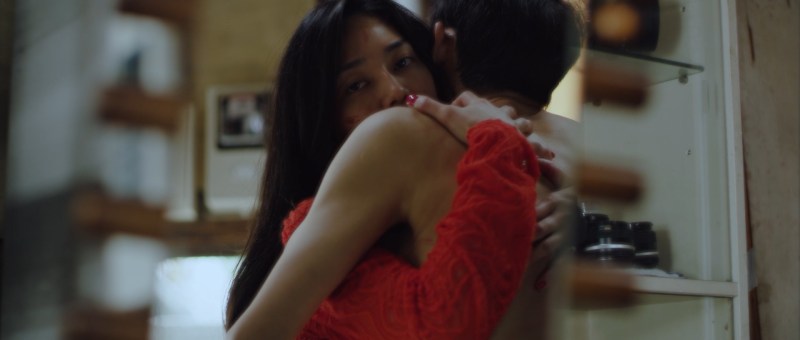
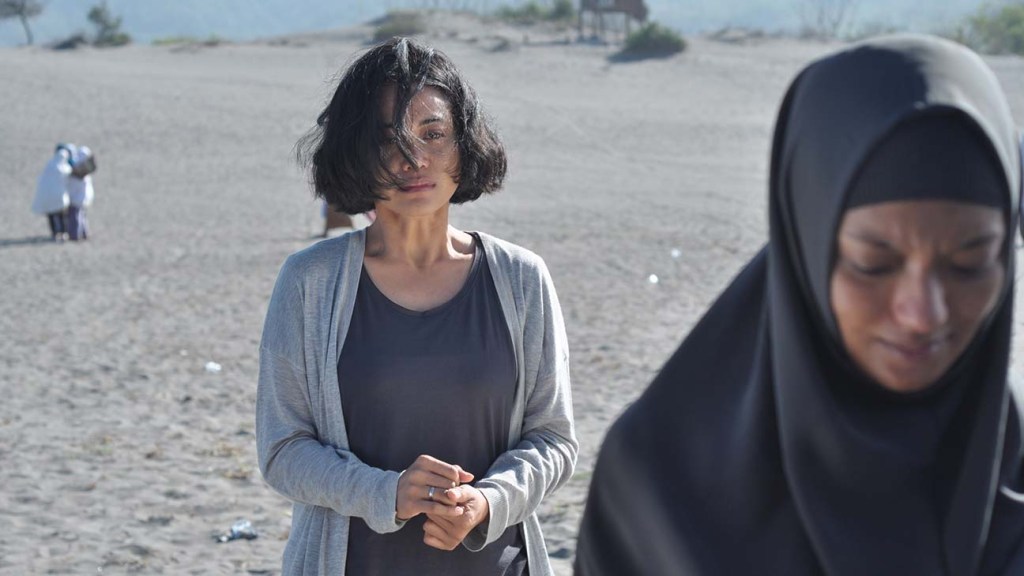
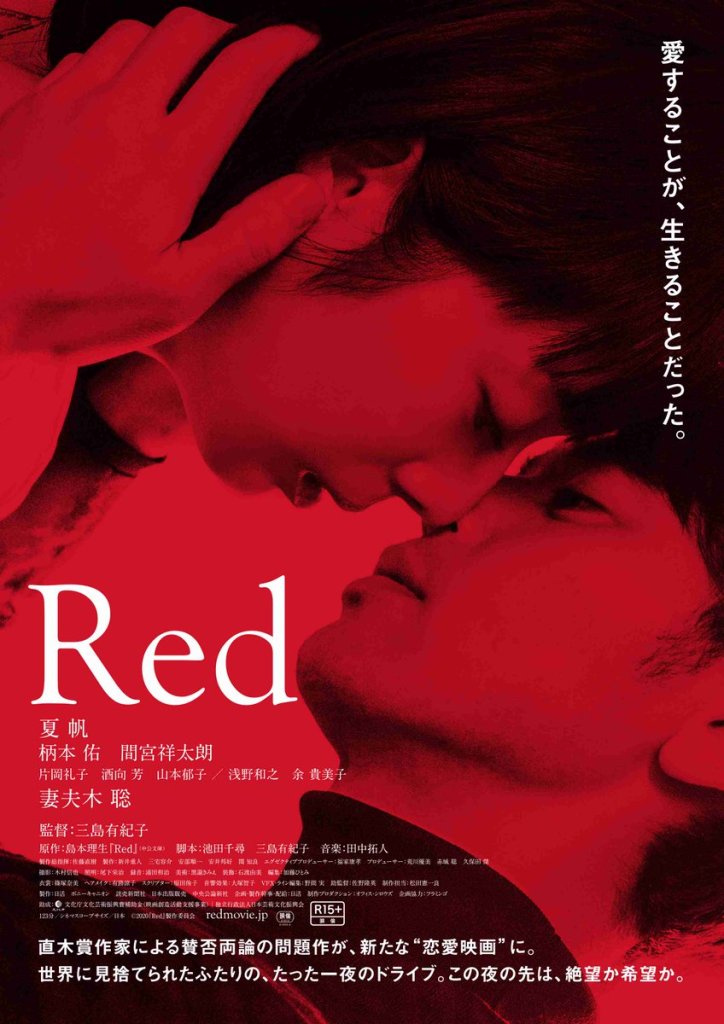
“This isn’t A Doll’s House” the heroine of Yukiko Mishima’s Shape of Red (Red) is exasperatedly told by a well-meaning colleague, only in many ways it sort of is. Adapted from the novel by Rio Shimamoto, Shape of Red proves that not all that much has changed since Nora slammed the door on the patriarchal hypocrisies of a conventional marriage as its not quite middle-aged wife and mother is confronted by the weight of her choices, wondering if a dull yet secure middle-class life is worth the sacrifice of personal fulfilment. 

32-year-old Toko (Kaho) gave up a career in architecture to marry upperclass salaryman Shin (Shotaro Mamiya) and is now a housewife and mother to six-year-old daughter Midori. The marriage is unhappy only in the most ordinary of ways, leaving Toko feeling neglected and unfulfilled, treated as a servant in her own home expected to fulfil her husband’s needs while her own go unsatisfied. That is perhaps why she wanders off from a work gathering her husband has dragged her to (in the outfit he picked out for her to wear) into a more interesting party where she re-encounters an old flame who abruptly drags her into an unoccupied room for a rough and unexpected embrace. Leaving the party together for a walk along the beach, Toko fills Kurata (Satoshi Tsumabuki) in on the past 10 years, lying through her teeth that she’s blissfully happy though admitting that she would have liked to continue with her career. 

Meeting Kurata either awakens a dormant sense of desire in the otherwise button-down Toko, or merely gives her permission to pursue it. She plucks up the courage to tell the less than enthusiastic Shin that she wants to go back to work and takes a job at Kurata’s company where the pair grow closer, but struggles to decide what it is she really wants – the “traditional” housewife life she picked when she married Shin, or the right to fulfil her individual desires. Shin, it has to be said, is an unreconstructed chauvinist from a conservative background who runs all of his major life decisions by his parents. He told Toko he was fine with her continuing to work after marriage but didn’t really mean it, coming up with excuses why she shouldn’t even though Midori is now in regular school. He tells her she can give work a go, but views it as little more than a hobby he assumes she’ll fail, later instructing her to stop because his parents want a second grandchild and, tellingly, he would like a son. Toko, meanwhile, is beginning to feel trapped but conflicted, convincing herself this is the life that she should want while simultaneously accepting that it makes her miserable. 

A third potential man at her place of work, Kodaka (Tasuku Emoto), also quite sexist and a little bit creepy but perhaps ironically so, strikes at the heart of the matter in bringing up her family background. Like seemingly everyone else, she grew up without a father because her parents are divorced, something she’s kept a secret from her conservative in-laws. Toko’s far less conventional mother (Kimiko Yo), sick of keeping up the pretence, brands her daughter’s life choices as “pathetic”, disappointed that she’s deluding herself she’s happy “living a lie” with a man she doesn’t even love.

Yet as fiercely as her newly awaked desire burns, she isn’t convinced by Kurata. Kodaka tells her that she and Kurata are two of a pair, off in their own worlds not really caring about anything, while pointing out that if Kurata has an empty space inside him he refuses to let anyone fill then the reason she sees it is that she does too. The pair work together symbolically rebuilding an imagined future through designing their idealised home, Toko eventually deciding that the windows need to be bigger because she wants to see more, literally broadening her horizons. What she’s deciding is that she wants more of life, but struggles to free herself of the old patriarchal ideas which convince her she’s betraying something by choosing herself. 

Once upon a time, a film like Shape of Red might have punished its heroine for her pursuit of passion, pushing her back towards a life of traditional respectability in forcing her to accept her maternity at the cost of her personal happiness or accept that her only freedom lies in death. Times have changed, if not as much as you’d think. You still can’t have it all, a choice has to be made and largely the choice is the same as Nora’s – stay and live the lie, or leave and accept that social censure is the price of authenticity. “I’ve a feeling we’ll be trapped like this forever” Toko exclaims driving down a seemingly endless tunnel lit by the warm red glow of security lights. Sooner or later you have to choose where you want to live, the superficially cosy show home with tiny windows and no soul, or the drafty opportunity of a room with a view opening out onto wide open vistas of infinite possibility.


Shape of Red is available to stream in Germany from June 9 to 14 as part of this year’s online Nippon Connection Film Festival. It was also due to be screened as part of the 10th season of Asian Pop-Up Cinema prior to its suspension.

International trailer (English subtitles)
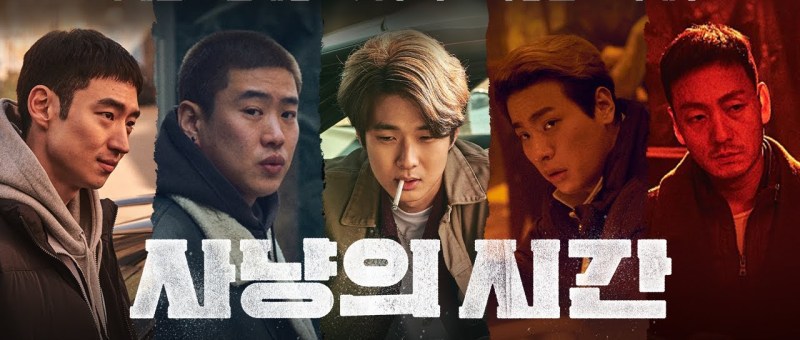
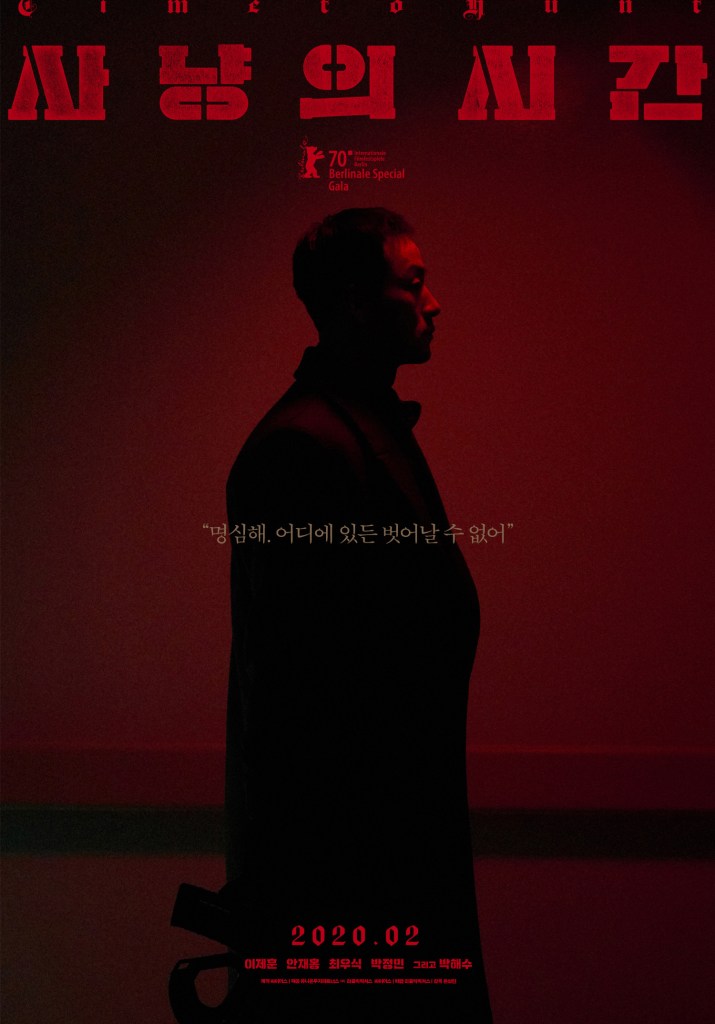
Time to Hunt (사냥의 시간, Yoon Sung-hyun, 2020)

A little over 20 years ago, the Korean economy faced an existential threat in the face of the Asian Financial Crisis during which it defaulted on its loans, ran out of ready cash, and was forced to accept concessions some regarded as humiliating not to mention politically regressive as part of the bailout package it negotiated with the IMF. Returning nine years after his indie debut Bleak Night, Yoon Sung-hyun brings these events very much to the fore with Time to Hunt (사냥의 시간, Sanyangui Sigan) while blending them with a painfully contemporary take on “Hell Joseon” pushed into a literal dystopia in which Korea has somehow become a lawless police state in which the Won is now worthless as the government once again defaults and is forced to negotiate with the IMF while workers protest in the streets against mass layoffs and forced “restructuring”. 

It’s into this world that Jun-seok (Lee Je-hoon) emerges after spending three years in prison for a robbery which was supposed to be his first and last job. Unfortunately, the loot he got sent away for stealing turns out to be worthless, the Won being so unreliable that most shops no longer accept it and insist on trading with the American Dollar though currency exchange is also illegal. Jun-seok finds this out from his two sheepish friends who’ve come to pick him up but didn’t quite have the heart to explain just how much has changed. Previously civilised Korea is now awash with drugs and guns, and crime, it seems, is the only viable economy. While inside, Jun-seok received an invitation to a better place, a paradise waiting for him in Taiwan where it’s always warm and the water is a beautifully clear shade of emerald. The only problem is he has to buy in, and without the loot he’s stuck. Which is why he talks his friends, plus a guy who owes him money, into helping him rob an underground casino operated by gangsters. 

The force which binds the men together is futility. On their way to collect Jun-seok, Ki-hoon (Choi Woo-shik) and Jang-ho (Ahn Jae-hong) joke about trying to sell vintage clothes abroad. “This isn’t the time for pride”, they remark, “we’re penniless”. Ki-hoon isn’t keen on Jun-seok’s scheme, reminding Jang-ho that after the last time they swore they’d never do anything like that again. Jang-ho, however,  has decided to go for it, partly out of loyalty to Jun-seok who took the fall for them and went to prison alone, and partly because, well, what else is there? While Jun-seok was inside, they lived quiet, honest lives but it’s got them nowhere and all that’s waiting for them is more of the same. “We’ll just be bottom dwellers,” he sighs, “when we pull this off we can live like human beings”. 

Yet even between bottom dwellers there are further class divisions. Jang-ho is an orphan with no family to fall back on, while Jun-seok’s mother has passed away leaving him only with a vague dream of an island paradise, a 1950s-style postcard from Hawaii sitting next to her photo on a makeshift altar. Jang-ho also has asthma which means he was exempted from military service, something that leaves him at a disadvantage in the world in which he now lives as the only member of the group without weapons training. Ki-hoon meanwhile has two loving parents, but that also means additional responsibilities in exchange for a permanent safety net. 

Ki-hoon’s family is also evidence of rapid social change. His parents own a modest Korean-style home complete with a well which is a source of amusement to city-raised Jang-ho, while the boys are about to be kicked out of their tiny flat for failing to pay the rent. Ki-hoon’s dad is also one of the protestors outside the factory, loudly calling for the government to “secure laborers’ right to live”. Perhaps to his generation, protest has possibility, to Ki-hoon it seems not only “pointless” but potentially dangerous even as his dad grins ear to ear while shouting out slogans in the hope of social change. 

The boys take a desperate chance because they know nothing other than desperation. “We don’t have anything to lose now” Jun-seok points out, but immediately contradicts himself in claiming that he never wants to lose the “dream” of his Taiwanese paradise. Dreams are however also something which plague him, visions of accidentally causing the deaths of those close to him or scenes of blood and ghosts followed by the melancholy image of a friend finally returning. The tragedy is that the heist comes off without a hitch, they do everything right, but they’ve made a fatally naive mistake. In trying to cover their tracks, they swipe the CCTV footage, little knowing that the hard drives also host extremely valuable information regarding the casino’s police-backed VIP money laundering operation which is why they find themselves “hunted” by a cruel and relentless gunman. In over their heads, the guys think this is about the money and maybe they can just give it back, never knowing that they’re sitting on something much more valuable or why it is they’re really being chased. 

“This isn’t the world you used to live,” Jun-seok is warned once again, “no matter where you are, you cannot escape”. Han (Park Hae-soo), the relentless hunter, becomes an omnipresent threat fused with the shadows as a representative of the societal corruption which cannot it seems be overcome. Shiny LCD screens pepper the landscape as a grim reminder of a possible future, the tech giant of the world now a lawless wasteland filled with derelict buildings and shuttered businesses, a corrupt police state in which the police is the biggest gang and the man owns the streets. Jun-seok dreams of an island paradise where everything is calm and airy, he owns a small shop repairing bicycles, and goes fishing on the beach. Such a wholesome future is more than he could ever expect to gain, but eventually he realises that you can’t escape the spectre of control by refusing to face it and the only way to be free in your own personal paradise is to exorcise your demons so you need not fear the darkness.  


Time to Hunt is currently available to stream worldwide via Netflix.

International trailer (English subtitles)
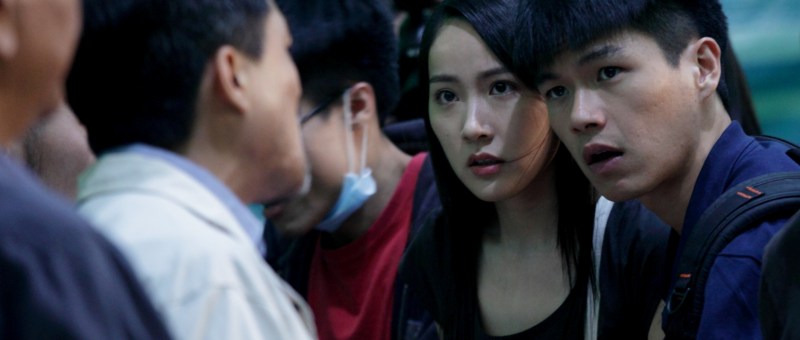
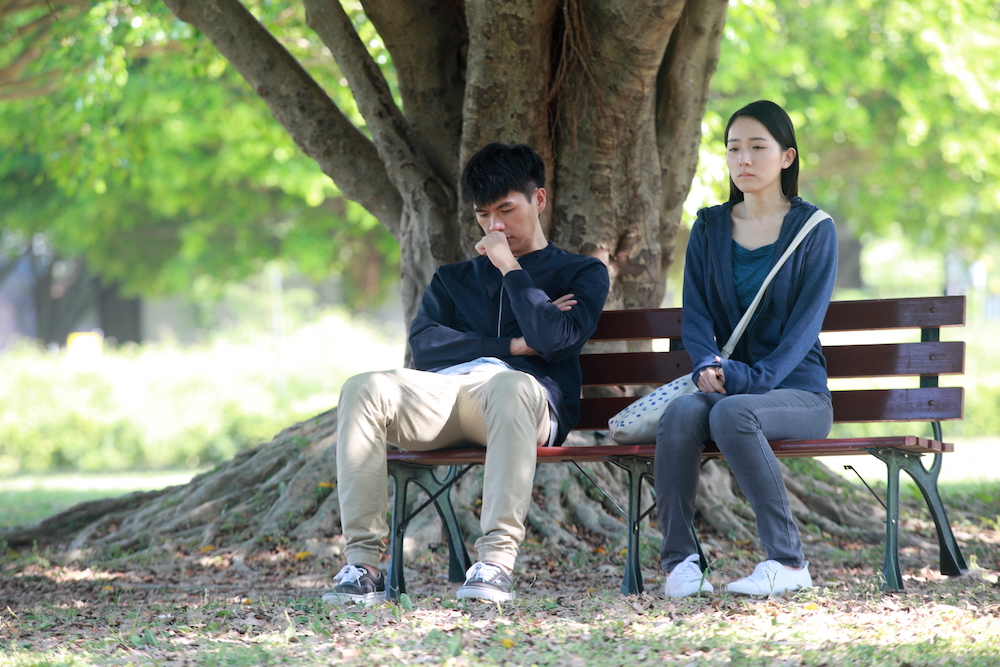
Apart (散後, Lester Chan Chit-man, 2020)

“There’s gotta be a price for chasing dreams” sighs the heroine of Lester Chan Chit-man’s Apart (散後) as she mulls over lost love and the fight for Hong Kong independence. A collection of youngsters find themselves swept up in the Umbrella Movement, but some are more committed to the cause than others and divided loyalties are enough to eventually pull even those who love each other apart. 

Yin (Will Or), his cousin Toh (Chan Lit-man), Yin’s girlfriend Maryanne (Sofiee Ng Hoi-Yan), and the bashful Shi (Yoyo Fung) are all earnest university students studying hard to build professional lives for themselves. Maryanne is strongly against Mainland interference and has become a keen participant in the Umbrella Movement protests, dragging Yin and his more committed cousin along for the ride. The conflict lies in the fact that Yin comes from a fairly wealthy family. His father, Hung (Lester Chan Chit-man), is the CEO of a successful coach company and strongly pro-China. Authoritarian in the extreme, he thinks that you have to respect order and that the future lies in the Mainland. Yin’s animosity towards him may be more youthful rebellion against his hypocrisy in his many affairs and subsequent remarriage to younger woman Yin doesn’t seem to care for, than it is true political conviction. Toh’s father, meanwhile, is originally sympathetic towards the protestors and against Mainland interference (if only to needle Hung) but changes his tune when the protests start affecting his business.

“It turns out some people just want to make a living” Yin admits trying to broker peace, but finds his loyalties continually strained as he tries to balance his desire for Maryanne with his personal ambition. As the protests intensify, Yin pulls back. He objects to his friend’s increasing conviction that there can be no victory without violence and fears the outcome of a battle fought on such tense fault lines. Maryanne, however, doubles down, devoting all her energies to the movement, unforgiving of Yin when he dares to step back on the night that his grandmother dies and secretly beginning to doubt him, riddled with romantic jealousy over his growing attraction to Shi. 

In some ways Maryanne represents for him Hong Kong, while Shi represents the Mainland. Yin is a man pulled between two poles and perhaps treating neither of them with the respect they really deserve. The years wear on and the Umbrella Movement winds down. Yin pursues his technological interests in the US, perhaps hoping to escape the HK/China divide through removing himself to another continent. The crisis does not however stop. Maryanne becomes a lawmaker, trying to further her aims in the political arena but encountering fierce resistance. She is lonely and tired, but refuses to give up. Yin finds himself torn, in love with Maryanne but considering settling down with Shi who, like him, is ready for “a settled life”, while Maryanne knows she cannot rest until Hong Kong is free. He won’t come to the protests with her because he fears damaging his prospects on the Mainland, and she won’t be welcome if she accompanies him there (not that she would want to). Politics drives them apart, and as Maryanne said there’s a price for following your dreams. 

Toh, a little younger, remains committed to the ideal but also tempered by practicality, changing the future through teaching the past while his Chinese-American step-cousin, Jessica (Jocelyn Choi), eventually returns to chronicle the battle for democracy from an international perspective. In his student days, someone asks Yin why it is they who have to fight this battle and he replies that they alone can afford this naivety. They can afford to be bold, passionate, reckless, unrelenting, and unafraid of the consequences because they are young. As they grow older, some of them grow away. Yin gives in to practicalities, leans towards his father’s point of view, and eventually does what he thinks is right in looking for peace and compromise, but his actions betray Maryanne’s revolution. Maryanne looks for political solutions, but finds them slow going nevertheless continuing the fight. Nothing may change, but we’re here to show them we won’t mindlessly obey, Shi offers of the Umbrella Movement, filling the streets with the colour of resistance in tiny paper umbrellas in a vibrant yellow.


Apart was screened as part of this year’s Osaka Asian Film Festival.

Original trailer (English subtitles)
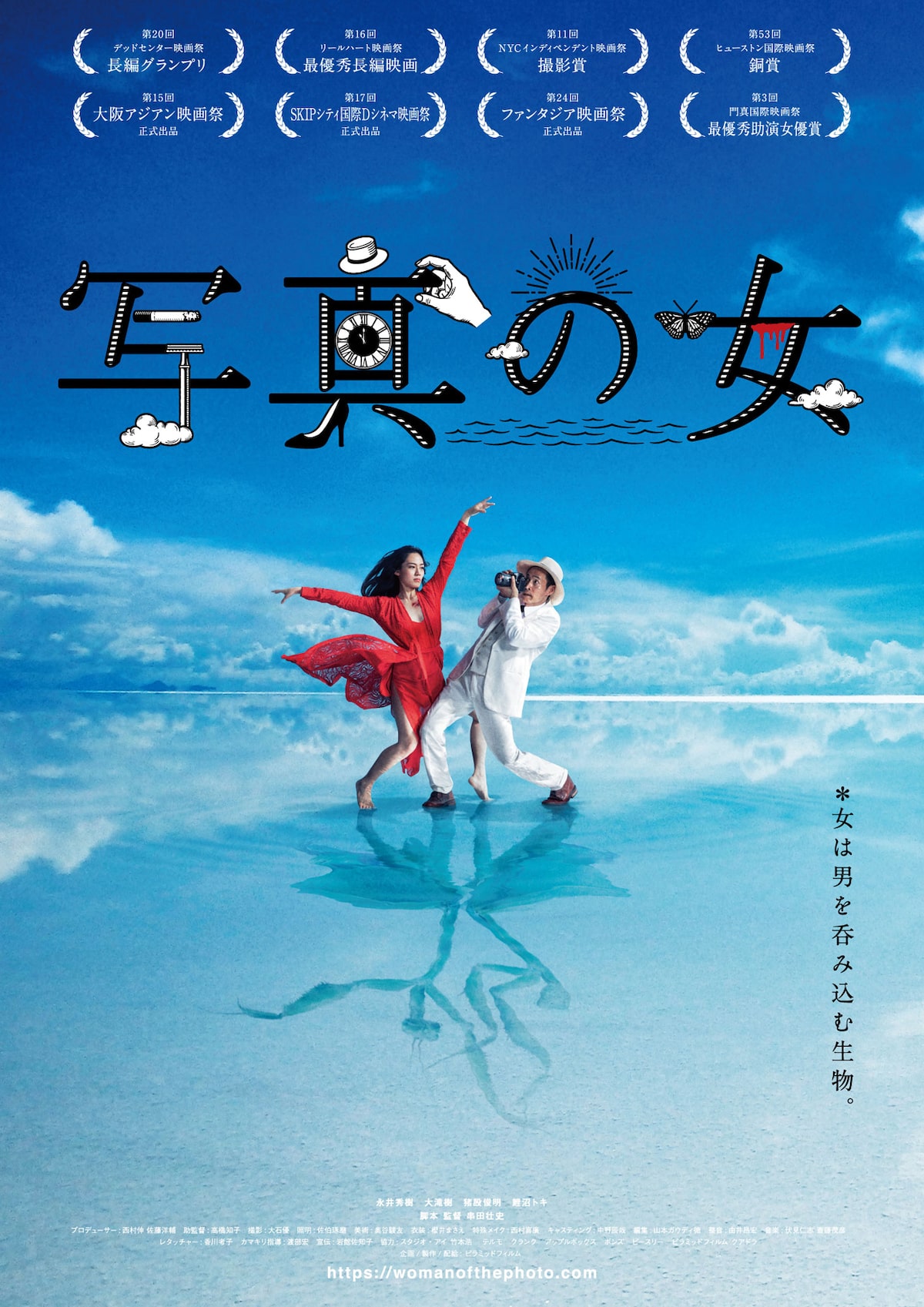
Woman of the Photographs (写真の女, Takeshi Kushida, 2020)

(C)PYRAMID FILM

“We can only love ourselves through others’ eyes” according to an increasingly obsessed young woman desperately trying to “fix” her image of herself through retouching her photo. An inverted take on Woman of the Dunes, Woman of the Photographs (写真の女, Shashin no Onna) sees the world of a bug-obsessed photographer with a talent for “improving” on reality disturbed by the arrival of a mysterious dancer who falls from a tree in the forest into his previously ordered existence.  

Kai (Hideki Nagai), a middle-aged man dressed in an old fashioned white suit, operates a small photo studio taking official photos for things like funerals and omiai arranged marriages. As we later find out from his only regular human contact, the funeral director from across the road (Toshiaki Inomata), Kai’s mother died in childbirth and his father opened this shop to support his son. Kai has taken over but has an intense fear of women and lives alone save for his pet praying mantis with whom he regularly eats his preferred dinner of microwave pizza. 

It’s on a regular bug hunting trip that Kai is struck by the beautiful figure of Kyoko (Itsuki Otaki) tumbling out of a nearby tree and causing herself manageable if painful injuries including a nasty gash along her collarbone. Not wanting to go to a hospital, Kyoko gets Kai to take her to a pharmacy and patches herself up, later accompanying him home where he takes some photos of her to post on her Instagram, retouching them to get rid of the traces of wounds. Despite Kai’s silence, she manages to convince him to have dinner with her in a nearby restaurant and later to allow her to stay the night, after which she becomes a more permanent fixture in his life. 

A former dancer now Instagram star, Kyoko originally thinks nothing of getting Kai to clean up her photos to rid them of unsightliness, but is mildly disturbed to watch him do it. In a reverse Dorian Gray effect, Kai must scar the image to repair it, scrubbing away traces of unwanted “reality” in an act which seems to contradict the true nature of photography. “A good lie can make people happy” according to the funeral director who regularly uses Kai’s services to create suitably solemn photos of the suddenly deceased, but Kyoko isn’t so sure. Ever since she asked Kai to soften her reality, her followers have begun to desert her and she’s losing her lucrative sponsorship deals. The apologetic lady from the agency points out that she’s diverging from the “image” her fans expect from her and if she wants to keep them she’ll have to be the Kyoko they want her to be. 

Kyoko doesn’t quite like that, she’d like to be more authentic. Hisako (Toki Koinuma), meanwhile, an unexpected regular to the studio, is of the opposite opinion. In her view, retouching the photo allows her to be more herself, reflect her true essence through manipulating her image. Asking if she hasn’t got things the wrong way round, Kyoko wonders if the men she’s sending them to will be confused or disappointed that the photo and the reality don’t match but Hisako counters her that a man falling in love with her idealised self would only bring her closer to it. The self reflected in the eyes of others is the true self and only through others’ eyes can you find self love, according to Hisakao. Ironically, Kyoko has been looking for something similar through her Instagram success, but begins to resent the extent to which it is changing her, encouraging her to hide the parts of herself others might find ugly in order to gain acceptance. 

Deciding not to retouch the photos, however, has the opposite effect. Her fans love her again, bowled over by her authenticity, but at the same time perhaps she’s engaging in a strange kind of self-exploitation. Her wounds will, after all heal. Could she be tempted into a life of continued self-harm just for likes? Kyoko begins to lose her sense of self, as if she doesn’t quite exist online or off, caught between the “real” and the “ideal”.

Kai, meanwhile, remains silent but also captivated by the conflicted Kyoko. His life has been one of isolation, afraid of female touch and contented only among his insects. Yet like Kyoko he’s learning that scars can be beautiful because wounds are a sign of life. Waking up to connection and desire, he learns a different lesson from the lifecycle of the praying mantis realising that the male’s greatest pleasure lies in surrendering its body so the female can continue in life and creation. He no longer fears being devoured, but honours the true connection of mutual exchange. Inverting the conclusions of Woman of the Dunes, Kai finds himself liberated not by a sense of simplicity in life but by its complication, accepting all the richness it has to offer in joy and pain, engaging in his own strange mating dance as a man with a camera capturing his subject in all of her essential beauty. 


Woman of the Photographs was screened as part of this year’s Osaka Asian Film Festival.

Original trailer (English subtitles)
Your Name Engraved Herein (刻在你心底的名字, Liu Kuang-hui, 2020)

Taiwan is often thought to be the most socially liberal of Asian nations and was the first to legalise same sex marriage in 2019, but a little over 30 years ago things were very different. Many thought that the lifting of martial law which had been in place for 38 years would usher in a new era of freedom only to discover that society is slow to change and despite a gradual opening up the old prejudices still remain. So it is for A-han, the hero of Liu Kuang-hui’s Your Name Engraved Herein (刻在你心底的名字, Kè Zài nǐ Xīndǐ de Míngzi) who finds himself struggling to accept his sexuality as young man coming of age in changing times. 

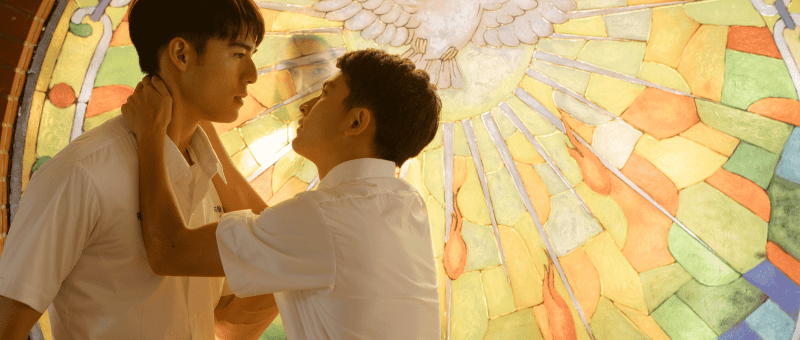
In 1987, as martial law is repealed, A-han (Edward Chen) is a student at a Catholic boys boarding school run along military lines. Many things are changing, but the school is much the same, as the principal Dirty Head (Ta Su) makes plain in conducting an impromptu inspection of the boys’ bunks looking for anything untoward. Nevertheless, A-Han and his friends sneak out at night to play in a band and hang out with girls. A-Han’s reticence is put down to shyness, but the reason he’s not much interested is that he’s taken a liking to a rebellious student, Birdy (Wang Shih-shien), only he’s not quite sure how to interpret his feelings or how to come to terms with them. 

This is in part because the school itself is extremely homophobic with the boys actively policing suspected homosexuality as a means of homosocial bonding. When the gang are caught sneaking out, band leader Horn (Barry Qu) targets an effeminate boy he accuses of dobbing them in, beating him up in the bathroom little knowing that A-han is hiding in a nearby stall after bringing ointment to Birdy who has also been caned. A-han emerges from the stalls after Horn hears a noise and is encouraged to join in the fun, handed a baseball bat and asked to participate in a literal act of queer bashing to prove his manhood. To his shame, A-Han prepares to comply, only to be saved by Birdy who breaks cover to rescue the other boy while casting scornful looks at Horn and the gang but most especially at the hypocritical A-Han. 

Taking his nickname from the Alan Parker film, Birdy may indeed be as “wild” as his namesake, but his rebelliousness has its limits and perhaps masks an internalised sense of shame. Nevertheless, he connects with the conflicted A-Han and the boys generate an intense friendship that of course has tension at its centre. A trip to Taipei to mourn the death of the president brings them closer, but also makes them feel ashamed as they witness a protester holding up a sign to the effect that homosexuality is not a disease and marriage is a human right being carted off by plain clothes police while the uniformed kind lurk in the shadows behind. Martial law may be over, but not everyone is free. As A-Han grows bolder, Birdy finds himself travelling in the opposite direction, dating a rebellious female student, Banban (Mimi Shao), as a kind of beard in the frustrated hope that he may “save” A-Han from his homosexuality by denying their feelings before they can fully develop. 

The central irony is that because of the changes to the educational system the high school is now required to take female pupils and the hardline Catholic, militarist teachers are paranoid about “misbehaviour”, even putting up a chainlink fence to divide the girls from the boys. Romance is forbidden even for heterosexual couples, and homosexuality unthinkable. A-Han finds himself trying to talk to his priest, Father Oliver (Fabio Grangeon), who would like to be more sympathetic but cannot offer him much by the way of advice. Later we discover that Father Oliver left his native Montreal to escape religious oppression and joined the priesthood to mask his own homosexuality, finally leaving the Church to live a more authentic life only many years later when such things were more acceptable. 30 years on A-han travels to a much changed Montreal where he sees lesbians dancing happily in bars and men kissing in the street with no one batting much of an eyelid. He reflects on all that’s changed and all the wasted time he and others like him were forced to endure hiding who they were, living in a world without love. A melancholy lament for the lost opportunities of a repressive society, Your Name Engraved Herein ends on a note of hope in which first love can blossom once again in a less restrictive world where all are free to love without shame.


Your Name Engraved Herein made its World Premiere as part of this year’s Osaka Asian Film Festival.

Original Trailers (English subtitles)

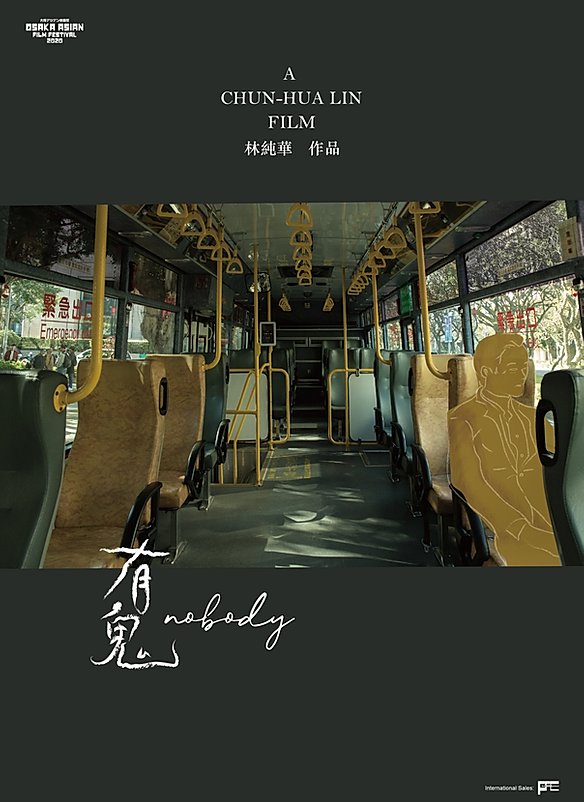
Nobody (有鬼, Lin Chun-hua, 2020)

“Everyone has secrets that they don’t want others to know” according to the hero of Lin Chun-hua’s Nobody (有鬼, Yǒu Guǐ). He is indeed quite correct, everyone is in one sense or another living a lie, pretending to be something they’re not and often for quite complicated reasons which make them unhappy but convince them that their unhappiness is a kind of victory. Yet, there is no true connection without vulnerability and the sharing of a secret can be the most profound of intimacies, even if the connection itself is, perhaps wilfully, misunderstood by others. 

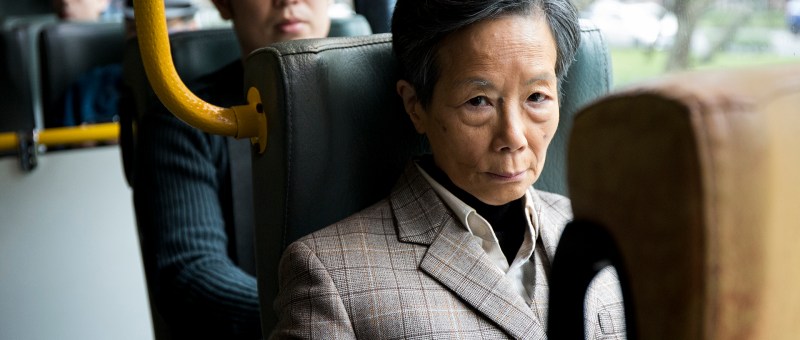
Credited only as “Weirdo” (Jian fu-sang), an old man lives in an illegally occupied attic space on top of an old-fashioned apartment building that he now finds difficult navigate due to his increasing mobility issues. For unclear reasons, he spends his days riding the bus to the hospital but making sure to spit somewhere along the journey, a habit which has made him the bane of bus drivers across the city. Thoroughly fed up, one particular driver decides to throw Weirdo off his bus by force despite his old age and relative frailty, causing him to sustain an injury to his head.

When he gets back to his apartment, Weirdo finds an unexpected intruder – teenager Zhenzhen (Wu Ya-ruo) who has snuck in in order to spy on the apartment opposite where her father meets his mistress. Zhenzhen is from a wealthy though conservative home where her mother, Yuping (Huang Jie-fe), is the perfect housewife but makes a point of prioritising her husband and son, leaving Zhenzhen feeling innately inferior simply for being female. Determined to be allowed to use the apartment to spy on her dad, Zhenzhen starts following Weirdo around, mostly trying to bully him into submission but Weirdo treats her the way he treats everyone else, simply ignoring her as if she didn’t exist. 

The original Chinese title means something more like “haunted” or more literally “there are ghosts” and in some senses it’s tempting to think of Weirdo as a ghost himself as he deliberately attempts to walk through the world as if he existed in a different plane. He is however haunted by lost love and a terrible sense of guilt that keeps him alone in his attic dressing the same way he dressed forty years previously though his hands are now too weak to be able to tie his tie. And then there are those secrets, things he feels obliged hide in the most literal of ways because others simply wouldn’t understand. 

What Zhenzhen discovers is that her family is full of secrets, but exposing them might cause more harm than good. She videos her father with another woman intending to expose him to her mother, but Weirdo tries to warn her that she’s the one that will probably end up hurt if she tries to use other people’s secrets against them. On the surface her family is a vision of upper-middleclass respectability, but her father’s having an affair, her mother is desperately unhappy, and her golden boy brother has secrets of his own. Challenged, Zhenzhen’s father resents her intrusion and points out that he provides for them as if his family life is just for show while he satisfies his desires outside of it, shutting down his wife’s admiration for her sister’s career as a pop idol manager by reminding her that she has a husband, home, and children while her sister has “nothing” because she is a single career woman and in his view an unsuccessful one. Yuping meanwhile is a taut, repressed, and unfulfilled middle-aged housewife actively lashing out at her daughter while sweetly supporting her husband and son, but tries to exorcise her own desires by teaching piano on the side and finding unexpected pleasure in flirtatious banter with one of her sister’s handsome idol stars. 

Nobody is exactly being honest, but it’s the way we live our lives because like it or not secrets are the lifeblood of civility but also an impermeable barrier to connection. Unable to bond with her prim and proper mother, Zhenzhen finds support from Weirdo who begins to open up despite knowing that Zhenzhen’s superficial niceness was only a ploy to get into the apartment, perhaps connecting with her sense of loneliness and betrayal as a young woman discovering that to one extent or another everyone lives a lie. Yet sharing the truth if only with one person can be its own kind of salvation, allowing youth and age to save each other from a world riddled with hypocrisy. 


Nobody made its World Premiere as part of this year’s Osaka Asian Film Festival.

Original trailer (English / Traditional Chinese subtitles)
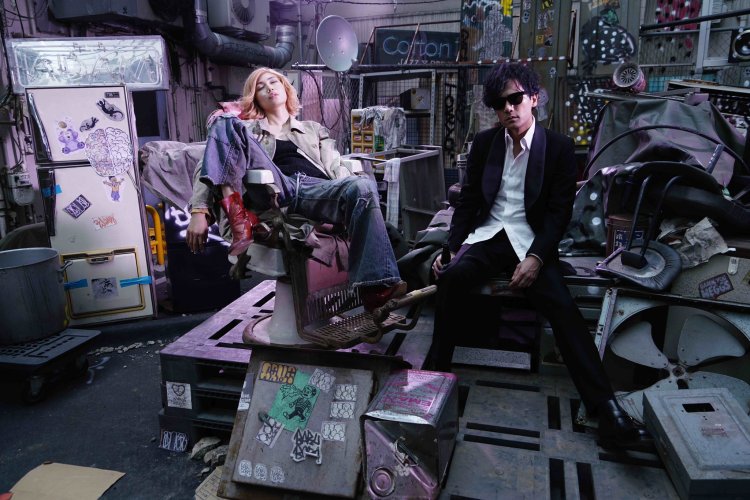
Good-bye (グッドバイ, Aya Miyazaki, 2020)
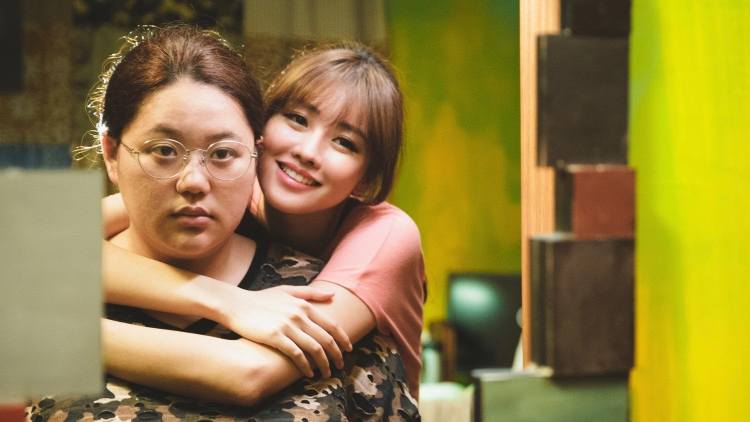
“The things you learn as a child stay with you” admits a melancholy nursery teacher, lamenting that perhaps her life would have turned out differently if only her parents hadn’t been so easy going. Most people probably wind up wondering something similar, who they might have been if their parents had or hadn’t made the choices that they made on their behalf, but sooner or later you have to leave childhood behind and take responsibility for yourself. 

That’s the part that the heroine of Aya Miyazaki’s Good-bye (グッドバイ), 20-something Sakura (Mayuko Fukuda), is currently having trouble with, struggling to find a way forward largely because in one sense everything comes too easy for her and life is no kind of challenge. Privately, however, she’s caught in an adolescent dilemma pining for the father who, it seems, has been largely absent from her life since leaving the family when she was small. 

The crunch comes when Sakura abruptly quits yet another boring office job just because it didn’t light her fire. Her mystified friend who can’t really believe someone would just quit their job on a whim in Japan’s competitive employment environment just because it was dull (let alone make a habit of it), suggests she fill in at a daycare centre that another friend has just vacated leaving them in the lurch and with a temporary contract available. Sakura is unconvinced seeing as she has no childcare qualifications, but is persuaded on hearing the facility is “unlicensed” and therefore not fussy. She doesn’t exactly take to it right away, but beginning to bond with the children reminds her of her more innocent self, especially once she encounters the father of one little girl, Ai, who is often the last to get picked up. 

Sakura is taken with Mr. Shindo (Kohei Ikeue) because he looks a little like her dad and also smells of the same brand of cherry-scented cigars that he used to smoke. It also doesn’t help that his family situation closely resembles a mildly traumatic incident from her own childhood in that Ai’s mum seems to be temporarily absent from the family home for unclear reasons. Sakura finds herself playing mother, brushing Ai’s hair and tying it up in pigtails the way her father couldn’t quite master on his own. Running into the pair in the street, she even finds herself cooking dinner for them, giving Ai a few lessons in peeling carrots, while accidentally stepping into the space vacated by another woman and perhaps crossing a line with the extremely awkward Mr. Shindo. 

The encounter does, however, prompt her into a long delayed conversation with her sympathetic mother (Asako Kobayashi) who offers no explanation for why she did what she did, or sees any need to apologise, but is perhaps touched by some of her words which convince her that her daughter needs a final push to help find her place in the world. Prompted by the other teacher at the nursery, Sakura asks her mother why she sent her to all those after school clubs etc, only to be told that she did it because she wanted Sakura to find her passion but though she was good at everything, Sakura always quit after only a few weeks. Her mother wonders if that’s because when everything is easy for you you have no incentive to stick with it and never get the opportunity to become invested. 

That has perhaps been Sakura’s problem, she says goodbye too early before there’s any possibility of getting attached. Bonding with the kids reminds her of the little girl she once was, processing the sudden absence of her mother and the possibility of her familiar world ending. Her mother eventually returned, but perhaps gave her an incomplete sense of security in the feeling that she would never leave her or the house, while her father is of the opinion that the family photo was something best left behind in the family home which was no longer his. In learning to say “good-bye” to Ai, Sakura learns to bid farewell to the little girl she once was, insecure and afraid of rejection. As her mum tries to hint, it’s time for her to find a place of her own, no longer so afraid to stick around past the part where everything seems too easy.


Good-bye screened as part of this year’s Osaka Asian Film Festival.

CinemAsia Announces Complete Programme for 2020

CinemAsia returns to Amsterdam from 4th to 8th March for its 13th edition bringing with it another fantastic selection of recent East Asian cinema. This year’s festival opens with the European premiere of Japanese indie Mrs Noisy, and closes with heartwarming Taiwanese drama Heavy Craving, both of which are directed by female filmmakers.

Bhutan

China

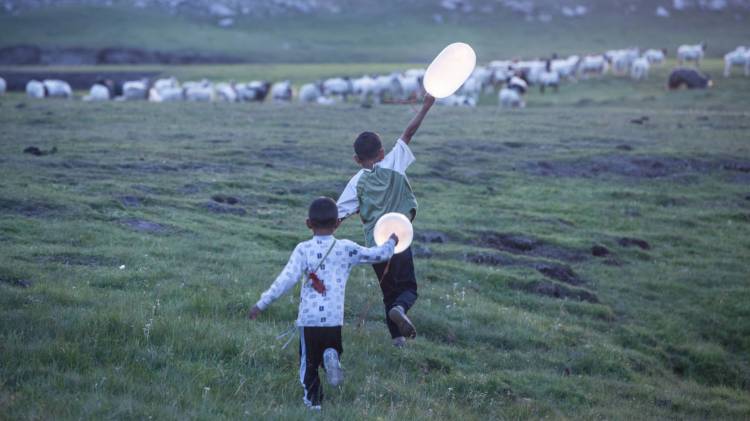
  • Balloon – Tibetan-language drama from Pema Tseden (Jinpa) following a sheep farming family facing a crisis thanks to the recently instituted One Child Policy. Review.
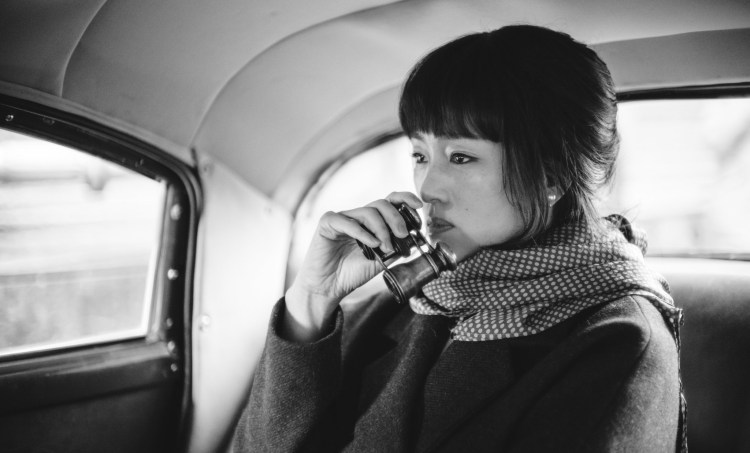
  • Saturday Fiction – Gong Li stars as an actress returning to Shanghai after a long absence to star in a play directed by an old flame but may have ulterior motives in the latest from Lou Ye.
  • The River in Me – documentary exploring traditional folksong in modern China
  • The Wild Goose Lake – Black Coal, Thin Ice’s Diao Yinan returns with another neo noir in which a smalltime mob boss tries to survive after he kills a policeman by mistake.

Hong Kong

  • Fagara – a young woman discovers the existence of two half-sisters, one from Taiwan and the other mainland China, following the death of her estranged father. Review.
  • Little Q – touching drama following the life of a guide dog who is assigned to a grumpy pastry chef. Review.
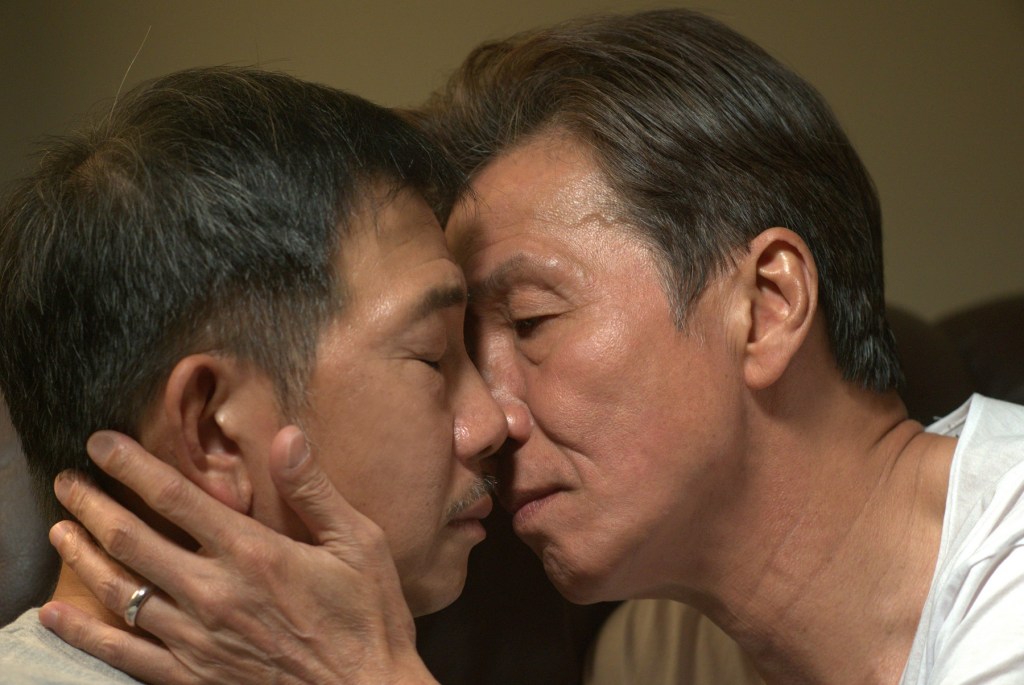
  • Suk Suk – voted the best HK film of 2019 by the Hong Kong Film Critics Society, Suk Suk follows two older men who meet by chance and fall in love after decades of keeping their true identities secret.

Indonesia

  • A Man Called Ahok – biopic of controversial political figure Basuki Tjahaja Purnama.
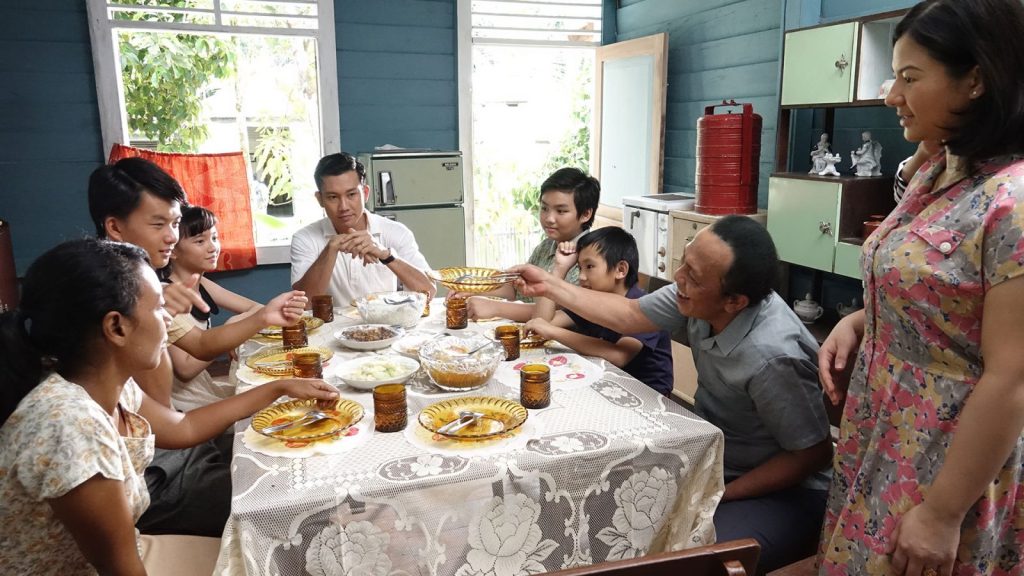
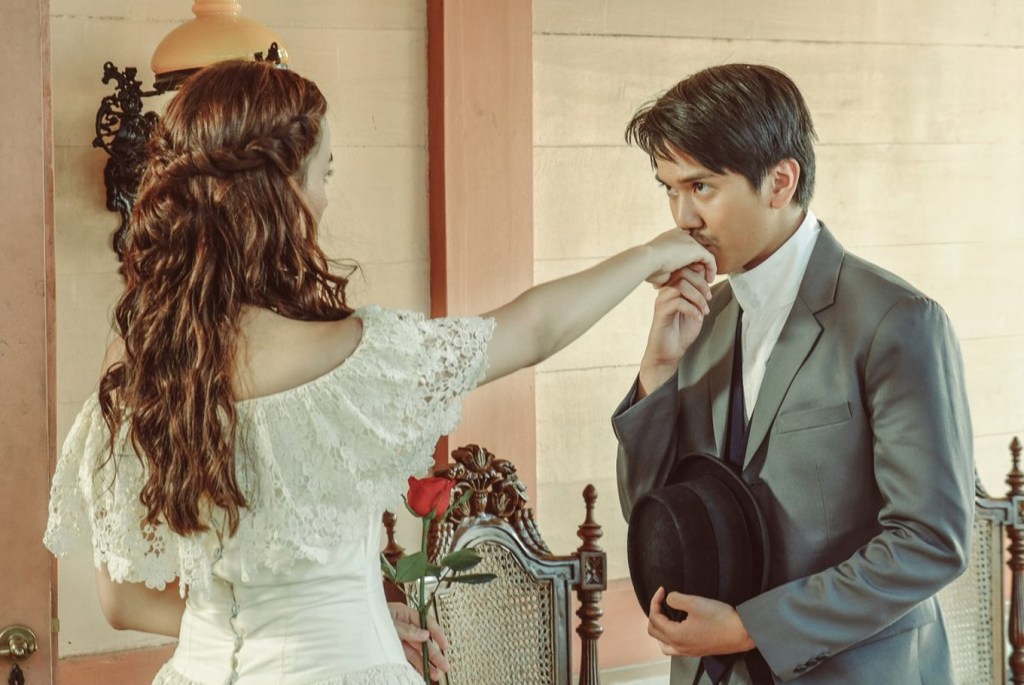
  • Bumi Manusia – period romance adapted from the novel by Pramoedya Ananta Toer in which a member of the Javanese royal family falls for a girl who is half-Dutch.
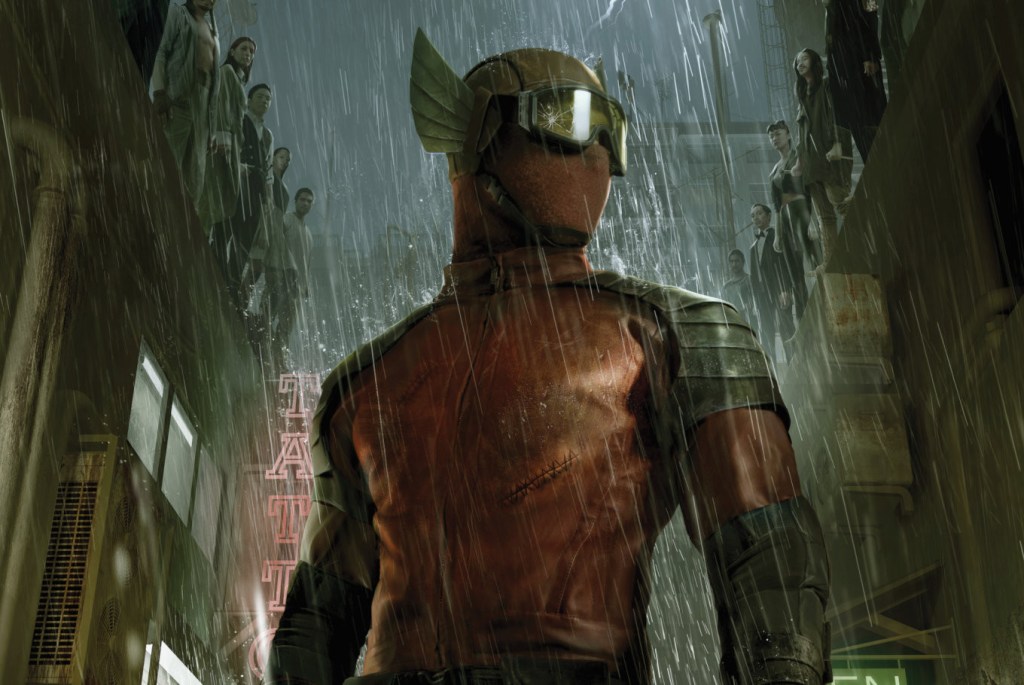
  • Gundala – superhero action from Joko Anwar
  • Homecoming – a couple get into an accident on the way to spend Eid with family bringing them into contact with the mysterious Santi.

Japan

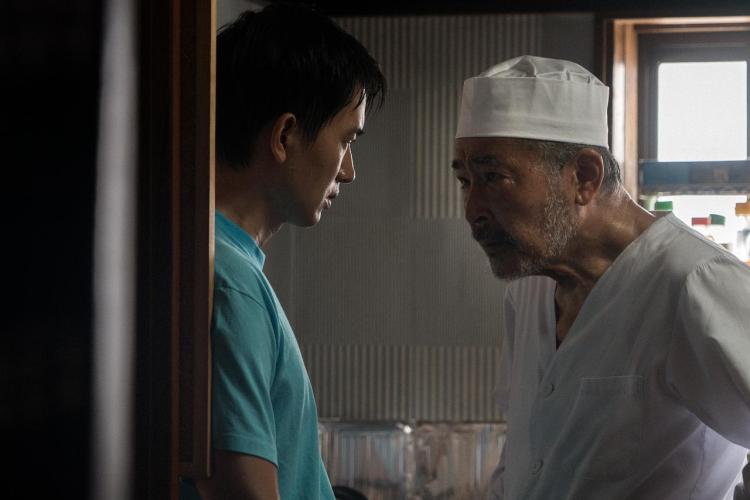
  • Complicity – an undocumented man from China embraces his cover identity and takes a job in a soba restaurant but struggles to maintain his sense of self in Chikaura’s sensitive drama. Review.
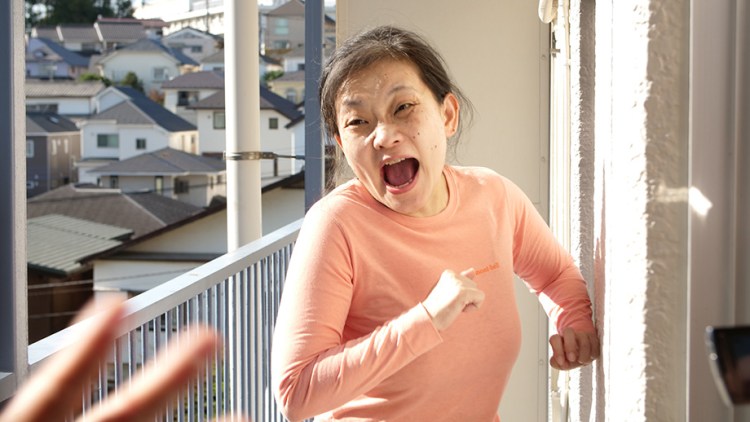
  • Mrs Noisy – a writer struggling to come up with new material after winning a major award is distracted by a vendetta with her noisy neighbour.
  • Tezuka’s Barbara – Macoto Tezka adapts the manga by his famous father in which a novelist (Goro Inagaki) becomes obsessed with a woman he picks up off the street (Fumi Nikaido).

Korea

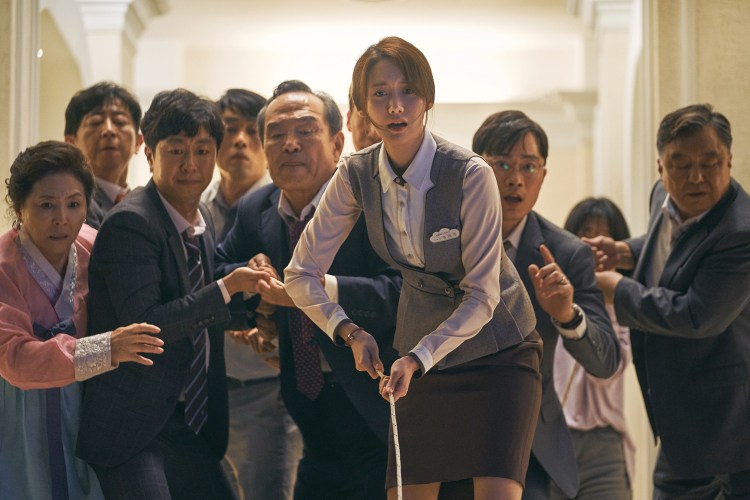
  • Exit – an unemployed rock climbing enthusiast finds himself in his element when his family is trapped by a mysterious white mist in a high rise restaurant he booked for his mother’s 70th birthday only because an old flame works there. Review.
  • Moonlit Winter – drama in which a teenage girl finds a love letter addressed to her recently divorced mother and determines to identify the sender, little knowing the secret her mother has been keeping.
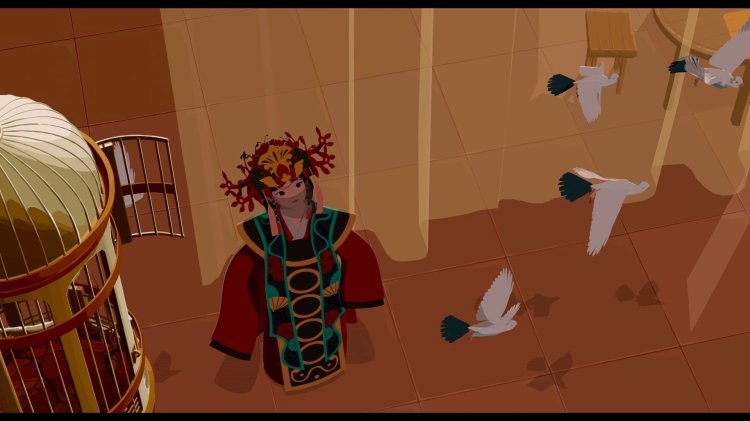
  • Princess Aya – a princess with the power to turn into an animal marries an enemy prince to broker peace but finds herself beset by new threats in this charming animation.
  • Yellow Ribbon – Ju Hyun-sook’s documentary focussing on the aftermath of the Sewol ferry disaster.

Malaysia

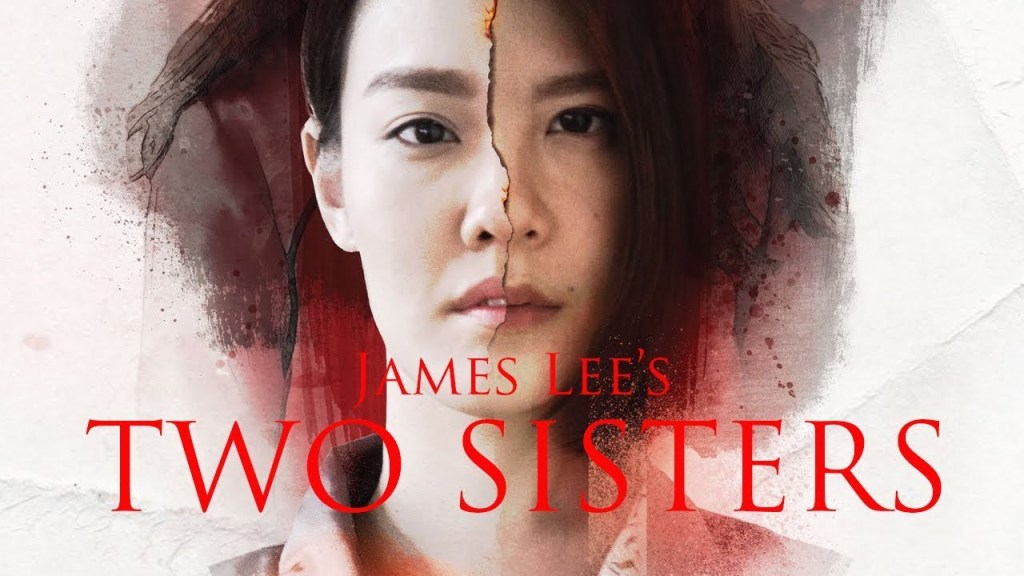
  • Two Sisters – horror in which a young woman is discharged from a psychiatric hospital into the care of her novelist sister only to discover a new threat lurking in the family home.

Philippines

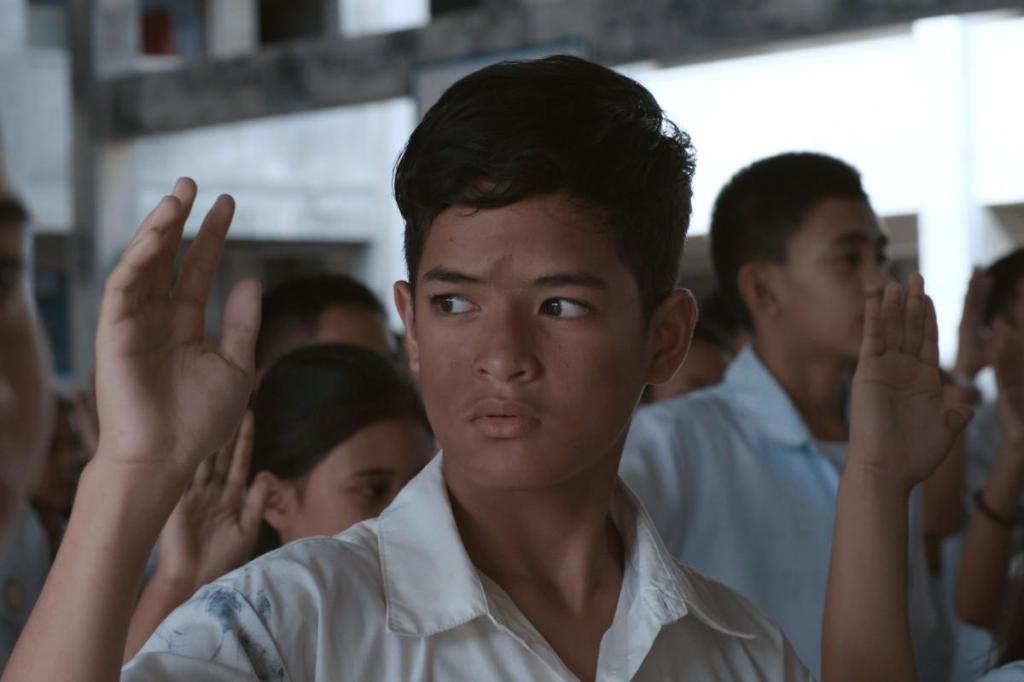
  • John Denver Trending – youth drama based on a true story in which a farm boy’s life is turned upside down when a video of him beating up a classmate goes viral.
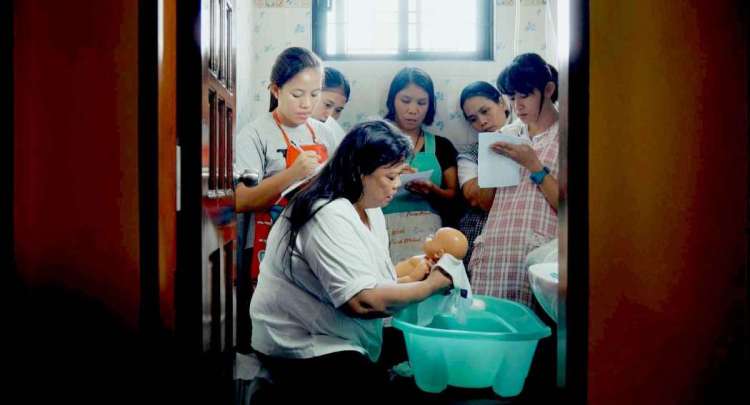
  • Overseas – documentary following those training to become overseas domestic helpers.
  • Verdict – a woman suffering domestic abuse tries to get help after her drunken husband hurts their child but struggles to find justice in a patriarchal society.

Taiwan

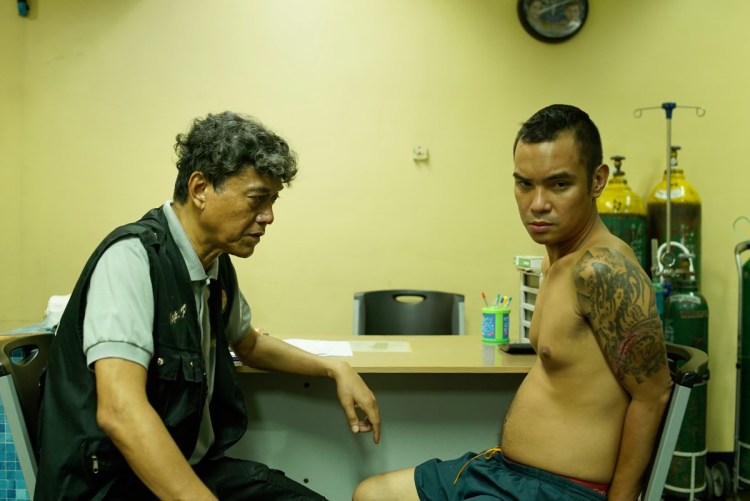
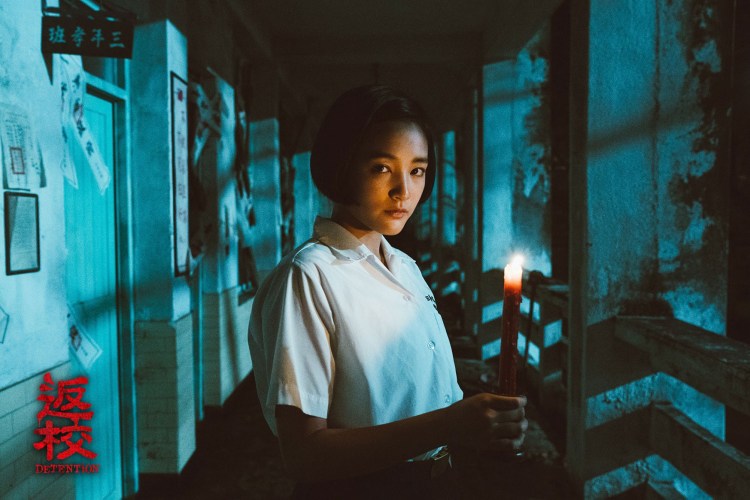
  • Detention – Lonely high schooler Fang falls for guidance councillor Zhang who alone seems to understand her. She joins his secret study group to read banned books, but Zhang soon “disappears” while only Fang and another student seem to remember him in this gothic horror set during Taiwan’s repressive martial law period.
  • Heavy Craving – a lunch lady hoping to lose weight strikes up unexpected friendships with a deliveryman and a cross-dressing student. Review.

CinemAsia takes place in Amsterdam from 4th to 8th March, 2020. Full details for all the films can be found on the official website where tickets are already on sale, and you can keep up with all the latest news by following the festival on Facebook, Twitter, Instagram, and YouTube.

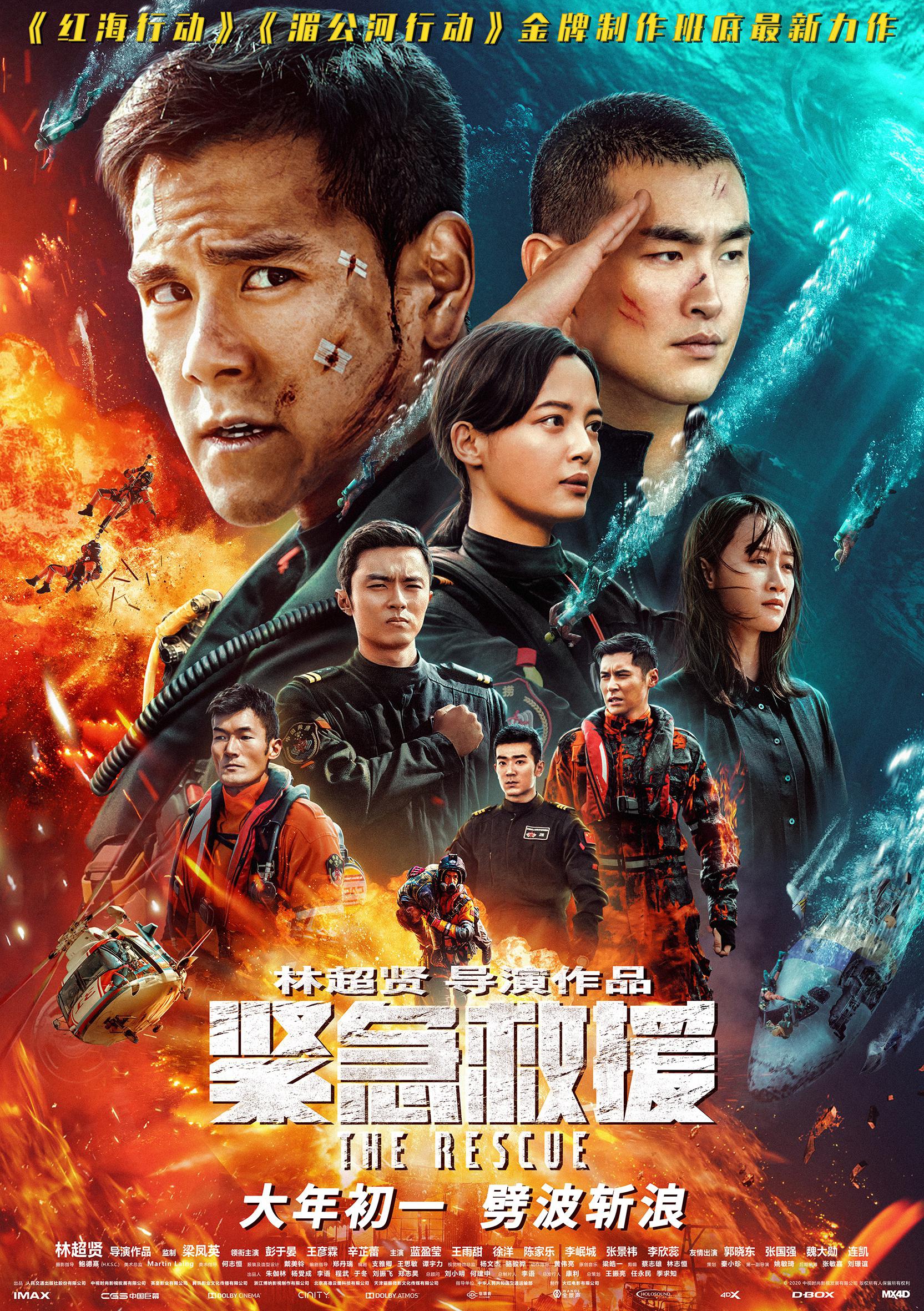
The Rescue (紧急救援, Dante Lam, 2020)

The rescue poster 3

It’s tempting to see Dante Lam’s latest foray into big budget mainland action as a continuation of his previous hits Operation Mekong and Operation Red Sea which paid tribute to the police and navy respectively, but it is also the latest in a series of films featuring China’s finest bravely battling against the odds to save the day. Like Tony Chan’s The Bravest which celebrated the selfless heroism of China’s firemen as they risked their lives to stop a potentially catastrophic fire in an oil refinery, The Rescue (紧急救援, Jǐn Jyuán) pays tribute to another undersung arm of the emergency services – China’s Coast Guard.

Our hero, Captain Gao Qian (Eddie Peng Yu-yen) of China Rescue And Salvage, is a devil-may-care hero who throws himself into danger without a second thought where lives are at stake. The motto of China Rescue And Salvage is “we risk our lives to give others hope”, but some feel that Gao Qian is too reckless with his and fear that he’s forgotten that you can’t save anyone if you get yourself killed playing at heroics. That’s something that’s temporarily brought home to him when the pilot of his helicopter is badly injured during a rescue on an oil rig engulfed by flames, leaving the inexperienced co-pilot to fill-in on his behalf. Gao Qian works his magic in the nick of time, but both of the pilots quit the team immediately afterwards, the pilot struck by the proximity of death and the co-pilot by his sense of inadequacy in feeling as if he failed to live up to the job.

Luckily the team soon get a new pilot – a lady, Yuling (Xin Zhilei), who clashes with Gao Qian in true disaster movie fashion in her desire for rational action and the kind of heroics that are strictly by the book. Against the odds, however, they make a good team, eventually bonding in mutual admiration for their complementary skills. Meanwhile, Gao Qian is also dealing with some home drama in that he’s just brought his young son Congcong (Zhang Jingyi), who had been staying with his grandmother, to live with him. Congcong seems to be suffering with some kind of illness, but is otherwise cheerful enough and hoping that his dad will get him a new mum, like, for example, the beautiful Yuling.

The death of his wife, his son’s illness, and the loss of colleagues he was forced to leave behind, haunt Gao Qian like a cosmic joke, as if he’s being “punished” for snatching so many other lives from the jaws of death. No matter how hard he tries, there are lives which cannot be saved – no helicopter can rescue you from terminal illness or debilitating disease. Nevertheless, he continues to do his best no matter the personal costs. “Everyone has their own battleground, mine is rescue” he tells a superior with determination after his priorities are questioned. In training, the coach reminds the rescuers that their enemy is nature. They push their bodies as far as they can go, willingly risking all to let others know that someone is always looking out for them and will come in their time of need. Faced with certain death, Gao Qian enters an eerily beautiful existential space born of liminality in which he is perhaps able to feel everything that is to be alive while his son, fighting his own battle, does something much the same.

The strangely poetic quality of life in extremis is directly contrasted with the hokey comedy of Gao Qian’s home life and the brotherly comradeship of the base which are both much more of the typical “New Year Movie” mould. Lam fares much better than Chan in heading off the obvious melodrama, though he too resorts to the obvious foreshadowing of a young man daring to get wedding photos taken while planning to risk his life for the greater good, while the quirky production design and wholesome warmth of Gao Qian’s home life as he attempts to make the world safe for his son offer a much needed escape from the anxiety of his disaster-fuelled existence. Unlike that of Red Sea, the world of The Rescue is a more open and hopeful one in which Gao Qian does his best to save everyone who needs saving no matter their nationality, feted far and wide as a hero even if he awkwardly embodies a magnanimous China as a world protector as he does so. Nevertheless, Lam once again manages to elevate his material beyond its propagandist aims, edging towards a more ambivalent contemplation of selfless nobility and the costs of courageous endurance.


In UK cinemas from 25th January courtesy of CMC Pictures. Unfortunately, the release of The Rescue has been postponed because of the Coronavirus outbreak in China. We will update you as soon as we hear of new release date!

Original trailer (English subtitles)