It’s a Summer Film! (サマーフィルムにのって, Soshi Matsumoto, 2020)

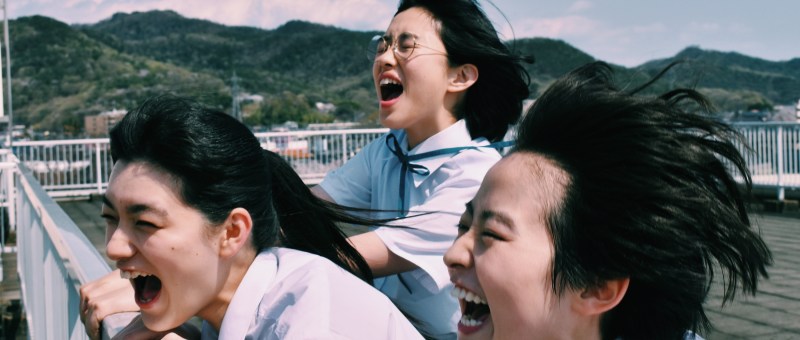
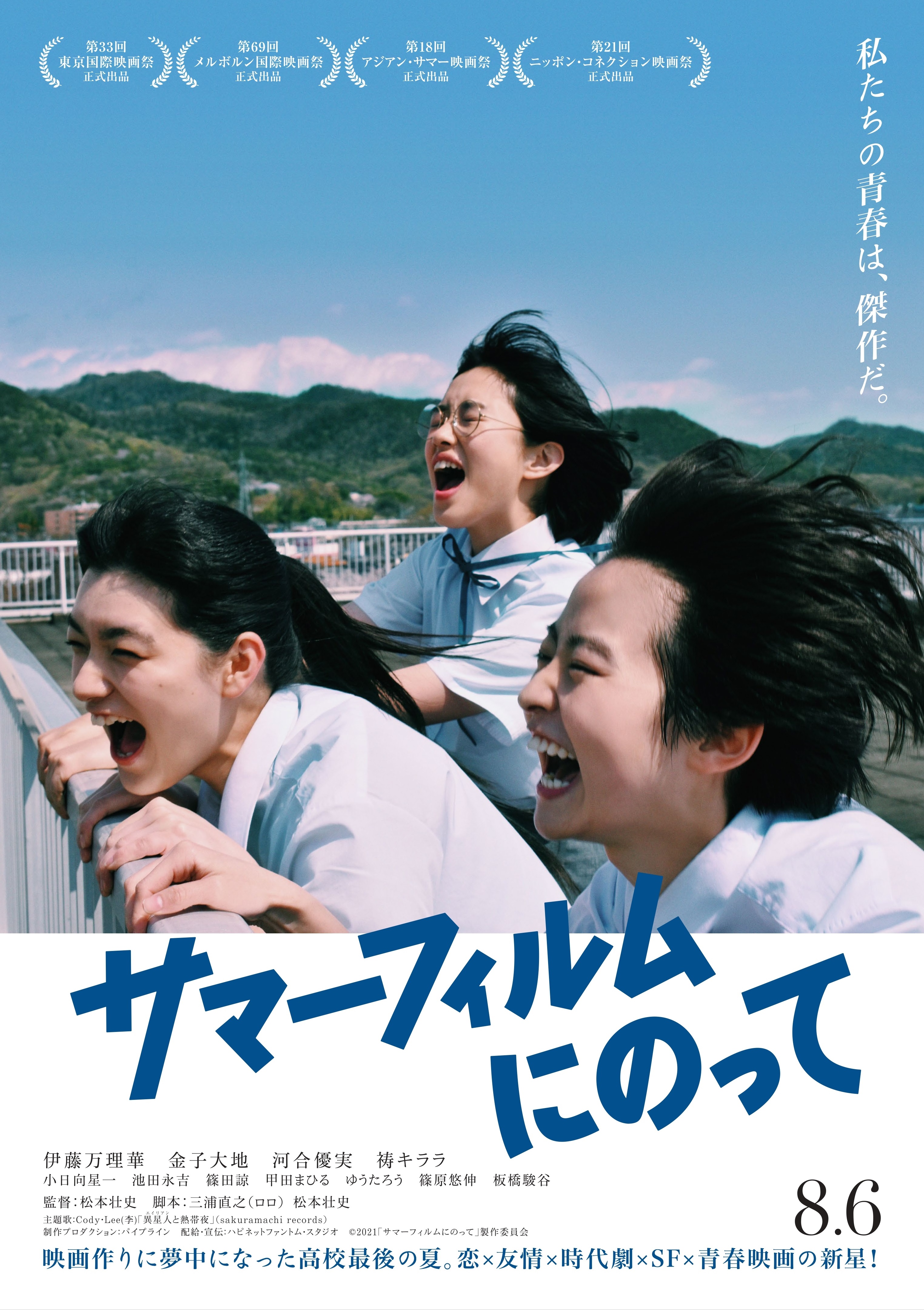
“Movies connect the present with the past through the big screen” according to the jidaigeki-obsessed heroine of Soshi Matsumoto’s charming sci-fi-inflected teen movie It’s a Summer Film! (サマーフィルムにのって, Summer Film ni Notte). True to its title, Matsumoto’s whimsical drama very much belongs to the grand tradition of high school summer movies as its youthful heroines contemplate eternity, romantic heartbreak, and artistic fulfilment while secretly plotting to best their vacuous rival by filming their very own teen samurai movie ready in time for the all-important school cultural festival. 

Aspiring director Barefoot (Marika Ito) is completely obsessed with classic samurai movies, arguing with her similarly devoted friends about who is hotter Shintaro Katsu or Raizo Ichikawa. She is a key member of the school movie making club, but intensely resentful of star player Karin (Mahiru Coda) who won the tender to make the film for this year’s cultural festival with a sappy teen romance which mostly seems to involve repeated scenes of the central couple loudly declaring their love for each other. Barefoot thinks a film should convey love without words and has written a script for a teen samurai movie in which adversaries become too emotionally invested in each other to engage in the expected final confrontation. All she’s lacking is a star and after spotting a handsome guy apparently as moved by a local rep screening as she is decides she’s found her man. What she doesn’t know is that Rintaro (Daichi Kaneko) is a secret time traveller from a future in which she has become a renowned master filmmaker but film itself sadly no longer exists. 

Being from the future and all explains Rintaro’s reluctance to star in the film, dropping accidental hints that he’s from another place as in his amusement that humans still staff removal companies and total mystification by the word “Netflix”. Yet he too is completely obsessed with classic jidaigeki from the heyday of the genre which had largely gone out of fashion by the early 1980s. As many point out, Barefoot’s hobby is slightly unusual, though she learned her love of chanbara from her grandma, receiving messages from the past she hoped to pass on to the future. Gathering most of the other rejected, outsider teens from a boy who looks about 40 to a pair of baseball nerds who can correctly guess the player from the sound of a ball hitting a glove and a bleach blond biker, she assembles a team to make her movie dreams come true as if to prove there’s something more out there than the, as she sees it, vacuous high school rom-coms favoured by the likes of Karin. 

Among the series of lessons she finally learns is that Karin need not be an adversary but could be a friend if only she look beyond her snootiness and resentment of the popular crowd even if Karin’s all pink, needlessly extravagant and egotistically branded crew shirts don’t do much to dispel Barefoot’s perception of her as entitled and self-obsessed. Another lesson she learns is that she’s not as disinterested in romance as she thought she was, though falling for Rintaro leaves her with a secondary dilemma realising that he’ll eventually have to return to his own times while also contemplating what the point of the future even is if they don’t have movies there. What she’s going to do with the rest of her life if the art of cinema is already obsolete? 

With some ironic help from Karin, what she realises is that even if something is destroyed it doesn’t disappear, films live on in the memories of those who saw them who can then take their memories with them into the future. Where her first draft had ended with an emotional anti-climax that saw her heroes too emotionally involved to engage in conflict, she now realises that samurai movies are love stories too and that “killing is a confession of love” in a slightly worrying though not altogether inaccurate take on the homoerotic subtext of the chanbara. A charmingly whimsical coming-of-age tale filled with meta touches from the constant references to classic jidaigeki to the heroine’s sci-fi-obsessed sidekick who seems to have an unrequited crush on her best friend idly reading The Girl Who Leapt Through Time, It’s a Summer Film! more than lives up to its name in its cheerful serenity as the teenage old souls defiantly learn to claim their own space while connecting with each other as they contemplate love and transience in the eternal art of cinema. 


It’s a Summer Film streamed as part of this year’s Nippon Connection.

Original trailer (English subtitles)

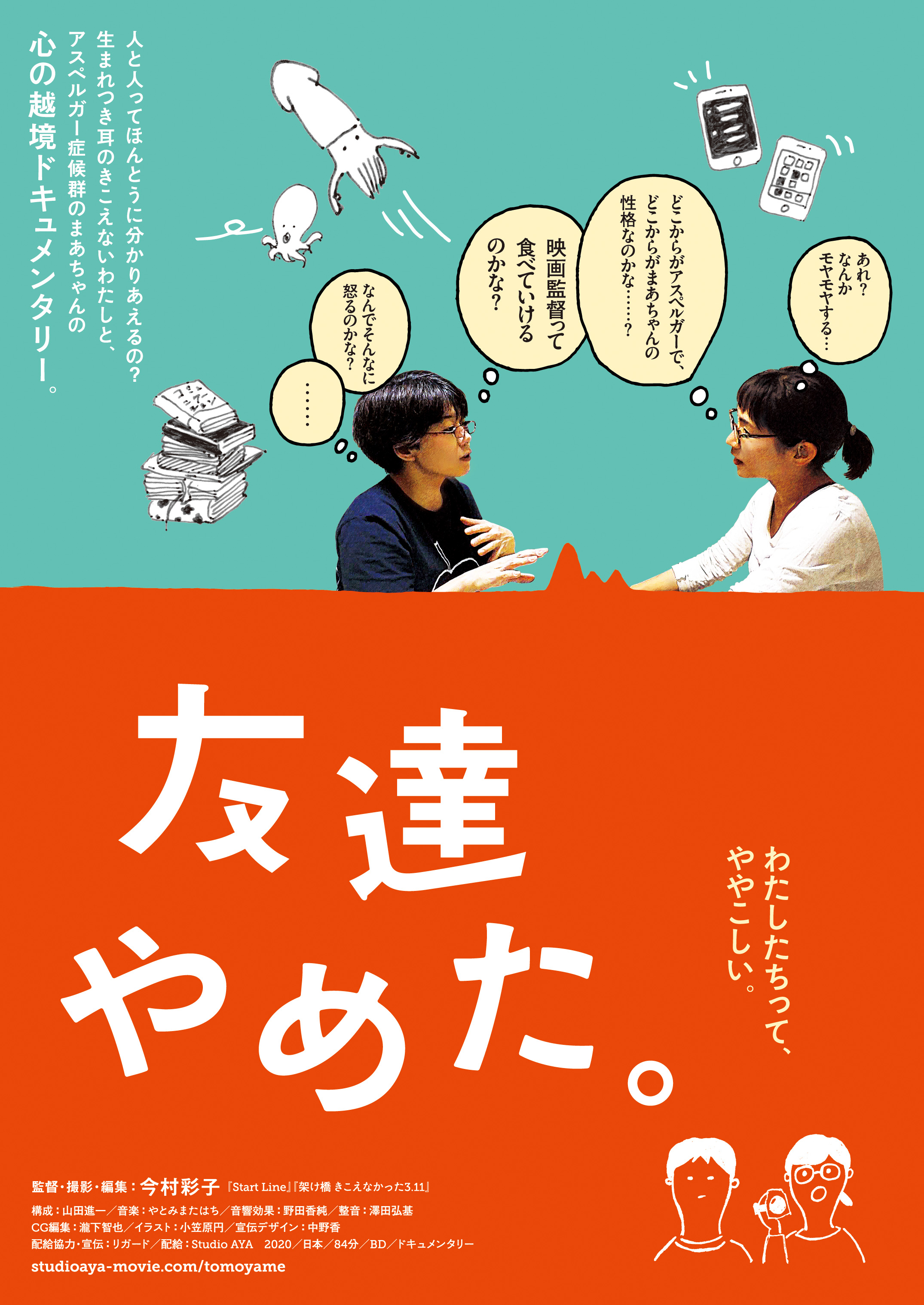
I Quit, Being “Friends” (友達やめた。, Ayako Imamura, 2020)

“I thought we could understand each other because we’re both minorities, but that was wrong”, director Ayako Imamura admits in her revealing, self-reflective documentary I Quit, Being “Friends” (友達やめた。, Tomodachi Yameta) in which she contemplates her sometimes awkward relationship with a friend who has Asperger’s and struggles with communication. Imamura herself was born deaf and so also faces daily communication barriers living in a hearing society but often has difficulty understanding Ma-chan’s sense of anxiety and social rejection becoming increasingly irritated by seemingly trivial examples of what she sees as rudeness or lack of consideration. 

Ayako apparently met Ma-chan a few months before the film began at a screening of her previous film, Start Line, which charted her journey across Japan by bicycle. Ma-chan had become involved with social welfare issues in university, making friends with deaf students and learning sign language. At the event, Ma-chan was supposed to be her interpreter, but as the screening began ahead of schedule she arrived after it started and simply sat in the front row of the audience not knowing what else to do. This seems to have irritated Ayako, put off by her supposed bad attitude. 

It is then a minor irony that part of Ayako’s growing resentment stems from something she did not even notice directly in that Ma-chan never says “itadakimasu” as is customary and polite before eating. Ayako’s grandmother pointed this out to her, taking against Ma-chan thinking her rude or ungrateful while Ayako herself who obviously couldn’t hear if she said it or not tried to defend her if superficially on the grounds of her disability. Later Ma-chan explains that she believes not saying itadakimasu is not (directly) related to her neurodivergence but simply because her family did not say it and so she never learned the habit, while Ayako gradually realises that she has perhaps become fixated on “Asperger’s” to the extent that she stopped seeing Ma-chan as person rather than an embodiment of her “condition”. 

She had perhaps assumed that as two people who experience similar problems with communication they would be on the same wavelength, but finds it increasingly difficult to accept Ma-chan’s atypical behaviour, perhaps irrationally upset by the itadakimasu issue while otherwise put out by her tendency to eat other people’s snacks without asking and smack her on the back of the head when she’s done something silly. For her part, Ma-chan reveals she prefers using sign language because there’s less need for superficial politeness and therefore less chance of causing offence. Ayako consciously affects tolerance, wary of turning into one of those people who ask a deaf person if they haven’t just tried listening harder in railroading Ma-chan into neurotypical behaviour patterns but eventually decides to end their friendship explaining that she’s “done with trying to act like a nice person”. 

While Ayako only obliquely addresses some of the problems she faces in the hearing world, using a relay system to book tickets over the phone for example, she is surprised to realise that Ma-chan has similar problems, too anxious to order food in a restaurant for example and reluctant to use the telephone even if not physically incapable. We’re told that Ma-chan also suffers from depression and see her expressing suicidal thoughts in despair of being constantly told that she needs to change in order to adapt to neurotypical society and knowing that she can’t. What occurs between the two women is perhaps an ironic kind of miscommunication informed by a degree of culturally specific rigidity in which rudeness deliberate or otherwise is an unforgivable sin. 

Despite having elected to end their friendship, Ayako eventually changes her mind and decides to try again, more directly, with a little mutual understanding each stating bluntly what behaviour they find puzzling or hurtful and attempting to explain why it occurs, drawing up something like a set of ground rules and boundaries for their relationship. Attending a meeting in Tokyo in which disabled activists express solidarity with the LGBTQ+ community following a politician’s crass remark that “unproductive” (ie those who do not contribute to solving the declining birthrate problem) people do not deserve social support, both women are forced to reconsider their views on and as minorities addressing some uncomfortable thoughts they too may have had about their place in society and that of others. Nevertheless, in the end they each resolve to struggle against any unconscious prejudice they may have, actively striving to forge a friendship based on mutual understanding and brokered by resolute honesty rather than allow pettiness and resentment to drive them apart. 


I Quit, Being “Friends” streamed as part of this year’s Nippon Connection.

Original trailer (English subtitles)
Kamata Prelude (蒲田前奏曲, Ryutaro Nakagawa, Mayu Akiyama, Yuka Yasukawa, Hirobumi Watanabe, 2020)

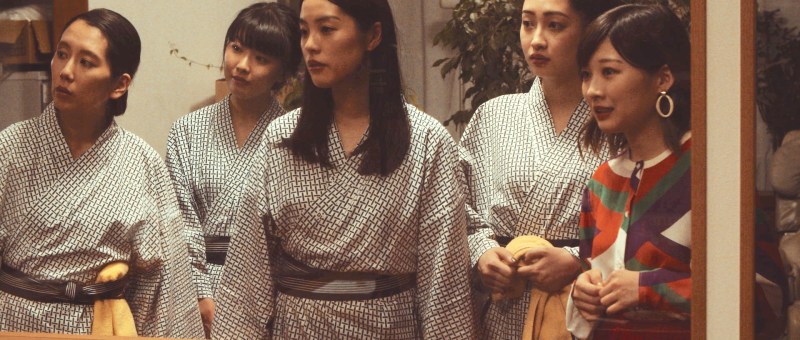
A quiet suburb of Tokyo, Kamata is in someways the birthplace of modern Japanese cinema home to Shochiku’s prewar studio where the “Kamata Style” which aimed to introduce a note of cheerful naturalism to an artform defined by shinpa gloominess was forged. Produced by actress Urara Matsubayashi who hails from the area and stars in three of the four segments, omnibus movie Kamata Prelude (蒲田前奏曲, Kamata Zensokyoku) asks some tough questions about what it means to be a woman and an actress today in the contemporary capital as the heroine, “Machiko Kamata”, contends with various demands from the economic to the emotional. 

Directed by Ryutaro Nakagawa, the first segment finds Machiko (Urara Matsubayashi) introducing herself as she takes part in a strange audition dressed in an inappropriately short cosplay-style nurse’s outfit. After the audition is over, her agent tells her to say “hi” to the director, a theme which will recur in the third chapter as Machiko finds herself feeling uncomfortable, forced to ingratiate herself in order to get ahead. Annoyed after the eccentric director asks her out for dinner, she can’t help asking him why she has to wear the suspiciously skimpy nurse’s outfit provoking him into a worryingly violent outburst. At home, meanwhile, her world is rocked by her younger brother’s revelation that he’s got a girlfriend who is, ironically, a nurse at local hospital. Jealous and resentful, Machiko can’t warm to Setsuko (Kotone Furukawa) who seems improbably sweet and innocent, almost as if she came from another time (the mid-August dating and ornaments for the Bon festival might clue us in as to why). Spending a day bonding with her, however, the two women generate a kind of sisterhood which pushes Machiko into a realisation of the emptiness she feels in her life of constant struggle as an aspiring actress supporting herself mainly with her part-time job at a ramen bar. 

The themes of alienation and insecurity are only depend in the second segment, directed by Mayu Akiyama, in which Machiko reunites with a group of high school friends who are each less than honest about the state of their lives and their unfulfilled desires. Machiko gives the impression that she’s just been in a major movie with a big star, but it turns out she only played a corpse while the rest of the group are scandalised by the bombshell that their friend Marippe (Mayuko Fukuda) has got engaged to a guy from work she’s been seeing secretly for only six months. Besides being somewhat hurt not to have known she was seeing someone, the gang have different reactions to the news with hard-nosed career woman Hana (Sairi Ito) put out by Marippe’s traditional view of conventional gender roles in which she intends to let her career slide to concentrate on being a wife. A trip to a hot spring (the same hot spring seen advertised on Machiko’s T-shirt in part one) brings things to a head with a possibly cheating boyfriend eventually offering the excuse that he is merely a hot spring enthusiast sharing his hobby with a friend of the opposite sex rather than a two-bit louse indulging in the patriarchal double standard. 

Patriarchal double standards are out in force in part three, directed by Yuka Yasukawa, in which Machiko attends another odd audition where she and the other auditionees are asked to outline an episode of sexual harassment they have personally experienced. In fact, we have already seen her be inappropriately propositioned by a middle-aged producer who ran out on her in a coffee shop after she turned him down leaving her with the bill, but the episode she recounts is darker still. As she feared they might, the men in the room quickly figure out who she might have been talking about but proceed to put the blame on her implying that she sleeps around to get ahead and was only offended by the producer’s actions because he wasn’t powerful enough to be useful. It’s another woman however, Kurokawa (Kumi Takiuchi), who kicks things into gear by relating that she was assaulted by a man in a club whom she later reveals to have been the director himself only he doesn’t remember her. The director brings both women back and makes them re-enact Machiko’s tale of being inappropriately propositioned in a producer’s office, increasingly exasperated that the situation seems “too scary” as if he’s entirely missed the point of his own exercise or is actively getting off on the actress’ discomfort. The male cameraman (Ryutaro Ninomiya) is the one who eventually points out that the audition itself has descended into a protracted act of sexual harassment, seemingly conducted solely for the entertainment of the director and his assistant. 

Largely disconnected from the other three chapters, the fourth does not feature Urara Matsubayashi and is in fact set not in Kamata but in director Hirobumi Watanabe’s familiar Tochigi. The opening of his segment, characteristically filmed with static camera and in black and white, finds him once again playing a version of himself ranting about not knowing what to do with this unusual project he has taken on for the money even though he doesn’t generally make shorts, has never done an omnibus movie before, and remains suspicious of the concept. He relates all of this to his 10-year-old niece Riko (star of I’m Really Good), who says absolutely nothing while he continues to treat her as if she were the most famous actress in Japan. Somewhat poignantly, a photograph of Watanabe’s late grandmother sits on a stool off to the side, implying perhaps that little Riko has in some senses taken over her role as silent observer. The main thrust of the action follows Watanabe as he attempts to film a sci-fi movie about an alien invasion with local non-actors, but is finally linked back to the omnibus by Riko’s cheerful letter to Machiko in which she states that she wants to become an actress just like her. Ending on such an upbeat moment seems to imbue a sense of hope for the future that was perhaps previously absent, implying that the hopes and dreams of a little girl at least are worth fighting for if only to live up to her sense of expectation for the magic of the movies. 


Kamata Prelude streamed as part of this year’s Nippon Connection.

Original trailer (English subtitles)
Nosari: Impermanent Eternity (のさりの島, Tatsuya Yamamoto, 2020)

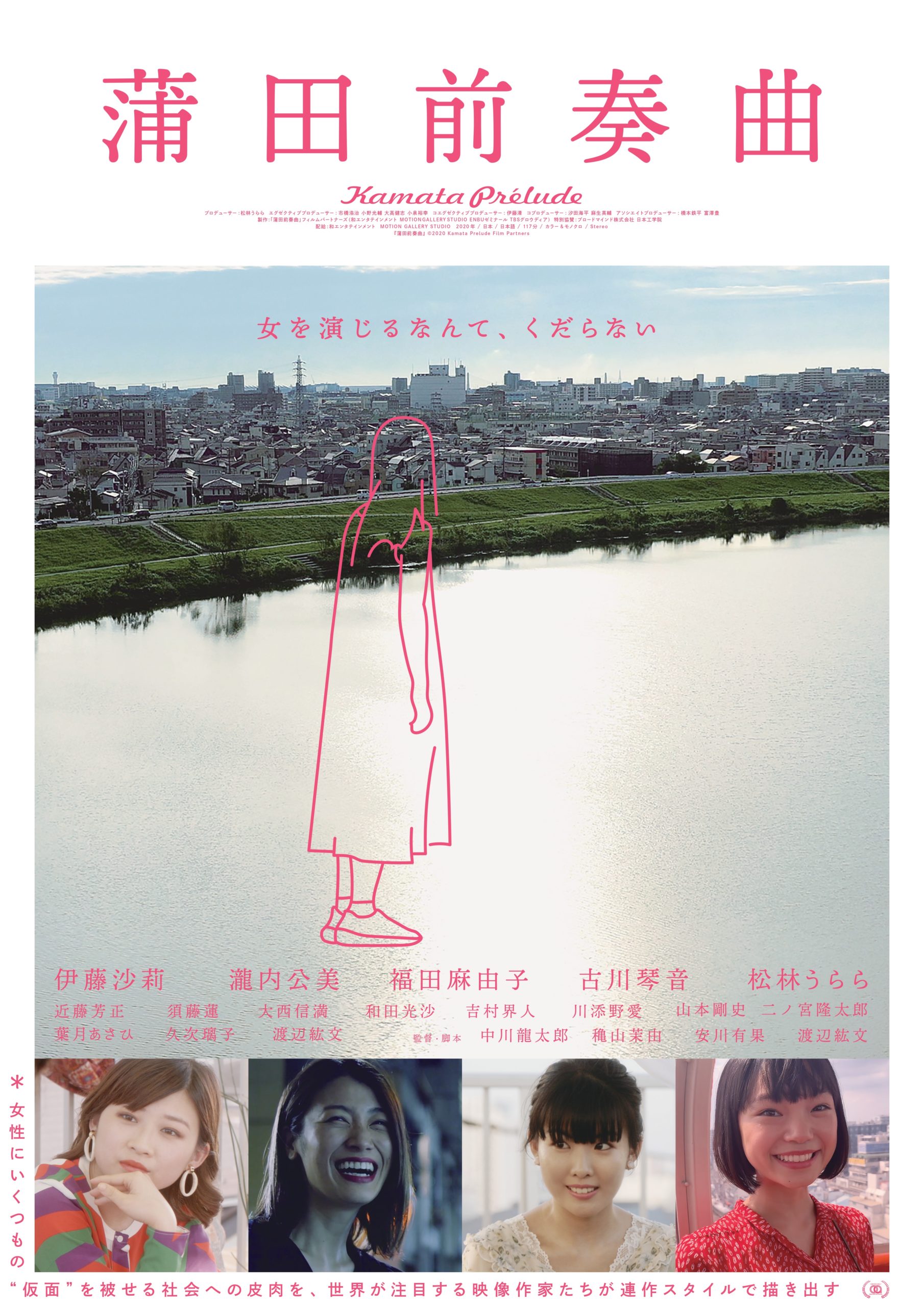
“This is an illusion” a boatman explains to a lost young man “but sometimes people need it”. Produced by the Kyoto University of the Arts Department of Film Production, Tatsuya Yamamoto’s Nosari: Impermanent Eternity (のさりの島, Nosari no Shima) is the latest in a minor trend of indie dramas which see meandering young men find their feet while hiding out in moribund communities where the people are kind, honest, and willing to lend them space in which to figure themselves out enough to get back on the right path. 

This particular young man (Kisetsu Fujiwara) is an “ore ore” scammer, a popular form of telephone fraud in which the caller rings an elderly person and claims to be their grandson explaining in a panic that they’re in trouble and need money right away. The elderly person on the other end of the phone usually complies, either too estranged to realise that it isn’t their grandson’s voice or too anxious to give it much thought. On this particular occasion, however, the woman that the man rings after arriving on the small island of Amakusa appears not to understand, believing that he really is her grandson, Shota, suddenly arrived for a visit. The young man ends up going along with it, warming to the old woman, Tsuyako (Chisako Hara), and more or less forced to stay after she hides his phone and wallet (which contains money he’d already stolen from the honesty box in her music store). 

In some senses, “Shota’s” previous life as a cruel exploiter of the elderly is painted as a symptom of urban disconnection, that his alienated city life has robbed him both of empathy and basic morality though we know nothing of his wider circumstances save that he seems to be on the run from a series of similar crimes along the rail line out from Tokyo. It’s never exactly clear how much Tsuyako knows at any one time, though the movement of a photograph in the closing moments makes plain that she does indeed on some level realise that the man isn’t Shota no matter how much she’d like him to be. As the opening title card explained, the local people have a habit of simply accepting whatever it is that comes their way which is perhaps what Tsuyako decides to do with Shota, realising that he’s in trouble and wanting to help him by taking him into her home which does at least restore his sense of empathy for the elderly. 

The truth is however that Tsuyako is one of many elderly people left behind in a rapidly depopulating rural Japan, her son having moved away to the city and her husband presumably already passed away. Hers is the only shop still open in an eerily empty shopping arcade where she sits on a small stool waiting for customers that presumably rarely come, leaving an honesty box on the counter should she need to nip away. A parallel plot strand finds the host of a local radio programme, Kiyora (Ami Sugihara), desperately trying to find footage from back when the area was filled with life and industry but more or less coming up short. On her travels, she interviews an old man (Akira Emoto) who was once a master craftsman of noh masks but has recently turned to making lifelike scarecrows whose eerie presence attempts to make up for the sense of absence in the moribund town where, he points out, the elderly residents once played together as children. 

Kiyora also meets with a series of businessmen who have their own ideas about how to reinvigorate the town but comes up with few solutions to Japan’s ongoing rural depopulation crisis and is perhaps herself also lonely as one of the few youngsters remaining behind. She loves Amakusa for its serenity, often playing the calming soundscape on air for harried Tokyoites trapped on their cramped commuter trains but for her friend Yukari (Manami Nakata) country life seems stifling. She realises that those from the city long for the connection and kindness of the countryside, but she can’t stand the seasonal rhythm of rural life or the feeling of being under constant watch, peer pressured into dull activities she might not have much interest in solely to keep up appearances. 

For Shota, however, country connection seems to be exactly what he needed. “I don’t know what’s real and what’s false” he later complains, perhaps too invested in his temporary existence as Shota to fully appreciate the contradictions of his life. Gently cared for by Tsuyako he begins to realise that the world can also be kind, touched by her generosity as she tells him that on occasion there is more money in her honesty box than there should be but even if there were less it would be alright it just means that someone was in need. Arguing that something has been lost in the fracturing of communities, Nosari longs for a return to a more innocent, connected time in which people knew and supported each other, something of which seems to return in the busier Amakusa streets even if Kiyora finds herself suddenly surrounded by scarecrows in the loneliness of the empty arcade, striking up a friendship with a bashful harmonica player who later finds her way to Tsuyako’s store. For Shota, however, Amakusa has perhaps given him a better sense of himself, ready to head back out into the world with kindness and empathy in place of hardened cynicism. 


Nosari: Impermanent Eternity streamed as part of this year’s Nippon Connection.

Original trailer (no subtitles)

Company Retreat (ある職場, Atsushi Funahashi, 2020)

“You can’t be suspicious of your team” an older woman insists, trying to defuse a rapidly devolving situation of mistrust among co-workers away on a “Company Retreat” ostensibly to cheer up a female employee who has recently become the centre of an online storm after her name and photos were leaked in relation to a report of sexual harassment at a prominent hotel chain. Inspired by true events, director Atsushi Funahashi originally planned to make a documentary exploring the fallout from an accusation of sexual harassment but discovered that few were willing to put themselves on camera opting instead to craft a docudrama in part improvised by his cast of actors. 

Shot documentary style and in black and white save one colour flashback, the action is split between two distinct company getaways four months apart taking place at a coastal town the first in the winter and the second in spring. Saki (Saki Hirai), a young female employee, made an accusation of sexual harassment against her male middle-aged boss, Kumanaka (Makoto Hada), and has been receiving constant online abuse after being outed by an unknown figure for unknown reasons. While her colleagues are largely supportive, they may also be harbouring an unspoken resentment that her decision to speak up has indirectly endangered their jobs as the company continues to suffer a loss of reputation with the public. When another of the employees reveals that he’s tracked the IP address of a persistent troll and discovered they’ve been posting from nearby it invites the suspicion that one of her friends is behind the online hate campaign possibly at the behest of the hotel chain keen to blacken her name and reputation in order to safeguard their own. 

The sexual harassment accusation exposes the gulf between what people say and what they really feel with some of the other employees eventually losing their cool and taking their frustrations out on Saki, partly for spoiling the holiday with her gloominess but also for her tendency to isolate herself from the group now viewing each of them as a potential enemy. She later accuses Noda (Yoshio Taguchi), a placid company man she feels may have chosen to sacrifice her in order to save the company’s reputation and with it his own job. Noda is upset to realise Saki sees him as a heartless corporate drone but later claims to have forgiven her. At the second retreat, however, he begins to voice quite a different opinion, exposing a deeply held set of patriarchal values in playing devil’s advocate wondering if it wasn’t all a misunderstanding and the boss, who has been demoted and transferred but not fired, has had his life “ruined” over something that wasn’t “that big of a deal”. He says this, in part, because his new girlfriend who also happens to be an employee has advised him that he is inappropriately touchy feely in the office and has little understanding of boundaries or personal space. Noda doesn’t see a distinction in the way he interacts with men and women and feels that’s just how he is, laying the blame on the other party if they ever felt uncomfortable while tacitly sympathising with another man who he believes may have had no “bad intentions” and is simply the victim of a “misunderstanding”. 

Perhaps paradoxically, he also blames Saki for her complicity that she may have smiled or laughed and said it was fine on previous occasions giving the boss the green light to think there was nothing inappropriate in his behaviour. In this she finds herself agreeing, that is perhaps the way it works in the workplace. Another older woman in a senior position advises her to transfer to another department, eventually explaining she thinks that might be easier seeing as the bosses are all men unlikely to be sympathetic. Ushihara (Mikoto Yoshikawa) is not unsympathetic herself, but is also willingly complicit, among the contingent of older career women who feel that sexual harassment is something you just have to put up with while simultaneously claiming that nothing will change until there are more women in a position of power. Attempting to take her side, Kinoshita (Megumi Ito), a divorced senior employee, tells Saki to do the “right thing” and refuse the transfer but is shot down by Noda who exposes even more misogyny when he tells her that her “emotional” and “righteous” tone is “unattractive”, insisting that she needs to “win the respect of men” in order for her arguments have weight. 

For some, however, and particularly the younger men this sort of hypocrisy becomes too much to bear. A company is supposed to be a family, but no one trusts anyone. Several employees from the original retreat resign after a decision is taken to try ringing the troll to prove they aren’t among the group unable to bear the sense of mistrust and suspicion from their close friends and teammates. Another employee, Taku (Taku Tsujii), brings his boyfriend to the first retreat though closeted at work losing confidence to come out to his colleagues in case they reject him and worst case scenario it costs him his job. Eventually he makes the decision to explain, realising he’s placed his boyfriend in a difficult position, and is relieved to discover he is immediately accepted by all, but continues to sympathise with Saki knowing how devastating it can be to be outed while also irritated by her tendency to reject them while they are only trying to help her. Meanwhile, another awkward young man struggles to confess his crush on the increasingly paranoid young woman, overly invested in a patriarchal ideal of masculinity that women are in need of male protectors mistakenly believing that Saki will be impressed by his attempt to safeguard her which ironically becomes a secondary act of harassment even as he, like Kinoshita, attempts to convince her to rebel against her complicity with a relentlessly rigged, conformist and conservative social order. 

The conclusion that she comes to, however, is that she has to “survive in this world” rather than striving for a better one. She has been unfairly demonised as if the real problem is her speaking up rather than her boss’ inappropriate behaviour and is understandably weary with fighting a battle she doesn’t understand, willing to accept a level of complicity in order to end the hate and suspicion. Kinoshita fears she will never see a “safe workplace” while others relentlessly “try to make society work for them” rather than for everyone. A bleak picture of contemporary society ruled by oppressive social pressure and aggressively patriarchal norms, Funahashi’s empathetic drama offers no real answers but advocates for the right to say no in a society where dissent is an untouchable taboo. 


Company Retreat (ある職場, Aru Shokuba) streamed as part of this year’s Nippon Connection.

Ushiku (牛久, Thomas Ash, 2021)

Japan has famously tough immigration policy and despite having signed up to various international agreements is unique among developed nations in its reluctance to accept refugees. Making migration easier has often been posited as a potential solution to the nation’s declining birthrate and stagnant economy, but it’s one that has never found favour with those in power. An immigration bill that was due to go through the Diet in May 2021 which would have made deportations easier was in fact halted in part because of public outcry after a young woman sadly passed away in an immigration detention centre after staff allegedly ignored her pleas for medical assistance claiming that she was simply faking her symptoms in an effort to avoid deportation. To add insult to injury, the young woman was detained for overstaying on her visa after having attempted to get help from the police as she was suffering domestic violence. Having learned she had reported him, her boyfriend threatened revenge should she return to her home country.

Filmed mainly with hidden camera, such facilities do not allow photography of any kind, Thomas Ash’s unflinching documentary ventures inside a dentition centre for male refugees awaiting confirmation of their applications in Ushiku. Though some claim they are in a sense better off than they were for having a degree of safety, shelter, and freedom from hunger, the facility is indeed little better than a jail with those inside it treated as prisoners whose movements are heavily restricted and communications monitored. As another points out, at least if you’re in jail they have to tell you how long for whereas immigration detention is indefinite (also the case in the UK). Many of those sharing their stories have been in Ushiku for several years already and have no indication of when they might be released or eventually deported. 

The desperation of their circumstances has pushed some towards suicide, while hunger strikes have become a worryingly common form of protest as authorities often offer a temporary release on the condition the detainee agrees to resume eating only to pick them back up again shortly afterwards. One detainee uses a wheelchair as he is too weak to walk but that does not apparently prevent his rough treatment at the hands of immigration centre staff who attempted to deport him without notice, the attempt only halted when the airline refused to carry him. The central problem is that the government often refuses to recognise their status as refugees, claiming that they have simply declined to return to their birth countries rather than accepting that they cannot return because their lives would be in immediate danger. Many of the detainees recount seeing their friends and relatives murdered or their homes destroyed, knowing that to be sent back is as good as a death sentence. 

This remains the case even for those who have married Japanese women with some recounting that immigration officials have attempted to convince their wives that the relationship is not genuine and encourage them to divorce their foreign-born spouse. In the interests of transparency, actions inside the detention centre are videoed but the officers appear to act with impunity. Ash includes a lengthy and painful sequence of a detainee enduring violence at the hands of guards he claims have assaulted him off-camera, complaining that he can’t breathe while another of the guards argues with him as they insist he is “resisting” even though he is cuffed and motionless. Perhaps it’s surprising that the footage exists and is available, but then again perhaps they simply have no fear of accountability believing that few care about what goes on in this arcane system of which the general public remains largely unaware. 

With the advent of the Covid-19 pandemic, 75% of detainees were granted a temporary release but this too is its own kind of prison as the refugees are still regarded as foreign nationals without the right to work leaving them entirely unable to support themselves if they have no access to a support network such as family, friends, or a charitable organisation willing to help. It goes without saying that neither can they access social support or medical care but remain in a perpetual limbo while they must also pay a deposit amount on leaving the detention centre. As one young man points out, many abscond while on temporary release but he chooses not to because he wants to live free with a legitimate social status and proper visa to build better life. Even so he wonders why he’s worse off for having done the “right” thing, imprisoned by an unforgiving government whose hostility may actually kill him. “Japan is a wonderful country but the government is cruel” the young man laments, left entirely without options other than to wait, indefinitely. An often harrowing account of what one opposition politician brands as a stain on their democracy, Ash’s unflinching humanitarian documentary is an eye-opening exposé of the bureaucratic heartlessness at the centre of a needlessly hostile and inhumane immigration system. 


Ushiku streams worldwide until 6th June as part of this year’s Nippon Connection.

Movement to End Indefinite Detention in the UK

Original trailer (English subtitles)
Aristocrats (あのこは貴族, Yukiko Sode, 2021)

“Is that still a thing?” a young boy asks incredulously of his rather severe grandmother as she quite insensitively sets up new marriage meetings for her granddaughter seconds after being told that her fiancé has unilaterally ended their engagement earlier that day. The “aristocracy” might seem like something from a bygone age, yet as those of us living in highly stratified societies can attest it continues to place a near invisible stranglehold over the mechanisms which govern our lives. Even so, the system traps all as Yukiko Sode’s sensitive drama Aristocrats (あのこは貴族, Ano Ko wa Kizoku), adapted from the novel by Mariko Yamauchi, makes plain as two women involved with the same man, as dejected and unhappy as either of them, eventually find common ground in attempting to seize their own agency from within a fiercely patriarchal society. 

At 27, Hanako (Mugi Kadowaki) is beginning to feel as if her life is slipping away from her. As we first meet her, she’s on her way to a posh New Year meal at a fancy Tokyo hotel. The taxi driver envies her, lamenting that he drives people here all the time but has never set foot inside. The reason she’s running late, however, is a mild sense of embarrassment as evidenced by the empty chair at her side intended for the fiancé who won’t be coming. Explaining that he broke off the engagement because the timing was bad, Hanako attempts to put a brave face on the apparent shame she seems to be feeling while her sisters and mother suggest it might be for the best, he was a little too “flamboyant” and in any case they’re ideally looking for someone suitable to take over the family medical practice. While everyone is busy proposing alternative matches, only Hanako’s brother-in-law (Takashi Yamanaka) bothers to ask her what it is she really wants but all she can muster is that she’d be fine with someone “normal”. 

After a few miserable omiai meetings with dreadful men from an awkward doctor with a photo fetish to a sleazy playboy salaryman who thinks women only say they like jazz because at some point a guy liked it, Hanako begins to lose the will to live thinking perhaps that looking for the “right guy” might be aiming too high and she should just take the best offer on the table. When she meets Koichiro (Kengo Kora), however, it’s love at first sight. Showing up like Prince Charming he’s handsome, poised, softly spoken, and even posher than she is. Hanako is the perfect choice to be his wife essentially because of her innate blandness. She’s everything the society wife is supposed to be, quiet, reserved, and unassuming in her total obedience to the tenets of her “upbringing”.  

Meanwhile, Koichiro has also been in a longterm non-relationship with another woman, Miki (Kiko Mizuhara), a bar hostess from a small town who has had to struggle the whole way to make a life for herself. The pair first met at Keio University, but Miki was forced to drop out before graduating when her father lost his job despite having studied her socks off just to get a place. A member of the “in-crowd”, Koichiro’s acceptance was guaranteed because he attended an affiliated school filled with the children of the rich and powerful. Mirroring Hanako’s lunch date with her society ladies, we see Miki and her friend invited by a couple of upperclass classmates to a fancy afternoon tea only to gorp at the menu and its exorbitant price list at which the “in-crowd” do not even glance. When they meet again 10 years later and Miki explains she didn’t exactly choose her line of work, Koichiro laments it’s exactly the same for him, which it of course isn’t, but he is in a similar way trapped. 

“I just want my family to continue” he later explains to Hanako, “it’s just how I was brought up. The same reason you married me”. In a certain way, Koichiro was no more free than Miki, ironically feminised reduced to his capacity to perpetuate the family line while aware that his whole life has been mapped out for him since the day he was born. He went to Keio, married a suitable woman, and is expected to run for political office. Hanako married him because she was expected to marry someone and it was undoubtedly a good match, yet she’s unhappy because the relationship is devoid of intimacy while her in-laws ironically pressure her about the lack of an heir. She suggests getting a job for something to do, but asking her brother-in-law for advice is reminded she’d need to talk to her husband and family first. 

Hanako’s friend, fellow aristocrat and concert violinist Itsuko (Shizuka Ishibashi), meanwhile has remained quite defiantly single explaining to Miki whom she’d met by chance that she believes a woman should be financially independent partly because her mother had wanted to leave her father who had several affairs and numerous illegitimate children but couldn’t because she had no way to support herself, upperclass women largely being brought up to be the wives of important men. As she tells Miki, she hates society’s tendency to pit women against each other and isn’t here to judge her about her relationship with Koichiro but merely to talk. Rather than a bitter love triangle what arises between the women is a sense of solidarity, each finding common ground in being victims of a patriarchal society even if their “upbringings” and social status are currently very different. While Miki perhaps admires from afar but does not particularly resent the “in-crowd”, Hanako begins to see the various ways her “upbringing” has trapped her, attracted by Miki’s sense of confidence and independence remarking that her life seems “lived in”, struck by the warmth of the photos she has on her wall of various trips with friends. 

Her mother had told her to “close her eyes to some things and try to get along” hearing the sad tale of a woman who managed to escape the golden prison of the aristocracy but only at the cost of her child, a cruelty Hanako had been too naive to consider. As Itsuko had told her, Tokyo is a compartmentalised city where you only meet members of your own social class, yet through her accidental contact with Miki she begins to realise another life is possible even if not quite shaking off her privilege as she rejects the tenets of her upbringing to seize her own agency while Koichiro remains trapped within the feudal legacy unable to free himself of the outdated notions of filial responsibility. A tale of cross-class, female solidarity, Aristocrats takes aim at the ironic equality of a system which damages all, even if some remain wilfully complicit, while affording the ability to its protagonists to sidestep the forces which constrain them to claim their own freedom brokered by mutual support and the aspiration towards a freer society. 


Aristocrats streams in Germany until 6th June as part of this year’s Nippon Connection.

International trailer (English subtitles)

The Witches of the Orient (Les Sorcières de l’Orient, Julien Faraut, 2021)

A turning point in Japan’s post-war fortunes, the 1964 Olympics were touted as a return to the world stage and a clear symbol of the nation’s rapid progress towards economic and social recovery. Two new sports were set to be added to the roster that year, judo in which the Japanese entrant would take only Silver in a moment of mild national embarrassment, and volleyball in which the women’s team eventually took Gold. More interesting stylistically than thematically, Julien Faraut’s anarchic documentary Witches of the Orient (Les Sorcières de l’Orient) directly ties the women’s success to that of their nation even as they become pop culture heroines immortalised in anime and manga. 

Faraut opens in the present day with surviving members of the team meeting at a Kyoto hotel, a scene he will intermittently return to as the women (briefly) narrate their personal experiences and origins, most of them hailing from Osaka where the team was based and employees of the Nichibo Kaizuka textile factory. Volleyball then being an amateur sport, the Nichibo team came to represent their nation by virtue of winning the national championships and thereafter venturing overseas touring Europe where they triumphed over various Eastern Bloc countries including the USSR whom they would later face in the Olympic final. On their European arrival, the team acquired the nickname of the “Typhoon of the Orient”, perhaps a little problematic in modern terms and slightly irritating to at least one team member who interpreted it to mean that their success would be a short-lived flash in the pan, blowing out by the time they hit Russia. Their victory conferred on them a new title, “Witches of the Orient” which they found even less flattering until they were informed that it referred to a supernatural playing ability rather than a purely pejorative, misogynistic attempt to belittle them. 

As Faraut goes on to outline, the team’s success sparked a new trend in volleyball sports manga including the hugely influential Attack 1 by Chikako Urano, the anime adaptation of which he later directly intercuts with stock footage of the extraordinarily tense final match. A superpower special move is a hallmark of the genre, along with an emphasis on rigorous, body breaking training regimes. The team’s coach, Daimatsu, acquired the nickname of “the demon” for the intensity with which he practiced, a newspaper feature on the girls running under the heading “Driven Beyond Dignity”, yet the older women some of whom are shown still engaging in sporting activity even in advanced age, claim that they did not object to such harsh treatment which often saw them training through the night until the early hours of the morning only to rise at 6.30 for their factory work. In fact, one of them also describes Daimatsu as the sort of man they’d have liked as a father or a husband and that as he had such a calm demeanour they did not feel scolded when he reprimanded them. Daimatsu had apparently managed to survive months stranded in the Burmese jungle at the end of the war and had brought all of his men home safely, perhaps dedicating the same kind of military care and hyper focus to his coaching. 

Nevertheless, Faraut also includes stock footage of the nation in the early ‘60s much of which was still in rubble while later shifting into a more familiar portrait of the headlong economic drive from neon-lit city scapes to factories producing televisions, a new signal of the age many of which will be purchased in order to watch the upcoming Olympics, the women’s volleyball match still among the highest viewed events in the nation’s history. While intercutting scenes from the anime, he does not particularly critique the various ways in which the women’s success was dramatically repurposed and perhaps falls into the same trap implied in the film’s title in a slight fetishisation of certain vision of Japan in neon and electronica while his attempt to interview the surviving Witches often falls oddly flat if not superficial. In any case, he ties the women’s struggle to that of Japan itself, implying that sweat and tears, a spirit of determined endurance, and a certain degree of self-belief powered the nation’s post-war economic miracle culminating in the Olympic gold that seems to have marked the beginning and the end of their story. 


The Witches of the Orient streams in Germany until 6th June as part of this year’s Nippon Connection.

Original trailer (English subtitles)

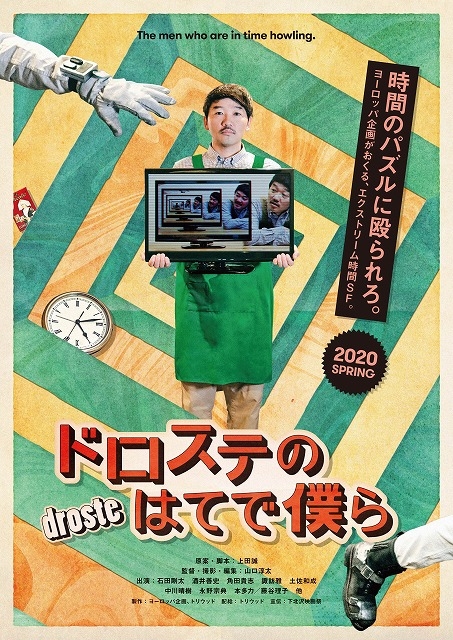
Beyond the Infinite Two Minutes (ドロステのはてで僕ら, Junta Yamaguchi, 2020)

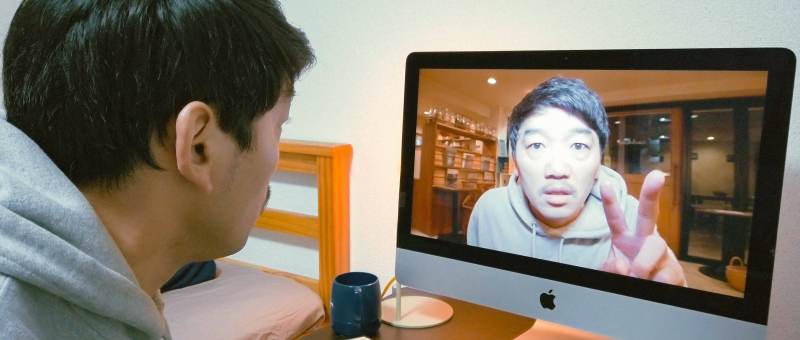
If you had the opportunity to talk to your future or past self, what would you want to say to them? There are many advantages to having some knowledge of things still to come, finding out next week’s winning lottery numbers for example or who’s going to win the Grand National, but on the other hand mightn’t you start to feel as if your life has no freedom or purpose if you find yourself compelled to do exactly as your future self advised? That’s something the future-hating hero of Junta Yamaguchi’s farcical time travel comedy Beyond the Infinite Two Minutes (ドロステのはてで僕ら, Droste no Hate de Bokura) can’t help feeling as he finds himself trapped in an infinite loop of communication with the him from two minutes previously. 

Granted, getting knowledge of what’s going to happen in two minutes is not actually that useful. Cafe assistant Aya (Riko Fujitani) makes a point of asking her future self what the next era is going to be after Reiwa ends forgetting that it is almost certainly still Reiwa in two minutes’ time. Then again, it could help with very short term decisions such as whether or not to confess your feelings to a crush or which spots to scratch on your scratch card to win the best prizes, but maybe knowing only the immediate consequences of your actions isn’t very helpful either. Let’s say your future self finds a bunch of money and tells you to go get it, only the money belonged to gangsters and now you have a big problem with a two-minute head start. And then, can you really trust your future self? Maybe they aren’t being completely honest with you for reasons you may well understand in two minutes’ time. In any case, maybe you have better things to do than be struck in an infinite dialogue loop parroting back what you’ve just been told by your future self to your past self. Maybe you should learn to live in the moment. 

That’s something cafe owner Kato (Kazunari Tosa) has had trouble doing, later confessing that he hates the idea of knowing what lies ahead largely because he over invested in conspiracy theories and prophesies about the end of the world and therefore failed to plan very much for his future. His friends, however, are childishly excited by the discovery that his upstairs TV is linked to the downstairs with a two-minute delay, realising they can extend its range through the “Droste” effect to send themselves messages from further into the future, but then again how long do they really want to keep all this up slavishly reenacting the same conversations afraid of deviating from the original path lest they create a time paradox or provoke some other kind of disaster. They find themselves trapped in the middle as if the present no longer existed and had become merely a conduit between an extremely near future and very recent past. 

Yamaguchi captures their farcical dilemma with an ironic immediacy, filming with an elaborate one shot conceit that adds to the sense of wonder as the gang find themselves continually running upstairs and down to talk to themselves from either side of the time divide. The uncanny absurdity is the film’s greatest asset, placing this extremely bizarre scientific anomaly in the centre of an ordinary hipster cafe run by a guy who really wants to be a musician and is too shy to ask out the girl who works in the hairdresser’s next-door (Aki Asakura). By the time a pair of strange-looking gentlemen turn up claiming to be from the time travel police insisting that the guys stop all this nonsense before they cause a serious problem in the space time continuum you might come to sympathise with Kato’s resentment in feeling as if the future is controlling him but then there are always unexpected ways to rebel against fate and who knows, maybe your romantic destiny will work out after all with a little old-fashioned conversation only tangentially assisted by sci-fi hijinks. A charmingly whimsical take on time travel shenanigans and their existential dilemmas, Yamaguchi’s meticulously plotted farce is an indie gem.  


Beyond the Infinite Two Minutes streams in Germany 1st to 6th June as part of this year’s Nippon Connection.

Original trailer (English subtitles)
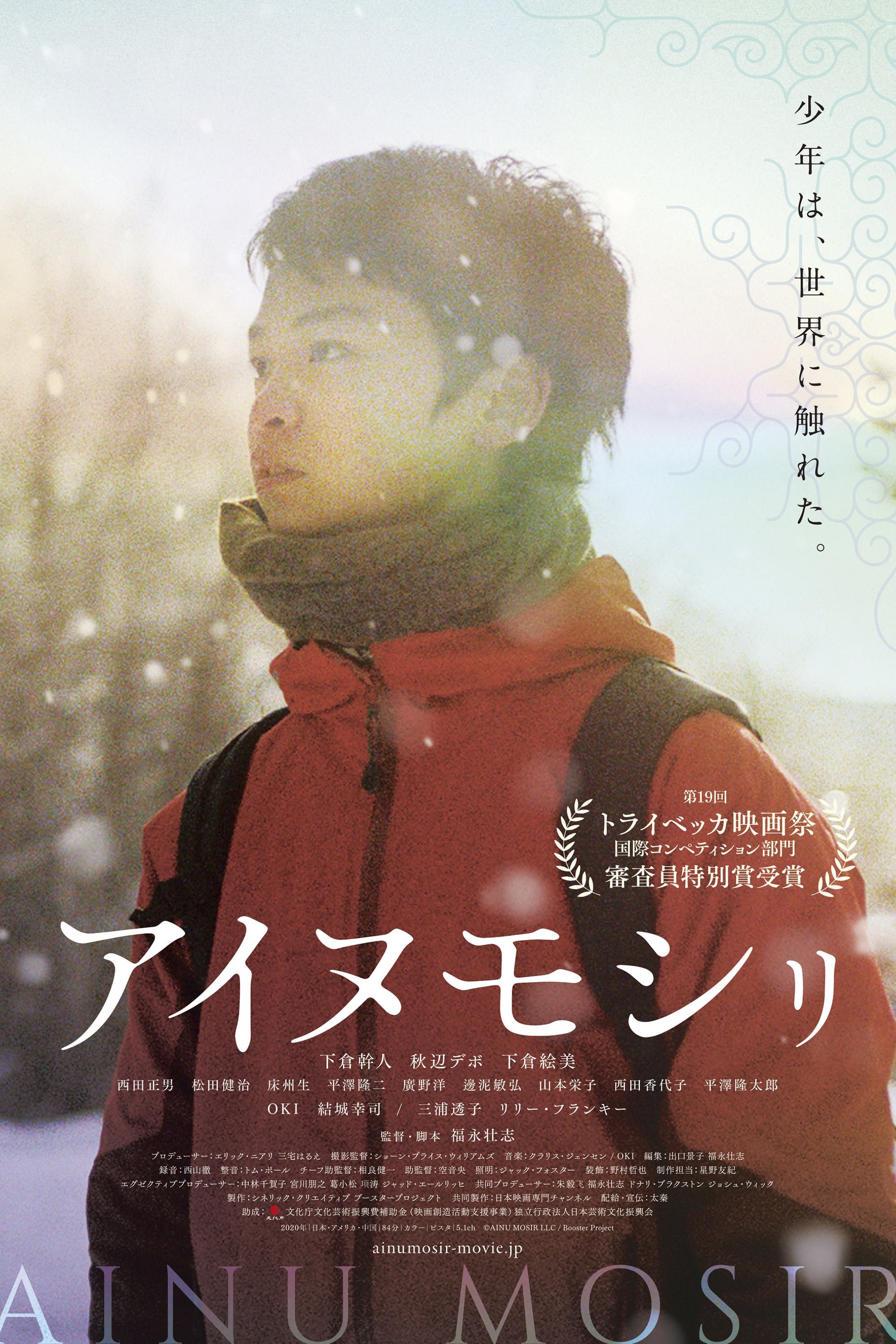
Ainu Mosir (アイヌモシㇼ, Takeshi Fukunaga, 2020)

Despite its continuing preoccupation with the conflict between tradition and modernity, Japanese cinema has often been reluctant to address the nation’s relationship with marginalised communities such as the Ainu, the indigenous people of Hokkaido which was in essence the site of Japan’s first colonial expansion at the beginning of the Meiji era. Set very much in the present day, Takeshi Fukunaga’s Ainu Mosir (アイヌモシㇼ) takes its title from the indigenous name for the island and is both coming-of-age tale and exploration of the position of the Ainu people within the context of modern Japan. 

14-year-old Kanto (Kanto Shimokura) lives in the quaint Ainu tourist village of Akan and has not long lost his father. Questioned about his plans for the next stage of his education, Kanto replies that he’s fine with anything as long as it involves leaving Akan, later explaining to his understandably upset mother Emi (Emi Shimokura) that his desire to leave is because the town is “tiny” and “they make you do Ainu stuff”. Emi points out that neither she nor anyone else has ever forced him to participate in Ainu culture, but still the boy insists that he’d prefer to go somewhere more “normal” spending his time playing classic American rock on an electric guitar rather than engaging with his cultural roots. His attitude begins to change, however, when Debo (Debo Akibe), an elder acting as an uncle, begins introducing him to various aspects of Ainu culture such as the remote cave in the Forest of Light which leads to the land of the dead, teaching him how to catch and gut fish, and finally enlisting him in a project to look after a captive bear, Chibi, hidden in a cage in the woods. 

Bears are sacred in Ainu culture, but what Debo has not explained to the boy is that he’s raising Chibi as part of an ancient ritual last performed over forty years previously which involves sacrificing the bear in the belief that his spirit will then return to the land of the gods filled with tales of how wonderful humans are after being so lovingly looked after during his time in the mortal world. In a series of documentary-style sequences, Fukunaga captures the ambivalence present within the community on learning of Debo’s plan to carry out an Iomante ritual, pointing out that they live in different times and bear sacrifice is unlikely to be accepted by the outside world which will undoubtedly view it as primitive and cruel. Aside from a concern as to how the indigenous community is viewed by mainstream society, some of the council are acutely worried because they are economically dependent on the tourist trade. Young Kanto is frustrated by the idea of growing up in a museum, the town of Akan something like a theme park repackaging Ainu culture for curious Japanese tourists. His own mother works in a shop selling traditional crafts as souvenirs while appearing in a stage show adapting ancient ritual as entertainment for visiting audiences. 

A man in Emi’s shop stops to ask her if she herself is Ainu, but seems ambivalent on being told that yes she is while a female customer somewhat crassly compliments her on the quality of her Japanese which is particularly ironic as we’ve just seen her attending evening classes to relearn the Ainu language which is in constant danger of dying out. Warming to Ainu culture, Kanto is more receptive towards the idea of adding traditional instrumentation but his bandmate is, as he was, embarrassed by “Ainu stuff” and wants nothing to do with it. Debo’s betrayal sets Kanto on a collision course with his newly found appreciation for his indigenous roots in presenting him first hand with something dark and cruel that proves difficult for him to understand but perhaps finally allows him to come to terms both with his father’s death and with his own identity as a member of an indigenous community. 

Using a cast of mainly non-professional actors from the local area, Fukunaga switches between documentary-style capture of Ainu life and the cinematic naturalism of Kanto’s path towards self-acceptance filled as it is with the wonder of the natural world. Juxtaposing the reality of the Iomante ritual with the repackaged stage show, he shows us what it costs to preserve traditional culture within a surrounding modernity even as scholars descend to record the songs of the Ainu for prosperity badgering old women to offer up long forgotten lullabies for a lonely tape recorder. Kanto has however perhaps found his path in knowing he is not alone as he steps into a less innocent adulthood having integrated both sides of himself into a more complete whole. 


Ainu Mosir streams in Germany 1st to 6th June as part of this year’s Nippon Connection. It is also available to stream in the UK (and possibly elsewhere) via Netflix.

International trailer (English subtitles)