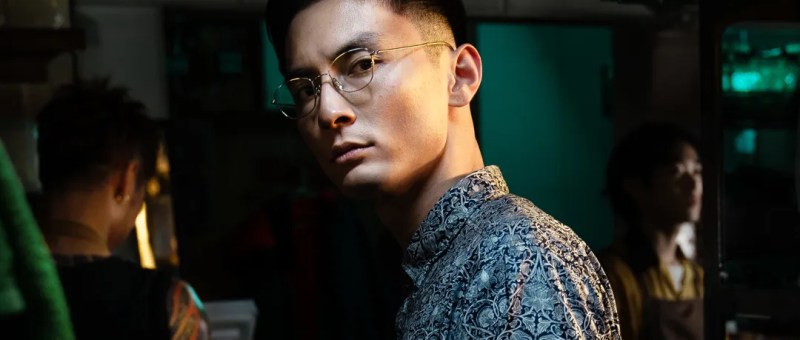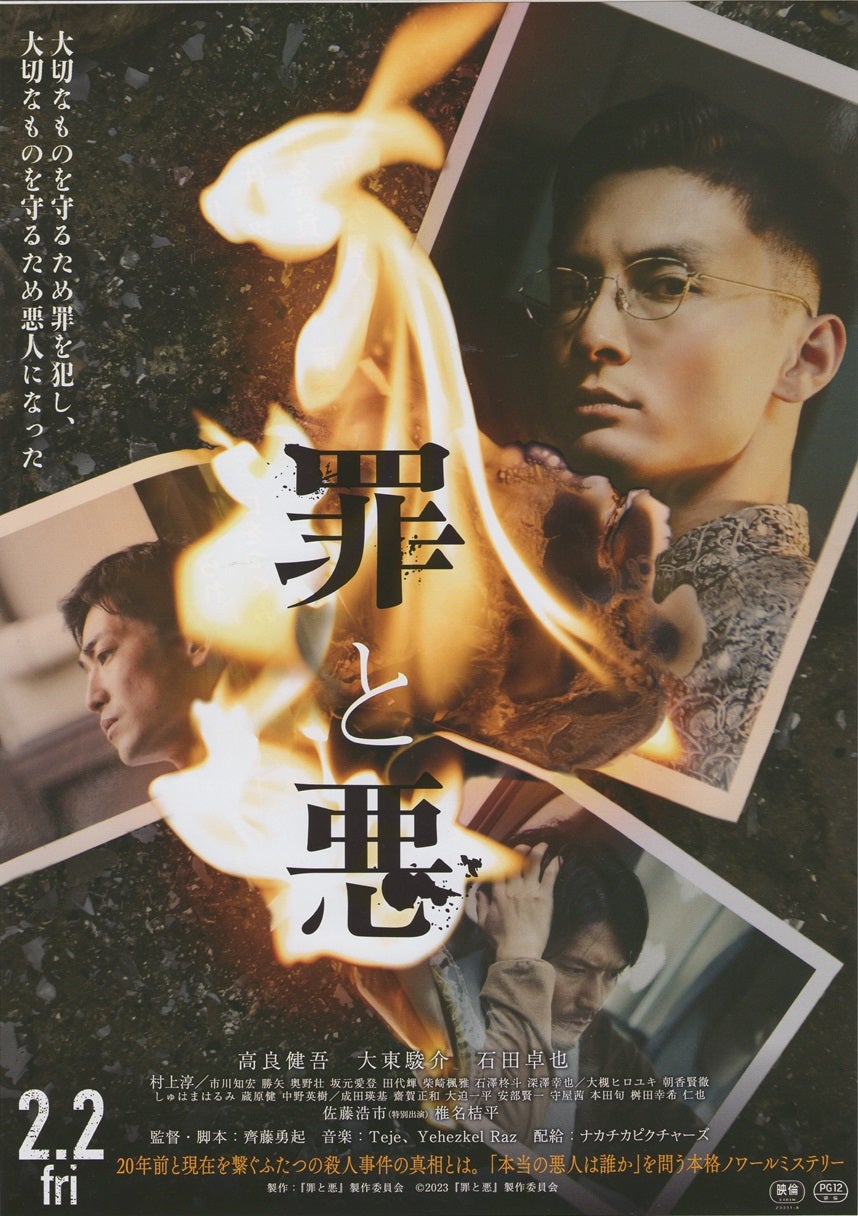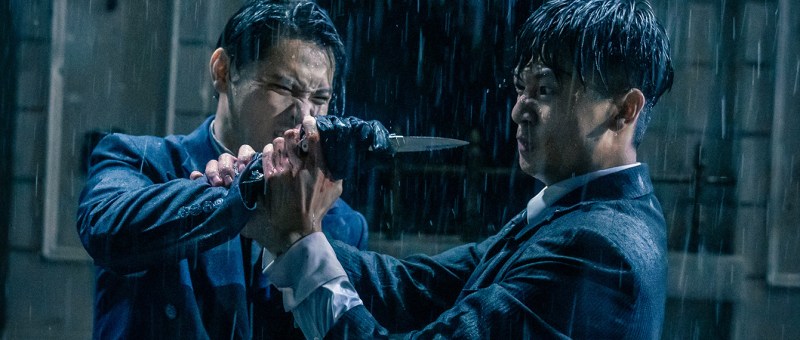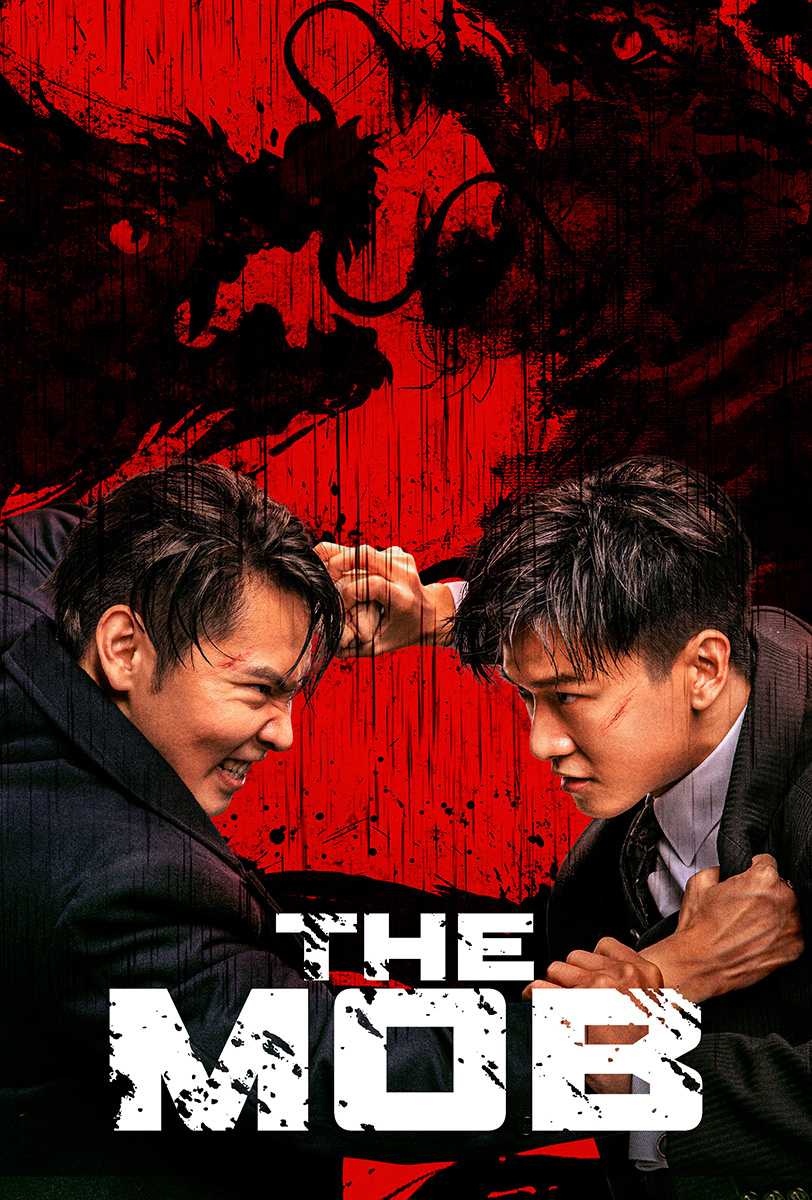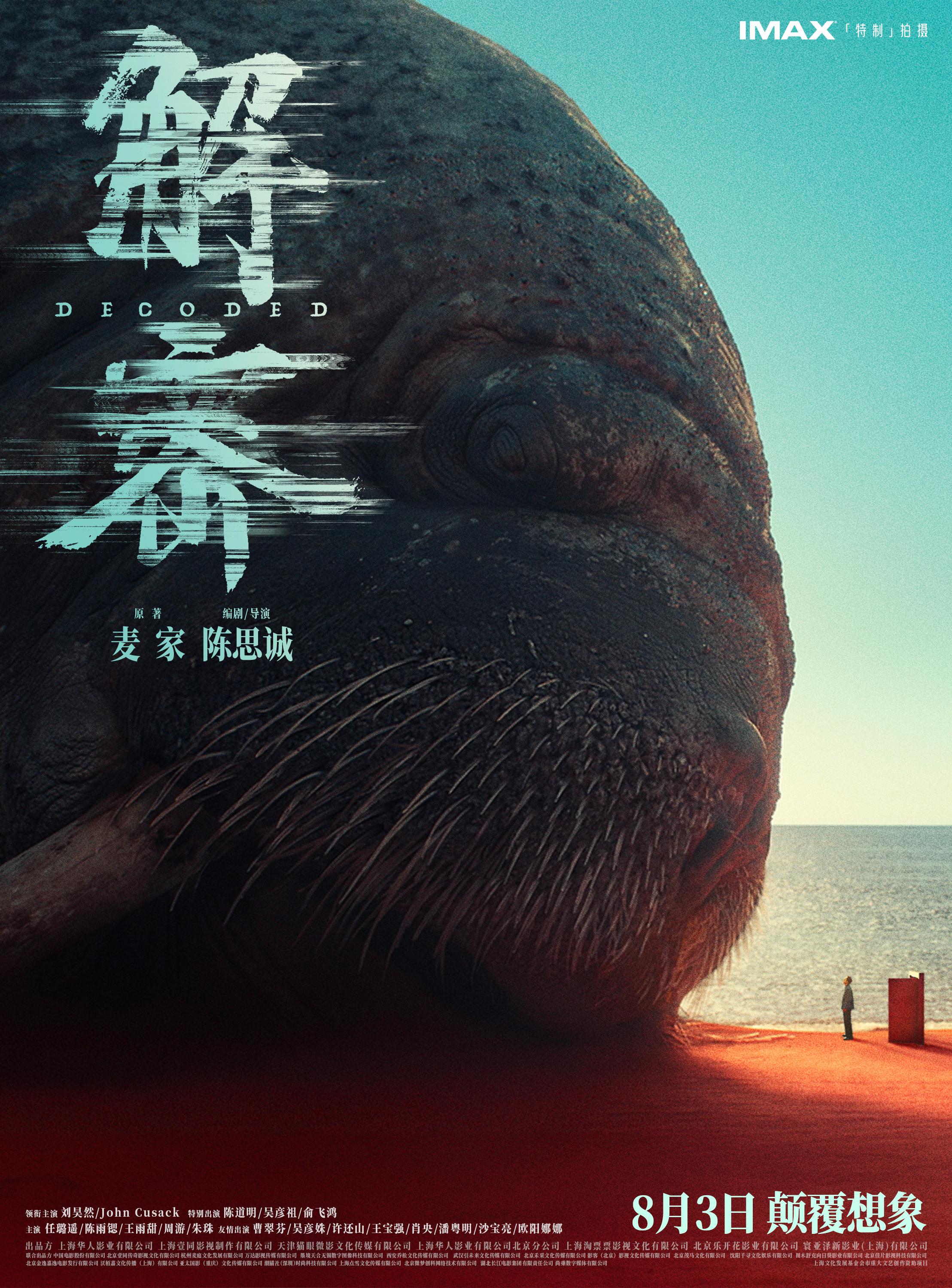
A Place Called Silence (默杀, Sam Quah Boon Lip, 2024)

Can the hammer of truth break the rock of silence? At the end of Sam Quah’s remake of his own 2022 film by the same name, A Place Called Silence (默杀, mò shā), you might ask if you really want to or if some secrets are best kept that way. Then again, Quah’s persistent focus on leaky roofs suggests the truth will out and that the slow drip of quietly collecting water will eventually erode even the strongest stone.

Though remade for the Mainland market, the film takes place in the fictional city of Doma which like many recent similarly themed films is ostensibly not located China but another area of South East Asia, the police uniforms and complex mix of languages and cultures strongly echoing those of the original Malaysian setting. This also extends to the increasingly Christianising imagery which leads back to a cult-like local charity that pedals a good book full of aphorisms landing somewhere between Confucius and Proverbs and are at best a superficial salve for the deeply rooted problems in what turns out to be a judgemental and classist society. 

At least, the reason no one challenges the increasingly extreme behaviour of school bully and queen bee Angie is because she’s the headmaster’s daughter. Angie has been relentlessly tormenting Tong largely because she has a disability and had until recently been taught in the special needs class. According to her mother, Han, Tong has been mute since birth and it’s in an attempt to get her a better education that she’s given up her job in accounting and taken a position as a cleaner at the school. Her mother’s profession is also another reason for Angie to bully Tong, though she also accuses Han of having seduced her father which does not appear to be true though his later admission to an “abuse of power” that gives Han leverage over him puts a different spin on the situation and does not cast him in a very good light. 

Neither does the state of disrepair at the school which has a persistently leaky roof that is at least according to handyman Zaifu structurally unsound and may cave in any minute. Some of the blame is placed on a recent tsunami which caused mass loss of life, and the school seems to be proud of itself for having taken in pupils from another institution that was swept away though they don’t appear to have been welcomed by everyone. When a pupil ends up dying because of Angie’s bullying, the headmaster delays calling for help in part it seems to evade a scandal while planning to simply bribe anyone who tries to look into the matter. 

In short, it’s not difficult to see why someone may feel they’d have to take the law into their hands to break the persistent silence that protects the wealthy and the powerful from the consequences of their actions. Though, truth be told, not everyone is very interested in the disappearance of the girls, Han is driven to distraction when she suspects that Tong has been abducted by a serial killer with a very particular motive who also seems to be aware of some secrets she herself had been keeping. Then again there are a lot of wilful silences, like that of Mrs Xu who later snaps that the whole building knew Han had suffered domestic violence yet apparently did nothing help her other than maintaining superficial politeness by avoiding bringing it up. 

Silence seems to be the only refuge for the bullied whether in school or the wider world for there’s little good in speaking up anyway. Tong tries to help a bullied friend, but her mother stops her, wary of their own need for silence and that Tong will simply become the next target which of course she does. Terrible things are done in the name of protection, but sometimes silence is necessary too and a means of atonement if not a weapon against life’s unfairness. An ambiguous mid-credits sequence somewhat muddies the waters in its implications though perhaps a concession to the censors demanding that crimes must be answered, but Quah otherwise depicts a hellish society of violence and powerlessness in which the only choices are silent complicity or murderous revenge.


A Place Called Silence is in UK cinemas now courtesy of CineAsia.

UK trailer (Simplified Chinese / English subtitles)

Alienoid: Return to the Future (외계+인 2부, Choi Dong-hoon, 2024)

Choi Dong-hoon’s hugely entertaining sci-fi-inflected fantasy adventure Alienoid ended with a classic cliffhanger promising resolution only in an as then unscheduled sequel. Part two arrives almost two years later and thankfully opens with a brief recap before delving straight into the ongoing drama as the older Ean pursues the Divine Blade that will allow her to stop humanity from being wiped out in a toxic gas attack by fugitive aliens.

Thus the majority of the first half takes place in the 14th century past as various parties vie over the blade in the manner of a wuxia serial. Ean is also on a quest to recover Thunder and get back to the crashed spaceship in order to get back to the future and stop the world being destroyed. But in some ways, she’s also now an orphan of time. She’s spent half her life back in the feudal era and will return to 2022 ten years older than she should be. Reuniting with Muruk (Ryu Jun-yeol), she finally figures out his identity and is more well disposed towards him, but also decides it would be better for them to head in different directions given the possibility that Muruk is a possible host for the missing Controller, the leader of a resistance movement among the alien criminals who have been imprisoned in the minds of humanity. 

Once again, the key to salvation lies in the past as we discover that Gae-lin (Lee Hanee) is a descendent of a blind swordsman who left very specific instructions for what to do during the alien attack. Ultimately, the aliens can only be defeated by a perfect integration of past and present as the Joseon team end up in 2002 complete with their magical weapons to fight a decidedly scientific threat. Though it’s true enough that the lines between science and magic are often thin and defined by a perspective on knowledge, it’s clear that Joseon magic continues to work in our world as the two bumbling shamans fight back with minor and pipe and Muruk pulls an incredibly heavy sword out his fan. 

Ean tells him that no matter if he may have a monster inside, Muruk is still Muruk guiding him on his journey towards an acceptance of himself as someone useful with genuine talent rather than just a hack. Choi throws in a series of twists and turns over who may be hosting the Controller at any given moment along with the true identities of several others as Ean attempts to handle her own baggage while tracking down Thunder and attempting to restore his energy levels so they can get back to the future and save the world. In order to defeat the aliens, they must all be united, past and future, coming together to defeat an alien threat.

Yet like the first film, we can see that this moment is both ending and beginning. Following a surprisingly poignant closing sequence the possibility of a new opportunity to set the past to rights is raised if on a more personal level that would allow orphans Ean and Muruk to unite in new time thereby closing a circle which otherwise remains open. In any case, the looping, elliptical quality of the cycling narrative eventually becomes clear and we understand where each of these disparate heroes belongs in the grand plan apparently orchestrated by Thunder and the now absent Guard. That’s not to say the rich lore underpinning the intricate world building is completely exposed and there is a sense that there are many other stories to be told in this madcap universe of scientists and magicians in the high tech present and feudal past.

In any case, Choi ups the ante with large scale sequences including a train chase that culminates in a derailment, while in the Joseon era the heroes leap from rooftop to rooftop and run through idyllic forests while pursued by mystical forces. Every bit as charming as the first instalment, the film builds on the existing relationships between its vast list of characters and generates a sense of warmth and familiarity that also has its melancholy as er really these two worlds cannot remain bridged forever but must eventually separate whether the alien threat prevails or not.


Alienoid: Return to the Future is out now on DVD & blu-ray courtesy of Well Go USA.

International trailer (English subtitles)

House of Sayuri (サユリ, Koji Shiraishi, 2024) [Fantasia 2024]

An excited family discover the perils of buying a “used” home in Koji Shiraishi anarchic haunted house horror House of Sayuri (サユリ, Sayuri). Unlike many other nations, Japan does not really have a comparable housing market as, given changing building regulations etc, it’s common to demolish the original structure and build a bespoke home in its place rather than move into one someone else has vacated. That obviously means that opting for an existing property can be a little bit cheaper, which is presumably how the Kakimis have finally managed to move into what they describe as the dream home, escaping a cramped city apartment for a spacious rural mansion with room enough for grandma and grandpa too.

Of course, this particular home is probably cheaper because something untoward once happened there, though the Kamikis probably don’t know that, and everyone who’s lived there since has moved out a short time later. In a way referencing Shiraishi’s previous work, we can’t really tell whether the malevolent spirit wants the family out or is merely trapped in a loop of revenge on the family that badly betrayed them. In any case, it makes its way through the Kamiki family unit starting with daughter Keiko and causing all manner of strange events in the house. Sensibly, older son Norio begins to ask why they don’t just move but the parents are so committed to their dream of homeownership that they can’t bear the thought and remain determined to hang on to it at whatever cost. 

In any case, some wise words from grandma advance a more positive way of battling the ghost, that they should fight it with the force of their lives. They laugh in its face and shout vulgar phrases that send it scuttling away in outrage. The best way to fight the darkness, grandma says, is to live well. Like the house itself, it seems grandma has a well hidden secret that makes her the film’s key asset, a hilarious force of nature and eternal wise woman otherwise ignored because her dementia undermines her credibility. Meanwhile, Norio makes an unexpected friend at school who just happens to be a psychic and is keen to warn that a little girl ghost has latched on to him and it would obviously be better if he could just move out on account of all the evil emanations that appear to be coming from his home.

But as grandma says, it’s the grudges of the living they ought to be afraid of. The house of course holds its secrets and its labyrinthine, multilevel structure is perfect for concealing them. Unfortunately the Kamikis have bought into this poisoned legacy and slowly start seeing their familial bonds fracturing while the ghost takes advantage of their vulnerabilities, their negative emotions and insecurities. In a sense it becomes a question of whether they can endure a place of trauma to maintain their dreams of homeownership or are prepared to make the more sensible decision of ceding ground and moving somewhere less toxic while Norio tries to reclaim his place in his family and protect what remains of it. 

Truly heading in some unexpected directions particularly in its unpredictable send half, the film takes on an absurdist quality but also returns to classic genre tropes of the legacy of child abuse and the betrayal of a parent who saw and did nothing perhaps because, like the Kamikis, they were prepared to accept this this kind of toxicity to maintain a happy family home and be seen as a model upper-middle class family living in a country mansion. It turns out, the only way to exorcise this much more literal ghost is by directly confronting the traumatic past and attempting to find accommodation with it be that through violence or forgiveness. But as grandma had said, the best weapon is love and life, throwing back at the ghost what it no longer has in a defiant expression of being alive and that joy contains which is also of course as grandpa had said a way of honouring the dead resolving to make the most of one’s remaining time in their memory. In any case, Norio discovers that you do not have to continue living in a haunted house but unlike a ghost are in fact free to leave the scene of trauma and seek new happiness in a less upsetting place.


House of Sayuri screened as part of this year’s Fantasia International Film Festival.

International trailer (English subtitles)

FAQ (막걸리가 알려줄거야, Kim Da-min 2024) [Fantasia 2024]

The sad thing is that Dong-chun, the heroine of Kim Da-min’s charming if also searingly bleak exploration of a Korean education FAQ (막걸리가 알려줄거야), is full of questions the adults around her don’t want to answer. To be charitable, it could be because they want her to have the ability to solve problems on her own, but less so because in the adult world there really is only one correct answer and finding solutions that are entirely your own can make others uncomfortable. 

This is something Dong-chun starts to realise, remarking that she now understands why adults don’t like it when you ask questions when her two imaginary friends ask her how she’s going to explain that she got the winning lottery numbers from a bottle of makgeolli that communicates with her through morse code but in Persian. Even Dong-chun knows, she probably shouldn’t mention that part out loud but there’s something quite poignant about the fact that the makgeolli is her only real friend. Her tendency to ask questions, which is difficult for her because of he shyness, has already seen her labelled as weird as by several of her classmates including the obnoxious Na-young who pretends to get along with her because their mothers are friends but is really much more of a model child try hard already obsessed with being on the right track and getting in the best lane for the university application she won’t be writing for another decade.

That’s something else that’s difficult and inexplicable. The education system keeps changing so you can’t even try to game it because they constantly move the goalposts. The reason why the mothers enrol the girls in Persian classes is because they think top universities will be making special offers to people who speak Persian when they come to apply, but also they might not. Concerned that she’ll be disadvantaged by her short stature, Dong-chun’s mother Hae-jin starts injecting her with a growth serum and advises she go to bed earlier, but the girl points out that she needs to stay up to 11pm to finish all her homework. She has cram school and activities nearly every day including an art class that doesn’t even start until 9pm. No one seems to be asking what effects persistent sleep deprivation may have on her later life and mental health besides impacting her height. 

In short, it’s not surprising if her mind’s begun to crack under the constant pressure of being forced to conform to a very rigid sense of social success which begins in early childhood and largely disregards everything that makes Dong-chun interesting from her insatiable curiosity to her empathetic nature and bashful friendliness. We can also get a glimpse ahead by looking at the life of her mother, Hae-jin, who reveals that she suffers from depression in part because she won a full scholarship to a good university and had a high paying corporate job she was pressured to give up to become a housewife and mother. A therapist perhaps problematically told her that she had the wrong attitude because she was now doing the most important thing in the world by raising a child which is why she begins pinning all her vicarious hopes on Dong-chun as a vessel for her own success as a mother in submitting herself to the nation’s relentlessly patriarchal social codes. 

Dong-chun’s parents aren’t bad people, they love her and are actively supportive. They aren’t angry when she experiences stage fright at a speech competition and later tell her she can sit the next one out if she feels uncomfortable (genuinely, not out of a desire to avoid their own embarrassment). But they’re so focussed on her future they’re missing her present, which is why it takes Hae-jin so long to realise she’s fermenting makgeolli in her room. Later she reflects that perhaps they should move to another country, one where Dong-chun would be free to be herself but it may already be too late. In any case, we can see Hae-jin’s contempt for those who choose to live outside of Korea’s rigid ideas of social success in her reaction on finally finding her long lost brother who graduated from Seoul University and had a big corporate job but dropped out to be hippy living off grid. He doesn’t know it and neither does she, but he ends up forming an unexpected connection with his neice Dong-chun being one of the few people who actually listens to her. 

When it finally speaks, the makgeolli has the voice of her science teacher who was the only person who did actually answer one of her questions if only to explain that know one knows yet but he’ll be sure to pass on the information when they do. In a way, getting this cosmic message and focussing how to solve this great mystery at the centre of her life help Dong-chun find her direction even if it’s leading towards “fermentation” in the great black hole of adulthood. The ambiguity of the ending restores a kind of darkness to Kim’s quirky tale but in any case allows Dong-chun to escape through the imagination and free herself from the constraints of a rigid society in which asking questions, let alone answering them, is very much not the done thing. 


FAQ screened as part of this year’s Fantasia International Film Festival.

International trailer (English subtitles)

Suffocating Love (愛的噩夢, Liao Ming-yi, 2024)

Everything seems to put pressure on M, the cavalier hero of Liao Ming-Yi’s quirky exploration of confused male desire Suffocating Love (愛的噩夢, ài de èmèng). At heart, the problem might be that he doesn’t know what he wants, or he’s just someone who chases the dream of romance and is unsatisfied by its reality. Then again, the Chinese title of the film means something like “nightmare of love”, and it maybe that M (Austin Lin) is simply ill-equipped to deal the pressure of grown-up romance.

Conversely, the pressure he feels might be understandable given the nature of his relationship with Chia-chi, a manic pixie dream girl he falls for after meeting her through a book exchange app. Chia-chi describes herself as having “quirks” though at first they don’t seem to extend much past her vegetarianism, issues connected to a longstanding health condition, and her religiosity. But after dating for a year, M moves into her apartment and is confronted by a series of “rules” he must follow which make it clear that Chia-chi is controlling and possessive in the extreme. M must agree to send her updates every two hours to prove where he is with photographic evidence and reply to her messages right away. To begin with, M thinks it’s a small price to pay in the name of love, but eventually begins to feel the “pressure” of Chia-chi’s ever watchful gaze especially once another woman arrives on the scene. 

If these gender roles were reversed, we would be certain M should leave this abusive relationship though he seems to view it with a kind of nonchalance and only mild but increasing irritation. Ai-hsuan, a high school crush serendipitously turning up at work, offers the fantasy of escape to a more liberating kind of romance that’s tinged with teenage innocence even if Ai-hsuan’s problem is that she has cold feet about an impending marriage to a man she feels she’s grown apart from during their seven year relationship. Of course, this affair doesn’t place much pressure on him because for the moment it’s casual, an illicit bubble of freedom from Chia-Chi’s control in which he can be himself again. 

But is that what he really wants? After being transported to a strange dream realm, a bunny man harking back to the Alice in Wonderland reference that brought M together with Chia-Chi puts a gun to his head and forces him to make a wish at which point he wakes up with an other woman entirely, Kurosawa Yumi, a half-Japanese photographer and social media influencer who was his celebrity crush. The pair don’t live together, but Yumi seems to pop round to change his sheets and cook his dinner which is perhaps more reflective of a male fantasy than M realises even as he describes as her at the woman every man wants, What he wants is a woman who takes care of him domestically, and sexually, but demands nothing from him so that he doesn’t feel “pressured” by emotionally interacting with her or having to accept that she’s a whole, real person (which this Yumi at least obviously is not). 

At this point, events take a rather strange turn with implications of black magic and manipulation beyond the weird dream realm and its Alice-esque butler forcing M to play Russian roulette with his romantic desires. With a gun to his head, can he really say what he wants or will he always be chasing romantic fantasy? In truth, M’s tunnel vision has its share of latent misogyny and a fear of being “controlled” by women if in a less literal way than he wilfully submits to in his relationship with Chia-chi, a generalised conviction that each of his potential matches is manipulating him while it’s clear that his view of them is blinkered by his selfish desires so he’s incapable of seeing them as whole people or really giving much thought to their thoughts and feelings. Is he suffocated by love, or does he himself suffocate it in his reluctance to engage with the reality? In any case, the jury seems to the out on whether or not M is awakening from his nightmare of love or perpetually trapped inside it by external pressures he is ill equipped to bear.


Suffocating Love screened as part of this year’s New York Asian Film Festival.

Original trailer (English subtitles)

The Tenants (세입자, Yoon Eun-Kyung, 2023)

“Think carefully. Think about why you can’t leave here, and what keeps you from leaving,” runs the opening and closing dialogue of Yoon Eun-gyeong’s elegantly lensed monochromatic dystopian drama The Tenants (세입자, Seibja) in which the citizens appear to be trapped in an abusive relationship with a toxic city that offers what it claims are attempts to help the struggling get back on their feet but which are really constraints to prevent them from leaving. 

At least that’s what Shin-dong (Kim Dae-gun), a hard-working if apparently average officer worker, discovers when his landlord, who appears to be a child who has taken over this role from his still living mother, informs him that he wants to remodel the building to attract higher quality tenants and effectively bamboozles him into the idea of moving. Only, in this near future society, moving isn’t an easy thing to do and Shin-dong is struggling to pay his rent already for an apartment he barely occupies considering all the unpaid overtime he does just to show willing in the hope of career advancement. His friend in a similar position informs him of a loophole, that ironically enough as other kinds of tenants have rights, if he sublets part of his apartment his landlord won’t be able to kick him out.

Only the pair of lodgers he acquires are strange in the extreme. A very tall man in an alpine hat with two feathers that looks like bunny ears arrives with a decidedly childlike wife who appears not to speak much Korean and just smiles creepily while standing behind him. To make matters stranger they insist on living in the bathroom, because the wife has bowel issues, which also means Shin-dong has to start using communal facilities which turn out to be much busier than expected with similarly troubled office workers. Meanwhile, he starts to feel like someone is watching him and wakes to find one of the pair staring at him in his sleep.

Understandably, he regrets the arrangement but ironically he’s now in place of a landlord himself and feels awkward about asking the couple to leave while forced to acknowledge that they also have rights as tenants which include those to sublet the part of Shin-dong’s apartment he sublet to them. In this way, his space is literally shrinking but it’s also as if the city is further encroaching on his life. He explains that he’s a solitary person and much prefers to live alone but is prevented from doing so by the socio-economic conditions which surround him. His colleague calls him a hardworking loser who just makes trouble for everyone else with his constant overtime while he has invested in making closer ties with the boss in the hope of getting a promotion that way. 

But it appears the only way out of this toxic city which is literally choking Shin-dong with its low quality air is to get a transfer to the new utopia of Sphere 2, an idyllic future settlement with a purified air system advertised in both Korean and Chinese on his morning commute. The fact that Shin-dong works for a friendly corporate entity titled “Happy Meat” which apparently manufacturers ethical, cultivated meat products adds to the sense of unreality in which everything is somehow fake or a little less than you might have been expecting while things are that marketed as positive attempts at kindness are also in themselves a little bit toxic as Shin-dong works himself harder than the most earnest donkey and gets nothing back in return save the ability to think of himself as someone with the status of “officer worker” which at least confers a degree of respect. 

That might be one reason he’s disgusted by the idea of the attic dweller underclass who are, he’s warned, a little bit dangerous having been driven out of their minds by their dismal circumstances and prone to sometimes violent delusions. A less than helpful medical professional advises him to “reduce his thoughts”, which doesn’t seem like a very good long term solution even in this “zombie-like” city though even when he’s been given a chance to escape Shin-dong is told he’ll have to cancel his lease first, which means getting his tenants to stamp a form agreeing to end their tenancy and also get a form from the the person they’ve sublet to to do the same. It’s tenants all the way down. Shin-dong finds himself staring into the photo of a beach in the eventual hope of escaping to some kind of paradise, but otherwise seems to be trapped inside this hellish yet grey, lifeless dystopia in which it seems the only salvation may lie in madness. 


The Tenants screened as part of this year’s New York Asian Film Festival.

Original trailer (English subtitles)

Love Lies (我談的那場戀愛, Ho Miu-ki, 2024)

The heroine of Ho Miu-Kei’s cybercrime dramedy Love Lies (我談的那場戀愛) later rejects the idea that she has been deceived for she was only falling in love and love once believed is real which paradoxically hints at the idea of romantic love as fantasy or self-delusion. There is undoubtedly some truth in what she says, if only in the fact that the young man scamming her also begins to fall in love if not exactly with her but with the image of himself as reflected in her eyes. 

From what we can see of Joe (Cheung Tin-fu), he doesn’t quite fit our image of romance scammer. He isn’t cruel or heartless and has more or less fallen into this kind of work, learning to see it as a kind of game which conveniently allows him to ignore the real human he’s exploiting in order to win. Awkwardly still living with his ex-girlfriend’s family, he’s bonded with her father and seems to be seeking something like familial love and acceptance along with the feeling that he’s wanted and valued by another person. Of course, being a romance scammer gives him what he needs as his targets are drawn into his trap and eventually become dependent on him though it’s obviously not “Joe” they’re dependent on but whoever he claimed to be online who is perhaps all the things he’s like be rather than who he is. 

In any case, he finds himself conflicted while trying to scam Veronica (Sandra Ng), a fantastically rich gynaecologist still struggling to deal with the death of her husband four years previously from whom she was about to get a divorce. Veronica is also not being entirely honest online, posing as a 25-year-old nurse named Linda and using a random photo from the internet while planning to have some idle fun chatting to a stranger in this case a heartbroken French widower named Alain. Like Joe, Veronica is also a little unhappy in herself, explaining that she’s a difficult person who blows off steam by rearranging the goods in convenience stores and has few friends. Being “Linda” also affords her another perspective on herself and a means of reassessing her thoughts about her husband and marriage. 

But this vulnerability is also what makes her vulnerable to the scammers as mastermind Joan (Stephy Tang), who used to be a TV screenwriter, points out in instructing Joe that he’ll really have cracked Veronica when she feels comfortable enough to tell him about her husband. Ho presents the scammers as an unusually well equipped yet old school bunch who have an actual art department to construct props to help Joe sell his fantasy though he’s pretty slow to cotton onto the idea of stalking Veronica’s social media profiles for information he later uses to create a bond with her. 

Though quirky and somewhat wholesome, the film does hint at the dangers of online interaction and the information we choose to share with strangers, perhaps unwisely. Intellectually, Veronica is aware of the potential of scamming but also sees herself as “better” than that, as if an educated, successful woman such as herself should be too smart to fall for something so obviously untrue and is later unwilling to accept that she’s sent large amounts of money to a conman despite the advice of her bank which of course only keeps her in the scam so she can prove to herself that she’s not being conned. 

But the conclusion she finally comes to is that if she fell in love with someone who didn’t really exist, then that doesn’t mean the love itself wasn’t real. In any case, it allowed her to re-engage with lost love and recover herself and her memories of romance while finally beginning to deal with her husband’s death and the end of her marriage which arrived more abruptly than expected. In much the same way, Joe begins to realise that he ended up scamming himself, half in love with the image he created as reflected back to him while more aware of his own needs and desires along with the emotional consequences of the scamming game. To that extent, maybe love itself is a long con or beautiful fantasy but there might also be truth in a lie and a genuine connection between lonely souls beyond all the wilful deception and misrepresentation.


Love Lies screened as part of this year’s New York Asian Film Festival.

Original trailer (English subtitles)

The Killers (더 킬러스, Kim Jong-kwan & Roh Deok & Chang Hang-jun & Lee Myung-se, 2024)

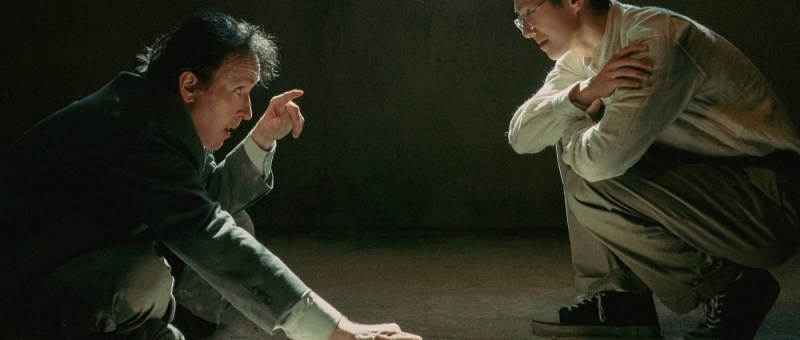
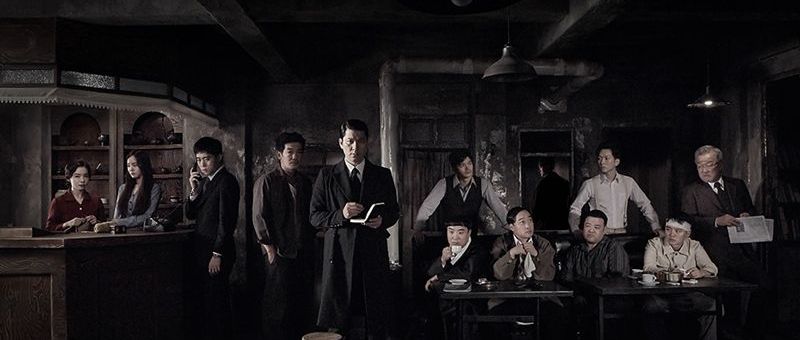
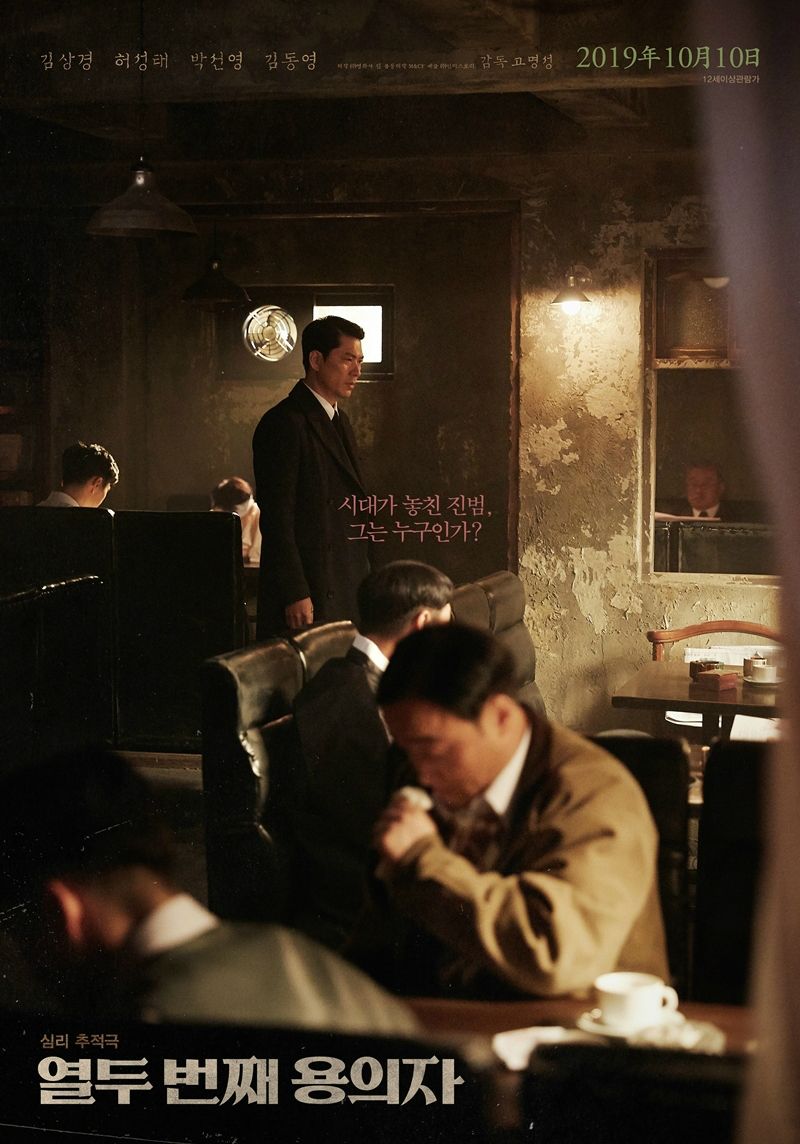
Led by Lee Myung-se, The Killers (더 킬러스) was originally billed as a six-part anthology film featuring different takes on the short story by Ernest Hemingway, but somewhere along the way took a kind of detour and now arrives as a four partner with a looser theme revolving around noir and crime cinema. Frequently referencing the Edward Hopper painting Nighthawks, the film hints at urban loneliness and a haunting sense of futility along with the mythic quality of noir as a tale that tells itself.

At least that’s in part how it is for unreliable the narrator of the first episode, a petty gangster who wakes up in a mysterious bar after being cornered by rival thugs. While in there he meets a similarly lost, middle-aged film director in the middle of a strange date with a fawning young woman who’ve definitely wandered into the wrong place. A sense absurdity is echoed in the fact that the man continues to sit in the bar oblivious to the knife in his back until the bar lady pulls it out for him and exposes the real reason why she lures lonely souls to this strange place out of time. Even so, thanks to her dark initiation the gangster is able to become himself and stand up against the rival thugs who were bullying him with his newfound “feistiness” having overcome something of the futility of black and white, classic noir opening sequence.

That’s something that never really happens for the heroes of part two who are a trio of youngsters trapped in Hell Joseon unable to escape their lives as cut price contract killers working below minimum wage for a chaotic company in which everything has been sub-contracted into oblivion. Ironically, one had dreams of becoming a policeman and another a nun while the third has recently had plastic surgery in the hope of landing an acting gig and claims he’s not in this for the money but to make the world a better place. Seeing their work as a public service, they tell each other that it’s wrong to grumble over their unfair pay because other people get less and are otherwise incapable of standing up for themselves until they take a leaf out of the boss’ book and try a subcontracting of their own which doesn’t quite go to plan.

While the first two episodes had been set in the present day the second two are set during the long years of dictatorship, the first sometime in the 1960s under the rule of President Park as an undercover detective and two men who appear to be unsubtle KCIA agents descend on a noirish, rundown bar with a picture of Nighthawks on the wall waiting for a mysterious fugitive to arrive. They don’t appear to know anything about why their target needs to be caught or who he is save for a daffodil tattoo on his arm and are merely they shady figures of authoritarian power we can infer are hot on the tracks of someone hostile to the regime. In any case, they are they are about to have the tables turned on them in a demonstration of their inefficacy in their power.

It’s the fourth and final piece unmistakably directed by Lee himself, however, that brings the themes to the four as it opens with an allusion to the assassination of President Park as the narrator tells us that it is 1979 and someone sent a bullet into the heart of darkness but the darkness did not die. The two goons who later show up are KCIA thugs working for the new king Chun Doo-hwan come to threaten the denizens of the cafe which include a man called “Smile” because he can’t and a woman called “Voice” because she has none while trapped inside an authoritarian regime. Inhabitants of Diaspora City, a home to the exiled, they have only a small hole to another world which affords them the ability to dream. Relentlessly surreal the segment is marked by Lee’s characteristic visual flair and sense of noirish melancholy that extends all the way out to a world more recognisably our own though no less lonely or oppressive.


The Killers screened as part of this year’s New York Asian Film Festival.

A Balloon’s Landing (我在這裡等你, Angel Teng I-Han, 2024)

A dejected Hong Kong writer longs to find the path back to paradise if in the most ironic of ways, but finds something quite different after accidentally being befriended by a young street tough in Teng I-Han’s lowkey queer romance A Balloon’s Landing (我在這裡等你, wǒ zài zhèlǐ děng nǐ). Seemingly inspired by the boy’s love genre, the film is chaste in the extreme and overly subtle in its central love story which seems to borrow heavily from other similarly themed East Asian romances such as Il Mare and Comrades, Almost a Love Story.

Director Peter Chan is in fact name checked several times, while Taipei street tough A-Xiang (Fandy Fan) has a poster of Patrick Tam’s Nomad on his wall which of course features the face of Leslie Cheung who occupies a similar space to that of Teresa Teng in Comrades in connecting the would-be lovers. Cheung tragically took his own life in 2003, the same year writer Tian Yu’s (Terrance Lau) parents were killed, while Tian Yu himself seems to have suicidal thoughts and intends to end his life at a place called The Bay of Vanishing Whales he thought he’d made up for his novel but is informed is real in a letter from a little boy in Taiwan he continues writing to as a kind of pen pal older brother. 

In a way, A-Xiang represents his desire for life, fond saying that there’s “always a solution” and begging him not to die just like one of the letters he received urging him to carry on living because the sender would be waiting for him at the Bay of Vanishing Whales. A-Xiang is also his literal saviour in that they meet when he rescues him from a group of conmen after he got very drunk bar but though their first meeting is sexually charged with both men wandering round in their pants their romance is slow-burn to the point of non-existence. While on road trip to find the mythical bay, the pair grow closer with Tian Yu slowly giving up on the idea of finding it along with the death it represents only for fate to intervene.

At this point the film changes direction in allowing Tian Yu to rewrite his present, no longer in search of death but of love and a way to save A-Xiang in the same way A-Xiang has saved him. At least, A-Xiang becomes a kind of symbolic other self as hinted at in his stories of men as lonely islands casting messages in bottles out into the sea in longing for connection. This sense of isolation may stem from a feeling of otherness born of his sexuality, though the film never clearly defines it, along with the more literal orphanhood and existential loneliness he shares with A-Xiang. 

As expected there is a fated connection between the two men which is more than a little contrived if perfectly in keeping with the genre of romantic melodrama as Tian Yu begins to chase a future rather than the past even while actively rewriting it to engineer a better outcome. It might be tempting to read something more into the connections between these two men each orphaned, floating islands seeking new futures together though the central theme seems to be less romance than desire for life in which Tian Yu is able to overcome his depression and desire for death through his connection with A-Xiang who gives him a new reason for living. 

A-Xiang’s symbolic value as Tian Yu’s desire for life might explain why the relationship between them never sufficiently ignites in what is at least billed as a queer romance though could easily be taken for simple friendship or platonic brotherhood with the only expression of desire longing looks and tentative motions from A-Xiang. In any case, Teng lends the beautiful Taiwanese landscape a note of wistful melancholy, a place of infinite nostalgia in Tian Yu’s mind and an evocation of the paradise he’s seeking that’s simultaneously past and future waiting for parallel lines to cross. The lyricism cannot however overcome the coyness of the central romance that for its potential poeticism remains somewhat obscure, an unrealised desire awaiting its season but also a shift in the times born of a new desire for life rather than the melancholy loneliness of past emptiness.


A Balloon’s Landing screened as part of this year’s New York Asian Film Festival.

Original trailer (Traditional Chinese / English subtitles)

Bushido (碁盤斬り, Kazuya Shiraishi, 2024)

The hypocrisies of samurai society have led a dejected ronin into prideful penury but there is perhaps a fine line between properness and priggery that he struggles to accommodate. Like his earlier film Blood of Wolves, Kazuya Shiraishi’s Bushido (碁盤斬り, Gobankiri) is a loving homage to a classic genre, in this case jidaigeki, albeit one with a modern twist in which it’s the murkiness of the society and contradictions of its code that make it impossible to live in rather than the innate corruptions of the samurai class. 

Even so, it’s samurai society which has betrayed Kakunoshin Yanagida (Tsuyoshi Kusanagi), now a seal-carving ronin living in a tenement house and months behind on his rent. Largely silent, Yanagida projects an air of calm but also a dangerous tension that hints at a deeply buried rage often echoed in the hellish glow of the candlelight that bathes his face in red. Not a natural gambler, he is nevertheless a Go enthusiast and talented player who gives the impression that he is always several steps ahead of any game in play. 

But that turns out not quite to be the case when he’s blindsided by a series of unexpected events that quickly destabilise his calmly ordered existence. Cast out of his clan after being accused of thievery, he is accused once again of taking 50 ryo from a pawn broker who had become a friend, Genbei (Jun Kunimura). Behind on his rent as he may be, Yanagida would not steal for stealing is beneath the dignity of a samurai and this stain on his honour is more than he can bear. But for all his righteousness we learn that he is also an ironic victim of his own priggishness and responsible for several other men meeting similar fates, cast out of the clan for something Yanagida turned them in for. In his reduced state, he seems to feel guilty and wavers momentarily on hearing the man who framed him for stealing a scroll from his former lord say he did so to gain money to support disenfranchised samurai but is caught between the spirit of samurai integrity and its letter. As his quarry told him, fish cannot live in water that is too clean and his oppressive enforcement of these arbitrary rules did no one any good. 

Yet his seeming righteousness does seem to improve the world around him, proving an epiphany in pawnbroker Genbei who develops a new determination for doing business fair and square after witnessing Yanagida’s conduct at the Go table. The irony is perhaps that everything on the Go board is black and white whereas Edo society is decidedly grey. Even the madam from the Yoshiwara Yanagida and his daughter are on good terms with (Kyoko Koizumi) can switch from wise mother to heartless gang boss in an instant. One moment, she’s giving maternal advice to Yanagida’s daughter Okinu (Kaya Kiyohara) and the next berating a runaway geisha who’s obviously been beaten while her lover has been killed for his transgression. The theft of 10 ryo will also it seems get you killed in this world of heartless rigidity and universal suspicion. 

Yanagida may not be much better in some respects. He is prideful and reckless, endangering himself and his daughter, whom he allows to pawn herself in the Yoshiwara knowing it’s very unlikely they will be able to repay the debt before the New Year deadline seeing nothing other than his obsession with vengeance against the man who wronged him in so many ways, Shibata (Takumi Saito). Shibata is his opposite number, cynical and amoral he subverted the samurai code for his own gain yet in its way perhaps it’s just a rebellion against the kind of austerity a man like Yanagida represented. In the end he can only escape his self-imposed prison by abandoning his rigour and accepting compromise, slashing the Go board with its black and white mentality in two though it leaves him further exiled. He cannot return to the world of samurai, but neither can he live among these ordinary people and like so many jidaigeki heroes seems to be condemned to wandering in this imperfect world. To that extent, the resolution seems much more cheerful than we might have been expecting. Everything works out, no harm done, but there’s a lingering tension even amidst apparent good fortune in a world of constant watchfulness. 


Bushido screened as part of this year’s New York Asian Film Festival.

Original trailer (no subtitles)