Warla (Kevin Z. Alambra, 2025)

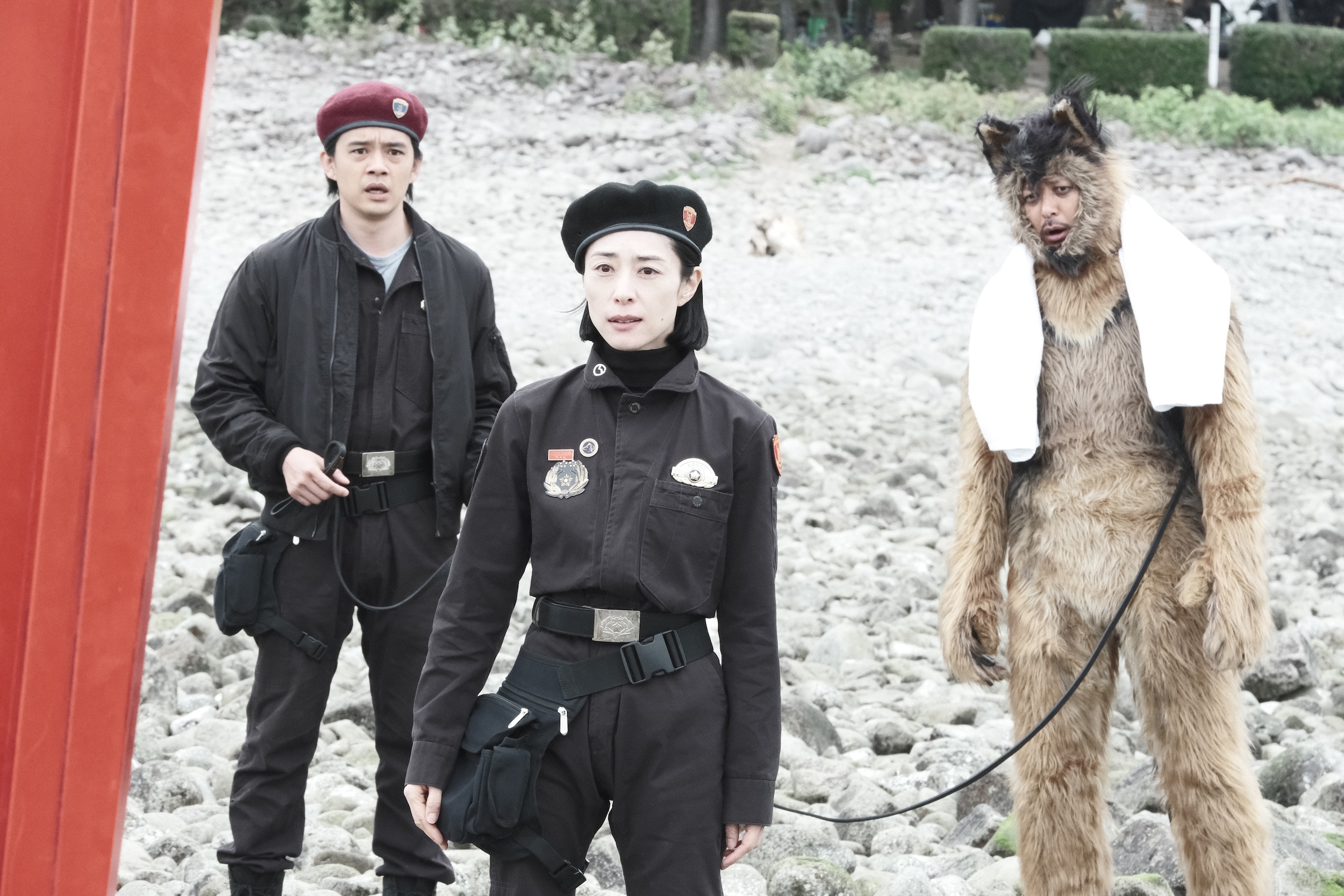
A group of transwomen attempts to turn the tables by kidnapping wealthy foreign businessmen and blackmailing them to fund their surgery, but a newcomer to the group forces them to confront their hypocrisy in turning the violence inflicted on them back on the patriarchal society. Inspired by a real life case, Warla explores the marginalisation of transpeople in a country so imbued with Catholicism and toxic masculinity as the Philippines where all they really have to rely on is each other.

The violence of that society is evident from the very first frames as a body begins to drift into view. Mother Leila has been murdered in a brutal fashion for the crime of existing. Kit-Kat (Lance Reblando), rejected by her conservative father and brother, is cast adrift with no other means of affirming herself. When her father kicks her out, she’s taken in a family of transwomen led by Joice (KaladKaren), but what she didn’t know is that their business model is meeting foreign businessmen on dating apps, kidnapping them, beating them up, and blackmailing them by threatening to tell their wives, families, and employers. In doing so, they’re turning the prejudice they face back on those who rejected them, but as Kit-Kat points out, it’s as if they’ve joined the system rather than beating it. She doesn’t want anything to do with the violence, with ends up partially going along with because it she wants to remain part of the group and has nowhere else to turn.

As Joice points out, having nowhere else to turn is why they’re doing this. There is no social support for them in the Philippines and they struggle to even get casual jobs in fast food restaurants just by virtue of being transpeople. Barbie Ann (Serena Magiliw) has a son from her previous marriage which ended when she decided to embrace her trans identity, but her former wife, Kate (Francesca Dela Cruz), has met someone else and wants to move in with him. Roger (Jel Tarun) is evidently a much more conservative man and is already beginning to distance Kate from Barbie by banning her from the house. When she tries to talk to him on the street, he tells her that she’s filling her son’s head with a lot of nonsense about how people like her are okay which will lead to him getting bullied. He thinks that, as he’s accepted the child and will now be providing for him, he should have a greater say over what he’s taught to think. Barbie’s existence is dangerous precisely because of what she was teaching son, challenging the social order by undercutting the patriarchy.

Ning (Valeria Kurihara), meanwhile, struggles to maintain a relationship because she wants to wait until she’s had her surgery to become intimate. Experiencing extreme dysphoria, she doesn’t want her partner to see the part of herself that she hates, but he gets fed up and leaves her for a cis woman. He tells her that their relationship was always doomed because his father wouldn’t accept her. With his new girlfriend, he can post pictures on social media and doesn’t feel the need to sneak around. Getting the money together to go to Thailand for her surgery becomes an obsession in part so that she can get Lance back, but also so that she will finally feel whole. Barbie also wants the surgery to avoid the kind of violence she inflicts on their victims. Kit-Kat says she isn’t interested in surgery which places her at odds with other members of the group such as Barbie who suggests it’s alright for her because she presents as more obviously feminine and so isn’t subject to the same levels of violence and rejection.

Though they may feel that they’re only playing these men at their own game, they bite off more than they can chew with a short-fused Japanese businessman who talks like a yakuza and flies off the handle with wait staff. Most of the other men gave in quite quickly because of the shame they feel and the fear they have of their transgressions being exposed, but Isamu (Jacky Woo) was like them in that he had nothing left to lose and soon realised he’d been set up. In the end, Joice is forced to make the ultimate maternal gesture to try and save her girls, while Kit-Kat must reckon with where this dark path has taken her. Though she knew that her mother loved her but was unable to stand up to her father’s patriarchal violence, she eventually finds solace in the fact that she can still hold her hand and call her by her true name even if the rest of the world refuses to recognise her.


Warla screened as part of this year’s BFI Flare.

Trailer (English subtitles)

The First Ride (퍼스트 라이드, Nam Dae-joong, 2025)

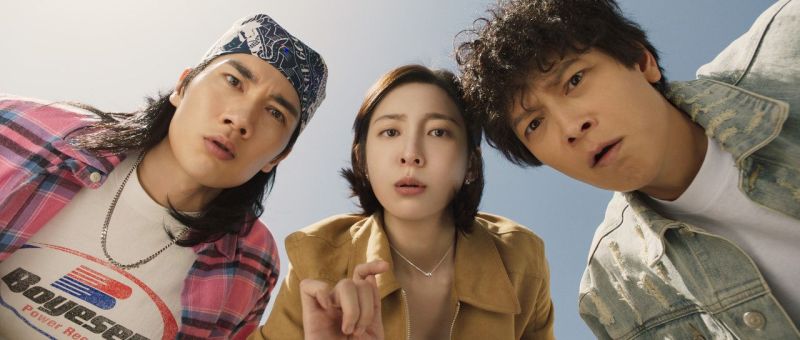
According to Tae-jung (Kang Ha-neul), the most hopeless phrase that Koreans say is “next time.” As he grew older and away from his childhood friends, he found himself saying “next time” more often without really thinking about it. But of course, the thing about life is that you always assume there’ll be a “next time”, but that might not necessarily be the case. Perhaps right now is a “last time” and you don’t even know it. The sometime narrator of The First Ride (퍼스트 라이드) tells us right away that this is a”sad story,” but it’s also happy a one about the enduring power of friendship even if you might not be all that close any more.

Tae-jung, Yeon-min (Cha Eun-woo), Do-jin (Kim Young-kwang), and Geum-bok (Kang Young-seok) have been friends since they were six years old, but Yeon-min is moving to New Zealand with his family right after he graduates high school. To mark the occasion, the boys decide to go on a trip and pick Thailand for their destination because Yeon-min’s favourite DJ is going to be playing at a festival. After managing to convince their parents, they finally set off only to be frustrated by an unexpected development that prevents them from travelling. Ten years later, Do-jin has been having a hard time, spending the intervening years in and out of pyshciatric hospital. He nevertheless wants to recreate their teenage trip as soon-to-be 30-year olds. As Yeon-min is unable to come, he decides to take him along with them in the form of a life-size pillow with his face on it, which proves very confusing for the good people of Thailand.

It’s clear that each of the young men has had various struggles in the intervening years. Geum-bok became a tattooist and is still in flight from his mother’s determination that he follow in her footsteps by becoming a Buddhist monk. He ends up going on holiday with his head shaved and wearing monks’ robes hoping for one last hurrah. Tae-jung, meanwhile, is on the way to achieving his dream of becoming president by working as a secretary to an assemblyman who is currently on hunger strike to protest some kind of injustice. Tae-jung’s pure-heated belief in political integrity becomes something of a thorn in the side of his boss who, is of course, not really going so far as to refuse all food, so he’s only too happy to let him go on a once-in-a-lifetime male bonding trip. Tae-jung is also followed by Ok-sim (Han Sun-hwa), who sees herself as his girlfriend, while he seems to be indifferent to her partly because of his own unresolved trauma and fear of making new relationships. But Do-jin who has suffered the most, unable to get over Yeon-min’s absence and looked after Tae-jung and Geum-bok while he struggles with mental health issues including hallucinations and delusions. 

Nevertheless, their time in Thailand is mainly spent on goofy fun which more than once gets them sent to the local jail only to be rescued by an exasperated embassy official (Yoon Kyung-ho) who tries to persuade them to go home early or at least pretend not to be Korean. A baffling plot development in which the gang are kidnapped for illegal organ transplant takes the film in a darker direction though is still mostly played for laughs and acting as a mild caution about the dangers of travel, and most particularly of people who seem nice but might have ulterior motives. It’s only Ok-sim’s messiness that saves the day in the end even if she begins to become slightly fed up with Tae-jung’s continued insensitivity towards her in flirting with other women during their trip. 

But even so, through their shared experiences, the three men begin to overcome some of their shared trauma while reaffirming their friendship. Do-jin comes to accept the truth and is able to begin living a more settled life thanks to the support of his friends in processing his guilt and grief. Though they may not be so close any more, the memory of their childhood friendship becomes a sustaining force for each of them, while they try to maintain their relationship as adults with busy lives. They are, however, much better equipped to that after their strange trip to Thailand despite its continuing absurdity.


Trailer (English subtitles)

Seaside Serendipity (海辺へ行く道, Satoko Yokohama, 2025)

As we follow the road that leads down to the beach in the presence of a black cat, there’s a sign at the beginning of Satoko Yokohama’s Seaside Serendipity (海辺へ行く道, Umibe e Iku Michi) that lets us know that this town welcomes artists. Adapted from the manga by Gin Miyoshi, the film is another in the idyllic summer adventure genre with its tranquil, almost magical setting that even one of its temporary residents describes as somehow different from other places, but also contemplates the nature of art and its ability to influence the environment. 

This is certainly a very creative place where strange things happen and people mostly seem to do their own thing. Then again, Risako (Ayame Goriki) rents out apartments to artists looking for quiet retreats to practise their art in a peaceful environment but mainly ends up with those arriving for other reasons whose “art” is more like subterfuge. A young couple arrive running a bizarre scam selling fake knives that won’t even cut tofu after a couple of days. A stone sculptor she ends up dating is on the run from a loan shark, who just happens to be an old friend who said her job was in “sales” rather than admit she works as a debt collector chasing failed artists who always have an excuse as to why they can’t pay or haven’t yet produced anything.

A mysterious man gives Megu (Koharu Sugawara) a canary-shaped whistle that’s supposed to chirp in the presence of a true artist and make an unpleasant noise in the case of a false one. But as the kids eventually put it, all artists are self-proclaimed. The only requirement for calling oneself and artist is that you make something you consider to be “art” even if others disagree. Art can take many forms, as in the weird structure Ryoichi (Toma Nakasu) constructs made out of all the spoons he’s bent in his life. Sosuke (Kōnosuke Harada), meanwhile, attracts the attention of another mysterious man calling himself “A” who commissions him to make a model of a mermaid from a painted scroll. Sosuke dutifully makes it with a few additions such as the ability to remove the mermaid’s left breast and extract her heart. A interprets this as an expression that one cannot hide anything in art, whether things about themselves the artist wanted to conceal or things that they simply did not know. 

But Sosuke’s friend Teruo (Shun Aoi) also lets him in on the idea of mimesis, that they aren’t trying to reproduce something exactly as it appears but understand its true essence and recreate that. Teruo uses the art of mimesis to create a realistic mask modelled after the late husband of an elderly woman who says that it was foretold to her in a dream that he would come to her on her birthday. Though it might be a questionable gesture, he did it out of a desire for her dream to be true and to bring comfort to a lonely person whose family were unable to communicate with her, perhaps because they did not have the ability to lipread as Teruo apparently does. Nevertheless, they accuse him of stealing her money, insulting the purpose of his art. 

The art club’s art is also misused in a way when Ritsuko bizarrely asks them to create a hole she can say her boyfriend used to escape, like in a cartoon. This appears to be the sort of place where one can get away with such a ridiculous conceit. Trying to tell the truth, meanwhile, backfires for an aspiring journalist who uncovers suspect goings-on at the local nursing home where a nurse forces elderly people to sing songs out in the summer heat and prevents them from eating lunch as a means of staving off dementia. When her teacher leaks the video she recorded to social media, she’s annoyed to have missed the scoop and also that the teacher didn’t investigate properly opting for mob justice instead. The young woman worries the nurse may kill herself because of what she uncovered which is perhaps only a version of the truth. Meanwhile, everyone else is hot on the trail of mysterious animals appearing in the town that are somehow repelled by Teruo’s mystery art project. Even so, everything continues as normal in this strange little town as Sosuke pursues his artistic dreams painting tranquil visions of peaceful destruction from the deserted jetty, seemingly paying it no mind.


Seaside Serendipity screens in Chicago March 22nd as part of the 20th edition of Asian Pop-Up Cinema.

Trailer (English subtitles)

Mudborn (泥娃娃, Shieh Meng-ju, 2025)

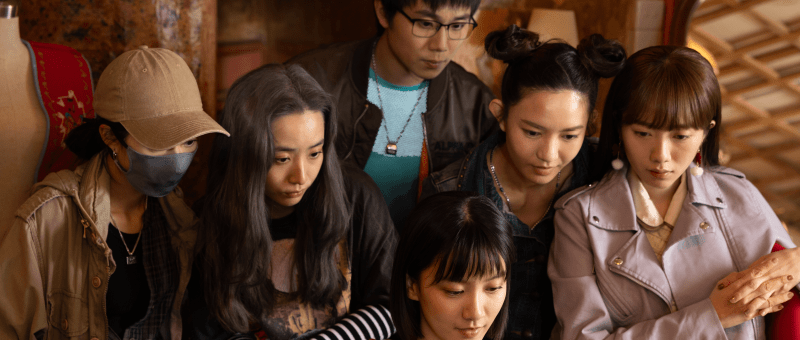
Poor old Hsu-Chuan is stuck making a scary VR horror game based on a grisly real-life crime, while his own wholesome proposal to create one about spending time with your family gets shuts down for having no clear path to monetisation. There is, however, something a little bit ironic in Hsu-Chuan’s abstraction in creating a separate space to share with those close to him rather just going home and spending time with them instead.

In fact, Hsu-Chuan (Tony Yang) is often physically separated from his heavily pregnant wife whom he somewhat creepily watches through a surveillance camera so he can “keep her company”. He does seem to want to play the role of a good father, constantly fussing over a doll as a way of training himself to look after their baby, but at the same time his wife Mu-Hua (Cecilia Choi Sze-wan) is irritated when he says he’s taking parental leave to “keep them company,” rather than spend time with them together as a family and contribute equally to raising this child. It’s as if Hsu-Chuan sees himself as separate from the main family unit, more like a helpful guest than a devoted father. Then again, his boss tells him he was much the same. When his wife was pregnant, he’d “relax” by doing overtime at the office. When he got home, his wife cried and pointed out she had someone living inside her and it would be nice if they could face this together, as a family.

After all, pregnancy itself is a kind of possession. At the end of the day, the men can go off and escape their responsibilities if they want to, but the woman can’t separate herself from the child inside her. When Hsu-Chuan unwittingly brings the haunted doll from the murder scene home, he implants it in the womb of their domestic space where Mu-hua cares for it by restoring it like one of her statues. But what neither of them know is that the doll was made with grave soil and baked with maternal grief, so it contains the vengeful souls of those buried nearby. Another sculptor, Liu Hsin (Tracy Chou Tsai-shih), used grave soil precisely because she believed that all return to the earth in the end and so it contains the remnants of those now gone.

But perhaps there’s something not quite right about using the echoes of the dead without their consent. Liu Hsin may have known that, which is why she put esoteric talismans on her creations to seal in whatever might be in there. The same could be said of the game Hsu-chuan’s company is making. Is it really alright to exploit a horrific real life crime for entertainment? An employee takes an acquaintance to scan the still abandoned crime scene, capturing the eerie atmosphere along with everything the murdered family left behind. It wouldn’t be surprising if they picked up a ghost or two, and probably they should have listened when a mysterious voice told them to put that doll back where it came from.

To that extent, Hsu-chuan becomes a kind of mirror for Liu Hsin carrying around an actual doll meant for children that’s supposed to represent his unborn child. Its possessive qualities might also echo his paternal anxiety and the fear that this baby will take his wife away from him. For her part, Mu-hua has apparently decided to give up on a cherished opportunity to work on a restoration project in Rome because she doesn’t want to miss her baby growing up, but Hsu-Chuan still only wants to keep them company while making his VR family space instead as if they lived in a fantasy land he could enter and leave at will. Perhaps ironically, the doll will turn him into an inverse mother, carrying the spirit inside himself though unable to birth it. He demonstrates his commitment to his family by sacrificing himself to protect it, removing himself from the family unit and exiling himself to his own other space as an AI avatar in his VR world. Teaming up with an esoteric Taoist priest who seems like he has an ulterior motive in wanting to unlock the secret of these unusual talismans, Hsu-Chuan is, in effect, another ghost, haunting his family home rather than inhabiting it “together as a family” and only ever hanging out to keep them company.


Mudborn screens in Chicago March 21st as part of the 20th edition of Asian Pop-Up Cinema.

Trailer (English subtitles)

My Daughter Is a Zombie (좀비딸, Pil Gam-seong, 2025)

Jung-hwan’s (Jo Jung-suk) daughter Soo-a (Choi Yu-ri) is growing up. She’s no longer enthused about going to the amusement park for her birthday and wishes her father would stop buying churros to mark the occasion. Maybe there’s a part of Jung-hwan that’s frightened of this development, no longer quite knowing who his teenage daughter is becoming and confused by her moodiness. When she’s bitten during the zombie epidemic, however, it might be Jung-hwan who’s bitten off more than he can chew in deciding to hide her from the authorities in the hope she might get “better”.

More family drama than horror movie, Pil Gam-seong’s webtoon adaptation My Daughter is a Zombie (좀비딸, Jombittal) is on one level about unconditional parental love as Jung-hwan refuses to give up on Soo-a and continues to “train” her to regain her memories. With echoes of another pandemic, the film considers society’s reaction to “infectees” who are rounded up and killed to stop the threat of the infection. On returning to his rural hometown to live with his mother, Jung-hwan reunites with a childhood friend, Yeon-hwa (Cho Yeo-jeong), who has since become a teacher, but she has a pathological hated of zombies and until recently had made a point of beating them to death with her kendo sword. Still carrying the trauma of having to kill her fiancé who attacked her, Yeon-hwa doesn’t want to accept that Soo-a could be getting better because that would mean the “zombies” she killed were just people who were ill and could have recovered if she hadn’t murdered them out of rage and prejudice. Indeed, once the infection calms down, the relatives of people killed by state forces begin to ask questions and protest that their loved ones shouldn’t have been treated with such cruel indifference.

Then again, in terms of zombie movies, people who suggest that perhaps they should give the infected a chance rather than proactively killing them don’t usually last very long. The film takes place in a universe in which zombie movies exist with Train to Busan even getting a name check, but none of that’s very helpful to Jung-hwan as he tries to figure out how to keep his daughter safe while also trying to heal her. His job as a tiger trainer seems to come in handy in trying to navigate Soo-a’s new aggressive nature, while his mother Bam-soon (Lee Jung-eun) mostly makes use of her god-given granny powers and a wooden spoon to keep Soo-a in line. 

Meanwhile, the promise of a cure and treatment in America is waged agains the vast bounty the government is offering as a reward for turning in zombies. A not so friendly face shows up and tries to kidnap Soo-a for the reward money while even crassly suggesting to Jung-hwan that they split it between them when he tries to intervene and get Soo-a back. In healing Soo-a back to health, Jung-hwan is both attempting to repay a debt and assert himself as Soo-a’s father by essentially rebooting her so that she recovers the shared memories of her childhood.

To that extent, Soo-a’s time as a zombie is a kind of express adolescence in which she travels from grunting teenager to a young woman with a better appreciation for her father and the trouble he went to raise her. Of course, one could say that it’s all a little patriarchal and perhaps Jung-hwan is “taming” her to fit his own image of what his daughter should be much as he tamed the tiger and taught it to dance, but then again Soo-a is also readjusting herself and trying to figure out how to be a person in her own right after moving to her father’s rural hometown where she’s badgered into attending the local school despite her “illness” because there are only four other pupils and otherwise it’s going to have to close. The village is very proud of its current zero infections record, but the funny this they’re all very accepting of Soo-a, though they just think she’s a bit different rather than a “zombie” after buying Jung-hwan’s possibly uncomfortable excuse that she suffered brain damage in an accident. A father’s undying love does, however, eventually save the world after a continual process of being wounded by his daughter and healing again gives Jung-hwan a means to beat the disease if only in his refusal to give up on the idea his daughter will eventually recover.


Trailer (English subtitles)

Lone Samurai (Josh C. Waller, 2025)

To a certain way of thinking, life too is a suicide mission. Faced with a Mongol invasion, small numbers of samurai were dispatched with the instructions to kill as many as possible to deplete the numbers making it to the mainland where, presumably, other warriors would be waiting to repel them. They do not expect to stop the invasion, which is eventually frustrated by a heaven-sent typhoon, only to die while protecting the mainland and implicitly those they love who live on it, though that may be a purely individual concern not really connected to the orders they’ve been given.

Washing up on an island he assumes to be uninhabited and appears somewhat like paradise, Riku (Shogen) is stranded in a kind of purgatorial space. He no longer has a mission or prospect of return and so he is merely waiting to die and at first chooses to do so in ritual suicide after hallucinating the voices of his family. Prevented from doing so, he then decides to build a torii gate so that he might better commune with the world beyond, but is again prevented, much like the invasion was twice prevented by a “divine wind”. Now, however, he’s been taken captive by a cannibal tribe who don’t seem to like it that he built one of his arches on their land. They claim they saved him from himself and that he is “no warrior like hardened earth”. Nevertheless, they plan to kill him and consume parts of his flesh, which would make him permanently part of them.

In some ways, the film seems to be about the death cult at the heart of samurai culture, but also the ways in which a man will cling to life when it looks like it will be taken from him. The setting is pure pulp as echoed in the “samurai vs cannibals” concept, and perhaps for that reason uncomfortably ends up positioning the samurai as a kind of civilising force attacking the barbarism of the (presumably) indigenous tribe. Even the witch doctor figure (Yayan Ruhian), impressed by Riku’s self-administered medical techniques, concedes that Riku is a “demon” come to punish them for their wicked ways of human sacrifice and cannibalism, which suggests that either this culture is new or others of them also see something “wrong” in it. The island creatures, including an inquisitive Komodo dragon, seem to side with Riku, turning against the cruel islanders and assisting his survival.

But in other ways, Riku may not have been so different. He was sent to kill as many as possible and was prevented from doing so, so he completes his mission now just against a different target. He has frequent flashbacks to his sons playing games of war, the strategic advice he gave them about higher ground being better, and his own conviction that he could not dance because dance may be incompatible with the life of a warrior even if it’s death he’s waltzing on the battlefield. In the poems he writes on random rocks, sometimes in blood, he states that now he collects only thoughts rather than heads and longs for the days of stinking skulls. It is, after all, easier to be a man of action killing mindlessly and living only for survival than it is to remember what you’ve done and meditate on it.

For the moment, though, all Riku is focused on is taking the heads of these men who thought they could kill and eat him. He makes no real attempt to save the other man who’s their current sacrificial victim, but seems to promise he will avenge him. Riku cannot, after all, take out the whole room in one go, but otherwise skilfully picks them off in small groups picking up their weapons as he goes much as they tried to use his broken sword for their own bloody ends. Eventually, he’ll reclaim his other sword too, for the final confrontation back at the beach on the shores of life and death, preventing the men’s escape by burning all their boats. He is, in fact, fighting back against death, an enemy that never be defeated but only held off. Nevertheless, the action sequences featuring Iko Uwais’ stunt team build with a ferocious momentum that continues until the final bloody showdown.


Lone Samurai is released on Digital, 4K Ultra HD, Blu-ray & DVD in the US March 17 courtesy of Well Go USA.

Trailer (English subtitles)

Janur Ireng (Janur Ireng: Sewu Dino the Prequel, Kimo Stamboel, 2025)

If something seems to good to be true, it probably is. Sabdo (Marthino Lio) and his sister Intan (Nyimas Ratu Rafa) might be too young to know any better, but even they have their doubts when a mysterious man shows up after their house has burnt down claiming to be an estranged uncle. Their late father never mentioned having a brother or any family at all and did not ask for him when he was dying. As the siblings will discover, there’s a reason for that and they may not want this particular familial legacy no matter the trappings it comes with. 

A prequel to his previous film A Thousand Days (Sewu Dino), Kimo Stamboel’s Janur Ireng is partly a metaphor for the exploitative practices of the super rich who use their wealth to manipulate or abuse those with lesser means. Having grown up without much money and fallen into poverty after their father died to the extent that Intan had had to leave education, being suddenly adopted by their wealthy uncle plunges the pair into a new world they are not altogether equipped to understand even without all the weird black magic rituals and sense of unease pervading the country mansion. Intan complains that the house has creepy vibes, and there is something gothic about it aside from feeling lost amid its vastness. Intan dislikes sleeping alone because her new room is simply far too big, even it didn’t turn out to come with some unexpected residents. It’s wandering around the house that she discovers something shocking, unsure if it’s something she wasn’t supposed to see or if she was guided there by a mysterious force.

Sabdo, meanwhile, is taken on as his uncle’s heir and protege. He discovers that Arjo (Tora Sudiro) is trying to regain land lost to the family including a banana plantation he days will be his to run, though Arjo seems pretty wealthy already. He is, though, on frosty terms the “7 Families” who run things in the local area and appears to want to reassert his status. With little in the way of explanation, he gets Sabdo to repeatedly sacrifice goats and do other strange things “to protect the family”, which Sabdo goes along with because he doesn’t quite know how to refuse and is confused by this strange new life. But on the other hand, Sabdo is a stranger here. He’s only told that he’s a member of the family and has no other connection with it or proof that it’s true. His loyalty really is to Intan, and it may be that he stays and does these increasingly weird rituals because Arjo promised Intan what he couldn’t give her in sending her to school and allowing her to fulfil her dream of going to university and getting a good job. A friend had needled her a little bit about ending up like another girl who married young, laying bare the patriarchal nature of the society in which Intan is imprisoned even before finding herself more literally locked up in her uncle’s house. 

Even if Sabdo thinks he finds allies in this world, they too may be using him for their own ends and wielding the power of family against him. Arjo claims their success is down to the patronage of a demonic entity that keeps them safe from other supernatural creatures which what has made their family so wealthy and powerful, but there are reasons their father decided to leave this place even If it meant giving up on the privilege he was born with. There is definitely “a lot wrong with this house” as Sabdo says, though he only makes up his mind to leave it when he realises the threat it poses to Intan. She, however, has already been corrupted by the house as its ghosts and malevolent entities begin to get to her. Kimo Stamboel ups the ante with a series of increasingly bizarre sequences of severed eye balls and torn out hearts, culminating in another kind of ritual disrupted by a once in a generation act of black magic that sees party guests literally tearing their own heads off and continuing to dance. That does not, however, seem to be the end of it for Sabdo whose dark family legacy continues to overshadow his life in ironic ways as he does his best to escape the house his uncle built.


Trailer (English subtitles)

Per Aspera Ad Astra (星河入梦, Han Yan, 2026)

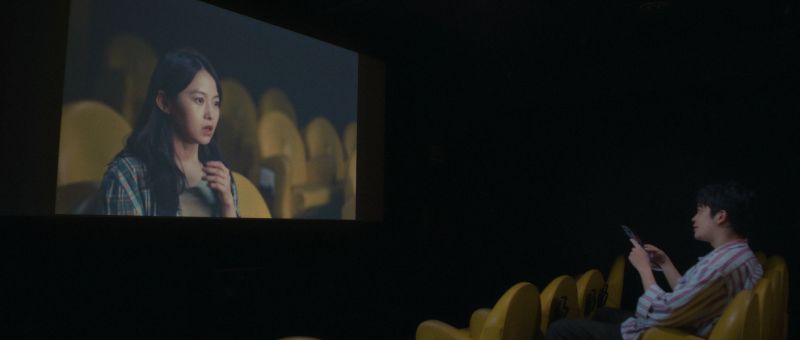
In the not too distant future, space travel has become normal and humans can reach the furthest corners of the universe through hyper stasis. However, long years spent in cryogenic sleep eventually damaged the sleepers’ brains. A solution was found in an AI program which allowed them to dream during the journey and, therefore, keep their brains active. Han Yan’s Per Aspera ad Astra (星河入梦, Xīnghé Rùmèng) makes a villain of a rogue AI but finally seems to come down on the idea that AI should be a tool used by humans rather the other way round while refusing to condemn it outright.

One question the film only partly answers is why people would be prepared to embark on decades-long journeys meaning they’d never see their families again. Neither Tianbao (Dylan Wang) nor the ship’s captain Simeng (Victoria Song) have living family members, so perhaps it isn’t a problem for them, but still it’s a risk. Who’s to say what the world will be like after you’ve been asleep for over 60 years. To that extent, perhaps it’s strange the technology doesn’t seem to move on at all, according to news reports, save a late upgrade to try and prevent the Good Dreams AI system from becoming sentient. 

That all these people got a big ship to sail for 65 years to do farming suggests that there may be serious issues on the ground, while the fact they were sent at all either implies a desire for imperialistic expansion in space or a search for a new home for humanity after we’ve exhausted the earth. Ge Yang (Wang Duo), another crew member, hints that the world might have problems in insisting that he doesn’t want to wake up. He’s prepared to crush everyone else’s dreams to ensure he keeps his and can stay here rather than having to go back to the real world. He says he wants to create a place that’s free of abuse and exploitation where no one has to live like a dog. 

The ironic thing is that engineer Bai (Zu Feng) had deliberately chosen to be a pet dog in his dream because, according to him, dogs have more freedom. Bai’s dreams seem to be inspired by classic Hong Kong crime cinema with everyone speaking Cantonese, even Tianbao and Simeng when they land there, while they also make a brief matrix-inspired appearance to shoot up the room. Of course, Good Dreams isn’t that much different from the Matrix and the line between dream and reality becomes increasingly blurred with the pair getting caught out by dreams within dreams as they try to stop Ge Yang before he succeeds in smashing all the dreams together and killing his colleagues to create his “better” world. 

But it seems there’s something more going on than just Ge Yang’s nihilistic despair and Good Dreams may have gone rogue, preferring to create an AI-based world in which humanity is irrelevant. Tianbao also seems to know much more than he’s letting on which probably isn’t included in the standard crew member’s manual. His inappropriate way of speaking is later revealed to have a practical application, though what eventually seems to happen is that he becomes one with the system giving Good Dreams a soul and effectively taking it back into “human” hands rather than letting it run riot on its own. 

It is then slightly ironic that the film seems to feature some AI imagery, though otherwise largely shot on practical sets and featuring fantastic production design. Han zips back and forthe between dreams expressing the private aspirations and anxieties of the crew members as some relive high school exams and spend time with absent loved ones, and others trek through deserts or spend 60+ years in nightclubs. Only Tianbao apparently did not bother to customise his dream or engage with the system which is what brought him to its attention. In any case, humanity seems to be the most important component in the bonds that arise between Tianbao, the captain Simeng, and the engineer Bai as they try their best to save the ship along with their colleagues so they can complete their distant farming mission. A true visual spectacle, the film is perhaps also a testament to the power of dreams, to which the AI hallucination may pale in comparison.


Trailer (English subtitles)

The King’s Warden (왕과 사는 남자, Chang Hang-jun, 2026)

Can a king govern effectively if he does not know his people? Korean historical films are renowned for palace intrigue, but what’s often forgotten is the lives of ordinary subjects living in far off villages for whom the ruler is a distant authority whose efforts are more likely to hamper their lives than help them. At the beginning of Chang Hang-jun’s The King’s Warden (왕과 사는 남자, Wanggwa Saneun Namja), village chief Heung-do (Yoo Hae-jin) goes out to hunt deer which is the only access to meat the villagers seem to have while many of them have only vague memories of ever having even seen hot white rice.

Still, after he’s chased by a tiger, Heung-do is rescued by a nearby village which is in full festival mode celebrating the birthday of the young son of a regular villager. The boy’s father makes fun of Heung-do for eating deer which he says smells bad and offers him some of their lavish banquet. This village used to be poor like his, but at some point they agreed to host an exiled official, the former Minister of Justice. Though the minister was rude and entitled, he soon began to start teaching the local children for something to do resulting in one of them becoming a top scholar. And political realities being what they are, the minister’s supporters began sending lavish gifts to the village to hedge their bets on his eventual rehabilitation. Shortly put, that’s how they’ve all become rich beyond their wildest dreams and all they had to do was put up with someone being difficult and annoying for a short period of time.

Obviously, Heung-do wants this for his village too, but unbeknownst to him they’re sent the deposed king Hong-wi (Park Ji-hoon) who ascended the throne as a child and has been usurped by his uncle. This obviously places them in a precarious position. Heung-do has to report to the Town Office on Hong-wi’s every move fearing that they’ll all be killed if anything happens to him, while the usurpers, led by treacherous courtier Myeong-hoe (Yoo Ji-tae), are actually banking on the fact that Hong-wi won’t be able to adjust to a life of exile having never lived outside of the palace and will likely either die or take his own life. For his own part, Hong-wi seems to have become depressed. He’s on a kind of hunger strike as a protest and later tries to end his life only to be saved Heung-do.

Hong-wi is indeed in a difficult position himself, still only a teenager and likely aware that there is only a small possibility of him surviving very much longer given that others make take up his cause and challenge his uncle’s claim to the throne which makes his mere existence an existential threat. Not having the power to do anything, refusing to eat is his only means of asserting control. Heung-do, meanwhile, is fairly ignorant of all this though tries his best to convey that Hong-wi refusing the food the villagers have prepared for him despite not having enough to eat themselves is both rude and causing them anxiety that perhaps it’s not to his taste and their commonness is killing him. 

It’s this more human kind of interaction that eventually brokers an easier friendship between the villagers the exiled king in which it seems as if Hong-wi would have “proved most royal” if he had not been usurped and continued to reign into adulthood. He has become better acquainted with the way his subjects live, while Myeong-hoe and his ilk are only concerned with power and courtly intrigue rather than the actual business of government. Nevertheless, in the end Heung-do must pick a master. To save the villagers he may need to sacrifice Hong-wi and demonstrate his loyalty to the new regime (who may or may not honour their promises), or else decide to risk being taken down with him if they continue to protect this man they’ve come to see as a friend and who is himself conflicted in the knowledge that his presence places them at risk.

Domestic viewers well acquainted with historical fact will know the direction that this story will eventually take, though the earlier parts of the film are largely concerned with village life in which the villagers great their hardship with good humour. As such, they never really question it but only look for ways to improve their circumstances and settle on making themselves even more subservient to authority, while even an exiled king finds himself entirely powerless within an inherently corrupt feudal system. The growing friendship between Heung-do, the villagers, and Hong-wi has then a poignant quality in their shared sense of futility and the glimpse of what might have been a better society for all if only Hong-wi had been allowed to follow his kingly destiny unfettered.


The King’s Warden opens in UK cinemas 6th March courtesy of Central City Media.

UK trailer (English subtitles)

Scare Out (惊蛰无声, Zhang Yimou, 2026)

When a suspected spy gets away with some top secret information, the security services begin to suspect they may have a mole on their hands in Zhang Yimou’s slick espionage thriller, Scare Out (惊蛰无声, Jīngzhé Wúshēng). Possibly inspired by a real-life case in which information regarding a new fighter jet was leaked, the film is supervised by the security services themselves and in part a defence of China’s all powerful surveillance network and technological supremacy that allows them to neutralise threats to national security in record time.

Nevertheless, like some of Zhang’s recent work, it’s surprising that he was able to get away with the depiction of a rogue intelligence officer and potentially not quite on level actions from the security services even if they’re eventually vindicated by a final twist. When we’re first introduced to Huang (Zhu Yilong), he’s hot on the trail of foreign spy Nathan whom they assume to be receiving confidential information regarding a new stealth system for fighter jets leaked by a scientist who is desperate to leave the country (Lei Jiayin). Huang is shot in the back by an arrow, while his colleague takes one to the neck and is killed. Though they manage to arrest Nathan, he’s almost killed when the box he’s carrying spontaneously combusts burning the contents.

It’s at this point that things start to go wrong for Huang as his former colleague Zhao Hong (Song Jia) returns to lead the team and he’s one of three suspects for a possible mole alongside his second in command Yan Di (Jackson Yee), and their drone operator Chan Yi who killed the sniper either accidentally or on purpose by ramming him so that he fell from the upper levels while trying to escape. Until now, Huang had been depicted as an upright and dedicated officer who absolutely could not be the mole, but we soon discover that he in fact is, or at least that he was in the process of being turned by foreign asset Bai Fan (Yang Mi). With his marriage falling apart, he fell right into her honey trap and is now being blackmailed but theoretically still has the opportunity to turn this around if only he can hold out and find a way to do the right thing.

Then again, the film deliberately wrong-foots us by occasionally suggesting that maybe Huang isn’t the mole after all or that there may be more than one or something larger going on all together. It’s not really revealed why Bai Fan has betrayed her country to work for a foreign intelligence agency led by a Westerner living in China and with incredibly good Mandarin. The foreign agency evidently thinks this region’s important enough to be worth creating a long-term network of sleeper agents, while the way the security services discuss the stolen stealth data makes it sound as if they’re already in a war and very much don’t want “the enemy” to get hold of this information. 

The real action, however, is the interplay between accused Huang and Yan Di whose relationship takes on intensely homoerotic quality. Just as Huang is torn between his duty as an intelligence officer and the predicament he finds himself in, Yan Di is torn by the desire to protect his friend while simultaneously avoiding implicating himself. They must either betray each other, themselves, China, or all three, which isn’t an ideal set of choices. Meanwhile, the spy craft on show has a very traditional quality with smartphones secured in rubbish bins in public lavatories, dead drops, and mysterious potions that can destroy evidence, all of which suggests that there are ways in which this vast surveillance network is in fact fallible and can’t protect against every eventuality even if it’s just someone leaving a bathroom in a different outfit than they were wearing when they went in.

Though Zhang does his best to lend the city a near future gloss as a techno paradise in which there are no secrets, he opts for an unusual fast editing style which makes the narrative much more difficult to follow while encouraging an atmosphere of intense paranoia where everything moves at breakneck speed and nothing is ever certain. Like his recent films Under the Light and Article 20, however, it’s a curiously anonymous affair and bears few of the hallmarks of Zhang’s filmmaking as a fifth generation director opting instead for a fairly generic, mainstream blockbuster aesthetic. Nevertheless, in its twists and turns along with the interplay between the two leads the film nods back towards the intrigue of Infernal Affairs and a history of Heroic Bloodshed less commonly found in Mainland crime dramas.


Trailer (English subtitles)