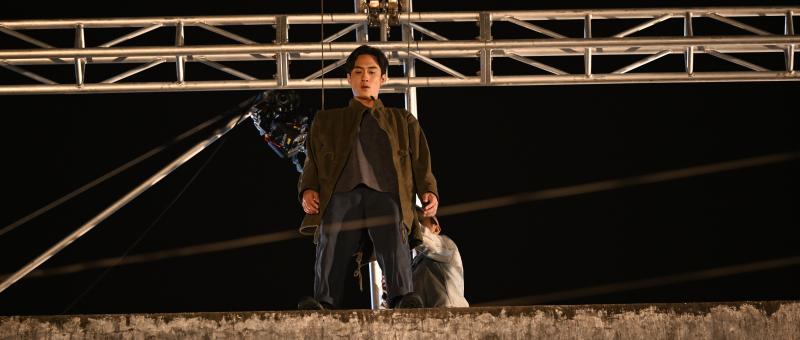

LONESOME VACATION (Atsuro Shimoyashiro, 2023)

A rockabilly detective starts to realise that the most mysterious part of his case is his client in Atsuro Shimoyashiro’s quirky tale of buried histories and enduring images, Lonesome Vacation. Echoing amore distant past, the film reflects that some things you’re better off not knowing while those around us are often flawed beyond our imaging or else carrying painful secrets of their own they may not wish to share though more for the sake of others than themselves.

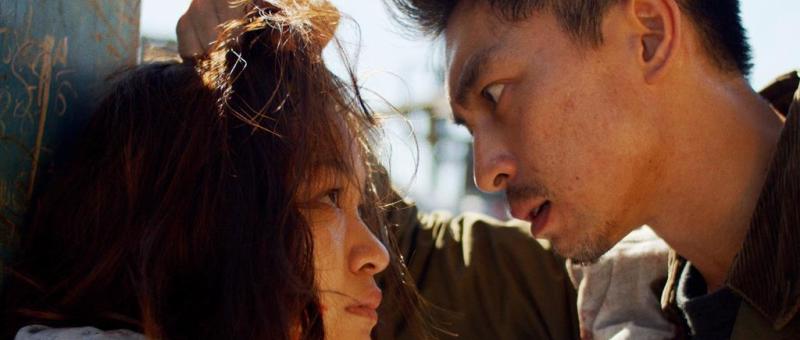
You might say that Eichi (Takuma Fujie) stands out with this 1950s quiff and retro get up, but it also allows him to hide in plain sight while carrying out his various jobs chasing cheaters and other kinds of surveillance work. But when he runs into old flame Kyoko (Kyoka Minakami) whom he briefly dated in college, she asks him to investigate a reel of film she deceived in among her late father’s belongings. The film seems to show her father with another woman, Reiko, whom Kyoko is keen to track down. 

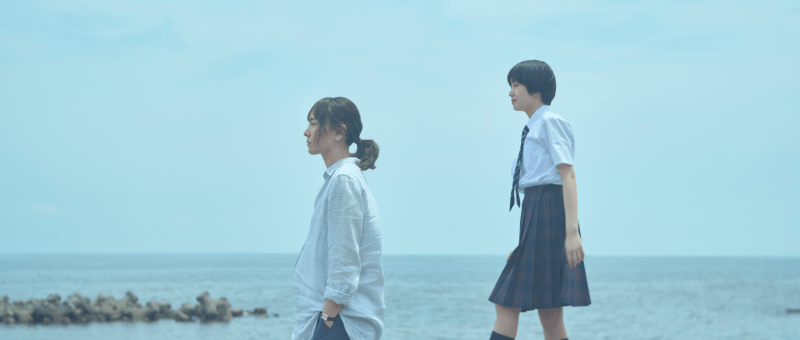
Setting off on a roatrip that is as Eiji later says is almost like a vacation, the pair eventually start to grow closer and perhaps fall in love while trying to solve the mystery of the film. Kyoko’s father Miko, suggests in his voice over that film is a more ephemeral medium than video while simultaneously confessing that he wanted to capture a woman on film, to keep her in the present moment, in the knowledge that film will last longer than us. Miko describes it as a metaphor for life, his own and perhaps generally though it’s lost to us now. Kyoko searches for the answer to a puzzle her father died before telling her how to solve.

Piecing everything together, Eichi starts to realise that Mikio most likely had an affair and Kyoko may have a sibling though neither of them are very sure whether they should reveal themselves not wanting to create further trouble in their lives by announcing that their mother had an affair. Nevertheless, even after it seems like the original case has been resolved, Eichi realises he’s unable to solve the mystery of Kyoko. Having very briefly dated in uni, he doesn’t quite understand why she’s come to him now or really anything about her character or habits. She meanwhile seems to have taken a liking to him through their strange road trip during which everyone seems to regard them as a young couple very much in love.

Ironically enough, Eichi avows that it’s the image that matters but only after comes to understand the import of something he’s seen, little reasoning that sometimes relationships can be different than the image we have of them. Yet as he says, it’s image that’s really important, our thoughts and impressions of something as disctivt from their physical presence along with the absences within them that provoke our imaginations. Kyoko gets some answers if perhaps not the ones she’s was looking for but is also left with unavoidable gaps because those who could have filled them in are no longer able to do so.

Shimoyashiro gets good milage out of the retro quality of Eichi’s outfit and hairstyle along the absurdity of a rockabilly detective but also gives him an almost Kindaichi-esque sense of goodness, too diffident to pursue Kyoko even after beginning to realise that she seems to be flirting with him. Slightly more dejected than he is, Kyoko insists that one day simply follows another but that also kindness is what gives life its meaning. In a way, it’s what gives the image value too in a kind of selflessness that placed no ownership over its subject and was content to let it roam where it chose. Taking place largely in the surprisingly romantic environs of Jogashima, the film has a charmingly old-fashioned quality even in its central slow burn romance along wth a genuine sense of worth and authenticity even if its main subject turns out to be the melancholy echoes of a lost love or at least the image of it enduring long after the lovers themselves have departed,

LONESOME VACATION screened as part of this year’s Nippon Connection

Original trailer (English subtitles)

Qualia (クオリア, Ryo Ushimaru, 2023)

“What is happiness for a chicken?” a recent recruit to a chicken farm wonders, though as she later points out they all meet a grim fate in the end. Yuko (Kokone Sasaki), a timid, quiet woman is much like the chickens she farms though apparently content with her captivity echoing only that it’s enough for her that she feels needed by the family who otherwise mistreat her. Actor Ryo Ushimaru’s directorial debut Qualia (クオリア) examines the place of women in the contemporary family along with its seething resentments and petty paybacks. 

On spotting one hen that’s being bullied by the others, Yuko places it in a protective cage and wonders if it will one day be able to return to the others while perhaps aware that it echoes her own circumstances. Having married into the family of her husband, Ryosuke (Kenta Kiguchi), she’s become little more than a drudge bullied by her embittered sister-in-law Satomi (Maya Kudamatsu) who walks with a cane after an accident caused by her brother which gives her some additional leverage over him. Perhaps to escape the sense of constraint he feels in his familial relationships, Ryosuke has been having an affair with a woman from a roadstop that buys their eggs, Saiki (Ruka Ishikawa), who has spun a tale about a false pregnancy in an attempt to get him to take their relationship more seriously. When that doesn’t quite work, she fetches up and the farm and is mistaken for a job applicant, overjoyed on realising the position comes with room and board. The unsuspecting Yuko is all too eager to accept her, almost browbeaten by Saiki into overriding her internalised compulsion to clear it with Satomi and Ryosuke first. 

Yuko is such a people pleaser that even after finding out about Saiki’s claims to be carrying her husband’s child she welcomes her into their home as if tacitly admitting her inferiority to this other woman who has done what she couldn’t do in conceiving a child. Much more direct by nature, Saiki cruelly retorts that becoming a mother is the key part of being a wife while making pointed and barbed remarks that express her desire to elbow Yuko out of the way and take her rightful place at Ryosuke’s side. After moving in, she quickly takes over the domestic space by requesting that she be allowed to help with the cooking and cleaning while Yuko takes care of the chickens outside, playing the part of the perfect housewife in an attempt to undercut Yuko’s place within the family.

Yet she also seems to feel sorry for Yuko and disapproves of the way Ryosuke treats her with his bullying manner and emotional coolness. Ryosuke had told her that he never loved Yuko and had married her only because his sister told him to, hinting at his feelings of emasculation amid this otherwise matriarchal environment where Satomi effectively rules the roost. The irony is that there are supposedly only female chickens on the farm which is how they ensure none of the eggs they send out are fertilised. If they find out any of the new chicks they take in are male, they get “removed” by conflicted farmhand Taichi (Chikara To) who is a bit of chicken obsessive and finds it hard to square his affection for the birds with this responsibilities as a farmer which mean they’ll all be “removed” when they stop laying and therefore lose their purpose.

The same is true for Yuko. Unable to conceive she’s now being replaced by a subsequent generation and has lost the will to fight back unable even to say that she objects to any of these new arrangements. Ryosuke, a rooster in the henhouse though one whose masculinity is scrutinised, seems to want a reaction from her but all she can tell him is that she treasures the memory of him proposing to her with all the chickens cheering them on and that she’s satisfied just with that one romantic moment. The question remains whether she too will one day find the courage to fly the coop and escape her bullying at the hands of the other women or otherwise discover a way to reassert herself that doesn’t leave her at their mercy. In any case, Ushimaru’s quirky, surreal dramedy eventually discovers that chickens too can fly if only they’re given the chance to do so.


Qualia screened as part of this year’s Nippon Connection

Original trailer (English subtitles)

Belonging (とりつくしま, Kahori Higashi, 2024)

What if you could come back after you died and watch over those close to you while possessing a familiar if inanimate object? Her second film this year, Kahori Higashi’s Belonging (とりつくしま, Toritsukushima) adapts a novel by her mother in which the recently deceased are asked to choose a “belonging” to sink into given that they seemingly still have lingering attachments to this world. Yet simply watching can itself by painful while it might not do to linger too long in a place where everything is moving on except you.

That’s a possibility that comes to mind the second story featuring a little boy who asks to inhabit the blue climbing frame at the park. He wistfully watches other kids he used to play with pass by and later meets a little sister for the first time, but all these other children will grow up while he will not even if other children will their place. The kindly woman (Kyoko Koizumi) sitting in the school room that doubles as Belonging’s office doesn’t mention what happens if the object is destroyed or moved as something like a climbing frame might be though we later discover that depleted objects can no longer hold their charges which are then dragged back to the afterlife. 

Of course, there’s always the possibility that an object that was precious to you was not so precious to others and may end up being sold or given away as one old woman discovers realising the beloved grandson she hoped to spend eternity with has sold the camera she gave him. The heroine of the first sequence, Koharu, installs herself in a coffee cup featuring a design of a triceratops she and her husband bought on a trip to the museum which he continues to fondle and treasure though Koharu watches him being a tentative relationship with another woman who urges him to buy new mugs as a symbolic moving on from his late wife. 

For Wataru, the coffee cup may already in a sense have been possessed by her spirit though he sees her more in a plant he keeps watering unaware that it’s artificial. Objects can have a kind of presence and carry something of their former owners with them even if not literally possessed but being trapped inside an inanimate object is also frustrating and at times painful. They can no longer act or interact but are mere passive observers at the mercy of their loved ones who may be readier to move than they’d assumed or otherwise dispose of or lose the objects the deceased assumed would be precious to them. 

The heroine of the final sequence might have this right when she chooses to possess an item she knows will only give her a limited time, not even minding when she’s denied the full resolutions of her anxieties in seeing her teenage son win a baseball game while he continues to call her number and recite pleasantries like some kind of mantra. She acknowledges that it might not be good for her or her son to stay too long, she just wants to see he’ll be alright before moving on to the afterlife. The woman from Belonging seems to approve of her choice though her own backstory remains unclear, present both in this world and in the other. 

Making brief detours to introduce us to some strange people in the part such as a female banzai double act and a not-quite-couple, the film is at pains capture both everyday life and the poignancy of loss as the various spirits look for new places to belong while the world around them continues to change and evolve in ways they no longer can. In the park, an old man dances comically much to the dismay of his female companion who is trying to read her book, claiming that he’s going to keep living to the very end which at least expresses a vibrant desire for life in some ways free of the lingering attachments that bind the recently deceased to our world but perhaps also trap them here in solitary museums of past love in which their presence may be felt but also unacknowledged. 


Belonging screened as part of this year’s Nippon Connection

Original trailer (English subtitles)

God Seeks in Return (神は見返りを求める, Keisuke Yoshida, 2022)

It’s perfectly natural a lot of the time to feel as if you expect nothing in return for helping someone, after all it’s only what you should do as a fellow human being. But really we do expect something even if it’s just acknowledgement and it can be hurtful and upsetting if don’t feel we get it while the sensation that we’re being taken advantage of can leave us feeling silly for having offered in the first place. Keisuke Yoshida’s Good Seeks in Return (神は見返りを求める, Kami wa Mikaeri wo Motomeru) revels in these human paradoxes as a self-confessed nice guy is pushed to breaking point by the fallout from all his attempts to be neighbourly which seem to have backfired exponentially. 

Then again, Tamogami (Tsuyoshi Muro) almost certainly does at least hope for something in return when he agrees to help out struggling YouTuber Yuri (Yukino Kishii) with her moribund channel by enlivening it with his skills in video editing and design. He isn’t helping her in order to engineer a sexual relationship, and in fact turns Yuri down when she suddenly disrobes exclaiming that it’s the only way she can repay him for his kindness, but does appear interested and is additionally irritated when she begins hanging out with a bunch of vlogger cool kids he thinks are just exploiting her naivety. Yuri had already payed him back with homemade beef stew, an offer that was accepted in the interest of friendship, but her constant references to repayment of a favour expose her idea of relationships as essentially transactional which to be fair they well may be. Even so, she appears somewhat guileless, opportunist rather than calculating and desperate for attention.

That might be why she can’t see that the reason she became unexpectedly popular after agreeing to a “body paint” stunt with a pair of more established YouTubers is that people wanted to see her naked which is why they’re always requesting more of the same. The first half of the film plays as quirky comedy, an offbeat romance between a nice middle-aged man and a dippy young woman who thinks she’s no good at anything and incapable of being alone. But things soon turn sour when one of Yuri’s stunts seems like it might have serious consequences for a local business owner and Tamogami has to muster all of his PR skills to put this particular fire out. The simple friendship between them that was brokered by a weird ogre-like mascot suit Yuri christens Jacob is disrupted by Yuri’s desire for fame as she undergoes a complete personality transformation after falling in with a group of more successful, media savvy YouTubers who have fancy design skills and marketing teams. She dismisses Tamogami as old-fashioned and joins in when the others make fun of him in rejection of the genuine friendship that had arisen between them.

When a friend he’d helped out financially and even stood guarantor on his debts takes his own life Tamogami is deep in the hole. Finally he wonder’s if he shouldn’t have something in return for all the unpaid labour he’s been doing for Yuri but she predictably brushes him off until he finally embarks on a weird vendetta trying to “expose” her YouTube channel for being founded on lies and exploitation. There may be something in her that’s regretful, wistfully looking at the sweater Tamogami had given her with cute illustrations of her and Jacob on it, while her new “god” Murakami openly mocks him leaving her conflicted about the dark side of their new internet endeavour effectively bullying a guy whose only crime was being nice and bit too dull and middle-aged for her new hipster friends sure to drop her like she’s hot as soon as something goes wrong.

Though not as extreme as some of Yoshida’s other films, God Seeks in Return suggests that nice guys never prosper but also that no one’s really as “nice” as they think they are. We wall want something in return even if it’s just a thank you and not to be belittled or taken advantage of. There can be something paradoxically selfish in niceness in which people do it more for their own gratification or to feel they are better than those they help and conversely the same in those who take advantage of others. In it’s way bleak and melancholy in its vision of human relationships, the film nevertheless holds out a faint hope in the reality of the genuine connection between its mismatched heroes no matter how dark and twisted it may eventually become.


God Seeks in Return screens 1st June as part of this year’s Nippon Connection

International trailer (English subtitles)

Dreaming in Between (逃げきれた夢, Ryutaro Ninomiya, 2023)

Everyone keeps asking Suenaga (Ken Mitsuishi) is if he’s okay. He has these tiny moments in which it looks like he’s on pause, sudden instances of stillness in which he stares vacantly into space. We start to wonder if he’s experiencing some kind of mental distress, having a stroke or developing dementia as those around him seem perplexed about his his behaviour which to us seems cheerful and pleasant. In fact, it seems confusing and unfair that he’s held in such contempt by his wife and daughter not to mention the pupils at his school and sullen young woman at the cafe he often frequents. 

A man of a certain age with a once overbearing father now mute and living with dementia in a retirement home, Suenaga is indeed undergoing a crisis of life. A year away from retirement, he begins to wonder what it was all for and how his relationship with his family became what it is today. He asks his wife Akiko (Maki Sakai) if they somehow gradually became estranged from each other in an impassioned speech in which he begs for love that neither she or his daughter are very minded to give him. Perhaps we can infer from the surprised reactions to his cheerfulness and attempt to take an interest in his daughter’s life that he hasn’t always been this way, though he too seems confused and perhaps not so much trying to make a mends but only to be his real self at what he fears may be the close of his life. 

When he surprises the waitress at a local cafe he goes to frequently by sitting in a different seat and then neglecting to pay the bill, it’s not really clear whether he actually forgot or did so deliberately as an attempt to assert himself. Likewise when he makes a clumsy attempt to embrace his now emotionally estranged wife or calls in sick to work it seems like more examples of his strange behaviour, yet Suenaga claims he’s becoming more of himself and on looking back over his life so far feels dejected and unfilled.

This  sense of mid life crisis is exposed in his conversation with Minami (Miyu Yoshimoto), the waitress at the cafe and an former pupil. He reveals that he wanted to become a head master but didn’t make it, and thinks he was only appointed deputy head because of picking up so many cigarette butts dropped by his rebellious charges, Minami is in many ways his opposite number, young and grumpy yet also grateful to him in another way restoring meaning to his life when she tells him that his words once saved her when he told her that she was fine the way she was. Even so she goads him a little, joking and maybe not really that he should give her his retirement money so she can have a better life. Echoing the opening conversation with his father, Minami hints she may soon quit the cafe to become a bar hostess or sex worker to save up before eventually emigrating Greece.

For all his teacherlyness, Suenaga seems to be a man who wants to be more understanding. He takes an interest in his pupils though they assume he doesn’t and again tells Minami that people should live the way they choose. In the rawness of their final parting, he tells her not to do anything she’ll regret but then adds that maybe she should, as if a life with no regrets is not really lived or perhaps reflecting that despite his own unhappy circumstances he does not really regret the life he’s lived. 

Filming in 4:3, Ninomiya makes great use of closeups, not least of Mitsuishl’s cheerful expression which somehow carries with it a great sorrow amid his own disappointments and yearnings. False or otherwise, there is something touching the connection of these dejected souls, the ageing teacher and the former pupil looking for permission to move on with her life but also teaching something to Suenaga in her sullen defiance and the eventual drive to keep going. Quiet and gentle if suffused with melancholy, Ninomiya’s poignant drama does indeed seem to argue that people in general are alright as they are but false acts jollity are as likely to confuse as console.


Dreaming in Between screens 1st June as part of this year’s Nippon Connection

Original trailer (English subtitles)

Drive Into Night (夜を走る, Dai Sako, 2022)

Small-town futility leads to tragedy when two frustrated scrapyard workers attempt to cover up a crime in Dai Sako’s dark psychological drama Drive into Night (夜を走る, Yoru wo Hashiru). Oppressive in its atmosphere, the film situates itself in a world of constant humiliations where life is cheap and reputation everything. Its heroes seek escape from their disappointing existences through consumerism and extra-marital affairs, but no longer see much of a future for themselves while even the dissatisfying present seems to be ebbing away from them. 

Asked what makes his life fun, Akimoto (Tomomitsu Adachi) replies “not much”. A classic mild-mannered guy, he’s regarded as the office dogsbody and at the beck and call of his abusive manager, Hongo (Tsutomu Takahashi). When a new female sales representative, Risa (Ran Tamai), visits the yard, Hongo runs Akimoto down in front of her apologising for having such a useless employee who does nothing other than drive around all day. His sense of masculinity is also wounded by an older colleague who tries to sell he and his friend Taniguchi (Reo Tamaoki) some kind of aphrodisiac but reflects that Akimoto is too “tame” to ever make use of it, while even Taniguchi needles him about being a 40-year-old man who’s never had a girlfriend and still lives at home with his parents. In many ways he’s the classic “nice guy”, but there’s also something a little dark about him that makes it seem as if he may snap any moment. That may have been what happened when he and Taniguchi went to a bar with Risa shortly after she’d been coaxed into a works drink with Hongo. Something obviously went dreadfully wrong in the night, because Risa is soon reported missing and both Akimoto and Taniguchi begin behaving oddly. 

It is true enough that both men, and many of their colleagues, also consider themselves to be on the scrap heap. Akimoto is tempted to quit his job to put distance between himself and the scrapyard but reflects that he’s unlikely to find another job even if quitting so suddenly might arouse suspicion as Taniguchi warns him. Meanwhile, he knows the yard is in trouble. They have him running round doing cold calls but returning empty handed, while office workers are constantly fielding calls about unpaid invoices. His irritation is palpable when he spots the boss, Miyake, leaving one morning soon after he arrives, loading expensive golf clubs into his fancy car. Hongo bullies him, but later says he does it out of respect because Akimoto is the only one who bothers to do his job properly. But then again even Hongo concedes that hard work gets you nowhere. Most of his paycheques go on child support and he often sleeps in his car in the car park. The only reason he’s not been fired is that he has a personal connection to Miyake.

Even so, this fairly tenuous relationship does not really explain why Miyake goes to such great lengths to protect Hongo when he becomes the prime suspect in Risa’s disappearance and is framed by Taniguchi and a guilty Akimoto. It may be in a way that he really does think of the company as a kind of family, as perhaps do the loan sharks who keep calling them after Akimoto ends up in debt having joined a weird cult encourages him to think there is nothing wrong with him and the fault is all with an unaccepting world. The cult leader tells him that he is “full of anger”, which perhaps he is. This being in the immediate aftermath of the coronavirus pandemic, Akimoto is often questioned about still wearing a mask long after most people have abandoned them and part of the reason is as an attempt to hide his true self. After joining the cult he takes it off, but soon adopts another disguise in dressing in Risa’s clothes as his mental state continues to decline. 

Taniguchi meanwhile makes an effort to continue with his “normal” life which includes visiting his mistress. Unbeknownst to him, his wife Misaki (Nahana) is also having an affair with the consequence that neither of them is able to fully devote themselves to their young daughter Ayano who eventually ends up in a potentially dangerous situation because of her parents’ various transgressions. Nevertheless, despite discovering that her husband may have been involved in a murder it’s Misaki who decides that he has to “protect our family” above all else. Amid all of this, Risa becomes almost literally lost before later being unceremoniously dumped like so much scrap. After framing Hongo, Taniguchi tries to convince Akimoto that Risa isn’t their problem anymore as they each struggle to hang on to the previously disappointing realities they had been so desperate to escape. 

It has to be said that aside from the misogyny of its worldview, there is also an uncomfortable quality in the film’s characterisation of a shady Chinese businessman who of course knows how to get rid of bodies along with the fact his chief associate is Korean-Japanese gangster. Though the film’s strongest character may in fact be the Filipina bar hostess, Gina (Rosa Yamamoto), on whom Akimoto fixes most of his hopes who defiantly tells the cult leader that she’s happy with her life and has no reason to join his organisation, Akimoto exposes himself by telling her she’s wrong because he doesn’t see why a “foreigner”, “a woman”, who works in a “dirty” bar, could be happy or averse to being “saved” by him. Still he insists that he hasn’t “changed”, it’s the world that’s changed around him. Taniguchi later says something similar, and they each may have a point. In any case, this world is largely one of resentment and futility in which there is no release. Sako captures the drudgery of his protagonists lives with crushing naturalism but also perhaps little sympathy.


Original trailer (no subtitles)

ROLL (Daichi Murase, 2020)

“Change the world!” a stranger yells, perhaps ironically, from a passing pickup truck as the hero of Daichi Murase’s debut feature Roll, pelting hell for leather to rescue a trapped a soul. An unconventional coming-of-age tale, Murase’s experimental drama follows a young man from innocence to experience as he becomes determined to discover the secrets of an earlier age while discovering also that genies don’t go back inside their bottles and in fact may prefer to expire in the light of the sun rather than survive an eternity of vicarious darkness. 

The hero, Yoshihiro is a strange and aloof young man as we gather from the first scenes which find him alone in his room while his dormmates engage in drunken socialising. Yoshihiro’s chief obsession seems to be with disassembling abandoned gadgets into their component parts, sleeping surrounded by neatly grouped collections of various nuts and bolts. His understanding boss at his part-time job as a removal man often allows him to keep bits of interesting junk that would otherwise be disposed of and it’s during one particular house clearance that he makes an unexpected discovery on being charged with investigating a possible haunting of an external annexe. Removing the chains which block the door and wandering inside, he’s confronted by a series of television screens featuring calming scenes of water and then by a frightening apparition. Looking a little like Oogie Boogie, a young woman in a white hazmat suit and black goggles eventually reveals herself and gifts him a strange device of a kind he has never seen before. 

The device, which turns out to be an 8mm camera as his bespectacled roommate reveals to him, sparks a sense of curiosity about the world he did not appear to have in his constant need for disassembly. Yet while his new friend takes him to a worryingly abusive filmset (the director slaps and then randomly licks the face of his leading man) for advice later suggesting they use it to make movies along the themes of “Mushroom, Explosion Festival!”, or “Psychopath Signal”, Yoshihiro is equally preoccupied with mysterious young woman who appears to be being kept captive by her father afraid to let her experience the light of the sun. As ignorant youngsters, the pair are unsure whether Nazuna’s father is earnest in his overprotectiveness and the outside world really is toxic to her, or merely selfish and possessive wishing to keep her locked up forever a secret to himself alone. 

Nazuna, as the young woman is called, of course turns out to be a metaphor for film something which is destroyed on exposure to the light. Strangely, Yoshihiro’s friend mistakenly tells him that the camera needs to be opened once a day to let the air in, apparently little knowing it will erase whatever is inside. A kind of fairytale of enlightenment, Yoshihiro becomes a kind of promethean rescuer literally busting Nazuna out of her jail in an attempt to free her just as he tries to steal the arcane knowledge of analogue technology from a generation apparently unwilling to teach him. She perhaps knows how dangerous her journey may be, but chooses to go anyway insisting that she doesn’t want to grow up which is perhaps to be overburdened with sophistication. Yet does her desire to see the ocean for real negate the idea of truth in celluloid, implying that some things can only be fully experienced by venturing out into the world for oneself, or make the case for it in Yoshihiro’s clumsy filming of her moment of rebellious defiance towards the curse of obsolescence? 

Making full use of the technology himself, Murase shifts from digital into 8mm and then into 16 for the pair’s final adventure as they transition through a tunnel into another world, emerging on the other side perhaps somehow changed. Yet even so, burdened by his ignorance, Yoshihiro fails to bring the message home with him discovering nothing but a blank screen in place of an essential truth. Less about films and medium than perpetual motion, Murase’s enigmatic fable rolls its way towards an inventible conclusion as its hero edges his way towards maturity having discovered an appetite for connection in place of deconstruction. 


Original trailer (no subtitles)

Space Sweepers (승리호, Jo Sung-hee, 2021)

If we’re content to ruin one world, why do we assume our salvation lies on another? Billed as Korea’s first blockbuster science-fiction extravaganza, Space Sweepers (승리호, Seungriho) finds a ragtag gang of junkers quite literally cleaning up humanity’s mess while ironically marginalised into outer space by internecine capitalist consumerism which in insult to injury offers to sell you a cure for the disease it has caused but only to those whom it deems worthy of its dubious promises. 

By 2092, the Earth has become all but uninhabitable. Led by 1952-year-old messianic scientist Sullivan, UTS Corporation has prepared a new artificial orbiting home but only the elite are invited while the remaining 95% linger on the poisoned ground below or else, like the crew of the Victory, wander in space attempting to make a living from clearing the debris left behind after countless sattelltes and space station launches. Yet as jaded space sweeper Tae-ho (Song Joong-ki) remarks, the more you work the more debt you earn. The Victory is a well equipped ship and you’d think that would mean greater earning potential but all it means is that it costs more to maintain while the initial outlay has landed them with unsustainable debt not to mention constant random fines and official interference. All of which is why when they find a little girl hidden in a storage compartment of an abandoned vessel and realise she’s the missing android that’s all over the news, they decide to play off the Black Foxes “terrorist” organisation who kidnapped her and UTC who want her back for all they can get. 

As might be expected for all his claims that “humanity is dirty” in its failure to protect the planet, Sullivan is no pure hearted saviour but an amoral elitist intent on terraforming Mars as some kind of authoritarian “utopia” populated only the “best” of humanity. He claims not to care about money, but cites the false equivalency that those with the deepest pockets must necessarily be those with the greatest capability while privately describing those left below as expendable and not really worth saving. Dressed like a cult leader, even at one point appearing as a giant hologram, Sullivan’s appearance owes a significant visual debt to Neon Genesis Evangelion’s Gendo Ikari, leaving little doubt as to his megalomaniacal intensions as he wilfully sells a solution to a problem he himself helped to cause while continuing to exploit the Earth and the people still on it to hasten its demise and his own enrichment. 

While the central message reinforces the idea that large corporations are not to be trusted while the capitalistic system they uphold is inherently destructive, it also perhaps undercuts that of the impending environmental crisis with which we are faced if we can’t mend our ways fast enough. Even so, it falls to the space sweepers to mount a unified global resistance against the wilful destruction of their homeland in protecting the android, Dorothy / Kot-nim (Park Ye-rin), who of course holds the key to saving the world. Despite having taken in her in with a view to ransoming her, the crew soon bond with the adorable little girl as unofficial daughter while Tae-ho alone remains reluctant in grief over child for whom he continually searches while internalising a sense of resentful failure in the knowledge that he lost her because of his own self-absorbed sense of hopelessness. 

Even so, there may be something a little uncomfortable in the final resolution in which the crew coalesces into a recognisable family unit each of them somehow “improved” as they accept their responsibility for Kot-nim whether in giving up drinking or erasing tattoos. Nevertheless, the film is refreshingly progressive in its depiction of a transgender character who gains the confidence to be their authentic self thanks to the unconditional solidarity among the crew members, though the sudden reversal of UTS from cult-like evil corporate entity to remorseful force for good seems rather optimistic as if the only problem was Sullivan and not the system that gave rise to him.  While the overall aesthetic may be somewhat televisual, Space Sweepers does feature some interesting production design and impressive CGI though its greatest strength lies in the jaded idealism of its space bandit protagonists as they band together to resist their marginalisation with mutual solidarity and compassion.


Original trailer (English subtitles)

Tiger Stripes (Amanda Nell Eu, 2023)

There’s a moment in Amanda Nell Eu’s Tiger Stripes in which a teacher writes a sentence in English on the board for the students to fill in the blanks. “The father ___ to work,” one reads. Another, “The mother ___ at home.” It’s within these blanks that the girls live their lives, contained by rigidly held patriarchal norms supported by a religious environment that turns resistance into heresy, something demonic and evil that must be rooted out so the afflicted individual can be returned to society without their parents being ostracised.

A bright and talented student, Zaffan (Zafreen Zairizal) is shown to flaunt these rules by wearing a bra and commandeering the toilets to record tiktok dance videos with the help of her friends Mariam (Piqa) and the more conservative Farah (Deena Ezral). Perhaps the most transgressive thing about them is that she’s removed her hijab and in fact much of her clothing, defiantly assuring herself with a cheekiness that seems almost naive. After getting her school uniform wet in a local pond, she cheerfully runs home hair exposed in only her smalls. Her father barely bats an eyelid, but her mother is incensed. Somewhat counter productively, she drags her outside and shouts at her in front of all the neighbours about bringing shame on their family. 

Time and again, it’s other women that cause Zaffan the most trouble. After her classmates discover that she’s got her period and is therefore a woman, they beat her up and call her names suggesting that she’s unclean and no longer wanting to associate with her. It doesn’t help that her new status is known to all because girls on their period cannot participate in some of the religious practices at the school which similarly reinforce the idea that menstruation is a pollutant and womanhood itself is toxic. It’s indeed womanhood which been activated in Zaffan along with a natural desire to resist her oppression and be who she is. She begins to undergo a transformation that even she barely understands, snapping and snarling those who challenge her while otherwise catching and eating wild animals which she tears apart with her teeth. 

The girls tell each other a story of a woman, Ina, who apparently went feral and escaped to live in the forest. They tell it as a cautionary tale, but Zaffan begins to see and identify with Ina who has found a kind of natural freedom outside of the oppressive patriarchal social codes of the contemporary society. Yet it’s precisely this freedom that must tempered ad women kept in their place. The school later calls in some kind of spiritualist, Dr. Rahim (Shaheizy Sam ), who pedals snake oil treatments and claims to be able to exorcise the young women who have similarly come down with shakes and shivers in the wake of Zaffan’s metamorphosis. Earlier on, Zaffan had seen a wild tiger filmed by a man who walked slowly behind it, menacing but unwilling to engage. Her friends tell her they probably mean to kill it, but there’s also an ineffectuality in this male timidity that is essentially afraid of an independent woman. Having transformed herself into a tigress, Zaffan too is followed by a crowd of men but all they do is stare at her back.

Meanwhile, in the background her teachers make ironic comics that the students won’t amount to anything while the Malay pupils seemingly trail behind their Chinese classmates. Zaffan becomes the embodiment of monstrous femininity, a dangerous and transgressive womanhood that rejects all of the constraints placed upon it. Though she does not understand what is happening to her and is hurt that her former friends, still on the other side of adolescence, now view her as something other and unpleasant, Zaffan longs for the freedom of the forest and to dance to her heart’s content no longer willing to submit herself to the strictures of the patriarchal society. Her rebellion earns its followers among girls of her age, themselves longing for freedom but too afraid to ask for it. Tinged with supernatural dread, the film nevertheless presents Zaffan’s progress as a gradual liberation found in the natural world, nature red in tooth and claw but alive and unconstrained as free as a tigress in a world without man.


Tiger Stripes is in UK cinemas now courtesy of Modern Films.

UK trailer (English subtitles)
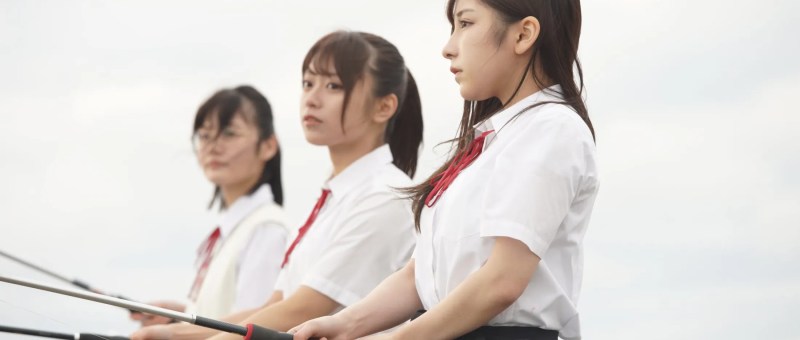
Twilight of the Warriors: Walled In (九龍城寨.圍城, Soi Cheang, 2024)

In Kowloon Walled City, you give help, you get help. Sometimes described as a colony within a colony, by the late 1980s the settlement was largely ungovernable and literal law unto itself save for the triads who maintained what little order there was. Yet in Soi Cheang’s Twilight of the Warriors: Walled In (九龍城寨.圍城) it’s a place of comfort and security, a well functioning community that as its leader Cyclone (Louis Koo Tin-lok) points out may be unpalatable for “normal” people but provides a point of refuge for the exiled and hopeless.

It’s difficult not to read it and Cyclone himself as embodiments of Hong Kong that is slowly disappearing. Dying of lung cancer, Cyclone is aligned with the fate of the walled city as someone whose time is running out, tired and world weary but still hanging on. In the opening sequence set 20 or so years before, we see Cyclone stand up to an apparent dictatorship and institute what seems to be a more egalitarian form of government though one obviously defined by violence. Nevertheless, when refugee Lok (Raymond Lam Wui Man) lands up there originally suspicious of Cyclone having been duped by local gangster Mr Big (Sammo Hung Kam-bo), he discovers him to be a stand up guy looking after those in his community and generally keeping the peace. Nevertheless, Lok’s arrival is the fatalistic catalyst for the opening of old wounds amid the free for all of the mid-80s society in which the Walled City, sure to be bulldozed, has just become a lucrative property investment.

Mr Big and his crazed henchman King represent this new order, amoral capitalistic consumerists who care little for the conventional rules of gangsterdom. Their bid to seize the Walled City has its obvious overtones as they seek to replace the (generally) peaceful egalitarian rule of Cyclone with something that appears much more authoritarian and ruthless. Believing himself to be a stateless orphan, Lok tries to keep his head down saving everything he can to buy a fake Hong Kong ID card which is also in its way a quest for identity not to mention a homeland and a sense of belonging. He finds all of these things, along with a surrogate father figure, in the Walled City only to have the new home he’s discovered for himself ripped out from under him because of a twist of fate. When he teams up with a trio of other young men who all owe their lives to Cyclone and the Walled City to attempt to take it back, it’s also an attempt to reclaim an older, more autonomous Hong Kong that exists outside of any kind of colonial control as evidenced by his final statement that no matter what happens some things don’t change.

This sensibility extends to the casting of the film which includes a series of Hong Kong legends including a notable appearance from the legendary Sammo Hung not to mention Louis Koo alongside a generation of younger stars such as Tony Wu and Terrance Lau Chun-him. Adapted from the manhua City of Darkness by Andy Seto, the film opens with a flashback to the original war for control of the Walled City that hints at deeper, extended backstories otherwise unexplored though equally mythologised by those who impart them to them Lok, a prodigal son and eventual inheritor of the City’s legacy. Even so, the comic book elements sometime distract from Soi Cheang’s otherwise evocative if hyperreal recreation of the Walled City slum or the political subtext that can be inferred in the presence of supernatural abilities such as those which seem to grant King near invincibility.

In any case, Soi Cheang looks back equally towards the history of heroic bloodshed in particular in his tale of brotherhood and loyalty in which the secondary antagonist is literally imprisoned by his own futile desire for a pointless vengeance on the descendent of a man who had wronged him but was already long dead himself. As he’d said, the future of the Walled City is in the hands of the younger generation who choose to end the cycle by setting him free rather than imprison themselves along with him while defending their home as well as they can. With some incredibly well designed action sequences including one that make its way onto a double-decker bus, Soi Cheang’s beautifully staged action thriller as its name suggests has a rather elegiac quality but also the spirit of resistance in its gentle advocation for the importance of supportive communities.


Twilight of the Warriors: Walled In is in UK cinemas from 24th May courtesy of CineAsia.

UK trailer (Traditional Chinese & English subtitles)