Straying (猫は逃げた, Rikiya Imaizumi, 2021)

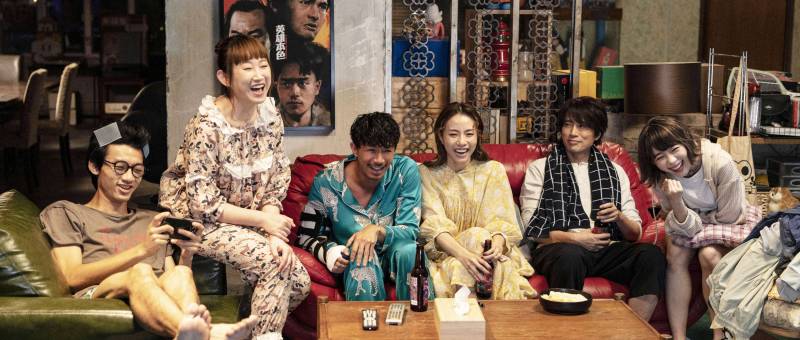
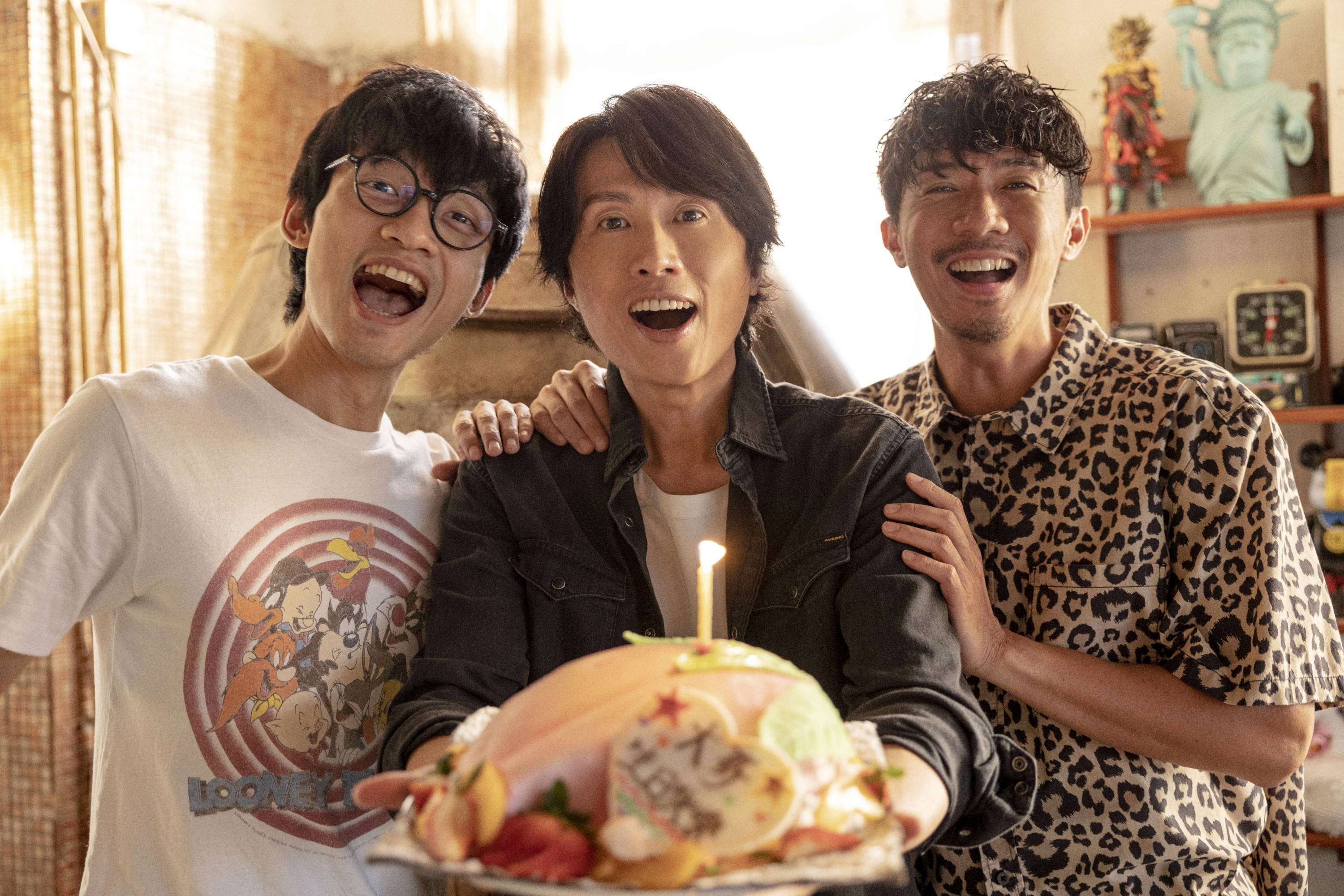
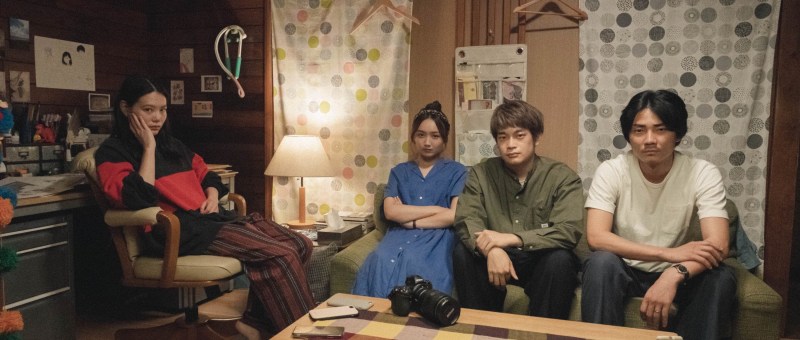
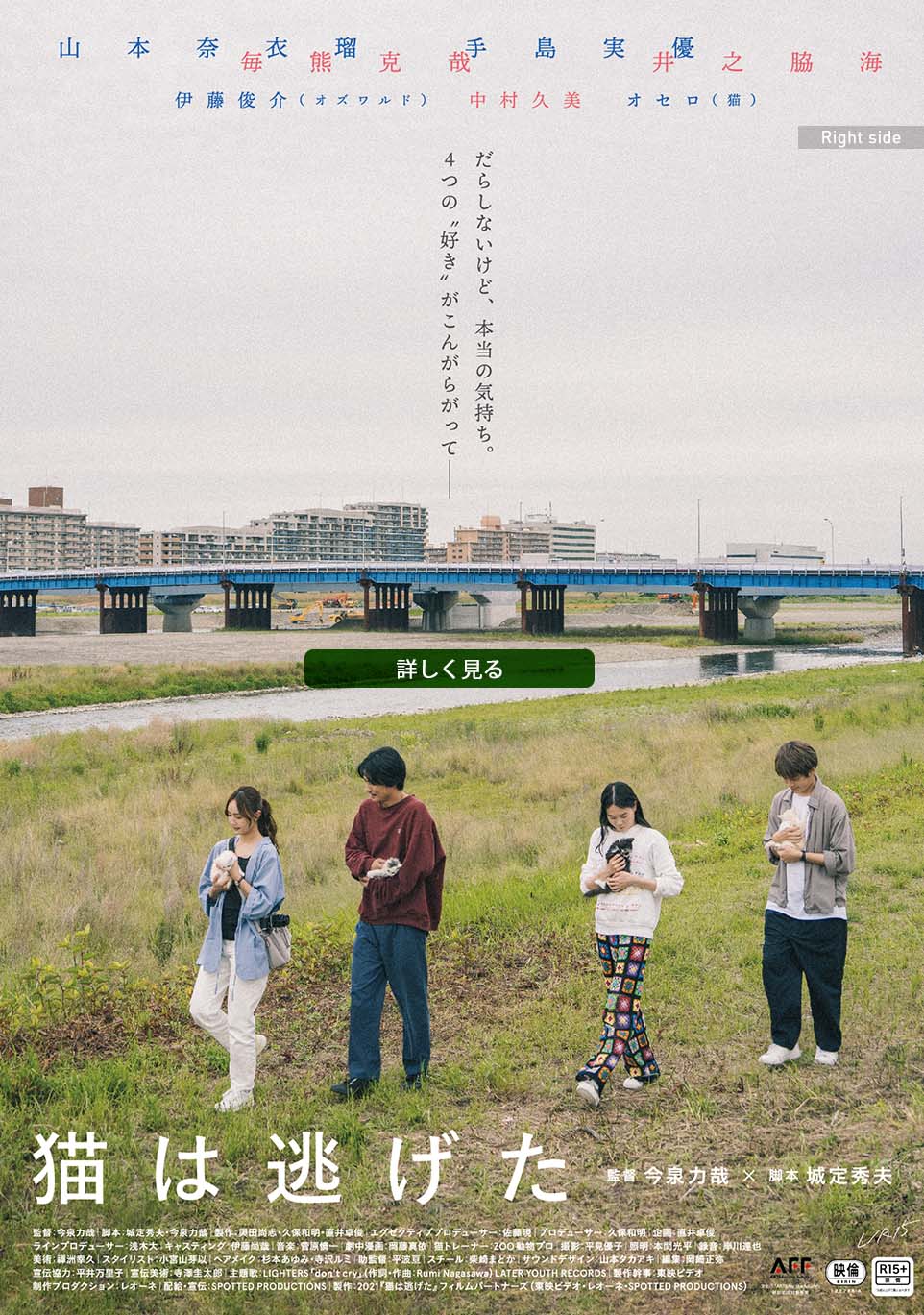
Part way through Rikiya Imaizumi’s Straying (猫は逃げた, Neko wa Nigeta), a tabloid reporter and the photographer with whom he’s been having an affair attend a screening of a pretentious film made by a hypocritical director exploring why a once loving relationship between husband and wife broke down. His reasoning may not be all that sound in the end, but does perhaps hint at something of the malaise which has invaded the relationship between Hiro (Katsuya Maiguma) and his wife of five years Ako (Nairu Yamamoto). Now on the brink of divorce, the couple have hit a stumbling block in the inability to agree who gets custody of their beloved cat, Kenta. 

Kenta may not be all that happy about the separation either, peeing all over the divorce papers which only Ako has so far stamped. Hiro suggests that they’re going about it in the wrong order, that the papers should have been the final step once they’d sorted out dividing their property and finding alternative living spaces but he is perhaps a little reluctant as his determination to hang on to Kanta implies. A kitten they found together in the street in the midst of a pregnancy scare, Kanta is a symbol of their love and the hopes they had for it in the beginning. When he suddenly disappears, it sends each of the couple into a tailspin trying to find him which is also an attempt to recapture their lost love. 

Yet we can see that the marriage has failed in part because of dissatisfaction in either on side. As he later admits, Hiro was always insecure in the relationship and had been planning to run out on Ako after hearing about the possible pregnancy while overcome with paternal anxiety. He once dreamed of being a novelist and hates himself for his morally dubious job as a tabloid journalist exposing the sordid secrets of the rich and famous, yet he does the job in part because he feels emasculated by Ako’s success as a manga artist and cannot bear the idea of being supported by his wife. For her part, Ako declares that she’s bored with eroticism while working on an erotic manga for a publishing company specialising in sexually explicit series aimed at a female audience. When she says she’s thinking of writing a cat manga, like the much loved Gugu the Cat, it suggests that what she wants is love rather than sex but she’s also begun a revenge affair with her besotted editor Matsuyama (Kai Inowaki) little realising that she’s toying with his feelings. 

Like Matsuyama, Hiro’s girlfriend Mamiko (Miyuu Teshima) is more emotionally involved in the relationship than Hiro is though he sadly tells her he loves her and has superficially committed to leaving his wife. Mamiko also has a habit of eating Haribo at every opportunity which hints at her childish nature, though as is later revealed she’s surprisingly conservative for her age coldly telling Ako in a final confrontation that wives are responsible for their husband’s affairs while insisting Ako let Hiro go because she wants to become a traditional homemaker cooking and cleaning for him. She was also offended by the film because of its anti-marriage stance all which fuels her desire to unmask the “devoted familyman” director as just another industry sleazeball. Yet evidently the last thing Hiro wants is marriage because if that’s what he wanted he wouldn’t be getting a divorce. It’s no surprise that he put his foot down over getting Kanta neutered, insisting he be free to sow wild oats wherever he sees fit which is apparently with next-door’s cat Mimi who becomes an accidental victim of his sudden disappearance. 

Yet sometimes straying only shows you the way home as the central couple awkwardly discover, brought closer together by the search for Kanta while forced to face the realities of their frustrated desires each emerging on a more authentic note and resolving to chase their individual dreams. The second film in the L/R15 project of contemporary sex comedies, Straying is scripted by Hideo Jojo who directed Imaizumi’s script for Love Nonetheless and in its ironic conclusion is perhaps less cynical than it might seem in hinting at new beginnings founded less on forgiveness than acceptance of life’s imperfections. 


Straying screened as part of this year’s Camera Japan

Original trailer (no subtitles)

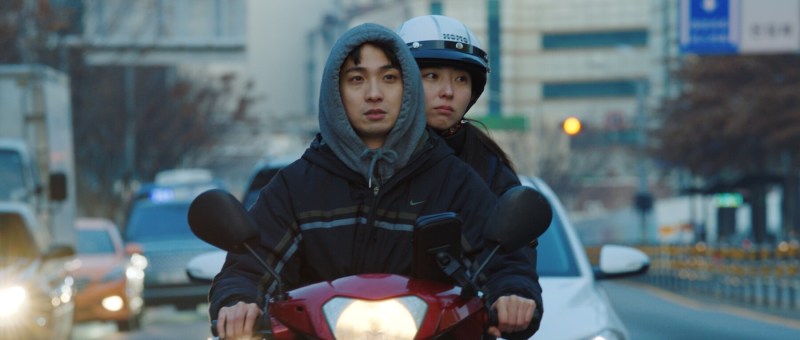
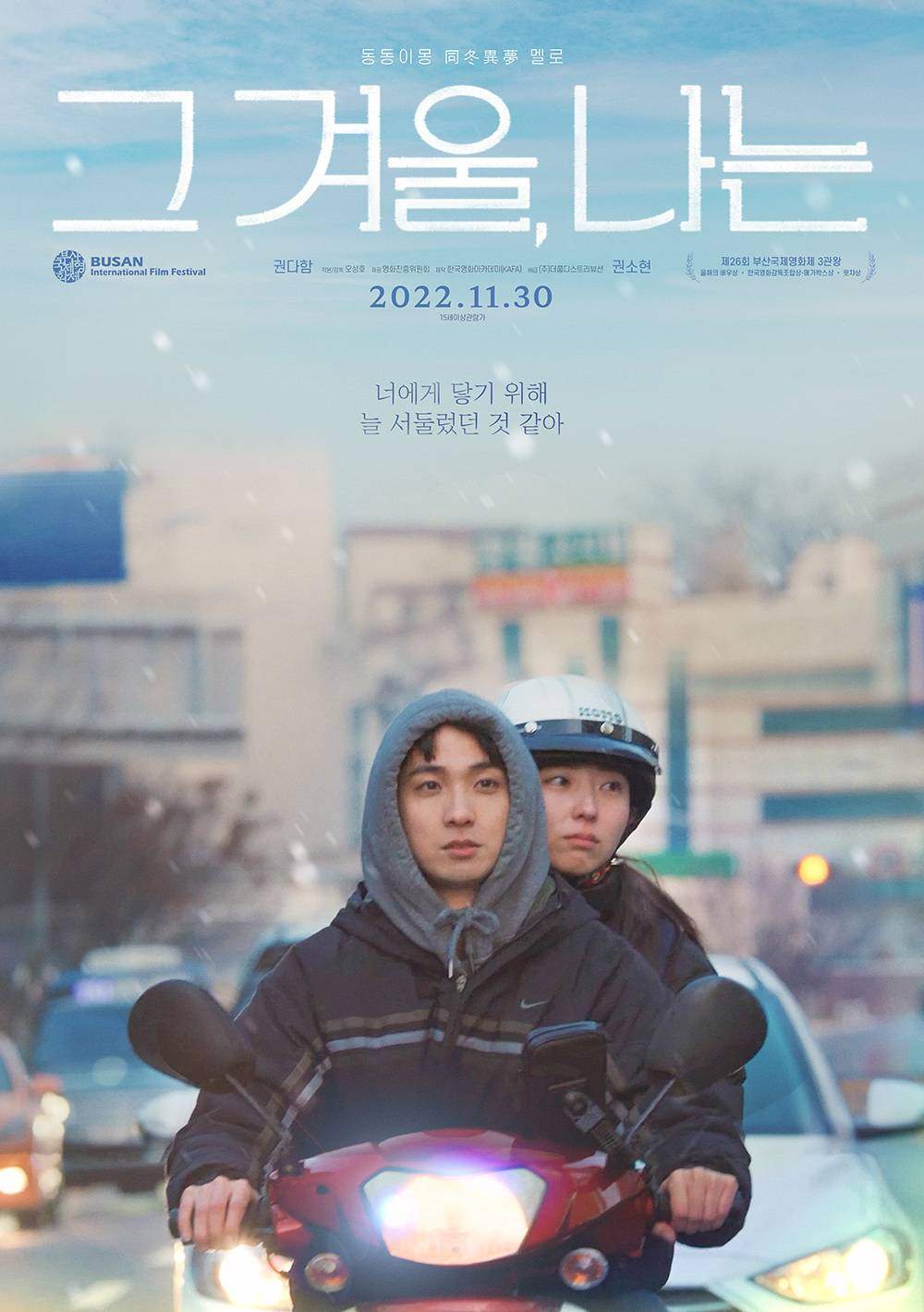
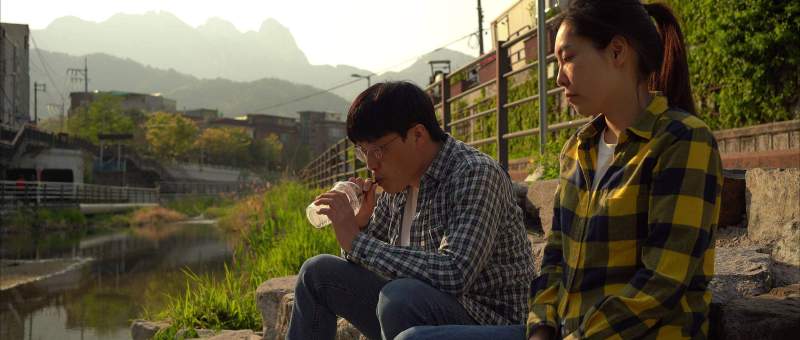
Through My Midwinter (그 겨울, 나는, Oh Seong-ho, 2021)

The previously close relationship between a young couple hoping to win steady government jobs is gradually eroded by the strain of living in a hyper-capitalist society in Oh Seong-ho’s empathetic indie drama Through My Midwinter (그 겨울, 나는, Geu Gyeoul, Naneun). Another in a series of recent films exploring the pitfalls of living on the margins of an otherwise prosperous society, Oh’s debut feature explores the ways in which money, employment, security, and the changing natures of classism and patriarchy continue to disrupt human relationships in the simple desire to live in relative comfort or else just survive in one of the wealthiest cities in the world. 

Both approaching 30, Kyung-hak (Kwon Da-ham) and his girlfriend Hye-jin (Kwon So-hyun) are each studying for civil service exams he in the police force and she hoping for a job at the tourist board though it seems like even that wasn’t her first choice. Though they are each worried that their time is running out and they’ve left it too late to get settled, they appear to have a good relationship and are happy muddling through together. The crisis comes when Kyung-hak receives a call from a bank and discovers his mother has taken out a sizeable loan in his name on which she has defaulted and apparently disappeared leaving him liable for the entire amount plus interest. As a student it is not an expense he can afford, leaving him with no other option than to look for part-time work which disrupts his ability to study and further decreases the chances of his passing the upcoming police force exam.

Kyung-hak’s naivety is obvious when it’s clear he’s being ripped off by a friend who sells him a motorcycle for cheap claiming that he recently had it serviced though it sounds and looks like it’s seen better days. Accepting a job as a delivery driver he is resigned to taking the jobs no one else wants as the rookie new recruit, but is quickly frustrated by the way in which he is treated by his customers. The guard at one swanky building won’t let him use the lift in case the take away he’s carrying leaves a smell, forcing him to walk up 19 floors and possibly incur a customer complaint when the food is cold or damaged from its journey up the stairs. He is encouraged to be reckless in order to earn more money, putting his life and those of others in danger while his lack of sleep also makes him irritable and difficult to be around especially with Hye-jin who is experiencing problems of her own after deciding to give up on the government exam and take a job at a tech company. 

Mirroring the final scenes of Kyung-hak operating a machine at a factory, the work Hye-jin is originally assigned is on a production line assembling USB sticks which is most likely not the kind of job she envisioned for herself as someone with a post-graduate degree. A further strain is placed on their relationship by the obvious disapproval of Hye-jin’s mother who thinks Hye-jin is wasting her time with a man like Kyung-hak who is “just” a delivery driver at age 30 and most likely is never going to pass the police exam. “Who marries for love these days” she exclaims in exasperation, simultaneously admitting that it was different for her generation who could make a lot of money together while young and save for the future, and resenting her daughter for not being smart and looking to hook up with someone “on her level”. Hye-jin appears to resent this, but deep down perhaps feels something similar, drawn to her boss at her new job who seems nice enough and like her speaks Japanese having spent some time living in Kyoto. When her new coworkers ask about her boyfriend she’s evasive, finally conceding that he’s studying for the police exam but clearly uncomfortable when they ask if they’ll be getting married once he finally passes.

The cracks may have already been there, Hye-jin accusing Kyung-hak of only using her for sex rather than committing to the relationship, while he is increasingly sullen and uncommunicative unwilling to accept help financial or otherwise humiliated in having his masculinity undermined by not being able to support himself independently. Eventually he’s forced to compromise himself morally, behaving like the colleague he resented in picking up the better jobs first and then resorting to criminality in agreeing to drive sex workers around for the money to fix his bike after an accident. When he realises the girl he’s driving is probably underage he tries to do something about it, but she needs the money as much as he does and asks him what “responsibility” he’s going to take. Will he give her the money so she can go home tonight? Even if he does, what about tomorrow and all the nights after that? She’s just as powerless as he is and at even more risk.  

The film’s English-language tagline presumably referring to Hye-jin as “a woman who falls prey to money” may have its share of misogyny in suggesting that Hye-jin has somehow sold out in choosing to pursue a more middle-class life at the expense of her relationship with Kyung-hak, as if Kyung-hak has not also fallen prey to money in that it is the force which has destroyed his life and hopes for the future as it has for pretty much everyone. When he almost loses a hand at his factory job, his boss just asks if the machine’s alright not really caring that it’s Kyung-hak who might be broken by the inhumanity of rampant capitalism. It’s difficult to tell if the closing scenes are intended as hopeful or otherwise as Kyung-hak once again studies for the police exam hoping to escape his life of crushing poverty but also perhaps complying with the system that sent him there and may never grant him the right the better life he dreams of. Oftentimes bleak, depicting a society in which all relationships are transactional and friendship or romance luxuries most are unable to afford, Oh does at least suggest that this is only an extended midwinter and spring will eventually come for Kyung-hak even if he has to wait until he’s 49.


Through My Midwinter screened as part of this year’s London Korean Film Festival.

Original trailer (Korean subtitles only)

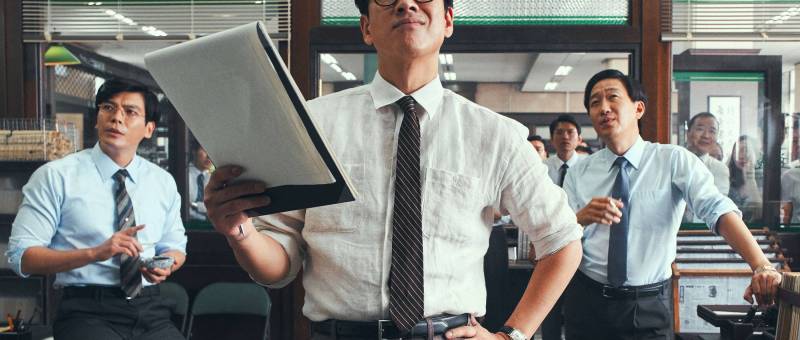
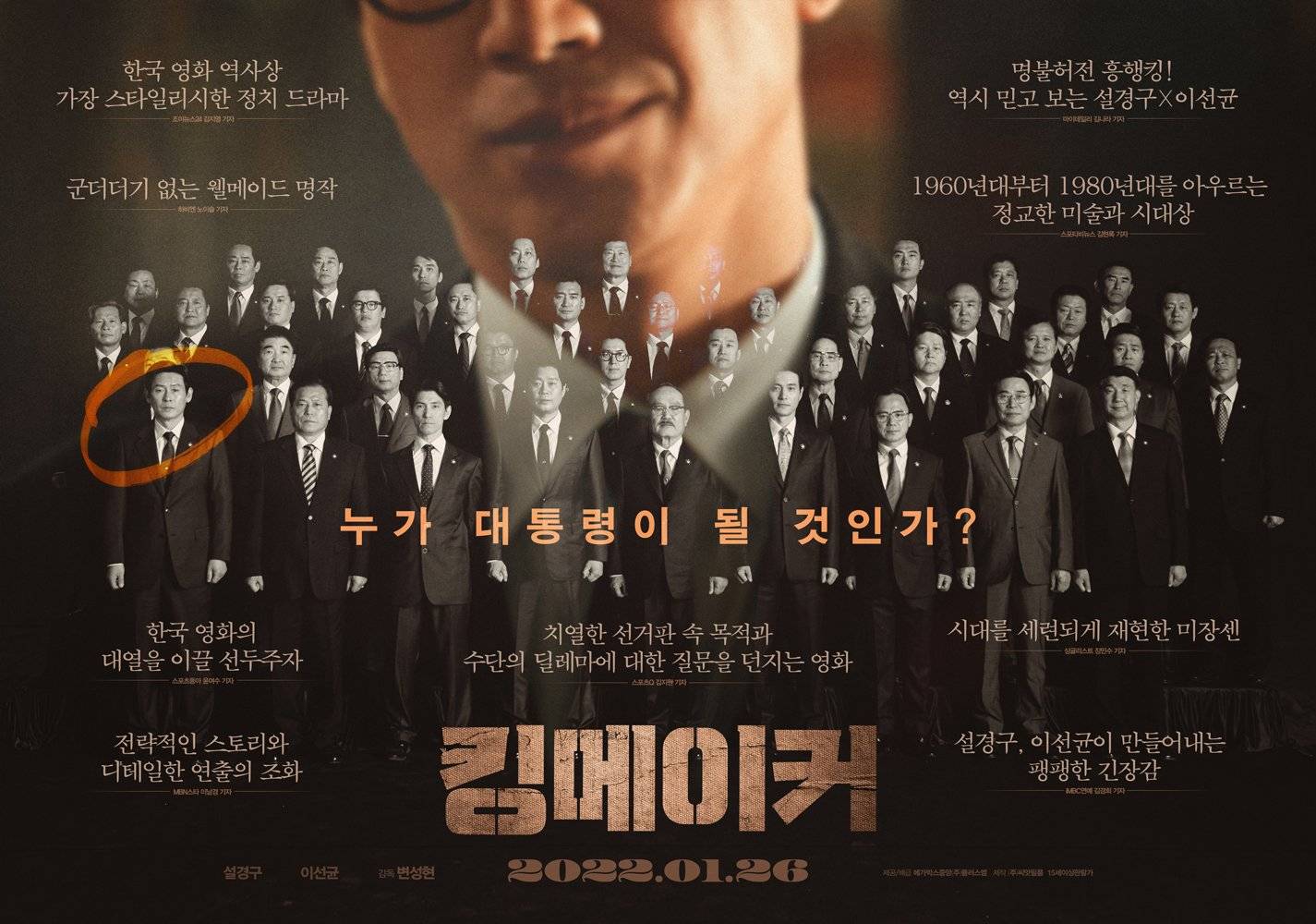
Kingmaker (킹메이커, Byun Sung-hyun, 2022)

It’s the political paradox. You can’t do anything without getting elected but to get elected you might have to abandon whatever it was you wanted to do in the first place. Loosely based on the real life figures of Kim Dae-jung and his political strategist Eom Chang-rok, the heroes of Byun Sung-hyun’s Kingmaker (킹메이커) are obsessed with the question of whether the ends justify the means and if it’s possible to maintain integrity in politics when the game itself is crooked while the film suggests that in the end you will have to live with your choices and your compromises either way and if it’s a better world you want to build perhaps you can’t get there by cheating your way to paradise.

The son of a North Korean migrant, Seo Chang-dae (Lee Sun-kyun) is an embittered and frustrated pharmacist with a talent for spin. When his friend complains about a neighbour stealing his eggs from his chicken coop and denying all knowledge because he’s well connected and knows he can get away with it, Chang-dae’s advice is to plant one of his own chickens in the other guy’s coop and catch him red handed. Impressed by the impassioned political speechmaking of labour activist Kim Woon-bum (Sol Kyung-gu), he writes him a letter offering his services and then marches down to his office to convince him that he is the guy to break his losing streak and finally get him elected so they can “change the damned world”. 

The problem is that all of Chang-dae’s ideas are like the chicken scam, built on the manipulation of the truth, but you can’t deny that they work. He plays the other side, the increasingly authoritarian regime of Park Chung-hee, at their own game, getting some of their guys to dress up as the opposing party and then set about offending a bunch of farmers by being generally condescending and entitled. They stage fights and perform thuggish violence to leave the impression that Park’s guys are oppressive fascists while asking for the “gifts” the Park regime had given out to curry favour back to further infuriate potential voters. Later some of their own guys turn up with the same gifts to send the message that they’re making up for all Park’s mistakes. At one point, Chang-dae even suggests staging an attack on Woon-bum’s person to gain voter sympathy, an idea which is met with total disdain by Woon-bum and his team many of whom are at least conflicted with Chang-dae’s underhanded tactics. 

But then as he points out, if they want to create a better, freer Korea in which people can speak their minds without fear then they have to get elected first. It may be naive to assume that you can behave like this and then give it all up when finally in office, but Chang-dae at least is committed to the idea that the ends justify the means. Woon-bum meanwhile is worried that Chang-dae has lost sight of what the ends are and is solely focussed on winning at any cost. He has an opposing number in slimy intelligence agent Lee (Jo Woo-Jin) who serves Park in much the same way Chang-dae serves Woon-bum, but Chang-dae fatally misunderstands him, failing to appreciate that for Lee Park’s “revolution” is also a just cause for which he is fighting just as Chang-dae is fighting for freedom and democracy. In an uncomfortable touch, Lee seems to be coded as gay with his slightly effeminate manner and tendency towards intimate physical contact adding an additional layer to his gradual seduction of Chang-dae whose friendship with Woon-bum also has its homoerotoic qualities in its quiet intensity. 

The final dilemma lies in asking whether or not Woon-bum could have won the pivotal election of 1971, preventing Park from further altering the constitution to cement his dictatorship and eventually declaring himself president for life, if he had not parted ways with Chang-dae and tried to win more “honestly”. If so, would they have set Korea on a path towards the better world they envisaged or would they have proved little different, their integrity already compromised by everything they did to get there poisoning their vision for the future? The fact that history repeats itself, Woon-bum and his former rival Young-ho (Yoo Jae-myung) splitting the vote during the first “democratic” presidential election and allowing Chun Doo-hwan’s chosen successor to win, perhaps suggests the latter. In any case, it’s Chang-dae who has to live with his choices in having betrayed himself, as Woon-bum had feared too obsessed with winning to remember why he was playing in the first place. “All my ideas about justice were brought down by my own hand” he’s forced to admit, left only with self-loathing defeat in his supposed victory. Some things don’t change, there is intrigue in the court, but “putting ambition before integrity will get you nowhere” as Chang-dae learns to his cost. 


Kingmaker screened as part of this year’s London Korean Film Festival.

International trailer (English subtitles)

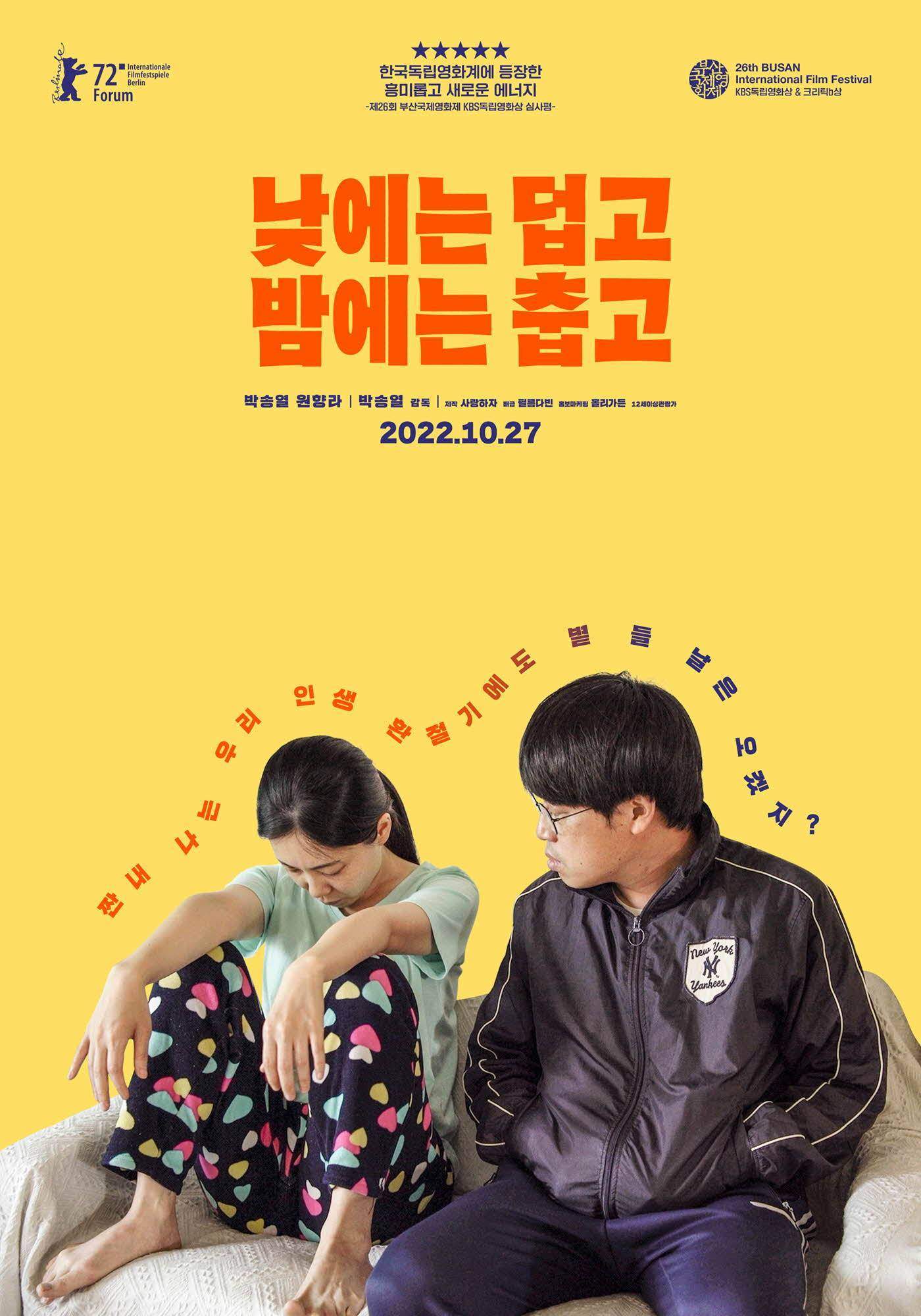
Hot in Day, Cold at Night (낮에는 덥고 밤에는 춥고, Park Song-yeol, 2021)

Anyone can have a run of bad luck, but when it’s happening to everyone at the same time perhaps it’s time to admit that something isn’t working. The latest film to tackle life on the margins of an increasingly unequal society, Park Song-yeol’s scrappy indie drama Hot in Day, Cold at Night (낮에는 덥고 밤에는 춥고, Naj-eneun deobgo bam-eneun chubgo) follows one ordinary couple who’ve found themselves jobless and are just trying to keep their heads above the water without losing either their dignity or humanity. 

Young-tae (Park Song-yeol) was working as a delivery driver until an accident with his bike left out him out of work and now he can’t seem to find anything else. His wife Jeong-hee (Won Hyangra), formerly a teacher, is also unemployed and in the process of applying for new positions which seem to be thin on the ground. They aren’t proud and are willing to do whatever is available, each of them reeling off a list of all the casual jobs they’ve done including those that are dangerous or exploitative, but they just can’t seem to catch a break. Mainly, they’re on the same page though differ slightly in their approaches to life, Jeong-hee feeling that her softhearted husband is too much of a pushover and shouldn’t always be so understanding when comes to getting what’s he’s owed. 

A case in point being his decision to lend their professional camera to a friend, Myung-su, who pays them a token rental fee and swears to return it in two weeks when he’s made enough money to buy his own but soon stops returning Young-tae’s calls. Unreturned calls become a repeated motif emphasising how money and the shame associated with not having it can disrupt even close and longstanding relationships. Jeong-hee experiences something similar with school friend Mi-sun who calls in a loan but abruptly stops talking to her after what appears to be a slightly dodgy arrangement getting Jeong-hee to sub for her at a school which goes south over a misunderstanding with the address causing Jeong-hee to ruin a good opportunity (and possibly Mi-sun’s reputation) by arriving late. 

Young-tae has his own series of interview disappointments, Myung-su getting him an opportunity through the “relative of an acquaintance’s friend” which takes a turn for the strange when the interviewer starts asking awkward questions such as whether Young-tae has any sick relatives at home because people apparently take too much time off claiming they have to take care of someone who’s ill. Another possibility sees a friend call out of the blue after 20 years which predictably turns out to be linked to a pyramid scheme.  “My identity just vanishes” Young-tae exclaims of all his soulless causal jobs, “your self-esteem just gets destroyed”. He takes a job as a proxy driver but is faced either with the tedious talk of much wealthier customers throwing their money around in the back or else harangued by drunken fares who don’t agree with this driving practice or the route he’s chosen. 

There is only so much anyone can take though Young-tae’s threshold is higher than most, keeping his cool and trying to get on with his work in the hope that happier days are coming. “There’s no such thing as easy money” he concedes, even as Jeong-hee goes behind his back to take out an ill-advised loan from loansharks who send passive aggressive messages wishing her “peace and wellbeing” while breathing down her neck for the repayments before going so far as to turn up at her mother’s door looking for money. The fact that Jeong-hee didn’t just ask her mother for help in the first place hints the secondary effects of their poverty in their intense embarrassment which further isolates them from wider society even if they hadn’t fallen out with most of their friends over money. A primary motivator for Jeong-hee getting the loan is seeing all her siblings, who each have several children, preparing gifts and money for her mother’s birthday which is something they as a couple were unable to do though it’s Young-tae who appears to feel the most awkward, guilty to be eating food at the party while bringing no gift even if that shouldn’t really be the way it works. 

Young-tae is the sort of person who likes to do things properly and sees the best in people but even he starts to feel like a mug on realising that Myung-su sold his camera ages ago, insisting he pay him back fairly and a little more for the betrayal only to feel guilty and give him back some of the money. Myung-su just accepts it without even offering an apology for acting in such a reprehensible manner but is later seen to have bought a new car which doesn’t tally with his claims of absolute desperation. It’s enough to drive anybody crazy, but really what can you do? Young-tae meditates on petty revenge, but eventually thinks better of it. It wouldn’t make any difference anyway. Quite obviously made for a shoestring and imperfect in execution, the film’s scrappiness perfectly matches that of its heroes who find themselves just muddling along trying live comfortable lives in one the world’s richest cities but discovering little more than loneliness and disappointment. 


Hot in Day, Cold at Night screened as part of this year’s London Korean Film Festival.

Original trailer (English subtitles)

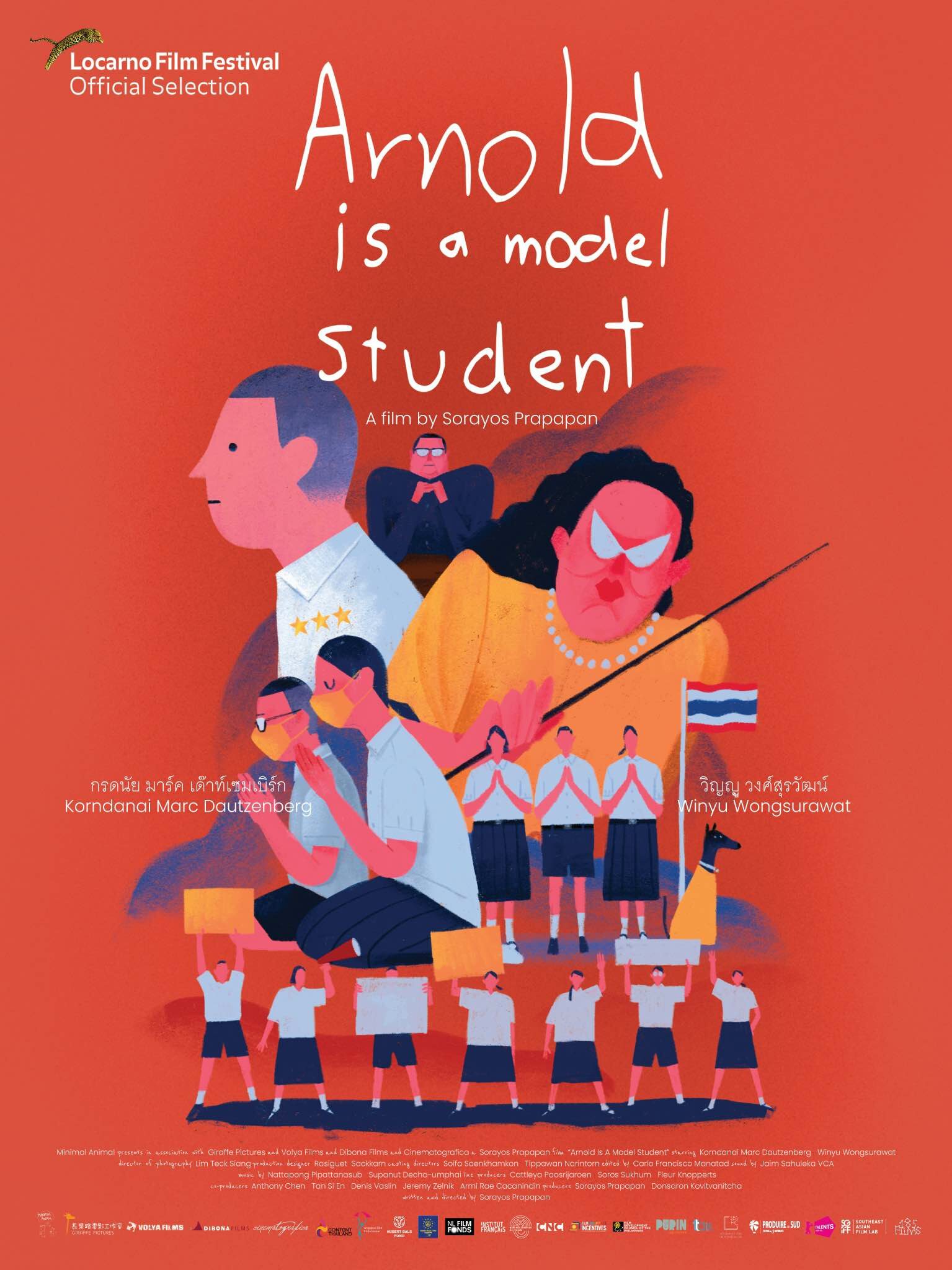
Arnold Is a Model Student (อานนเป็นนักเรียนตัวอย่าง, Sorayos Prapapan, 2022)

“School is our first dictatorship” a collection of students exclaims in Sorayos Prapapan’s absurdist satire Arnold is a Model Student (อานนเป็นนักเรียนตัวอย่าง). Drawing inspiration from the Bad Student movement, the film positions the educational system as a microcosm of the whole as the students find themselves trying of petty authoritarian oppressions and the infinite corruption of the very mechanism they are told allows them to take control over their futures even as it denies them the right to self-expression or individual freedom. 

In his last year of high school, Arnold (Korndanai Marc Dautzenberg) has brought great praise to his institution after winning a gold medal in the maths Olympiad. Arnold is, however, far from a model student. Low-key rebellious he ignores all rules and does as he pleases but is largely allowed to get away with it because of his value to the school as a symbol of their own success especially as they are currently in the running for an award from the Ministry of Education. Then again this lack of censure seems to tug at Arnold’s sense of conscience wondering what the point of the rules is if they simply don’t apply to him in the same way they apply to others. Mrs. Wanee (Niramon Busapavanich), the school’s most authoritarian disciplinarian, is fond of saying that the rules are necessary for a harmonious society but even the students can see they’re mostly about preserving her own power and status.

In some way perhaps Mrs. Wanee isn’t so different from authoritarian teachers anywhere else in the world if a little more extreme in literally snipping students’ hair if she judges it to be an inappropriate length on her morning inspections. A trio of girls giggle about a man with mental health problems who was hiding in the bathrooms at a shopping mall to snip women’s hair for his wig shop and only then realise that it’s not really all that different to what Mrs Wanee is doing to them in restricting their rights to free expression over the way they look and dress. What seems to her proper discipline seems to them absurd and oppressive and even worse inculcating in them a tolerance for authoritarianism that enables the survival of corrupt dictatorship. 

In essence this is an elite school but as proud as it is of kids like Arnold, who appears to come from a wealthy family, it’s also true that most of its pupils have got in through thinly concealed bribery as parents agree to make “donations” in return for the headmaster finding a place for their less able children. Yet Arnold’s privilege only contributes to his rootlessness and lack of purpose. He doesn’t know what to do with his life in part because he has no real impetus to make a decision and few constraints on his choices. When other students ask him to join the protest movement he refuses stating that he doesn’t see the point, they’ll be finished with school in a few months anyway, thinking solely of himself and making the calculation that the smart thing to do is nothing.

He finds himself similarly conflicted when taken under the wing of dodgy cram school teacher (Winyu Wongsurawat) who runs a scam operation getting talented students to help weaker ones cheat in exams as a fast track path to stable government jobs. Arnold is disadvantaging himself twice over, taking the money but increasing his competition while remaining complicit with corruption, fostering poor government in allowing those without the proper skills to prosper and hold on to their unearned privilege. Resentful that his father, a French citizen, was deported for criticising the government, what Arnold wants is to go abroad but in doing so he’d also be leaving those unable to protect themselves behind simply harnessing his own privilege to remove himself from the system rather than actively resist it. 

Perhaps it’s no surprise that the resistance is largely led by the female students who eventually tell the headmaster that they no longer care if he expels them because there will always be students coming behind them who also will resist and expelling them all would be entirely counterproductive. Sorayos Prapapan’s deadpan approach signals the absurdity of the culture in the schools system in which pupils are given pointless lessons in citizenship which are little more than nationalist propaganda while forced to learn proper “manners” which is also only another way to bow to authority. The director even inserts a scene of a boy with his own name who has to kneel before a teacher and recite his times tables, while the school’s downfall comes about through the new medium of youth resistance TikTok as Sorayos Prapapan includes what appears to be real footage of students receiving corporal punishment in this contemporary era. Ironically the lesson that students learn is that authoritarianism must be challenged at its roots and that only by standing together can they hope to defeat it. Quirky yet clear eyed and heartfelt Sorayos Prapapan’s gentle satire is at least somewhat hopeful in the determination of the young people not to fall for the promise of superficial success in a corrupt system but to fight hard for the freedom they know to be rightfully theirs.


Arnold Is a Model Student screened as part of this year’s Five Flavours Film Festival and is available to stream in Poland until 4th December.

Original trailer (dialogue free)

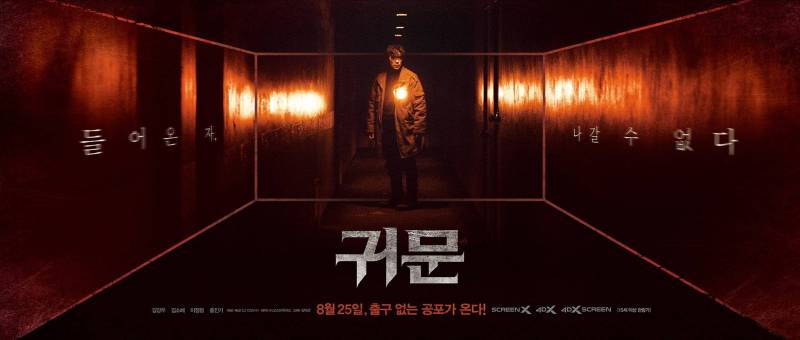
Guimoon: The Lightless Door (귀문, Sim Deok-geun, 2021)

A collection of lost souls find themselves trapped between this world and the next in Sim Deok-geun’s eerie haunted house horror, Guimoon: The Lightless Door (귀문, Guimoon). On a literal quest to exorcise his demons, the hero traverses an impossible and elliptical passage attempting to atone for his sins while freeing others from a similar burden yet finally finds himself becoming his quarry as kind of jailor or perhaps guardian spirit making sure that doors which should never be opened remain forever closed not least to the morbidly curious. 

Do-jin’s (Kim Kang-woo) troubles begin when he casts off his destiny as a shaman leaving his ageing mother to battle a powerful spirit said to belong to a mass killer who suddenly snapped one day and murdered all the guests at small community centre. When the building is torn down, workers discover a body bricked up in the walls which seems almost untouched. Do-jin’s mother is brought in to exorcise the evil spirits but is finally overpowered, a dark presence causing her to stab herself in the neck. Overcome with guilt and apparently “harassed” by his mother’s ghost, Do-jin resolves to atone by releasing each of the spirits killed by the murderous custodian and solving the mystery of the body in the walls in the hope of releasing his mother’s soul so that she can move on to the afterlife and stop nagging him from beyond the grave. 

The “Guimoon” is a kind of portal open on the turn of the year by the lunar calendar. Dojin intends to venture through it assuming it will be easy enough to nix a few ghosts and then come home but soon finds himself lost in a world of uncertain time and forever looping corridors. He meant to travel to the afterlife of 1990, but his world is soon disrupted by the arrival of three university students from 1996 who really shouldn’t be here. Armed with a video camera, they are dead set on crafting their own found footage horror in the hope of winning a competition so one of them won’t have to drop out of school. For the students, this world is “real”. They entered it voluntarily and as far as they are concerned are wandering round a derelict building, not really believing it to be “cursed” or haunted in any way. But for Do-jin it’s a liminal and unreal space he has entered for a specific purpose and from which he hopes to expel those who should have left long before. 

Yet even in trying to solve the mystery, Do-jin concentrates his efforts on Seok-ho (Jang Jae-ho), the shovel-wielding custodian, taking a kind of register of the other guests while knowing little about them. He soon discovers that Seok-ho may not quite be the boogeyman he first thought him to be, realising that his sudden descent into homicidal mania may not have been of his own volition. The solution he edges towards hints at the ironically named community centre as a nexus of trauma, a nightmare world created by an entity trying to escape its suffering and finding empowerment in taking control of its oppressors. 

“I was always here” one of the lonely souls proclaims, while Do-jin and the students find themselves locked in, prevented from leaving by a literal absence of exits. While the students eventually turn against each other, seeking escape by submitting themselves the malicious evil of the entity haunting the centre, Do-jin does his best to complete his quest of vanquishing the ghosts with his shaman’s dagger but is eventually brought to a cruel realisation in a maddening series of loops and repetitions which only lead towards a door which should never be opened. In some ways frustratingly oblique, Sim Deok-geun’s eerie meta horror is an exercise in found footage psychology in which the lost wander lonely corridors while searching for an elusive truth they may already know but have perhaps forgotten. On a night between two worlds lit by a blood red moon, Do-jin ventures into a labyrinth to save his mother’s soul but comes to realise that if you walk through the door between life and death you may discover that there is no exit from existential torment.


Guimoon: The Lightless Door screened as part of this year’s London Korean Film Festival.

International trailer (English subtitles)

Table for Six (飯戲攻心, Sunny Chan, 2022)

“Wherever family is, that’s where home is” the dejected hero of Sunny Chan’s ensemble comedy Table For Six (飯戲攻心) is eventually told after struggling to keep his small family together by refusing to sell the apartment their parents left them in an old barbecue pork kitchen. Like his previous film Men on the Dragon, Chan’s tightly woven farce is a kind of delayed coming-of-age tale in which the hero realises that his familial bonds aren’t necessarily tied to a place and won’t disappear even if he has to leave it, but also the gentle celebration of food and family that has come to define the Chinese New Year movie (even if this one was delayed to the Mid-Autumn Festival for obvious reasons). 

Steve (Dayo Wong Chi-Wah) is the oldest of three brothers and a de facto father figure in the absence of their parents who have each passed away. Under the justification of obeying their late mother’s dying wish, Steve insists each of the brothers come home for dinner every night and now rarely leaves the apartment as if fiercely guarding an interior world he’s afraid he’ll one day lose. Working as a photographer from home, he ends up meeting popular Taiwanese influencer Miaow (Malaysian actress Lin Min Chen) who turns out to be one of his biggest fans and a now grown up woman who once sent him fanmail as a teenager. Miaow makes obvious romantic overtures but Steve tells her he’s not interested because he still hasn’t got over his ex Monica (Stephy Tang Lai-Yan) who broke up with him three years previously. This is also a problem because unbeknownst to him middle brother Bernard (Louis Cheung Kai-Chung) has been secretly dating Monica for the last six months. 

Much of the tension in the apartment stems from trying to integrate the competing desires of the brothers with their relationships as a family. Bernard and youngest brother Lung (Peter Chan Charm-Man) both want to sell the apartment for different reasons while only Steve insists on hanging on to it determined for them all to continue living together as impractical as that may be given that they are all approaching middle age. Lung quit his regular job some time ago to become a professional esports player which has further strained his relationship with longterm girlfriend Josephine (Ivana Wong Yuen-Chi) who is fed up with waiting for him to formalise their union while finding her own hopes and desires stifled by his obsession with esports success. To keep the peace Steve suggests an unusual solution in which he’ll employ Josephine as a cook which is certainly awkward on several levels given the resulting power dynamics but on the other hand not all that different from the status quo in practical terms as much as it annoys Lung who is secretly insecure in his lack of financial standing which is why he’s been putting off marriage. 

Essentially what Steve learns is that keeping the family together isn’t as literal a thing as he’d assumed it to be. If he wants to preserve it he might have to let it go and learn to move on from the past rather than stubbornly trapping himself in the inertia of his parents’ old apartment. Miaow turns out not be quite as vacuous as her online persona suggests, a neat subversion of Teorema as an unexpected guest who immediately sees and understands the unfulfilled needs of each of the family members and helps to guide them towards moments of realisation. Steve struggles to come to terms with the end of his relationship with Monica which turns out to have been caused by a minor misunderstanding while on the other hand processing complex feelings towards his brother trying to be magnanimous in the best interests of the future but on the other hand wondering if he and Monica might still have a future after all. 

Of course that does rather leave out Monica’s feelings though she too seems conflicted even if having made a choice to move on in deciding to date Bernard in the first place. Her pet peeve is that she hates it when people “disrespect” old things and can’t bear to see otherwise obsolete objects thrown away all of which suggests she might have made a mistake in moving on all while filling the apartment with relics of a disappearing Hong Kong such as old street signs and a pair of golden phoenix dragons which seem gloriously out of place in the otherwise industrial environment of the former barbecue pork kitchen. There might then be something of an additional message in Steve’s final realisation that home is where the family is in an era when so many have felt displaced and been forced to leave the place they love because it has changed beyond all recognition while he makes the decision to break out of his self-imposed inertia by moving on from the past to explore new possibilities outside of the apartment. Anarchic yet warmhearted and always forgiving of its sometimes flawed, often confused protagonists Chan’s cheerful family dramedy discovers that home is not so much a place as the people who live in it and that family is still family even if it’s far apart.


Table for Six is in UK cinemas now courtesy of Haven Productions.

Original trailer (Traditional Chinese / English subtitles)

Tsuyukusa (ツユクサ, Hideyuki Hirayama, 2022)

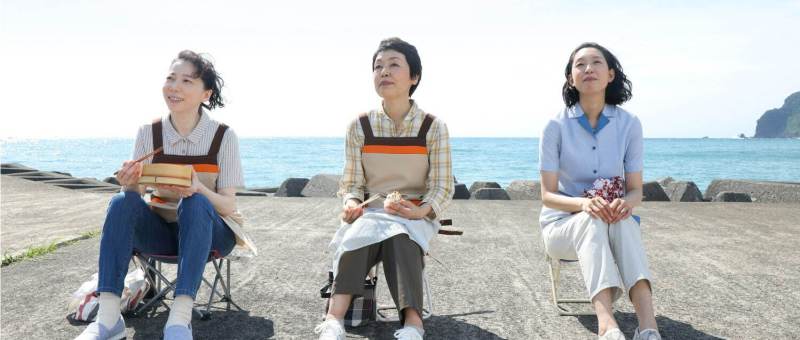
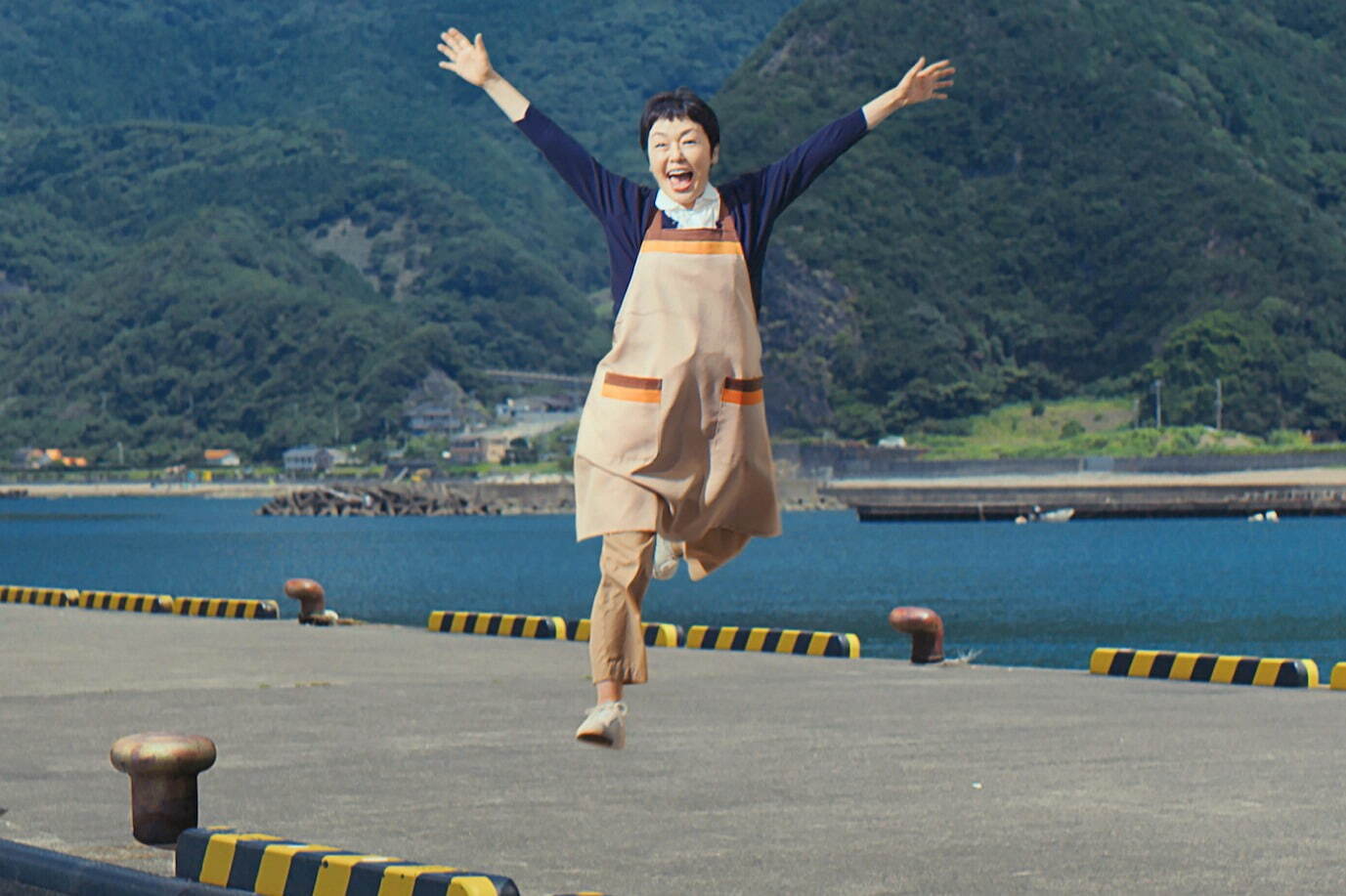
A middle-aged woman decides to embrace possibility after her car is hit by a meteorite in Hideyuki Hirayama’s charmingly quirky dramedy, Tsuyukusa (ツユクサ). Though dealing with difficult subjects such as grief, depression, alcoholism, and loneliness, a spirit of warmth and generosity shines through in the quiet seaside town as its various inhabitants each in their own way find themselves pondering new beginnings and while discovering that change may be scary it’s worth taking the risk for greater happiness. 

49-year-old Fumi (Satomi Kobayashi) lives in a quiet village by the sea and works in a textile factory where the atmosphere is laidback and collaborative. For poignant reasons only later disclosed she’s formed a close relationship with her friend’s son Kohei (Taiyo Saito) who is obsessed with all things space. It’s Kohei who decides that whatever it was that hit her car while she was driving home one evening was probably a meteorite and declares that Fumi must be one very lucky lady because the chances of witnessing a meteorite strike are all but infinitesimal. Fumi too seems to take it as a good omen, wearing the moon rock that Kohei finds at the beach as a pendant and symbol of the new possibilities in her life. 

Meanwhile it seems clear that Fumi is dealing with a series of things including a problem with alcohol which is why she’s been attending a local support group which is surprisingly large given the size of the town. Then again she’s not the only one dealing with crisis, her two friends from the factory are also at a point of transition. Kohei’s mother Nao (Kami Hiraiwa) is at odds with her husband (Kiyohiko Shibukawa) who has accepted a job offer in another town but suggests that she and Kohei stay behind in part because he is the boy’s stepfather and worries about uprooting him especially as Kohei does not seem to have fully accepted him as a father. Taeko (Noriko Eguchi) meanwhile has embarked on a secret affair with a Buddhist monk (rakugo performer Tougetsuanhakusyu) she somewhat transgressively met when he read the sutras at her late husband’s funeral. Fumi is gradually warming up to new love of her own in taking a liking to Goro (Yutaka Matsushige), a melancholy gentleman of around her own age whom she often sees sadly blowing the tsuyukusa leaves like a harmonica in the local park. 

The village is for them a gentle space of healing, many coming from the city following some kind of emotional trauma and looking for a quiet place to escape their sorrow. Even Kohei is caught at a point of transition, exclaiming that all the adults he knows are liars while attempting to deal with his first real heartbreak and contemplating moving away from all his friends and the town he grew up in with a man he doesn’t quite feel he knows. But then as Goro points out, the tsuyukusa grow everywhere and happiness is always in reach as long as you decide to go out and fetch it. Fumi may originally over invest in the symbolism of the moon rock, as if being hit by a meteorite really was an omen of change and a kind of good luck charm in itself rather than a funny thing that happened and caused her to reevaluate her life but finally realises that she didn’t need a meteor strike to give her permission to be happy. 

Even so the quirky seaside town does seem to be a cheerful place with a series of colourful characters even if many of them are lonely or displaced. Fumi’s boss is forever doing tai chi by the beach after apparently being left by his wife and unsuccessfully travelling to Taiwan in search of a new one. The guy who runs the local bar used to be a whaler and sends customers out on errands on his behalf, while the old man who runs the alcohol support group finds his job so stressful that it’s driving him to drink. “Just fix the pain, please. Then I can keep on going” Fumi tells a dentist though it’s a fairly apt metaphor for life. Reminiscent of the work of Naoko Ogigami of which Satomi Kobayashi is perhaps a representative star, Tsuyukusa never shies away from the darker corners of life but nevertheless allows its warmhearted protagonist to rediscover joy if only in the simple things. 


Tsuyukusa screened as part of this year’s Five Flavours Film Festival and is available to stream in Poland until 4th December.

Original trailer (no subtitles)
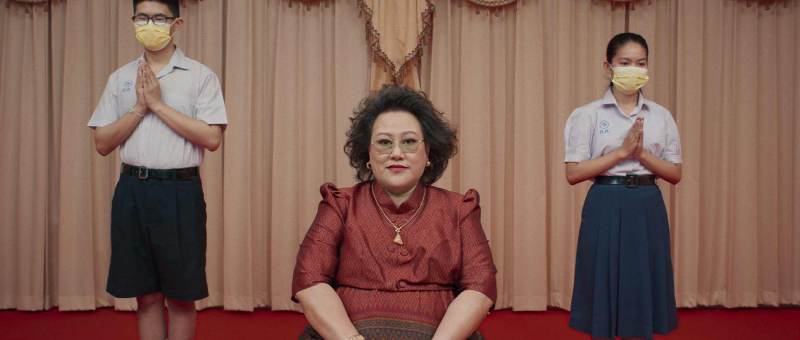
Gyeong-ah’s Daughter (경아의 딸, Kim Jung-eun, 2022)

“It’s not your fault. And it’s not mine either.” a young woman declares, finally freeing herself of internalised shame while trying to live under the oppressively patriarchal social codes of contemporary Korea in Kim Jung-eun’s quietly enraged drama, Gyeong-ah’s Daughter (경아의 딸, Gyeongaheui Ddal). As the title implies, the film is as much about parents and children and the various ways the older generation unwittingly fail the younger in mistakingly clinging to the conservative ideas that defined their own youth but bring nothing but misery to all as it is about the pervasive misogyny of the modern society. 

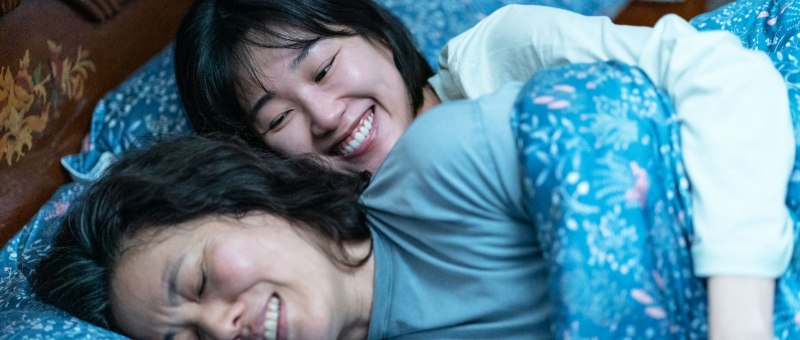
Pushed to the edge, Yeon-su (Ha Yoon-Kyung) exclaims that she cannot bear being Gyeong-ah’s (Kim Jung-Young) daughter sick of her overly possessive, controlling parenting along with her initial failure to support her during one of the most miserable moments of her life. As the film opens, Gyeong-ah facetimes her daughter and the pair chat cheerfully for a while even though Gyeong-ah criticises Yeon-su’s new haircut as she shows her around her new apartment showing off the cheerful lights she’s stringed above her bed. But then, the conversation takes a turn for the strange with Gyeong-ah suddenly insisting that Yeon-su prove she is alone, taking the phone to the bathroom to show her there’s no one hiding in there and then even out in the hall in the event that she knew her mother might ask. We can well understand why Yeon-su, who is a grown woman about to start her first job as a high school teacher, might prefer to keep her mother at arm’s length unwilling to take the trouble of sharing her private life with her.  

It’s this sense of distance that informs Gyeong-ah’s reaction when she suddenly receives a strange video from an unknown number and realises that it is a sex tape featuring her daughter. First of all she feels betrayed that Gyeong-ah lied to her when she repeatedly, and invasively, asked if she had a boyfriend while otherwise badgering her about not being married. But then she also feels ashamed, horrified, to see her daughter engage in behaviour that she views as somehow sordid. When Gyeong-ah confronts Yeon-su she blames her, disgusted that her adult daughter was sexually active in the first place but doubly so that she allowed herself to be filmed while doing it. 

The fact that Yeon-su knew her boyfriend, Sang-hyun (Kim Woo-Kyum), was filming and did not stop him is brought up repeatedly as if this is all her fault for being so stupid or perhaps perverse to have agreed to it. As we discover, Yeon-su broke up with Sang-hyun because he was possessive and controlling a fact he proved by continuing to harass her with relentless text messages and phone calls to which she did not respond. Eventually he turns up at her place of work with flowers and does not take well to Yeon-su’s attempt to explain that his actions are not “romantic” but have actively frightened her. As she gets into a taxi to leave, he further threatens her by giving the cab driver her address reminding her that he knows where she lives while making it clear to him that she’s his woman. “What a reliable boyfriend” the driver quips, chuckling that he probably suspects he might kidnap her. Yeon-su wisely decides to go to her mother’s instead, only to get another earful about the dangers of staying out too late alone. 

Sang-hyun’s decision to send the sex tape to all of Yeon-su’s close contacts including Gyeong-ah is another attempt to exercise control over her life as act of revenge in being scorned. A sense of patriarchal entitlement seems to surround her. When a (negative) pregnancy test is found at the school, the principal mutters about conducting some kind of witch hunt on the look out for teenage lovers adding that “girls today are shameless” as if the boy bears no responsibility or else is simply led astray by a “bad” girl who should be taught a lesson in feminine purity. Later in a cafe, Gyeong-ah hears a man remark that he’s “popular with women at work”, when he makes a move they can’t resist him. Unable to cope with rejection, Sang-hyun destroys Yeon-su’s life yet faces no consequences of his own. She can no longer bear to be looked at, distancing herself from her friends and taking a leave of absence from her job barely leaving a tiny one-room apartment and forced to pay exorbitant sums to a data security company to try and erase the video from the internet knowing it will never really be “over” because someone could always just reupload it. 

On going to the police she’s again asked if she consented to the video being filmed and told that in practice no one really gets convicted for these crimes because they just say their phone was stolen or that they were hacked. Even Yeon-su’s lawyer later pressures her to settle out of court while she’s further harassed by Sang-hyun’s otherwise well-meaning mother who is forced to realise that she’s raised such a fragile boy. Gyeong-ah in turn is forced to reckon with her maternal failures, that though Yeon-su had supported her through her abusive marriage she was not there when she needed her and in fact tried to reinforce the same oppressive social codes that caused her nothing but misery all through her life. When the report of a woman who had killed her husband after long years abuse being sentenced to a lengthy prison term plays on the television in a cafe, even Gyeong-ah’s best friend exclaims that a woman should stick with her husband no matter what unable to understand what might have motivated the woman’s actions. 

Yet Gyeong-ah continues to ask her daughter why she’s not married, forcing her into this selfsame cycle of abuse and control. The old man that Gyeong-ah looks after has several sons, yet they’ve hired a middle-aged woman to look after him while his daughter, a successful lawyer, looks in occasionally and beats herself up that she’s somehow failing in her duty of care. She explains that she didn’t want to get married, but might have liked to have children, eventually sympathising with Gyeong-ah’s dilemma and offering some free life and legal advice to an increasingly depressed Yeon-su, though Gyeong-ah had perhaps judged her implying that she was wrong to choose a career over becoming a wife and mother. Gyeong-ah is beginning to realise the mistake in her complicity, but as Yeon-su says it’s not her fault and nothing good will come of it until each of them learns to stop blaming themselves so they can move on with their lives. When Gyeong-ah finally removes the family portrait from her wall and leaves it out for the bin men, just as Yeon-su had tried to do with the remnants of her relationship with Sang-hyun, it’s as if she’s freeing herself from the outdated patriarchal social codes that convinced her she had no right to resist or claim her own agency over her life. Yeon-su has perhaps taught her a valuable lesson while rediscovering her self-confidence and fighting back against the sheer entitlement of the fragile men that thought it was their right to ruin her life by shaming her into submission. 


Gyeong-ah’s Daughter screened as part of this year’s San Diego Asian Film Festival.

International trailer (English subtitles)

Emergency Declaration (비상선언, Han Jae-rim, 2021)

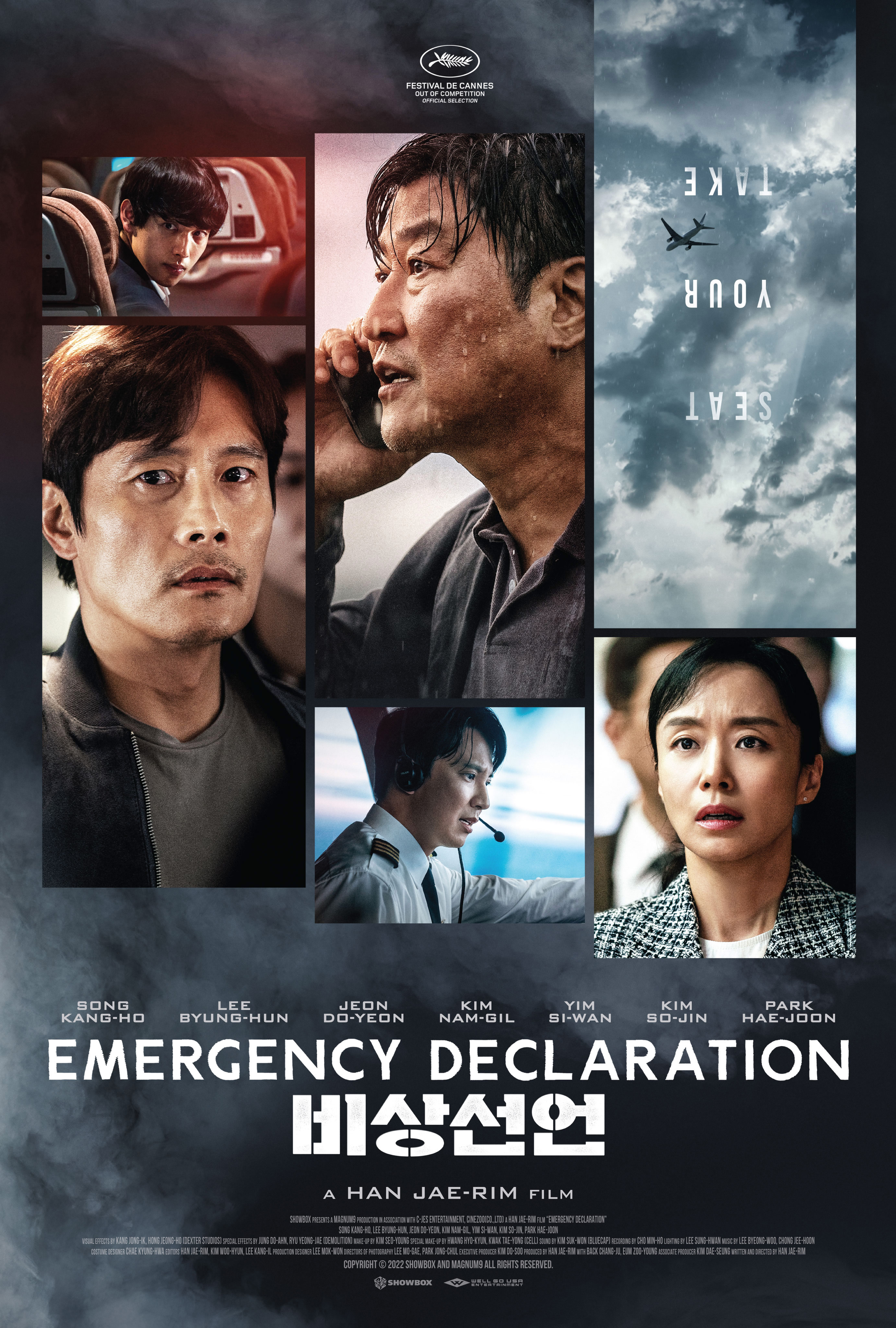
“Disasters are arbitrary” admits a pundit commenting on a potential air disaster, “people became victims for being in a certain place at a certain time”. “We were caught in a disaster that none of us wanted” the pilot later echoes while explaining that they have chosen to exercise what little control is left to them in making their own decision as to how they intend to deal with the hand that fate has dealt them. Han Jae-rim’s Emergency Declaration (비상선언, Bisang Seoneon) harks back to classic disaster pictures of the 1970s such as genre archetype Airport but also meditates on Korea’s place in the contemporary global order along with the rights and wrongs of exercising one’s own judgement when it goes against all practical advice. 

The disaster in this case begins with a mad scientist, Ryu (Im Si-wan), who decides to kill as many people as possible along with himself by releasing a deadly virus he tweaked to make even more lethal aboard a commercial airliner. Later it’s suggested that Ryu had some kind of breakdown after the death of his mother, also a microbiologist, who had a domineering influence on his life which does seem to play into an uncomfortable trope of blaming the mother for everything that goes wrong with a child though Ryu’s resentment is in part towards the pharmaceuticals company he claims fired him unfairly. As in many recent Korean films, a strong undercurrent of anti-Americanism runs throughout, the international pharmaceuticals company with an American CEO refusing to assist the Korean police’s inquires not wishing to admit that they illegally procured a deadly virus from the Middle East and then allowed Ryu to get hold of it illicitly. This also of course means that they are slow to grant access to a potential antidote/vaccine despite carrying both. Meanwhile, the plane is later turned back from Honolulu and prohibited from landing anywhere on US territory because of the uncertainty surrounding the infected on board. 

The plane in effect becomes a kind of plague ship that takes on additional significance during an era of pandemic. Having been rejected by the US, the plane tries to land in Japan but is also refused permission and later threatened by the Japanese Self Defence Forces who even open fire on it and threaten to shoot the plane down if it does not leave Japanese airspace. The official response is more nuanced than it had been with the Americans, a politician expressing his regret and sympathy with the people of Korea but also emphasising that their responsibility is towards the people of Japan and that as they cannot be sure the treatment will work on Ryu’s mutated variant, they cannot allow the plane to land. As the opening titles explain, an Emergency Declaration is a sacred aviation rule that means no one should be refusing them help, yet they do begging the question of what it really means if in the end the authorities can just choose to ignore it. 

But then again, it seems that not even Korea is fully onboard with accepting the plane back onto Korean soil. With news quickly spreading via social media, mass protests erupt from those who brand it a “biochemical missile” and would rather it be shot down than risk contaminating the wider population while counterprotests insist that there are many Korean people onboard and it’s only right that they be allowed to return home and be cared for by the authorities. The authorities are however torn, unwilling to admit they’re considering simply allowing 150 people to die for the greater good leaving only the Transport Minister (Jeon Do-yeon) to exercise her own judgement in arguing for the plane landing with quarantine procedures in place. 

Former pilot Jae-hyuk (Lee Byung-hun), a passenger on the flight with his little girl who suffers from eczema, is later tasked with exercising his own judgement in deciding whether to land the plane at a closer airport he feels is safer or try to hold out until the destination recommended by the authorities despite dwindling fuel supplies. The plane disaster is Jae-hyuk’s redemption arc allowing him to overcome past trauma in having made a similar decision before which led to the deaths of two cabin crew thanks to the selfishness of passengers who blocked exits trying to retrieve their luggage before escaping. One thing that wasn’t so much of an issue in the ’70s is that passengers are now able to receive information in real time via their phones thanks to onboard wireless, meaning that they learn all about the virus, the cure, and that the cure might not work independently giving rise to even more chaos and confusion and presenting a serious threat to traditional disaster management techniques. Nevertheless, they too eventually exercise their own judgement in coming to the conclusion that perhaps it is better if they choose not to land rather than risk infecting their friends and family.

The passengers on the plane do not blame those on the ground accepting that they are simply afraid. “You can’t just save yourselves” a particularly paranoid passenger is fond of saying completely oblivious to the fact that’s what he’s been trying to do with a pointless insistence in segregating the infected aboard a plane that exclusively uses recycled air only to completely reverse his thinking on hearing the plane may make an emergency landing in which case the rear of the plane, where the infected are, is safer. It is in the end a radical act of self-sacrifice by a policeman on the ground (Song Kang-ho) that paves the way to a happier solution for all but could just as easily have turned out differently. Disasters are arbitrary after all, at least as long as you aren’t the one causing them. Counterintuitively, the message may be that your government might not help you and others certainly won’t, but if you’re making your own emergency declaration you have the right to exercise your own judgement in the knowledge that either way you’ll have to answer for your decision.  


Emergency Declaration is released in the US on Digital, Blu-ray, and DVD on Nov. 29 courtesy of Well Go USA.

Clip (English subtitles)