Sunshine of My Life (一路瞳行, Judy Chu, 2022)

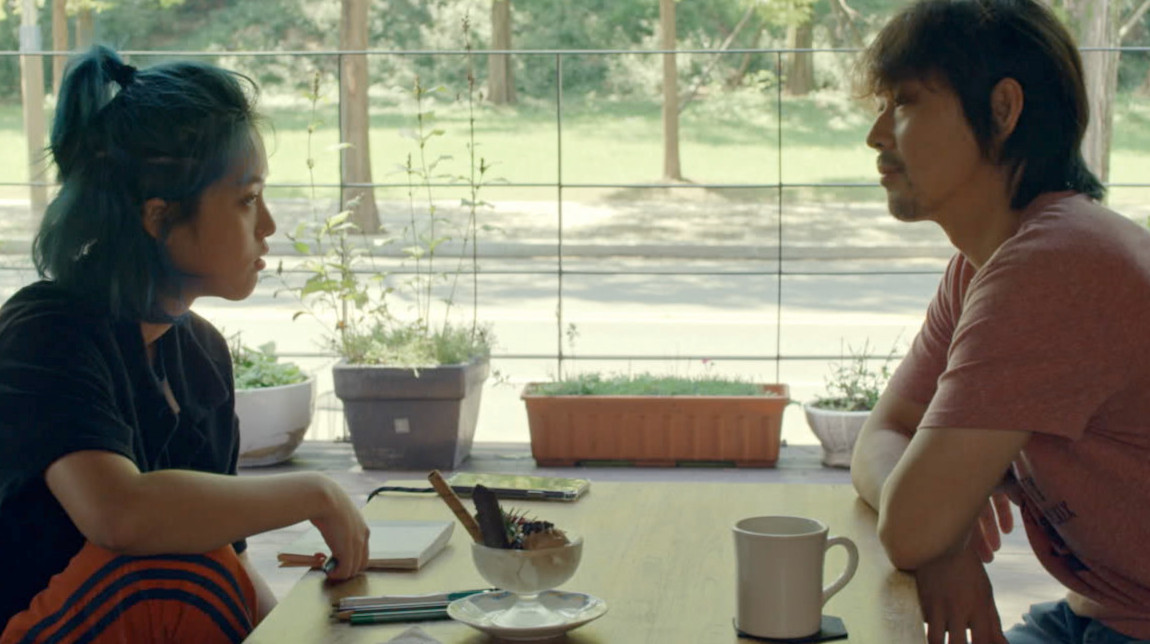
A young woman comes to a better understanding of her family and her relationship with it after a series of crises some more serious than others in Judy Chu’s semi-autobiographical drama, Sunshine of My Life (一路瞳行). More a coming-of-age tale than an exploration of the difficulties faced by those with disabilities in the recent past, Chu’s heartfelt film nevertheless stresses familial solidarity as the heroine comes to realise that her misplaced resentment is mostly teenage angst and that at the end of the day her parents just want her to be happy.

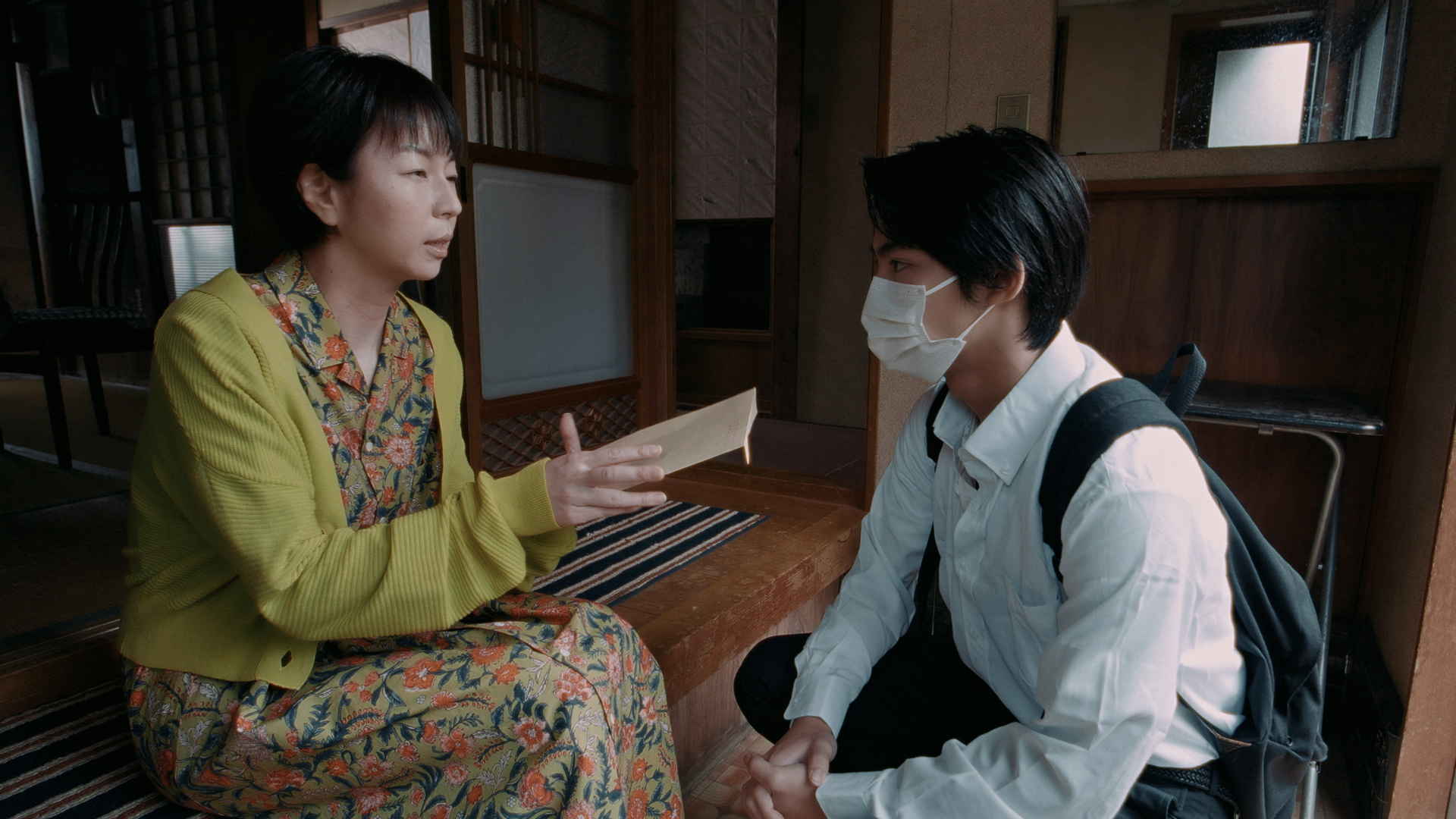
Yan (Karena Ng) was born to two parents who are each blind. A perfectly ordinary though dangerous accident that could easily happen to a sighted mother leaves a toddler Yan scalded and unkind relatives questioning the couple’s decision to have a child at all implying it is somehow irresponsible and that they are incapable of caring for her. Nevertheless, Yan’s mother Hung (Kara Wai) resolves to do everything she can to keep her daughter safe beginning with attaching bells to her so she has a better idea of where she is and what she’s doing at all times. This early incident does in one sense colour Hung’s parenting style, constantly questioning herself as to whether she’s a good mother and preoccupied with the judgement of others all of which later feeds into her teenage daughter’s resentment as the older Yan grows tired of feeling responsible for her parents’ care. 

As a child, Yan had helped her parents by reading out menus and describing the world she sees around her but as a high school student she resents having to rush home after school rather than hanging out with her friends and also seems to be ashamed of her parents’ disability never telling anyone about her family and instead claiming that her mother is ill in hospital. She tells her art teacher that she just wants to get out of Hong Kong and doesn’t care where she goes so long as it’s far away while later telling her no good rich kid boyfriend that she’s searching for “freedom”. On one level she feels intense guilt for leaving her parents behind as if she were abandoning them, worried that they really can’t manage without her, but also fears for her own future and feels trapped as if she’s being asked to sacrifice her own hopes and dreams to stay by her parents’ side forever.  

Yan is indeed a teenage girl and has a slightly self-centred way of looking at things, never quite stopping to appreciate how difficult her parents lives can be in a conservative society that is often unwilling to accommodate difference. When her classmates all mock and jeer at a poster advertising a star gazing event for the blind all she can do is smile politely, and at one point she even walks straight past Hung waiting for her outside the school gates perhaps on one level simply embarrassed to have her mother meet her as any teenage girl might be but also anxious to hide her existence from her boyfriend. After being arrested by the police for illegal street selling, Yan’s father Keung (Hugo Ng) gets a job as a masseuse but is later exploited by his employer who tries to force him to sign a new contract accepting a 20% pay cut while increasing the manager’s commission. Keung refuses and is fired but vows to fight for the other workers to end discrimination against the blind and ensure they enjoy the same labour rights as sighted workers. 

Faced with a series of crises from a brush with criminality to her boyfriend’s sudden absence and her father’s failing health, Yan is forced to reconsider her relationship with her parents. On witnessing Hung stand up for herself and take her father’s corner Yan realises that she might have underestimated her mother’s capability and what she took for dependency was more a general sense of warmth in receiving care that made her life easier. Tinged with ’90s nostalgia from the ubiquitous cassette tapes Hung uses to record precious moments to pagers and pinups, Chu’s warmhearted drama finds a mother and daughter coming to a better understanding of each other as they both learn to embrace independence and freedom if in a slightly different way than originally anticipated.


Sunshine of My Life screened as part of this year’s Five Flavours Film Festival and is available to stream in Poland until 4th December.

Original trailer (Traditional Chinese / English subtitles)
Remember Me (金門留念, Hung Chun-hsiu, 2022)

Some way into Hung Chun-hsiu’s documentary Remember Me (金門留念) a woman takes part in a military reenactment firing large scale artillery from a now disused military base. What’s ironic is both that what was once a frightening reality of ongoing warfare has now been commercialised as an attraction for tourists, and the fact that the woman firing the gun pointed at China on this technically Taiwanese island is herself Chinese. As the opening graphics point out, the island of Quemoy (also known as Kinmen) is geographically closer to Mainland China though governed by Taiwan and for much of its mid-20th century history at the front line of an ongoing ideological battle between communists and nationalists. 

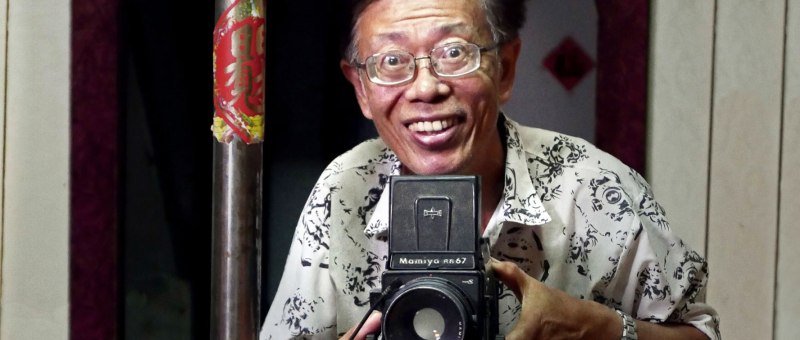
In the stock footage often employed by Hung, newsreaders can be heard uttering phrases about “vile communists” and eliminating communist “scum” along with impassioned sloganeering about taking back the “motherland” and freeing its people from the yoke of communism. The island was under near constant shelling until as recently as 1979 and consequently largely populated by the military many of whom were ordinary young men conscripted for national service. The island has obviously changed a great deal since then, though one unexpected casualty has been the gradual decline of the island’s photo studios. Less due to technological than demographic change, the first of Huang’s subjects explains that given the precarity of life in Quemoy soldiers would have their pictures taken as often as once a week, often full body portraits they would send home to their families as evidence that they had not been severely injured. Kuo-ming has been operating his photo studio for 46 years now one of only two still operating on the island. Like the gun show, the military portraits have also become a kind of costume play, Kuo-ming handing out army uniforms and prop weapons for people to pose with often against a painted matte backdrop of a local lake or else Japan’s Mount Fuji. 

Meanwhile, the photographs taken at the time hint at the loneliness felt by the men who were dispatched to the island, many of them opting to have pictures of their wives or girlfriends inset alongside them. Those who had no girlfriends sometimes used a picture of a famous model or actress as a personal keepsake though one photo which goes unexplained is inset with the photo of another man in uniform. It has to be said that many of these photos have a homoerotic quality, especially the ones featuring shirtless well-built men striking muscle poses, while others are unexpectedly feminine in nature featuring the soldier in soft focus and surrounded by flowers. The ones from later years are also sometimes playful, featuring soldiers sitting in a model speedboat in or in more relaxed, artistic poses. A man who had his photos taken there while on his military service reads a letter he wrote to a woman he loved promising a photo, one in which he later inset her portrait, little knowing that she did not return his feelings and only kept the correspondence up in fear he might harm himself if she turned him down. Though he discovered on his return she had married someone else, the couple found each other decades later and decided to have a “real” photo taken together at Kuo-ming’s shop dressed in faux army uniforms. 

Having married a local woman and decided to stay on Quemoy, former solder Shan-yung also used to have his picture taken at Kuo-ming’s to send back to his mother. He joined the army voluntarily as his family was poor and was shocked to be sent effectively to the front line. After leaving the service, he and his wife opened a karaoke bar largely catering to military personnel and though his business still seems to be doing well, bears out Kuo-ming’s description of the economic changes brought about by decreasing militarisation. Even so he feels a sense of guilt that his life has taken him so far away from his family that he is no longer able to care for his parents in their old age while taking care of his in-laws on Quemoy.

Chen-mei, the woman staging the live reenactment of firing the artillery gun, expresses something similar while explaining that she came to the island from the Mainland for an arranged marriage and now works as a civil servant. She concedes that it’s a little awkward for some of the Chinese visitors realising that their nation had been firing shells at the island for three decades, but suggests that it’s all in the past while espousing a well-meaning but possibility reductive One China philosophy that they are all one Chinese family who no longer need to care about labels like “communist” or “nationalist” because they live in an era of peace. The gun, and the remaining military garrison, may be a reminder it might be dangerous to take that for granted given the rising rhetoric on the Mainland in response to the desire for a recognition of Taiwanese independence. A father explains to his son that the artillery gun was a loan from the Americans to help resist communism, but when the boy asks him how long is left on the lease the man can only look confused and reply that he doesn’t really know. In any case, Remember Me seems to be keener on remembering the rosier side of life on Quemoy under fire as old soldiers look back on their youth if grateful that goats now roam their barracks and the only shells to be found are the ones commemorating a war that for now at least has ended. 


Remember Me screened as part of this year’s San Diego Asian Film Festival.

Original trailer (English subtitles)

A Lonely Island in the Distant Sea (절해고도, Kim Mi-young, 2021)

A dejected artist finds himself reconsidering his life’s choices when his teenage daughter drops out of education to become a Buddhist nun and he falls in love with a forthright professor in Kim Mi-young’s contemplative drama, A Lonely Island in the Distant Sea (절해고도, Jeolhaegodo). Though the title could easily enough refer to the hero himself, it echoes the sense of impossible longing symbolised by an island he could see but did not travel to though there was no real reason preventing him save his own feelings. In any case, the island and the day on which he saw it have become lodged in his memory as a nostalgic image of irresolvable desire. 

Now in early middle-age, Yun-cheol (Park Jong-hwan) is an unsuccessful sculptor who feels he has failed to live up to the promise of his youth and mainly earns his keep through commercial work such as crafting replicas of the solar system for a local museum. Divorced from his workaholic wife, he’s called in by his daughter Gina’s (Lee Yeon) school when they object to some admittedly disturbing artwork she had drawn on a series of roller blinds without permission. Yun-cheol is less concerned with the fact the paintings suggest that Gina is experiencing some kind of mental anguish than the school’s reaction to them, her teacher admitting that they took the blinds out and burned them. His anger is directed towards their wilful destruction of a work of art because it seemed to them more akin to vandalism or destruction of their property. Describing Gina as “mean”, they imply that they will ask her to leave suggesting that she would benefit from a different environment. In many ways that’s how Gina feels too, eventually revealing that she has decided to leave education altogether and later giving up her art to practice Buddhism. 

It’s the idea of abandoning her obvious talent that Yun-cheol struggles to understand. As a young man, he’d also considered becoming a monk or even a Catholic priest as, as he describes it, “safe paths for lost souls” if he failed to realise his ambitions of becoming an artist. Discovering that his daughter had had the same dilemma, even if she took a different path, shakes his sense of self in realising that his internal conflict was not unique. While trying to understand Gina’s desire to renounce the world, he begins to fall in love with a free spirited professor and cancer survivor but Ji-young (Kang Kyung-heon) is not prepared to wait around for him to sort himself out on his own and is quickly tired of his tendency to retreat into isolation rather than face his problems. Having learned only half a lesson, he later moves into Gina’s retreat where he is eventually asked to leave by the head nun bluntly who tells him that he is not suited for the monastic life. 

It may be that Yun-cheol exists outside of regular society because of his unusual upbringing in a mountain shack with his similarly isolated father, yet he struggles with himself and his relationship to art while seemingly unable to build lasting relationships with people as if they too were islands in a distant sea he could only gaze at from afar. He tells his daughter he would never abandon her in the way his mother had him but in a sense he might have done so in having lost the will to live amid his intense loneliness and lack of artistic fulfilment. Nevertheless, his growth comes in a kind of acceptance in acknowledging Gina’s choice to become a nun along with Ji-young’s declining heath and desire for isolation. 

When he had first met her, Yun-cheol had responded to Ji-young’s lecture about a would-be-revolutionary who did not go through with his cause by asking her why he would seek to implode the world in which he lived though this is the same thing Yun-cheol eventually does in his own mini-revolution choosing new paths in middle age whether in fear and regret or in search of possibility. A mystical meeting with a maternal wild boar helps to give him clarity though it seems he is forever destined to be a lonely island looking out at a distant sea filled with an unanswerable longing.


A Lonely Island in the Distant Sea screened as part of this year’s London Korean Film Festival.

Original trailer (no subtitles)

Hong Kong: City on Fire (不作浮塵, Choi Ka-yan & Lee Hiu-ling, 2022)

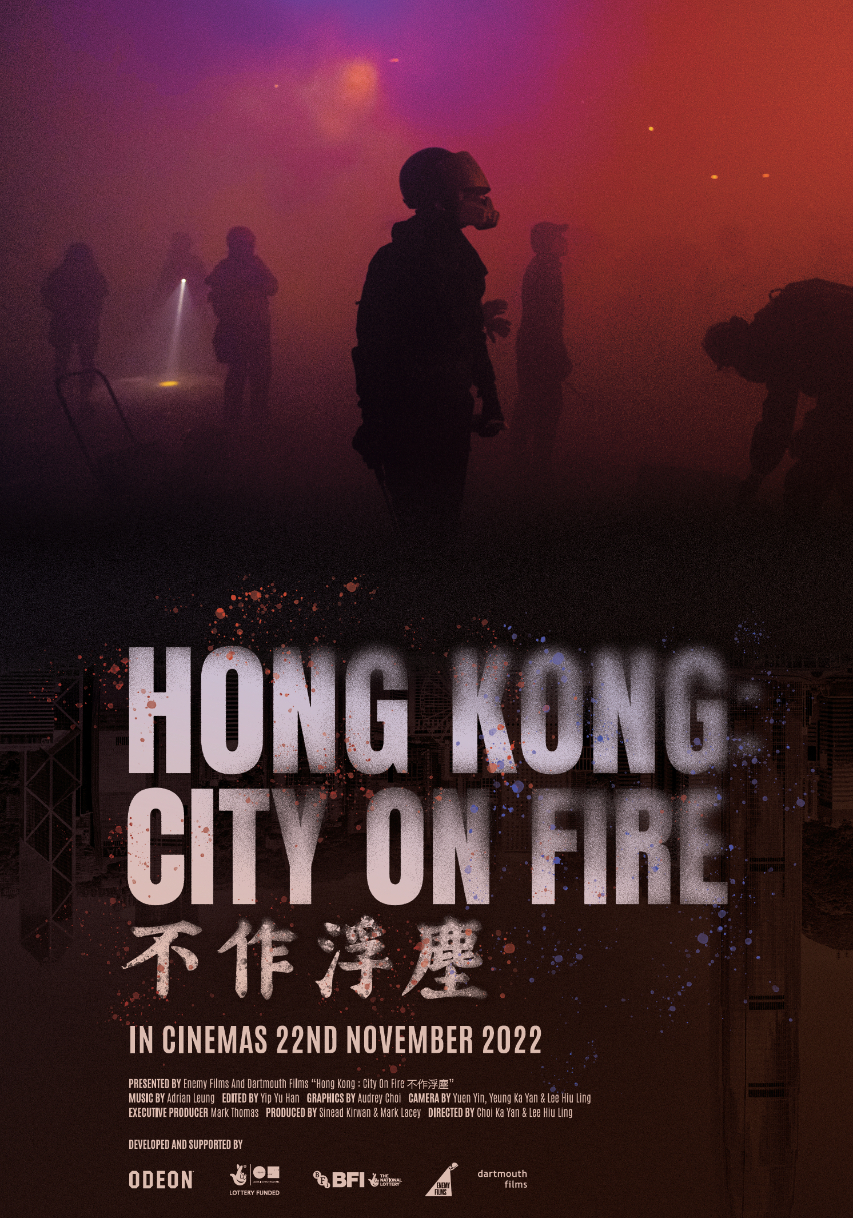
“Each day is more absurd and darker than the last” a former protestor reflects, deciding to move his family abroad resolving that the only way to protect his children is to ensure they do not grow up in Hong Kong. The latest in a series of documentaries focusing on the 2019 protest movement against the Extradition Law Amendment Bill, Choi Ka-yan and Lee Hiu-ling’s Hong Kong: City on Fire (不作浮塵) is among the most visceral with a potent sense of what it was like to be a young person on the ground, but is also among the least hopeful with the majority of its protagonists deciding that their only future lies in exile. 

First protagonist Yan is a law student at Chinese University who is left wondering if her studies are still relevant in the wake of the National Security Law. Rather than participating directly, she helps arrange legal representation for protestors who have been arrested by the police. AJ, meanwhile, is a young man who finds his relationship with girlfriend Jennie strained by his commitment to the protests, while the mysterious Shin Long is a frontliner who finds himself conflicted in his responsibilities while his wife is pregnant with their second child. 

Each of them seems to feel that time is running out and these are the last days of the battle for democracy in Hong Kong. The film opens with stock footage from the Handover with Chris Patten declaring that it is time for the Hong Kong people to run Hong Kong but of course that wasn’t really the case and the One Country Two Systems philosophy has been steadily eroded to the point of oblivion long before its 2047 expiry date. While some students feel it is a privilege that they have been able to voice their opinions at all let alone protest given that the same situation could not occur on the Mainland others are becoming frustrated not least because of the increasingly oppressive behaviour of the local police force. 

In one particularly impassioned moment, students at the Chinese University confront their principal begging him to issue a statement denouncing police violence but he remains impassive refusing to acknowledge any such brutality has taken place. Several students break down in tears while one young woman recounts her sexual assault at the hands of the police. Intense footage from the middle of the protests captures policemen kneeling atop students while middle-aged and older men and women step in to challenge them, asking what these young people have done so wrong as warrant this kind of treatment. AJ talks of the “solidarity of the streets”, older people in so-called “parent cars” offering free rides to protestors while others offer meals or make simple shows of support. Shin Long, however, offers darker counter of “street justice” in which the crowd turns on a young women they believe was photographing protestors demanding she hand over her phone and delete any photos fearing she will otherwise be sending them to the police. 

As the protests intensify, so does a feeling of paranoia as students are rounded up from their homes and threatened by the police. AJ is arrested and bailed but told that he’ll be sent to prison if caught at another protest, further straining his relationship with Jennie who already feels neglected by the amount of time he spends on the protest rather than with her. Like Shin Long, he feels guilty that he’s leaving a gap in the line and others may end up getting hurt because he isn’t there to protect them. But then as Shin Long points out, every time he manages to escape it’s because someone else was caught, slowing the police down and allowing him to get away. He might not always be so lucky and with a wife and soon to be two children he feels that he is being irresponsible in putting himself at so much risk. 

With the passing of the Security Law, enacted so quickly its contents were kept secret until after it was voted through, all hope is drained from each of the protagonists. AJ learns he will be going to prison for a year for having done nothing more than stand in the street and chant slogans, while Shin Long also receives a lengthy sentence resolving to raise his children abroad on his release. Jennie to decides to emigrate, leaving a dejected AJ behind alone with only painful memories and little hope for the future. A raw document of the protest movement live from the ground, City on Fire has only sympathy for its wounded protagonists but equally perhaps for a disappearing Hong Kong that in the end could not be protected. 


Hong Kong: City on Fire is in UK cinemas on 22nd November.

Trailer (English subtitles)

Plan 75 (Chie Hayakawa, 2022)

In 2016, a 26-year-old man went on a violent rampage murdering 19 people at a care home for the disabled claiming that he had done it “for the sake of society”. Prior to his crime, the killer had written an open letter in which he stated that he dreamed of a world in which those with severe disabilities could be peacefully euthanised, while claiming that those with no ability to communicate had no right to life and were nothing more than a drain on society. An expansion of her earlier short featured in the anthology film Ten Years Japan, Chie Hayakawa’s Plan 75 opens with a sequence which appears to directly reference the 2016 mass killing but in place of the widespread outrage and reconsideration of a social stigma towards disability that followed in its wake, the government decides to implement a “voluntary” euthanasia program for those aged 75 and over in response to the “concerns” of the young in an ageing society. 

Intergenerational resentment does indeed seem to be a motivating factory, the killer in this incident feeling himself oppressed by the responsibility of caring for the elderly while simultaneously hemmed in by a stangnant economy and heirarchical society. He points out that Japanese people have always praised self-sacrifice on behalf of the nation and alludes to the archaic tradition of ubasute or throwing out the old in which elderly people were abandoned on mountainsides to die in time of famine. There is no denying that the Plan 75 initiative has its insidious qualities in placing undue pressure on elderly people to give up their lives in order not to “burden” the young, an elderly woman attending a cancer screening remarking that she feels a little awkward as if she’s “clinging on to life”, being somehow greedy in the simple desire to continue living. 

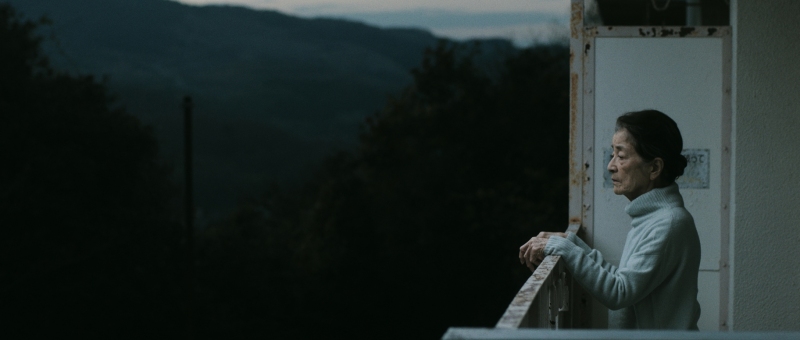
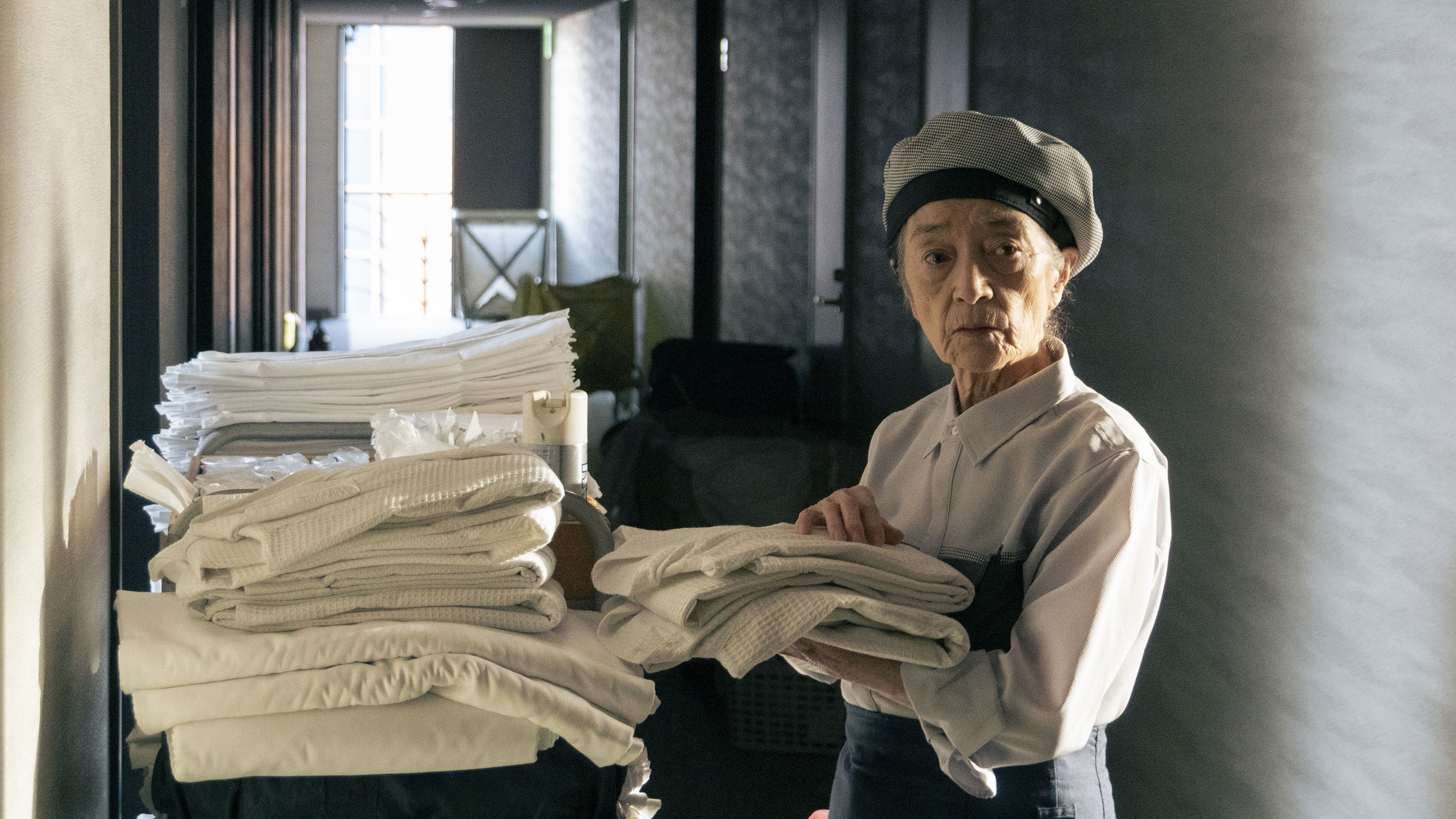
Meanwhile, their society has already abandoned them. 78-year-old Michiko (Chieko Baisho) had no children and lives alone supporting herself with a job as a hotel maid where all of her colleagues are also elderly women. When one of them has a fall at work, they are all laid off. The hotel claims that they’ve received complaints from guests about exploiting elderly people, but Michiko suspects it’s more like they don’t want one of them to drop dead in someone’s room. Not wanting to be a “burden”, Michiko is reluctant to apply for social security but even when she accepts she has few other options the desk at city hall is closed. Her building, like her now old, is set for demolition but no one is willing to rent to an unemployed 78-year-old woman nor is anyone willing to employ one. More and more Michiko is pushed towards Plan 75 if only to escape her loneliness. Being robbed of the opportunity to work also removes the opportunity for socialising especially as the other old ladies decide to move in with family and leave the area. 

This is in fact an integral part of the Plan 75 business plan with case workers specifically instructed to keep the applicants happy through regular phone calls while prohibited from meeting them in person to prevent the older person changing their minds having made new social connections that make their lives more bearable. In the quietly harrowing scenes at the processing centre, for want of a better term, it becomes obvious that the majority of those submitting to Plan 75 are women as staff members empty out their handbags, dumping their possessions into a large bin while setting aside anything of value such as watches or bracelets which are perhaps another valuable revenue stream for a callous government that sees the programme as a cost cutting exercise.  

Case worker Hiromu (Hayato Isomura) only becomes conflicted about Plan 75 after recognising an applicant as his estranged uncle and eventually discovering that despite sales claims of dignified funerals remains are often sent to landfill care of an industrial waste company. His uncle’s plight perhaps highlights the pitfalls of life in post-war Japan. Living hand to mouth working construction jobs all across the country he never had an opportunity to put down roots or save for his old age and is now living a lonely life of desperate poverty. Heartbreakingly he put his application in on his 75th birthday, an act Hiromu’s boss describes as almost heroic as if he couldn’t wait to sacrifice himself for the common good. Later a sign goes up that fixed addresses are no longer needed to apply, while the Plan 75 stand in a local park where they are in the process of putting bars on the benches so that homeless people can’t sleep there doubles as a soup kitchen. 

One has to ask, if there was money available for all of these resources to help people die why is it not available to help them live? A young woman assigned as Michiko’s handler appears to have second thoughts while bonding with her over the phone, tearfully reminding her she still has the right to withdraw (though it’s never mentioned if that means repaying the $1000 signing bonus) while Michiko’s life too has been brightened by this little bit of intergenerational friendship, itself cruelly commodified in the allotted 15-minute sessions included in the plan. Told with quiet restraint, Hayakawa’s vision of an eerily dystopian future in which human life is defined by productivity and all human relationships transactional, where loneliness is the natural condition and society itself has become little more than a death cult, is painfully resonant in our increasingly disconnected world. 


Plan 75 screens at Japan Society New York on Nov. 20 as part of The Female Gaze: Women Filmmakers from JAPAN CUTS and Beyond.

Festival trailer (English subtitles)

Images: © 2022 KimStim

Hot Blooded (뜨거운 피, Cheon Myeong-kwan, 2022)

A dejected gangster decides to take the chance on a different kind of life but is soon pulled back into internecine underworld conflict where humanity is weakness and the only prize is a lonely hegemony in Cheon Myeong-kwan’s ‘90s-set thriller, Hot Blooded (뜨거운 피, Ddeugeoun Pi). As much about fathers and sons as it is about uneasy brotherhood, Choi’s adaptation of the novel by Kim Un-su harks back to the classic gangster picture in which the hero proves too noble for his surroundings and finds a single act of compassion provoking nothing more than chaos and misery. 

In the small enclave of Kuam, Busan, Hee-su (Jung Woo) is a petty foot soldier on the cusp of turning 40 who is becoming tired of this way of life. Loyal to his boss, Son (Kim Kap-soo), Hee-su is also aware that times are changing and the boss’ tried and tested approach may no longer meet them. When a vicious gangster, Yong-kang (Choi Moo-sung), returns from exile abroad after fleeing to escape a murder charge, gangland equilibrium is suddenly unbalanced not least by his shift into drug dealing that eventually places him at odds with Hee-su’s gang. After defusing a potential turf war, Hee-su decides he wants out and takes up with booze smuggler Yang-dong in the electric slot machine trade hoping to make enough money to open a small hotel on a nearby island with his longterm girlfriend and her adult son Ami (Lee Hong-nae) who has just been released from prison after falling in with a thuggish gang. 

As he eventually realises, Hee-su has merely ended up as a pawn stuck between Son and Nam, the head of a rival outfit trying to muscle in on their territory. His first problem is that his childhood friend, Chul-jin (Ji Seung-hyun), is a liaison for Nam’s gang. Son explains that only by taking out someone like Chul-jin can they start a negotiation with Nam to nix a gang war before it escalates, but Hee-su cannot bring himself to kill his friend while sufficiently unbalanced by his suggestion that he’s being played by Son as to doubt the old man’s advice. We’re given constant reminders that Chul-jin is a father of young children, while Hee-su has no children of his own but is a surrogate father figure to Ami. Effectively brothers, the two men met as orphans at a government facility and it’s clear that Hee-su sees Son as a man to whom he owes a fatherly debt while Chul-jin may not have any loyalty to anyone besides himself even as he claims that all he wants is to live peacefully with his children just as all Hee-su wants is to open his hotel and live with In-sook (Yoon Ji-hye) and Ami in a less violent environment. 

Hee-su’s decision to leave is a kind a of betrayal in itself, born of a desire to break free of the restrictive codes of gangsterdom and be his own man charting his own future but little realising that his life is still ruled by the laws of the underworld. Later someone asks him what it is he wanted to protect. All he can say is that there was something once, but he’s forgotten what it was. In leaving his gangster family he unwittingly destroys his dreams of forging his own, robbed of the more peaceful life he dreamed of by the chaos and violence of the underworld. The irony is that everyone describes Kuam as a “shithole”, a moribund small-town where even the casino hotel craze which is the centre of the gangster economy may be on its way out. Hee-su can’t really understand why they’re having a turf war over a place no one wants, only to realise it’s just a smokescreen to disguise what it is that’s really worth having and why. 

A late existential speech makes plain Hee-su’s predicament in Yang-kang’s logic that men like him fall to the depths of hell or become kings of all they survey. Yet for Hee-su it’s all much the same, rendered lonely by everything he’s lost while achieving the success craved by so many that is the opposite of what he wanted. It turns out Son may have had a point, the reason he survived so long was his ability to keep calm and play the long game. Hot-headed revenge is a luxury a gangster can’t afford as Hee-su finds out to his cost. “Fathers are all powerless” Chul-jin tries to tell him, though there’s something left of the old Hee-su in his final act of letting a man who betrayed him go because he’s the last in the boss’ bloodline potentially sealing his own fate in some far off act of vengeance. Very much a classic gangster drama in which a noble foot soldier finds himself torn by conflicting loyalties, Hot Blooded proceeds with a weary fatalism leaving its hero a coldblooded ghost which might be a fitting end for a man who once tried to make his fortune selling fake hot peppers.


Hot Blooded screened as part of this year’s London Korean Film Festival.

Original trailer (English subtitles)

She is me, I am her (ワタシの中の彼女, Mayu Nakamura, 2022)

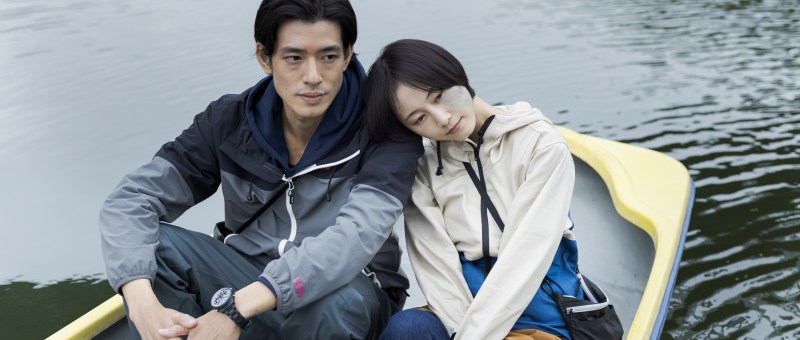
A gentle sense of haunting lingers over the protagonists of Mayu Nakamura’s pandemic-era anthology She is Me, I am her (ワタシの中の彼女, Watashi no Naka no Kanojo). COVID-19 seems only to have exacerbated their sense of loneliness and regret, confronted by the ghosts of other lives and absent friends while having little else to do but think about past and future amid an atmosphere of anxiety. Yet within the lonely city there is space for fresh connection and new beginnings even if in themselves somewhat unexpected.

The sense of distance is obvious from the first episode, Among Four of Us, in which three university friends meet again after many years in a public park, only in reality they’re each sitting on their own in different parts of the city while connected by telephone. They speak briefly of their lives, each filled with disappointment one a struggling actor, one a conflicted housewife happily married but wondering what might have been, and the other living with a former lover who can’t forget their absent friend. Much of the conversation revolves around Sayoko who haunts them on this beautiful moonlit night as they each realise they’ve done little but think about her though she somehow slipped away from them and may have had sorrows and regrets of her own they never thought to ask about. 

It’s Sayoko who again seems to haunt the third chapter, Ms. Ghost, in which a young woman encounters an old lady sleeping on a bench near the station and realises they have more than a little in common. In fact it’s almost as if she were talking to an older version of herself, alone and beaten down by life, dreaming of past glories. Both women reflect not only on their broken dreams as country girls who came to the city to act, but on the various ways they’ve been displaced by the pandemic having lost their places of work and been left with nowhere else to go. Forced into sex work after her hostess bar closed down, the younger woman is haunted by a sense of danger that she might end up just another name in the newspaper killed by a violent man. 

Then again the lonely woman of part two, Someone to Watch Over Me, finds herself captivated by a delivery driver, Kazuya, who hastily polished off one of the meals she ordered but did not have the strength to eat. Becoming somewhat obsessed with him she continues ordering food only to have him eat it, but is conflicted on discovering a note of darkness in their relationship. When he tells her that she is not alone even if she thinks she is, it comes across as a much less comforting statement than he meant it to be hinting at the various ways having someone to watch over you isn’t always as nice as it sounds. She too is haunted by absence, along a with a vague sense of being watched that she may however uncomfortably have started to enjoy. 

The heroine of the fourth episode, Deceive Me Sweetly, is haunted by the loss of her youthful dreams taken from her along with her high school lover, a photographer just like the delivery driver, by her declining sight. Yet she can perhaps see further than most and straight through the young man who arrives at her door attempting to run an ore ore scam poignantly claiming to be the brother that hasn’t contacted her in years. Struck by remorse, the young man begins to regret scamming this strangely trusting woman remarking that the real Kazuya wherever he may be must be lucky to have a family he could call in time of need, which the young man perhaps does not. While she is haunted by lost youth, the woman is also in a way haunting him like a mystical figure offering the hand of redemption and setting him free into a world that seems more open fuelled by the need to repay a debt of kindness to a woman he never really knew. Even in these days of lonely desperation, there can still be hope and connection. Filmed with dreamy minimalism, Nakamura’s four tales each starring actress Nahana and connected by seemingly random details discover a sense of the comfort in strangers that a city can offer even in the midst of its own loneliness. 


She is me, I am her had its World Premiere at Japan Society New York on Nov. 12 as part of The Female Gaze: Women Filmmakers from JAPAN CUTS and Beyond.

Original trailer (no subtitles)

Images: © 2022 Omphalos Pictures

The Nighthawk’s First Love (よだかの片想い, Yuka Yasukawa, 2021)

A young woman begins to regain a sense of self-confidence in the face of social prejudice when invited to consult on a film in Yuka Yasukawa’s adaptation of the Rio Shimamoto novel, The Nighthawk’s First Love (よだかの片想い, Yodaka no Kataomoi). Drawing inspiration from a Kenji Miyazawa story about an ostracised nighthawk bullied by a hawk who cannot accept that they are the same because he finds the nighthawk’s difference offensive, Yasukawa’s gentle drama is less about the transformational quality of love than it is about learning to accept oneself as distinct from the self that others see. 

A shy young woman, Aiko (Rena Matsui) keeps a distance with others because of a longterm sense of rejection owing to a prominent birthmark on her face. After agreeing to be interviewed for a book about people living with facial difference and disfigurement, Aiko is approached by filmmaker Tobisaka (Ayumu Nakajima) who just happened to chance on their photoshoot and was struck by what he describes as a quiet sense of strength in her reserve. Though Aiko is not originally keen on the idea of having someone turn her life into a film, she soon begins to bond with Tobisaka who does not appear to react to her birthmark and eventually embarks on a romance only to find herself insecure in his continuing attachment to a former muse and dedication to his craft. 

While visiting her publisher, Marie (Lisa Oda), Aiko encounters a curious little girl who touches her own face and bluntly asks Aiko if the bruise-like mark on her cheek hurts. Aiko answers patiently that it doesn’t and isn’t offended by the little girl’s question, but perhaps is by the mother’s reaction as she stares and wonders what to say before apologising for her daughter’s rudeness but not for her own. Aiko recounts something similar in recalling her childhood bullying in which the kids in her class nicknamed her “Lake Biwa” because the mark on her face resembled the famous landmark which they were learning about in school. Though they were being cruel to her, Aiko remembers that a part of her enjoyed the attention while the teacher’s attempt to shut her classmates down was in a way more painful as if it were the birthmark itself which was “horrible” rather than the kids’ comments. After that the other children began to avoid her, unsure what to say and perhaps blaming her for having gotten into trouble with the teacher. She explains that she worries people often drift away from her in part because of the birthmark itself and in part because of the way it influences her behaviour generating a vicious cycle of doubt, rejection, and loneliness. Tobisaka’s muse, Miwa (Miyuu Teshima), looks very much like her only without the birthmark and Aiko worries if she can keep him while fearing in her insecurity that their relationship is nothing but a long con designed to get her to agree to participating in the film. 

Yasukawa often frames Aiko looking into mirrors, at one point a reflection of her face appearing next to that of Miwa in her makeup on a poster for the film. Tobisaka gives her a compact mirror as a gift that he possibly intends to help her see herself though perhaps as he sees her, while she remains internally conflicted insistent that there’s nothing wrong with having a birthmark but carrying a degree of internalised shame and wondering if her life would be different without it. It’s another compact given to her by a similarly troubled friend that later grants her agency in realising that she does have a choice in displaying her birthmark or not even if deciding that she might not want to have it removed after discovering that it may be medically possible. Her supervisor advises her that attempting to become a different person in the pursuit of growth is nothing but a fantasy while she gradually comes to the realisation that change is not quite not quite what she’s looking for, quite literally freeing herself from her self-imposed imprisonment to embrace her authentic self. Her growth lies not simply in being loved by a man who may in a way be exploiting her, but in truly seeing herself and others for the first time. An elegantly lensed tale of self-acceptance, Yaskukawa’s gentle drama allows its diffident heroine the space to grow while becoming more rather than less of herself in defiance of a social prejudice that is all to often routed in the same insecurity she has now escaped.


The Nighthawk’s First Love screens at Japan Society New York on Nov. 13 as part of The Female Gaze: Women Filmmakers from JAPAN CUTS and Beyond.

Original trailer (no subtitles)

Stonewalling (石门, Huang Ji & Ryuji Otsuka, 2022)

A young woman finds herself caught between one generation and the next while dealing with an unexpected pregnancy in Huang Ji & Ryuji Otsuka’s pressing examination of contemporary womanhood, Stonewalling (石门, Shímén). Faced with an impossible situation she makes a decision that is in someways very old-fashioned and others very modern but certainly as another young woman describes it, very naive. Realising she has very little control over the decisions of her life the woman struggles to reaccommodate herself to the contradictions of the modern China. 

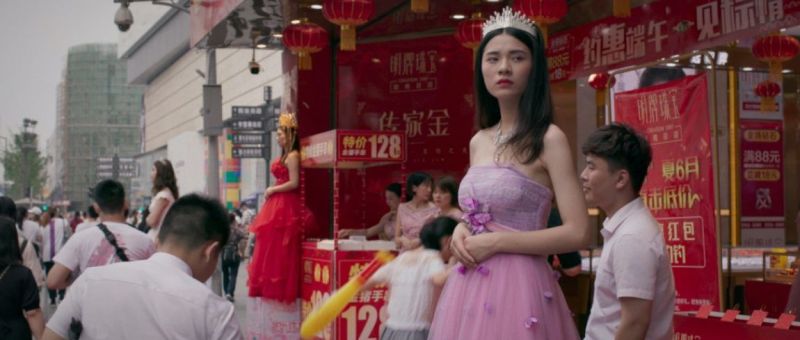
At 20, Lynn (Yao Honggui) has moved to the city from her home in provincial Changsha and is studying to become a flight attendant. Pressed to make money to support herself and pay off her mother’s debts, she’s taken up part-time modelling work and is dating a fellow student who seems to be something of a social climber constantly pressuring her to improve her English and mingle with the internationalist set. Hoping to earn more money she finds herself acting on a suggestion from an acquaintance to sell her eggs and discovers she is pregnant. While the boyfriend pressures her into an abortion, she isn’t really sure and decides to return to her parents’ home. One there she discovers her mother is struggling to pay off compensation payments after a mistake at her obstetrics clinic resulted in a woman losing her baby. Rather childishly Lynn suggests that she carry her child to term and then offer it to the other woman in return for the cancellation of the debt. 

It’s a very feudal solution to a very contemporary problem. Lynn does not see it as selling her baby only a way to overcome the futility of her situation. Everyone around her tells her to have an abortion as if it were as simple as having a tooth pulled and there’s really not much need to think about it. The film seems to ask if the silent consequences of the three decades of the One Child Policy have profoundly affected the way people think about motherhood and childbirth, normalising abortion to the point of becoming numb to its emotional dimensions. Lynn tells her mother that she does not want the baby to die inside her, having apparently witnessed an abortion going wrong at the clinic though her mother only tells her not to be so silly. She knows she can’t raise the child herself and accepts the arguments of others that early motherhood will derail her life and prospects, but wants the child to survive and naively believes both that it will help heal another woman’s pain and be raised in a loving family with better prospects than she could ever give it. 

But it’s obvious that the man she’s dealing with who claims to be a cousin of the woman who lost her baby is in no way on the level and most likely intends something quite different for the child perhaps selling it on in China’s child trafficking network, another unintended consequence of the One Child Policy. He suggests the cruelest solution of all, that Lynn and her family should raise the baby for a year and then part with it to him which aside from its emotional implications destroys the point of giving it away in the first place in that Lynn needs to keep her pregnancy secret to avoid the social stigma of unwed motherhood while returning to her studies after giving birth. Meanwhile, through the contacts she made in egg donation Lynn finds herself shepherding other young women many of whom are from the persecuted Uyghur minority to shady appointments with men in hotel rooms who quiz them on their physical health and mental attitudes in what seems to be a matchmaking/surrogacy service. In any case, these women seem to have little value outside of their ability to bear “healthy” children. “What is the standard for health?” a Lynn asks the middleman only for him to tell her that he’ll know it when he sees it, leading her to fear he may reject her child once it’s born leaving her quite literally holding the baby. 

Left with little means of support, Lynn is forced to continue working throughout her pregnancy even though medical personnel imply she is malnourished and should make sure to get plenty of rest while eating a protein rich diet. The only reason she is given such care at all is ironically because of the accidental commercialistion of the baby, the middleman willing to fund its development in return for the end product. Lynn’s mother tries to reason with the middleman to take the baby as soon as its born fearing that he will change his mind or that Lynn will be unable to go through with it after bonding with her child but does not really appreciate how little power they have in this situation. Using shady connections, the middleman has engineered it so that Lynn is getting medical care as “Sylvia”, the woman whose baby died and whose name will appear on its birth certificate leaving Lynn with no legal right to it anyway. 

Her mother, meanwhile, trying to take agency over her own life has been sucked into an obvious pyramid scheme selling fancy skin cream and has gained a false sense of success in her new business enterprise, arguing with her husband and wanting to close down the outdated maternity clinic altogether. Lynn struggles with English but is caught amid the dichotomies of the modern China, translating between standard Mandarin and the local Changsha dialect while trapped between the need to support her parents and providing for the next generation leaving little room for herself, her own hopes and desires. A grim picture of life on the margins of the contemporary society, Huang and Otsuka’s pressing drama ends with rain and hazard lights along with a helpless sense of abandonment and little hope in sight.


Stonewalling screened as part of this year’s San Diego Asian Film Festival.

Original trailer (English subtitles)

Dreaming of the Meridian Arc (大河への道, Kenji Nakanishi, 2022)

As it turns out, the modern world is not so different from the feudal after all. After realising that their friend and mentor has passed away, a team working together to create an accurate map of Japan in the early 19th century are immediately worried that their project will be axed as a part of a cost cutting exercise at the hands of the penny-pinching Shogun. Inspired by Shinosuke Tatekawa’s rakugo story, Kenji Nakanishi’s heartwarming dramedy Dreaming of the Meridian Arc (大河への道, Taiga e no Michi) tells parallel tales of hardworking civil servants trying to put their town on the map and Edo-era officials trying to avoid incurring the Shogun’s displeasure so they can ensure their late friend’s life’s work will eventually be finished. 

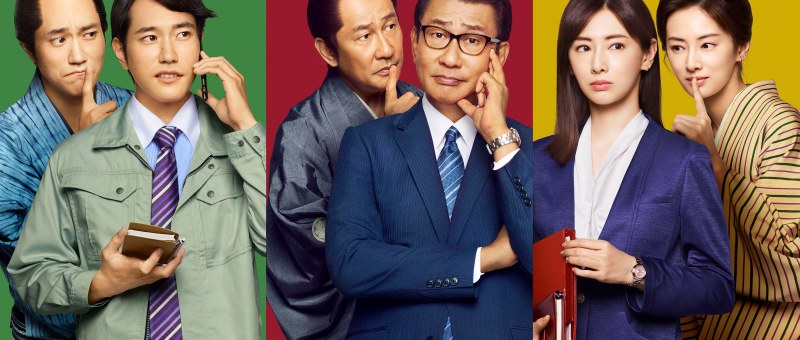
In the present day, the small town of Katori is trying to think of ways to raise its profile but according to junior civil servant Kinoshita (Kenichi Matsuyama) the programme proposed by the tourist board has little to offer in simply imitating the initiatives of other better known cities. As he points out, if tourists want to experience life in olden times there are lots of places they can do that already. Chief of General Affairs Ikemoto (Kiichi Nakai) idly suggests that they try and get local historical personannage Chukei-san, better known as Ino Tadataka the man who completed the first accurate map of the Japanese islands, featured as the subject of a year-long historical TV drama. Of course, Kobayashi from the tourist board (Keiko Kitagawa) thinks it’s a silly idea, but the governor likes it so Ikemoto now has a very difficult job not least because the governor wants him to convince a grumpy writer who hasn’t written anything in 20 years to handle the script. 

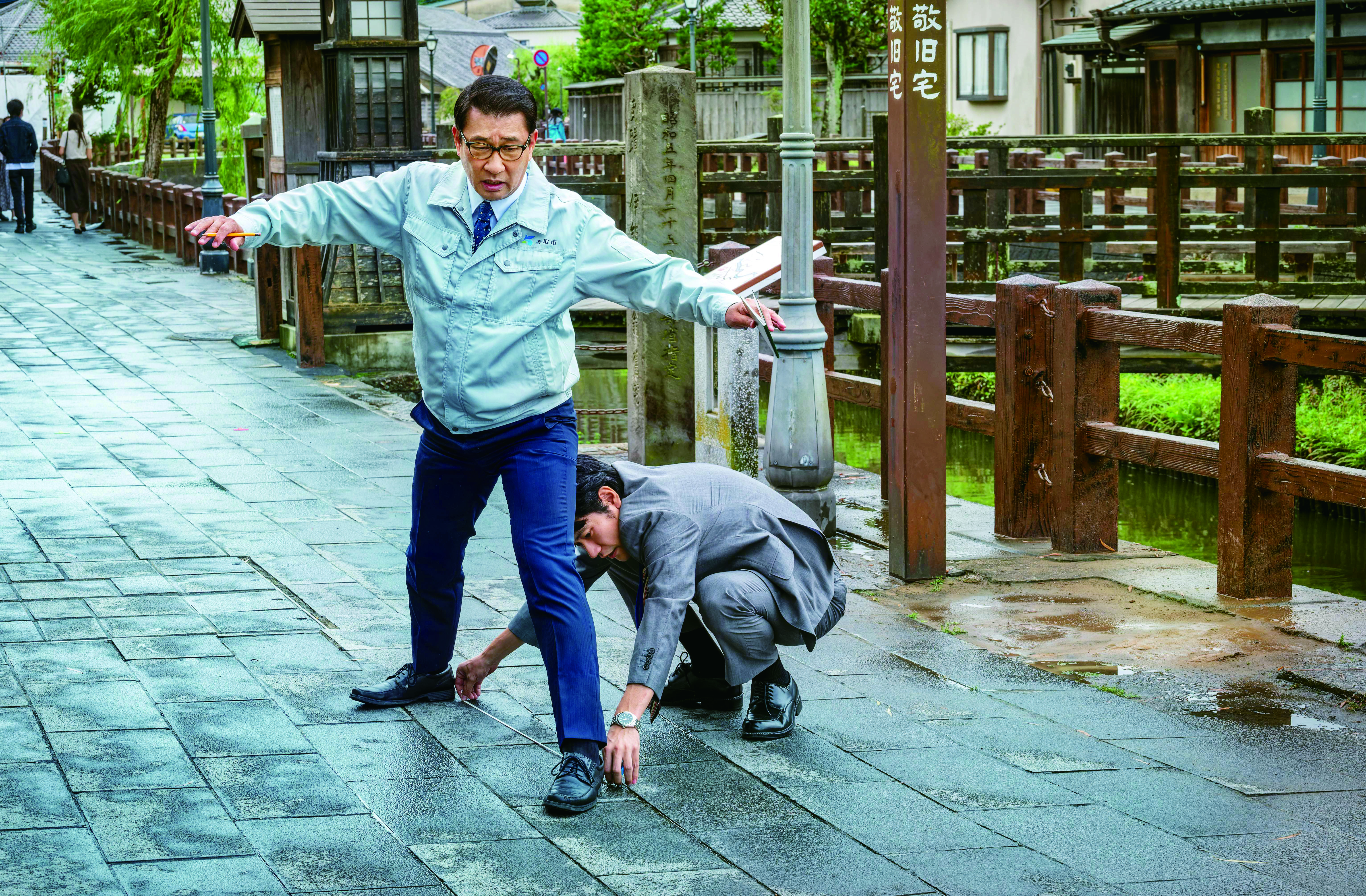
The reason Kato (Isao Hashizume) retired from screenwriting is that he too was fed up with placating commercially-minded executives and isn’t prepared to work on anything in which he doesn’t have full creative control which might be a problem a civil servant like Ikemoto could sympathise with if he wasn’t so desperate to bring him on board. It can’t be denied that the story of the map’s creation is itself fascinating if only in its technical detail of how these men were able to complete a map which almost perfectly aligns with modern aerial photography using only the technology of the early 19th century. As Kato points out, Tadataka was already in his 70s and the bulk of the work is simply walking all around Japan measuring it step by step. He’d only begun the project because he wanted to figure out the size of the earth by charting the Meridian Arc, but figured that out right away and still went on to work on the map for reasons largely unknown though later hinting a sense of anxiety in the late Edo society in believing that understanding the shape of the nation’s coastlines was the key to national defence in the wake of a Russian attack that had cost two of Tadataka’s local helpers their lives. 

Yet the drama idea is pretty much dead in the water after realising that Tadataka “died” three years before the map was completed. Fearing they’d lose their funding, Tadataka’s team buried him in secret and told people he was simply out on location while trying to finish the map before anyone found out knowing that their lives were at risk if the Shogun discovered they’d been lying to him and assumed they’d been doing it to continue claiming Tadataka’s stipend. To ram his point home, Nakanishi has the civil servants taking on the role of the mapmakers in Kato’s putative version of the story as they come together as a team to finish their mentor’s project but are eventually forgotten by history in much the same way as Ikemoto and his team will eventually be even as they too work for their betterment of their nation by taking care of the community. Ikemoto becomes something of a Tadataka figure, deciding to pickup a new skill in middle-age and aiming high in perfecting it (while slightly misleading the boss as he does so). A heartwarming tale of the value of teamwork and the perils of bureaucratic cost cutting, Nakanishi’s historical dramedy implies that not so much as changed in 200 years but that’s not entirely a bad thing as the dedicated team of civil servants do their best to put their city on the map.


Dreaming of the Meridian Arc screens at Japan Society New York on Nov. 12 as part of The Female Gaze: Women Filmmakers from JAPAN CUTS and Beyond.

Original trailer (no subtitles)

Images: ©2022 “Dreaming of the Meridian Arc” Film Partners