I Go Gaga, Welcome Home Mom (ぼけますから、よろしくお願いします。~おかえりお母さん~, Naoko Nobutomo, 2022)

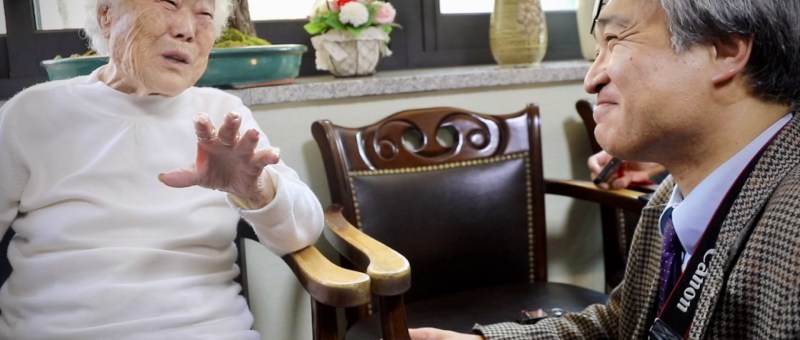
Naoko Nobutomo’s documentary feature debut I Go Gaga, My Dear proved an unexpected hit on its 2018 release striking a chord with many middle-aged and younger people facing similar issues to the director while preoccupied about how best to care for their ageing relatives. Her 2022 followup I Go Gaga, Welcome Home Mom (ぼけますから、よろしくお願いします。~おかえりお母さん~, Bokemasukara Yoroshiku Onegaishimasu -Okaeri Okasan-) once again follows her parents though this time witnessing her mother’s gradual decline and eventual hospitalisation along with her equally ageing father left alone at home. 

Nobutomo does retread some of the same ground reusing footage from the previous documentary to fill in gaps in her mother’s story giving a brief overview of life and marriage before the first signs of the Alzheimer’s with which she would later be diagnosed would appear. It is however also rawer, including several scenes of Fumiko in extreme distress calling out for a knife in order to end her life in a moment of frightening lucidity or walking around the house asking “what’s wrong with me?” 

The couple had hoped to stay in their home taking care of each other but as Fumiko’s condition declines that becomes increasingly impossible until she finally suffers a stroke and is hospitalised. Naoko frequently talks to her father Yoshinori about returning home to help him care for her but her offer is always refused. They tell her not to worry about them and to do the things she wants to do while she can but Naoko continues to worry. Explaining that her parents had married at a late age by the standards of the time and never expected to have any children, she recounts that she was raised in an extremely loving home and that sense of love and devotion is still very much evident between the elderly couple who continue to love and care for each other deeply. 

But then Yoshinori is also ageing, approaching his 100th birthday, and taking care of his wife takes an obvious physical toll. After Fumiko is hospitalised, he walks for an hour everyday to visit her while even carrying the shopping home from the local store is far from easy. Meanwhile he too undergoes physical therapy hoping to build up his strength for when Fumiko eventually returns home. Though in generally good health, at times he too struggles suffering a nasty fall during heavy rain on his way home from the dentist and later hospitalised with a hernia. His daily visits to Fumiko seem to keep him going, but even these come to an end during the COVID-19 pandemic during which hospital visits are restricted leaving Fumiko, bedridden having suffered a second stroke, all alone with nothing to do. 

The presence of COVD-19 is also reflected in the funeral, an incredibly small affair populated by people wearing masks. Fumiko’s condition caused her to worry about her quality of life while a poignant visit to her home reduces her to tears before she’s transferred to hospital for longterm care. In her voice over Naoko explains that she’s been spending more time in Kure with her father, but evidently does not wish to intrude on his independence as far as she can help it while he becomes an accidental local celebrity given the documentary’s success. Fumiko too had been looking forward to seeing it, a treasured pamphlet lying next to her bed, but was ultimately unable to because of her ill health. 

Like its predecessor, I Go Gaga: Welcome Home, Mom tells a heartwarming study of an elderly couple doing their best to care for each other though later turns in a poignant direction as Naoko and her father begin to process the possibility that Fumiko will not return home something very painful for Yoshinori who is evidently suffering himself extremely worried about the thought of losing his wife. Yet life in a sense goes on, Yoshinori edging his way to his 100th birthday and pledging to live until 120 before heading to a diner for the hamburger steak he’d been craving. He even gets an award from the local mayor in celebration of his centenary. Ending on a poignant note, Nobutomo switches back to older footage of happier days in which her parents go about their ordinary lives filled with precious memories never to return. 


I Go Gaga, Welcome Home Mom streamed as part of this year’s Nippon Connection.

Original trailer (no subtitles)

Mr. Suzuki: A Man In God’s Country (鈴木さん, Omoi Sasaki, 2020)

God is dead, or maybe not in Omoi Sasaki’s deadpan satire of the ills of contemporary Japan, Mr. Suzuki : A Man in God’s Country (鈴木さん, Suzuki-san). Set in a seemingly isolated fascist state, the film lays bear the intergenerational conflict of the ageing society along with the lonely resentment of those in middle-age caught between two stools in a society which seems only to cater for the young and the old while the powers that be, determined to build a “wholly beautiful city”, go to great lengths to cure the falling birthrate. 

It’s this that 44-year-old unmarried care home attendant Yoshiko (Asako Ito) fears especially when randomly informed one day that if she remains without a husband her citizenship will be cancelled and she’ll have to leave the city unless she elects to become a member of the military which is currently exempt. Her friend Ayako chooses to do just this, no longer able to bear the pressure of being unattached, but Yoshiko is unwilling to surrender her way of life on the whim of some government official. She is constantly bombarded with invitations to the “Beautiful Matchmaking” event but is later rejected because it is only for the “young” only to be reprieved by the mayor who tells her to come back in more suitable attire while declaring that God will not abandon those who make the effort. 

This almost forced insistence on national service as mediated through childbirth and the creation of “beautiful families” as an expression of one’s loyalty to “God”, the nation’s mysterious leader who has not been seen in 20 years, is of course disturbing even as other voices echo the words of real life politicians suggesting that those who have not born children are “defective adults” who must serve their country in other ways such as in the military. With God apparently in poor health the government reads out all his statements on his behalf, issuing commands in his name while distributing his image throughout the land as the locals continue to believe blindly in his existence. 

A crunch point comes for Yoshiko when she discovers a dishevelled middle-aged man taking shelter in the “Utopia” care home where she works. Rather than turn him in she decides to let him stay and later abruptly proposes a paper marriage so that she’ll avoid losing her citizenship. Though “Suzuki-sensei” (Norihiko Tsukuda) proves a hit with the ladies once they discover his musical talents, his outsider status later becomes a problem when the government use the pretext of a soldier’s death to claim they’ve started a war and are on the look out for “enemy spies” though they are also as it turns out looking for the absent God whose identity we can guess. Sights of the old ladies running defence drills with broom handles uncomfortably recall those of peasants training with bamboo spears during the war as does one old lady’s reluctance to take part having been led to blame herself for her brother’s wartime death while gossip that spies loot and poison wells is reminiscent of the pogrom against Koreans in the aftermath of the Great Kanto Earthquake of 1923. A gang of thuggish youths with a penchant for happy slapping the homeless insisting that they “do not deserve to live in God’s beautiful country” instantly become spy hunting vigilantes, while rewards are offered for informants reporting anyone whose face they do not recognise. 

The offer presents Yoshiko with a dilemma. Rather than marry him, she could decide to turn Suzuki in and get guaranteed citizenship along with a pension but would it really be worth the price of living with his betrayal? Mr. Suzuki’s true identity will come as no surprise, though his sojourn among the believers exposes the shakiness of the regime when he is mobbed by a militia of angry townspeople out for blood hellbent on rooting out a “spy”, ironically arranged in the form of a cross as they occupy a T-section surrounded by fields. Shuffling between the disturbing and the merely strange, Omoi Sasaki’s deadpan, absurdist drama has its share of poignancy in the frustrated connection between outcasts Yoshiko and Suzuki while satirising the surreal authoritarianism of the world all around them with its mandated hair cuts and bizarre portrait of its absent leader which must be bowed to on all occasions but perhaps does not stray so far from the contemporary realities in all of its discomforting talk of beautifying the nation through the sacred act of childbirth. 


Mr. Suzuki: A Man In God’s Country streamed as part of this year’s Nippon Connection.

Original trailer (English subtitles)

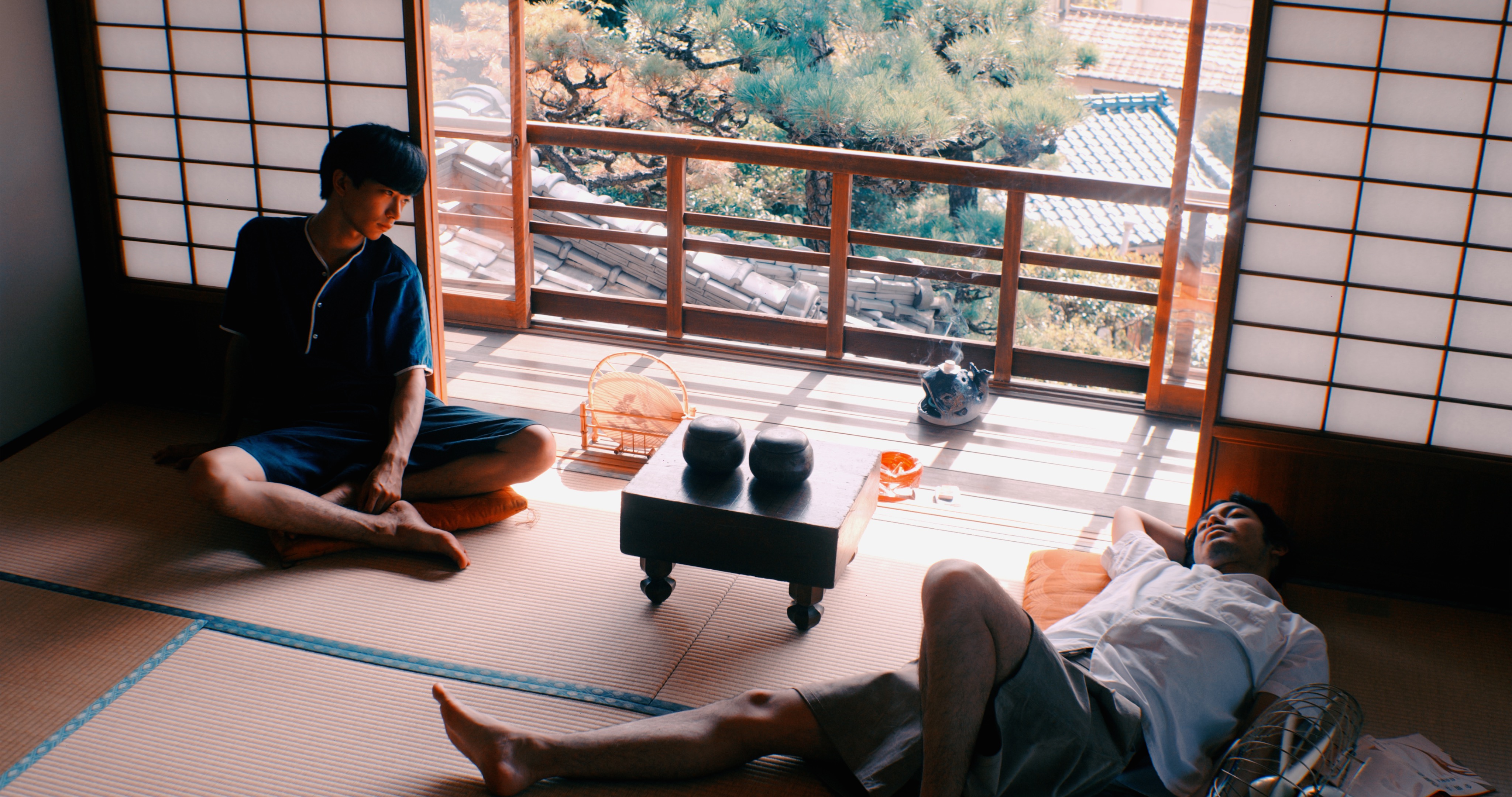
Backlight (逆光, Ren Sudo, 2021)

©2021 『逆光』 FILM
©2021 『逆光』 FILM

An aloof young man brings a friend back from college but struggles to convey to him his true feelings in the Onomichi of the 1970s in actor Ren Sudo’s directorial debut, Backlight (逆光, Gyakko). This may partly be because he himself is uncomfortable in his childhood home while the object of his affection seemingly takes to it though as someone else later hints perhaps in the end he is only toying with him as a pleasant summer diversion that will eventually draw to a close. 

Sudo opens the film with a series of black and white slides of Onomichi in the 70s accompanied by a cheerful voiceover in opposition to the film’s subsequent gloominess describing the area for tourists and in particular its cable car. Finally the slides give way to clumsy shots of Yoshioka (Haya Nakazaki), university friend of Akira (Ren Sudo), and a copy of Yukio Mishima’s College of Unchasteness. Akira has invited Yoshioka to stay with him at his family home in Onomichi for a week over the summer, but it’s fairly odd behaviour to invite someone somewhere and then spend the whole time telling them how awful it is and that you can’t wait to leave. 

Evidently the son of wealthy parents who for whatever reason are not around, Akira is a fairly unsympathetic figure who seems to have been harbouring resentment towards Onomichi ever since his family moved to the area from Tokyo when he as a child. He views it as dull and backward and seems to have only contempt for those who live there such as childhood friend Fumie (Eriko Tomiyama) whom he blanks in the street as like the cable cars of the opening he passes her in the company of Yoshioka. Realising he is back, she arrives at his home to return some books he’d lent her but even on encountering her there Akira treats Fumie disdainfully and is quite embarrassingly rude in front of his new friend explaining that he lent the books so that a simple country girl like her wouldn’t fall behind the times while contemptuously assuming that she won’t actually have read them. 

These misogynistic attitudes seem prevalent in the local community which is in any case unusually obsessed with Mishima. Another local intellectual describes College of Unchasteness, which Akira has not actually read, as “silly prose for women” a phrase Akira later echoes, while making a cynical comment as to its content suggesting that a woman’s ultimate pleasure lies in being murdered by a man she may have been manipulating. Unable to voice their desires directly there may be a degree of manipulation going on, Akira silently courting Yoshioka who may indeed be toying with him in the way that he may have been toying with Fumie who has since come to know of his sexuality. In any case he seems to be uncertain of Yoshioka’s receptiveness, crassly suggesting Fumie invite another girl, Miko (Akira Kikoshi), who seems strange and otherworldly, with the rationale that it would be a problem if she were too pretty and by implication insulting Fumie too in the process. Miko meanwhile is evidently upset by the lewd conversation while later prompted to leave the party after a political debate breaks out about nuclear arms. Perhaps it’s not surprising for a party that seems to be populated by Mishima devotees but even if their support for re-armament is a facet of their anti-Americanism it is curiously at odds with the times again upsetting Miko whose mother is a survivor of the atomic bomb having lost all her family. 

Even so the closing scenes turn back to Mishima and doomed romance in a description of love as a political act in which love that does not transgress, is not considered shameful or taboo, is not really love at all. Akira may have found the courage to overcome his fear of rejection, but it seems has not been altogether successful in love. Playing with the light, the brightness of the beaches, murkiness of the room occupied by Yoshioka, and that of the fire ominously reflected on Akira’s face, Sudo adds a note of wistful nostalgia expressed in the song sung by Miko that perhaps presents this “heartbreaking” summer with a sentimentality it does not quite appear to have even as Akira seems to come to an accommodation with himself, Fumie, and Onomichi amid the confusing summer heat. 


Backlight streamed as part of this year’s Nippon Connection.

Original trailer (no subtitles)

Images: ©2021 『逆光』 FILM

Target (標的, Shinji Nishijima, 2021)

In the early 1980s, the well respected left-leaning national newspaper the Asahi Shimbun ran a series of articles based on accounts by author Seiji Yoshida of his involvement in wartime atrocities which brought the “comfort woman” issue into the mainstream consciousness for the first time. Unfortunately, however, Yoshida’s reputation was tarnished when it was revealed that much of his “autobiographical” writing had been heavily embellished or simply made up. The discrediting of Yoshida’s testimony handed an easy win to the resurgent right that allowed them to cast doubt on Japan’s history of wartime sex slavery.

In 1991, the truth became much harder to deny when former comfort woman Kim Hak-sun came forward to tell her story publicly. Asahi Shimbun journalist Takashi Uemura wrote an article based on a taped recording of her testimony shortly before her own press conference but soon found himself the prime target for nationalist trolls who harassed not only the Asahi Shimbun but Uemura himself along with members of his family. In 2014 more than 20 years since the article was published, they once again swarmed when it was revealed that Uemura had accepted a part-time teaching position at woman’s university which was later rescinded because of the continued “bashing” both he and the institution received which included several death threats. 

Shinji Nishijima’s sometimes unfocussed documentary Target (標的, Hyoteki) is concerned less with the comfort woman issue itself than the scandal’s place in an ongoing culture war which has been quietly intensifying since the late 90s with the foundation of ultra-nationalist lobby group Nippon Kaigi in 1997 which is coincidentally the year that Kim Hak-sun passed away without seeing justice. Many other papers had run similar articles based on Kim’s taped testimony using the same terminology which reflects that used by Kim, yet only the Asahi Shimbun and Uemura himself were singled out as “traitors” to Japan and in the view of some more extreme commenters deserving of the death penalty. The article was branded a “fabrication” which is a serious accusation to make of a journalist at a major newspaper though in actuality the charges that are levelled at him concern only potential “inaccuracies” in his writing regarding use of terminology and the omission that Kim had trained as a kisaeng (the Korean equivalent of the geisha) which was revealed during her press conference but not included in the taped testimony while the journalist who later attacks Uemura relies on the same tired arguments insisting that there was no forced recruitment and the women at the comfort stations were established sex workers employed locally or trafficked by family members and middlemen. 

The argument put forward by the documentary suggests that Uemura was a convenient target because his wife was Korean and his mother-in-law was the head of the Association for the Pacific War Victims though the true target was the Asahi Shimbun which had long been a bugbear for nationalists because of its liberal democratic outlook. Part way through the documentary, Uemura visits the grave of a journalist who was murdered after penning an expose of police mistreatment of the Korean community in Osaka who had begun resisting fingerprinting on the grounds that it was discriminatory. The implication is that this is a campaign to silence the press and one which has proved increasingly effective with outlets largely choosing to self censor unwilling to upset the government and lose their access by addressing topics that might be thought taboo such as Japan’s wartime past. Meanwhile under the Abe administration there was a concerted campaign to revise school history textbooks to erase the concept of comfort women altogether along with other mentions of wartime atrocity. 

Suing the journalist who branded him a “fabricator” for defamation Uemura explains that his aim is not so much to vindicate himself and the story but challenge encroachments on free speech in an increasingly authoritarian society. Though the courts agree he has been “defamed” they find no “illegality” while upholding the conservative view that denies the existence of comfort women. As it later transpires the journalist who had attacked him in the press had previously written a similar article herself and had largely based her current views on those of a prominent conservative university professor without bothering to interview either Uemura or any of the surviving Korean comfort women in person ironically including several “inaccuracies” in her own writing owing to some fairly shoddy journalism and lack of familiarity with the source material. In any case, as someone puts it the most important thing is to record an accurate version of the truth so that nothing like this happens again while halting the erosion of democratic freedoms through creeping authoritarianism.


Target streamed as part of this year’s Nippon Connection.

International trailer (English subtitles)

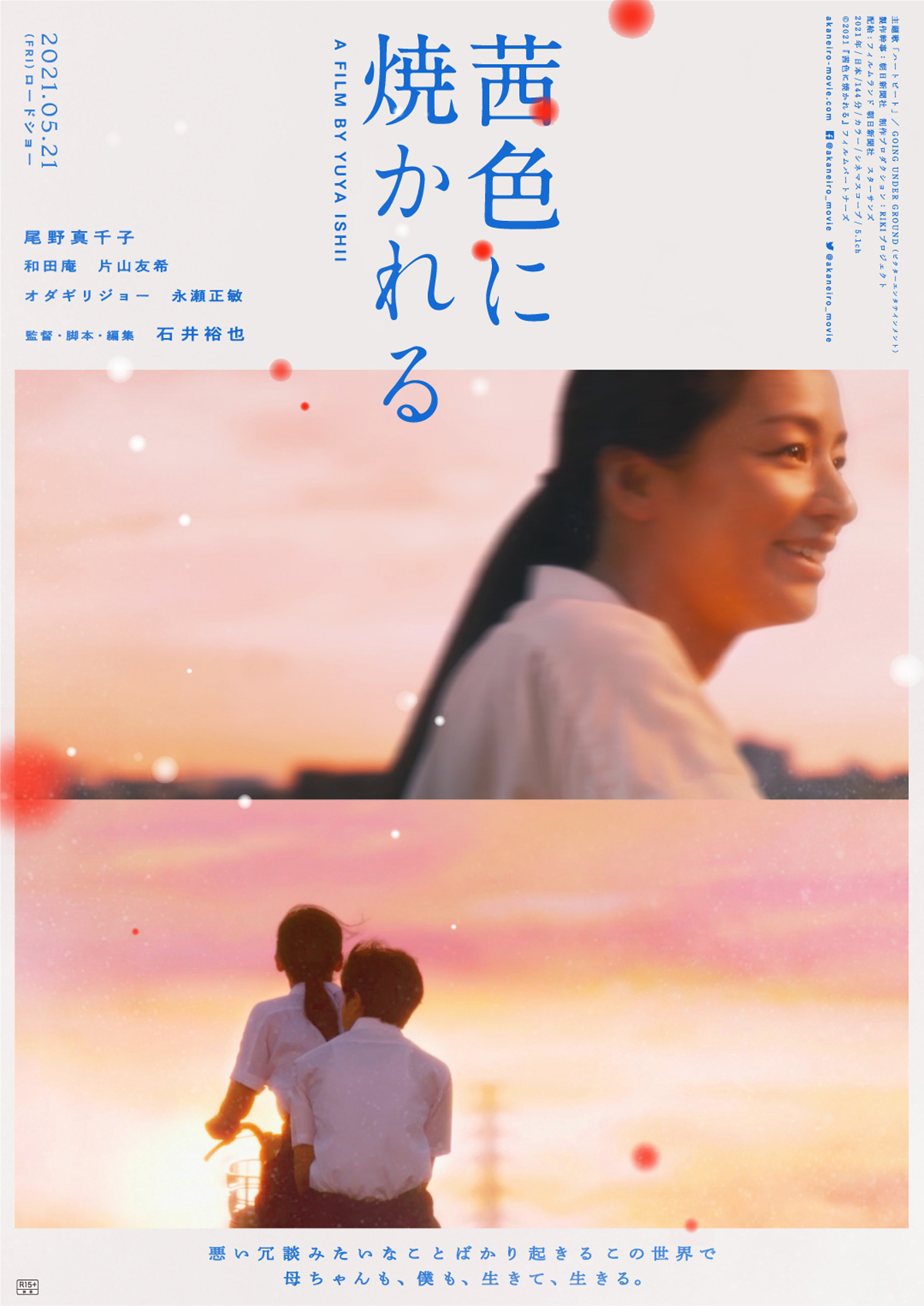
A Madder Red (茜色に焼かれる, Yuya Ishii, 2021)

©︎2021 "A Madder Red" Film Partners

A single mother and her son face the myriad injustices of the modern society with dignity and grace in Yuya Ishii’s quietly seething pandemic-era social drama, A Madder Red (茜色に焼かれる, Akaneiro ni Yakareru). The heroine is constantly asked why she isn’t angrier, those around her confused by her stoical attitude and tendency to simply sigh and say “let’s get through this” rather than railing against the persistent unfairness that defines her life but then she doesn’t have a lot of time for being angry nor would it particularly help her situation or bring about change. All she can do is persevere in the hope that it won’t always be this way, her run of bad luck will end, and she will eventually be permitted to rest. 

Ishii opens the film with a 3D model simulation of a traffic accident in which a cyclist is killed by an out of control car on a zebra crossing in an otherwise tranquil residential area. Ryoko’s (Machiko Ono) husband Yoichi (Joe Odagiri) is sent flying and ends up squished like a bug on the windscreen of a vehicle travelling in the other direction. The driver, an elderly man later revealed to have been living with Alzheimer’s, mistook the accelerator for the brake but as he had been a prominent local official the matter was swept under the carpet and he faced no consequences. What people can’t seem to understand is why Ryoko chose to attend the old man’s funeral when he eventually died. It seems attend was all she did, but the man’s son had security throw her out and his lawyer accuse her of “harassment” while expressing anger and resentment that her presence tarnished his father’s lavish ceremony when he had been such a good a man. Her presence perhaps annoys him because he knows on some level he’s in the wrong, while her strength and dignity shame him knowing that they should have just apologised. The lawyer implies she’s being unfair targeting the family who were not themselves responsible for the accident, except that in a sense they were because they failed to protect the old man by continuing to allow him to drive by himself. 

Ryoko refused the compensation money for this reason, that they tried to settle it with cash as if her husband’s life had no meaning. She lives in subsidised government housing, but doesn’t claim any benefits supporting herself after she was forced to close her cafe through a part-time job in a supermarket floristry department and after hours sex work. “Break a rule, break your life” she teaches her 13-year-old son Junpei (Iori Wada) yet constantly falls foul of rules written or otherwise while doing nothing wrong in the eyes of those who rant about benefit scroungers and routinely belittle those without means. She’s taken to task by her manager for taking home flowers that were due to be thrown out and for taking a phone call outside the store after clocking off, but when they fire her on a pretext to hire the daughter of a prominent client who can’t find a part-time job because of the pandemic, they refuse to honour the two month notice clause in her contract. Similarly when bullies from Junpei’s school set fire to some books left outside their apartment, they are the ones who have to move for violating the rule about causing a disturbance to the other residents. 

Given all of this no one can understand why Ryoko isn’t seething mad. She still pays for her father-in-law’s nursing home and even child support for a girl she’s never met fathered by Yoichi with another woman. Struggling herself, the child’s mother later turns to a sleazy friend of Yoichi’s, Ryu (Tateto Serizawa), to petition Ryoko to increase the child support but like her also worries that it “doesn’t seem right” to further burden a woman who is also struggling to raise a child alone just like herself while Ryu, as he had unsuccessfully with Ryoko, attempts to extort sexual favours in return for his assistance. Ryoko does these things when she doesn’t strictly have to and many people wouldn’t less out of pride or stubbornness than because it’s the right thing to do and if she can satisfy herself that she’s done right by others even if they’ve not done right by her then she maintains her dignity and their scorn can’t harm her. 

Even so, sick of being treated like a bug Ryoko’s rage eventually begins to boil over her subdued outfits giving way to a fiery red as her hopes of escape are once again dashed on realising a potential romantic suitor only ever viewed as a plaything. Everyone is always telling Ryoko’s that she’s “strange”, “weird”, “crazy”, in her passive resistance living by her own rules while constantly betrayed by those of others which they only enforce when it suits them. Ishii flags up all of her various expenses on the screen making it clear just how much it costs for Ryoko to be this poor while she seemingly grins and bears it. Then again as the film’s only title card tells us Ryoko is a good actress, and perhaps she has to be to get by in this indifferent society filled hidden suffering and an almost sadistic lust for self-preservation. “Mom, it’s all too much” Junpei sighs as he comes to an appreciation of his mother’s fortitude and her desire to simply “get through this” as they ride a mamachari towards a glowing technicolour sunset which ironically enough refuses to end trapping in them in this space of grief and unfairness but carrying with it a far off hope perhaps cruel in its elusiveness.


A Madder Red streamed as part of this year’s Nippon Connection.

International trailer (English subtitles)

Images: ©︎2021 “A Madder Red” Film Partners

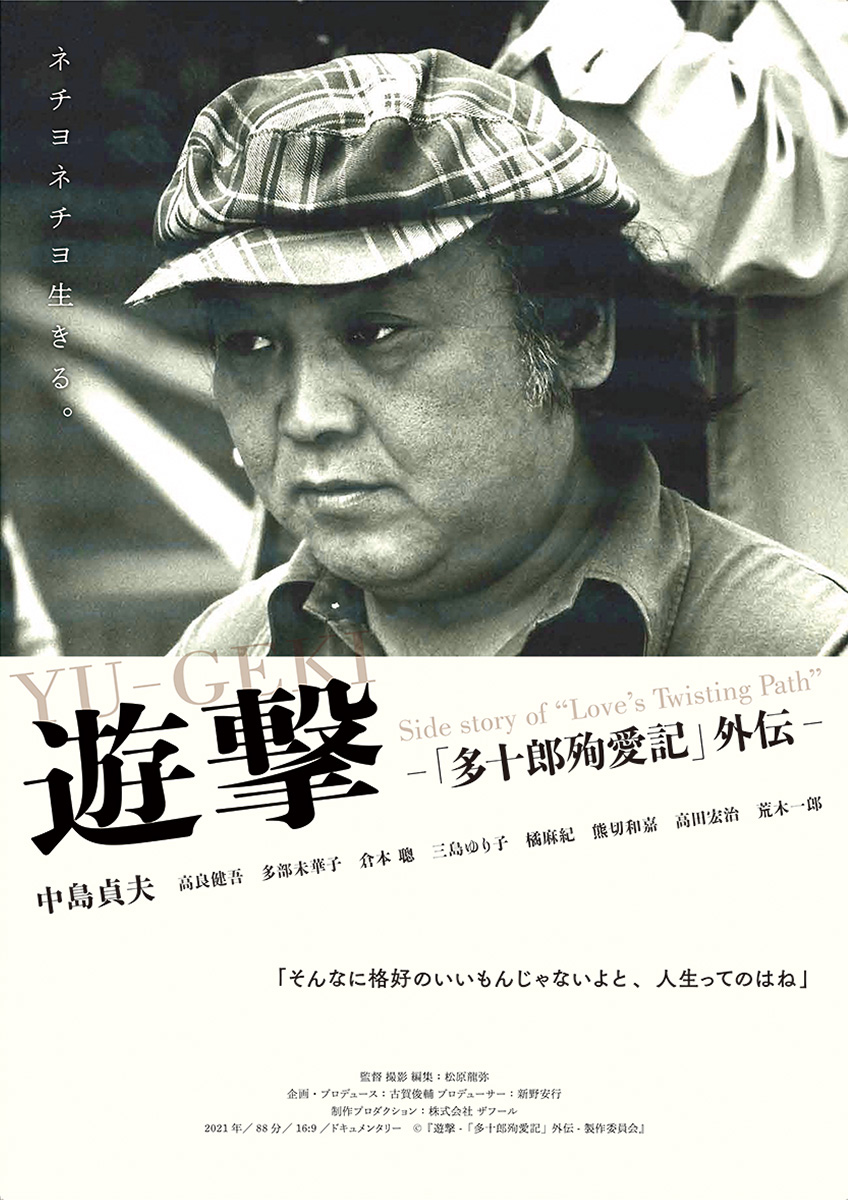
YU-GEKI~side story of “Love’s Twisting Path”~ (遊撃 -「多十郎殉愛記」外伝-,Tatsuya Matsubara, 2021)

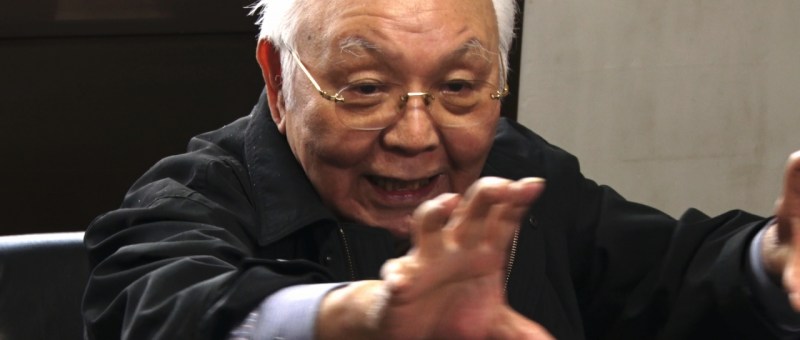
At the age of 83 and not having made a narrative film in over 20 years, Sadao Nakajima decided to step back into the director’s chair in 2019 with a classic chambara in Love’s Twisting Path, an old-fashioned samurai drama taking place in the turbulent years of the Bakumatsu at the end of the Edo era. More than just a behind the scenes documentary, Tatsuya Matsubara’s YU-GEKI~side story of “Love’s Twisting Path”~ (遊撃 -「多十郎殉愛記」外伝-, Yu-Geki -Tajuro Junai-ki Gaiden-) explores the film’s production but also reflects on the director’s long career and the changing trends of the Japanese film industry. 

Changing times do seem to be Nakajima’s primary motivation, wanting to pay tribute to Toei’s Kyoto studios once home to its mainline of period pieces produced for the big and small screens. These days, however, such productions are few and far between. Of course, Japan continues to produce historical dramas in large numbers but they tend to be just that with swordplay a secondary concern. Nakajima had wanted to resurrect this dying sector of the industry in part because he felt sorry for the specialist performers who can no longer support themselves with samurai movies alone.

Paradoxically this becomes a secondary problem for the production team as the pool of actors with training in stage combat becomes ever smaller, Nakajima forced to hire early career trainees while star Kengo Kora puts in overtime vigorously training to master the sword skills needed to seem convincing as a jidaigeki lead. Along with the decline of classic chambara, itself perhaps an expression of studio system as it existed before the 1970s, goes all the skills that accompany it from swordsmen to costumiers and makeup artists who know how to work on period features giving rise to the worry that the expert techniques honed over lifetimes will eventually be lost. 

Aside from the problems securing their creative team, Nakajima also runs into funding difficulties with backers unwilling to invest given the director’s age and poor health worrying that he may not be able to complete the project. Ironically this places further pressure on the production as Nakajima is forced to shorten the script and shooting time packing in as much as humanly possible per day. A young production assistant is beginning to feel bad about having to explain to him that so many things just aren’t possible while he too grows frustrated wandering around the mountains looking for a particular temple he remembers from his time at the studio but unable to remember exactly where it was or how to find it. Meanwhile he’s ably assisted by his former pupils including Kazuyoshi Kumakiri (Mukoku, Antenna, Sketches of Kaitan City) who acts as his AD along with Nobuhiro Yamashita (Linda Linda Linda, Over the Fence, Hard Core) who also visits the set

It’s the presence of these pupils that Nakajima eventually hints makes his life worth living others suggesting that so many people wanting to learn from him gives him a sense of purpose and validation. Love’s Twisting Path was intended to be his final film, but asked if he’d have an idea for any more he likens himself to an elderly Musashi Miyamoto, the legendary swordsman, who became withered with age but faced a constant stream of young challengers each excited to fight him while he too saw it as a way to prove to the world that he still existed. 

Despite the tremendous effort put into its production, Love’s Twisting Path did not do as well as Nakajima had hoped at the box office leading him to blame himself wondering if he was too focussed on his own interests and understandably deflated having invested so much into the project hoping to kickstart a revival of classic jidaigeki that would revitalise the old Toei lot. Then again this feeling of not quite having lived up to his aspirations might contribute to a sense of wanting to try again with another film if only it had not been for the advent of the global pandemic. Journeying through his career history, Matsubara finds Nakajima a contrary figure, rebellious and frustrated even then in the barriers erected between himself and his art ,the films he wanted to make shot down by studio execs while he tries his best to inject a characteristic sense of reality into a series of programme pictures, contemporary yakuza films, action dramas, and finally chambara which he claims never to have liked in the first place. In the end it’s all about love, Nakajima’s son insists seeing something of his father’s romanticism in his films but also his deep love of cinema and of the riches to be found in the artistic legacy of the Kyoto studios. 


YU-GEKI~side story of “Love’s Twisting Path”~ screened as part of Osaka Asian Film Festival 2022.

Original trailer (no subtitles)
Ring Wandering (リング・ワンダリング, Masakazu Kaneko, 2021)

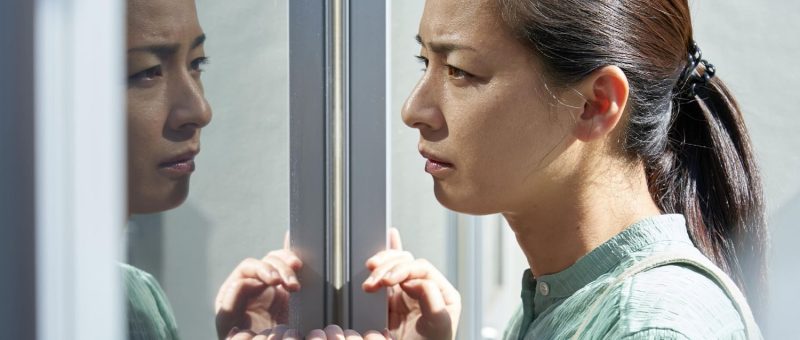
“Don’t forget me” pleads a mysterious young woman guiding the hero of Masakazu Kaneko’s Ring Wandering (リング・ワンダリング) towards the buried legacy he is unwittingly seeking. In this metaphorical drama, the aspiring manga artist hero is on a quest to discover the true appearance of the long extinct Japanese wolf, but is confronted by a more immediate source of unresolved history while working on a construction site for the upcoming Tokyo Olympic Games. 

The manga Sosuke (Show Kasamatsu) is working on is about a wolf and a hunter, Ginzo (Hatsunori Hasegawa), whose daughter Kozue was killed by one of his own traps. Though praising the general concept, his workplace friend points out that his manga lacks human feeling but Sosuke claims it’s unnecessary in a story that’s about a duel to the death between man and nature while matter of factly admitting that Kozue is merely a plot device designed to demonstrate Ginzo’s manly solitude. Yet Soskue complains that he can’t make progress because the Japanese wolf is extinct and he can’t figure out how to draw it. 

His quest is in one sense for the soul of Japan taking the wolf as a symbol of a prehistoric age of innocence though as it turns out he knows precious little about more recent history. The workers at the construction site have heard rumours about a stoppage at another build and joke amongst themselves that if they should find any kind of cultural artefact they’ll just ignore it rather than risk the project being shut down or any one losing their job. The site itself symbolises a tendency to simply build over the buried past erasing traces of anything unpleasant or inconvenient. When Sosuke comes across an animal’s skull buried in a pit he has recently dug, he is convinced it’s that of a Japanese wolf only later realising it is more likely to be that of a dog killed in the fire bombing of Tokyo during the war along with thousands of others on whose bodies the modern city is said to lie. 

Then again, impassive in expression Sosuke is particularly clueless when it comes to recent history. While searching for more wolf cues he comes across a young woman (Junko Abe) looking for her missing dog but completely fails to spot her unusual dress aside from assuming the old-fashioned sandals she is wearing are for the fireworks show set to take place that day incongruously in the winter. Similarly in accompanying her to her home he is confused by all her references to things like the metal contribution and her brother having been sent to the country. He wonders if she might be a ghost, and she wonders the same of him, but still doesn’t seem to grasp that he’s slipped into another era fraught with danger and anxiety only realising the truth on exiting the dream and doing some present day research. 

The fallacy of violence works its way into his manga in the fact that Ginzo’s traps eventually lead to the death of his daughter while he becomes on fixated on besting the wild wolf as a point of male pride though others in the village are mindful to let it live. A pedlar meanwhile explains that the wolf has been forced down towards the village because of the declining economic situation as more people hunt in the mountains for food and fur depriving him of his dinner. He tells Ginzo that the country has been “brainwashed in militarism” and the gunpowder that killed Kozue and will one day be repurposed to create joy and awe is now his most wanted commodity. In the end Ginzo too is saved by a kind of visitation, a ghost from the past offering a hand of both salvation and forgiveness along with an admonishment forcing him to take responsibility for his role in his daughter’s death.

In forging a familial relationship with a lost generation Sosuke comes to a new understanding of more recent history and in a sense discovers the connection he was seeking with his culture, weaving the anxieties of 1940s into an otherwise pre-modern fable about the battle between man and nature in which wolf becomes not aggressor but casualty in a great national folly. Like Kaneko’s previous film Albino’s Trees deeply spiritual in its forest imagery and oneiric atmosphere, Ring Wandering finds its hero transported into the past while unwittingly discovering what it is he’s looking for without ever realising that it has always been right beneath his feet. 


Ring Wandering streamed as part of this year’s Nippon Connection.

Original trailer (English subtitles)

Images: ©RWProductionCommittee

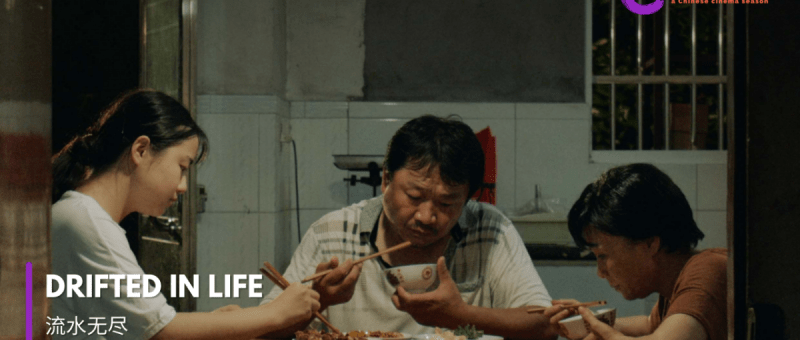
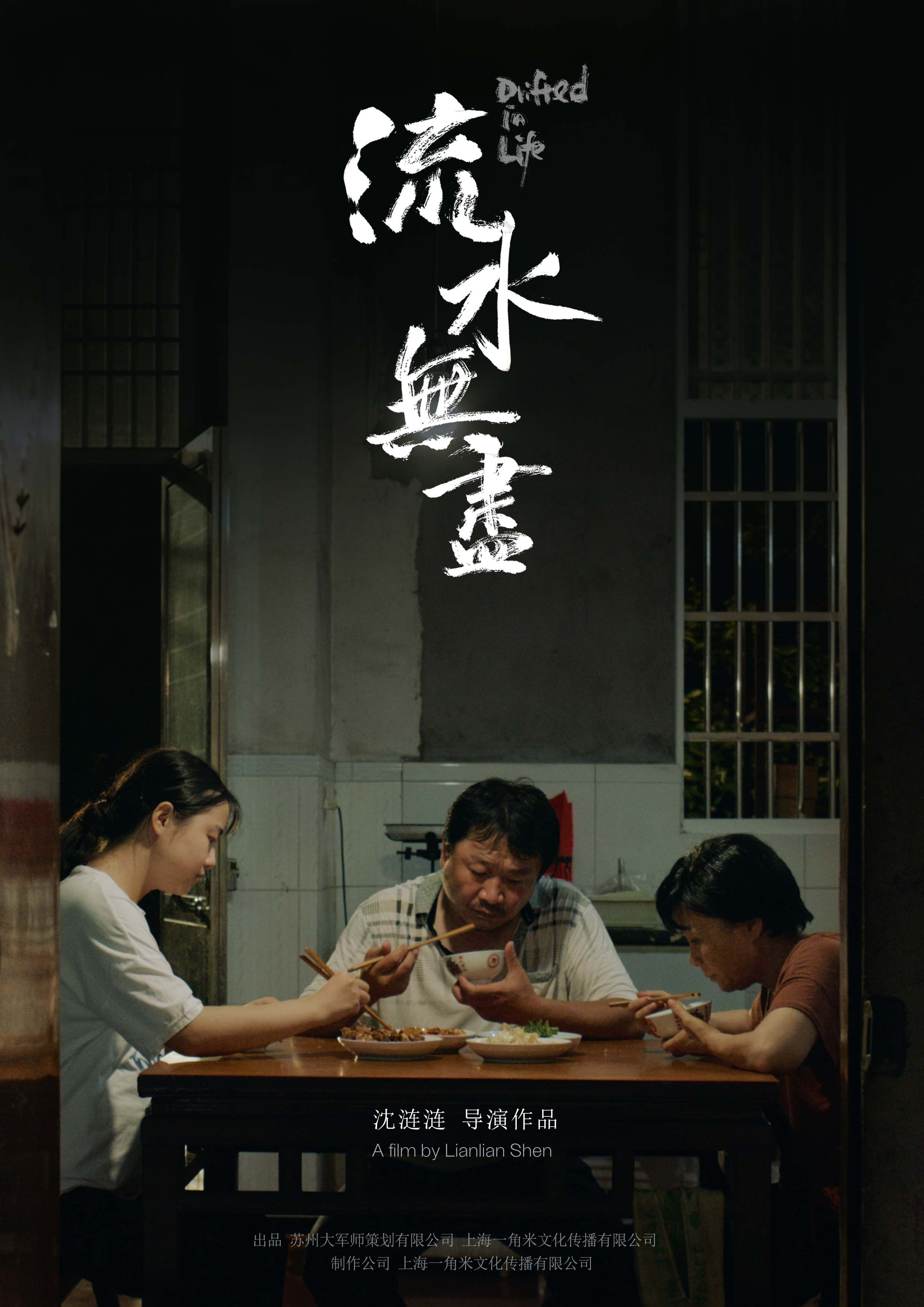
Drifted in Life (流水无尽, Shen Lianlian, 2021)

“People leave eventually. We’ve spent enough on him” the wife of a man drifting between life and death eventually concedes in Shen Lianlian’s indie drama Drifted in Life (流水无尽, liúshuǐ wújìn). In the modern China it seems everything has a price, not least a human life, but more than that it has a debt which must be satisfied at all costs. This is something with which the disparate members of a small family beset by lingering tragedy are each faced as they try to negotiate new paths forward while bound by ancient loyalties and traditions. 

This is certainly true for Keyu whose parents weren’t even going to call him when his grandfather is left in critical condition after a bathhouse accident lest they disrupt his working life. According to the incredibly offhand and somewhat insensitive doctors Renkai’s case is hopeless, his spine is severed at such a point that he has lost connection with his lower body and almost certainly will not be able to breathe without a ventilator. The family start planning the funeral on the car ride home, but the grandmother finds it impossible to let her husband go insisting that they leave him in the hospital just in case a miracle may happen while the rest of the family do what they can to sort out the bills, the originally unsympathetic doctor eventually warming to them in their devotion and agreeing to use an expensive drug to alleviate Renkai’s symptoms while reminding the grandmother that he will not recover.  

Kebo, Keyu’s bother, becomes indignant and enraged taking it out on the owner of the bathhouse for his apparently lax safety standards only for him to justify himself that he’s only a “small business” an excuse that becomes a refrain justifying commercial entities’ exploitation of employees and avoidance of complying with regulations. Keyu too is worried about “restructuring” at his company, while his wife’s is constantly laying people off and she fears for her own job while dealing with a temperamental diva artist who accuses her of being a sellout only interested in making money out of him. Meanwhile he ends up crushed between two conflicting loyalties seeking to make use of his relationship with an important client tasked by both the company that he works for and a desperate childhood friend with a “small business” of his own. Both Keyu and his wife opt for a kind of escape, he by betraying his company to put his friend forward for the contract and she starting a side hustle with the artist that seems like it will end up being more trouble than it’s worth but each of them wind up betrayed by their own choices. 

And then there’s the bad example their working culture seems to have been setting for their small daughter Weiwei who takes her new managerial responsibilities too seriously when made a monitor at kindergarten apparently hitting another child while collecting homework. Kebo meanwhile is also filled with resentment plunging his family, including his pregnant girlfriend to whom he is not yet technically married it seems for financial reasons, into even more debt after getting arrested for attacking the bathhouse owner and facing a lengthy sentence while his father ironically does something similar by getting into an altercation with a neighbouring stall owner after deciding to resume his butchery business to help pay grandpa’s medical bills. The matter is only resolved thanks to a neighbour who has a connection in the local police pressuring the bath house owner to back down and agree to a settlement out of court. 

Grandpa’s life becomes accidentally commodified as the family tot up how much it’s costing them to keep him in the hospital, even grandma eventually conceding that he has very little quality of life while coming to terms with her grief almost as if she were satisfying herself that they’d done “enough” to fulfil their obligation to him at least in monetary terms. “What’s the point of living like that?” Weiwei had tried to ask her dad, wondering why they’re keeping her grandfather alive while he drifts between life and death unable to communicate though she might as well be taking about herself or anyone else caught between the contradictions of the modern China and looking for release from its purgatorial grip. 


Drifted in Life streamed as part of Odyssey: a Chinese Cinema Season.

Original trailer (Simplified Chinese / English subtitles)

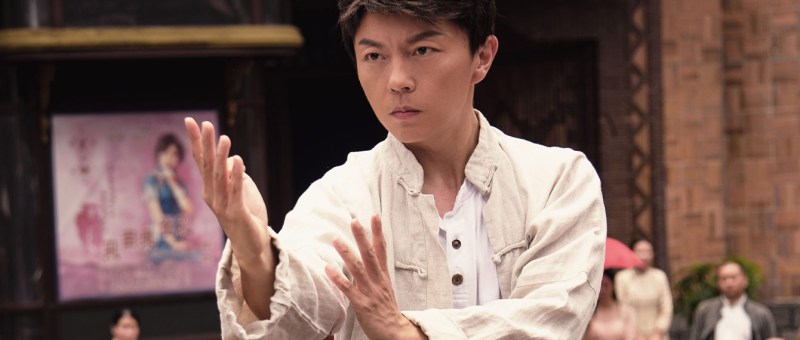
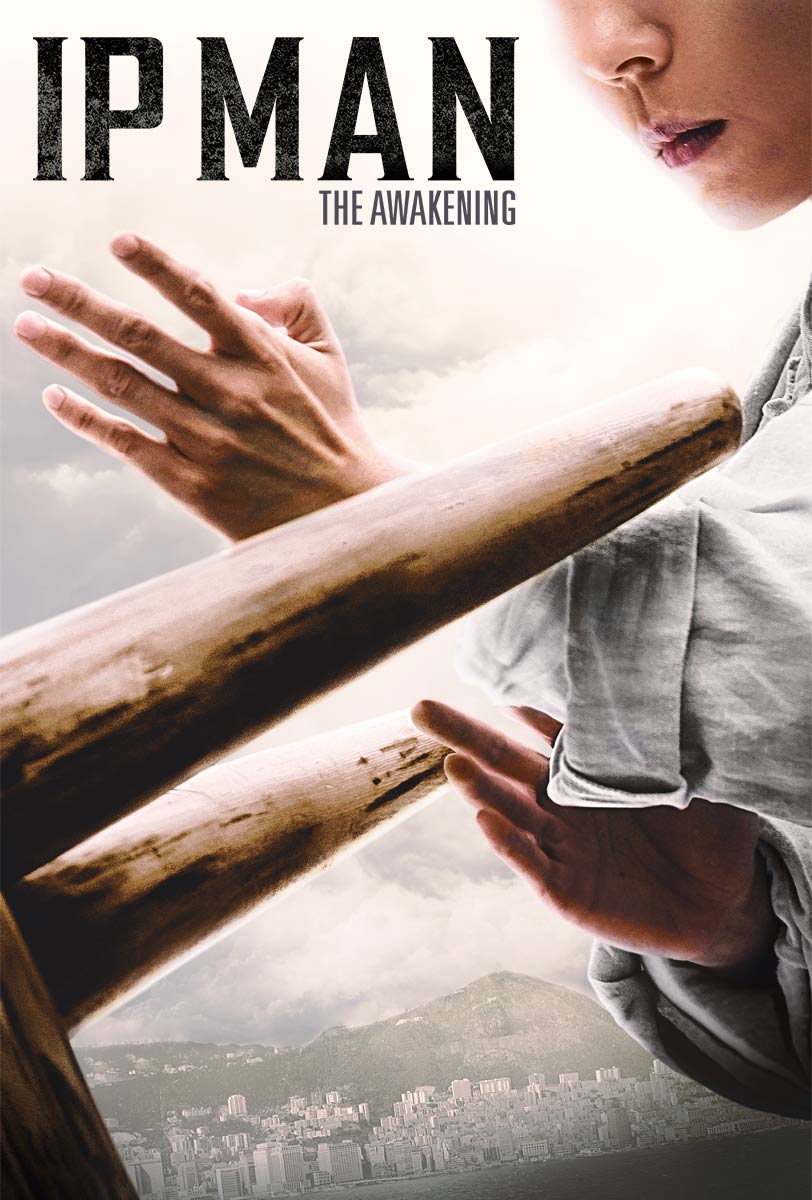
Ip Man: The Awakening (叶问宗师觉醒, Zhang Zhulin & Li Xijie, 2022)

“Someone must stand up to injustice!” according to the young Ip Man (Miu Tse) newly arrived in Hong Kong and witnessing the abuses of colonialism first hand. A kind of origin story, the latest outing for the legendary hero, Ip Man: Awakening (叶问宗师觉醒, Yè Wèn zōngshī juéxǐng), has its degree of political awkwardness but essentially finds the young master coming to an understanding of the purpose of martial arts while realising that sometimes you have to play the long game and not every problem can be solved with Wing Chun alone. 

This is something he discovers after stepping in to protect a young woman and her mother who are being hassled by muggers on a street car. Evidently, the thieves seem to have been emboldened and assume themselves to be under no threat from the passengers, driver, or indeed law enforcement and were not expecting to be challenged. Unfortunately, however, Ip Man’s gallant defence of the two women only brings him a whole mess of trouble in a new city in irritating a local gang who are it seems linked to arch villain Stark. A corrupt British official, Stark has been colluding with local police to run a lucrative people trafficking operation though even they are becoming worried by Stark’s increasing arrogance brazenly snatching young women off the street to sell abroad.  

According to Stark, there are only two kinds of people, cheap and expensive, which bears out his imperialist worldview. Yet, Ip Man himself is perhaps awkwardly positioned as a Mainlander fighting colonial oppression in Hong Kong. According to his apathetic friend Feng perhaps it doesn’t matter who’s in charge because it’s all pretty much the same, but to Ip Man it does seem to matter though given the current situation between the two territories his words cannot help but seem ironic if not directly subversive. He seems to suggest that men like Feng, who later tries to appease Stark who has kidnapped his younger sister Chan, have enabled their own oppression and only by rising up against it can they be free which is it has to be said a series of mixed messages only finally resolved by Ip Man’s reminder that “We are all Chinese” during his final fight battling his way towards Stark.

Nevertheless, the battleground that develops is located firmly within the realms of marital arts with a stand-off between the Chinese Wing Chun and the almost forgotten British fighting style Bartitsu. Not content with subjugating Hong Kong, the British apparently have to prove their superiority even over this sacred territory only they’re as duplicitous and immoral about it as they are over everything else. Even so, Ip Man is able to overcome their blatant attempts to cheat through manipulating Feng and proves that Wing Chun is the best after all while Feng pays a heavy price for his complicity but is later forgiven having learned his lesson. 

What Ip Man learns is that as his teacher points out righteousness requires both wisdom and resources. He can’t expect to solve all the world’s problems by wading in his with his fists and sometimes doing the right thing is going to land him in a world of trouble and complication but even so he has to do it because a “world in which asking for justice is wrong would be truly hopeless”. Perhaps more mixed messages, but leaning in to the Ip Man mythos as a man who stands firm in the face of oppression and fights for the rights of those who cannot fight for themselves. 

Then again, this is a Mainland film and if was surprising that the spectre of police corruption was raised (it’s the British colonial police after all) the conclusion ensures that the authorities will finally get on the case and put a stop to the human trafficking ring once and for all while clearing out the corrupt imperialists. Ip’s sense of righteousness is well and truly awakened in the knowledge that he and his fists can make a real difference even if lasting change requires a little more finesse. With some nifty if occasionally unpolished action sequences Zhang Zhulin and Li Xijie’s take on the classic Ip Man story makes the most of its meagre budget while positioning Hong Kong veteran Tse Miu as the latest incarnation of the ever popular hero.


Ip Man: The Awakening is released in the US on DVD & blu-ray courtesy of Well Go USA on June 21.

Trailer (English subtitles)

One Day, You Will Reach the Sea (やがて海へと届く, Ryutaro Nakagawa, 2022)

“We only see one half of this world” according to the absent heroine of Ryutaro Nakagawa’s moving mediation on loss and the eternally unanswered questions we leave behind when we die, One Day You Will Reach the Sea (やがて海へと届く, Yagate umi e to todoku). Taking its name from a plaintive folk song about a wife waiting for the return of a husband lost at sea, Nakagawa’s indie drama finds its melancholy heroine struggling to move on while plagued by a sense of regret in the absence of an ending. 

Mana (Yukino Kishii) first bonded with Sumire (Minami Hamabe) in the early days of university when she helped her navigate the tricky social rituals of freshers week, eventually moving in to her apartment but then moving out again to live with uni boyfriend Tono (Yosuke Sugino). It’s Tono who in one sense brings the reality of Sumire’s absence back to her more than a decade later as he decides it’s time let go. Letting go is however something Mana struggles to do, not least because Sumire disappeared during the 2011 tsunami and as her body was never found there’s still a part of her that refuses to believe she will never be coming back.  

Tono criticises Mana for wanting to keep Sumire stuck in the same place forever yet it is she who is somehow stuck, still living her admittedly stunning apartment as if afraid to move in case Sumire should return and find her gone. She had once told her that she wanted to work for a furniture company in Kyoto but is currently working as a head waiter at an upscale restaurant where she has developed a paternal relationship with the manager, Mr Narahara (Ken Mitsuishi), only to discover that perhaps she didn’t really know him either or that she only knew the part of him he wished for her to see. Her resentment towards Tono is in part that he knew a different side of Sumire that remained unknown to her, though equally neither of them can be said to have known her entirely. 

The relationship between the two women remains frustratingly ill-defined but what’s clear is that they represented something one to the other as two halves of one whole. They made each other feel at ease, but if romance is what it was it remains unresolved. Despite having claimed that she wanted nothing more than to stay in Mana’s apartment, Sumire eventually leaves explaining to Tono that she cannot say cannot stay with her forever giving him a look that perhaps he should know when he quite reasonably asks why. Then again perhaps she just thinks she’s holding her back, that if it were not for her Mana would long ago have moved on finding new and more fulfilling directions in life. She urges Mana to interact more, hoping that she’ll find someone to tease out the “real” her though she of course already has.

A perspective shift late in the film fills in some of those details from the other half of the world that we don’t get to see, laying bare Sumire’s own distress and vulnerability as it becomes clear that she has something she wants to say to Mana but is always frustrated and finally never does. When someone is gone, you can no longer ask them what they meant or solve the riddles of their life even if you can patch back together a vague picture composed of the memories of those who knew them. “I didn’t want her to be found but I felt I had to find her” Mana explains of her early attempts to look for Sumire after the tsunami wanting answers while simultaneously afraid to get them. Burdened by another sudden and unexpected loss, she takes a road trip to Tohoku and witnesses testimony taped by a local woman from tsunami survivors eventually receiving her own epiphany in an animated dream sequence that links back to those which bookend the film. Watching footage from Sumire’s ever present videocamera fills in a few more details, but what she comes to is less a point of moving on that an accommodation with loss that suggests Sumire has in a sense returned and will always be with her as sure as the sea. What we mourn is not only an unresolved past with all its concurrent regrets, but the other half of the world we’ll never see in all the unlived futures that never got to be. 


One Day, You Will Reach the Sea streamed as part of this year’s Nippon Connection.

Original trailer (English subtitles)